AC/DC – Iron Man 2(2010 Columbia deluxe CD/DVD set)
For the second time, AC/DC have supplied the soundtrack to a movie (see: Who Made Who, the soundtrack to Stephen King’s Maximum Overdrive). This release basically amounts to a cool “best of” CD. While Who Made Who had some new material, Iron Man 2 is the straight oldies, with a few unexpected surprises thrown in. Since AC/DC have never released a proper “best of” CD, this is about as close as you’re likely to get. And it’s just fine.
I’m guessing Jon Favreau had a lot to do with the picking and choosing and sequencing of songs, and he’s obviously an AC/DC fan. I mean, “Evil Walks”? There is even a song (“Cold Hearted Man”) from the Backtracks box set and one from the more recent AC/DC opus, Black Ice. As such, Iron Man 2 is a pretty damn good single disc overview of the whole AC/DC shebang. It flows well, it has an excellent mix of Bon and Brian, and the sound is as good as any of the AC/DC remasters available. Lyrically, it even (very) loosely relates to Iron Man 2 (“Shoot to Thrill”, “War Machine”, “Evil Walks”, “Back In Black”; use your imagination). In short, it rocks. Buy this with Who Made Who, and you will essentially have all the AC/DC that a newbie needs to get kickstarted, with a fair chunk of deep cuts as well.
The deluxe edition packaging is awesome to behold, with (very fragile) shiny cover art, a generous booklet (loads of Iron Man and band photos in here) and a DVD. The DVD is nothing to write home about: the new video of “Shoot To Thrill” and a making-of featurette being the main draw. The live stuff is great, but a fair bit has been previously released on official AC/DC DVDs before (including the aforementioned Backtracks box set). Still, I have no complaints. It’s just a bonus DVD from a soundtrack representing a Hollywood action movie; it’s not meant to cater specifically to me. It’s good viewing and you may as well consider it a freebie at this price.
Die hard fans who already own the whole AC/DC back catalogue won’t need this, but I bought it anyway. As a car disc it’s fun due to the inclusion of obscure tracks. But it works. The album flows and rocks, and those obscure tracks deserve a second look-see. I’d forgotten how cool the song “The Razors Edge” is, and it totally fits the Iron Man vibe.
If you need some more AC/DC in your life, some more iron in your blood, go for it. You won’t be let down. Personal highlights for me include:
“The Razors Edge”
“If You Want Blood (You’ve Got It)”
“Cold Hearted Man”
“Rock n’ Roll Damnation”
But the whole thing is great, not a weak track in the bunch!
Voice Of Reason marked the end of an era for Harem Scarem. It’s the last album by the original lineup before Mike Gionet departed, and the band got huge in Japan. I always found it difficult to understand how their home country of Canada could leave them obscure while the Japanese couldn’t get enough of them. In-the-know melodic hard rock fans point to Harem Scarem’s 1993 album, Mood Swings, as a high water mark for the band and genre. Although the band stretched out far and wide, Mood Swings remained the album that fans pined a return to. Voice of Reason had the difficult task of following that album. Harem Scarem had to both take it up a notch, and retain what made them great at the same time. Unfortunately that didn’t happen.
Mood Swings had a slightly progressive edge to its hard rock, with lush multitracked Queen-like harmonies and a diverse set of influences. They turned that up on Voice of Reason, attempting to become more Queen-like it seems. More vocal harmonies, more guitar layers and flourishes, more complex song structures. Those are all good qualities. I think one could do a lot worse than to be compared to Queen. But Harem Scarem weren’t able to summon forth another batch of perfect hard rock songs to go with it.
Although the direction this time out is mellower and more ballad-oriented, none of the tunes are particularly bad. You would not listen to Voice of Reason and point out bad songs. Instead it just goes through your brain like a foggy haze, without really retaining any of it. Perhaps they went too far with the layered vocals. This was self-produced so there would be nobody there to reel it in. There are still a few standouts, which are “Warming A Frozen Rose”, “Blue”, “Breathing Sand”, and “I’ll Be Brief”. These tracks are more memorable and stand out a little from the others.
The music video for “Blue” didn’t help matters.
MVP: Guitarist Pete Lesperance is the band’s Nuno Bettencourt. He is a skilled, creative player able to make his guitar do seemingly anything he needs it too. The wah-wah he throws into chorus of “Warming a Frozen Rose” helps make the song, and his shredding everywhere else is top drawer.
Those lucky fans in Japan got a bonus track on their version of the CD. “Candle (acoustic version)” is actually superior to the regular album version by being a little more unique and memorable. Very cool bonus track.
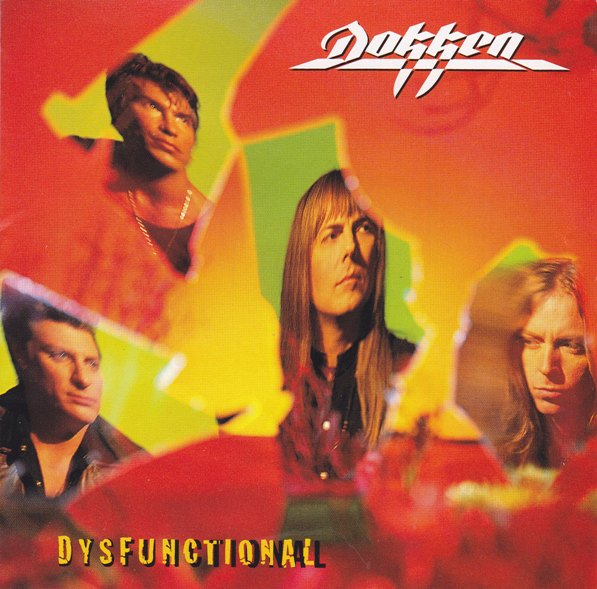
No matter how good the band may have been, when Dokken reunited for a new album in 1995, it was a no-win scenario. They always seemed to be one of those bands that critics loved to hate. I read a ridiculous review of Dysfunctional that said, “If Don Dokken fell in a forest, would he make a sound? And if he did, could they get George Lynch to solo over it for an hour?” What a stupid review. The album deserves a lot of praise, because when Dokken did reunite, the music was as strong as ever. They had discovered modern groove, added onto their lush harmony vocals, and it managed to sell 300,000 copies.
Dysfunctional was conceived originally as the second Don Dokken solo album, which just happened to have Mick Brown and Jeff Pilson on it. (Jeff had recently split from Dio.) The record company persuaded Don to call up George Lynch and make it a true Dokken album. Originally George was just supposed to come in and re-do the guitar solos, but Don wanted George’s rhythm. That was smart. George ended up with writing credits on most of the songs in the process.
I have to admit that when this came out, a new Dokken album was the last thing I expected to see. Deep into the grunge years, Dokken came out flying with a modern melodic hard rock record with warmth, depth and awesome production values (by Don and Michael Wagener). Raging solos, great ballads, glorious riffs, and those Dokken harmony vocals mark one of the best Dokken albums of their career. It’s certainly lots better than the ones I’ve heard that followed it.
There are lots of highlights. No songs suck, but some are better than others. The best tune was the 7-minute single, “Too High to Fly”. I don’t know who came up with the riff, whether it was Don or George, but this song kicks ass. Jeff Pilson gets into a wicked bass groove, dominating the verses. Don’s lead vocal is among his most impassioned and the band is smoking. This is a shoulda-been Dokken classic. I am given to understand that it is the only song from Dysfunctional that is still played live from time to time.
Other favourites include “Inside Looking Out”, which shares the same grooving direction. “Long Way Home” is like classic Ye Olde Dokken and could have fit in on Back for the Attacknext to “Mr. Scary”. On the softer side, I really like the understated “Nothing Left To Say”, a classy acoustic ballad. Jeff Pilson’s backing vocals coupled with strings create a timeless atmosphere. Then there’s the album epic: “The Maze”, a lush, multi-part progressive song with harmony vocals piled on top of harmony vocals. It doesn’t get thicker than this! The record closes on “From The Beginning”, an ELP cover and another classy acoustic song.
I don’t need to tell you how great George Lynch is. The record company were right to get him involved. He helped make this album really special. And that’s not to say that “Wild” Mick Brown or Jeff Pilson don’t bring it, because both of them did and then some. Just that George has a very unique sound. There is only one George Lynch.
Dysfunctional is a compulsory purchase if you have ever liked Dokken. It is a shame that the title proved true. George bailed after the dismal followup album (Shadowlife) and Pilson wasn’t far behind. Sad.
PETER CRISS – One For All (2007 Silvercat Records)
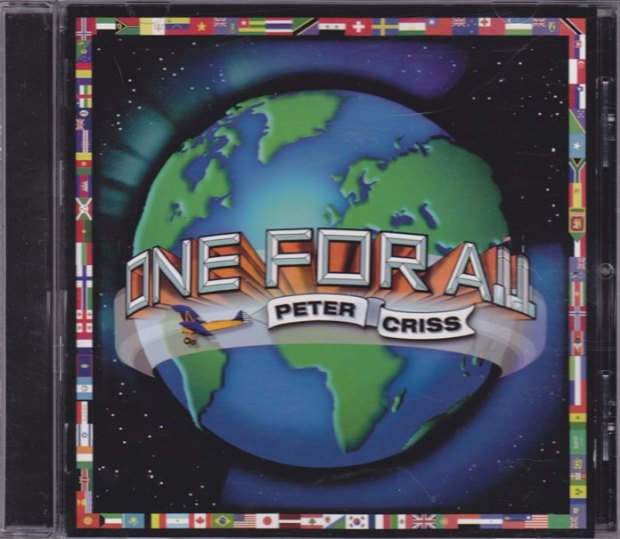
I decided to be lazy tonight, and write an easy review on a shitty album. It’s easier to tear something down than to build it up. I dove into my Peter Criss folder, and grinned as I selected his 2007 post-Kiss reunion solo album, One For All. Peter re-teamed with his Criss bandmates, Mark Montague and Mike McLaughlin. He also called in some favors from the Letterman Show’s Will Lee and Paul Shaffer.
And then everyone took a giant shit, recorded it, and they called it an album. A long, drawn out and painfully slow and tuneless album. One For All consists entirely of slow, slow numbers. Call ’em ballads, call ’em whatever you want. It’s 100% schlock, 0% rock. Peter: I am telling you right now man, and I’m sorry to have to be the one to say this, but your voice is gone. It’s done. It’s not pleasant to listen to anymore, especially when you try to reach notes so far out of your range that you’re whispering. Note accuracy is also a problem. It seems to be that if Peter didn’t hit the notes, but was in the general vicinity of them, that was a take. I am guessing at the quality control standards; I wasn’t there in the studio with Peter, who self-produced this bad boy. Not a good idea there, Pete m’boy.
The best tune is the title track and opener, “One for All”, on which Peter is backed by the mighty All Boys Choir from the Church of Transfiguration. Their voices (which unfortunately don’t come in until close to the end) save this song and make it something a little more special. It makes you wish they were singing on more of the album! Also, any time backup singer Jen Johnson is audible, then everything’s fine.
Worst tunes: A tie between “Send in the Clowns” (yes, that “Send in the Clowns”) and “Space Ace”. I’m not going to insult your intelligence and tell you what “Space Ace” is about. Now that Peter has written songs about himself (“The Cat” from his EP) and Ace, I’m waiting for him to come up with “Star Child” and “The Demon”. Milk it Peter, for all its worth. May as well, since everybody else is too.
Quality control beef from the lyric sheet: the song “Doesn’t Get Better Than This”.
Remember George, and his guitar, John and Paul, and Ringo Star.
Seriously, they spelled Ringo Starr’s name wrong in a song about the Beatles!
Sorry Peter. This album gets the dreaded LeBrain Shit-Bomb.
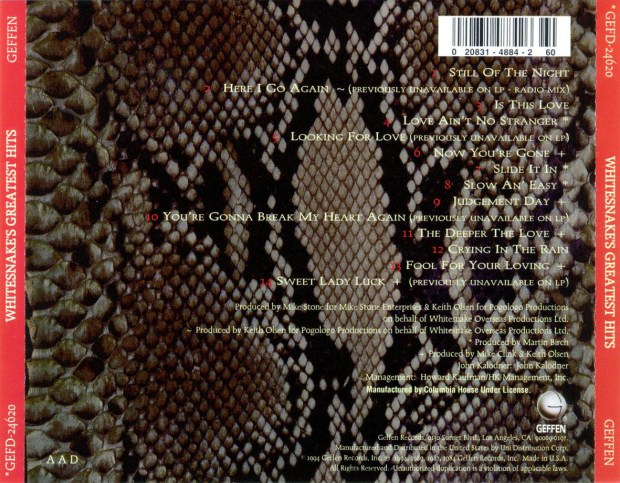
I don’t own this CD. Never have, actually. I gave it enough in-store play (only while working alone!) that I have no problem reviewing it. This Greatest Hits CD dates back to 1994, the year I first started working at the Record Store. As such, it was the first ever official Whitesnake Greatest Hits CD, the first of many. The band had been broken up for about four years at that point. Even by 1994 standards, it was only an OK release. It did contain some rare tracks, but was limited to Whitesnake’s 1984-1989 Geffen output only. For budget-priced collections, I would recommend the cheaper 20th Century Masters – The Millennium Collection because it still has all the hit singles from that period at a lower price. For fans who need more, the much better Whitesnake Gold or Silver Anniversary Collection make a more complete picture with more rarities and deep album cuts. These of course weren’t available in 1994. Today music buyers have a lot more to choose from.
One inclusion that some listeners may not enjoy about Greatest Hits is the version of “Here I Go Again” chosen. This is not the well-known album version that most people have heard. This is the “single remix” with different guitar solos (by guest Dan Huff) and more keyboards. Some radio stations do play it from time to time, but I think most casual buyers would listen to this and say, “I don’t like it as much”. And nor do I, but it is a rarity.
Otherwise, this album (like 20th Century Masters) contains every hit single from the period, and nothing from the blues-based records before. It does feature some other cool rarities: the B-side “Sweet Lady Luck” featuring Steve Vai, “Looking For Love”, and “You’re Gonna Break My Heart Again”. However, with the many compilations and remasters released since 1994, these songs are no longer hard to find. “Sweet Lady Luck” was even released on a Steve Vai boxed set!
Rounding out this selection of hits and rare tracks are deeper album cuts. These are include the glossy Kashmir-esque “Judgement Day”, “Crying in the Rain ’87”, “Slow Poke Music” and the wicked “Slide It In”. They help balance out the ballad-y hits that Whitesnake were adept at writing.
Interestingly, when this album was released, David Coverdale assembled a new, shortlived Whitesnake and toured for it. That version of Whitesnake included former members Rudy Sarzo and Adrian Vandenberg, both of the 1987-1990 version of the band. It also included drummer Denny Carmassi (Coverdale-Page) and guitarist Warren DeMartini (Ratt). Shame that no live recordings from this version of the band have never been released. The band disolved for several year again after this, only to reform in 1997 with a new lineup including Carmassi and Vandenberg.
This album is only mildly better than 20th Century Masters, but is inferior to the more recent, more comprehensive compilations I have mentioned. Buy at a sensible price point.
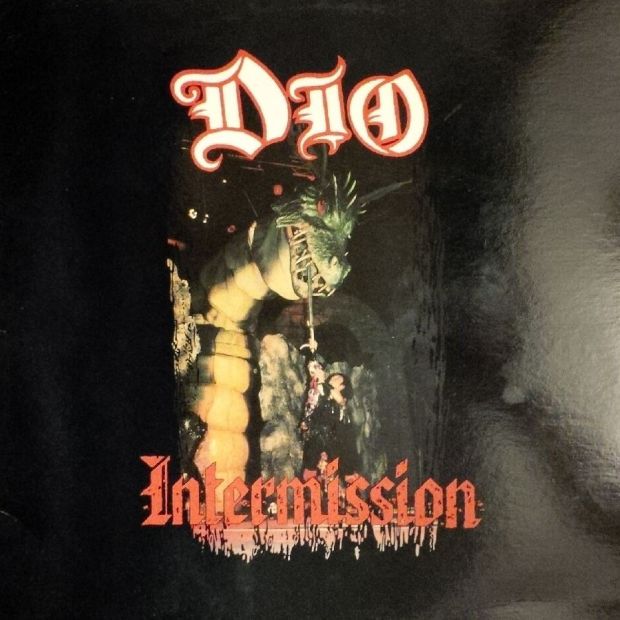
Intermission was Dio’s live EP, bridging the gap between Sacred Heart and Dream Evil. At the time it came out, Dio was very busy with the Hear N’ Aid project as well as replacing Vivian Campbell on guitar. Maybe that’s why he opted for just a Dio EP to tide fans over. For a long time this unavailable on CD; it has recently been reissued in its completion as bonus tracks on the deluxe edition of Sacred Heart. Good news, I’m sure, for those fans without the equipment to play vinyl.
The band was in a transitional period. They had recorded the five live tracks with Vivian, but replaced him with Craig Goldy in the middle of the tour. For years, fans were wondering who played on Intermission. Goldy’s picture is on the back, but the solos are clearly Vivian. There were no credits either, but today we know that Vivian is indeed the guitar player on the live tracks. And so is Craig! They overdubbed Goldy over Campbell on the live rhythm guitar parts! Why he decided to do this, aside from spite, I have no idea, but I strongly dislike tampering with live recordings. (Yes, that makes me a hypocrite since I rated Kiss Alive! a 6/5!)
Goldy plays all guitars on the soul newbie, “Time To Burn”. This new studio cut was a really excellent one; a mid-tempo burner (no pun intended). He co-wrote it, probably contributing that cool riff. The song has melody to spare and is definitely a diamond among Dio’s early solo material. It sounds similar to the Sacred Heart era, but with a higher level of songwriting quality.
As far as I’m concerned, they may call it an EP, but this is essentially an album, clocking in at 32 minutes. That makes it slightly longer than Van Halen’s Diver Down. It may only have six tracks, but one is a 10 minute medley of Dio and Rainbow classics. “Man on the Silver Mountain” sounds incredible; Ronnie was singing powerfully on this tour, and despite the tampering the band does sound great.
The Dio songs sampled here include obvious choices like “We Rock” and “Rainbow in the Dark”, but the two biggest hits (“Holy Diver” and “Last in Line”) are absent. Diligent fans already had live versions of those two on the last Dio single B-sides. The more puzzling inclusion is “King of Rock and Roll” which was already released live on the last album! Ultimately though I’m satisfied with the songs selected on this EP. The vinyl used to be frequently played around these parts, though it has no been collecting dust since the reissue of the songs on the deluxe Sacred Heart. It remains a great sounding mini-album, if you will!
Thanks for joining me this week for Purple Week at mikeladano.com. Today is Part 5 and the last album for now. But don’t worry, I don’t think we’ve seen the last of Deep Purple around these parts…
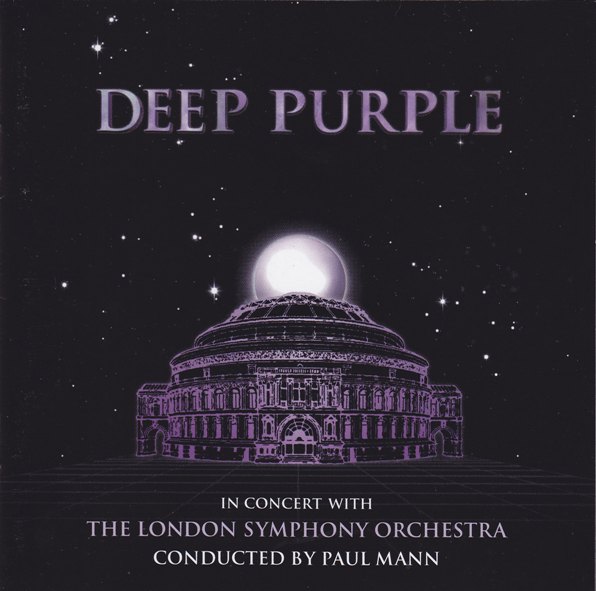
DEEP PURPLE – In Concert with the London Symphony Orchestra conducted by Paul Mann (1999 Eagle Records)
The original Concerto for Group and Orchestra (1969) was Jon Lord’s baby. The rest of the band didn’t care too much for it, and it had only ever been performed twice. The Albert Hall recording became a successful live album, and it was performed once more in Los Angeles. Soon after, the original score was lost, permanently. Even if Deep Purple wanted to (and let’s face it, if Blackmore were in the band he’d probably say no), it could never be performed again without the sheet music.
I’ll let Jon Lord take it from here. From the liner notes to the CD:
“Marco de Goeij, a young Dutch composer…had decided to re-create it by listening to the recording and watching the video. Over and over and over again. A task of mind-bending complexity, dexterity and musicality, which then only left me the far simpler job of filling in what he had been unable to decipher, re-creating what I could remember of my original orchestration, and in part, as those who know the work will hear, re-composing where I felt it needed it.”
Conductor Paul Mann had independently been searching for the original lost manuscript. When Jon informed him of the re-created one, Mann was on board with the London Symphony to do it once more. Deep Purple now had a new guitar player, Steve Morse, who undoubtedly would have to bring his own slant to the guitar solos. For Jon and the fans, it’s the stuff of wishes come true.
Since the Concerto was really Lord’s project, it seems like a fair compromise for each of the members of Deep Purple to also get a moment or two to showcase their solo work. In fact many musicians from those solo works are welcomed to the stage, including the Steve Morse Band, Ronnie James Dio, Mickey Lee Soule (ex-Rainbow and ex-Gillan), Sam Brown, and more. Deep Purple fans are generally open to different styles of music, and this album showcases those styles in a professional, classy format.
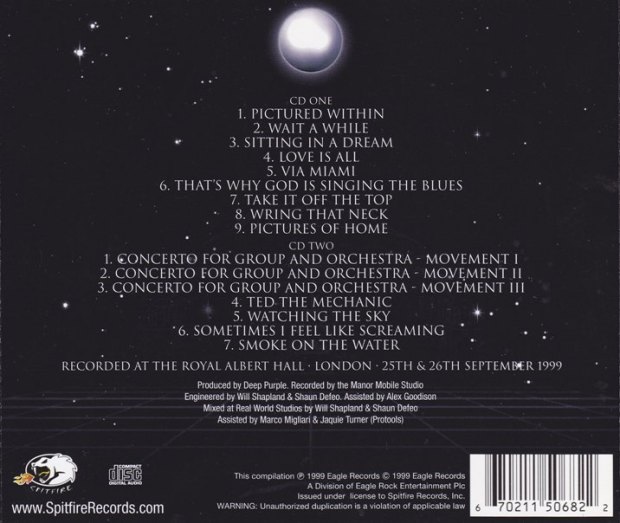
Once again at the Albert Hall, the set commences with a disc highlighting the solo careers. Lord’s “Pictured Within” (with Miller Anderson) and “Wait a While” (with Sam Brown) begin the proceedings with a quiet, powerful pair of songs backed by Jon’s piano and dramatic strings. These versions are, dare-I-say-it, superior to the original studio versions.
From there, Roger Glover’s solo career gets a looksee, with “Sitting in a Dream” and the irresistibly bouncy “Love is All”, my favourite. Ronnie James Dio reprises his vocals from the original Butterfly Ball versions, sounding as great as he did nearly 30 years prior! It really is impossible not to like “Love is All”, which of the two is especially fun.
In 1988, Ian Gillan and Roger Glover did a project together called Accidentally on Purpose, a quirky tropical pop rock album. “Via Miami” is one of the more upbeat tracks from that album. Ian’s “That’s Why God is Singing the Blues” features his solo band’s guitarist Steve Morris (not Morse!) Both it and “Via Miami” spark and roll along joyfully.
Steve Morse (not Morris!) is up next with the Dixie Dregs’ “Take it Off The Top”. It’s the Steve Morse Band and the Kick Horns. It’s always a pleasure to listen to Dave LaRue, Van Romaine, and Steve Morse playing together, but to hear them at the Albert Hall? That’s a venue suitable to the genius they wrench from strings and wood. Graham Preskett joins on violin to dual Morse with string acrobatics.
Ian Paice’s spotlight song is a horn-laden jazz version of Purple’s “Wring That Neck”. This is my kinda jazz, the kind with a rock beat you can swing to! The violin solo lends it a bluegrass feel, too. The first CD ends with a powerfully heavy “Pictures From Home”, originally from the immortal Machine Head record, performed by Deep Purple with the London Symphony. It’s a powerful, dramatic song on which for the full Deep Purple to enter.
Disc two features the entire Concerto from start to finish, all three movements, roughly 50 minutes in length. This truly was Lord’s baby, the piece that kept him up nights in 1968 and 1969 writing little black notes on white paper. It made Deep Purple a unique property when it was released on LP 1969, but had not been heard live in 30 years. Purple fans will be in seventh heaven with this de-extinction. Indeed, Morse’s guitar is different, but he hits the right notes at the right time while still playing within his style. Otherwise, I’ll be damned but I can’t tell the difference.
What can I say of the Concerto itself? I think it’s pretty cool, and I’ve always geeked out to stuff like this. Jon envisioned it as “rock band meets orchestra” — at first they say hello, and play around, then they start shouting at each other, and before long it’s all-out war! Speaking of shouting, my favourite is probably Movement II, which has Gillan’s all-too-brief but oh-so-perfect vocal.
The disc concludes with three more (three Morse?) of recent vintage. “Ted The Mechanic” and “Sometimes I Feel Like Screaming” are two of the best songs from Purpendicular, and “Watching The Sky” is probably the heaviest song from Abandon. I personally feel that all the Abandon material was better live than on album, and “Watching The Sky” maintains that. Unfortunately none of the Abandon songs were really that great.
Of course, “Smoke On The Water” ends the album with guests returning, including Ronnie James Dio who takes a verse. “What do you think Ronnie!” Then the Elf himself is up at the microphone singing “Smoke on the Water” with Blackmore’s old band Deep Purple. I shouldn’t need to tell you that this is one of my all-time favourite live versions of “Smoke”.
This album, which ended up being one of Lord’s last with Purple, was really a special gift to the fans. It is a beautifully crafted live performance containing some of the rarest of the rare gems in the extended Purple canon. An event like this will never happen again. There is a DVD of this show, but beware, it is only about 2/3 of the set. What a disappointment that DVD version was. You want every moment, but you won’t get it.
If you do hunger for more after this, then you can binge on The Soundboard Series 12 CD boxed set. It consists of 6 shows, two of which featured full live performances of the Concerto, with guests such as (yup!) Ronnie James Dio. There is also Live at the Rotterdam Ahoy which lacks the Concerto portion, but makes up for it with a more extensive set of classic rockers, including Dio’s own “Rainbow In The Dark” and “Fever Dreams”!…But that’s another review.
5/5 stars. For the true fan, and anybody who’s not afraid to expand their listening territory.
It’s Purple Week at mikeladano.com! It’s all Deep Purple and Deep Purple alumni, all week. This is Part 4…and once again we’re going Epic Review Time. It’s Deep Purple Mk III’s lead throat, David Coverdale & Whitesnake! This is almost a new release; it’s about four months old.
WHITESNAKE – Live in ’84 – Back to the Bone (2014 Frontiers Deluxe edition DVD/CD)
David Coverdale has been pretty good to the fans, in terms of giving them live archival releases from the periods they care about. In addition to cranking out studio and live releases with the current Whitesnake lineup, David has issued deluxe editions of certain albums along with the long awaited 3 disc set Live at Donnington 1990. Now it’s the 30th anniversary of the Slide It In album, so David has issued a live retrospective set from that period too. A CD and DVD set documenting the John Sykes years is almost a guaranteed slam dunk in itself, but how does it stack up when we break it down? Let us take a look at the DVD and CD portions in detail.
Super-Rock Japan ’84
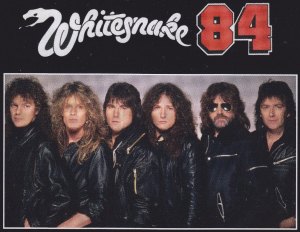
The main program of the release is on the DVD, and the main focus of the DVD is Super-Rock Japan ’84. It is an 11 song set taken from Japanese television. This is the legendary four-piece lineup: David Coverdale, John Sykes, Cozy Powell, and Neil Murray. There is no doubt that even though the band had been trimmed down, they sounded powerful. I just really hate when an interview is inserted right between the first and second song. There’s no reason to ever interrupt a song on a live video, but editors do it all the time! It’s interesting seeing Whitesnake in a single-guitar lineup, but there is obviously a backstage keyboard player (Richard Bailey). The chops of John Sykes are such a welcome addition to the Whitesnake sound. He has a “chug” that few other guitar players have. Cozy Powell is as on-point as ever, but David Coverdale’s young lungs are remarkable. At peak power, David prowls the stage and humps the microphone in complete control.
The highlight of this portion of the set is “Crying in the Rain”, almost but not quite like it would be performed on Whitesnake 1987. I also enjoyed Sykes’ guitar solo. Sykes makes some of the best guitar faces in rock, and he resembles a young David St. Hubbins with his shaggy mane. “Soldier of Fortune” (an abridged version) was a pleasant surprise. On the other hand, Cozy’s looong overblown drum solo would be more appropriate to his time in E.L.P. (Emerson Lake & Powell). David must have been taking care of business backstage.
The video quality here is very good for an 80’s television broadcast. Sound quality, also good. David states in the liner notes that they weren’t able to find the master audio tapes, so this hasn’t been touched up too much. I’m satisfied; in 1984 we didn’t have 1080p TVs in widescreen.
Only three songs from this were included on the CD: “Love Ain’t No Stranger”, “Ready An’ Willing”, and “Slow An’ Easy”. That’s too bad. I would have paid a little more to get a 3 disc version with a full CD of this show. Just sayin’.
Jon Lord’s Final Whitesnake Performance
The passing of Jon Lord has been the biggest loss in rock, in recent memory. This truly is a treasure. From Swedish television and shot with multiple cameras, this looks even better than the Japan footage. Shame it’s only four songs. To have Jon there raises the bar several notches. It’s a five-piece lineup, although the cameras spend so little time on Jon that you’d wonder if the keyboardist is offstage again! (Jon’s wearing a white shirt in a black-topped band; he should be easy to spot but he’s not.) “Gambler” goes directly into “Guilty of Love”, and it’s so strange to hear it with only one guitar. With guys like Sykes and Powell in the band, they are very active on stage and the energy is plentiful. “Love Ain’t No Stranger” is so much better with Jon than without. You cannot understate how much difference that big bad Hammon organ makes. Then David tells the audience that they are “Ready An’ Willing” for some sweet satisfaction! From this brief four song set, I can at least conclude that Swedish television in the 80’s was better than Canadian television. Strangely, on the CD, it is included as one solid 16 minute track with no breaks.
Slide It In Slide Show
This is actually a cooler feature than you might think. These contain some snippets of writing demos for Slide It In. In some, David’s talking to someone, and there’s a single guitar. In others there is a full band, but the lyrics are not there yet. You can hear some of the classic riffs taking shape. The rest of the audio has vintage interviews with David and live music. Unfortunately at times the “slideshow” portion of this turns into little more than a lyric video, defeating the purpose of having a photo slideshow. The real treasure here is a live version of the B-side, “Need Your Love So Bad”, with just David and Jon. I am disappointed that it is not on the CD. Something that rare really should be.
Snakeskin Boots: The Best of the Bootlegs
The main feature on the CD consists of bootleg and soundboard tapes. I love bootleg recordings, and who can fault a band for beating the bootleggers and releasing the tapes officially? Tapes were cleaned up as much as possible to make them listenable (David suggests the car as a good setting). These songs were sort of arranged in the order of a live concert, so it still begins with “Gambler” and “Guilty of Love” like all the other sections. “Gambler” sounds pretty good, only slightly muffled but with a hard pulse. Sykes’ solo on “Guilty of Love” sends electric chills up the spine. It’s great to hear the band so young and ferocious!
Cheeky David tells the crowd that the Slide It In album title does not refer to a banana! “Love Ain’t No Stranger” is always a pleasure to hear, especially sung by a young David, and Sykes is shreddin’. Then another cheeky intro: “I’d like to give you a toast. If it’s in deep, and if it’s in long, and if it’s in hard…it’s indecent!” That has to mean “Slow An’ Easy” is up next. I will never tire of this excellent song. “Walking in the Shadow of the Blues” is a nice surprise, but “Ready An’ Willing” is overplayed.
Sykes is given a couple minutes on his own to introduce “Crying in the Rain” with some bluesy soloing. As great as this song is, this long version makes it clear why Whitesnake is a two guitar band. They sound very bare when John again takes a long solo in the middle, and Neil Murray is left to fill the space. David always wanted two guitar players, while John would have preferred not to share the spotlight. “Soldier of Fortune” closes this portion of the CD, a nice version of the old Deep Purple classic.
The rest of the CD is dedicated to the three tunes from Super-Rock Japan that they chose to include, and the four songs from Jon Lord’s final Whitesnake show. If you have a look at the tracklist you’ll notice that this means there’s a lot of repeat.
In closing
None of Coverdale’s archival releases or deluxe editions have been perfect. Live in ’84 – Back to the Bone is probably the best of them yet.
Deep Purple were the proverbial candle that was burned at both ends. Their first four studio albums (plus a friggin’ concerto!) were cranked out in a mere two years. Management and record labels pushed the band to stay on the road, only taking precious breaks to write and record new music. Sometimes the pressure worked (Machine Head) and sometimes it didn’t (Who Do We Think We Are). Ian Gillan’s resignation signaled the end of the celebrated Deep Purple Mk II lineup. Though the band successfully carried on with David Coverdale & Glenn Hughes, even those lineups imploded and by 1976, Deep Purple officially ceased to exist.
The absence of Purple created a void that was filled by greatest hits records, live albums, and well-known side projects such as Ritchie Blackmore’s Rainbow, Gillan, and Whitesnake. Still, there was such a demand for Deep Purple itself that original singer Rod Evans put together his own bogus “Deep Purple” and played several shows in 1980! In his band were a couple guys from Iron Butterfly, but no other former Purple alumni. Just Rod. The guy who didn’t sing “Highway Star”, “Smoke on the Water”, or “Lazy”. Needless to say, Rod Evans’ bogus “Deep Purple” did not last as soon as word got out. The lawyers for the other former Deep Purple members ensured that by running ads in the local papers. “The following members will not be appearing with the band called Deep Purple at [such and such a date and venue] : Ritchie Blackmore, Ian Gillan, Ian Paice, Jon Lord, Roger Glover, Glenn Hughes, David Coverdale.” A show in Montreal was particularly horrid, and reportedly the band’s stage act involved one of the members bringing out a chain saw to cut stuff up. They were hit with lawsuits galore and quickly packed it in, but not before recording two new songs for a projected new “Deep Purple” studio album. The two songs, “Blood Blister” and “Brum Doogie”, are thankfully lost. A video of “Smoke on the Water” live in Mexico remains, to remind us why this was not a good idea. [For more on the bogus “Deep Purple”, click here.]
Clearly, lots of profits were to made if the real Deep Purple were ever to reunite. They tried earlier on, but were hung up when Ian Gillan joined Black Sabbath. When Ian’s Sabbath commitments were finished a year later, it finally happened. Jon Lord had freed himself of Whitesnake, and Ritchie, Roger Glover and Ian Paice were all ready willing and able. The reunion was on, for real this time.
The band quickly agreed on creating new music (otherwise, what’s the point of it?), and decided that there had to be a level of quality that served the name Deep Purple. They retreated to the gorgeous Stowe, Vermont and found themselves to be in great spirits and full of ideas. Another wise decision was the use of bassist Glover to produce. After his first stint in Purple, he became quite successful as a producer. He recorded some of the best Nazareth albums, a Judas Priest record (Sin After Sin) , Rainbow, David Coverdale, and countless more. It only made sense to keep production of the new album within the band when you have a guy like Roger in the band!
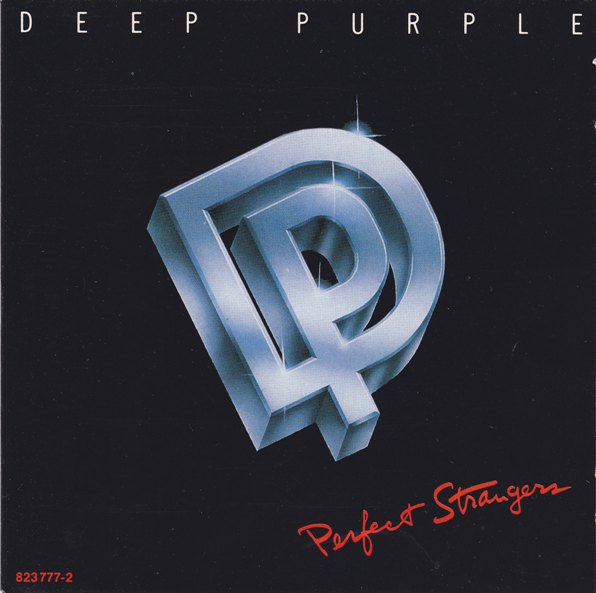
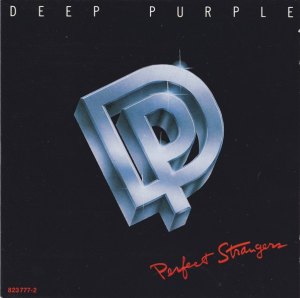
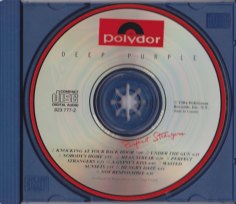
The album that resulted, Perfect Strangers, was more modern but unmistakably Deep Purple. Taking advantage of modern recording studios resulted in an album with rich instrumental tones. As great as classic Deep Purple albums were sonically, Perfect Strangers has a new richness and clarity. Jon’s organ is deep and gorgeous, but Ian Paice’s drum sound is monstrous.
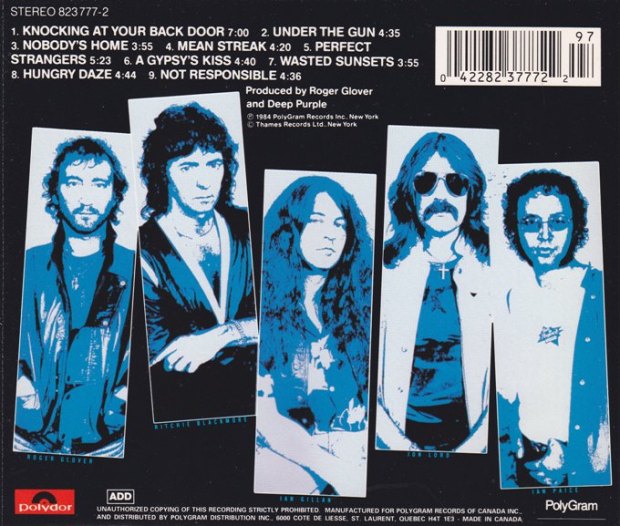
The opening track “Knocking at Your Back Door” (hah hah hah) commences with ominous keys from Jon, sounding at first like the pipes of doom. Then Roger begins a quick pulse, and Paice crashes that cymbal, and my God, Deep Purple is back! Ritchie and Ian join them for the first Deep Purple epic of the album — and on the first track, no less! “Knocking at Your Back Door” may be a joke lyrically, but it’s dead serious musically. It’s Deep Purple, but streamlined. Extraneous things have been discarded; others are sleeker. The only disappointment about the song is actually the guitar solo, which just slightly does not fit. Glover once said about this album that Ritchie struggles with solos in the studio more so than live. Something about when the red light goes on, he gets cold feet. There’s some incredible playing in this guitar solo, but parts of it feel out of place and overdone.
That one minor complaint is probably the only quibble you’ll read here about Perfect Strangers. The album continues to impress as it plays. “Under the Gun” is a song that would sound so great live today; shame that it hasn’t been played live in 30 years. I can’t imagine why. “Under the Gun” demonstrates the streamlined groove that Purple were going for in the 80’s. Listen to Paicey’s drums. They are relentless and powerful, but he’s also playing it simpler than he used to. This is intentional. When I say “streamlined”, that doesn’t mean there aren’t long solos, because Ritchie’s here is over a minute long (in a 4:34 song)!
“Nobody’s Home” gives Jon Lord a change to stretch out a bit on the synths, but it’s just a feint. This track re-writes “Black Night” for 1984, and ties it all up with a little bow in under four minutes. “Your lights are burnin’ bright, but nobody’s home!” sings Ian, for once not speaking of Blackmore! Jon takes the spotlight with a nice quick solo on the Hammond, a sound not often heard in ’84.
Side one was closed by the nasty little “Mean Streak”. It has one of those quirky Gillan lyrics that I like so much. “She came home last night, rockin’ rollin’ drunk. She talk no sense but she sound good so she thunk.” It’s a cool rock track with a chugging riff; always a deadly combination when wielded by Deep Purple. It boasts one of Ritchie’s coolest solos on the album.
I will never forget seeing this video on MuchMusic, introduced by Bruce Dickinson. Of Deep Purple he said, “Well, they’re very good. But not as good at football as they appear. No. They’re not.” The VJ (Erica Ehm) asked, “Why not?” Dickinson simply responded, “Because they’re not! What a silly question.”
Of all the songs on Perfect Strangers, only one has been consistently played live every tour: the title track. This epic, like its side one counterpart “Knocking at Your Back Door”, opens with Jon’s ominous keys. This time it’s the old trusty Hammond, and then the band crash in with the riff to kill all riffs. I think in some respects, this song has become Deep Purple’s “Kashmir”, especially when played in concert. It has evolved to become more exotic since it was first recorded, though it does contain those flavors here. The lyrics are ambiguously beautiful. Back in the Record Store days, I talked to a guy once who thought the lyrics were about God. I’ll leave it up to you. Blackmore called it his favourite Deep Purple song. It’s a tough call, but Top Five for sure. I cannot survive without this song in my life, period.
Then WHAM! “A Gypsy’s Kiss,” right in the kisser. If any doubters had thoughts that Purple had lost anything in the past decade, this song proved them dead wrong. Blazing pace, blazing Paice, the whole place is ablaze! Again, Ian’s lyrics are awesome, and I love the self-referencing. “Space truckers free and high, Teamsters get ya by and by.” I also really like this verse, because, hey. John Wayne, man.
John Wayne, the Alamo, Crazy Horse, Geronimo, I’ll smoke a piece with you. Mind, Body, Heart and Soul, We got Rock and Roll, And there’s nothing they can do.
A good Deep Purple album rarely has a slow blues buried deep within. “Wasted Sunsets” is the album’s heavy blues track, like “When a Blind Man Cries” was to Machine Head (though it was relegated to a mere B-side). Jon’s organ sets the mood stunningly, and Ritchie absolutely nails it. I get the feeling that Ian is baring his soul in the lyrics, although he doesn’t seem too regretful of all those one night stands.
For self referencing, no lyric on the album beats out “Hungry Daze”:
The mountain’s getting cold and lonely, The trees are bare, We all came out to Montreux, But that’s another song, you’ve heard it all before!
Regrets? Hell no. “Different girls, laughing girls, forever girls and it was loud!” Gillan has a talent for making cheeky lyrics like this work with serious music. “Hungry Daze” has that modern Purple groove with the same kind of chugging exotic riff that powers “Perfect Strangers” — but faster! There’s even backwards tapes (Jon’s organ), a sound unheard on a Deep Purple album since 1969, but back in style in 1984.
Lucky cassette and compact disc buyers got a bonus track: “Not Responsible”. When I first got the album (on cassette) I wondered, “Why is this song a bonus track? It’s one of the best songs!” Good question! (Perhaps because it’s the only song on which Gillan dropped an f-bomb.) I think it closes the album even better than “Hungry Daze” does. Lyrically it’s more drinking and debauchery. “So I’ll raise a glass to you, the foot is on the other shoe.” I consider “Not Responsible” to be of equal value to any of the better tracks on the album proper, so if you only own this on LP, consider getting this song (legally) to complete the picture.
Want more? There’s one more, but you’ll have to do a little research to get it in full. “Son of Aleric” is a killer slow groove 10 minute instrumental, with all the flavor of the album. It was released on the B-side of “Perfect Strangers”. If you bought the 7″ single, you got the 5:28 edit version. If you bought the 12″ single, you got the full Monty at 10:03. The full version was rarely issued on CD. I have it on a compilation CD with the cumbersome title of Knocking at Your Back Door: The Best of Deep Purple in the 80’s. But “Son of Aleric” is only on the UK version! (Other territories just got a live version of “Child in Time” from the live album Nobody’s Perfect. Bummer.) This is the kind of open Deep Purple jam that you just want to melt into. It’s magic.
If you like Deep Purple, but do not own Perfect Strangers, then I advise that you remedy that situation at your earliest convenience. I am no stranger to this album; I have played it hundreds of times, often more than once in the same day. I have never grown tired of it. For that reason, and many more, Perfect Strangers earns the coveted:
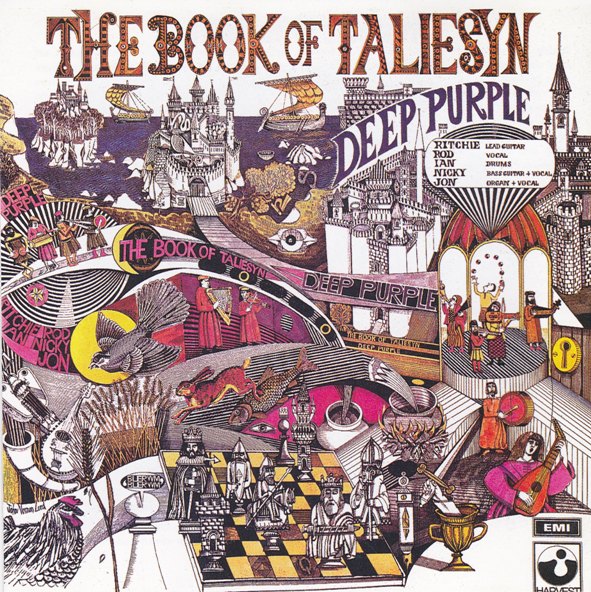
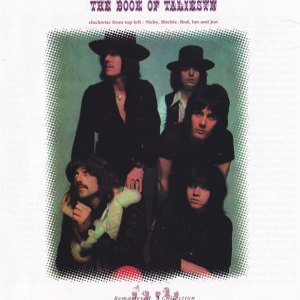
DEEP PURPLE – The Book of Taliesyn (1968 EMI, 2000 remaster)
I’m not a big fan of The Book of Taliesyn, and that’s not because I don’t like Deep Purple Mk I. I do like Deep Purple Mk I, or at least some of it. I think the third Purple album from ’69 is one of the band’s all-time best, and an underrated classic. The Book of only scratches the surface. The band had yet to find their sound, which would emerge fully formed a year later on Deep Purple In Rock. This album does represent significant growth, but not in the heavy metal direction that Purple would co-pioneer. Instead, Book of travels further down the orchestral roads with Jon Lord.
The Book of Taliesyn, like Shades of Deep Purple before it, is built with cover songs as its cornerstones. It contains one of my favourite Deep Purple Mk I tracks: their version of Neil Diamond’s “Kentucky Woman”. Energetic, ragged and rocking hard, “Kentucky Woman” is the absolute best track here. Ian Paice is the MVP, but singer Rod Evans is well suited to this kind of tune. Other standouts include “Wring That Neck”, the legendary instrumental (also called “Hard Road”) that the band continued to play through the decades even after Blackmore left the band in the 90’s. “The Shield” isn’t bad, as it features a long instrumental break featuring Jon and Ritchie. There is also the track “Anthem”, a Jon Lord helmed piece that delves into classical, forshadowing the “April” suite from the third album, as well as the Concerto for Group and Orchestra itself. So, the band was certainly stretching out here. There is a definite growth from the first album. Unfortunately, the album is bogged down by another slow, boring Beatles cover (“We Can Work It Out”, this time) and also “River Deep, Mountain High”, a whole 10 minutes thereof, which does nothing to help the band. The only notable thing about it is Jon’s “Thus Spoke Zarathustra” intro.
Like the other two albums in this series of remasters on Spitfire, there are five previously unreleased bonus tracks. All are valuable in their own way. Keep in mind that these tapes are old and may not sound as good as you’re used to. But, “Playground” is a bright instrumental from BBC tapes, and “Wring That Neck” is presented live. “Hey Bop a Re Bop” is buried treasure, an early version of what would become “Painter” on the next album. There are two more cool covers to boot. “Oh No No No” is a studio outtake, but I don’t recognize it. It’s a mid-tempo pop rocker with splashes of Jon’s organ that quench the thirst. Nicky Simper demonstrates some impressive bass chops, but he just wasn’t the right fit for the band. A BBC Top Gear session yielded a song called “It’s All Over”, a slow country blues ballad that Thin Lizzy could have done at the same time. This is a great tune, and it’s a shame that Purple never recorded it properly.
The colourful cover art is a quaint reminder that once upon a time, album covers were 12.375″ x 12.375″ and you could gaze upon the finer details for hours. CD just doesn’t cut it. This cover was so different for the band. Their name and the album title appear on it several times, and each band member is credited (first names only) on the front. The bizarre landscape foreshadows the Hieronymus Bosch painting on the next album.
2/5 stars. Not quite the band we know and love, but slowly getting there.






















 mikeladano.com