ROCK STAR SUPERNOVA – Rock Star Supernova (2006 Epic)
It’s no wonder this band came and went, with Lukas Rossi now toiling in obscurity once again. Even Jason Newsted didn’t want to tour with this band. (Why would he, when he had better stuff going on like VoiVod? He was replaced by Black Crowes bassist Johnny Colt.) Tommy Lee and Gilby Clarke have stated that they really wanted to have two singers, Rossi and Dilana, but the TV execs wouldn’t allow it. That shows you how much integrity is contained herein. Even the name of this band sucks.
Butch Walker (ex-Southgang) created a faceless, generic, dull sounding record with all the modern bells and whistles that scream “ProTools”. He deserved plenty of the blame since he co-wrote all the songs but one. The drums barely sound like Tommy Lee; the band has no identity. There is not one bonafide great song on this CD. There are a couple decent moments on some of the rockers such as “It’s On!”, but this is 40 minutes you won’t get back.
One of the main issues with the album is Lukas Rossi himself, a generic singer with no real identity. He sounds like any number of glam rock vocalists with nothing unique or special. The other musicians are rendered faceless by a batch of songs that are too lame for most Motley Crue albums. But come on — if you have a TV series about finding your new singer, find somebody memorable, you know?
If you bought this, you simply supported the same-old-same-old, plastic, processed, fake, and commercial music that has been rammed down the throats of the world since the advent of reality TV. Really, this just gives rock a band name, because people see this and think it’s actually rock music. It’s not. This is prefab music designed to generate hype and sales. It’s also suspect when I read multiple drummers’ names in the credits. Thankfully people saw through it and the sales tanked (except in Canada where Rossi is from).
Don’t spend a penny on this music. If you like these musicians and you want to hear them do something cool and different that you probably haven’t already heard on the radio, pick up the following:
If you support Rock Star Supernova, you just twisted the knife a little bit deeper into the back of rock and roll.
1/5 stars, and one big stinky piece of cheese.
1. “It’s On”
2. “Leave the Lights On”
3. “Be Yourself (and 5 Other Cliches)”
4. “It’s All Love”
5. “Can’t Bring Myself to Light This Fuse”
6. “Underdog”
7. “Make No Mistake… This Is the Take”
8. “Headspin”
9. “Valentine”
10. “Social Disgrace”
11. “The Dead Parade”
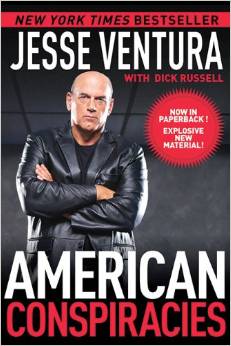
AMERICAN CONSPIRACIES: Lies, Lies, and More Dirty Lies That the Government Tells Us by Jesse Ventura (2010 Skyhorse)
I’ll admit that I was a Jesse Ventura fan as a kid, so this book was not too hard to like. Ventura is an afficianado of conspiracy theories. Not so much the really fringe stuff such as UFO’s and Roswell, but the stuff that most people in this day and age have their doubts about. Stuff like the assassinations of JFK and Malcolm X. Stuff like 9/11.
The writing style can be a bit rough at times, but by and large this is an interesting read and a potential launch point to pick up some of the sources Ventura mentions in the book (and there are a lot). Ventura supplements his research with his own personal anecdotes and experiences as Governor of Minnesota and a former Navy SEAL. For example, Ventura once had a face-to-face one hour meeting with Fidel Castro, and could not resist asking him what he knew about JFK….
American Conspiracies will not make a believer out of a hard core debunker (nothing will). It will however allow you the chance to read possibly for the first time a lot of vintage news stories and testimonies that have since been buried. Some of Ventura’s arguments are very well drawn and cogent. Others are not as convincing. Ventura’s personal encounters with personnel from the CIA however are seldom friendly and usually foreboding.
I think most people today believe that our governments lie to us on a daily basis. Nobody believes a politician anymore. So why read a book by the former Governor of Minnesota? Because he was an independant outside of the political structure. His perspective is different from the rest.
If you want some not-light but not-too-heavy summer reading, I would recommend American Conspiracies by Jesse Ventura. I plowed through this one in a weekend, I didn’t want to put it down.
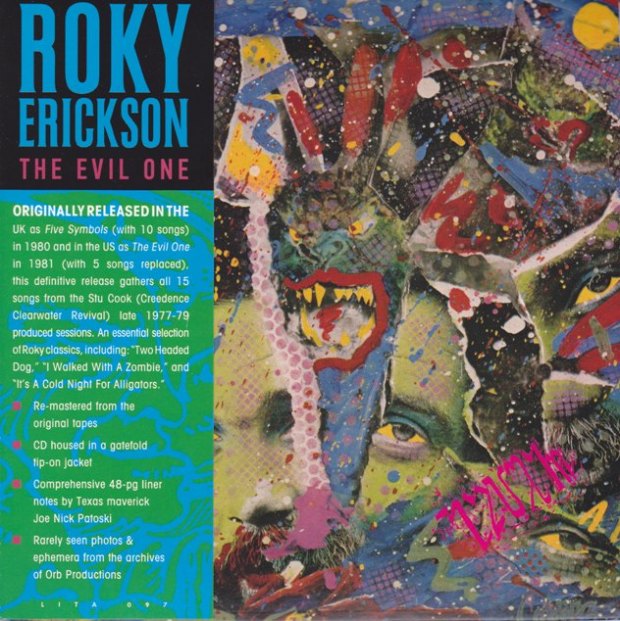
ROKY ERICKSON and the ALIENS – The Evil One (originally 1980, 2013 Light in the Attic)
I first became aware of the 13th Floor Elevators via ZZ Top, but it wasn’t until Dave Grohl’s excellent Sonic Highways (full review coming soon) that I was enlightened to the genius of Roky Erickson. I’m not a huge fan of the psychedelic rock of which Roky was one of the founding fathers. I do however love the pure guitar-based rock that he later played with the Aliens. Having heard “Two Headed Dog” in Sonic Highways, I took the plunge and bought a deluxe reissue of The Evil One.
Roky’s story is a long and tragic one marked by mental illness, LSD, bad recording contracts, injustice and years of neglect. The huge (48 page) CD booklet has liner notes with the story, and I won’t re-tell the tale for this one album review. Thankfully there is the documentary You’re Gonna Miss Me if you’re intrigued. The good news is that Roky has since gotten the help he needs and has financial and medical support today, and a whole new generation of fans (like me) discovering his genius. “The talent behind Roky’s voice,” said ZZ Top’s Billy Gibbons, “is the mystery factor that no one could touch.” His powerful rock and roll screams and moans are hooks in themselves. Erickson cited James Brown as a major vocal influence.
This excellent CD reissue compiles all 15 tracks that were released over the course of two overlapping albums, The Evil One and Five Symbols. The albums were produced by ex-CCR bassist Stu Cook, who captured a vibrant droney guitar sound here. Roky’s voice had lost nothing, and perhaps only gained power over the years.
The incredible thing to me is how excellent every single track is! I went into this only knowing “Two Headed Dog”. I came out knowing and loving 15 different songs, each special in their own way. The factors they have in common are Roky’s incredible voice, bizarre lyrics of paranoia and monsters and demons and aliens, and that unique and beautiful guitar. It’s not psychedelic rock, it’s just rock and roll. A song like “I Walked With a Zombie” emulates a slow dance from a late 1950’s highschool prom. Meanwhile “Night of the Vampire” sounds more like Alice Cooper.
I cannot say enough good things about this CD. I am beyond happy with this purchase. I do truly love every song, already, but it’s not too hard to pick out my favourites. “Mine Mine Mind” is irresistible no matter who you are. “Sputnik”, “It’s a Cold Night for Alligators”, “I Think of Demons”, “Bloody Hammer”, “Creature With the Atom Brain”, “Two Headed Dog” and “If You Have Ghosts” round out the songs I don’t want to live without ever again. The vocal and guitar hooks are incessant. There are even guitar fragments that sound like classic Thin Lizzy! Most fall within the 3-4 minute range and none overstay their welcome.
I am very happy to have started my Roky Erickson collection with this reissue from Light in the Attic records. I understand that Roky’s royalty woes have since been fixed and he does get paid from releases such as this. Buy with clear conscience.
I remember being very excited when this album came out due to the powerful first single “Wild Child”. I had enjoyed previous Scorpions albums well enough — Face The Heat, Live Bites — due to some great singles. Face the Heat in particular showed that the Scorpions were still interested in playing heavy music, via the first single “Alien Nation”. I could have handled some more of that. Pure Instinct, however, is ballad-ridden dreck with no energy and no inspiration.
We all know that since the 80’s, the Scorpions have had tremendous success with ballads. “Still Loving You” has become a signature song, and one of their biggest hits ever was 1990’s “Wind of Change”. The problem is that Scorpions are a rock band, and Pure Instinct is over half-full with ballads!
I mentioned “Wild Child” as a standout track, and it is. But even as a hard rock track, it is very commercial. It’s a lot more pop than “Rock You Like a Hurricane” or “Big City Nights”, though it does boast some enormous hooks. It is the opening song, and unfortunately it’s all a downhill snooze from there, more or less.
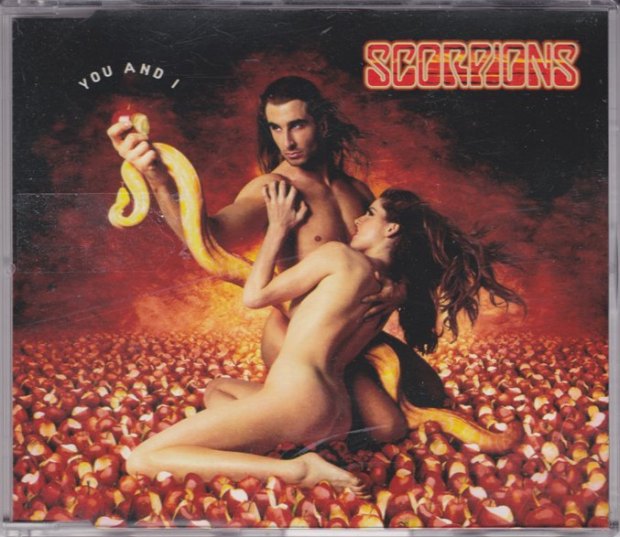
Longtime Scorpion Herman Rarebell departed after Live Bites, so the band employed a session drummer (Curt Cress), while sounding like they are on autopilot. Ballad after ballad after ballad…this gives you, the ballad-loving listener, almost half an hour of ballads. The single “You And I” alone is over 6 minutes long! Most of the rest of the tracks are flat, dull, and uninspired.
The few highlights include the first track “Wild Child”, the uptempo “Stone In My Shoe”, and the ballady-but-still-decent “Where The River Flows”. And that is about it.
The Japanese bonus track, which I have on the single for “You and I”, was called “She’s Knocking At My Door”, which although it was a rocker was also pretty bland.
It would only get worse — the next Scorpions album Eye II Eye has been likened to Savage Garden! I never bought it and haven’t listened to it since it came out.
2/5 stars. Avoid unless you want to buy it for the three good songs.
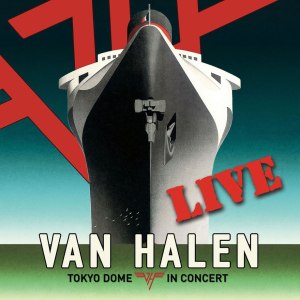
VAN HALEN – Tokyo Dome Live in Concert (2015 Warner)
It came especially late, but alas we finally have a live Van Halen album featuring David Lee Roth. Tokyo Dome Live in Concert was recorded on March 22 2013 during VH’s last tour. It’s not the band’s first live album as there has been a live Van Hagar release, but it’s the first with Diamond Dave which fans had been asking for, for decades now. This lineup features the Van Halen brothers (of course) Alex and Eddie with David Lee Roth, and Wolfgang Van Halen au lieu of original bassist Michael Anthony. One has to ask “why a live album at this point late in their career?” but it’s better late than never l suppose. Van Halen’s classic lineup and first six albums with DLR from 1978-84 have touched and inspired generations. It’s all-time classic rock, and there are plenty of masterpieces and classics to be found. The band knows this too, as they perform the songs that everyone wants to hear from those six albums along with a few from the current lineup’s 2012 output A Different Kind of Truth.
The setlist is incredible! I mean seriously look at it (they open with “Unchained”) and tell me that it’s not damn well near perfect. All the hits are there along with favourites and that’s one of the album’s strengths and main appeal. I don’t think l would’ve taken anything out. I wouldn’t have added much more either. Anyone who complains is just nitpicking. I would’ve wanted to see “You And Your Blues” from ADKOT instead of “Chinatown”* but that’s about as picky as l can be. Everything l could’ve asked for is here. Two discs and 25 songs (one is a drum solo) at this price is excellent. Those things l can’t complain about.
Now let’s address the elephant in the room. Yeah THAT one! Roth’s singing. Sometimes he completely leaves out lines, his timing is off or at the very last second, and occasionally he’ll almost talk instead of singing. To his credit he’s getting up there in age and moves a lot during live performances, it’s not getting any easier for him and l know criticism of his voice will be harsh towards this release. I’m trying not to be too harsh, while remaining objective. Granted he doesn’t sound great and there some not so good moments, but Diamond Dave was never truly an amazing singer to begin with. Less so live. He was always known to be the charismatic and energetic frontman and no one could touch him.
One of my favourite moments has Dave being Dave, during the beginning of “Pretty Woman” where he goes: “I know that song! (pause) I know that song! (pause) I fucking love that song!” On some songs he sounds good, some tolerable and some…awful.
People have mixed feelings to say the least about Wolfgang replacing Michael Anthony. I think it hurts them not to have Anthony around because his backing vocals were truly the band’s secret weapon and they improved Dave’s overall sound, something Wolfgang simply cannot do (he does sound a little better now), but he does get the job done on the bass guitar. The backing vocals are not awful, and they try their best (“You Really Got Me” is a good effort) but they could have used Anthony’s presence. Alex Van Halen has lost nothing with the years and plays incredible. The “Me & You” piece is amazing. Eddie does what he does best, and surprises us at times adding things here and there being the player we know he is. I can’t say that they really live up to their past glory, but very few bands can and at the end of the day it’s a fun performance.
The sound is very raw and bare-bones, it doesn’t sound like it was overdubbed at all which is one of Tokyo Dome‘s best qualities. I think they were going for a bit of a bootleg sound, not too much as clearly this exceeds a bootleg, but Van Halen wanted a real raw, gritty and heavy feel. Now the audience is essentially nowhere to be found. I own lots of live albums and this has got to be one of the quietest crowds l’ve heard for Van Halen (and a rock concert for that matter). I can only assume they turned them down during the mixing.
On a side note, I think it was a missed opportunity to film the show and have it released as a CD/DVD package**. I think it would have helped gather even more interest in the band and Tokyo Dome. I’m just glad we finally have some new Van Halen out, and a live one with Dave.
Is it perfect? No. Does it have it’s flaws? Yes. Could it have been more? Well l think if you don’t expect too much out out of Van Halen you will find much to enjoy. The guys are a little older, Dave’s voice has aged and it’s 3/4 of the classic lineup but they can still deliver a good performance and entertain you. Some will completely rip on Dave’s voice and l get it (STOP CHEWING GUM WHILE YOU SING!), it’s the main reason l’m giving Tokyo Dome 3 stars. It does make you long for a proper live release from the early 80’s. The musicianship though, is very good and the setlist incredible.
3/5 stars
*LeBrain disagrees. I like both songs, but “Chinatown” trumps “You and Your Blues”!
**LeBrain agrees. I don’t know why that wasn’t done.
I thought it would prudent to post a mini-review today, lest some of you thoughtI had lost my mind earlier. What’s the date again?
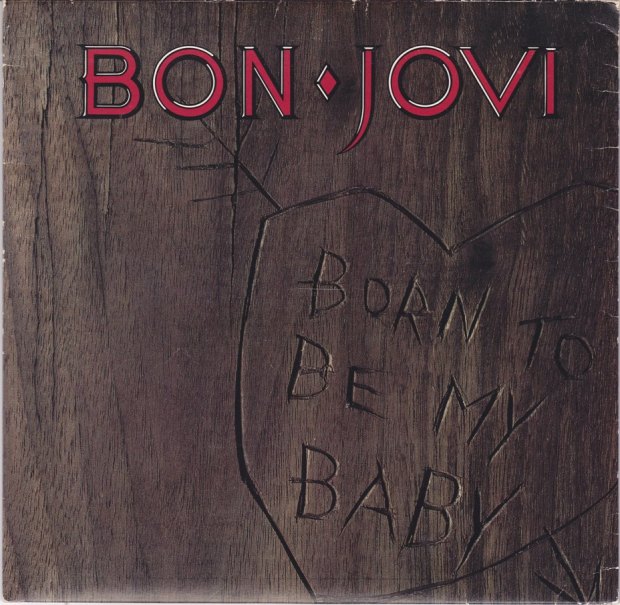
BON JOVI – “Born To Be My Baby” (1988 Polygram 7″ single)
This single is a beauty. I bought this 45 at the Zellers store at Stanley Park Mall in Kitchener when I was a young fella. It doesn’t have any exclusive tracks — not even single edits which were very common on Bon Jovi 7″ singles. Instead it came in a collector’s package with cardboard picture sleeve, and three postcards.
The postcards are interesting to me for a reason. Look at the group photos of the band. Jon’s face is always obscured. These pictures from the New Jersey period represent a brief time when Jon was trying to give the band more face time. Check many photos from that era — his back is often to the camera while the others look straight ahead. I read a quote in a magazine where Jon was pissed that people only knew Richie Sambora as “the guy in the cowboy hat”. He was trying to give them attention and I think that’s cool.
The two tracks on the single are two of my New Jersey favourites! “Born To Be My Baby” was always a cool groove. I enjoy listening to Tico Torres’ drums on this track. Understated but perfect. But “Love For Sale”? Shit, I think that’s the best tune on New Jersey! Proof of the talent of this band, drunk or sober. Hard to imagine it was just something that happened and got recorded. It actually makes me a little sad today — sad that Jon and Richie have now broken up this amazing chemistry.
Fun single though! Glad to have kept it all these years.
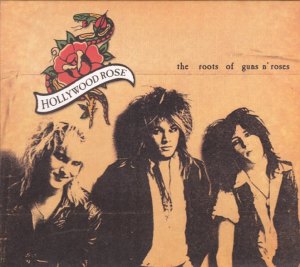
HOLLYWOOD ROSE – The Roots of Guns N’ Roses (2004 Deadline)
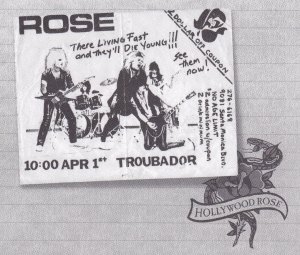
Hollywood Rose were one of several bands that eventually morphed into the original Guns N’ Roses. Already on board were singer William Bailey (Axl Rose) and guitarist Jeff Isbell (Izzy Stradlin). Guitarist Tracii Guns (L.A. Guns) was in and out of the band. Drummer Johnny Kreis and guitarist Chris Weber were later replaced by Steven Adler and Slash respectively, who came in together via their old band. It’s a complicated tangle of ins and outs and interchanging members but what’s important is that Hollywood Rose did record a crucial five-song demo in January of 1984. This demo was finally released on CD in 2004 with 10 (!) remixes, and now we get to hear what Guns N’ Roses sounded like as a fetus in the womb!
Unfortunately this CD releases has been padded out by having each song in triplicate. Each track is presented as a) the original demo, b) a remix by Gilby Clarke, and c) a remix by Fred Coury. Cinderella’s Coury, you may recall, sat in with Guns N’ Roses briefly when Steven Adler broke his hand in ’88.
No mercy is to be had on “Killing Time”, an aggressive and ragged assault that foreshadows Guns greats such as “Reckless Life”. It’s similar in construction to “Comin’ Atcha Live”, a later song by Tesla. Axl is in vintage voice, not quite yet in control, but with all the power at his command. The Guns sound is already present on “Anything Goes”, later modified and released on Appetite for Destruction. The riff, later perfected by Slash, is already present and accounted for, although the verses are very different. The chorus is a little out of control, yet to be tamed into a singalong melody. What’s incredible is that the Guns sound was already there, waiting to be properly harnessed and unleashed upon the world. Izzy and Axl created that sound; it came originally from those two guys. Slash and the rest of the guys just had to add the finishing touches.
Track 3 is a Rose/Weber original called “Rocker”. A sloppy punk metal riff and a killer Axl lead vocal make for a passable tune. (I would love it if a reunited Guns would one day pull a “Van Halen” and remake these old unreleased songs…one can dream.) “Rocker” is more metal than you expect from Guns, but it has that sloppy, dangly cigarette vibe that the band embodied.
“Shadow of Your Love” was later re-recorded by Guns N’ Roses as a demo and released on the B-side to “Live and Let Die”. This is the original “Hollywood Rose” demo however, a more basic bare-bones version of the speed rock classic. The last demo is “Reckless Life”, better known as the opening track on GN’R Lies. It obviously evolved quite a bit as a Guns N’ Roses song, because this seems more like a skeleton of the song. It’s still breakneck fast, but the verse riff isn’t there yet.
These five songs indicated there was a cutting edge band here that needed to be heard. They could not have had the same success in this incarnation. They clearly needed Steven and Duff in the engine roof, and Slash laying sticky guitar toffee on top. The bones were already there, and it’s absolutely historic to hear these early demos of such important hard rock songs. The impact that they would have, as a foundation for something bigger, cannot be understated.
That said, as songs they still had a little ways to go, and I don’t think we really needed each song three times in one sitting. I’m not sure why Gilby was involved (except that he was in Guns N’ Roses too, from 1992-1994). I’ll be damned if I can pick out specific changes he made with his remixes, but most of the songs are different lengths so he obviously did stuff! Gilby did have Tracii Guns come back to Hollywood Rose and overdub new guitar solos for “Shadow of Your Love” and “Reckless Life”. These guitar overdubs do succeed in making the demos more exciting than they were. The Coury remixes are probably most notable for a distinctly different drum sound.
The Roots of Guns N’ Roses by Hollywood Rose is an essential collector’s item for any serious Guns fan. You don’t want to be without this. I just don’t think that two complete sets of remixes were necessary.
OZZY OSBOURNE/ROB ZOMBIE/IN THIS MOMENT live at the ACC, Toronto Ontario, 01/21/08, on the Black Rain tour
When you pay $100 a ticket you’d better get a hell of a show, no pun intended. While Rob Zombie rose to the occasion and put on the show of a lifetime, Ozzy Osbourne stumbled, carried only by his seasoned band and the love of a metal craving audience.
First up were newcomers In This Moment, who played a short 4 song set to a half filled house. Singer Maria Brink managed to get the crowd going even though most of them didn’t know there was a third band on the bill. Coming out in her trademark blue dress, and screaming her lungs out, I could not believe the power in this woman’s voice. The whole band was hampered by horrible sound which unfortunately rendered her screaming and singing unintelligible. However, at one point she let loose and screamed for a good 30 seconds straight…how she does this is beyond me, I sure can’t! In This Moment played their hit “Beautiful Tragedy” second-to-last and then revved up the audience to see Rob Zombie.
This was Zombie’s last night of the tour, and his crew played pranks on In This Moment through most of their set, however it was dead serious once Zombie hit the stage. Hidden by curtains, the audience could not see Zombie’s amazing stage set until the lights came up. And that was not to happen before we were treated to a surprise: Rob Zombie’s Grindhouse trailer “Werewolf Women Of The S.S.” starring Nicholas Cage as…FU MANCHU! (Zombie is considering making a full movie based on this trailer.)
Then the lights came up, dancing girls on either side of a giant devil head, and band roaring. The head cracked open and an adrenalized Rob Zombie emerged to “American Witch”! What an entrance.
John 5 was at the top of his game on guitar, playing with his teeth, behind his back, throwing his instrument all over the stage. For his guitar solo he even played a snippet of “Oh Canada”, but more on that shortly.
Zombie played all the hits with tons of syncopated pyro behind him, so much that you could feel it from the nosebleeds. “Dragula”, “Living Dead Girl”, “Thunderkiss ’65” and of course “More Human Than Human” were all played expertly, Zombie himself all over the stage at all times. He had ample video footage behind him, showing original film footage from House Of 1000 Corpes, The Devil’s Rejects, his own animation, and classic horror films such as Nosferatu.
Zombie’s crowning moment was during John 5’s guitar solo, at which point he grabbed two flashlights and headed into the crowd, all backed by John 5’s incredible shredding. I mean, come on folks…this is the guitar player that David Lee Roth chose to stand where Eddie Van Halen, Steve Vai, Steve Hunter and Jason Becker have stood.
The only thing wrong the whole Rob Zombie show is that there was so much going on at once, with the video screens, dancing girls, drumming robots, props, lights, and pyro, that you can’t see it all at once. I would like to see Rob Zombie twice or three times…difficult now that his tour is over!
A short break ensued, and then we were treated to some video footage courtesy of the Ozzman. It was a humourous medley of popular film and TV footage from the last year, all recut to star Ozzy himself! Imagine Ozzy in: The Queen. Or Ozzy under Azamat’s ass in Borat! It was good stuff, but unfortunately it underlined that the once and future singer of Black Sabbath has now become something of a joke himself.
Ozzy and his band (Zakk Wylde on guitar, Mike Bordin on drums, Blasko on bass, and Adam Wakeman on keys) then blasted through his first single from the new Black Rain CD, “I Don’t Wanna Stop”. A great opener, unfortunately hard to appreciate with Zakk Wylde’s guitar sounding so harsh in the ACC. Ozzy played most of the classics with very few surprises: “Bark At The Moon”, “Suicide Solution”, “Crazy Train”, “I Don’t Know”, “Mr. Crowley”, “Road To Nowhere” and “Not Going Away” from the new CD.
Ozzy’s problem, both as a solo artist and with Black Sabbath, is his unwillingness to change his setlists. While I’m sure everybody there would have died and gone to heaven if Ozzy played a song like “You Can’t Kill Rock And Roll” or “Diary Of A Madman”, his setlist was based almost entirely around his Blizzard of Ozz and No More Tears CDs. Too predictable, Ozzman. His other problem is his lack of range. His voice cracked many times, and the band lowered the key for him the old songs.
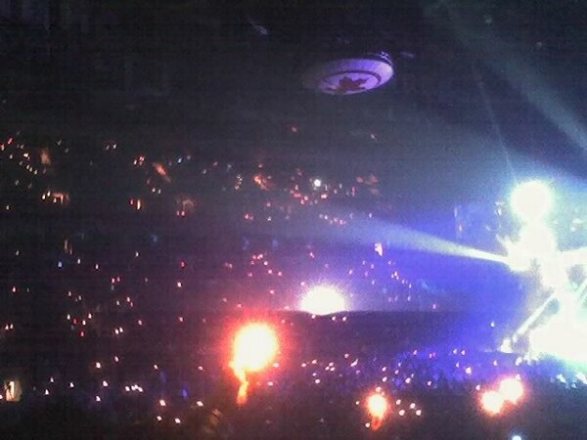
A few disappointing choices: Ozzy did not play “No More Tears”, but instead treated us to the overrated “I Don’t Wanna Change The World”. And for an encore, yes, of course…”Mama I’m Coming Home”. Shame about that, as there are so many better songs to play. “Mama” sure did get the cigarette lighters out [see picture below].
Zakk Wylde did a ridiculous 10 minute guitar solo, which sounded mostly like razorblades coming at your ears. He too played with his teeth, but it was only when he quoted Randy Rhoads’ classic “Suicide Solution” live solo that sparks flew.
As a last song, of course, Ozzy played “Paranoid”. He had to. He couldn’t show up and not play any Sabbath material, although “Iron Man” and “War Pigs” didn’t make his short set. Shame, considering that he reminded the audience that Toronto is where he recorded Never Say Die.
In the end, we all got tired of Ozzy’s endless “I can’t fucking hear you” and “Go extra extra extra crazy!” When Ozzy shouted “I still can’t fucking hear you” for the 100th time, people started responding, “Because you’re fucking deaf”!
There was no question that Ozzy came, saw, and conquered because of his excellent band and the love that the crowd had for him, but it was also obvious that this was Rob Zombie’s show, and there was nothing Ozzy could have done to change that, aside from bringing Randy Rhoads back from the dead.
In This Moment – 3/5 stars
Rob Zombie – 5/5 stars
Ozzy Osbourne – 3.5/5 stars
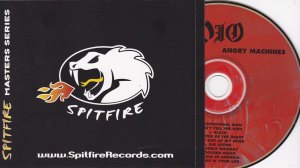
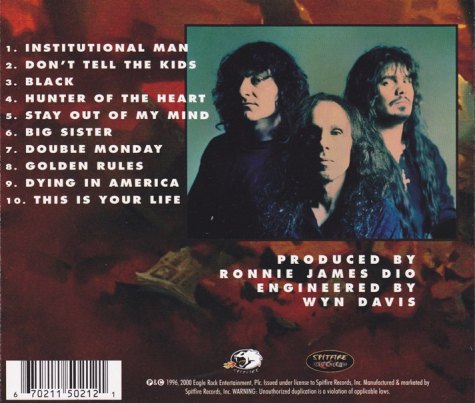
I have never liked Angry Machines. Right from the moment it came out, to today, I do not like Angry Machines. It’s not because I don’t like this Dio lineup. I’m quite fond of the Strange Highways record, which features the same band (Jeff Pillson – bass, Vinny Appice – drums, Tracy G – guitars). Given my fondness for that previous record, and the awesome cover art emblazoned upon Angry Machines, I was looking forward to this album. Now, all these years later, even cranked to max volume it has failed to grow on me and remains my least favourite Dio album by a fair margin.
When Dio gets his hands on a treacherously slow heavy metal song, he can sometimes wring great things from it. Angry Machines, however, is bogged down with many agonizingly slow, soundalike trudgy songs. The opener “Institutional Man” almost resembles Born Again-era Sabbath at times for sheer slow chug, but it lacks any sort of hooks. Ronnie is bellowing as incredibly as he always has, but he’s grasping for a melody to hang his powerful voice on. The saving grace is a razor sharp guitar solo by Tracy G.
Thankfully “Don’t Tell the Kids” is a speed metal rocker. I didn’t expect Ronnie to take it to Motorhead tempo, and that’s cool. Lack of hooks is the problem again, so you’re left with little but the smoking instruments to carry you through. MVP: Vinny Appice who has never sounded so lively!
The disc gets stuck in the mud after “Don’t Tell the Kids”. The atonal “Black” doesn’t do anything for me, although I do admire the stripped-back production (by Ronnie and engineer Wyn Davis). I dig Jeff Pilson’s bass hook on “Hunter of the Heart”, and the chorus is pretty good, but the song is mostly forgettable. Then is the slow and boring “Stay Out of My Mind”, a real snooze. A 7-minute snooze with an extended keyboard segue! Continuing with the mind control theme, “Big Sister” isn’t much to write home about either, except in terms of Vinny’s relentless sticks.
“Double Monday” has cool acoustic segment, very unlike typical Dio. Unfortunately this one section does not save the song which is otherwise dreary and grating. Up next, I enjoy the vintage groove of “Golden Rules” but again there’s not much of a song here. Same goes for the penultimate track “Dying in America”.
You may already be familiar with the best song on Angry Machines, a piano ballad called “This is Your Life”, that was re-released on the 2014 tribute album of the same title. When I reviewed that excellent CD, I had this to say of “This is Your Life”:
Fittingly, the album ends on a ballad: Dio’s own somber “This Is Your Life”, performed by the man himself in 1996. I did not like the Angry Machines album, but if there was one song I would have picked as a highlight it would be “This Is Your Life”. Performed only by Dio and Scott Warren on piano, it is unlike anything else in Dio’s canon. The lyrics speak of mortality: “This is your life, This is your time, What if the flame won’t last forever? This is your here, This is your now, Let it be magical.”
The always lucky Japanese fans received a bonus track with the cool title of “God Hates Heavy Metal”. Although I am intrigued I have not been motivated enough to search it out.
RECORD STORE TALES MkII: Getting More Tale #380.5: ThankYou!
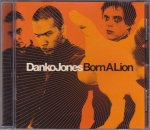
Thanks to you, the reader, for joining us this week for THE BEST FUCKING COLLABORATION WEEK EVER! All week, Aaron and I reviewed the same discs, and it was a ton ‘o fun. You got two reviews for the price of none each day! On Tuesday, Aaron’s gracious co-host over at the KeepsMeAlive, James, joined us to review Danko Jones’ Born a Lion CD! A big thanks to Aaron and James for a very fun week.
Due to the great reception, I have a feeling this will happen again, with an even larger field of participants. We shall see.
Below you will find links to every installment. Be sure to check ’em out, especially since you don’t want to have to read my crap all the time. Enjoy!





















You must be logged in to post a comment.