A short while ago, I reviewed the debut EPCompilation Vol. 1 by UCLA musician Derek Kortepeter. Since then Derek has put the finishing touches on his first full-length album Stochastic, an even more experimental collection.
Music like this is difficult for me to review as it’s pretty far out from the mainstream. Take the opening track, “Veritas”. The first 45 seconds are the sounds of guitar scrapes and echos, before the grand chords commence. As an opening track, this is both a welcome and a warning: It says, “If you find me intriguing, dive in! But if this is not much more than noise to you, farewell!” Not everybody is going to get music like this.
“Veritas” flows seamlessly into “Burning Embers” which uses backwards guitar as a melodic hook. Heavy, noisy guitars and drums soon flood the speakers. It’s difficult to grasp at the rhythm, but Derek does not make music that does not challenge him. Just listen. Allow the music to seep in, and you will begin to pick up on the melodies and rhythms within. It’s there in the contrasting guitars and keys. At this point I’ll mention that Derek plays all the instruments on Stochastic himself.
“Illusions” plays with odd drum rhythms and mixes guitars with synths into an atmospheric whole. I couldn’t tell you what effects he’s using on his guitar but it sounds cool to me. There’s lots of echo and bluesy playing on “Solitary”. I find that there is plenty to love here, you just have to really listen and let it happen. In particular, even though this isn’t a “guitar album”, I was drawn to that instrument.
“Fusion” is a favourite track of mine. This is a jazzy, upbeat mellow tune with a tropical feel. The piano is a key instrument here, while Derek noodles cool jazzy licks on his six string. Elsewhere (like on “Glitch”), I hear elements of Steve Vai’s fearlessness and playfulness. Steve Vai once said, “Sorry folks, I can’t help myself,” in regards to his experimentation. I think Derek can probably relate.
Another moment I really enjoyed is a multitracked cacophony of guitar and drums in “Solar Wind”. But it’s not just noise. It’s easy to see how somebody could hear it as noise, but there’s a lot going on here. (I can’t tell you exactly what is going on, but trust me, it’s happening. It’s very dense.) Then it goes sparse, with only one guitar, which throws you a bit (in a good way).
Finally I’ll quote Derek from his own website, because I think what he says hits the nail on the head:
“Many records, when they find their groove, bring the listener to a certain element of familiarity. This LP is quite the opposite of that. I want you to react, to think, to be moved, to be jarred, to be confused, and ultimately form an opinion on what it is that you are hearing. Whatever the “Stochastic” system determines for your mind, I can promise that it will be a unique result. This result will not be repeated in the consciousness of another human being listening to the same songs.”
Stochastic by Derek Kortepeter is available at CD Baby, iTunes, and beyond.
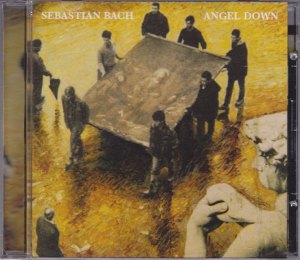
SKID ROW – Slave to the Grind (1991 Atlantic “clean” and “dirty” versions)
The Skids knew the second album had to kill. The band, always heavier live than the first album implied, also knew the second album had to sound more like they did in concert. And following up a huge hit debut, they also demanded the album be all killer, no filler. Raising the bar and ignoring the record company, the band re-convened and kicked every ass in the room. The result is Slave to the Grind, one of the best hard rock albums of ’91 period.
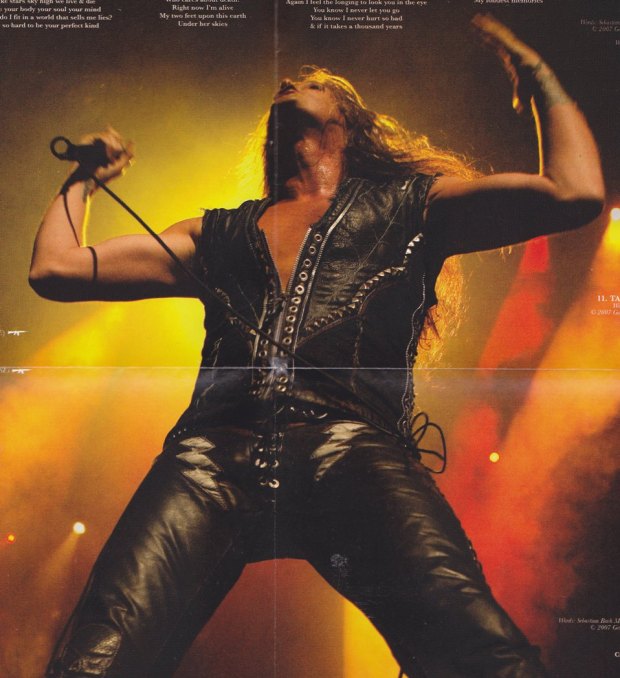
The first single “Monkey Business”, which is essentially just dirty grooves n’ screams, was about as commercial as the album got. With this as first single, it was clear that Skid Row didn’t care whether they got played on MTV or not. There was nothing glossy or slick about it. It’s still obvious that there’s something special here, and I credit that to two factors: the songwriting talents of Snake Sabo & Rachel Bolan, and the frontman chops of Sebastian Bach. Bach commands this song. It’s not just his vocals. It’s his confidence, his swagger, and his ego shining through.
If “Monkey Business” didn’t scare your little sister, then the second single “Slave to the Grind” definitely did. For the first time, Skid Row jumped straight into the thrash metal deep end. Drummer Rob Affuso had the chops to do it, and it really was a natural step to take. Other bands were getting heavier in 1991 too, but none of them took a turn like this. Skid Row raised the bar for everyone in their field in ’91.
The other singles from the album were technically “ballads”, although the band were eager to point out that none of them were anything like “I Remember You”. They were dark and edgy. The record company execs no doubt shit their pants when they heard the magnificent “Wasted Time”, which I can only describe as epic. It’s an incredible song, and it’s one of the few that Bach had a hand in writing. Baz wrenches all the emotions from his soul and that’s what I hear coming from the speakers. “Quicksand Jesus” and “In A Darkened Room” are only a little less impressive. They share the same kind of mood and sonic landscape. There is really nothing commercial about any of them. They all have headbanging moments and integrity.
Rounding out the album were several very strong deep cuts. “The Threat”, track 3 on the disc, easily could have been a single. In fact Terry David Mulligan of MuchMusic asked Sebastian if it was going to be selected as a future video, so I’m not alone in thinking that. “Psycho Love” is a bangin’ bass groove, laid to waste by Bach’s scorching vocal. “Livin’ on a Chain Gang” is another standout, an angry one about injustice. Then you have slow, landmine-infested blasters like “Mudkicker”, and fast smokers like “Riot Act”. All strong songs. The only one I’m not keen on is “Creepshow”, a jokey tune about the kind of people you’d see on daytime talk shows.
Skid Row knew well ahead of time that some markets would not release an album with a song called “Get the Fuck Out” on it. This fun punk rocker sounds like a Rachel song, but Bach’s attitude nails it. It’s probably a bit of a novelty, but it’s fun. “Fuck you if you can’t take a joke!” says Bach in one line. But it’s OK: if you can’t take the joke, you can buy the version of the album without “Get the Fuck Out”. Earlier pioneers in the clean/dirty dual releases, Skid Row saved the song “Beggars Day” for the Walmart version of the album. (Also sold by Columbia House in Canada.) I think it’s cool that they gave both markets added value with exclusive songs. This song is more traditional metal (perhaps Priest-like) than the rest of the record, but it’s equally strong.
Michael Wagener produced this album with a raw, unpolished finish. But there are backing vocals where you need ’em, and the instruments are clear and in your face. It still sounds heavy today, unlike a lot of other music from the same year. It just seems like everything clicked, and all the factors were in place. Slave to the Grind kicks ass with the best of them.
Enjoy this first review from my 2014 Toronto Record Store Excursion with Aaron!
FAITH NO MORE – Live In Germany 2009 (Immortal)
“Faith No More 2.0. New software; same old shit. Enjoy!” — Mike Patton
Faith No More have long been one of those bands who never really got their due. Without Faith No More, you’d have no Korn, Disturbed, or System of a Down. Their influence is best measured in the numerous bands who followed in their wake. I’m proud to have been a fan since first exposure (1990). When Faith No More broke up in ’98, I thought they took the high road by being one of the few bands to say a reunion was not in the cards. Then, like all the other bands, that moment came and Faith No More gradually eased themselves back on the stage. Now they’re making a new album (a new single, the Tom Waits-ish “Motherfucker” is out November 28) and I think that’s just grand.
I was pleased to bits to find a live CD document of a European Faith No More reunion show. It was an obvious must-buy, but I was happy that it sounds so fucking good!
The CDs only flaw is that it begins abruptly, as if a few notes of the first song “Reunited” are cut off. This 1978 R&B hit displays a side of Faith No More that other bands fail to capture — their ability to play classic R&B and Disco perfectly. Mike Patton has the soul chops, and just enough weirdness to throw his own style in towards the end. They segue this perfectly into the hammering “From Out of Nowhere” from 1989’s The Real Thing. I’ll tell you something here — I don’t miss Jim Martin at all. At first, I was hoping (without grounds) that Martin would be a part of the reunion. The band instead (and logically) went with their most recent guitarist Jon Hudson, a well-rounded player who can do all eras of Faith No More equally convincing. This is apparent on the wah-wah drenched “Be Aggressive” from ’92. This sexually explicit shocker is just as undeniably catchy as it was back in the 90’s.
This being Germany, Patton can’t resist dropping the odd “scheisse”, before barking like a dog, on the epic “Caffeine”. This bizarre powerhouse has long been one of Faith No More’s most stunning trips into the void, and live it’s only more so. Without the studio effects on his voice, Mike Patton resorts to unorthodox techniques to give his voice the distortion and flexibility required. Vibrating his throat with his hand, for example, is one such method you can hear on “Caffeine”.
Some of the other incredible highlights included here are the slick Disco of “Evidence”, which Mike sings in Spanish! The piano-and-beatbox of “Chariots of Fire” is hilarious and cool. Patton’s vocal acrobatics are unearthly on “Surprise! You’re Dead!”. Same with “MidLife Crisis”. You either like the craziness Mike Patton injects live, or you don’t. If you don’t, then you’re probably not a Faith No More fan anyway. I also enjoy the funny rant about somebody throwing €1 at him during the same song. “How would you feel, if you were a stripper or something, and somebody threw one Euro. How would you feel?” A valid question.
The best tune is probably the apocalyptic “Gentle Art of Making Enemies”. I fully expected Mike Patton’s head to explode. I don’t know how can do what he does with just lungs and a throat. Not to be outshined is drummer Mike “Puffy” Bordin who keeps the train on the tracks for the whole show.
The band’s onstage banter is a little friendlier than it was back in the day, but still teasing. They are not as antagonistic as I’ve heard them in the past. But they sure are tight. Musically, there is no question that reuniting this lineup was 100% the right move. They are too versatile and just too damn good to stay broken up. The set list was a well balanced representation of the Patton years, with only one Chuck Mosely classic (“We Care A Lot”, which is the closer). There aren’t too many obvious hits missing. “A Small Victory”, perhaps, or “Falling to Pieces”.
OZZY OSBOURNE – Bark at the Moon (2002 Sony, unadvertised remixed)
Much like Diary and Blizzard, when Bark At The Moon was reissued in 2002, it was also remixed. People who own my preferred edition of this beloved Ozzy classic have noticed the unadvertised remix. (There was no sticker on the cover indicating this album was remixed, and it was also ignored in press releases. The liner notes claim this was mixed by Tony Bongiovi, like the original.) Why this was done is a mystery to me, I’ve never read anything about it. All I can say is that you’ll notice particularly on Jake E. Lee’s solos, the overall sonics, and some keyboard parts as well. The ending to some songs, and the beginnings of others are very different. Maybe Ozzy thought the album sounded dated? The remix seems as if they were trying for the drums and effects to sound “current”. Which is silly, of course. This year’s “current” is next year’s out of date, but classic will always be classic.
Either way, the original mix of Bark has been an underdog favourite for many years. Ozzy seems to really want to bury the Jake years. He only plays the title track live, none of the other songs. Granted, “Bark at the Moon” is clearly an outstanding track. There are still some lesser-known classics here equally good as the album tracks on Diary or Blizzard. For example, “Rock ‘N’ Roll Rebel”. This riff monster sounds like the natural successor to some of the best moments on Diary. There are a ton of great songs here. “You’re No Different”, which is one of those great Ozz slow burners is another one. I’ve always liked “Slow Down” and of course “Waiting for Darkness”. Ozzy had gothed out his sound a lot more on this album and you’ll hear a lot more keyboards and even strings.
Ozzy was in a bad place back in ’83. Still hurting from the death of Randy Rhoads, Ozzy was forced to audition players again, a process he hated. Jake E. Lee (ex-Ruff Cutt) was selected, perhaps due to his ability to meld white hot riffs with neoclassical shredding. Bassist Bob Daisley returned, as did drummer Tommy Aldridge, who had played on the last tour. Don Airey returned for keyboard duties, creating a spooky atmosphere for the Ozzman to prowl.
And prowl he did. This is a hard rocking album, probably harder than the two Rhoads discs. It is also a dark sounding album. Blizzard has a lot of musical joy on it; you can hear that these guys were stoked to be playing those songs. Bark sounds a bit tired by comparison, a bit like a druggy haze. “Now You See It (Now You Don’t)” is an example of a song that has all these qualities. It has a hard, almost Sabbathy guitar riff, but is cloaked in darkness.
“Rock ‘N’ Roll Rebel” is the most upbeat song. Who doesn’t like a song about rebellion in the name of rock and roll? It also has obvious references to the TV preachers who were out to get Ozzy at the time, so the song is like a big middle finger from Ozzy. “I’m a just a rock ‘n’ roll rebel, I’ll tell you no lies. They say I worship the devil, they must be stupid or blind.”
Then you have the jokey weird ballad, “So Tired”. At least that’s how I heard it then, and still hear it now. The video seems to emphasize the jokey aspect. Who doesn’t love to see Ozzy dressed up as monsters? As far as the song goes, I have no idea what they were thinking at the time. Maybe it was the drugs? Another weird thing — even thought I think the song is a joke, I love it!
As mentioned, since the remix changes the sound of the album and swaps out solos here and there, pick up one of the earlier CD editions. The 1995 remaster is pretty good; it contained the B-side “Spiders” (sometimes written as “Spiders In The Night”). Unfortunately even though it’s a well sought rarity, it’s not one of Ozzy’s better songs. It’s an obvious B-side. Better (because it’s funnier) is “One Up The B-Side” which makes its CD debut on this edition. “The bent overture”. Heh.
Now that Ozzy and Sharon have seen the light and finally reissued the original mixes of Blizzard and Diary, one can always hope for a long term Ozzy reissue program. I’d like to see the original mix of Bark At The Moon made available again. I think it’s a shame that Ozzy seems to have disowned most of the Jake E. Lee era. Jake was and remains a great guitarist — check out his work on the incredible Badlands album.
I’ll admit I never saw the original cut of this 1999 cult indy classic. I’d heard of it back then, but never saw it. All I’ve seen is this recut version, and I am pleased to bits over it. Not knowing what to expect, I popped the movie into the DVD player. This movie was a good 15 years ahead of its time. Now you can see this every week on The Big Bang Theory. I’d almost go as far as to call Big Bang a ripoff. Almost. Big Bang never got Shatner on their show.
I was immediately inundated with sci-fi and pop culture references to make Kevin Smith wet his bed. Anyone born in the 1970’s will understand. Yet, this is not as cheesily done as the disappointing Fanboys. Something about this strikes the nerve of authenticity. From re-enactments of Logan’s Run (“Run, runner!”) to geekouts over Wrath Of Khan laserdiscs, and incorporating Terminator quotes into everyday life, if you’re a sci-fi geek, you will never find a more wretched hive…sorry, got carried away there. Throw in Swingers influences for the late 20’s crowd in the late 90’s and you have a pretty entertaining film. Although in the wake of Big Bang Theory, I fear viewers today will simply feel they’ve seen this before.
Eric McCormack is a struggling writer (his latest screenplay, Brady Killer — a horror movie set in the Brady house — is pretty much junk). Rafer Weigel (who?) is a film editor for a tiny studio, making movies like Beach Babe Bingo Fiesta. Their lives consist of trying to score, geeking out over Star Trek (“only original, only classic!”), and in Rafer’s case, paying the bills without hawking his Trek goods. Their lives take a turn for the interesting when they are browsing books and run into…William Shatner (browsing porn), as played by William Shatner.
This is, in my own humble geek opinion, Shatner’s best movie. At times he plays himself understatedly dark, other times with panache, and outrageously at others. Most of all, Shatner’s Shatner is whacko. A lonely whacko, and lovable, but also out-of-his-tree whacko, as if every story you ever heard about his ego was true. He is working on his own film project, a little epic. William Shatner and William Shakespeare’s Julius Caesar. A musical version. Six hours long. Three intermissions. With Shatner playing all the parts. Except Calpurnia. He was thinking about getting Sharon Stone for that part.
Shatner, as great as he is, is only the background for this lovingly made film. He appears in childhood dream sequences, and he pops up unexpectedly when the characters need to confess their problems to what essentially amounts to a friendly, lonely stranger. Our main characters are going through their own late-20’s problems, mostly with women. The performances are merely adequate, certainly not Oscar-worthy, but damned if McCormack doesn’t do the best Shatner monologue that I’ve ever seen. It’s a very, very good Shat.
This is not a complex story, but it is a warm one about friends and Trek, and is infinitely re-watchable. I pull it off the shelves every year or so to enjoy and geek out. I can’t say the same thing about Fanboys. Its only flaw is its ending, which is a shame since the ending is kind of the important part. Considering that the ending is a musical performance by William Shatner though, there’s some camp value to it. It’s just…not very good.
The DVD bonus features are pure awesomeness at warp 9. My favourite was a pilot for a series called Cafe Fantastique that was never picked up, but damn, it should have been. The makers of Free Enterprise came up with a series where they just discuss science fiction news and films over drinks in a bar with special guests. Chase Masterson (Star Trek: Deep Space Nine) appears in this pilot. It’s kind of like that show that Jon Favreau had where he just hangs out at dinner with his friends. Shoulda woulda coulda been a series. I would have watched it, and so would you. Lastly there is a large booklet with lots of pictures and essays, and a glossary of geek speak. For example “Soylent Green is people!”
Pickup Free Enterprise if you:
a) are a Shatner fan
b) love Kevin Smith style films
c) think Han shot first.
3.5/5 stars. An indispensable part of my Trek library.
I’m going to keep it short and sweet this time, and defer to a 1992 review by M.E.A.T Magazine’s Drew Masters (issue 38, Nov. 92):
He’s right. I don’t agree with the single M rating though; these are mostly good tunes. They’re sequenced awkwardly as fuck though. The flow on this disc is just completely fucked. The songs don’t work in the sequence they’re in. And Drew is correct in inferring that many of White Lion’s prouder, heavier moments are missing. Vito smokes on the live tracks, but Tramp can’t hit the notes. Buy Pride, not this.
It took Blaze Bayley a couple years to bounce back with a new band and album, and given the fan reception to his work with Iron Maiden, I was skeptical. I didn’t shell out for the Japanese, but I did grab the domestic CD as soon as a copy arrived in our stores. I was pleasantly surprised, as Blaze’s debut solo release Silicon Messiah is a very heavy and memorable disc.
The weakness for some will be Blaze’s voice. You either like it or you don’t. Outside of the context of Iron Maiden, his deep vocals work better. The opening track “Ghost in the Machine” for example is a de-tuned chugger the likes of which Maiden wouldn’t do. Blaze’s vocals work better with this kind of low, growly metal. Fortunately there is still enough melody (on the killer chorus) and riffage to keep heads banging. And no wonder: the CD is produced by metal master Andy Sneap, who laid waste to several excellent Accept albums recently. Blaze wrote the music with his new eponymous band: Steve Wray and John Slater (guitars), Jeff Singer (drums), and Rob Naylor (bass). The band is somewhat faceless, aside from Blaze himself there’s nothing identifiable about the band.
If there is a weakness to Silicon Messiah, it’s that there is a certain sameness to the songs. It’s a bit homogeneous: grinding, de-tuned riffs, melodic choruses and solos, with powerful but low vocals. Fortunately Blaze has written some surprisingly decent lyrics to go with the songs, with several seeming to fit together into some kind of cyberpunk concept.
Highlights:
“Silicon Messiah”, perhaps the most Maiden-like track.
“Born as a Stranger”, also Maiden-like (think “Be Quick or Be Dead”); speedy goodness.
“The Brave”, another fast one that kicks all the asses in the room. “Fortune favours the brave” indeed.
“Identity” which boasts lots of tasty guitar bits along with loud and quiet parts.
“The Launch” which is essentially “Man of the Edge” by Iron Maiden re-written (but with a better chorus).
“Stare at the Sun”, your typical Maiden-inspired epic closer.
Blaze Bayley, his band and Andy Sneap created a pretty decent metal album here. It’s perfectly listenable throughout, if a bit anonymous sounding. Fans of Blaze will dig it.
“Mike!” he began. “They have a Europe album you don’t have down at Sam the Record Man. You should get it, but it’s only on record.”
I knew Europe had albums prior to The Final Countdown, but I had never seen nor heard them. Since my primary format was cassette back then, I passed on the vinyl version. A few weeks later, Europe the album showed up in the new Columbia House catalog, so I ordered it on tape. I had reasoned out that this was their first album, but the 1989 date on the back made it look like a new release. In fact Martin Popoff even reviewed it as such in Riff Kills Man!, stating that the poodle hair and keyboards were “gone” and replaced by sheer heavy metal. He’s right about the heavy metal, even if he had the order of the albums wrong. Europe resembles the band of “Carrie” and “Rock the Night” only superficially. This is a metal album, and a damn fine one at that.
The regal, thunderous riff of “In the Future to Come” should warn away anyone expecting power ballads. This speedy UFO/Priest hybrid certainly took me by surprise. Singer Joey Tempest’s voice was not the soulful powerhouse it would later become, but he was just a kid at the time. The metal here is pure: no frills, no excesses, just steamhammer rhythm and a howling lead singer. Throw in some ace John Norum guitar work and you have something to talk about. His double-tracked solo might be reminiscent of Thin Lizzy.
“Farewell” is straightforward heavy metal, on the hard rock side of things. Some may be off-put by the flat lead vocals, but I say, “Hey, it’s rock n’ roll.” The song slams and the chorus is memorable enough for me. Then “Seven Doors Hotel” changes the scene with a haunting piano opening…but it’s merely a fake out. The speed metal riffing and wailing Norum are back. Norum makes his Les Paul howl like Joey does at the microphone. Even though there’s some neoclassical finesse to some of the music, I hear a bit of Phil Lynott in there too.
My favourite song then and now is probably “The King Will Return”. The lyrics aren’t very good, but English wasn’t Joey’s first language. I still enjoy the words, as it’s one of those medieval story-telling songs that I’m a sucker for. This softer song is still pretty epic and wouldn’t be considered wimpy by anyone. Side one was closed by the Norum instrumental song “Boyazont”. I don’t know what a “boyazont” is, but who cares? Norum instrumentals are usually ballsy and catchy, and this is no exception.
The second side is commenced by “Children of this Time”, which continues much in the vein of songs like “In the Future to Come”. Then for a respite, “Words of Wisdom” has an acoustic verse. That doesn’t make it a ballad! No, this picks up speed for the chorus and continues to storm the gates of Valhalla like the rest of the album. It’s a bit slower in pace, but the drums still hit like hammers while Joey howls at the thunder. I think I can even hear timpani. “Paradize Bay” (not sure why they spelled it with a z) is one of the album’s strongest cuts. It’s a relentless battering ram with a chorus that hints at the grandness of Europe in the future. Norum’s solo is sloppy but delicious. “Memories” then closes the album on a frenetic note. There are plenty of “woah woah” vocals to go around, and drummer Tony Reno seemingly pulverizes his kit. There’s another voice singing with Joey on the outro of the song; is this John Norum?
This album was self produced, and as such it sounds very raw. But heavy! Not all bands who self produced early in their careers managed to get results as good as those on Europe. For 1983 and just a bunch of kids, this is damn fine work! And it holds up. It’s a headbanger.
C.K. LENDT – Kiss and Sell: The Making of a Supergroup (1997 Billboard Books)
Chris Lendt used to be an accountant for Kiss’ management company (from ’76-’88), and according to him, quite close to the band. He spent a lot of time on the road, with the band, keeping track of the money. The story he tells is amusing at times, off-topic at others, but also often critical of his former bosses.
Lendt distills Kiss’ legacy to profit/loss diagrams. At the same time, he tells a lot of stories about excess, touring, and groupies, but not a lot about rock and roll. If you are looking for the nitty gritty details about Kiss and the music, this is not the book for you. For that book, check out Black Diamond by Dale Sherman. If you want one person’s account of the inner workings of the Kiss business, then read on.
Lendt describes parties, extravagent budgets, and stage shows. Where things get really interesting in this book is when things start to go sour for Kiss, right around the time of the Dynasty tour in ’79. He desribes Gene’s plan for “Kiss World”, a traveling amusement park that was to play outside of Kiss’ concerts on that tour. Needless to say it never happened, but it’s not something that’s well covered in other books, at least in this level of detail. He talks about recording budgets, about Ace Frehley building a gajillion dollar home studio that was never used (and later turned into a swimming pool), about wigs (Gene’s), about gurus (Paul’s), and about desperately copying every move Bon Jovi made when they hit it big in ’86, before his company was fired by Kiss in ’88.
He also spends a bit too much time talking about Diana Ross, whom his company was also managing. There are too many pages about investments, stuffy boardroom meetings, profit margins, and budgets. While this book is very insightful, covering many details that nobody else was privy to, it’s not enough about rock and roll. I can’t even tell if Lendt really likes rock and roll. Certainly, he liked working for Kiss in the early years, and the touring, but the later years are marked by constant criticism. (A bit like my own Record Store Tales, I guess.)
Pick up Kiss and Sell cheaply, read it and enjoy it; but please also pick up Dale Sherman’s Black Diamond, and Kiss’ own Behind The Mask. Both books are more about the music, and both books are actually surprisingly critical as well. All three together will be a very well rounded reading of the hottest band in the land.
3/5 stars. More if the author would stick to the topic!
Having first latched onto Savatage in ’87 with “Hall of the Mountain King”, I was primed and ready for Gutter Ballet. What I didn’t expect was the heavy piano on the title track/first single. But that was a pleasant surprise: I was heavily getting into piano within the context of hard rock at the time. Savatage’s Jon Oliva has a tendency to write simple but very catchy piano parts. “Gutter Ballet” was inside my head on first mindblowing listen. All that was left for me to do was buy the album.
Savatage have reissued Gutter Ballet with different bonus tracks many times. I have the 2002 Steamhammer release (the Earmusic version) which has an extensive booklet with ample liner notes. Gutter Ballet was the post-rehab album for Jon Oliva, and this informs many of the lyrics (“Thorazine Shuffle” for example). Upon beginning the album, Jon and his brother Criss wrote heavy guitar based metal songs which were later included as bonus tracks on various releases. Not satisfied, producer/co-writer Paul O’Neill sent Oliva out to see Phantom of the Opera in New York. This changed everything. Meanwhile, the rehab stint ended up producing a three song mini-suite. The road to 1991’s Streets: A Rock Opera was now paved.
Gutter Ballet commences with “Of Rage and War,” the bass hook of which reminds of “24 Hours Ago” from the last album. It has one of those staggered Criss Oliva guitar riffs that I miss so much, and the unforgettable drum patterns of Steve “Doc” Wacholz. The lyrics are not profound, but they’re catchy enough (especially when Oliva starts shrieking). They’re also still relevant today.
You got Libya, you got the Russians You got civilian planes crashing to the oceans Airports full of terrorists, Nazi skins, anarchists When are you gonna learn?
Lyrics aside, the strongest thing about “Of Rage and War” is the guitar riffing. The six-string then takes a bit of a back seat (solo aside of course) on “Gutter Ballet” to the piano for the first time. Oliva’s simple melody is one of the first that I learned to play on keyboard and I still have my old cassette demo somewhere! A minute later things speed up and get dramatic. As good as the piano part is, the guitar riff that comes in to compliment it is just as stellar.
Could “Gutter Ballet” be Savatage’s best song? You could easily argue that, even though the band would later ramp up the drama and complexity on their albums. I think the song is completely without flaw. From Jon’s lyrics (inspired by a stabbing he witnessed while in New York) to the slightest piano accents, the track is perfect. And it even manages to maintain its balls, which I’m sure helped longtime Savatage fans adapt to the new sound.
First video with Chris Caffery.
“Temptation Revelation” is a 3:07 instrumental track that really only serves to bridge “Gutter Ballet” to another piano based hit, “When the Crowds are Gone”. The piano and guitar vibe is maintained throughout. “When the Crowds are Gone” is a very special song, and undoubtedly you could call it a ballad. It has heavy choruses, but the thrust of the song is based on Jon’s voice and piano. Jon sounds tiny at first before using his full throat. The song was first conceived by Paul O’Neill as part of the later Streets rock opera, a project he had cooking for many years. The song would have fallen after “A Little Too Far” on side one. I think it’s another one of Savatage’s best-ever compositions, and Jon’s screaming at the end seems to really embody the desperation of the lead character.
I never wanted to know, never wanted to see I wasted my time, till time wasted me Never wanted to go, always wanted to stay ‘Cause the person I am, are the parts that I play.
So I plot and I plan, hope and I scheme To the lure of a night, filled with unfinished dreams I’m holding on tight, to a world gone astray As they charge me for years I can no longer pay.
Note Doc Wacholz’s United Federation of Planets drum kit!*
Side one closed with an acoustic instrumental called “Silk and Steel” which is really a showcase for the underrated Criss Oliva. It’s just acoustic guitars — nothing else — for four minutes. Right on, and perfect for a side closer.
No punches are pulled whatsoever on side two. A bruising tune called “She’s In Love” boasts a chugging riff and those speedy Dr. Killdrums snare hits. As for Jon, he spends most of the song screaming in fury (but also in tune). Musically, think “Loss of Control” by Van Halen, but metalized. “Hounds” then opens with quiet picking, similar to Metallica’s “One”. This doesn’t last, and before too long it’s a regal metallic plod with a little bit of Sabbathy organ audible in the background. Then, “The Unholy”: a stampede of tricky licks and screaming vocals. There is no let up.
The aforementioned three-song mini suite is next, and it begins with “Mentally Yours”. The character of “Timmy” is introduced, a disturbed character. The insanity theme is immediately obvious by the piano intro where Jon sets the scene. Think Alice Cooper’s From the Inside album. This piano intro could even be considered a separate song, as it has nothing to do with “Mentally Yours” musically. Intro aside, this is another heavy metal bruiser, guitars on the prowl. It even changes to a speed metal thrasher by the end.
“Summer’s Rain” is the only thing resembling a ballad on side two. If so, it’s a heavy ballad without piano. It does feel spiritually connected to “When the Crowds are Gone” from side one. Still, the best tune of this trilogy is “Thorazine Shuffle” which has an ominous opening. Then the song really begins; a stuttering limping riff, evoking the Thorazine shuffle Oliva sings about. Gutter Ballet ends on an appropriately heavy note.
This remastered edition has two live bonus tracks; unfortunately they are just from the album Final Bell/Ghost in the Ruins. As such I’ve chosen not to talk about them, since I’d rather just review that album later on. So be aware, the Steamhammer remaster from 2002 doesn’t have any exclusive bonus tracks.
3.5/5 stars
* Savatage MUST be Trekkies. The next album, Streets, featured the following lyrics:
And who’s to say what it’s all about? When John Wayne took the last train out? And Spock and Kirk have had enough, And no one’s left to beam me up.