An epic six-member panel! Mega mega movie lists! Another great show in the books.
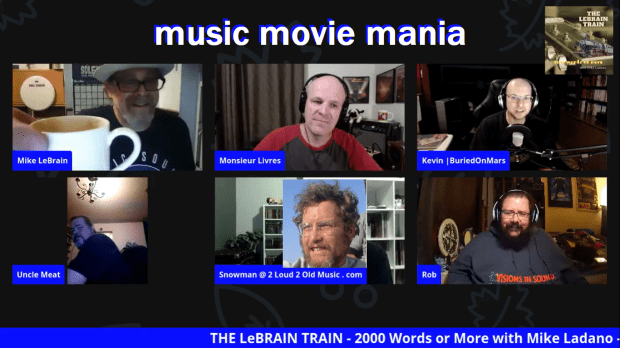
Music movies were the focus of the Nigel Tufnel Top Ten tonight, and we brought you so many that your head will spin. In a good way. Like a record. Thanks to everyone for coming on tonight:
The LeBrain Train – 2000 Words or More with Mike Ladano Episode 29
Another week, another list show, and this one comes courtesy of the founder of the Nigel Tufnel Top Ten list, Uncle Meat himself. Music Movies — with one caveat. No documentaries. Those would make a fine list on their own.
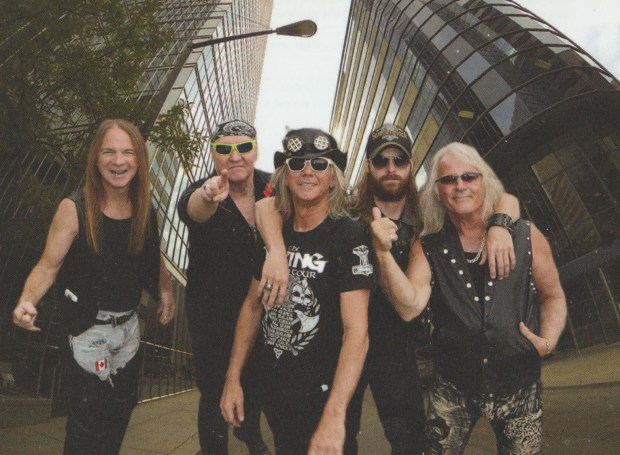
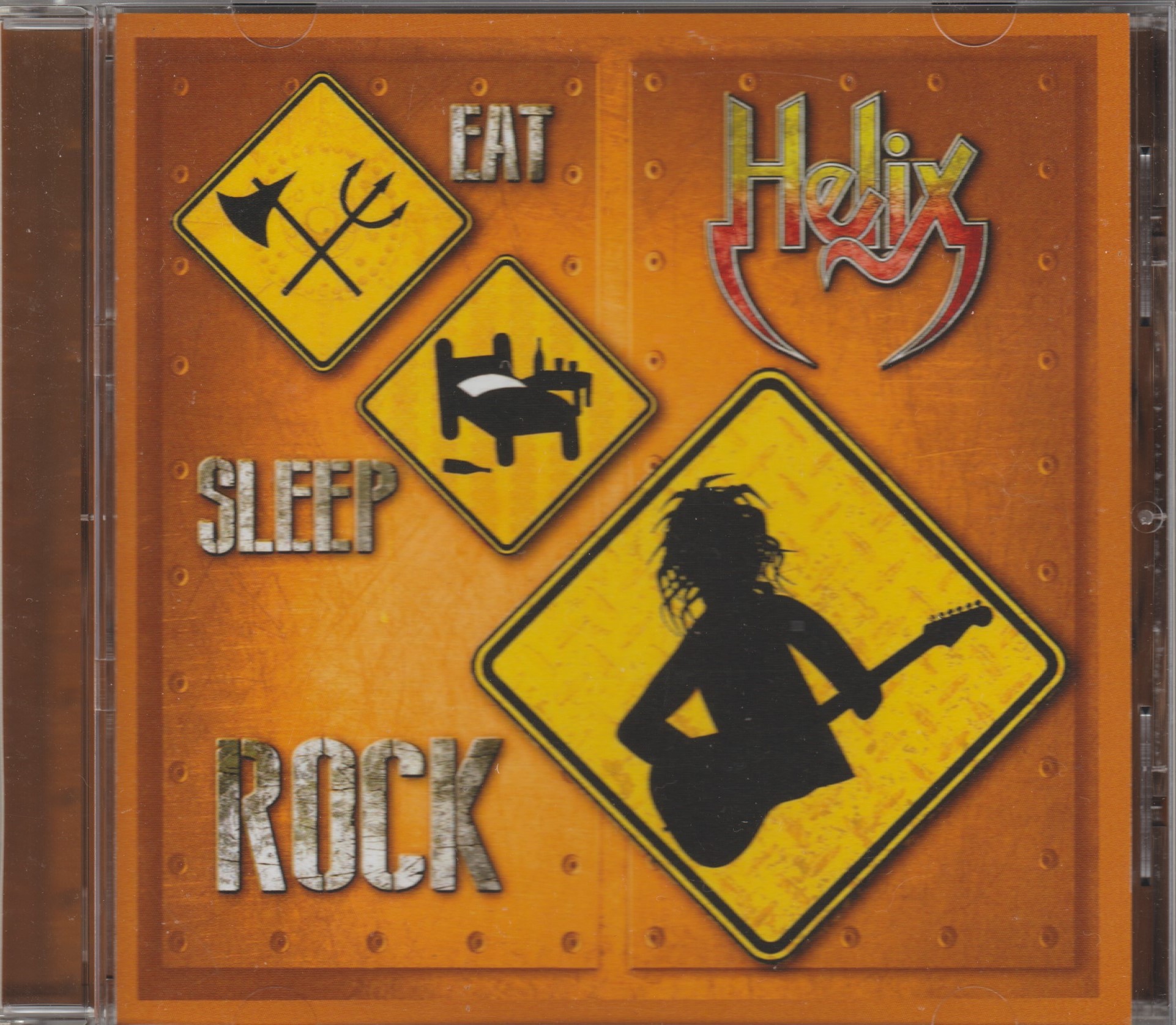
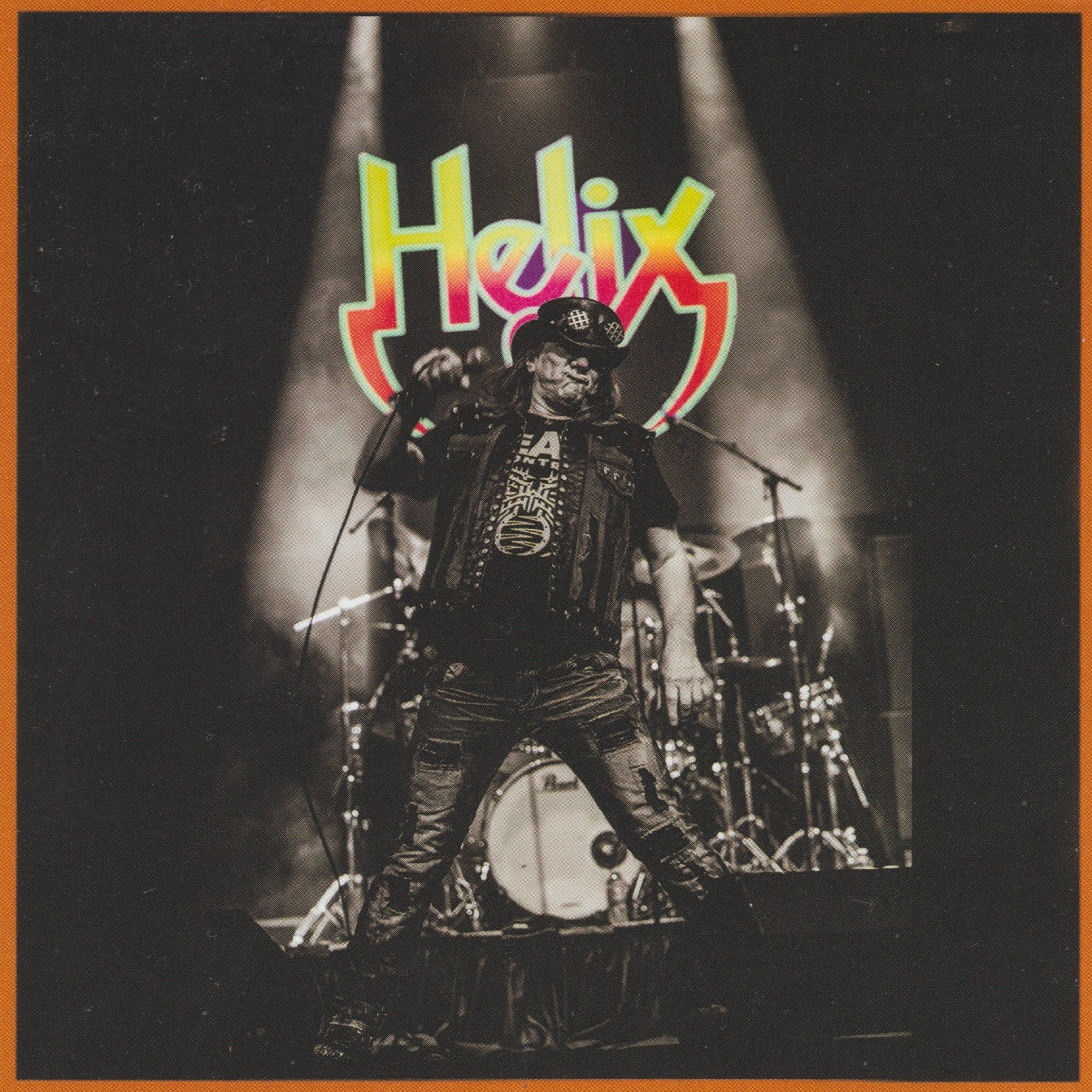
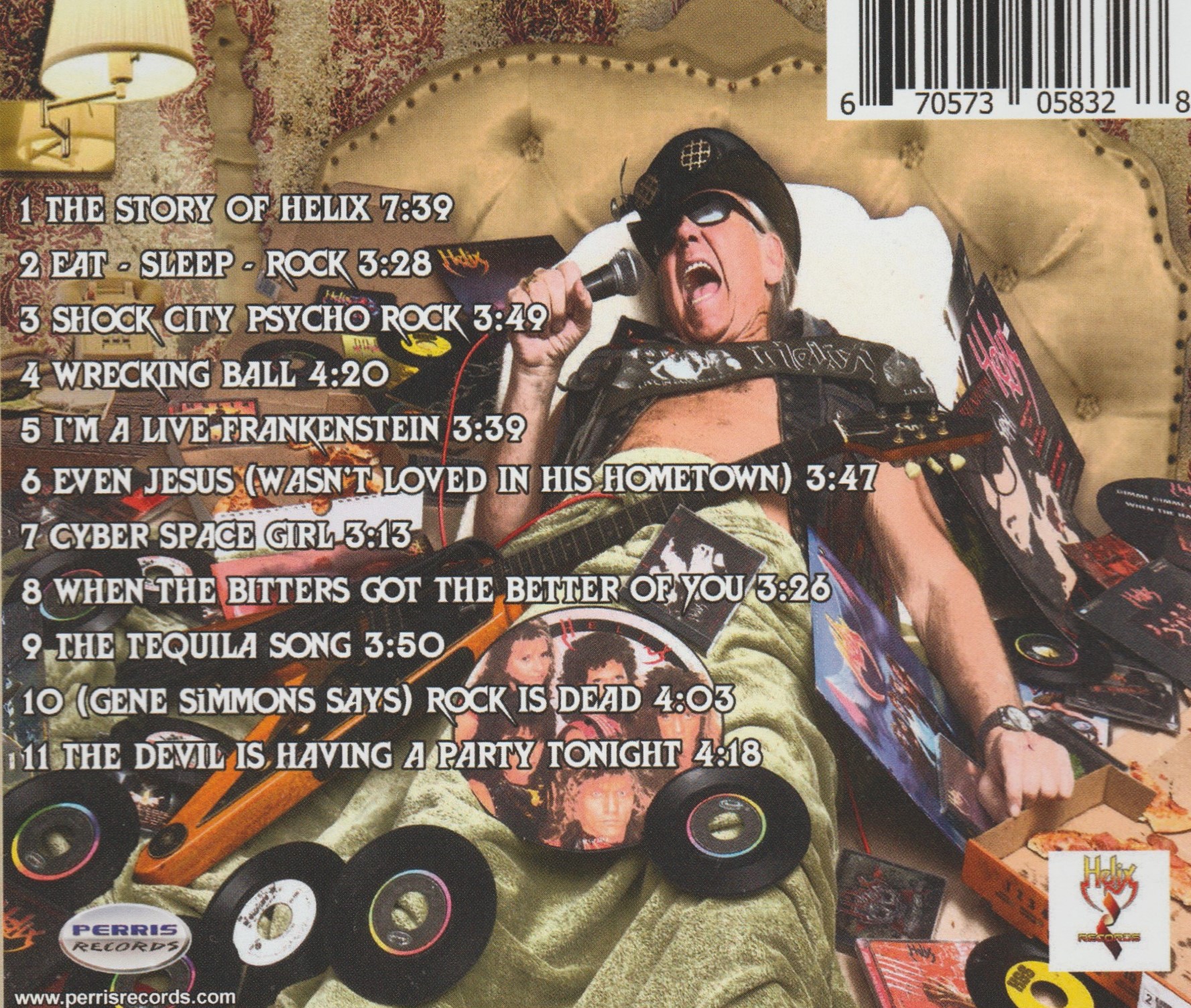
If there’s one thing you can count on, even in 2020, it’s that Helix keep on keeping on. 46 years running, and a new compilation CD on the shelves called Eat Sleep Rock. Sounds a bit like Brian Vollmer’s life story! Helix have given us two new songs and nine previously released numbers. As has been the case recently, the cover art is by former guitarist Brent “The Doctor” Doerner.
We love Helix, but opening with “The Story of Helix” is a bit of a misfire. I get that it would be a great opener for Helix’s acoustic gigs (it even has band member intros), but it’s a sluggish start to an album. On this track, Brian Vollmer takes us through Helix history, with the odd musical segues through “Billy Oxygen”, “She Loves You”, “Heavy Metal Love”, and “Lick It Up” among others as the story progresses. Even “Teen Spirit” in the 90s, “when everything went to shit”. But what didn’t kill them made Helix stronger and they’ve certainly made great albums since. Some of their best in fact. Eat Sleep Rock contains shining gems aplenty of post-grunge-era Helix rawk. But “The Story of Helix” should have been left for the last track on the album.
The good news is that Vollmer proudly proclaims he will “NEVER” retire! And if the second song, “Eat – Sleep – Rock” is any indication, that’s a good thing. This is a HEAVY Helix. Produced by Daryl Gray, with guitars aided and abetted by Sean Kelly, this one smokes. There ain’t no rest for the wicked, as “Eat – Sleep – Rock” resoundingly demonstrates. Long-time Helix fans are going to love this newbie that recalls the fire and fury of 1984 all over again.
As mentioned in “The Story of Helix”, the 90s were not kind to Kitchener’s favourite band. That said, they still put out three excellent albums in that decade, the last of which was 1998’s half-ALIVE. It was the first Helix release in five years and included some new material to go with the live side. “Shock City Psycho Rock” and “Wrecking Ball” (both heavy hitters) are two of the best. “Shock City” is an upbeat boogie, and “Wrecking Ball” just slams. Giving these two songs fresh attention is a good thing.
Brian Vollmer’s solo album When Pigs Fly (1999) is a Helix album in all but name, so “I’m A Live Frankenstein” is a valid addition. This grinder has a hint of industrial rock and Helix alumnus Brian Doerner on drums. It sounds a little out of place, but as Vollmer alluded, the 90s were a weird time.
“Even Jesus (Wasn’t Loved In His Hometown)” is a scorcher originally from the excellent Bastard of the Blues (2014). That album is criminally forgotten, and it’s actually under-represented here. The guitar hook and chorus melody will gnaw away at you until it’s right in your brain. “Cyber Space Girl” (from 2007’s The Power of Rock and Roll) hasn’t been on a compilation before. It’s another great tune from a tragically forgotten album. The Power of Rock and Roll was loaded with heavy melodic tunes, and “Cyber Space Girl” definitely deserves a revisit. Even better though is “When the Bitters Get the Better of You” from the superb Vagabond Bones (2009). That was the first Helix album to feature Daryl Gray, Greg “Fritz” Hinz, and Doctor Doerner since the 90s. They loaded it with top-notch songs and “Bitters” is just one of many. It’s another boogie, so get down!
Later, in 2017, Helix issued a bitchin’ 12″ single for “The Devil is Having a Party Tonight” and “The Tequila Song”. Both those songs resurface here. I’ve said it before, but Helix have written a better song about tequila than Sammy Hagar ever has or will. As for the classic metal sounds of “Devil”, it has a positively beastly bass groove. These are both great tunes. Now you can get them affordably on CD. And of course, “(Gene Simmons Says) Rock Is Dead” (from 2016’s Rock-It Science) still stands up. It ran the risk of being a novelty, but holds up in the present. Gene did proclaim rock to be dead, many times. I’m glad he was wrong. If he wasn’t, then Brian Vollmer couldn’t still Eat Sleep Rock today! But he can, and so the Helix band keep putting out worthwhile new material.
The track listing for this CD was well chosen as there is minimal overlap with other compilations (with three in common with Rock-It Science). It spotlights songs that haven’t have their rightful day in the sun. The only thing I’d do is move “The Story of Helix” to the end. Minor quibble aside, if you haven’t bought a new Helix album in a while then now’s the time.
It took 17 seasons (or 15 by some counts — it’s complicated), but finally, American Dad has wound up one of the longest running sagas in television history. It’s the story of Roger the Alien’s golden turd. Begun in season 1, Roger’s turd has been the subject of a recurring story over the course of the last decade and a half. It has incredible powers of evil, similar to the One Ring of Tolkien lore, over those who encounter it. Good people corrupted have lusted and murdered for it. The lump of jewel-encrusted poo has appeared briefly in several episodes, forming a long story arc unfolding over many seasons.
You can follow the saga of the turd in the following episodes:
Season 1 episode 6: “Homeland Insecurity” – Roger lays the golden turd. Two electrical workers discover the treasure, but only Jim survives, killing his best friend for it. He calls his fiancee only to discover her having an affair.
Season 2 episode 3: “Failure is not a Factory-Installed Option” – Guilt-laden Jim parks his truck on train tracks, killing himself. The investigating cop on the scene finds the golden turd, and brings it home to show his wife. He quickly regrets tampering with evidence, and decides to turn it in. Instead, his wife puts rat poison in his tea.
Season 10 episode 3: “Blargsnart: A Love Story” – The cop’s wife is executed for murder. Their son, an important man with presidential ambitions, discovers the turd hidden under a floorboard in their house.
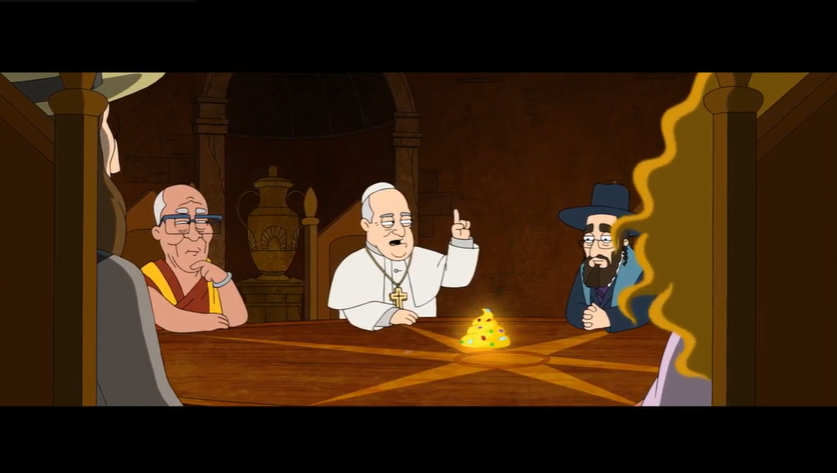
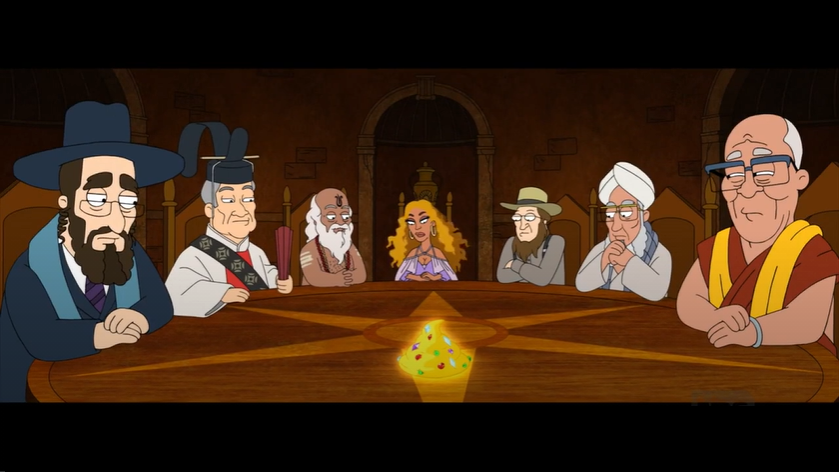
Season 12 episode 1: “Father’s Daze” – The man and his presidential campaign adviser fight over the turd. They are both killed and the turd is later discovered by a cleaning woman who realizes its true significance. She takes it to the Vatican where the leaders of all the world’s religions decide what to do about this prophesized “turd” of events.
Season 5 episode 9: “Rapture’s Delight” – In a fanciful Christmas story taking place during the future of the book of Revelations, freedom fighter Jesus returns the turd to Roger. (“Ah, an alien. One of my father’s side-projects”, says a trash-talking Jesus.) Roger uses the turd to power his spaceship, in order to ultimately stop the Anti-Christ. (This episode is not quite in continuity since everyone dies in the end, but could still take place in American Dad’s future timeline as a sort of coda to the turd saga.)
The saga finally concludes in American Dad’s 300th produced episode: AMERICAN DAD! – “300” (Season 17, episode 21)
Though it went on like the Song that Never Ends, the turd saga was wrapped up in grand style. I’ve made the argument that American Dad is trying to keep up with Rick and Morty lately in terms of epic storylines with universal consequences. In its own way, American Dad has caught up this year.
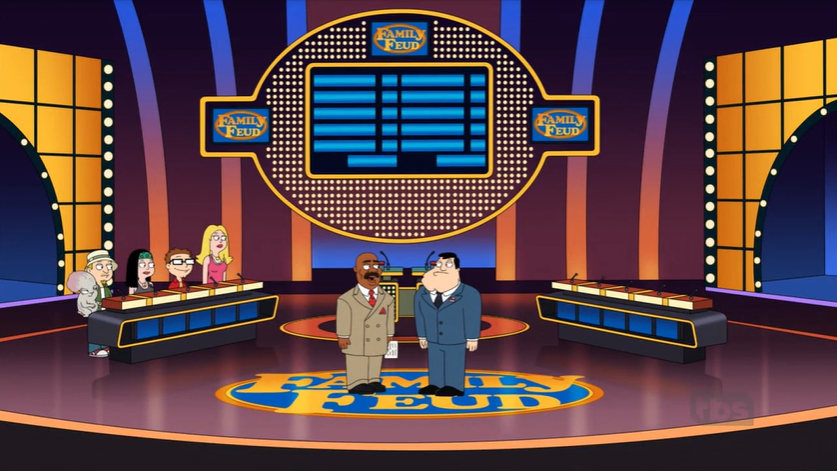
We mundanely begin in the Smith family kitchen. The family have been trying for years to get on Family Feud and have finally received their application letter. Famously, Family Feud only send you one application; no second chances. Roger promptly destroys the application in another one of his endlessly destructive gags. The family realizes (via flashbacks) that Roger ruins everything, and banish him from the house.
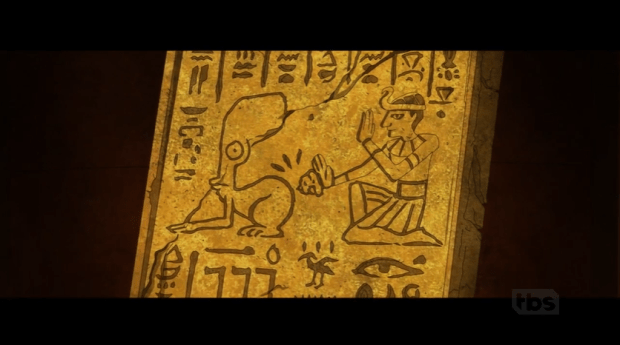
The screen transitions to the letterbox format, indicating we are about to pick up the saga of the turd.
At the Vatican, the Pope, the Dalai Lama, Beyonce, and other important religious figures discuss how to dispose of the evil golden turd. It can only be destroyed by sending it back through the portal from which it originated — Roger’s ass. Its power to “corrupt and twist the human mind” is the only thing preventing the world from ascending to true peace, but the leaders squabble and fight. None of them can do it; they need a “chosen one”, a person who is immune to the turd’s power. Fortunately, the Knights Turdlar find the chosen one and send her with the turd to Langley Falls in America.
Roger’s not home — he was evicted, remember — but he’s not hard to find. The deed is easily done, and the turd is returned to its origin by the chosen one. The consequences are immediate: a bright wave of light circles the Earth. Utopia! World peace…and Roger’s demise! He shatters into (wink wink) 300 pieces.
There’s a big musical number featuring Patrick Stewart’s CIA director Avery Bullock, who announces there’s no more need for the agency. The song features blink-or-you’ll-miss-them cameos from all sorts of favourite characters from Santa Claus to Alistair Covax to The Weeknd. But the family is bored and can’t stand utopia! Will they selfishly try to restore Roger and end this world peace nonsense? It’s the Smiths; of course they will! Roger’s 300 fragments were scattered by the Knights Turdlar, hiding them in the most inaccessible places on Earth. But Roger’s offspring, Rogu can “probably” sense all of Roger’s bits hidden all over the world.
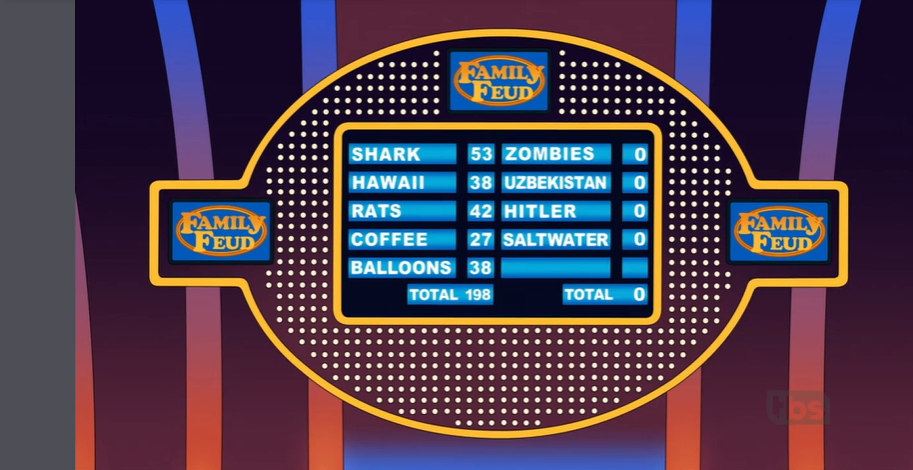
The story comes full circle when they track down the final and most important piece (the butthole) to Family Feud’s own Steve Harvey. The TV show host isn’t giving it up…not without a Feud! But an unlikely Fast Money victory isn’t the end of the turd’s tale. It always exacts a heavy toll (as the previous episodes in the saga demonstrated). Restoring Roger and undoing utopia has bloody consequences for the Smiths. It’s the kind of death-laden storyline that only a time travel trope can undo! Future Roger needs Past Roger to ensure the turd is never found in the first place, and hopefully also to not get kicked out of the house!
There is one more episode left to go this season, but American Dad demonstrated some epic scale storytelling with “300”. That required epic aspect ratios. Most of this episode is in the standard widescreen, but goes letterboxed for the turd saga. It even briefly goes back to full screen when we revisit the origins in season 1. Three aspect rations, one epic episode. What a way to end this long-running story, which was not a turd at all.
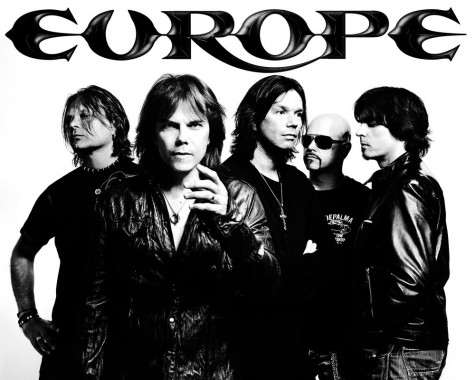
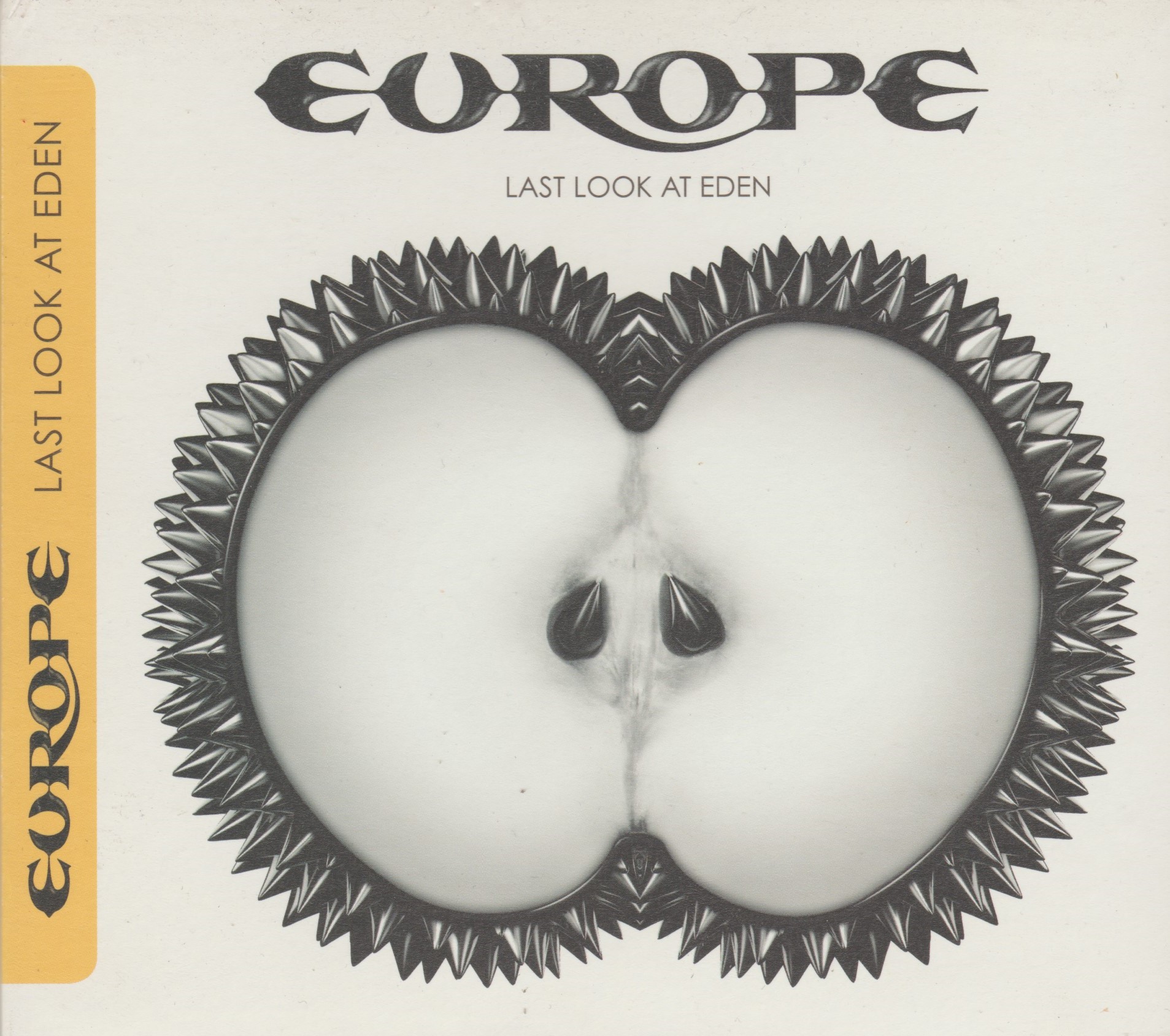
When it was released on September 9 2009, Joey Tempest and Ian Haughland were quoted talking about how this was the best album Europe had done in the reunion era. I personally don’t agree; I think Start From the Dark is the best. However that’s not a slight against Last Look at Eden, a regal very European platter of great songs. From rockers, to ballads, to blues (like the closing epic “In My Time”), Last Look at Eden is a well-rounded Europe album.
You can tell what you’re in for right from the opening prelude: Grand arrangements, lush recording. The Europe of old, in the world of today. This goes straight into the title track, a sort of “Final Countdown” for the new era. Indeed, Last Look at Eden combines sounds from Europe’s past, brought sharply into the new millennium. A good example is “New Love in Town”, a great ballad that would go toe-to-toe with the lush landmark ballads this band did in the 80’s. There’s even a hint of Zeppelin on “Mojito Girl”. I hear a smidge of Marillion in “No Stone Unturned”. Elsewhere you will find groove, such as on the driving “Gonna Get Ready”. “The Beast” is unstoppable! If it wasn’t for Joey Tempest’s voice and the thick tone of John Norum, you wouldn’t know it was Europe. But it is, and has the kind of chorus that they do so well.
To me the weakest parts of this album were some of the lyrics, “Catch That Plane” being the worst. It’s not 1986 anymore guys. “It’s getting hard, so very hard, I’m gonna need some attention.” What on Earth could Joey be singing about? “Catch that plane and get your ass, your pretty ass over here.” Oh.
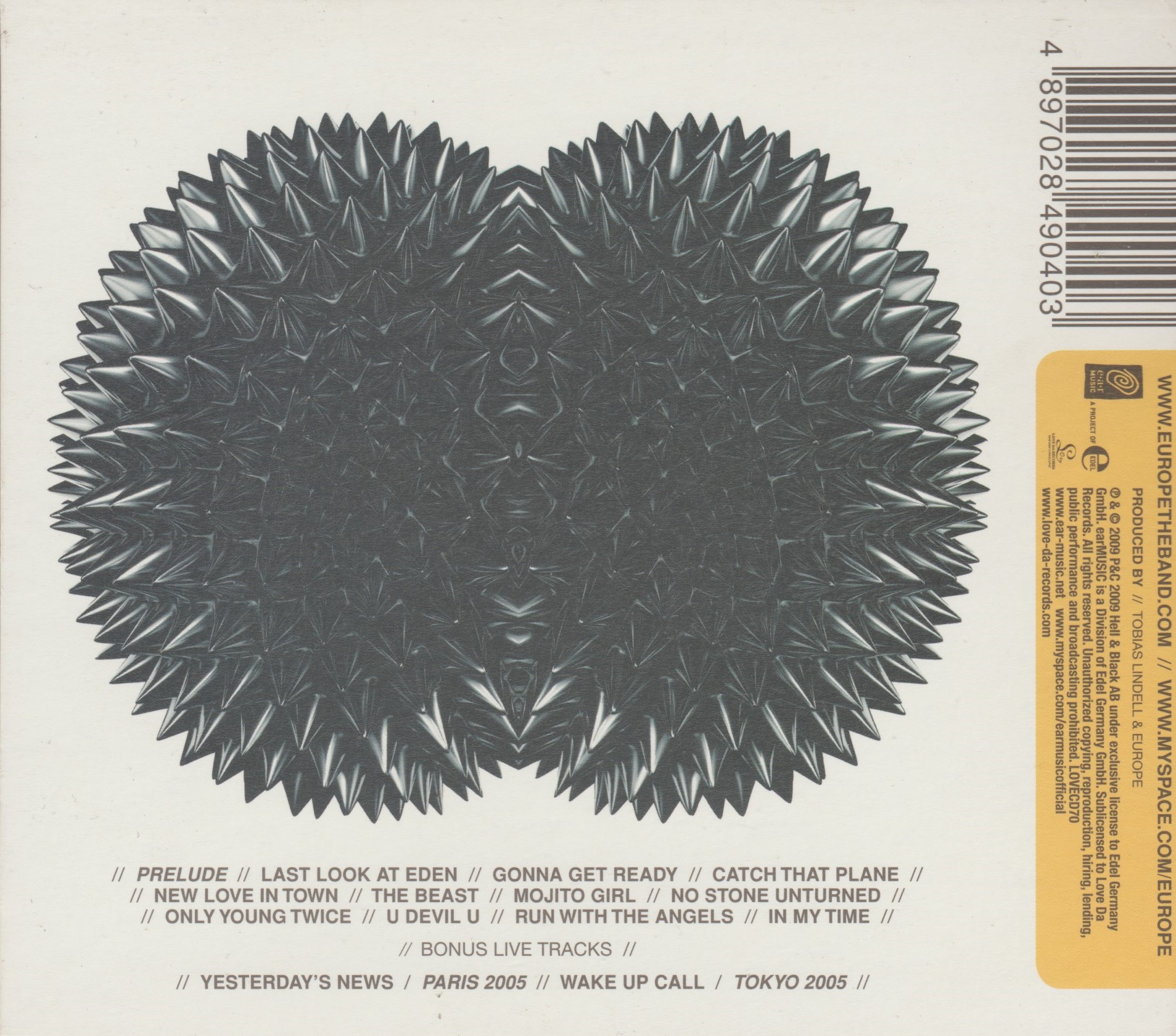
I also find the album cover to be a poor representation of the music inside. It’s not bad, with the apple (“Eden”) and the ferrofluid spikes. Everybody will have their own interpretation, but it just doesn’t do the music justice.
There are two bonus tracks on this edition, more on different editions. Here you get a live version of the old B-side track, “Yesterday’s News”, probably the best version of this song released yet. There is also a live version of “Wake Up Call” from Start From The Dark.
Pretty damn good. Lots of killer, only a little filler.
FIVE BUCKS AT THE DOOR – THE STORY OF CROCKS N ROLLS(2020)
Directed by Kirsten Kosloski
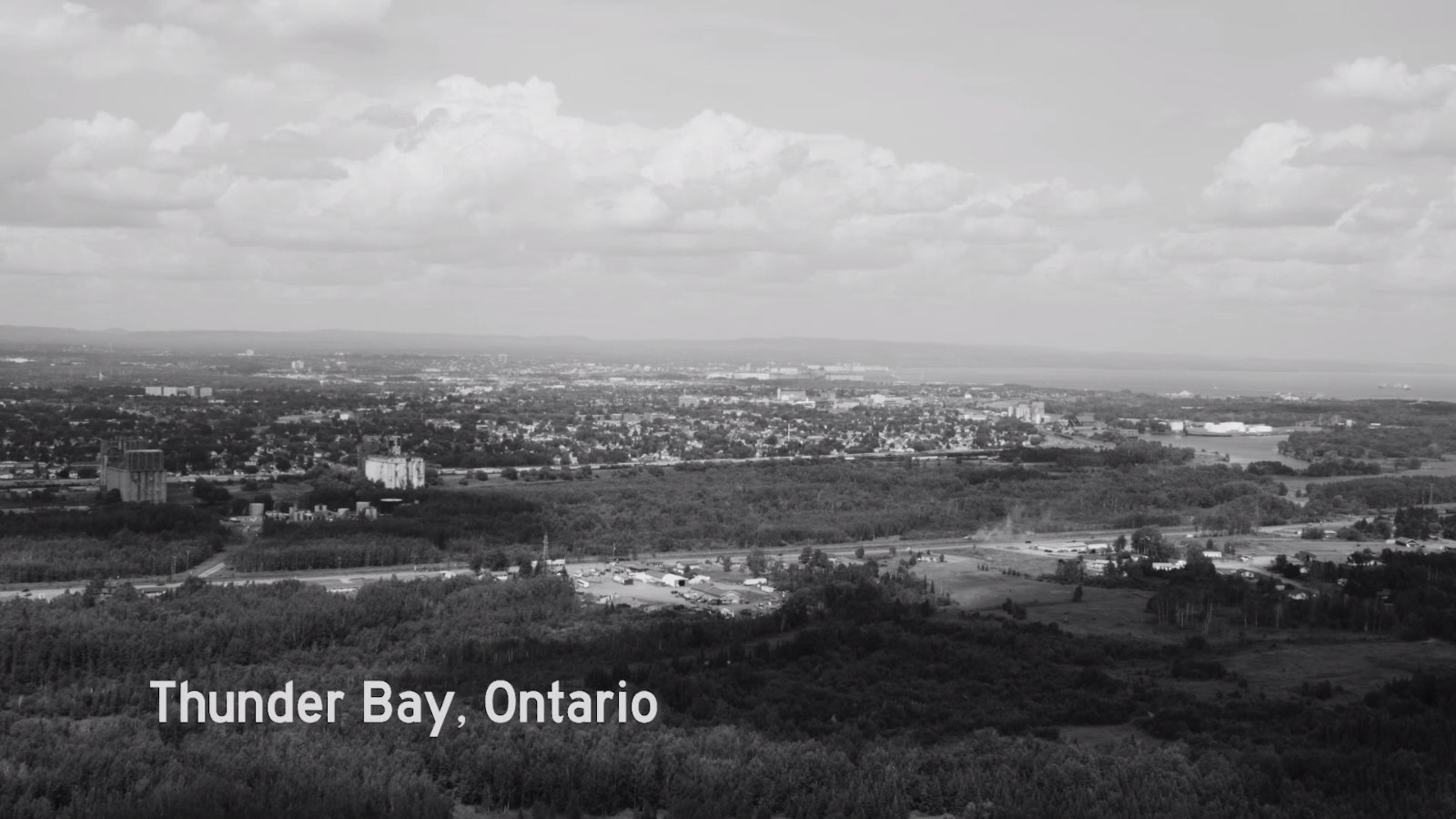
When she was a kid, it was director Kirsten Kosloski’s job to spend the weekend taping albums for her thrifty dad, who was always borrowing records from friends. With a floor full of tapes and cases, Kosloski grew to love music in that intimate way that only true music fanatics can relate to. She felt like a bit of an outsider in Thunder Bay Ontario, but her love of music helped her bond with some local punks. The place to be was Crocks N Rolls. She walked up to the entrance. Owner Frank Loffredo sat in the booth. Five bucks at the door. Kirsten had empty pockets. Loffredo gestured for her to go in anyway. A life was changed that night. She became a music journalist. The dream job she didn’t know existed until Crocks N Rolls opened up her world.
Five Bucks at the Doors – The Story of Crocks N Rolls is a uniquely Canadian documentary. You quickly realize that Crocks N Rolls could only be the result of Canadian geography and personalities. We joke about Thunder Bay being isolated (though it is said that their landfill hosts a treasure trove of 80s cassette tapes), but the truth is far deeper than simple stereotypes. Yes, Thunder Bay is eight hours’ drive away from the big cities, but it also occupies a unique crossroads on the Canadian roadmap. Touring bands from Ontario and further east had to go through on their way west. Western bands also had to pass through the crucible. The only place to play was Crocks. Most importantly, it was the right place to play.
Sook Yin Lee (Bob’s Your Uncle) calls it a “wonderful enclave of freaks and weirdos.” Frank Loffredo was just a music fan. He’d drive to Toronto to see a show. He dreamed of being in the New York or London scenes and drinking up the rock and roll. Instead he did something better and he brought that vibe to Thunder Bay for everyone to share. Bands started coming through. Great bands, bad bands, mediocre bands. Even if they didn’t sell tickets, Frank would book them a second time. It wasn’t always about the bottom line. He would live and sleep in the bar to make it work. It was about Canadian rock music. It was about making life bearable for the kids of Thunder Bay who dreamed of getting out. To Frank it was like “one long day,” but to the kids it was another home. There were no fights. It was a melting pot of acceptance and ideas.
Bad Brains, 13 Engines, Razor, Sacrifice, DOA, Henry Rollins…Rollins on a spoken word tour no less. Five Bucks at the Door is loaded with stories and the best has to be about Henry Rollins and being short changed $10 by Frank Loffredo. Hank didn’t notice, but Frank had to make it right. He asked a friend to repay the $10 that Frank accidentally owed him. He also insisted on photographic evidence of the transaction, and that evidence is part of this smorgasbord of punk rock history.
Dave Bidini (The Rheostatics), Bob Wiseman (Blue Rodeo), and many more Canadian artists have acres of stories to tell. A bunch of tree planters and a canoe? From Frank’s mom’s home-made spaghetti dinners for the tired band members, to the name of the place. It looked like an Italian restaurant and the logo looked like it had a bowl and a spoon. “It was a dumb name,” says Frank. But the important thing was that “the audience was as much of the show as the band.” That’s clear by the testimonials and amazing black and white photos. Scratched and unretouched.
Crocks closed in 1996. It was no longer sustainable, and then as if adding insult to injury the original place burned down. But in 2007, Loffredo gave it another go. Naming it Crocks N Rolls flat out indicated this was to be a continuation of the original. As before, it’s all still in the family, with a new generation now working with Frank in keeping the rock rolling in Thunder Bay.
Five Bucks at the Door is a refreshing reminder that there are some crucial things we need in life. Connection, belonging, and music. Frank brought all three to the teenagers of Thunder Bay that longed for it. It’s a story that needs to be told, and you owe it to yourself to check it out. It’s available for streaming for free until September 20, 2020.
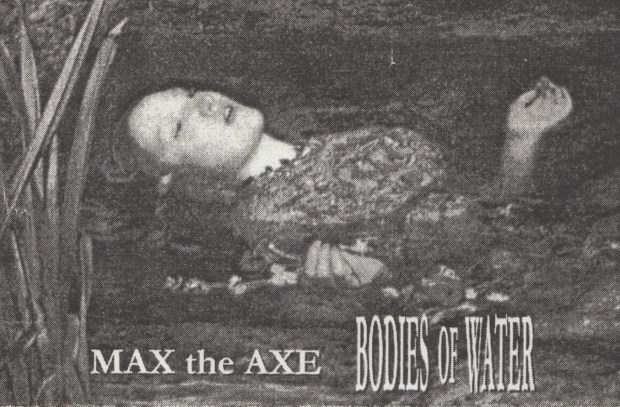
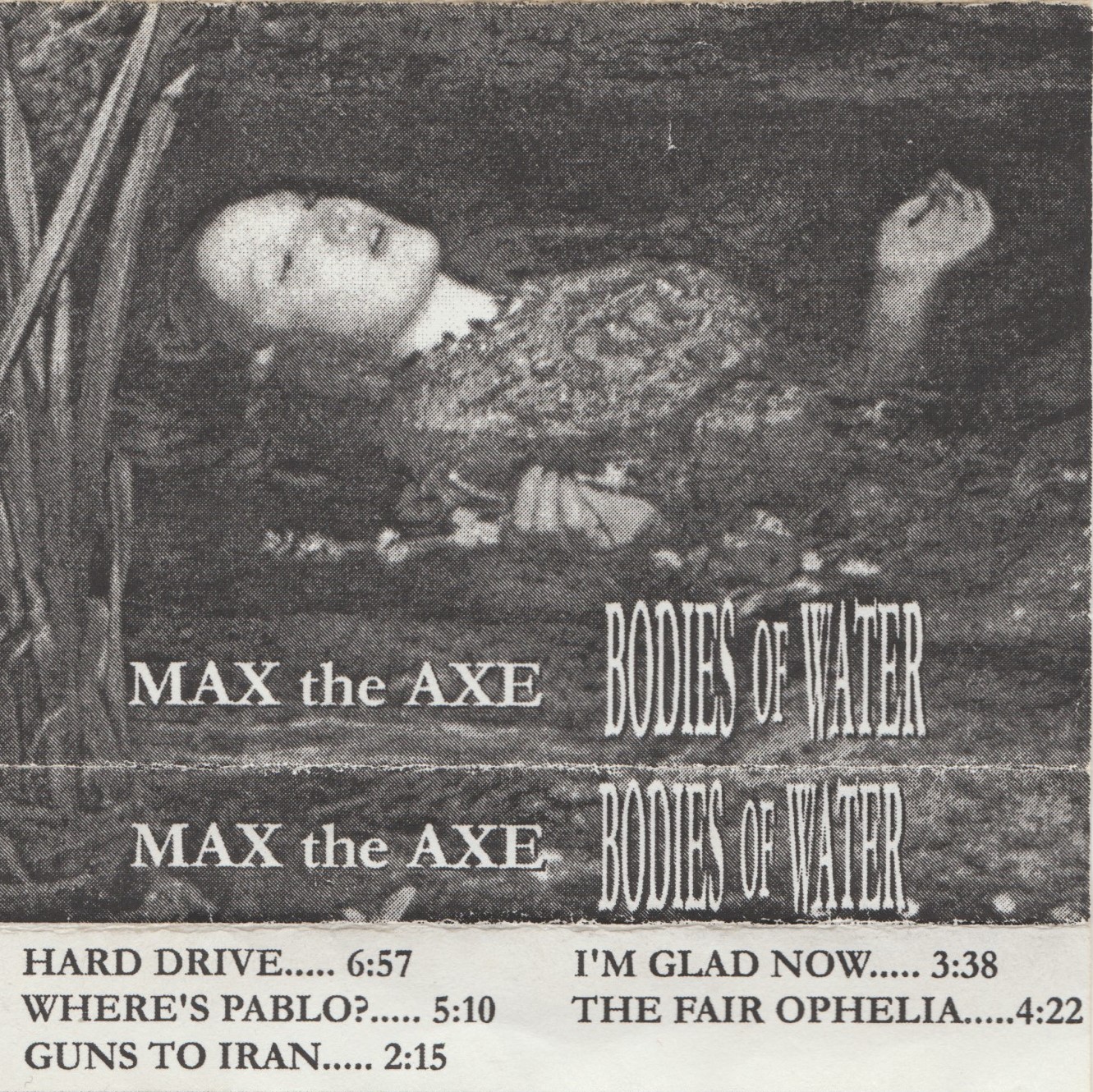
MAX THE AXE – Bodies of Water (1995 independant cassette)
This has to be one of the rarest items I own. I have acquired the only remaining cassette copy of the first Max the Axe release, a five song tape called Bodies of Water. In a rare move, the cassette had the bonus track rather than the CD. Back in 1995, Max the Axe didn’t have a drummer so the drums on this release are programmed. That lends it a streetwise but quaint mid-90s nostalgia.
Opening intensely with “Hard Drive”, Max the Axe’s music defies genres from the first track. Heavy sludge riffs, flute, saxophone, a keyboard orchestra! Lead vocals on this track by Pam Hammond leap beyond expectation as she bellows powerfully over the complex track. You get more sax (courtesy Rockin’ Randy Harrison) on “Where’s Pablo?” featuring Mickey Straight on lead vocals. This has a cool, dirty street vibe groove.
The cassette bonus track “Guns To Iran” is dead center, and features “Max the Swinging Axe” on distorted lead vocals. Pure metal on electronic steroids. I’m immediately reminded of “Manic Mechanic” by ZZ Top, but a thrash metal version.
“I’m Glad Now” has another singer, Tim Rolland, and a completely different vibe. Straight noctural, memorable melodic hard rock with a growly singer. But then the screamer “Fair Ophelia” ends the cassette on a seriously heavy note. Pam Hammond and Max the Axe return on vocals, assaulting the ear with aggressive heaviness. Max does the metal grunting while Hammond sings in classic screamin’ metal style.
This is good stuff and surprisingly well preserved 25 years later. Max’s sharp jabs of guitar solo adrenaline still rock the speakers with intended impact. Maybe the Axe will remaster and reissue his early tunes so the rest of you can hear them too.
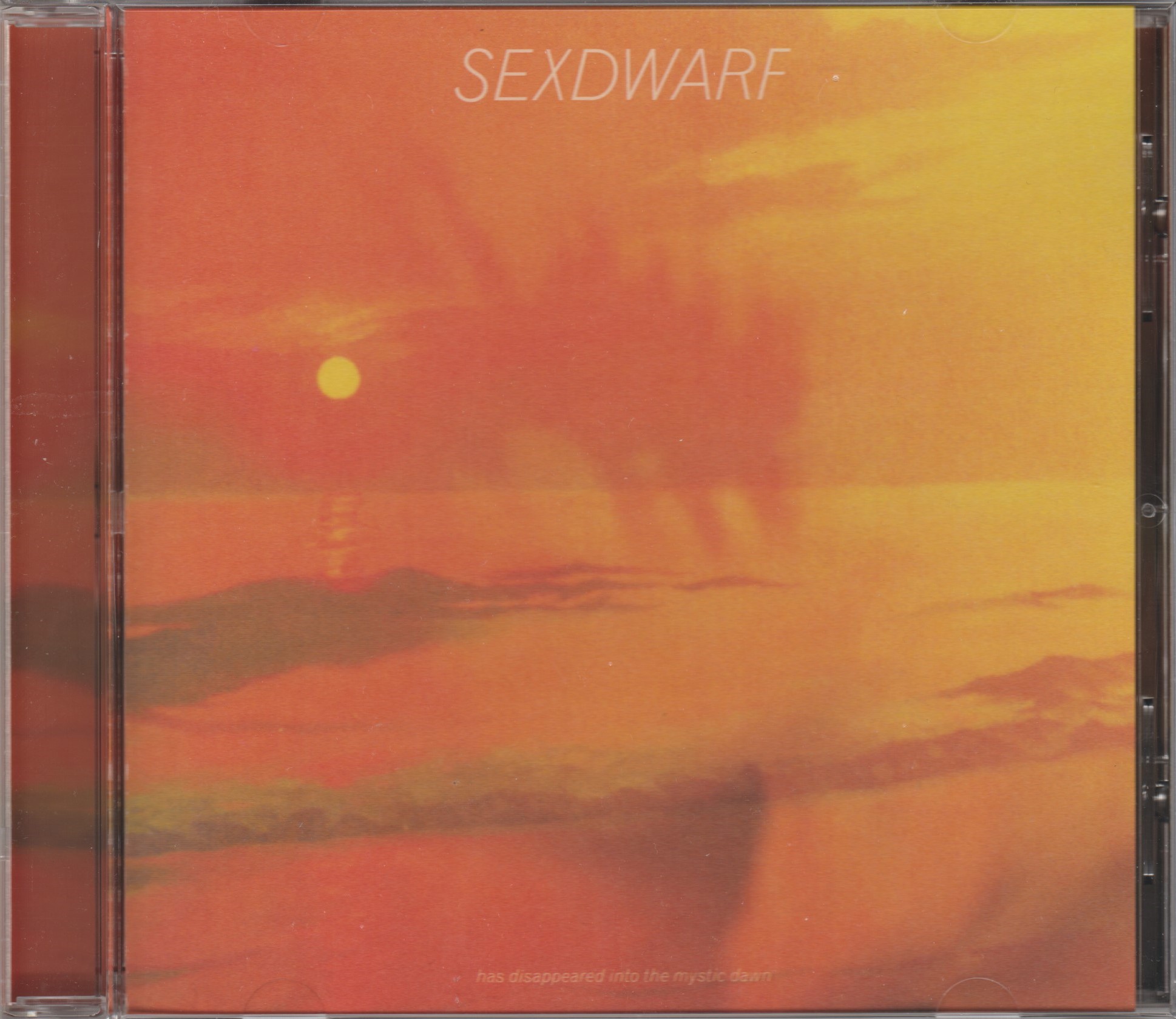
The Meat Challenge: Listen to an album we’ve never heard before, and write about it while listening for the first time on headphones. I was given Sexdwarf by Meat.
SEXDWARF – Has Disappeared Into the Mystic Dawn (2013 Busted Flat)
No background, no story, straight into the songs. The only disclosure I owe you is that Meat and I both know the lead singer of Sexdwarf, Chris Boyne. I briefly worked with him at the Record Store, but I am putting that completely out of my mind for the sake of the purity of this first listen. Let’s go.
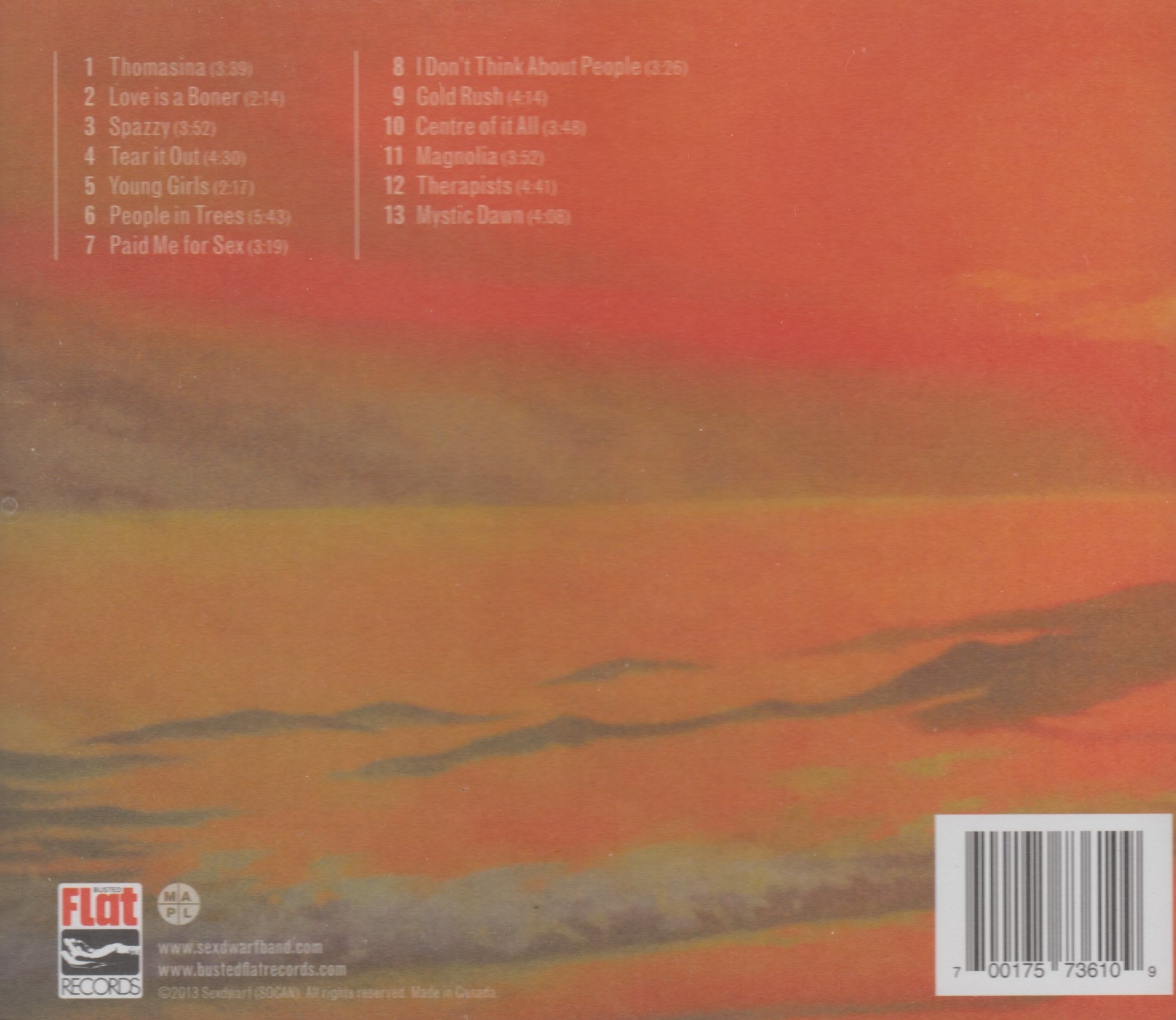
“Thomasina” – A slinky, 70s jazzy piano starts us off but then a solid beat gets the feet moving. This kicks. I could dance to this. Great lead vocal, Killers-like with slight distortion. I keep coming back to that catchy piano bit. It’s disco and it’s rock and it’s brilliant.
“Love is a Boner” – Ah, I’ve been waiting a long time to hear a song with “boner” in the title. I am not disappointed. I didn’t expect a Beatles-like psychedelic rock gem. If the Beatles did a 14th studio album, I hope “Love is a Boner” would have been on it. There is even a dual lead vocal, perfect for Lennon and McCartney. Paul would sing the higher part.
“Spazzy” – Not as “spazzy” sounding as I expected. Great guitar tones here. This is the kind of stuff July Talk is doing now. It’s frantic but well-constructed.
“Tear It Out” – “I think I’m gonna break your fuckin’ heart again,” goes the opening line on a song that reminds me a little bit of Jellyfish. This one seems to be about one of that asshole manipulative boyfriends that everybody hates. It has one of my favourite guitar solos on the album.
“Young Girls” – Acoustic guitars now, and a fun little keyboard riff. Excellent, summery tune you could party to. I hear the quirk of the Kinks.
“People in Trees” – The first…ballad? Sparse, quiet, atmospheric, bird-like guitars. And there’s people in trees, apparently and they live to be free. Hold on — well, that picked up. Drums, guitars, all fuzzed out. Everything is fuzzy and it’s beautiful in the headphones. The ending is like listening to a moon landing.
“Paid Me for Sex” – See, this is more the kind of song title I’m expecting from Sexdwarf. Back to a vintage bopping pop rock sound. I prefer this kind of stuff. The whole album so far is covered in this fuzzy vintage amp kind of sound that makes it easy to imagine it was recorded in 1971.
“I Don’t Think About People” – A surprisingly warm song about a cold antisocial character. “I don’t think about people, they’re assholes.” Brilliantly melodic and simple.
“Gold Rush” – Echoey acoustics and then crashing electrics. Slow and mournful, with a nice noisy Neil Young guitar solo. Not as outstanding as some of the previous songs but it could be a grower.
“Centre of it All” – A nice grand chorus, lots of crashing drums…sure, I like it. The vocal arrangement in the chorus is quite excellent.
“Magnolia” – Jazzy piano and bass again, and then the guitars kick in. It’s another good song in the Sexdwarf vein — which I am hopefully describing to you well enough. Jangly guitars give way to an awesome solo bit that is the highlight of the song.
“Therapists” – Loud bangy drums. A strange combination of sounds from the 60s, 70s and 90s. A ballad by the Ronettes on acid? Who knows. It’s Sexdwarf. It’s its own thing.
“Mystic Dawn” – Finally we arrive at the end after a frankly trippy 50 minutes of quirky music. Meat insisted we had to use headphones to write these reviews and this time it’s perfect because there’s a bit where the mix bounces back and forth from right to left. This finale has everything from Black Sabbath chords to trippy Yellow Submarine passages, and then straight into a racing Deep Purple instrumental section. This, people, is how you end an album!
Sexdwarf, where you have been all this time? Why have you not been in my life? Well now you will be — forever and ever.
JUDAS PRIEST – Screaming For Vengeance (Originally 1982, 2012 Sony 30th Anniversary Edition)
While people recognize British Steel as a platinum Judas Priest landmark, it was Screaming For Vengeance that went double platinum. It introduced Priest to the MTV generation and opened them up to bigger American audiences. But before we get to Screaming For Vengeance itself, a cornerstone Judas Priest album in anyone’s books, the “Special 30th Anniversary Edition” must first be addressed. The extra content is a full concert DVD, and four bonus audio live tracks from the same DVD.
To have Priest live at the US Festival is a wish fulfilled for many. The daylight show with full classic costumes (Rob decked in silver) is a nostalgia blowout. The band look lethal although drummer Dave Holland appears overwhelmed by the demanding tunes. The setlist isn’t half bad, with “Green Manalishi”, “Diamonds and Rust”, and “Victim of Changes” being highlights and filling the need for old classics. The bulk of the set is made up of more recent material from the three 1980s Priest albums thus far. Tempos are fast, cowbells are in the air, and Rob is at his confident shrieking best. The audio is great and the video is well reproduced. Owning this edition of Screaming really is a must since it’s the only official release of this show on DVD.
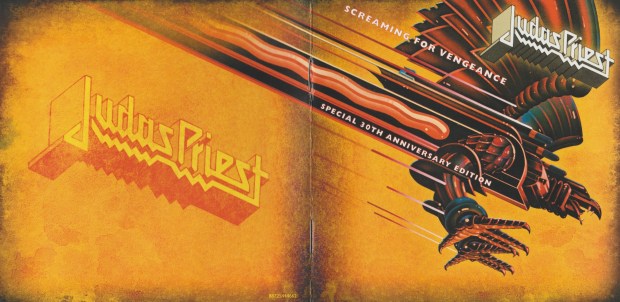
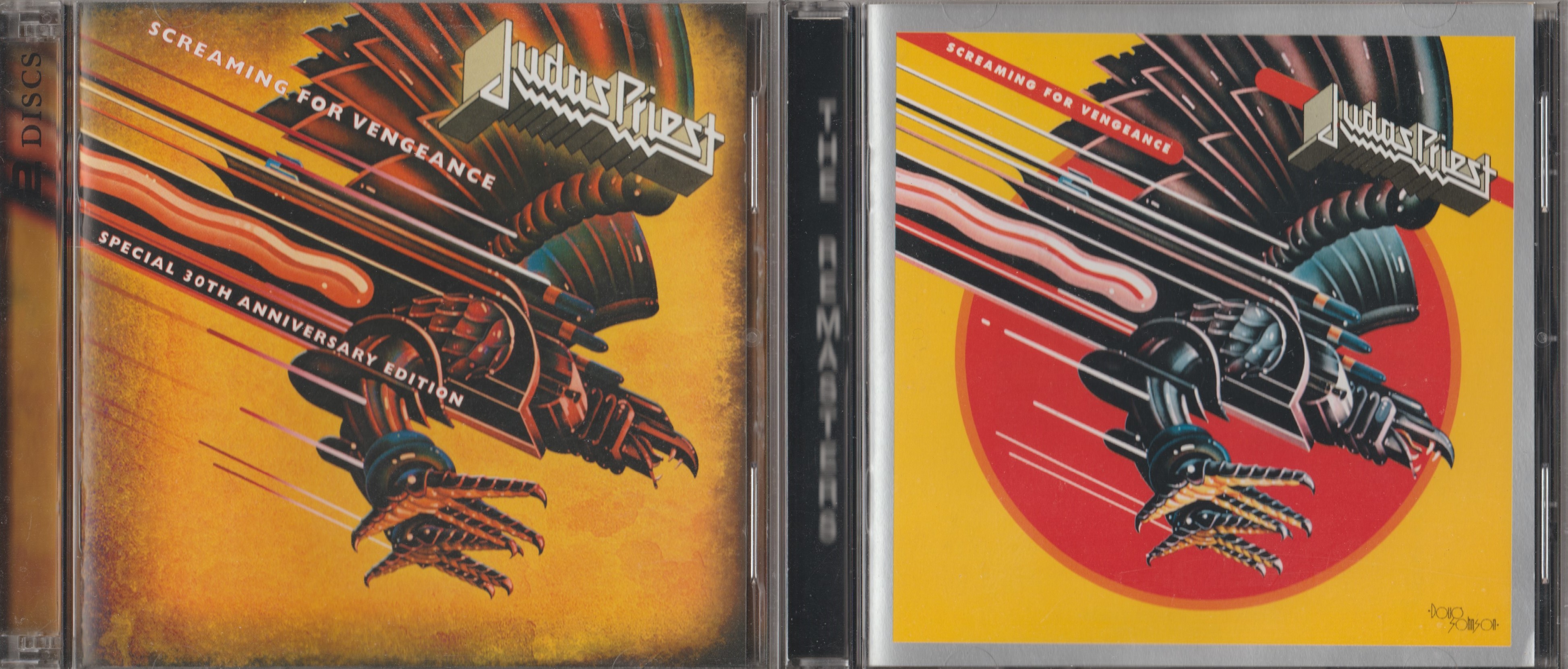
The re-imagined cover art is nice, fitting in with other Priest deluxe reissues (see images at bottom). In an unfortunate oversight, the clean and sharp original artwork is included nowhere inside this set. They did include the two bonus tracks from the previous remastered CD release, which we’ll get to after we discuss the album in full.
Screaming For Vengeance was a sudden change of style for the Priest, after two rather soundalike albums. Similarly the next album Defenders of the Faith would be cast from the same mold as Screaming. All these albums were produced by Tom Allom. Tempos were turned up, guitars sharpened, and as per the title, Rob Halford screamed. A lot. The refined 80s Priest was evident on the opening duo “The Hellion/Electric Eye”. The guitars are sleeker, the vocals processed and robotic. The riffs are just as sharp. Priest were going for the throat. This opening one-two punch was more punishing than any music I ever heard at that time. Though you could not claim it’s heavier than a Priest oldie like “Saints In Hell”, the production is louder and more in your face than ever before.
Drummer Dave Holland sprays a bloodbath of bashes at the start of “Riding on the Wind”, Priest speeding on the highway once again. With Rob in high register, this catchy tune is perfect for keeping the wind in your face. The first respite in terms of tempo is “Bloodstone”, though its glorious riffs need no accelerant. Halford’s scatting at the end is classic and a rare reappearance of his old sassy self from Hell Bent for Leather.
“(Take These) Chains” is one of the most immediately accessible tracks, a mid-tempo delight as Priest do so well. They end the side with a slow metal grind called “Pain and Pleasure”, drums soaked in echo. Rob alludes to an interest in BDSM again, but with music this heavy most people just headbanged and ignored. (In another sad oversight, the lyrics are not contained within this edition, but were reproduced on the previous CD remaster.) Don’t assume that because it’s a slow one it’s weak. “Pain and Pleasure” is a resounding an d memorable side-ender.
The second side opens with the sudden shock blitzkrieg of the title track. Speed metal turned up to 11, “Screaming For Vengeance” is over the top and almost self-parody. It’s one of Priest’s most overdriven blasts of might, but it also verges on mindlessness if not for a spirited solo section in the middle. But then in another jarring shift, the sleek mid-tempo groove of “You’ve Got Another Thing Comin'” rears its familiar head. When I was a kid, there was no question this was Priest’s “big hit”. It was the song everyone knew, and the music video was on constant rotation. Classic clip. The man pursuing Priest is meant to represent the tax man. When Rob essentially yells at him “no tax man, you will not take my money,” his head blows up. They used a little too much TNT on the mannequin, and so the tax man’s pants fell down in an added humiliation. Such is the power of heavy metal, folks. Got tax problems? Rock and roll right in that tax man’s face. Eventually his head will blow up. If you’re lucky the pants might also fall. This is what Priest have given the world!
“Another Thing Comin'” is a brilliant song. Radio super-saturation cannot dull its simply-constructed hooks. Its placement (second song, side two) is odd but that didn’t stop it to #4 on the US Billboard rock chart, nor did it impede the album rising to #17 on the Billboard 200.
The album begins drawing to a close, with an echoey tremolo effect on “Fever”, one of the album’s best cuts. Then the echo ends, and a clean guitar accompanies a plaintive Rob. Mid-tempo, powerfully built and loaded with hooks, “Fever” is a late-album winner. Then, three quarters in, Halford turns on the high voice and the song transforms into something else equally cool. Finally the echo-guitar returns to help bring the song to its dramatic end.
“Devil’s Child” is the last hurrah, a fun and heavy indictment of an ex-lover who’s “so damn wicked” and “smashed and grabbed all I had”. The album ends as suddenly as it begins; jarring transitions being a sonic theme on Screaming For Vengeance.
Tom Allom’s production is often maligned as inferior to the more raw and loose sounds of Priest on their 70s albums, and there’s certainly an argument to be made there. Screaming For Vengeance is not a warm album. It is cold, sharp and steely. It has a precise, digital undertone. But it’s also heavy, considerably more so than Point of Entry which preceded it. The cover art indicated that we were entering a new phase for Judas Priest; a simpler streamlined 80s phase but still deadly enough for the old fans.
The live bonus tracks included on the CD were not chosen willy-nilly. Instead of including the best hits from the US Festival DVD, they use tracks from a different show in San Antonio, and all from Screaming For Vengeance: “Electric Eye”, “Riding On the Wind”, “You’ve Got Another Thing Comin'” and “Screaming” itself. Watch out for the squealing feedback! Finally the original bonus tracks from the 2001 CD are edition are tacked on so you don’t have to own two copies. These include a raspy, smoking “Devil’s Child” live from another concert, and a demo from the 1985-86 Twin Turbos sessions called “Prisoner of Your Eyes”. I hate when Priest use bonus tracks from the wrong era, but the Screaming For Vengeance reissues are the only place you can get this song. In a stylistic shift, this slick ballad sounds more like “A Touch of Evil” from Painkiller, but far tamer. (The guitar solos were overdubbed and tracks finished in 2001.)
Good special edition, but not great. As these things go I’m sure we can expect a better 40 anniversary edition. It won’t be long now.
The Infinite Live Recordings, Vol 2. (3 x 10″ EPs)
DVD – Live at Hellfest, Roger Glover and Bob Ezrin in Conversation
Whoosh!
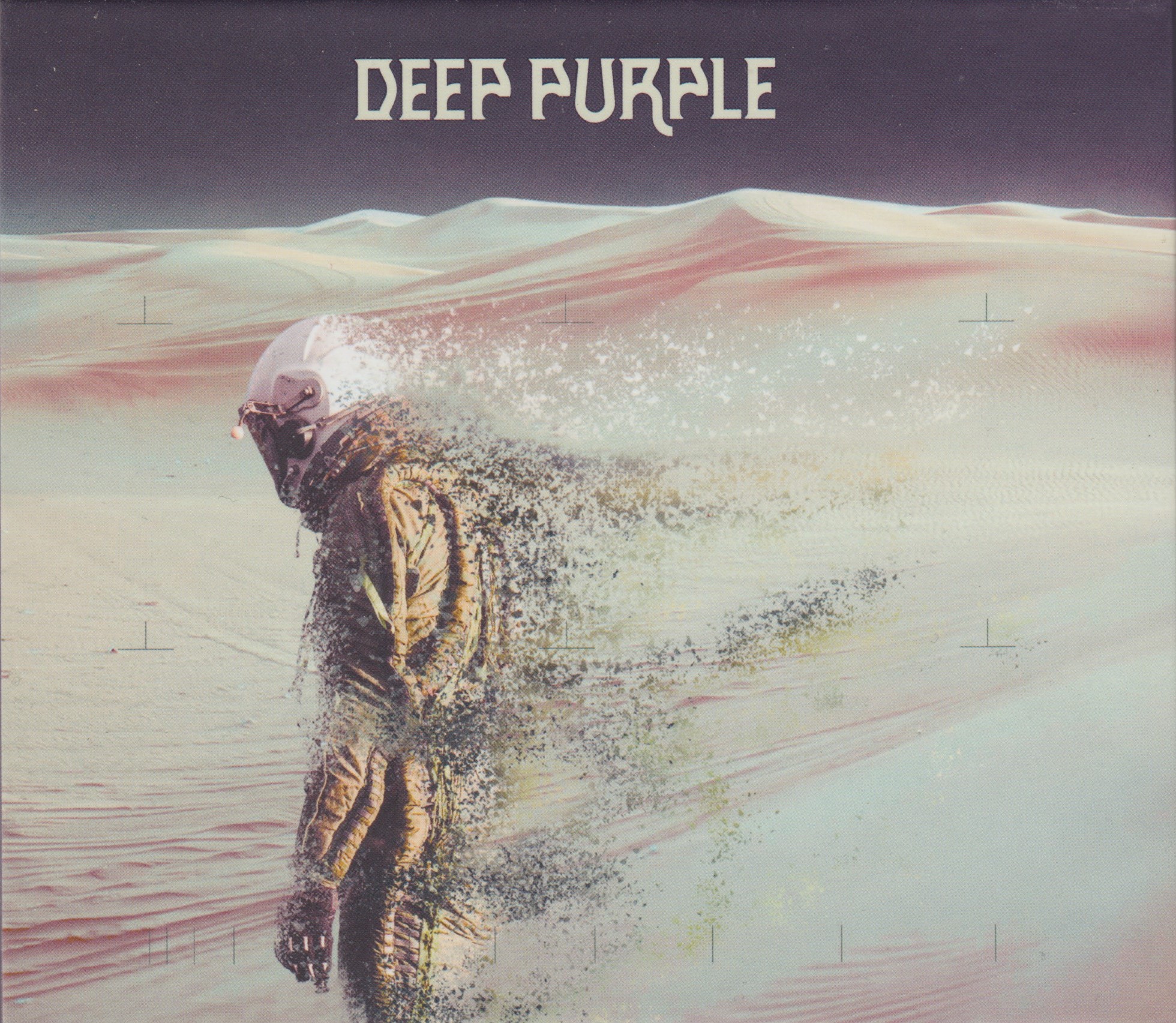
Every Deep Purple album seems like the final album. Maybe this one is; maybe it isn’t. It feels like the band treat every album as seriously as if it was their last. The cover art and music of Whoosh! takes us back to 1968 and Shades of Deep Purple. The logo is similar, and there is a new version of the 52 year old first Deep Purple song ever, “And The Address”.
Opening with the lead single “Throw My Bones“, the album sets a mid-tempo pace from the start. This is a lush, catchy groove with hints of classical and funk. It began life during the Infinite sessions but was not finished until Whoosh! Purple pick it up a bit on “Drop the Weapon”, a non-preachy appeal for cooler heads to prevail. It has a similar vibe to the 1988 album Accidentally On Purpose by Ian Gillan and Roger Glover. The immediate riffs and hooky vocals are bound to make this a favourite.
“We’re All the Same in the Dark” has a cool groove and a jaw dropping funky Morse solo. Purple haven’t sounded this funky since Glenn Hughes was in the band. Airey and Glover give it some heaviness. “Nothing At All” sounds like a Morse composition, but his intricate classical-inspired interplay with Airey is sheer delight. This could be the best track on Whoosh!, and contender for one of the best songs of the entire Morse era. A massive chorus could help this one cross over on radio. Though it’s a far different song, “Nothing at All” has elements that recall “Never A Word” from Bananas. A regal-sounding crowning achievement.
“No Need to Shout” opens with the growl of a Hammond. “Just a bunch a crap, you’re talkin’ out your hat!” sings Ian on a song featuring rare female backing vocals. This is one of a few new Deep Purple songs that display a pissed-off attitude. “I got your message loud and clear, the meaningless ringing in my ear.” Add in a couple naughty words and you can tell Ian isn’t having any of it. Cooler though is “Step By Step”, a very different kind of song with perhaps some lineage with “Vincent Price” from Now What?! The haunting, ghostly quality of “Step By Step” sets it aside with a cascade of keyboard accents.
Purple start to boogie on “What the What” (a friendlier way of saying “What the Fuck”). While Don’s hammering the keys, Steve stabs out with some tasty guitar twang. If any song recalls “old” Deep Purple, it’s “What the What”, which could have been on 1973’s Who Do We Think We Are! But that album completely lacks the joie de vivre of “What the What”. Then Purple get heavy on “The Long Way Round” which just drives. The keyboard solo is out of left field but is a spacey masterwork to itself. There’s even a sly Black Sabbath callback — “I promised myself I would not get Trashed again.” Then the song dissolves into a beautiful, quiet stream of notes. This serves as a great lead-in to “Power of the Moon”, an excellent track previously heard on the “Throw My Bones” single. It stalks prey in the cover of night.
Another heavy growl unexpectedly opens “Remission Possible”, an absolutely smokeshow of fretwork. It’s a brief instrumental interlude just before the excellent “Man Alive”. This track, enhanced by orchestra, sounds absolutely massive. It has serious heft, but it’s not weighed down. Ian is writing about some heavy themes and it will take deeper analysis of the album as a whole to decipher them all. Roger Glover was very happy with Ian’s writing on the album, which takes a more contemplative tone without going heavy-handed.
The final side of vinyl begins with another instrumental, the aforementioned “And the Address” from Shades Of. Deep Purple have occasionally re-recorded old material with new lineups, such as “Hush ’88” and “Bludsucker”. This cut of “And the Address” has more momentum. The only guy present who played on the original is Ian Paice, but Don Airey is a dead ringer for Jon Lord. “And the Address” is one of the most enjoyable songs on Whoosh!, probably surpassing the original recording.
There’s still one track to go: the “bonus track” called “Dancing In My Sleep”. Safe to say it’s called a “bonus track” because it’s the most different of all the songs. It’s an Airey conception based on a cool little techno beat. Though it’s certainly not dance music, it does have one foot in that world and it’s a sheer delight to hear Purple stretch out into new territory 52 years into their game.
A seriously fine album this late in the career. An album so fresh that it is hard to rate so soon. But clearly a high point, with a band still exploring new ideas completely unafraid of what people might say. In fact, a band who still has something to say. Something worth listening to.
4.25/5 stars
But that’s not all of course. Go big or go home. Check out the rest of the box set’s contents in detail below.
The Infinite Live Recordings, Vol. 2
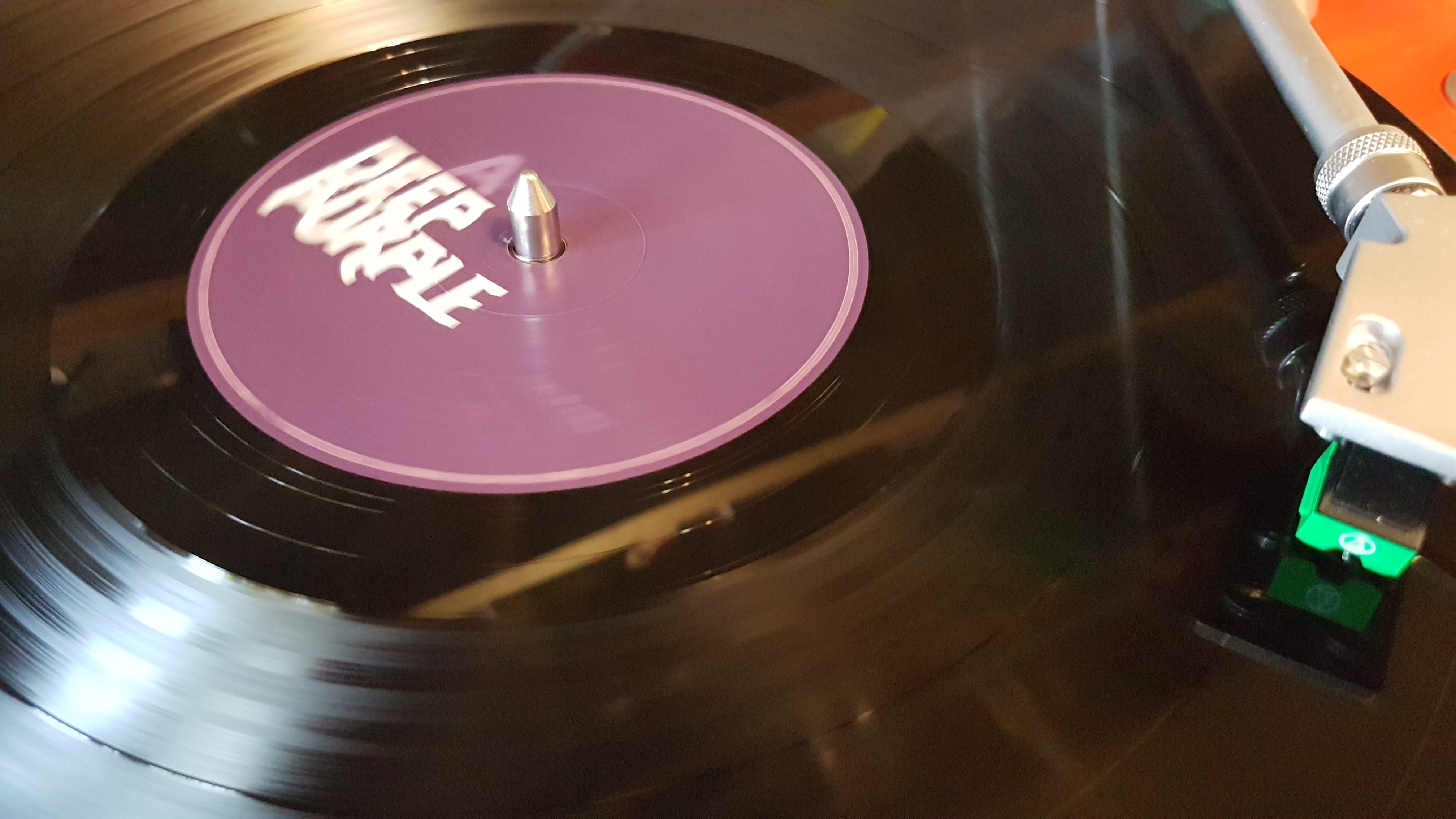
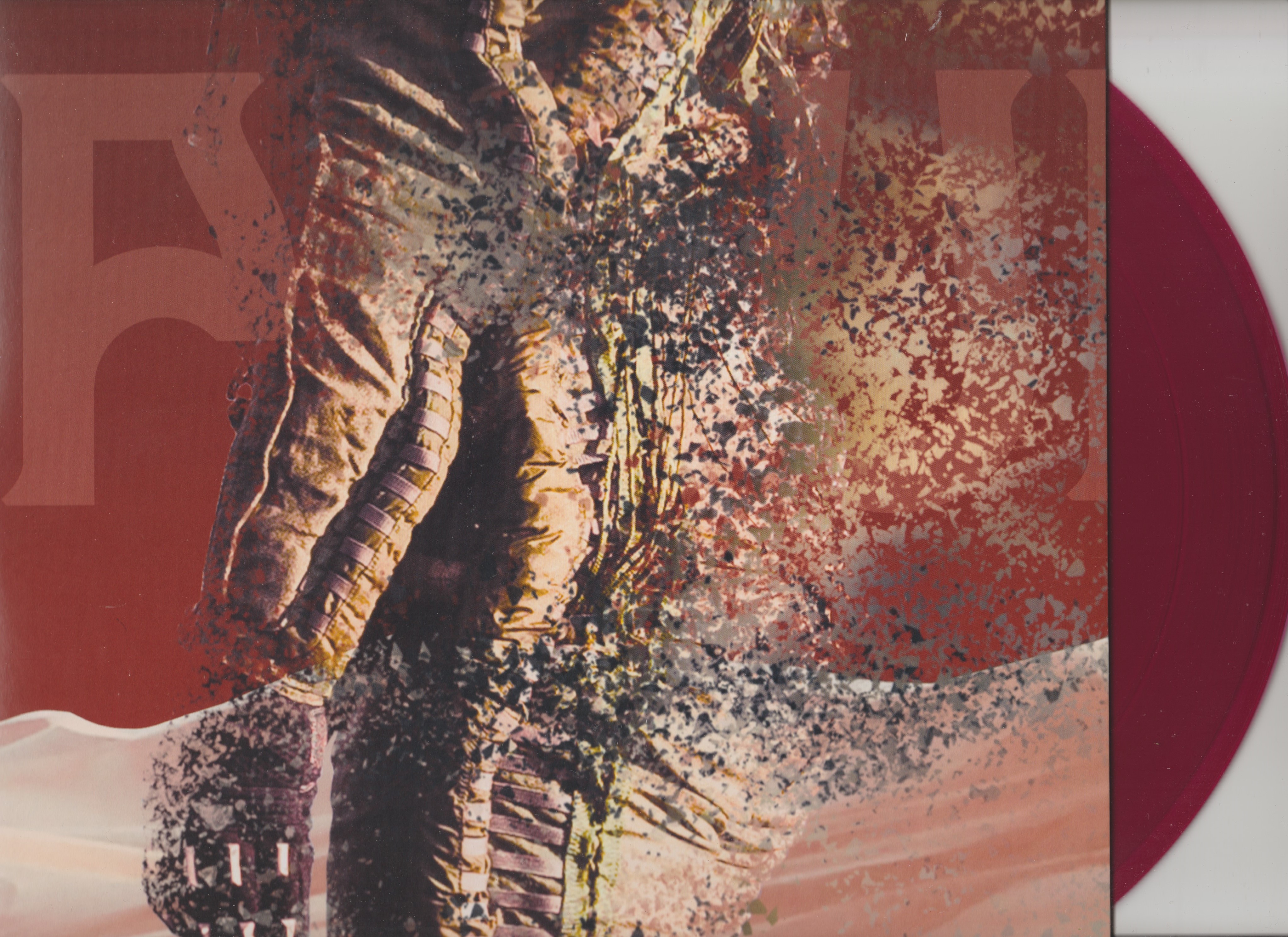
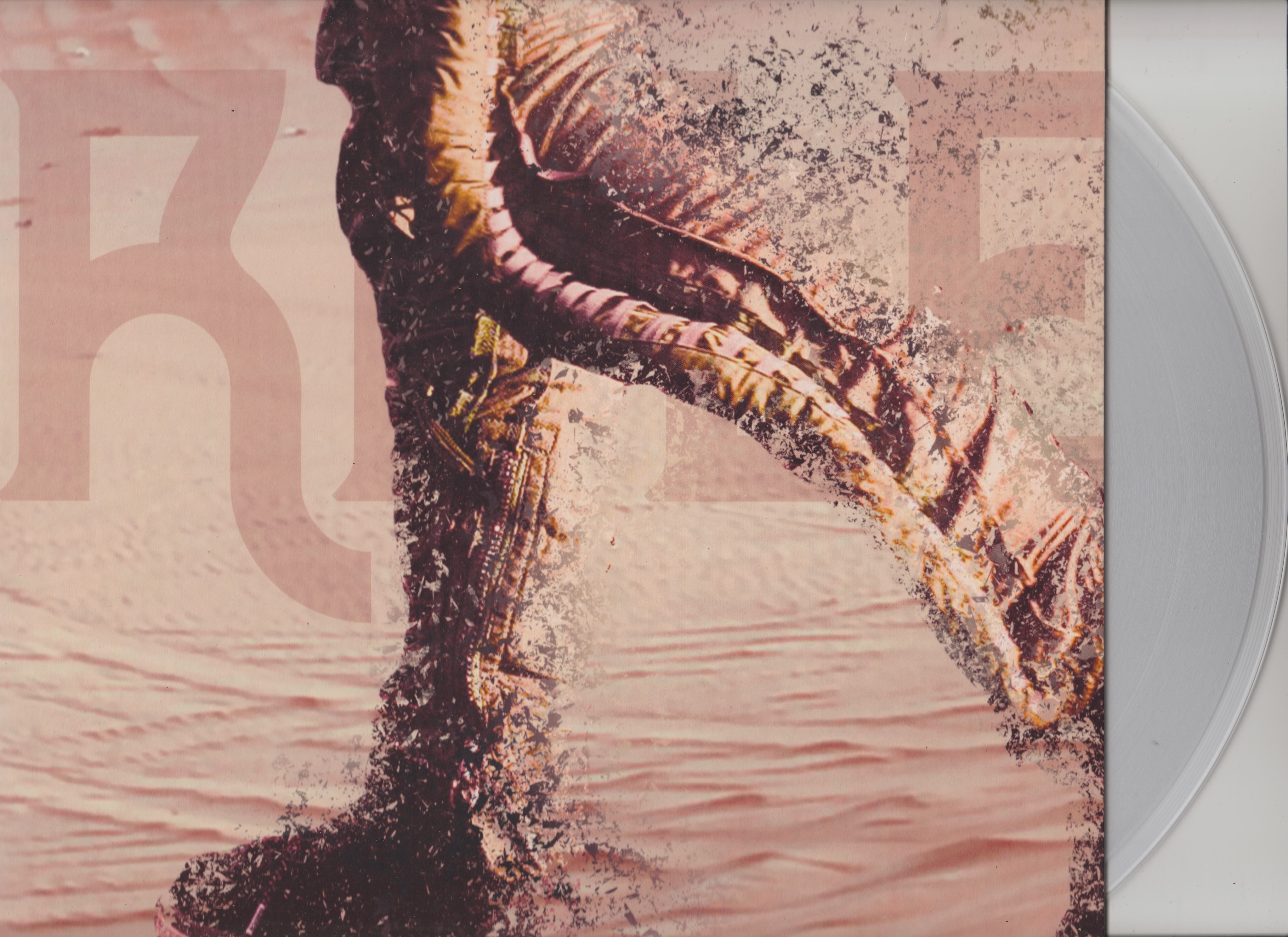
The previously released Infinite Live Recordings, Vol. 1 came out in 2017. The concept behind the series is simple: pure live releases with no overdubs. Vol. 2 comes from a show in 2017 on the Infinite Tour in Rio. It is the big bonus in this box set, and present on a set of three beautiful 10″ coloured records. 72 minutes of live Purple — essentially, a double live album.
The opening thunder of “Highway Star” is robust on purple 10″ vinyl. How these guys can still blast through it full speed is unknown, but they do it. Mr. Gillan still gives it his all, which is not the same in 2017 dollars as it was in 1970 dollars, but still more than the average mortal his age. Mr. Morse and Mr. Airey give each version of “Highway Star” a different feel, while Mr. Paice in the back is the only original member left from the 1968 lineage. Sticking to Machine Head, Purple seamlessly go into “Pictures of Home”. The old familiar groove of Mr. Glover is comforting warmth from the emptiness, eagles and snow. Morse’s solo is a composition to itself, and then Airey gets to put his spin on Jon Lord’s classic organ solo. Then it’s an unfortunate side flip as the band goes back to In Rock with “Bloodsucker”. Gillian is more a verbal timekeeper than the screamer he once was, but the track is otherwise flawless and heavier than lead. A more mainstream hit, “Strange Kind of Woman” flows from that, and relaxes the groove a bit. Don Airey gets his first of two solos (this one organ) as the last track on this disc.
The action continues on transparent burgundy vinyl, and “Lazy”. Morse’s signature string bending is the star of this show. There are a couple different twists in this fresh version including a nifty Gillan harmonica solo. Then it’s the only new song of the set, “Birds of Prey” from Infinite. It’s weighty and worthy of its place. Steve Morse is the Captain on this flight. Gillan ends the track on a joke and then, after a side flip, introduces Don Airey’s keyboard solo including Ozzy Osbourne’s “Mr. Crowley”. This diverse and fun solo goes into “Perfect Stranger” (no “s”?) which has steadfastly remained in the setlist ever since its 1984 conception. Gillan is shaky but the Purple is solid.
The final vinyl, clear 10″ power, commences with “Space Truckin'” signalling the beginning of the end. “Smoke on the Water” is the penultimate moment, slow and groovy after all this blazing rock. Ian Paice has a couple nice moments on this one and Steve Morse’s stuttery solo is completely compelling. One more side flip, and Purple end the set with their first hit “Hush” and the “Peter Gunn” theme. Glover goes funky on this one with a bassline a little like “Another One Bites the Dust” in parts.
An entertaining and good live album, but one you won’t play often simply because Deep Purple have 846 live albums (exaggeration).
There is still more live material from the same tour in DVD form included in this box set.
Live at Hellfest
Next we have a double feature DVD: A live show from Hellfest in 2017, and an interview session with Roger Glover and Bob Ezrin. The Hellfest show has a much longer runtime with more new material. They open the show with “Time For Bedlam” from Infinite. Ian doesn’t even attempt to sing it in tune, but we’ll always cut the guy some slack for still getting up there and givin’ ‘er. The track has a “Pictures From Home” vibe, and the band look cool playing midday in shades. Into “Fireball”, Ian Paice leads the charge as if it was 1971. Don Airey has an Ozzy bobblehead on his keyboard! Then it’s “Bloodsucker”, powered by Paicey. “Strange Kind of Woman” is a nice melodic respite after a pair of piledrivers like that. Ian ends this one with a bizarre freeform spoken word beat poetry bit, but with Morse shredding next to him.
The Jon Lord tribute from Now What?!, “Uncommon Man”, is heartfelt, and a solid track from their current era. It sounds massive. As good in quality is “The Surprising” from Infinite, something of an epic, and performed with full gusto. Intricate symbol work by Paice.
After a brief pause, it’s on to Don Airey and “Lazy”. A high speed workout like that merits something slower to follow, so it’s “Birds of Prey” from Infinite, a steady groove with dynamics. Steve Morse’s solo takes center stage and it’s a melter. “Hell To Pay” picks up the pace. Not Purple’s most remarkable single, nor the best version, but nice to have in live form. Airey’s jammy keyboard solo on this track is stellar, just as the sun starts going down. Then he gets his own full-blown solo, with the Ozzy bobblehead there next to him during “Mr. Crowley”. Roger Glover just watches from the side as Don goes to town through familiar melodies and themes. The crowd eats it up smiling.
Don takes it into “Perfect Strangers” without missing a beat, and soon the rest of the band joins him. This version has some stellar Morse guitar trickery. The set is almost finished, with only “Space Truckin'”, “Smoke on the Water”, “Hush” and “Black Night” left to satisfy cravings for the classics. Even at the end Paicey still brings that thunder. “Hush” has the “Peter Gunn” theme attached, and “Black Night” brings the show to a massive finish.
It’s absolutely delightful watching Ian Paice play the drums, as he mouths along to every beat as if playing beatbox along to himself. It’s fantastic and an expression of pure joy.
It’s not over yet. The DVD has even more content.
Roger Glover and Bob Ezrin in Conversation
The DVD also includes the conversation with Roger Glover and Whoosh! producer Bob Ezrin. This is another full 70 minutes of content. Ezrin was involved with Purple from the jamming stage in Nashville and speaks in terms of “we”. One of the biggest takeaways from this interview is a piece of wisdom from the late Jon Lord as told by Roger Glover. Lord didn’t want to do more than two takes of a solo. More than that, and he starting thinking too much.
The pair discuss the lyrics, the songs, the title (nicked from Faulty Towers), the playing, and more. It’s lovely watching the pair just enjoy Steve Morse’s harmonics. “Like capturing lightning,” says Roger. Watching this portion of the DVD will enhance your enjoyment of the album. It’s fun knowing what parts of the songs turned on the musicians and producer. “Stretch out,” advised Bob. And so Purple interpreted that as stretching it out every way. “I wanna put the Deep back in Purple,” said Bob. The boys also praise Ian Gillan’s focus, from eating right to meditating. They even go back in time and talk about Glover’s joining of Deep Purple in 1969.
Ezrin particularly loved seeing magic unfold live before his eyes and ears, captured on tape. He is obviously a fan of Deep Purple as musicians and as people. Whether you can get into Ezrin-era Purple or not, there is real chemistry between band and producer.
You’ll probably only watch this conversation once, but you’ll be glad you did that at least. There is so much knowledge and history to absorb here that all fans are advised to give the whole thing a spin.
Summing up
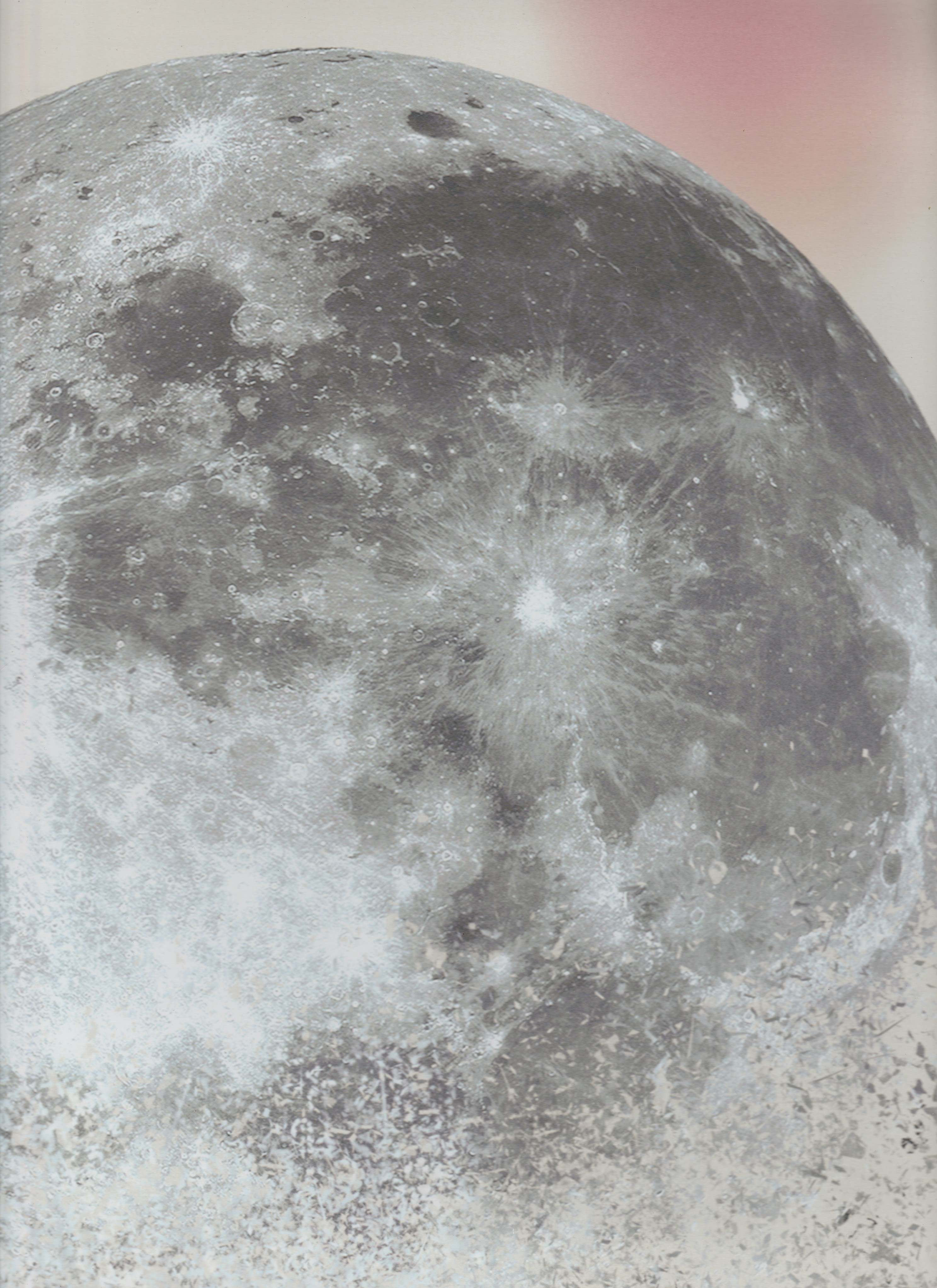
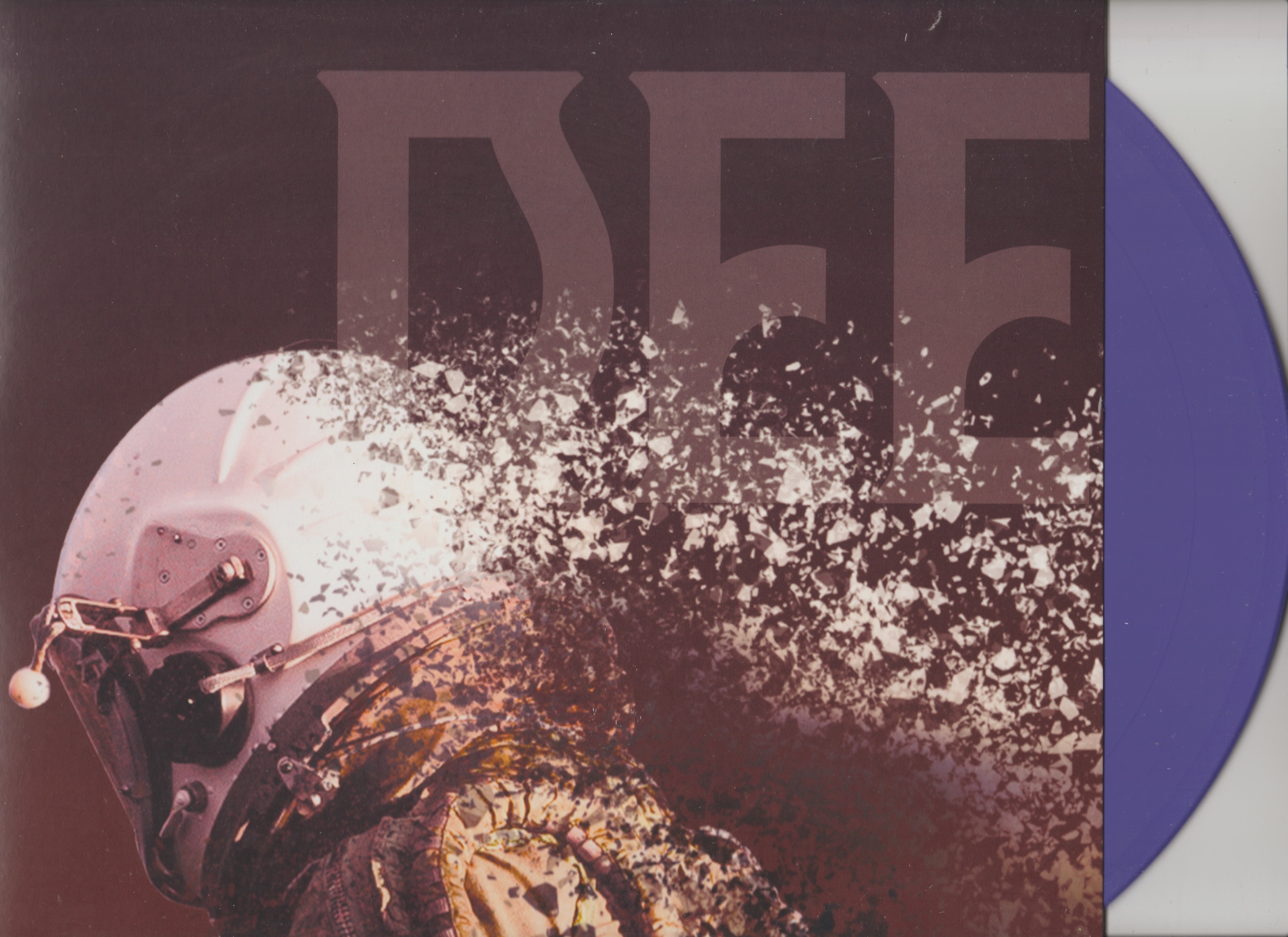
The box set itself comes with a cool black T-shirt with the “strolling dissolving astronaut” graphic. This is the second album in a row with simple excellent art design for Deep Purple. The astronaut recalls the music video for “Knocking At Your Back Door” from 1984. He appears in numerous places in this set in different forms. There are three art prints (two 12×12 and one 12×6), and of course all this music! The vinyl copy of Whoosh! comes in a gatefold sleeve with credits and photos. It sounds phenomenal with plenty of bottom end. For lyrics, you’ll have to dig into the included CD copy.
Of course, if you don’t need all the extra live stuff and added goodies, you could just buy Whoosh! on CD, vinyl or download. It’s frequently said that the benchmark for Purple is Purpendicular. “Best album since Purpendicular,” fans often enthuse. Whoosh! could be the best album of the Ezrin era, and is a contender for best of the Steve Morse epoch. A serious fan will want the whole box with the three live 10″ discs. They are beautiful to look at and sound good on the turntable. Though the set is expensive, this is the kind of thing I’m willing to pay for.





















 mikeladano.com