Reviews

BOOK REVIEW: 3001: The Final Odyssey by Arthur C. Clarke (1997)

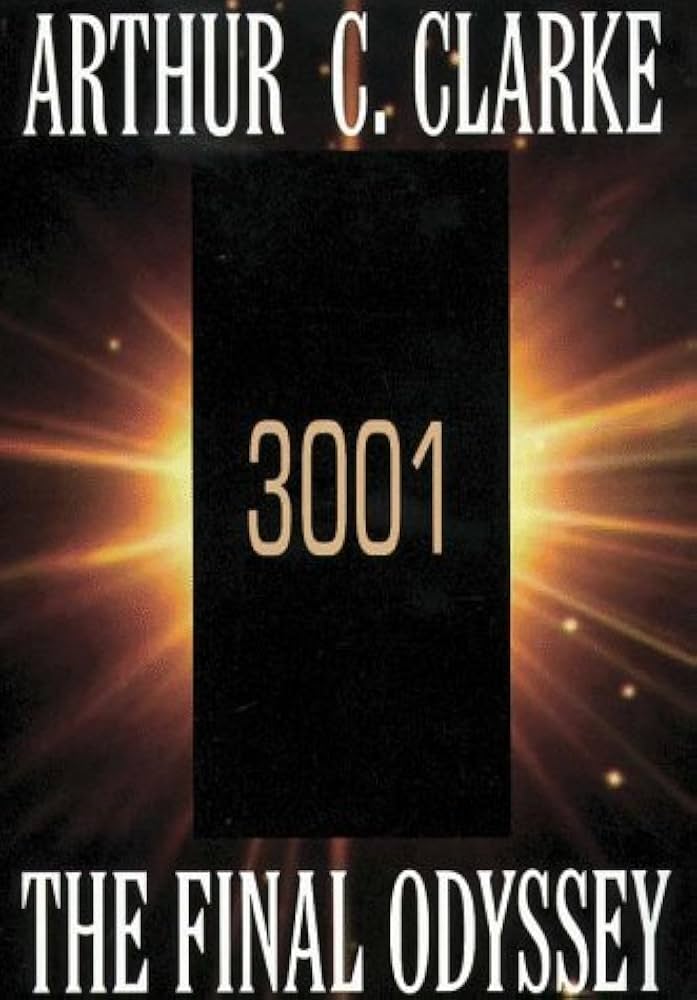
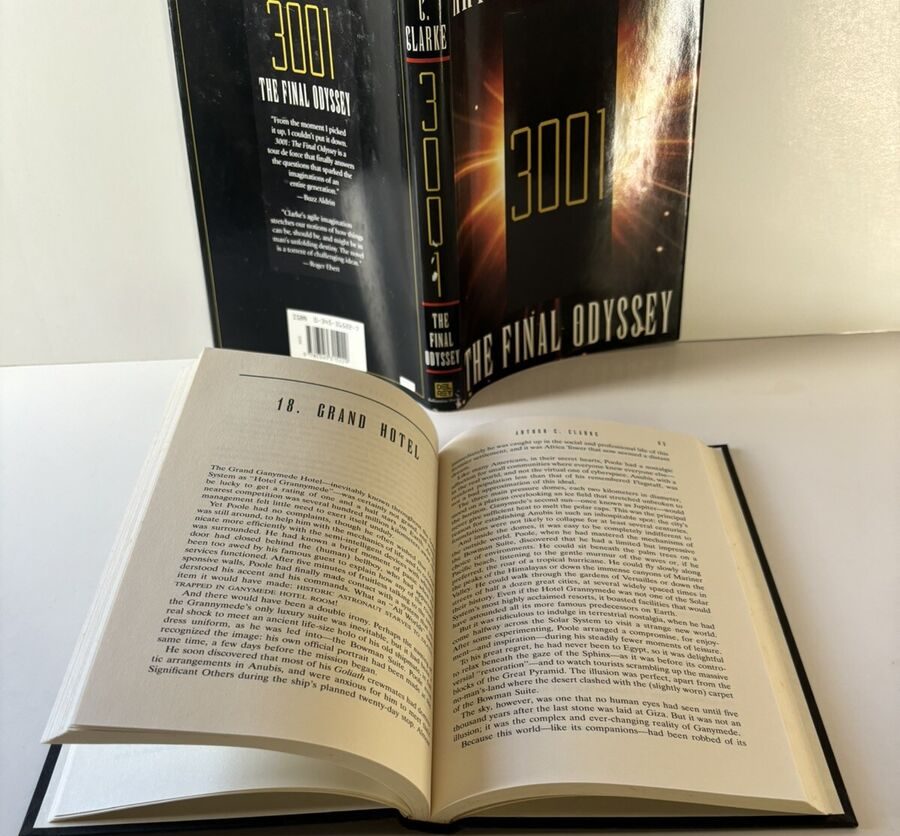
3001:  THE FINAL ODYSSEY (1997 Del Rey Books)

by Arthur C. Clarke 

If Arthur C. Clarke had ended his 2001 series as a trilogy with the fine 2061: Odyssey 3, I would have been OK with that. I say that now. I didn’t say that then. Then, I desperately wanted to know what happened next. Now, I’d rather forget.

I pre-ordered this book many, many years ago thanks to a coupon I found inside my PC game Rama. That’s how much of a diehard fan I was. (The book still arrived weeks after it was released!) I read The Final Odyssey in three days, three days of waiting for something monumental to happen. When it finally did, it was a “that’s it?” moment. I said to my friends, “I think Clarke’s lost it. I think it’s time to retire.” They advised me to write him a fan letter expressing my disappointment with his Final Odyssey. I said no. Why put the man through that?

(I will first let you know that, like previous installments such as 3001, Clarke has ret-conned certain events so they no longer happen when they originally did. Since, when he wrote the book, it was obvious we wouldn’t have a moon mission in 2001, he pushed all dates further into the future.)

In 3001, the origin of the monoliths is finally clarified. They were planted here by a spacefaring species who promote intelligence everywhere, in the hopes of improving the odds of survival. We pretty much knew this from previous books. We did not need this spelled out. However, the monoliths are machines, and as such, they can break down.

Millions of years later, the corpse of Frank Poole (from the first book) is discovered and brought back to life. Yes, in the countless empty cubic parsecs of space, they found a needle in the haystack. If you can swallow that tale, then bringing a 1000 year old cadaver back to life shouldn’t be a stretch. The next few chapters of the book are spent acclimating Mr. Poole to the year 3001 and all the wonderful advances we will make by then. Clarke revisits many ideas that he promoted decades earlier, such as space elevators. Much of this felt very similar to the previous Clarke solo work, The Hammer of God, which I felt was superior to 3001.

However, all is not well. The monolith (now capable of only slower-than-light communication, contradicting David Bowman’s journey in the first book) has reported back to its masters, that humans are not worthy of survival. The monolith, therefore must be destroyed. With the help of Halman (the fused personalities of HAL and Bowman) who resides in the monolith, they plan on infecting it with…computer viruses. That’s right. Halman is infected in the process, and somehow stored for a future time if we ever discover how to disinfect him.

And so our tale ends, with the alien monolith masters knowing what has happened and deciding to grant us a reprieve until “the last days”. The book ends with a resounding thud.

Clearly, everything that was needed to be said was said in the first three books. Final Odyssey unfortunately tarnishes an otherwise fine series with an unnecessary anticlimatic ending.

Sadly, I rate this book “Not Full of Stars“.  Only 2/5 stars. Only worth reading if you’re diehard.

REVIEW: Joe Satriani – Dreaming #11 (1988 EP)

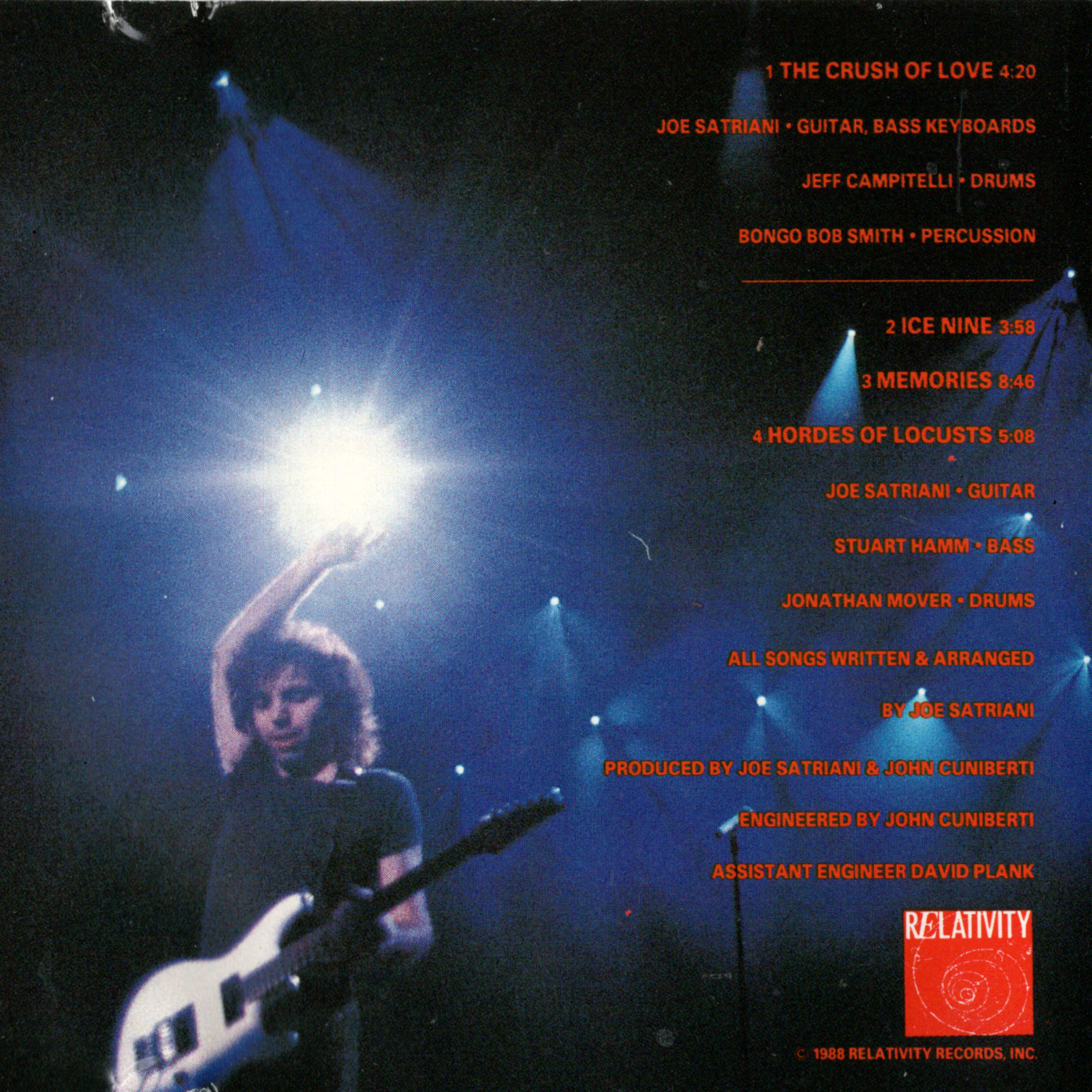
JOE SATRIANI – Dreaming #11 (1988 Relativity EP)

Don’t we all just miss the days when a major artist would just casually toss out a new EP between albums like this?  Following the Surfing With the Alien tour, Joe released a brand new song called “The Crush of Love” with three recent live tracks.  It went gold and hit the top 50 on Billboard.  You didn’t have to worry about pre-ordering it, and there was no “late tax” if you missed buying it right away.  That’s the way an EP by a major artist should be.

“The Crush of Love” is a magnificent track, with a overarching wah-wah hook that makes up the body of the song.  The rhythm section is Stu Hamm and Jonathan Mover on all tracks.  Hamm’s chunky bass is like that moment when you hit a big chunk of fudge in the middle of your ice cream.  Mover is the punctuation, while Joe indulges his melodic side with some wonderful lead.  In a Satriani composition, the lead guitar often takes the place of where the singer would normally deliver the hooks.  That’s “The Crush of Love” in a nutshell.  It’s more like Surfing material, rather than the Flying In A Blue Dream sound that Joe would explore 18 months later.

Onto the live tracks, all recorded by the King Biscuit Flower Hour in San Diego, June 11 1988.

“Ice Nine” from Surfing begins with Joe introducing his band, a symbol of their importance.  Then humbly he adds, “Thank you all for coming.  My name’s Joe.”  Onto the thumping “Ice Nine”, which Stu Hamm turns into a bass showcase for impressive fingerwork without overplaying.  Mover perfectly complements him, nailing the moments the drums need to add some explosions, without being too showy.  Meanwhile, Satriani’s causing explosions of his own, but it always comes back to song’s main melody.  Yes, Joe plays the crap out of this song, but it is indeed a song.

Joe takes us back to his debut album Not Of This Earth (which was reissued in 1988 with similar cover art to Dreaming #11) for the last two tracks.  The lengthy “Memories” opens with a guitar exploration, but quickly turns into a catchy little running guitar melody.  It’s an aggressive number and one of Joe’s more challenging to the uninitiated.  As always, Hamm’s playing his mindblowing and catchy.

Finally, “Hordes of Locusts” has a slower grinding groove that ends the EP on an ominous musical note.  Mover and Hamm largely stick to the groove while Joe shreds and strafes.

At over 23 minutes of exclusive music, this EP was well worth the value.  No wonder it went gold.

4/5 stars

REVIEW: Trailer Park Boys Dill Pickle Chips [VIDEO]

Bubbles, Ricky and Julian say “you’ll be back for more” when you try one of their own branded Dill Pickle Potato Chips. Do we agree?

REVIEW: Wolfsbane – “After Midnight” (1991 CD Single)

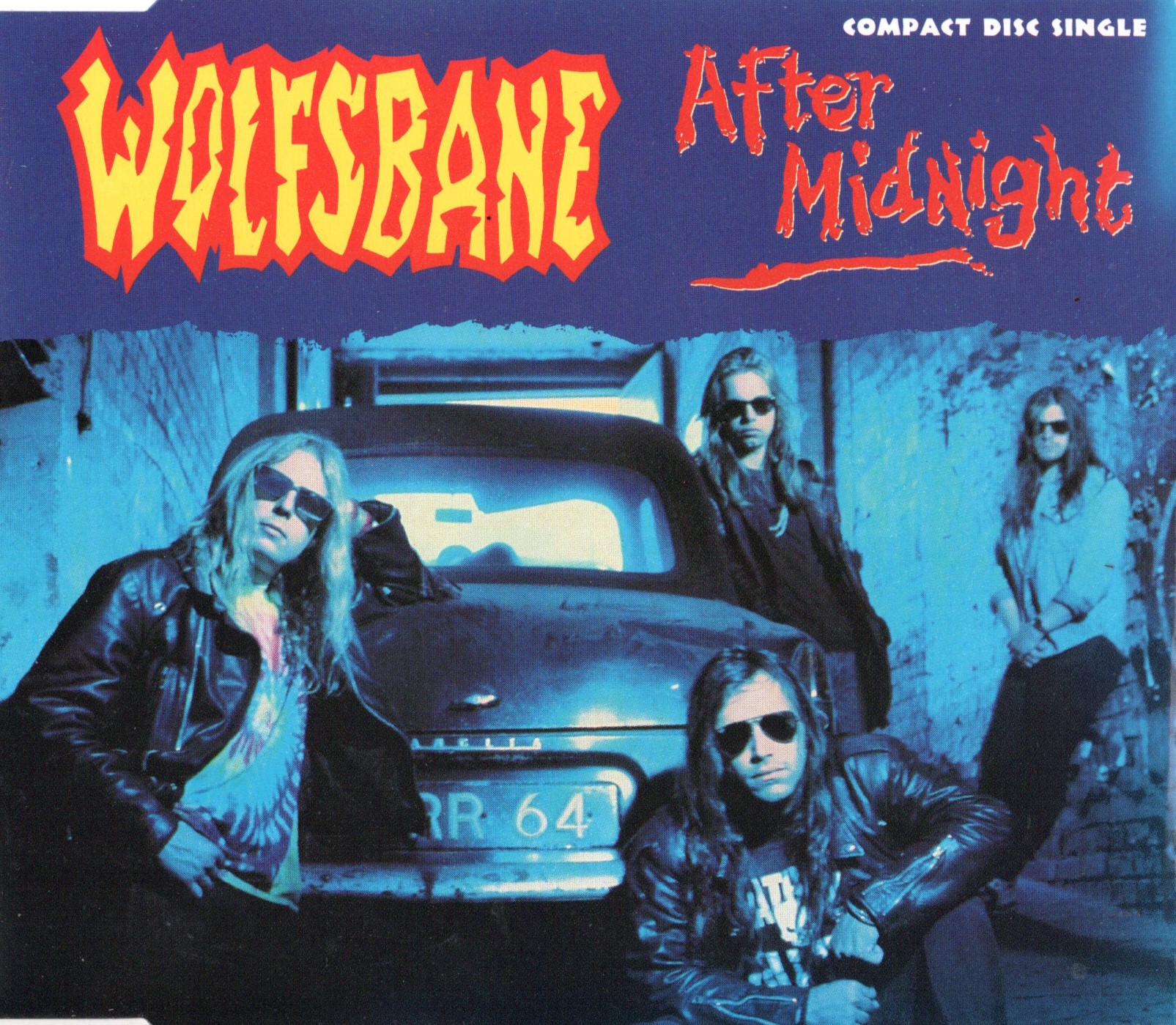
WOLFSBANE – “After Midnight” (1991 Def American CD single)

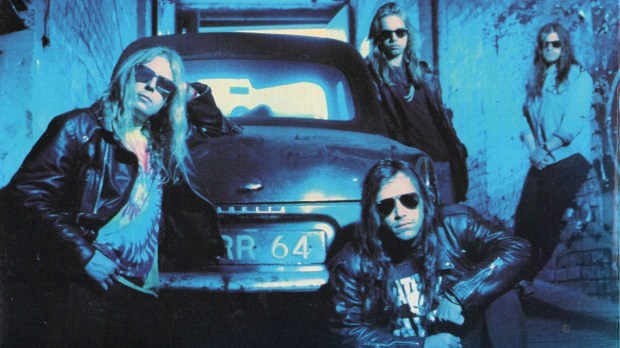
It was 1991, and though Wolfsbane were on Def American records, their second single from their second album Down Fall the Good Guys failed to chart.  Though the critics were consistently positive about the UK quartet featuring one Blaze Bayley on vocals, it was not translating into sales.  “After Midnight” is the name of the track, but its lack of chart performance is not a reflection upon the song.  Brendan O’Brien was the producer, which boggles the mind that Wolfsbane didn’t have more success in 1991.

“After Midnight” has a slight country & western feel, which comes unexpected.  This was a style that was becoming popular for American rock bands to throw into their tunes for some radio play.  “After Midnight” would fit in with any of those better known tracks:  acoustic-based with electric guitars for soloing and accent.  The easiest comparison is another Def American act, the Four Horsemen, but with a baritone.

This CD single is valuable for the inclusion of three non-album tracks.  “Idol” has a tricky little guitar part, but with a punk-like energy and thumping bass.  The chorus has potential.  “Win Or Lose” is a high-speed rock and roll blast, but without any significant hooks.  Good for headbanging or air guitar, but not for singing along.  The best track of the B-sides is an acoustic (self-produced) rendition of “Hey Babe” from their prior EP.  It was always a pretty good ballad, and this version is stripped back to the basics.  Hand-played percussion replaces the big drums, and it has the feeling of a campfire singalong.

Nothing particularly outstanding on this single, but a good collectible nonetheless.

3/5 stars

REVIEW: Judas Priest – Rocka Rolla (50th Anniversary Remixed and Remastered)

For my original Rocka Rolla (1974) review, click here.

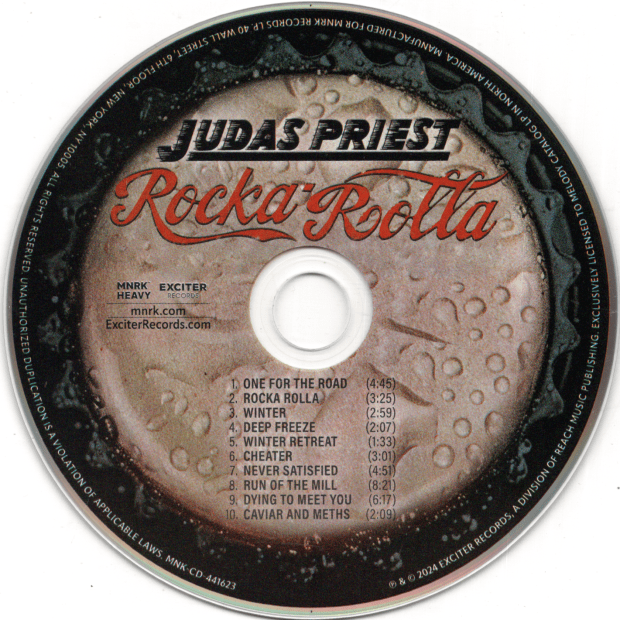
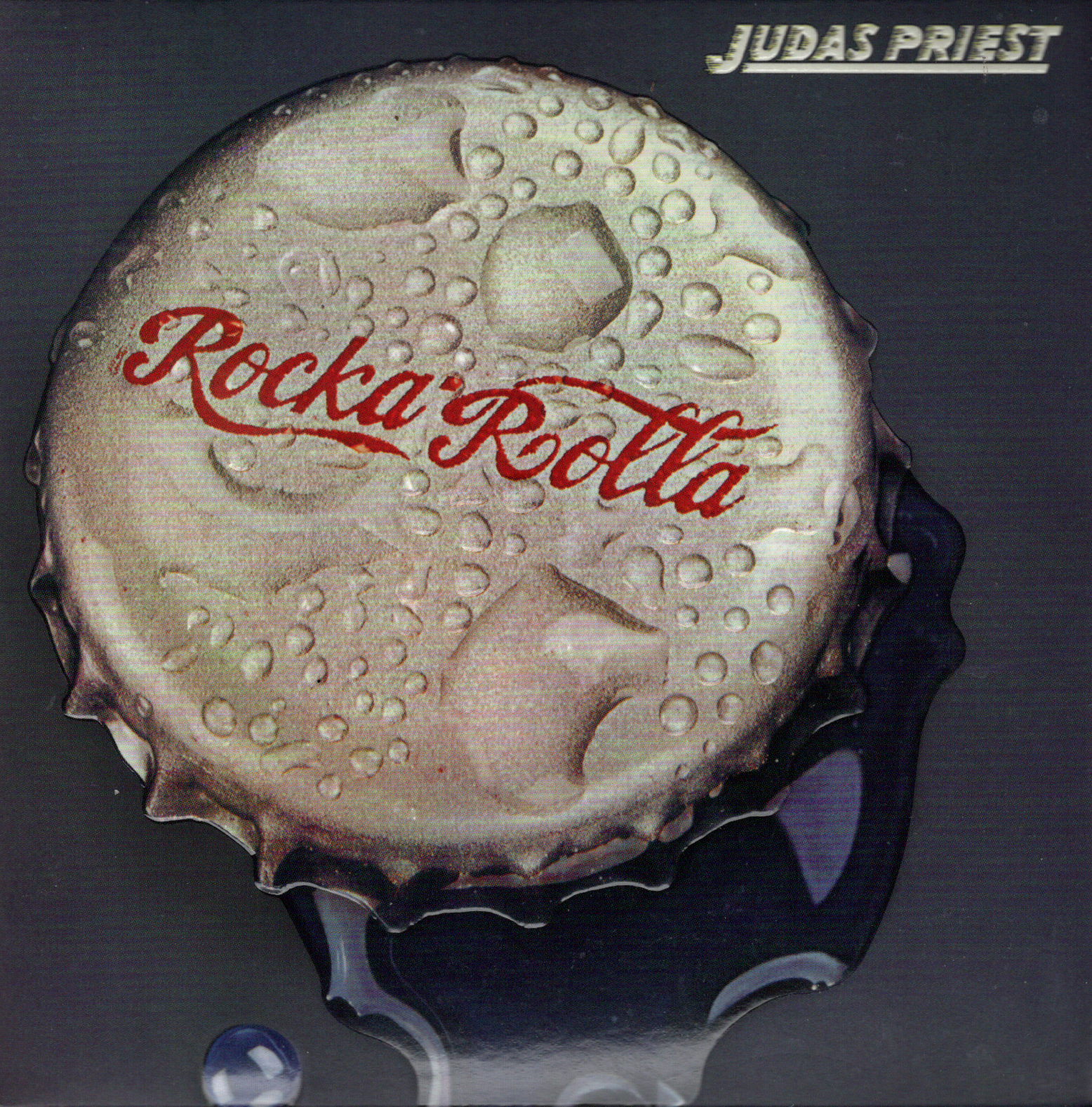
JUDAS PRIEST – Rocka Rolla (1974 Gull, 2024 Exciter Records Remixed and Remastered)

How did he do it?!  Somehow, by some digital miracle of the master tape gods, producer Tom Allom has remixed Rocka Rolla, and transformed it from one of my least favourite Priest albums of all time, to one of my favourites.

Generally I can’t get into the remixed versions of albums.  Even if the remix is objectively a better release, such as Rush’s Vapor Trails or Marillion’s Radiat10n, I always find myself coming back to the flawed originals.

Not this time.

For context, Tom Allom didn’t originally produce Rocka Rolla, and this is not the first remix of it.  Rodger Bain produced, but his name appears smaller than Allom’s on the new back cover.  The Rocka Rolla (full album) remix that appeared on Hero, Hero (1981) was helmed by Bain, less effectively.  Tom Allom is best known for producing the run of Judas Priest albums from Unleashed in the East (1979) to Ram It Down (1988).  What he has done with Rocka Rolla is somehow give it a makeover to sound more like a real 1970’s Priest album.  Sonically, it now has thickness.  There’s a real beefiness to the mix, but not in the sense that you immediate say “oh yeah, this is different.”  It just sounds like the album always sounded that way, and you just got your stereo system upgraded.

The track listing is unchanged.  “One For the Road” still opens with a groove, but now that groove hits different.  You can better appreciate the guitar fills at the end, and the songs goes well past its old fade-out.  This is a trick that remixed album should do more often.

“Rocka Rolla” remains a metal delight, but there is new shimmer to Rob’s vocals and the song chugs with more edge.  It’s all very objective and subtle, but once again Tom Allom took a Priest classic and made it sound like it was always this weighty.

The “Winter” suite is the most altered of any of the tracks.  Notably, Allom chose to separate the tracks from the suite format, and leave them as individual songs.

John Hinch’s drums sound crushingly Bonham-like on “Winter” itself, and the backing riff far more weighty.  The biggest change is that it no longer fades into KK’s guitar showcase “Deep Freeze”.  You can hear more of KK at the end, with some experimental playing that was inaudible before.  The track fades out past its previous point, and “Winter Retreat” stands on its own as a song.  In the 70s, Priest were experimenting with acoustics and psychedelic sounds from time to time.  “Winter Retreat” can now join those songs as something that sonically fits in better.  Finally, “Cheater” always was its own song really, and now it’s just heavier.  Rob’s harmonica is more prominent, which of course recalls the heaviness of Black Sabbath.

Moving on to side two, “Never Satisfied” finally has the punch it always felt like it had inside:  A little more echo on this this vocal line, a lot more weight behind the drums, more texture on the guitars, and a few things made audible for the first time.   We now have the definitive version of this song.  With the impressive soloing mixed in just right, this becomes a long, jammy Priest thumper as it always should have been.  If Rocka Rolla sounded like this when I was a kid, I would have got it immediately.

“Run of the Mill” takes time to build as it always has.  It has a long instrumental section, with some mindblowing guitar playing, and now it’s all finally hitting right.  The bass isn’t just sitting there.  It’s picking you up and taking you along with the groove.  The keyboards in the background are more ominous.  Everything about this is just so much better than the original.

Perhaps the only song that still bores, for the first half anyway, “Dying to Meet You” is similarly upgraded but benefits less from the treatment.  That is until it picks up midway in the “Hero, Hero” section.  This part of the song still cooks, but has a different, more spare feel.  Finally, the light instrumental “Caviar and Meths” really benefits from the remix treatment.  The drums, once again, really add atmosphere to it.

As an added attention to detail, the front cover of Rocka Rolla is now as three dimension as the music.  The water drops are now tactile.  You can feel the bumps with your fingers.  A perfect topper.

What did Tom Allom do with these master tapes?  Did he conjure some kind of heavy metal spell and make a two dimensional album sound big and beefy?  Only Allom knows, but now I do believe in magic.

4.5/5 stars

REVIEW: Marvel Lego Spiderman Advent Calendar 2024 [24 VIDEOS Day-By-Day]

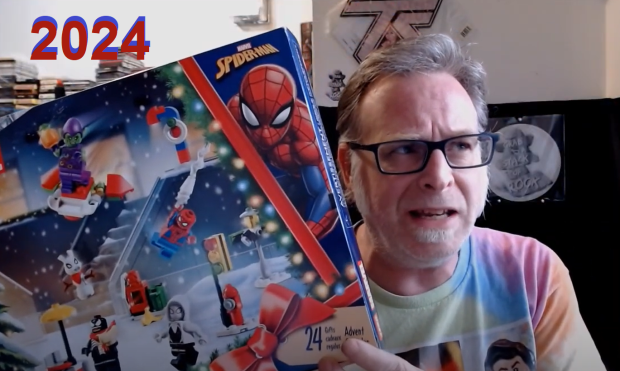
Merry Christmas!  Here is a special set of 24 videos, one for each day on Lego’s Spiderman Advent Calendar.


MARVEL LEGO SPIDERMAN ADVENT CALENDAR 2024

I used to enjoy candy Advent calendars as a kid, since they helped us pass the boring December days a bit.  As an adult, I enjoy them as something to look forward to during a December at the office.  Regardless of motive, I didn’t enjoy the Lego Star Wars calendars as much.  Too many fragile mini-ship builds.

I thought I’d give Spiderman a try in 2024, and I enjoyed this one a lot more.  There were a lot of parts and settings that might work well in future customs.  It could work as a “Christmas village” of sorts.  There were come cool minifigs and accessories.  Lots of webbing to play with, and a lot of spare parts.

As for value?  These packages are not cheap, so don’t expect a lot of parts for your money.  What you will get are some rarer minifig parts like an ugly Christmas sweater and a neat Spider-Gwen, not to mention her drum kit.


3.5/5 stars

REVIEW: Deep Purple – “Lazy Sod” (2024 CD single)

“Recently, a young journalist asked me how many songs I had written in my life. I replied that the last time my assistant counted, twenty years ago, it was over 500. I felt quite accomplished until she pointed out Dolly Parton’s 5,000 songs, calling me a lazy sod.” – Ian Gillan

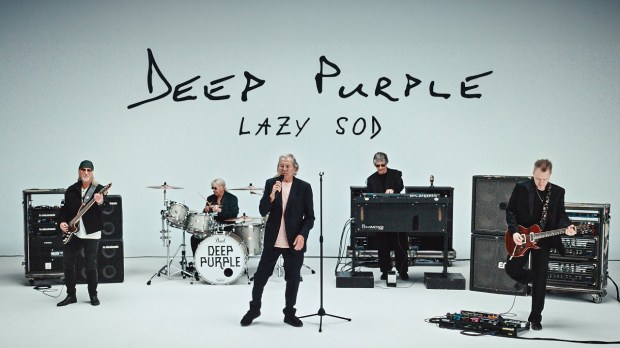
DEEP PURPLE – “Lazy Sod” (2024 Ear Music)

Since Deep Purple’s =1 album was my #1 album of 2024, it should be no surprise that I love the single “Lazy Sod”.  It exemplifies what Simon McBride brings to Deep Purple on this new album.  His smooth playing is loaded with feel and perhaps he adds just a tad more hooky riffiness into the band.  “Lazy Sod” is a fantastic track, a shorty at 3:40, even loaded with solos by Simon and Don Airey.  No fat, just like those old Deep Purple Machine Head firecrackers from the early 70s.

Back when we reviewed the =1 box set, we speculated why a live version of “Highway Star” with Simon McBride wasn’t included.  Same with “Lazy”.  Here they are.  “Highway Star” (Milan, October 17 2022) is pretty damn energetic and features the Simon stuff that we were waiting for.  His sound might be likened as somewhere between Steve Morse and Ritchie Blackmore, but what he brings to the table fits perfectly, without copying either.

“Lazy” (Sofia, May 23 2022) is the lengthy one, at 8:33.  Don Airey opens it with some meandering organ soloing, before playing some more familiar notes.  Then it’s Simon’s turn, sending out a delightfully original solo for “Lazy”.  He throws it back to Don like a game of ball, and Don slays it some more.  “Fun” doesn’t begin to sum it up.  There are old Deep Purple versions of “Lazy” where it does not sound like they are having fun.  This does, for Don and Simon in particular.  The rest of the band have to be able to feed off that.  Ian Gillan doesn’t enter the picture for over five minutes.  He turns in a performance more like a lounge singer, but with some screams towards the end.

Another great single from the Purples.  Thanks for keeping the format alive.  It’s limited to 2000 copies but hopefully that’s enough for the collectors who want it.

4/5 stars


REVIEW: Max the Axe – Live In Ontario! (2025)

MAX THE AXE – Live In Ontario!  (2025 maxaxe)

Kitchener Ontario’s Max the Axe has several studio albums and EPs, plus a “best of”, but never before have they released a live album.  Until now!

Recorded in 2006, 2017, and 2018, the album features a spread of Max classics new and old, including favourites like “Scales of Justice” and “Gods On the Radio”.  Each song features Eric “Uncle Meat” Litwiller on vocals.

“But Mike,” you ask. “I thought Meat joined the band later than 2006.”

True.  While we won’t get into details, if you consider Kiss Alive to be a great album, then you should have no problem with Live In Ontario!

The first six tracks come from a 2006 recording called Heads or Tails, recorded in Etobicoke Ontario.  The lineup includes Litwiller, Mike “Max the Axe” Koutis on guitar, Tom Cole on bass, and Jeff Slauenwhite on drums.  These tracks are heavy on bottom end.  The guitars are pure sludge.  Opener “Blood Runs Red” sounds great with Meat singing; a fantastic vocal performance.  The familiar “River Grand” follows, and once again the vocals stand out, with Eric adding twists that aren’t on the album versions.

“Labyrinth” has distortion and groove.  Max wrings some cool sounds from his axe on this frantic, messy, punky classic.  It’s very shambolic, definitely with a punk rock appeal.  Back to a more metallic sound on “Immortal” (subtitled “I Feel the Sun”).  The vocals are more tentative here, as the song was less familiar when recorded.

“Mexican Standoff” opens with the traditional Mexican sounding guitar lick, and then it’s off to the races with Meat in peak voice.  This version lacks the shouted backing vocals, but is cool nonetheless.  Max throws some wah-wah on during a noisy interlude.    One more song from this gig is the Metallica-like “Space Marine”.   It is great to finally have versions of these older songs with Meat singing, tentative as some are.

Onto the next batch of songs from 2016 at “The Farm” in Woodstock Ontario.   This was the very first gig with the new (and definitive) lineup:  Mike Mitchell on bass and Dr. Dave Haslam on drums.  Having never played live before, and with a batch of brand new songs, the gig sounds much as you would expect.  It’s energetic and engaged, but good as the songs would come to be, they are not there yet.  The set features a number of compositions that would later appear on the Status Electric album, plus “I Don’t Advocate Drugs”, the first version available with Eric on vocals. He cranks it up a couple notches.

A very cool band intro leads into “The Other Side”, a very embryonic version.  The parts are all there, but it’s not tight yet.  “Loose” is a good word to describe this live album in general.  There’s also an extended guitar solo.  From there, Eric asks the audience if anyone out there owns a snake?  Which means, of course, that “Scales of Justice” is up next.  It’s not as crunchy as the album.  If anything, maybe it’s a bit more Zeppy.  Yet those vocal hooks are there, and Meat is in peak voice.  This track needed some work before it was album worthy, but it is fun to hear these early versions, flaws and all.

“This is a song about gambling,” explains Eric.  This means the “Next Plane to Vegas” is about to land.  It barely hangs together, but it’s over in a flash.  Finally, “Gods On the Radio” closes the set with Max’s best song.  Again, it’s not quite what it would become on album yet, but the bones are there and the vocal hooks are 100% intact.  It doesn’t have the drive of the album version and unfortunately the drums are hard to hear.  The guitar solos also haven’t evolved yet.

Finally, “Randy” from 2018 was recorded on a cell phone by your’s truly.  While a limited run of one (1) single  picture disc was made, this is its first CD release, and in much better sound quality.  In terms of performance, this is by far the best track.  All the songs were by now well rehearsed by the band, as the album had been completed.  The difference between this and the Farm tracks is clear.

It is a shame the whole 2018 Boathouse set was not recorded.  That said, you do the best with what you got.  In this case we have a 2006 recording of an early band lineup, with the older songs.  Then you have the 2017 recording of the definitive lineup, but with songs that they were still honing.  So it’s not a perfect situation, but it’s history recorded.  Something to remind us that albums don’t come fully formed.  They must be worked on diligently, and if anything, Live In Ontario! makes us appreciate Status Electric that much more.

“Randy” on the other hand could be the best version of that song, period.

3.25/5 stars

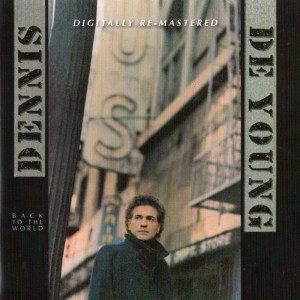
REVIEW: Dennis DeYoung – Back to the World (1986)

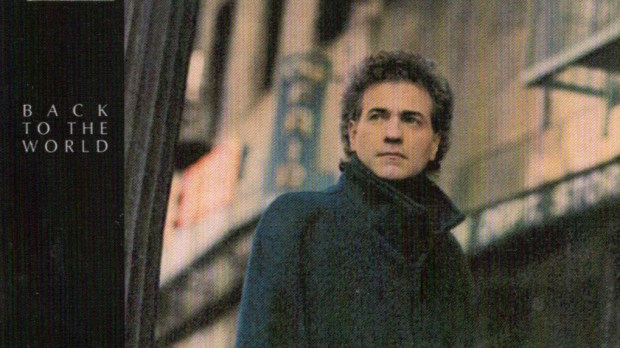
DENNIS DeYOUNG – Back to the World (1986 A&M, 2013 BGO reissue)

Though his solo debut Desert Moon was a moderate hit, Dennis DeYoung took no time off and was back with a second album two years later.  Still using Tom Dziallo on guitar, Dennis also added C.J. Vanston on keyboards.  With Dennis being an acclaimed keyboardist himself, was this too much of the instrument?  Once again, DeYoung wrote everything himself, with no cover tunes this time.

Opening the album is the theme from The Karate Kid II, “This Is the Time”.  Fortunately the song is a lot better than the film.  With emphasis on saxophone and keyboards, this is a pleasant, anthemic light rock theme.  With some exposure, it could have been a minor hit, but fortune was not with Dennis this time.  The track only made it to #93, while the album peaked at #108.

“Warning Shot” has a bombastic Styx-like opening, though with less emphasis on guitar.  Dennis’ singing here is top notch, employing a lovely falsetto when necessary.  When the chorus hits, it feels like this is the Dennis we have been waiting for.  A spectacular guitar solo brings it into a classic rock realm, but really “Warning Shot” is all chorus.  A host of backing singers join in and the song launches into the stratosphere.  It should have been a single.

The biggest hit, the ballad “Call Me”, was the single, which hit #5 on the Adult Contemporary charts, where no Styx fans were likely to hear it.  It has some nice saxophone textures, but it’s unremarkable and will always live in the shadow of Dennis’ better known ballads.  It’s just too light.  “Unanswered Prayers” is better, with some lyrical guitar work in the intro and solo.  This slow number feels like a nice one for a slow dance, but the album needs a jolt of energy and this isn’t it.

Opening side two, “Black Wall” is darker and harder edged.  It’s a slow burner with focus returning to the guitar.  It is not exactly the energy injection we need, but at least it is a change of direction.  The “Black Wall” in the title refers to the Vietnam Veterans Memorial, in Washington D.C.  The powerful music is suitably dramatic and deliberate, with the soulful backing vocalists dominating the chorus.

A bluesy harmonica solo introduces “Southbound Ryan”…but the electronic tom tom drums just jar you when they come in.  Fortunately once that’s out of the way, we’re onto one of the best tracks on the album and the shot of energy we so desperately needed.  A smoking horn section blasts forth, and the tempo is finally hot!  That horn section is like the jelly in a PB&J!  So sweet, so good, just the perfect punch for a song that deserved it.

Fortunately, the tempos and horns remain on the next song, “I’ll Get Lucky”.  We’re definitely in the 80s now, with more keyboards and programming at the forefront.  Notably, C.J. Vanston contributed a rocking instrumental section in the middle.  The song is a bit jerky, going from dense sections to sparse ones, and it feels bumpy compared to the prior one.  Would it have been better had Dennis just played it simple instead of trying to get so clever with the production?  Once again, Dennis produced the album himself.

The final song, “Person to Person” has a Styx-like vocal and might have worked on one of the later albums.  It’s a little too savvy for a pop record, which is a good thing.  Had Styx done it, hopefully it would have less synth and corny toms, but it was 1986 and that was the sound to have.  At least Dennis closed the album on an uptempo note, and a song with a memorable chorus.

Had Dennis employed an outside producer, perhaps his first two studio albums would be more even.  Back to the World and Desert Moon share this problem.  Both albums sag in spots, and despite some awesome songs throughout, there are not enough of them.

3/5 stars


REVIEW: Dennis DeYoung – Desert Moon (1984)

DENNIS DeYOUNG – Desert Moon (1984 A&M, 2013 BGO reissue)

Alas for me in ’83, Styx were coming very close to an end.  Tommy Shaw didn’t want to sing songs about robots (or something) but what it really came down to was Dennis DeYoung’s vision vs. his.  Dennis was the theatrical one, and Tommy was the rocker.  That’s putting it in simplistic terms, but by the end of the tour, Tommy was out.  The other three members of Styx wanted to replace him and carry on, but Dennis was not interested.  In 1984, Styx issued their live album Caught in the Act, and said goodbye.  Less than six months later, Dennis DeYoung was out of the gates with his debut solo album.

Desert Moon demonstrated that Dennis was full of new ideas.  He wrote seven of the eight songs, with a Hendrix cover in the mix, and no co-writers.  Not that Dennis needed co-writers before, but he did often share credits on early Styx tracks with his bandmates.  Guitars on Desert Moon were handled by Tom Dziallo, who also programmed drums when necessary.  Dennis takes care of all keyboard duties, augmented by saxophone on some tracks.

I can distinctly remember watching MuchMusic in 1984, when a new Dennis DeYoung video came on, called “Desert Moon”.   It was a top 10 hit, and a ballad.  I was quite clear in my youth that I did not like Styx for their ballads.  I dismissed Dennis as a solo artist immediately.  I am sure he was broken-hearted that a 12 year old Canadian kid didn’t like his new direction.

I should not have dismissed Dennis so easily.  If I had bought his new album, I would have loved the opening rocker “Don’t Wait For Heroes”.  It could have been a Styx song, the upbeat triumphant kind of single that they were known for pre-“Roboto”.  Styx fans might have considered it a return to form for the singer.  While not as guitar-heavy as the two-guitar band, it does rock, with the drums (by Tom Radtke) in particular driving the song.  The melodies evoke “Don’t Let It End (Reprise)” on Kilroy Was Here, but with more edge.  The end refrain of “get up, get up, get up!” should indeed make you get up.

Guitars come to the forefront on “Please”, with a riff and a chug.  Then on the pre-chorus, Dennis lets the keyboards come out.  “Please” is a duet with Rosemary Butler, a singer with dozens of albums on her resumé.  A tasty guitar solo continues to keep things accessible to Styx fans, but the duet is really impressive.  Butler goes head to head with DeYoung, and blows him away by the end with some incredible high notes.

New wave sounds inflect “Boys Will Be Boys”, which Dennis delivers with spoken-word verses.  The fast beats and bouncing synth recall Devo and bands of a similar nature, not to mention that Alice Cooper ’80 sound.  There is also a clear 1950s influence on the chorus, with that “dip dip dip dip dow!”  The production recalls “Music Time” from the final Styx record Caught in the Act.

You don’t know that you’re listening to a Hendrix cover at first.  It sounds more like a slowed down “Peter Gunn”, but then Dennis sings those lines.  “You don’t care for me, I don’t care about that…”  Only then do you realize you are grooving to “Fire”.  Unlike every other cover of it, Dennis all but rewrites it as a slow rock groove.  While “Fire” is not an album highlight (think about that a moment), it is one of the most interesting versions you’ll ever hear.  It takes guts to reimagine a song like “Fire”, and it takes talent to pull it off so well.

The aforementioned title track “Desert Moon” opens side two.  It was the top ten ballad, and it’s easy to hear why.  It’s a slow, romantic sounding song with a resounding nostalgic chorus about summer nights, innocence and dreams.  The formula worked.  In the liner notes of the BGO edition CD release, Dennis credits the arrangement which emphasizes his voice, and therefore the lyrics.  The guitar solo is also a thing of beauty, with one sustained note that just sings.  A magnificent solo.

Dennis digs into his classic rock and broadway roots for “Suspicious”.  It’s a DeYoung trademark, but in light of exceptional material preceding it, it tends to go unremembered.  It might be a case of too much synth.  “Gravity” uses such electronics as well, but in more upbeat setting.  “I wanna climb Mt. Everest, and find my Shangri-La,” sings Dennis.  The fast New Wave beats during the chorus are fun but the song struggles to find an identity, and the listener has trouble hanging on.

Desert Moon ends on “Dear Darling (I’ll Be There)”, a final ballad, and just not enough to recover the album from a dip in memorability at the end.  It’s simply too much saccharine at the end of the day.  Another upbeat track should have ended the album, though at least there is a fine sax solo to dig into.

Dennis suffered an injury while making a music video and never got to tour Desert Moon properly.  Would it have made a difference?  Unlikely.  While Dennis was more than capable of delivering a good album on his own, left to his own devices, it didn’t have the consistency we were used to with Styx.  Perhaps a co-producer would have made a difference, since Dennis produced this album by himself.  The performances are all excellent, particularly lead vocals, but there needed to be more spark within some of the songs.

3/5 stars