#517: Science!

“Science is a tool of the mind.  With it one can open more doors than with the bare hands alone.” – Mr. Branday, Grand River High School, 1986

Getting More Tale #517:  Science!

Never underestimate the power of science.  Without science, we would not have the electric guitar.  Science allows us to analyse wavelengths and wires and figure out why a piano sounds so good.  With the tools of science, we can examine how music effects the human brain.  With science, we can battle ignorance!

That in mind, here are some interesting science facts that we gleaned from the September 2015 issue of Discover magazine, in an article by Jim Sullivan.

You might wonder how singers like Paul Stanley or Freddie Mercury managed to sound as incredible as they did.  It was the result of many factors, but both Paul and Freddie had strong vocal cords.  The muscles in the vocal tissues do the work.  Great singers have incredible control over these muscles, and take good care of them.  They work by increasing and decreasing air resistance, by opening and closing.  The compression and decompression of air creates waves…sound waves!  Now think about the range of sound that the human voice can produce.  It’s a very wide spectrum of sounds.  Think about the complexity of those muscles and the nerves that control them!  Get this — there are a few throat singers who are able to create up to four notes simultaneously!

Freddie Mercury was also probably dominated by the right side of his brain.  Current theories state that singing is mostly controlled by the right, while language is in the left.  Possible evidence of this can be found in some stroke victims.  Some cannot speak, but can still sing.  Another example that I remember from my childhood is country singer Mel Tillis.  He was in a Burt Reynolds comedy, Cannonball Run.  A young 10 year old me liked his character because he talked funny:  he had a stutter.  My dad told me, “He has that stutter in real life.  He has a really hard time speaking, but he can sing like a bird.”  I couldn’t believe it.  My dad told me an old story, that Mel Tillis was talking on the phone with somebody and just couldn’t speak.  His stutter was so bad that he couldn’t finish a sentence.  So instead he began singing.  Isn’t that a fascinating story?

How about volume?  Well, it turns out that the average human speaking voice is about 60 decibels.  According to the Guinness Book, there’s a lady in England named Jill Drake who can scream at 129 decibels.  That’s about the same levels measured at an AC/DC concert.  Perhaps Jill Drake should consider auditioning for the lead singer job in that band!

Singing is a special talent, and I’m not very good.  I have poor control and I’m constantly flat or sharp.  Why is this?  Is it my vocal cords?  According to another Discover article by James Dziezynski from July 2014, not really.  A study showed that it’s probably the brain.  The condition is called imitative deficit, and if you’re a bad singer like me, you probably have it. Essentially, our brains can hear and identify a note correctly. When we try to move our vocal cords to hit that same note, we can’t. The brain’s signals get scrambled. It consistently commands the vocal cords to hit a different note, no matter how hard we struggle with it. However, all is not lost. Like anything else, you can re-wire your brain with practice. Lots of practice, preferably with guidance.

This is heartening to know. There is hope, even for a talentless schmuck like me! Thank you, science.
REVIEW: Rainbow – Straight Between the Eyes (1982)

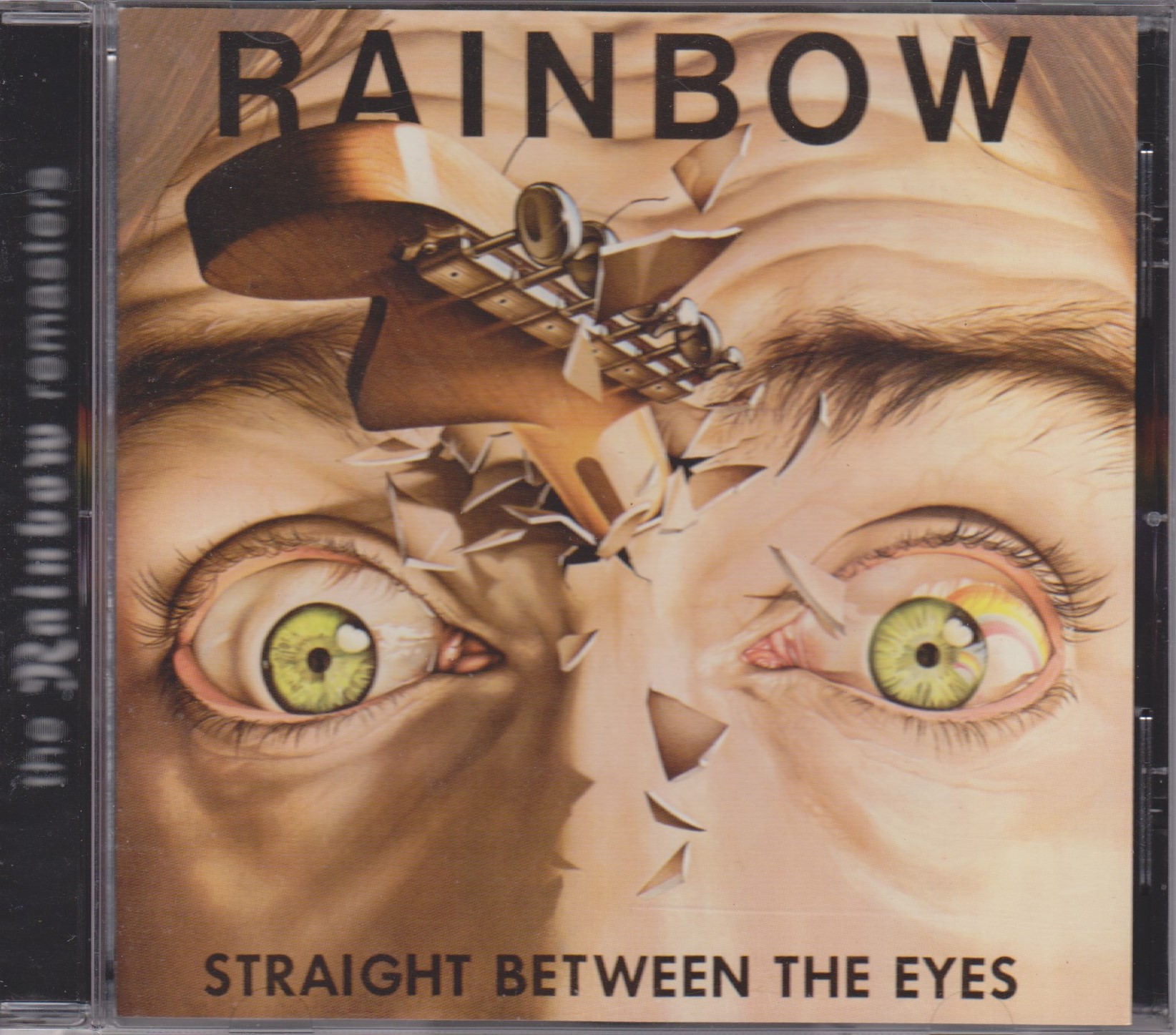
scan_20160911RAINBOW – Straight Between the Eyes (Remastered, originally 1982 Polydor)

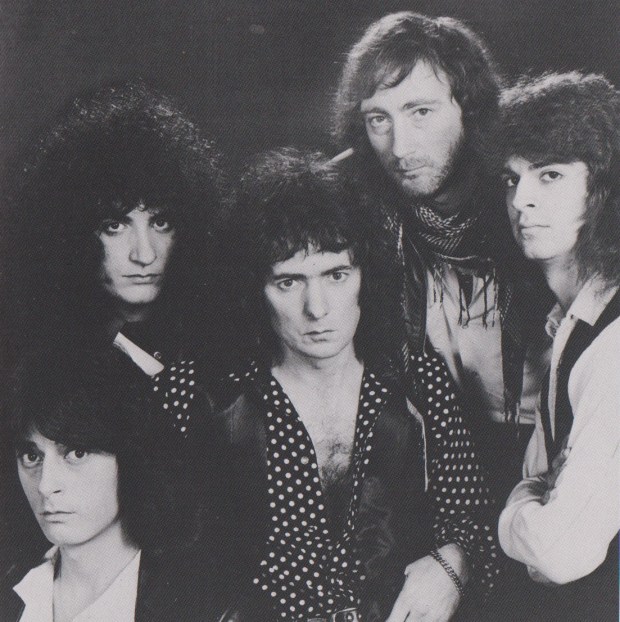
I’ve always found the most interesting bands in rock to be the ones who have had multiple singers over different eras.  Blackmore’s Rainbow never did two albums in a row by the same lineup.  From Ronnie James Dio to Graham Bonnet to Joe Lynn Turner and beyond, Rainbow has been an ever-changing entity during its brief lives.  Each era has much to offer, with the Turner years sometimes slagged as the weakest.  It is true that ballads became a larger part of the Rainbow sound under Joe, but the turn towards the commercial was evident during the Graham Bonnet era, on Down to Earth.

The peak of the Turner period would have to be Straight Between the Eyes, his second with the band.  The lineup this time consisted of founder Ritchie Blackmore, with Roger Glover on bass (his third Rainbow record), drums by Bobby Rondinelli (his second) and new keyboardist David Rosenthal, replacing Don Airey.  Rondinelli is a remarkably hard-hitting drummer and his solid, massive beats propel the songs.  The finest example of this is “Death Alley Driver”, which could easily be seen as an updated version of “Highway Star” from a decade earlier. The amusing video clip featured Joe Lynn Turner on a motorcycle being chased perilously close by a pilgrim-hatted Blackmore in a hearse!* “Death Alley Driver” indeed!**

Although “Death Alley Driver” is the first track, the soulful ballad “Stone Cold” was the first single. It was a minor hit and still gets radio play today. The integrity lies in Ritchie’s smooth guitar, Joe’s always authentic vocals, and the classy organ backing it up. The song’s strength is in its unmistakable pulse, which is Rondinelli and Glover’s impeccable rhythm. Blackmore fans may have been aghast at the soft rock single, but “Stone Cold” holds up as a classy ballad from a spanking album.

Sadly the music video was not the humorous pleasure the “Death Alley Driver” was. Turner looks stiff**^ and awkward searching through a hall of mirrors looking for a girl with a frozen face.  Blackmore just looks disinterested.

Straight Between the Eyes was produced by Roger Glover, as were the previous two albums.  With Bobbi Rondinelli behind the kit, Glover extracted an even bigger drum sound, and it is up in the mix.  Each track boasts a massive beat, even the ballads like “Tearin’ Out My Heart”.  He provides a gallop, and that’s the extra kick the songs get.  The album would not have been as forceful with a different drummer.

So as Joe sings it, “Let the Dream Chaser take you away” if you want to get “Rock Fever”!  The album can be found affordable so it won’t be a “Tite Squeeze” on your wallet.  Feel the “Power” and “Bring on the Night”!  It’ll rock you “Stone Cold”.**^^

4/5 stars


* Something about that action-packed music video makes the music seem faster and heavier.

** During the Blackmore closeups inside the hearse, pay attention to the rear window behind him. You can clearly see from the trees behind that the car is not moving an inch!

**^ Cue Aaron.

**^^ These are all good songs.  No real duds on Straight Between Eyes.

REVIEW: Mr. Big – Mr. Big (1989)


Scan_20160811MR. BIG – Mr. Big (1989 Atlantic)

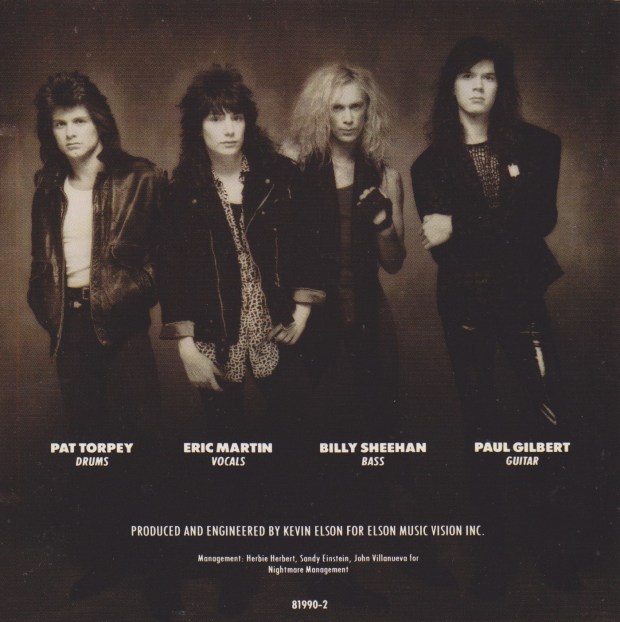
Mr. Big started as a “supergroup” of sorts, with bassist Billy Sheehan being the most well known due to his stint with David Lee Roth (and Talas before that).  Because of his bass prowess, we know his band Mr. Big would be heavy on the shred.  What set them apart was the blue eyed soul of singer Eric Martin.  Their debut record possessed the speediest chops imaginable, but used sparingly.  It’s a song-oriented album, with “Addicted to that Rush” leading off with heavy space-age playing.  Unfortunately nothing else is as memorable, except the Humble Pie cover “30 Days in the Hole”.

Tracks like “Had Enough”, “How Can You Do What You Do”, “Rock & Roll Over” and “Merciless” are all competent rock tunes, and due to Billy’s bass, the bottom end is unbelievable.  Unfortunately it took Mr. Big one more album to really come up with the songwriting goods.  Their debut is fine enough indeed, but folks who dig the playing will be sticking around.  Those looking for soul and memorable hooks will have to dig deep.  There is good stuff here, but little that will make repeated spins in the CD player months and years down the road.  Good, but not quite good enough.

3/5 stars


#516: Use Your Illusion

GETTING MORE TALE #516: Use Your Illusion

25 years ago on this day, millions of fans used their illusions.

1991:  First year of university, and I was hard at work on some reading.  My sister and my mom were out shopping at the mall.  The record store I eventually worked at opened up just that summer.  Unbeknownst to me, they popped in on my behalf and returned with a present.

“Mike!” yelled my sister excitedly as they returned home.  The dog barked loudly in shrill Schnauzer barks as she talked.  “Did you know Guns N’ Roses have TWO NEW ALBUMS OUT?”

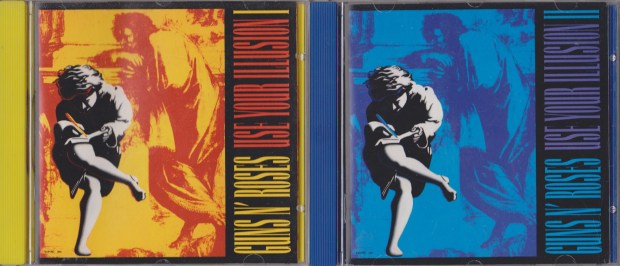
I sure did!  Use Your Illusion I and II were the long-awaited true followups to Appetite for Destruction.  With 30 brand new songs, Guns released the music as two separate but complimentary albums.  My sister eagerly handed me a gift:  a new cassette copy of Use Your Illusion II!

Why she chose II, I don’t know and it doesn’t matter.  For this fan, II was the first.  I had it a whole week before I caught up and bought Illusion I (again, at the same store I would work at only three years later).  It was $10.99.  Perhaps because I had the second album a week ahead of the first, I still really prefer II over I.  Songs such as “Breakdown”, “Pretty Tied Up”, and “Locomotive” are three of the strongest and most ambitious rock songs on an already strong set.  They stand up today as my personal favourites.

The Use Your Illusion albums spawned a combined eight singles:  “Knockin’ On Heaven’s Door”, “Civil War”, “You Could Be Mine”, “Don’t Cry”, “Live and Let Die”, “November Rain”, “Yesterdays” and “Estranged”.  Additionally, music videos were made for the tracks “Garden of Eden”, “The Garden”, and “Dead Horse”.  Guns N’ Roses assaulted all formats as they trounced the world in a two year long world tour, with acts such as Skid Row, Metallica and Faith No More.  They even suffered their most devastating lineup change right at the very start of it.  Chief songwriter Izzy Stradlin departed in November of 1991, to be replaced shortly after by Gilby Clarke.  Although he has made numerous guest appearances since, Izzy has never rejoined Guns N’ Roses.

Did you buy Use Your Illusion I and II 25 years ago today?  Do you have a favourite?


REVIEW: Tesla – Mechanical Resonance Live! (2016 Japanese with bonus track)


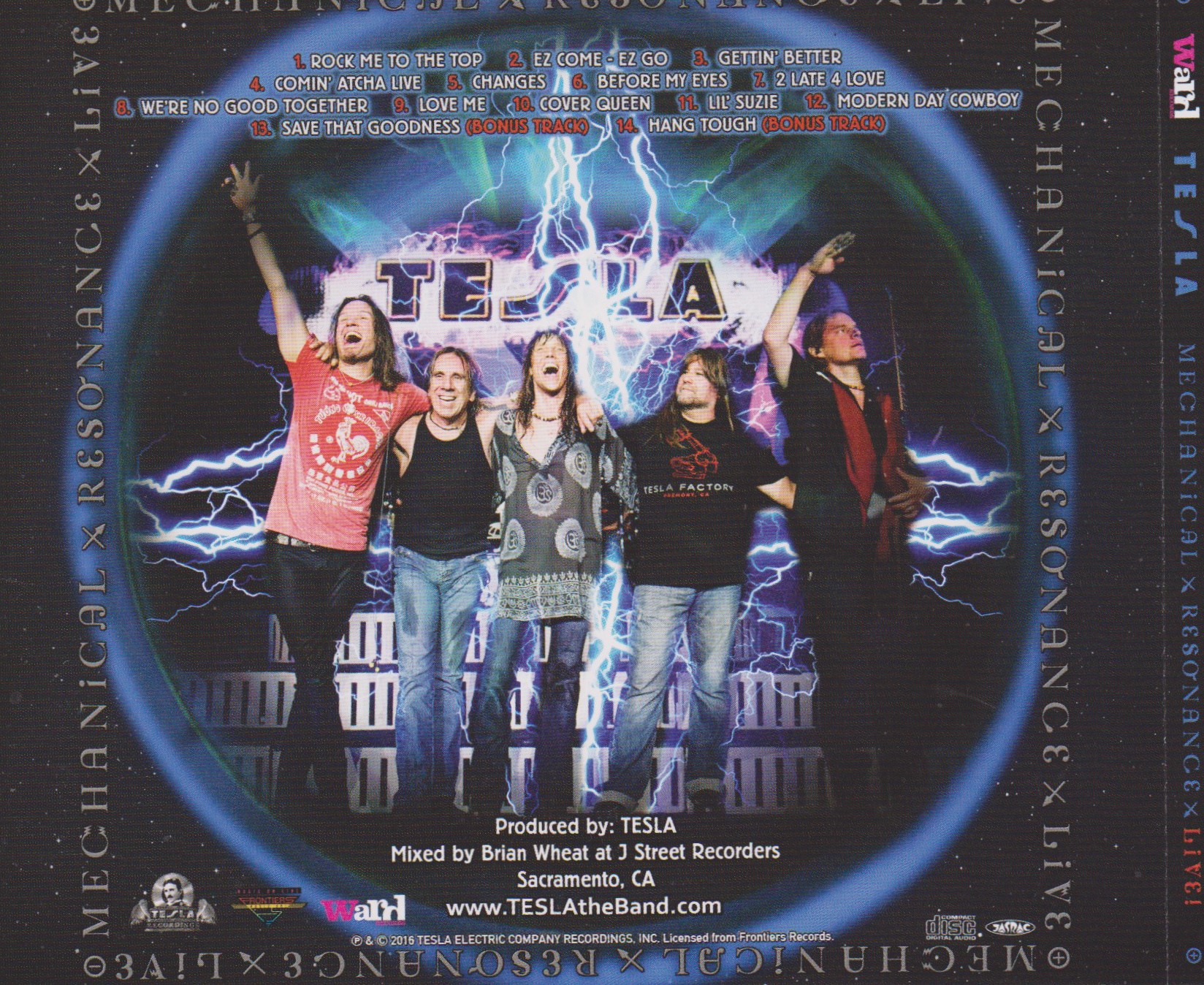
scan_20160915-3TESLA – Mechanical Resonance Live! (2016 Ward Records, Japanese with bonus track)

30 years?  Holy shit, I remember when Tesla was considered a new band.  Far more talented that the critics gave them credit for, or the bands they are lumped in with, Tesla have officially stood the test of time.  May as well use the 30th anniversary to put out a live album.  Unlike many other bands from their era, Tesla produced a number of studio albums worth listening to from front to back.  Their debut Mechanical Resonance has long been a favourite, a high quality slab o’ rock, so may as well play the whole thing live, right?

Tesla tweaked the song order (presumably for the live concert experience) to start with “Rock Me to the Top”.  Eternally young singer Jeff Keith has barely aged, and has lost nothing in the decades.  The rasp, the power, and the character are all intact.  The keys have been lowered, as any 30 year old band would have to do, but it’s hardly noticeable.  This makes Mechanical Resonance Live an absolute pleasure to listen to.

The other guys in the band kick as much ass as possible.  Tesla are a guitar band, and losing the talented and charismatic axeman Tommy Skeoch (first in the 90’s and then again in 2006) was a hell of a blow to suffer.  With mainstay Frankie Hannon on guitar, and new addition Dave Rude, they have continued on forcefully.  You can tell one ingredient is missing compared to the original LP, but that also makes it a fresh take on an old favourite.  As for the rhythm section of Brian Wheat (bass) and Troy Luccketta (drums), I think age has only made them better (just listen to “Cover Queen”).  Troy has his own distinct drum style, and you can hear that in the cymbal work.

scan_20160915-2

Strangely, some of the songs that stick out most are the slow tracks.  “Changes” for example is amped up, guitars duelling furiously, with Jeff pouring his all into the microphone.  “Before My Eyes” is another slower song with some stunning guitar work from Rude and Hannon.  Of course the hits are also fantastic — “Little Suzie”, “EZ Come EZ Go”, and of course an explosive “Modern Day Cowboy” which is moved to the closing slot in the set.

Tesla have a 30 year friendship with Def Leppard, and that’s why there is one new studio song written and produced by Phil Collen.  The opening chords, melody and rhythm of “Save That Goodness” are all immediately identifiably Def Leppard.  Tesla are a little more rough-edged than Leppard, and that especially comes out in Jeff Keith’s rasp.  Great track, and something special for the fans craving new music since 2014’s Simplicity.  I’m a sucker for a great new song at the end of a live album.

But that’s not all!  The Japanese release has one more extra — the classic “Hang Tough” from The Great Radio Controversy.  It sounds live, but there’s no crowd noise.  Whether it’s mixed out or if this is a rehearsal recording, the booklet does not say.

4/5 stars

scan_20160915-4

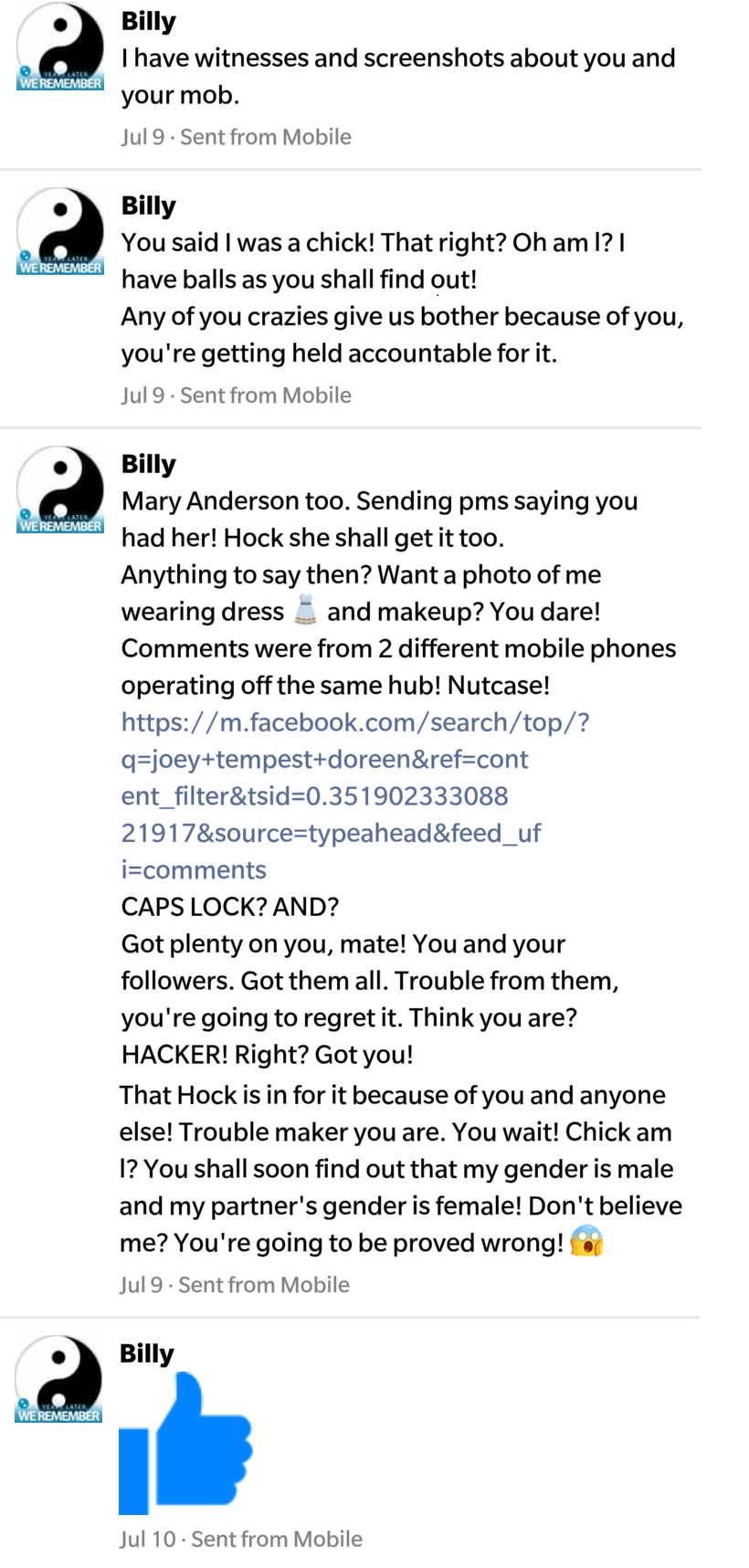
WTF Comments: “Now I will believe that there are unicorns…”

WTF Comments IV:  “Now I will believe that there are unicorns…”
(William Shakespeare, The Tempest)

These comments went into my spam, so even though they are two months old, I didn’t see them until today. The Joey Tempest Conspiracy Theorists have reared their ugly heads again. Not much commentary needed from me this time, just read and see for yourself! It’s just a huge bag of WTF. I’ll only add two things:

1. I couldn’t even hack a calculator.

2. I honestly had no idea Billy was a dude. There are lots of girls named Billy! I thought it was an all-female mob of obsessed Joey Tempest fans. Now we know it’s a mixed gender group. Hooray!


img_20160916_070920

img_20160916_070932

img_20160916_070949


Billy, this is your official public apology for thinking you’re a girl. You don’t have to show me your wang to prove it, I believe you.

Just when I thought this couldn’t get any weirder, I had to check my spam. Jesus. Happy Friday!


#515: Dye, Dye My Darling

GETTING MORE TALE #515: Dye, Dye My Darling

Have you ever wondered how a CD-R burner works?

It’s quite complicated actually, but the basic idea is that data is encoded in binary “pits” and “land”.  If you recall your grade 10 math, binary allows you to record any data in ones and zeros.  In the CD world, this translates to “pits” and “land”.  Think of the pits as zeros, and the land as ones.  When you burn a CD at home, musical data is encoded with a laser.  The laser doesn’t actually etch the plastic or metal layers of a disc.  Instead, it burns the data into a layer of dye.  It is this dye that gives a blank CD its typical colours.  Once this information is properly encoded onto the blank CD, you can then play it on most household disc players.  But they don’t last forever.  The colour of the disc can be a clue how much life it has.  It can help indicate what dye was used in manufacturing.

  1. Cyanine dye (green)

These are the earliest blanks made, with a layer of dye that was also UV sensitive.  Unfortunately this meant that your CD could be destroyed by exposing it to direct sunlight.  The dyes were improved to make them more stable, but many people had their data destroyed simply by leaving the disc out, playing side up, where sunlight could get to it.

  1. Phthalocyanine (gold, silver, light green)

A more stable form of dye.  You’d have to leave your CD out in sunlight for two weeks to destroy it.  Unfortunately phthalocyanine dyes are more sensitive to the writing laser, and these discs required some technical advances to make for a good recording.

  1. Azo (dark blue)

Rated for a storage lifetime of decades.  More stable than the other two dyes.  It would take a month of sunlight to destroy an azo-based disc.  Also capable of faster writing speeds than other dyes.

Because it would have been easy to look at a green CD and say, “Nope, I’m not buying this one,” disc manufacturers tricked you by adding other colours to the dyes.   But the type of dye is only one factor in how good your CD sounds and how long it lasts.  A CD is like a sandwich made of plastic with layers in between where the data is stored.  Poorly manufactured CD-Rs allow moisture to seep in between the layers and destroy the disc.  And of course the quality of the burner is also critical to a good sounding CD-R.  And be careful if you’re labelling your disc with a marker.  Sometimes solvents from markers can react with the dyes.

In very rare cases, CDs and even DVDs have been known to explode during burning, according to a New York Times article from 2004.  It happened when a disc was spun too quickly, probably as a result of heat from the burning laser combined with centrifugal force.  This is why the upper limit for burning a CD is 56x.  Go faster than that and your music could go BOOM (and not in a good way).

A re-writable CD is different still from a dye-based CD-R.  A CD-RW (which can be re-written thousands of times) uses a metal alloy layer that is physically liquefied by the laser.  It’s crystalline before burning, but less reflective after burning.  Therefore a CD-RW has pits and lands made of more and less reflective spots on the disc.  And if you don’t like it, you can start all over again.  The laser re-heats the alloy, restoring it to its crystalline reflective state.

It’s all very technical and interesting, but how often do you record a CD today?   Though burning a CD will always be a pastime for many music fans, the majority have happily moved on to easier and quicker flash storage.  Is that as fascinating as a laser etching your music onto a disc?  No, but however you handle your music collection is up to you.

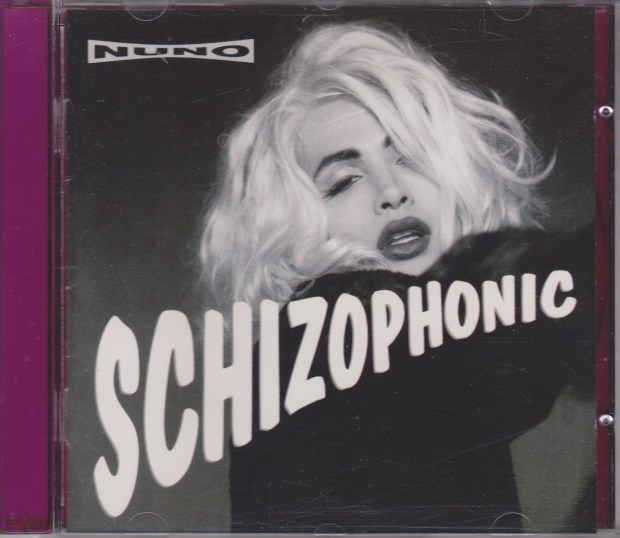
REVIEW: Nuno – Schizophonic (1996)

NUNO – Schizophonic (1996 A&M)

Man, the 1990s were hard on rock bands.  Those that could not survive broke up and fragmented.  Those fragments metamorphosed into new and sometimes interesting configurations.  Image changes, name changes, hair cuts…rock artists did whatever they had to do to make a living.  Even the talented ones.

When Extreme fell apart in 1995, it was obvious that guitarist Nuno Bettencourt wouldn’t just disappear.  Instead he re-emerged on his old label A&M with a 90’s-style stripped down album and a single moniker: “Nuno”.  With Nuno dressed in drag on the front, there was nothing to indicate that this was the same guitar wizard who made jaws drop just six years prior.

Writing, singing and playing virtually everything himself, Nuno’s solo debut Schizophonic was received coldly by some fans.  With 15 short and basic pop rock tracks and ballads but running over an hour in length, Schizophonic is a chore to finish in one listening session.  All the flavours of 90s rock are present:  drony riffs, drum machines, and distorted vocals with a de-emphasis on instrumental finesse.  The first track “Gravity” possesses all of these qualities, but also has Nuno’s knack for melody.  You can all but hear him and Gary Cherone harmonizing on it.  Shame that never happened because this could have been a great Extreme track.  “Gravity” is not bad, but there certainly is a sensation of the potential for more.

“Swollen Princess” is a great track.  Real drums, less distortion, and Nuno’s way with a melody make it a much better recording.  You can see why a guy like Nuno had to try and be more anonymous in the 1990’s.  If this track was on a new band’s album, it could have been a pop punk hit.  Put it on an album by a guy from an 80’s hard rock band, and nobody was going to pay attention.  Some will also enjoy “Crave”, a very very very 1996 rock song with light verses and hard choruses.  Sounds like Nuno was listening to a lot of Weezer.  Great song, but not for everybody.  I also dig the Spacehog-like “Got to Have You”.

“What You Want” will be skipped by many.  It adapts the riff for “New York Groove” by Ace Frehley into something new and noisy but not especially appealing until the mellow chorus.  “Fallen Angels” is all loops and programming; not enough groove.  “2 Weeks In Dizkneelande” is a cool title, exposing a heavy fast grunge-punk-thrash hybrid. Nuno’s drumming on this is quite impressive actually, and his brief guitar solo smokes. The shredding on this album, what little there is of it, is still impressive. It’s just in shorter, more diverse spurts.

Gary Cherone co-wrote a couple tunes. “Pursuit of Happiness” is a nice, folksy song that would have been a good single for Extreme. It has the same campground singalong quality that they had success with before.   “Fine By Me” has a similar singalong quality, in the guise of a pop rock track a-la the 1990s.  Cherone also co-wrote, and sings on “You” which is as close to Extreme as we were going to get at the time.  As a singer, Nuno is fine, but Gary is a real vocalist.  Having them together on “You” is a return to the sound that made them famous.

It’s a bumpy, uneven ride. The worst track is the electronic rock of “Karmalaa”. I know — he should have named it after Kamala, the Ugandan Headhunter.  I can’t help but think of “Karmalaa” as a frantic, poor-grade Adore outtake by the Smashing Pumpkins.  The other contender for worst track is the closer “Severed” which might answer the question, “What would Weezer sound like if they were an electronic band?”  Not good.   “Confrontation” is slow and forgettable, though not without its moments.  “I Wonder” is a tender, thoughtful song, but just not good enough.  There’s some tasty talk box on “Note on the Screen Door” but not enough of a song to go with it.  That’s the problem with Schizophonic overall.  There are instrumental thrills, some great parts and melodies here and there, but not enough cohesive, memorable material.

It’s a hit and miss affair.  I had one customer, Shane, who never trusted my opinion again when I told him it was good.  Buy at your own risk.

3/5 stars

Scan_20160704 (2)

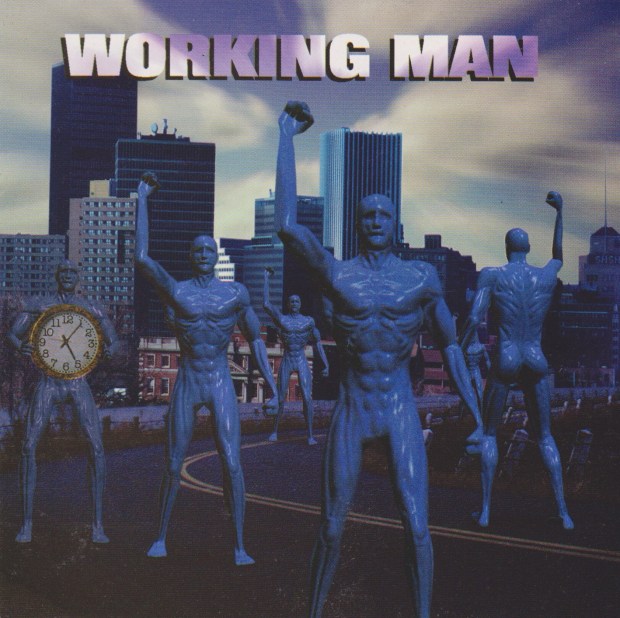
REVIEW: Working Man (Tribute to Rush, 1996)

Scan_20160821WORKING MAN (1996 Magna Carta tribute to Rush)

This CD was released in 1996, and almost immediately the music press started reporting that Rush were trying to have it taken off the shelves.  One of our former owners at the Record Store, the infamous Tom, said:  “I can see why they were trying to do that.  Because it’s too fucking good.”

It actually is.  There are few tribute albums worth listening to all the way through.  How many can you name:  Encomium, the Zeppelin tribute?  The Sabbath tributes Nativity in Black?  Do you listen to those front to back?  That’s the best and only way to enjoy Working Man.  So numerous are the progressive rock and hard rock names here that we may have trouble keeping track of them all.

Sebastian Bach hails from the Great White North, so it is only appropriate for him to open this CD with the title track.  He also passionately stuns on “Jacob’s Ladder” a bit later on, utilising the power and range he is known for.  What names on these songs!  Mike Portnoy and Billy Sheehan play drums and bass respectively; two guys often cited as the best in the world on their instruments!  If that wasn’t enough, ex-Ozzy guitarist Jake E. Lee shreds the hell out of “Working Man” while John Petrucci from Dream Theater goes for the throat on “Jacob’s”.  Take a minute to absorb all that.

Seamlessly, “Working Man” develops into “By-Tor and the Snow Dog” with James LaBrie of Dream Theater in peak voice.  Sheehan and Portnoy handle the rhythm for most of the album, so you can be assured that the chops of Mr. Lee and Mr. Peart are served well here by the next generation of players.  Dream Theater fans will lose their shit completely.  But there is so much more here than just progressive rockers letting it fly.  A youthful and impressive Jack Russell from Great White takes on the galloping “Analog Kid” from Signals and wins.  Have no fear or doubts: this may seem strange, but Russell’s version of “Analog Kid” may well be one of the best Rush covers you’ll ever hear.  (Especially when Billy Sheehan and guitarist Michael Romeo do a synched-up dual bass/guitar solo!)

Other highlights:

  • The late Mike Baker of Shadow Gallery has no problems with “The Trees”, an excellent version.
  • Steve Morse (Deep Purple, Dixie Dregs, Flying Colors) takes the main guitar part for “La Villa Strangiato”, causing spontaneous head explosions.
  • Blue-eyed soul singer Eric Martin (Mr. Big) does a fine job of the light “Mission”, though it sounds very different from the shred-rock elsewhere.
  • A bang-on “Closer to the Heart” performed by Fates Warning is a must-have for fans.
  • James LaBrie and his old bandmate in Winter Rose, Rich Chycki, reunite on the classic “Red Barchetta”.  A little added Can-Con for rock fans.

And best of all, Devin Townsend screaming his balls off, all over “Natural Science”.  Without a doubt, Townsend has the most unorthodox interpretation, but it’s Devin Townsend, so you must expect the unexpected.  This guy is an underrated national treasure, and along with James Murphy (Death, Testament) on guitar, Stu Hamm on bass, and Deen Castronovo on drums, all walls are shattered.  “Natural Science” is undoubtedly the most different track here, and consequently it’s the most exciting.

The only mis-fire:

  • “Anthem”, with Mark Slaughter and George Lynch.  Slaughter’s voice is too shrill.  (I cannot handle when he shrieks “Come on!  Yeah!” at the start.)  George’s Eastern-flavoured shredding is also overdone and misplaced.

That means out of 13 tracks, 12 of them are keepers.

For an added layer of authenticity, the CD was mixed by Terry Brown himself, in Toronto.  Prices fluctuate wildly, but fans of Rush, Dream Theater, Sebastian Bach or Devin Townsend would be wise to pick this up if found in their travels.

4.5/5 stars


REVIEW: Derek Kortepeter – Cataclysm (2016)

For Aaron’s review at the KMA, click here!

cataclysm-coverDEREK KORTEPETER – Cataclysm (2016)

We live in uncomfortable times, and Cataclysm is an uncomfortable album.  In the liner notes, Derek explains that he wanted to do an album reflective of the current political and social climate.  Far reaching issues like mass surveillance and personal trauma.  The importance of the message, says Derek, necessitated vocals.

Derek’s an experimental artist that skips gleefully from genre to genre.  The first track here “We Are a Lie” begins life as a spacey ambient synth piece, before abrasive layers of guitars assault the sense.  Derek moans of painful things in what sounds like possibly the largest echo chamber in the state of California.  No prisoners are taken.  Derek doesn’t pander or make his music easy to listen to.  You have to work for it.

The thought police are on the patrol on the ambient second track “They Tell Us”.  Derek mentions Radiohead and Nine Inch Nails as two major influences, and you can hear that on “They Tell Us”, sort of a morph of the two bands.  “The thought police tell us we’re safe,” but I don’t think Derek believes them.  On “Outcome”, the drums are in the echo chamber too, but it’s stuttery tremolo guitar that I dig.  That’s how you have to listen to this album.  Find a hook to grab onto, and hang on!

The album is most successful in its ambient synth moments.  These are truly beautiful, but I suppose it the contrast between this beauty and the harsh guitars that is part of Derek’s message.  On “My Life” he says “I’m controversial, hypocritical.”  Then there’s the powerful “Do Not Question”, a seriously emotional collage of historic sound bites.  “Every nation has to be either with us, or against us” says Hillary Clinton.  “I am become death, the destroyer of worlds” — Robert Oppenheimer.  Heavy shit.  This merges into “It’s All the Same” an angry rant with an industrial backing track.  Continuing the contrasts, “For the Fall” reeks of punk rock with a hint of metal guitars.

Best track:  “Respite” which is exactly that.  It’s similar in style and function to “A Warm Place” from Nine Inch Nails’ The Downward Spiral.  A similar track is the beautiful “Nuclear Winter”.

The album will be available via indiepush.  If you want to support a daring young artist, this might be the album to buy.  It’s sincere and the most direct album that Derek has made to date.

4/5 stars

But it at bandcamp:  https://derekkortepeter.bandcamp.com/releases