REVIEW: Deep Purple – 24 Carat Purple (1975)

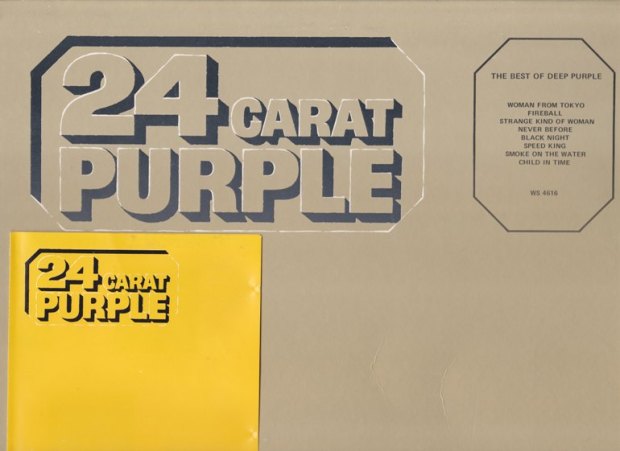
DEEP PURPLE – 24 Carat Purple (1975 EMI)

I can’t resist reviewing this golden oldie, the first compilation released by Purple Records in 1975.  Purple had not yet broken up  — that wouldn’t happen for another year — but most of the members on this record had left the band.  It’s rarely a good sign when a band in their final death throes release a compilation album.

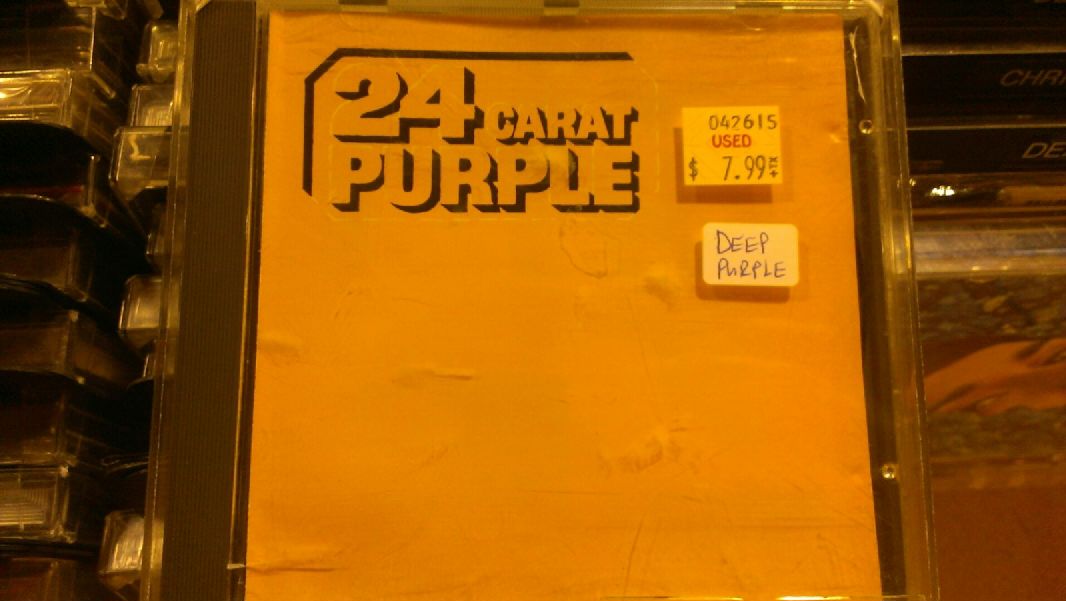
This CD is extraordinarily rare in these parts.  When I first started managing the Record Store at which I spent most of my years, I put my name in “reserve” for any used copies that may come in.  That was April 1996.  Here we are in June 2015, and I only just got it on CD.  I did get it on vinyl in the late 90’s, even though I have all the songs, because I enjoy having significant greatest hits albums in my collection.  (See point 4, “Historical significance”, in Getting More Tale #367.)  Unfortunately, as was the case with many CD issues from the late 80’s, the cover art isn’t even near the same colour as the original golden LP.  The CD renders it to a dark, pee-stain yellow.
24cpurple

Saucy Aaron, from the KeepsMeAlive, texted me last month from Toronto, in Sonic Boom on Spadina.  “Cool Purple comp,” he texted.  “Very short though.”  He sent me a pic with a $7.99 price tag, and I told him to snag it!  That’s the kind of guy he is.  He saw a Purple compilation CD and texted me a photo, unsure if I’d even care, on the off-chance that he’d be helping out a fellow collector.  And he did!  All it needed was a new jewel case.

Because I have all the songs elsewhere, I haven’t played 24 Carat Purple in a long time.  It’s interesting that this, their first kinda-official hits album, only focuses on the Ian Gillan years, even though another version of Purple was currently functioning.  I suppose that makes sense, from a contemporary point of view.

“Woman From Tokyo” is a great track to get the party started.  I’ve only seen Purple once, on the Purpendicular tour.  I recall that this was tune that really got the dudes in their mid-40’s bouncing.  Now I’m in my mid-40’s, and I’m still bouncing to it.  It’s a nice, safe Purple single.  Jon Lord’s piano solo is, well, bouncy!  I defy you to sit perfectly still with this song playing.

More to my taste is the accelerated blast through the clouds that is “Fireball”.  To me, this track has it all — the perfect Purple mixture of adrenaline, speed, musicianship and that organ!  The live “Strange Kind of Woman” brings things back to a moderate pace.  Most of the time, I would be opposed to a live track substituting a studio version on a “hits” set, but Made in Japan was more popular than many of their studio albums!  This live take, complete with Ian laughing through some of the lines, is probably my favourite anyway.  Because Purple were as much a live act as an album band, one can easily make arguments for including live tracks of this stature.

“Never Before”, on the other hand, may have been a single but it’s nobody’s favourite Purple song.  Of all their singles, perhaps it is the most ordinary.  But at 4:00, it was about the right length to squeeze in before “Black Night” on a side of vinyl.  “Black Night” was the real treat for fans in 1975, since this was the live version released only as a B-side before.  This electric version is a must-own for its ferocity.  It was recorded at the final show of the three that were taped for Made in Japan.  Feedback-laden and ragged, this version of “Black Night” kills the others.

Side two of the record was devoted to long bombers, with “Speed King” coming in shortest at 5:50.  That means this is the full-on version of “Speed King” complete with intro, which was edited off American copies of Deep Purple In Rock.  For some listeners, this intro (purely 50 seconds of instrumental guitar-fucking and drum-wailing, followed by a mellow organ passage) would be completely new to them.  Normally you would expect a record label to plop on an edited single version.

Made in Japan is the source for the last two tracks, “Smoke on the Water” and “Child in Time”.  The mathematically inclined have probably already calculated that this means 24 Carat Purple is actually 57% live!  I think that’s OK in the long run.  Consider: “Smoke on the Water” in its live incarnation was released as a successful single.  The live “Child in Time” contains, according to my friend Uncle Meat, “the greatest guitar solo of all time.”  Since he said it, it must be true, and therefore inclusion of these two live versions is forgiven.

I feel like giving this long-deleted album a number rating is kind of meaningless.  Yes it was a great listen, but it’s just a compilation from a band that most people agree are an albums band.

3/5 stars

#402: Meeting Blue Rodeo

RECORD STORE TALES MkII: Getting More Tale
#402: Meeting Blue Rodeo

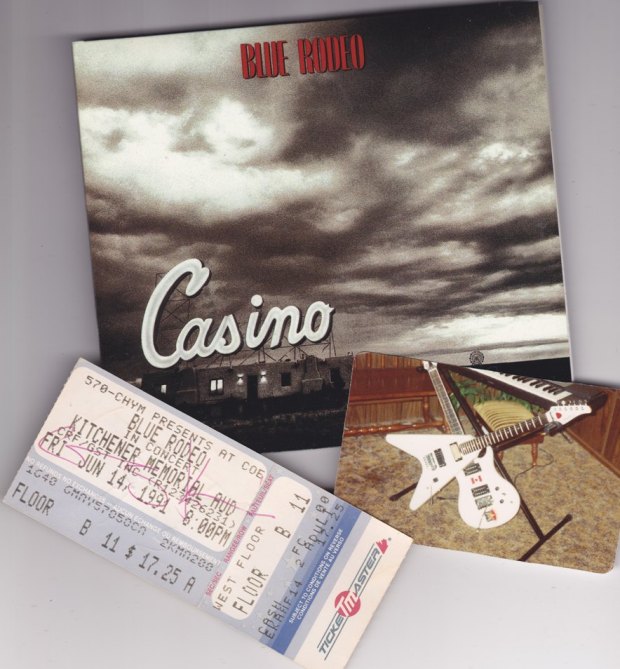
FIVEOn June 14 1991, touring to support their third album Casino, Blue Rodeo came around to headline at the COE – Central Ontario Exhibition – in Kitchener.  The opening act was Strange Days featuring Shannon Lyon, a local singer-songwriter whose earlier tunes didn’t appeal to the older ladies in the crowd.  The younger folks dug Strange Days, but there was clearly another segment of the audience who thought they were too loud and raucious.

When Blue Rodeo took the stage, it was with the near-legendary Bob Wiseman on keyboards.  Wiseman departed Blue Rodeo about a year and a half later, so we were lucky to see this unique individual live in concert.  Also present were leaders Jim Cuddy and Greg Keelor, bassist Bazil Donovan, and drummer  Mark French.  French would be gone soon after, too.  It was a very short-lived lineup:  one album only.

I had just graduated highschool, and we had four tickets to the show; a great way to kick off the last summer holidays before university.  My sister and I attended with my friend Bob and a buddy of his.  Blue Rodeo played a generous selection from their first three albums:  Outskirts, Diamond Mine, and Casino.  In addition Bob Wiseman was given the spotlight for a moment to pick up a guitar and sing a brand new solo song called “We Got Time”.

The big surprise of the night was when a few (probably loaded) guys in their mid-20’s decided to go stage diving at a Blue Rodeo show. The band were noticeably surprised themselves by the stage divers.  Not something you’re used to seeing at a country rock show where a percentage of the audience was over retirement age.


When Greg announced this song, both Bob and I asked, “What did he say? Is the song called ‘Piranha Poo’??”

After the big encores, the house lights went on.  We were all but ready to leave the COE, when Bob noticed Jim Cuddy and the rest of the band exiting through a side door.  “I think I just saw the guy from Blue Rodeo go through that door.  Let’s follow him!” he said.  There didn’t seem to be any reason not to, so we made our way out the door, down the hallway of that old hockey arena, and followed the band right into the dressing room!  I was a bit more nervous than my friends, but nobody tried to stop us or even talk to us.  My eyes went wide as I scanned the dressing room.  It was filled with food and drink, and fans!

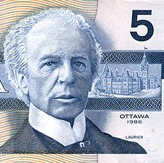
We each made the rounds to ask the band to sign stuff for us.  The two we didn’t approach were Bob Wiseman and Mark French who appeared too busy so we didn’t bother them.  Bazil Donovan quietly smiled and signed our things.  Since I didn’t have much in hand, he signed a photo of my guitar that I kept in my wallet!  Greg Keelor signed my ticket stub.  While doing so, I expressed amazement at the stage diving!  “Yeah, it was fun!” said Greg, who probably hadn’t witnessed it too often in his career!  Jim Cuddy signed the other side of my ticket stub.  Bob had already chucked his ticket and had nothing to get signed, so he handed Jim Cuddy a $5 bill.  “Can you sign it, ‘To Bob, the best $5 I ever had?’ said Bob.  Jim chuckled and signed it as requested.  Unfortunately, Bob being the cheapskate that he is, spent the $5 bill later!  Somewhere out there in circulation was a $5 bill that said, “The best $5 I ever had, Jim Cuddy.”*

I already liked the band’s music, but I became a Blue Rodeo fan for life that night.  Not only are they a consistently great live act, but nice guys too.  I met Jim a few years ago at one of his solo concerts, and he still treats his fans like gold.  That’s the kind of band that has earned my undying support.

In 2012, Blue Rodeo came out with their box set, 1987-1993, containing their first five albums plus three discs of rarities.  Having re-bought the albums, I sent my originals over to Aaron! What I forgot was that I had stored my signed stuff with those CDs! Fortunately Aaron found the autographs inside, and sent them back pronto!  Thanks man.

REVIEW: Trailer Park Boys – Season 9 (Netflix)

NEW RELEASE

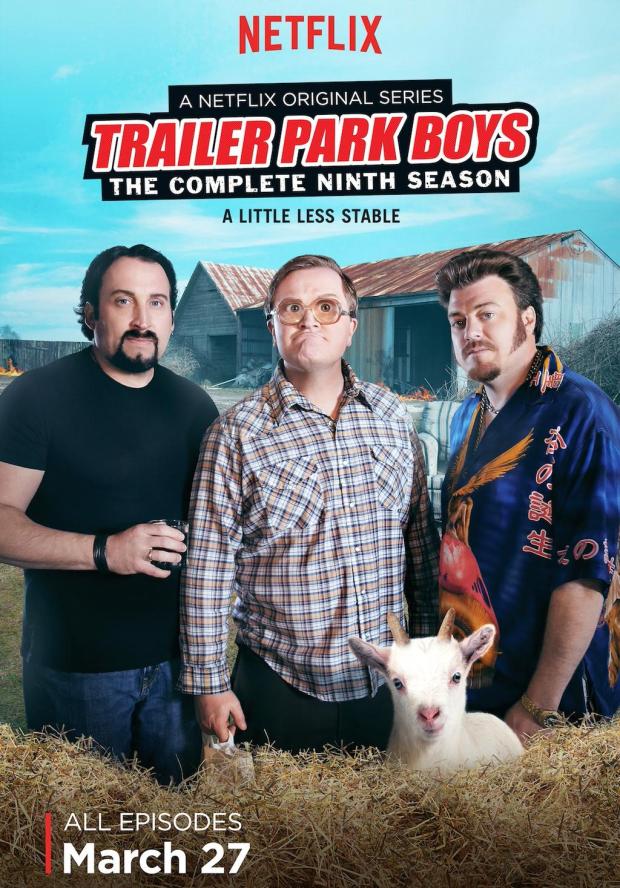
TPB9 BOXTRAILER PARK BOYS – Season 9 (2015 Netflix)

It is with great sorrow that I have finally come to review Season 9 of the Trailer Park Boys, released earlier in the spring.  After the unexpectedly hilarious Season 8, I had only expected more from Season 9.  The 8th season left us with so much promise.  Not only had the show bounced back with one of its best years yet, but some fresh ideas and characters promised to rejuvenate it going forward.  Unfortunately the ball was fumbled.

Even though they had written in a bottomless supply of lookalike “Orangies”, Ricky’s pet goldfish and one of the highlights of the last season, Orangie was essentially dropped in Season 9.  On the bright side, Ricky replaced Orangie in his heart with a goat he found in a barn he spends some time living in.  He names the goat Willy.

Even though the character of Don/Donna was a major new introduction last year, Don has been dropped (supposedly travelling, according to the online-only Season 8.5).  This leaves Donna, unexplained and creepy, working in a rub-and-tizzug based out of Julian’s old trailer!  He/she works with T, who doesn’t particularly care for his job.  T much prefers driving his Tiz-axi.

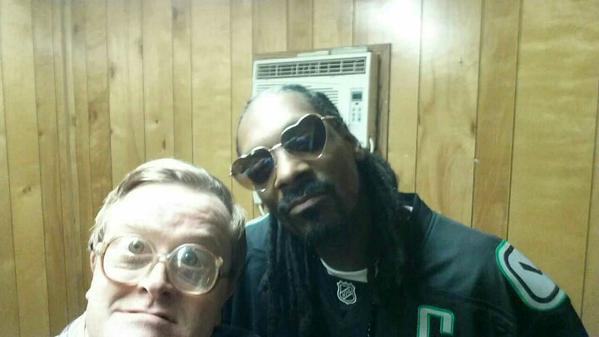
Even though Sebastian Bach returned at the end of Season 8 for a rip-rolling close, there are no celebrity cameos in Season 9.  (Although with the recent announcement and photos of Snoop Dogg appearing in Season 10, all will be remedied soon!)

SNOOP DOGG WITH BUBBLES

The premise of the season goes thusly:  Julian and Ricky are out of jail again, to find the park has been turned into a senior’s residence called Sunnyvale Villas!  Jim Lahey, sober as a judge, has retired and hired ex-S.A.S. officer Col. Leslie Dancer, a “highly decorated war hero”, to run the park and enforce the rules.  Liquor is forbidden.  And so is Ricky.  And pointedly, only Ricky.

Bubbles runs a local business in the park, a food stand that serves Taco Tuesday pretty much all week, because the seniors don’t know what day it is most of the time.  Julian returns very disappointed, that Bubbles could let the park turn to shit so quickly.  It’s not really Bubs’ fault though, since Col. Dancer (a former alcoholic himself) runs the place like an army barracks.  But there’s something fishy about Col. Leslie Dancer.  His war stories don’t add up.  Was he really a Colonel?

The season takes a good number of episodes to get going.  Even the awaited birth of Trinity’s first child (Ricky’s first grandchild) was underwhelming.  While a good number of laughs comes from this situation, such as Ricky having to buy baby supplies, it ultimately just leads to more confrontations between Rick and industrial cock inhaler George Green, who is still banging Lucy.  Corey and Jacob remain a funny team, but J-Roc is sidelined by a son he never knew.  Unfortunately this too was an unfunny situation that didn’t do anything for the season or characters.  Only after the boys went hunting for a Sam-Squanch did I really have some belly-laughs.

HUNTING FOR SAMSQUANCH

Ricky’s best line:  “I’m in charge of fuckin’ over the park when it gets appraisaled today.   As luck would half it, it’s piss jug season.”

As usual, the ultimate stakes for the residents is control of the park.  This means getting Lahey back on the liquor, and subverting Col. Dancer.  Does Julian have a plan, and if so can he pull it off?   You’ll have to make it to the end of the season in order to find out.  Unfortunately this is something that some of my friends have failed to do.

While Season 9 ended better than it started, I was left confounded by the unfunny episodes and storylines.  I think Season 9 could actually be the first truly disappointing season.  Here’s hoping for better in the 10th.

3/5 stars

REVIEW: Aerosmith – Box of Fire Bonus Disc (1994) and conclusion

AEROSMITH – Box of Fire Bonus Disc (1994 Sony, only included in the Box of Fire)

Sony did a sonic makeover to the Aerosmith catalogue in ’93, using their new Super Bit Mapping technique. Each CD received a well due remastering job, and improved packaging, as you have seen here throughout this series. In 1994 these albums were released again inside the near-definitive Columbia box set, Box of Fire. Back when I was working in the Record Store, we stocked this one for over $200 brand new. I remember looking at that sealed box longingly, wishing I could peer inside.

The bonus CD included in Box of Fire was an added little reward for those fans who waited to shell out for the full box, rather than buy the CDs individually. In defense of Sony for the double-dip, I distinctly remember them announcing in advance the the future box set would include all the albums and additional goodies. Because of that, I did indeed wait to shell out for Box of Fire. I bought it used, at the store that Joe Big Nose manages today. It was in good shape. I just needed to replace a few broken CD trays, and the outer plastic sleeve was also missing (not a huge deal). I later found that plastic sleeve at another one of our outlets, and the owner “Billy Bob” gave it to me himself! (Thanks man, you have no idea how much that makes an OCD collector like me happy.)

The Bonus Disc has five tracks.

1. “Sweet Emotion” (1991 remix by David Thoener). Remember the music video they released in late 1991 to promote the Pandora’s Box set? That video featured a remix of “Sweet Emotion”, and it was released as a limited as a limited CD single. It’s a little longer and has a few things mixed louder.

2. “Rocking Pneumonia and the Boogie Woogie Flu”. A later track (1987) from the Less Than Zero soundtrack. I’m always in favour of getting one of Aerosmith’s numerous soundtrack contributions on an Aerosmith disc. I hate buying a soundtrack for one or two songs. Wanna know what Aerosmith sound like produced by Rick Rubin? This old rock n’ roll cover indicates, it’s kinda dry.

3. “Subway”. A cool instrumental jam from the Draw the Line sessions, but originally released on the 1991 “Sweet Emotion” CD single.

4. “Circle Jerk”.  Another instrumental from the same period.  Most fans who collect Aerosmith already had this one.  It was the unlisted “hidden” bonus track at the end of Pandora’s Box.  These two jams are simple and unadorned.  They were unreleased for a reason, although they both could have evolved into cool heavy rock songs.

5. “Dream On” (MTV Anniversary).  This live version from 1991, complete with orchestra, was from an MTV thing later released on a CD of its own. I’d rather have the song on this. It’s a brilliant version, best appreciated by the Aerosmith connoisseur.

The Bonus Disc is housed in a simple cardboard CD sleeve. This slips into a gap inside the Box of Fire, easy to miss and sometimes missing! If you’re buying a Box of Fire, make sure it’s intact.

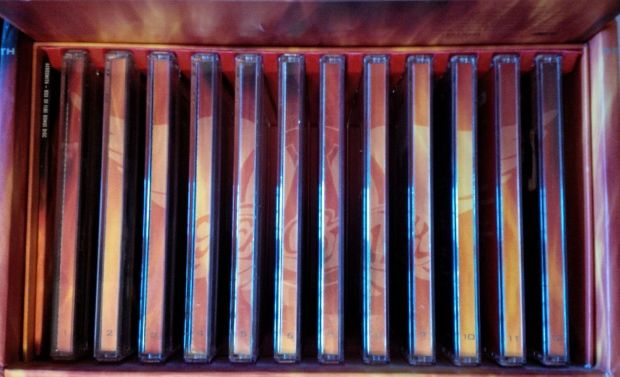
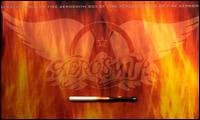
Wrapping up this exhaustive look at the Box of Fire and all the albums inside, there is very little left to add.  The packaging is cool; a sturdy box with orange flame emblazoned all over.  The front door opens “garage style”, with a little plastic “match” as a handle, painted to look as if burned.  Each CD, housed in its own jewel case, slides easily in and out.  It’s a simply lovely way to display your Aerosmith collection, open or closed — when lined up, the CD spines form an Aerosmith logo!  Each disc is numbered 1-12 (except the Bonus Disc), and can be differentiated from the regular retail versions by the numbered spines.  If you bought these albums separately, they do not have the numbers or the coordinated spines that form the Aerosmith logo.  That’s how you can tell the difference!

I’m glad to have taken the time to listen to the entire Box of Fire, in sequence, from start to finish.  That’s something I haven’t done since I first bought it.

4/5 stars (for Bonus Disc and Box of Fire overall)

AEROSMITH BOX OF FIRE complete reviews:

Disc 1: Aerosmith (1973)
Disc 2: Get Your Wings (1974)
Disc 3: Toys in the Attic (1975)
Disc 4: Rocks (1976)
Disc 5: Draw the Line (1977)
Disc 6: Live! Bootleg (1978)
Disc 7: Night in the Ruts (1979)
Disc 8: Aerosmith’s Greatest Hits (1980)
Disc 9: Rock in a Hard Place (1982)
Disc 10: Classics Live! (1986)
Disc 11: Classics Live! II (1987)
Disc 12: Gems (1988)
Disc 13: Box of Fire Bonus Disc (1994)

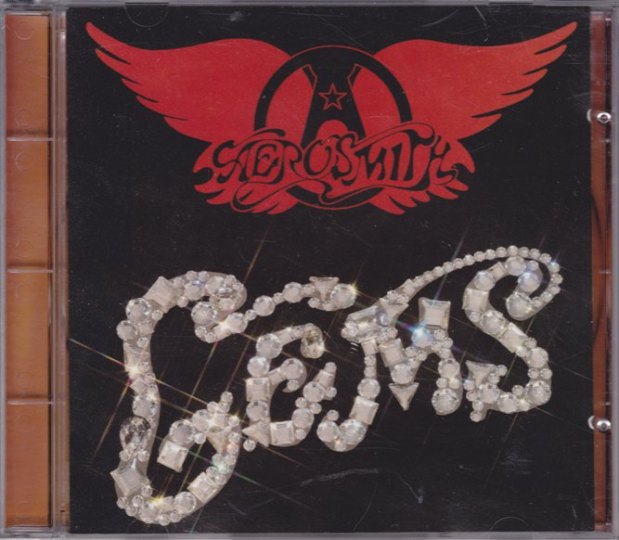
REVIEW: Aerosmith – Gems (1988)

AEROSMITH – Gems (1988 Columbia, 1993 Sony)

It’s impossible to view the 1988 compilation Aerosmith Gems as anything but purely a companion piece to 1980’s Greatest Hits.  It purposely avoids overlap with that prior album, while providing a slice of the heavier side of ‘Smith.  Since Greatest Hits pretty much included all the major greatest hits, Gems tends to focus on underplayed fan favourites.

Let’s check ’em off one by one.

1. “Rats in the Cellar”.  I’m on record for liking albums to start with a corker!  This one has an absolutely furious pulse, which in turn will set your pulse racing!

2. “Lick and a Promise”.  Solid album cut and underplayed favourite.

3. “Chip Away the Stone”.  Here is the reason I first bought Gems!  This amazing Richie Supa song was only available on a 7″ single, and in live form on Live! Bootleg.  Getting a CD copy on an Aerosmith album is a no-brainer winning reason for fans to buy Gems.  “Chip Away the Stone” was accompanied by an awesome music video, ensuring that a new generation of Aero-fans got acquainted with it, in the wake of Permanent Vacation.  This song can’t be topped!

That’s Richie Supa in the music video too, with the ‘stache.

4. “No Surprize”.  Decent album cut from Night in the Ruts.  A laid-back Aero-rocker.

5. “Mama Kin”.  Believe it or not, good ol’ “Ma’ Kin” wasn’t on Greatest Hits!  Including it on Gems was another no-brainer, since Guns N’ Roses put it on their Lies EP in ’88, instantly ensuring that millions of kids were hearing it.

6. “Adam’s Apple”.  I’m always in favour of Joe Perry breaking out his slide guitar.

7. “Nobody’s Fault”.  Brad Whitford’s apocalyptic metal stomper always deserves more exposure.

8. “Round and Round”.  Same with this one.  The songs are like a reflection of each other.

9. “Critical Mass”.  From Draw the Line, when Aerosmith were reaching critical mass themselves.  Regardless of the chemicals in their veins, “Critical Mass” retains the trademark Aero-groove.

10. “Lord of the Thighs”.  Concert favourite, and about damn time we got a song from Get Your Wings!

11. “Jailbait”.  Whoah nelly, hold on to your hats!  Just when you thought Aerosmith were so wrecked they couldn’t even stand up, they surprised with the vintage-sounding “Jailbait”.  Since material from Rock in a Hard Place was included, my only disappointment is that “Lightning Strikes” is nowhere to be found on Gems.

12. “Train Kept a Rollin'”.  Closing with this one is natural.  Aerosmith introduced this Yardbirds song to a new generation of rock fans in ’74, and then they did it for me in ’88!

I do need to address the elephant in the room, regarding the Box of Fire box set, in which Gems was included.  I’m not really sure that throwing in an entire greatest hits album consisting of music that is on the other CDs, all but one song, was necessary.  Couldn’t the soul exclusive, “Chip Away the Stone”, have just been included as a bonus track on one of the other CDs?

But that’s not the fault of Gems, an otherwise fine companion piece to Greatest Hits.

4/5 stars

Come back tomorrow for the final review in this Aero-series!

AEROSMITH BOX OF FIRE review series:

BOX OF FIRE THUMBDisc 1: Aerosmith (1973)
Disc 2: Get Your Wings (1974)
Disc 3: Toys in the Attic (1975)
Disc 4: Rocks (1976)
Disc 5: Draw the Line (1977)
Disc 6: Live! Bootleg (1978)
Disc 7: Night in the Ruts (1979)
Disc 8: Aerosmith’s Greatest Hits (1980)
Disc 9: Rock in a Hard Place (1982)
Disc 10: Classics Live! (1986)
Disc 11: Classics Live! II (1987)
Disc 12: Gems (1988)

REVIEW: Aerosmith – Classics Live! II (1987)

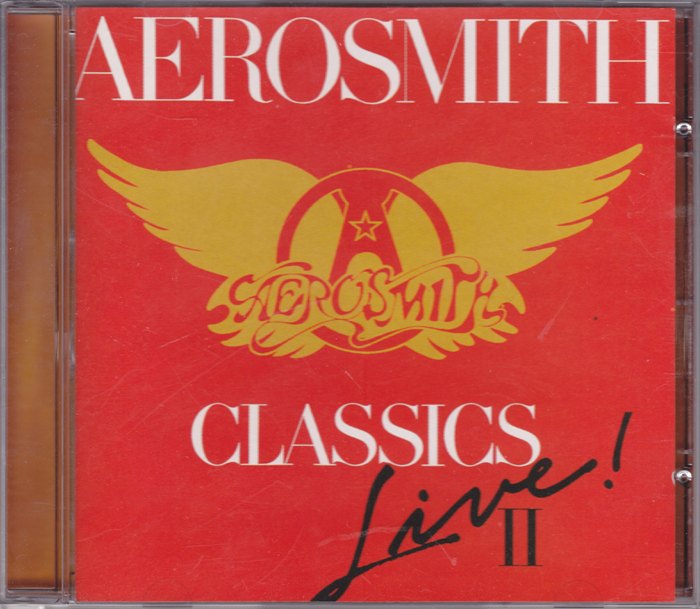
CLASSICS LIVE II_0001AEROSMITH – Classics Live! II (1987 Columbia, 1993 Sony)

Hot on the heels of Classics Live came Classics Live II!  Today you can get them together in one set, because they really are companion albums with no overlap between them.  All songs here were recorded by the classic lineup of Steven Tyler, Joe Perry, Brad Whitford, Tom Hamilton, and Joey Kramer, and there are a couple neat surprises in the tracklist.

“Back in the Saddle” always works as an opening track, especially since this one comes from the 1984 Aerosmith reunion tour.  They truly were back in the saddle, though just as wasted as ever!   It has its sloppy moments and sour notes, but more energy than some of the previous live stuff.  This rendition will never be considered a definitive live take of the song, but it does document that oft-forgotten mid-80’s period.

“Walk This Way” opens with the announcement that it was Tom Hamilton’s birthday!  That would make it their New Year’s Eve gig in Boston in ’84.  Joey’s drums are a little “thuddy” sounding, and I put the blame on producer Paul O’Neill (Savatage) who doesn’t always capture a drum sound to my tastes.  “Movin’ Out” is one of my underdog favourites from the first Aerosmith album and I’ll always dig its slow, heavy drawl.  It’s so great to hear Tyler sing that familiar ad-lib that he does live:  “No-one knows the way but Joe Perry.”  Following that is “Draw the Line”, another brilliant classic done live all loosey-goosey.  “Same Old Song and Dance” follows that same tradition, with a teasing opening to make the crowd go nuts.

“Last Child” brings the funk as always, but my favourite has to be “Let the Music Do the Talking”.  Although it was recorded before Done With Mirrors, this was the first new Aerosmith song to get a live release.  Of course it’s technically a Joe Perry Project song, but Aerosmith’s version kicks that one in the ass.  This live one is pretty awesome.  Closing the album with “Toys in the Attic” guarantees that the ending is just as exciting as the beginning.  Killer version.

The coolest thing to me about Classics Live II is that even though it’s called II, it doesn’t sound like a second volume of a live album.  Considering that “Walk This Way”, “Back in the Saddle”, “Toys in the Attic” and “Same Old Song and Dance” are all on here, it could easily have been the first volume.  It is easily the equal of part I.

3.5/5 stars

AEROSMITH BOX OF FIRE review series:

BOX OF FIRE THUMBDisc 1: Aerosmith (1973)
Disc 2: Get Your Wings (1974)
Disc 3: Toys in the Attic (1975)
Disc 4: Rocks (1976)
Disc 5: Draw the Line (1977)
Disc 6: Live! Bootleg (1978)
Disc 7: Night in the Ruts (1979)
Disc 8: Aerosmith’s Greatest Hits (1980)
Disc 9: Rock in a Hard Place (1982)
Disc 10: Classics Live! (1986)
Disc 11: Classics Live! II (1987)

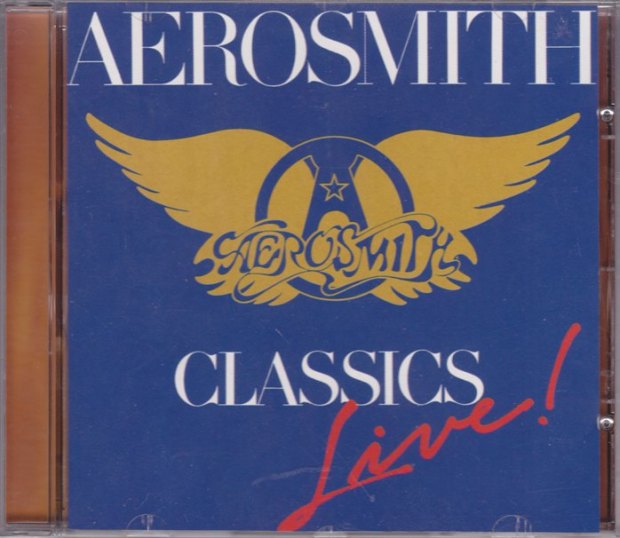
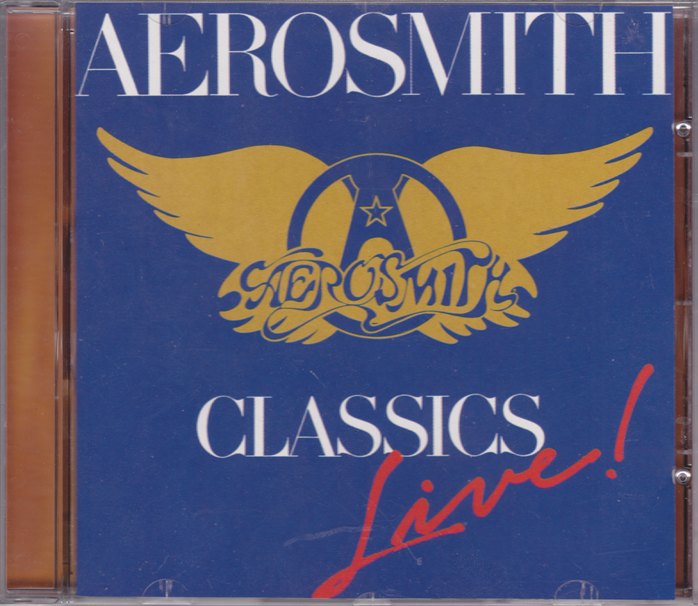
REVIEW: Aerosmith – Classics Live! (1986)

CLASSICS LIVE_0001AEROSMITH – Classics Live! (1986 Columbia, 1993 Sony)

A reunited Aerosmith managed to put it together enough to tour, and record new music.  Now on Geffen, Done With Mirrors was considered a “good enough” album in most circles.  The Box of Fire set, which this series of reviews is really about, doesn’t include any of the Geffen material.  Instead it jumps ahead to the next Columbia release, which came out the year after Done With Mirrors.   Columbia were now able to put out live albums and compilations.  Classics Live! was the first of these.

We have already established that the Live! Bootleg album is simply excellent.  As a double live album, it is one of the essential releases from the 1970’s that serious rock fans should own.  Classics Live is a different beast, a single LP with odds and ends from tours from 1977 to 1983.  There is no indication who is playing on what, but it is known that all four Aerosmith guitarists (Joe Perry, Brad Whitford, Jimmy Crespo, Rick Dufay) play on the album.  They are all pictured inside, but only by ear could you determine who is playing.  For example I think “Train Kept a Rollin'” is a 1983 recording with Crespo and Dufay.

It’s cool that there are songs on Classics Live that were not on Live Bootleg. The most notable of these is “Kings and Queens” which really deserves a lot more praise than it gets.  Aerosmith at their most regal.  The others are a medley of “Three Mile Smile” and “Reefer Headed Woman” from Night in the Ruts.  Joe Perry was definitely out of the band by that time.

CLASSICS LIVE_0003

Of the more familiar tracks, “Sweet Emotion” is a particularly good version with Tyler sounding pretty rough from the night before!  I’m pretty sure there’s some heavy overdubbing going on with this album, if the backing vocals are anything to go by.  “Dream On” is excellent as usual, with exceptional sound quality and a raw sounding performance.  “Mama Kin” on the other hand ain’t so hot.  Pretty sloppy and ragged but a lil’ too much.  “Lord of the Thighs” is solid.

The icing on the cake is the unreleased studio track “Major Barbra”.  This outtake from Get Your Wings saw its very first release on Classics Live.  It’s a slow, mournful, but classy ballad in 3/4 time.  It’s a great song that deserved a spot on an Aerosmith album, so here it is!

3.5/5 stars

AEROSMITH BOX OF FIRE review series:

BOX OF FIRE THUMBDisc 1: Aerosmith (1973)
Disc 2: Get Your Wings (1974)
Disc 3: Toys in the Attic (1975)
Disc 4: Rocks (1976)
Disc 5: Draw the Line (1977)
Disc 6: Live! Bootleg (1978)
Disc 7: Night in the Ruts (1979)
Disc 8: Aerosmith’s Greatest Hits (1980)
Disc 9: Rock in a Hard Place (1982)
Disc 10: Classics Live! (1986)

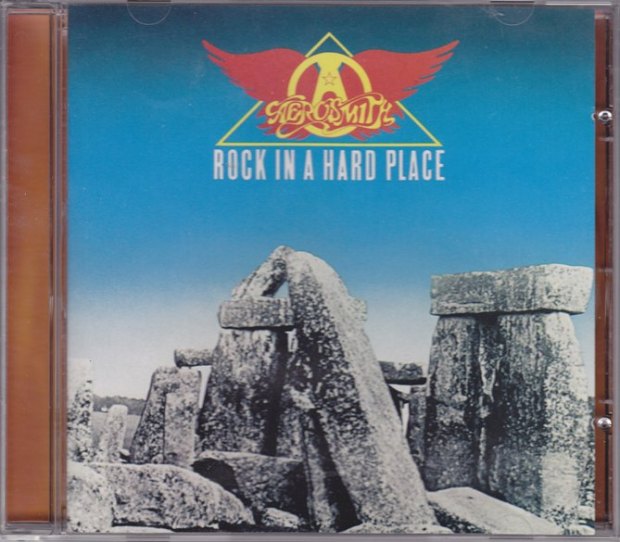
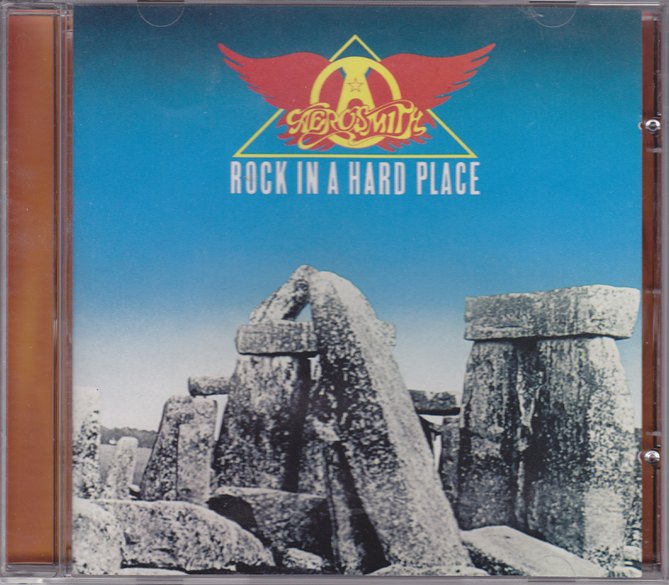
REVIEW: Aerosmith – Rock in a Hard Place (1982)

ROCK IN A HARD PLACE_0001

AEROSMITH – Rock in a Hard Place (1982 Columbia, 1993 Sony)

I sometimes wonder what it was like to be an Aerosmith fan in 1982.  Their last album, Night in the Ruts, showed signs of decay.  Then out came Rock in a Hard Place.  Joe Perry and Brad Whitford were both gone*, and in their places were Jimmy Crespo and Rick Dufay.  Both guys are good players and writers, but they are not Perry and Whitford, who were 2/5 of the Aerosmith sound.  Changing two guitar players in the space of an album, especially when you’re losing a guy like Joe Perry, is always risky.  It’s risky because you’re losing a very recognizable member (musically and visually), and you’re changing the creative chemistry of the band.  Whatever was special about the first six albums, there was no guarantee it would carry over to the seventh.  Add to that an unfortunate album cover featuring Stonehenge.  There was nothing wrong with that, until This Is Spinal Tap came out in 1984.  It was a movie that Steven Tyler took very personally. Rock in a Hard Place looked like a joke, now.

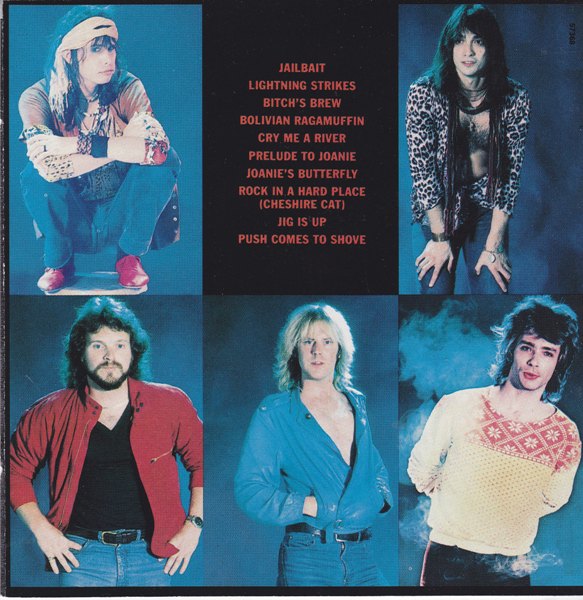
Thankfully the record opened with two great songs in a row. The frantic “Jailbait” immediately recalled previous high points like “Toys in the Attic”. New guitar players or not, Hamilton and Kramer were more than capable of laying down that speedy Aero-groove on their own. Unusually for a rhythm section, they have a signature sound together, which makes “Jailbait” naturally sound like Aerosmith. Tyler is a sassy as ever, singing from experience I’m sure. Incidentally “Jailbait” is the only song with a Rick Dufay writing credit. Jimmy Crespo on the other hand co-wrote seven tracks.

Richie Supa, co-writer of “Chip Away the Stone”, returned to help out on the single “Lightning Strikes”. Maybe that’s one factor that makes the song so classic to me. Brad Whitford was still with the band when it was recorded, so that’s him on rhythm guitar instead of Dufay. “Lightning Strikes” was accompanied by a cool music video featuring the new guys. It’s cool how they fit in with the band, looking right at home, smoking on cigs. In the video, the band double as greaser gang bangers, ready to rumble in the middle of the night…when the lightning strikes.

Unfortunately, album quality takes a dip after that!

“Bitch’s Brew” is OK but it’s easy to hear the fatigue. The groove is there and the riff is solid, but there aren’t enough hooks to go around. That’s Crespo on the backing vocals, by the way. “Bolivian Ragamuffin” features some sweet slide guitar and really harkens back to what I like about Aerosmith. It’s just not a good enough song!

“Cry Me a River” is the old Ella Fitzgerald classic, and who but Aerosmith are better at doing unusual classic covers? “Cry Me a River” isn’t one of their best, but it is good. They do it as a smokey, lounge number complete with electric guitars and a monster called Joey Kramer on the drum kit!

Skip “Prelude to Joanie”. What happened here? This song intro is pretty silly.  Did Tyler listen to The Elder and say, “Jeez I have to get more sci-fi and conceptual sounding in my music!” Skip it, and get to the much better “Joanie’s Butterfly”. This sounds fresher. In a way it foreshadows some of the more exotic textures that Aerosmith would try out 15 years later on Nine Lives. It starts acoustic, but when the electric part kicks in, it’s old Aerosmith all over again and it works. It was an ambitious song and for the most part, they pulled it off. It could stand a little more cohesion, but think about the drugs swimming in their veins at the time!

ROCK IN A HARD PLACE_0003“Rock in a Hard Place (Cheshire Cat)” again recalls the good ol’ days, sounding a bit like “Same Old Song and Dance”. Not as good, mind you, but in the ballpark.  “Jig is Up” is an attempt to get back to the funkier Aerosmith vibe, but it’s a completely forgettable track.  Truly filler, B-side material.  (Great guitar playing though.)  “Push Comes to Shove” ends the album on a slower, lounge-y note.  Once again I can’t help but hear the band burned out and running on fumes when I listen.

Aerosmith would tour around, in smaller venues, for the next few years.  Tyler was in some serious shit with his problems, falling down and passing out on stage.  Meanwhile as the band aimlessly toured the country, Joe Perry and Brad Whitford began to talk about what it would take to rejoin the band.  As if fated, Rick Dufay killed his own job with Aerosmith by suggesting to Steven Tyler that getting the other two guys back would be his best option.  Wheels were set in motion.

Record deal with Columbia now done, the label were free to issue live albums and outtakes.  Even as Aerosmith were on tour behind a brand new studio album for Geffen (Done With Mirrors), Columbia ensured there was also a live album on the shelves.  That’s what we’ll be looking at next time.

3/5 stars for Rock in a Hard Place.

* Be sure to check out the Joe Perry Project, and Whitford/St. Holmes.

AEROSMITH BOX OF FIRE review series:

BOX OF FIRE THUMBDisc 1: Aerosmith (1973)
Disc 2: Get Your Wings (1974)
Disc 3: Toys in the Attic (1975)
Disc 4: Rocks (1976)
Disc 5: Draw the Line (1977)
Disc 6: Live! Bootleg (1978)
Disc 7: Night in the Ruts (1979)
Disc 8: Aerosmith’s Greatest Hits (1980)
Disc 9: Rock in a Hard Place (1982)

REVIEW: Aerosmith’s Greatest Hits (1980)

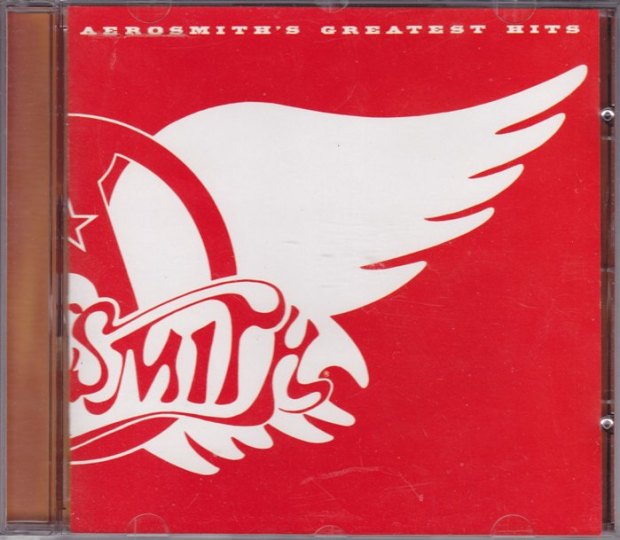
AEROSMITHS GREATEST HITS_0001AEROSMITH – Aerosmith’s Greatest Hits (1980 Columbia, 1993 Sony)

When a fan walked up to Joe Perry in 1980 and asked him to sign the brand new record Aerosmith’s Greatest Hits, the guitar player was so out of it that he didn’t even know there was such a record.  Now 35 years later, it has sold 11 million copies and has become that one Aerosmith disc that everybody seems to have.  My wife asked for Aerosmith’s Get A Grip for her birthday in 1993 from her uncle, but he couldn’t find it, so he got her Greatest Hits instead.  She didn’t know a single song but quickly grew to love every one of them.

This album is legendary.  Even though all the Columbia studio albums were already included, Sony still put Greatest Hits in the Box of Fire set.   Two probable reasons for this are 1) the album is now considered a classic hits record, and 2) there are some versions here not on any other Aerosmith albums.  In fact Sony revamped this album again a few years later, re-releasing it as Greatest Hits 1973-1988 with seven more songs including one unreleased rarity.   That’s another review though, not a part of this series.  Since the Box of Fire has the original 10 track version of Aerosmith’s Greatest Hits, then that’s the one we’re going to look at.  This is the album that was released in 1980 to buy the band some time before having to crank out another studio LP…this time without Joe Perry.

AEROSMITHS GREATEST HITS_0003

This was my first album of “old” Aerosmith, just like it was for my wife.  I got mine in the spring of 1991, and while I was familiar with the hits, I had never heard the rest before.  “Dream On” wasn’t new to me, but if it’s new to you, you might be shocked how Steven Tyler’s voice has changed so much over the years.  Even familiar hits like “Walk This Way” sound ancient compared to today!

Aerosmith’s Greatest Hits was perfectly sequenced.  At 10 songs and 37 minutes, it was also the typical length for a single record hits album.  There are very few songs not included that are glaring by their absence.   Even so, they were eventually released on a second volume called Gems in 1988.  If you’re missing “Mama Kin” or “Nobody’s Fault” then you can simply get Gems to fill in the gaps.  On its own, Greatest Hits has material from all six prior Aerosmith albums, including some rare single edits and one non-album cut.

“Come Together”, the Beatles cover, was released as a live version on Live! Bootleg while the studio version (produced by George Martin) was on the soundtrack for Sgt. Pepper’s Lonely Hearts Club Band.  Saving fans the hassle of buying that awful album to get “Come Together” is the kind of thing that greatest hits albums are meant for.

The single edits include “Same Old Song and Dance”, with the line “Gotcha with the cocaine” replaced with “You shady lookin’ loser”.  I didn’t even notice.  “Sweet Emotion” has a different intro and outro.  “Walk This Way” and “Kings and Queens” are single versions, but most probably didn’t notice that either.  “Kings and Queens” is a stunning inclusion.  It’s one of those Aerosmith classics that always deserved more airtime.

In summary:

  1. Great, concise hit-loaded tracklist.
  2. Rare tracks/versions.
  3. Covers all six prior Aero-platters.

For a single record hits compilation, you can’t really ask for more than that.

5/5 stars

AEROSMITH BOX OF FIRE review series:

BOX OF FIRE THUMBDisc 1: Aerosmith (1973)
Disc 2: Get Your Wings (1974)
Disc 3: Toys in the Attic (1975)
Disc 4: Rocks (1976)
Disc 5: Draw the Line (1977)
Disc 6: Live! Bootleg (1978)
Disc 7: Night in the Ruts (1979)
Disc 8: Aerosmith’s Greatest Hits (1980)

REVIEW: Aerosmith – Night in the Ruts (1979)

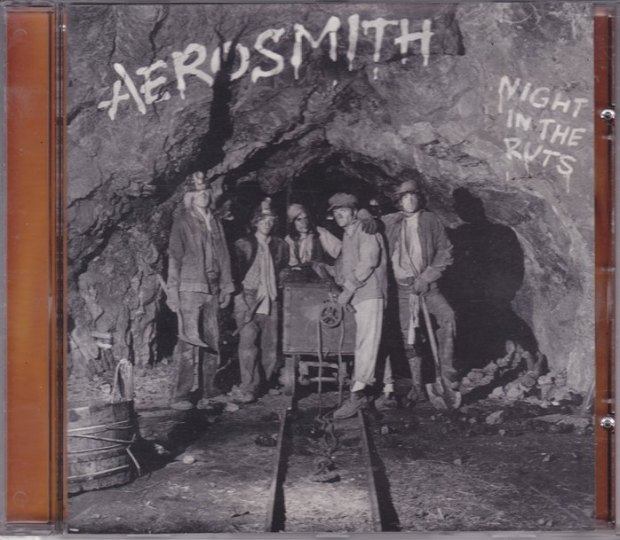
NIGHT IN THE RUTS_0001AEROSMITH – Night in the Ruts (1979 Columbia, 1993 Sony)

Forget about the edge of the desert; the drugs had already taken hold. Aerosmith managed to keep it together on Draw the Line long enough to put out an album that was good enough if you squinted. Infighting, missed gigs and long, overbudget recording sessions were the order of business. It’s just another chapter in the same old rock and roll story. It looked like Aerosmith would be one of those bands that just burned out before the end of the 1970’s.

With half the album finished, Joe Perry quit Aerosmith. Packing it in wasn’t an option financially so Jimmy Crespo, a session player, was hired on. A number of guitar players finished the album, Right in the Nuts Night in the Ruts, a collection of songs that probably wouldn’t have been considered for previous albums like Toys in the Attic for reasons of quality.

Things got off to a strong start with “No Surprize”, a song telling the story of Aerosmith’s beginning, and featuring Joe Perry on guitar.  This is a standard 1970’s Aero-rocker, with no surprises (pun intended).  You wouldn’t know anything was wrong with Aerosmith by the sounds of it.  The playing is faultless (particularly drummer Joey Kramer’s) and the song is well constructed.

“Chiquita” is second, and I can’t help it but I always think of bananas. There’s a groove and some catchy brass parts, but nothing that coalesces into an album-quality song. It doesn’t particularly matter though when you’re Aerosmith though! “Chiqita” is a lesser known highlight regardless of its faults.

Because of its placement on the later (and more well known) album Aerosmith’s Greatest Hits, I’m used to “Remember (Walking in the Sand)” being a closing song. I’ve always found it to be a dramatic and classic Shangri La’s cover, but placing it right dead center of side one doesn’t sound right to me. It’s also worth pointing out that this is the first of three covers on Night in the Ruts. Coming up with original material must have been a struggle since the album is 1/3 covers.

“Cheese Cake” piles on the slide guitar, one of Joe Perry’s brightest talents. Because of his eloquent slide work, “Cheese Cake” is one of the best tracks. I’m pretty sure the lyrics are not about cake. For extra coolness, check out the Aerosmith Pandora’s Box set. “Cheese Cake” is sequenced with “Let it Slide”, an instrumental demo highlighting Joe’s guitar work. Onto “Three Mile Smile”, Aerosmith managed to come up with a funky groove but not much of a song. Once again on the box set, it was sequenced with an instrumental demo (“I Love in Conecticut”) that highlights the playing. Too bad they weren’t focused enough to turn it into a killer song.

A blues cover, “Reefer Headed Woman” kills four minutes, but without focus. The thrill is gone. Tyler remembered his harmonica that day at least; he sounds completely out of it otherwise. If you want some of that old Aerosmith chug, then look no further than the vicious “Bone to Bone (Coney Island White Fish Boy)”. For the first time since “Cheese Cake”, it sounds like Aerosmith have ignited the way they used to. “Bone to Bone” hits all the bases, leaving one so frustrated that they couldn’t do it more often on this record.


That’s it for the Tyler/Perry originals. A Yardbirds cover “Think About It” isn’t particularly memorable and Tyler lacks energy. Steven wrote the closing song “Mia” for his daughter, and per the Aerosmith pattern, it’s a piano ballad to close the album. I want to like it more than I do, but like much of Night in the Ruts, it sounds half-finished and tired.

It’s frustrating since the Aerosmith discography up to this point has been largely consistent. Night in the Rights represents the start of the “dark times”, a period where Aerosmith had lost two key members and were in danger of losing their singer to his own demons.

3/5 stars

AEROSMITH BOX OF FIRE review series:

BOX OF FIRE THUMBDisc 1: Aerosmith (1973)
Disc 2: Get Your Wings (1974)
Disc 3: Toys in the Attic (1975)
Disc 4: Rocks (1976)
Disc 5: Draw the Line (1977)
Disc 6: Live! Bootleg (1978)
Disc 7: Night in the Ruts (1979)