Alice Cooper

REVIEW: Alice Cooper – Raise Your Fist and Yell (1987)

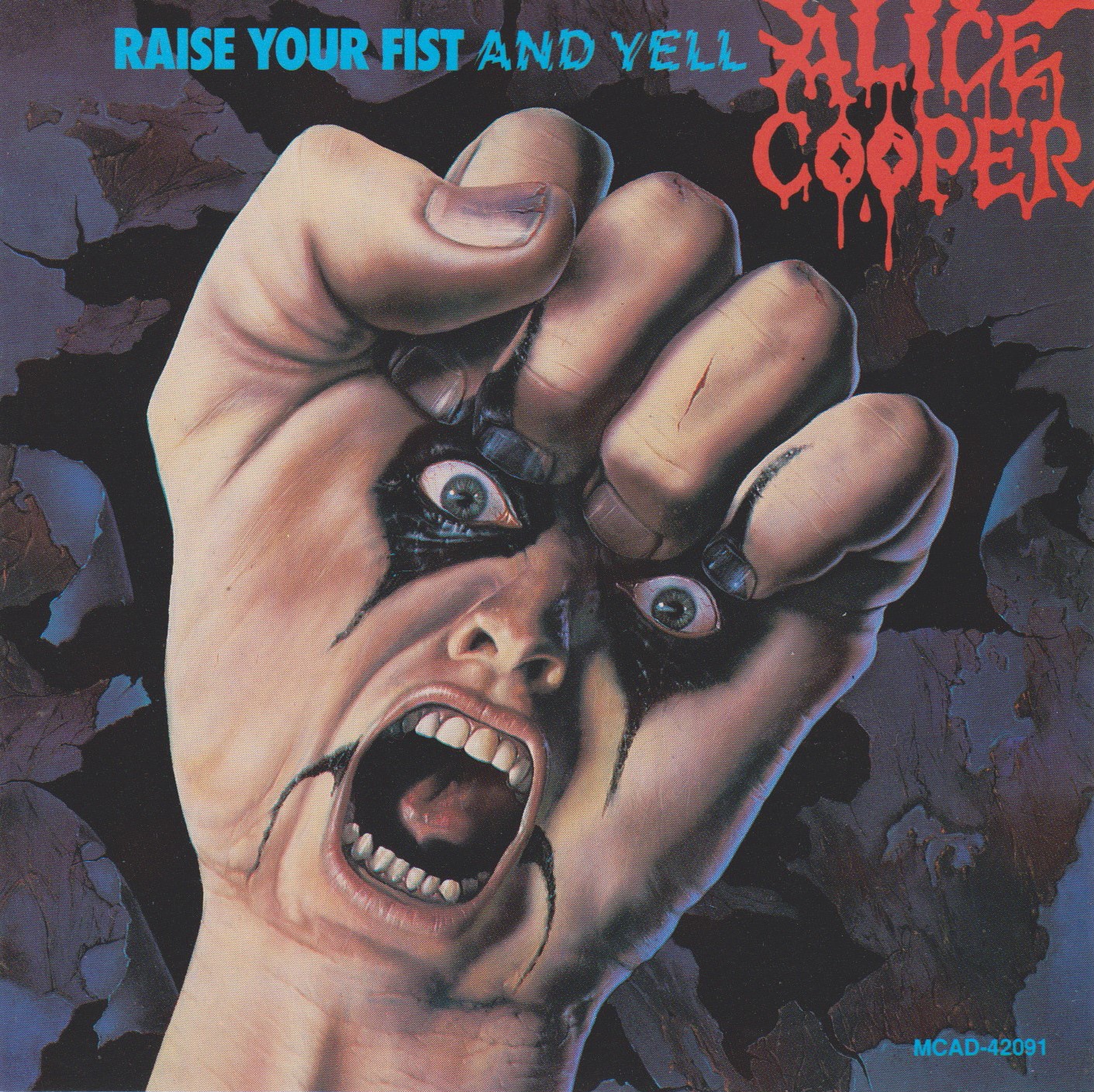
Scan_20160303ALICE COOPER – Raise Your Fist and Yell (1987 MCA)

And lo!  The beast named Alice reincarnated with a slab of wax, and they called it Constrictor.  Slithering into the spotlight again was a triumph of will:  Alice battled his demons (including the bottle), found some new young band members and started fresh on a new label.    Though the music was merely OK, at least the man himself was doing just fine.  As fans, I believe we genuinely wish our rock star heroes to be healthy and happy, so even if the music wasn’t the greatest, we could be glad that Alice was back.

In the 70’s and early 80’s, Alice Cooper maintained a breakneck release schedule.  This slowed down a bit in the second phase of Cooper’s career, but he still managed to follow Constrictor a mere 12 months later with Raise Your Fist and Yell.  I probably don’t need to tell you this, but look at the cover:  certainly one of the worst to ever envelope a major label release.  The guilty party is a fella named Jim Warren who must hate this cover as much as I do, because just look at it.

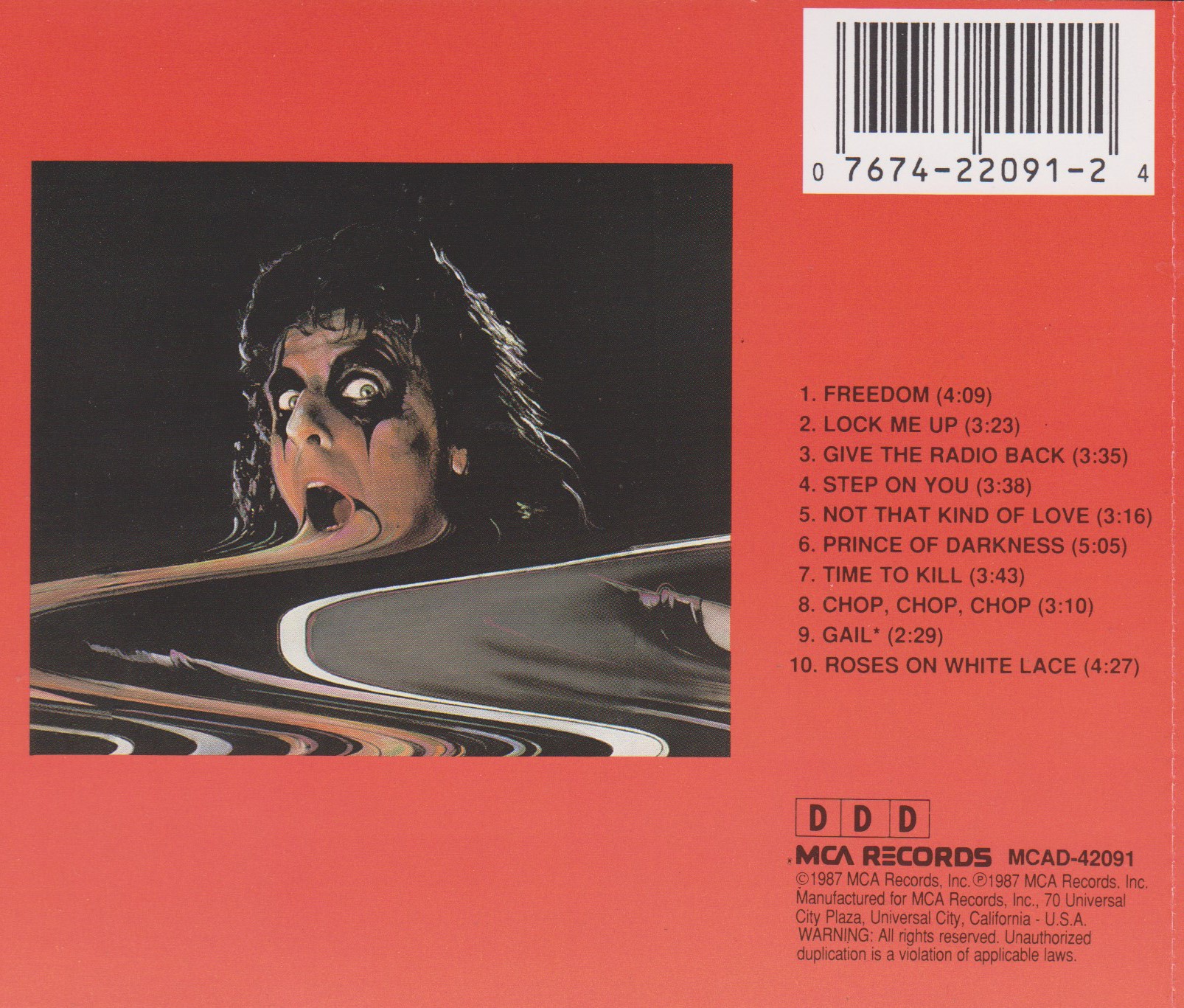
It continued with the same shock-rock horror-splatter-movie theme, but turned up louder.  Indeed, the lead single “Freedom” was the fastest most thrash-like track that Alice had yet performed.  Censorship was a big target in Alice’s sights.  “Freedom” was his ode to the PMRC:  “You want to rule us with an iron hand, you change the lyrics and become big brother.  This ain’t Russia!  You ain’t my dad or mother.”  Lemme tell you, when “Freedom” came out, the PMRC seemed a genuine threat.  Dee Snider and Frank Zappa were testifying in front of the senate and stores were refusing to stock records.  “Freedom” was an anthem we could all get behind.  I don’t think anybody expected him to go so heavy!

The video was interesting. Kane Roberts looks like he’s not sure if he’s at a bodybuilding competition or a music video shoot. There were some new guys in the band; that’s not Kip Winger on bass. On drums is Ken Mary, later of House of Lords. Most interesting is the guy dressed as a priest. You can see him up close during the lyric “Back off preacher I don’t care if it’s Sunday.” They looked like the biggest bunch of misfits assembled. Perhaps this is what Alice was going for?

During this period, Alice was writing a few goofy rock songs.  “Lock Me Up” is silly, but fun.  It has a beat and you can headbang to it.  “Take the Radio Back” sounds like a predecessor to “Hey Stoopid”, but not quite.  “Give the radio back to the maniac!” sings Alice.  Is he begging for airplay?  It’s OK, but “Step on You” isn’t really.  There are moments here and there, but these are mediocre songs.  “Step on You” has an interesting atonal instrumental section but it doesn’t fit the song at all.  “Not That Kind of Love” continues the heavy rock, but without hooks.

Back to quality, “Prince of Darkness” is a heavy metal horror movie theme, from the film of the same name in which Alice had a cameo.  Menacing and intense, this tune scores high marks on both the Cooper Scale of Rock Thrills and Chills, and the Cooper Scale of Heavy.  Kane Roberts’ lead solo is pure pointless 80’s excess, but the song is what counts and it’s a good’un.  The acoustic outro is perfection.

“Time to Kill” keeps things above the bar.  “Chop, Chop, Chop” does not.  I know — you’re surprised, right?  A song called “Chop, Chop, Chop” isn’t a diamond of the highest carat weight?  Nor is it a turd, but certainly well below the watermark.  It does serve as a lead-in to “Gail”, a high quality also-ran that recalls Alice in the year 1975.  It is the only Kip Winger co-write on the album, and he’s responsible for its eerie keyboard vibe.  Finally it’s “Roses on White Lace”, another borderline thrash metal track that absolutely rips every head in the room off.  This track, firmly in the splatter film world, is an excellent example of Alice at his heaviest.  For its entire duration, it’s breakneck speed.  Bold song to end an album with.

Post album, Kip Winger and keyboardist Paul Taylor bailed, and formed another band you might have heard of.  Michael Wagener produced this record, and while heavy, the album is definitely lacking sonically in comparison to its contemporaries.  All told there are four songs worth buying the album for:  “Freedom”, “Prince of Darkness”, “Roses on White Lace”, and Gail.  Three of those four songs can be found on the MCA compilation Prince of Darkness.  So…your move.

2.5/5 stars
Scan_20160303 (3)


REVIEW: Alice Cooper – Constrictor (1986)

EPIC REVIEW TIME.

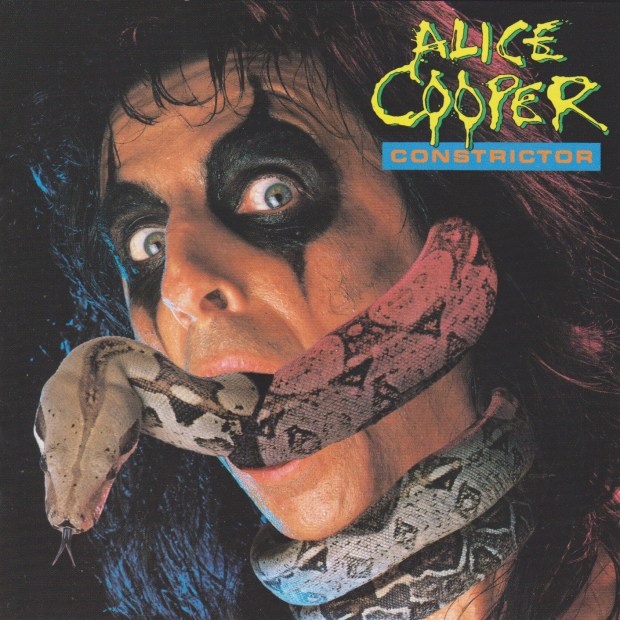
Scan_20160207 (2)ALICE COOPER – Constrictor (1986 MCA)

Alice Cooper’s bizarre DaDa album was the end of an era.  It marked the last album Alice recorded for his Warner Brothers contract, now complete.  It was also the end of his experimental period that ran from 1980’s Flush the Fashion through to DaDa.  It was the the last album Alice would make that he couldn’t remember making.

Alice mostly disappeared for the next three years.  His activities were so low key that most people didn’t even notice them.  He was hospitalized for cirrhosis of the liver caused by his blackout drinking.  He got sober, for good.  He also dealt with a divorce.  Musically there was very little going on.  In 1984, Alice starred in a very low budget horror movie called Monster Dog.  He recorded two songs for the soundtrack:  “Identity Crisises” and “See Me in the Mirror”.  These two tracks are very much the conclusion to Alice’s early 80’s art-rock persona.  “Identity Crisises” has a lo-fi, garage-y Iggy Pop sound.  “See Me in the Mirror” is in the synthpop direction of DaDa:  creepy, atmospheric and mostly electronic.  These two songs were finally released for purchase on the legendary Life and Crimes of Alice Cooper boxed set in 1999.

Alice next emerged with one of the bands he inspired:  Twisted Sister.  Along with Brian Setzer, Clarence Clemens and Billy Joey, Cooper accompanied Twisted Sister on their single “Be Chrool to Your Scuel”. A very clever zombie-filled big budget horror-inspired music video was made for the song, which Alice co-starred in, as did Bobcat Golthwait (who was also in Sister’s “Leader of the Pack” clip).  It should have been a big deal, with Alice getting equal screen time with Dee Snider.  Unfortunately hardly anyone saw the video. MTV barely touched it. As a result it did nothing to aid Alice in terms of a comeback.  It was good to note that Alice looked healthier than he had in years.

Alice regrouped and re-invented himself in a new persona. Taking inspiration from his Welcome to My Nightmare period, Alice went into “slasher film” mode. He recruited a massive muscle-bound heavy metal guitarist and songwriter, Kane Roberts, to be his co-pilot for this adventure. Also along for the ride was a hot new bassist and singer named Kip Winger, whose large mane hid the fact that the man was a classically trained musician. With producer Beau Hill, they made an album in tune with what was happening in 1986, and that meant heavy metal. Alice had always been a diverse, experimental artist, but this time the mission was pretty simple and the lines were clear.

Another horror film served to launch the next official Alice Cooper music: Friday the 13th Part VI: Jason Lives. Alice appeared in a brief cameo, but more importantly contributed two new songs to the movie soundtrack. They were the anthem “Hard Rock Summer”, and “He’s Back (The Man Behind the Mask)”, which served as the movie’s theme song. “Hard Rock Summer” was a bit of a throwaway, and was not used on the next Alice album. You can really hear the backing vocals of Kip Winger and Kane Roberts on it, but a classic it is not. “He’s Back”, and its very cool music video became synonymous with this new period of Alice Cooper’s life.

The new album, Constrictor, was finally released in September of ’86. With a snake in his mouth on the cover (not really; you can see it’s cheaply cut and pasted) it was pretty clear that Cooper was going for the scares. Opening track “Teenage Frankenstein” continues the horror theme, but combines it with Alice’s teen anthem style from the early 1970’s. “Teenage Frankenstein” is essentially an “I’m 18” for 1986. It’s not as memorable, inventive, or as good, but it gets the job done. It’s an Alice Cooper heavy metal anthem for pounding your fist to in concert. In lieu of a proper music video, a clip from his live show The Nightmare Returns was used, featuring Alice building a living robot monster on stage, which then turns against him!  Alice was still one of the best live acts in the world.

It’s funny that DaDa is remembered as Alice’s “drum machine” album when it’s clear on “Give it Up” that a lot of the beats are programs and samples.  “Give it Up” is a radio friendly hard rocker, nondescript but at its core not that different from the music Alice made in the 70’s.  It’s even has some rock and roll piano.   It’s just dressed up for the 80’s.   There’s not much going on with “Thrill My Gorilla”, just a forgettable song with the shrill production that was so popular in the 80’s.  Much better is the somewhat epic “Life and Death of the Party”.  Slower, creepier and much more effective, “Life and Death of the Party” is the kind of song I like to point to as proof there was some mighty good material during this period.  Unfortunately “Simple Disobedience” isn’t among that material.  Like “Thrill My Gorilla”, there is little here to attract listeners today.  The electronics and samples really are a drag.  It is like there is a layer of distraction over the song that you have to penetrate through.

Flipping the record over (or pretending to since I own this on CD), “The World Needs Guts” isn’t a bad start to the second side.  It could have been much heavier.  It verges on the speedy power metal tendencies of bands like Accept, but the production keeps it from going all the way.  As such it kind of sounds like a thin Judas Priest Turbo outtake with the synths stripped off.  “Trick Bag” may sound familiar.   It actually started life as “He’s Back (The Man Behind the Mask)”.  There’s a demo version of “He’s Back” on the aforementioned Alice Cooper box set musically identical to “Trick Bag”.  “He’s Back” was re-written, but the original music ended up as “Trick Bag”.  It’s a decent album track but like much of Constrictor not particularly classic.  “Crawlin'” is pretty close.  With all the melody and hooks of an old 70’s Alice Cooper track circa Goes to Hell, “Crawlin'” is pretty good stuff.

“The Great American Success Story” is fantastic for two reasons.  One is that it was originally written for the Rodney Dangerfield classic Back to School.   Second, it’s like an updated “School’s Out” for the 80’s.  Instead of celebrating the end of school, this time we are celebrating going to school.  “He’s gonna take that plunge, gonna jump back in there.”  Which, if you’ve seen the movie, you know is also a reference to Dangerfield’s character joining the diving team.  “He thinks about the teacher in his literary class,” and I don’t blame him; it was Sally Kellerman!  “Always been a brat, don’t get no respect” is another obvious reference to Dangerfield.  But it’s a good song! It really should have been a single, and it probably would have been if it were in the movie.

Closing the album, we go full circle back to Friday the 13th and “He’s Back”.  There’s little question that “He’s Back” is the best song on Constrictor.  It actually bears more similarity to the synth-pop of DaDa than it does to the rest of the album.   It’s brilliant because they stripped the song down to a very basic frame, which is a creepy digital pulse.  There’s a little guitar but it’s mostly just horror pop of the finest quality.  Ch-ch-ch-ha-ha-ha…don’t turn out the lights.

Part of the problem with Constrictor is that Alice had a faceless, fairly bland group backing him.  Kane Roberts can play guitar, and Kip Winger can play the bass, but did they have their own identities?  No.  Dennis Dunaway played bass on those early Alice Cooper albums like no other bassist in the world.  Michael Bruce, Steve Hunter, Dick Wagner, and the other great players Alice worked with all had their own sound.  There is none of that on Constrictor.

I want to give Alice and company an A for effort: for finally getting sober, for finally getting back there on tour, and also for going heavy this time.  Unfortunately Constrictor was a comeback album that needed a bit more comeback in it.  The good news is that Alice did eventually get back to full quality, but Constrictor is only about half an album.  Therefore:

2.5/5 stars

Scan_20160207 (3)

REVIEW: Alice Cooper – DaDa (1983)

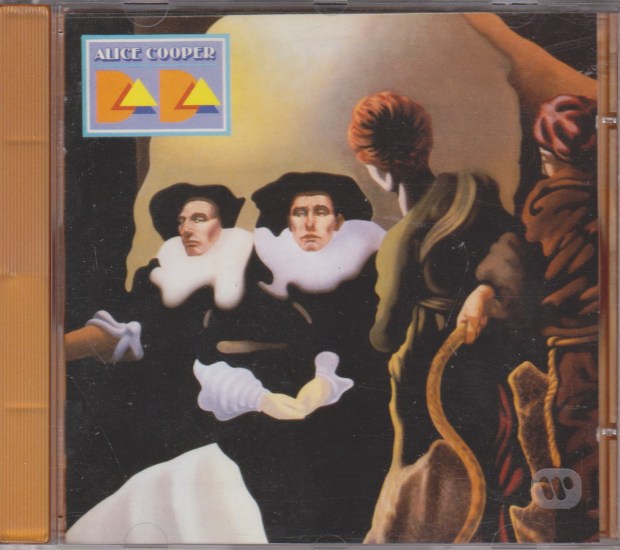
ALICE COOPER – DaDa (1983 Warner)

DaDa is one of the most fascinating albums in the Alice Cooper catalogue.  So interesting in fact that this is the second time I’ve tackled a review of it.  The first, posted on Amazon years ago shortly after buying the album, was not flattering.  The entire thing is below:


This is what happens when you drink too much and can’t remember years of your life anymore.

This is what happens when your producer is nursing his own drug problems.

This is what happened to Alice Cooper in the early 80’s. Guitars, drums and bass have been jettisoned in favour of samples, keyboards, and programs. Songs? Non-existant. This album is worthless, filled with dreck that Cooper wouldn’t have even considered a decade earlier, or later. I defy anyone to explain the concept of the story to me. No songs ever played live, no tour.

One novelty track: “I Love America”, which is actually hilarious. It is also available on the Cooper boxed set. Pick that up, not this.

0/5 stars. The absolute nadir of the man’s storied career.


That’s what I said then, and I have to own it now.  I could delete it and pretend I never said it, but that would be dishonest.

Rich at Kamertunesblog did a fantastic Alice Cooper series a few years back.  When he got to DaDa, I said that “I still have not really penetrated [it]. I don’t know if I so much as appreciate it, rather than like it.”  When Rich said he found that surprising, I realized I must be missing something with DaDa.  So how does DaDa sit now, after a few years to let it absorb?

It’s different.  It’s creepy.  It’s funny.  It’s worth the time spent with it.

The story of DaDa itself is almost as interesting as the story of how one man can go from hating it to loving it.

Alice re-teamed with Bob Ezrin on this album, for the first time in years.  Dick Wagner came back for guitar, bass and songwriting duties.  Wagner claimed in his autobiography that Alice wasn’t that enthused about making this album, and confessed that contracts stipulated he had to.  Backing up Wagner’s claim is the fact that this was Alice’s last album for Warner, followed by a three year hiatus to finally get clean and sober for good.  There was no tour, in fact no band.

In lieu of a drummer, all beats are programmed.  This lends a stark early 80’s synthpop sound to DaDa.  It works exceptionally well on the title track, an Ezrin instrumental creation.  The echoey electronics sound as if from a frightening science fiction horror movie from the period.  Punctuating this is the mechanical repeating sample of a child saying “da da”…and heavenly new age keyboard melodies.  Talk about chills!  If that doesn’t get you, perhaps the spoken word conversation between a therapist and a patient will give you the shivers.  “I have a daughter too,” says the elderly patient.  “You don’t have a daughter,” responds the doctor.  “Yeah, I have a daughter,” insists the sick man.  “Sir, you have a son,” insists the doctor as the conversation gets creepier.  Alice Cooper is not even on this piece.  Perhaps that is one reason it failed to make an impression on me all those years ago.

Alice emerges on “Enough’s Enough”, changing to the perspective of the son.  “I just want to tell you, you’re a lousy dad, to hell with you!”  Dark but strangely upbeat, “Enough’s Enough” has some of those Bob Ezrin touches that you love, such as the perfectly arranged backing vocals.  The Dick Wagner guitars are the only real touch of rock and roll; the song otherwise lives in a punky new wave land.  The best song is much creepier:  “Former Lee Warmer”.  Alice alludes to the character of “Former Lee” on the previous song: “Why’d you hide your brother?”  “Former Lee Warmer” reveals that the body of the brother was locked in a chest in the attic.  “All the mops and brooms keep him company, misconceived of the family.”  Musically and thematically, this is just as good as Welcome to My Nightmare!  This is all done in Alice’s brilliant speak-sing style.

The concept becomes harder to follow on “No Man’s Land”, a good rock and roll song only weakened by the clanky electronic percussion.  Wagner is outstanding.  Similarly disconnected is “Dyslexia”, which sounds like Devo snuck into the studio.  Harmless fun; I wonder how many songs have been written about dyslexia in popular music?  It’s not clear who is on bass (probably Prakash John rather than Wagner), but the bass pulse is brilliantly subtle and perfect.  “Scarlet and Sheba” is an album highlight, electronically exotic and heavy too.  It’s perfectly dressed a with killer chorus and kinky lyrics, topped with a brilliant Ezrin arrangement.

“I Love America” is admittedly a novelty track, but I still like it today.  Taking on the persona of a redneck, Alice lampoons every cliche about his homeland.  “I love Velveeta slapped on Wonder Bread!  I love a Commie…if’un he’s good ‘n dead!”  The reason it works is because it’s Alice Cooper.  I don’t think anyone else could have pulled it off.  Ezrin provides suitably pompous backing music, turning it into a rock national anthem.  (My favourite lyric is the last one:  “I love my bar, and I love my truck.  I’d do most anything to make a buck!  I love a waitress who loves to ffff…flirt.  They’re the best kind!”)

Going into “Fresh Blood” you’ll notice the synth horns, not really a substitute for the real thing.  It’s actually a pretty good funky rock tune.  Alice sings melodically with layered vocals, and once again the bass sounds awesome if you pay attention to it.  The final track is another drama-laden burner called “Pass the Gun Around”.  The character (referred to as “Sonny”; perhaps the son from earlier in the album) wakes up in a hotel room after another blackout night.  It’s not a pretty scene but it ends the album on a suitably serious and musically complex note.  It’s actually one of the better Cooper tracks from any era, thanks in no small part to Bob Ezrin and Dick Wagner.

Interesting trivia:  Probably because Ezrin recorded the album in his native land (Canada), Lisa DalBello is credited on backing vocals.  Queensryche would later cover one of her singles, “Gonna Get Close to You”.  She was also a part of Alex Lifeson’s Victor project.

Today’s rating:  4/5 stars, but only after a long journey.  And the concept still seems to derail halfway through the album.

REVIEW: Alice Cooper – From the Inside (1978)

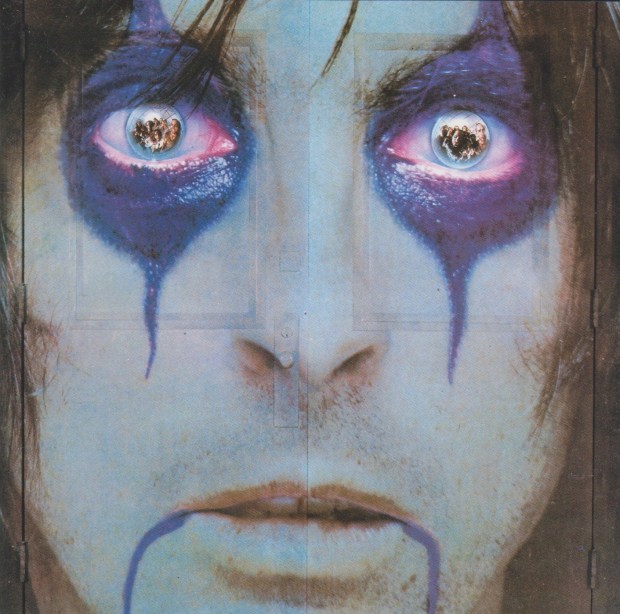
ALICE COOPER – From the Inside (1978 Warner)

In 1978, Alice Cooper’s health had hit a low point.  His excessive drinking was causing bleeding ulcers.  Alcohol always seemed to help before, but now it was time for Alice himself to get help.  He found himself in one of the strangest places he’d ever been in his life:  a sanitarium.

Alice got sober, for a short while anyway, and hooked up with some new players.  He wrote the lyrics for his next album with Bernie Taupin (Elton John) and got David Foster to produce him for the first and only time.  The inspiration for his next concept album was the sanitarium.  The people he encountered there inspired the characters on his album:  Millie, Billie, Nurse Rozetta, Jackknife Johnny, and more.  He amalgamated their stories and and personalities into the characters on the record, and with Bernie Taupin wrote some of his most interesting lyrics.  The horror themes of the past have been replaced by the real life madness of being locked in that place.

Musically, From the Inside is a hard pill to swallow.  Like a dose of Thorazine, it’s a sedated and subdued form of rock and roll, mixing Disco production and David Foster’s soft rock tendencies.  The sound of the album is clean and clear, but it is a dated a product of its time, the compression being the dead giveaway.  From the Inside is far more interesting lyrically than it is musically.  Bob Ezrin used to add strings, orchestras and choirs to the Alice Cooper mix, but David Foster’s version of the same is much more saccharine; much more easy listening without the weirdness.  Few of these songs are still in the live set.  Last time I saw Alice in 2006, he played “Wish I Were Born in Beverly Hills” with his daughter Calico playing a Paris Hilton type character on stage.  The Disco-stompin’ title track, and one of the only hard rockers (“Serious”) have also been performed in recent years.  For the most part, From the Inside is too much of a departure for these songs to having any staying power in Alice’s incendiary live show.

The title track is Alice’s story, and there are subtle references to Alice’s drinking club the Hollywood Vampires.  “Proposed a toast, to Jimi’s ghost.”  There also seems to be just a touch of bitterness about his situation:

Y’all got your kicks from what you saw up there,
Eight bucks even buys a folding chair,
I was downing Seagram’s on another flight,
And I worked that stage all night long.
You were screaming for the villain up there,
And I was much obliged,
The old road sure screwed me good this time,
It’s hard to see where the vicious circle ends.

It’s actually a fun Disco-rock tune, but now it’s time to meet Alice’s friends from the sanitarium.   The aforementioned “Wish I Were Born in Beverly Hills” boasts a catchy chorus (“I wish I could drink as much as she spills!”) and some nice Dick Wagner guitar harmonies.  For haunting music, “The Quiet Room” fits the bill.  It’s clear that the sanitarium was a serious place, and Alice and Bernie paint it clearly.  “They’ve got this place, where they been keepin’ me, where I can’t hurt myself, I can’t get my wrists to bleed.”  The character in this song questions why he wants to kill himself, but laments that he can’t even try in this place, “my Twilight Zone”.  He has spent so long there, alone with his thoughts and memories that “the quiet room knows more about me than my wife.”  It’s a strangely affecting tune.  Alice’s character driven lead vocal is the highlight; musically it’s pretty safe stuff.

The funniest track has to be “Nurse Rozetta”.  The lead character, clearly a priest, seems to really have a thing for Nurse Rozetta.  “I’m suddenly twice my size, my pants are all wet inside.”  Or my favourite line, “She popped the buckle off my Bible belt.”  The perverted priest fantasizes about the nurse on a string-laden but unremarkable tune, once again overshadowed by the words.  Alice and Marcella Detroit duet on “Millie and Billie”, a standard ballad, about a killer “criminally insane” couple to close Side One.

The only really killer hard rock track on the album is “Serious”, commencing the second side.  Foster’s production adds carefully arranged backing vocals, which matches the sound of the album, but dates the music to the time it was recorded.  Ezrin had a way of pulling off similar tricks and making them sound weighty.  Foster turns it around and produces a celebratory, gleeful sound.  I prefer the Ezrin approach, but one time the David Foster style works was the single “How You Gonna See Me Now”.  Something about this schlocky ballad works. The character in the song is writing a letter home to his wife, accompanied by this cheesey 70’s AM radio ballad. That’s the perfect way to do it.

“For Veronica’s Sake” and “Jackknife Johnny” are both good but unremarkable, although it seems Alice and crew really tried! They get an “A” for effort, but this brand of late 70’s adult contemporary rock has not aged well. The playing is the highlight, organ and guitar both. What the album was really missing up to this point is a suitably psychotic Alice Cooper song, but the final track “Inmates (We’re All Crazy)” scratches that itch. With all the pomp and circumstance necessary, this song delivers the dose of drama and strangeness that you need on an Alice Cooper album. It’s a disturbing lyric, too. “It’s not like we did something wrong. We just burned down the church, while the choir within sang religious songs.” Another inmate derailed a train. Then, the child-like sing-song chorus of “We’re all crazy, we’re all crazy, we’re all crazy…(Lizzy Borden took an axe and gave her mother forty whacks)…” Such a contrast, the child-like innocence and the horrendous deeds, but this is nothing new for Alice. The picture is now complete, and the album is over.

The cover art really pops on LP. Alice’s face is painted on hospital doors, which fold out to reveal the characters inside. Too bad all I have here at LeBrain HQ is a little CD booklet.

Alice, Bernie Tauper, David Foster, Dick Wagner, and the rest of them made an accomplished album with From the Inside. It’s a left-of-center artwork that isn’t immediately appealing, but does have the knack of drawing you back for another listen. I recommend doing just that.

3/5 stars

REVIEW: Alice Cooper Goes to Hell (1976)

Happy Halloween, folks!  And what better way to celebrate this day than with the king of horror rock, Alice Cooper?

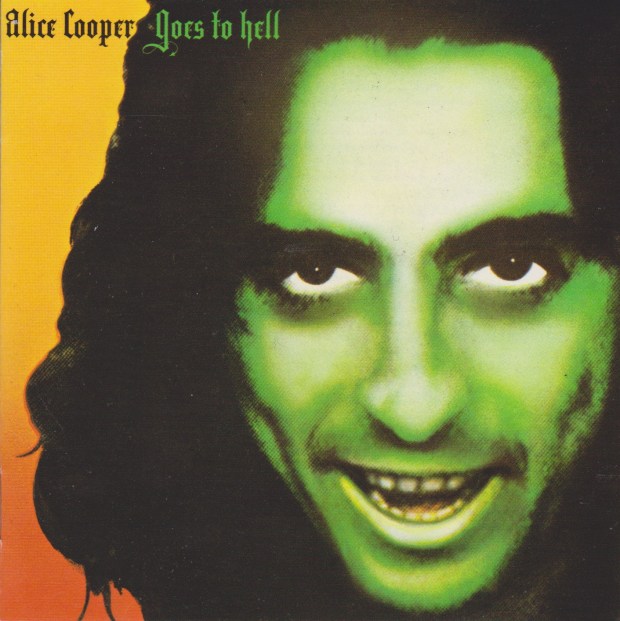
ALICE COOPER – Alice Cooper Goes to Hell (1976 Warner)

Last time, he welcomed you to his nightmare.  Now, journey with Alice as he takes you straight to hell!  Subtitled (in the inner booklet) as “A Bedtime Story”, Alice Cooper Goes to Hell is another concept album, to follow a concept album.  Steven is back.  It’s a pretty mad concept, and one that ties into not only Nightmare, but also Nightmare 2, decades later.  Steven will fall asleep, and follow Alice down a dark endless staircase, “the pit where he doesn’t want to go, but has to.”

Written and produced by Alice, Bob Ezrin, and Dick Wagner, Goes to Hell features a backing band with a name you might recognize: The Hollywood Vampires.  It’s not the same band, obviously (Johnny Depp was 12 years old), but it does demonstrate just how long Alice has been using that name for a band.  Among the many musicians herein, you will recognize many:  Steven Hunter, Dick Wagner, Tony Levin, and Allan Schwartzberg are probably in your record collection many times (credited or otherwise).

Goes to Hell doesn’t have the fire, or the reputation, of Welcome to My Nightmare.  It is the beginning of a long slide that did not fully right itself until after Alice had kicked the booze for good.  It is, however, an under-appreciated album with fun and nuance in the dark shadows.  The title track is one song that still graces the live stage.  Here, Alice seems to be paying for his crimes committed.  “For criminal acts and violence on the stage, For being a brat refusing to act your age, For all of the decent citizens you’ve enraged, You can go to hell!”  You’ll never have so much fun on the road to H-E-double-hockeysticks, this side of an AC/DC album.  Quintessential Alice, this is, and indispensable too.  Anyone who has ever liked the biting humour and celebrated riffs of Alice Cooper will love “Go to Hell”.  Bob Ezrin adds the usual accompaniment to the mix:  horns, keys, and gang vocals condemning Alice to hell!

A full three years before Kiss, Alice Cooper went disco.  If you like disco rock metal music, then “You Gotta Dance” to this one.  This is a track that some Alice fans would probably love to bury, but it has its moments.  Steve Hunter plays a wicked funky guitar solo.  There is always instrumental integrity.  “I’m the Coolest” slows the pace to a jazzy drawl.  At this point I imagine the character of Alice is meeting various people down in hell, perhaps the man in charge himself.  “Didn’t We Meet” suggests this.  “To look at you, deja vu, chills me to the core.”  Then, “They say you’re the king of this whole damn thing.”  These three tunes are all quite a departure from hard rock, but Alice has always been so diverse.  The hit ballad “I Never Cry” (#5 in Canada) is very pretty, unusually so for Alice.  It is, according him, an “alcoholic confession”, and not the only moment on the album that touches on his drinking.

The first side of the album has some great tracks, but only the first (“Go to Hell”) really rocks.  Side two is similarly diverse and dark.  “Give the Kid a Break” is a campy musical number, with Alice pleading his case before the judge.  “I don’t know why I’m down here, I don’t deserve to roast or bake.”  Predictably, things don’t go well, since the next song is called “Guilty”!  “Guilty” is the hardest rocker on the album, and one of the only songs to be played live occasionally through the decades.   Not that all the other songs on the album suck; Alice just sounds right when he’s rocking like he always has.  And the lyrics rule:

Just tried to have fun, raised hell and then some,
I’m a dirt-talkin’, beer drinkin’, woman chasin’ minister’s son,
Slap on the make-up and blast out the music,
Wake up the neighbors with a roar,
Like a teenage heavy metal elephant gun.

If you call that guilty, then that’s what I am.
I’m guilty, I’m guilty!

This is right up the alley of a tune like “Escape” from the last album.  It’s a shot in the arm and just when you need it.

With “Wake Me Gently”, we are back in ballad land, and it is unfortunately the longest song on the album.  It sounds like an Ezrin creation, but in comparison to his other works, it is among his lesser creations.  The string section is the highlight.  Then he turns up the funk again for “Wish You Were Here”, with the help of Wagner on funky gee-tar.  “Havin’ a hell of a time my dear, wish you were here.”  Sounds like Alice has more than enough of hell by now.  Steve Hunter plays the blazing Lizzy leads at the end of the song.

In a surprising-but-not turn, Alice pulls “I’m Always Chasing Rainbows” out of the hat, an old Vaudeville song (1917) once performed by Judy Garland in 1941.  It actually works within the concept of the album, and predictably, Alice perfectly camps it up.  It blends splendidly into “Going Home”, with Steven finally escaping his nightmare.  Was it a nightmare?  “I wonder what happened to Alice,” he ponders.  This is pompous, overdone Ezrin, just the way you like it.  Orchestration and thunderous percussion lend themselves well to this dramatic close.

It’s pretty clear that the reason Alice Cooper Goes to Hell is not as fondly remembered as Welcome to My Nightmare is the sudden change in direction to balladeer.  There are only three rocking songs on an album of eleven tracks, and Alice was always primarily a rock artist, albeit an experimental one.  You still found his records in the “rock” section of your friendly neighbourhood record store.  Three rockers aside, the rest is a diverse assortment of music, well put together and played.  Clearly, that has to be the key.  But there is more to it than that.  Nightmare seemed a more celebratory affair.  It felt lively; it felt alive.  Goes to Hell sounds less so.  Alice’s lungs seemed weakened, just a smidge, from how they used to bellow.

Alice Cooper Goes to Hell is worthy of praise, not derision.  Just remember — it’s not a rock album.  At best it’s rock opera.  Proposed analogy:  Goes to Hell is Alice’s Music From the Elder.  They even have the same producer!

3.5/5 stars

Happy Halloween kiddies!

#440: What’s the Best Concert You’ve Ever Seen?

GETTING MORE TALE #440: What’s the Best Concert You’ve Ever Seen?

What’s the best concert you have ever been to?  Maybe it was that band that was always on your bucket list.  Perhaps it was a group who puts on an incredible spectacle, or perhaps even your first show.  Maybe you’ve seen so many shows that you don’t even know where to begin!

I’ve had a lot of memorable concerts in my years.

In 1983, my dad took me to see Johnny Cash at the Center in the Square in Kitchener.  My dad worked for Canada Trust, and Johnny was doing a promotional deal with them and their new “Johnny Cash” money machines.    In light of that, Johnny introduced himself at the start of the show as “I’m Johnny Cash, 24 hour money machine.”  Canada Trust even printed their own “Johnny Cash” money.  I wish I still had some.   Cash played all his classics such as “Orange Blossom Special” and “I Got Stripes”.  June Carter kicked off her shoes.  Not a bad first concert experience at all.

In ’87 I finally saw my first rock show.  At the same venue, Helix rolled into town headlining for their new Wild in the Streets album.  Opening for them were a so-so pop rock band from Prince Edward Island called Haywire.  Their big hit was called “Dance Desire” and the girls were going nuts for them.  They were all going ga-ga for the singer Paul MacAusland.  (Years and years later I actually dated a cousin of his.)  I thought they sucked.  The guitar player Marvin Birt was good, but MacAusland’s idea of stage moves involved him lying down flat on his face!

Helix stormed the stage with “No Rest for the Wicked” and put on an incredible show, involving Brian Vollmer climbing the scaffolding into the loges.  He then ran from there onto the mezzanine, right past us, as I was too shy to hold out my hand for him to slap!  Then drummer Greg “Fritz” Hinz mooned the crowd…all backed by high octane Canadian rock and roll.  Every time I have seen Helix, Vollmer has been an energetic mobile threat.  Helix showed us that a rock show was about the on-stage energy rather than lights and explosions.

Best show I’ve ever seen?  No, but it’s in the top ten.

Sometimes it’s the smaller shows that matter most.  In the late 90’s I went to see local Cambridge band The Candidates.  I believe it was a CD release party.  They were playing hard, and drummer Robbie Hancock busted his drum pedal mid-song.  After the show, I told him I thought it was actually their best performance yet.  He didn’t agree, but I told him, “The drum pedal stuff, that doesn’t matter.  The reason it broke is that you were playing so fucking hard, and that’s why the show was so good!”

Next on the list:  Deep Purple, 1996, Purpendicular tour.  T-Rev, Iron Tom Sharpe and I trekked to Toronto to catch the new lineup featuring Ian Gillan, Steve Morse, Ian Paice, Roger Glover, and of course Jon Lord.  Playing a set of personal favourites including “Fireball” (the opener) and “No One Came”, we all left exhausted and satisfied.  Opening act:  Wild T & the Spirit.  Incredible and indelibly scorched into my memory, Purple proved that age does not matter one lick.

Scan_20150928 (5)

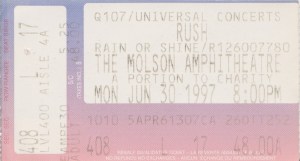
In 1997 I scratched Rush off my list.  This experience was commemorated in Record Store Tales Part 70:  Canada Day Weekend Rush.  Seeing Rush on the most patriotic weekend of the year was a perfect experience.  The played all of 2112 live, an experience not to be missed.  It was also my first time meeting such friends as Tyler (from Tyler and LeBrain fame), and rock god Dr. Dave Haslam.

The final concert on this list would have to be Helix, once again, opening for Alice Cooper in 2006.  The venue was the trusty old Center in the Square, and this time we were in the second row.  Alice Cooper was on his Dirty Diamonds tour, a killer record and a great live set.  Helix were in the midst of working on a new EP to be called Get Up, and they played the instantly catchy title track live.  This time, when Brian came down to the seats, I succeeded in shaking his hand.  He must have noticed the guy in the front who knew every word….

Honorable mentions:  Blue Rodeo and “Weird Al” Yankovic.  I’ve seen Blue Rodeo so many times that I could almost make a list of the best Blue Rodeo concerts I’ve ever seen.  As for Weird Al, what’s not to like?  He has a crack band that can play anything.

Conspicuous by their absence on this list:  Kiss.  This experience was recorded in Record Store Tales Part 8.  Not only did Iron Tom make us miss the first few songs, but it was a boring by-the-numbers setlist.  That would have been fine except for the after-concert shenanigans that didn’t see me getting home until 4 am the next day…with a 10 am opening shift at the Record Store.  Good times?  Not!

Of these shows, I really don’t know which was the best.  Maybe they were all the best!  What’s yours?

REVIEW: Hollywood Vampires (Alice Cooper) – Hollywood Vampires (2015 Japanese import)

NEW RELEASE

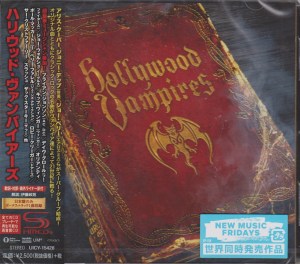
Scan_20150920 (3)ALICE COOPER / HOLLYWOOD VAMPIRES – Hollywood Vampires (2015 Universal Japan)

Ignore the hype.  The press has been going ga-ga over this new supergroup featuring movie star Johnny Depp (rhythm guitar), Joe Perry (lead guitar), and Alice Cooper (lead vocals).  Just ignore the hype completely.  Cooper fans know what this is.  This is the covers album that Alice has been talking about doing ever since Welcome 2 My Nightmare in 2011.   Alice has even been playing a number of these tunes, in these arrangements, live.  Check out his Raise the Dead double live album/video for a few.

According to an interview with Ultimate Classic Rock earlier this  year, “I can’t tell you who’s on what right now, ’cause it’s not gonna be released yet, but it’s the ‘who’s who’ of everything.  It was one of those things where, at one point, I’m looking around in the studio and I’m going, ‘Holy crap! Look who’s in the studio.”  Bob Ezrin, Alice’s long-time producer and musical collaborator came up with the concept.  Alice continues:  “Bob came up with the idea, ‘Let’s concentrate it on all the guys that you drank with in L.A., the Hollywood Vampires, the ones that are all dead.’  I like the title All My Dead Drunk Friends. It’s just offensive enough to work, but all those guys would have totally got it. They had the same sense of humor. If you told them you were going to do an album after they were gone called All My Dead Drunk Friends, they would have died laughing.”  Ultimately the album was simply called Hollywood Vampires.  That’s also the name of this “supergroup” which is essentially just Alice with Depp and guests.

I have this album filed in my Alice Cooper section, and that’s how I’m treating this review.

Hollywood Vampires consists of 14 tracks, except in Japan who have 15.  Two of these are brand-new songs, and one is an intro called “The Last Vampire”.  Fittingly, this features the narration of Sir Christopher Lee, who passed away earlier this year.  Lee’s old friend from the Hammer horror days, Vincent Price, appeared on Cooper’s original Welcome to my Nightmare in 1975.  Today, Alice Cooper truly is the last vampire left from those old days.  Lee’s rich voice is backed by spooky keys and theremin by Ezrin, Depp and engineer Justin Cortelyou.  “Listen to them, children of the night…what music they make.”

Alice then kicks it with “Raise the Dead”.  Depp appears on every track, and Alice’s drummer Glen Sobol plays on this one and several others.  It’s an upbeat stomper of a track, and a perfect introduction to this covers album that is also a concept album.  The first of Alice’s dead drunk friends to be covered is Keith Moon on “My Generation”, an authentic and pounding version.  Alice Cooper is one of the few that does justice to it.  Bassist Bruce Witkin perfectly tackles John Entwistle’s signature bass solo.  One thing that is immediately obvious is how massive this album sounds.  Ezrin wrought a monster-sounding disc, so full and heavy, but textured when required.

John Bonham is up next.  “Whole Lotta Love” was handled in a completely different way than you’d expect.  Starting as a low, prowling Cooper blues it soon blasts into gear.  Alice isn’t known for hitting those high Plant notes, so who joins him?  None other than Brian Johnson of AC/DC, who kicks my ass completely.  Joe Walsh and Cooper’s former lead guitarist Orianthi play some jaw droppingly greasy guitars, but Alice’s harmonica work is also worthy of praise!  Even though very few can cover Led Zeppelin, “Whole Lotta Love” turned out to be my favourite track.  It’s also the heaviest sounding, like a skid of concrete blocks assaulting your face!  That’s Zak Starkey (son of Ringo) on drums.

Cooper has covered “I Got a Line on You” (Spirit) before, on the soundtrack to Iron Eagle 3, of all things.  That 1988 take is my preferred version, but Alice remade it on Hollywood Vampires.  Abe Laboriel Jr., Joe Walsh, and Alice’s old bassist Kip Winger join as guests.  Perry Farrell of Jane’s Addiction helps Alice out on the lead vocals, but his part isn’t prominent.  Then it’s time for the Doors, and a medley of “Five to One” and “Break on Through”.  Alice had been playing “Break on Through” live, but this version has Robby Krieger!  Alice heavies both of them up, but he is also one of the few singers who can do Morrison.

Farrell and Krieger return for a Harry Nilsson medley, joined by David E. Grohl on drums.  “One” is rendered as a haunting, creepy piece as if Alice himself wrote it.  This merges into “Jump Into the Fire”, a strangely upbeat companion which rocks in a vintage 70’s fashion.  It’s like guitar nirvana.  There’s also a cute outro of “Coconut”, also by Nilsson.

Sir Paul himself, rock royalty if there ever was one, shows up for Badfinger’s “Come and Get It”, which Paul wrote.  Joe Perry has spoken about how incredible it was when McCartney showed up in the studio with his Hofner bass, and actually allowed them to hold it!  “Come and Get It” is simple rock/pop, not the kind of timeless thing that happened when Paul wrote with John, but certainly a notch above what mere mortals can write.  I love hearing Paul’s “screaming” voice, and I’m sure everybody in the studio had a great time.  Sure sounds that way.

Marc Bolan’s “Jeepster” is one I could pass on.  Alice makes it sound like an original from 1972’s School’s Out, but if you’re only going to skip one song, it’s probably going to be “Jeepster”.  Lennon’s “Cold Turkey” featuring Joe Perry has more kick and grind to it, and it’s always a pleasure to hear Joe Perry do some Aero-jammin’ on lead guitar.  (I think it would have been amazing to get McCartney to play bass on this Lennon classic — shame nobody thought of it.  That could have been history made.)

Scan_20150920 (4)The Japanese bonus track is “I’m A Boy”, the second Who cover.  Once again, Alice nails it.  This is such a difficult song to attempt.  Alice makes it work, and if anybody can do it, it’s Alice.  “My name is Alice I’m a head-case…”  Just that one change makes the song work.  “I’m a boy, I’m a boy, but my mom won’t admit it…I’m a boy, but if I say I am, I get it.”  And he’s got the girl’s name.  It’s perfect!  This bonus track is worth tracking down if you’re a Cooper fan.  You’ll definitely need it in your collection.

Jimi Hendrix was a Hollywood Vampire, and “Manic Depression” is the song Alice chose to cover.  (He’d already done “Fire” back in the Hey Stoopid days.)  Like “Jeepster”, this is one that could be skipped.  Joe Walsh fans will enjoy his lead guitar work, but otherwise, it’s a stock cover.  Way, way better is “Itchycoo Park”.  Alice’s treatment of the Small Faces is far more entertaining, and its melodic base continue to deliver the hooks.

Brian Johnson returns to belt it out on the “School’s Out”/”Another Brick in the Wall Part 2” medley.  This arrangement is similar to the way Alice did it live, and it’s cool how the two songs work together perfectly.  It’s a genius mashup.  Guests include Slash, and original Cooper band members Dennis Dunaway and Neal Smith.  “School’s Out”, of course, is here for Glen Buxton, of the original Alice Cooper band.  Buxton had suffered the consequences of alcohol abuse, and dropped out of music completely when the original band split in ’74.  Buxton died in 1997.

The final song is an original, “My Dead Drunk Friends,” the song that Alice wanted to use as a title track.  If you don’t mind some black comedy, you will love this tribute to all the lost Hollywood Vampires.  It’s irresistible, and also sounds vintage Alice.  So chants the crowd:  “We drink and we fight and we fight and we puke and we puke and we fight and we drink!”  Doesn’t sound particularly glamorous, but Alice isn’t about to have a mournful wake.  Alice is about entertainment, and even though a brilliant artist who drinks themselves to death is sad, Alice has thrown a party for them instead.  “My Dead Drunk Friends” ends the party on a darkly celebrating note, as only he can.  Job well done.

Hollywood Vampires is pleasantly surprising.  9/10 covers albums are not worth the money you paid for them.  Alice’s is.  They call it a supergroup for marketing purposes but it only takes one listen to know what this is.  This is a project that Alice, Bob Ezrin and friends have been passionate about for years, and has finally been finished.  It is an apt follow-up to Welcome 2 My Nightmare, and another killer concept album from the kings of concept albums.

4/5 stars

#433: Top 15 on the 15th (by LeBrain)

15


Uncle Meat – Top 15 on the 15th

Iron Tom Sharpe – Top 15 on the 15th

James at the KMA – Top 15 on the 15th

Aaron at the KMA – Top 15 on the 15th


Oh, how I loathe lists! Readers seem to love “Top Whatever” lists; different kinds, but I sure do hate making them.

However, I don’t like doing things in half-measures either. So for this, the Top 15 on the 15th, I’ve gone one step beyond. Not only do you get my Top 15 on the 15th, but also a list of the Top 15 tracks to listen to from these 15 amazing albums.

As of today, here are my Top 15. These will change periodically, probably tomorrow, and again the day after. See why I hate lists?  In the end I decided that I wanted to fairly represent some of my favourite artists.  But enough whining from me — let’s rock.  Spin these little bastards for a good time!

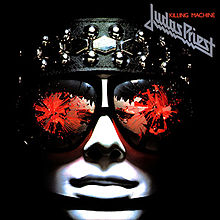
LEATHER15. Judas Priest – Hell Bent for Leather (Killing Machine)

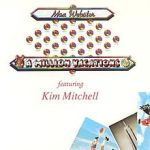
VACATIONS14. Max Webster – A Million Vacations

NEWS13. Queen – News of the World

SCHOOL12. Alice Cooper – School’s Out

BEATLES11. The Beatles – The Beatles (The White Album)

JOHNNY10. Thin Lizzy – Johnny the Fox

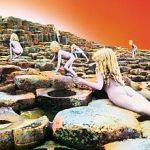
HOUSES9. Led Zeppelin – Houses of the Holy

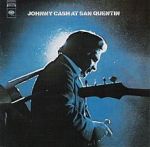
SAN8. Johnny Cash – At San Quentin

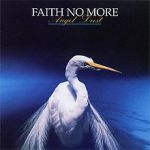
ANGEL7. Faith No More – Angel Dust

MOVING6. Rush – Moving Pictures

19845. Van Halen – 1984

Let’s stop here for a moment.  The thing about my top albums list is, the top four never change.  Four of these five albums have been in my top five for a long as I can remember making lists for.  The order may change, but that top four have been my top four, forever.  They are indelibly heat-stamped onto my grey matter.  These are as much a part of me as my left arm!

PIECE4. Iron Maiden – Piece of Mind

HOTTER3. Kiss – Hotter Than Hell

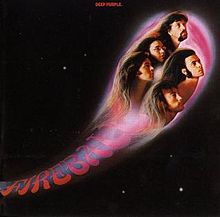
FIREBALL2. Deep Purple – Fireball

BORN1. Black Sabbath – Born Again

Right there are 15 incredible collections of music, both studio and live. But let’s not fool ourselves. Nobody is going to listen to all 15 of those albums just because some guy on the internet who goes by the name of “LeBrain” said so. I have chosen to distill these 15 amazing records down into 15 key tracks. I’m sure nobody needs an introduction to the big hits, so here are tracks you may not have heard. If you have ever cared about rock music, then you need to listen to these Top 15 Songs from the Top 15 Albums, on the 15th!

1. Rush – “Vital Signs”

2. Black Sabbath – “Disturbing the Priest”

3. Queen – “It’s Late”

4. Iron Maiden – “Where Eagles Dare”

5. The Beatles – “Dear Prudence”

6. Johnny Cash – “San Quentin”


“If any of the guards are still speakin’ to me, can I get a glass of water?”

7. Led Zeppelin – “The Ocean”

8. Thin Lizzy – “Massacre”

9. Alice Cooper – “Gutter Cat vs. the Jets”

10. Deep Purple – “Fools”

11. Iron Maiden – “Revelations”

12. Judas Priest – “The Green Manalishi (With the Two-Pronged Crown)”

13. Alice Cooper – “My Stars”

14. Queen – “Spread Your Wings”

15. Deep Purple – “No No No”

Astute readers will realize that one singer appears on two albums. Ian Gillan was fronting Black Sabbath in ’83 for Born Again, and of course is best known as Deep Purple’s lead howler. Does this double appearance make Ian Gillan the greatest rock vocalist of all time? No. But the greatest does appear, with Queen on News of the World – Freddie Mercury!

REVIEW: Alice Cooper – The Alice Cooper Show (1977)

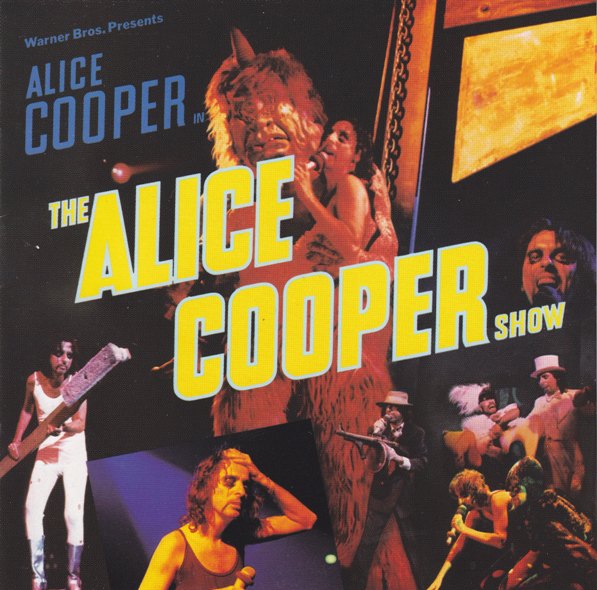
THE AC SHOW_0001ALICE COOPER – The Alice Cooper Show (1977 Warner Bros.)

The Alice Cooper Show is far from a perfect example of Alice in the mighty 1970’s — for a much better live album experience, pick up Billion Dollar Babies (the deluxe edition) which contained a live album recorded by the original Alice Cooper band.  Having said that, the band here are not slouches.  Dick Wagner and Steve Hunter were great guitar players who defined the late 70’s period of Alice. However, the albums were starting to slide — Go To Hell and Lace & Whiskey were more notable for ballads like “You And Me” and “I Never Cry” rather than idiosyncratic Cooper rockers or horror tunes.

The recording of this album is fine, but the record is far too brief. Aside from the fact that there are too many ballads (time-wise, over a quarter of this album are ballads!), a lot of the songs are truncated versions. “Sick Things” for example is less than a minute as it segues into “Is It My Body”. Likewise, there is an “I Love the Dead”/”Go to Hell”/”Wish You Were Here” medley where I wish I could have had more.  Then again, Alice has always done medleys of tunes, since he has so damn many.

I have nothing negative to say about the singing or performance.  The band were outstanding, featuring some of the best players Alice has shared the stage with.  They even featured Canadian bassist Prakash John who was previously in the original band Bush with Dominic Troiano (R.I.P).  It’s hard to say exactly why The Alice Cooper Show doesn’t completely click.  Certainly the medleys and song excerpts make it feel like an overly rushed affair, and even considering that, it’s missing too many great tunes.  “Elected”, “No More Mr. Nice Guy”, and “Welcome to My Nightmare” would have been perfect.*  Perhaps Warner should have shelled out for a full-on 2 LP set?  But Alice was a fading property in 1977, with an infamous stint in rehab to follow.

This record fails to deliver what Alice was really about.  The album cover gives it all away.  It looks rushed, with truncated images of Alice and his live show.  Serious fans will need it to complete the collection. Otherwise, stick to the Billion Dollar Babies deluxe package for a seriously awesome live 1970’s Alice experience.

3/5 stars

THE AC SHOW_0003

* Looks like a lot of those songs were dropped from the set in ’77.

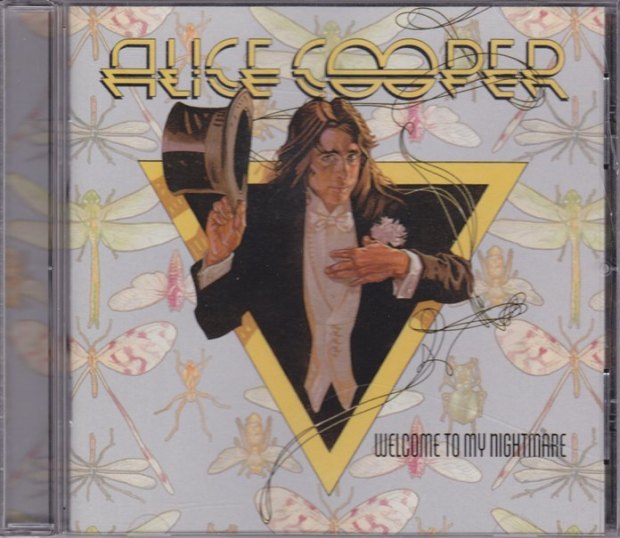
REVIEW: Alice Cooper – Welcome To My Nightmare (1975)

WELC0ME TO_0001ALICE COOPER – Welcome To My Nightmare (1975)

My sister used to have a tradition.  Because I’ve always been a collector, she would have an easy time buying gifts for me as a young rock fan.  When I was 17 years old,  I only had a few albums by certain artists.  She’d sneak into my room and go over my collection.  She saw that I only owned a few of Alice Cooper’s:  Trash, Prince of Darkness, Billion Dollar Babies, and Greatest Hits.  For Easter of 1990, she got me Alice’s Welcome to My Nightmare.  Not knowing what to except from the Coop, it was pretty much instant love.

I played that cassette a lot and grew to know its track sequence, which was completely different from CD.  Later on I purchased the original CD release, but what Welcome To My Nightmare needed (and the rest of the Cooper catalogue needs) is a proper remaster with bonus tracks.  Rhino took care of that in 2002.

Now the album itself sounds so much better than the original CD. This sounds more like vinyl, the way it should, rich and deep. The liner notes, unfortunately, are somewhat crappy. They basically just explain to the youth of today why Alice Cooper is cooler than the bands they like. There’s not much about the genesis of the album, which is disappointing. This is, after all, the very first solo album by Vincent Furnier aka Alice Cooper. By 1975, the Alice Cooper band (Furnier, Michael Bruce, Dennis Dunaway, Neil Smith, and the late Glen Buxton) was no more. Never again would they share a stage or a recording studio, at least the original five.  The four survivors did finally re-team for a couple songs on 2011’s sequel, Welcome 2 My Nightmare.

Welcome To My Nightmare was a revelation to me when I received it, and it is still mind-blowing today. I think that is due to the production talents of Bob Ezrin. The man who later produced Destroyer and The Wall really came into his own on this album. His production is, for lack of any better words, jaw dropping. You can totally tell it’s him, if you know his style well enough: that creepy horror movie piano, all the orchestrations, sound effects, the kids singing. Those are trademarks. My favourite moment for the kids was in the song “Department of Youth”. Cooper and the kids sing in the fade-out:

Together – “We’re the Department of Youth, ahh ahh, we got the power!”
Alice – Who got the power?”
Kids – “We do!”
Alice – “And who gave it to you?”
Kids – “Donny Osmond!”
Alice – “WHAT?”

Loosely, this is a concept album about the kind of nightmares Alice would have.  The result was a collection of remarkably timeless and classic songs:  “Only Women Bleed”, “Black Widow”, and “Escape” for example. “Escape” is the most straightforward rocker on the album, and a joy it is. The rest is often more complex, arrangement-wise and lyrically.

The title track is a fun rollercoaster ride with epic horns.  Same with “Devil’s Food” and “The Black Widow” which work together as a creepy classic featuring Vincent Price.  I would not want to live my life without these songs.  Alice is nothing if not diverse, and then “Some Folks” sounds showtune-y.  “Only Women Bleed” is the famous ballad, often misunderstood, but respected enough to be covered by artists such as Lita Ford, Tina Turner, and Etta James.

“Department Of Youth” and “Cold Ethel” are more rock and roll, and why not?  What better genre to sing about rebellion and necrophilia?  It’s worth pointing out the guitar charms of Steve Hunter and the late Dick Wagner.  These two incredible players, under the guidance of Ezrin, lent Welcome To My Nightmare the rock edge that it needed, lest it be swallowed up by the dramatic tendencies.

Of course, Welcome To My Nightmare features the first-ever appearance of the character of Steven. “Years Ago” has Alice singing in this incredibly creepy little-kid voice, as Steven. Then the song “Steven” kicks in, and it’s even creepier, but very epic in scale. Alice is at his most effective here.  Steven would pop up many times, such as on the next album Alice Cooper Goes To Hell, 1991’s Hey Stoopid, 1994’s Last Temptation, and the more recent Along Came A Spider.  Whether it’s supposed to be the same guy, or just a character who shares the same name, I do not know.

The bonus tracks are alternate versions of “Devil’s Food” (much extended), “Cold Ethyl”, and “The Awakening” with alternate lyrics and more Vincent Price! Not available on the Life and Crimes of Alice Cooper box set! These three tracks alone, to the Cooper collector, necessitate a re-buy.  The improved sound probably would have hooked them in anyway.

I could never say, “If you only buy one Alice Cooper album, buy this one.” The reason I can’t is that almost every album by the original Alice Cooper band was monumental, particularly School’s Out and Billion Dollar Babies. However, if you buy two or three Coops, please make one of them Welcome To My Nightmare, remastered!

5/5 stars

* There is also a DVD Audio of this album mixed in 5.1 by Bob Ezrin himself!