Living up to Lean Into It was never going to be an easy thing to do. By the time 1993 rolled around, it didn’t even matter. Mr. Big were going to be ignored no matter what they did.
There are no giant leaps and bounds on Bump Ahead, but there are enough decent rock thrills and ballads to call it a good album. A lot of the heavy artillery is expended right on the first track, “Colorado Bulldog”. An amped-up Van Halen shuffle is cranked to the max with the one and only Billy Sheehan pushing the whole thing on the bass. It’s an insane affair of accelerated playing and a stomping riff.
“The Price You Gotta Pay” keeps it heavy, anchored by a patented Sheehan groove. Eric Martin’s bluesy soul rasp gives the music accessibility, but there is plenty going on instrumentally too. Fans of sheer playing will find plenty of challenging licks within. Likewise, “The Whole World’s Gonna Know”. It sounds like a redo of an old Talas song called “Smart Lady”, with a new improved chorus. They lay down a granite groove on “Temperamental”. Plenty of solid rock is to be heard here.
That said, let’s not kid ourselves. Mr. Big made their money with ballads like “To Be With You”, and so they loaded the deck here with a few more. “Promise Her the Moon” is sentimental, understated and classy. The big one is Cat Stevens’ “Wild World”. Mr. Big were not likely to blow it on a song this magnificent. Their version is more lush than Stevens’, but is actually quite great. They miss the mark on “Nothing But Love”; too syrupy with its guitar synth orchestra. In a case of ballad overdose, there is a fourth: “Ain’t Seen Love Like That”. It’s one of those basic campfire ballads. Good song, but not essential.
Bump Ahead has a bit more filler than preferred. “What’s It Gonna Be” is fine funky rock, but the chorus is pedestrian. They go a different direction on the psychedelic “Mr. Gone”. Don’t forget this is the band that gave us “Green-Tinted Sixties Mind“, though “Mr. Gone” isn’t as perfect as that.
They close the album on the free cover “Mr. Big”, the song that gave them their name. The grind of “Mr. Big” ends the album on an upstanding note, but damn, they should have cut one of those ballads doncha think? The fact is, Mr. Big were simply not going to have a hit with a ballad in 1993. Wasn’t gonna happen. The Japanese edition had a bonus track called “Long Way Down”, which wasn’t that outstanding but perhaps should have been included in the main tracklist at the expense of a ballad.
With the recent passing of Pat Torpey, it’s definitely time for some fresh listens to classic Mr. Big. Their most underrated album might be their fourth, Hey Man, on which Torpey had three writing credits. 1991’s Lean Into It is generally considered the highwater mark, but Hey Man boasted songs just as strong and many just as memorable. If only MTV wasn’t avoiding Mr. Big and bands of their era like the bubonic plague.
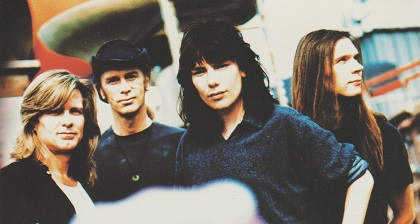
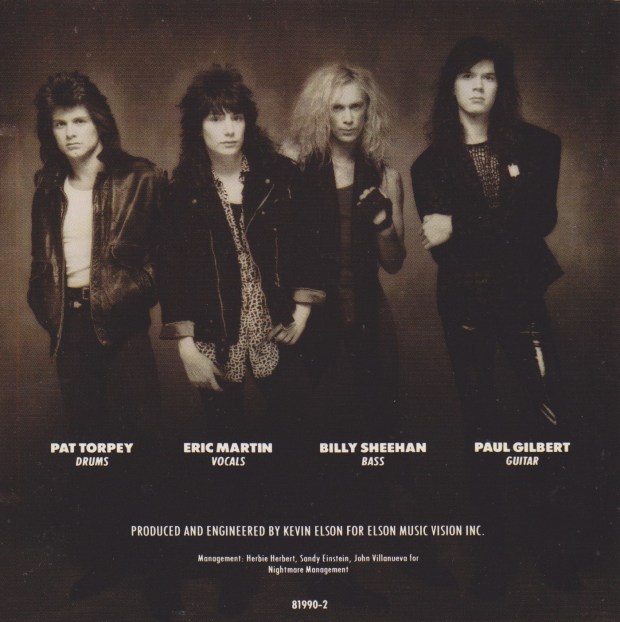
Mr. Big were always ferocious musicians, and formed as a “supergroup” of such. The point of Mr. Big was for these mega-instrumentalists to write some commercial rock, and that has been their modus operandi on every album. When Mr. Big formed, Torpey already boasted two albums: Ted Nugent’s If You Can’t Lick ‘Em…Lick ‘Em, and the supergroup Impelliteri. Billy Sheehan was already worshipped for his work with David Lee Roth and before that, Talas. Guitarist Paul Gilbert had established himself as a wunderkind with the Shrapnel band, Racer X. The key ingredient to Mr. Big is the blue-eyed soul of singer Eric Martin. He had a two album solo career before he made the unlikely jump to supergroup.
It’s the rocking side of Mr. Big that hits the ground running on first track “Trapped in Toyland”. Heavier and grooving more than usual, Mr. Big poured the gas on the fire right off the bat. It’s a huge impression. Gilbert wrote this smoker with his old Racer X singer Jeff Martin, and Russ Parish of Fight (and now Steel Panther). That would explain the heavy! What really nails the heavy sound is the combination of Billy Sheehan’s bass rumble in conjunction with Torpey’s smashing beat.
The most stunning of all the songs is the second, a bonafide Mr. Big classic called “Take Cover”. It simmers under an infrared pulse of drum beats and understated chords, and then bursts wide open on the choruses. It’s triumphant songwriting and a fine example of how musicianship and songcraft can work together. It is one of their career best.
“Jane Doe” goes funky a-la “The Crunge”. Eric Martin pushes it into soul on the choruses. A couple ballads follow, one acoustic and one darker. “Goin’ Where the Wind Blows” fills the slot of past Mr. Big acoustic ballads, something that had become compulsory after the success of “To Be With You”. The more interesting song is “The Chain” which has a sombre edge.
There is an undeniable twang to “Where Do I Fit In?”, so much that it could easily be mistaken for Tesla. It’s a solid side closer, though “sides” were becoming meaningless in 1996. Hey Man has never seen a vinyl release, and the dying cassette version was the only one with “sides”.
Eric Martin makes it soulful on “If That’s What it Takes”, which doesn’t deserve to be called a ballad so we won’t. It serves as a reminder of how these musicians can adapt to any situation. The Paul Gilbert who plucks these earthy chords is the same guy who shred all over Lean Into It. Pat Torpey turns into a human steamroller on “Out of the Underground”. It’s as heavy metal as Mr. Big have been. Then they go “Dancin’ Right Into the Flame” on a pretty cool ballad. It has a bit more finesse than the usual.
You can tell immediately that “Mama D.” was written by Paul Gilbert, because it has one of those squirrly Gilbert guitar licks that only he writes. To close the album, they return to a heavy soul-funk on “Fool Us Today”. Pat Torpey is rock solid and a key ingredient to a fun closer.
Track for track, Hey Man can go up against most other Mr. Big albums. They had a temporary breakup after this CD, a result of it being criminally ignored.
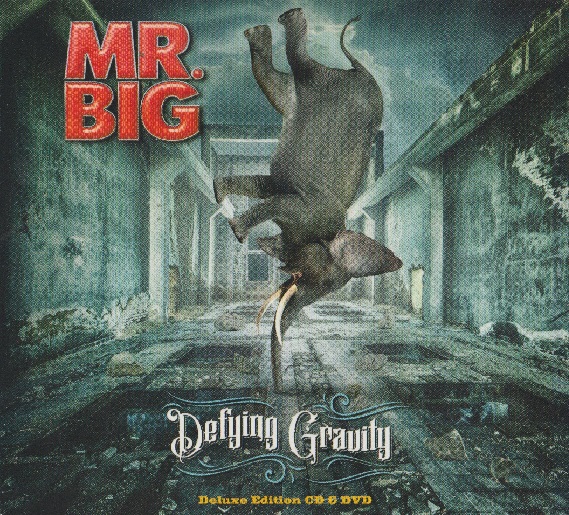
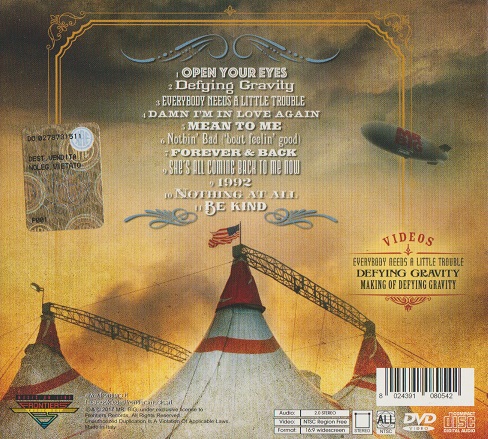
MR. BIG – Defying Gravity (2017 Frontiers CD/DVD edition)
I can still remember, very clearly, my thoughts about “To Be With You” when it finally became a hit in 1992.
“It’s a deserved hit,” I thought, “But that’s the end of Mr. Big having any chance of being seen as a serious band by the general public.”
Serious indeed. Eric Martin had a previous career as a blue-eyed soul singer. Paul Gilbert was in shred band Racer X with future Judas Priest drummer Scott Travis. Pat Torpey was a well-known drummer for appearing on several shred rock albums, like Impelliteri. And Billy Sheehan, of course, is generally listed as one of the top bassists of all time, with a period at the end. These guys were not slouches. But they did form a commercial rock band, and suffered the consequences that most commercial rock bands did in the 1990s. They faded to obscurity. Everywhere but Japan, where they continued to thrive as rock heroes.
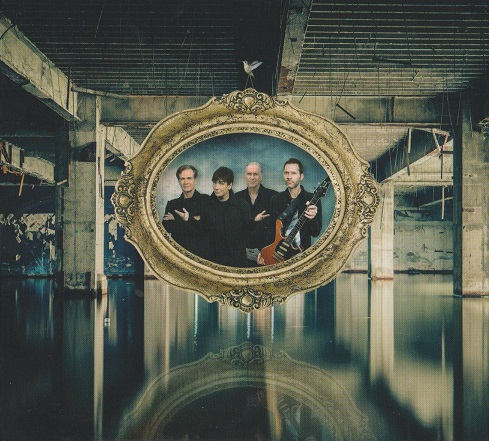
It’s gratifying that 25 years later in 2017, Mr. Big have an album out that’s as good as any of their first four. They even reunited with their original producer Kevin Elson. But it’s all not peaches and cream. Pat Torpey suffered a setback in 2014 when he was diagnosed with Parkinson’s disease.
Undaunted, Torpey still worked with his loyal bandmates on Defying Gravity. Just as before, he participated in shaping the songs, even though he was unable to play on them. Ace Frehley’s drummer Matt Starr* has taken over live and recording duties, while Torpey wrote and produced the drum parts. In the accompanying DVD, it’s very gratifying to see the band adapt seamlessly to this new reality. They even have fun with it in the music videos, as Starr and Torpey play together and switch instruments. Check out the lead single and title track for a great example of making it work.
Speaking of the lead single/video…holy shit, what a hook! Gilbert’s tricky and exotic timing and note choices are somehow bent and twisted into a pop song! It’s that schooled approach that makes certain Mr. Big songs completely unlike whatever is on the radio, but just as catchy.
All the songs have spark, and the solo work is untouchable. Bluesy and funky hard rock is the basis of “Open Your Eyes”. The second single (“Everybody Needs a Little Trouble”) stomps out a heavy blues rock beat. On to “Damn I’m In Love Again”, Mr. Big take a drive into the country. “Nothing Bad ‘Bout Feelin’ Good” is a hybrid, using the acoustics in a heavier way. There are plenty more hit-quality highlights: “Forever & Back”, and “She’s All Coming Back to Me Now”. For the fans: “Nothing At All”, the heavy rockin’ “1992” (a brilliant look back at the glory days), and “Be Kind” which is just a jaw dropping example of what these guys can do with just their voices, instruments and a song!
For a deeper understanding of this album, check out the deluxe edition with bonus DVD.** Not only will you get all the music videos, but also behind the scenes segments on set, and the EPK (“electronic press kit”). Finally there is a track by track analysis of every song featuring each member, and more behind the scenes footage. This is where you’ll find the most insight. Influences abound from the expected to the unexpected. From doo-wop to Christina Aguilera? Why not. The one with the beat cribbed from Aguilera is actually one of the heaviest and solo-dense tracks (“Mean to Me”).
Defying Gravity isn’t really a surprise, because Mr. Big have put out plenty of good albums over the recent years. Perhaps it’s a bit more inspired. It certainly has potential to be on a few “top ten of 2017” lists this year.
4/5 stars
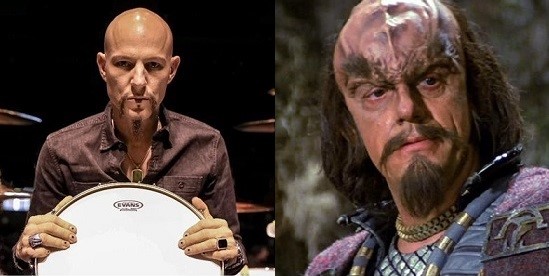
* Matt Starr may in fact be a Klingon. In the Original Series, Klingons looked much like humans, without their trademark head ridges. What gives away Starr’s possible Klingon status is his dead ringer of a Klingon moustache and beard.
Matt Starr is the one with the drum head.
** I know what you’re thinkin’. “LeBrain, why didn’t you buy the Japanese edition with a bonus track?” This time out the only bonus track is a radio edit of “Defying Gravity” which, cost considered, I can live without.
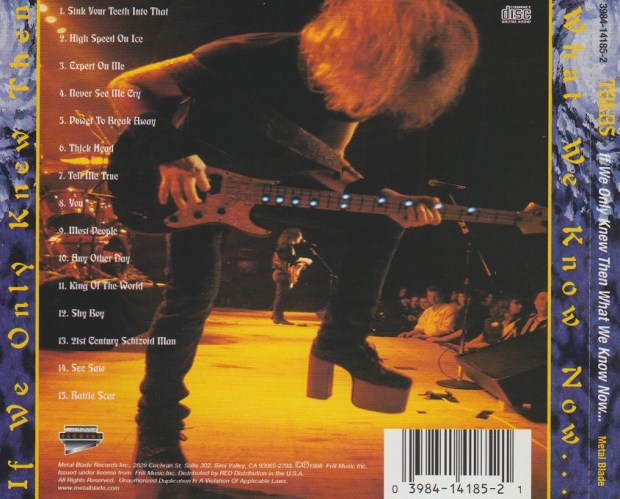
TALAS – If We Only Knew Then What We Know Now… (1998 Metal Blade)
The Talas story did not end with the breakup of the band. Of course not; bands both famous and obscure like to reunite for nostalgia shows. Talas did that in 1997 with the original power trio lineup: Billy Sheehan on bass, Paul Varga on drums, and Dave Constantino on electric guitar. With classic material (from the first two Talas albums) and a few unreleased songs, they memorialized their reunion with a brand new live CD. Billy even pulled his old platform boots out of the closet for this one.
As usual the set opens with “Sink Your Teeth Into That” and an enthusiastic home town crowd. Talas only sounded better with age. The original voices are there and just as strong as they were in 1982. It actually sounds like everyone has improved over the years. A speedy “High Speed on Ice” is in the second spot ensuring no loss of momentum. Material from the first self-titled Talas album is included too (unlike the last live album Live Speed on Ice). “Expert on Me” is very pop in construction, but clearly not as great as the songs from album #2, Sink Your Teeth Into That. Speaking of which, the slow rumbler “Never See Me Cry” is brilliantly adapted to the stage.
“Power to Break Away” is one of the previously unrecorded songs, and it kicks it just as hot as anything from Sink Your Teeth Into That. It’s taut with hooks and the prerequisite bass workouts. “Tell Me True” is the second unreleased song, a slow non-descript dirge ballad that takes a while to get going.
Imagine Billy Sheehan plowing his bass right through a funky Led Zeppelin riff. That’s “Thick Head”, an awesome track from Talas (1979). “You” has a cool vibe, almost like an unheard Aerosmith demo from the Done With Mirrors era. A few other tunes from the first Talas (“Most People”, “Any Other Day” and “See Saw”) are adequately entertaining. Back to Sink Your Teeth Into That, “King of the World” is still one of the best Talas tunes, overshadowed by only a few like “Shy Boy”. Here, “Shy Boy” is preceded by a Paul Varga drum solo. The sheer velocity of “Shy Boy” itself makes me wonder how Varga did it. It’s just pedal to the metal, blurring the lines and smoking the minds.
Nothing like a good cover to help draw a live album to a close. Talas did two: “21st Century Schizoid Man” and “Battle Scar”. The King Crimson cover is a daring one to attempt. They somehow manage to strip it down and pull it off with integrity. As for “Battle Scar”? Total surprise there! Max Webster were just across the border from Buffalo, and Billy Sheehan nearly joined Max at one point late in their career. Introduced by a Billy Sheehan bass solo, this Max/Rush cover is the set closer. As a final addition, “Battle Scar” surely makes this one hell of an album for the history books. (The Japanese version has a bonus track called “Doin’ It Right” — this shall be reviewed at a later date. Our copy is on order but will not arrive for several weeks.)
Since this is a more recent release on a well known label (Metal Blade), it turns out that If We Knew Then What We Know Now is an easy CD to find in the shops. Fortunately this is a good first Talas album to add to any collection.
Second in a two-part review of the 1989 compilation CD, Billy Sheehan – The Talas Years. Part one is here:Sink Your Teeth Into That. More Talas tomorrow!
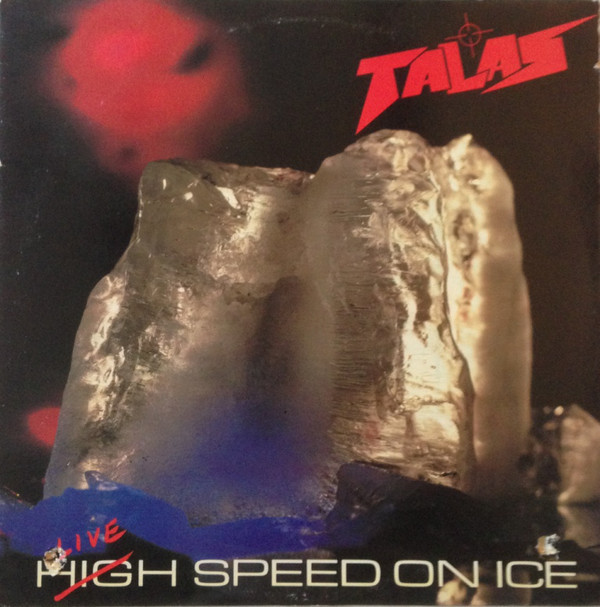
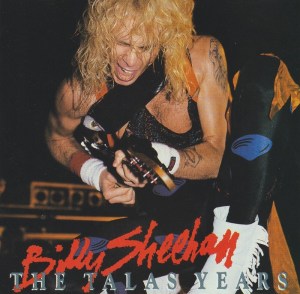
BILLY SHEEHAN – The Talas Years (Part Two of Two) (1989 Relativity) TALAS – Live Speed on Ice(1983 Relativity)
When we last met Talas, they were a power trio. On their 1984 live album, they were a quartet. Billy Sheehan was the only remaining member of the original lineup, with some hot talent behind him: Mark Miller on drums, Mitch Perry (MSG) on guitar, and the hugely talented Phil Naro singing. Naro has been around, including a stint with Peter Criss. (You can hear a number of his performances on Mitch Lafon’s Kiss tribute CD A World With Heroes.)
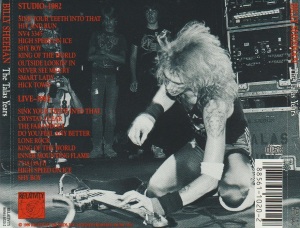
There is little question that Naro’s voice brings the songs to another level. “Sink Your Teeth Into That” benefits from his young rasp. Mitch Perry throws in a more articulated guitar solo for an extended section leaving Billy to hold down the riff. Second in line is a new song, “Crystal Clear” which has a biting Police guitar riff. The busy bass holds down the melodic center as Naro soars on top. Live Speed on Ice has great value, since much of its material was actually brand new and never released on anything else. “The Farandole” is another new one, an instrumental of jaw-dropping ability. Dueling bass and guitars dance and parry while the drums hit the heavy blows.
More new tunes: “Do You Feel Any Better”, “Lone Rock”, and “Inner Mounting Flame” continue the ass-kicking streak. Each has their own groove, but “Inner Mounting Flame” truly is live speed on ice. A few older tracks from the album are solid winners: “King of the World”, “High Speed on Ice” and of course “Shy Boy”, the one Talas song that people know today thanks to David Lee Roth. Billy’s signature bass solo is also performed live (and extended), but cleverly retitled. While “NVH 3345” meant “SHEEHAN” upside down, “7718 (3A17)” means “BILL (LIVE)”. With the freedom of the live setting, Bill took his time to showcase some unheard of chops and effects.
Any album that has Billy Sheehan on bass is bound to include a thousand notes of pure thrills, and any record with Phil Naro is going to sound awesome vocally. Therefore, Live Speed on Ice should be a welcome addition to the discerning rock fan’s personal library. The easiest way to get it is on CD combined with Sink Your Teeth Into That as the 1989 compilation Billy Sheehan – The Talas Years. Either way, you win.
A two-part review of the 1989 compilation CD, Billy Sheehan – The Talas Years.
BILLY SHEEHAN – The Talas Years (Part One of Two) (1989 Relativity) TALAS – Sink Your Teeth Into That(1982 Relativity)
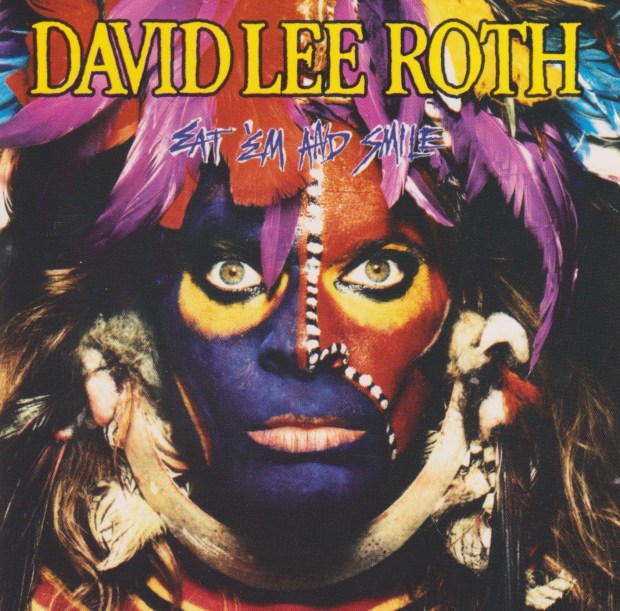
Fans of David Lee Roth are probably already aware of Talas via their incredible bassist Billy Sheehan, an innovative genius of the four-string rumble. His first recordings were with Talas (1979-1983), a Buffalo power trio. With Roth, he re-recorded the Talas track “Shy Boy” on Eat ‘Em And Smile. The Talas original can be found on their second LP Sink Your Teeth Into That, or the compilation The Talas Years.
The focus is immediately and obvious on the bass. Billy plays it simultaneously as a lead instrument, and the rhythmic foundation. “Sink Your Teeth Into That”, the title track boasts not only insane playing, but sounds that had never been heard before from a bass guitar. And the song’s pretty good too. It’s raw 80s hard rock, no more no less, except for that bass. “Hit and Run” is just as strong. Talas were not just a bass showcase, but a band that could actually write good songs. These are unpolished and rough songs, with the band (Dave Constantino on guitar and Paul Varga on drums) alternating lead vocals.
The centerpiece of the album is the bass solo “NVH 3345”. Write that down and turn it upside down: it spells “SHEEHAN”. It has been said before that as Eddie Van Halen’s “Eruption” was a game changer on guitar, “NVH 3345” is the “Eruption” of the bass guitar. It is hard to imagine more sheer technique stuffed into 2:21. For anyone who is a serious collector of hard rock heroes, “NVH 3345” must find a way into your collection.
“High Speed On Ice” returns to a hard rocking momentum, like “Highway Star” via Buffalo New York. Then “Shy Boy” which needed David Lee Roth and Steve Vai to finally perfect it. Think of this version as a prototype. It is hard to believe that David Lee Roth did not write the line “Gotta keep things movin’ ’til my personality starts it groovin'”, but Roth made it sound like he meant it.
“King of the World” and “Outside Lookin’ In” occupy the mid-tempo range, and that would be Billy singing those high screams. Both good songs with the memorable hooks to go with the bass hijinks. Shadows fall on “Never See Me Cry”, a darker side of Talas but still with the hooks intact. Second to last song “Smart Lady” is the only loser. There isn’t room for songs that just don’t cut it. “Hick Town” ends the album on a better note, with bass pyrotechnics and thrills to go.
Sink your teeth into Talas, and come back tomorrow for a look at Live Speed on Ice.
Mr. Big started as a “supergroup” of sorts, with bassist Billy Sheehan being the most well known due to his stint with David Lee Roth (and Talas before that). Because of his bass prowess, we know his band Mr. Big would be heavy on the shred. What set them apart was the blue eyed soul of singer Eric Martin. Their debut record possessed the speediest chops imaginable, but used sparingly. It’s a song-oriented album, with “Addicted to that Rush” leading off with heavy space-age playing. Unfortunately nothing else is as memorable, except the Humble Pie cover “30 Days in the Hole”.
Tracks like “Had Enough”, “How Can You Do What You Do”, “Rock & Roll Over” and “Merciless” are all competent rock tunes, and due to Billy’s bass, the bottom end is unbelievable. Unfortunately it took Mr. Big one more album to really come up with the songwriting goods. Their debut is fine enough indeed, but folks who dig the playing will be sticking around. Those looking for soul and memorable hooks will have to dig deep. There is good stuff here, but little that will make repeated spins in the CD player months and years down the road. Good, but not quite good enough.
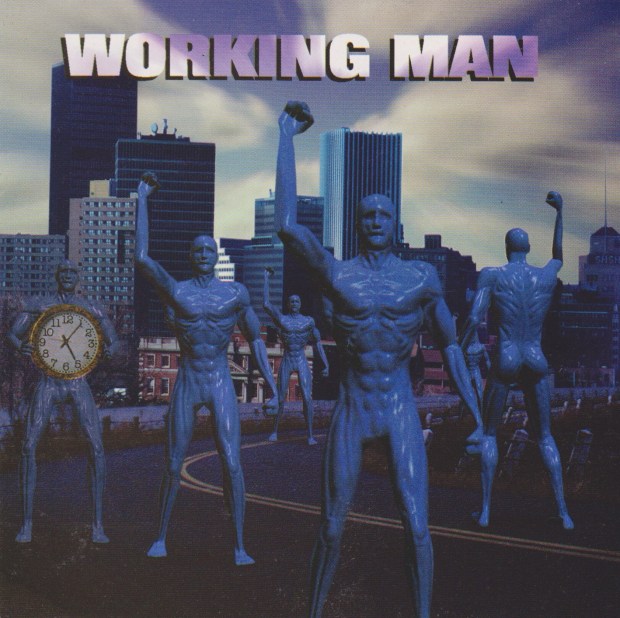
This CD was released in 1996, and almost immediately the music press started reporting that Rush were trying to have it taken off the shelves. One of our former owners at the Record Store, the infamous Tom, said: “I can see why they were trying to do that. Because it’s too fucking good.”
It actually is. There are few tribute albums worth listening to all the way through. How many can you name: Encomium, the Zeppelin tribute? The Sabbath tributes Nativity in Black? Do you listen to those front to back? That’s the best and only way to enjoy Working Man. So numerous are the progressive rock and hard rock names here that we may have trouble keeping track of them all.
Sebastian Bach hails from the Great White North, so it is only appropriate for him to open this CD with the title track. He also passionately stuns on “Jacob’s Ladder” a bit later on, utilising the power and range he is known for. What names on these songs! Mike Portnoy and Billy Sheehan play drums and bass respectively; two guys often cited as the best in the world on their instruments! If that wasn’t enough, ex-Ozzy guitarist Jake E. Lee shreds the hell out of “Working Man” while John Petrucci from Dream Theater goes for the throat on “Jacob’s”. Take a minute to absorb all that.
Seamlessly, “Working Man” develops into “By-Tor and the Snow Dog” with James LaBrie of Dream Theater in peak voice. Sheehan and Portnoy handle the rhythm for most of the album, so you can be assured that the chops of Mr. Lee and Mr. Peart are served well here by the next generation of players. Dream Theater fans will lose their shit completely. But there is so much more here than just progressive rockers letting it fly. A youthful and impressive Jack Russell from Great White takes on the galloping “Analog Kid” from Signals and wins. Have no fear or doubts: this may seem strange, but Russell’s version of “Analog Kid” may well be one of the best Rush covers you’ll ever hear. (Especially when Billy Sheehan and guitarist Michael Romeo do a synched-up dual bass/guitar solo!)
Other highlights:
The late Mike Baker of Shadow Gallery has no problems with “The Trees”, an excellent version.
Steve Morse (Deep Purple, Dixie Dregs, Flying Colors) takes the main guitar part for “La Villa Strangiato”, causing spontaneous head explosions.
Blue-eyed soul singer Eric Martin (Mr. Big) does a fine job of the light “Mission”, though it sounds very different from the shred-rock elsewhere.
A bang-on “Closer to the Heart” performed by Fates Warning is a must-have for fans.
James LaBrie and his old bandmate in Winter Rose, Rich Chycki, reunite on the classic “Red Barchetta”. A little added Can-Con for rock fans.
And best of all, Devin Townsend screaming his balls off, all over “Natural Science”. Without a doubt, Townsend has the most unorthodox interpretation, but it’s Devin Townsend, so you must expect the unexpected. This guy is an underrated national treasure, and along with James Murphy (Death, Testament) on guitar, Stu Hamm on bass, and Deen Castronovo on drums, all walls are shattered. “Natural Science” is undoubtedly the most different track here, and consequently it’s the most exciting.
The only mis-fire:
“Anthem”, with Mark Slaughter and George Lynch. Slaughter’s voice is too shrill. (I cannot handle when he shrieks “Come on! Yeah!” at the start.) George’s Eastern-flavoured shredding is also overdone and misplaced.
That means out of 13 tracks, 12 of them are keepers.
For an added layer of authenticity, the CD was mixed by Terry Brown himself, in Toronto. Prices fluctuate wildly, but fans of Rush, Dream Theater, Sebastian Bach or Devin Townsend would be wise to pick this up if found in their travels.
1986 was the year it all went down. If you were a Van Halen fan, it was time to choose.
Of course, nobody really had to choose between Van Hagar and David Lee Roth. It’s not like every fan had only $10 to spend on albums that year. Fans did choose anyway, and even today almost 30 years later, we still argue about who’s best: Diamond Dave or the Red Rocker?
No matter who you sided with, there is no question that David Lee Roth stormed into 1986 with a killer new band and album.
Steve Vai! That’s enough right there to make for an incendiary band — just ask David Coverdale. Before Little Stevie Vai was a household name, he had earned the respect of Frank Zappa who hired him on after Joe’s Garage. He made his Zappa debut on Tinseltown Rebellion, before being snagged by Graham Bonnet in 1985 for Alcatrazz’s Disturbing the Peace. In that band, he had the unenviable task of replacing a Swedish guitar player you may have heard of called Yngwie J. Malmsteen. Needless to say, Steve Vai was already experienced in filling big shoes by the time David Lee Roth made contact.
Billy Sheehan! A lot of people think he’s the world’s greatest bass player, period. Eight finger lead bass, baby! Three albums with Talas didn’t do much in terms of sales, but the material was strong enough that one song was re-recorded for the Roth album.
Gregg Bissonette! Once you learn how to properly spell his name, you will recognize Bissonette on loads of album credits. Joe Satriani come to mind? How about Spinal Tap? For your information, Gregg Bissonette is still alive, and is still the current Spinal Tap drummer.
Combine those three virtuosos with the greatest frontman of all time, and you have best new band of 1986.
Van Halen’s 5150 came out in March, going to #1. That’s a hard act to follow. Eat ‘Em and Smile, however, ending up standing the test of time. I would argue that even though it’s not Van Halen, it’s still the best Van Halen album since 1984….
As if to say “Eddie who?”, the album opens with Steve Vai’s trademark talking guitar. I’m talkin’ about-a-“Yankee Rose”! Here’s the shot heard ’round the world indeed. Lyrically, musically, and instrumentally, this song truly is the spiritual successor to classic Van Halen. David Lee was still in prime voice, and does he ever pour it on! Sassy as ever, Roth sounds exactly how he should: the showman in the rock and roll circus. And let’s not forget Billy and Gregg. Sheehan’s slinky bass on the outro is space age groove.
“Shyboy” is an atomic bomb. Billy brought in this song from Talas, but there is no question that Dave’s version is vastly superior. I have no idea how Vai makes his guitar create these sounds. When he goes into syncopation with Billy on the fastest solo of all time, your head may be blown clean off. Please, do not attempt to listen to “Shyboy” in the car, without testing it at home first. As Steve’s guitar flickers from left to right, Billy’s bass is the fastest, baddest groove on record. “Shyboy” is of such high quality that I do not think any self-respecting rock fan can live without it. Virtually every trick that Steve had at the time was in this one song.
One thing that was special about Van-Halen-with-Dave was their fearlessness in doing odd covers, such as “Big Bad Bill” or “Oh Pretty Woman”. Dave took that with him, and included oldie swing covers like “I’m Easy”. Horn laden and with Steve’s expert licks, it should be no surprise that they nail this one. It’s much in the spirit of Dave’s solo EP, Crazy From the Heat, only better.
Perhaps the most outstanding song on Eat ‘Em and Smile would be “Ladies Nite in Buffalo?” Dave has always said he loves disco and dance music. This is the most perfect melding of that world with rock. Vai is rarely so funky, and there is no question that Dave has the vibe right. Smooth and steamy, “Ladies Nite in Buffalo?” is a tune perfectly in synch with activities of the nocturnal persuasion. Who else but Dave would be perfect to deliver this message?
“Goin’ Crazy” was a great track to make into one of Dave’s typically high flying music videos. It’s party rock time, with a tropical vibe. “Goin’ Grazy” worked particularly well when Dave re-released it in Spanish, as “¡Loco del calor!”. I used to consider this tune a bit of a throwaway, but it has certainly endeared itself over the years. Another meticulously perfect Vai solo doesn’t hurt, and Billy’s bass popping helps end side one on an up note.
Now there is a story here that needs to be told. Billy Sheehan was in Canadian progressive rock band Max Webster for “about three weeks” according to lead singer Kim Mitchell. Upon joining Dave’s band, he introduced them to Kim Mitchell’s solo track “Kids In Action”, which they decided to cover. Bill called Kim up to ask him for the lyrics, because they couldn’t quite make them all out. Kim supplied the words, and Dave recorded the song. However, it was dropped at the 11th hour, for another cover — “Tobacco Road”. David Lee Roth’s version of “Kids In Action” has yet to be released or even bootlegged. Not that I am complaining about “Tobacco Road”, another old cover! Yet again, the reliably awesome Steve Vai just sells it. There is no question that the whole song just smokes, but getting to hear Stevie playing this old blues? Pretty damn cool.
That’s nothing. You thought “Shyboy” was fast? Check out “Elephant Gun”! Billy’s fingers didn’t fall off, but mine would have. “I’ll protect you baby with my Elephant Gun”, claims Dave. Nudge, wink! Steve Vai’s been known to write blazing fast songs, and “Elephant Gun” is so fast it’s almost showing off. Wisely though, things get slow and nocturnal once again on “Big Trouble”. That’s a title Dave recycled from an old unused Van Halen song. (That song became “Big River” on A Different Kind of Truth.) Steve’s guitar melodies and solo on this are particularly celestial. Roth uses his speaking voice, spinning a tale as only he can. “Bump and Grind” is a perfectly acceptable album track, a sleaze rocker as only Dave can do. If I am interpreting the lyrics correctly, Dave is a dance instructor in this one. “Shake it slowly, and do that Bump and Grind”.
Much like “Happy Trails” ended Diver Down on a jokey note, Dave ends his first solo album with a cover: “That’s Life”, the song that Sinatra made famous. Coming from the guy who did “Just a Gigolo”, we know he can do that kind of thing very well. The first time I heard the album years ago, I shrugged and said, “Another one?” Now, older and fatter, I sez it’s all good! Zop-bop-doop-zooby-dooby-doo indeed. Funny thing though. When I think of Diver Down, I think of a fun but fairly shallow album of half covers. When I think of Eat ‘Em and Smile, I don’t question the integrity of it. I don’t know why I seem to hold that double standard.
In this writer’s humble opinion, Eat ‘Em and Smile was David Lee Roth’s finest moment as a solo artist. It was not nearly as well known as 5150, OU812, or any of Van Hagar’s albums, and that is almost criminal. The talent in this band, pound for pound, outweighed anybody else going at the time, including Van Halen. Shame they couldn’t make it last.
RECORD STORE TALES Mk II: Getting More Tale #357: “Dream Bands” (1990 version)
I’m sure you and your friends have made these lists many times: put together a lineup of your dream band! Any living players can qualify.
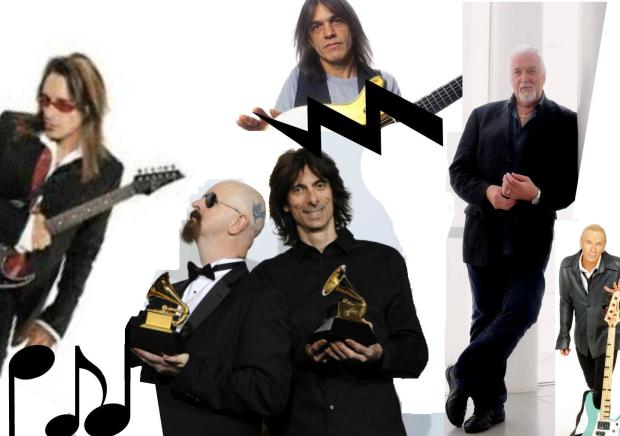
I had deep, long conversations about this with my friends in highschool. One of them simply listed the four members of Led Zeppelin (Jason subbing in for John) as his dream band. You could certainly make an argument for that. My highschool dream band (1990-91 year) was instead made up of the players that I thought were the absolute best in their fields. Can you guess who I was listening to that year? Lineup:
Lead vocals – Rob Halford
Lead guitar – Steve Vai
Rhythm guitar – Malcolm Young
Bass – Billy Sheehan
Drums – Scott Travis
Keyboards – Jon Lord
As a joke, I also added a seventh bonus member, Walter Ostanek on accordion! That was for my buddy Andy, who also played accordion. Upon submitting my official list for consideration, I removed Ostanek. But I figured that Walter could show up for a guest appearance on a track or two, because everyone loves accordion.
An interesting band lineup to be sure, but as my highschool friends pointed out, they would probably implode after only one rehearsal. Steve Vai and Malcolm Young in the same band? I can’t see how that would work. Sorry, LeBrain circa 1990. Fail! I’m glad I kept this stuff though, because it’s so funny to look back on it now. 25 freakin’ years ago!
Who would you place in your “dream band” lineup today? One stipulation: the artist must be alive and able to play. For example I couldn’t put Malcolm on my list today, nor could I put Phil Collins on drums, since he can no longer play them due to injury.

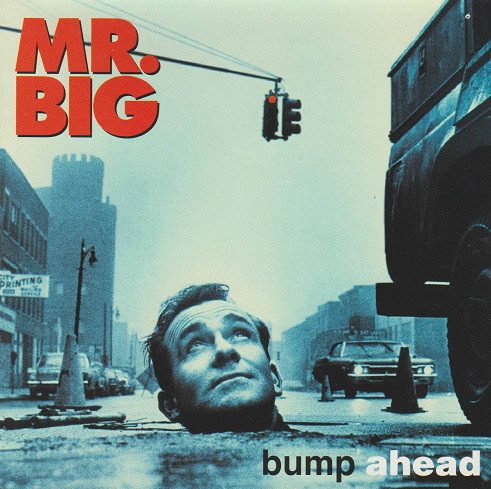 MR. BIG – Bump Ahead (1993 Atlantic)



















 mikeladano.com