classic rock

REVIEW: Glass Tiger – Diamond Sun (1988)

GLASS TIGER – Diamond Sun (1988 Capitol Records)

Produced by mainstay Jim Vallance and recorded at Le Studio with Paul Northfield, Glass Tiger’s Diamond Sun is generally considered the best of their studio albums. What you may not know is that the Canadian pop band’s second album also really rocks.  Diamond Sun was their last album featuring the co-writing skills of drummer Michael Hanson, and his absence would be felt in the future.  For 1988, Glass Tiger were running on a high, and hit after hit.

The band had the courage to open the album with a soft one, the title track.  This was the second of five singles, and a powerful ballad it is.  The keyboard chimes work in tandem with drums, samples and singer Alan Frew’s impassioned vocals.  The lyrics circle around the still-topical subject of colonialism.  “When they came to this land, we gave our friendship, gave them our hands.”  The music has the appropriate feel, but listen carefully and enjoy the lyrical bass work of Wayne Parker, who has often gone unnoticed in this band.  Check that false ending!

“Far Away From Here”, the second song, is single worthy in itself but remains a nice deeper cut.  This time the guitar work of Al Connelly rises at the start, setting up an awesome mid-tempo rocker.  The chorus is among one of Glass Tiger’s best, accented by catchy acoustic guitar bits hanging lower in the mix.  Connelly’s riff is very much akin to 80s Rush, but encased within a simpler, more direct kind of song.  Alan Frew’s voice has a smooth, deep kind of power.

Personal favourite “I’m Still Searching” is a fast electro-acoustic rocker.  This song lit our VCR on fire back in 1988 when it was released as the first single/video.  Nobody expected such an upbeat rocker from the Newmarket quintet!  It’s an immediate singalong with a campfire quality, despite the electric shimmer of guitar, and organ by Sam Reid.  Once again Al Connelly has come up with some cool, catchy guitar parts.

“A Lifetime of Moments” is a lesser known ballad, well-rounded with keyboards and guitars as the main features.  The lyrics are about a lost love and rebounding, and Frew sells it.  This song is unique because of the sax solo, something simply not utilised enough in ballads or rockers!

The best of the deep cuts is the awesome side one closer, “It’s Love U Feel”, which is right out of the 80s Rush playbook.  From the echoing guitar jingle to the bouncing basswork, this song easily could have been a hit for Rush on Power Windows.  A duet with Lisa Dalbello on the chorus, this song kicks hard.  How this isn’t one of the Tiger’s biggest hits is unknown.  Perhaps it was just too advanced for an 80s pop video audience.  This sounds more like the kind of thing that would have been big on rock radio.  It is one of Glass Tiger’s greatest songs, featuring some stinging, smoking guitar work.  It could be Keith Scott from Bryan Adams’ band, as he is credited with additional guitar on the album, along with Michael Hanson.

Side two opens with two more singles.  “My Song” was a big hit with a Celtic feel, performed with the legendary Chieftains themselves.  They were recorded separately in Ireland, with Sam Neil producing their session.  Tin whistle dominates, with bodhrán, fiddles and other instruments lower in the mix.  For anyone with a taste for Celtic pop rock (think Marillion “80 Days”), this will hit the spot.  A huge hit in Canada because of its unforgettable, timeless chorus.  They tried to repeat this trick with Rod Stewart on the next album, with less success.

The most powerful song on the album is, paradoxically, the softest.  The piano ballad “(Watching) Worlds Crumble” absolutely explodes on the chorus, while the verses feature Alan Frew singing in a soft falsetto.  The music video, recorded live on stage, was the first not to feature Michael Hanson.  He left the band mid-tour to be replaced by Randall Coryell from Tom Cochrane’s band.  It was one of those sad instances of the new guy never becoming “official”.  Glass Tiger remained, on paper at least, a four-piece after the departure of Hanson.  “(Watching) Worlds Crumble” is one of the few without his writing.  It was written by Frew, Reid and Vallance, and features another really nicely written Connelly guitar solo.  The drums are absolutely epic too.

Back to a rocker, “Send Your Love” has an upbeat stuttery guitar part and a slamming chorus.  Another winning deep cut.  The warm ballad “Suffer in Silence” and another sax solo take us out to the closer, “This Island Earth”.   Diamond Sun ends in epic fashion, with this slow burning number and a social message.  Again, Rush comes to mind, with a slight progressive sound and keyboards.  In the end it’s Alan Frew who sells it.

Diamond Sun sold 200,000 copies in Canada, an astronomical amount for this country.  It is an album with broad appeal, spanning a variety of styles but all somehow sounding like Glass Tiger.  It’s a cohesive album with no weak tracks, and only highlights to be found.

5/5 stars

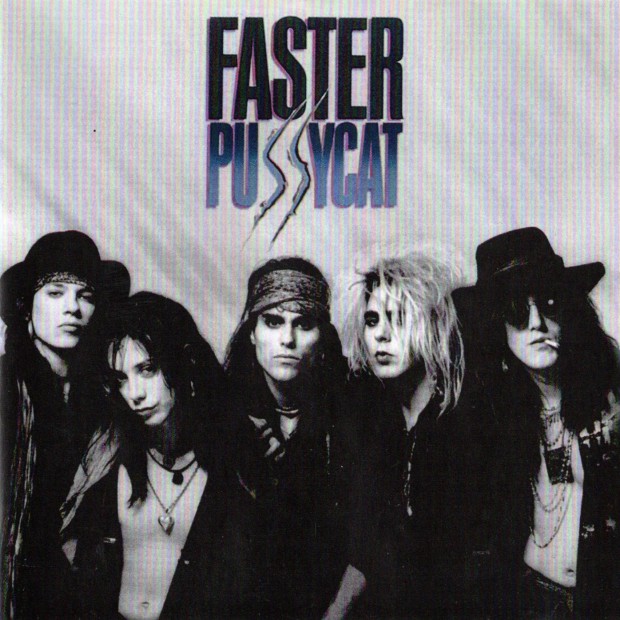
REVIEW: Faster Pussycat – Faster Pussycat (1987)

FASTER PUSSYCAT – Faster Pussycat (1987 Warner)

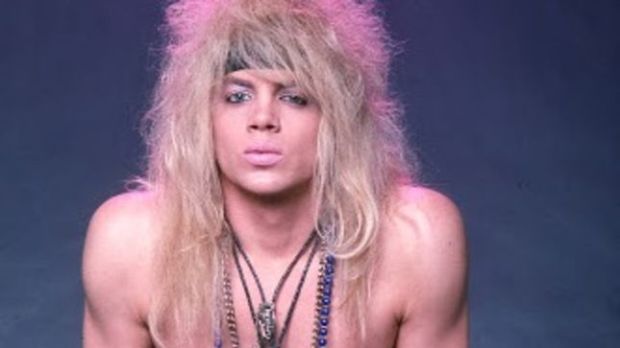
Here is a band that I ignored for decades.  When the music video for “Don’t Change That Song” came on ye olde Pepsi Power Hour on MuchMusic, it was just a step beyond how far I wanted to go.  I had made allowances and let Poison into my life, but Faster Pussycat seemed less goofy and more sleazy.  The gender-bending was there with Taime Downe’s makeup and nail polish, and the truth is I could not tell if Brent Muscat was a man or a woman.  I figured if the Bangles had a member named Michael that was a girl, then who’s to say this Brent person couldn’t also be a girl?  Greg Steele looked cool with the 5 o’clock shadow and headband wrapped with care, but very early on, I decided that Faster Pussycat were not for me.  It was a confusing time to be a young teenager discovering rock music.

Produced by Ric Browde, who also recorded Poison’s debut, Faster Pussycat’s debut is a rock-em sock-em ride through the gutters of California, with smiles all around.  It’s as if Aerosmith got a one-way ticket to Hollywood, bought some punk records, and went all-in on the debauchery.

Indeed, Aerosmith are the easiest comparison, especially vocally.  Taime Downe sounds like he’s fronting an outtake from Done With Mirrors on “Don’t Change That Song”, nailing every squeal and shriek just as Steven Tyler might.  Second track “Bathroom Wall” takes this further.  Faster Pussycat lack the manual dexterity of Perry and Whitford, and so we get a punked up version of the ‘Smith without the schooled knowledge of boogie and blues or clever wordplay.  This is Aerosmith: The Next Generation, after the punk wave had its impact and imparted a sense of who-gives-a-fuck.  And every note is tastier for it, like hard rock candy sharp enough to cut your teeth.

Third track in, and we hit our first serious deep cut:  “No Room For Emotion”.   It’s a slower groove that drawls seductively across the chords of classic rock and roll.  The Stones are the prime influence here, with just a hint of early Bon Scott-era AC/DC.

We all know Taime Downe ran the Cathouse club with Riki Rachtman, and so it seems natural that “Cathouse” is one of the better tracks.  High speed piano hammers away behind a breakneck rock and roll riff.  Taime takes the Tyler-esque screaming to its natural extremes on this track, which reads like an advertisement for the club.

Perhaps the first misstep is “Babylon”, seemingly a re-write of “You Gotta Fight For Your Right to Party” by the Beastie Boys.  It’s definitely in the same pocket.  There’s an annoying “pussy-pussycat” sample and an undeniably similarity of vibe.  Though it’s a bit of a classic for the band, it sounds a bit like they’re trying too hard.

In a classic case of packing all the hits on side one, side two must stand on the strength of deeper cuts.  “Smash Alley” is a tough little number, with cliche lyrics about gutters and back streets.  As for deep cuts, “Shooting You Down” might be the biggest one to be found.  An indelible chorus is matched with a simple riff and plenty of sneer from Taime Down.  It’s a brilliantly catchy deep cut and probably should have been considered for a single.

“City Has No Heart” continues with a series of somewhat soundalike music, though this one has soulful backing vocals atop a punky tune.  A good tune with a solid chorus, though at this point the Faster Pussycat sound starts to wear on the ears a bit.  You start to crave something a little different on side two, just as side one had “No Room For Emotion”.  There is no such change of pace on side two, and so we close out with “Ship Rolls In” and “Bottle In Front of Me” which rock us to the end.  “Ship Rolls In” has a Sex Pistols vibe on the chorus.  Then they go back to the Aero-vibe on closer “Bottle In Front Of Me”.  It leans into the funky sound of Aerosmith, circa Rock In A Hard Place, quite successfully.  It’s definitely a memorable closer, going full-on by the guitar solo.  Taime Downe shreds every last vocal chord, pushing it to the limit.  You’ll either love it or hate it, but if you love that screamin’ Steven Tyler on songs such as “Draw the Line”, then you’ll appreciate the lengths to which Downe pushes it.

The production of the album is of its time.  The snare drum sounds plastic and there’s a flat, two-dimensional vibe.  You can’t expect too much from an album released in 1987, folks.  People were listening to music on different devices and had different preferences back then.  Still, there are worse sounding records from this era and Faster Pussycat is worth of repeat listens.  Just take an Advil if a headache sets in by the end of side two.

3.75/5 stars


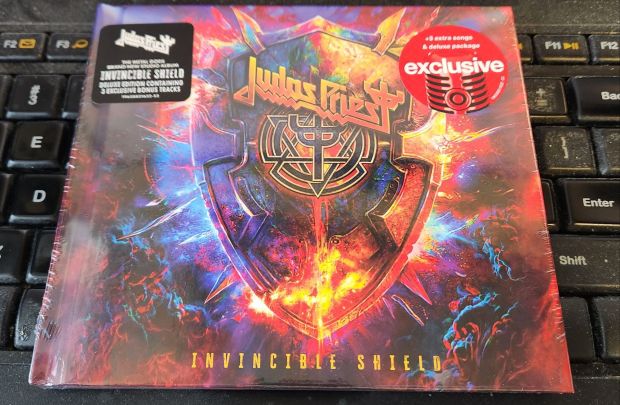
REVIEW: Judas Priest – Invincible Shield (2024 Deluxe with bonus tracks)

JUDAS PRIEST – Invincible Shield (2024 Epic Deluxe with bonus tracks)

I don’t usually write “first impressions” reviews, because I like the albums to have time to sink in, and to consider my opinions.

I’ll break some rules this time.

Invincible Shield tops Firepower and could be the best Priest album since Defenders.  Or maybe even before that…

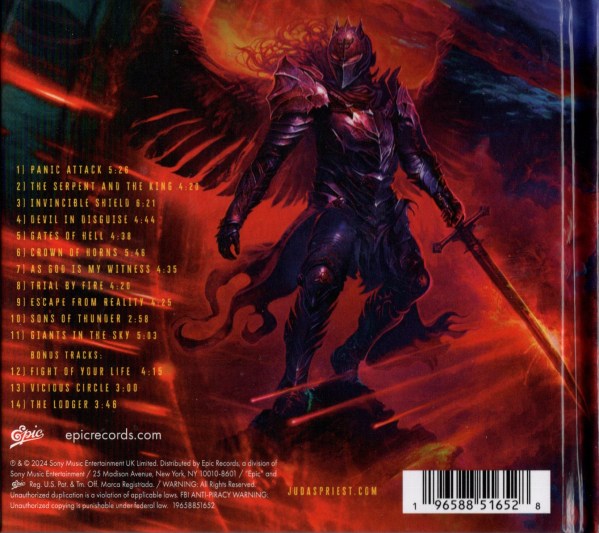
The highlights are many and the riffs are strong.  Rob’s voice has not changed in 20 years and he is still of the same power and range as Angel as Retribution.  As one goes deeper in, the songs continue to gain strength.  “Invincible Shield” didn’t really jump out at first, but does now with a very Maiden-y outro.  “Devil In Disguise” is another early highlight.  “Crown of Horns”, “Escape From Reality”, “As God is My Witness” are instantly likeable, with hooks aplenty and the odd adventurous lick or detour.  Richie Faulkner has been a godsend to this band, injecting them with new songwriting life, metallic riffs and speedy leads.  Meanwhile, you can hear Glenn Tipton too, illness be damned!  He trades off with Faulkner just as is Priest’s trademark.  The classical guitar solo on “Giants In the Sky” is something completely new for this band and a surprising delight.

Invincible Shield has most of the longer material stacked to the top of the album, with the short songs going on side two.  Even with 14 songs, the album is only just over an hour with bonus tracks, not overstaying its welcome, and inviting to repeated listens.  There’s no point in getting a version of this album without the bonus tracks.  You’d be missing out.  You can get them at Target, Sunrise, or Amazon in Canada.  They are “Fight Of Your Life”, “Vicious Circle” and “The Lodger”.  “Fight Of Your Life” might be the most necessary song of the album, as it really hearkens back to the early 70s albums like Sin After Sin.  It could be the deep cut of the record.

Lyrics have always been a shaky point in Priest history, and there are some cringey ones on Invincible Shield, but I doubt they will impede anyone’s enjoyment of this album.  It has summer written all over it, as we await the coming of the sun and the highway months.

Production by Andy Sneap sounds great to these ears, with Ian Hill’s bass rich and deep, and Scott Travis’ drums livelier than ever.  There are flashes back to the 70s and 80s, and some of Priest’s highest peaks of the past.

Martin Popoff may be right, but I’m not going as far as he did.  Still…

Album of the year.

5/5 stars

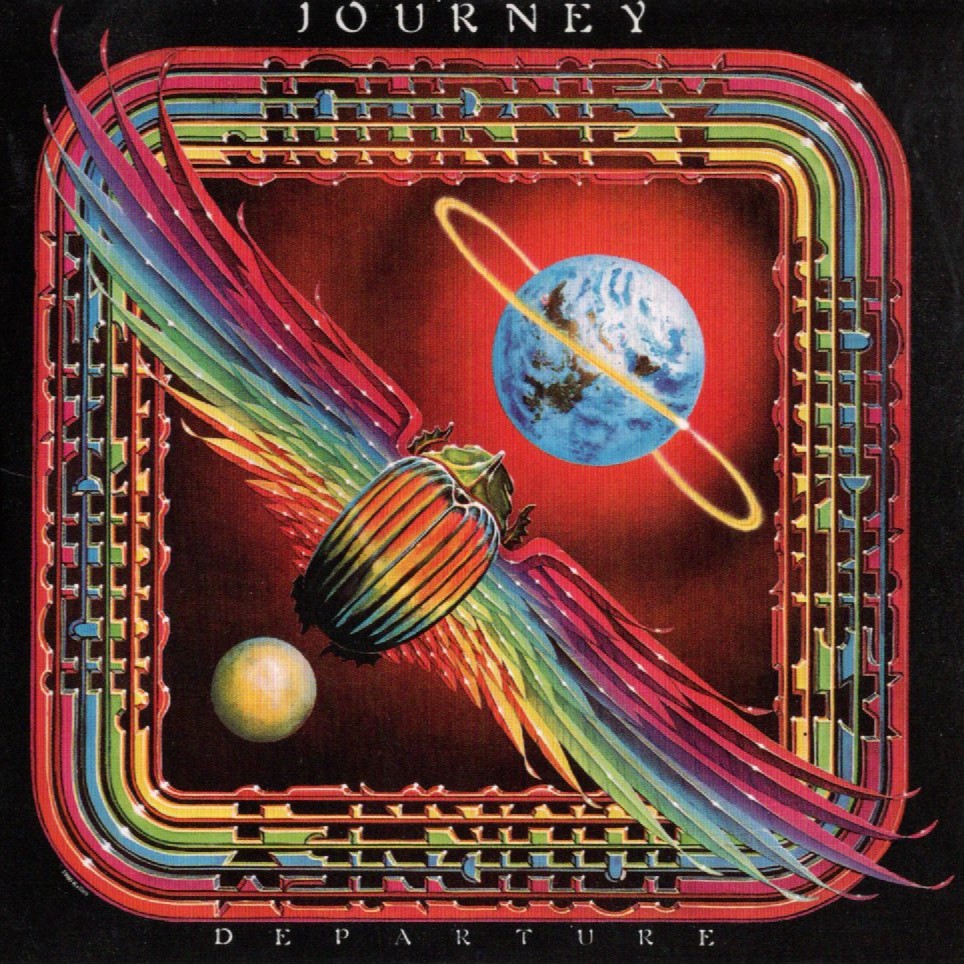
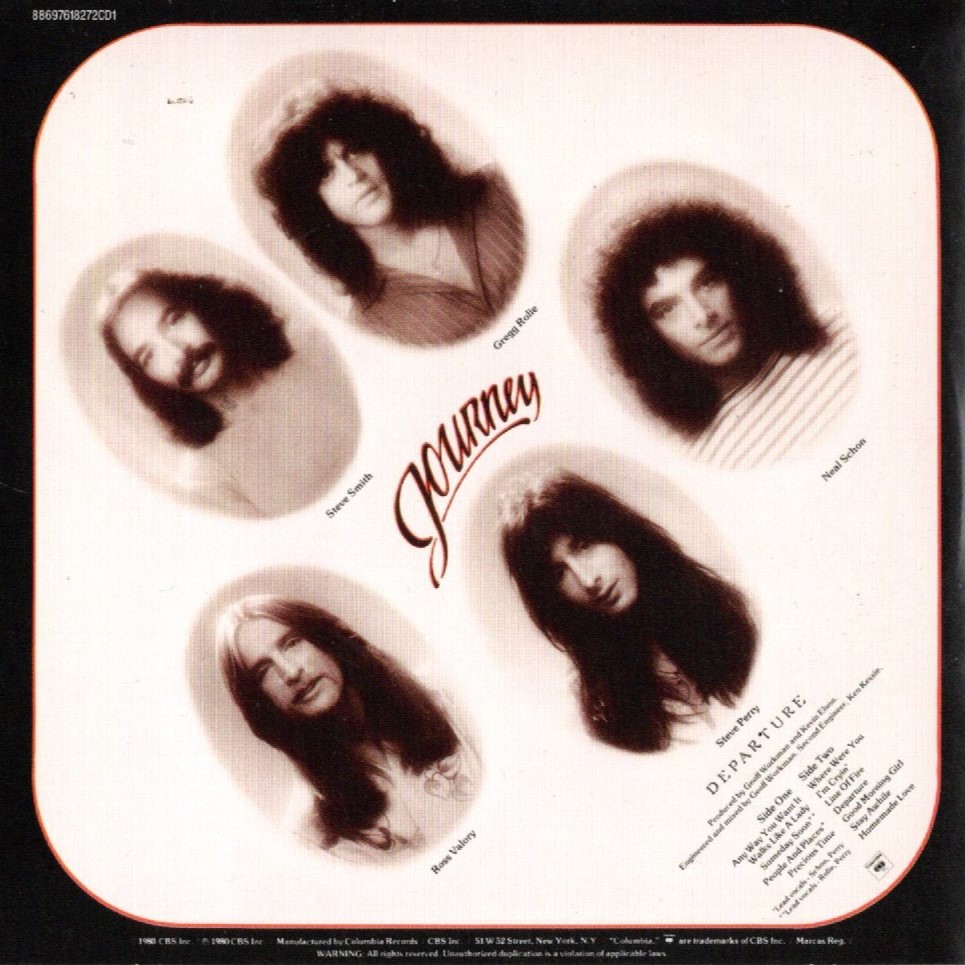
REVIEW: Journey – Departure (1980, Remastered CD & 8-track) – Happy birthday Neal Schon!

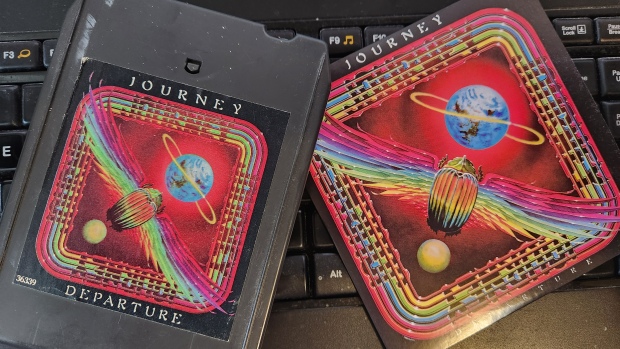
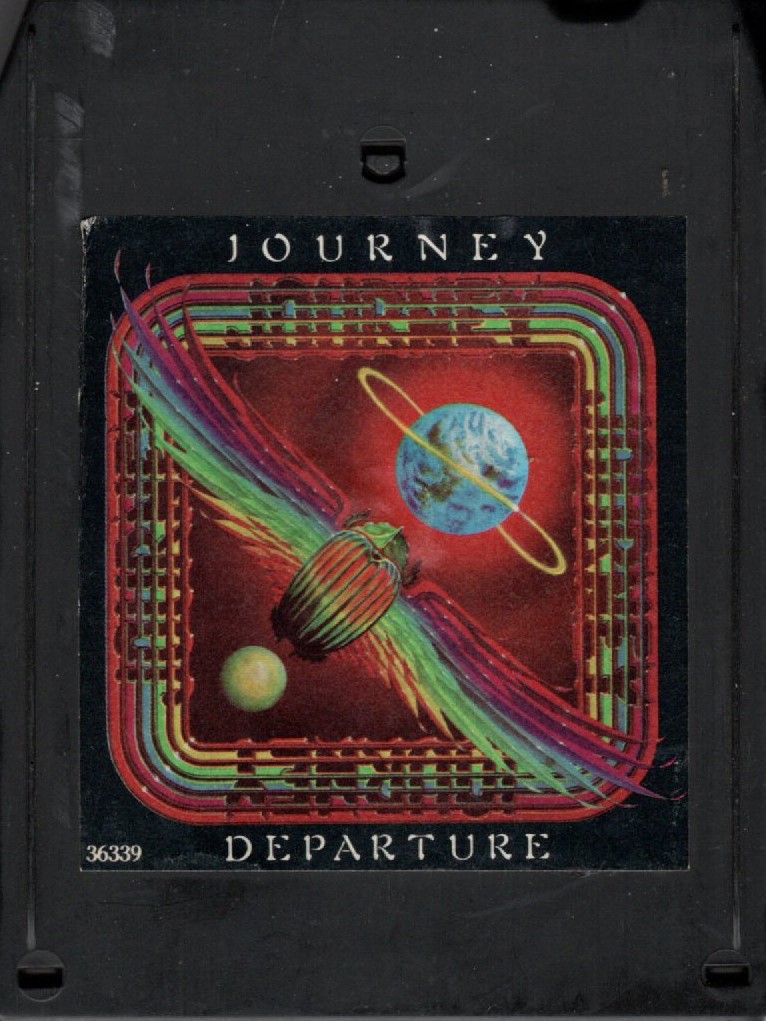
JOURNEY – Departure (1980 CBS 8-track, Remastered 2010 Sony CD)
CD from the set 3 Original Album Classics

Changes were afoot in Journey, and alluded to on Departure.  Aside from the Japan-only soundtrack Dream, After Dream, this was the last stand for Gregg Rolie.  While he would also appear one more time on the Captured live album, he was not there for the new studio track included.  For all intents and purposes, Departure is his “last album”, to use an inaccurate but easy term.  For the man who once was Journey’s only lead singer, Departure only has one of Rolie’s lead vocals, and only two co-writes.  (In the discography, Departure directly followed 1979’s compilation of early material, In the Beginning, featuring early material and a large number of Rolie vocals.)

With Steve Perry leading the charge, Departure commences with the party anthem “Any Way You Want It”.  Those who don’t know it, know it.  It has been featured in the Simpsons, twice!  A rare honour, and mega-exposure, for good reason.  Perry’s impeccably arranged chorus is irresistible.  Rolie’s organ is the perfect accompaniment to keep in the realm of classic rock and roll.  Of course Schon’s solo is also tasty as heck, but this song is know for its party-hardy chorus.  For those who like to dig deeper, Ross Valory’s pulsing bassline goes underappreciated today, and Steve Smith’s smooth cymbal work is often taken for granted.

A surprising twist is taken on track two, the laid back blues pulse of “Walk Like A Lady”.  Sounds like Smith is playing with brushes, and Neal really plays it classy.  Then, a jab of organ and the players are off to indulge themselves.  “Oooh yeah!” shouts Perry, as if enjoying the jamming himself.  Soulful harmony vocals by the band really take this out on an authentic note.

Third song, third musical direction:  power balladeering!  Rolie sings a duet with Perry backing him on “Someday Soon”, a melancholy but punchy ballad.  Though it was not a single, perhaps it should have been.  There’s a cool, unique angelic vocal section near the end that nicely complements Steve Smith’s drum fills.

“People and Places” is like an exercise in creative vocal arrangements, if not showing off.  Neal Schon sings lead with Steve Perry on this complex track.  It’s more like the Dream, After Dream material than a lot of Departure.  If only the modern Journey were unafraid to create more unique music like this.  It still has room for a powerful melody and some warming cascades of guitar.  This song moves directly into “Precious Time”, which has a vibe like the still-in-the-future track “Liberty”.  Lyrically it foreshadows the “Line of Fire” on side two, and also has Rolie on harmonica.  It turns into a more typical Journey rocker by the midpoint.  Lots of tasty Schon guitars to be savoured here.

Unusually for an album of 1980, Departure had 12 tracks:  five on the first side, and seven on the second.  This is where we’d flip.

The big concert rocker “Where Were You” kicks off the back end of Departure.  This one pounds the pavement with beats, riffs and boppin’ piano.  It too could have been a single, though it did open their concerts on tour.  Then, a completely different mood drops:  “I’m Cryin'” hits like a cold wave of grief, though not without its musical thrills.  Soon it’s over and the rockin’ “Line Of Fire” brings the party back.  There’s no better way to describe it than a fast, good time rock and roll song.  “So don’t go sayin’ Steve is a liar!” warns Perry to some young lady who done him wrong.  “Bye bye bye Susie, so long girl!”  (He sure got over what was bothering him on “I’m Cryin'” pretty fast.)  Take note of Schon’s technical solo work here.

“Departure” / “Good Morning Girl” is softly progressive, with strings and light guitar, and little else.  This is over quickly, and then it’s the ballad “Stay Awile”, one of the sweetest songs Steve Perry or Journey have ever done.  Once again, listen to the bass and drums for a different perspective.  Perhaps the only thing better than Perry’s lead vocals are when he does it live.

Fortunately, Journey had the wisdom to end the album on a rocker:  “Homemade Love”.  Some of Perry’s worst words accompany some of his most acrobatic singing.  Still, at least it’s a good jam to go out on, with some fretboard burning fingerwork by Neal.

Interesting, the 8-track tape might have what would be called a bonus track here:  a reprise of “Line of Fire”.  It’s here mostly for timing reasons; there are no songs split between tracks anywhere on this album.  So, 8-track buyers got an uninterrupted listen, plus a reprise of “Line of Fire”.  Information is scarce, but it would be fun to hear the tape this way,

On remastered CD, we got some slightly more interesting bonus tracks than 8-track offered.  “Natural Thing” is a bluesy B-side, which was later released as the B-side to “Don’t Stop Believin'”.  Chronologically though, it is from this era and is as strong as any similar material on the album.  Funny how some tracks don’t make the cut when others do.  If you were told this was a standalone single, you wouldn’t have a reason to doubt it.  The CD also includes “Little Girl” from Dream, After Dream which is a difficult album to find and Rolie’s studio farewell.  It is a string-laden power ballad, very progressive, and far darker than anything on Departure.

Departure features an unusually rougher sound than other Journey albums.  The production seems unpolished despite the complexities of some tracks, with the vocals sometimes occupying a strange space that’s not quite in front of the music.  Still, a classic album is a classic album and there are so few flaws with Departure that it’s easy to dismiss them all.

5/5 stars

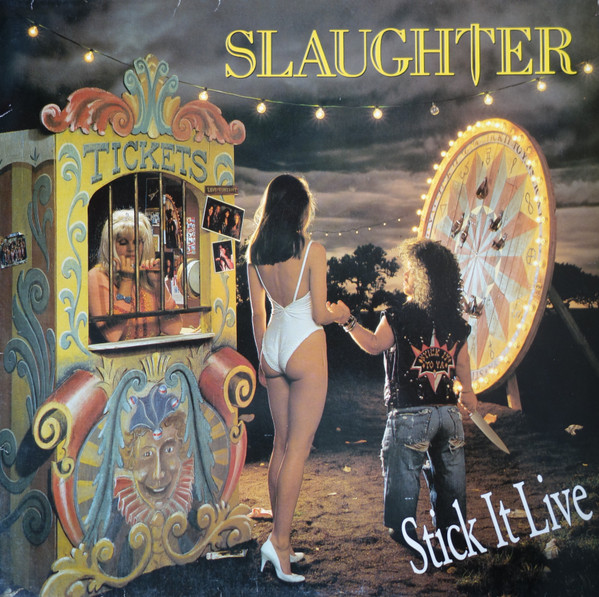
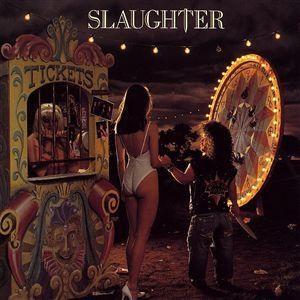
REVIEW: Slaughter – Stick It Live (1991 EP)

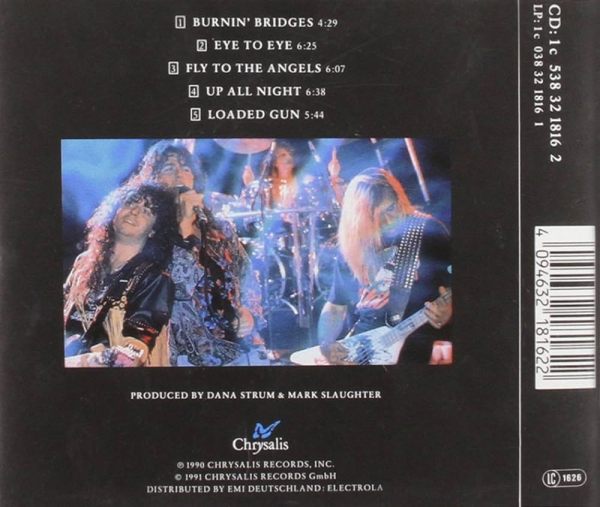
SLAUGHTER – Stick It Live (Chrysalis EP, 1991)

Slaughter were hot on the heels of their self-titled debut with a quickie live EP.  They were on the road so long, they still touring while the EP came and went on the front racks of the record stores!  The band were on fire in 1990 and 91, and Stick It Live was necessary to satisfy demand for more Slaughter.  However…

I absolutely hate listening to a live album when you can hear two or three tracks simultaneously of the lead singer.  Here, you can hear several Mark Slaughters singing together at once. Come on, Slaughter. We’re not stupid. And the thing is, from seeing them live opening for Cinderella, I know they don’t need the overdubs. The review that I wrote for my school paper at the time said, “Mark Slaughter has proved that his high-pitched wail is not studio trickery.” Well, you can’t tell that by this live EP!

Take the opening track, “Burning Bridges”. At several points you can hear several Marks singing at once. Why was this done? Did the live recordings suck?  Was it because the record company forced it?  Or because it was the fashion at the time?  I dunno. A live album (or EP) is an historical document, so too many bands feel they have to make them “perfect”. When in reality, perfect should have been as-is.  Documentary style.  My favourite live albums are often bootleg quality.

“Eye To Eye” follows “Burning Bridges”, opening with some stupid Crue-esque spoken word bit about an “ancient book of wisdom” and other unrelated nonsense. It’s a shame because “Eye To Eye” was one of their best songs. Once the song gets going, it’s fine, but you can still hear two or three Marks on the pre-chorus.  From there it’s into rote versions of the two big singles, “Fly to the Angels” and “Up All Night”.  The set ends with a high octane “Loaded Gun”, their album closer as well.  One issue to the overall listening experience is that the songs fade in and out, which may or may not be to your taste.

One fascinating note:  Mark goes out of his way to tell the audience that “Fly to the Angels” was not about suicide because “it sucks”!  Judas Priest were fighting for the musical lives in their infamous “suicide trial”, and Ozzy Osbourne was dealing with similar accusations of promoting suicide to the young and vulnerable.  An interesting artefact of 1990-91.

2/5 stars. A pretty fine live set otherwise spoiled by the dreaded studio trickery.

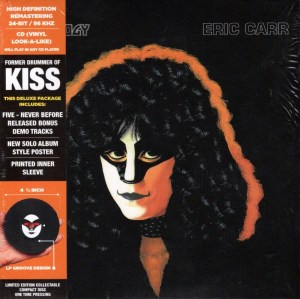
THREE-VIEW: Eric Carr – Rockology (2000/2023 RSD reissue)

ERIC CARR – Rockology (2000 EMI/2023 Culture Factory RSD CD release)

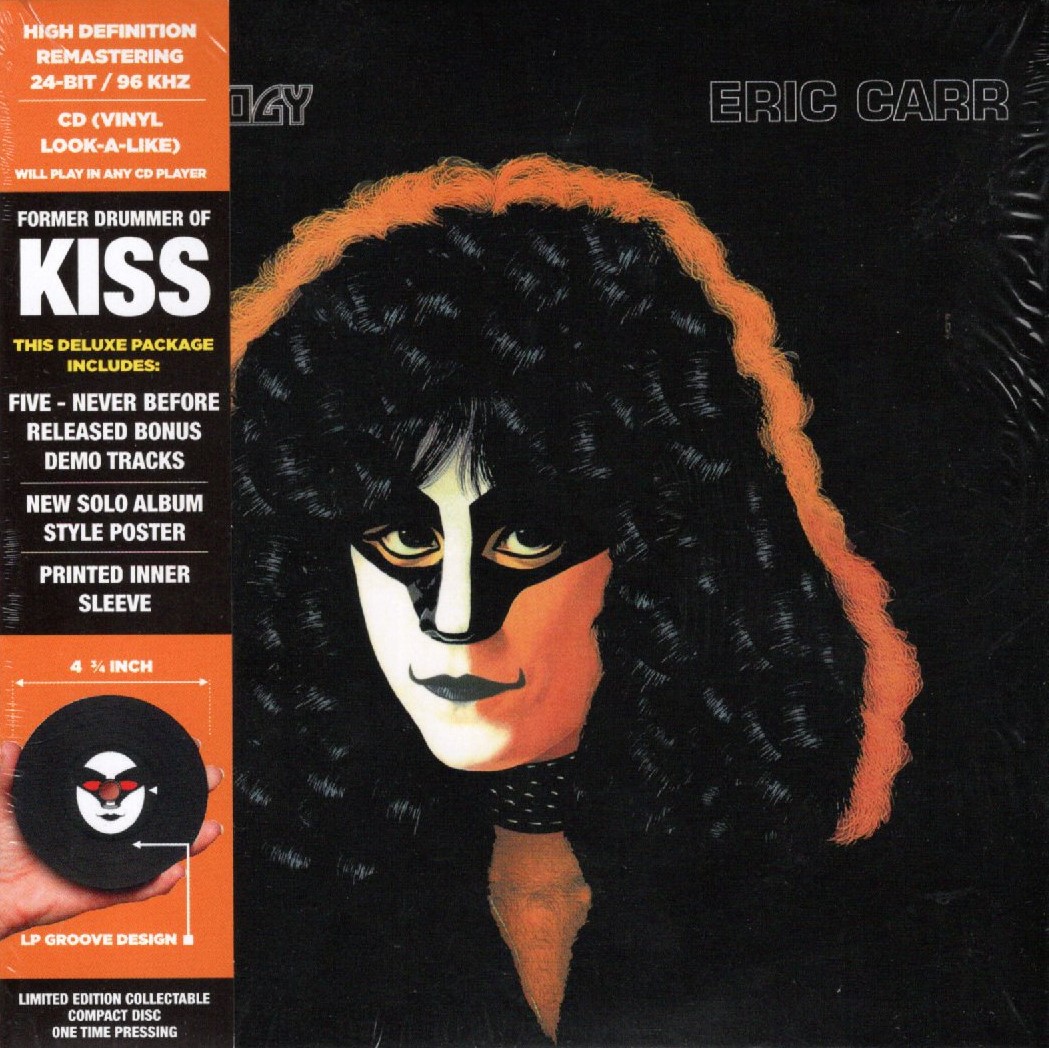
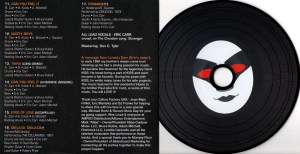
This release provoked a bit of controversy early in 2023.  Vinyl fans and collectors were pleased that Eric Carr’s collection of unfinished tracks, Rockology, was being reissued on LP.  They were doubly elated by the retro-1970s cover art that fit in with the original 1978 Kiss solo albums.  It even came with a poster to match the original four solo albums, and the CD was printed on a disc replicating a vinyl look.  The packaging, with obi-strip and brilliant black and orange coloration, looks sharp.  They even threw on five extra bonus tracks that weren’t on the 2000 release or 2011’s Unfinished Business.

Unfortunately, much like 2011’s Unfinished Business, the bonus tracks are hardly-listenable throwaways and castoffs that were never meant for public consumption.  What’s more, like all RSD releases, the LP and CD copies were so poorly distributed that fans were soon paying ridiculous amounts of cash on the second-hand market.  Music should be accessible and affordable to everyone, but this reissue was hardly worth it for what amounts to fancy packaging and five ragged unreleased tracks.

We’ll start this review by discussing the five bonus tracks.


Part One – the five bonus tracks

First up is a “long demo” of “Tiara”, a ballad from the original Rockology.  The original track was 4:28 and this “long” version is 23 seconds longer, but it is a completely different demo version.  It is much rougher and laden with occasional noise.  The lyrics are incomplete, as Eric improvises “do-do-do” vocals over  the instrumental opening.  Bruce Kulick provides overdubbed lead guitars, but sadly it sounds like a poor quality cassette.  This is the kind of thing we got too much of on the Unfinished Business CD.

Another “alternate demo” is next, of “Can You Feel It”, a song that Eric hoped Bryan Adams would cover.  Like “Tiara”, this demo is earlier and much rougher.  Similarly incomplete lyrics over a drum machine.  The liner notes claim it’s Eric Carr playing drums, but it’s obviously a drum machine.  Shoddy liner notes.

An “accapella” version of “Eyes of Love” is just a rough multitrack vocal take with no backing music.  It’s not the exact same vocal take used on the other demo version.  It is of limited enjoyment.  It doesn’t sound like there’s a pop guard on the microphone, therefore, lots of noise.

Finally, something we’ve really never heard before:  A 1967 version of the Beatles’ “Ob-La-Di, Ob-La-Da”.  This is a very rough sounding tape with lots of noise, but due to its age, we’ll allow.  It’s a fairly faithful take of the Beatles classic, with Eric on lead vocals and drums.  It features his band The Cellarmen and is the earliest Eric Carr recording yet to be released.  A difficult listen, but at least something of value.  You’d think they could have used AI noise reduction to get rid of that crackling sound.

The last of the five bonus tracks is a 1974 original called “Stranger” by his band Creation.  Eric is on drums alone this time, with bandmates John Henderson and Sarita Squires (also the songwriters) singing lead.  It is a decent soul-rock song and one of the better sounding recordings.  Though the drums are not the main feature of the song, and buried back in the mix, you can hear Eric’s personality shine through his fills.

Part Two – the original album (review posted 2018/06/19)

The late Kiss drummer Eric Carr was frustrated towards the end.  He was writing good material, but it was always being rejected by Paul and Gene.  In the press, Eric would tow the company line and explain that everybody else had such good songs, that there was no room for his.  In his heart, he was hurt and felt shunned.

Eric Carr wasn’t just a drummer.  He could sing lead, and he could write.  Kiss’ single “All Hell’s Breaking Loose” was an Eric idea.  He co-wrote “Don’t Leave Me Lonely” with Bryan Adams.  Although his writing credits on Kiss albums were sparse, he had plenty of material in the can.  2000’s Rockology is a series of those demos, some in a near-finished state and some left incomplete.  Much of this material was intended for a cartoon Eric was working on called The Rockheads.  10 years later, Bruce Kulick finished recording some guitar parts and mixed it for release.  He also wrote liner notes explaining the origins and Eric’s intentions for each track.

Eric didn’t have a particularly commercial voice, falling somewhere south of a Gene Simmons growl.  There’s no reason why Gene couldn’t have sung “Eyes of Love” from 1989, which has more balls than a lot of Hot in the Shade.  This demo has Eric on drums and bass, and Bruce Kulick on guitar with a solo overdubbed in 1999.  It doesn’t sound like a finished Kiss song, but it could have been tightened up to become one.  Same with the ballad “Everybody’s Waiting”.  It sounds custom written for Paul Stanley.  But it was 1989, and nothing was going to displace “Forever” from the album, nor should it have.

Many of the demos have no words.  “Heavy Metal Baby” features Eric scatting out a loose melody.  This heavy and chunky riff would have been perfect for the later Revenge album, had Eric lived.  In a strange twist, several of the best songs are instrumentals.  The hidden gem on this CD is the unfinished “Just Can’t Wait”.  It could have given Journey and Bon Jovi a run for their money.   Eric, Bruce and Adam Mitchell wrote it for Crazy Nights, and you can almost hear a killer chorus just waiting to leap out at you.  This potential hit could have been the best song on Crazy Nights, had it been finished.

“Mad Dog” has nothing to do with the Anvil song of the same name.  The chorus is there but the verses are a work in progress.  This hard rocker from 1987 was probably too heavy for what Kiss were doing, though it would have added some much needed groove.  “You Make Me Crazy” is in a similar state of completion and boasts a tap-tastic solo by Bruce.  Apparently this demo was originally called “Van Halen” and you can hear why.  Two versions of a song called “Nightmare” exist, including a really rough one without drums.  This incomplete song could have really been something special.  It has a dramatic feel and different moods, and was probably too sophisticated for Kiss, though any number of 80s rock bands would have been lucky to have such good material.

The last batch of tracks show off the Rockheads material.  Whether Eric’s cartoon idea ever would have happened or not, the advent of bobble-heads and Pops would have made marketing easy.   The songs are virtually complete though the drums are programmed.  “Too Cool For School” is a little cartoony, which is the point, right?  For keyboard ballads, “Tiara” showed promise.  It’s not the equal of “Reason to Live” but it demonstrates a side to Eric unheard before.  Next, Bruce says that they always wanted Bryan Adams to cover “Can You Feel It”.  It would have fit Adams like a nice jean jacket.  Not that Adams really needed the help, it would have been awesome on Waking Up the Neighbors.  The set closes with “Nasty Boys”, nothing exceptional.  It sounds like a song called “Nasty Boys” would sound…or anything by 80s Kiss really.

Part Three – the packaging and remastering

The selling point for the majority of fans for this reissue was the packaging.  The original cover featured Eric in 1989 or 1990, obviously without makeup.  The new version is designed to look like an Eraldo Caragati portrait matching the first four Kiss solo albums.  It does, after a fashion.  It doesn’t have the depth or realism of a Caragati, but it matches.  The aura colour is orange.  Inside, there is a poster that similar recalls the original four from 1978.

The liner notes from the original CD release are missing.  This is unfortunate.  As such you don’t get the stories or context or knowledge from Bruce Kulick about the background of these songs.  Instead you get a CD that looks like a record.  This is pressed in black plastic, and has actual ridges on the face side that look like record grooves.  The play of the CD is inhibited in no way by this.

The remastering is much louder.  It does sound like somebody messed with the tapes.  “Eyes of Love” sounds like it has more echo on the drums compared to the original.  Is this due to more echo being applied, or more being audible due to the raised volume?  Possibly just a listener-induced effect, but it does sound different.


If you want but don’t have Rockology yet, seek out the reissue.  If you’re dying to make a display of the five lookalike solo albums, get the reissue.  If you don’t feel like listening to rough demos with tape crackle bonus tracks, run away like a fox.


Original score: 3/5 stars

Reissue value:  1/5 stars

Original mikeladano.com review:  2014/04/24
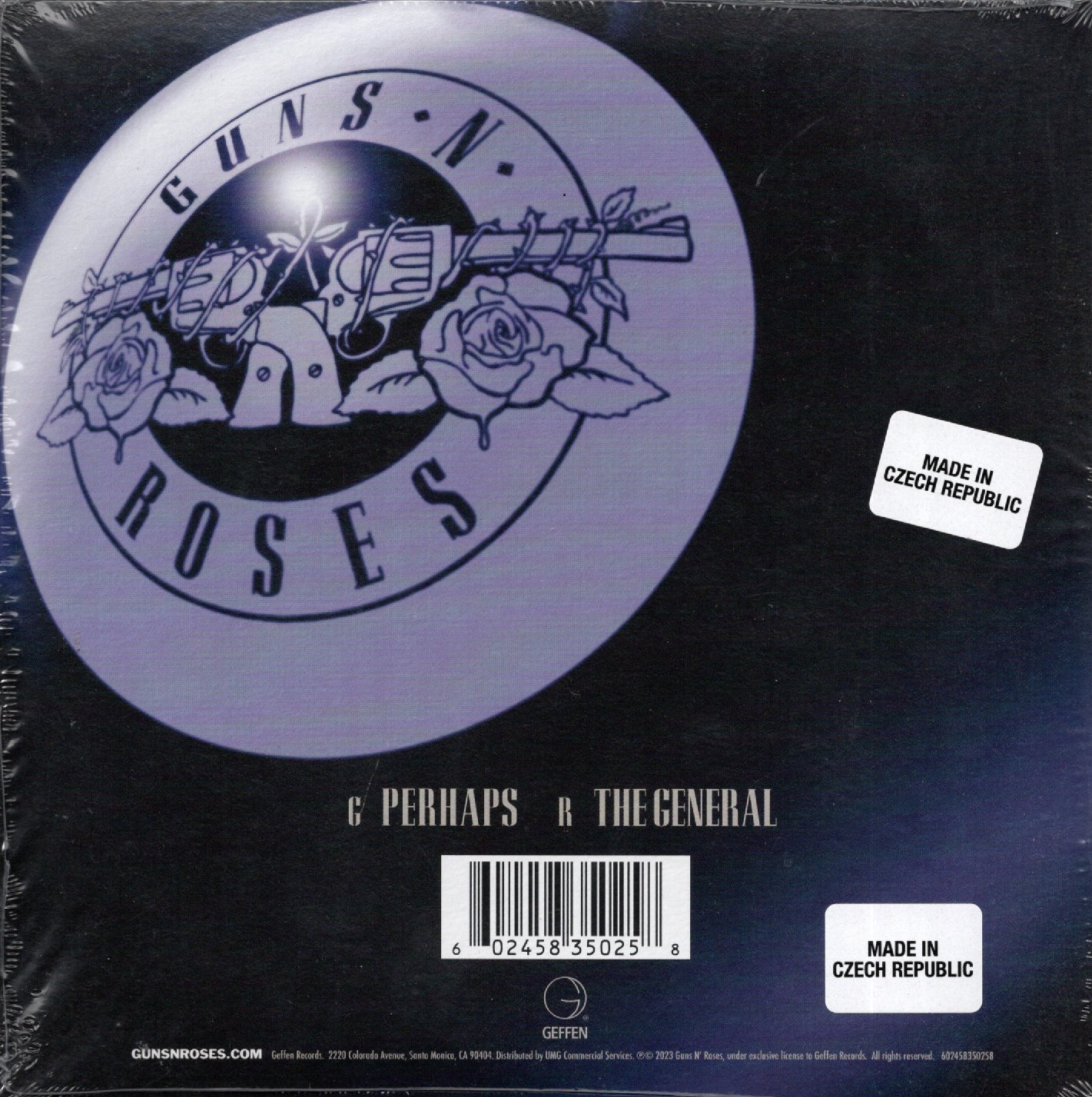
REVIEW: Guns N’ Roses – “Perhaps” / “The General” (2023 single)

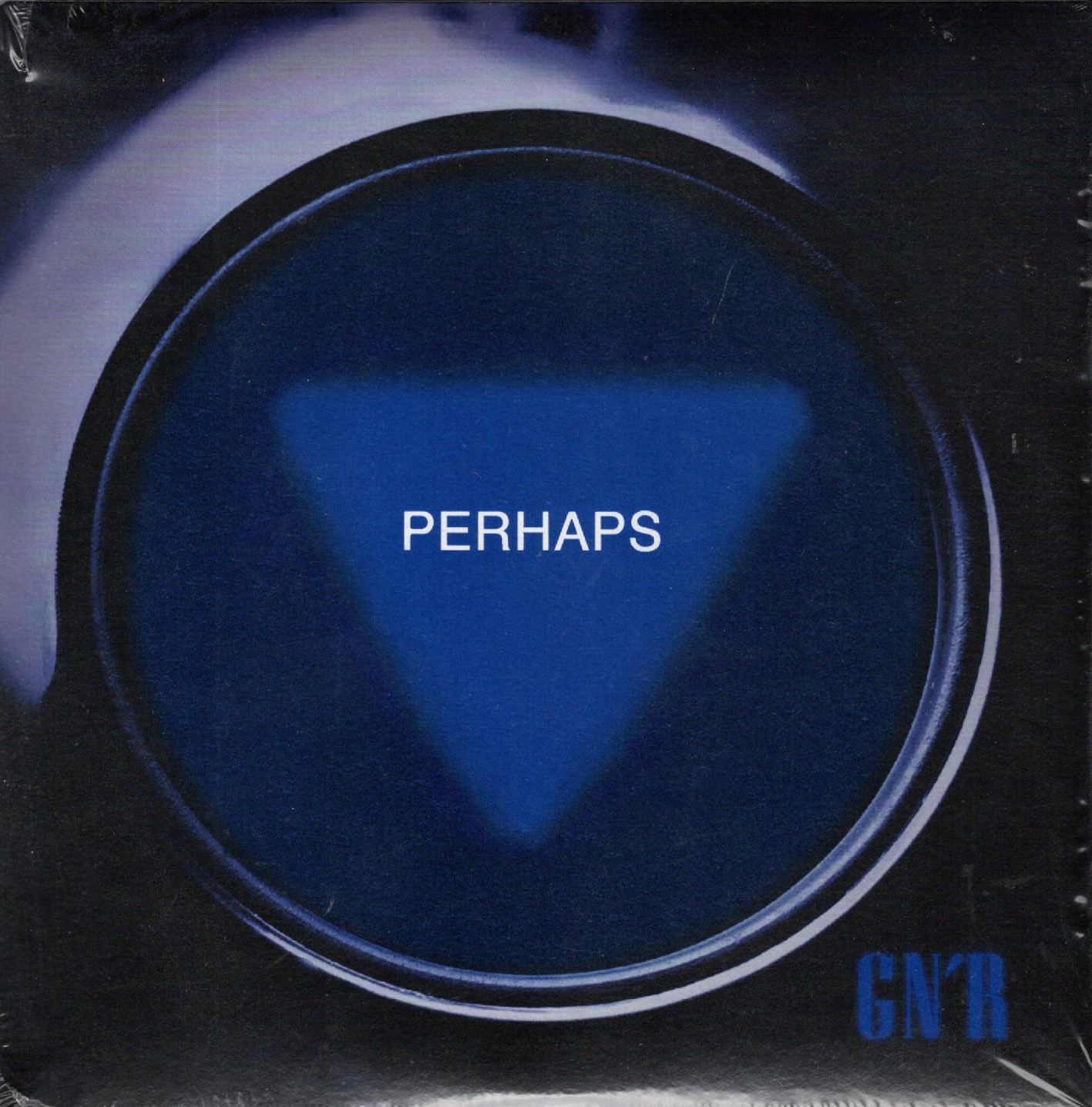
GUNS N’ ROSES – “Perhaps” / “The General” (2023 Geffen 7″ single)

The band that once took 15 years to release a new album hasn’t been doing too shabby of late with new releases.  “Perhaps” we should say new/old releases (see what I did there?) because all four of the new songs released by Guns N’ Roses since Chinese Democracy have been re-worked outtakes from that era.  Since Duff McKagan and Slash have returned to Guns, we’ve had four new tracks:  “ABSUЯD” & “Hard Skool” were released on a previous single, and now we have “Perhaps” and “The General” to go with them.

The “G” side of this new single contains “Perhaps”, which is immediately reminiscent of Use Your Illusion era Guns, via the prominent piano line.  Of any song released since, “Perhaps” sounds the most like a song that would have come out on a new GN’R album in 1995.  Slash’s guitar solo sounds perfectly vintage, but it’s Dizzy Reed on piano, whose flourishes recall “November Rain”, that brings it all back to the glory days.  “Perhaps” wouldn’t have been a big hit in the 90s, but it certainly would have been a solid album cut.

On the “R” side is “The General”, a song we’ve heard whispers about from those in Axl’s inner circle.  This track is the most disappointing, without any notable hooks.  It sounds more of the Chinese Democracy era, and is purely B-side material.  It has a haunting quality that might come from Axl’s love of Alice Cooper, but it’s anything but memorable and the technical flourishes don’t do it any favours, except to obscure the lack of catchy melody or riff.

One good song, one throwaway.  That makes the score pretty clear.

2.5/5 stars

REVIEW: Extreme – Extragraffitti (1990 Japanese EP)

EXTREME – Extragraffitti (1990 A&M Japan EP)

This little EP, exclusive to Japan, is almost like a miniature “greatest hits” for Extreme.  Of the six songs, five were singles.  You might say “It’s not a greatest hits if it doesn’t have ‘More Than Words’ on it, and that would be a valid point, but that breakthrough ballad hadn’t been released as a single yet in November 1990.

Opening with the current single “Get the Funk Out”, we are off to a good start.  This track works most excellently as an opener.  That bass rolls in, before the guitar riff starts to rip.  Once the horns kick in, your face is thoroughly melted.  This EP focuses on fun.  There’s nothing here that’s a drag.

An edit version of “Decadence Dance” is unblunted.  It’s mostly just the intro stuff that’s missing anyway, and that belonged on the concept album from which it came.  The bonus here is you get Paul Geary’s cymbal count-in instead, which you can’t hear on the Pornograffitti album.  So dance to the beat of the decadent drummer, and get rocked.  This is one of Extreme’s best bangers, a full-on Van Halen romp with hooks and flash…as you like it.

Back to the self-titled 1988 debut album for the next three tracks.  A remix of “Mutha (Don’t Wanna Go to School Today)” may have more bass, edge and clarity.  It’s not a radical remix.  Nuno’s guitar fills jump out nicely.  The first Extreme album was a mixed bag of material, with none of it reaching the upper echelons like the second record.  That said, “Mutha” was probably the best track of the bunch, and the most like what came later.

“Little Girls” only loses about 20 seconds, so you’re fine with this version.  Again, it’s the opening missing.  This song is notable for some remarkable harmonica playing by Rapheal May.  Really impressive stuff here, just as superb as Nuno’s guitar work.  The lyrics, however, can’t be saved.  They were never good, even by 1988 standards.  “Incestual blood is thicker than water,” has to be the worst words that Gary Cherone has ever penned to paper.  Roll up your windows if you intend to sing along to this song.  Shame the band is so hot.

The album version of “Kid Ego” is here unaltered, it’s just not that interesting of a song.  The groove plods along in a lazy, 1980s way that every single band was doing.  It sounds like every band had their metronome set to the same time.

The B-side “Nice Place to Visit” has been released in a number of places, such as the “More Than Words” single in 1991, but first it was the B-side to “Little Girls”.  As an outtake from the so-so first album, this song is also so-so.

The final track, and the only one exclusive to this CD, is a message from Extreme!  These messages from band members were fairly common on Japanese EPs and singles by Western bands.  It is geared specifically for the Japanese fans, and it’s adorable hearing their deep Boston accents.  This message is fairly light.  Nuno talks about their goals as a band, and Gary assures the fans that they will see them real soon.  Apparently, the Japanese fans also sent the neatest, tidiest mail.

Good EP for its time.  There’s even a sticker inside.

3.5/5 stars


REVIEW: Elf – Carolina County Ball (1974)

ELF – Carolina County Ball (1974 Line Records)

Before the Rainbow there was Elf.  It was basically the same band – Ronnie James Dio on lead vocals, Mickey Lee Soule on keys, Gary Driscoll on drums, and Craig Gruber on bass.  The one and only difference was Steve Edwards on guitar, who would have no place when Richie Blackmore came knocking a year later.  Their second album, Carolina County Ball, was produced by Deep Purple’s Roger Glover.  It’s fair to say that Dio hadn’t found his niche yet.  With Mickey Lee Soule, Ronnie co-wrote every song, but was seeking a bouncier Guess Who direction at this point in time.

It sounds like Mardi Gras on the opening title track, with clarinets, trombones and trumpets accompanying the band on this “boogie-woogie Friday night”.  Soule shines, ticking the keys with delicate intent.  Heavy metal, this is not not!  Not even close.  There’s a guitar solo but it’s a secondary feature.  Only at the end does the song pick up the pace.  It’s actually a great tune, but anyone expecting dungeons and dragons had better head back to their gamesmaster for a new dice roll.  Expect boogie.

“L.A. 59” opens like an old bar room, with a piano taking up all the space.  The opening figure sounds like it’s emulating a train, which is probably a good guess.  “Get me back to L.A., 59!” sings Ronnie, sounding a bit more like the mighty mite he would become.  “Hello, hello sunshine!”  Upbeat, with the guitar taking up more of the song this time.  A great upbeat tune to start your day.

A little bit of a funky swing emerges on “Ain’t It All Amusing”, demonstrating the talents of the rhythm section in particular.  Driscoll was no slouch and Gruber had no issue filling the bottom end with interesting vibes.  This fun song really is about rhythm with a pinch of funk.  It sounds a lot like Deep Purple Mk I, especially with the long percussion break that ends it.

“Happy”, which is ironically anything but, is a bit filler-ish.  It’s Elf playing in a smokey nightclub and it’s all a bit repetitive.  “Annie New Orleans” picks it up, with another Elf piano boogie-woogie.  Whitesnake have also done songs of this nature in their early days.  Then the awkwardly titled “Rocking Chair Rock ‘N’ Roll Blues”, which is a ballad more or less.  It boasts a nice guitar solo and a laid back sound, but it’s going to have some reaching for the skip button.  They shouldn’t, because three minutes in, a new riff arrives and transforms the song into another rockin’ boogie-woogie.  Listen for some of Driscoll’s fun cowbell work on the back end too.

The one title that grabs everyone’s eye is “Rainbow”.  Don’t get too excited.  It doesn’t sound anything like Blackmore’s Rainbow; more like a a third rate tribute to The Band.  The boogie-woogie is starting to wear a little thin, and same-samey now.  “Do the Same Thing” is more like it.  It sounds like a prototype to Rainbow’s “If You Don’t Like Rock ‘N’ Roll”.  This allows the players to shine a bit more.

The album goes out on a cringey ballad called “Blanche”, with Dio singing about “Rainy days, rainy days” in a voice quite unlike the power he would later master.  This is little more than a silly album outro; nothing to be taken seriously.

Every album and every band will have its defenders, but Elf was the least of Dio’s four main bands over the decades (counting Black Sabbath and Heaven and Hell as one band).  Carolina County Ball lacks focus, and Glover doesn’t provide any punch in the stale production.  The album rests on the songs and performances alone.  Fortunately the band could play, though they seemed uncertain about who they wanted to be.

3/5 stars


REVIEW: Sammy Hagar – Three Lock Box (1982)

SAMMY HAGAR – Three Lock Box (1982 Geffen)

Sometimes it is fun to review an album on its first listen, so that’s what we’re doing today with Hagar’s Three Lock Box.  I only know a handful of tunes so this will be mostly brand new to me.  Released December 6, 1982, Three Lock Box was Sammy’s seventh solo album.  Jon Cain (Journey) and Mike Reno (Loverboy) make guest appearances, and it contains Sammy’s biggest charting solo hit.  Let’s give it a spin, on this fancy Japanese CD pressing.

The title track is familiar, with its slightly funky riff and rich organ backing.  I don’t know why, but that refrain of “One, two, three lock box!” reminds me of the kind of melody and simplicity of a children’s song.  But child’s play this is not!  A couple minutes in, and the gears shift to full blown hard rockin’.  This is a catchy and rhythmically clever little tune.

“Remote Love” might have a bit too much keyboard in the mix, but this is a cool laid back rock ballad.  It sounds like something from a past age perhaps.  Loud keyboards aside, there’s something purely classic about it, especially when you get to the soulful chorus.

Cain and Reno appear on “Remember the Heroes” (co-written by Cain).  Very Journey-esque, but Mike Reno sounds absolutely brilliant!  What a powerhouse singer, and when he and Sammy team up on the chorus, it’s mighty great!  You could easily imagine Journey doing this song, and perhaps they should have.

“Your Love Is Driving Me Crazy” (#13 on Billboard’s Mainstream Rock songs) is clearly hit material.  It’s all melody, smooth and polished.  The production has the bells and whistles and the track is just really hard to resist.

A haunting tone enters on “In the Room”, a completely different vibe.  It almost sounds like a lost Alice Cooper number from the same time period.  “I’ve been caught in the room, that moment of sleep when you think you’re awake.”  The lyrics match the music perfectly.  This is one of those must-have deep cuts, a song that absolutely deserves more attention.  It’s so different for Sammy.  “Rise of the Animal” follows with spooky sounds, and then a synth pulse.  “I just came out from the room…” sings Sammy, continuing his thoughts from the prior song.  “I saw the rising of the moon.  This ain’t no ordinary night!  Look to my left, look to my right.”  It starts slow and picks up the pace, and ends with some brilliantly frantic soloing from Sam.

Another great deep cut is the pop rocker “I Wouldn’t Change A Thing”.  A radio-ready corker, it could have been a hit in an alternate universe.  Let’s call it the Sammyverse.  A universe where everything is bright, colourful and shiny.  I wouldn’t mind hanging out in the Sammyverse, and “I Wouldn’t Change A Thing” could be its anthem.  Wave your red flags high!

“Growing Up” has a highschool-tough sound, while Sammy sings of the girls in their summer clothes.  The Sammyverse only has short skirts and high heels.  It’s probably the filler track of the album, as it doesn’t seem to have the hooks of previous tracks.  Fortunately “Never Give Up” is all hooks.  Another pop rocker with memorably melodies and smooth guitars, it’s just a fun song.  Easy singalong in the car.  Speaking of cars, the Sammyverse is fond of ’em, and the closing track “I Don’t Need Love” races like one of Sammy’s Ferraris.  It’s a brilliant rocker and probably the heaviest track on an otherwise pretty mainstream rock album.

Sammy Hagar albums don’t have a lot of pyrotechnics.  They are often meat and potatoes, workmanlike and easily accessible.  Three Lock Box has its strengths not in the production or flashy performance, but in the songs and the singing.  It’s a satisfying listen and I understand why it is so well liked.  It may not have a lot of edge, but it’s a fun, feel-good listen.

4/5 stars