classic rock

GUEST CONCERT REVIEW: Queen + Adam Lambert 7/13/2014

QUEEN +

GUEST REVIEW by “Boppin”

QUEEN + ADAM LAMBERT – Live, July 13 2014 at the Air Canada Center, Toronto

I have to start off this review by saying I love Queen. I have listened to more songs by Queen than almost any band ever. I am told when people I know hear Queen, Steve Miller Band, Black Sabbath or 80’s metal, they think of me. So the review you are about to read really pains me to write. But I have to be true to myself and review the band as I saw them last night.

I went to this concert expecting to hate every little bit of Adam Lambert. I hated him on American Idol. Yes, I know. I hate to admit it, but for a while I did watch that show. How, you say, can a died-in-the-wool metal head and 70’s hard rock lover watch American Idol? Well. To answer that question, my family time TV viewing was limited to the type of shows we could watch together. Having a young pre-teen in the house meant only watching family type shows when she was awake. And she loved American Idol. At first I liked Adam Lambert. He was not your typical contestant on that show. But then he started showing off his pipes too much, and it got annoying. All of the viewers knew precisely when he was going to wail, and we got sick of him.

Then I heard the news that he was going to be the next lead singer for Queen.

Queen and American Idol. That is sacrilege. This would be like Gary Cherone in Van Halen. It wouldn’t work. It couldn’t work.

However, it did.

I hate to say this, but the three shining spots of the concert last night really had nothing at all to do with the original line up of Queen.

First, Adam Lambert was actually great. If Freddie Mercury was incredible, then Adam Lambert was great. He was spot on. He was campy, in a Freddie kind of way, and his voice was in top shape.

Second, Neil Fairclough, the bass player they hired to replace the retired John Deacon was amazing. His stand up electric bass was the biggest bass I have ever seen. It sounded sweet. And then he let Roger Taylor use drumsticks to play the bass (a first for me).

Third, Rufus Tiger Taylor. He is the son of Roger Taylor. And he has some serious chops. I didn’t realize how good he was until my wife pointed out to me that he was better than his dad. And last night, he was.

The concert was going along great, and then Adam Lambert left the stage, and the show for me mostly fell apart.

Please don’t get me wrong I love Brian May, but he was mostly off last night. His entire night sounded about a half second behind. His finger work was slow. His guitar solo (which was roughly 30 minutes) was about 28 minutes too long. It started out with a few minutes of Pink Floyd , then onto some Zeppelin, back to Floyd. I don’t think he was trying to copy David Gilmour or Jimmy Page, but the elements were there. At least I hope he wasn’t trying to copy them because he was doing a piss poor version if he was. For a guy that has seen many guitar virtuosos over the years, this was like watching a Junior High guitar talent show. The worst part for me was when Brian May screwed up in “Bohemian Rhapsody”. It was a real fingernails on the chalkboard moment for me.

During the song “Love of My Life”, Brian moved down to the front of the stage alone with an acoustic guitar. He admits he is not a singer. Well, Brian we quickly figured out why. Your voice was awful. God awful. And you chose to have the audience sing the other half of the lyrics of the song. You could have heard a pin drop when the 100 or so people in the entire audience of 15,000 that actually knew the lyrics were singing (whispering?). Here’s a hint. Choose a song most of the audience knows if you want them to sing the lyrics for you, or put the lyrics up on a screen.

Coming from the area of the world where Neil Peart is from, and having seen Rush in concert many times (and more recently seeing how good Tommy Clufetos can bang the skins), the drumming of Roger Taylor was another let down. It wasn’t bad. It just didn’t wow me. But in 2014, solos really are passé unless you are really amazing, and Roger Taylor was not. He does not have a great singing voice either, which really showed when he tried to fill in for David Bowie during “Under Pressure”.

His son is a real up and comer though, and I hope he finds his own way in the music industry. It seems especially tough on children of famous musicians.

After the horrible “Love of My Life”, Brian May talked about space travel and how we were all going on a journey and we may never come back, then all of the musicians(other than Lambert) went to the front of the stage and did “’39”. Pardon me while I yawn.

Please Adam, come back and save us from this snooze fest. As the lights go down and the audience sees Adam there is a huge cheer.

However, after a couple of classic Queen songs, they forced him to sing a remix of a little known Freddie Mercury disco song called “Love Kills”. He announced Queen was using this version in an upcoming album. In my opinion, they should do a new album with new material, perhaps throwing in a few B-sides of old material, or do a live album. They could include Freddie, Paul Rodgers, Freddie Tribute Concert songs and Adam. Just my two cents. Also in my opinion, the band had plenty of time to come out with this new album before the tour, but they didn’t. And all they had for sale at the swag booths were $40 T-shirts. I have enough T-shirts thanks. Not one CD or vinyl. Nothing.

The entire show for me was like “backwards day”. I assumed Brian May and Roger Taylor would be the highlight of the show. I told my wife the only reason I am going was to hear Brian May. But the cast of nobodies were better.

I should end the review by stating the whole is better than the sum of its parts for Queen + Adam Lambert. When they are together doing classic Queen songs, they sound great. When they do solos, and off-key singing, it didn’t work.

If they had included 8-10 more songs, and skipped a lot of the solos, I would have rated it higher.

My wife summed up the concert when we got back to the car by stating she liked The Lady Gaga concert a few nights before better (No, thankfully I did not attend that one). I told her “Don’t say that!”

For me, Adam Lambert was 8.5/10, the band without Adam 4/10, so together the show was 7.5/10. Too bad. It could have been much better.

[This works out to 3.75/5 on the five-point LeBrain scale.  Thank you Boppin for this amazing review! — LeBrain]

SETLIST:

  1. Now I’m Here
  2. Stone Cold Crazy
  3. Another One Bites the Dust
  4. Fat Bottomed Girls
  5. In the Lap of the Gods… Revisited
  6. Seven Seas of Rhye
  7. Killer Queen
  8. Somebody to Love
  9. I Want It All
  10. Love of My Life
  11. ’39
  12. These Are the Days of Our Lives
  13. Under Pressure
  14. Love Kills
  15. Who Wants to Live Forever
  16. Guitar Solo
  17. Tie Your Mother Down
  18. Radio Ga Ga
  19. Crazy Little Thing Called Love
  20. The Show Must Go On
  21. Bohemian Rhapsody
  22. Encore: We Will Rock You
  23. Encore: We Are the Champions

More QUEEN at mikeladano.com:
QUEEN – Queen’s First E.P. (1988 EMI, originally 1976)
QUEEN + PAUL RODGERS – The Cosmos Rocks (2008, iTunes bonus tracks)
QUEEN + PAUL RODGERS – ”Fire and Water” (2008 Amazon.com bonus track)
BRIAN MAY & FRIENDS – Star Fleet Project (1983 Capitol Records)

CO-REVIEW: Funky Junction – Play a Tribute to Deep Purple (1973)

AN INTERNET FIRST:  LeBrain and the Heavy Metal OverloRd have combined forces to bring you our very first co-review!  We have chosen the rare album album by Funky Junction — a little known outfit better recognized under the name Thin Lizzy!  Perhaps you have heard of them.

For the purposes of this review, LeBrain will be in black and HMO will be in blue.

FUNKY JUNCTION – Play a Tribute to Deep Purple (1973 Damont)

HMO: I like a challenge. Ever since hearing about Mike’s “Holy Grail” list of rarities I’ve been determined to find some for him here in Scotland. Given that I’m Scottish, this obsession with Holy Grails probably makes me Sean Connery to his Indiana Jones. Or something like that. At any rate, I’ll be calling him “Junior” from now on. I saw this record in Glasgow’s Missing Records and, knowing the hidden Thin Lizzy connection, I emailed Mike to see if he had it. He replied that it was on his Holy Grail list! Ya dancer! On closer inspection, however, the shop-copy looked too scratched to be worth even the £2.50 asking price. But the discovery gave me hope that I might find a better copy for him online… and here it is!

LeBrain: The band on the front cover wasn’t them. Their names appear nowhere on the LP packaging. All we’re told on the record jacket is that Funky Junction “are an exciting new group that has the pulse of today.” But for all intents and purposes, Funky Junction was Thin Lizzy:

Phil Lynott – bass guitar
Brian Downey – drums
Eric Bell – guitar
Benny White – vocals
Dave Lennox – keyboards

Since Phil Lynott couldn’t sing Ian Gillan’s high notes, and since Thin Lizzy didn’t have a keyboard player, the band hired members of another Irish group called Elmer Fudd to record the album, which they did in one day!

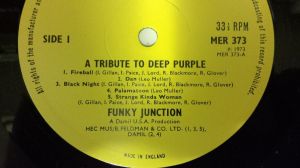
IMG_20140709_211154
“Fireball” is one of my favourite Deep Purple tracks. Even though Eric Bell referred to singer Benny White as an “Ian Gillan” clone, I don’t hear that at all. A Rod Evans clone, perhaps. “Fireball” is largely based on the drums, so we’re in safe territory here. Brian Downey is one of the few drummers who could give Ian Paice a run for his money in 1973. Not a bad cover I suppose, if you’re eager to hear was “Fireball” would have sounded like with Rod Evans singing.

Totally agree with you on the singer. The guy is so Rod Evans he was probably wearing gold lamé trousers while he was singing this. It’s an ok version in a “pub covers band” sort-of way. Brian Downey’s drumming is impressive, Phil’s bass solo… not so much.

“Dan” (credited to the German business man, Leo Muller, that conceived of and financed this project) is brief guitar instrumental. It’s supposed to sound like “Danny Boy” in a Hendrixian style, and I suppose that’s the right ballpark. Eric Bell fans will dig it, but as a song…next!

I like Eric’s tone here but it’s a lazy arrangement: just playing the melody and wanging his bar every now and again. It’s definitely the most Lizzy-esque song here though.

Funky Junction settle into a light groove on “Black Night”. This is a pretty faithful cover. What I like about this performance is Eric Bell’s way of improvising his own guitar solo within the style that Blackmore set for this song. The organ solo however is pretty caveman by comparison to Jon Lord. Pretty stock cover.

I’m actually fairly impressed by how faithful this one is, and a good approximation of the sound too. Eric Bell and Brian Downey are still the classiest acts here but it doesn’t have anywhere near the edge of the Purple original. Still, one of the more enjoyable outings here.

I like that I can hear Phil Lynott’s personal bass style on “Palamatoon” but the lame keyboards sound out of place on this album. I don’t know how to describe this instrumental original except to say that, as usual, Eric Bell’s soloing is a highlight.

It’s cool to hear Phil on this. His bass line reminded me of “Little Girl in Bloom” a bit. It’s just a shame that this tune is so bad. It’s like Emerson Lake and Palmer but pissed as farts. John Peel once described ELP as “a waste of talent and electricity”. He was wrong. But this song definitely is.

“Strange Kind of Woman” is pretty limp. Once again, if you were eager to hear this Purple classic performed by a Rod Evans clone, this is the one. Downey and Bell are the highlights of a pretty dull performance.

I’m finding the Rod Evans factor to be one of the more interesting aspects of this. If it wasn’t so workaday you could almost imagine these are some long-lost Deep Purple sessions from before they gave poor Rod the heave-ho. But apart from the “what if?” fantasising… dull.

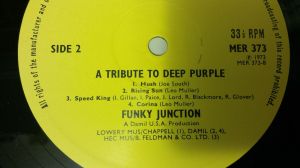
IMG_20140709_211124

Side two commences with the Deep Purple Mk I hit, “Hush” (actually a Billy Joe Royal cover). I find this one irritating. The singer’s enunciation bugs me. Deep Purple decided to anchor their version with a long keyboard solo. Unfortunately Funky Junction struggle to make their solo as interesting.

I think I liked this one more than you, Junior. This and Black Night are the two best Purple covers here. Not very inspiring on record but if they were playing it live at a pub I think I’d get into it. Benny sounds totally at home here, finally giving it the full, glorious Rod Evans. Probably with bouffant hair and a frilly shirt now too! Gaun’ yersel’ big man!

Even though we all know “Rising Sun” is a cover of “House of the Rising Sun” (a traditional), here Leo Muller takes songwriting credit! I hope he enjoyed what little royalties he earned from the meager sales of this LP. This is another instrumental cover, with a snooze-inducing ending.

Cheeky scamp that Leo Muller, eh? I’m surprised he didn’t just change his name to Traditional and watch the money flood in. Nice sound and a decent performance on this song but mostly goes in one ear and out the other.

I appreciate that Funky Junction chose to retain that noisy, messy intro to “Speed King”. I’m afraid that of all the songs, “Speed King” suffers the most from the inadequate singer. Fortunately the Lizzy guys are talented enough to play the tune properly.

Everything we’ve mentioned previously seems to work against them on Speed King. The caveman keyboards, the tameness. And the poor Rod Evans impersonator sounding like all your worst Karaoke nightmares (but with the added embarrassment of those trousers). It’s cool that they included the noisy intro (I think Leo Muller wrote that) but this is the worst Purple version here by a good margin.

“Corina” closes the album, a vocal track credited to Muller. It’s a cool blues that fits in with a Deep Purple Mk I vibe. I don’t mind this track too much. It’s nothing special but at least it’s not overshadowed by a superior Deep Purple version.

An OK boogie. It’s still making me think of pubs mostly. The lead guitar is the best thing about this one.

2/5 stars. Recommended primarily to fans of Eric Bell.

2.5/5 stars. I agree with Mike but I’m going to throw in an extra half-point because I thought the Rod Evans impersonator was a hoot.

  1. “Fireball” (Ritchie Blackmore, Ian Gillan, Roger Glover, Jon Lord, Ian Paice)
  2. “Dan” (Leo Muller)
  3. “Black Night” (Blackmore, Gillan, Glover, Lord, Paice)
  4. “Palamatoon” (Muller)
  5. “Strange Kind of Woman” (Blackmore, Gillan, Glover, Lord, Paice)
  1. “Hush” (Joe South)
  2. “Rising Sun” (Muller)
  3. “Speed King” (Blackmore, Gillan, Glover, Lord, Paice)
  4. “Corina” (Muller)

REVIEW: Alice Cooper – Hey Stoopid (1991)

First of an Alice Cooper double shot!  Tomorrow, The Last Temptation!

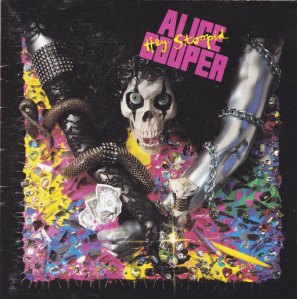
ACHS_0002ALICE COOPER – Hey Stoopid (1991 Sony)

When Hey Stoopid first came out in ’91, fans were still reeling from the disappointment (but commercial success) that was the Trash CD. Fans wanted Alice to get heavier and drop the cheese, and Hey Stoopid was a step in the right direction, to be fully realized on his next album The Last Temptation.

It was the era of the virtuoso, and Cooper certainly knows a good musician when he hears one. To me it was a stroke of genius to have Steve Vai and Joe Satriani record a guitar solo together for the first time, and on a song called “Feed My Frankenstein” no less! Guest shots by Ozzy (barely audible, though), Nikki Sixx, Vinnie Moore, and Slash provided enough hype for the fans to salivate.

Songwriting-wise, Hey Stoopid was a step up from Trash. The title track with its lyrical warnings of drug abuse was a fun catchy rocker with a tasty Satriani solo. The solos on this album are all too brief. Still the players being as good as they are create solos that enhance each track. Other standouts include the mindblowing “Might As Well Be On Mars”, an epic Desmond Child song that just aches before it explodes on the choruses. “Die For You”, written by Alice with Motley Crue’s Sixx & Mars, as well as Jim Vallance, has a chorus that bores its way into your brain and stays there like a parasite.

There’s still a lot of filler, something that plagues almost Alice album from Goes To Hell through to Hey Stoopid. “Snakebite”, “Hurricane Years”, “Little By Little” and “Dirty Dreams” are all songs that Alice will never play live in concert, and for good reason.

Yet there are still lots of hidden gems on this CD, all the way through to the final track “Wind-Up Toy”. A song about insanity, as only Alice can do, it is something that really hearkens back to Welcome To My Nightmare. What’s this about “Steven”?

There are also a couple lesser known tracks that aren’t on the domestic CD that are worth tracking down: “It Rained All Night” is a slowy, groovy track that was a B-side but better than some of the ballads on the actual album. “Fire” was a Jimi Hendrix cover with some fiery (pun intended) guitar playing.

The most disappointing thing about Hey Stoopid is the production by the normally excellent Peter Collins. Yes, Trash was too glossy, and yes, Hey Stoopid toughens the sound with more guitars. However the background vocals in particular are so dense, so saccharine, that even Def Leppard would blush. They are credited to different groups of people, and clearly there are a lot of voices here creating this gigantic mush of sound. It’s too much. I much preferred when Alice stripped it down on Dirty Diamonds, an album that deserves much praise. In 1991, production values just seemed to go to this extreme — witness Europe’s Prisoners In Paradise CD for a similar sounding album.

Hey Stoopid was Alice attempting to find his footing again, and while it stumbled, it did pave the way for Last Temptation. If grunge didn’t wipe out hard rock later that year, maybe Hey Stoopid would be regarded more fondly.

3/5 stars. Not great, but certainly not a failure.

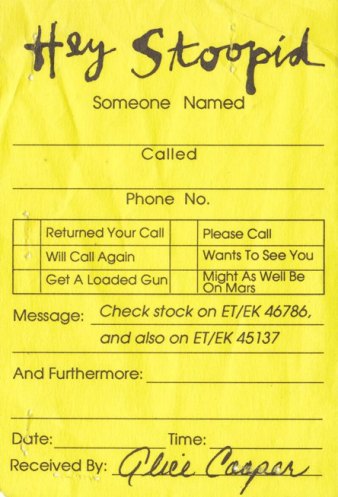
Promotional "Hey Stoopid" memo

Promotional “Hey Stoopid” memo

Part 300: Manic Nirvana

Do you own this?

MANIC

RECORD STORE TALES Part 300: Manic Nirvana

T-Rev has always been talented at building things. He built for me my first two CD towers, not to mention my cassette storage shelves built into my closet doors. No design was too elaborate. I liked a simple CD tower myself, just some shelves and some stain. T-Rev was always pushing himself to build something cooler. One of the best towers he ever built had side doors for VHS compartments, and a big black light to illuminate the whole thing. Inside the doors were stickers from some of his favourite bands. The whole thing was painted gray, it was a masterpiece.

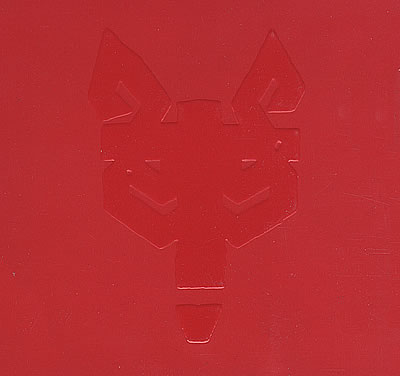
By coincidence, T-Rev also owned a semi-rare copy of Robert Plant’s 1990 solo album, Manic Nirvana. Both of us liked to collect “rare” versions of albums. T-Rev had a red digipack copy, with symbols embossed on the cover. It’s pretty hard to find, although we did see a couple copies float by in the Record Store. There’s weren’t any bonus tracks, but the rare packaging made it something desirable.

So what’s the connection between the CD tower and Manic Nirvana?

T-Rev was checking out the Plant CD one day, and happened to take a look at it under his black light. Lo and behold, suddenly symbols appeared on the cover, previously hidden! The front cover showed what appeared to be a big “H”. The back and inside covers had their own symbols that showed under black light.

It was a mystery! The symbols didn’t seem to have any meaning that we could discern. Maybe they were intentional, maybe not? Maybe they were just a byproduct of the manufacturing process. Other similar digipacks did not show anything special under a black light.

My questions regarding this CD are as follows:
1) Have you ever owned the red digipack version of Manic Nirvana?*
2) Have you ever looked at it under a black light?
3) WHAT DOES IT MEAN?

*Aaron discovered via the Discogs listing that this seems to be a promo release.


REVIEW: Journey – Revelation (2008 2CD/DVD edition, import with bonus track)

JOURNEY – Revelation (2008 Nomota)

It’s funny to surf the reviews on Amazon for this CD. “Super and Awesome” says one. “Best Journey album since Escape” says another. (Really? Better than Frontiers?)

OK, cutting through the glowing fanboy reviews, let’s be dispassionate here. Journey hasn’t truly sounded like Journey since Steve Smith and Steve Perry left for good in the late 90’s. In my unassuming personal view, Trial By Fire from 1997 was the best Journey album since the glory days. They tried to replace Steve Perry with a clone singer named Steve Augeri on three releases (Arrival, Red 1, Generations) and the result was a generic band that sounded like (guess what) a Journey tribute band. The fact that the smooth-as-butter Steve Smith was gone didn’t help.

REVELATION_0006

Journey did what I thought was a really smart move afterwards. They brought in the brilliant veteran Jeff Scott Soto to sing, and there are some pretty awesome bootlegs out there of Journey with Soto singing. Soto was no Steve Perry, but a unique singer in his own right, loved by his own legion of fans for his powerful voice. But he was no replicant; no duplicate.  The band actually fired him to bring in someone more Perry-like.

That person is Arnel Pineda, who has an incredible set of pipes. I mean this guy can sing! Unfortunately, Pineda’s been singing Journey pretty much his whole life. He’s a Perry clone. He’s Perry-lite. He’s an imitator. And you can tell. He lacks the character, the grit, the personality, the soul, and the experience of Steve Perry.

Also, let’s not forget that Steve Perry was one of the major Journey songwriters, and without him Neil Schon and Jonathan Cain are left to their own devices. The soul is still gone, the heart of Journey is still ripped out. Revelation is no comeback album. It’s another Journey-lite album, it sounds like the best Journey tribute band in the world, but still…just a tribute band.

Having said that, it’s not bad. It’s not a comeback, it’s more of the same. There are good songs here – “Never Walk Away” being the strongest. “Like A Sunshower” is a nice, generic ballad. “The Journey (Revelation)” is the most adventurous tune here, an instrumental where Schon gets to show his stuff, shredding and classing up the place several notches. The rest of the tunes are just nice. Pleasant Journey-esque ditties where you can tell Cain and Schon were saying, “Let’s write a Journey rocker,” or “Let’s write a Journey ballad”.

The album is roughly half new songs, half old. The second disc is entirely re-records with Arnel singing classic Journey tunes. It’s nice but certainly no replacement for Greatest Hits. It’s great that they tackled “Stone In Love” and “Be Good To Yourself” on here. The rest are the hits, and you know ’em and love ’em already so I won’t talk about them too much. Except to say, this is where you notice first and foremost that Steve Perry is missing. The nuances are not here, rendering this disc nothing more than a novelty.

There are two other re-records, both (oddly enough) from the Augeri era. One is the Japan-only “The Place in Your Heart” which I don’t have so I can’t comment on it. The other, which is on all versions of the CD, is “Faith In The Heartland”, one of the better songs from Generations. I’m guessing they did these two re-records because nobody heard Generations. “Faith In The Heartland” is probably better on Generations, sung by the guy who actually wrote it, Steve Augeri.

There is also a great bonus track on the Mexican edition: great song, loaded with atmosphere, called “Let It Take You Back”. It’s about nostalgia, ironically, but I can relate and it’s a great tune backed by a strong riff. One of the best tunes on the album. Track it down, you won’t be sorry.

REVELATION_0004

The Walmart exclusive edition has a really good DVD: live (in Vegas) performances with Arnel singing. “Mother, Father” shows that Arnel can sing. Man, can he sing! I think Journey at this point are a stronger band live than in the studio. Live, Arnel has more character and you’re just in awe of the man’s pipes. This is a good DVD. And for free, it’s worth the price of admission.

So there you have it. Ignore the fanboys and let’s be unbiased here. This isn’t the Journey comeback we hoped for. It’s just another medium-rare Journey album. Until Perry comes back (and let’s face it, he has to one day) and records an album as great and progressive as Trial By Fire, this is a tired band spinnin’ tires.

3/5 stars

DVD:

  1. “Sky Light”
  2. “Any Way You Want It”
  3. “Wheel in the Sky”
  4. “Lights”
  5. “After All These Years”
  6. “Never Walk Away”
  7. “Open Arms (Prelude)”
  8. “Open Arms”
  9. “Mother, Father”
  10. “Wildest Dream”
  11. “Separate Ways (Worlds Apart)”
  12. “Faithfully”
  13. “Don’t Stop Believin'”
  14. “Be Good to Yourself”

REVIEW: Deep Purple – Made In Japan (4CD/1 DVD box set) Part 3

NEW RELEASE: Part 3

This box set is so massive, I needed to review it in three installments.  The first two can be found here:
DEEP PURPLE – Made In Japan Part 1
DEEP PURPLE – Made In Japan Part 2

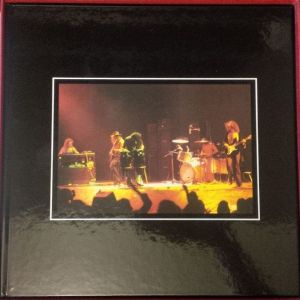
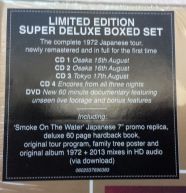
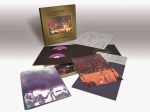
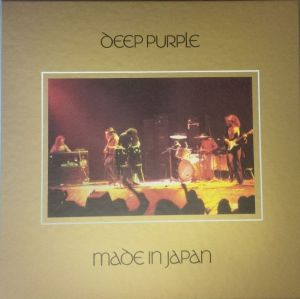
DEEP PURPLE – Made In Japan (2014 limited edition Super Deluxe box set)

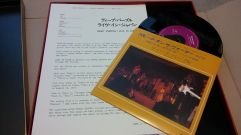
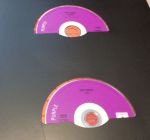
“Smoke on the Water” Japanese 7″ promo.  This is a reproduction of a rare Japanese promo single from 1972, sleeve and all.  It is pressed on heavy 70 gram vinyl, a treat indeed.  It features the promotional single edit of the studio version, and an edit of the Made In Japan version on the other side.   The studio edit is available on plenty of releases, such as Singles A’s and B’s.  The live edit is one that I don’t think I owned prior to this.  I actually enjoy something like this; it’s interesting to see where and how they did the edits, from a technical point of view.

Including a 7″ single in a box set of this size is something I wholeheartedly support.  Not only do I love the vinyl format, but when you spend this much money ($115 Canadian) in one place, you deserve something extra.  A lot of the stuff included in box sets these days, even in this box set, amounts to nothing more than paper.  Music trumps packaging, so I’ll always take something like a bonus vinyl, especially when it has an exclusive track on it.

Interestingly, on this printing, the times for the two tracks are reversed.  The live version is the longer, not the shorter as the label suggests.


LORDDVD:  Made In Japan: The Rise of Deep Purple MKII and more.

This hour-long documentary consists of new and archival footage and interviews, assembled into a narrative.  Old footage of Deep Purple MKI begins our story.  The shortcomings of this lineup led the core members of Ian Paice, Jon Lord, and Ritchie Blackmore to seek new bandmates.  They had gone as far as they could musically with Nick Simper (bass) and Rod Evans (vocals).  In stepped Roger Glover and rock’s greatest screamer, Ian Gillan.  Then, the big albums:  In Rock, Fireball, and Machine Head.

Strangely, it was a tax loophole that led to Machine Head. It was expected that the fortunes of the band would only rise, but British tax laws would keep them all paupers.  If they became tax exiles, and wrote and recorded in mainland Europe, they would not be taxed.  This led them to Montreux, Switzerland.  According to Claude Nobs, they were planning on recording an album called Made In Switzerland.  Nobs invited them to record at the local casino, and the circumstances of this have been well documented.  A Frank Zappa concert that night was attended by Deep Purple and Nobs.  Someone fired a flare gun into the bamboo ceiling, and the place went up in smoke.  This DVD has the audio of Zappa asking the audience to leave!

The place did indeed burn to the ground.  Luckily Deep Purple had not yet moved in their gear, or it too would be gone.  Next they tried recording in a small theater, but noise complaints caused them to move again.  It took almost a week to find the Grand Hotel, which was closed for the winter.  Perfect.  The results speak for themselves.  Machine Head is the classic Deep Purple album.  But according to Blackmore, it was Made In Japan that made them a phenomenon.  It was a live album that they didn’t want to do, but could not have regretted doing.

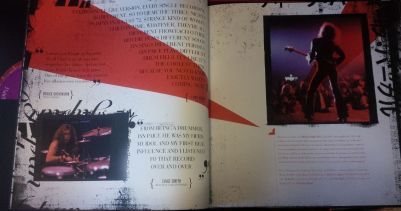
Bruce Dickinson, James Hetfield, Lars Ulrich, and more show up to discuss the impact of Made In Japan on themselves.  Dickinson points out that the remarkable thing is that Made In Japan is 100% live.  There are no overdubs.  Martin Birch managed to capture it raw.  There’s a lot of great footage here; live footage, showing the interplay of the band.

IMG_20140607_062755

Next, the band headed to Rome to record the difficult Who Do We Think We Are.  Made In Japan had not even been released in America yet, only Japan, until mass importing of the record forced the label to release it.  Unfortunately at the height of their powers, Ian Gillan and Ritchie Blackmore had a massive falling out.  Ian resigned.  Blackmore and Paice almost formed a trio with Phil Lynott.  Glover was fired, which was a condition Blackmore set to stay in Deep Purple.  A final Japanese tour was the last commitment of the band.  Glover describes a cold atmosphere, and the tension in the air.

Glenn Hughes appears next, remembering a Trapeze gig attended by members of Deep Purple.  He sussed out the reason for their attendance.  Still, he did not expect to be asked to join.  It was an emotional time for Glover.  He saw his Deep Purple albums on top of the charts, yet with magazines printing pictures of their new lineup featuring David Coverdale and Glenn Hughes.  Hughes reveals he was mistakenly sent awards for albums like Who Do We Think We Are.  Glover felt deeply hurt but strove to be a professional.

As a Deep Purple fan who owns a lot of Deep Purple on video, I enjoyed this documentary.  Although it has some footage that I had before, it also had a lot that I didn’t, such as interviews that were new to me.  Footage from Japan is a highlight.  “Smoke on the Water” is presented almost in full (from the 17th), though it is very lo-fi.

Extras include a music video for “Smoke on the Water”, made up of footage from the documentary.  “The Revolution” is a short film about rock music and counter-culture, focusing on Deep Purple while at Montreux in 1971.  Much of this footage is in the main documentary.  A bearded Gillan rips his way through “Speed King”, and the band are interviewed.  There’s also a short German documentary from 1972, subtitled of course.  I enjoyed the description of their stage attire:  “intentionally scruffy hippie uniforms”.  Finally, there is a 1973 performance of “Smoke”, but now I’ve really heard the song too many times.  It’s the best footage though: full colour, pro-shot.  Roger is wearing bright red platform shoes.

This DVD was adequate.  The main documentary feature was re-watchable.  “The Revolution” and the German doc, not so much.  It’s too bad that the video content is only tangendentally related to Made In Japan.  The DVD is really not much more than a supplement to the main feature.

IMG_20140603_173713Final words:  The box set is rounded out by an excellent booklet, a reproduction of the Japanese tour program, a family tree, and a reproduction press release.  Ultimately these things are just pieces of paper.  Nobody would go out of their way to buy a reproduction of a press release.

As a boxed set of music, Made In Japan is a home run.  This is the way they should have released it back in ’93, instead of the incomplete Live In Japan.  I’ll hang onto my old 2 CD anniversary edition of Made In Japan, because I believe in keeping the original mix of something.  It’s an historic piece, not to be discarded.  When I want a briefer Deep Purple live experience, I’ll play that version of Made In Japan.  When I want the full Monty, I’m listening to this box set.  Not only is it the best release sonically, but it is the only complete release of all three Japanese shows.

As a celebratory boxed edition of a classic, I’m less satisfied.  The DVD and the papers inside are things I will get less enjoyment from.  If the DVD had included a feature on the making and remixing of this edition, I would have been more interested.

Still, I’m happy.

For the music:  5/5 stars

For the box overall:  4/5 stars

REVIEW: Deep Purple – Made In Japan (4CD/1 DVD box set) Part 2

NEW RELEASE: Part 2


This box set is so massive, I needed to review it in three instalments.  The first one can be found here:

DEEP PURPLE – Made In Japan Part 1

IMG_20140607_062429DEEP PURPLE – Made In Japan (2014 limited edition Super Deluxe box set)

Disc 3:  Tokyo, August 17 1972.  Finally we arrive at the third night.  The band were comfortable by the time they hit Tokyo, but the sound from the venue wasn’t as desirable as the two nights in Osaka.  That’s the main reason that most of the Tokyo show was not used on Made in Japan originally.  Yes, sonically this is not as crisp nor clear.  It seems like a noisier mix, with Gillan’s voice more difficult to make out.  However, we have heard plenty of Deep Purple recordings worse than this, and this is still Deep Purple MkII at the top of their game.

The band tune up and say hello before “Highway Star”, a quaint reminder of the way concerts used to be compared to today.  Like the other two renditions of “Highway Star”, this is an electric performance.  Jon’s organ solo was the highlight for me, Ritchie’s blistering frets notwithstanding.  Gillan tells the crowd that the song is about somebody named “Fat Larry” and his automobile.

“Smoke on the Water” begins with Ritchie teasing a bit of “God Save the Queen”.  Jon and Ritchie fall out of sync a bit in the beginning of the song, but they quickly lock back into place.  Of the three, this is my favourite version of “Smoke on the Water”, just because it is different.  The band are looser and willing to play around a bit more.  Blackmore’s solo is a highlight as he travels all over the musical landscape.

Always epic, “Child in Time” is greeted by polite applause, a true show of Japanese appreciation.  While the August 16 Osaka version may well be Uncle Meat’s favourite because of the guitar solo, I think this one is pretty special due to Jon’s keys.  Either way, we’re splitting hairs here.  It’s “Child in Time” performed live in Japan in 1972!  To talk about favourites at this point is to be speaking in nanometers.

IMG_20140603_173412“The Mule” has an entertaining intro; Ian Gillan tells the monitor guy, “Can we have everything louder than everything else?”  This is the version from the original Made In Japan.  The intro was so legendary that Lemmy paid homage on the live Motorhead album, Everything Louder Than Everyone Else.  The song goes absolutely mental at the 2:20 point, before Ian Paice breaks into his drum solo.  Not a lot of drummers are interesting to listen to soloing for five minutes.  Paicey is.

“Strange Kind of Woman” is another track that is never exactly the same twice.  Gillan and Ritchie improvise together, a reminder of a day and age when they (mostly) got along.  It’s hard not to smile.  According to Ian, this song is about “Terrible Ted” and his “awful lady”.

Diving into newer material from Machine Head comes “Lazy”; always interesting since it too relies on a lot of improvisation.  This is the version used on Made in Japan originally, and Jon’s solo (dipping into “Louie Louie”) is familiar and fun.  That Hammond howls, and then Blackmore enters.  This is one more Deep Purple long bomber.  The vocal doesn’t even start until six minutes in!

Finally, “Space Truckin'”.  One more amusing song intro:  Ian says that this song is about what would happen if space travel and rock and roll ever met, which has not happened.  Therefore, this song does not exist.  But it sure does slam!  The crowd clap along, obviously into it.  I love every pick scrape, every drum roll, and every scream.  Deep Purple can simply do no wrong at this point.  The only flaw is distracting audience (or perhaps crew) noise.  You can hear people speaking Japanese around the 13:00 mark.

IMG_20140603_174039Disc 4: Encores.  This CD comprises all the encores from all three shows.  “Black Night” was played first, at all three shows.  “Speed King” was played twice, on the 1st and 3rd nights.  On the 2nd night the band played Little Richard’s “Lucille” at absolutely breakneck pace.  For many years, these encores were largely unavailable.  “Black Night” from the 3rd night in Tokyo was released (edited) as a B-side, and then re-released on many compilations such as Power House (1977).  The other encores didn’t receive release until the 90’s or later.  Now, finally, all the tracks from Japan are collected in one set.  I could barely keep track of where to find all the songs from the Japan shows, spread as they were over multiple releases.  Now it’s all in one place, as it should be.

After tuning up, Blackmore noodles for a bit.  Then “Black Night” crashes to a start.  This song is almost a respite for the audience, after a track like “Space Truckin'”.  If you remember from Part 1 of this review, Gillan had a case of bronchitis that he was recovering from.  He couldn’t stand his performance on the 15th, but you’ll be hard pressed to tell on “Black Night”.

Ian says “good luck, good night,” but it’s just a clever ruse.  Much applause results in a return and a noisy take of “Speed King”.  There’s quite a bit of feedback, sour notes and noise coming from the guitar.  Blackmore was either struggling with it, or abusing it.  A knackered Ian Gillan is out of breath at times.

MIJThe second version of “Black Night”, from the 16th, is quite different.  It’s quite ragged and feedback-laden, and this version reveals human errors that, to me, only add to the live experience.  Deep Purple were taking things over the top at these concerts, and sometimes things fall apart.  It’s rock and roll.

Once again, the applause of the audience brings Deep Purple back to the stage.  Their insane cover of “Lucille” was a pleasant surprise.  Deep Purple had been playing this for ages, since Gillan first joined the band.  Another version (from London) can be heard on In Concert ’72.  That is probably the superior version, though this is no slouch.  Almost half of it is just intro!  It is stretched over eight minutes.  It keeps getting faster and faster, until they’re playing at Ludicrous Speed.

The final show in Tokyo is sonically different, as mentioned at the start of this review.  That’s most obvious on this CD when you go straight from Osaka to Tokyo.  This time, Deep Purple are introduced in Japanese, before Ian asks for the monitors to be turned down.  This is the version used on B-sides and compilations numerous times before, and it is my favourite, probably due to familiarity.  This mix allows Jon’s organ to shine a lot better.  It is also unedited, which of course is a bonus.

And finally the journey ends with “Speed King”.  The band tune up for the last time in Japan, and dive in.  Once again, they’re off the rails.  I don’t know where Gillan got the energy.  Even though he’s tired, he’s still wailing.  Jon Lord’s solo is especially enjoyable.  I’m exhausted by the end of it.  This has been a lot of Deep Purple to digest.  But we’re not done yet.

To be concluded.

REVIEW: Deep Purple – Made In Japan (4CD/1 DVD box set) Part 1

NEW RELEASE: Part 1

IMG_20140607_062032DEEP PURPLE – Made In Japan (2014 limited edition Super Deluxe box set)

Giving you the kind of detailed review that you have come to expect from me is no mean feat when it comes to a massive set like this. This 5 disc (plus 7″ single) Made In Japan reissue was an epic undertaking to absorb. Just as much as reviewing Machine Head‘s 5 disc deluxe edition last year was a huge task, Made In Japan was its equal!

Because of this, I’ve decided to split the review into three: Today we’ll look at the first two CDs. Then the third and fourth CDs, the DVD, the 45, and everything else.  Enjoy this first installment.

Disc 1:  Osaka, August 15 1972.  “Good morning!” jokes Ian Gillan as the band arrive on stage.  A few moments of quiet as the band plug in and strum, and then…the opening drum beat to “Highway Star”.  The first of three shows has begun!

Gillan says he was suffering from bronchitis on this first night, and you can indeed hear a bit of extra rasp in the man’s voice.  Gillan says he hates these performances, but I think the extra rasp only adds to the furious “Highway Star”.  Both Ritchie Blackmore and Jon Lord are on fire, ripping through their parts with great aggression.  Blackmore makes a few mistakes during the solo, but who cares?  Right from this opening salvo, you can hear the nuances and details of this new remix.  Reading the liner notes, you realize that the biggest difficulty in remixing this album was that everything was bleeding through Gillan’s vocal mike.  I’ll be damned if it tarnishes the listening experience though.

Before you can catch a breath, “Highway Star” has ended and they’re into “Smoke on the Water”, which had yet to become the classic concert favourite that it is today.  Ritchie plays around a bit on the intro, as the crowd claps along.  Clearly, they know the song.  “Smoke” lacks the furious energy of “Highway Star”, but it is still an incredible performance.  Once again, Ian Gillan’s raw voice only adds to the experience (but it’s not even that bad).  “Smoke” is the only track from this show that was used on the final album Made In Japan.

Ian introduces “Child in Time” as a “sad story”, but nobody was mourning that night in Osaka.  One thing I enjoy about “Child in Time” is that it is never played the same twice.  Jon in particular changes up his opening melodies all the time, and this version is quite different from the one they debuted a mere three years prior at the Albert Hall.  Somehow, bronchitis and all, Gillan still manages to scream his way through this monster.  At times, Ritchie’s solo sounds like it’s drifting into “Lazy”.

IMG_20140607_062642According to Ian’s intro, “The Mule” is a song about Lucifer.  This track from Fireball is essentially an excuse for Ian Paice to do a five minute drum solo.  Nothing wrong with that; it’s Ian Paice after all.  Gillan’s voice is a bit shaky at times, but I think that only adds to it.  I enjoy that Allmusic refers to “The Mule” as an instrumental, proving once and for all that they don’t know what they’re talking about.

It’s all long-bombers from there.  “Strange Kind of Woman” is extended with Ian and Ritchie’s usual interplay, and a gonzo guitar solo.  “Lazy” is never short, nor is “Space Truckin'” which exceeds 20 minutes (complete with flubbed lyrics).  They are all stellar.  I found the intro to “Lazy” quite enjoyable, because after a brief noisy organ bit, Jon teases the crowd by stopping.  It becomes dead silent  for long enough that you’ll wonder if the CD stopped.  That’s something you never hear on a live album these days; a silent crowd.  Before “Strange Kind of Woman”, Ian begs the audience for a few moments to tune up.  It pays off in the end, he says!  All this talk is preserved on the box set version of Made In Japan.

I found the remix on this disc to be great.  I love that I can hear every conga on “Space Truckin'”.  I haven’t played my old 3 CD remixed Live In Japan (1993) set in a few years, so I haven’t compared the two mixes, but this is so good, I don’t really have a reason to play Live In Japan anymore.

IMG_20140607_062555Disc 2:  Osaka, August 16 1972.  Once again, “Highway Star” gets the proceedings off to a bang.  Gillan’s voice is still raspy, but a new day has given it strength.  The band sound more confident, as if they lacked any in the first place.  It is, after all, the second Osaka show that made up the bulk of the original Made In Japan album.  Once again, the remix is a joy.  I believe in hanging on to an original mix of an album, that’s just the way I am.  The original Made In Japan might not sound “better”, but it is an historical document of the circumstances of its making.  It has its own sonic charm, and I think both can co-exist happily in my collection.  (The ’93 mix, I’m afraid, will be retired in favour of this new 2014 mix.  Interesting how they remix this album every 21 years.)

Not actually Made in Japan

Once again, “Highway Star” is followed by “Smoke on the Water”.   Ritchie plays with the opening riff, but in a completely different way from the first concert.  Later on, there’s a couple bum notes, and perhaps that’s the reason they used the version from the day before on the original album.  The solo is a little loose too.

“Child in Time” is the adventure that it always is, and this version is familiar because it’s the one from the original Made in Japan.  The song is truly a rollercoaster; that word applies here as well as any other.  There are times it feels like it’s coming off the rails, but Glover and Paice keep it locked.  Uncle Meat tells me that the original Made in Japan is his favourite live album “of all time.”  (Perhaps it is also one of Dream Theater’s, since they did a song-for-song cover of the album.)  Meat also says this is the “greatest guitar solo of all time,” right here on “Child in Time”.

“The Mule” was not used on the album; instead the version from the next night (in Tokyo) was selected.  Same with “Lazy”.  “Strange Kind of Woman” and “Space Truckin'” from this concert were used on Made in Japan.  I couldn’t tell you why “The Mule” wasn’t used, it sounds great to me.

I very much enjoyed Ian’s “Strange Kind of Woman” intro.  After explaining the song’s inspirations Ian says, “Why I’m talking such a lot is ’cause, like, we gotta tune up again…’Cause there’s a big time change from England you see, and the guitars are still not recovered from it.”  After they are all tuned, Ian drops his famous line, “I have to announce that next week, we’re turning professional.”  Through to his ungodly ending scream, “Strange Kind of Woman” is a corker.

Lord’s organ intro to “Lazy” is different from the first night, but just as interesting.  “Space Truckin'” is the familiar version we know and love from the original Made In Japan, and it’s still astounding how this band could jam!  Who cares that Gillan’s “Yeah, yeah yeah yeah!” is flat.  That’s part of the action!

We’ll stop here for now, and pick up the rest tomorrow.  Already, it’s apparent why a comprehensive set like this one was necessary.  It’s because even if the setlist is the same, Deep Purple never play the exact same concert twice.  Some of Ian’s song intros are by rote, but that’s where the similarities end.  Deep Purple weren’t content to crank out the same jams and solos night after night, and that’s why a box set like Made In Japan is an important document of this band in their prime.

To be continued.

Part 297: “The World Must Change”

EARTH

RECORD STORE TALES Part 297: “The World Must Change”

1997. A middle-aged mustached gentleman walked into my store with Eric Clapton’s latest single, “Change the World”.

“Hi,” he said. “I bought this at HMV, but it’s not what I wanted. I’m looking for a song, I think it’s called “The World Must Change”. Do you know it?

I searched my memory for a bit but drew a blank.

“I heard it on the radio. It’s a real hard-driving song,” he said, “and I could swear in the lyrics, he was singing ‘the world must change’. I told the girl at HMV and she said it was Eric Clapton. She sold me this, and it’s definitely not the right song.”

If he told the girl at HMV that it was a “hard-driving” song, I don’t know how she came up with “Change the World”, unless she’d never heard “Change the World” before. It is anything but hard-driving.

The fellow searched my rock section for pretty much any CD that look like it had songs about changing the world, and listened to a number of them, but came out blank.

A Google search today reveals little, aside from a George Benson song called “Everything Must Change”, but that is even further away from “hard-driving” than the Clapton track.

He ended up selling his Clapton single to me for $2, because HMV wouldn’t take it back once opened. It was a huge drop from the $9.99 sticker price, and he wasn’t happy, but $2 was pretty much top dollar for us to buy CD singles at the time (unless you had something rare, like an old Metallica single). I felt genuinely bad that I couldn’t find that song for him. I suggested he call the radio station on which he heard the track.

Now today, I appeal to the Internets at large:  Any ideas what song it could have been? Post a comment!

REVIEW: Deep Purple – “Knocking at Your Back Door” / “Perfect Strangers” (single)

Welcome back to the Week of Singles 3! Each day this week we’ll be looking at rare singles and EPs.

MONDAY: OZZY OSBOURNE – Ultimate Live Ozzy (1986 CBS picture 12″ record)
TUESDAY: BON JOVI – Livin’ On A Prayer (double 12″ EP)
WEDNESDAY: ANTHRAX – Live from Sonisphere Festival 2010 (picture disc EP)

DEEP PURPLE – “Knocking at Your Back Door” / “Perfect Strangers” (1984 Polydor 12″ single)

What a find this was.  While Simon Robinson has kept Deep Purple’s catalogue largely available on CD in lavish packages, here’s an oddity that has slipped through the cracks.  Granted, interviews are fairly low on my collecting priority list.  When something like this falls in your lap, you still gotta bite.

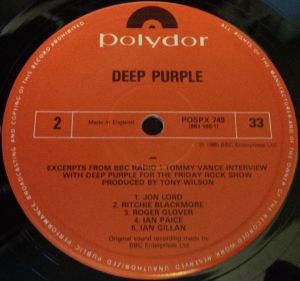
I got this limited edition (#9240/????) at an old used music store in Uptown Waterloo.  I cannot remember the name; perhaps a kind reader will remind me.  They were technically a “Christian” store but still carried music of all varieties.  This 12″ was sitting on their shelves (price long lost) and I snagged it.  The A-side contains not one but two hits, and the B-side, in depth interviews with all five Deep Purple members.  All was harmonious in Deep Purple, coming off the high of making the album Perfect Strangers and embarking on a successful tour.  The dischord did not return until The House of Blue Light.  Therefore these interviews reflected a rare time of excitement and positivity for the short-lived Deep Purple MkIIb.

First, the music:  To get both awesome singles from Perfect Strangers on one 12″ is handy!  These are two of MkIIb’s best tracks, if not the two best tracks, period.  By the end of the A-side, my mind is already blown by the grandiose, intelligent, classic sound of Deep Purple.  Of note, these are the full length tracks, not single edits.

IMG_20140518_065140The interview side is helmed by Tommy Vance for the Friday Rock Show.  Each member is interviewed separately, which is how it should be for Deep Purple.  The amiable Jon speaks for 10 minutes, recalling Deep Purple history, particularly the very early years.  They also discuss Jon’s few writing credits on the new album, a potential pot-stirring question.  Ritchie Blackmore then reveals he doesn’t mind giving up being “the” leader of a band (Rainbow).  Ritchie claims the hardest part of being the leader of a band was “trying to find the perfect member”.  He sounds excited when discussing Deep Purple’s on-stage chemistry.  Meanwhile, Roger Glover sounds like he’s eating a bag of crisps.  He also sheds light on the early stages of the reunion, and the things they discussed to make it work.  I enjoyed Ian Paice’s interview most; he dismisses what was going on in 80’s pop music as “a fashion show”.  He proclaims that his goal for the reunited Deep Purple was to bring back a little bit of class to rock and roll.  In my mind there is no question that they succeeded.  Finally, the singer:  Ian Gillian is soft-spoken and optimistic.  He too is glad to have shed the responsibilities of being the leader of a solo band.

If you’re a Deep Purple collector and you find this record sitting on a shelf for a reasonable price, do not hesitate.  Tommy Vance asks probing, intelligent questions and the result is an interview disc that will enjoy listening to more than once.

5/5 stars

More Deep Purple: