dave murray

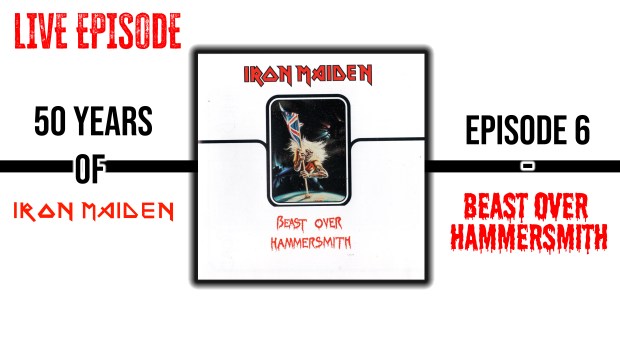
🅻🅸🆅🅴 50 Years of IRON MAIDEN episode 6: Beast Over Hammersmith

50 Years of IRON MAIDEN episode 6:  Beast Over Hammersmith

A special 🅻🅸🆅🅴 episode

GRAB A STACK OF ROCK #93

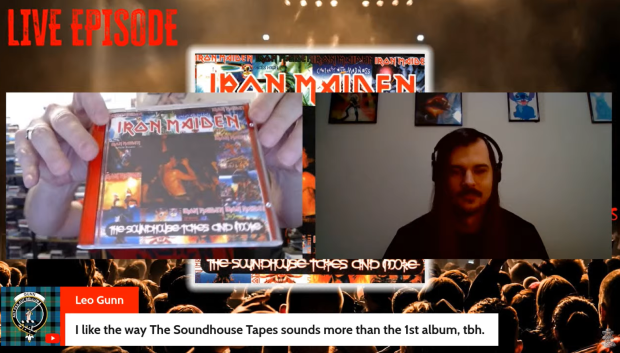
Good evening Hammersmith…or wherever you are!  Tonight on 50 Years of Iron Maiden, Harrison and I are appropriately tackling this live album with a live episode!

Beast Over Hammersmith is a double live album recorded just before The Number of the Beast was released.  The band played a rare mix of Di’Anno classics and deep cuts, along with new material, and one B-side!  Bruce explains to the crowd that it’s not “really” a B-side, which it was, but we’ll get into that, as well as “all the lazy bastards from EMI in the back.”

This episode is our sendoff to Clive Burr, and we’ll be talking about him, though not for the last time in this series.

Beast Over Hammersmith was first issued as a 2 CD set within the Eddie’s Archive box set, which we have taken brief looks at in the past.  Today you can get Beast Over Hammersmith on vinyl, so it is a significant enough release to warrant its own episode.

So give us a yo, yo yo yo! and see us tonight, live!

Past episodes:

LIVE on Friday February 28 at 7:00 P.M. E.S.T. / 8:00 P.M. Atlantic.   Enjoy on YouTube or Facebook.

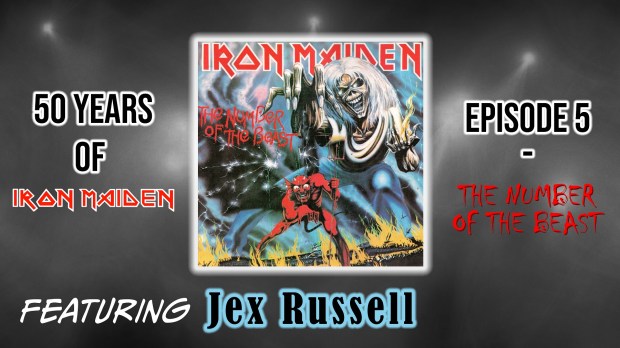
50 Years of IRON MAIDEN episode 5: The Number of the Beast with Jex Russell

50 Years of IRON MAIDEN episode 5: The Number of the Beast

With Jex Russell 

GRAB A STACK OF ROCK #91

Enter:  The Air Raid Siren.  “Bruce Bruce”.  Paul Bruce Dickinson to his mum.  One of the greatest lead vocalists, frontmen, songwriters and lyricists in heavy metal:  Bruce Dickinson.  None of that is hyperbole.

It’s one of the greatest “replacement singer” success stories in heavy metal.  Not just anyone could replace the beloved Paul Di’Anno.  What Iron Maiden did with Bruce took the band to a whole new level.  They tightened the songwriting, sharpened the production and put out one of the best albums of their lives.  The Number of the Beast pushed Maiden to a new level, and hinted at how they would grow album by album in the future.

In this episode, Mike and Harrison discuss the full track listing, including “Total Eclipse” and the live B-side “Remember Tomorrow”.  We’ll talk about the different coloured covers, the different track listings, and of course the tour!  Also included, an interview clip with Bruce Dickinson on assumptions made about heavy metal at that time.  This in-depth episode is our longest to date at just over an hour.  It is filled with praise and critique, but by the end you will understand why this is considered by some to be “the” Maiden classic.

Jex Russell’s favourite Iron Maiden album is The Number of the Beast.  He was thrilled to find that no-one had snagged this slot yet.  Please welcome Jex back to the show!

Past episodes:

Friday February 21 at 7:00 P.M. E.S.T. / 8:00 P.M. Atlantic.   Enjoy on YouTube.

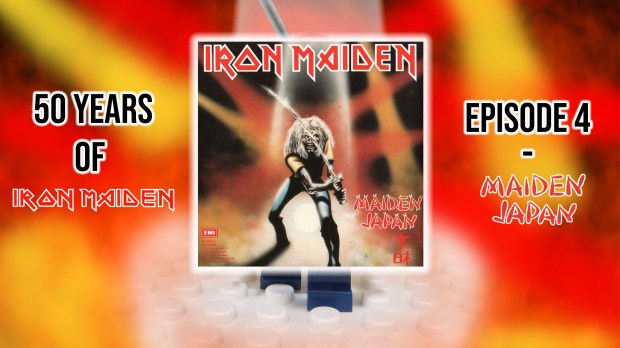
50 Years of IRON MAIDEN episode 4: Maiden Japan, Live!! + One, Live at the Rainbow

50 Years of IRON MAIDEN episode 4: Maiden Japan, Live!! + One, Live at the Rainbow


GRAB A STACK OF ROCK #90

Closing out the Di’Anno years, Harrison and I take a deep dive into the live releases that accompanied them.  Live!! + One was an exclusive Japanese EP that featured “Women In Uniform” (covered in Episode 2), and three live tracks, two of which were exclusive (and awesome).  Maiden Japan, of course, was the live EP that you know and love.  Live at the Rainbow was an excellent home video that featured Paul on vocals.  We tackle all this on tonight’s episode.

You will see our copies of these releases (but not Live!! + One since I didn’t buy it the one time I saw it), and hear about them in detail.  This episode is our sendoff to Paul Di’Anno, and we discuss his reasons for leaving.  And in came a young upstart named Bruce Bruce…

This short and energetic episode features just Harrison and myself, but we’ll be back next time with a new special guest, and a new lead singer!

Past episodes:

Friday February 14 at 7:00 P.M. E.S.T. / 8:00 P.M. Atlantic.   Enjoy on YouTube.

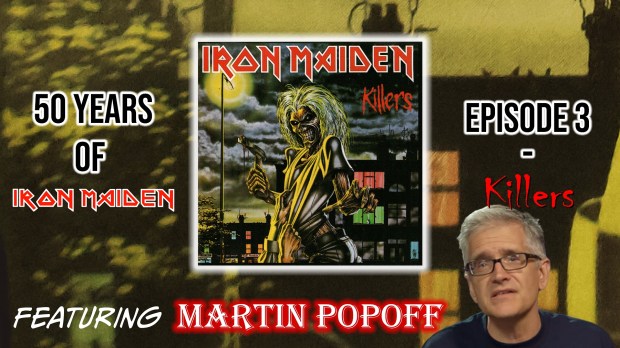
50 Years of IRON MAIDEN episode 3: Killers with Martin Popoff

50 Years of IRON MAIDEN episode 3:  Killers (1981)

With Martin Popoff

GRAB A STACK OF ROCK #87

Here is the episode we’ve all been waiting for:  Author Martin Popoff (Iron Maiden: Album By Album) joins us to talk about record #2, Killers.

With Adrian Smith now in the fold, Maiden settled into the studio with legendary producer Martin Birch to lay down another series of tracks that the band had been working up for years.  “Wrathchild”, “Killers”, “The Ides of March” and more will be broken down, track by track.

Martin will also be telling us a little bit about his forthcoming book, Hallowed By Their Name: The Unofficial Iron Maiden Bible, currently up for pre-order (released April 28 2025).  This book is sure to be a must-have.

We will also discuss the singles, the B-sides, and the tour.  Once again Harrison goes through the Killers tour and tells us the facts, figures and songs.

Don’t miss this awesome episode of 50 Years of Iron Maiden, tonight on Youtube.

Past episodes:

Friday January 24 at 7:00 P.M. E.S.T. / 8:00 P.M. Atlantic.   Enjoy on YouTube.

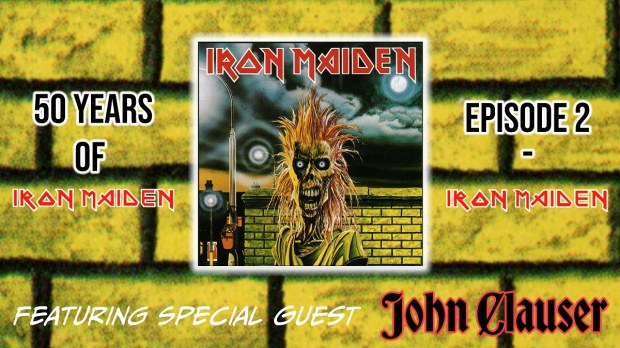
50 Years of IRON MAIDEN episode 2: Iron Maiden (1980) and “Women In Uniform” with John Clauser

50 Years of IRON MAIDEN episode 2: Iron Maiden (1980) and “Women In Uniform”

With John Clauser (My Music Corner)

GRAB A STACK OF ROCK #86

Welcome to the big leagues, as Iron Maiden are signed to EMI and release their first singles and album!  New members Clive Burr and Dennis Stratton are now on board with Steve Harris, Dave Murray, and Paul Di’Anno.  We cover it all on this second episode of 50 Years of Iron Maiden.

Joining Harrison and I is John Clauser from My Music Corner!  We bid you welcome to this special pre-recorded look at Iron Maiden’s self titled debut album.  Because we always aim to go in depth as possible, we’ll discuss the entire album track by track, the artwork, and all the singles and B-sides.  As an added bonus, we’ll also take a look at the standalone single “Women In Uniform”, a Skyhooks cover that the band have somewhat disowned.

A new feature to the series debuts tonight as well:  Harrison Kopp will take the spotlight every time we talk about a studio album, to go over the tour in detail.  Harrison will provide the facts, the figures, and the dates, while also analysing the setlists.  This segment is a highlight of the show.

This episode premieres at 7 o’clock PM exclusively on YouTube.  (Sorry Facebook – we are trying some new things with this Maiden series.  The live episodes will still be streamed to Facebook, but not these recorded ones.)

One of us will try to be in the comments tonight, so if you want to take part in a discussion, please don’t miss the premiere!

Past episodes:

Friday January 17 at 7:00 P.M. E.S.T. / 8:00 P.M. Atlantic.   Enjoy on YouTube.

A Successful Launch! 50 Years of Iron Maiden – The Soundhouse Tapes and More – Episode Recap

A huge thank you to everyone who checked out our debut episode of 50 Years of Iron Maiden!  In this episode, we covered in detail the early years of the band.  From Steve’s first band Smiler, to a roundabout of guitarists and drummers, we broke everything down.  First we covered the Paul Mario Day years and a great recent live version of “Running Free”.  We moved on to the Dennis Wilcock era and the turmoil that ensued!  From swords to keyboards, Iron Maiden were all but derailed!  Finally we turn to Paul Di’Anno, the first officially recorded lead vocalist of Iron Maiden.

With Di’Anno, there are several official releases to talk about from this era: the legendary Soundhouse TapesBBC Archives, Metal For Muthas, and Axe Attack.  There is a rare, little known demo version of “Running Free” on one edition of Axe Attack, and Harrison will tell you how to get it.

We hope you enjoy this fully immersive look at the early years of Iron Maiden.  See you next week for the EMI debut, the singles, and Johnny Clauser from My Music Corner.


SHOW NOTES:


Steve Harris originally formed Smiler.
The first lineup of Iron Maiden:
Steve Harris
Paul Mario Day
Terry Rance
Dave Sulivan
Rob “Rebel” Matthews
Paul Day still performs songs today, with former members of early Maiden.  A strong vocalist.  Powerful voice.  Sounds a bit like Di’Anno, with a growl.  Can sing clean, but can also really growl.  Powerhouse vocals – level 10.  Absolutely awesome version of “Running Free”, as good as any Maiden versions with Paul?

Paul Day left – “not enough on stage charisma”
Replaced by Dennis Wilcock, not a great singer but had the bloody sword trick.
Maiden breaks up so Harris can be rid of Rance and Sulivan.
Got in Dave Murray and Bob Sawyer
1977, Matthews, Murray and Sawyer were all fired
Terry Wapram (guitar) and Tony Moore (keyboards) replace the guitarists.  Barry Purkis/Thunderstick on drums with black leather mask.
This lineup played one show before Harris fired Moore. Keyboards didn’t fit.
There is a very slow, very different version of “Charlotte the Harlot” with this lineup.    A bluesy rock n’ roll version of “Another Life” with a completely different kind of beat.  Sounds more like Aerosmith.

Murray returns.  Wapram leaves, down to one guitar again.  Wilcock and Thunderstick leave and are replaced by Paul Di’Anno and Doug Samson who Steve had played with pre-Iron Maiden.
Rapid turnover of second guitarists:
Paul Cairns joins late 1978, plays on Soundhouse Tapes, lasts 3 months
Paul Todd – June 1979 – lasts one week.  Girlfriend wouldn’t let him play shows.  Later joined Paul Day in a band called More.
Tony Parsons joins Sep 1979 – Dec 1979, plays on BBC sessions.  Fired due to lack of ability compared to Murray.  Joined Dennis Wilcock in Gilbraltar.
Dennis Stratton comes aboard.
Doug Samson can’t handle touring schedule, and is replaced by Clive Burr, a friend of Dennis

– The Soundhouse Tapes
Iron Maiden – different, more straight ahead groove.  Not as driving or ahead of the beat.  Low end is more present.  Vocal is more laid back.
Invasion – less frantic and speedy than the B-side version.  Vocals on the chorus are heavily layered and produced.  Can’t save the song for me.
Prowler – Brilliant version, with the high guitar part laying clean on the top.  Great scream from Paul.  More straightforward than the album version.  Slower groove.
Strange World – Sounds unfinished compared to the other songs, a prototype of the skeleton without the atmosphere.  Slow bluesy solo (Paul Cairns?)
– BBC Archives (four-song radio rock show)
Iron Maiden, Running Free, Transylvania, Sanctuary.
Tony Parsons on second guitar.
Strange to think they bothered with an instrumental for this recording session.
Really well recorded versions, with vocal overdubs.  The drums really cut through and the guitars sound great.   Of all the versions heard so far, these are closest to the final album.
Iron Maiden has really energetic, frantic drums lending it an extra punch.  Vocals are nicely layered as on album.
Running Free is missing that pick scratching sound effect.
– Metal for Muthas (Sanctuary & Wrathchild)
Also with Tony Parsons.
Sanctuary – Very close to final version.  Guitar solo is very different – similar to BBC Archives version.  Tony Parsons lead – a little on the simpler side but very fast and catchy.
Wrathchild – Slower, more “heavy metal” groove.  Vocal is double-tracked throughout.  Nice impactful version, if less powerful.
– Axe Attack Running Free Demo – A really different sounding version.  Doug Sampson on drums, a different feel.  Guitars sound sharper.  The middle section with the pick scratching is much better – a solid chug.  Just overall more groovy.  A little clean.  Vocal harmonies intact.  I love when Paul yelps.  Snare drum could use more beef but it’s a demo.
 

🅻🅸🆅🅴 50 Years of IRON MAIDEN episode one: The Soundhouse Tapes and more! 1975-1980

50 Years of IRON MAIDEN episode one: The Soundhouse Tapes and more! 1975-1980

A special 🅻🅸🆅🅴 debut episode

GRAB A STACK OF ROCK #85


50 years ago, Steve Harris departed his previous band Smiler, and formed the first lineup or Iron Maiden:  Steve Harris, Paul Mario Day, Terry Rance, Dave Sulivan and Ron “Rebel” Matthews.

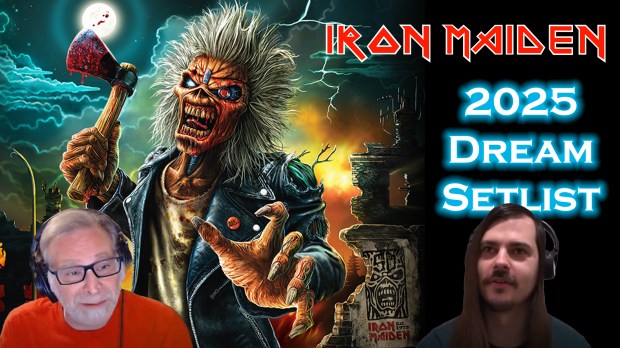
Today, Harrison Kopp and Mike Ladano are proud to debut their new series, 50 Years of Iron Maiden.

We begin with their first lineup and run through all the changes.  We cover every officially released recording available prior to their first releases on EMI, of which several exist.  These include Metal For Muthas, the BBC Archives, The Soundhouse Tapes, and Axe Attack.  There are also existent recordings of Iron Maiden with Dennis Wilcock on vocals, and Paul Mario Day playing Iron Maiden songs. Iron Maiden with a keyboardist instead of a second guitarist?  Steve Harris on lead vocals?  Tonight on this special live episode, we will cover it all.

While most episodes in this Maiden series will be recorded in advance, tonight’s debut will indeed be live.  Grab A Stack of Rock is usually a live show, but in 2025 we have some very special guests lined up for this series.  This requires scheduling, which makes recording in advance necessary.  We will continue to release shows on Fridays at 7:00 PM eastern standard time, and there will be the occasional live one sprinkled in.

It’s 50 Years of Iron Maiden, and the celebrations commence tonight.  Like and subscribe to Grab A Stack of Rock on YouTube, and hit that “notify” bell so you don’t miss a single episode.  We will be discussing every studio album, and we won’t be neglecting the official – and unofficial – live releases either.  From the compilations to box sets, you will see our entire collections throughout this comprehensive series.  Hit the gas, and here we go!


Friday January 10 at 7:00 P.M. E.S.T. / 8:00 P.M. Atlantic.   Enjoy on YouTube or on Facebook!

#1173: I Like Iron Maiden…A Lot

RECORD STORE TALES #1173: I Like Iron Maiden…A Lot

In 1984, I “rebooted” my musical taste and started from ground zero.  Out went Styx for almost two decades.  Out went Joey Scarbury, and Kenny Rogers.  In came KISS, W.A.S.P., and of course, Iron Maiden.  I don’t think there was ever a time that Iron Maiden were my #1 favourite band, because Kiss almost always held that spot.  It is safe to say that Maiden were always in the top five.

In grade school, I rocked Iron Maiden while being scolded by Catholic school teachers for doing so.  It didn’t stop me.  Through highschool, I proudly had their posters in my locker.  It didn’t matter that Maiden weren’t hip with the cool kids.  I was never cool, and never really intended to be.  I was happy to be one of the Children of the Damned, not having to fit my personality into any particular shoebox.

There was a time I wavered, which I shall now admit to you.  There was one Iron Maiden album that I didn’t intend to own.  I reversed my decision within four months, but it was in the fall of 1990 that Iron Maiden may have faltered in my eyes.  The album was the “back to basics” No Prayer For the Dying.  My favourite member, Adrian Smith was out.  I loved Janick Gers’ work with Bruce Dickinson, but I don’t think he quite fit with Maiden immediately.  I also didn’t like the growly, un-melodic way that Bruce Dickinson was singing.  I thought maybe this time, I would just buy the CD singles, and not worry about the album.  I came to my senses.  No Prayer wasn’t bad, but it wasn’t the return that we hoped for.  I didn’t really want Maiden to get “back to basics” but was willing to go along for the ride.

My enthusiasm returned in 1992 with Fear of the Dark, a partial return to form with some solid tracks.  It could have been better, but I was happy.  Then the roof fell in.  Suddenly, Bruce Dickinson was out.  Meanwhile, the entire world had been sent into a grunge upheaval.  Bands like Iron Maiden were dismissed as irrelevant in this new angry world.  Bands who played their instruments with seasoned pride were being replaced by groups with punk aesthetics.  Maiden seemingly had no place in this new world, and now the lead singer was gone.  Just like Motley Crue, who were suffering a similar fate.

Blaze Bayley was the audacious name of the new singer, from Wolfsbane, and a different one he was.  A deep baritone, he was little like Bruce.  Immediately, I loved The X Factor.  My girlfriend at the time ridiculed me by telling me that Iron Maiden would “never be cool again”.

Oh, how wrong she was.

By the year 1999, Bruce was back.  And so was Adrian.  Maiden have never been bigger.  They have continued to issue albums, never being shy to play new material and deep cuts live.

That’s why I’m telling you this story.  2025 marks 50 Years of Iron Maiden, and there will be a lot happening.  2025 will launch the Run For Your Lives tour, and Bruce has promised that they will play some songs they’ve never done before.  It will also be the debut of new drummer Simon Dawson, from Steve Harris’ British Lion.  Nicko McBrain, on the drum stool since 1983, has finally taken a bow from the live stage.  It can’t be easy doing what he does.

2025 will also mark the launch of a new Martin Popoff book on Maiden (more on that in the coming weeks) and most importantly…tomorrow, January 10, Harrison Kopp and I will launch our own video series, 50 Years of Iron Maiden.

I have “only” been a fan for 40 years, but I’m all here for it.  Up the Irons.  Let’s give ‘er in 2025!


Make An Album Better Vol. 1: Iron Maiden’s Fear of the Dark (1992)

In 1992, we gave Iron Maiden’s Fear of the Dark album a generous 3.75/5 star rating.  Fear was the second in a row of underwhelming Iron Maiden albums.  After losing melodic songwriter Adrian Smith, the band struggled to achieve the heights of Seventh Son of a Seventh Son.  New member Janick Gers was also a songwriter, but Maiden struggled to match their previous mojo.  Several songs from Fear were never played live:   “Fear Is the Key”, “Childhood’s End”,  “The Fugitive”,  “Chains of Misery”,  “The Apparition”, “Judas Be My Guide”, and “Weekend Warrior”.  Meanwhile, the title track is a concert staple, played on almost every tour since.

What can we do to improve this album?

1. Tone down the keyboards

As the last Maiden album co-produced by Martin Birch, perhaps the metal maven was getting a little tired.  Fear isn’t as punchy as past albums.  Since Somewhere in Time, Maiden had become increasingly reliant on synths or keyboards.  Even the back-to-basics No Prayer for the Dying had keyboards.  Let’s not get rid of all the keyboards, let’s just tone them down.  On some tracks, such as “Afraid to Shoot Strangers”, they are little more than sonic wallpaper.  Let’s mix them a little lower for this experiment, and bring the drums up in the mix.

2. Remix the drums

Something about Nick McBrain’s drums on this album sound a little dead.  A tad too much like they’re in the back of a cave.  We should try making them a little more lively, and maybe just a tad louder in the mix.  Aim for something more like the Piece of Mind era drums sound.

3. Edit the album down, and re-sequence it

Let’s go for a nine track song list.  Clearly, the 12 on Fear were too many since they didn’t play the majority live.  Fear was a long album.  As the CD rose to dominance, albums grew longer.  CDs were initially made to be 74 minutes long so you could put long classical pieces on it without breaks.  74 minutes was never intended to be the standard album length, though Fear is shy of that at 58:34.  Still too long for a single record.  Classic Maiden albums were shorter than this.  We’ll go with nine songs.  Number of the Beast had eight, and Piece of Mind had nine.  Fear already had the perfect openers and closers, so we won’t touch those.

Side one

  1. “Be Quick or Be Dead”
  2. “Chains of Misery”
  3. “From Here to Eternity”
  4. “Judas Be My Guide”
  5. “Wasting Love”

Side two

  1. “Afraid to Shoot Strangers”
  2. “The Fugitive”
  3. “Weekend Warrior”
  4. “Fear of the Dark”

It was a real struggle to include “Weekend Warrior”, as I don’t think this ode to soccer hooliganism is a particularly good song.  However, I committed to nine, and I find “Fear is the Key” and “The Apparition” a tad dull.  “Childhood’s End” is the other deleted song, and really it could have been one or the other.  I went with “Weekend Warrior” because it’s different for Maiden.  (Not that “The Apparition” isn’t, but these songs aren’t really that great.  That’s why they weren’t played live.)

We maintain the kicking opener, high speed and going for the throat of big business.  Then we have anthemic shout-along rock in “Chains of Misery”.  “Wasting Love” acts as a side closer as it does on the proper album.  Kicking off side two with “Afraid to Shoot Strangers” is a bit of a risk, as it is a bit ballady to start, and coming off a ballad gives you two in a row.  However, it would work brilliantly as a side opener.  “Fear of the Dark” of course should close.  That’s what it’s built for.

This makes the album a perfect 44 minutes and 24 seconds!

4. Get rid of the tree Eddie!

Regular Maiden artist Derek Riggs had a falling out with Maiden’s management over his sketches for this album.  Instead, for the first of many times, Maiden went with the legendary sci-fi and fantasty artist Melvyn Grant, who didn’t really understand Eddie yet, or the continuity established on prior album covers.  From Number of the Beast to No Prayer for the Dying, there seemed to be an ongoing story with Eddie being manipulated, captured, and killed.  He is reborn, borgified, and gives birth, only to be reborn again.  Then, suddenly he’s a tree.  The lightning from Eddie’s eyes is gone, replaced by evil red peepers.  For our improved version of this album, the cover has to go.  Cover art is so important to Iron Maiden, and Fear had one of their most disappointing covers to date (with No Prayer by Riggs coming in second).

In Sum

Little can be done to improve some of the actual songs on this album.  Fear had filler, and a lot of it.  Even at nine songs, tracks like “The Fugitive” and “Weekend Warrior” are dangerously close to filler material.  Perhaps our hypothetical remix can liven them up, but shortening the album will do it some wonders.  Maiden rarely record original material for B-sides, and don’t put cover songs on their records.  There is no extra material we can substitute.

Doing the best with what we have at hand, what would you do to improve Fear of the Dark?

RE-REVIEW: Iron Maiden – The X Factor (1995 2 CD Japanese import)

IRON MAIDEN – The X Factor (1995 EMI Japan 2 CD limited edition)

For this revisit, we will take a deep dive on the Japanese version of Iron Maiden’s controversial 1995 album The X Factor.  As the first new studio album in three years, anticipation ran high.  There was also a minor problem that needed sorting out.  Longtime vocalist Bruce Dickinson quit to go solo after more than a decade in Iron Maiden, leaving the remaining band with an air raid siren-sized hole to fill.  The band had already been rocked by the 1990 departure of guitarist Adrian Smith, whose songwriting and melodic solo construction was missed.  That’s not a knock on the guy who replaced him, Janick Gers.  Gers was a different kind of player, and the elements that Smith used to bring to the band were gone.  Fans had to endure an even more serious change when Wolfsbane vocalist Blaze Bayley was chosen to replace Bruce.

Virtually unknown in North America, Blaze Bayley was a powerhouse baritone who wasn’t known for hitting the highs of Bruce Dickinson.  However, Maiden seemed to like change and the 1990s were a darker time.  In that context, Bayley was a better fit.  Bruce’s style of singing was on its way out, while Bayley could have fronted a grunge band had he chosen to go that way.  At the same time, Steve Harris was dealing with losses in his life, and Bayley’s voice suited the more pensive tone of the new music.  In another major change, producer Martin Birch stepped down leaving Steve Harris and co-producer Nigel Green to their own devices, for better or for worse.  You’ll notice the mix is quite bass-heavy….

The X Factor was released in October of 1995 to a lot of indifference.  Even the new cover art by Hugh Syme turned off some fans.  It was the longest Maiden album so far by a long shot at over 70 minutes.  In Japan, the CD came with a bonus disc of three original B-sides, boosting the length to over 82 minutes.  Maiden rarely recorded original material for B-sides (“Total Eclipse” notwithstanding), but this time they had 14 tracks to choose from in total.  A bumper crop of creativity.

“Sign of the Cross” has to be one of Maiden’s most impactful openers, though it takes a minute to get going.  If you thought you bought a CD of Gregorian chants (very big in 1995; even Van Halen used ’em), then that’s forgivable.  Maiden jumped on the chant bandwagon for the 11 minute epic opener, a very unique track in the catalogue.  A bass intro begins the song proper, and if there’s one flaw on The X Factor, it’s too many bass intros (see above comment about “left to their own devices”).  The clean guitars backing the bass are a nice touch, and there is no question that The X Factor is a brilliant sounding album.  The vocals finally kick in almost three minutes into the song, kicking the song into a slow determined march.  The evocative imagery recalls dark corners of Catholic history while the music goes through multiple thrilling sections, from speedy manic solos (Janick proving his worth to a song like that) to more complex rhythms.  The song eventually resolves as it began, in quiet contemplation accompanied by bass.  “Sign of the Cross” was considered good enough to keep in the set even after Dickinson returned to Iron Maiden at the end of the 90s.

Wisely picking up the pace for the next track, the single “Lord of the Flies” kicks it into higher gear.  The speedy riff rocker barrels along steadily, with a slamming chorus.  Co-written by Gers, you can hear his influence.  Blaze sinks his teeth into the meaty verses and the chorus delivers the kind of hooks that we’re used to from Iron Maiden.  Once again, Bruce sang this song when he returned.  In this case, Dickinson was able to elevate the tune by using his air raid siren to boost the chorus.  That’s not a knock on Blaze, who owns the tune with grit and bite.

“Man on the Edge” is an interesting song not because it was the poorly chosen first single.  It’s interesting because just six years earlier, the song could never have been written.  As a co-write between Gers and Bayley, it’s entirely composed by the newest members.  Based on the excellent film Falling Down, the song depicts the character of “D-Fens” gradually losing it over the course of a day.  It’s just not up to the quality of the prior two songs, but Bruce still performed it on the 1999 tour.  Be forewarned:  excluding the bonus disc, this is pretty much the last time Iron Maiden pick up the pace on The X Factor.

That’s not to say the rest of the songs are junk.  “Fortunes of War” (another bass intro) begins soft and ballady, although it does get moving towards the end.  In the 1990s, Steve Harris really leaned into repeating sections of his songs, and “Fortunes of War” is certainly one of those.  It’s also one of many tunes on the album based on, or including, war imagery.  There’s a neat guitar part stuffed between bass sections, but too many bass sections!  It’s not that interesting an instrument, Steve.  Janick Gers and Dave Murray lay down a pair of nice solos, and drummer Nicko McBrain plays it fairly straight.  Not a lot of elaborate drum rolls on this album.  Nicko lays back with the songs.

The last song on side one was “Look For the Truth”, a dark contemplative song about personal struggles.  The bass intro this time is at least accompanied by guitar.  “Look For the Truth” begins slowly but then slams into heavy.  Blaze really has this one firmly in his grasp, as he spits out the words.  “It’s my final stand, I make a fist out of each hand.  To the shadows of the past, take a breath and I scream attack.”  This is the first of four co-writes between Harris, Gers and Bayley.  (Gers has seven credits on the first disc, Bayley has five, and Harris ten.)  The main hook here is a simple “Woah oh oh,” which works fine and dandy, and did so in concert.

“The Aftermath” is another slow war song…but with no bass intro!  It’s a little unorthodox as it goes almost three minutes before we hit the first chorus.  It really takes a while to get to the point where they speed it up, but it finally does with a cry of “I’m just a soldier!” and another wicked Janick Gers solo.  Then it resumes its plodding pace to the close.  Not an album highlight, but a song that was performed live on The X Fac-tour.

A little peppier is “Judgement of Heaven”, another soul-searching number with lines like “I’ve been depressed so long, it’s hard to remember being happy,” and “I felt like suicide, a dozen times or more.”  That’s countered with the line, “But that’s the easy way, that’s the selfish way, the hardest part is to get on with your life.”  Then the music cranks into gear and you feel empowered by the music and Blaze’s gravelly delivery.  You got this — you can do whatever you need to.  You can survive.  That’s the message and it sounds great coming from Iron Maiden.  The uplifting chorus “All of my life, I have believed judgement of Heaven is waiting for me,” is a little Christian sounding for this band, but it does the job.  And Davey Murray then flies in with a wicked signature solo, and then Gers joins in for some harmonies.  Blaze even tries for a high note at the end!

The album dips a bit in quality at this point.  “Blood on the World’s Hands” is not of the finest moments on The X Factor.  It boasts the worst bass intro yet, and it goes on for-bloody-ever.  At some points it sounds as bad I do, just randomly hitting notes in random order.  Mercifully the song really begins at 1:15 but the damage has been done.  It’s a decent song from that point on…but see above about Steve being left to his own devices as co-producer with Nigel Green.  A different producer would have axed that intro.  Cool Murray/Gers solo though, and Nicko gets to play around with unorthodox drums patterns.

“The Edge of Darkness” feels as if we’re moving towards an ending.  A dramatic re-telling of Apocalypse Now with yet another bass intro, this is a good song.  How many war songs do you need?  Don’t worry, this is the last one.  Like most of the tunes (especially those with bass intros), it begins slowly before heavy-ing up partway.  When it gets galloping, it’s solid gold.  “I know Captain that you’ve done this work before, we’ve got a problem and you can help us I am sure.”  You know where it goes from there.  “Your mission, terminate with extreme prejudice.”  All he wanted was a mission and for his sins they gave him one.  Vocally, Blaze has his hands full here with rapid-fire lyrics and plenty of “Woah-oh” hooks.  The guitar solos are like old-school Maiden again, and the gallop recalls earlier days.  “And now I understand why the genius must die…”

The album goes dark with “2 A.M.”, the third of the contemplative songs of self-reflection.  On first listen it doesn’t stand out but it grows over time.  “Here I am again, on my own again…”  We’ve all felt that way.  This is a sparse, direct, morose tune but not without merit.  On past albums it probably would not have made the final cut, though the guitar sections are great.

The final track on disc one is “The Unbeliever”, another unorthodox tune, centered on a bassline, but at least without a bass intro!  A Gers/Harris composition of self-reflection, that has a very different rhythm and layering of instruments.  “All my life, I’ve run astray, allowed my faith to drift away.”  Interesting that there are so many songs on this album about losing faith:  “Sign of the Cross”, “Judgement of Heaven”, and “The Unbeliever”.  The three dominant themes on this album (often overlapping) are war, losing faith, and personal struggles.  Quite different from the Iron Maiden that wrote songs about mythology, killers in alleyways, and dying with your boots on.  If there was ever a time to turn inwards and reflect, it was the 1990s.  Later albums would find a stronger balance of lyrical themes, but there is no question that the music of The X Factor suits the lyrics perfectly and vice-versa.

“The Unbeliever” ends with just an audio snip of studio chatter.  “That’s the one!” somebody says after a good take.

Over to disc two, exclusive to Japan:  all three tracks were available on B-sides to “Man on the Edge”, but one was exclusive to vinyl.  All three are fast songs that would have dramatically altered the complexion of the album had they been included in the regular tracklist.

The only Dave Murray co-write (with Harris) is the speedy “Justice of the Peace”.  This tune is about the decline of modern society.  “It must be the cynic in me, but I don’t really like things now.  The violence, the attitude, aggression that you see every day.  Sick society looks the other way.”  It has a similar vibe to “Man on the Edge” though not as manically paced.  Murray lays down a classic Beast-era sounding solo to top it off.  It’s over and out in just 3:34, the shortest song of them all.

“I Live My Way” is special because this is its only release on CD.  The only other way to get it is on vinyl.  Most Iron Maiden fans simply do not own a copy. As another speedy tune written by Harris/Gers/Bayley, it’s probably the least remarkable but certainly a special rarity.  You can count this as another one about self-reflection, though more headstrong and confident.

“Judgement Day”, the second song written by Blaze and Janick without involvement from Steve, is a fast blazer continuing the critique on modern society.  When the bonus tracks are considered, commentary on humanity could be considered the fourth dominant theme.  “There are no marks upon a man, that can say he’s good or bad.”  The lens is focused this time on the evil people living among us.  Musically it is most similar to a previous Maiden single called “Be Quick or Be Dead”.

The X Factor is a long album to start with, but the bonus disc here adds incredible value not only for the collector, but also for the listening experience.  The album needed more pep, less slow songs and fewer bass intros.  You could make a pretty incredible vintage-sounding X Factor “greatest hits” CD by including some of these B-sides, and capping the run time off at 45 minutes.

Japanese releases often got bonuses but this one has more than just extra music.  The old style “fat” CD case conceals additional booklets, some not included in the international releases; four in total.  They include:

  • Japanese lyric sheet for the album.
  • Japanese lyric sheet for the bonus disc.
  • Regular CD booklet, same as the international release.
  • Bonus 22 page full colour booklet exclusive to this release.

This bonus booklet is a real treat, featuring tons of album and single art, with band photos.  It includes a discography and list of Japanese tours, including the setlists.  It’s great even if you can’t read the notes in Japanese; all the titles are in English.

The X Factor is a deeply personal album that Steve Harris is very proud of and considers one of his best.  Fans have been split on this, with most considering it inferior to almost all the prior albums.  That’s not fair.  It’s very different, less aggressive, darker and slower.  It was an experimental evolution made possible by lineup changes and the shifting sands of the musical tastes of the 1990s.  There are deeper songs and the material fit the downbeat mood of the time.  Many of the songs were more energetic live.  Overall, not one of Maiden’s top five, and not a commercial success, but it can be a rewarding if overly long listen.  The inclusion of the B-sides on the Japanese set dramatically improves the experience.

3.75/5 stars