On the weekend I had the pleasure of doing a show with D’Arcy Briggs from the YouTube channel @darcyska. The topic was the recently reviewed Sing the Sorrow by A.F.I., which D’Arcy recently picked up thrifting as well. With this happy coincidence, we sat down and reviewed the album. It turns out we mostly agreed when we split it down track by track.
Check out this fun review, and a lot of praise for an album you should get!
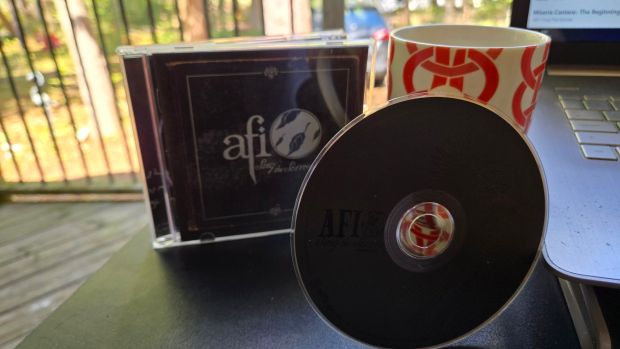
I don’t pretend to know about bands with whom I have only scratched the surface, so here are some basics on A.F.I. I always considered them to be a punk emo band. A.F.I. (A Fire Inside) are fronted by Davey Havok and have been around for almost 35 years now. In 2003, they were new to me. Working at the record store, some of the younger cooler employees put on A.F.I.’s new album Sing the Sorrow, and I immediately liked it. It had a lot of metal riffing, and I dug Davey’s vocals. I was an instant fan of the disc, and I played it regularly while it was charting in 2003. I still spin it today, and though I’m not a pierced up record store guy with eyeliner anymore, I still dig A.F.I.
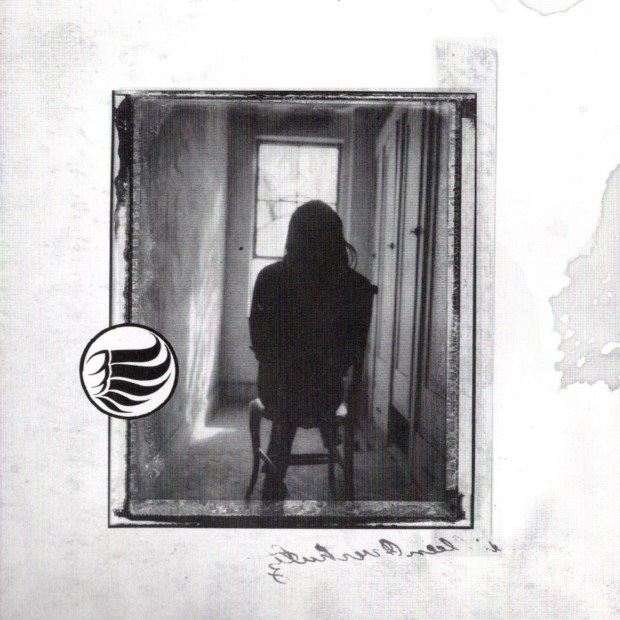
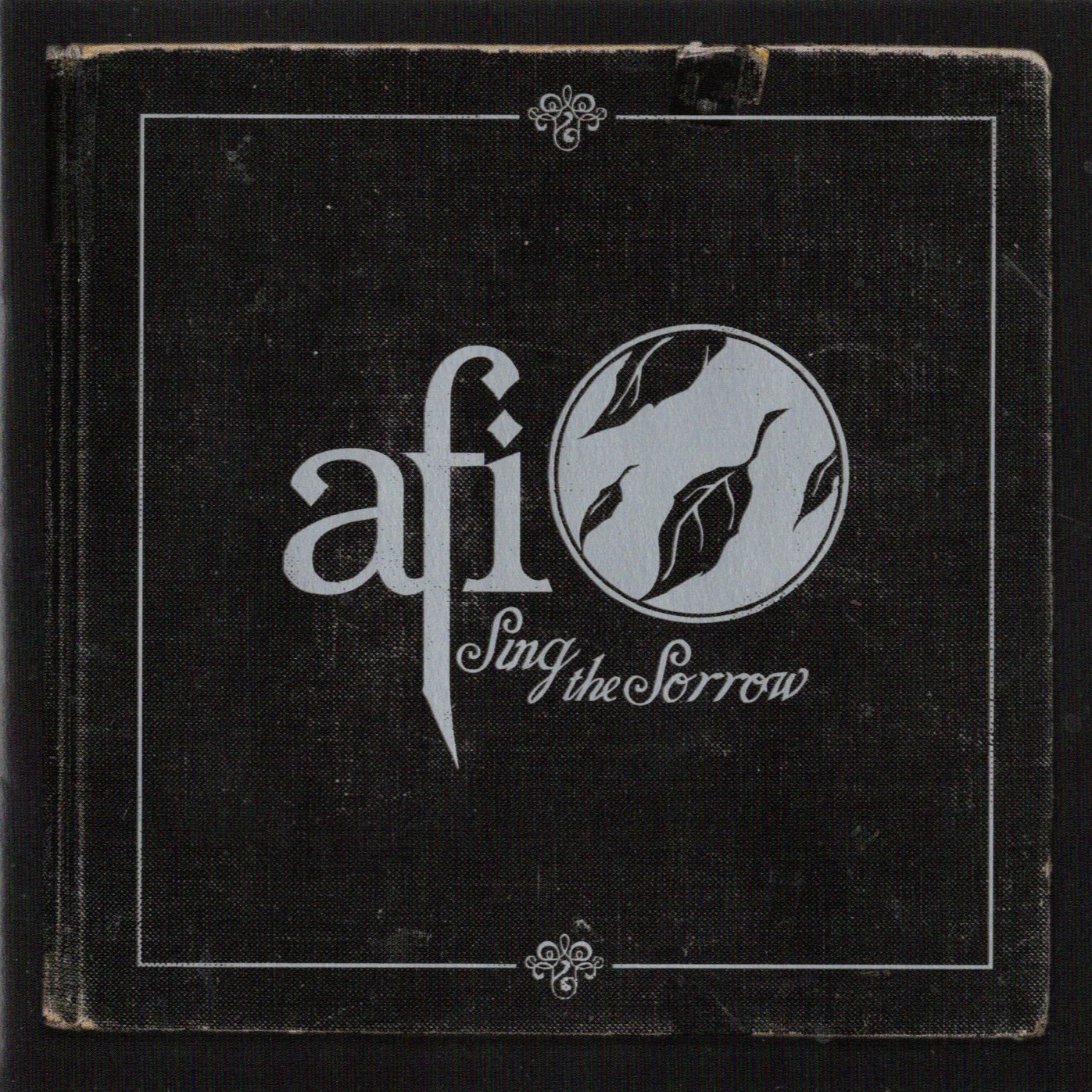
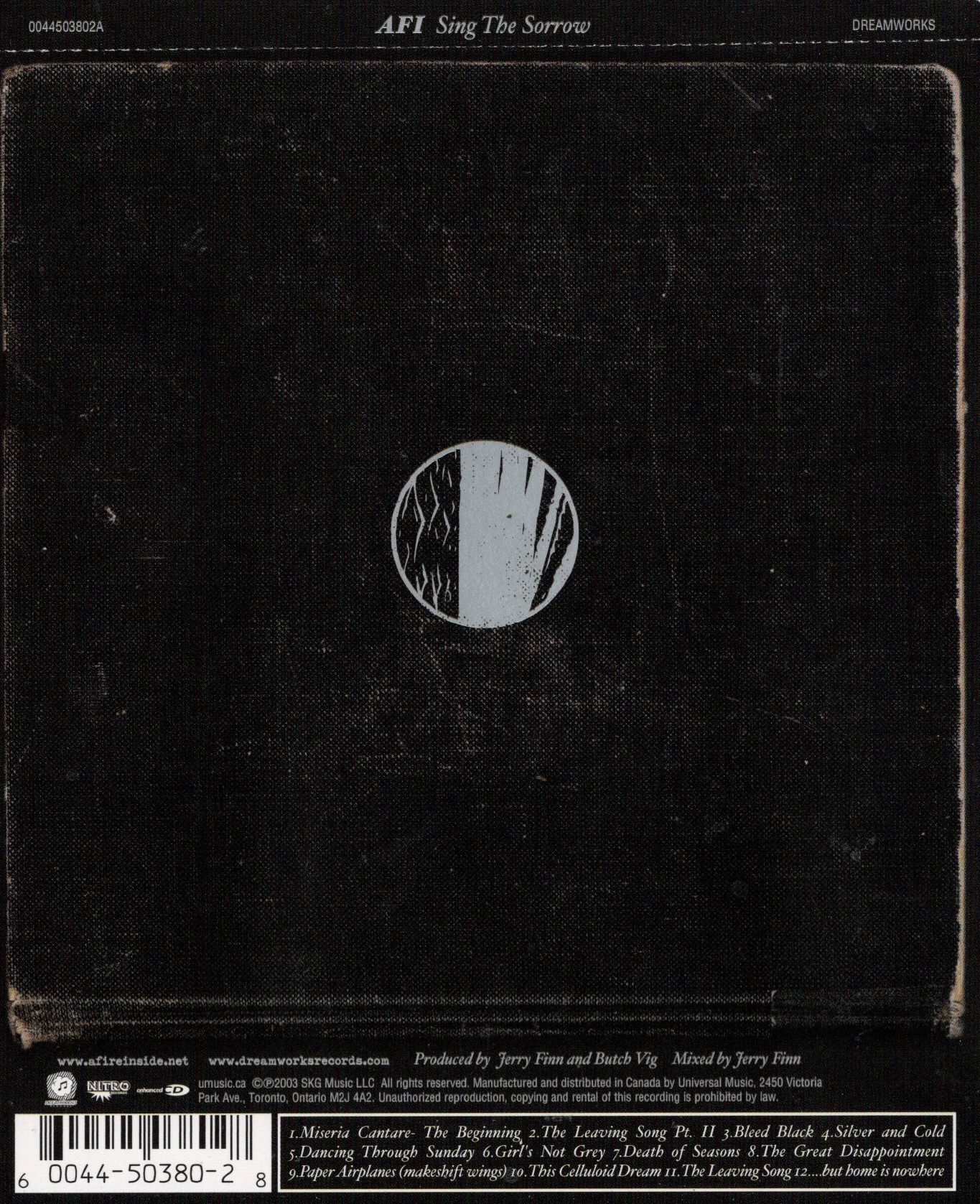
Sing the Sorrow was the band’s first big mainstream album after several punk/horror oriented releases. One look at the back cover, and you know it’s going to sound amazing: Produced by Butch Vig and Jerry Finn. The front cover is striking, minimalist and classy. All told, Sing the Sorrow is dark, but with spotlights of bright illumination. Let’s give it a listen.
One thing immediately obvious is that A.F.I. like their grandiose song titles, and so the opening piece is called “Miseria Cantare- The Beginning”. Very Ghost today, no? This keyboard and industrial inflected piece begins with percussion and shouting: “Love your hate, your faith lost, you are now one of us.” And then comes Davey Havok, with soothing melodic and smooth vocals, delivering the melancholy hooks. It’s hard to call this a full song as it’s more an intro, but it’s Davey that reels you comfortably in.
“The Leaving Song, Part II” (again with the pompous song titles that I love so much) is the first real song. Based on a cool bunch of guitar notes and a couple catchy riffs, A.F.I. open not with a blitzkrieg but with a slow and determined dirge. The choruses are gang vocal heaven. This song acted a second single for the album, hitting #16 in the US. Only Davey Havok could make these words sound positive: “Break down, and cease all feeling, burn now, what once was breathing.” Somehow his voice gives hope.
Paces accelerate with one of the best tunes on the album: “Bleed Black”. This one should have been a single. In my ears, this album has nothing but singles, and “Bleed Black” is chief among them. “If you listen, listen, listen…listen close, beat by beat, you can hear when the heart stops, I saved the pieces when it broke, and ground them all to dust.” Yet it sounds like a celebration of defiance, not a dirge of defeat! The chorus is layered with alternative band/Davey vocals, and it’s like crowdsurfing on a cloud. Then, A.F.I. take out the acoustics and go full dirge, but back to the chorus again before it’s too late.
“Silver and Cold” was the third single, a dark and slow tune with industrial effects and subtle, quieter sections and bigger bombastic choruses. Mournful, but powerful too. Tempos bounce back on “Dancing Through Sunday”, fast through and through, with incredible hooks from Davey and the band singing backing vocals. Some cool and prominent bass work, some hammer-ons with the guitar, and we’re not far from familiar territory, but hold on – is that a guitar solo? Yes it is, a full metal guitar solo by Jade Puget, with tapping and fancy fretwork, in the middle of this punky album! And it’s the only solo too, one and done. Talk about using that space effectively!
“Girl’s Not Grey” was the big first single, and it’s all tension and hooks. “What follows has led me to this place, where I belong will all be erased.” Is doesn’t sound like a hook, but that’s the magic of Davey Havok. The guy turns a sentence like that into an anthem, because this song has anthemic qualities. It’s all good, and the drumming is exceptional during the quiet section in the middle. These guys just learned to cross genres in the best way, taking the things that work and using them sparingly and effectively. And man, can Davey deliver hooks.
Dark lonely bass opens “Death of Seasons”. Then, enter Davey, screaming as if in pain. The song then shoots off into a punk rock sprint, but still with a chorus that delivers melody and more hooks. The track ends with Davey declaring that “all of this hatred is fucking real,” before falling screaming into the background while mournful violins sing the last notes. Really haunting stuff.
Guitars fade into “The Great Disappointment”, layered and ringing a haunted chord. The bass indicates that there are still hooks ahead, so stick with it. This could be considered the first ballad on the album. A power ballad – power combined with pain. It’s bleak.
“Paper Airplanes (Makeshift Wings)” is another notably dramatic title, with a punky blast of a song behind it. This track allows you to climb back into the light. With Davey combining his shouting voice with the clean singing in the same lines, it’s a great fun track to headbang to for a while and forget the misery. Pay attention to the drums and percussion, as it’s not all simple bashing. This band, with Hunter Burgan on bass and Adam Carson on drums, can play!
One of the biggest songs in terms of memorable melody is “This Celluloid Dream”, which is a great deep cut and easily could have been a single. The tempo’s not too fast and Davey continues to deliver the goods vocally and melodically. Same with all the backing vocalists: they deliver. Everything sums together like mathematics. 1+2+3=hooks. Among the best songs on the album, and one that deserves some serious listens.
Remember way back when the album began, and we heard Part II of “The Leaving Song”? Now we finally get to Part I, as second last “track” on the CD. This quiet dirge begins with just some bare guitars and Davey singing mournfully. “Leaving” seems to be a recurring things on the album, as “This Celluloid Dream” also uses the word. Though sad, it’s a beautiful song. I suppose you could consider the outro guitars here to be a “solo”, but that would be pushing it.
The album really goes out in a dramatic fashion. The final track on the CD is a 15 minute bulk consisting of three actual pieces of music, two of them “hidden”. “…But Home is Nowhere” is something of a return to form, with the tense guitars hammering out a stuttering riff while Davey delivers the mournful hooks. “This is my life, this is eternal!” goes part of the anthemic chorus.
“The Spoken Word” is untitled in the CD booklet, but its lyrics are included. After a silent pause we are greeted by piano and a creepy child’s voice. This goes on a while, like an Alice Cooper interlude. Then we get to the final real song, “The Time Imperfect” which is bare guitar and vocals, much like “The Leaving Song” at first. Then the drums and bass come in to complete what we’ll call a ballad. There’s one final blast of heavy as we drift along towards the end, followed by creepy, atmospheric reversed guitars, into the dusk.
Sing the Sorrow could not have been more accurately titled. This album is an expression of pain, solitude, loss and also victory. The victory is in the survival of it, and turning it into art. Each chorus allows you to release pain. Beyond that, it is clear that A.F.I. created a sonic painting here. It is an album that takes one on a journey, and features no boundaries to its creative expression. Special credit must go to guitarist Jade Puget who refuses to play it simple, safe, or uninteresting, but never puts the hooks second.


 mikeladano.com