Sometimes a reissue is done so right you just gotta “Take Hold of the Flame”.
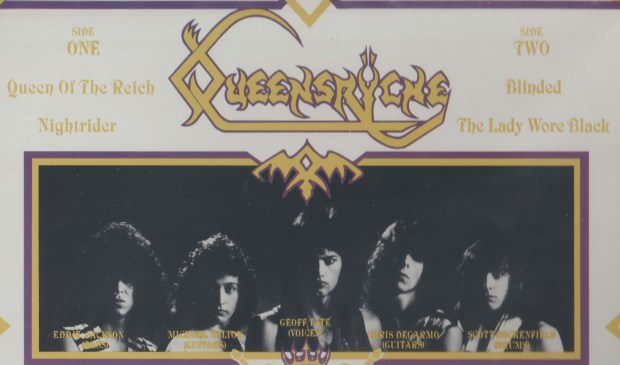
The 1984 debut EP by Queensryche is one such release. The original vinyl runs shy of 18 minutes, leaving plenty of space for bonus tracks. For this, they included the audio for all 10 songs from their first home video, Live in Tokyo. Wishes fulfilled.
The original four track EP put the quintet from Seattle on the map. Opening with “Queen of the Reich”, the young band showcased their knack for riffs and screaming vocals. Geoff Tate’s opening scream cannot be touched. Tate seemed embarrassed of these songs later on (all written by Michael Wilton and Chris DeGarmo with one lyric by Geoff). Though the songs are clearly a starting point, they’re nothing to be embarrassed by. “Queen of the Reich” remains simple, majestic and powerful.
The “Nightrider” sails away but the riffs go on with pneumatic precision. Early Queensryche were not that dissimilar from early Iron Maiden, but at least they were doing that sound well. Curiously enough this self-produced EP was not recorded with the intention to release it. Queensrÿche is actually just a demo, but the band were starting to make waves on the live scene and so the four songs were released as an EP. It eventually went gold; very rare for an EP.
Flipping over to side two, “Blinded” is screamy and raw. Not one of the bands’ most memorable tunes, but soon arrives “The Lady Wore Black”. This is a metal ballad in the classic vein of “Beyond the Realms of Death” or “Remember Tomorrow”. Tate’s voice cascades while the band weave a backing track of guitar thunder. Along with “Queen of the Reich”, it still turns up on live setlists.
The live set in Tokyo, recorded in 1984, contains all the tracks from the EP, a non-album song called “Prophecy”, and several from the debut full-length album The Warning. Opening with the “Nightrider”, Queensryche don’t let up through a generally fast and heavy set. “Prophecy” keeps up the brisk pace, with a chorus that is miles ahead of “Nightrider”. And this DeGarmo-penned smoker was a non-album track! “Deliverance” from The Warning follows in its ashy footsteps. It’s an onslaught of Warning tracks: “Child of Fire” and “En Force” rolled out in heavy fashion. This trio of Warning songs might be considered the slow part of the set. They have a soundalike vibe as they steamroll the ears.
“The Lady Wore Black” brings a slower, dark atmosphere. Tate’s sustain is unbelievable! Then it’s a blast of classics to close the set: “Warning”, “Take Hold of the Flame” and “Queen of the Reich”. Magnificent metal through and through, with “Take Hold” being an unequivocal high point. From Tate’s vocal to the exalted riffing, Queensryche nail it.
Don’t just get the EP. Make sure to get the 2003 CD reissue with the glorious Tokyo show included. You’ll be happy you did.
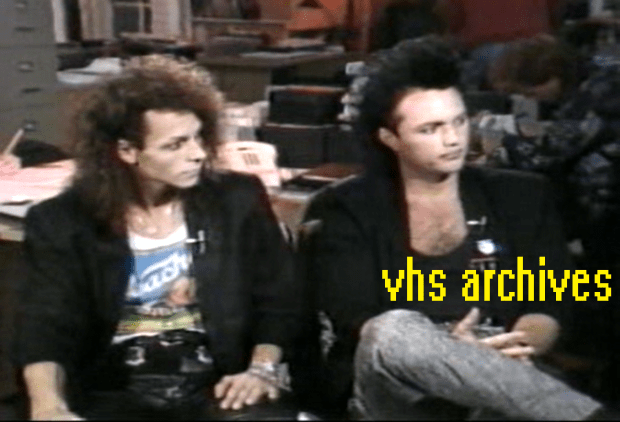
JD Roberts of MuchMusic’s Pepsi Power Hour talked to Geoff Tate (and a silent Chris DeGarmo) about Queensryche in 1986. That means you get the rock-solid Rage for Order haircuts. Not only that… but Geoff actually comments on the hair!
QUEENSRŸCHE – Speaking in Digital: A Conversation with Queensryche (1986 EMI America promo interview LP)
Here’s a nice little rarity for you, a full-length Queensryche interview disc from the Rage For Order era. Promos are a funny thing for reviewing (and this is our second Queensryche promo review). These records were never made for sale, therefore nobody reviews them. Nobody…but us. Is there any rock knowledge or collector’s value to be gleaned from this disc? Let us find out.
It’s an attractive record, Geoff Tate’s digitally distorted face in black & white. No Try-Ryche, but a neat digital Queensryche logo. The interview is conducted by radio DJ Ralph Tortoro. A very low-key Geoff Tate begins by answering general questions about the beginning of the band and their independent EP. Chris DeGarmo is a bit more engaged and adds the details. Shy Michael Wilton speaks up only on occasion.
You’ll also get bits and pieces of music: Snippets of “Queen of the Reich”, “Warning”, and “Gonna Get Close to You”. There are four full songs too: a massive “Screaming in Digital” (so hot on vinyl!), “I Dream in Infrared”, “Chemical Youth” and “The Whisper”.
Interesting things I noted while listening:
They hadn’t settled on the name Queensryche for the band until they had to print up the first EP, forced to make a decision.
Maiden was one of their favourite bands to cover according to Chris.
Tate clearly didn’t like being called “metal” even back in 1986.
“NM 156” from The Warning is hailed as the track that showed the way of the future of Queensryche.
Steve Harris loved The Warning and asked for Queensryche to open for Iron Maiden.
Rage for Order is a “loose concept” album, examining order over three levels: order in relationships, political order, and technological order.
The new digitally enhanced Queensryche of 1986 was destined to confuse people in the short term, gradually winning over fans as time went on and people “got” the album. If you want to deepen your understanding of its themes, this record will help. There’s more too; we won’t tell you everything. As a fan, you should be able to decide if Speaking in Digital is the kind of thing you want in your rock and roll reference library. The young, shy Queensryche interviewed on this LP are as cold as the machines that are striving for order in the lyrics. It’s a dry but interesting listen.
QUEENSRYCHE – Rage For Order (originally 1986, 2003 EMI remastered edition)
Every fan has their favourite Queensryche album. Whether it be The Warning, Mindcrime, Promised Land or Empire, there are plenty of great albums in their back catalogue. I used to seek the warm high of Promised Land when looking to chill with my favourite Queensryche. Now I look for refuge in the cold, technological sheen of their 1986 album Rage For Order.
Rage For Order was a challenging album in its time and today it is still complex. In 1986, fans questioned the gothy makeup and hair, not to mention the excessive samples and synths. Today you can look back and almost call Rage For Order the first progressive industrial metal album. It certainly has qualities from all three of those genres. Geoff Tate beat Trent Reznor to the punch by years. Rage seems to have a vague futuristic concept about a world of technology, revolution, and disconnection.
Although Rage For Order is certainly not an immediate listen, certain key tracks are commercial enough to keep you coming back. The first is “Walk in the Shadows”, one of the few songs to be played live fairly consistently over the years. “Walk in the Shadows” could pass as a hard rocking hit. For the first time Queensryche really proved they were more than a simple metal band. The slick production was completely different from their first two records, with the edge taken off the guitars and instead given to the computers and sequencers. They give the whole album a precise, punchy tech sound that is its own form of heavy. No wonder: Dave “Rave” Ogilvie was an engineer.
A dense ballad called “I Dream in Infrared” has sorrow, but flowing through the veins of a computer. Geoff Tate blows minds with his incredible voice and singing ability, layered for maximum effect. In 1991 it was remixed acoustically for a single B-side, and that version is a bonus track on the remastered edition. The original was perfect for what it was, but the acoustic mix is more accessible to outsiders. It ends suddenly and the metallic guitars of “The Whisper” enter, accompanied by clock-like percussion. Rage For Order has many songs with layered, overlapping vocals and you can hear that on the chorus. It is a cold, sterile but powerful track.
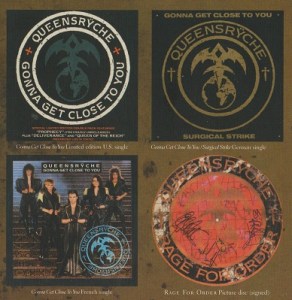
The strangest song was actually the lead single, “Gonna Get Close to You”. It was the only cover Queensryche ever put on one of their studio albums, a track by Canadian songstress Lisa DalBello. In the hands of Geoff Tate, it becomes a creepy song of a stalker with a strangely rousing pre-chorus. “You think I’m a fool or maybe some kind of lunatic? You say I’m wasting my time but I know what to do with it. It’s as plain as black and white. I’m gonna get close to you.” Cree-hee-eepy! Which is the point. The bizarre samples and synths only deepen the macabre. DalBello’s original is perhaps even creepier, but Tate’s pompous bravado adds its own slant. “If you knew my infinite charm, there’d be no reason to be so alarmed…”
As an added bonus, a 12″ extended version of “Gonna Get Close to You” is included in the bonus tracks, but like most extended versions from the 1980s, it’s very choppy and awkward.
Along with the technology, there is a theme of loneliness on Rage For Order, and “Gonna Get Close to You” plays into that. “The Killing Words” contains more heartbreak on the album’s second ballad (third if you count “Gonna Get Close to You”). Tate’s voice is drenched in pain. A 1994 acoustic version from the “Bridge” CD single is included as a bonus track.
“Surgical Strike” is a brilliant track, fast and heavy, and working with the technology. The lyrics are brilliant and quite prescient.
It’s lonely in the field, that we send our fighters to wander. They leave with minds of steel, It’s their training solution. We’ve programmed the way, It leads us to Order. There’s no turning back.
A Surgical Strike. We’ve taught them not to feel. performance is their task, A Surgical Strike, Its time is arriving now for you.
The plan for the day, will be swift as the lightning they harness. The atom display, It’s not mindless illusion, At master control, assessment will not, Be by humans. There’s no turning back…
It feels like this future is not very far off.
One of the most techy tracks is “Neue Regel”. Clockwork percussion, strangely computerized lead vocals, and intelligently used samples paint a scene of a future battlefield, complete with bomb-like drum sounds. The multi-layered chorus is one of Queensryche’s most perfect. Respect to Geoff Tate. When the man was at his peak, nobody could touch him, both vocally and as a songwriter. Of course one must also remember the other side of the equation, which was guitarist Chris DeGarmo. He has more songwriting credits on this album than Geoff Tate, including two solo credits (“The Whisper” and “I Will Remember”).
The future continues to look cold and dark on “Chemical Youth (We Are Rebellion)”. “Our religion is technology” is one line, and if only Tate knew how right he was! There is a still a spark of hope and that is the young. “Chemical Youth” is one of the heaviest tracks on the album, and sonically very interesting too. The next ballad “London” fades in with a synthy bass line. Loneliness returns. “There’s some things in life I could never face. The worst is being alone.”
The technology slant hits its peak on the brilliant “Screaming in Digital”. Describing this song can do it no justice. It is like listening to Queensryche within the gleaming sterile walls of the dystopian sci-fi classic THX-1138. There is far too much going on underneath it all to absorb in just a few listens. You will hear new sounds you never noticed before even 30 years later. Artificial intelligence has never rocked so heavy.
I am the beat of your pulse, The computer word made flesh, We are one you and I, We are versions of the same, When you can see what I feel, Don’t turn your back on me, Or you might find that your dreams, Are only program cards.
Fucking chilling!
“Screaming in Digital” must be counted on any list of Queensryche’s best music. It is sheer genius, far beyond what their hard rock peers were peddling. It was also years ahead of its time. By crossing digital techniques with heavy metal in such an intelligent way, Queensryche truly were breaking new ground.
“I Will Remember” is the final song, a ballad that seems to tie it all together. It has the feel of a lonely ballad, while lyrically tying up the technology concept. “And we wonder how machines can steal each other’s dreams.” Another Queensryche classic, including a genius DeGarmo acoustic guitar solo. Shades of the future “Silent Lucidity” too (also written by DeGarmo).
There are four bonus tracks including the three discussed above. The last one is a 1991 live version of “Walk in the Shadows”, which appears to be a mix of two different performances judging by the credits. Whatever the case may be, it’s cool to get a live version of this incredible song as a coda to the album.
Queensryche took the conceptual approach to its logical apex next time out with Operation: Mindcrime. They ditched the technology and went back to guitars and even added an orchestra. For that reason, Rage For Order is very unique in the collection. It was a sound they have never repeated. Operation: Mindcrime had a sequel, but Rage For Order never will.
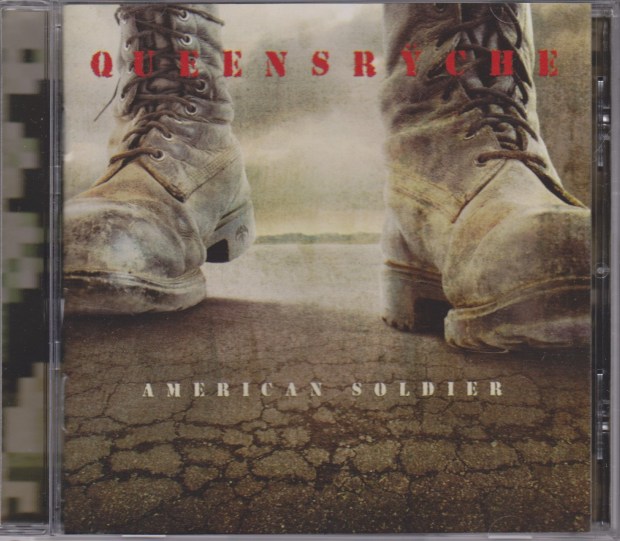
There is no doubt that a decade and a half of war has dramatically changed the United States. In 2009, Queensryche decided to deal with their feelings by writing a concept album on the subject. It’s something that they do very well, and American Soldier, the finished product, was another ambitious piece of work. Although the album was mostly written by Geoff Tate and his friends Jason Slater and Kelly Gray, in reality it’s the last good album the band made with Tate.
The band interviewed soldiers for this album, and their words are a huge part of the record. The track “Unafraid” opens like this, creating a hauntingly serious atmosphere. At times, the music is toned down, allowing the dialogue to speak. It’s an interesting effect and certainly it works in creating the mood that the band were going for. I think it is also a token of appreciation to the soldiers who defended the country. They had a chance to speak their minds, and be immortalized in music. That’s pretty cool.
The end result is a good album that is not necessarily easy to listen to. There is no “fun” in this music, it is dead serious the whole way through. The intensity burns and you can hear that Tate was focused like a laser on this project. The songs are fine; not Mindcrime quality but I don’t think that anthemic progressive rock would have fit American Soldier. The single misstep is the vocal by Tate’s daughter Emily on “Home Again”. What was meant to be a dramatic, emotional focal point is instead distracting.
Among the best tracks are “Sliver”, a cool opener featuring an actual soldier (A.J. Fratto, a 14 year vet) barking orders with the music. Fratto ended up touring with the band in support of this album. Well done, sir! “Hundred Mile Stare” is slow and intense. The hundred mile stare in the song is a variation of the thousand yard stare — a distant look in the eyes a soldier gets after they’ve been in the field too long. “A Dead Man’s Words” is another complex highlight, middle-eastern in style and clearly about conflict in that region. This one is perhaps the most “Queensryche” of the songs, in the sense that you can hear their classic sound at play. This includes a Tate sax solo, something I wished he did more of with the band. Then, for choruses, I have to go with “The Killer”. For sheer intensity, it’s the soldier’s story on “If I Were King”. If you want heavy ‘Ryche, then “Man Down!” is the track for you.
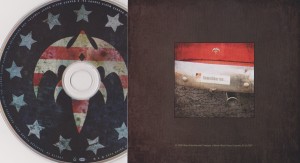
One disappointing factor in American Soldier only hits you when you open the booklet. Great artwork aside, it’s really too bad that Tate relied so heavily on his buddies to make this album rather than his band. Drummer Scott Rockenfield has two co-writes, and that’s it. Damon Johnson from Brother Cane has just as many co-writes. The rest of the credits are variations of Tate, and producers Jason Slater and Kelly Gray. Queensryche were down to four members at this point, so Johnson and Gray subbed on guitars.
Although Promised Land was probably the most deeply personal Queensryche album, American Soldier is likely the runner up. At least for Tate and his collaborators, there is obviously a lot of their hearts and souls invested in this. Unsurprisingly, it is not an immediate album. It requires time, but it also requires space between listens. There’s no glory here, just stark reality, so take your time.
QUEENSRYCHE – Operation: Mindcrime II (2006 Rhino)
10 years ago, when this project finally saw the light of day, a lot of fans were expecting it to be 1988 all over again. However, there were many reasons why they shouldn’t have.
1. Longtime guitarist/songwriter Chris DeGarmo, such an integral part of the original Mindcrime, had been out of the band for quite some time. 2. Geoff Tate’s voice didn’t have that high-note power it once had. 3. The band never intended to pretend it was still 1988. This album is a continuation, 18 years later, and as such the music has changed somewhat as well. The albums are meant to complement each other, not duplicate each other.
The story picks up with Nikki, the anti-hero from the original Mindcrime, finally being released from prison, 18 years after the events of the first album. He begins to piece together his memories of what happened. He decides to pay Dr. X a visit (“X marks the spot”, goes the lyric), who is deliciously played by the late Ronnie James Dio. For die-hard Dio followers, this was a real treat. Dio sings as if in a stage production, which I’ve never heard him do before. Pamela Moore reprises her role of Sister Mary, playing a larger role and appearing on more songs. She’s a great complement to Geoff Tate, who clearly revels in the chance to do something dramatic like this.
New second guitar player Mike Stone (ex-Criss) gels very nicely with Michael Wilton, playing dual guitar leads that Queensryche of old would have been proud of. At the same time, modern technology has creeped into the production in the form of sequencers and samples, to remind us that this was 2006. Still, Eddie Jackson’s bass had never been recorded this well before; he should be very proud of his rumble. Scott Rockenfield’s back to playing some serious metallic drumming as well, leaving behind some of his tribal influences for the moment.
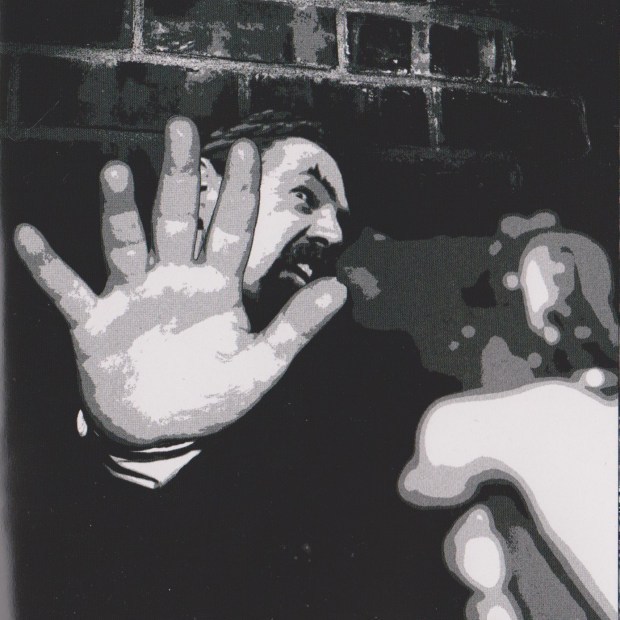
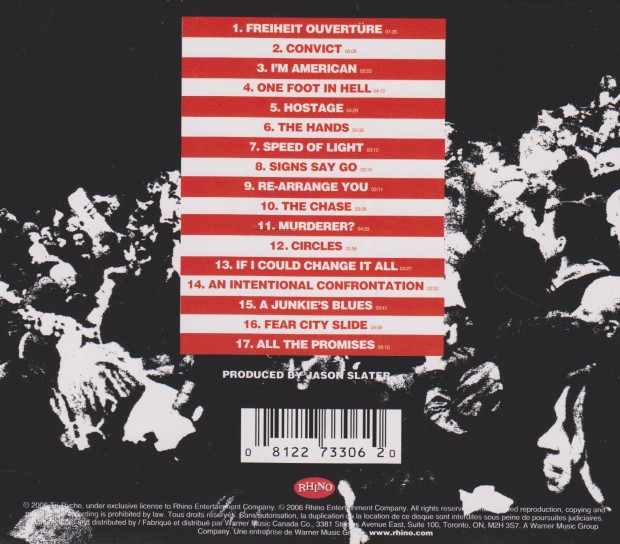
So, the actual sound of Mindcrime II is amazing. The songs however are not up to the very high standards that Mindcrime I set. There is no “I Don’t Believe In Love” or “Eyes Of A Stranger”, although some songs like “The Hands” come pretty close, with an amazing metallic riff and great chorus. (Did anyone else notice a few bars of music from “I Don’t Believe In Love” within “The Hands”? Listen again.) “I’m American” is lyrically fantastic, and angrier than anything Queensryche has done since Q2K. “Chase” is the one featuring Dio, and the one I keep coming back to.
The thing about Queensryche albums is, they do tend to get better with time. Maybe they were always slightly ahead of the curve, or more likely they just take a few listens to absorb. It’s been a decade now, and few of the Mindcrime II songs remain lodged in the my brain. Meanwhile, I could hum any song from the first one. In particular, the second side of Mindcrime II really takes a drop. Tracks like “Fear City Slide” do not have the impact of “I Don’t Believe in Love”, and the closer “All the Promises” fails to deliver. It’s a concept album after all, and the last song is like the last scene in a movie. It should be memorable.
Will Mindcrime II ever become classic like the original? Doubtful. As soon as you name something with a “II” behind it, you’re painting yourself into a corner, but Queensryche have done about as good a job as the fans could have expected. It seems many fans have warmed up to it over the years, though it certainly cannot be considered equal with the original.
We continue with theWEEK OF FLAMING TURDS! We’re looking at a collection of malodorous music. Strike a match, you’ll need it for these stinkers! Today, please welcome to the stage, Mr. Geoff Tate.
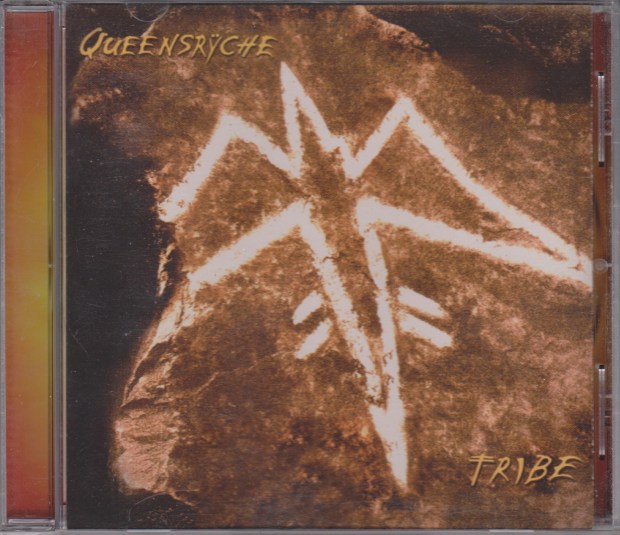
QUEENSRŸCHE – Tribe (2003 Sanctuary)
Queensryche fans have had a lot to deal with over the last 20 years. Uneven albums, lineup changes, framed by occasional flashes of brilliance were the norm up until recently. The most significant obstacle was the 1997 departure of Chris DeGarmo, their chief songwriter and beloved guitarist. Overall burnout caused by band turmoil led DeGarmo to retire from music altogether and follow his dream of becoming a pilot. Later statements from the band (during their legal battle with former singer Geoff Tate) claimed outright that he left because of “Geoff Tate’s personal demeanor” with the guitarist. In his absence, Tate took over the role of primary songwriter and began leading the band. Their first post-DeGarmo album was 1999’s Q2k, a pretty heavy record that was largely dismissed by fans for being a departure from style and quality. DeGarmo’s replacement guitarist Kelly Gray was let go shortly after the Live Evolution album. Struggling to come up with material for another album, Queensryche called Chris DeGarmo up on the telephone. The guitarist softened his stance and readied himself to make a full return to the band. He wrote, played guitar in the studio and even took part in photo shoots. Fans hoped for something special that would live up to the Queensryche legacy from this reunion. It was not to last. The same old strains returned between DeGarmo and Tate, and it was over before it started.
Fandom felt the wind taken out of its sails, and eyebrows were raised at the sudden second departure. The released album Tribe featured five co-writes from Chris DeGarmo, and one from new Queensryche guitarist Mike Stone (ex-Peter Criss), who was hired shortly after. Both Stone and DeGarmo receive credit as special guests. Upon listening, best hopes for the album were dashed. Tribe‘s 10 songs come off as half-baked outtakes from a better album that was never made. Some of the blame must go to the production, a flat and dry sounding affair. However that cannot explain the dull songs. It’s not all bad — “Open Your Eyes” features a damn fine, exotic sounding riff, probably contributed by DeGarmo. They just couldn’t construct a memorable song around it, and Tate couldn’t seem to get his singing into gear.
The sole Mike Stone co-write, “Losing Myself” is a programmed mess of samples without a song. The chorus sounds like an outtake from the dreary Hear in the Now Frontier album. Same with the acoustic “Falling Behind”, which is too bad because it’s one of the songs on which you can hear Chris DeGarmo’s playing. In fact, Tribe in general might be considered Hear in the Now Part II, so similar are they.
The only real quality musical moment happens on the DeGarmo co-write “Desert Dance”. Exotic and heavy but with an actual song built out of it, “Desert Dance” gets you moving. Drummer Scott Rockenfield throws a lot of percussion tricks into it, emphasizing the exotic (this is true of the album in general). Tate actually sounds alive on this, becoming the cheerleader of the album. “Desert Dance” was the only song that had me reaching for the volume knob to turn it up. One other decent track is “Rhythm of Hope”, a co-write with Eddie Jackson and Scott Rockenfield that sounds like it was an effort to be the second “Silent Lucidity”. Unfortunately that moment has passed.
It’s worth noting that the only member to have a songwriting credit on every song in Geoff Tate. I place the blame for Tribe‘s lack of life at his feet. The album is only 41 minutes, but it is a long 41 minutes. Difficult to finish, hard to like and easy to forget, Tribe remains a chore today.
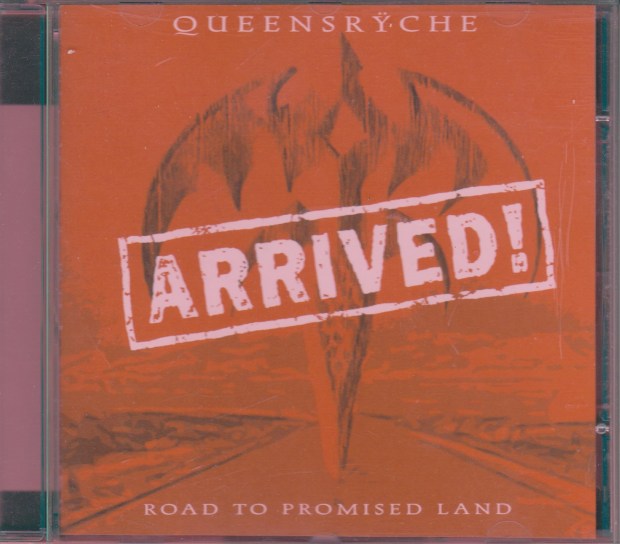
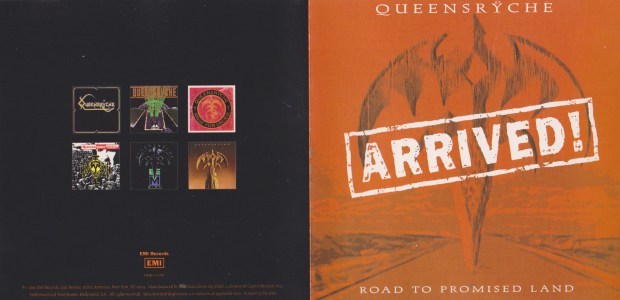
QUEENSRŸCHE – Road to Promised Land (1995 EMI promotional “best of” CD)
20 years ago, good buddy T-Rev let me know this little treasure had arrived in his store (first discussed in Record Store Tales part 120). Released to promote the 1995 Promised Land tour, Queensryche’s Road to Promised Land AKA Arrived! was a neat little greatest hits package released well before their actual Greatest Hits several years later. This is a promo CD released by EMI in the United States, and it covers every Queensryche release to date.
From the original EP is not “Queen of the Reich”, but “The Lady Wore Black”. The ballad starting the set is an odd but explainable choice. Queensryche were playing “The Lady Wore Black” on tour, but Geoff Tate didn’t enjoy singing “Queen of the Reich” and tried to avoid doing so. Being so full of powerful metal drama, even as a ballad, “The Lady Wore Black” can work as an opener. Then “Take Hold of the Flame” follows, one of the best Queensryche songs of all time (from the first LP The Warning). Unfortunately that is the only inclusion from The Warning, although it is certainly a must. Geoff Tate used screams as a art form on this song like no other. You want metal drama? They opening tracks are Metal Drama 101.
Two tracks are selected from Rage For Order, and they are fairly obvious choices: “Walk in the Shadows” [“WALK WITH MEAT!“] and “I Will Remember”. It is a given that both are high quality songs, from an album that can be difficult to pick individual hits. The opening part of the CD feels rushed, with the critical first EP and two albums giving up only four songs. Keep in mind that these albums now make up a large bulk of Queenryche 2015’s set, although that wasn’t the case in 1995 with their original singer.
From the brilliant landmark concept album Operation: Mindcrime are three selections: “I Don’t Believe in Love”, “Eyes of a Stranger” and “Revolution Calling”. Once again these are fairly obvious choices, being the three singles from the album. Strangely, “Eyes of a Stranger” was not edited down and is the full 6:39 cut, complete with album outro. Their most successful LP yet, Empire, was also give three inclusions. “Best I Can”, “Jet City Woman” and “Silent Lucidity” were three great singles. I wonder why the title track “Empire” wasn’t used? I think it’s more identifiable than “Best I Can”.
Rolling into Promised Land for the final three tracks, it is plain sailing to hear the evolution of the band over their first decade. Although the metal got tuned down in favour of more drama and radio-friendly elements, one thing that never changed was their urge to experiment. Indeed, the first Promised Land single “I Am I” features plenty of daring sounds. (This version of “I Am I” fades out rather than skipping directly into “Damaged”.) From cello (by Chris DeGarmo) to tribal percussion to innovative vocal effects, “I Am I” proved that Queensryche could rock progressively in the increasingly alternative 1990’s. Lyrically, they were as serious as ever but more personal. The ballad “Bridge” was about DeGarmo’s relationship with his father. Finally, the heavy-as-plutonium “Damaged” closes the CD abruptly. That’s the problem with these record company assembled promo CDs. They are not designed to play as an album. They are designed for radio use and store play. In other words the only real consideration is including all the individual tracks you want to plug. Like “I Am I”, “Damaged” too was edited for radio. They shaved three seconds off in fades, because normally these songs flow together on album.
Rating a CD like this is kind of pointless, because it was never meant to be sold. But let’s say you don’t own any Queensryche, and you saw this used while wandering the shops. Would it be a good Queensryche purchase for somebody looking for a good overview of the classic years?
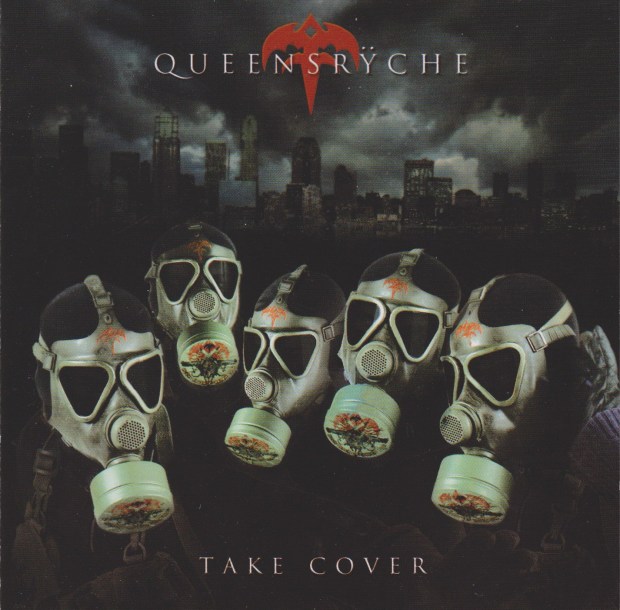
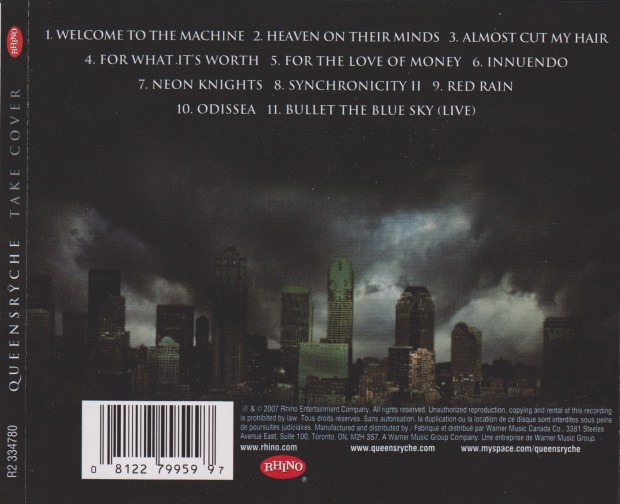
As bad as things got at the end of the Tate era for Queensryche (cabaret, anyone?), Take Cover was a musical low. Queensryche were busy in 2007, with a double live performance of both Mindcrime albums (Mindcrime at the Moore), a double best-of (Sign of the Times featuring a new song called “Justified”), and Take Cover, a covers album. Considering the number of releases in 2007 (double CDs no less), Take Cover looks all the less necessary.
The five members of Queensryche each chose some songs for the album, and you have to admit that most of these choices are pretty cool. Where things go sideways is in the recording of them, and it usually comes down to Geoff Tate’s voice. Floyd’s “Welcome to the Machine”, which opens the album, should have been a slam dunk. The dark musical backbone is there, but Geoff’s shaky multi-layered vocals do not send shivers up the spine the way Gilmour’s did. It’s nice that Geoff threw some of his trademark sax in here, and the solos (Michael Wilton and Mike Stone) are great. The problem is the vocal and that’s a big problem.
“Heaven on Their Minds”, from Jesus Chris Superstar, was chosen by Mike Stone, who left the band after this album. Musically this works, and I never would have guessed its origin just from its metallic riff. Thumbs up for this one, no complaints about the singing. CSNY’s “Almost Cut My Hair” is a dud though, and they should have left well enough alone. Following that is a flat “For What It’s Worth” (Buffalo Springfield), a double whammy of stinky renditions of hippy anthems. Thanks Geoff, for picking those two….
When I spoke to Eddie “edbass” Jackson back in 2001, he told me “I love funk, I really like a really hard driving sound. I tend to focus more on the sonic end of it than the performance end.” That’s a great way to describe his take on the O’Jays “For the Love of Money”. Even Geoff’s sour singing fails to sink it, such is the relentless groove. Queen’s “Innuendo” is another brave choice. Long I have loved this Zeppelin-esque Queen classic. This masterwork of beauty, elegance and strength is rendered limp as a noodle by the vocal chords of Mr. Jeffrey Wayne Tate. This is painfully bad. It reminds me of Bad News’ version of “Bohemian Rhapsody”. Now my head hurts, and I must now do an ear-cleanse by playing the immaculate original as sung by Freddie Mercury. [Note: I’m not kidding, that’s exactly what I did! Here you go.]
From Freddie Mercury to Ronnie James Dio, there are some difficult vocalists here to cover. Right there are two of the greatest of all time, without question. Geoff struggles a little less with the Dio approach on “Neon Nights”. But he’s absolutely screwed on “Syncronicity II” by The Police. Scott Rockenfield, who I have always thought must have been a Stewart Copeland fan, picked this song. One of the things about the original was how effortlessly Sting sang it. He hit each note perfect and cleanly. Geoff is wavering all over the place, and it robs the song of all its biggest hooks.
Geoff Tate recovers on “Red Rain” by Peter Gabriel…oh man, what a song! Edbass shines on this one, as does Scotty Rock. “Red Rain” is one of the album highlights. Tate then indulges his every fantasy on “Odissea”, part of an Italian opera. It’s up to you whether you hit the skip button or not. Just keep in mind what Geoff Tate did to poor defenceless Freddie Mercury. He sings in Italian, so kudos for him for doing this, but the end result is an experiment that doesn’t need repeating. Finally, the live take of U2’s “Bullet the Blue Sky” is by far the best song. This is a recording from the Q2k era featuring Kelly Gray on guitar before he was replaced by Mike Stone. It’s a 10 minute extended workout complete with an epic Tate rant. “Don’t step outside of that box! Don’t step outside of that box! It’s dangerous there…outside that box.”
As much as Take Cover is a slog to get through, “Bullet the Blue Sky” is arguably enough to make it worth it.
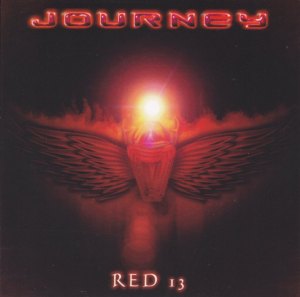
I chose an obscure, semi-forgotten release to end the Week of EPs. Time seems to move slowly in Journey-land. Their first track released with “new” singer Steve Augeri was in 1998, and the album Arrival was released in 2000. (2001 in America.) Generations wouldn’t come out until mid-2005. There was a lot of upheaval at the time for classic rock bands like Journey who were lacking key original members. No longer on a major label, Journey tried releasing a self-produced EP on their website in 2002. It came and went without a lot of people even noticing. Fans who knew what was going on were interested in what Journey might sound like now, free of the constrictions of a record company.
I don’t know where the title Red 13 comes from, but if you add up studio albums including the soundtrack Dream After Dream, Red 13 would be the band’s 13th studio release.
The fact that there’s an intro (simply called “Red 13”) tells you that Journey are at least stretching their wings a bit. It’s an interesting intro, with programmed techno beats, new-agey prog keyboards, and noisy, exotic Schon licks. Even though I loathe these kinds of beats, I am at least excited by the sound of Journey experimenting with their sound again. This intro takes us directly into a song called “State of Grace” which expands on the exotic vibe. It’s one of the heaviest things recorded by Journey to date. Augeri lacks the vocal superpowers of Steve Perry, but he fills the role acceptably well. “State of Grace” combines anthemic Journey with experimental, guitar-dominated hard rock. It is a successful mix. Red 13 is off to a promising start.
The track simply titled “The Time” is a Zeppelin-esque slow groove, with nary a keyboard to be found. Instead, Schon and Jonathan Cain lay on the rhythm guitars, complimenting what the other player is doing. While something like “The Time” is an admirable achievement to a listener such as myself, I don’t think average Joe Six-pack Journey Fan will appreciate what the band are doing here. They might consider it a “piss break” song. Meanwhile I’m hanging on waiting to see what Schon’s going to do for a solo. (Answer: he does what Schon does!) I’ll also single out drummer Deen Castronovo as an MVP on this song. I’ve always been candid about my preference for Steve Smith in Journey, but this song is a different kind of Journey and Deen’s frenetic fills are more than ample.
The third song “Walking Away from the Edge” was co-written by, of all people, Geoff Tate. This is a solemn piano-based ballad. It resembles some of the things the band did in the past with Steve Perry. Unfortunately it’s not as memorable as, say, “Send Her My Love”. It does boast a powerful chorus but at 6:17, the song is a little too long. It fades abruptly, and then the final song is “I Can Breathe”. This one is little more than a standard sounding Journey rocker. It is not particular special unfortunately, until close to a 3-minute mark when a horn section kicks in. They should have had the horns there from the start!
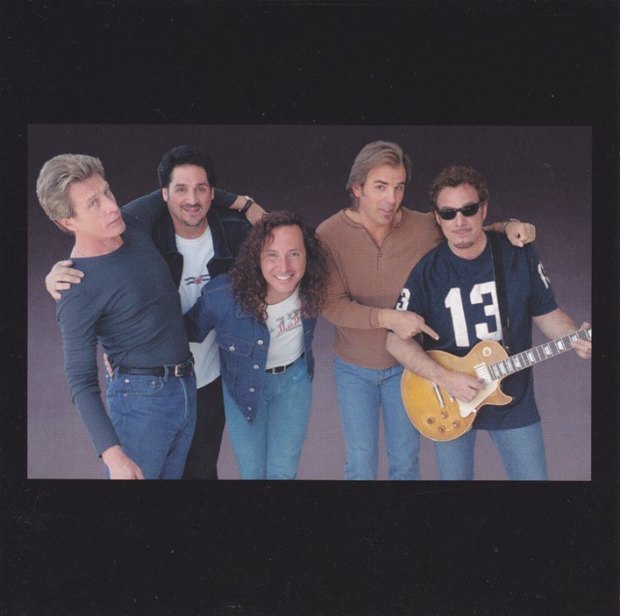
Red 13 is not a bad EP, but the production is sub-par, as can happen when bands self-produce. However, had a producer been there in the studio the songs would undoubtedly turned out differently so that’s the trade off. The worst thing about it is the band photo, which just looks cheap and bad. What is that on your face, Neal? Dirt?
 QUEENSRŸCHE – Queensrÿche (1983 EP/2003 EMI remaster)

















You must be logged in to post a comment.