hard rock

#782: Eliminated Headlight Restored

A sequel to #760: Eliminated Headlight

I saw Eliminator was now a one-eyed cyclops car. A headlight came off and was nowhere in sight. It’s gone. If it had simply fallen off, it would be on the shelf, next to the car. I only had two suspects. One of the two was more credible, while the other claims to know nothing. I know it was my dad!


GETTING MORE TALE #782:  Eliminated Headlight Restored

The old cottage bedroom isn’t the safe storage space it used to be!

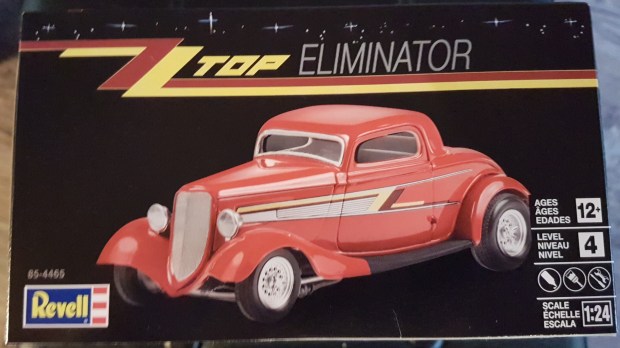
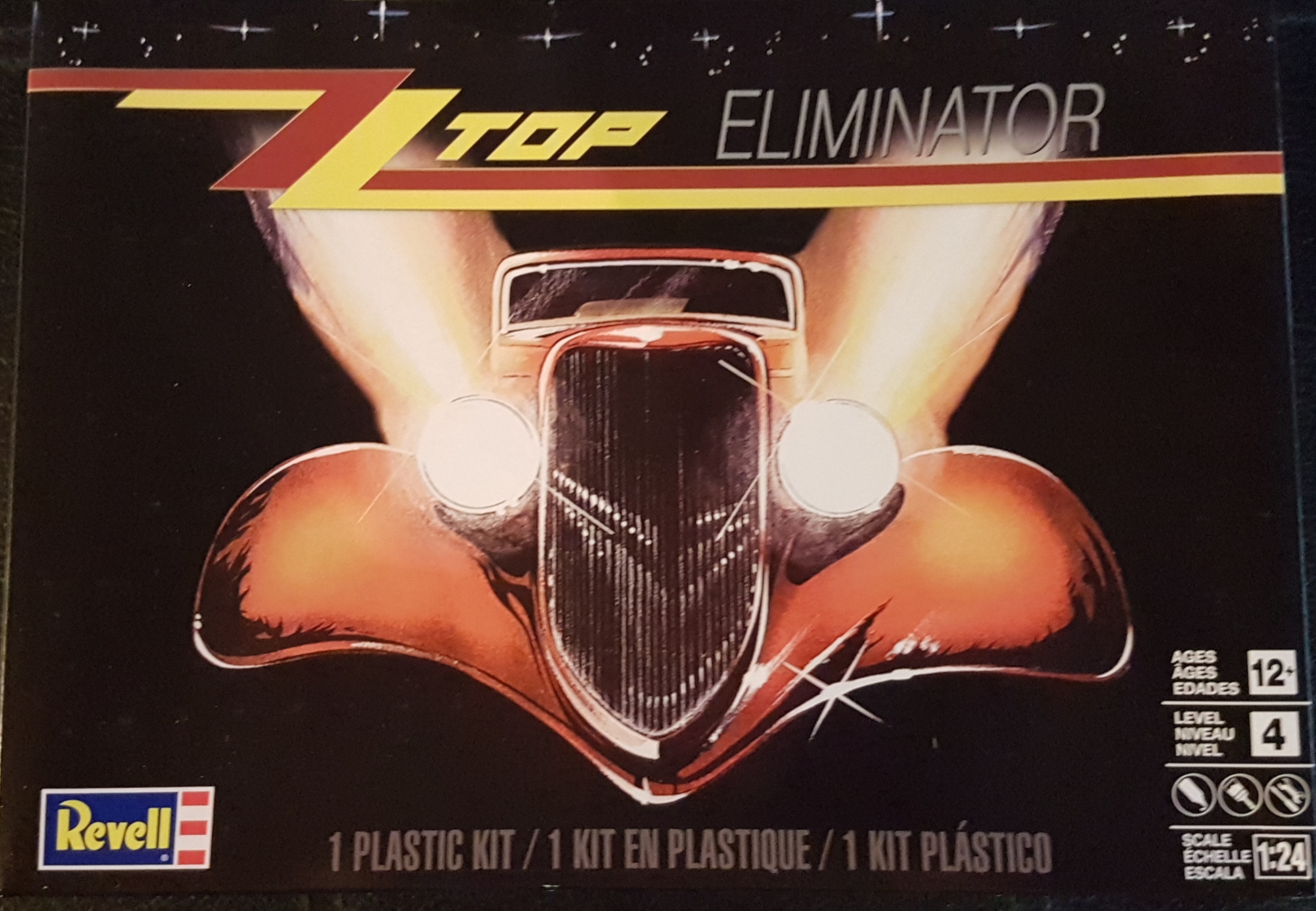
For over 30 years, my old Monogram model kit of ZZ Top’s “Eliminator” car sat undisturbed.  The shelf it occupied was shared by a stunningly beautiful red Ferrari Testarossa, some old books, and several Lego battle droids.  Eliminator’s structure held sound, with only minor repairs needed over the years to keep it intact.

Then one day in 2019 a headlight went missing.  We didn’t need a confession to know that my dad did it while puttering around!

I thought the story was over, but a few weeks ago my dad said to me “I found your headlight”.

What?  Did it just fall behind the bed?

“No, I got you a new one!”

Right on, thanks dad!  Did you find an old model kit on Ebay?

“No, I saw a brand new one at the hobby store and picked it up for you!”

I couldn’t believe my luck!  But what are the chances the kits are the exact same?  Could I simply swap out an old headlight for a brand new one?

Turns out, I can.  Both kits are 1/72 scale, and though the new one is made by Revell instead of Monogram, they are identical.  Revell actually bought out Monogram in 2007, so they must have acquired these old molds and reissued the exact same kit.

Opening the kit and seeing the exact parts, I found myself at a crossroads.  I did a good job back in 1987-88 when I built my original Eliminator.  There are some things I would change; I would have painted the red engine block to be more accurate if I had another crack at it.  And now I do.  Or, I could just glue the new headlight onto the old car and leave it be.

Pros to building a new car:

  • Fixing mistakes I made as a kid, like the engine colour.
  • A higher budget, better tools, access to more paints.

Cons:

  • Possibly screwing up and wrecking a new model kit.
  • I hate, hate, hate water decals.
  • Realising I’m not as good at this as I used to be.

“You know my hands aren’t as steady as they used to be,” I told my dad.

“Fuck your hands!” he responded.

I turned to my mom and asked if she just heard what he told me to do.  She did and said I should write about it.

Betcha didn’t expect that’s where this story would go at the start!  I neglected to take my father’s advice, but vowed to tell the tale in my own way.

The end.


The ZZ Top Eliminator Project will continue in Summer 2020.  What would you do with the model kit?  Let us know in the comments below.


REVIEW: Impellitteri – Stand In Line (1988)

3000th POST!


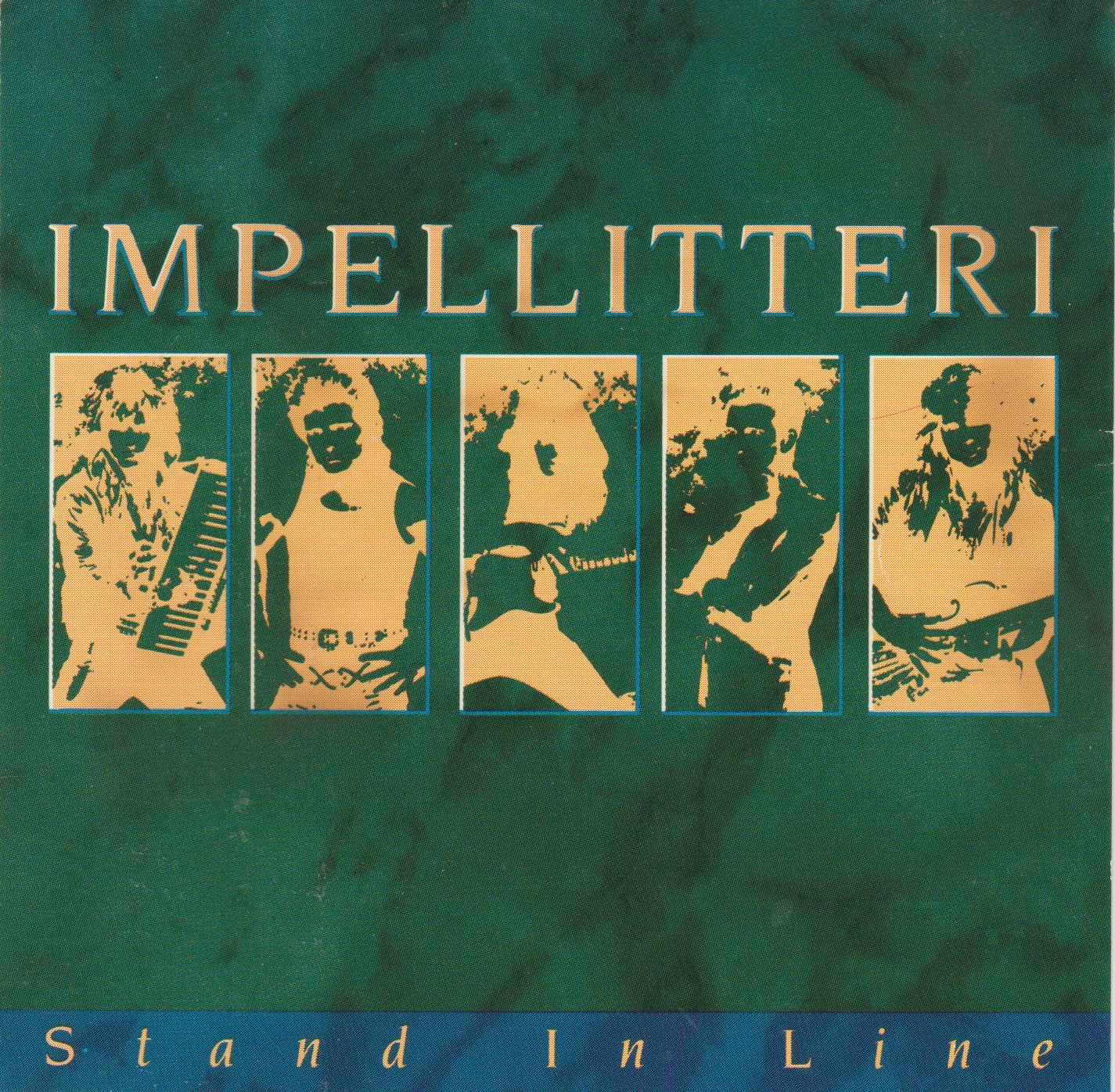
IMPELLITTERI – Stand In Line (1988 Relativity)

There was a time when I’d buy any “supergroup” with members that I knew.  Impellitteri had three:  Graham Bonnet (Rainbow – vocals), Chuck Wright (Quiet Riot – bass) and Pat Torpey (Mr. Big – drums).  This release on Relativity records is basically a showcase for guitarist Chris Impellitteri, and unfortunately that’s exactly what it sounds like.  In the credits, Chris states “I promise that my guitar solos will only get faster”.  That should tell you everything you need to know about Stand in Line.

Sounding indistinguishable from an Yngwie album, the title track goes first.  It boasts some pretty mean Graham Bonnet vocals, but the song sounds exactly like Malmsteen to a “tee”.  And it’s one of the best songs.  The star is actually Pat Torpey (rest in peace, rock soldier) who rarely got to drum so heavy.

A couple misguided covers don’t do this album any favours.  The new version of “Since You Been Gone” metalizes the Rainbow original, and it can’t stand up under the weight.  (Interesting note:  this track features Randy Rand from Autograph on bass.)  It’s too stiff, too schooled, too…supergroup-y.  Same with “Over the Rainbow”, which has some beautiful runs, but is otherwise overplayed.  Squealing solos don’t compensate for Ritchie Blackmore, or a tight band.

Highlights:  “Stand In Line”, “Tonight I Fly”.
Turds:  “White and Perfect”, a song about colonialism!

Credit where it’s due:  Chuck Wright plays some unison lines in sync with Chris Impellitteri, showing off abilities that he doesn’t often exploit.  Likewise with Pat Torpey.  Unfortunately Stand in Line is too generic (if you can call “Yngwie” an actual genre), and there’s already one neo-classical shredder on the top of the pile.  Impellitteri spices his playing up with some Van Halen-esque tricks, but all I can hear is Yngwie, and you will too, right down to the production.  Most of the pleasure derived from this album is courtesy of Graham Bonnet, but chances are you already own this if you’re a Bonnet obsessive-compulsive!

2/5 stars

Side note:  This CD was salvaged by me, as it had been close to ruined by a house fire!  Somebody sold me his stinky CD collection, many of which were scorched.  The smell (burned paper and plastic) was unholy. This was one of the lesser-destroyed albums, but you can still see some browning on the top edge of the inside cover, where the smoke and heat got to it. With a lot of effort and gentle cleaning products, I eliminated of the smell and most of the stains.

REVIEW: Judas Priest – Angel of Retribution (2004 CD/DVD)

“Sabbath are heavy, but Priest are metal.” – K.K. Downing

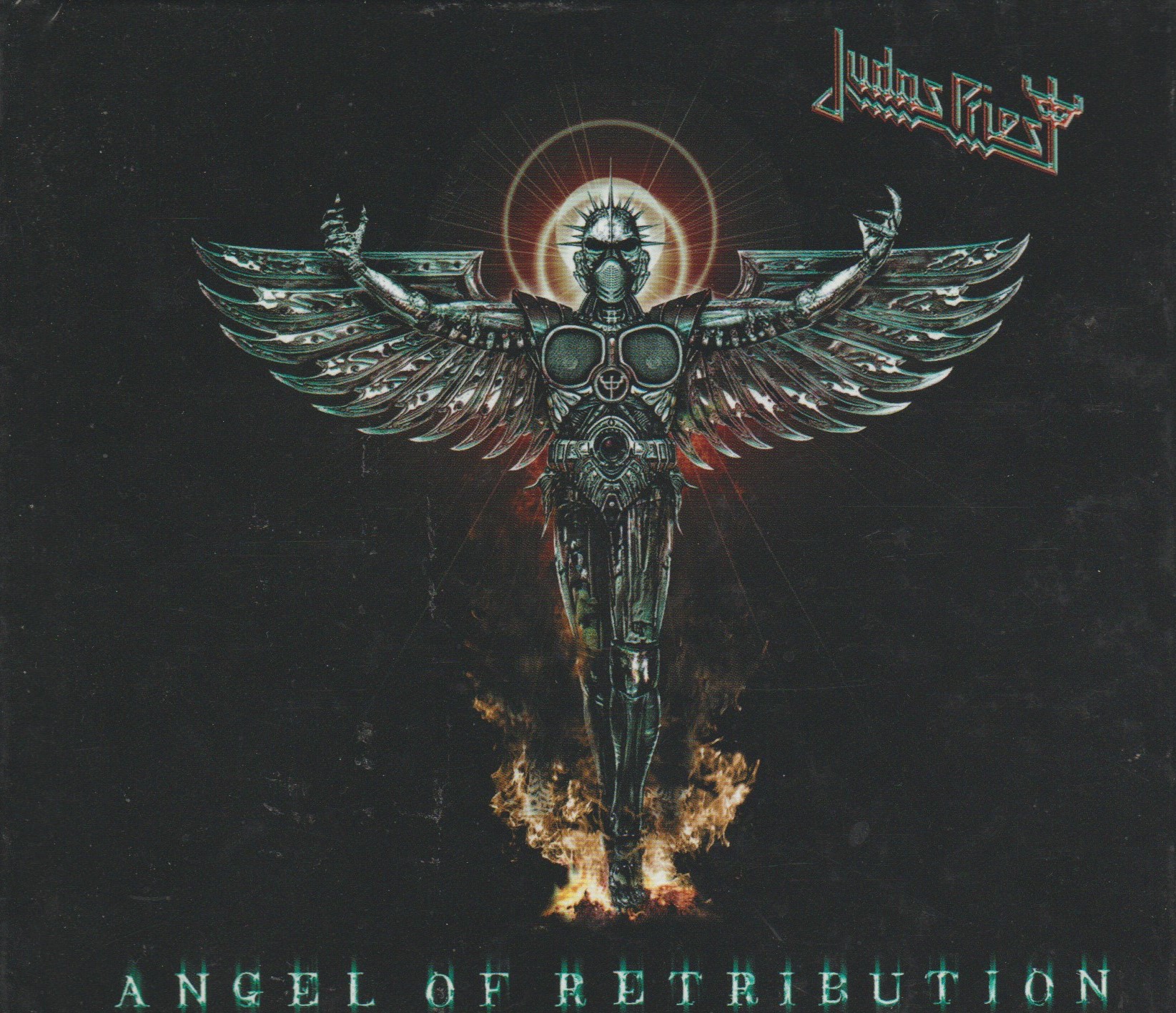
JUDAS PRIEST – Angel of Retribution (2004  Sony CD/DVD deluxe set)

Like Iron Maiden before them, Judas Priest pulled off a successful reunion tour before venturing into the studio to record a new album.  When the new music finally came, a deluxe package was made available featuring live videos from the reunion tour.  In this deluxe-sized review, we’ll take a close look at both the CD and DVD content.


The CD

Pure anticipation preceded the arrival of the Angel of Retribution.  Two underwhelming albums with Tim “Ripper” Owens on lead vocals caused Judas Priest’s star to diminish in the 90s and 2000s.  The return of the Metal God, Rob Halford, meant a reunion of the successful 1990-1991 Painkiller lineup.  The new album cover even featured the return of the Painkiller character, now the Angel of Retribution.  But a long time had passed.  Could Priest hope to live up to the hype, and their legacy?

The answer is mixed.  While Angel of Retribution contains enough classic Judas Priest metal to consider it a success, it also has some truly legendary filler, of sub-Ram It Down quality.  Instead of running through the album track by track, let’s break it down in terms of song integrity.
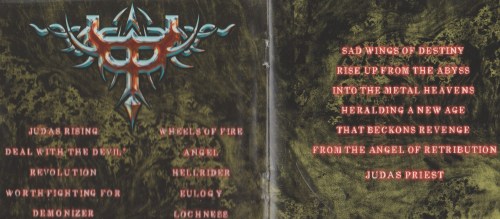
Priest wrote a natural sounding album, with elements from virtually all eras of Priest past.  They say it came about organically, and it does sound that way.  Some of the best material are the songs that sound like variations of classic Priest.

The opening song “Judas Rising” brings it back to 1976’s Sad Wings of Destiny with that fade-in opener inspired by “Victim of Changes”.  Then it transforms right into the Painkiller era, with something that sounds like a far more intense “Hell Patrol”.  Solid 5/5.

The slightly psychedelic first single “Revolution” ranks among the better songs, although perhaps it’s actually most similar to “Little Crazy” by Rob Halford’s Fight.  It has flavours of Rocka Rolla and Killing Machine, and is far from what anyone expected Priest to put out for a first single.  Dig that slide guitar bit in the solo!  Solid 5/5.

Worth Fighting For” isn’t a ballad; it’s a little harder edged than that.  It’s the one song that is unique in the Priest catalogue, and remarkably strong.  The riff has a nice chug to it, while Rob ably carries the melody to a higher place.  A special song, and a 5/5.

Demonizer” is Jugulator meets Painkiller, faster than a hellriding devil dog (whatever that is), but “the Painkiller rises again!”   So testifies Halford.  It’s so ridiculously over the top that it can only be worth a solid 5/5.  Likewise the similar “Hellrider” on side two.  Both feature double bass so fast that it’s almost a parody of itself, but both rock so hard you’ll break your neck keeping up.  “Hellrider” is also notable as the song where Rob Halford inexplicably name drops “Megatron”.  Similar songs, both solid 5/5’s.

The ballad “Angel” is a little soft, unexpectedly so on an album with so much heavy metal.  Yet, Priest can do anything.  The acoustic “Angel” could be the quietest ballad since the early days.  “Put sad wings around me now,” sings Rob to the angel, an appropriate callback.  As his voice aged it acquired more depth.  That helps make “Angel” a respectable 4/5.

Deal With the Devil” and “Wheels of Fire” fall in a netherworld of pedestrian Priest.  These both feel like filler from Point of Entry or Ram it Down.  Less explosive, less memorable.  The autobiographical “Deal With the Devil” is amusing for its many lyrical callbacks: “Under blood red skies”, “Took on all the world”, references to razor blades.  Likewise the short one, “Eulogy“, which is really an intro for another song that we’ll get to.  “They remain still as stained class”, “Guarded by the Sentinel”, and so on.  3/5 each.

The worst of all songs is “Loch Ness“, a mess so atrocious that we had to devote an entire entry just to that one song.  Combined with its intro “Eulogy”, it’s over 15 minutes of mire that has no reason to exist.  Many people simply stop the album after “Hellrider” and leave this foul turd to rot unheard.  “Loch Ness” could very well be the worst Judas Priest song of all time.  A flaming turd to extinguish all flaming turds.  The worst of all putrid, rancid filler songs ever foisted upon the faithful.  0/5.


“Reunited” DVD

It’s worth getting a copy of this album with the bonus DVD.  For one, there’s a documentary from the Priest Reunited tour.  Secondly, there are seven uncut live songs here for you to enjoy, and it’s the only official video release from the Reunited tour.  The live footage is something to see, especially if you own the robotic Rising in the East DVD.  In that concert, Rob Halford was a stiff mannequin instead of a frontman.  Here, he comfortably in charge and engaged.  The entire lineup is energized.  “Breaking the Law” sees them powered up and working hard.

But how did the seemingly unlikely reunion begin?  According to the documentary, the band and Halford met to discuss the forthcoming Metalogy box set.  Glenn Tipton states that they decided to reunite later the same day.  It was like they’d never been apart.  Terribly British, says Rob.  “Have a cup of tea, see you later.”  Rob does express regret for his actions (reportedly he gave Judas Priest his notice in 1992 by fax), but it seems all was forgiven over time.

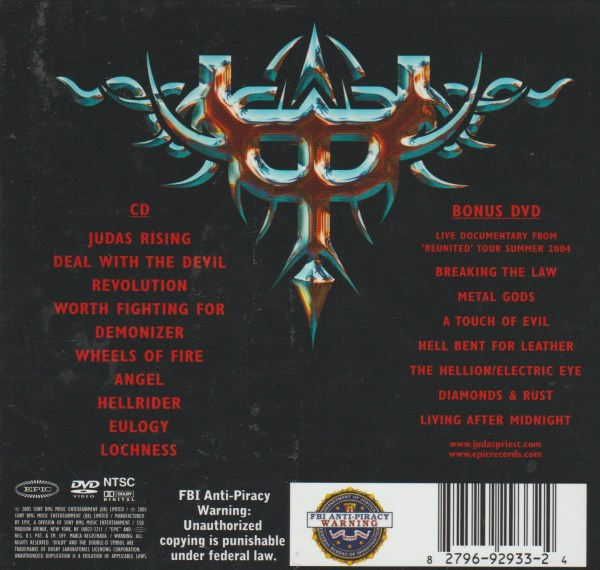
Beware which version you buy.  This CD/DVD combo set contains the documentary plus the full live songs:  “Breaking the Law”, “Metal Gods”, “A Touch of Evil”, “Hell Bent for Leather”, “Eletric Eye:”, “Diamonds & Rust”, and “Living After Midnight”.  The DualDisc version does not; it only includes edited fragments of those tracks.  Which is a shame, because the band sounded fantastic and Rob was in full-lunged form.  This is probably the best live version of “A Touch of Evil” available, for example.  Not everyone likes the acoustic version of “Diamonds & Rust”, but it’s certainly different. The only bonus to DualDisc is that you also get the album in “enhanced stereo”.  Avoid that; get this.


Although Angel of Retribution is overall a very strong Judas Priest album, “Loch Ness” is impossible to ignore.  It does serious damage to an album that was otherwise an impressive listen.  In the included DVD, K.K. Downing says they had to pick and choose from an overabundance of songs.  Can you imagine how bad the leftovers are if “Loch Ness” made the album?

3.5/5 stars
REVIEW: Jim Crean – Gotcha Covered (2019)

JIM CREAN – Gotcha Covered (2019 Visionary Noise)

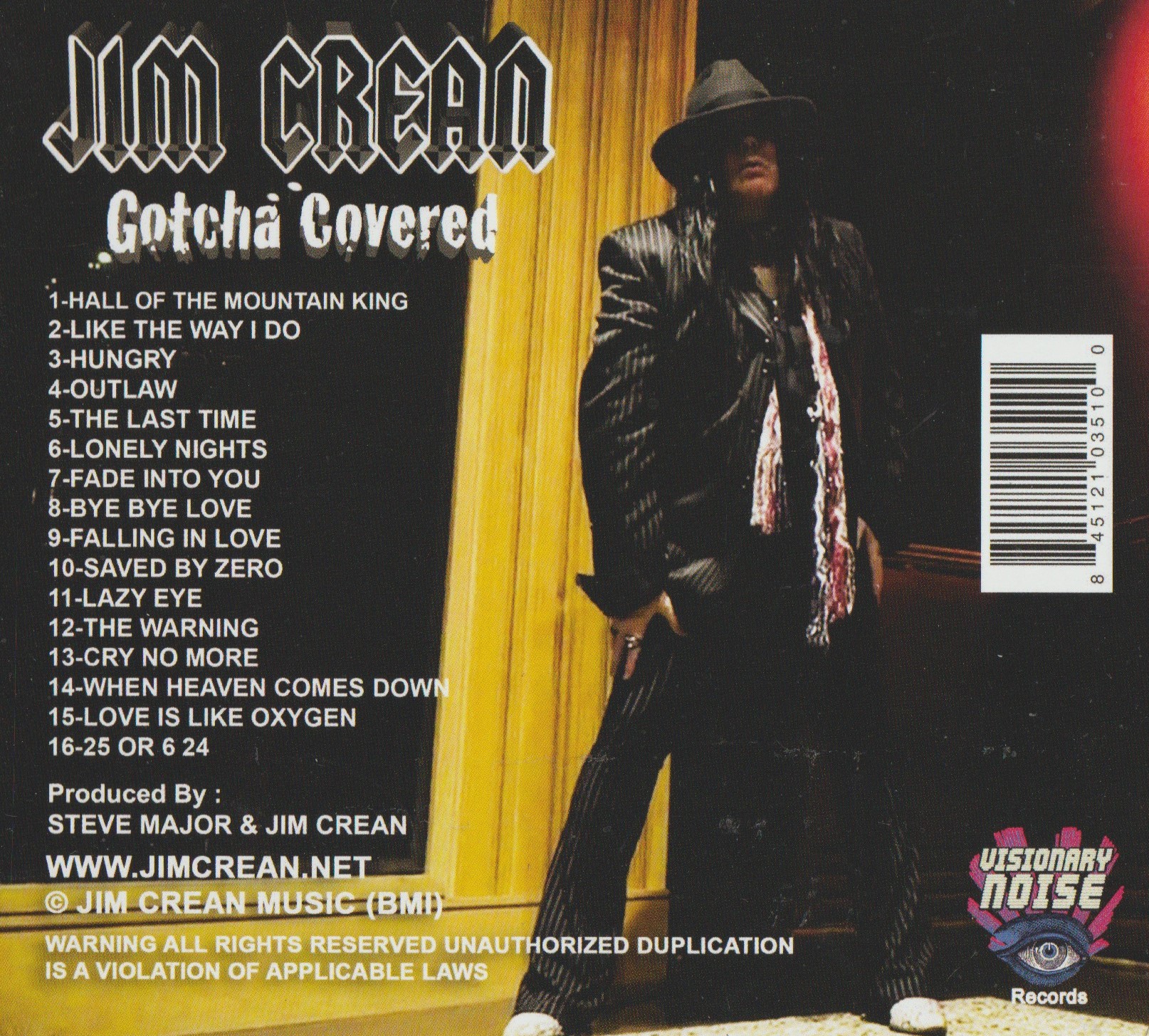
Jim Crean is steeped in hard rock tradition.  He’s worked with some of the legends, and he’s covered the rest of ’em.  Atypical covers.  Not the usual “hits” but interesting tracks you might know and remember, or will be exposed to for the first time.  In 2019, Crean’s come out with an original album The London Fog, and a covers CD called Gotcha Covered.  Lets see what surprises there are in store.

Right out of the gates, it’s a shocker:  “Hall of the Mountain King”.  You don’t hear Savatage covers every day, and fortunately Crean has the necessary scream abilities.  He sounds like a man possessed by lust for the Mountain King’s gold!

Unpredictability is the theme for this album.  Up next:  Melissa Etheridge.  It’s an oldie from her landmark first debut, “Like the Way I Do”, and you’ve never heard it so heavy.  It sounds as if it was written to be played this way because it’s completely natural.  White Lion are a little more centerfield, and “Hungry” is a killer choice.  Jim Crean can easily handle mid-80s Mike Tramp songs, as they are right in his pocket.  John Corabi is another singer who Crean is naturally suited to cover.  The Scream’s “Outlaw” is definitely an obscure but inspired choice.   Tasty riff.  Badlands get the next nod, with “The Last Time”, the first single from the second album Voodoo Highway.  The high notes are no problem, and the chorus goes on for lightyears.

Then it’s back to left field, with Bryan Adams’ old (pre-Reckless) classic “Lonely Nights”.  You don’t hear Adams covers very often, and usually they suck.  Not this one.  Crean transforms it into a hard rock anthem, something Sammy Hagar could have recorded.  Another shocker is Mazzy Star’s “Fade Into You”, converted into a classy rock ballad, utterly different from the original.  The Cars’ “Bye Bye Love” is another brilliant choice (not that you can go wrong with any Cars).  It works well as hard rock.  “Falling In Love”, a Scorpions oldie written by Herman Rarebell, adds a heavy kick at the right time.

“Saved By Zero” is the only track that doesn’t sound overly metalized.  The Fixx cover reveals some more new wave roots, and a good song choice it is.  The complex backing vocals sound fantastic.  Crean does justice to his hometown boys The Goo Goo Dolls next with “Lazy Eye”.  This non-album Goos song was on the soundtrack for the ill-fated Batman & Robin.  As you’d expect, it boasts a strong chorus, but the chunky riff may surprise you.  Another obscurity is “The Warning” by Victory, a strong 80s chug.  Onto the 90s next:  Ratt’s Stephen Pearcy and Cinderella’s Fred Coury had a band called Arcade.  “Cry No More” is a ballad from their debut.

The last few songs include Dokken’s slow burning “When Heaven Comes Down”.  Nothing wrong with some Back for the Attack era Dokken.  The Sweet’s classic “Love Is Like Oxygen” brings that pop edge back.  But it’s the closer, Chicago’s “25 or 6 to 4” that really slams it home.  No horns, just guitars and heavy beats.  The original arrangement is untouchable, but a heavy rock version?  Sure, why not.

A good covers album is hard to come by.  It all comes down to song selection.  In this regard, Jim Crean knocked one out of the park.

4/5 stars

REVIEW: Queensrÿche – Operation: Mindcrime (1988/2003 remaster)

QUEENSRŸCHE – Operation: Mindcrime (1988, 2003 EMI remaster)

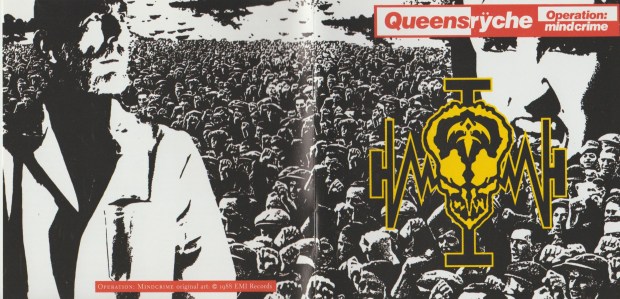
After Pink Floyd made history by releasing The Wall in 1979, concept albums fell out of fashion.   Almost a decade later, two heavy metal albums brought the artform of the full-length story back:  Iron Maiden’s Seventh Son of a Seventh Son, and Operation: Mindcrime by Queensryche.  Of the two, Mindcrime had the more coherent linear story, but both remain high water marks for each band.

The Queensryche album sold slowly at first, as the band refused to make music videos to let the album speak for itself.  They changed course in 1989 when “Eyes of a Stranger” made it to MTV and MuchMusic.  Fortunes changed dramatically for Operation: Mindcrime.  The album eventually went platinum.

The reason Mindcrime was better suited as an album than music videos was the connected storyline running through each song.  Employing a classic frame technique, we begin at the end with “I Remember Now”.

“I remember now.  I remember how it started.  I can’t remember yesterday.  I just remember doing what they told me…”

The anti-hero Nikki is an angry, aimless addict who fell in with a radical political group called Operation: Mindcrime.  He is a disheartened young American. “The rich control the government, the media, the law.”  Mindcrime’s modus operandi?  Using drugs and brainwashing, would-be assassins are sent out to kill strategic political targets, building to revolution.  Inequality, corruption and the media have made the country an ugly place.  Dr. X, the mastermind behind Mindcrime, has total control over Nikki.  He also uses the nun Mary, a former prostitute, to feed Nikki’s needs.  Nikki and Mary grow closer until he receives the order:  “Kill her.”  She knows too much.

The first two tracks are just setup before you get to the meat.  “I Remember Now” and “Anarchy-X” create a powerful set of images, with anthemic guitars and the sound of massive crowds rallying to a cause.  “Revolution Calling”, the first real song, begins the narrative.  “Then I heard of Dr. X, the man with the cure, just watch the television, yeah you’ll see there’s something going on.”

Nikki is indoctrinated on the title track, an ominous riffy behemoth of a song.  Dr. X uses Nikki’s drug addiction to control him.  With nothing to lose, Nikki falls for the doctor’s words.  “There’s a job for you in the system boy, with nothing to sign.”  Nikki has no use for the government or politicians.  It all sounds good to him.  On “Speak” he receives his first assignment.  “I’m the new messiah, death angel with a gun.”  On a blazing fast track with a thick chorus, Nikki falls into his new life.  “Eradicate the fascists, revolution will grow.”  On “Spreading the Disease”, another kickass track with a chorus that goes on for miles, Nikki tells the story of Mary and his distaste for the church.  “Religion and sex are power plays, manipulate the people for the money they pay.  Selling skin, selling God, the numbers look the same on the credit cards.”

Queensryche take it slower (though not soft) on “The Mission”, as Nikki starts to feel disillusionment.  “I look around, my room is filled with candles, each one a story but they end the same.”  He keeps telling himself that he’s doing what’s right.  “My mission saved the world, and I stood proud.”  But then he is given the order he dreads:  Kill Mary.  This instruction opens album epic “Suite Sister Mary”, 10 full minutes of riffs, choir and orchestra (by Michael Kamen).  The riff alone stands like a monolith.  Vocalist Pamela Moore sings a duet with Geoff Tate as the character of Sister Mary.  As for that riff?  Chris DeGarmo was the master riff composer in this band, a hole they have never quite filled.

The second half of the story commences with “The Needle Lies”.  Nikki wants out, but finds that it doesn’t work that way.  There is no “out”.  Meanwhile Queensryche strafe the speakers with a thrashy blitzkrieg.  Drummer Scott Rockenfield cannot be contained.  Then on the quiet filler track “Electric Requiem”, Nikki discovers that Mary had made his choice to disobey orders irrelevant.  Dead by her own hand, Nikki is broken and tailspins into a mad depression.  This is portrayed on “Breaking the Silence”, another stone cold winner of a song with a mighty chorus.  The chunky guitar riff is to die for.

With his memory failing him, Nikki doesn’t even know if he killed Mary himself or not.  He questions everything on the ever-cool single “I Don’t Believe in Love”, one of the most remarkable of all Queensryche songs.  Once again the writing partnership of Tate and DeGarmo struck heavy musical gold.  Two shorter tracks (“Waiting for 22” and “My Empty Room”) fill in some story points, and Nikki is eventually caught.

Operation: Mindcrime’s biggest song is its final track and first single, “Eyes of a Stranger”.  Memories are but fragments.  “I raise my head and stare into the eyes of a stranger.”  It’s one of Queensryche’s most incredible recordings, a perfect storm of guitars, vocals and melody.  It’s neck deep in drama, with Geoff Tate at his most emotive.  The story ends with some questions left unanswered.  At least until 2006’s unnecessary Mindcrime II….

Operation: Mindcrime took Queensryche to an artistic level that fans and critics always knew they could achieve.  Their debut EP showed promise.  They didn’t live up to that potential until Mindcrime.  Though good, The Warning album wasn’t a stunner like MindcrimeRage For Order was brilliant but alienating.  Even when it was first released, Mindcrime did not blow all the critics away.  Only after it had been digested slowly over time did the masses realize they were sitting on something very special.  Queensryche had done conceptual work before, but more abstract.  Nothing as well-hewn as Mindcrime.  Musically it was like they distilled everything they had accomplished thus far, and concentrated it into pure rock majesty.

The 2003 CD reissue had two live B-sides as bonus tracks.  “The Mission” was originally released in 1991 on the B-side to “Silent Lucidity”.  It is a different recording from that on the live album Operation: LIVEcrime.  “My Empty Room” is a later acoustic recording, released in 1995 as a B-side to “Bridge”.  It’s interesting for its acoustic setting and percussion, but is best heard in the context of the “Bridge” single with its other acoustic counterparts.

Is Operation: Mindcrime a masterpiece?  The story is a bit Hollywood and a tad juvenile, but the broad strokes are remarkably still valid today.  Mindcrime is rivalled by only a few.  It’s a worthy, nay, important addition to any metal collection.

5/5 stars

REVIEW: Queensrÿche – Queensrÿche (1983 EP/2003 remaster)

Part I of a Queensryche two-parter.
QUEENSRŸCHE – Queensrÿche (1983 EP/2003 EMI remaster)

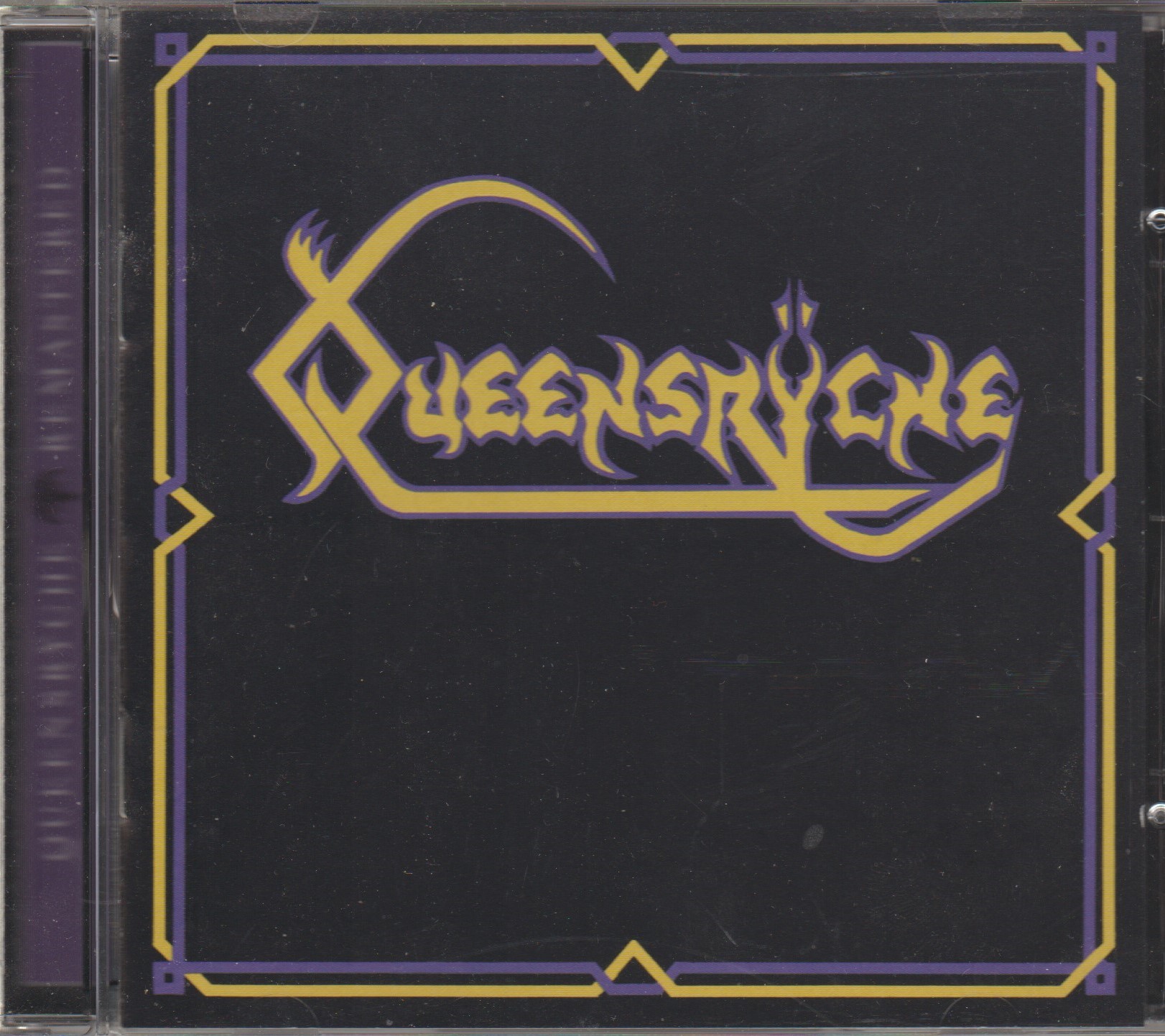
Sometimes a reissue is done so right you just gotta “Take Hold of the Flame”.

The 1984 debut EP by Queensryche is one such release.  The original vinyl runs shy of 18 minutes, leaving plenty of space for bonus tracks.  For this, they included the audio for all 10 songs from their first home video, Live in Tokyo.  Wishes fulfilled.

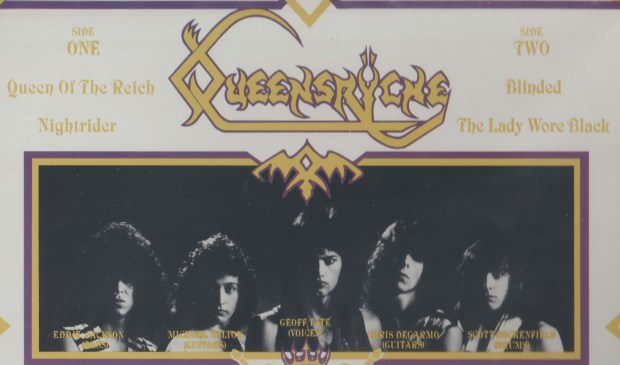
The original four track EP put the quintet from Seattle on the map.  Opening with “Queen of the Reich”, the young band showcased their knack for riffs and screaming vocals.  Geoff Tate’s opening scream cannot be touched.  Tate seemed embarrassed of these songs later on (all written by Michael Wilton and Chris DeGarmo with one lyric by Geoff).  Though the songs are clearly a starting point, they’re nothing to be embarrassed by.  “Queen of the Reich” remains simple, majestic and powerful.

The “Nightrider” sails away but the riffs go on with pneumatic precision.  Early Queensryche were not that dissimilar from early Iron Maiden, but at least they were doing that sound well.  Curiously enough this self-produced EP was not recorded with the intention to release it.  Queensrÿche is actually just a demo, but the band were starting to make waves on the live scene and so the four songs were released as an EP.  It eventually went gold; very rare for an EP.

Flipping over to side two, “Blinded” is screamy and raw.  Not one of the bands’ most memorable tunes, but soon arrives “The Lady Wore Black”.  This is a metal ballad in the classic vein of “Beyond the Realms of Death” or “Remember Tomorrow”.  Tate’s voice cascades while the band weave a backing track of guitar thunder.  Along with “Queen of the Reich”, it still turns up on live setlists.

The live set in Tokyo, recorded in 1984, contains all the tracks from the EP, a non-album song called “Prophecy”, and several from the debut full-length album The Warning.  Opening with the “Nightrider”, Queensryche don’t let up through a generally fast and heavy set.  “Prophecy” keeps up the brisk pace, with a chorus that is miles ahead of “Nightrider”.  And this DeGarmo-penned smoker was a non-album track!  “Deliverance” from The Warning follows in its ashy footsteps.  It’s an onslaught of Warning tracks:  “Child of Fire” and “En Force” rolled out in heavy fashion.  This trio of Warning songs might be considered the slow part of the set.  They have a soundalike vibe as they steamroll the ears.

“The Lady Wore Black” brings a slower, dark atmosphere.  Tate’s sustain is unbelievable!  Then it’s a blast of classics to close the set:  “Warning”, “Take Hold of the Flame” and “Queen of the Reich”.  Magnificent metal through and through, with “Take Hold” being an unequivocal high point.  From Tate’s vocal to the exalted riffing, Queensryche nail it.

Don’t just get the EP.  Make sure to get the 2003 CD reissue with the glorious Tokyo show included.  You’ll be happy you did.

4/5 stars


Just Listening to…Alice Cooper – Welcome 2 My Nightmare

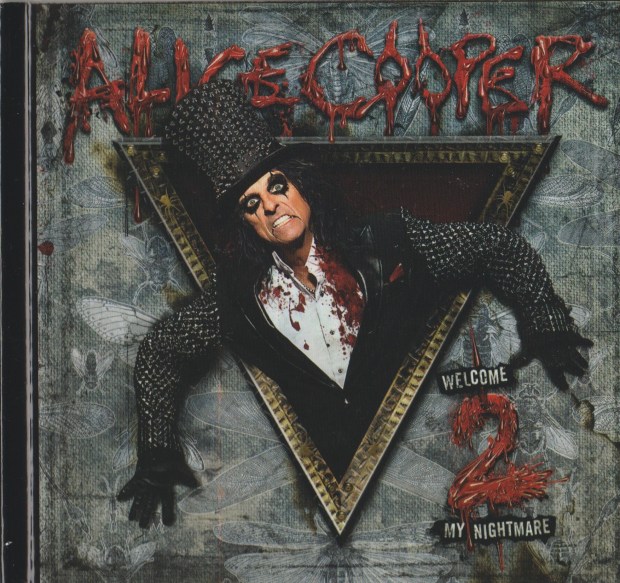
I was very enthusiastic for this album when it came out in 2011:  four copies purchased (to get all the bonus tracks) and a 5/5 star rating.  I can hear what I loved about it so much, even if the feelings are faded today.  That’s what makes these “Just Listening” writings interesting!

The original Nightmare is still a favourite and always will be.  Factors that appealed to me about the sequel album are the musical and lyrical callbacks.  These recurring cues unite both albums quite successfully despite the decades that passed.  Musical sequels can be a dicey affair (Mindcrime 2, anyone?) but Alice Cooper and Bob Ezrin managed to do the near-impossible.

The standard album runs 52 minutes, and that’s just a tad long.  Although there are no obvious duds to cut, the original Nightmare was more effective because it was more concise.  (You want a longer experience?  Adding in all the bonus tracks more than doubles the album’s length!)  Regardless of the digital age that most of us inhabit, there is something to be said for the length of a standard LP.  It just happens to jive with the natural attention spans of the human mind.  The new Nightmare crams 14 tracks into that 52 minutes, and it plays out as a lot to absorb.  Especially after giving the album a rest for a few years.

Another way in which the second Nightmare is inferior to the first is the overall tone.  Nightmare 2 is far more humorous.  A couple tracks (“Ghouls Gone Wild” and “Disco Bloodbath Boogie Fever”) are there for the laughs.  That’s fine — Alice Cooper does humour in music better than 99% of those who try.  The original Nightmare had its fun, but the tone of the album was far darker, especially with songs like “Steven” and “Only Women Bleed”.  You’re going to have a preference one way or the other too.  I prefer the darker original Nightmare to the more comedic sequel.

These are all very fine hairs to split.  I still like the album, a lot.  I believe it to be Alice’s best from the last two decades.  There’s very little wrong with it.  I just don’t think it matches the first as much as I once did.

REVIEW: Jim Crean – The London Fog (2019)

JIM CREAN – The London Fog (2019 Visionary Noise)

Vocalist extraordinaire Jim Crean is back with two new solo albums.  Not only is there a 16 track covers album called Gotcha Covered, but also The London Fog, a new original CD.  As usual, Crean boasts a killer hitlist of special guests, including Carmine & Vinny Appice, Mike Tramp, Rudy Sarzo, Chris Holmes, Steph Honde and plenty more.  Buckle up — it’s a heavy duty trip.

The London Fog goes wide open from the start, with the two new songs Crean released on last year’s Greatest Hits:  the excellent “Scream Taker” (tribute to Ronnie James Dio) and the riffy “Conflicted”.  “Scream Taker” features Dio alumni Vinny Appice and Rudy Sarzo.  These tracks follow the traditional blueprints of classic 80s metal, particularly “Conflicted”.  (The dexterous bassist that I initially mistook for Billy Sheehan is actually A.D. Zimmer.)

Want more riffs?  Then get “Broken”!  There’s a great chorus here: Melody and power, with some tasty licks from Steph Honde.  “Aphrodisiac” takes things to a more nocturnal place, but more menacing.  Still, there’s always room for some dirty rock, and that would be “Lady Beware”.  If Dokken’s classic lineup released another song today, it would probably sound a lot like “Lady Beware”.  This is the kind of rock we all miss, and have a hard time finding today.

Jim Crean is equally at home on rockers and ballads.  “Let It Go” (with Honde on piano and keyboards) has an epic quality for a ballad.  It might be a bit Scorpions, Whitesnake (circa 1987) or Guns N’ Roses…the comparisons are up to the listener.  The keyboard solo is a cool touch.  Then heavy sounds circulate on “Loaded” (more Zimmer on bass), but yet Crean maintains a knack for melody.

A familiar voice welcomes you on “Candle”, a Mike Tramp (Freaks of Nature) cover featuring Tramp in a duet.  The song is new to these ears, and I like how the parts shift and change moods.  A riff for the ages follows, on an original track called “1981”.  Again I’m reminded of Dokken, the classic era.  It’s hard to recapture a time period with such clarity, but Jim Crean has a talent for writing that way.  Some of his originals could very well be from another time.  (Drummer Colleen Mastrocovo gives “1981” a serious kick.)

Another obscure cover:  Robin Zander’s 1993 solo track “Time Will Let You Know”, a classy ballad from an underrated album.  Jim doesn’t try to sound like Robin Zander, but does it justice.  Then it’s Rod Stewart’s dance classic “Passion”.  Very few singers have the right rasp to do Rod Stewart justice, but Jim Crean is one of them.  That’s the always slick Tony Franklin on bass.  And get this!  Franklin’s Blue Murder bandmate Carmine Appice, the same guy who played on the the original “Passion”, also plays on this cover.  He approaches both versions very differently.  Rod’s version is slick dance rock, and this is more like metal that you can dance to.  Same song; familiar but a completely different arrangement.  If John Sykes ever played with Rod Stewart, maybe this is what they could have sounded like.

“Passion” could have closed the album and you’d be completely satisfied, but there’s more.  A funky “Fool” sounds like Aerosmith, and who’s that on guitar?  Ray Tabano, the original Aerosmith guitarist before Brad Whitford joined the band!  This song is more Aerosmith than anything that band has recorded since 1993!  Then it’s another lesser-known cover and duet:  Angel’s “Don’t Take Your Love” featuring original Angel singer Frank DiMino.  Great melodic rock songs are always welcome, and this one is truly great.

Finally comes the metallic closer “Tears” featuring Chris Holmes (W.A.S.P.).  The contrast between the heavy riffs and Jim’s melodic vocals is what makes this style work so well for him.  The riff has a W.A.S.P. vibe, but Crean takes it in a totally different direction.

Another fine album from Jim Crean and friends.  Fans of hard rock “the way they used to make it” will thoroughly enjoy.

4.5/5 stars

Check back for a look at Gotcha Covered, coming soon.

REVIEW: Kick Axe – Rock the World (1986, 2016 remaster) – Kick Axe series Part Six

Part Six – the final chapter of the classic KICK AXE series!

KICK AXE – Rock the World (1986, 2016 Rock Candy collector’s edition)

Though Kick Axe had the power of the Matrix on their side, it could not conjure up sales without support from Epic, the record label.  With only one music video and no real marketing plan, Welcome to the Club fizzled out in sales.  This resulted in three major changes.  First, the band were dropped by Epic, though still signed to CBS in Canada.  This resulted in an end with their relationship with producer Spencer Proffer.  Guitarist Raymond Harvey quit, eventually joining up with Bob Rock and Paul Hyde in Rock & Hyde.  Kick Axe decided to carry on, but as a four piece with guitarist Larry Gillstrom handling all the six strings himself.

Without big label money, the quartet produced and mixed their third album alone.  The record, initially titled Fuck the World, is bassist Victor Langen’s favourite to this day.  Ultimately, the album called Rock the World was met with split opinions among fans.

Lead single “Rock the World” opened the album with an intense blast of guitars, drums and bass.  On the verge of thrash, Kick Axe had obviously abandoned the overtly commercial tone of their last LP.  First comes the guitar histrionics, then a blast of stampeding drums, and a blitzkrieg bassline.  Shrieking in peak form, singer George Criston and his perfect pipes maintain the melodic metal standard.  Somewhere between Maiden and Motorhead lies “Rock the World”.

Every Kick Axe album has a cover tune, and for this album they bravely selected Fleetwood Mac’s “The Chain”.  Though the album generally suffers from a stuffy, echoing sound (due to the low budget production), “The Chain” manages to make that work to its advantage.  It adds to the ominous, foggy tone.  According to the liner notes, Kick Axe still play “The Chain” live today.

Finally going for that good-time rock and roll sound that they were founded on, it’s time for the “Red Line”.  This track proves that Kick Axe could write quality, catchy hard rock classics without Spencer Proffer or Randy Bishop’s help.  Then it’s the ambitious “Devachan”, a Maiden-esque volley of fire with multiple riffs and tempos.  It’s a very busy song, far more advanced than you’d expect.  It’s highly unlikely Spencer Proffer would have let them release a track this far left of mainstream rock.  With the band in control they were able to explore more epic arrangements like “Devachan”.  The side one closer is a track called “Warrior”, with Criston’s steely vocals leading the battle cry.  Its deliberate stomp is similar to a much later Rainbow song called “Hunting Humans”.

“We Still Remember” leaves smoking ruins in its wake on side two.  It seems like Kick Axe were aiming for something more than just melodic heavy metal.  There are intricate bass parts, well written solos, thoughful lyrics and complex changes.  Cookie-cutter metal, this is not.  It’s intelligent rock, the kind that fans of the genre take pride in owning.  And then, “the chase is on”, it’s “The Great Escape”.  This hurried rocker borders again on Iron Maiden, but things go slower for “Medusa”.  A rolling bass riff is the main feature for this slightly progressive composition, perhaps a bit too highbrow.

“The Dark Crusade” is, appropriately, more metal.  The beat, courtesy of Brian Gillstrom, is Priest-like circa Defenders of the Faith.  It’s a sound representative of the era.  Meanwhile George Criston takes the vocals to near-operatic levels.  A clever bass-led song called “Magic Man” ends the album with an atmospheric tone, and George Criston even ends it with some Ian Gillan screams a-la “Child In Time”.

Unfortunately but predictably, Kick Axe broke up in 1988 and the members went their separate ways.  After a number of side projects, a remarkable thing happened:  Kick Axe reunited.  They even made an album, called Kick Axe IV.  The only catch:  George Criston didn’t participate.  Instead, Victor Langen’s brother Gary (who happened to also be the original drummer in Kick Axe) stepped up to the microphone.  That era is outside the purview of this series, based on the classic original period, though perhaps after a few Discogs purchases, we’ll continue the story.  Today, Kick Axe continue with capable young singer Daniel Nargang.

As the final album in the original Kick Axe triumvirate, Rock the World delivers on a lot of promise.  Most bands tended to go more commercial album to album in the 1980s.  By being dropped by Epic, Kick Axe were able to unlock some serious heavy metal ideas, combining them into something a little more original.  The sonics could have used some more tender loving care, but they only had a month to make this thing.  It is the best thing they could have produced by themselves at the time, and probably the most pure.  The right producer could have tightened up the songs just enough to make each one a classic unto itself.  Rock the World is an indulgent Kick Axe album, just going for it, and fuck the world!

4/5 stars


Part One:  “Reality is the Nightmare”
Part Two:  “Weekend Ride”
Getting More Tale #773:  Rock Candy + Internet = Kick Axe!
Part Three:  Vices
Part Four:  The Transformers soundtrack (as Spectre General)
Part Five:  Welcome to the Club
Part Six:  Rock the World

REVIEW: The Hellacopters – Head Off (2008 Vinyl Disc)

THE HELLACOPTERS – Head Off (2008 Wild Kingdom Vinyl Disc)

If you don’t know what a “Vinyl Disc” is, that’s OK.  It was a niche format that only last a year or two.  Essentially it’s a CD with an LP groove on the label side.  You could get over 80 minutes on a single disc this way, by placing a bonus track on the vinyl side.  The Hellacopters, however, aren’t an 80 minute album kind of band.  Head Off, their final CD, is only 35 minutes long, plus a 3:20 bonus track on the vinyl side.

Head Off is a covers album, but having heard none of the originals, that wasn’t immediately obvious.  They usually do songs you’ve never heard of.  Covers or not, Head Off is a pretty great collection of the kind of hard rocking melodic gems that the Hellacopters usually specialize in anyway.

The hands-down best track is the last one on the CD:  “Darling Darling” originally by The Royal Cream.  Hard rock with melancholy melody and a guitar solo that slays.  There’s even a Kiss “Easter egg” in the Hellacopters’ version.  We already know they are Kiss fans since they even have a track called “Paul Stanley”, using a bit of one of the man’s awesome riffs.  This time, the Hellacopters lifted a lick that Paul plays live on the intro to “Black Diamond”.  You can hear the lick in the outro, at the 3:00 mark in “Darling Darling”.  The original is found in “Black Diamond” at the 18 second mark, on Kiss Alive!  The Hellacopters turned it into one of the best hooks in “Darling Darling”, and it happens to fit like a glove.  A leather glove, with tassels.

Back to the start, the album opens with a punky rock and roll vibe.  “Electrocute” is by a Swedish band called Demons, and this excellent boogie-woogie will make you want to check ’em out.  Another killer, “Midnight Angels” (The Peepshows) is melodic rock nirvana.  How are these not the biggest rock songs in the world already?  “I’m Watching You” (The Humpers) is a blitz, heads-a-bangin’ along.  It slows a bit on “No Salvation” (The Turpentines), which turns towards down a darker alley, though just as ear-pleasin’.  “In the Sign of the Octopus” (The Robots) is like a vintage Kiss track circa Love Gun, lost to the ages but just as good as the songs you remember.  The Robots stole my love!  The New Bomb Turks are covered next on “Veronica Lake”, pure good time punk rock.  Boogie piano makes it accessible to even the strictest hard rocker.

The CD continues to rock through track after track of brilliance that you’re probably unfamiliar with.  Every song is stuffed with hooks and melodies, no ballads.  The Hellacopters treat each one with the kind of guitar thunder they’re known for.  There are no duds anywhere on the entire album, and even though it’s all covers, it’s not uneven or inconsistent.  You would completely believe that all the tunes were originals, if you didn’t know ’em.  “Rescue” (Dead Moon) could have been a Hellacopters song, easily.  Even the soulful “Making Up For Lost Time” (The Bellrays) sounds natural to this band.

The only track that is a letdown is “Straight Until Morning” (The Powder Monkeys), the bonus track on the vinyl side.  As discussed in the article about Vinyl Discs, the audio quality on this side is utterly atrocious.  Especially when compared to the sharp sounding CD side, this track is flat and noisy.  It is, however, the heaviest and punkiest song on the album, so perhaps this is appropriate?  Even intentional?

Ignoring the sonic issues on the vinyl side, which was really just a novelty factor, Head Off is worth a solid:

5/5 stars

This limited edition also included a pin and a patch, so if you’re looking for your own copy, make sure it’s complete!