DIO – Live In London – Hammersmith Apollo 1993 (2014 Eagle)
The only good thing that came from Ronnie Dio’s death is the number of reissues and live albums we’ve gotten since. One of the more overlooked eras of Dio was the “Tracy G” era, Strange Highways and Angry Machines. Dio had just reunited in the middle of the grunge movement. Tracy G (ex-WWIII) was not to everybody’s taste. While he could indeed shred, he also utilized shrill noise and harmonics in his guitar work which isn’t everybody’s cup of tea. He could, however, lend Dio a heavier edge necessary in 1993. Add in bassist Jeff Pilson from Dokken and veteran drummer Vinnie Appice and you have one hell of a lineup.
Dio assembled a setlist with his best material, but ignoring a couple albums. Lock Up the Wolves and Dream Evil were considered disappointments when they were new. Even Sacred Heart is skipped over on this live album, in favour of old classics and a healthy serving of new songs. Sabbath and Rainbow only get a song a piece.
The sound is bloody perfect, as if they meant to release a double live album all along. Having Pilson on bass lends a heavy, low grumble and immaculate backing vocals. Tracy G might be an acquired taste on guitar but there’s no question he could do the job. He gets an extended solo on “Pain” that displays shredding, noise and musicality. Vinnie Appice gets a long solo too, as part of a “Heaven and Hell” / “Man on the Silver Mountain” medley. Eventually the band returns and they pound out a machine gun riff with monstrous Pilson bass licks. Incidentally, it’s Jeff Pilson that captures that old Black Sabbath/Geezer Butler groove better than any other bassist Dio has had.
This is a phenomenal live album. Sure, you can buy live Dio with better known lineups and songs. You can get live stuff with Vivian Campbell or Craig Goldy. This setlist is considerably different from those, and the sound is heavy as hell!
The Goo Goo Dolls were made for the 90s. When the big bands dropped off the charts, where were we to get our fix of melodic rock with acoustic ballads? From Buffalo, NY. The sixth Goos album, Dizzy Up the Girl, was the latest in a stream of albums that got progressively less punk and more acoustic. It was also their first album with critically acclaimed new drummer Mike Malinin, and the first since they had a huge single in “Name”. It’s no surprise they went further in that direction.
Commercial intents aside, Dizzy Up the Girl is a remarkable album. Every song helmed by singer/guitarist Johnny Rzeznik boasts an explosive chorus. The four tracks with bassist Robby Takac singing are the ones that maintain a punk aesthetic, but with a refined sense of composition.
Lead track “Dizzy” is the first of many great single-worthy choruses. In fact it was a single, though not the biggest of the bunch. That would of course be “Iris”, previously issued on the soundtrack to City of Angels. The 90s were not that much different from the 80s when it came down to it, and a power ballad is what made the Goos a household name. Better than Iris though is the single “Slide”. It charted just as high as “Iris” (#1) in the US and Canada. Unlike “Iris”, “Slide” has a driving acoustic vibe. It’s the kind of tune Extreme made their bread and butter with, like “Hole Hearted”.
Two years after “Iris”, the album was still producing singles. “Broadway” is just as good as “Slide” with more emphasis on the electric guitar. It has an earthy, down home quality. “Black Balloon”, another single, takes it back to acoustic with harmonics, and strings added by Canadian David Campbell (father of Beck). Even without the accompaniment it’s one of their biggest and best choruses.
Takac’s four tunes (“January Friend”, “Amigone”, “Full Forever”, and “Extra Pale”) are great breaks between Rzeznik’s more mainstream crooning. Robby’s rasp isn’t commercial but it’s the only real link back to their punk rock days. His songs don’t suck. “Amigone” (pronounced “Am I Gone”) sticks to the brain like chunky peanut butter.
Four of the five singles are top-loaded onto the front of the album, normally a death knell for a solid listen. Not in this case. The Goos boasted album tracks as good as their singles. “Acoustic #3” is good enough to be yet another single. “Bullet Proof”, with its driving guitar, could have been the album opener. The chorus lifts off to the atmosphere. It’s the kind of chorus you expected from the 1980s, not the 1990s. A dramatic “All Eyes On Me” could also have been a solid album opener. All they need is a closer! Nope, they got that too: “Hate This Place” winds things up nicely the way it began. “Hold on, dream away, you’re my sweet charade.”
Dizzy Up the Girl might not be up your alley, but in the 90s, choice was more limited. It was hard to find mainstream rock that didn’t suck. This one stands the test of time, with a collection of excellent guitar-based tunes that fit the mold.
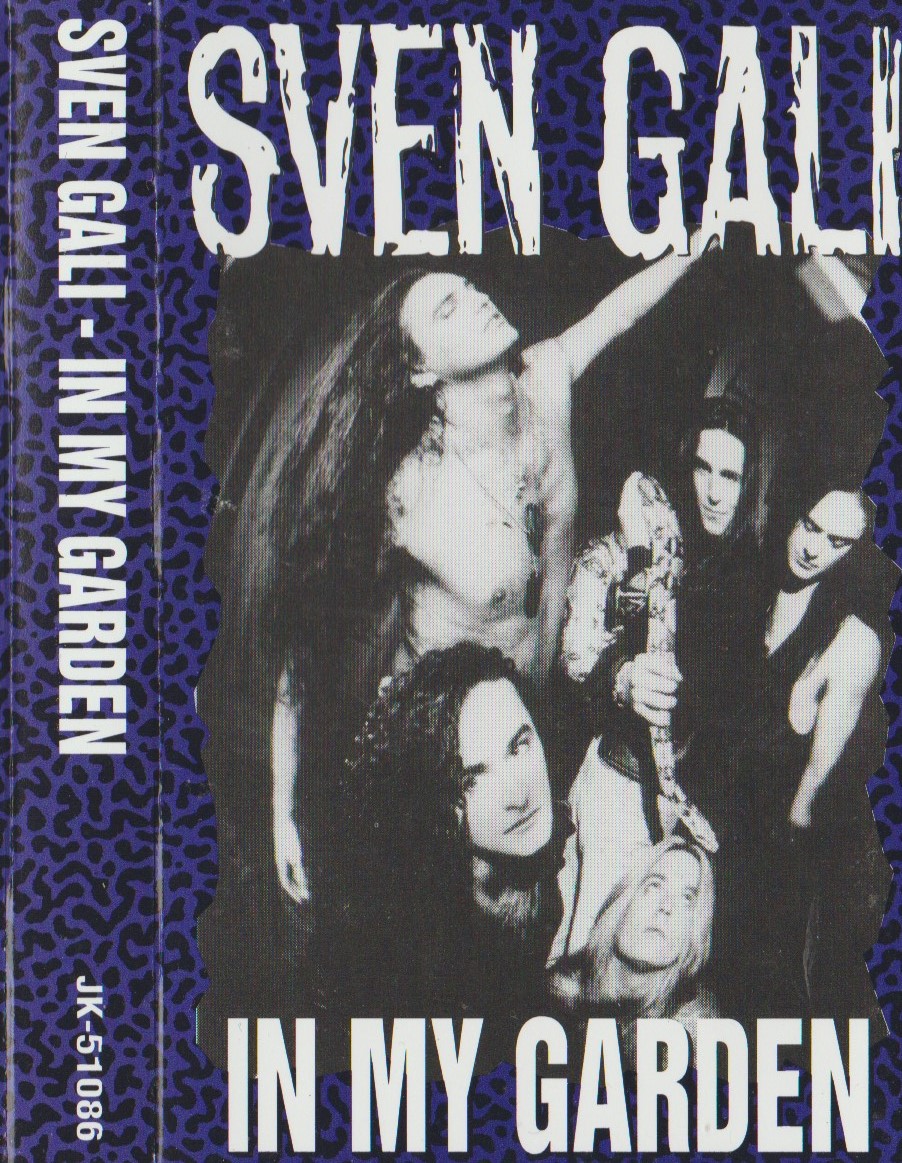
SVEN GALI – In My Garden (1992 BMG promo cassette)
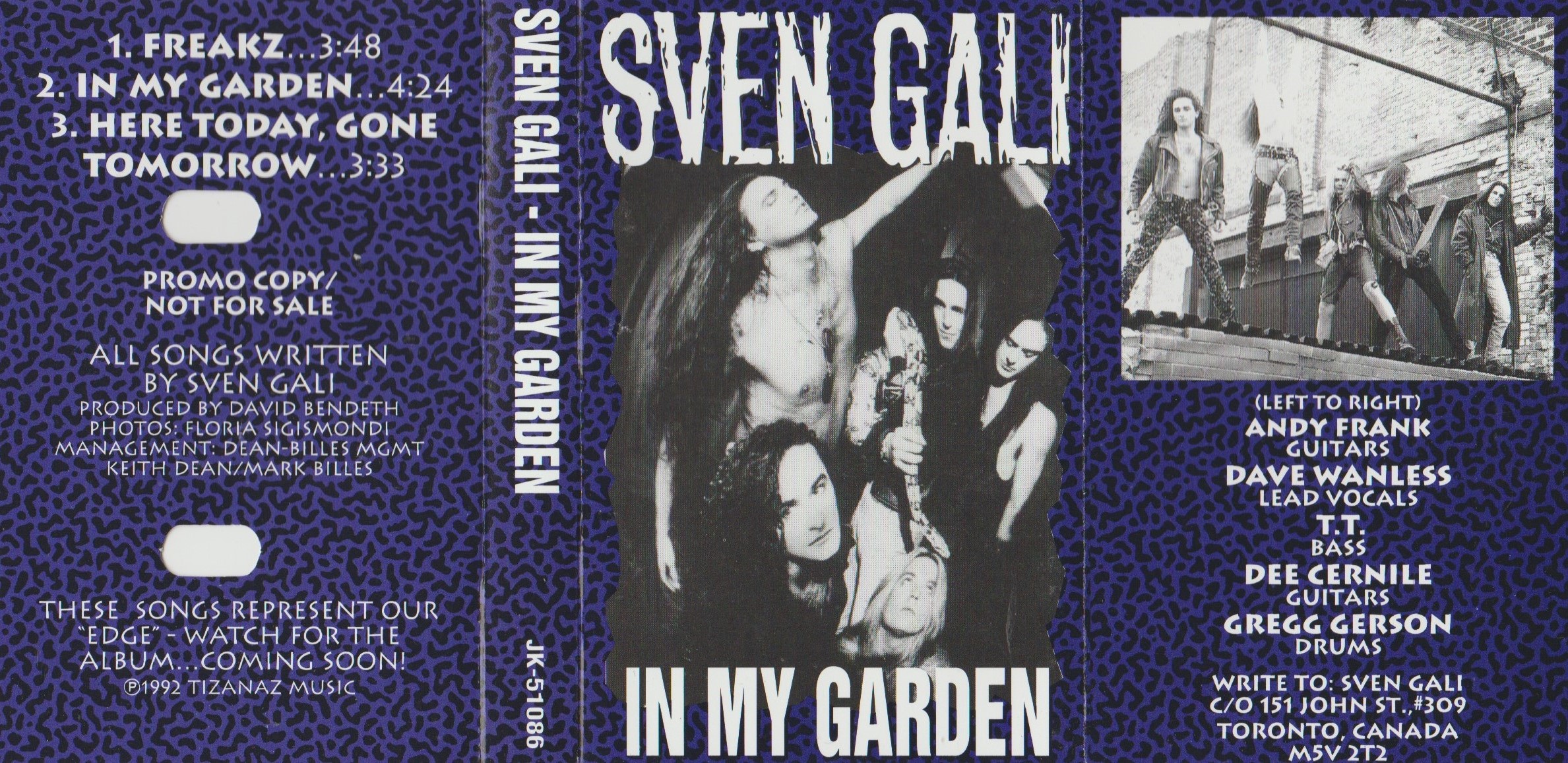
One of the great perks to a M.E.A.T Magazine subscription was getting free promo tapes in the mail. One of the bands that M.E.A.T had been hyping was Sven Gali, who had a major label debut on deck with BMG for release. We were all curious what Sven Gali sounded like…and then this promo tape arrived, previewing three of the tracks!
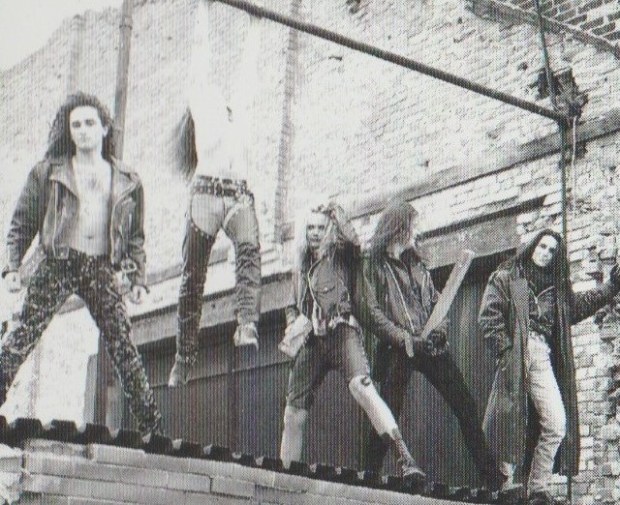
The lead singer can make or break a band, and Sven Gali had Dave Wanless. Mr. Wanless had the power reminiscent of another successful Canadian, a certain Sebastian Something who was out there ruling the concert stages. Wanless also had the right look, and of course a pretty good band! From the ranks of Billy Idol came veteran drummer Gregg Gerson, joining with Dee Cernile (guitars, R.I.P.), Andy Frank (guitars), and “T.T.” (bass). They could rock. They had soloists arguably more interesting than the guys in Skid Row. And, as evident in this tape, they could write hooks.
“Freakz” wasn’t the lead single, but it could have been. Rebellious rock attitude, tires smoking down a dark alley, guns blazing…and just a pinch of funk. “When you gonna learn, baybay!” screams Dave Wanless, and just know he’s got at least one fist raised when he’s singing it.
Up second is a track that did become a single, the dark ballad “In My Garden” (an edit version). This world-class ballad has all the right ingredients including chorus hooks, a place to shout along, and perfect guitars. In the early 1990s, if grunge had not derailed the rock n’ roll train, bands like Sven Gali (more aggressive than the 80s groups but not abandoning solos and choruses, and with an ear for musicianship) would have been the next wave.
The last track on the tape is the borderline thrash of “Here Today, Gone Tomorrow”, ironic in hindsight since Sven Gali only managed two albums before being submerged by the flotsam of the mid 90s rock scene. Skid Row comparisons are easy to make (in a positive way), but there’s one major difference between Skid Row and Sven Gali. That is Sven Gali still have their original singer where Skid Row do not. (They have a new track out called “You Won’t Break Me” to be followed by a CD in 2020.) They might not have exceeded the fame of Skid Row, but they might just end up having more material with their original singer….
This cassette whet the appetite for the eventual album, which maybe suffered from too much material, but on tape these songs sound ace!
4/5 stars
Check out the credits. Photos by famed photographer Floria Sigismondi, who took just about every memorable photo of every 90s band you can think of. Today she’s a movie director! She’s the reason this tape looks so cool.
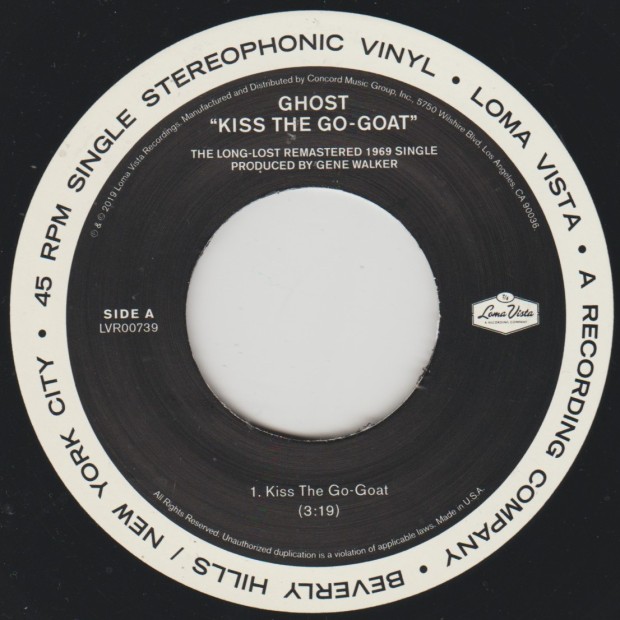
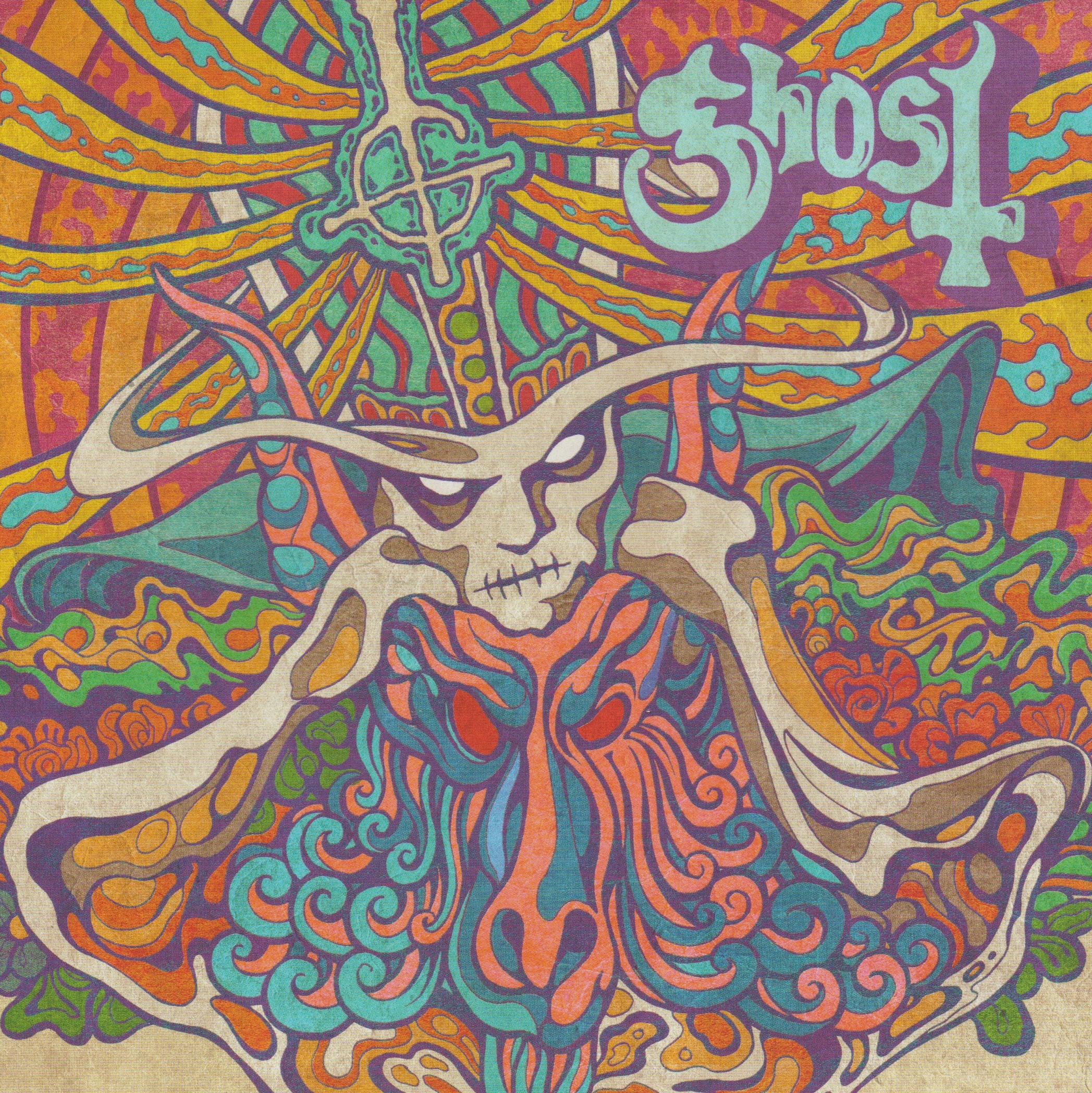
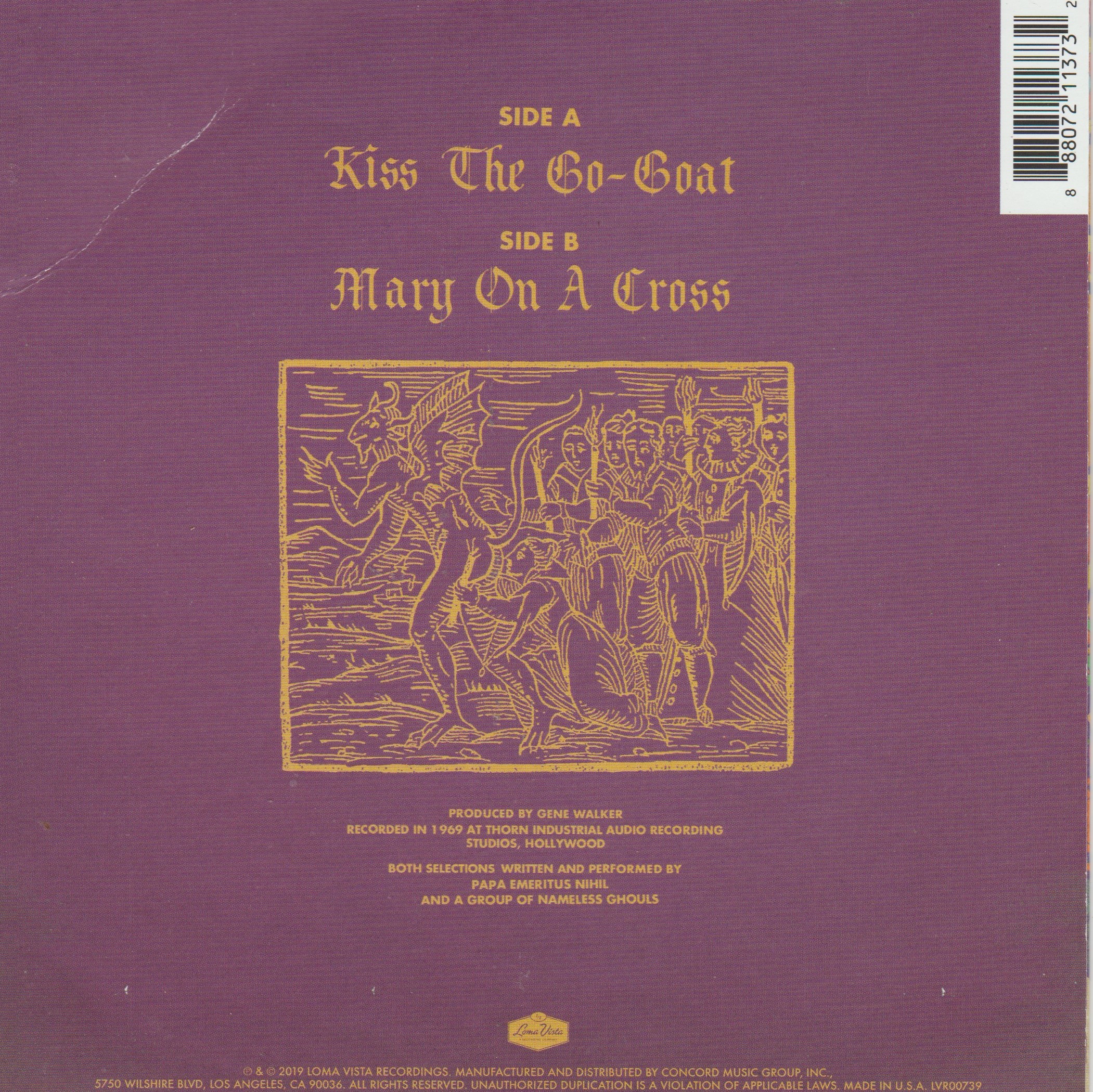
GHOST – “Kiss the Go-Goat” (2019 Loma Vista 7″ single)
Ghost began as a gothic, Satanic metal experiment. They grew to include more pop and more humour, and while it hasn’t all been good, most of it has. In 2019, Papa Nihil and his merry band of Nameless Ghouls have returned with the kitschy single “Kiss the Go-Goat” / “Mary on a Cross”. It’s not much of a departure from their last album, the excellent Prequelle.
Look at the subtitle on the A-side of the label. “The long-lost remastered 1969 single.” That Ghost humour again.
“Kiss the Go-Goat” has a driving organ/guitar riff that is the kind of stuff recent Ghost glory has been based on. The corny chorus of “Satan, Lucifer…” is far removed from the old orthodox days of “Satan Prayer” and ante-nicean creeds. But it rocks, solidly and without embarrassment. A track this good could easily have been on Prequelle. “Mary on a Cross” doesn’t have the same impact, but is not an also-ran. It’s a little darker but the recurring organ part is perfectly piquant.
If not for the worrisome possibility (probability?) that these two songs will show up on some kind of future deluxe edition, this single would be an absolute must for all boys & girls, far & wide. In fact, it has shown up on a very very expensive edition of called Prequelle Exalted, in a disc called Seven Inches of Satanic Panic. Unless you plan on spending that kind of dough, maybe buying this single is a good option after all.
I met Thussy back in 2007. He joined the team at work and we became friends immediately. We liked the same stuff. Trailer Park Boys, Guns N’ Roses, comedy. He is responsible for getting me into Super Troopers, which admittedly took a couple tries. We were also both getting married around the same time, so we had similar complaints and gripes to talk about. Drama with bridesmaids and seating plans, egads.
Thuss is a gamer, and we enjoyed chatting games. Axl Rose did a voice (a radio DJ) in the video game Grand Theft Auto: San Andreas. You could switch between stations, and if you chose the rock station you got Axl. It was one of the few things Axl did that was released during that long dry spell between albums. Of course, this led to ample discussions of Chinese Democracy.
“It’s never coming out,” Chris insisted. I hated to say he was right, but it sure seemed that way. He refused to back down on his position. We’d been fucked with by this band for so long. Guns had missed several release dates, so many that it had become a joke. Axl chewed up managers and spat them out like stale bubblegum. Then the Dr. Pepper soda company offered to buy a Dr. Pepper for everyone in America if Axl managed to make his 2008 release date. Axl seemed good-naturedly amused by the idea, offering to share his Dr. Pepper with Buckethead when the album comes out. (This because Dr. Pepper said the only Americans exempt from this offer were former Guns members Buckethead and Slash!)
On October 22 2008, I was working at my desk, listening to the radio when the DJ, Carlos Benevides, announced that they would shortly be playing a brand new single by Guns N’ Roses. It was the title track, a song both Thuss and I were already familiar with. He had a disc of rough mixes for many of the tracks, and I had the Rock In Rio bootleg CD set. We already knew half the new songs, and “Chinese Democracy” was a track I thought smoked. I called Thuss and he listened in as it played.
It sounded like shit on our little mono telephone speakers, but we were listening to brand new Guns! The overall listener reaction was mixed to negative, but I already loved it. “The album’s never coming out,” said Thuss.
“It has to, now. There’s a single out. It’s definitely coming.”
“No.” Thuss was insistent. “It’s never coming out.”
“But Dr. Pepper…” I began before being cut off.
“No. Not coming out. Never.”
The funny thing was, “Chinese Democracy” wasn’t actually the first song released from the album. A month earlier, “Shackler’s Revenge” became the first new Guns song in nine years, when it was released as part of the Rock Band 2 video game, which neither of us had.
A new release date of November 23 was announced. “Nope,” said Thuss. “Nothing is coming out on November 23.” It was, strangely, a Sunday. Generally, nothing came out on Sundays. It was absolutely an odd move that did throw the whole release into question for some.
I asked ye olde Record Store to hold a copy for me. “Do you want vinyl?” he asked. “No, just CD.” It was something I’d regret, when he sold out of the vinyl a week later. I emailed to ask if he had any left. “Do you remember me asking you if you wanted vinyl?” he scolded. “Yeah,” I sulked.
When I walked into the store on November 23 and was handed my precious copy of Chinese Democracy, it was so anticlimactic. There it is. It’s in your hands, the culmination of a decade and a half’s work. You’ve been waiting all this time for this album, and there it sits. An album that had “release dates” going back to 1995 and every single year since. Then, you witness Guns return to the live stage from their cocoon, different but recognizable. You watch them struggle to establish a lineup, and you hear rumour after rumour about song titles and release dates. Then you’re holding a CD in your hands, a pitiful little plastic case with a little paper cover inside. You hand the guy your debit card, he rings it in. Transaction approved, you are handed your receipt. Chinese Democracy goes into a little plastic bag. Even though it’s probably the most expensive and longest gestating album of all time, your little plastic bag weighs the same as if you bought Sex Pistols.
At least I’d be able to show it to Thuss. Monday the 24th rolled around.
“It came out. I have it,” I told him as I strolled into his office.
“No it didn’t. It never came out. It’s never coming out.” He was sticking to his story come hell or high water!
“Yes it did! It’s in my car right now! I’ll show it to you.”
“You have nothing,” he responded, refusing to come and look.
In the years since, Thuss has stubbornly stuck to his guns and his believe that Chinese Democracy has never come out. “I have the unreleased mixes,” he says. “That’s all there is.”
I emailed him to tell him I was writing this story, our tale of the time Chinese Democracy was released.
“So you are going to take a crack at some fictional writing…nice.”
I will never win this one!
So now I have two stories both titled “Chinese Democracy”. I say, why not? Peter Gabriel has three self-titled albums.
“Twisted Sister…come out and play!” Happy anniversary to Come Out and Play released on this day 34 years ago.
TWISTED SISTER – Come Out and Play (1985 Atlantic LP & Spitfire CD remaster)
What was a band at the proverbial crossroads to do? Continue along the commercial path of the 3 million copy selling Stay Hungry? Or revert to the tried and true heavy-as-an-SMF sound of yore?
There was only one dissenting vote. Bassist Mark “The Animal” Mendoza felt that putting “Leader of the Pack” on the new album was a mistake. The other four voted “yes” but some grew to regret it. Both Dee Snider and J.J. French have since realized the error of their ways. Today, Come Out and Play is acknowledged as the beginning of the end, though it has its fans and some sturdy tracks to support it.
Twisted Sister recruited Scorpions producer Dieter Dierks and enlisted high profile guest stars like Alice Cooper, Billy Joel, Brian Setzer and Clarence Clemons. They were top-loaded onto a old-time rock and roller called “Be Chrool to Your Scuel”, and the gamble backfired immediately when MTV banned the music video for its zombies and ghouls. It’s an interesting track at least. You don’t hear a sax solo on a Twisted Sister song every day, nor the kind of plucking that Brian Setzer deals in.
“Leader of the Pack” was a failure as well, actually a re-recording of a track that debuted on the Ruff Cuts EP. The video (starring the then-hot Bobcat Goldthwaite) further painted Twisted Sister as a novelty band.
Tensions, especially between Mendoza and Snider, were amplified. The songs that sound like they were meant to be “hits” fall far short. The impression you get from “You Want What We Got” is that it was intended to be a specific kind of hit. Unfortunately it’s just a repetitive anthem. “Lookin’ Out for #1” is similarly filler, a song that never quite clicks.
Some tracks maintained a heavy rock presence. They include the anthem “I Believe In Rock and Roll”. It’s a manifesto for the PMRC generation; a decent attempt that just misses the mark. “Come Out and Play” features A.J. Pero nailing down a speedy beat, but the production of Dierks neutered the powerful drummer. Dierks introduced keyboards to some of the tracks, watering them down needlessly. “The Fire Still Burns” works better than some of the other songs, and despite the production you can hear A.J. is just crushing the kit. If the backing vocals sound unusually lush, that’s Don Dokken and Gary Holland. “Out on the Streets” trades the speed in for plaintive melodies, and is the better for it. Finally “Kill or Be Killed” does what it promises. Unbelievable that A.J. could play at such a relentless velocity, but he was an absolute beast.
Strangely, some of the best tracks are the ballads. Dark ballads. Ballads of depression, of loneliness, of alienation. “I Believe in You” is the first of two, bolstered by strong melodies and Dee Snider’s enviable pipes. The one that impresses the most is the CD and cassette bonus track “King of the Fools”. Although “Kill or Be Killed” ends the album just fine, this coda adds some substance. Sounding like a man destroyed, Dee sings the melancholy lyrics.
What kind of kingdom has no throne? No crown or castle do I own, I don’t have silver gold or jewels, Yet I’m the king, king of the fools.
It’s surprisingly thoughtful songwriting, complimenting the mournful melodies. Yet there is a defiant, powerful streak in the choruses.
King of the fools, Who are these people to cast stones? King of the fools, Better a fool than just a clone.
Dee Snider has always resonated with the underdogs, the bullied, the downtrodden. “King of the Fools” might be the most honest of all those songs. Some regal guitar melodies by J.J. French and Eddie “Fingers” Ojeda show that they were picking up what Dee was laying down.
Here’s the catch though. If you’re buying this album, you need “King of the Fools”. To get it, you’ll want the CD. But Come Out and Play might be most notable for the album cover you can only get on vinyl. Open up that manhole cover and out pops Dee Snider in all his…all his…rags.
Heeere’s Dee!
Do what I did. Get CD and LP, just for the cover. Everybody needs a pop-up Dee Snider.
I missed their first EP, Name Your Poison. None of the local record stores knew who Little Caesar were, but rock magazines like Hit Parader were already tootin’ their horn. When their major label debut Little Caesar hit the shelves, it was none other than Bob Rock in the producer’s chair. “Chain of Fools” was selected for the lead single/video, which was probably a mistep. It did show off Little Caesar’s knack for crossing Skynyrd’s southern rock innards with soul, but a more mainstream rocker like “Down-N-Dirty” would have been less of a shock to the uncultured longhairs of 1990.
Soulful blues rock was all the rage in 1990, with the likes of the Black Crowes and The London Quireboys hitting the charts. Was Little Caesar just one too many bands? They didn’t have the impact of the other two, though they certainly stacked up in the quality department. Lead howler Ron Young’s lungs are enviable, with a southern gritty drawl and authenticity to go.* The rock continues through “Hard Times”, which puts out a killer street rock vibe, able to tangle with any Hollywood competition. “Chain of Fools” serves to show off Young’s limitless talents, but as a hard rock adaptation, falls shy of their original.
Diversity points are earned for a stellar ballad called “In Your Arms”, delivering on a solid soul vibe. Young’s voice is the focus, revealing depth track after track. There’s a darker turn on “From the Start”, foreboding but with anthemic chorus. The first side’s closer puts you in a “Rock and Roll State of Mind” with a harmonica-inflected blues burner.
Gotta big monkey and he’s on my back, It’s warmer than China, it’s better than crack, It’s burnin’ like fire, it’s takin’ my soul, yeah, So damn addicted to rock ‘n’ roll.
You may as well call this one my theme song. The history of rock is delivered in under five minutes.
White boys stole it back in ’55, Turned in to disco in ’75, Said it all started with “Blue Suede Shoes”, yeah, For years brothers called it just rhythm and blues.
Tell it how it is, brother!
Money can’t buy it ’cause it can’t be sold, If you say it’s too loud, then you’re too fuckin’ old.
Flip the tape. “Drive it Home” takes the car/sex metaphors to a dirtier level. On, Ron, I bet you’d like to drive it home! Another dusky ballad called “Midtown” changes the mood and the groove. A ballad with balls and a banjo? Then, “Cajun Panther” is its own descriptive, but the slippery guitar will hook you right in. Greasy slidey goodness from Creedence county. The next song, “Wrong Side of the Tracks” is actually closer to the mainstream and doesn’t stand out amongst more unique material. Unique like “I Wish It Would Rain”. It may be another ballad but its southern flavouring make it clearly different from anything on the radio in 1990. “Little Queenie” nails the soul-rock vibe one last time, going out in style, but also with a song that doesn’t really sound like a closer. Perhaps a little song shuffling would have put “Little Queenie” in a better spot to showcase its strengths.
Sonically, since this is a Bob Rock production, you already know what it sounds like. It’s a big sounding album that captures the band in top shape and presents them in an appropriately dressed frame. It’s a 12 track album and although that was becoming the norm, Little Caesar would have been a more effective debut if it were 10 songs, focusing on the ones that made it unique.
3.5/5 stars
* Tragically, Ron Young was killed in 1991 by a time-travelling Arnold Schwarzenegger, in Terminator 2: Judgement Day. ** ** Fake News. But he was in the movie and did get his ass kicked.
WHITESNAKE – Slip of the Tongue(originally 1989, 2019 (6 CD/1 DVD 30th Anniversary Rhino box set)
There’s a theme you may have noticed every time we review a Whitesnake box set: David does it right.
Here’s another one: Coverdale cares.
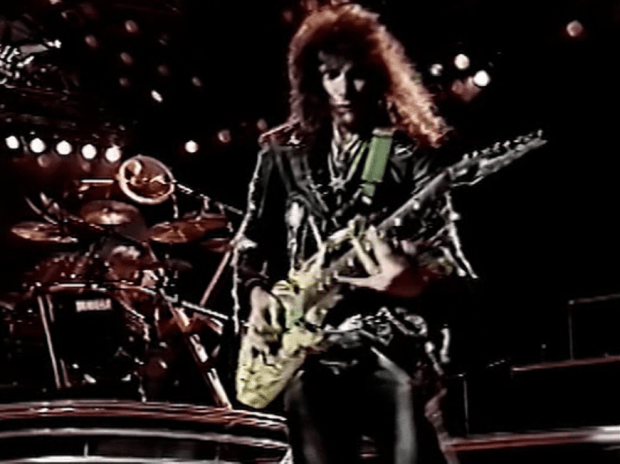
Slip of the Tongue gets the super-deluxe treatment this time, the third of the “big three” to go that way. This is the album that divided fans the most. Replacing Vivian Campbell was none other than ex-David Lee Roth stringbender Steve Vai.
“What the hell would that sound like?” we all wondered.
Longtime Whitesnake fans felt it was a step too far into the world nebulously defined as “hair metal”. Others loved the guitar mania inside, with Vai stretching out in ways different from his prior bands. Not the “definitive” Vai record that they still wanted (and would get a year later), but certainly a platter they could sink their teeth into. And it was a weird reason that Steve was playing on Slip of the Tongue at all.
As you’ll see from a feature on the included DVD (“A Look Back: Whitesnake Chronicles with DC and Adrian Vandenberg”), the album was written and thoroughly demoed with Adrian. They wouldn’t need a guitarist until it was time to tour. At this point, Adrian injured his wrist and was unable to finish. Steve Vai and David Coverdale found that they got along famously and the seven-string wizard brought his unique and advanced stylings to the blues-based Whitesnake.
What the hell would it sound like?
It sounds absolutely mental.
With the benefit of now hearing all the demos that Adrian laid down, it’s obvious Steve Vai didn’t just pick up his guitar and play the parts. It’s clear right from opener “Slip of the Tongue”. Compare the album to Adrian’s demos on the other discs. Vai changes one of the chord progressions to high-pitched harmonics, and, let’s face it, improves the song. Elsewhere there are unique trick-filled runs and fills that add another dimension to the music. If Whitesnake was always 3D rock, Vai upped it to 4. The guitar work is blazingly busy, never cliche, and always to the advancement of the song. With all respect to Adrian Vandenberg who wrote these great songs, Steve Vai was more than just icing on a cake. Slip of the Tongue arguably sounds more a Vai album than Whitesnake, even though he didn’t write any of it.
The beauty of this set is that if you’re more into ‘Snake than alien love secrets, you can finally hear the purity of Adrian’s vision in the multitude of early demos included.
Unfortunately, if you’re familiar with the album you’ll hear something’s up by track 2. “Kitten’s Got Claws”? That song used to close side one. What’s up? The album running order has been tampered with, and so has “Kitten’s Got Claws”. It’s now missing the Steve Vai “cat guitar symphony” that used to open it. It could be a different remix altogether. My advice is to hang on to your original Slip of the Tongue CD. You’re probably going to still want to hear the album and song as they were.
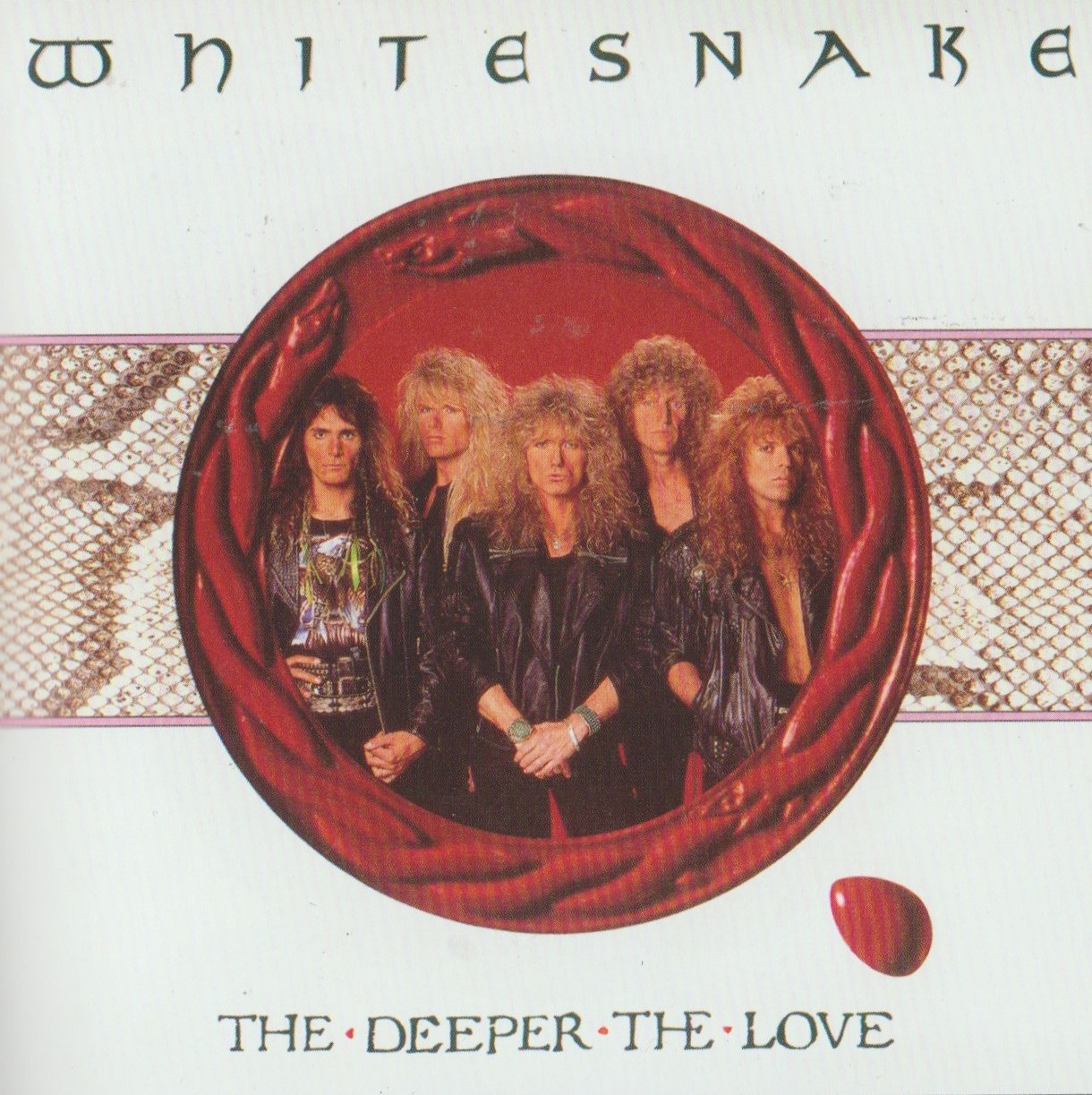
This running order puts “Cheap An’ Nasty” third, a song that structurally resembles the ol’ Slide It In Whitesnake vibe. Of course Vai’s space age squeals and solos modernized it. Listen to that whammy bar insanity at the 2:00 mark! Up next is “Now You’re Gone”, a classy rocker/ballad hybrid that has always been an album highlight. The demos on the other discs allow us to hear how much this song was improved in the final touches. That cool answering vocal in the chorus, and the hooks that Vai added, came much later. Strangely, this box set puts the other ballad, “The Deeper the Love”, up next. Keyboard overdubs made it a little too smooth around the edges, but a good song it remains.
The Zeppelinesque “Judgement Day” is a track that used to piss off some fans, who felt it was an abject rip off from “Kashmir”. The Vai touch of sitar (replacing guitar in the early demos) probably aided and abetted this. Regardless it succeeds in being the big rock epic of the album, and a favourite today. Another strange choice in running order follows: “Sailing Ships”, formerly the album closer. It’s quite shocking to hear it in this slot. Again, Vai replaced guitar with sitar, and David goes contemplative. Then suddenly, it gets heavy and Steve takes it to the stratosphere.
“Wings of the Storm” used to open side two; now it’s after “Sailing Ships”. Some tasty Tommy Aldridge double bass drums kick off this tornado of a tune. Vai’s multitracks of madness and pick-scrapes of doom are something to behold. Then it’s “Slow Poke Music”, a sleazy rocker like old ‘Snake.
The new version of Slip of the Tongue closes on “Fool for Your Loving”, a re-recording of an old classic from Ready An’ Willing. The new version is an accelerated Vai vehicle, lightyears away from its origins. Coverdale initially wrote it to give to B.B. King. Vai is as far removed from B.B. King as you can imagine. The original has the right vibe, laid back and urgent. This one is just caffeinated.
The only album B-side “Sweet Lady Luck” is the first bonus track on Disc 1. By now it is the least-rare B-side in the universe, having been reissued on a multitude of Whitesnake and Vai collections. Valuable to have to complete the album, but easy to acquire. It’s basically a second-tiered speed rocker with the guitar as the focus. Other B-sides from this era were remixes, and they are included here as well. The Chris Lord-Alge mix of “Now Your Gone” is the kind that most people won’t know the difference. Vai said that Lord-Alge could make the cymbals sound “like they have air in them.” Then there’s the “Vai Voltage Mix” of “Fool for Your Loving”, which has completely different guitar tracks building an arrangement with way, way, way more emphasis on the instrument. The rest of the disc is packed with four more alternate remixes: “Slip of the Tongue”, “Cheap An’ Nasty”, “Judgement Day” and “Fool for Your Loving”. These mixes have some bits and pieces different from the album cuts. Vai fans will want the alternate solo to “Cheap An’ Nasty”, though it’s less whammy mad.
Of course, “Sweet Lady Luck” wasn’t the only song that didn’t make the album. In old vintage interviews, Coverdale teased the names of additional tracks we didn’t get to hear: “Parking Ticket”, “Kill for the Cut”, and “Burning Heart”. They’ve been safely buried in Coverdale’s vault, until now. Additionally, it turns out that Whitesnake also re-recorded a couple more of their old songs: “Ain’t Gonna Cry No More” and “We Wish You Well”. They’re all here in different forms on the demo discs.
Perhaps “Kill for the Cut” would have been one dirty song too many for the album. It ain’t half bad, and has a unique little bumpin’ riff. “Parking Ticket” had potential too. Rudy Sarzo gave it a pulse that might have taken it on the radio. The 1989 monitor mix would have been perfect for B-side release. Why did Cov have to hold out on us all these years? “Burning Heart” was a special song, a re-recording of an old Vandenberg track that David really loved. Unfortunately the monitor mix is is only a skeleton of what could have been a sensational Whitesnake ballad. “Ain’t Gonna Cry No More” is heavily modernized, with keyboards sounding like they were trying to recapture “Here I Go Again” (which they were). “We Wish You Well” is more contemplative, with piano as the focus.
All of this previously unheard material is scattered over several discs. “Evolutions” (Disc 3) is a familiar concept to fans of these box sets. Demos from various stages of completion are spliced together into one cohesive track. You will be able to hear the songs “evolve” as the band worked on them. Every track from the album plus “Sweet Lady Luck”, “Parking Ticket” and “Kill for the Cut” can be heard this way. Disc 4 is a collection of monitor mixes with all the album songs and all the unreleased ones too. These discs are the ones that allow us to really hear the album the way it would have been if Adrian didn’t hurt his wrist. We would have got an album that sounded a lot more like Whitesnake. It was audibly different even if familiar.
Perhaps the best disc in the entire set is “A Trip to Granny’s House: Session Tapes, Wheezy Interludes & Jams”. It’s just as loose as it sounds. Enjoy the funk of “Death Disco”, the funkiest David’s been since Come Taste the Band. If you’ve always wanted to hear David sing “Tie a Yellow Ribbon ‘Round the Old Oak Tree”, now you finally can! There’s a lot of goofing off in some of these tracks, but also a lot of rock. It’s live off the floor as they rehearse the songs, as a four piece band with Adrian. Not all the final lyrics or solos are set, but the songs are so raw and fresh. Some of the jams show a side of Whitesnake we rarely got to see. Kind of Purple-y in the way they just could take off and rip some blues.
Given all the rich audio extras, it’s OK if one of the CDs is a little impoverished. That would be disc 2, “The Wagging Tongue Edition”. This is a reproduction of an old promo CD, featuring the album Slip of the Tongue with a Dirty David interview interspersed. This was meant for radio premieres. It has the entire album in the correct order, but because it’s faded in and out of interviews, it’s really not a substitute for a proper copy of the original album. At least the vintage 1989 interviews are interesting. It saves collectors from buying a copy on Discogs. (Coverdale claims “Judgement Day” was originally titled “Up Yours Robert”. Ooft.)
There’s another disappointment here and it’s difficult to forgive. In 2011, Whitesnake released the long awaited Live at Donington as a 2 CD/1 DVD package. This brilliant performance finally gave us a permanent record of Whitesnake live with Vai. In our previous dedicated review, we had this to say:
Musically, it’s a wild ride. It’s not the Steve Vai show. Adrian gets just as many solos, and his are still spine-tingling if more conventional. It is loaded with ‘Snake hits, leaning heavily on the three Geffen albums. In fact there is only one pre-Slide It In song included: The Bobby “Blue” Bland cover “Ain’t No Love in the Heart of the City”. And, since it is also the pre-grunge era, there are plenty of solos, which today seems excessive. Aldridge does his drum solo at the end of “Still Of The Night”. Vandenberg gets his “Adagio for Strato”/”Flying Dutchman Boogie”. Most excitingly, Steve Vai performs two songs from his then-brand new (and top 40!) album Passion And Warfare: “For The Love Of God” and “The Audience Is Listening”, with Aldridge on drums. Coverdale even introduces him as “Mr. Passion and Warfare!” so I imagine there was no sour grapes that Vai’s album was doing so well. And lemme tell ya folks — the audience WAS listening, and going nuts too!
Unfortunately, to save a little bit of plastic, this set was reduced to a single CD for its inclusion here. The Vai and Adrian solos were cut, though Tommy’s drum solo in “Still of the Night” is retained. To cut the guitar solos in such a guitar focused boxed set is not only unwise but unforgivable. Fans who don’t have Live at Donington are going to want to shell out again just to get the solos. Fortunately, the whole show is uncut on the included DVD.
The DVD has plenty of added value; it’s not just a reissue of Live at Donington. You’ll get the three music videos from the album (“Now You’re Gone”, “The Deeper the Love” and “Fool for Your Loving”). There’s even a brand new clip for “Sweet Lady Luck” cobbled together from existing video. Then, you can go deeper into the album. The aforementioned sitdown with David and Adrian is really enlightening. Another behind the scenes feature narrated by David is fantastic for those who love to watch a band create in the studio. Coverdale’s not a bad guitarist himself.
These Whitesnake box sets also include ample extras on paper. There’s quite a nice miniature reformatted tour program with the majority of cool photos. A large Slip of the Tongue poster can adorn your wall, or remain safely folded up in this box. Finally, there is a 60 page hardcover booklet. This is a treasure trove of press clippings, magazine covers, single artwork, and more. Lyrics and credits wrap it all up in a nice little package.
Because we know that David puts so much into these box sets, it’s that much more heartbreaking that this one is so slightly imperfect. The shuffled running order and lack of guitar kittens on “Kitten’s Got Claws” is a problem. The truncated live album is another. It means I have to hang onto old CDs that I was hoping to phase out of my collection in favour of this sleek set. Alas, I’ll keep them as they are my preferred listening experience.
Otherwise, in every other way, this box set delivers. It makes a lovely display next to its brethren and it justifies its cost.
TWISTED SISTER – Big Hits and Nasty Cuts (1992 Atlantic – Canadian CD)
When Twisted Sister split at the end of 1987, they went rather quietly into that goodnight. No big magazine articles, no solo projects incoming, not until 1992 when Dee Snider finally re-emerged with his new band Widowmaker. It was a quiet five years, broken only by the low key release of Twisted Sister’s first “greatest hits” compilation in March of that year.
Big Hits and Nasty Cuts was a compilation that both fans and band deserved. No careless cash grabs here. In 1992 it’s doubtful that Atlantic thought they’d be making much money off “I Wanna Rock”, one of the biggest cheerleaders of the obsolete generation. While Kurt Cobain cashed his biggest royalty cheque yet, J.J. French was writing the liner notes for this CD. (Mark “The Animal” Mendoza did the remastering with Ted Jensen.)
For the era, Big Hits and Nasty Cuts was one of the most fan-friendly, value-intensive CDs on the market. Even better for American fans, this time they got the bonus track! The album was split into two sides — the hits and the “nasty cuts”, all rare B-sides recorded at the Marquee club in England. Fortunately the entire show has since been issued by Rhino, but in 1992, very few fans had the original 12″ singles these songs were sourced from. Another rarity included was Twisted’s first single, “I’ll Never Grow Up, Now!” These were first releases for the CD format! Good thing too, because “I’ll Never Grow Up, Now!” is indelible as any of the hits.
The hits portion of the album isn’t quite predictable. Would you have expected the heavy metal uppercut “Under the Blade”? Or the raw “Shoot ‘Em Down”? Here they are, and thanks to the liner notes, you can find out why. (Oh fine, we’ll spoil one. “Under the Blade” was included because it’s been played at every Twisted show since it was written.) The three biggest hits are present and accounted for. “I Wanna Rock” and “We’re Not Gonna Take It” would be the two hits that everyone knows, and “The Price” is runner-up.
Also present: “I Am, I’m Me” and “The Kids Are Back” demonstrate Dee’s early knack for melodic songwriting, very punk-like in its simplicity especially when coupled with Twisted’s 4/4 rock. “You Can’t Stop Rock and Roll” also had to be here. Perhaps it’s Twisted’s best metal anthem. Finally “Be Chrool to Your Scuel” featuring Alice Cooper ends the hits side with the last one chronologically. (“Bad Boys of Rock and Roll” on the US version.) There’s no “Leader of the Pack” and no “Hot Love”. All hail the classic lineup: Dee Snider – lead vocals. J.J. French – guitar. Eddie “Fingers” Ojeda – guitar. Mark “The Animal” Mendoza – bass. The late, underappreciated A.J. Pero – drums. The lineup that set MTV on fire relied on catchy videos, yes, but the songs have survived equally well.
The nasty cuts may just be too heavy for the average listener. Recorded to 2-track tape, there’s no fixing the mixes here. The lengthy start to “What You Don’t Know (Sure Can Hurt You)” includes Lemmy’s intro and plenty of noise. There is no overlap with any other songs on the CD. “Destroyer” grinds so hard it’s almost a parody of itself. “Tear It Loose” is out-of-control fast, blowing away the album version. The US got “Run For Your Life” right after “Tear It Loose”, another fast rendition once it kicks in. (In Canada, “Run For Your Life” was only on cassette.) The cover tunes “It’s Only Rock ‘N’ Roll” and “Let the Good Times Roll/Feel So Fine” include plenty of crowd interplay. Just the thing to turn off Joe Average Listener, but amazing to hear the energy of the band and audience that night.
The live cuts really highlight, with 20/20 hindsight anyway, the power of A.J. Pero. The guy could really kill a drum kit, and his timekeeping is the cornerstone of what made Twisted Sister heavy.
Don’t buy this CD if you’re looking for a party CD. Buy it because you’re intrigued and want to learn more about a band who doesn’t get enough credit for being one of the world’s most dangerous. Buy it to check out the rarities and get a taste of what those in the know had in their collections back in 1983. Buy it because you’re going to get liner notes and photos of band members you never even heard of before. Buy it because this is a great compilation, done with loving care and value.
Sit down Sykes fans, because I’m a Vai kid and this is “my” Whitesnake. The fact that this lineup existed at all is miraculous. The most creative guitarist of all time joining one of the most successful commercial rock bands at the peak of their popularity? Recipe for, at the very least, interesting history. And absolutely perfect box set fodder.
So here we are buying Slip of the Tongue for at least the third time, and finally getting it (mostly) right. At a quick glance, it appears the only detriment to buying this box set is that you will not get the complete Live at Donington concert on CD. In order to fit the whole thing on one CD (disc 6), they axed all the solos. Let’s face it folks. When your band includes Steve Vai, you don’t cut the solos. You’ll have to shell out for the original triple disc Donington set to get them on CD. The good news is that the whole Donington concert is still here on video, on a fully-packed DVD (disc 7). (The DVD also includes a detailed interview with David Coverdale and Adrian Vandenberg, touching on Adrian’s mysterious 1989 wrist injury.)
The running order of the songs on Slip of the Tongue, the 30th anniversary remaster, has been slightly shuffled. It’s strange and off-putting enough that I’m keeping my old copy of the album, so I can still listen to it the familiar way. “Sailing Ships” isn’t the last song? “Fool For Your Loving” is. The bonus track versions included, with alternate solos and guitar fills, are stunning additions. Then there’s an entire CD, the “Wagging Tongue” edition, with the songs in the correct order but interviews with David interspersed. This is a reproduction of a vintage 1989 promo CD, for contemporary perspective. Disc 3, the “Evolutions” CD, is a favourite. The “Evolutions” series of tracks, now a Whitesnake reissue trademark, mixes early demos with later demos and and even later versions, so you can hear the tracks evolve as you listen. It’s deconstruction and reconstruction in one. Importantly, you finally get to hear what the album would have sounded like before Steve Vai came in to record it. Disc 4 includes 16 monitor mixes, including some superior rarities. Finally, after 30 years of waiting and teasing, we get the unreleased tunes “Parking Ticket”, “Kill for the Cut”, and “Burning Heart” (originally by Vandenberg). We also get “Ain’t Gonna Cry No More” and “We Wish You Well”. Verdict? Worth the wait. Oh, so worth the wait! There’s no reason some couldn’t have been released as B-sides in 1989, and they should have! “Parking Ticket” has a neat Van Hagar-like, and could have been a summer hit.
Disc 5 is “A Trip to Granny’s House”, actually the name of a rehearsal studio they used. These funny tapes, “Wheezy Interludes & Jams”, are informal fun. A highlight is the funky “Death Disco”, not unlike some of the stuff Purple were doing with Tommy Bolin towards the end. These tracks predate Steve Vai’s involvement, so you’ll get the purity of Adrian’s original playing.
I look forward to investing more time with this box set. Let us hope that David continues to empty the vaults. Next up: Restless Heart?

 DIO – Live In London – Hammersmith Apollo 1993 (2014 Eagle)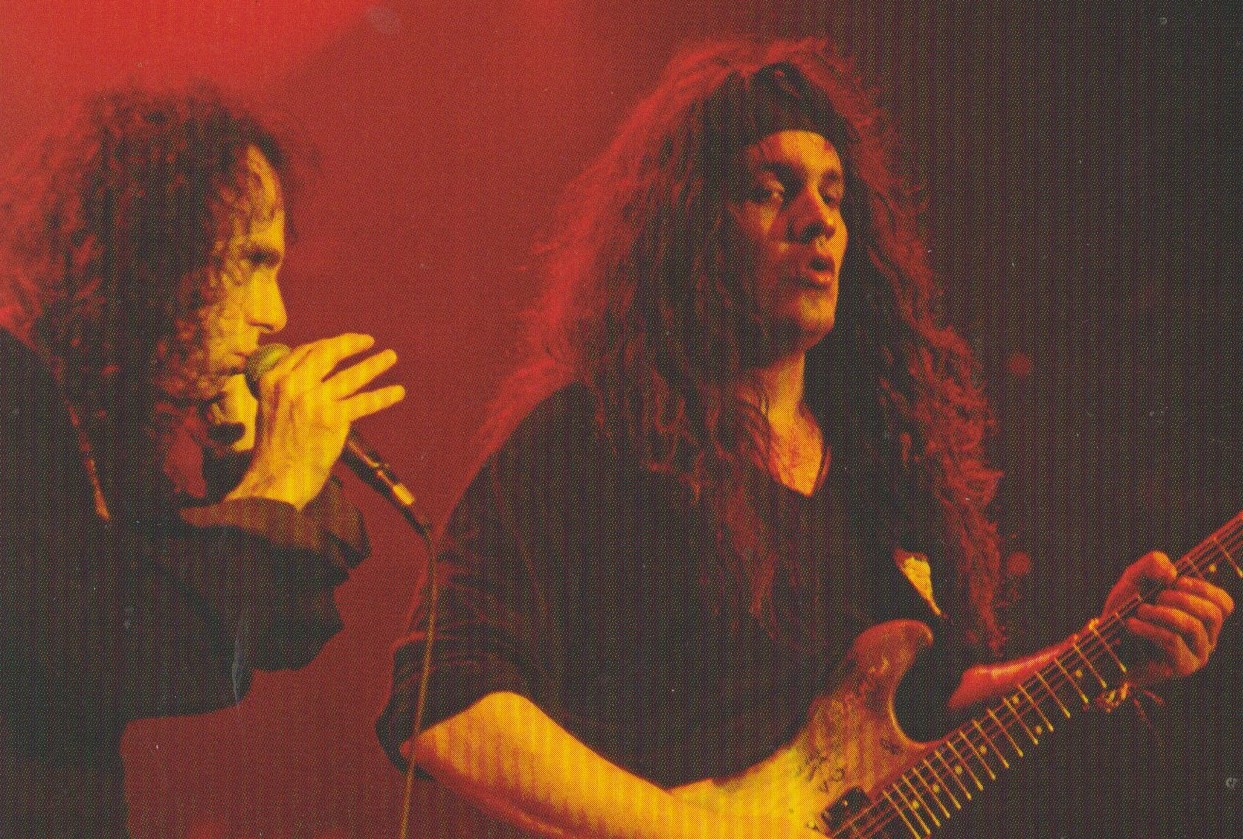














You must be logged in to post a comment.