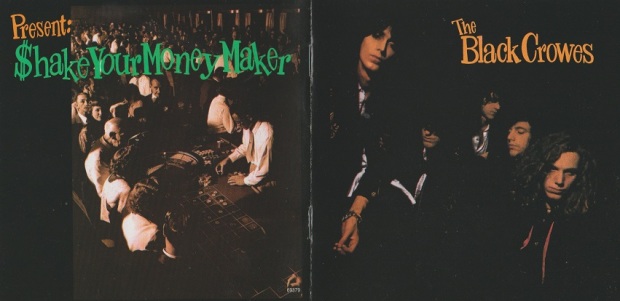
THE BLACK CROWES – Shake Your Money Maker (originally 1990, 1998 American remaster)
In 1990, just on the cusp of a musical revolution, a new band emerged from Georgia to challenge everything that was going on in rock and roll. The biggest rock bands in the world had been playing around with the blues, but now there was a new band who lived and breathed it. The Black Crowes were unlike all the other bands (except maybe the London Quireboys) and their debut album Shake Your Money Maker shook the money tree!
With George Drakoulias in the producer’s chair, the Crowes laid down one fine debut album. They drew influence from the 70s: Bands like the Stones and Skynyrd, as well as the old Mississippi Delta bluesmen. The slide-drenched “Twice As Hard” certainly didn’t sound like a new band in 1990, but its honest authenticity has kept in a fan favourite for decades. Listen to Rich Robinson’s slide and dig in. Vocalist Chris Robinson’s bluesy drawl delivers a hell of a chorus. “Twice As Hard” is perfect in every measure.
Rolling right into the first single “Jealous Again” the Crowes sound like the offspring of the Stones at their boogie-woogie best. During the summer of 1990, you simply could not escape these songs. Unlike many of their contemporaries they still stand tall.
The Stones had their “Angie”, the Crowes have their “Sister Luck”. Shake Your Money Maker is a well rounded album with a few piano based slow tracks. You want authenticity? That’s Chuck Leavell on keys (he’s been playing with the Rolling Stones for decades). Back to the rock, “Could I’ve Been So Blind” kicks it with a shot of caffeine and a great chorus. Thing go slow again on the organ based blues “Seeing Things”. The Crowes were just kids but it sounds like they have years and years of pain to pour into these songs. “Seeing Things” is a tour de force!
One of the most well known singles from Shake Your Money Maker was the old Otis Redding cover “Hard to Handle”. Bringing the boogie back, the Crowes had a huge hit with this cover. It must be noted that there are two different versions of this track. Radio stations were serviced with a very rare “horn mix” that brings in a brass section. (This extremely rare promo CD is catalogue number PRO-CD-4896.) The remix still gets occasional radio play. Unfortunately the album only has the original mix. (There were plenty of live and acoustic B-sides made for these singles too.)
“Thick N’ Thin” begins with a car crash, and this is one of the most energetic tracks in the Crowes catalog. Like the Faces on adrenaline, “Thick N’ Thin” is a blast. Fast paced rock and roll with boogie woogie piano gets the feet moving. One of the fastest songs gives way to the slowest one. “She Talks to Angels” is the only one that deserves the tag “ballad”. Acoustics guitars, organ, and Chris’ plaintive voice took it to #1 on the US album rock charts. It’s still just as stunning today.
Moving in for the close, “Struttin’ Blues” is relatively nondescript compared to some of the prior ass-kickers. They save most kick-ass for last: “Stare It Cold”. It starts as a standard Stones-y rocker, but then it picks up speed right to the end, brilliantly ending the debut album on a hell of a good impression.
The 1998 remaster contains two bonus tracks and a few anachronisms: music videos, a screen saver and “a link to the Crowes’ website!” With the benefit of hindsight, we would have preferred more bonus tracks, but in 1998 this was cutting edge stuff. The bonus cuts include “Don’t Wake Me”, a slide-drenched add-on. As a song it’s not the most memorable, but that slide guitar is priceless. The second is an “acoustic” version of “She Talks to Angels”. The emphasis is on piano, and it sounds live in the studio.
Huge credit must go not only to the Black Crowes but also to producer Drakoulias. His reputation speaks for itself but this album still sounds fantastic. It does not sound like it was recorded in 1990. The drums and all the other instruments are full and clear. The brothers Robinson wrote all the original tunes, and as it turned out they were a classic batch. Shake Your Money Maker is not original or innovative, but it is timeless.
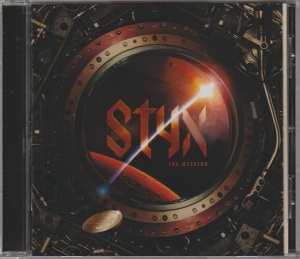
Did anyone in 2017 expect Styx to come out with one of the best albums of the year? Even though Styx have successfully carried on with Lawrence (But You Can Call Me Larry) Gowan on keys and vocals, nobody really predicted this! Yet here it is: The Mission, surely one of the best albums of the year so far,* and the best Styx in decades.
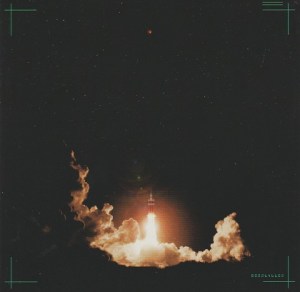
Here’s another unexpected twist: The Mission is a concept album about colonizing Mars! It has a coherent story and recurring hooks. In many ways The Mission sounds like a lost album from Styx’s progressive rock heyday. But you wouldn’t guess that if you only heard the Gowan-sung lead single “Gone Gone Gone”. Although it’s about a rocket launch, you might not catch that on first listen. The year is 2033. “Light it up, let’s get this show on the road!” This hard rocker came out of nowhere as one of the big surprises this summer.
“Hundred Million Miles From Home” (vocals by Tommy Shaw) has a funkier 70s groove.** When the band harmonizes together, it sounds like vintage Styx. “Hundred Million Miles” is a great song and also fairly accurate. Mars was 100 million miles away from Earth as recently as the 2012 opposition. Problems happen on “Trouble at the Big Show” (vocals by James “JY” Young), a slower groove with killer bluesy guitar work. This moves into the ballad “Locomotive”, about the brave pilot of the ship Khedive. Shaw pours passion into it, as he does the next one “Radio Silence”. Just as interesting as the actual music is the spacey backing sounds. It certainly adds atmosphere to an excellent vintage sounding song. “Radio Silence” recalls some of Shaw’s 70s hits like “Boat on a River” at times.
Gowan returns to the microphone on the lovely piano ballad “The Greater Good”. It sounds like quintessential Styx; hit quality material with soul. Things start to get upbeat again on “Time May Bend” (another Gowan vocal). If you’re not familiar with Lawrence Gowan, he is not a Dennis DeYoung clone, sounding closer to Steve Hogarth of Marillion. (He even looks a little like “H”.) Listen for a subtle musical “S.O.S.” signal in the backing track.
There are musical segues and radio voices between some tracks, but “Red Storm” is the next full song. It’s a very progressive song with all the trimmings. It’s based on Tommy Shaw’s excellent acoustic work, and it paints a picture. The crew of the Khedive must brave a dust storm on the surface of Mars. “Carry what you can, there’s no turning back, gonna make it to the mothership.” There are avante-garde flashes of guitar noise that emulates the squeals of a radio, or perhaps metal on metal. Then a rocking riff and solo…”Red Storm” has it all.
Gowan absolutely proves his mettle on the piano opus “Khedive”. The blur of piano recalls classical compositions, and the guitar solo is pure Queen. The minimal vocals continue the story: “Onwards! Onwards!” Then we revisit the sounds of the 80s on “The Outpost”, the triumphant conclusion to the story. The 80s synth and beats remind of the classic “Mr. Roboto” period of Styx, but it rocks solidly too. Listen for a reprise of the “Overture” music from the start for the album. Finally “Mission to Mars” is the denouement, a bright and lively end.
The Mission is brilliant for a number of reasons. First and foremost — great songs. You will play The Mission over and over, simply because it has great songs, as good as the days of old. Second, although Lawrence Gowan has his stamp all over the album, it sounds like Styx and nobody else. Having Gowan more involved is a good thing. He has a 40 year career in Canada, and he didn’t have enough time on the Cyclorama (2003) album. But this sounds way more like Styx than Cyclorama did. Finally, this album is loaded with incredible playing by all the members. This is easily the best lineup Styx have had since Kilroy Was Here (1983).*** Fans of the guitar (both electric and acoustic) will find many moments of musical ecstasy.
For Styx, this is mission accomplished!
5/5 stars
* One of the best album covers too. Is that a port hole, or a turntable? You decide.
** Bassist Chuck Panozzo plays the funky bass on “Hundred Million Miles From Home”, his only appearance. Chuck, the other original member besides JY, is only able to make sporadic appearances with Styx due to his battle with AIDS. Ricky Phillips plays the rest of the bass parts, meaning Styx have two official bassists!
*** Lawrence Gowan (piano/vocals), Tommy Shaw (guitar/vocals), James “JY” Young (guitar/vocals), Todd Sucherman (drums), Ricky Phillips & Chuck Panozzo (bass)
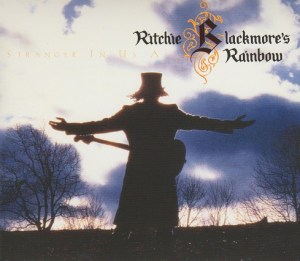
RITCHIE BLACKMORE’S RAINBOW – Stranger In Us All (originally 1995, 2017 Sony expanded edition)
Blackmore said “adios” to Deep Purple for the second and final time in 1993. He beat them to the punch with new music, in the form of a resurrected Rainbow…sort of. As he is prone to do, Blackmore assembled an all-new Rainbow of unknowns. The only familiar face was bassist Greg Smith who happened to be in Alice Cooper’s band when Wayne’s World was filmed. The new singer was the smooth-voiced Scot, Mr. Doogie White. White’s career almost broke in a completely different direction earlier, when he was one of two finalists in the running to replace Bruce Dickinson in Iron Maiden. It went to Blaze Bayley. Signifying new beginnings, Blackmore reverted the band’s name to Ritchie Blackmore’s Rainbow once again.
Back in 1995, my impressions of Stranger In Us All, the new album by Blackmore’s Rainbow, were significantly underwhelming. It has taken its time, but over the years the album slowly penetrated my stubborn refusal to accept it as legitimate. By now I think we know all Rainbow needs is the Man in Black. And there he stands on the front cover, pilgrim-hatted again, gloriously silhouetted against a cloudy sky.
The only serious weakness in Stranger In Us All has nothing to do with the lineup. The production (by Pat Regan and Blackmore) sounds low budget and the drums sound muddy. Blackmore’s guitar tone is thankfully impeccable and his neo-classical leanings on the first track “Wolf to the Moon” were refreshing. “Wolf to the Moon” is one song that has stood the test of time. It is thoroughly still enjoyable today, and Blackmore is unleashed. And the singer? It is true that Doogie White stands in the shadows of some great lead vocalists. I’ll resist ranking and comparing. White has a very smooth voice with impressive power and range, and he doesn’t sound like any of his predecessors. Where White really impresses is in live renditions. He is an entertaining and amicable frontman.
Track two brings a slower grind to Rainbow, and White slinks along with him, adapting perfectly to every vibe. Going slower still, “Hunting Humans (Insatiable)” really prowls. It is spare, dark and sweaty. Moving on to inspirational hard rock, Rainbow brings the harmonica-inflected “Stand and Fight”. What is not to like?
Rainbow ended the first side in typically epic fashion. “Ariel” was quite a track, featuring backing vocals from the lady who is now Ritchie’s wife, Mrs. Candice Night. She co-wrote a number of the album’s tracks including “Ariel”. This kind of thing is Ritchie’s bread and butter, he’s been writing epics like this since “Child in Time” back in 1970. As an added bonus, the extended edition of Stranger In Us All has the single edit of “Ariel”, trimming it to a tidy format-friendly 4:00. This is more like a re-edit, moving parts around and making it more compact.
They step on the gas again for “Too Late for Tears”. Side two has a couple “stock” rockers — “Too Late for Tears” and “Silence”. Good blood-pumping tracks, nothing to save for your greatest hits album, but decent enough. “Black Masquerade” is better, as it has a dark neo-classical edge. Thing go kind of goofy when they cover Grieg’s “Hall of the Mountain King” and add lyrics. They also have another go at the Yardbirds’ “Still I’m Sad”, this being the second time. The first Rainbow version was an instrumental. This one has vocals, and it’s pretty good. Just like with lead singers, I don’t think it’s worth comparing this version to the 1975 one. It’s unique enough that it’s almost two different things.
Back in 2013 I found the Japanese edition of Stranger In Us All at the 2013 Toronto Musical Collectibles Record & CD Sale for $15. Instant no-brain purchase right? Now that this expanded edition is out, I no longer need it in my ever-expanding collection. I am passing it on to massive Rainbow fan Brian over at Boppinsblog. Now that CDs are worth nothing, I like to pay it forward with my retired music. The expanded edition contains the Japanese bonus track, “Emotional Crime”. It has a cool, “smoove” groove and a bluesy feel. Think Purple’s 1988 remake of “Hush” in terms of vibe. The other extra tracks are the aforementioned “Ariel” edit, and a live take of the old Rainbow classic “Temple of the King”. This is and the “Ariel” edit are taken from the old out of print CD single. “Temple of the King” was recorded in Stockholm October 2 1995, meaning it is not the same as the one on the double live CD Black Masquerade. That was recorded exactly a week later in Germany. (Thanks to Scott the Heavy Metal Overlord for pointing this out.) It’s a brilliant arrangement giving Candice Night and Doogie White a chance to harmonize over a very quiet backdrop. The Man in Black whips out a solo that surely must be considered one of his most passionate.
That’s how this version of Rainbow succeeds — by a putting a fresh spin on it. You avoid trying to compare to other versions of the band and just enjoy. Ritchie reveals in the extensive liner notes that he wanted to call the band Rainbow Moon. And speaking of the liner notes, there are also recollections from Doogie White. In short this expanded edition is worth every penny, even if you’ve bought it before.
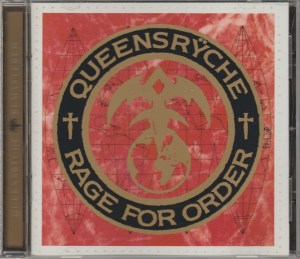
QUEENSRYCHE – Rage For Order (originally 1986, 2003 EMI remastered edition)
Every fan has their favourite Queensryche album. Whether it be The Warning, Mindcrime, Promised Land or Empire, there are plenty of great albums in their back catalogue. I used to seek the warm high of Promised Land when looking to chill with my favourite Queensryche. Now I look for refuge in the cold, technological sheen of their 1986 album Rage For Order.
Rage For Order was a challenging album in its time and today it is still complex. In 1986, fans questioned the gothy makeup and hair, not to mention the excessive samples and synths. Today you can look back and almost call Rage For Order the first progressive industrial metal album. It certainly has qualities from all three of those genres. Geoff Tate beat Trent Reznor to the punch by years. Rage seems to have a vague futuristic concept about a world of technology, revolution, and disconnection.
Although Rage For Order is certainly not an immediate listen, certain key tracks are commercial enough to keep you coming back. The first is “Walk in the Shadows”, one of the few songs to be played live fairly consistently over the years. “Walk in the Shadows” could pass as a hard rocking hit. For the first time Queensryche really proved they were more than a simple metal band. The slick production was completely different from their first two records, with the edge taken off the guitars and instead given to the computers and sequencers. They give the whole album a precise, punchy tech sound that is its own form of heavy. No wonder: Dave “Rave” Ogilvie was an engineer.
A dense ballad called “I Dream in Infrared” has sorrow, but flowing through the veins of a computer. Geoff Tate blows minds with his incredible voice and singing ability, layered for maximum effect. In 1991 it was remixed acoustically for a single B-side, and that version is a bonus track on the remastered edition. The original was perfect for what it was, but the acoustic mix is more accessible to outsiders. It ends suddenly and the metallic guitars of “The Whisper” enter, accompanied by clock-like percussion. Rage For Order has many songs with layered, overlapping vocals and you can hear that on the chorus. It is a cold, sterile but powerful track.
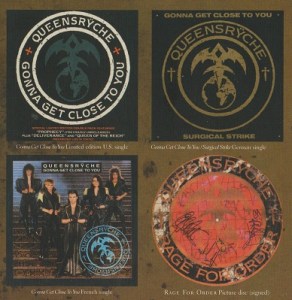
The strangest song was actually the lead single, “Gonna Get Close to You”. It was the only cover Queensryche ever put on one of their studio albums, a track by Canadian songstress Lisa DalBello. In the hands of Geoff Tate, it becomes a creepy song of a stalker with a strangely rousing pre-chorus. “You think I’m a fool or maybe some kind of lunatic? You say I’m wasting my time but I know what to do with it. It’s as plain as black and white. I’m gonna get close to you.” Cree-hee-eepy! Which is the point. The bizarre samples and synths only deepen the macabre. DalBello’s original is perhaps even creepier, but Tate’s pompous bravado adds its own slant. “If you knew my infinite charm, there’d be no reason to be so alarmed…”
As an added bonus, a 12″ extended version of “Gonna Get Close to You” is included in the bonus tracks, but like most extended versions from the 1980s, it’s very choppy and awkward.
Along with the technology, there is a theme of loneliness on Rage For Order, and “Gonna Get Close to You” plays into that. “The Killing Words” contains more heartbreak on the album’s second ballad (third if you count “Gonna Get Close to You”). Tate’s voice is drenched in pain. A 1994 acoustic version from the “Bridge” CD single is included as a bonus track.
“Surgical Strike” is a brilliant track, fast and heavy, and working with the technology. The lyrics are brilliant and quite prescient.
It’s lonely in the field, that we send our fighters to wander. They leave with minds of steel, It’s their training solution. We’ve programmed the way, It leads us to Order. There’s no turning back.
A Surgical Strike. We’ve taught them not to feel. performance is their task, A Surgical Strike, Its time is arriving now for you.
The plan for the day, will be swift as the lightning they harness. The atom display, It’s not mindless illusion, At master control, assessment will not, Be by humans. There’s no turning back…
It feels like this future is not very far off.
One of the most techy tracks is “Neue Regel”. Clockwork percussion, strangely computerized lead vocals, and intelligently used samples paint a scene of a future battlefield, complete with bomb-like drum sounds. The multi-layered chorus is one of Queensryche’s most perfect. Respect to Geoff Tate. When the man was at his peak, nobody could touch him, both vocally and as a songwriter. Of course one must also remember the other side of the equation, which was guitarist Chris DeGarmo. He has more songwriting credits on this album than Geoff Tate, including two solo credits (“The Whisper” and “I Will Remember”).
The future continues to look cold and dark on “Chemical Youth (We Are Rebellion)”. “Our religion is technology” is one line, and if only Tate knew how right he was! There is a still a spark of hope and that is the young. “Chemical Youth” is one of the heaviest tracks on the album, and sonically very interesting too. The next ballad “London” fades in with a synthy bass line. Loneliness returns. “There’s some things in life I could never face. The worst is being alone.”
The technology slant hits its peak on the brilliant “Screaming in Digital”. Describing this song can do it no justice. It is like listening to Queensryche within the gleaming sterile walls of the dystopian sci-fi classic THX-1138. There is far too much going on underneath it all to absorb in just a few listens. You will hear new sounds you never noticed before even 30 years later. Artificial intelligence has never rocked so heavy.
I am the beat of your pulse, The computer word made flesh, We are one you and I, We are versions of the same, When you can see what I feel, Don’t turn your back on me, Or you might find that your dreams, Are only program cards.
Fucking chilling!
“Screaming in Digital” must be counted on any list of Queensryche’s best music. It is sheer genius, far beyond what their hard rock peers were peddling. It was also years ahead of its time. By crossing digital techniques with heavy metal in such an intelligent way, Queensryche truly were breaking new ground.
“I Will Remember” is the final song, a ballad that seems to tie it all together. It has the feel of a lonely ballad, while lyrically tying up the technology concept. “And we wonder how machines can steal each other’s dreams.” Another Queensryche classic, including a genius DeGarmo acoustic guitar solo. Shades of the future “Silent Lucidity” too (also written by DeGarmo).
There are four bonus tracks including the three discussed above. The last one is a 1991 live version of “Walk in the Shadows”, which appears to be a mix of two different performances judging by the credits. Whatever the case may be, it’s cool to get a live version of this incredible song as a coda to the album.
Queensryche took the conceptual approach to its logical apex next time out with Operation: Mindcrime. They ditched the technology and went back to guitars and even added an orchestra. For that reason, Rage For Order is very unique in the collection. It was a sound they have never repeated. Operation: Mindcrime had a sequel, but Rage For Order never will.
GETTING MORE TALE #579: Entering the Asylum (Supplement to the Re-Review series)
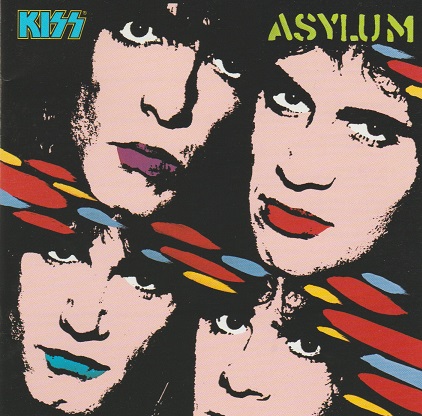
Back in Record Store Tales Part 3 (!), we took a nostalgic look at my first ever Kiss albums, that all arrived in one glorious batch. The year was 1985, but Kiss also had a new album coming out in a matter of days. Now that I had started on a Kiss collection, I would have to get their newest album too, called Asylum. I didn’t even know how to pronounce “asylum” correctly, nor did I know what the word meant, but I did understand that it was their third album without makeup.
Next door neighbor George, who was my introduction to Kiss, came over one day talking about the new single “Tears Are Falling” and how much I would love it. I didn’t have much money but by the time the snow fell, my dad bought me a copy of Asylum on cassette. We got it at the Zellers store at Stanley Park Mall in Kitchener.
My meager Kiss collection at that point consisted of Alive!, Asylum (cassette) and a bunch of LPs I recorded off George. I didn’t know much about the discography but George was a good teacher. George actually named one of his first bands Asylum. Before long I could name all the albums, in order. I even predicted that the next single would be “Uh! All Night”. I didn’t foresee the third single “Who Wants To Be Lonely” because Kiss hadn’t done a third single in ages!
George was only missing two Kiss albums: The Elder, and Double Platinum. He was dying to get both and finish the collection. His record collection was fascinating to me and a goldmine of music to tape and explore. The album covers, particularly for Kiss and Iron Maiden, had me hooked.
As my interest in Kiss grew, a new kid at school who I later found out was a “liar liar pants on fire” claimed he had “all” the Kiss albums at home. His name was Joe Ciaccia (pronounced “chee-chaw”). I asked him if that meant he had The Elder. He said yes. I told George I knew a kid who owned it, and he just about shit his pants. I made arrangements with Joe to meet up at his place on the next Sunday to do a trade. All I asked for brokering this trade was recording the album.
George was really excited. “I don’t care what he wants for it, I’m not leaving without that record.” I distinctly remember a small group of us trudging through the snow to meet Joe at his apartment. Who came with us? I can’t remember. Joe lived on Breckenridge Drive, just down the street from Brian Vollmer of Helix. One thing that I can remember very clearly was grabbing my Sanyo ghetto blaster loaded with D-cell batteries, my Asylum tape, and rocking while walking to Joe’s.
Listening to a cassette on a ghetto blaster powered by D-cells was a warbly experience that kids today don’t understand. Our small group lollygagging through the slush listening to “King of the Mountain” on that old Sanyo is an image I’ll always remember. I carried it through the wet melting snow. Those Sanyo ghetto blasters were built like tanks! You could drop them and they’d keep on ticking.
We arrived at Joe’s apartment and buzzed. No answer. Buzzed again. No answer. I began to realize my fears. Joe was all talk and no Elder. We hung out down there a while but there was no sign of Joe. George was partly crushed and mostly pissed off. At school, Joe gradually earned a reputation for tall tales. His were beginning to rival the lies of Ian Johnson – they even lived on the same street.
We flipped the Asylum tape over and began the walk home. A wasted trip, and Joe dodged me at school the next day. George kept pestering me to arrange a second hookup with Joe, thinking he still had that copy of The Elder that he wanted so badly. I realized Joe was full of shit and told George the sad truth. The record was not there. Joe was telling stories, trying to seem cool to me for having all the Kiss albums. Then he got caught in the lie, after going so far as to arrange a trade and giving me the address. Very un-cool.
George did get a copy of The Elder a few months later, and he still taped me a copy. It was a strange album, after being immersed in Asylum for many months. Then, I definitely preferred Asylum. Asylum was special to me. It was my first “new” Kiss album since getting into the band! I had boarded the Kiss train and I wasn’t getting off!
– Animalize Live Uncensored(from 4 CD set Radio Waves 1974-1988) (2015 American Icons broadcast release)
The Animalize tour was the most successful that Kiss had done since the original lineup. It was an exciting stage show including a finale with the band playing on a levitating platform over the stage. It was logical to film the Detroit concert, returning to the Cobo Hall where much of Kiss Alive! was forged in 1975. It had been a long time since Kiss released anything live. The sequel album Alive II came in 1977, and then Kiss underwent radical upheaval and change, as we have documented through this series. In the 1970s there was a pattern: Three studio albums and then a live album. Animalize was the sixth studio album since Alive IIwith no Alive III on the horizon.
Fans had their own theories as to why Alive III never materialized when due, but it likely has a lot to do with the lineup changes, shifts in direction, and fading fortunes. These events all struck right around the time when the third live album would have been appropriate, but as Kiss replaced members and took off the makeup, they had to re-establish themselves as a valid, current entity not dependant on past glories.
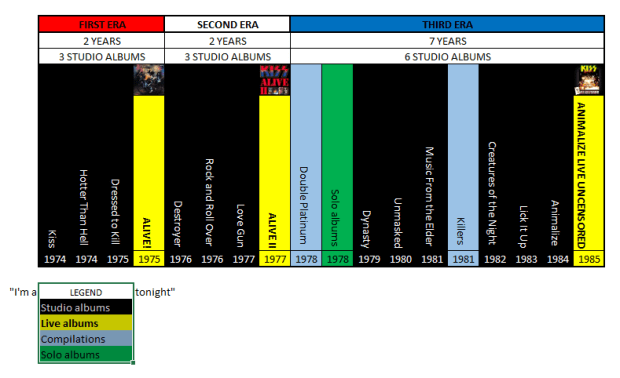
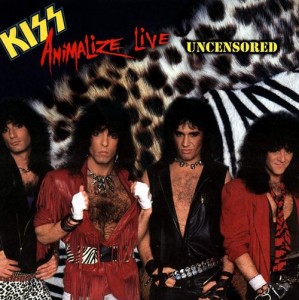
The Animalize Cobo Hall concert that was filmed was released in 1985 as the home video, Animalize Live Uncensored. For an entire generation of Kiss fans, Animalize Live Uncensored was our own Alive III. You could break down KISStory up to this point into three distinct eras as seen in the chart below. Kiss had a whole new generation of fans, the MTV generation, who associated the makeup with ancient history. We didn’t have our own Kiss Alive. Without one, we made Animalize Live Uncensored into our unofficial Alive III.
Kiss were introducing yet another guitar player to the fans, but Bruce Kulick was fitting in great. Animalize Live Uncensored gave the fans at home a chance to check out his interpretations of new and old Kiss classics. He gave the Mark St. John tracks a smoother soloing style with more emphasis on hooky licks. The threw on tons of the flash that was in vogue at the time, but he didn’t showboat. He did exactly what the bosses (Paul and Gene) wanted, and he did it well enough to win over fans and keep the gig.
The Kiss of the 80s were way, way faster than the Kiss of the 70s. Eric Carr could play things that Peter Criss couldn’t, and speed was in fashion. Even old songs like “Cold Gin” and “Detroit Rock City” were sped up and 80s-ized. The fast stuff from their 80s albums, like “Fits Like a Glove” and “Young and Wasted” are done up even faster. Lots of songs by the original band such as “Shout it Out Loud”, “Christine Sixteen”, “Firehouse”, “Strutter” and many more were dropped in favour of new ones. “Under the Gun”, “Thrills in the Night” and “Heaven’s on Fire” were the newest, while plenty of songs from Lick it Up and Creatures were also retained. Using the chart above for reference, only five Kiss songs from the first two eras combined were included. The third era, never before represented in live form, gets ten tracks. The rest of the space is taken up by solos: Paul Stanley (guitar), Gene Simmons (bass) and Eric Carr (drums). There is no Bruce Kulick solo. As you have probably surmised, a Paul Stanley feature solo is as basic as they get, with Gene’s only a modicum more memorable. Eric Carr’s is fun and flashy — more so on video.
One big highlight of Animalize Live Uncensored is Eric Carr’s lead vocal debut on a Kiss release. The Fox was given “Young and Wasted” from Lick It Up to sing, in addition to Peter Criss’ part in “Black Diamond”. And so Kiss fans began a long and painful wait to hear him sing something on a Kiss studio album.
For dyed in the wool Kiss fans, Animalize Live Uncensored is universally remembered for mainly one thing: that is Paul Stanley’s epic song introductions. “Love Gun” is the most legendary, a tale of Paul “partying” too much and having to go to the doctor to get himself checked out. The nurse decides to “start this examination just a little bit early” and asks Paul to remove his pants…where she discovers his (wait for it) “LOVE GUN”! There are so many great Paul intros on this video that it’s worth checking out for them alone. Full visuals help.
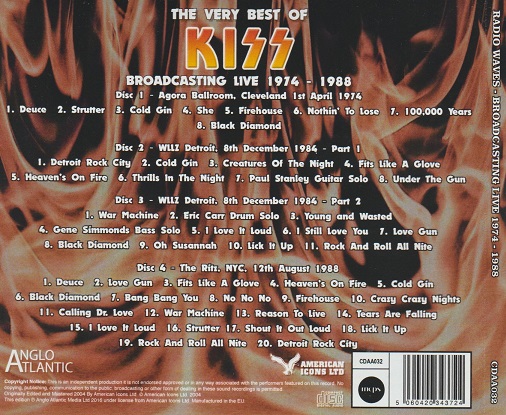
But what about a CD release, for that generation of fans for whom this is their Alive III? There are options. None are perfect. In fact, there isn’t even a DVD version. There are only semi-official looking bootlegs and the old original VHS. For CDs, you must go with a radio broadcast release, and none are perfect. Single disc versions are obviously trimmed for time and usually have 15 tracks including a couple solos. There is also a two disc broadcast from WLLZ in Detroit which has all 18 songs and all the solos too. This is available on a quadruple disc set called Radio Waves 1974-1988, released in 2015.* It even has intros and raps not included on the original Animalize Live VHS release! “Black Diamond” has a much longer introduction and much of the talking isn’t available elsewhere. During the encores, they mess around with the traditional “Oh Susannah”. The other intros and raps, the classic ones, are edited or missing completely! You just can’t win.
Only one track from this concert has been officially released on LP and CD: “Heaven’s On Fire”, which was Kiss’ contribution to Ronnie James Dio’s Hear N’ Aid – Stars album in 1986. Kiss completists will want to make sure they have that one.
One could meticulously paste in all of Paul Stanley’s missing and edited stage raps, and add them to your tracklist. It would be bloody time consuming. You’d have to listen to your compiled creation a few times to justify the time spent putting it together. But it could be done. It really is a shame that this broadcast CD is a few intros shy of complete. The sound is iffy at times too, with a lot of static where there shouldn’t be. But for the time being, it’s the best we got.
GETTING MORE TALE #576: “Why’d You Lick My Pee-noose?” The Sausagefest 2017 Countdown
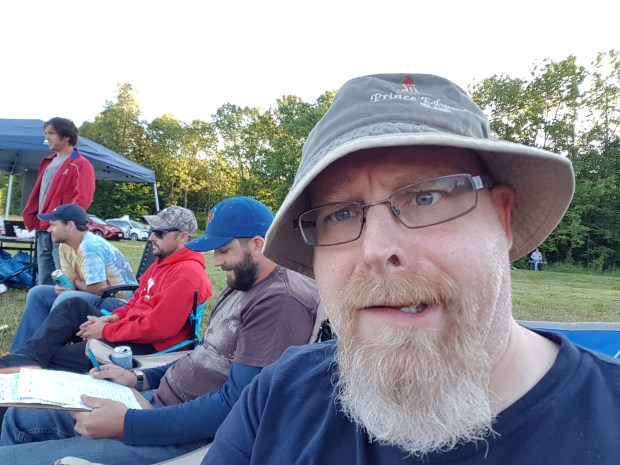
By the time it was all over I fairly surmised that, personally speaking, Sausagefest 2017 (the 16th annual) was the best one yet.
There are many reasons for this. One happened by pure change.
The weather reports for the weekend were changing daily. I contacted Uncle Meat on Wednesday to tell him they were calling for rain all weekend. He responded, “No they’re not, are you new?” But they were! And the next day, the forecasts had changed again.
By our Friday departure the skies were partly cloudy, but we’ve seen worse. After we arrived and set up our tents it started pouring for a short while. The old fire pit was flooded. When the rain stopped the decision was made to move the location for the Countdown, uphill on dry land. This was the first time the actual location had ever been changed after 15 years down by the river. It turned out that this was the best possible decision. The new location was wide open, more conductive to mingling and conversation, and as you have seen, provided some beautiful photographs. The new location will be permanent from now on.
I felt one of the reasons things went so well for me was good preparation, but that may not be the case. Uncle Meat also had a great time, and was so ill-prepared that he only arranged a tent to sleep in when we were halfway there! Way to be ready, Uncle Meat!
The vibe was right from the get-go and the Countdown began on time.
Highlights from the first night included some lesser-heard tracks:
Queen – “We Will Rock You” – the “fast” version
Deep Purple – “Vavoom: Ted the Mechanic”
Kiss – “Shock Me” – live version from Alive II with solo
The Beatles – “Helter Skelter” – mono version
Queen – “My Fairie King”
Mercyful Fate – “Into the Coven”
There were lots of cool tunes this year: 87 in total including tributes (more on those later). “Indians” by Anthrax was a perfectly appropriate song this year too, since I pulled a large chunk of my own recorded bits from the Brocket 99 CD, a spoof of reservation radio stations. (I voted for “Indians” as #22 on my list.)
And plenty more! You can check out the Countdown list yourself. It was also a treat hearing Ray Charles’ “Mess Around”, which you probably know from John Candy in Planes Trains and Automobiles. Rainbow’s “Light in the Black” was a personal favourite for my air guitar workout.
The comedy sketches were on-point, and I had tears streaming down my face laughing so hard. The Lord of Lamb, Zach Britton, wrote a sketch regarding my insistence that a Bacon Big Mac is not the same thing as a Big Mac. Bacon is not in the Big Mac song, therefore a Bacon Big Mac is not the same thing. Britton rebutted me successfully, and hilariously. “Loosey Goosey” is now a catch-phrase. As a peace offering, he gifted me a bottle of Big Mac sauce.
The first night it rained, but it mattered not as we huddled in our waterproof tents. We were up by the crack of 10:00 to grab breakfast at the Spatula – not the “Flying” Spatula anymore, please note. They have officially changed the name of the place, but still offer the “Flesherton Fill-up” for breakfast. Not as large, nor as good as it was in the past. On the way up, Uncle Meat yelled “Loosey Goosey!” at anyone we passed on the road.
You have to give credit to our Spatula server Heather. I sat with Max “I’m kind of a big deal” the Axe, and I got to witness him working his magic on Heather the server. He promised her the last CD copy in existence of one of his albums. What a deal! Max told me I had a good singing voice. Was he hitting on me, too? Wayne also had a golden line at the store Top of the Rock, with the girl who was distributing bags of ice. “Are you the ice lady? Ice to meet you!”
There was a new exciting twist this year at the 16th Sausagefest. Submitting lists (aka “paying your rock and roll taxes”) has long been a problem. Some people are always prompt. Those people were rewarded with an extra song, a “tribute” this year. Mine was The Police – “Next to You”. That was a blast for air guitar. You can see by the list at bottom, only eight people got tributes. That means only eight people got their lists in on time without nagging! Due to the amount of time it takes to compile the votes and actually record the Countdown, it was decided that this time, you must vote for 2018’s songs by the end of the weekend. And so Saturday afternoon was spent socially compiling lists. It was weird seeing a bunch of guys at Sausagefest with clipboards and pens, furiously writing, colluding and discussing. It was also successful. All lists are in. There will be a whole year to compile and record for 2018!
The second evening had more great rock. Ghost, Dunsmuir, The Sword, Iron Maiden, CCR, Floyd, Purple, Tenacious D, Sabbath and Zeppelin…all building up to the top ten. Not only building up to the top ten, but also setting up the very first Sausagefest live theater….
There were plenty of fake-out tracks in the top ten, as they pretended they couldn’t read the songs written on Uncle Meat’s upper thigh. Sabbath, Rush and Metallica were played eventually. After the #2 track “The Immigrant Song” (Zeppelin), there was an announcement made.
Tom, father of four, the co-founder, the Captain himself, wanted to take a step back. Recording the Countdown was no longer possible for him, due to family demands at home. This made sense, since the guy does have four rugrats and was absent from some of the top ten due to a supposed argument with his wife about it. They saved the announcement for the #1 spot. Only one person was told in advance, and that was the immortal Lord of Lamb himself, Zach Britton. As the song lyrics state, “He is the reason we still do this shit.” He was given a 20 minute heads-up to collect his emotions.
As the announcement was made, they said there would be no #1 song this year. They’d play it first in 2018. Instead, they played the traditional “Happy Trails” by Van Halen as Tom clinked glasses and shook hands with attendees. And then Zach got up to make a speech. He was obviously still shocked and upset by this sad turn of events.
His speech began as expected: melodramatic, sad, and stirring…until it was interrupted.
There was a 4 minute 30 second gap built into the Countdown…specifically timed for Zach to start his speech but not finish. All part of the pre-planned “live theater”. Then….
“ZACH BRITTON!” boomed the speakers.
Suddenly the Countdown recording continued, as a pre-recorded Bucky urged Zach to shut the fuck up and sit back down because he had just been pranked! Tom wasn’t retiring. Zach didn’t have a clue, nor did any of the rest of us! We all bought it, hook line and sinker, even though Tom has 12 months to record for 2018. It seemed so believable especially with that supposed “argument” with his wife built into the recordings. So I raised my goblet of Romulan Ale to Zach “the Lord of Lamb” Britton for being a great sport and a diamond geezer! The “live theater”, the first ever attempted at Sausagefest, was a tremendous success. As Uncle Meat said afterwards, “They will never ever trust us again.” It easily could have gone sideways, if Zach didn’t stand up to make his speech. They were counting on him and he fell right into it. Brilliant live theater!
The actual #1 song, played after the live theater, was “Cygnus X-1” by Rush, a fantastic song on which to close.
The following morning, we packed up to go home. As per usual, Uncle Meat kept singing and repeating one sentence. This year, it was a ditty called “Why’d You Lick My Penis (Rectum)”.*
“Why’d you lick my pee-noose…why’d you lick my pee-noose, rectum…” Over and over again. You can hear this on the Sausagefest video.
We made our way home, but for many of the guys, it was time to rock again. Five Alarm Funk played a free show in London on Sunday night, and a few tired ‘Festers trekked out to party some more. Totally fitting, since Five Alarm Funk had three songs on this year’s Countdown.
What a Sausagefest! Best one ever? Until next year, maybe….
ALICE COOPER – The Life and Crimes of Alice Cooper(1999 Rhino 4 CD set)
With the benefit of hindsight, 1999 was way too early for Alice Cooper to be looking back with a comprehensive box set. His new album Paranormal will be out this month. He’s been consistently touring and recording. The picture was different in 1999 though, since Alice had been quietly under the radar for much of the decade and there was no sign of new music coming.
This Rhino box set is pretty comprehensive. Though there are plenty more rarities out there to get on singles and elsewhere, Rhino served up a very generous selection of them. Starting in 1966 with singles by The Spiders and The Nazz, Alice’s sound begins to evolve. Those early bands were 4/5 of the original Alice Cooper group: only drummer Neal Smith had yet to join. The early singles are unfocused compared to what Alice was going to do in a couple years. “Don’t Blow Your Mind” and “Lay Down and Die, Goodbye” (sometimes known as “I’ve Written Home to Mother”) are sloppy psychedelia. “Hitch Hike” is like rockabilly. “Why Don’t You Love Me” is late 60s style rock and roll with a nice harmonica part. It sounds influenced by the Beatles.
A demo version of “Nobody Likes Me” is the first “official” Alice Cooper Group track and it sees the sound veer closer to where they were headed. It has a sing-song melody that recalls “School’s Out” later on. A few tracks from Alice’s first two albums (Pretties For You and Easy Action) demonstrate a work in progress. “Reflected” is an early version of something that would be re-written as “Elected”. The band was still very psychedelic and not as tight as they would become.
There is a sudden shift, and Alice Cooper emerges as the classic artist we know and love when he hooked up with producer extraordinaire Bob Ezrin. “Caught in a Dream” (a single edit) and a number of essential tracks from Love It to Death kick the box set right in the ass and it suddenly becomes a very engaging listen, when before it was just…interesting. A quintet of songs from the next album Killer are just as special, though including “Halo of Flies” would have been appropriate too.
Before heading into the School’s Out material there is a rare demo entitled “Call it Evil”. A small portion of the music would make it into the the classic West Side Story tribute “Gutter Cat vs. the Jets” (also included), but this is its own song and otherwise unreleased. The single version of “School’s Out” is an obvious inclusion, but these two are the only tracks from School’s Out, a baffling set of omissions. Granted, “School’s Out” plays like a concept album and is tricky to split up for a box set, but it is under-represented here, period.
Billion Dollar Babies is considered a peak of this period, and gets five tracks of its own, all brilliant. “Elected” is the single version. “No More Mr. Nice Guy” is a highlight of Alice’s entire career and it still sounds fresh. Another rarity ensues which is “Slick Black Limousine”, a UK exclusive flexi-disc release. It sounds more like early Alice Cooper group material, with Alice doing his best Elvis. The end of the original group was nigh, unfortunately, and Alice’s next album Muscle of Love was noticeably lacking something. Maybe it’s because Bob Ezrin didn’t produce it, but the band was also on the verge of splitting. Addictions were hurting them. They were still making great rock and roll, just not…as great. “Respect for the Sleepers” is a demo version of “Muscle of Love”, an unreleased track with lyrics inspired by Alice’s “dead drunk friends” (Jimi, Janis, Jim). There are more songs from Muscle of Love included than there were for School’s Out, which is odd but alright.
At this point, Alice split from the original band. Then there are a pair of rarities featuring Alice from an obscure rock opera called Flash Fearless Vs. the Zorg Women, Pts. 5 & 6. Before Queen, there was this Flash Gordon album and Alice’s tracks feature players like John Entwistle, Kenney Jones, Nicky Hopkins, Bill Bruford and Keith Moon as “Long John Silver”. “I’m Flash” and “Space Pirates” are mere curiosities, but it’s stuff like this that makes buying a box set so much more worth it. Where else would you hear these tracks? Both feature Alice’s delicious trademark sneer.
Alice’s solo career really began with 1975’s Welcome to My Nightmare. He and Bob Ezrin went all-in with an elaborate horror rock concept album featuring a number of classics. “Welcome to My Nightmare” and “Only Women Bleed” are single versions, and it’s fantastic that the blazing “Escape” was included. Another concept album, Alice Cooper Goes to Hell, was not as strong. Only two tracks are included, but both were singles. “Go to Hell” is a must-have.
The third CD in this box set commences a murky period. Alice was making albums frequently, but they weren’t as well received and many dwell in obscurity. Lace and Whiskey was pretty good, and “It’s Hot Tonight” is a great track to start the disc. Meanwhile, original band members Michael Bruce, Neal Smith and Dennis Dunaway formed the Billion Dollar Babies. They made one album called Battle Axe, and their cool rock track “I Miss You” is included. That’s a nice touch, because for the first seven albums those guys were as important as Vincent Furnier (aka Alice Cooper). Michael Bruce sings, but lead guitarist Glen Buxton was more or less incapacitated by addiction and wasn’t invited. “Battle Axe” sounds like a natural continuation of the Muscle of Love sound. A bunch more rarities are incoming: a torch ballad called “No Time for Tears” (unreleased) and “Because”, the Beatles cover featuring the Bee Gees. This was from that pretty mediocre Sgt. Peppers tribute album from 1978, so it’s great to be able to get it in a box set. Alice’s interpretation is creepy, and the Bee Gees are immaculate.
Moving on to his next solo album, Alice changed direction on From the Inside. He had just gotten out of rehab (an actual mental hospital) and made a concept album with David Foster and Bernie Taupin about the experience. The title track is included as a single version, and you also get the beautifully campy ballad “How You Gonna See Me Now”. It was a single too, and its B-side “No Tricks” is also included. It is a duet with soul singer Betty Wright. Disc three is generous in rarities. Another one called “Road Rats” (produced by Todd Rundgren) is a decent rocker from a movie called Roadies.
Alice moved into the 1980s on Flush the Fashion which employed some new wave and punk influences. Its two best songs, “Clones (We’re All)” and “Pain” are included. 1981 brought Special Forces and more rarities. “Who Do You Think We Are” is a single version, and “Look at You Over There, Ripping the Sawdust from My Teddy Bear” is a synthy unreleased song pulled last minute from the album. Then there is “For Britain Only”, the stripped-back rocker from the EP of the same name. “I Am the Future” is a single version originally from 1982’s Zipper Catches Skin. Completing this era (sometimes called Alice’s “blackout period”) are a pair of tracks from DaDa (1983). Alice had moved as far as he would go into the high-tech synthesizer direction, and he soon cleaned up for good. A couple odds and ends tidy up the tracks from this era. “Identity Crisises” and “See Me in the Mirror” are previously unreleased songs from the Monster Dog movie (1984) which starred Alice. These are very low-fi tracks, but “Identity Crisises” is actually pretty cool.
The final track on the third disc is the first one from Alice’s big comeback period. “Hard Rock Summer” is a fun heavy metal rocker from the Jason Lives soundtrack. It’s cheesy but also previously unavailable. The fourth and final CD picks up there, with two more rarities from the same movie. “He’s Back (The Man Behind the Mask)” is included in demo and movie mix versions. Onto 1986’s Constrictor LP, you get the enjoyable “Teenage Frankenstein”. By 1987 Alice was telling us to Raise Your Fist and Yell on “Freedom”. The excellent “Prince of Darkness” is also from that album, but then there are two more rarities. Alice cut a re-recording of “Under My Wheels” with Axl Rose, Slash and Izzy Stradlin for the movie The Decline of Western Civilization Part 2: The Metal Years. Unlike many re-recordings, this one is well worth it because hey, it’s Guns N’ fuckin’ Roses.
Alice’s sound got slicker moving into the late 80s. “I Got a Line on You” is a Spirit cover from the movie Iron Eagle II. There is a notable shift towards mainstream hard rock, and this spilled over onto the next album Trash (1989). This box set has three songs from Trash, but one is the irritatingly bad title track featuring Jon Bon Jovi. His sound got a little tougher on Hey Stoopid(1991) from which you get a single version of the title track, and “Feed My Frankenstein” (also from Wayne’s World). The Hendrix cover “Fire” is the last song from this period, which was a B-side. Unfortunately another B-side called “It Rained All Night” is a superior song, but not included.
Alice took another short break between albums before emerging in 1994 with another critically acclaimed concept album, The Last Temptation. Alice shed the trappings of the 80s and the album is held in high esteem today as a diverse combination of the 70s and 90s. Three tracks represent it, but it’s hard not to wish “Side Show” was also included.
The Last Temptation was Alice’s last studio album when this box was released in 1999. In the meantime, Alice made friends with Rob Zombie who was obviously influenced by the Coop. They collaborated on a song called “Hands of Death (Burn Baby Burn)” for an X-Files CD. This box set has the unreleased “Spookshow 2000 Mix”. The track points in the direction of Alice’s next album Brutal Planet.
This box set is quite an epic journey, with many facets and side roads. A trip like this needs an appropriate closing, and Rhino did something interesting to do that. They broke the chronological format they used for the majority of the set, and slid in the acoustic rocker “Is Anyone Home?”. This was a studio track included on Alice’s 1997 live album A Fistful of Alice. This serves as the climax, and “Stolen Prayer” from The Last Temptation is the finale. “Stolen Prayer” is a powerful duet with the late Chris Cornell. It was always a perfect closer, but now it’s…also sad.
It should be obvious now that The Life and Crimes of Alice Cooper is a worthwhile box set even for fans who own every album. The wealth of rarities are just a taste, but they certainly scratch a lot of track off of collector’s lists. Many remain exclusive to this box set. On top of that, it is simply a good listen, bumpy start aside.
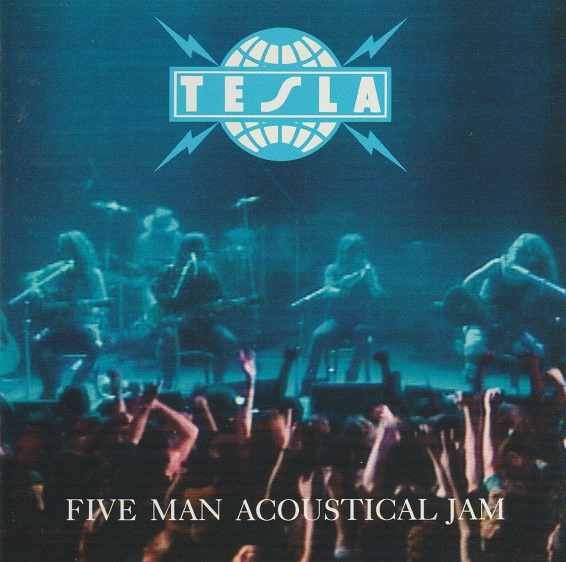
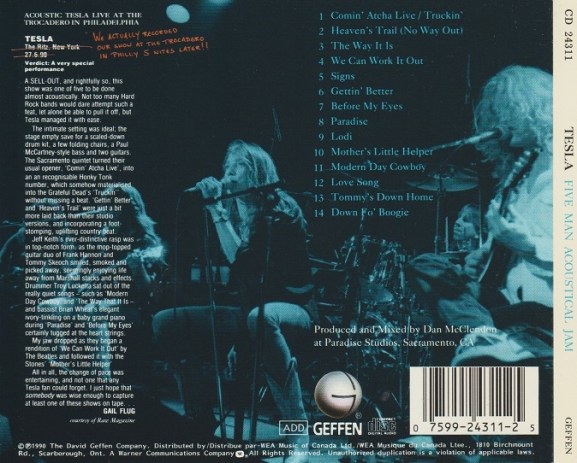
One of the great Unplugged albums of all time…isn’t even an “official” Unplugged album. That would be Tesla’s spontaneously released Five Man Acoustical Jam from 1990. Its hit single “Signs” absolutely helped set up the MTV Unplugged revolution.
With no intention of creating a live album, Tesla played a few acoustic gigs on off days and then recorded the Philly show for the archives. However a radio station in Boston started playing an acoustic rendition of “Signs” and plans were put in motion to capitalize. Thus Five Man Acoustical Jam came to be, a highlight of the Tesla catalogue that was almost completely unplanned.
“We’re just fuckin’ around tonight!” says singer Jeff Keith before “Heaven’s Trail”. Well then Tesla should spend more time fucking around. The looseness of the songs was so fresh for 1990. Tesla rolled the hits: “Modern Day Cowboy”, “Gettin’ Better”, “The Way it Is”, and of course “Love Song”, the only one with an electric solo. But because they were “just fuckin’ around”, there are also some very interesting covers: Beatles, Stones, the Dead, CCR and of course the Five Man Electrical Band. Tesla’s version of “We Can Work it Out” is awesome and incredibly fun. Less so with the Stones’ “Mother’s Little Helper” which is an unusually structured song to start with. “Lodi” by CCR was custom made for Tesla. “Signs”, of course what the smartest cover song decision the band ever made.
Five Man Acoustical Jam is a live album held in high esteem, for many good reasons.
1. A great selection of original material (old and brand new) that worked well in the acoustic format.
2. Choice covers.
3. Terrific recording, and 100% live with no fixes or overdubs.
4. Expert musicianship.
5. Humour.
Frank Zappa asked “Does humour belong in music?” The answer is “Sometimes”! One of those times is a loose, fun acoustic show. They could get away with playing a joke track like “Tommy’s Down Home”, written and sung by guitarist Tommy Skeoch. “I’d like to cut the balls off a long-haired hippie, and tie them up to a tree,” he sings gleefully.
The one single was the smash hit “Signs”, and it had a non-album B-side. “Little Suzi” (also a cover, but an earlier one) might be from the same gig. Jeff’s voice is shredded on this one, but it’s hella cool.
It’s probably fair to say that Tesla are underrated. They get stuck on tours with bands like Poison, who have nothing to do with the rootsy rock that Tesla has on offer. Tesla are better than that, and Five Man Acoustical Jam is actually a bit of an essential classic to own. The irony is that Tesla’s most definitive live album is the one that was basically a fluke!
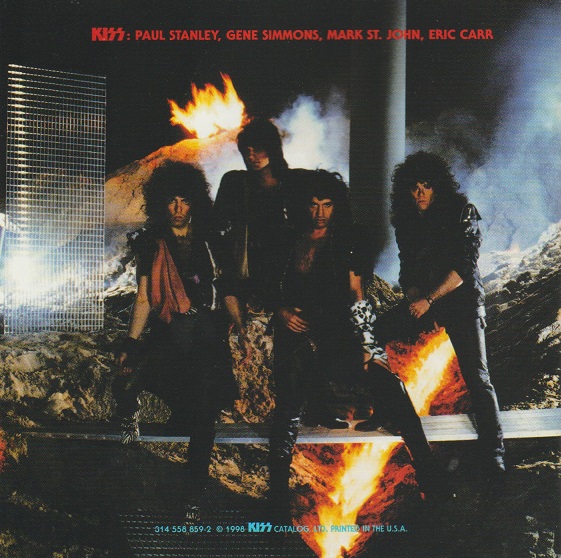
Animalize: a huge hit not proportional to the quality of the songs inside. It went platinum on the strength of lead single “Heaven’s On Fire”, but going deeper into the record, Kiss did not have the goods this time.
New guitarist Mark St. John (formerly Mark Norton) replaced the fired Vinnie Vincent, and in doing so, continued Kiss’ quest for shreddery dominance. In the 80s you had to have an Eddie Van Halen or Yngwie Malmsteen to get noticed, or so it seemed, and that was what Kiss went for. In the meantime, Gene Simmons was off in Hollywood leaving Paul Stanley to do handle Kiss, something Paul eventually came to resent.
Paul Stanley re-teamed with his songwriting buddy Desmond Child. Their last collaboration was 1979’s disco hit “I Was Made For Lovin’ You” from Dynasty. The partnership struck gold a second time with “Heaven’s On Fire”, a simple song perfectly suited for the Kiss of the 80s and beyond. Paul Stanley’s “Woo-ooo-ooo-ooo-OOOOO-ooo” intro is legendary and truthfully a song like “Heaven’s On Fire” isn’t too far removed from classic Kiss. Paul’s sassy delivery is enviable.
Desmond Child also co-wrote the opening number “I’ve Had Enough (Into the Fire)”. As the 80s began, Kiss seemed determined to write fast songs for their albums. Very fast songs. “I’ve Had Enough” is one of those, and it’s a good one too, though it was rarely played in concert. You’d never guess Desmond was involved without reading the credits, but you’d also not imagine it was Kiss if it wasn’t Paul singing.
Another fine Paul song called “Get All You Can Take” is a co-write with Mitch Weissman whose name has repeatedly popped up on Kiss credits over the years. This slow paced sleazy rocker has one of the few Kiss f-bombs in the chorus: “What fucking difference does it make?” Mark St. John’s solo is a blazing showcase of different tricks and techniques, but it suits the song rather awkwardly like an ill fitting tux. Such was the problem with a jazz-influenced shredder in Kiss.
Another fast number is “Under the Gun” written by Paul, Desmond and drummer Eric Carr. This one was played frequently on the Animalize tour though there are better songs. Fluttery guitars sound like laser beams zipping back and forth. Carr kicks ass, but it’s not a great track. Paul gets in a cute double entendre though: “There’s no speed limit where I’m coming from…let’s hit the highway doing 69!”
The final Paul song is probably the best one, although he has since criticized it as not good enough. “Thrills in the Night”, co-written with Jean Beauvoir, deserves praise. Sometimes the artist is their own worst critic, but “Thrills in the Night” is awesome, dramatic Kiss rock. The chorus goes on for weeks and the soloing fits.
If Animalize was a Paul Stanley solo EP, there would be enough good songs to give it a passing grade. However…we have the Gene Simmons songs.
Animalize shall forever be cursed as the album with the lyric, “I wanna put my log in your fireplace.” Yes, the man who once wrote a song with Bob Dylan also wrote a ditty called “Burn Bitch Burn”. The riff is awesome. It has its moments. It’s also undeniably one of Gene’s worst lyrics, and that is saying something. The song also sounds unfinished, as if he said, “OK good enough, onto the next song.” Fortunately Mark St. John’s solo playing is awesome, though not especially accessible. And that’s Gene’s best song on the album.
Gene’s other songs are “Lonely is the Hunter”, “While the City Sleeps” and “Murder in High Heels”. Of these, “Lonely is the Hunter” is by far the best. A slow sleazy groove is more up Kiss’ alley than these fast speed rockers. All three of these songs have one quality in common with “Burn Bitch Burn”, and that is that they sound like rough ideas gone unfinished. Animalize was produced by Paul (with a co-producer credit for Gene). A Kiss producer like Bob Ezrin likely would have told Gene to go back and come up with better material. The most interesting thing about “Lonely is the Hunter” and “Murder in High Heels” is the solo work. It’s stellar. It’s not overdone. It’s melodic and memorable. And it’s…familiar. Future Kiss guitarist Bruce Kulick stepped in to play ghost guitar on these songs.
The trend of Kiss using uncredited outside musicians was growing. Allan Schwartzberg (who also played on The Elder) did drum overdubs. Jean Beauvoir played bass on “Under the Gun”. Gene played the rhythm guitars on his own songs. That’s why the credits on Kiss albums always simply state: KISS – and the names of the members.
Gene cut his hair short for a movie called Runaway. He starred as the villain (of course) Dr. Luther, opposite Tom Selleck. Kirstie Alley was in it, and it was written and directed by Michael Crichton. Considering the year and the names involved, this was a fairly high profile role. Gene went for it, and has since admitted his brain wasn’t in Kiss at the time. The wig he wore on stage with the band made him look silly, and new fans considered Paul the singer and Gene a secondary guy. Gene’s songs weren’t singles anymore. They weren’t being played live. “Burn Bitch Burn” was only ever played once! These were all clues as to what was going on behind the scenes. Paul was sailing the ship now. He had no choice. Animalize suffers for it. Gene is to blame for his own downfall during the period and has since gracefully accepted that.
The Animalize tour was the biggest Kiss had done since the glory years, but troubles began early. Mark St. John couldn’t play. He was diagnosed with an arthritic condition called Reiter’s Syndrome. His hands swelled up and he simply could not do the gig. Mark passed away in 2007, but suggested that the arthritis may have been triggered by stress. The aforementioned Bruce Kulick stepped in to take his place, and did so with professionalism and respect. He got along with everyone. He was willing to learn. He was a great fit. The first great fit in many years.
The Animalize period put Kiss on MTV and on back the radio again, but its success was vastly disproportional to its quality.
Today’s rating:
2/5 stars
Uncle Meat’s rating:
2/5 steaks
Meat’s slice:There really isn’t much to say here. “Heaven’s on Fire” is a good song that I still enjoy hearing. Everything else is OK at best and non-essential. “Burn Bitch Burn” might have some of the worst lyrics of all time.























You must be logged in to post a comment.