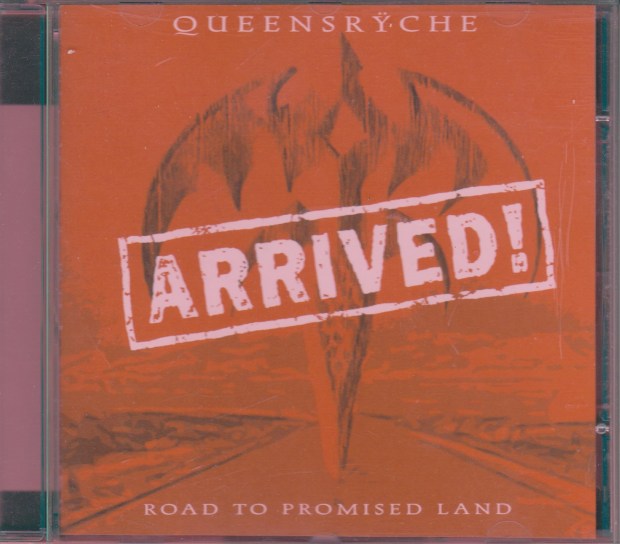
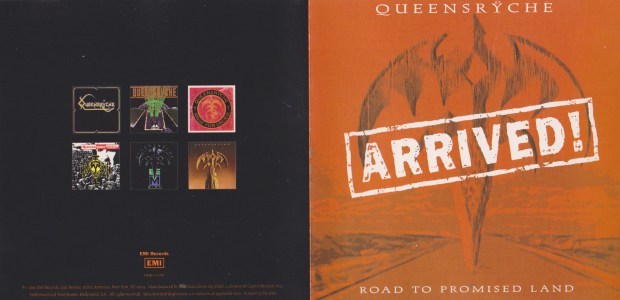
QUEENSRŸCHE – Road to Promised Land (1995 EMI promotional “best of” CD)
20 years ago, good buddy T-Rev let me know this little treasure had arrived in his store (first discussed in Record Store Tales part 120). Released to promote the 1995 Promised Land tour, Queensryche’s Road to Promised Land AKA Arrived! was a neat little greatest hits package released well before their actual Greatest Hits several years later. This is a promo CD released by EMI in the United States, and it covers every Queensryche release to date.
From the original EP is not “Queen of the Reich”, but “The Lady Wore Black”. The ballad starting the set is an odd but explainable choice. Queensryche were playing “The Lady Wore Black” on tour, but Geoff Tate didn’t enjoy singing “Queen of the Reich” and tried to avoid doing so. Being so full of powerful metal drama, even as a ballad, “The Lady Wore Black” can work as an opener. Then “Take Hold of the Flame” follows, one of the best Queensryche songs of all time (from the first LP The Warning). Unfortunately that is the only inclusion from The Warning, although it is certainly a must. Geoff Tate used screams as a art form on this song like no other. You want metal drama? They opening tracks are Metal Drama 101.
Two tracks are selected from Rage For Order, and they are fairly obvious choices: “Walk in the Shadows” [“WALK WITH MEAT!“] and “I Will Remember”. It is a given that both are high quality songs, from an album that can be difficult to pick individual hits. The opening part of the CD feels rushed, with the critical first EP and two albums giving up only four songs. Keep in mind that these albums now make up a large bulk of Queenryche 2015’s set, although that wasn’t the case in 1995 with their original singer.
From the brilliant landmark concept album Operation: Mindcrime are three selections: “I Don’t Believe in Love”, “Eyes of a Stranger” and “Revolution Calling”. Once again these are fairly obvious choices, being the three singles from the album. Strangely, “Eyes of a Stranger” was not edited down and is the full 6:39 cut, complete with album outro. Their most successful LP yet, Empire, was also give three inclusions. “Best I Can”, “Jet City Woman” and “Silent Lucidity” were three great singles. I wonder why the title track “Empire” wasn’t used? I think it’s more identifiable than “Best I Can”.
Rolling into Promised Land for the final three tracks, it is plain sailing to hear the evolution of the band over their first decade. Although the metal got tuned down in favour of more drama and radio-friendly elements, one thing that never changed was their urge to experiment. Indeed, the first Promised Land single “I Am I” features plenty of daring sounds. (This version of “I Am I” fades out rather than skipping directly into “Damaged”.) From cello (by Chris DeGarmo) to tribal percussion to innovative vocal effects, “I Am I” proved that Queensryche could rock progressively in the increasingly alternative 1990’s. Lyrically, they were as serious as ever but more personal. The ballad “Bridge” was about DeGarmo’s relationship with his father. Finally, the heavy-as-plutonium “Damaged” closes the CD abruptly. That’s the problem with these record company assembled promo CDs. They are not designed to play as an album. They are designed for radio use and store play. In other words the only real consideration is including all the individual tracks you want to plug. Like “I Am I”, “Damaged” too was edited for radio. They shaved three seconds off in fades, because normally these songs flow together on album.
Rating a CD like this is kind of pointless, because it was never meant to be sold. But let’s say you don’t own any Queensryche, and you saw this used while wandering the shops. Would it be a good Queensryche purchase for somebody looking for a good overview of the classic years?
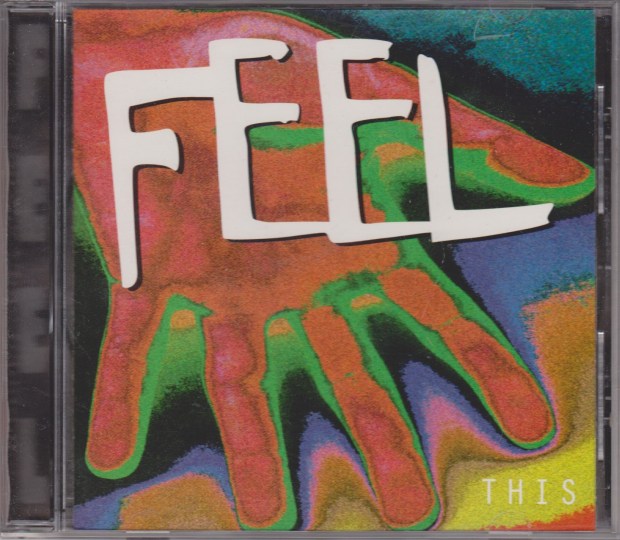
Russian Blue followed their critically acclaimed demo tapes with a full length CD, but perhaps it was the long wait that killed their chances. Between 1991 and 1994, the entire musical landscape had turned itself upside down. A name change was in order to suit the new climate, and after using the name Deadmoon for a little while, they settled on Feel. Simple: one word, one syllable, and trendy. Would they be able to maintain a level of quality over a full-length CD?
Almost. There is very little dead weight on Feel This.
“I Become You” is brutalizing, menacing, grooving detuned grunge. The presence of the bass is felt on this heavy recording. What Feel had that was different from other bands was the Axl-like screech of frontman Jo E. Donner. Indeed, when Donner multi-tracks his high voice with his lower register, the overall feeling is very Axl. Donner bellows forcefully, blowing out the speakers but not without help. Guitarist Richard Gauci and drummer Mike Willerding were capable of playing challenging rock. The drum patterns are busy and and Gauci is able to both shred like a hero, and also create the kind of noise that you needed to do in the 90’s. The band were between bassists. Robo was no longer in the band, so there are a couple session players on the CD.
Several smouldering tracks in a row occupy the first half of the album. “What You Made of Me”, “Wild Eye” and the lengthy “Brotherhood” all boast heavy guitar and vocal hooks. Wimps need not apply; Feel go for the throat even with a slower tempo. The songs sound well thought out, with attention given to every shriek and guitar noise manipulation. The bass grooves are absolutely key to all of this. Rumbling and shaking like a good Soundgarden line, they deliver the bass chills that fans of such sounds love. But was it all too similar to the chilly winds that had blown in from Seattle? Feel had been growing heavier and groovier on the demo tapes already, so I believe this to be a natural evolution that happened independently from the Seattle scene. Witness other Canadian bands such as I Mother Earth, who also evolved on their own into something that fit into that 90’s box.
The centerpiece of the album has to be “I Am Your Mind”. Long with a droning, irresistible chorus and cool lyrics — what’s not to like? This tune takes only one listen to bore its way deep into your medial temporal lobe. Building dramatically, every guitar hook will sink in hard, only for Donner to hit everything home with his powerful larynx. Everything is perfect — a song of this quality could easily have been on Badmotorfinger or Superunknown. Hyperbole? I don’t think so.
The second half of the CD has fewer highlights. After being slammed in the face with so much heaviness, Feel were wise to put on an acoustic number next. “Ain’t Nothin’ Wrong” is good, and shows off the band’s Zeppelin influences especially in the vocals. It’s just that Feel unplugged doesn’t have the kick that Feel does fully electrified. On the other hand, another listener might say it’s the best track. The first skipper is “Under My Wing”, too slow and boring. Not enough Sabbathy slow, just stuck in the wrong gear. Back to the groove is the killer “Drip Sweet Blood”. Making use of trendy 90’s vocal distortion, Donner blows the speakers especially around the 3:15 mark with another hair-raising bellow — just awesome. “Stand on Walls” sounds something like a Skid Row outtake. It’s nothing outstanding, but it’s only 3:38. Closing the disc is “All”, which was formerly known as “Black” on the second Russian Blue demo. The psychedelic intro from the demo was axed, tightening up the song and amplifying its power. Alternating from soft to loud, “All” kind of does have it all, at least for 1994.
Feel could have got themselves off to a great career with This as a debut album. Unfortunately I think by 1994 it was already too late.
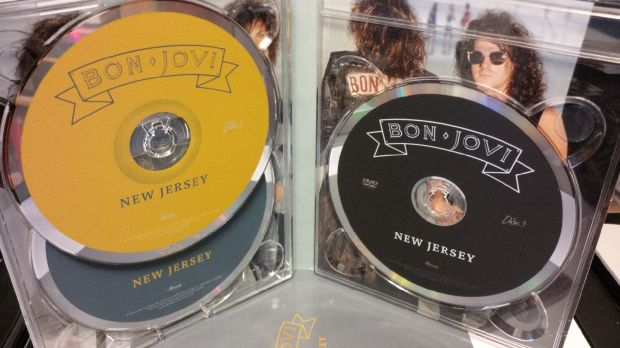
BON JOVI – New Jersey (2014 Universal Super Deluxe edition, part 2)
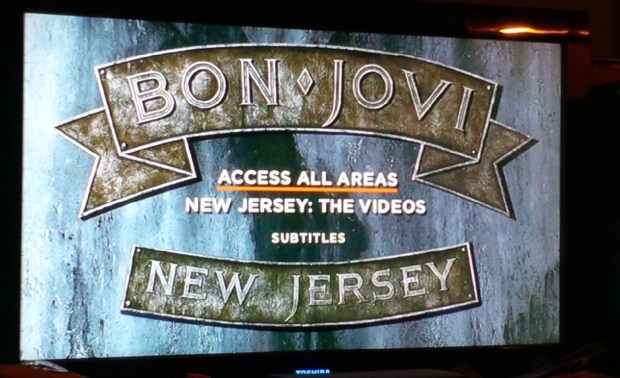
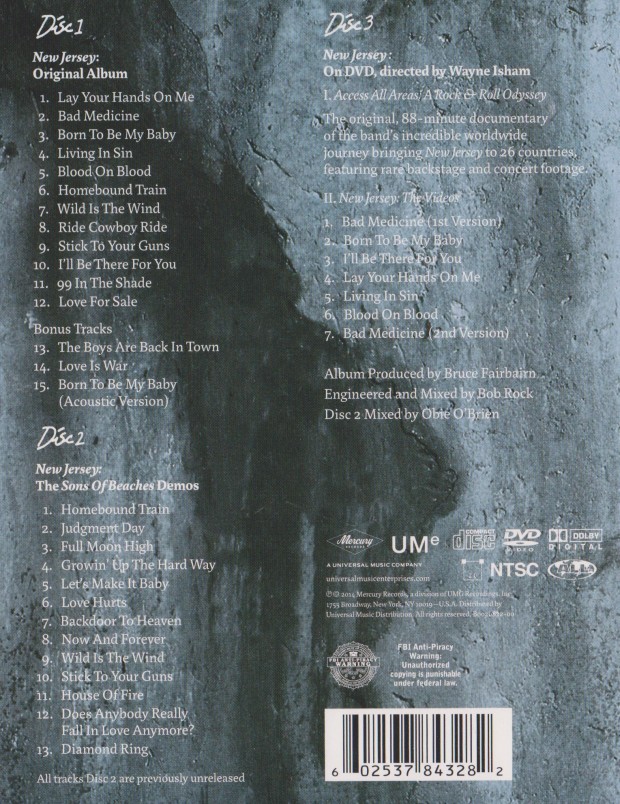
Of all the Bon Jovi albums, New Jersey certainly deserved the Super Deluxe treatment. New Jersey‘s promotional cycle included two VHS releases, both present on this DVD: The old Wayne Isham tour documentary Access All Area, and New Jersey: The Videos. Isham was responsible for virtually every cool larger-than-life video Bon Jovi made. In 1988, trendy grainy black and white footage was all the rage, and so Access All Areas, where we will begin, has an over-abundance of it.
In a piece of incidental pre-show rehearsal footage, Richie Sambora sings “Purple Rain”, proving who the talent in the band always was. It is nice though to see everybody in the band hanging out, having a good time, and seeming like genuine friends. As for the audience, it’s amusing to see the giant hair from the perspective of today.
The sound of “Bang” by Russian metal band Gorky Park indicates we’re off to the Soviet Union. Bon Jovi were pioneering in being one of the only hard rock bands to play behind the Iron Curtain (they were officially sanctioned by the government), and this part of the show is certainly the most interesting. Bon Jovi even have a ten-man blues jam with the Russian band, building bridges at the end of the Cold War. The blues is universal. This visit leads to the massive Moscow Music Peace Festival, which I had on tape from MTV, and wore completely out. (Not shown: the backstage moment when Tommy Lee rips the shirt off Bon Jovi manager Doc McGhee’s back, for allegedly upstaging Motley Crue by using fireworks in Bon Jovi’s show, against prior agreement. It’s a long he-said she-said story involving McGhee who was managing both Motley and Bon Jovi at the time. Motley felt McGhee had prioritized Bon Jovi, and fired him immediately after.)
The boys have a blast in the warmth of Rio de Janeiro, quite a contrast with snowy Moscow. In Tokyo they are chased by a swarm of screaming girls. Through it all, even though they’ve been on the road forever and can’t wait to get home, they maintain themselves with a lot of joking around. Fortunately Isham captured this endearing footage. The live rehearsal stuff is also excellent, up close and in the faces of the band.
In a very cool moment backstage at Wembley, Bon Jovi, Cinderella and the Scorpions work on covers together for a big jam. “Travelling Band”…holy shit, is that Elton John on piano? Sure looks like it. Rick Allen, Brian May, Lita Ford! “I am the happiest kid on Earth!” shouts an excited David Bryan. Another gig features Bon Jovi with the late comedian Sam Kinison on “Wild Thing”. At Tower Records, they are threatened with arrest by the riot squad if they perform, so naturally Jon and Richie break out the acoustics and do “Ride Cowboy Ride”. In swoop the fuzz, who had nothing to worry about. Alec John Such’s birthday is celebrated in West Berlin, where they visit the wall. (In a shivery moment, Jon is eyeballed by an East German soldier on the other side.) Their cover of “The Boys Are Back in Town” is performed, and Jon takes a chip out of the wall.
Jimmy Page is present at a three hour charity gig at Hammersmith, and they jam on “Train Kept a Rolling”. (Best moment: when Jon sings a Steven Tyler “wha-ga-ga-ga” in it near the end, just like Tyler did in Aerosmith’s version.) It’s clear that even then Jon was the boss — he alone makes the setlist, and says if something goes wrong he’ll call the shots. He comments he has “never been so nervous.” Bad Company’s “Shooting Star” is a duet with Richie Sambora, who had been playing it long before Bon Jovi formed. It’s a stunning version and it’s hard to imagine Bon Jovi ever doing anything this big again, both in terms of success and quality.
Australia! “Bon Jovi: We go everywhere, but we live nowhere!” says Sambora. “Love For Sale” is played at HMV for swarms of long-hairs both male and female (but mostly female). Sam Cooke’s “Having a Party” is another incredible cover selection, and you have to give Jon credit for that. The final show is a big multi-gig stand in Guadalajara, Mexico that almost never happened due to “politics” (money) and a riot! The first gig is postponed to the next day forcing Bon Jovi to play a double-header starting at 11 am! “We should go on stage in riot gear,” jokes (?) Jon. (They don’t.)
Access All Areas was a good rock doc for the time. It feels whitewashed and scrubbed clean of blemishes, but that was music in general in the late 80’s. The real pleasure is getting to see the other band members hanging out. Alec John Such seems a funny, talented guy with a great voice. David Bryan is clearly a lot more gifted than he gets to show off in the band.
The music videos (only mixed in stereo, unfortunately) are all you remember them to be: more mixtures of black & white, and colour footage, golly! Both versions of “Bad Medicine” are included. (More Sam Kinison!) There are funny interludes with the band in between the songs, joking around back stage. (Special guest: Skip Rope Skid Row’s Dave “Snake” Sabo.) “Me, if I wasn’t a musician, I’d be a drummer!” says Jon. Of the music videos, “I’ll Be There For You” and “Lay Your Hands On Me” are the coolest, just no-nonsense stage performance clips. “Blood on Blood”, which I’d never seen before, is a live version.
The DVD portion of this box set is a nice supplement, but you won’t be in a hurry to sit down and watch again. The black & white/colour back and forth is very tiring. Fortunately Bon Jovi seem(ed) like a nice bunch of guys from the neighborhood that have loads of talent, and fun to watch in any setting.
BON JOVI – New Jersey (2014 Universal Super Deluxe edition, part 1)
BACKLOG! I received this box set over 10 months ago. We at LeBrain HQ are so busy with so much rock and roll that it has taken that long to finally give this entire box set a proper examination. Fortunately, we (the “royal” we) have already reviewed New Jersey itself, in March of 2014 before this box set was released. There is no need to repeat what was said in that review. It is still an accomplished album worthy of its 4.5/5 star rating. New Jersey was and easily remains a very high water mark. For this review we will look at all the bonus tracks and the entire DVD in detail. All three parts combined will probably give you the most complete look at the New Jersey Super Deluxe edition out there.
There are loads of bonus tracks to discuss, some of which were available before. Bon Jovi must have known this release was always in the cards. Look at the track list for their box set, 100,000,000 Bon Jovi Fans Can’t Be Wrong. Not one of these demos is on that massive five disc box set. Many of these tracks had been leaked a long time ago on bootleg CDs such as Keep the Faith/New Jersey Outtakes, but never issued by the band. It’s natural to be cynical and say, “Well they must have been saving them for another box set like this one.”
“The Boys Are Back in Town” is an A-OK Thin Lizzy cover. When Lizzy wrote this song, Phil Lynott almost had the blueprint for the future of Bon Jovi plotted out. Bon Jovi, a back who love singing songs about the boys being back in town, were the perfect band to cover it and make it their own song. Cynics may laugh, but Richie Sambora and Tico Torres are quality players able to inject class into the cover. Keyboardist David Bryan uses the “organ” setting on his keys to offer appropriate backing for the boys. It’s hard to have a winner with a Lizzy cover and not sound like a bunch of jackasses. This one was recorded by Bruce Fairbairn for the 1989 anti-drug compilation Stairway to Heaven/Highway to Hell.
“Love is War” was good enough to be a single in its own right, but it was only the B-side to “Living in Sin”. Perhaps the reason it was chosen for B-side status was that the verses and chorus don’t quite jibe. The song has great, dark verses and a big old Slippery-like chorus. It doesn’t quite sound like a New Jersey song, but it’s hard to track down today.
A very rare bonus track is an acoustic version of “Born to Be My Baby”, only available on a Japanese “Living in Sin” CD single. Fans love when Jon and Richie just sit down together with a couple acoustics and do a live-in-the-studio rendition of a hit. It’s an uber-rarity that LeBrain HQ did not even know existed before this box set was issued. As usual, Richie’s soulful singing reaches deep into your guts. His classical-influenced guitar solo is a masterpiece.
Famously, Bon Jovi once considered the awful title Sons of Beaches for their 1988 album. Disc two is called the Sons of Beaches Demos and there are plenty more great tracks here that are familiar to bootleg collectors. The opening demo version of “Homebound Train” is even bluesier and greasier than the great album take. Anyone who doubts the instrumental ferocity of Bon Jovi can check this out and see what the original lineup was capable of.
“Judgement Day” opens with traditional “nah-nah-nah” Bon Jovi vocals, giving it a sound-alike quality to other more familiar Bon Jovi songs. It is good enough that it could have been on an album (or single B-side). Then “Full Moon High” (also known as “River of Love” on bootlegs) is familiar. I recognize the music from somewhere else: it became the Keep the Faith B-side “Save a Prayer”! The riff is intact, and what “Full Moon High” amounts to is an alternate 80’s version of it. It is just as great as “Save a Prayer”, and it is difficult to pick a preferred version. “Full Moon High” is an achievement, and Richie’s guitar playing is nutso. “Growing Up the Hard Way” is back to the “nah-nah-nah’s”, and it sounds as if this is an early version of “Love is War”, but with a very different chorus.
With a slinky, dusky song behind him, Jon urges someone “Let’s Make it Baby”. This tune would have been good enough for Keep the Faith, but did not surface until a double disc version of These Days was issued in the mid-90’s. This is a noticeably different mix from that release — more raw. Then “Love Hurts” goes into upbeat territory with a decent set of melodies to sing along to. It is a bit similar to “Love is War” once again, but that’s why these songs were never officially released before. I’ve had this song in my collection for 20 years, but not with this level of audio quality. Likewise “Backdoor to Heaven”, a ballad that fans have loved for a long time (just not officially). Again, this song was probably deemed too similar to others such as “I’ll Be There For You”. Same with “Now and Forever”, another ballad of high quality, but also similarity.
A harder-edged “Wild is the Wind” demo is otherwise very similar to the album arrangement, with some different bits on keyboards and acoustic guitars. Singling out Tico Torres as drummer extraordinaire, I love his hard hitting style. Same with the excellent “Stick To Your Guns”; it’s more or less already complete at the demo stage. The rawness is a beautiful thing…you can hear Richie talking at one point.
The one track of all of these which LeBrain HQ was most excited about is “House of Fire”, a song that Jon donated to Alice Cooper for his Trash LP. Cooper’s version was “unremarkable” [LeBrain Trash review], but Bon Jovi did it right. If Alice didn’t release his own single for it, I wonder if Jon would have? One word: infectious.
Fans in the know have always loved “Does Anybody Really Fall in Love Anymore”, another ballad that might be deemed too similar. Another issue is that the chorus really reaches for the high notes, and Jon misses most of them on this demo. Somebody probably realized it would be a difficult song to bring to the concert stage. The bootleg version of this is more complete, with backing vocals filling it out. This demo, perhaps earlier than the one that was bootlegged ages ago, lacks all backing vocals and sounds like it may be live in rehearsal. “Keep going,” says Jon to someone, indicating this is likely the case.
“Diamond Ring” became such a fan favourite after the band played it live that this New Jersey demo was tried out again for Keep the Faith, and finally made an album in 1995 for These Days. Each arrangement of the ballad was different from the last. This one is the earliest, featuring bluesy electric guitars and organ. Its final incarnation was much quieter.
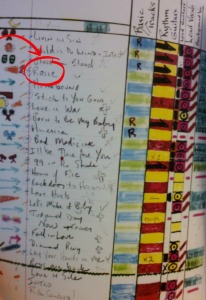
Very conspicuous by its absence: “Rosie”. This was written by Richie and Jon about someone they knew growing up (as many of their songs are). Desmond Child and Diane Warren helped them finish it, and it was recorded by Sambora for his first solo album Stranger in This Town. Since that album featured Tico Torres and David Bryan on drums and keys, you can almost consider that a Bon Jovi song. But why is it not here, with the demo sessions that it belongs with? It’s cynical but not unlikely to think it’s due to Jon and Richie’s feud. Shame. There are other Sons of Beaches demos missing that are out there on bootlegs, such as “Love is War” so don’t fool yourself, this is not a complete set of ’em.
Come back tomorrow and we’ll look at the final disc in this set, the DVD.
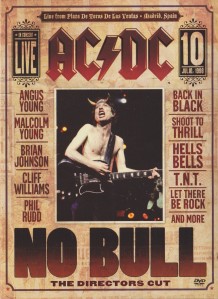
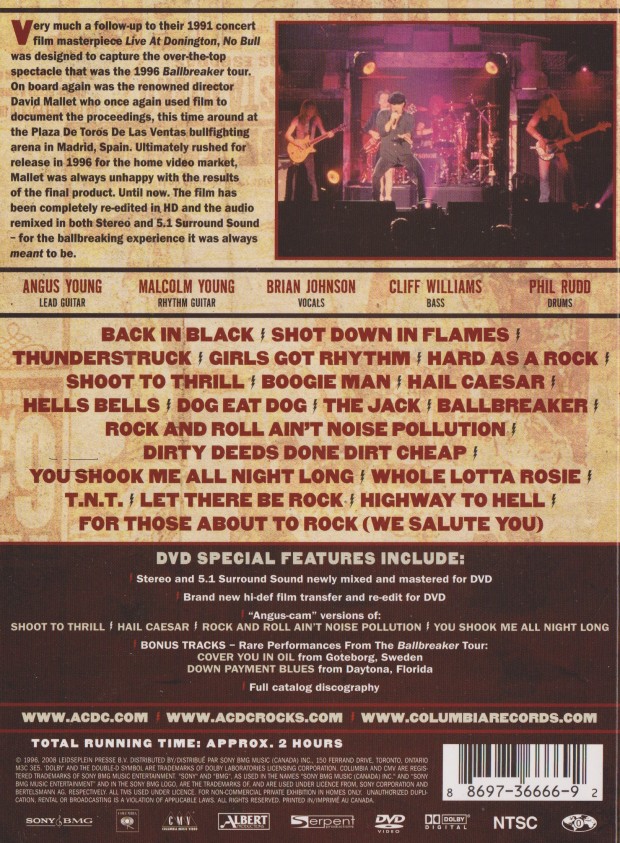
AC/DC – No Bull: The Director’s Cut (originally 1996, DVD 2008 Sony)
The Plaza de Toro in Madrid is an incredible looking venue. “Nice place you got here!” understates Brian Johnson. To film a concert video here seems an easy decision. A crane and giant wrecking ball dominate the scene. The ball swings and bowls over the backdrop! Enter: Angus Young!
“Back in Black”* is a natural opener: Everybody knows it, and the groove is impossible to ignore. Johnson’s voice is ragged and weak compared to the old days, although I think Brian sounds better in general today. A pre-crystal meth Phil Rudd dons spectacles, and hammers out the beat that, truthfully, he invented and does best. Having Phil back for that period of the band was a coup. It’s back to the Bon Scott years then, with “Shot Down in Flames”. Now Brian sounds more in his element, somehow seeming more in control on a Bon song. As if it took them one song to warm up, everything feels in gear now. Then, “Thunderstruck” is an interesting take, because Phil didn’t play this song before. Chris Slade was in the band at that time, and Phil doesn’t even try to imitate his style. He plays “Thunderstruck” his own way, which is fine. There’s a live version, with Slade, on AC/DC Live. With Phil on the kit, “Thunderstruck” is no longer filled with nervous energy, but is more in the pocket. It’s an interesting evolution. Contrast this with any live video of the current lineup playing the song with Slade today.
“Girls Got Rhythm” is an easy classic, which warms the crowd up with a newbie: “Hard as a Rock”*, the single from Ballbreaker. All but instantly, it sounds like a familiar classic. This is high quality rock, with Johnson’s voice in full shred. Colourful lights illuminate the stage, but only Brian and Angus are really mobile. Cliff Williams and Malcolm Young rock steadily, sticking to their respective sides, and stepping up to the mic for the big chorus. The crowd goes nuts when Angus himself speaks. The stage is huge, but Brian Johnson runs across every inch, interacting with the massive crowd as a veteran frontman can. Then AC/DC knock ’em down (down down) easily on “Shoot to Thrill”. There is a rock and roll purity to this show: A bunch of guys in jeans (Angus excepted), playing hard rock and roll, but contrasted with that is the massive stage. AC/DC can do it because people love the personalities of the band. Angus doesn’t miss a note, no matter where he’s running off to next.
Phil smokes a cigarette during the blues number “Boogie Man”. Starting sluggishly, “Boogie Man” nails it as soon as Brian gets screaming. I’m sure AC/DC can play this kind of thing in their sleep! Angus has an extended solo during which he gets the crowd riled up and ready with his strip-tease moment. When he finally drops his drawers, his undies have the Spanish flag on them. Madrid eats every bit of it up. AC/DC clustered a bunch of new songs close to each other at this point, and “Hail Caesar”** is next. It’s time for a heavy prowler, and Caesar brings it on.
When the bell tolls, you know what’s happening. “Hell’s Bells”! Songs like this, “Dog Eat Dog”** and “The Jack” require no commentary. The sight of Johnson descending from a giant iron bell is pretty cool.
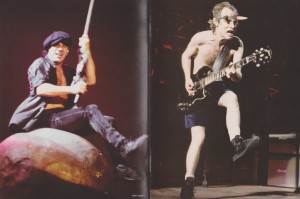
Last newbie of the night is “Ballbreaker”* itself, a blast of “shut the fuck up and listen t0 this” right in the face. This time, Brian is swinging from the wrecking ball, singing the whole time, kicking his feet in the air. AC/DC have crushed it…but there’s still lots more to go. “Rock and Roll Ain’t Noise Pollution”, “Dirty Deeds”, “You Shook Me All Night Long”**, “Rosie”*, “T.N.T.”…it’s all a good time, and you know them all. The only real critique is there is a gap in the setlist, with no songs from 1983-1988 appearing anywhere.
“Let There Be Rock” is, as usual, extended to epic length with Angus’ brilliant solo. First of all, it’s incredible that Angus still has this much energy after playing and stomping through a show this long. What’s really amazing is that everybody in the band is fully fueled for this full-speed song. Malcolm sips from a water bottle — that’s the key, folks. Hydration.
The cool part here is when Angus departs the stage (band playing on), to re-emerge atop the massive shoulders of a bodyguard and taken to a flying platform in the middle of the crowd! Many thrills later, Brian says goodnight, but you know he’s teasing. “Highway to Hell” commences with explosions, flames and Angus’ devil horns. And then, finally,the cannons” “For Those About to Rock” is the salute to Madrid , who witnessed an absolutely incredible AC/DC concert.
The DVD bonus features are cool, as you should expect. The “Angus Cam” versions of four songs is plenty fun, by focusing solely on Angus in the edit. It’s quite incredible to just watch the man play, because it seems as if he is entranced, on auto-pilot, but totally in command. If there wasn’t a guitar around his neck you might think he’s having a seizure! Then come the moments when he looks the crowd in the eye, and the playing only gets more intense! Like I said: this is plenty fun.
Then we have two bonus tracks not included in the Madrid set: “Cover You in Oil” (Sweden) and “Down Payment Blues” (Florida). “Cover You in Oil” is raw and sweaty. I don’t think the song is particularly strong, sounding a bit like a Blow Up Your Video outtake. Still, it’s always nice to get another new song on the DVD, since it’s doubtful a track like this will ever re-enter the setlists. The stupid music video footage that is edited into the tracks is annoying, however. Instead of watching Angus take a solo live, I’m watching him doing it in a music video. Bad editing decision. I like how Brian introduces “Down Payment Blues”: “This is from one of the albums…back in the 70’s…” Shit, he doesn’t know, he wasn’t there! But he gets the job done anyhow. And guess what? Brian Johnson is wearing the same damn blue shirt and hat at every show! His snarl adds to this version of the song.
What’s with the “Director’s Cut”? It seems the original 1996 VHS release (which I never saw) was rushed out for the Christmas season to the dissatisfaction of award winning director David Mallet. He did a new edit, and new stereo and 5.1 mixes for the DVD release.
4/5 stars
*Indicates this version is available in audio form on the 2 CD edition ofStiff Upper Lip.
**Indicates this version is available in audio form on the deluxeBacktracksbox set.
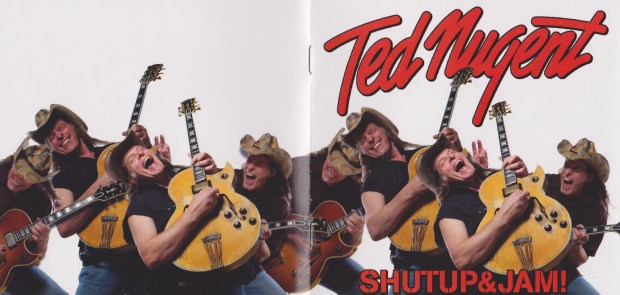
Some rock fans have a love/hate thing with Ted Nugent. He’s a proud hunter (“kill ’em and grill ’em”), but a conservationist. He loves the right wing of the political spectrum and has nothing but loathing for the left, all the while taking great glee in offering his opinions. The second amendment is sacred to him…but so is rock and roll. It’s hard to outright hate a guy who has rocked so damn hard over the years, and non-stop at that. You gotta give him credit for the tunes.
Upon first listen, it is clear that the years have done nothing to Ted. The opening title track is faster, meaner and more fun than 99% of the flock. The great Gonzo still shreds a chaotically perfect solo as if the studio is Cobo Hall. “There just comes a time when you just gotta rock,” he sings. Sounds good to me Ted, I’m on board for that! Ted keeps it rolling with a vicious riff on the excellent “Fear Itself”. What a killer song. The message is pretty straightforward: he got nothing to fear but fear itself. “I get up every day, with a smile on my face, happy to be alive and I’m back in the race.” Ted offers no apologies, but tries to keep it positive. “Positive energy makes me smile,” he sings, but “victory makes it all worthwhile.”
Old pal Derek St. Holmes lends lead vocals to “Everything Matters”. A whole album of Ted’s shrieking has never been easy to swallow, so I’m always glad to hear Derek’s smooth pipes. By the slippery bluesy rock, you might think it’s ZZ Top. Early ZZ Top, at that! Somehow, Derek and Terrible Ted found a time machine back to 1972 and captured the sound on “Everything Matters”!
Speaking of old friends, Sammy Hagar (who is friends with everyone, except the current members of Van Halen) shows up to sing lead on “She’s Gone”. It’s a ball-crusher of a song (basically just a variation on “Going Down”), but I road tested the guitar solo, wailing with the car windows down this summer. It passed the rock test. Sammy haters are gonna hate, but I don’t how you can hate him when he’s rocking like this with the Nuge. Even better though is the pure fucking joy in the riff for “Never Stop Believing”. Ted has been quite a riff merchant over the years, but “Never Stop Believing” is another triumph, as big as ever. Strap on your air guitars, folks: you’re gonna need ’em. The song ends on some really nice laid back picking from Ted, reminding me that he is one of the most underrated players from the classic rock era.
“I Still Believe” indicates to me that Ted really wanted to get his point across when he said he’d “Never Stop Believing”. The opening riff apes “Helter Skelter” shamelessly, but the rest of the track is pure Ted…with twang. I like that Nuge is singing fairly tame things like “I still believe in America” and “I believe in liberty” rather than “fuck the Democrats”. The sentiments are more inclusive.
My favourite track has turned out to be the silly titled “I Love My BBQ”. I do love to barbecue, and I absolutely dig the shout-out to us Canucks: “I love my Barbeque, it’s what Canadians do, pull up a chair I’ll get a beer for you,” sings Ted in the first verse! A small minority may be offended but my mouth is drooling. But I really don’t think it’s Ted’s primary intention to upset you. He’s just being funny on this one. I mean, come on: “Tofu might just kill you babe, a tossed salad’ll make you weak.” Nudge nudge, wink wink. Poking the bear a bit. “Well the animals, they got rights…right next to my mashed potatoes, baby.” It is obviously intended as comedy, and that’s fine.
This slideshow requires JavaScript.
I love my BBQ, too.
Kicking ass is Ted’s business and “Throttledown” is a full-throttle, pedal-to-the-metal rock instrumental. As always though, there is a twang to Ted’s dexterous picking. That’s what makes this different, and better, than middle of the road rock. Having said all that, I have no idea what “Do-Rags and a .45” is about. It sounds like Anvil, except for that title. Keeping the pace fast, “Screaming Eagles” doesn’t give up an inch, guitars fueled and ablaze. None of these songs overstay their welcome. Shutup & Jam features five songs in the 2 minute range in a row! “Semper Fi” is the last of these five, a stomper rather than a screamer. I come from a military family so I have no issues with Ted paying tribute to those in uniform. Some might find it all a bit too much; that’s up to you. Fear not, the song has just as much guitar shred as it does singing. Ted then tells us he’s going to “Trample the Weak Hurdle the Dead”. “War is not the answer,” sings Ted. “I only know evil has got to go.” It’s a great tune and it’s not hard to swallow. And that’s the key. All of these tunes are immensely catchy with lyrics you can sing without having to worry about being considered a right-wing radical by your neighbours.
A bluesy reprise of “Never Stop Believing” closes the album; a rough recording appropriate for the gritty blues approach. It’s a bit of a throw-away compared to the regular version, decent but not nearly as special. Ted’s playing is always the main reason to listen.
I have maintained that if only I heard Shut Up & Jam in the year 2014, it would have been a contender for the Top Five list that year. It’s not hard to understand why — it’s a killer record showing Ted is still in fine form today and hasn’t let the politics get in the way of a good rock song.
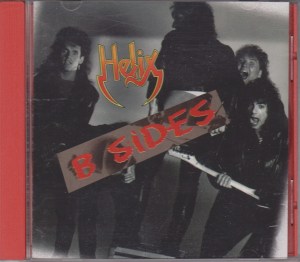
The occasion: It was Helix’s 25th anniversary. How about an album, and some classic returning band members, for a good time?
The title B-Sides here is misleading; a B-side is a track that appears on the flipside of a single, and is often not on the album. No tracks on this album appeared on the flipside of any singles, at least not these versions. However, the misleading title does not mar the excellent music contained within.
B-Sides contains songs written and/or demo’d for various Helix albums from 1990 onwards. Some of these have been re-recorded, such as “Love Is A Crazy Game”, which appeared as an acoustic version on the Business Doing Pleasure CD. This version is electric and is much heavier. I could imagine this version fitting right in on an Aerosmith album. “S.E.X. Rated” has also been re-recorded. It’s the only song that actually appeared as a B-side, but it’s not the same version as on that single.
Various versions of the Helix band appear on this album, but most interesting is the lineup on the bonus tracks. “Like Taking Candy From A Baby” and “Thinking It Over” are both from the sessions from Helix’s excellent first album (Breaking Loose), left unreleased until now. “Thinking It Over”, a terrific pop rock song, is a Del Shannon cover. Helix worked as Shannon’s backing band during an early 70’s Canadian tour. There are also three songs by a reunited “80’s Helix”, and it’s great to hear that version of the band again.
In a way, it’s a shame that this album was given the title and terrible album cover that it has. Brian Vollmer and Co. could have simply put this out as the next Helix album, which may have given it the respect it deserves. From the ballads to the heavy stuff, this Helix CD has a bit of everything you already liked about the band, with a modern edge. Every song kicks, there’s not a weak track in the bunch. By the time you get to the bonus tracks, Helix have already pummelled your eardrums.
Helix fans absolutely need to hear this music; not B-sides but in fact some of Helix’s best stuff. Along the way, there are appearances from pretty much every major Helix member from the indi days to the mid-90’s. You will even hear songs written and performed by Paul Hackman, the late Helix guitarist who was tragically killed in a 1992 auto accident. The major selling point of the disc was that three songs featured a reunion of the surviving members of the classic 80’s Helix. With Hackman gone, that consisted of leader singer Brian Vollmer, guitarist Brent “the Doctor” Doerner, bassist Daryl Gray, and drummer Greg “Fritz” Hinz.
Personal faves:
“Thinking It Over” which my wife thinks sounds like Sloan.
“Devil’s Gate”, hard and hammering.
“You Got Me Chained”, with killer horn section.
“Take It Or Leave It”, moody and dark but catchy as hell.
Final bonus: a booklet absolutely chock full of never before seen photos. A real treat!
In 1989, I bought this album as soon as it came out, based on hype alone — never heard a note. Put it on, and felt immediately that this was a middle-of-the-road hard rock album with little of their own to bring to the genre. That didn’t stop me from becoming a big fan, of course. I haven’t played Dirty Rotten Filthy Stinking Rich in about a decade. I wonder what it sounds like today?
I hate to speak ill of the dead, but I think one of the reasons my love of Warrant didn’t last was Jani Lane. I’m sorry, Warrant fans. I don’t think Jani’s voice was anything special. He had an ability to deliver pop hooks, but he always seemed to live in the shadow of other singers who had more character to their voices. I mean no disrespect to Jani, but that is the way my ears have always heard it.
Things sure started on a great note. “32 Pennies” is just fun hard rock, with loads of hook and that glam rock riff that Motley Crue mastered a few years prior. Beau Hill’s production is bland but not bad. There is a vague Aerosmith vibe, crossed with Motley and Poison — 1989 in a nutshell (or should I say a Ragu jar?). “32 Pennies” is still good for rocking out to, and I have to admit that the guitar solos smoke. Similar is “Down Boys”, the first single and video. Even today, this is probably the catchiest thing Warrant have ever done. It’s pure nonsense, of course:
Where the down boys go? Go! Where the down boys go? Go-oh-oh-oh! Where the down boys go? Ya, I wanna go where the down boys go, baby!
“Big Talk” was a single too, and I had forgotten all about this one. It boasts some fun lite-Lizzy guitar harmonies and a great chorus. Count this as another good Warrant tune. None of these songs will challenge the listener in any way, but they have enough guitar and hooks to keep you engaged. But what happens when you throw a ballad into the mix?
Dirty Rotten Filthy Stinking Rich had two ballads, the first of which was the electric “Sometimes She Cries”. A solid chorus made this one a hit, although you’d be hard pressed to tell the difference between this and a Bon Jovi song. There are a few cheesy key changes and some absolutely ball-busting notes that Jani hits, and it’s all not too bad. Side one ended on a speedy rocker: “So Damn Pretty (Should Be Against the Law)”. It could be a Motley Crue outtake from Theater of Pain, but it’s not. Faceless, with turgid sounding drums, all it really had going for it is velocity. Fun, but derivative. The guitar solos are the best part.
The title track “D.R.F.S.R.” is pure crap. Lyrically, musically, and production-wise, this sucks. I really can’t believe how bad the drums sound. This was once considered acceptable! “In the Sticks” isn’t bad. It sounds vaguely like another song that I can’t quite think of right now. But that goes for the whole album! It’s still a very enjoyable song, with that late-80’s good time slow riding vibe. Cruisin’ with the windows down.
The big hit, the one everybody remembers today, was the acoustic ballad “Heaven”. It’s really hard to be objective about this song, because I used to be so into it, but it makes me cringe today! Let’s just move on.
“Ridin’ High” brings the thrills back. Sounding a heck of a lot like their future tourmates Poison, Warrant found the gas pedal again. The closing track “Cold Sweat” is much in the same vein. You gotta give Warrant credit for one thing, they wore their influences on their sleeves. The only problem was, it was the same bunch of bands that influenced every other band on the Sunset Strip in 1989. When you buy this Warrant album, you are at least getting what you think you’re getting.
Sony threw on two bonus tracks for this edition. Both are 1988 demos that failed to make the cut. Ironically, for demos, the drums actually sound better! They don’t sound like samples on these demos. “Only A Man”, an acoustic ballad, sounds entirely more sincere and classic than “Heaven” does. It’s harder edged and resembles Skid Row, who had yet to release their first album. “All Night Long” is a slow rocker, but it’s no better or worse than the rest of the album. Both songs could have been on the album originally had it not been limited to just 10 tracks.
Conclusion: What stood out in 1989 fades into the woodwork today.
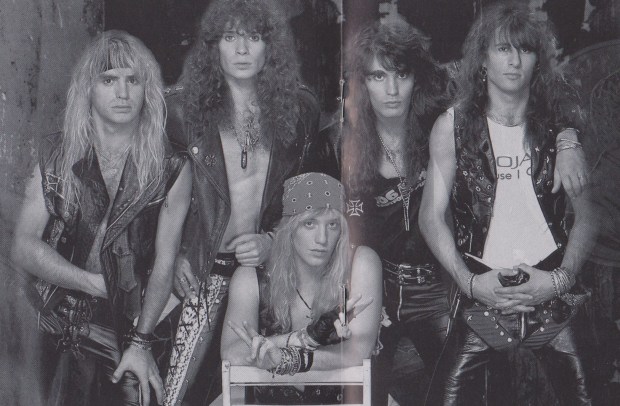
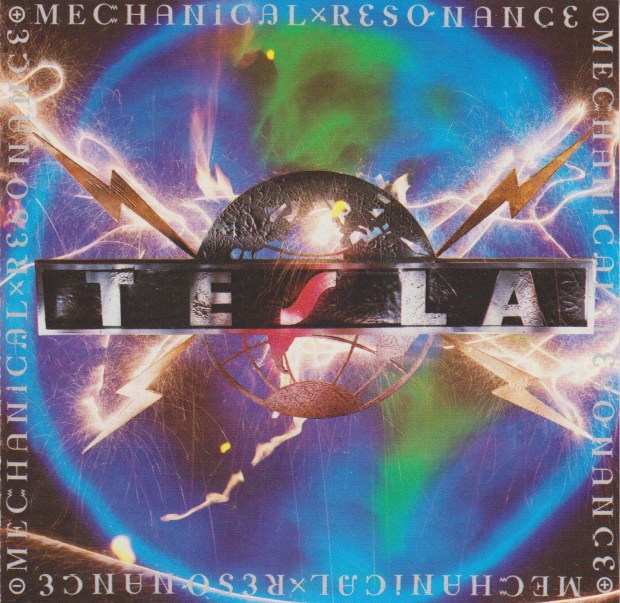
Tesla came out of the gates with everything in its right place: a good label (Geffen), great producers (Thompson & Barbiero) and the best management you could ask for (Q Prime). The band were and are all top drawer musicians, and they had a batch of killer rootsy hard rock ready to record. Ready, set, go!
Tesla have never done anything wimpy. Whatever they do, they inject muscle into, even the ballads. “EZ Come EZ Go”, the opening salvo, is surprisingly tough for the era. Starting dark and ominous, it only takes a verse before it turns to scorch mode. Singer Jeff “JK” Keith proved his versatility immediately on this track. From whimpering tones to belting at the top of the lungs, JK did it with rasp and incredible lung power. Backing him are the underrated guitar duo of Frankie Hannon and Tommy Skeoch, a six-string tag team to rival the big boys.
“Cumin’ Atcha Live” starts with Van Halen-esque blitzing, except with two guitarists instead of one, fretboards ablaze. It takes almost a minute for the song itself to ignite! “I’m a mean machine, I’m the kind you don’t wanna meet,” warns Jeff, but I don’t believe him. Tesla were known as one of the “nice guy” bands of rock, in contrast to bad boys like Motley Crue. Troy Luccketta is a drummer with a recognizable style. You can hear it in the way he rides the cymbals. On bass, the bearded Brian Wheat, the backbone of the group. There is no let up, only a full-on rock assault.
The album generated quite a few single/videos, and “Gettin’ Better” was an easy selection. The mellow, ballady (but soulful) opening is just a feint. This turns into a good time rocker in no time. A message of positivity and perseverance is good on the ears, and it’s nice to hear a kick-ass but optimistic rock song that isn’t sung by Jon Bon Jovi. It gets heavier from here. “2 Late 4 Love” is not a Def Leppard song, nor Prince. It is however pure metal. Early Tesla seemed to be a bit more metallic in nature. With a Motley chug and a Dokken vibe, it’s not really representative of where Tesla was headed, but it’s good enough. “Rock Me To the Top” occupies a similar chug with high quality results. Finally, ending the first side is “We’re No Good Together” which actually has some soft, Cars-like synth in the background. This slow, bluesy number sure picks up at the ending. Jeff Keith really turned in an excellent lead vocal, especially for the slow, soulful parts. What a singer!
“Modern Day Cowboy” is one of Tesla’s trademark tunes today. There’s that cowboy motif, so popular in the 80’s that you’d think we all rode steel horses. Although it is now a Tesla classic, I actually don’t think it’s one of the better tunes on the album. It’s a fine, serviceable hard rocker, with edge, drama, acoustics and the works thrown in, but it doesn’t have the melodic sensibilities that most of the album has. The guitars sure do smoke.
Nothing wrong with a little piano in a rock ballad, is there? “Changes” is a great, heavy ballad with loads of guitars and tasteful keys too. I don’t even think I should be calling this a ballad. It burns rubber like there’s no tomorrow when it’s time for it.
Since this time, Tesla have become known for performing some amazing covers, both hits and obscure. “Little Suzi” is the first, and I’d never heard of the band Ph.D. of whom this is a cover. Even if I had, Tesla’s version of the song is diametrically opposed to the dramatic synthpop original, which was titled “Little Suzi’s on the Up”. Tesla do it as a folksy, bonfire acoustic/electric rocker complete with a pretty acoustic intro. It is instantly likeable. Bon Jovi once said “the way to tell if a song is good is to see if it works acoustically.” If that is true, then Tesla have proven this of “Little Suzi”.
Similarly upbeat and irresistible is “Love Me”, featuring a juicy talkbox solo by Tommy Skeoch. The song has a nice big riff and plenty of hooks to go around. Even though that’s 10 songs and plenty enough for an album, it ain’t over next. “Cover Queen” is a smoky rocker with ammunition to spare, but it is “Before My Eyes” that is the pièce de résistance. It’s risky to close an album with a slow, trippy long bomber (5:31, longest on the album). “Before My Eyes” is not an instant love, but over time it grows and grows. The psychedelic voices at the end can be heard to be saying “Is it a dream?” over and over, very trippy indeed!
What a debut, and as incredible as it is, some would say that the follow-up The Great Radio Controversy was even better.
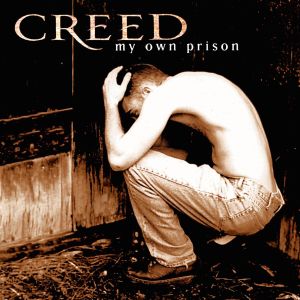
CREED – My Own Prison (1997 Wind-Up, originally Blue Collar)
Have you ever gotten flak for an artist or genre of music that you enjoy? Not a whole lot of fun, is it? Try to imagine that negative opinion not just as common, but as something resembling the general consensus. One that not only discounts anyone that disagrees, but actively mocks and ridicules them. Ask anyone you meet on the street: who are the “worst” musical artists of all time? Chances are, one particular scapegoat of late-90s’ rock will come up… To say that Creed is a controversial band is putting it lightly. Perhaps no group in the history of rock and roll has been a casualty of its own fame quite the same way the band composed of vocalist Scott Stapp, guitarist Mark Tremonti, drummer Scott Phillips and bassist Brian Marshall have. While the amount of fans often rivalled the number of critics in their heyday, as of 2015 the predominant word is negative. Whether it be from fans moving on or the band’s hiatus keeping them from speaking up for themselves, anything positive is rare. Case in point: Scott Stapp’s recent mental breakdown in December featured the most press coverage the frontman has had to endure since the turn of the millennium. EVERYBODY had something to say about it, oftentimes hateful. What of him now? He’s pulled himself back together and aside from his own personal PR, only one or two websites actually reported the news. I’m sure more than a few readers of this review will think he’s still whacked out on drugs, despite spending the last five months at home with his family.
Unfortunately, Creed’s status as something of a pariah maintains that I can’t just hop into the music and give you my personal take. If I were to do so, I’d likely have more than a few commenters simply reiterating age-old hate for the band or questioning the validity of my perspective because I’m not slinging feces. So let’s get to it: perhaps the most common strike against Creed is the idea that they’re heavily derivative of Pearl Jam. Um… have you ever listened to either of these bands? Generally speaking, Pearl Jam is angry garage rock with guitars that bite but don’t shred, and songs that are intended to coast primarily on the emotion conveyed in Eddie Vedder’s vocals and lyrics. Creed is arena rock with soaring pop hooks and beefy guitar riffs. Forgive me if I don’t find those two approaches to be all that similar. Not to mention the fact that Creed rarely ever treads the political ground that Pearl Jam does, and that the perspective of Pearl Jam’s material is often outward, with the Creed being much more introspective. To put it simply, Pearl Jam’s songs are often “you, you, you” while Creed’s are “me, me, me.” If you consider such a point-of-view as pretentious I understand, but I’d rather have someone pointing a finger at themselves than me or a hypothetical “them.”
Of course, this comparison between the bands primarily stemmed from the similarities in Vedder and Stapp’s vocal styles, specifically their employment of what’s known as “yarling” (which involves putting an ‘R’ sound behind enunciations). I’m not going to try and convince anyone that the two frontmen don’t sound similar, but there are important differences that even a cursory listen will highlight: Vedder has more range and is much more likely to yelp, with his voice cracking as he gets higher and more intense. Stapp has a richer timbre but over-pronounces his words in a somewhat silly manner that has become common fodder for haters that fancy themselves comedians. I understand the comparison, but postulating that Stapp “copied” Vedder isn’t wholly substantiated. Claiming that he sounds exactly like Vedder and applying that comparison to the whole band is outright lunacy. This didn’t make any sense to me when I only knew either band from their radio hits; having actually dug into each band’s body of work in subsequent years, it now strikes me as pure propaganda. The fact that the Pearl Jam comparison is blanketed over pretty much EVERY band of the so-called “post-grunge” era just confirms that suspicion.
The next common (and even more ridiculous) complaint is that Creed is somehow Christian rock. Come again? Creed isn’t Christian rock anymore than AC/DC is Satanist metal. Talking about God in a song does not make it religious in and of itself; Christian music involves God as the subject nine times out of ten, with some sort of message of hope through Him conveyed therein. With Creed, God is only ever mentioned as being there; Stapp’s lyrics allude to the Divine in the same way a person might speak of gravity. He’s not trying to convert or otherwise convince anyone of his religious convictions, he’s simply stating them as one might a fact of life. If you dislike this quality that’s fine but it doesn’t make Creed Christian music, even if some of the members are open about their religious convictions.
Even then, to properly interpret these allusions, one must also have some understanding of Stapp’s upbringing. He, like many youngsters, was born into a religious home. He had little interaction with his real father, and his mother remarried when he was still a kid. His stepfather Steven Stapp (from whom Scott took his last name) was a dentist by trade, but a zealot in practice. He made Scott study the Bible for several hours each day and conclude his time by writing essays about what he learned from the passages he perused (Scott later came to find that Steven was using his essays for Sunday school lessons). Think that’s bad? It’s not even the worst of it: whenever Scott messed up, he was physically beaten by Steven. As in abused. Steven also set a specific time each week that Scott was to be thrashed for sins that his stepfather “knew he committed but didn’t see.” Scott was also punished whenever Steven caught him listening to rock and roll, because it’s “the devil’s music.” To top it off, the doctrine advocated was of an unforgiving God that would damn a soul to Hell for the slightest trespass, lest they live a perfect life.
So why am I telling you all of this? Because personal experience naturally informs art, and if you were brought up in a household like this, chances are you’d address those feelings through song as well. It’s all in HOW one addresses these topics that informs the atmosphere. Scott didn’t write lyrics that concerned themselves with theology because he wanted listeners to believe it, he wrote them because HE didn’t know what to believe about the God he had shoved down his throat by his stepfather. It’s a fair assessment to assume that his childhood had a massive effect on his personality, not to mention the disparate reactions to the Creed’s music. It’s a wonder Stapp didn’t have a meltdown before 2014. Of the common complaints about this band, I consider the Pearl Jam point open for debate. Do the bands sound alike? To a degree; both play dour hard rock. There’s only so much variation one can attain within that template, after all. The Christian rock charge, however, is simply untrue. Overall, as far as I’m concerned, both of these sleights were coined not because of their accuracy, but moreso to knock the band off of their perch when they got huge. With the passing of time, these legends have become fact, and the legend is being printed. (As a final point, it behooves me to point out that the band was originally to be called Naked Toddler until Brian Marshall suggested the name be changed to Creed).
Finally, you have the general complaint of the era to contend with: Creed is most often resigned to the “post-grunge” monicker. I don’t care who you are or what you think about grunge, designating a bunch of later artists with a “post-” label when they make pretty much the exact same type of music as their forbears is ridiculous. Does that make Poison and Guns N’ Roses “post-hair metal” since they appeared relatively late in that particular cycle? I get that the so-called post-grunge bands are considered much less authentic than their precedents, but the problem with that line of thinking is that grunge didn’t really invent anything, nor were they all that “original.” Sure, grunge killed hair metal, but there’s a distinct difference between killing and conceiving. The faces of the sub-genre, Nirvana and Pearl Jam, are watered down punk with a hard rock flair. Think AC/DC is simplistic? Nirvana rocks three chord riffs like there’s no tomorrow. That “yarl” that is so often attributed to Eddie Vedder? He wasn’t even the first from the scene to use it, much less music at large. Layne Staley of Alice In Chains holds that dubious distinction for the grunge crowd. As far as the style’s far-reaching beginnings, Ray Charles, George Jones and Jim Morrison of the Doors all sung with such an affectation before Eddie Vedder was ever a glint in his father’s eye. Nevermind the fact that Stapp often cites Morrison as perhaps his most formative influence, along with Def Leppard and U2 (or that Scott honed his singing skills in black churches, whose members would frequently goad him to use “soul” as he sung (read: yarling)).
There are a variety of other diatribes against Creed, such as the band taking itself too seriously (didn’t Nirvana, Led Zeppelin and Black Sabbath, among others?), that Scott Stapp was an arrogant ass (John Lennon, Kurt Cobain, Axl Rose?) and that the band was too commercialized…sigh. This accusation has to be the MOST fragile of the stones thrown at these guys. Just because a song or album is mainstream does not in and of itself guarantee any sort of quality, good or bad. Anyone that attempts to postulate otherwise is too far up their own ass to give any other line of thought consideration. Sure, rock and roll has always had rebellion in its blood, so I can understand that the idea of a rock band NOT pushing such an image as odd. But let’s not forget that the most respected band of all time, the Beatles, was also the most commercial.
There’s also the charge that the band simply blended in with most of the other like-minded superstars of the time, with LeBrain’s popular line being to colloquially refer to them all as Theory of a NickelCreed. Maybe so, but if the band was so “generic” why are they singled out as one of the “worst of all time”? Just because they got big? And the only way to fight it was to backpedal 110% the other way? Politics, politics, politics… and that’s not even the worst of it. By far the most immature response to this band over the years has not been so much in terms of their output, but the fact that a disturbing amount of haters act like no one else has a damned right to enjoy this band. As if Creed deserves to be burned at the stake and obliterated from the public record along with anyone that admits to being a fan. If hold anything but contempt for them you’ve obviously been living under a rock and haven’t experienced the “good stuff” yet. Are you kidding me? Yeah, and Creed fans are the stupid ones.
Preamble over. Can we move on to the actual music now? That’s what we’re here to discuss, but my pen is pre-ordained to at least address these concerns beforehand, lest I be case out of the “elite” musical regime (which will probably happen anyway since, you know, my argument about Creed consists of more than the age old operandi “they suck because they suck.” Even now I feel readers skipping past my prose to the comments section to light their torches and take my ass to task for my “transgressions”).
Released in 1997 and selling over six million copies in the United States alone by 2002, My Own Prison heralded the arrival of Creed. According to a decent amount of the more casual fans and even some critics, this is their best album, and one after which many jumped ship in indignation. Why? Because of the first three records from the band, this one is decidedly the least commercial. The songs mostly just crunch and end, leaving the listener to sort out the details. Few are trying to be populist anthems. It’s not my favorite Creed album, but I can see why it’s a popular choice. The album weaves through mostly introspective stories of faith and loss, with slight forays into light political fair on “In America.” Overall, this is a moodier and less bombastic affair than the band’s subsequent albums.
Tremonti’s lead guitar ordains the album opener “Torn” with melancholy, and Stapp’s vocals maintain the atmosphere. “Peace is what they tell me/love, am I unholy?/Lies are what they tell me/Despise you that control me” he sings. The guitars crash in in full force on the word lies, underscoring the inherent evil of the practice. “The peace is dead in my soul/I have blamed the reason for/My intentions poor” goes the chorus. I love the atmosphere and passive, rather than assertive, anger conveyed with the lyrics and instrumental. Say what you will about this band but they know how to start an album (perhaps not coincidentally, “Torn” along with followup album Human Clay’s opening track “Are You Ready?” are my two favorite songs from this band).
Next comes “Ode”, a quintessential tune about being mistreated by others. Scott hints at his past here: “One step on your own/And you walk all over me/One head in the clouds/You won’t let go you’re too proud.” This track is a weaker standout, but still pretty good. The title track follows at number three. Perhaps I’m biased, but I consider the song “My Own Prison” to be a classic of ‘90s rock. The one feat Creed is rarely credited for is their knack for catchy and memorable hooks. There’s a reason they were so popular, and forgive me if I don’t think they’ve sold 40 million albums just because the general populace has “terrible taste.” Stapp is often cited for being too earnest with his lyrics and lacking subtlety; well, as far as I’m concerned life isn’t subtle, and he captures that aspect well. I consider the lyrics of “My Own Prison” to be pure poetry: “So I held my head up high/Hiding hate that burns inside/Which only fuels their selfish pride/We’re all held captive/Out from the sun/A sun that shines on only some/We the meek are all in one.” I’d be entertained just reading this stuff; can’t really say the same for “Lithium” or “Even Flow.” As a song, Tremonti and Marshall’s haunting guitar work and Phillips’ dejected drumming elevate the experience to another level.
The album hits something of a snag with the next few tracks in that none of them really stand out from one another (hey, I can make the case that this band is highly underrated but I never implied they were perfect; no artist is). “Pity for a Dime” is your typical “no one cares about me” song that never really distinguishes itself. The atmosphere of the album bolsters this track along with the other weak links, but otherwise it’s one that you skip when going for the meat. The melody is decent, but the point of the lyrics is quickly lost in their redundancy. Even then, the guitar work starting at 3:50 is a real treat and a standout of Tremonti’s contributions.
“In America” is caught in the same net as “Pity for a Dime”, essentially reprising the same theme. However, the twist is that Stapp is noting other opinions rather than his own. I’ve often felt the perspective that Stapp’s lyrics convey to be a hint of subtle genius; he’s merely playing the part of observer, not necessarily “judge” of the politics he addresses. While I think he’s overlooked as a lyricist, Stapp makes a crucial mistake in his treatment of the central conceit: the hook plays as “ONLY in America.” Even as someone that actively avoids politics and the news, I know that very few (if any) of the social issues brought up in this song occur solely in Uncle Sam’s domain. Even if the premise is flawed, the theme of being torn between two extremes is powerful. That military-esque drum beat at the beginning is a nice touch as well.
Two of the more intense tracks from My Own Prison are “Illusion” and “Unforgiven.” The former’s dissident fascination with the nature of life is engrossing. While I wouldn’t call it a standout, it’s also hard to dismiss. If anything, the song helps maintain the atmosphere and momentum, even if you probably won’t catch yourself reaching for this album solely to hear it. However, if you’re just letting the album play it certainly adds to the experience. As for “Unforgiven”, remember Scott’s stepfather and his violently fundamentalist ideas about God? Well, the title should speak for itself. Stapp bluntly speaks of his childhood and feelings about that time in his life. The music is appropriately menacing on this track and it’s a popular live song for the band despite not being released as a single. Tremonti’s guitar solo is especially striking, no doubt a major part of the song’s popularity.
“Sister” is next, perhaps my least favorite track from Creed’s debut. Interestingly, it maintains the theme of “Unforgiven”, with the focus shifted onto a sibling of Scott’s that endured similar treatment as he did. It’s still perhaps the weakest track, but I like the continuity and pondering of the idea of his younger sisters having not one role model as he did, but two (counting Scott himself). Who says Creed have no artistic merit? The instrumental and overall atmosphere of the song are much lighter than previous tracks, perhaps underscoring the love one feels for their immediate family.
The ninth slot is filled by a song called “What’s This Life For,” one of the four monster singles from this album. This is another favorite of fans, myself included. I appreciate the passion in this track and the yearning for answers. Call me a sap, but haven’t we all wondered this exact thing at SOME point in our lives? Sure, it’s not exactly profound nor does the song really offer anything resembling a solution, but I like it. Shoot me. (Side note: some assessments of the song I’ve read cite the “don’t have to settle no Goddamn score” part as eliciting giggles. Am I alone in wondering just what might be funny about that part? Just because Scott says “Goddamn”? Note that this word is omitted from the single version; it was 1997 after all).
I like to think the entire album is summed up with the final track “One.” Stapp reprises that poetic quality from before: “Society blinded by color/why hold down one to raise another” he sings. Relevant in 2015, don’t you think? “One, oh one/the only way is one” he imparts on the chorus, backed up by another bright riff from Tremonti. The song goes on to note the aforementioned prison the narrator finds himself in, as well as the desire to escape and the likelihood of it happening. To be honest, songs like this remind me much more of U2 than Pearl Jam, with that “save the world” vibe coming in full force. As such, the song falls prey to some of the same problems that ilk does by sweeping the more intricate complications of these social issues under the rug, but it’s hard not to appreciate the intent behind the song. I especially like the “flying” effect at 3:16, where the sound circles between speakers, as if to “unite” them once the song kicks back in, just as the band wishes for the world to be united.
Well, if you’ve read this far, I trust that I have your full attention and that you’ve been at least slightly entertained by my ramblings. A little known fact about this album is that two different versions exist. Recorded for a meager $6,000, My Own Prison was originally published through Blue Collar Records, a label founded by Creed to get their music out. The band received some airplay with this version in their native Florida before attracting the attention of major labels. An exact figure of their pre-fame sales is hard to find, but My Own Prison is quoted as shifting several thousand units before it was bought and reissued by Wind-Up records. Creed were then called back in to re-record parts of the album, while the rest was remixed to make for a more polished listening experience. I picked up one of the original copies on eBay a few years ago for about $50. Back in the day, these things were known to go for a few hundred. So how do the tracks compare?
Well, the first thing you notice is the lack of dynamic range. Sure, Creed’s albums have always been among the numerous victims of the loudness wars, in that they’re mixed to blow your head off with sheer noise. However, believe it or not, the dynamics seem more stylized on the Wind-Up version when compared to the original. The opening seconds are a perfect example of this: whereas the first strains of “Torn” are a bit quieter before the song crescendos in the re-release, the original is pretty much the same volume throughout. This goes for all of the tracks to some degree, with certain parts louder and softer given the version. On a related note, the bass is non-existent on the original version, similar to how it was missing from Metallica’s …And Justice For All. The remix brings it out a bit more, though ultimately the lead guitar and vocals mostly overpower the other parts.
The re-recorded material mostly amounts to some vocals. On certain song choruses of the “official” version, Stapp and Tremonti can frequently be heard singing in multiple keys at the same time. Here, it’s mostly just one at a time. It sounds to me like an additional acoustic part was added to “In America” as well. Reverb was also applied to the remix, which I feel adds to the overall atmosphere of the recordings. Some songs also start at different points, with the odd note or two being cut off, as with “My Own Prison.” The biggest and most noticeable change is the omission of the original intro to “What’s This Life For”, a quiet little melody that appears nowhere else in the song. Tremonti is known to play it at concerts when performing, but it’s completely missing from the Wind-Up version.
Overall, if you resent the commercial tendencies of Creed, you might do well to seek out the original mix of this album. This is the band at their rawest. However, I wouldn’t recommend a purchase unless you’re actually a fan as prices are frequently steep and the remix isn’t THAT different when all is said and done. I have one because I’m a collector and completist, as well as a curious listener. I also have an inkling that as this album nears its 20th anniversary, we might see something of a special edition that features both mixes on separate discs (the perfect gimmick). Not that I urge you to wait for a hypothetical re-release, but it’s a thought. Wind-Up released a vinyl compilation celebrating the label’s 15th anniversary in 2013, with the original version of “What’s This Life For” featured. They obviously have access to the masters and might put it to use at some point. All in all, the rawer mixes can readily be found on YouTube if you are so inclined to seek them out but don’t want to pay collector prices for an original copy.
For those interested, there’s also a bonus track version of the Wind-Up issue featuring an 11th song by the name of “Bound & Tied.” The bonus track version was available in Central America and Europe, though it might be a little harder to find these days. For U.S. listeners, the song was made available via the soundtrack to the 1998 film Dead Man on Campus. If you can get your hands on the bonus track version of My Own Prison for a reasonable price, I’d say go for it. “Bound & Tied” is a forgotten gem from Creed, with an intriguing into in which each instrument comes in at a different point, gradually intensifying the sound. I especially like the vocal effects, as well as the menacing guitar riff from Tremonti. The lyrics are also much more ominous than most Creed songs: “Tongue-tied, restless and wanting/Looks like you might bite, you might bite/Breathin’ in, breathin’ out, you’re weakened/The poisons hit your mind, your mind/Time’s ticking and it’s got you thinking/You’re happy with your life.” The band seems to be commenting on the double-edged sword that is fame; you seek it, yet can’t escape it once it’s attained.
In conclusion, if you actually made it this far (scanning or skipping doesn’t count!), my final verdict is that this album is solid. Classic? Perhaps at times, but it’s not anything resembling horrible, either. If your standards are so lofty that a slightly generic album of solid hard rock is your idea of “horrible” music, I envy your musical taste. Here’s hoping that My Own Prison and Creed as a whole are subject to a re-evaluation of sorts at some point in the future. If you can listen past your gut reaction to the name and pay attention to the music, you’ll probably find something to like.
Rating: 3.5/5
Thanks for reading, guys! Thank you, Mike, for the opportunity to do this! LeBrain has given me the option to review Creed’s discography, so if you want more let us know in the comments! (P.S. I take no responsibility for the band’s music videos. They’re atrociously dated and corny, at least for the next two albums, and if your only exposure to Creed is of the visual kind I don’t blame you for thinking they’re garbage.)
No sir, thank you Mr. Acca Dacca for a very thought-provoking review! I really appreciate the time and effort he put into this monster of a review. I have definitely opened my ears to this band. – LeBrain
























 mikeladano.com