hot in the shade

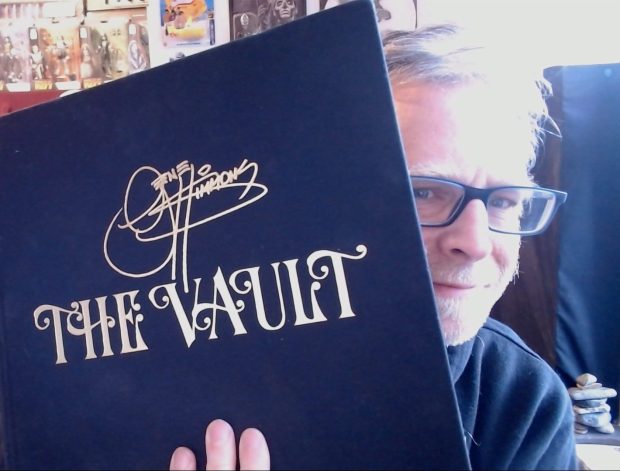
REVIEW: Gene Simmons – The Vault – Disk 10 (2018)

Previous Reading: 

Record Store Tales #600:  The Vault
Disk 1 Review
Disk 2 Review
Disk 3 Review
Disk 4 Review
Disk 5 Review
Disk 6 Review
Disk 7 Review
Disk 8 Review
Disk 9 Review


For those keeping score at home, this CD contains tracks 136-150 in the Vault box set.  This time we foray into genres far and wide, from disco to reggae.


GENE SIMMONS – The Vault – Disk 10 (2018 Rhino)

“Take It Like a Man #2” originated with a riff written on bass, and then intended for Psycho-Circus.  Tommy Thayer and Eric Singer play on this demo.  It was intended that Ace, Peter, Paul and Gene each take a line, and Gene does his little imitations of the members where he wanted them to sing.  This song may have had been better than “You Wanted the Best” which had the same idea.  It’s heavier and sounds pretty good in this demo form.  Though it came later, it has a Creatures vibe.  3.5/5

“Take It Like a Man #1” is the original bass lick from which the song was later written.  This is included to show how Gene would “hear” a full song in his head when coming up with the riff on bass.  It also demonstrates he’s a better bassist than he gets credit for.  This unfinished idea is just that: unfinished.  Yet you can hear he was onto something, as demonstrated by “#2”.  2.5/5

“Have Mercy, Baby” is a Simmon / Kulick composition with Bruce playing guitar.  This is a fully-fleshed out demo, at first recorded to four-track and then upgraded to 24-track for overdubs.  It sounds like a Crazy Nights or Hot in the Shade era tune.  That said, it wouldn’t have been album worthy.  Though Bruce Kulick always offers intelligent and tasteful solo work, the song itself only has one or two solid hooks.  2.5/5

Gene gushes over Eric Carr as a human being in the liner notes.  “We Won’t Take It Anymore” is a song that originated in the same session as “My Babe”, next on the box set.  Written by Gene and Eric, this is a hard rocker with a cool chorus.  It really is a shame that Eric wasn’t nurtured as a songwriter in Kiss the way he could have been.  This has a strong “All Hell’s Breakin’ Loose” kind of vibe, and the chorus really would have worked well with Kiss.  3.5/5

“My Babe” is completely different!  This fast, almost pop-punk!  It almost throws back to Dressed to Kill-era Kiss, with that kind of simplicity and basic rock and roll arrangement.  What it is, is a hybrid of many things and all of them sound good to me.  It’s understandable why Kiss didn’t want to do this kind of song in the Carr era, but they really should have.  3.5/5

“Eat Your Heart Out” is not the same song that was later used on Monster (though the chorus really is similar).  This is a late 70s demo of an idea that originated with “Rotten to the Core”.  It’s a tangled web since so many ideas appear in multiple forms on this box set.  This is a menacing little rock song that would have worked on any Kiss album from that period, but probably just wasn’t good enough.  There are some cool melodies on the pre-chorus especially.  3/5  

“Nine Lives” is a cool late-80s idea with Bruce Kulick on guitar.  Again, not quite good enough to replace one of the album songs, but there is promise here too.  It has a slow, slinky vibe.  Kulick shows of some cool whammy work, followed by two-handed tapping.  His technique seems to date it to Crazy Nights3/5

Back to the 70s, “Howling for Your Love” has Katey Sagal and the girls on backing vocals.  It’s very similar to “Bad Bad Lovin'”, also known as “Dr. Love”, and the tangled web of songs becomes even more so.  It’s pretty good and, once again, had Kiss made more albums, this would have been on one of them.  3/5

“I Ain’t Coming Back” is the song that “Never Gonna Leave You” from Disk 7 became.  This is a four track demo with a dancey beat, but it’s no better than the other version.  One of the poorer tracks on this set, with a chorus that should have never hit the recycle bin.  Just trash it.  1/5

The riff to…ahem…“Granny Takes A Trip” sounds similar to “Weapons of Mass Destruction”.  The title here was taken from a store in New York that sold platform boots.  It’s very metal, but not very good.  It’s very alterna-grunge.  Probably intended for Carnival.  Very noisy.  Not worth exploring further.  1/5

Former Journey and Vinnie Vincent Invasion singer Robert Fleichmann co-wrote “Piece of the Rock” (not the King Kobra/Kick Axe song).  This has a dark 80s vibe but sounds unfinished.  There’s a compelling guitar part with good verses and a decent chorus, but the bridge that connects them should be excised.  The song just needed something else to go in that section, and it would be pretty good.  2.5/5

Gene says “Rock It” was inspired by Fine Young Cannibals.  I also hear Love and Rockets.  Judging by the vocal track, this sounds like it was recorded much later.  It’s not bad.  There’s something cool going on here, especially with those 80s drum programs.  3/5

“Sticky Goo” is a cool reggae-based idea.  It also has a “New York Groove” vibe.  It could be finished into something cool.  Cool, but different.  There’s no denying that some of these songs would simply not work with Kiss and would have to go on solo albums.  But, then again, they did do “Torpedo Girl”, so who’s to say what’s ultimately outside the Kiss wheelhouse?  Gene is sure to lay down crunchy rhythm guitars here to ground it in rock.  Still hearing lots of “New York Groove” though.  3/5

“Love Came To Me” is Gene’s answer to “I Was Made For Lovin’ You”, but it also re-uses certain melodies from “Love Is Blind”.  (This is not mentioned in the book, but I’m telling you with my ears.)  Gene concedes that he doesn’t know as much about dance music as Paul Stanley, but this isn’t a bad stab at the genre.  It’s not as fast and infectious, but the bassline is a lot of fun, as is the beat.  You could dance to it.  3/5

“Roar of the Greasepaint” is the original idea that later became “Journey of 1,000 Years” on Psycho-Circus.  He later added chords from the earlier “You’re My Reason for Living 4 Track” (Disk 4) to create the final version.  That version is superior for many reasons, including the heavy orchestration and progressive vibes.  “Roar of the Greasepaint” has a cooler title though.  It really ties into the Kiss image and should have been left as-is.  This was the closing song on Psycho-Circus, and would have been the closing song on this 150 song box set…if Gene didn’t include an 11th bonus disc!  3.5/5

Average score by song:   2.76/5 stars


Disk 10 Track length and songwriters (from Wikipedia)

1. Take It Like a Man #2 (2:38) Simmons
2. Take It Like a Man #1 (2:44) Simmons
3. Have Mercy, Baby (4:04) Simmons / Kulick
4. We Won’t Take It Anymore (3:03) Simmons / Carr
5. My Babe (1:51) Simmons / Carr
6. Eat Your Heart Out (2:22) Simmons
7. Nine Lives (3:33) Simmons / Sigerson
8. Howling for Your Love (2:47) Simmons
9. I Ain’t Coming Back (3:02) Simmons
10. Granny Takes a Trip (1:55) Simmons
11. Piece of the Rock (3:48) Simmons / Fleischman
12. Rock It (2:23) Simmons
13. Sticky Goo (3:05) Simmons
14. Love Came to Me (3:25) Simmons
15. Roar of the Greasepaint (3:07) Simmons

REVIEW: Gene Simmons – The Vault – Disk 9 (2018)

Previous Reading: 

Record Store Tales #600:  The Vault
Disk 1 Review
Disk 2 Review
Disk 3 Review
Disk 4 Review
Disk 5 Review
Disk 6 Review
Disk 7 Review
Disk 8 Review


Welcome back, creatures of the night.  For those keeping score at home, this CD contains tracks 121-135 in the Vault box set.


GENE SIMMONS – The Vault – Disk 9 (2018 Rhino)

Gene wrote “It’s Gonna Be Alright” with Mikel Japp, who was a Paul Stanley co-writer.  This was written for Creatures, and this 4:29 version appears on that box set.  Japp came up with the opening lick while the rest came from Gene.  It’s a good song, though too upbeat and pop for Creatures.  The drum machine is just a placeholder, but even with the drum machine, it’s a good song already.  The guitar part is catchy and Kiss-like.  It would have fit into that Kiss Killers sound.  3.5/5

“It’s Gonna Be Alright #2” was re-done with Bruce Kulick in the mid-80s.  This is more fleshed out, with solos and harder-edged guitars.  The drum program is more sophisticated and it’s more suitable for an album like Asylum.  A real shame that songs like this were not chosen in favour of weaker compositions.  Some songs might not have fit the direction of the album, but perhaps the direction of the album was at fault.  4/5

“Everybody Knows #1” is performed with Tommy Thayer, who plays a very similar acoustic guitar part inspired by “Rock Bottom” from Dressed to Kill.  The electric guitars kick in, along with a massive chorus.  This would date back to the Hot in the Shade era and absolutely should have been on that album.  The answering vocals are killer and it makes you wonder what Paul Stanley could have done with those backing vocals.    According to Wikipedia, the Japanese version of Asshole contained “Everybody Knows” as a bonus track, but it is unknown which one.  4/5

“Everybody Knows #2” is a very different version.  This one is more 90s and alterna-rock.  It could have worked on an album like Carnival of Souls or Psycho-Circus.  While it is still a good song, the previous one is superior, though that might just be a matter of taste.  The chorus is intact but a lot of the hooks I liked are not.  3.5/5

A very special demo is ahead.  “You’re All That I Want” was of course the closing song on Kiss Unmasked.  Gene says this is the only demo he has with Paul Stanley assisting.  Therefore this is the Starchild’s only appearance in this box set, and perhaps therefore the only “true” Kiss demo.  It’s like a shock to the system to finally hear Paul singing, nine discs in.  This demo doesn’t have the pep of the final version, but they were going for something harder edged.  The acoustic guitars are very crisp and unlike anything on the Unmasked album.  This demo just proves that Gene and Paul are better together than apart.  4/5

“Kids With Painted Faces” is the third version of “I Am Yours”, here re-written with new lyrics including one about playing air guitar to Ace.  The Beatles influence still comes through.  This is the song Gene compared to “All the Young Dudes” due to its anthemic guitar melody.  One lyric is pretty poignant:  “There is no Kiss without you.”  True, Gene.  True.  3.5/5 

“I Wanna Rule the World” is another variation of the “Now That You’re Gone” / “Mirage” idea.  It sounds as if the Beatles moved to Seattle in 1992.  It’s quite intriguing.  There was a certain simplicity that was happening with melody in the 1990s, and this demo shares that quality.  It is not bad, but the rough and distorted recording does it no favours.  It is important to remember that “demo” means “demonstration”.  You would literally record an idea to relay or demonstrate the idea to another person, either for them to perform it themselves, or see if they are interested in it.  3/5

“Rule the World #2” is a completely different idea with a similar title.  In the liner notes, Gene explains he does this to make box sets harder for reviewers to write about (kidding!).  This is a very grungey, alternative song with droning guitars and a distinctly 90s sound.  This is one of the songs Gene wrote with Scott Van Zen.  It’s pretty good, and if Kiss had just made more albums instead of drying up creatively after the reunion, this might have come out on one of them.  3/5

“Damn, I’m Good” starts with Gene coming up with the CCR-inspired chord ideas on acoustic.  It then fades into a funky electric demo with Eric Singer.  Gene notes that he re-used some of the lyrics in this song in multiple other songs in the box set, including opener “Are You Ready”.  Now, you don’t often associate Gene Simmons with funky rock, but “Damn, I’m Good” cooks.  Kiss could not have done a song this funky without Ace Frehley, which is to say, though it is only mildly funky, it would benefit from the guy who wrote “Torpedo Girl”.  In short:  this is a different song and it may turn off some listeners.  I think it’s great.  4.5/5

An instrumental version of “Dial L For Love” appeared on Eric Carr’s posthumous Unfinished Business album.  Now here is a full version with drums, lyrics and Gene Simmons singing.  Bruce Kulick also appears, and Adam Mitchell helped finish.  It has a cool 80s riff with the harmonics that were currently in vogue.  Had it been included, Gene says it would have been on Animalize or Asylum, but I think his memory is a bit faulty.  This sounds more like Crazy Nights era.  It should have had Eric Carr singing.  The chorus sounds up his alley.  3.5/5

“Just Like the Movies #1” is the only song Gene wrote with singer / songwriter Stephen Bishop.  This might be a good thing.  It’s hard to hear what Gene was going for.  It sounds like something circa Unmasked, with complex pre-recorded drums and a dancey sound.  In fact some of it did end up in “She’s So European” if you listen carefully.  You won’t read that in the liner notes.   Gene liked the title as a chorus idea:  “Just like the movies, I feel like Romeo.”  The idea seems like it has something usable, but this recording wouldn’t have been it.  2/5

“I Know Who You Are” ended up on Gene’s first solo album as “Living In Sin”.  This early demo features Joe X. Dube of Starz on drums.  Though this version still features prominent piano beats, it’s more rock n’ roll, and Kiss-like, than his solo counterpart.  You can almost hear where Gene would want Ace to lay down a fat solo.  Gene says all this is based on an old song idea called “Drive Me Wild”.  3.5/5

“Sweet Temptation”, or part of it anyway, was used in “Only You” on The Elder.  It becomes the “I can’t believe this is true, why do I listen to you?” part.  The rest was discarded.  Which is fine.  The chorus is not memorable.  It’s fascinating how these songs come to be.  Of course, as we have discussed, perhaps the older demo of “Only You” is better than the final, but here’s the missing element that was needed to created the Elder version.  2/5

“Are You Always This Hot” is a late-80s shredder song featuring Bruce Kulick and co-written by Adam Mitchell.  The solo is all whammy and tricks, and the tempo is that uptempo plod that Gene was good at on albums like Animalize.  “Are You Always This Hot” is a song title we’ve seen printed in magazines and books for years, but I always thought with a title like that, it was a Paul song.  Nope!  All Gene.  2.5/5

“Fourever” goes back to the same sessions as “Bad Bad Lovin'” aka “Dr. Love”, so you know how old it is, though this version sounds newer.  It features prominent sax, and was inspired by the Dave Clark Five.  It’s basically Gene singing about himself and Kiss, but it’s certainly not the first time.  It’s pretty good, mostly because of the saxophone and cool shouted backing vocals.  It could have worked with Kiss, who did eventually incorporate sax into some of their music.  3.5/5

Average score by song:   3.3/5 stars


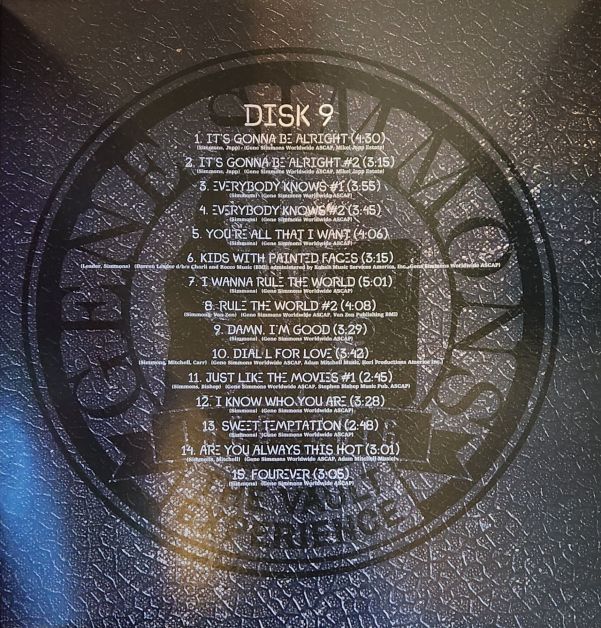
Disk 9 Track length and songwriters (from Wikipedia)

1. It’s Gonna Be Alright (4:30) Simmons / Japp
2. It’s Gonna Be Alright #2 (3:15) Simmons / Japp
3. Everybody Knows #1 (3:55) Simmons
4. Everybody Knows #2 (3:45) Simmons
5. You’re All That I Want (4:06) Simmons
6. Kids With Painted Faces (3:15) Leader / Simmons
7. I Wanna Rule the World (5:01) Simmons
8. Rule the World #2 (4:08) Simmons / Van Zen
9. Damn, I’m Good (3:29) Simmons
10. Dial L for Love (3:42) Simmons / Mitchell / Carr
11. Just Like the Movies #1 (2:45) Simmons / Bishop
12. I Know Who You Are (3:28) Simmons
13. Sweet Temptation (2:48) Simmons
14. Are You Always This Hot (3:01) Simmons / Mitchell
15. Fourever (3:05) Simmons

REVIEW: Gene Simmons – The Vault – Disk 7 (2018)

Previous Reading: 

Record Store Tales #600:  The Vault
Disk 1 Review
Disk 2 Review
Disk 3 Review
Disk 4 Review
Disk 5 Review
Disk 6 Review


Some good and bad songs ahead.  For those keeping score at home, this CD contains tracks 91-105 in the Vault box set.


GENE SIMMONS – The Vault – Disk 7 (2018 Rhino)

“No Conscience” comes with a Vinnie Poncia co-writing credit, which probably dates it back to the Hot in the Shade era.  Not much else is said about its genesis.  It’s an interesting hard rocker with what sound like drum machines.   It’s very much in the mould of that late 80s Kiss sound and could have been a B-side.  In the case of Hot in the Shade, a lot of the demos were polished up for the final album.  This needs some polishing, but it’s a little like finding a lost gem.  3/5 

Gene talks about writing “Suspicious” with Black ‘N Blue for In Heat, which dates this track back to about 1988.  There’s a clear “Stayin’ Alive” reference with the “Ah, ah, ah” in the chorus.   It’s not bad and would have fit very well on Hot in the Shade better than some of the songs that made it.  There’s a cool solo (must be Thayer) and the hooks eventually bore their way into your head.  Sounds a little like Trash-era Alice Cooper too.  4/5

“Everybody Wants” is a great song.  This is another of the Silent Rage demos.  The vocals aren’t recorded well enough to really make out the words, but the chorus has hooks.  It has a bit of a Dokken vibe, in a good way.  As we go through the Vault we keep running across songs that should have made onto Kiss albums.  Here’s another.  Which one would it fit on?  That’s the trick.  Maybe Kiss should have just made more albums.  4/5

“Promise The Moon” is interesting.  The chords go back to a song called “Sentimental Fool” written with Bob Kulick.  However, an instrumental (with prominent bass) was bootlegged as “The Unknown Force”.  On the Creatures of the Night box set, another version is titled “Tell It To A Fool”.  This isn’t information you’ll find in the liner notes.  This is coming from me using my ears.  Long have I loved that “Unknown Force”, demo and wished for a better version.  Here it is, with full lyrics, guitar solos, and everything else.  This song is stellar.  There were plenty of albums this could have fit on.  Gene reveals that he wanted Black ‘N Blue to do the song.  That would have been a waste.  This should have been Kiss.   I am overjoyed to have this song in my collection at last.  5/5

“All You Want Is a Piece of My Heart” is an Adam Mitchell song featuring Tommy Thayer.  It’s a bass groove, with some unexpected acoustic guitar overtop the metal riff.  It needed to be properly fleshed out, but there is definitely the skeleton of an idea here that had potential.  Sounds very Hot in the Shade with that acoustic.  It’s difficult to rate because there’s a terrific chorus and some cool guitar work, but also some sections that sound unfinished.  3.5/5

“Pride” is an early 2000s song, but unlike the other Asshole material, this one is really good!  Unbelievable!  How does stuff like this end up buried on a box set?  There’s a soulful chorus and a joyful arrangement.  It’s hard to describe.  It’s pop, not rock, with piano and a knack for a hook.  It’s criminal for a great song like this to sit unnoticed on an 11 CD box set that very few people have.  5/5

“Through the Night” and “Sweetheart of the Radio” are two earlier Simmons songs that eventually transformed into “Mirage” during the early 90s.  This Thayer demo has a strong beat and numerous hooks.  Once again, how does stuff like this get left off albums?  This song is all but finished, with “woah-oh-oh” vocals and some serious Thayer pyrotechnics.  For those who love that 80s Kiss sound, this song is right up their alley.  Gene says the bridge was later used in “Now That You’re Gone” and “I Wanna Rule the World”, but I didn’t notice.  That’s five songs all connected together!  4/5

Gene’s Simmons Records protege Bag (just Bag) was responsible for “Dog”.  It ended up on the Asshole album, unfortunately, because it’s garbage.  I don’t know what Gene was thinking on that album.  The only good thing about it is this big giant Jimmy Page-like guitar part that isn’t in the song enough.  1.5/5

“If I Had a Gun” is one of the few good songs on Asshole, and it’s another Bag song.  This demo is a lot like the finished version, just less adorned with all the accoutrements.  Some may like it, some hate it.  I like the “Uh-oh, uh-oh” falsetto vocal hook.  I think it’s a good song.  3.5/5

Onto Carnival of Souls.  One of the most remarkable songs on that album was a Bruce Kulick / Gene Simmons song called “I Walk Alone”.  Why remarkable?  Because it was Bruce Kulick’s debut on lead vocals.  This is an earlier version with a different chorus, and Gene on lead vocals.  Sounds like Eric Singer on drums.  It has ballady elements, but also slams quite hard on the chorus.  It’s hard to rank compared to the album version.  There are things to like about both.  3.5/5

“Seduction of the Innocent” is another Carnival demo.  It’s quite remarkable, but the melody idea is the oldest on the box set.  It dates back to 1964.  Gene wrote it when he was 13 years old and called it “My Girl Brought Me Chocolate Ice Cream”.  He finished it decades later with Scott Van Zen.  In the liner notes, Gene spends a good amount of time talking about growing up as a poor immigrant.  Not being able to speak English, and then gradually being able to understand Beatles songs.  Using a broken TV speaker and cabinet as a makeshift amplifier.  You can hear the Beatles in the song, but that may just be what Gene refers to as a “Middle Eastern” melody, a style familiar to him from his youth in Israel.  Fascinating history, but also a pretty good song that made it to the final album much like this demo.  3.5/5

Suddenly we jump to Animalize“Lonely Is the Hunter” should be familiar, but Gene takes a bit of a shot at Paul Stanley in the notes.  He says he prefers the greasy feel of the demo, and says he wasn’t there in the studio when Kiss recorded their version, saying it was Paul’s project.  Gene, of course, was busy filming Runaway with Tom Selleck.  This demo does have a sleazier groove, and hits in a way that might have more vintage Kiss in style.  Gene may have a point about Animalize, but it was his fault for not being there.  3.5/5 

The next few songs go back to 1977 and a Motown influence.  “Never Gonna Leave You #1” was recorded in a closet on a 4-track recorder.  You can hear what Gene was trying to achieve.  He didn’t.  Perhaps some of it wound on Gene’s solo album.  There’s a certain way he sings “Yeah” that is similar.  1/5

“I Ain’t Comin’ Back” is a better attempt from 1977 at the above sound.  Marginally better.  The beats are better.  The chorus is something pretty smelly.  Limburger.  1.5/5

“Never Gonna Leave You #2” is an update with Bruce Kulick and Eric Singer.  Finally he got it right.  This is a rock version.  Gene seems to prefer the Motown version.  I don’t.  This could have been a solid Kiss B-side.  3/5

Average score by song:   3.06/5 stars


Disk 7 Track length and songwriters (from Wikipedia)

1. No Conscience (3:35) Simmons / Poncia
2. Suspicious (3:22) Thayer / St. James / Regan
3. Everybody Wants (2:24) Simmons / Damon
4. Promise the Moon (4:00) Simmons / Kulick / Thayer / St. James
5. All You Want Is a Piece of My Heart (3:53) Mitchell
6. Pride (3:11) McCormack / Simmons
7. Mirage (3:30) Simmons
8. Dog (3:32) Chuaqui / Simmons
9. If I Had a Gun (3:27) Chuaqui
10. I Walk Alone (3:27) Simmons / Kulick
11. Seduction of the Innocent (5:09) Simmons / Van Zen
12. Lonely Is the Hunter (3:02) Simmons
13. Never Gonna Leave You #1 (2:22) Simmons
14. I Ain’t Comin’ Back (2:57) Simmons
15. Never Gonna Leave You #2 (3:19) Simmons

THREE-VIEW: Eric Carr – Rockology (2000/2023 RSD reissue)

ERIC CARR – Rockology (2000 EMI/2023 Culture Factory RSD CD release)

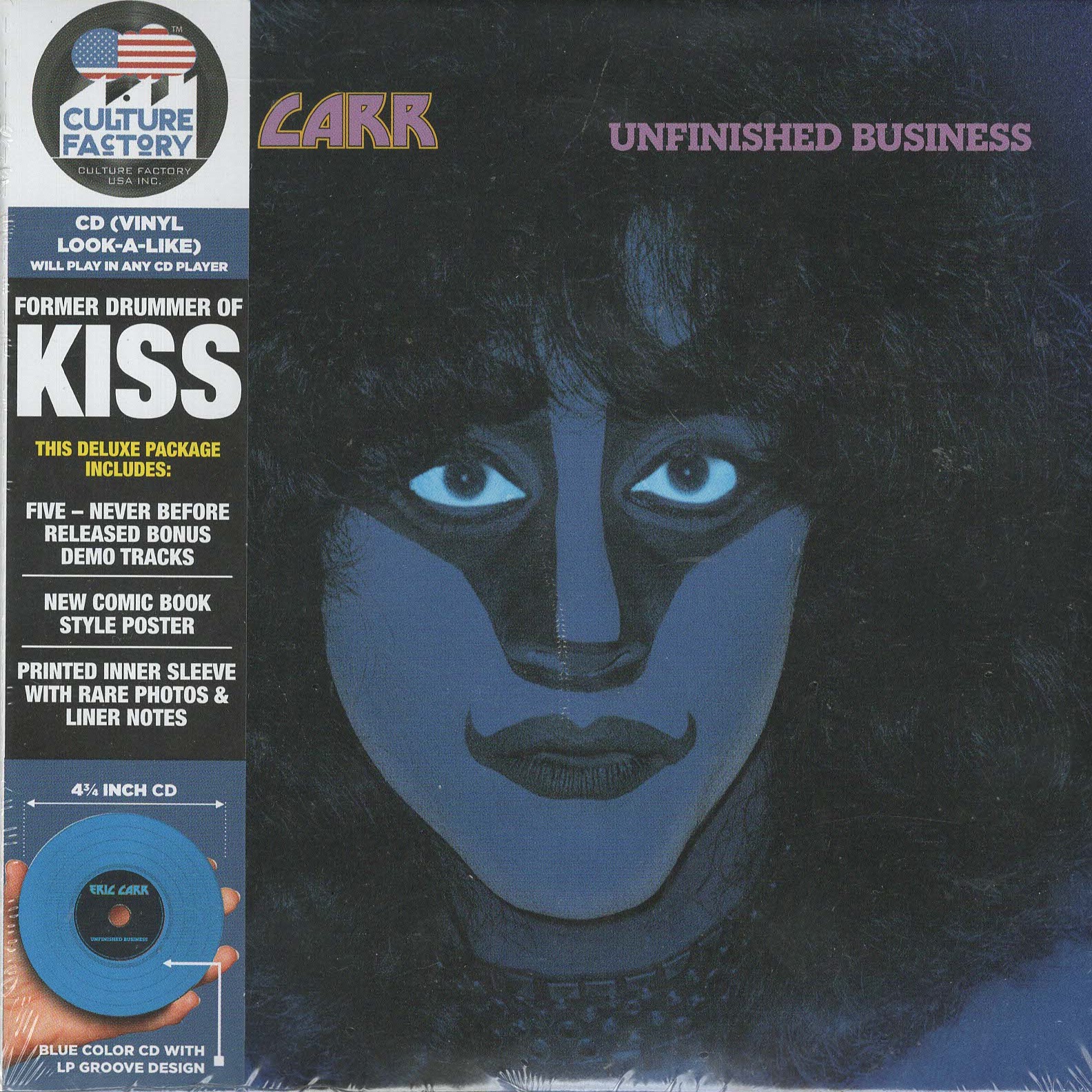
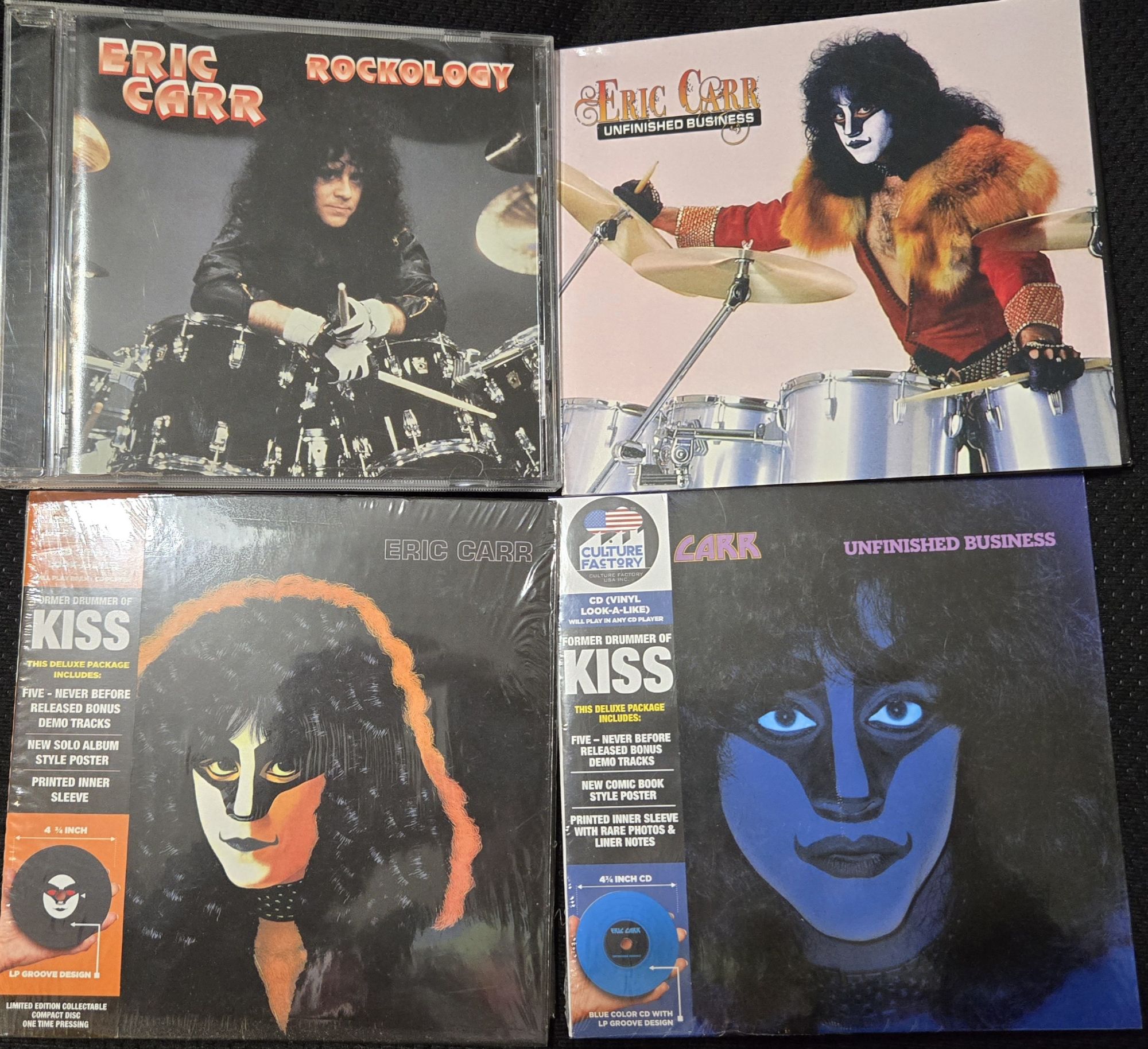
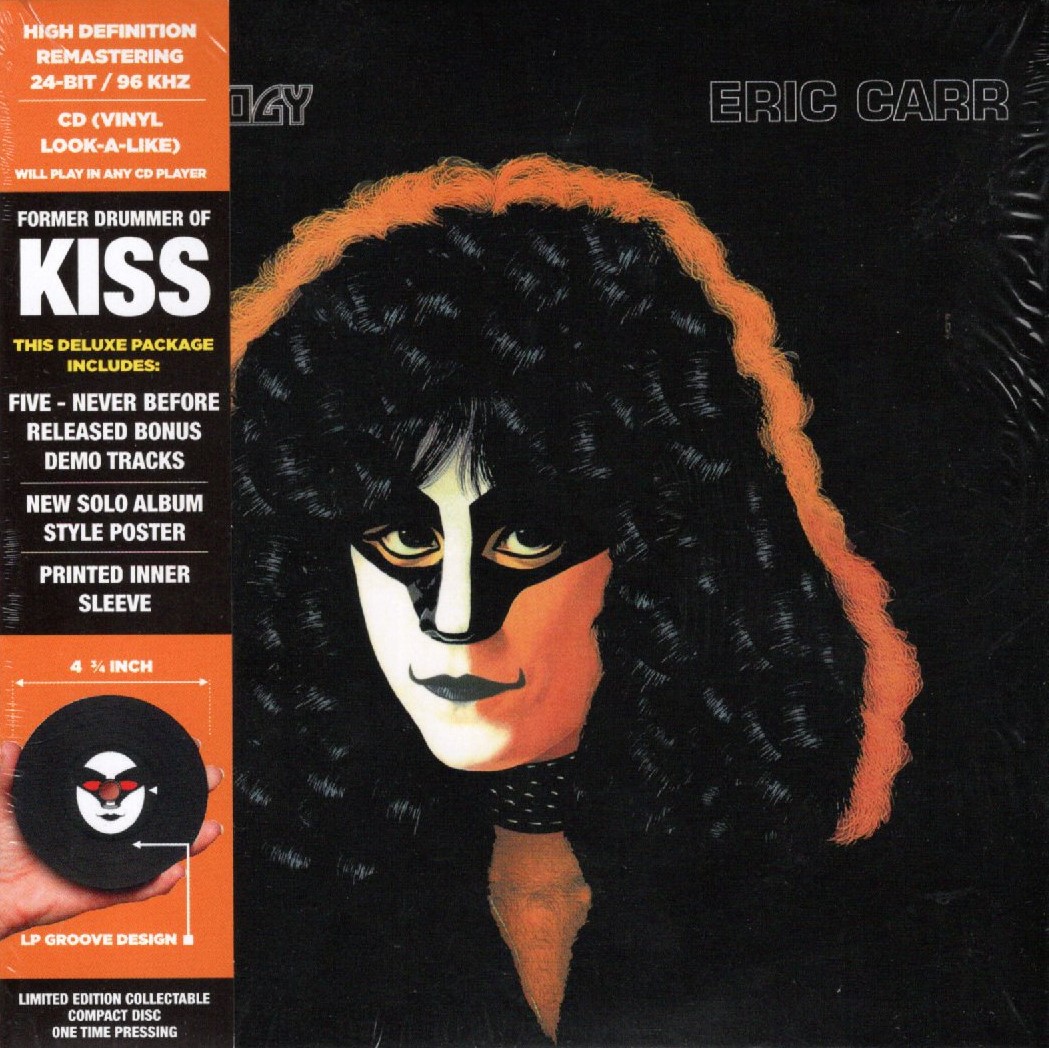
This release provoked a bit of controversy early in 2023.  Vinyl fans and collectors were pleased that Eric Carr’s collection of unfinished tracks, Rockology, was being reissued on LP.  They were doubly elated by the retro-1970s cover art that fit in with the original 1978 Kiss solo albums.  It even came with a poster to match the original four solo albums, and the CD was printed on a disc replicating a vinyl look.  The packaging, with obi-strip and brilliant black and orange coloration, looks sharp.  They even threw on five extra bonus tracks that weren’t on the 2000 release or 2011’s Unfinished Business.

Unfortunately, much like 2011’s Unfinished Business, the bonus tracks are hardly-listenable throwaways and castoffs that were never meant for public consumption.  What’s more, like all RSD releases, the LP and CD copies were so poorly distributed that fans were soon paying ridiculous amounts of cash on the second-hand market.  Music should be accessible and affordable to everyone, but this reissue was hardly worth it for what amounts to fancy packaging and five ragged unreleased tracks.

We’ll start this review by discussing the five bonus tracks.


Part One – the five bonus tracks

First up is a “long demo” of “Tiara”, a ballad from the original Rockology.  The original track was 4:28 and this “long” version is 23 seconds longer, but it is a completely different demo version.  It is much rougher and laden with occasional noise.  The lyrics are incomplete, as Eric improvises “do-do-do” vocals over  the instrumental opening.  Bruce Kulick provides overdubbed lead guitars, but sadly it sounds like a poor quality cassette.  This is the kind of thing we got too much of on the Unfinished Business CD.

Another “alternate demo” is next, of “Can You Feel It”, a song that Eric hoped Bryan Adams would cover.  Like “Tiara”, this demo is earlier and much rougher.  Similarly incomplete lyrics over a drum machine.  The liner notes claim it’s Eric Carr playing drums, but it’s obviously a drum machine.  Shoddy liner notes.

An “accapella” version of “Eyes of Love” is just a rough multitrack vocal take with no backing music.  It’s not the exact same vocal take used on the other demo version.  It is of limited enjoyment.  It doesn’t sound like there’s a pop guard on the microphone, therefore, lots of noise.

Finally, something we’ve really never heard before:  A 1967 version of the Beatles’ “Ob-La-Di, Ob-La-Da”.  This is a very rough sounding tape with lots of noise, but due to its age, we’ll allow.  It’s a fairly faithful take of the Beatles classic, with Eric on lead vocals and drums.  It features his band The Cellarmen and is the earliest Eric Carr recording yet to be released.  A difficult listen, but at least something of value.  You’d think they could have used AI noise reduction to get rid of that crackling sound.

The last of the five bonus tracks is a 1974 original called “Stranger” by his band Creation.  Eric is on drums alone this time, with bandmates John Henderson and Sarita Squires (also the songwriters) singing lead.  It is a decent soul-rock song and one of the better sounding recordings.  Though the drums are not the main feature of the song, and buried back in the mix, you can hear Eric’s personality shine through his fills.


Part Two – the original album (review posted 2018/06/19)

The late Kiss drummer Eric Carr was frustrated towards the end.  He was writing good material, but it was always being rejected by Paul and Gene.  In the press, Eric would tow the company line and explain that everybody else had such good songs, that there was no room for his.  In his heart, he was hurt and felt shunned.

Eric Carr wasn’t just a drummer.  He could sing lead, and he could write.  Kiss’ single “All Hell’s Breaking Loose” was an Eric idea.  He co-wrote “Don’t Leave Me Lonely” with Bryan Adams.  Although his writing credits on Kiss albums were sparse, he had plenty of material in the can.  2000’s Rockology is a series of those demos, some in a near-finished state and some left incomplete.  Much of this material was intended for a cartoon Eric was working on called The Rockheads.  10 years later, Bruce Kulick finished recording some guitar parts and mixed it for release.  He also wrote liner notes explaining the origins and Eric’s intentions for each track.

Eric didn’t have a particularly commercial voice, falling somewhere south of a Gene Simmons growl.  There’s no reason why Gene couldn’t have sung “Eyes of Love” from 1989, which has more balls than a lot of Hot in the Shade.  This demo has Eric on drums and bass, and Bruce Kulick on guitar with a solo overdubbed in 1999.  It doesn’t sound like a finished Kiss song, but it could have been tightened up to become one.  Same with the ballad “Everybody’s Waiting”.  It sounds custom written for Paul Stanley.  But it was 1989, and nothing was going to displace “Forever” from the album, nor should it have.

Many of the demos have no words.  “Heavy Metal Baby” features Eric scatting out a loose melody.  This heavy and chunky riff would have been perfect for the later Revenge album, had Eric lived.  In a strange twist, several of the best songs are instrumentals.  The hidden gem on this CD is the unfinished “Just Can’t Wait”.  It could have given Journey and Bon Jovi a run for their money.   Eric, Bruce and Adam Mitchell wrote it for Crazy Nights, and you can almost hear a killer chorus just waiting to leap out at you.  This potential hit could have been the best song on Crazy Nights, had it been finished.

“Mad Dog” has nothing to do with the Anvil song of the same name.  The chorus is there but the verses are a work in progress.  This hard rocker from 1987 was probably too heavy for what Kiss were doing, though it would have added some much needed groove.  “You Make Me Crazy” is in a similar state of completion and boasts a tap-tastic solo by Bruce.  Apparently this demo was originally called “Van Halen” and you can hear why.  Two versions of a song called “Nightmare” exist, including a really rough one without drums.  This incomplete song could have really been something special.  It has a dramatic feel and different moods, and was probably too sophisticated for Kiss, though any number of 80s rock bands would have been lucky to have such good material.

The last batch of tracks show off the Rockheads material.  Whether Eric’s cartoon idea ever would have happened or not, the advent of bobble-heads and Pops would have made marketing easy.   The songs are virtually complete though the drums are programmed.  “Too Cool For School” is a little cartoony, which is the point, right?  For keyboard ballads, “Tiara” showed promise.  It’s not the equal of “Reason to Live” but it demonstrates a side to Eric unheard before.  Next, Bruce says that they always wanted Bryan Adams to cover “Can You Feel It”.  It would have fit Adams like a nice jean jacket.  Not that Adams really needed the help, it would have been awesome on Waking Up the Neighbors.  The set closes with “Nasty Boys”, nothing exceptional.  It sounds like a song called “Nasty Boys” would sound…or anything by 80s Kiss really.


Part Three – the packaging and remastering

The selling point for the majority of fans for this reissue was the packaging.  The original cover featured Eric in 1989 or 1990, obviously without makeup.  The new version is designed to look like an Eraldo Caragati portrait matching the first four Kiss solo albums.  It does, after a fashion.  It doesn’t have the depth or realism of a Caragati, but it matches.  The aura colour is orange.  Inside, there is a poster that similar recalls the original four from 1978.

The liner notes from the original CD release are missing.  This is unfortunate.  As such you don’t get the stories or context or knowledge from Bruce Kulick about the background of these songs.  Instead you get a CD that looks like a record.  This is pressed in black plastic, and has actual ridges on the face side that look like record grooves.  The play of the CD is inhibited in no way by this.

The remastering is much louder.  It does sound like somebody messed with the tapes.  “Eyes of Love” sounds like it has more echo on the drums compared to the original.  Is this due to more echo being applied, or more being audible due to the raised volume?  Possibly just a listener-induced effect, but it does sound different.


If you want but don’t have Rockology yet, seek out the reissue.  If you’re dying to make a display of the five lookalike solo albums, get the reissue.  If you don’t feel like listening to rough demos with tape crackle bonus tracks, run away like a fox.


Original score: 3/5 stars

Reissue value:  1/5 stars

Original mikeladano.com review:  2014/04/24

VHS Archives #81: Paul Stanley interviewed in his office by MTV (1990)

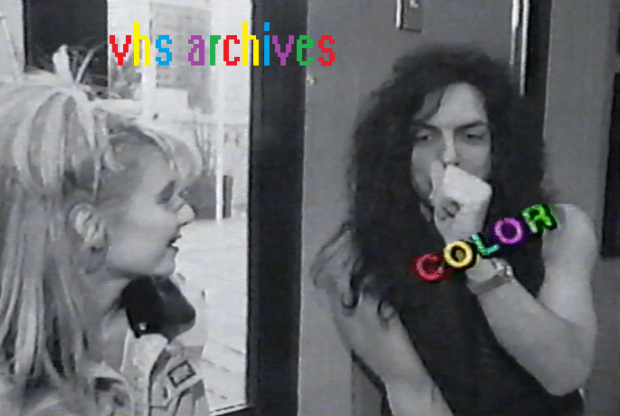
A rare example of MTV content in my video collection! The girl I liked sent me a copy of the Moscow Music Peace Festival, which MTV broadcast in 1990, and she added some videos and interviews at the end. I was thrilled to get this black & white chat with Paul Stanley.

Hot in the Shade was new and Kiss were planning a tour. Paul’s office isn’t as big as you’d think!  He talks about the forthcoming video for “Rise To It” featuring Kiss in makeup, and more.

REVIEW: Eric Carr – Unfinished Business (2011)

The KISS RE-REVIEW SERIES Part 42:  Eric Carr solo #2.

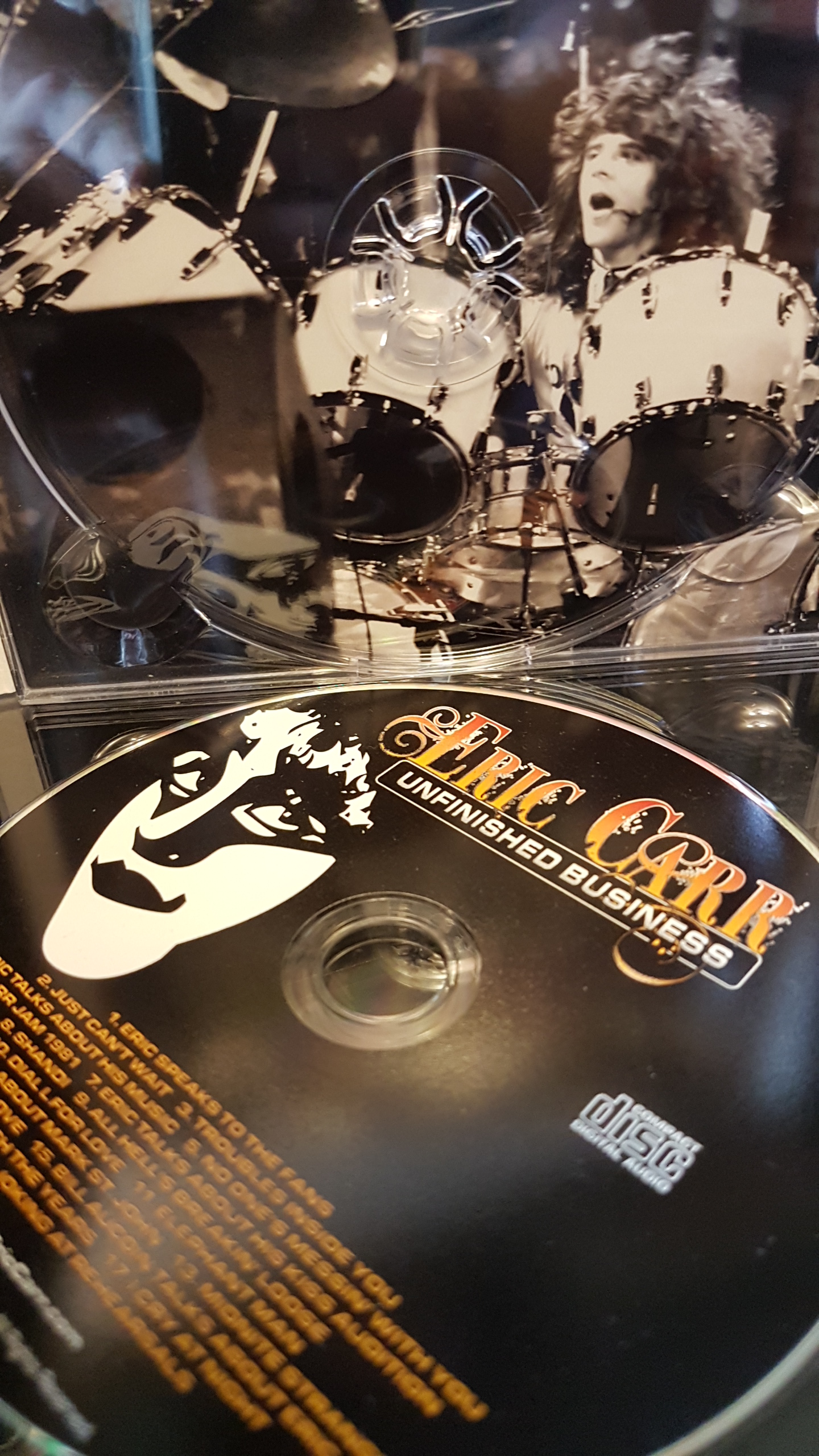
EC_Unfinished_Business_2011ERIC CARR – Unfinished Business (2011 Auto Rock Records)

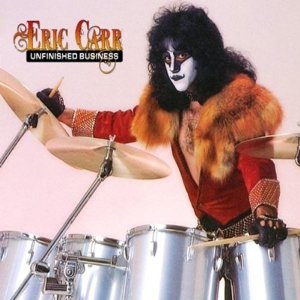
Even though 2000’s Rockology compilation released a treasure trove of unheard goodies for the fans, there is always more to sell.  For the 20th anniversary of Eric’s passing, another batch of tracks were unearthed.  Some are mere filler, some are pretty decent.  Fans of the beloved  drummer will have to sift through the bad to get to the good.

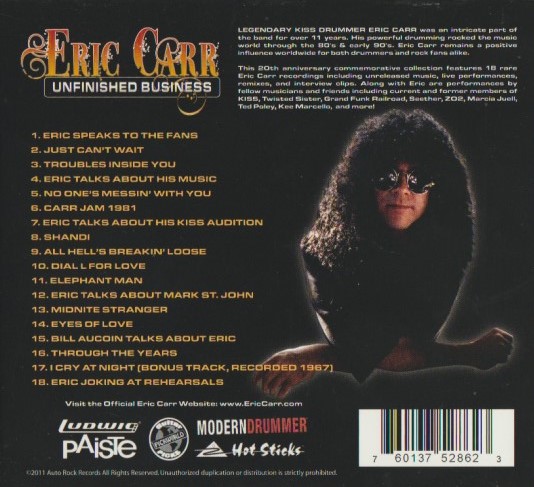
There are a couple Kiss songs here for the diehard fans.  “No One’s Messin’ With You” is yet another demo of what would become “Little Caesar” from Hot in the Shade.  A third called “Ain’t That Peculiar” was released on the 2001 Kiss Box Set.  This is an almost completely different set of lyrics, although it does have the “Hey Little Caesar” chorus.  In chronological terms, this version probably falls between the other two, with lyrics still a work in progress and a different verse melody.  Then there’s “Shandi”, from Eric’s Kiss audition tape, with brand new acoustic backing music.  Unfortunately, Eric’s shaky voice (or a warbly tape) makes this totally unlistenable.

One of Rockology‘s highlights was “Just Can’t Wait” which was crying out for a lead vocal to finish it off.  This was completed by Ted Poley of Danger Danger.  Though the backing track lacks the fidelity of a proper Kiss recording, the song has taken shape as the shoulda-coulda-been hit that it is.  Eric would have been proud and very happy to hear it as a finished song.

The unfinished “Troubles Inside You” is a demo with regular Kiss collaborator and Beatlemania member Mitch Weissman.  It was recorded at Gene Simmons’ house, but the old cassette must have deteriorated pretty badly.  The music is barely audible, though hints of a good song shine through.  Two more Kiss outtakes include the legendary “Dial L For Love” and “Elephant Man”.  These were written for Crazy Nights and Revenge, respectively.  Neither were finished by Carr.  “Dial L For Love” has the bones of a good song with a unique riff.  Eric only managed to finish the lyrics for “Elephant Man”, but here it is given music and life by a group of musicians including the late A.J. Pero of Twisted Sister, and ex-Europe guitarist Kee Marcello.  Singer Bob Gilmartin did a great job of it, turning “Elephant Man” into a cross between ballad and rocker, and something Kiss totally could have done on Revenge.  “Midnight Stranger” is another unfinished riff.  Ex-Kiss guitarist Mark St. John was slated to overdub brand new solos for this instrumental, but he too passed before he could finish.  This is the original cassette demo.  The riff sounds like a brother to “Carr Jam”.  They are definitely related.

“Carr Jam 1981” is, unfortunately, not the original unaltered Elder demo.  It is a cover by drummer Joey Cassata, and a very authentic one at that.  Same with “All Hell’s Breakin’ Loose”.  Just a cover, not a demo, by Cassata’s band Z02. Pretty good stuff, at least.  New backing music was recorded for “Eyes of Love”, a song previously released on Rockology.  The Rockology version with Bruce Kulick on guitar is superior.

Finally, some real serious archival treasures:  an Eric Carr drum solo basement tape (same as his live Kiss solo), and a 1967 recording by Eric’s first band The Cellarmen!  That’s Eric on lead vocals too.  It definitely sounds of its time. Added filler include a few interview bits and clips, including one with former Kiss manager Bill Aucoin about Eric.

If the first Eric Carr CD release was best left to hardcore fans, it’s doubly true of the second one.  This is a fans-only release, period.  It is highly unlikely anyone else would get much enjoyment from this low-fi set.

2/5 stars
Although Carr’s loss was devastating to both fans and the band, there was no question Kiss would carry on with imminent Revenge….


RE-REVIEW: Eric Carr – Rockology (2000)

The KISS RE-REVIEW SERIES Part 41Eric Carr solo #1.

It’s back and picking up right where we left off:  the death of Eric Carr.  The previous chapter of this series was posted November 8 2017, with the intention to talk about Eric Carr’s demos next, before moving on to his replacement.  When Eric died of cancer in 1991, he left behind several tapes of unreleased material that have since been issued on CD.  Likewise, the Kiss Re-Review Series was derailed by Mrs. LeBrain’s cancer diagnosis, but will carry on now that she is well.  Thank you for your patience!

ERIC CARR – Rockology (2000 EMI)

The late  drummer Eric Carr was frustrated towards the end.  He was writing good material, but it was always being rejected by Paul and Gene.  In the press, Eric would tow the company line and explain that everybody else had such good songs, that there was no room for his.  In his heart, he was hurt and felt shunned.

Eric Carr wasn’t just a drummer.  He could sing lead, and he could write.  Kiss’ single “All Hell’s Breaking Loose” was an Eric idea.  He co-wrote “Don’t Leave Me Lonely” with Bryan Adams.  Although his writing credits on Kiss albums were sparse, he had plenty of material in the can.  2000’s Rockology is a series of those demos, some in a near-finished state and some left incomplete.  Much of this material was intended for a cartoon Eric was working on called The Rockheads.  10 years later, Bruce Kulick finished recording some guitar parts and mixed it for release.  He also wrote liner notes explaining the origins and Eric’s intentions for each track.

Eric didn’t have a particularly commercial voice, falling somewhere south of a Gene Simmons growl.  There’s no reason why Gene couldn’t have sung “Eyes of Love” from 1989, which has more balls than a lot of Hot in the Shade.  This demo has Eric on drums and bass, and Bruce Kulick on guitar with a solo overdubbed in 1999.  It doesn’t sound like a finished Kiss song, but it could have been tightened up to become one.  Same with the ballad “Everybody’s Waiting”.  It sounds custom written for Paul Stanley.  But it was 1989, and nothing was going to displace “Forever” from the album, nor should it have.

Many of the demos have no words.  “Heavy Metal Baby” features Eric scatting out a loose melody.  This heavy and chunky riff would have been perfect for the later Revenge album, had Eric lived.  In a strange twist, several of the best songs are instrumentals.  The hidden gem on this CD is the unfinished “Just Can’t Wait”.  It could have given Journey and Bon Jovi a run for their money.   Eric, Bruce and Adam Mitchell wrote it for Crazy Nights, and you can almost hear a killer chorus just waiting to leap out at you.  This potential hit could have been the best song on Crazy Nights, had it been finished.

“Mad Dog” has nothing to do with the Anvil song of the same name.  The chorus is there but the verses are a work in progress.  This hard rocker from 1987 was probably too heavy for what Kiss were doing, though it would have added some much needed groove.  “You Make Me Crazy” is in a similar state of completion and boasts a tap-tastic solo by Bruce.  Apparently this demo was originally called “Van Halen” and you can hear why.  Two versions of a song called “Nightmare” exist, including a really rough one without drums.  This incomplete song could have really been something special.  It has a dramatic feel and different moods, and was probably too sophisticated for Kiss, though any number of 80s rock bands would have been lucky to have such good material.

The last batch of tracks show off the Rockheads material.  Whether Eric’s cartoon idea ever would have happened or not, the advent of bobble-heads and Pops would have made marketing easy.   The songs are virtually complete though the drums are programmed.  “Too Cool For School” is a little cartoony, which is the point, right?  For keyboard ballads, “Tiara” showed promise.  It’s not the equal of “Reason to Live” but it demonstrates a side to Eric unheard before.  Next, Bruce says that they always wanted Bryan Adams to cover “Do You Feel It”.  It would have fit Adams like a nice jean jacket.  Not that Adams really needed the help, it would have been awesome on Waking Up the Neighbors.  The set closes with “Nasty Boys”, nothing exceptional.  It sounds like a song called “Nasty Boys” would sound…or anything by 80s Kiss really.

Before you spend your hard-earned dollars, remember that these songs are definitely unfinished. They are as polished as possible given some of their rough (cassette) origins. Eric’s talent still shines, but you have to be a fan.  Especially a fan of 80s Kiss.  They will find it to be a crucial companion piece to their collections.

Long live the Fox!

Today’s rating:

3/5 stars

Original mikeladano.com review:  2014/04/24

REVIEW: KISS – “Forever” (4 track single, 1990)

The KISS RE-REVIEW SERIES Part 39: bonus single review

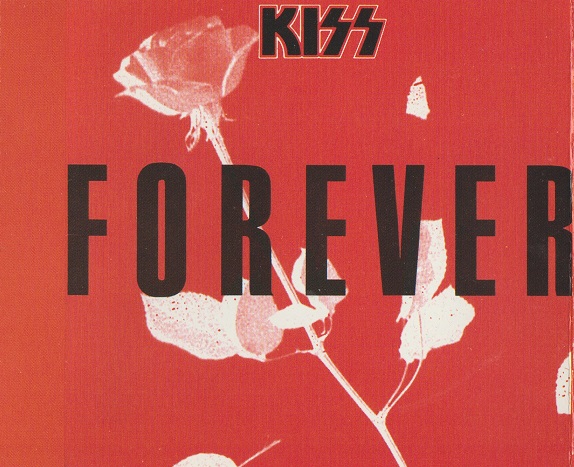
 – “Forever” (1990 Polygram EP)

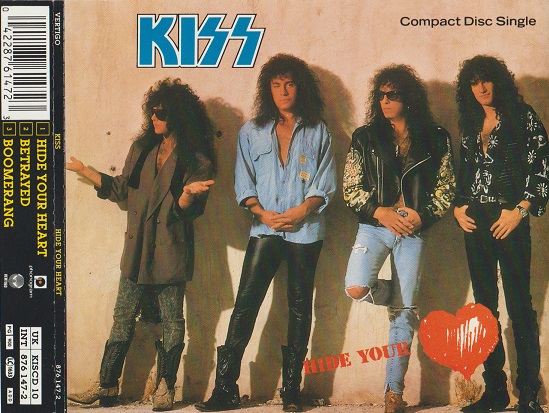
Kiss took the unusual step of waiting six months before going out on tour to support Hot in the Shade.  Bands were having trouble selling out arenas.  In the meantime they released singles and videos.  “Hide Your Heart” came first in October of 1989.  It did alright; for fans the best part of “Hide Your Heart” was seeing Paul Stanley playing guitar again in the music video.  The CD single was nothing special; just the Paul Stanley A-side, backed by two Gene Simmons B-sides, as had become the norm.  “Betrayed” and “Boomerang” were among the better Simmons tracks to chose from Hot in the Shade.

In January of the new year, they dropped what they hoped to be the big single, “Forever”.  The excellent music video was an MTV hit, going to #1, while the single went to #8 on the U.S. Billboard Hot 100.  One reason the video was so well received is that it was a rare back-to-basics look at the band.  It was just four guys playing together in a room.  No girls, no gimmicks, no dancing.  Featuring exceptional performances by Eric Carr and Bruce Kulick, “Forever” was one of those rare ballads with integrity.  Having Bruce’s old Blackjack buddy, Michael Bolton, in the writing credits didn’t hurt.

Ace Frehley wasn’t impressed though.  In the July 1990 issue of Guitar for the Practising Musician, he dismissed it as pop.  He wasn’t wrong, but that doesn’t make “Forever” bad.

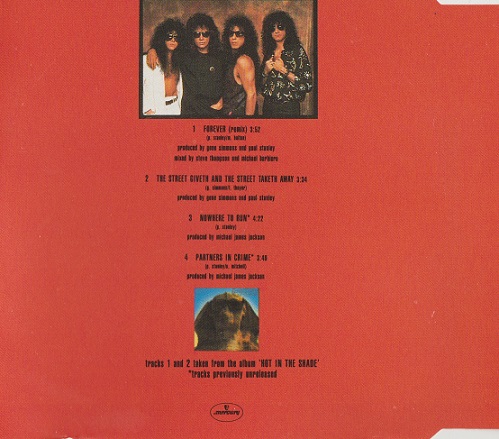
The single for “Forever” received a wider release on all three major formats (CD, vinyl and tape), and was expanded to EP length with four tracks.  It also received something very rare for Kiss:  a single exclusive remix, by Steve Thompson and Michael Barbiero.  It has some difference in levels and echo.  However, every CD copy of this single has a flaw, a skip at 1:40 that shouldn’t be there.  It’s not even a damaged CD; if you look at the track times, the single version is encoded few seconds shorter.  In other words a faulty master was used on every CD single.  You won’t find one without the skip.  Vinyl and cassette don’t have the flaw.

Fortunately this oversight was fixed when Kiss released their box set a decade later.  The correct remixed single version without flaw was remastered and included in the set.

The included B-sides are an interesting mix.  From the Hot in the Shade album, there’s the Gene Simmons throwaway “The Street Giveth and the Street Taketh Away”.  The other two are, strangely, two of Paul’s “new” tracks from Kiss Killers.  The logic here was the Kiss Killers was (and still is) unreleased in North America.  At least this gave us an easy way to get the amazing “Nowhere to Run” on CD.

Too bad about that flaw on the CD version.  Otherwise this isn’t a bad little single.

4/5 stars (cassette and vinyl versions)

0/5 stars (CD)

To be continued…


RE-REVIEW: KISS – Hot in the Shade (1989)

The KISS RE-REVIEW SERIES Part 38: 

 – Hot in the Shade (1989 Polygram)

Step one:  Get Gene Simmons’ demon head back into the game.

Step two:  Record a rock album, not a Bon-keyboard-Jovi-Kiss hybrid.

Throw in the kitchen sink while you’re at it.  It’s Kiss, so what’s wrong with excess?  Why not a new album with 15 tracks?  Why not work with Vini Poncia, Desmond Child, Holly Knight, and Michael Bolotin Bolton?  How about bringing in Tommy Thayer from Black ‘n Blue to co-write some tunes?

Why not indeed.  The results yielded were interesting to say the least, and certainly more rock and roll than anything else Kiss did in the 1980s.  It is also overall one of the hardest Kiss albums to listen to front to back.  A for effort, D for songs.  Its bloated and unfinished track list seemed like Kiss was trying really hard on one end, but gave up on the other.

Paul Stanley and Gene Simmons self-produced Hot in the Shade, after the negative experience with outsider Ron Nevison.  This meant that there was no-one to push them to do better, as Bob Ezrin and Eddie Kramer would.  No-one to say “no” to using demo tapes on the finished albums.  No-one to say “no” to 15 tracks, to drum machines, and to sub-par songs.

Issues aside, Hot in the Shade is not all bad.  At least you can say that Kiss went for it.

Opener “Rise to It” begins with something new:  acoustic slide guitar (from Paul Stanley)!  In a time when rock bands were re-discovering the blues, this old-timey touch was a welcome sound.  The slide gives way to one of Paul’s most incendiary tracks of the decade.  Written with expert songsmith Bob Halligan Jr., “Rise to It” hits all the right spots.

“Rise to It” was eventually chosen as a third single to promote Kiss’ upcoming 1990 tour.  The music video opened a door that fans refused to allow them to close:  Kiss in makeup again.  Instead of the slide guitar intro, the video takes us to a theoretical 1975.  Gene and Paul sit in the dressing room, applying their legendary whitepaint.  The conversation was one that Gene and Paul may have had many times in the old days:  musing on a life without makeup.

“I saw that review today.  Some of those people don’t think this is gonna last.  They think it’s a joke,” says Paul.  Gene reassures them that it doesn’t matter as long as they believe in themselves.

“I bet you we could take the makeup off and it wouldn’t make any difference,” Paul retorts.  Gene calls him nuts.

“Gene, there’s nothing we can’t do.”

“Still say you’re nuts.”

At the end of the video, there they were: Paul and Gene, Starchild and Demon, in makeup for the first time in seven years.  What did it mean?  Was it just hype?  Of course it was.  It would be seven more years before they’d do a tour in makeup again.

But it was cool, and it made many fans smile ear to ear.

Like all the previous Kiss albums from the non-makeup era, all three single/videos were Paul songs.  Though “Rise to It” is the most noteworthy video, “Hide Your Heart” was first.  This Stanley/Child/Knight outtake from Crazy Nights was actually first recorded by Bonnie Tyler in 1988.   At the same time that Kiss were recording it for Hot in the Shade, Ace Frehley also did his own version for 1989’s Trouble Walkin’.  Confusing?  Kiss were the only band to have a semi-hit with it (#22 US).

As a nice change of pace from putting X’s in sex, the lyrics were a story about star-crossed lovers in gangland.  “Tito looked for Johnny with a vengeance and a gun, Johnny better run better run,” sings Paul.   In fact, “Hide Your Heart” does not get enough credit in fan circles for being lyrically different.  At least it is recognised as a great tune from a poor album.

Kiss weren’t worried about competition from Ace and did indeed record the best version of “Hide Your Heart”.

The most notable single was the ballad “Forever” (and we will take a closer look at the CD single in the next instalment of this series). Michael Bolton was an old bandmate of Bruce Kulick’s from the Blackjack days.  Before he was a superstar crooner, he was a rocker.  Together he and Paul wrote “Forever”, which became the big hit (#8 Billboard hot 100).

As an acoustic ballad, “Forever” is far more palatable than the keyboardy “Reason to Live” from ’87.  What gives it balls are the two unsung Kiss members:  Kulick and Eric Carr.  Eric’s heavy drumming on “Forever” really kicks it up a notch.  Listen to that hammering 1-2-3-4 bit at the 1:05 mark.  “When you’re strong you can stand on your own…” ONE TWO THREE FOUR on the snares.  Heavy as fuck on a ballad!  Then there’s Bruce’s acoustic solo, another first for Kiss.  The temptation would be to record a ripping electric solo like everyone else.  Bruce wrote and recorded a hook-laden acoustic solo that is as much a part of the song as the chorus.

Those are your three standouts from Hot in the Shade, leaving 12 more that don’t hit the same bar.

Of the remaining 12 tracks, Eric Carr’s lead vocal “Little Caesar” is significant.  Making him sing “Beth” on Smashes, Thrashes & Hits was unfair and a cheat.  “Little Caesar” is his “real” lead vocal debut.  Originally written as “Ain’t That Peculiar” (later released on a Kiss box set), the words changed to reflect one of Eric’s nicknames.  He was, after all, a little Italian guy!  The funky “Little Ceasar” was performed entirely by Eric and Bruce Kulick.

US picture CD

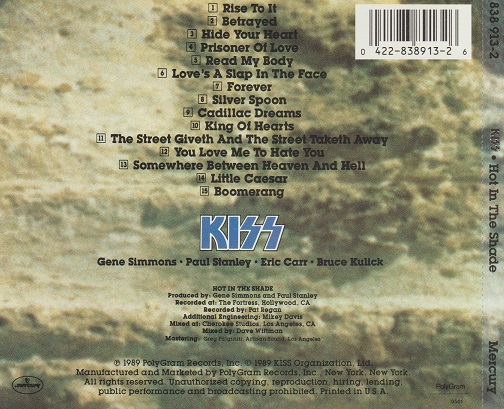
Gene’s “Boomerang” (written for Crazy Nights with Bruce) may be noteworthy as the closest Kiss have ever gotten to thrash metal.  Another Gene tune, “Cadillac Dreams” has a horn section and electric slide guitars.  Paul’s “Silver Spoon” is augmented by soulful female backing vocals.  You have to give them credit for stretching out and trying new things, but keeping it rock and roll.

Then there is a slew of filler, stuff that would never be played live nor remembered fondly.  Gene has a number of generic sounding songs, heavy but uninteresting:  “Betrayed”, “Prisoner of Love”, “Love’s a Slap in the Face”, “The Street Giveth and the Street Taketh Away”, and “Somewhere Between Heaven and Hell”.  Paul is also guilty of providing filler material.  “Read My Body” isn’t bad, but sounds like his attempt to re-write “Pour Some Sugar On Me”.  “King of Hearts” and “You Love Me to Hate You” both have good parts here and there, but not quite enough.

As unfocused as Hot in the Shade is, at least it was a step.  Sure, adding horns and slides smacked of Aerosmith.  Going almost-thrash was following, not leading.  Musically, Kiss have never been leaders, but what they do is create their own confections from the ingredients of their best influences.  Hot in the Shade represented a better mixture of  ingredients, just without the discipline to mould them into 10 (just 10, not 15!) good songs.

Today’s rating:

1.5/5 stars
The story of the next three years in Kiss will be explored in a series of reviews on CD singles, live bootlegs, and solo releases.  Don’t miss them!
Original mikeladano.com review:  2012/08/07

#608: Hot in the Shade

GETTING MORE TALE #608: Hot in the Shade

November of 1989 was an historic moment in time.  Three events collided in one day that I distinctly remember unusually well.  Based on historical records, I almost can nail down the exact time I first heard Kiss’ then-new Hot in the Shade album that year.  I can remember being on a bus for a school trip, sitting next to a German kid, as the news of the Berlin Wall coming down became the top story of the day.  It was probably the 10th of November, a Friday.

It was huge news.  I grew up in the tail end of the Cold War, and hope was finally on the horizon.  I can remember in 1983, kids in the school yard talking about the Korean passenger liner that the Soviets shot down.  “There’s gonna be a war,” one kid said, and it sure did seem like it.  Every other year, it seemed like it.  November of 1989 was a different kind of time, when fears suddenly melted away albeit briefly.  Sitting next to that German kid on the bus, Mark, was the best place for me to absorb the greater meaning of it.
What were we doing sitting on that bus?  We were on the way to Pickering, to visit the nuclear plant.  Our names had to be submitted weeks in advance to get the clearances, but we were inside an operational nuclear facility!  It wasn’t even my first tour of a nuclear plant, though it was the first time being inside one.  When I was a youngster, the family took a tour of Bruce Nuclear’s grounds and visitor center on summer vacation one year.  I remember being really small, and asked to try and lift some depleted rods of uranium.  I couldn’t; it was far too heavy!  This demonstration indicated the density of the nuclear fuel.  “Did you have your Wheaties today?” asked the tour guide to the chuckles of the group.  But in Pickering, we got to look right inside.

The Pickering plant was impressive.  We had helmets on to go with our visitor badges.  There were checkpoints everywhere, where you had to put your hands and feet in a scanner to make sure you didn’t pick up any radioactive dust.  Once you were cleared, you could go into the next area.  We saw the big rooms where the spent fuel is kept.  Not surprisingly, everything was immaculately clean.  Every surface gleamed, and all the equipment appeared new and in top condition.  We were told that amount of radiation we were exposed to was about the same as an X-ray at the dentist.  The trip was optional, and at least one kid opted out because he didn’t want to get zapped.

There was a more intensive scan at the end of the trip before we were allowed to leave.  You had to pass a full body scan; if not they had to confiscate your clothes and send you home in paper hospital gowns.  I had a brief moment of terror when my scanner refused to give me the green light.  “Come closer” the damn machine kept saying to me.  “I’m as close as I can get!” I retorted to the infernal contraption.  A guide helped me get standing correctly and thankfully I passed the scan!  No hospital gowns for me, which is especially good because the next stop on the trip was Pickering Town Center for lunch.

I ate a sandwich for lunch that my mom packed for me.  She always made sure I had a lunch every day!  We had time to kill at the mall so Mark and I hit up a record store.  It was probably A&A Records and Tapes, though it certainly could have been an HMV.  Either way, they had two new releases that I had my eyeballs on:  Trouble Walkin’ by Ace Frehley, and Hot in the Shade by Kiss.  I only had enough money for one, and Kiss had to take priority of solo Ace.  I remember having a conversation with the guy at the counter about how Anton Fig was back playing drums for Ace.  (And that right there is a lesson about customer service.  That guy made an impression on me that lasted 28 years, just by mentioning Anton Fig on the off chance that I’d know who he was.)

So I walked out of there with Hot in the Shade in my Walkman, and I had a chance to hear the new Kiss album for the first time.  I always enjoyed a first listen.  I’d look at the song titles and try to guess which were Paul’s and which were Gene’s.  I really liked the acoustic slide guitar that opened “Rise to It”.  Bruce Kulick was proving his awesomeness, though I didn’t enjoy his tone on Hot in the Shade.  It was only later that I learned Hot in the Shade was essentially a set of demos that were polished and finished for album release.  That might explain why I felt the tone was so…flat.

Mark also encouraged me to listen to one of his tapes, a group called Trooper.  “I bet you haven’t heard of Trooper,” he said, and I hadn’t, which was odd because they were Canadian.  Trooper didn’t make any lasting impressions other than remembering that Mark was rabid for them.  One thing I remember about Mark:  he hated long songs.  He liked songs in the three to four minute range, and that’s pretty much all of Trooper’s hits.

Our final stop was Lakeview Station, a huge and now defunct coal fire plant in Mississauga.  “Don’t touch anything,” the teacher warned us before going in.  “This place is covered in black coal dust.  If you touch any, you’re going to get it all over the next thing you touch which will probably be your clothes.”  And he was right.  Every surface had coal dust on it.  The tour was noisier and far grimier than the nuclear tour.  This was intended to make an unsubtle point about the differences between the two.

We were all glad to get out of Lakeview and back on the highway home.  I flipped sides on my Kiss tape and tried to get into the album.  I was struggling with it.  Some songs were really good, like the ballad “Forever” which was immediately discernible from the pack.  Others made it seem like putting out an album with 15 new songs might have been a better idea on paper.

I listened to the album on my boombox when I got back home.  I listened intently and tried to figure out what sounded “off”, and the only thing I could figure was the guitarist.  “I don’t think Bruce Kulick’s tone is right,” I said with a twinge in my gut.  Of this, I’m glad he proved me wrong by the next album Revenge.

What a memorable day that was.  I’m just glad I didn’t come home radioactive and hot in the shade!

Check out the album review tomorrow as part of the  KISS RE-REVIEW SERIES.