Kenny Aronoff

REVIEW: Sammy Hagar & the Best of All Worlds Band – The Residency (2025)

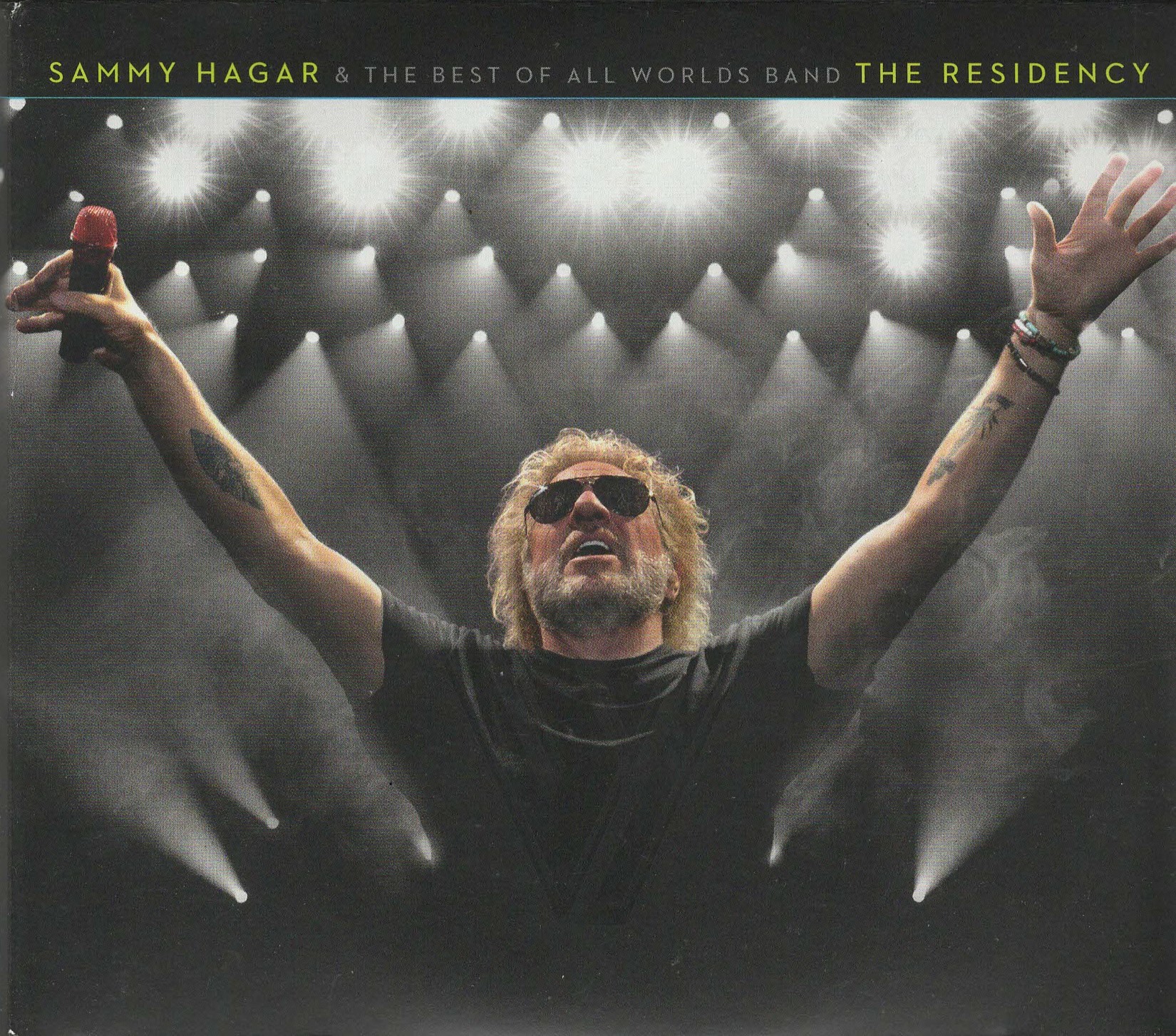
SAMMY HAGAR & THE BEST OF ALL WORLDS BAND – The Residency (2025 Big Machine Rock)

Chickenfoot are back!  A rose by any other name, right?  Nothing wrong with it.  Nothing at all.  It would have been nice if there was some kind of official Van Halen tribute show, but since nobody else wanted to do it, it’s up to Sammy.  The songs deserve to be kept alive, both Sammy and Roth eras.  There are only two Roth songs here, but we didn’t expect more.  Recorded in Vegas during April and May 2025, the album was produced by Sammy Hagar, Joe Satriani, and Chris Lord-Alge.

The truth is that when Michael Anthony sings those backing vocals, things just sound a little Van Halen-y.  Joe Satriani is one of the only guys in the world I’d want to hear play Van Halen songs besides Eddie himself.  Sure, Joe doesn’t play the same.  Eddie was freewheeling and improvisational.  Joe is schooled and plays with forethought.  He is more than capable of pulling Eddie’s tricks and trademarks, but tends to stay away from slavish imitation.  He may do a pick scrape exactly where Eddie did it on “Top of the World”, but he doesn’t necessarily play all the hooks and fills exactly as Ed did.  He usually plays them close enough that the solos are true to the original while not being exact copies.  In other places, he goes off into jazzy territory that wouldn’t have been explored before.  That is really the way it should be when it comes to a tribute to the greatest guitar player who ever lived.  He wouldn’t want to hear Joe imitating him, either.

Kenny Aronoff is one of the best drummers suited around, always in demand.  It would have been nice if Jason Bonham was still around, but Kenny might be better suited to the Van Halen material (listen to him on “Summer Nights”).  Adding those necessary backing keyboards (and guitars and vocals) is Rai Thistlethwayte, from Australia’s Thirsty Merc.  Normally he’s a frontman and hitmaker unto himself, but this is a pretty tempting gig to take.

As for Sammy himself, Hagar is one of the most reliable figures in all of hard rock.  Barely aging as the decades pass, and always releasing new music and touring behind it, Sammy Hagar is rock and roll’s unsung stalwart.  He may often say too much, but on stage, he’s still in great shape.  Now, the songs are detuned a little bit to accommodate the aging human voice.  This is unavoidable.

The live album opens with the tribute to Eddie aptly called “Encore, Thank You, Goodnight”.  (The studio version is on a rare 7″ single that is very hard to find.)   Joe Satriani plays several licks that are in homage to Edward the Great.  Simple but poignant lyrics like “Since you’ve been gone, things don’t feel the same.”  It’s a decent enough song, but likely wouldn’t have attracted much attention if not for the words.  Decent song but only notable for its lyrics and intent.  It would not have been a standout on either of the two Chickenfoot albums.
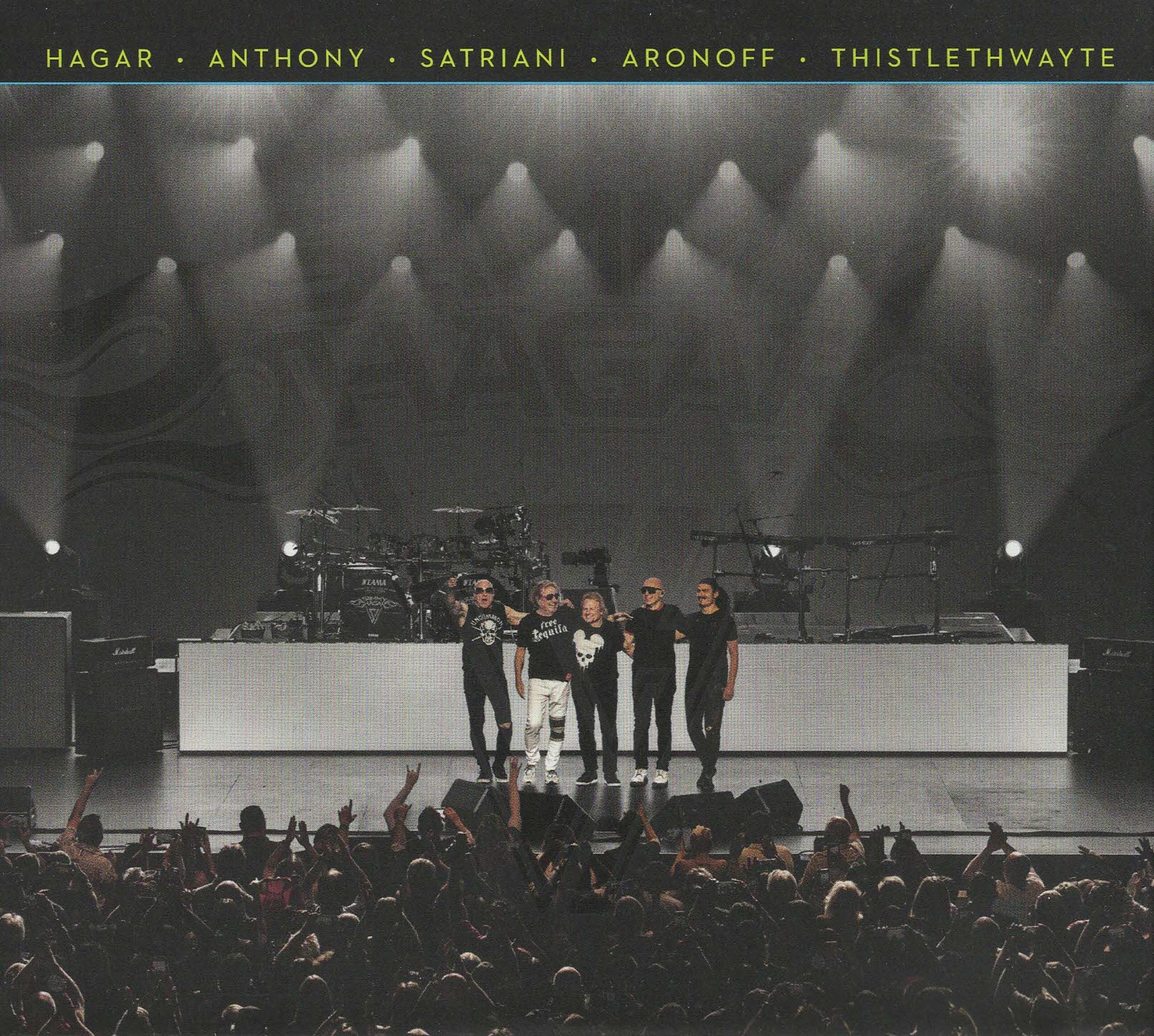
It soon becomes evident that this album is as much a tribute to Sammy as to Eddie.  There are five Sammy solo hits included:  “One Way To Rock” (which admittedly Van Halen played live on the 5150 tour), “Eagles Fly” (unnecessary), “Mas Tequila!” (almost insulting considering that Eddie disapproved of Sammy promoting his tequila while on tour with Van Halen), “Heavy Metal” (which Van Halen never played live) and “I Can’t Drive 55”.  Contrast this with the two David Lee Roth era songs included:  “Panama”, and “Ain’t Talkin’ ‘Bout Love” (which Sammy doesn’t even sing; Rai does!).  Not even “Jump”, which Van Halen released as a live single with Sammy singing.  Throw in Montrose’s “Rock Candy” and it’s clear this isn’t entirely about the mighty Van Halen.

The setlist includes a few delights.  “There’s Only One Way to Rock” gives Joe a chance to really stretch out.  “Humans Being” was neglected by Van Halen, but this band does a great live version of it.  The only shame is that due to the decades past, Sammy doesn’t sing it in that monotone rasp.  Joe though, wow, he really nails the Eddie vibe on the guitar solo!  This version of “Humans Being” really shows why Joe was the right guy for this gig.  Meanwhile, Michael’s bass reminds us of why he was so integral to the band’s sound.  It’s great to hear “5150” (though the title should be in quotes on the back cover).  “Rock Candy” and “Heavy Metal” are awesome, regardless of the shift in focus away from Eddie.  “Love Walks In” is an interesting way to close the album, but it does work.

We always like to complain about setlists for shows like this.  It would probably have been appropriate to drop “Eagles Fly” and “Mas Tequila!” in favour of other songs (definitely not “Little White Lie”).  Anything to represent the Balance album would be welcome.  Sammy even could have included something from I Never Said Goodbye, an album that Eddie played bass on and co-produced.  That said, the album remains a solid listen.

Some diehards (or those who claim to be) won’t give The Residency a chance, but any fan of these musicians will love to hear how they interpret the works of Van Halen.  Pretty satisfying.

4/5 stars

REVIEW: Iommi – Iommi (2000)

“Like many projects featuring multiple singers, the album called Iommi is a mixed bag but with more gems than turds.”


IOMMI – Iommi (2000 Virgin)

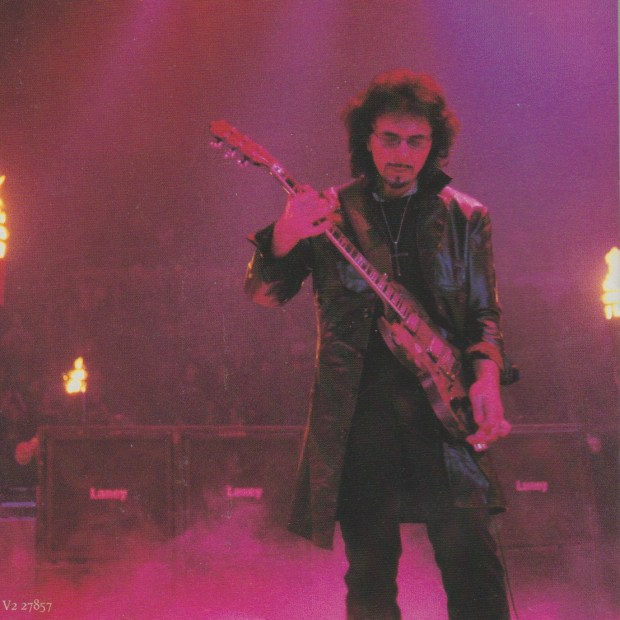
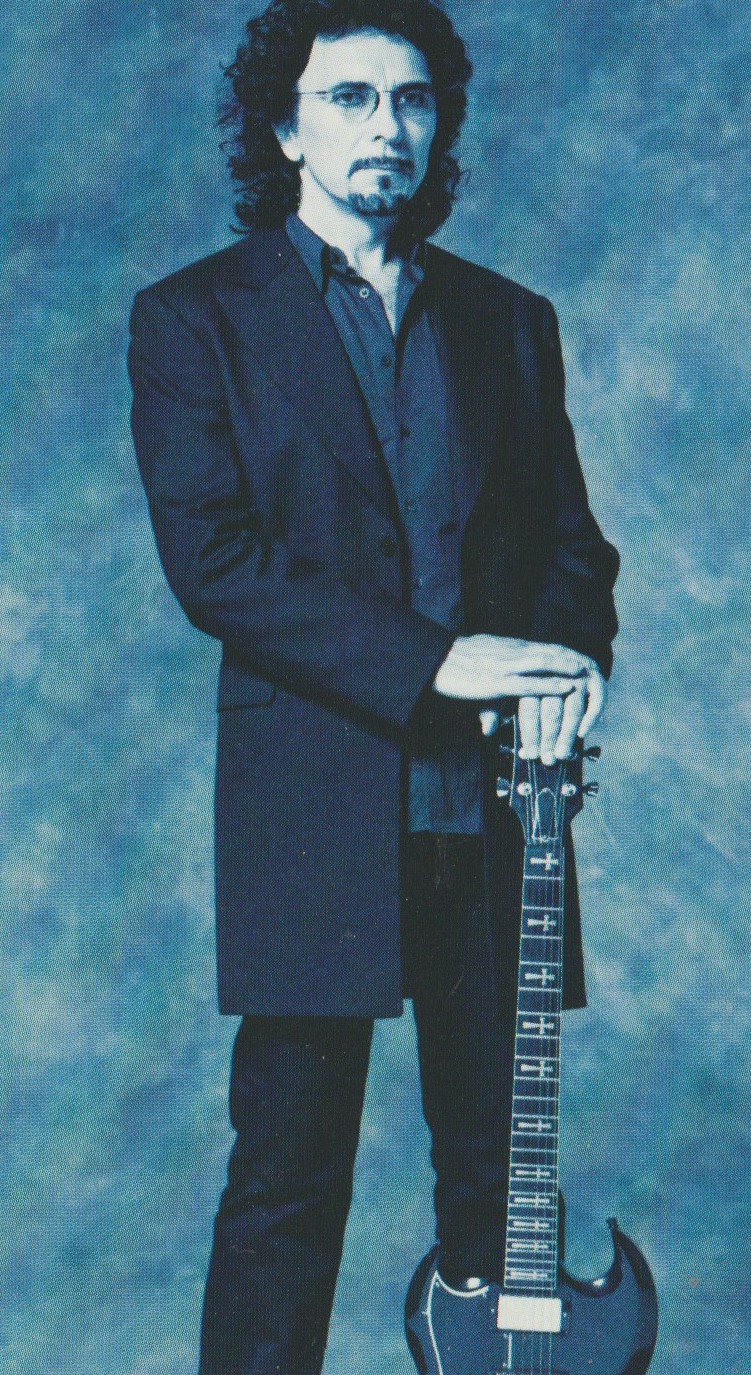
Iommi is the first released solo album by Tony Iommi, but actually the third recorded.  The first was 1986’s Seventh Star, released as “Black Sabbath featuring Tony Iommi”, with Glenn Hughes on vocals.  10 years later, Tony recorded another album with Hughes often referred to as “Eighth Star“, which was released in 2004 (after the drums by Dave Holland were re-recorded by Jimmy Copley) as The 1996 DEP Sessions.  Then finally in 2000, Tony took a page from the successful Santana formula book and did an album with various lead singers called Iommi.

Like many projects featuring multiple singers and assorted musicians, the album called Iommi is a mixed bag, but with more gems than turds.  The guitarist picked an interesting assortment of vocalists, mostly artists big in the 90s.  It’s telling that Tony’s good buddy Glenn Hughes isn’t one of them (though Hughes returned on 2006’s Fused).  Clearly commercial interests were most important when it came to selecting the singers and songs.

The inimitable Henry Rollins gets the enviable opening slot with “Laughing Man (In the Devil Mask)”.  Rollins sounds best with a heavy riff behind him, and this one is pure grunge.  Producer-de-jour Bob Marlette co-wrote almost every song, and there’s little doubt that this is how Iommi acquired its “modern” edge.  Rollins creates a swirl chaotic rock around him, but the riff alone would have sunk without Hank.  Iommi seldom writes such atonal, monotonous guitar parts as “Laughing Man (In the Devil Mask)”.

Skin (Skunk Anansie) is surely one hell of an underrated singer, and her track “Meat” howls.  Iommi’s solos and riffs sound much more like what comes naturally from him.  Then, it’s the unfortunate sound of 90s drum loops and samples.  It’s Dave Grohl’s tune “Goodbye Lament”.  Because as soon as one thinks of Iommi or Grohl, we think of drum loops, am I right?  Fortunately Grohl has ex-Sabbath bassist Lawrence Cottle and Queen maestro Brian May on his track.  He plays the drums when they finally do kick in.  Three of those four guys played on Headless Cross!  The drum loops suck and date the song to a certain period in time, but fortunately Grohl knows how to write good melodies so it’s not a total bust.

Phil Anselmo (Pantera) takes the very Sabbathy “Time is Mine”.  That riff sounds like it may have been later used on an actual Black Sabbath record.  The track simmers with fury, then Phil lets it rip loose.  The only way to make Sabbath heavier than Sabbath is to include a singer like Anselmo.  Drumming is Seattle legend Matt Cameron.

The expressive Serj Tankian (System of a Down) lets his pipes have their way with “Patterns”, amidst more of those annoying samples.  It absolutely sounds more System than Sabbath, which is fine since both are heavier than fuck.

The one guy that pulls off a truly Black Sabbath-sounding song is the guy you’d least expect:  Billy Corgan.  Yet his “Black Oblivion” comes closest to the spirit of classic Black Sabbath, in terms of length and epic riffage.  Billy plays bass and guitar on the track as well — what a phenomenal bassist!  (The drummer, Kenny Aronoff, knew Corgan from the 1998 Smashing Pumpkins tour on which he played, and then Aronoff went on to play on two more Iommi solo discs.)

The Cult’s Ian Astbury makes Iommi sound like — who else? — The Cult!  Brian May returns for some guitar (with Cottle and Cameron on bass and drums).  The Cult rarely employ such monolithic riffs, but the chorus is pure Cult.

“Flame On!  I used to bleed like a suicide mother,
Flame On!  And now I breath in this dirty black summer,
Flame On!  I bought the truth in the mouth of my brother,
Flame On!  I used to bleed like a suicide motherfucker.”

Shame about the damn loops, like something discarded from Chinese Democracy.  They also infect “Just Say No to Love” featuring the late Peter Steele of Type O Negative.  Like Astbury, he makes Iommi sound like his band, which already sounded a bit like a Black Sabbath parody.

The biggest disappointment on the album is second to last.  “Who’s Fooling Who” is a virtual Black Sabbath reunion, with Ozzy Osbourne and Bill Ward returning to the fold.  On bass is Lawrence Cottle, making it 100% Sabbath alumni, 3/4 original.  And it’s easily the most boring song on the album.  The best thing about it is Bill Ward, the first drummer who didn’t sound like a session guy.  A muffled Ozzy phones in his part, but Bill puts some effort into composing the percussion.  The best part is the instrumental burnout.

And then, a surprising finish:  Billy Idol, with a monstrous “Into the Night”.  Idol should consider doing heavy riffy metal like this more often — he’s good at it.  Though he effectively snarls his way through the slow riff, his punky side comes out when things get fast.  The contrast between riffs and tempos is half the fun.

With Iommi freshly consumed and digested anew, it’s obvious that good portion of what you heard was purposefully geared towards the nu-metal Ozzfest crowd.  The selection of musicians was clearly slanted post-80s, but it’s the loops and samples that really blow.  The blame must be laid on producer Bob Marlette, especially considering some of the loops sounded exactly like another band he produced:  Rob Halford’s Two.  The whole thing sounds like a “product”, though at least with some pretty incredible riffs behind it.

3/5 stars