Matt Cameron

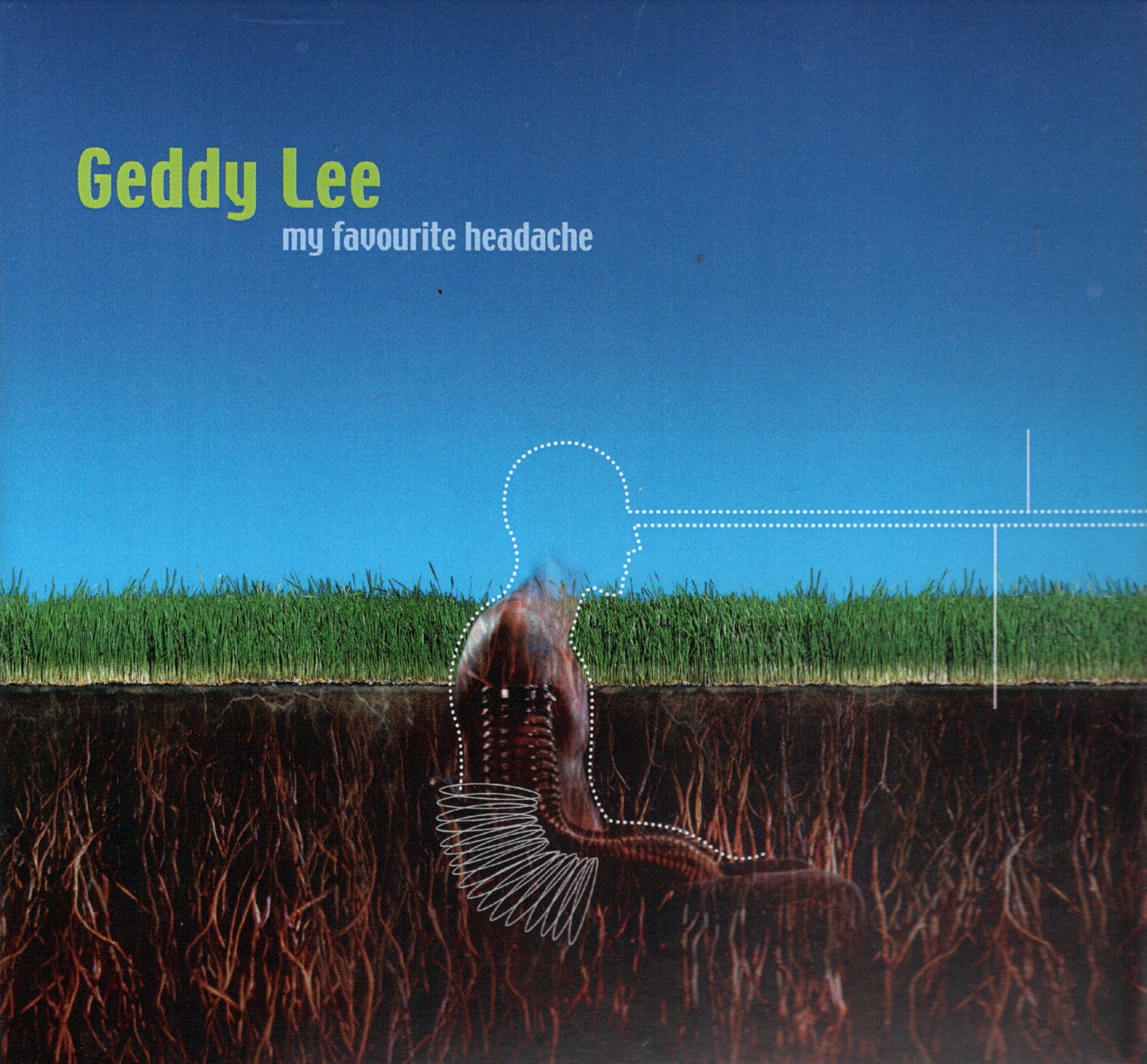
RE-REVIEW: Geddy Lee – My Favourite Headache (2000, 2024 reissue with bonus tracks)

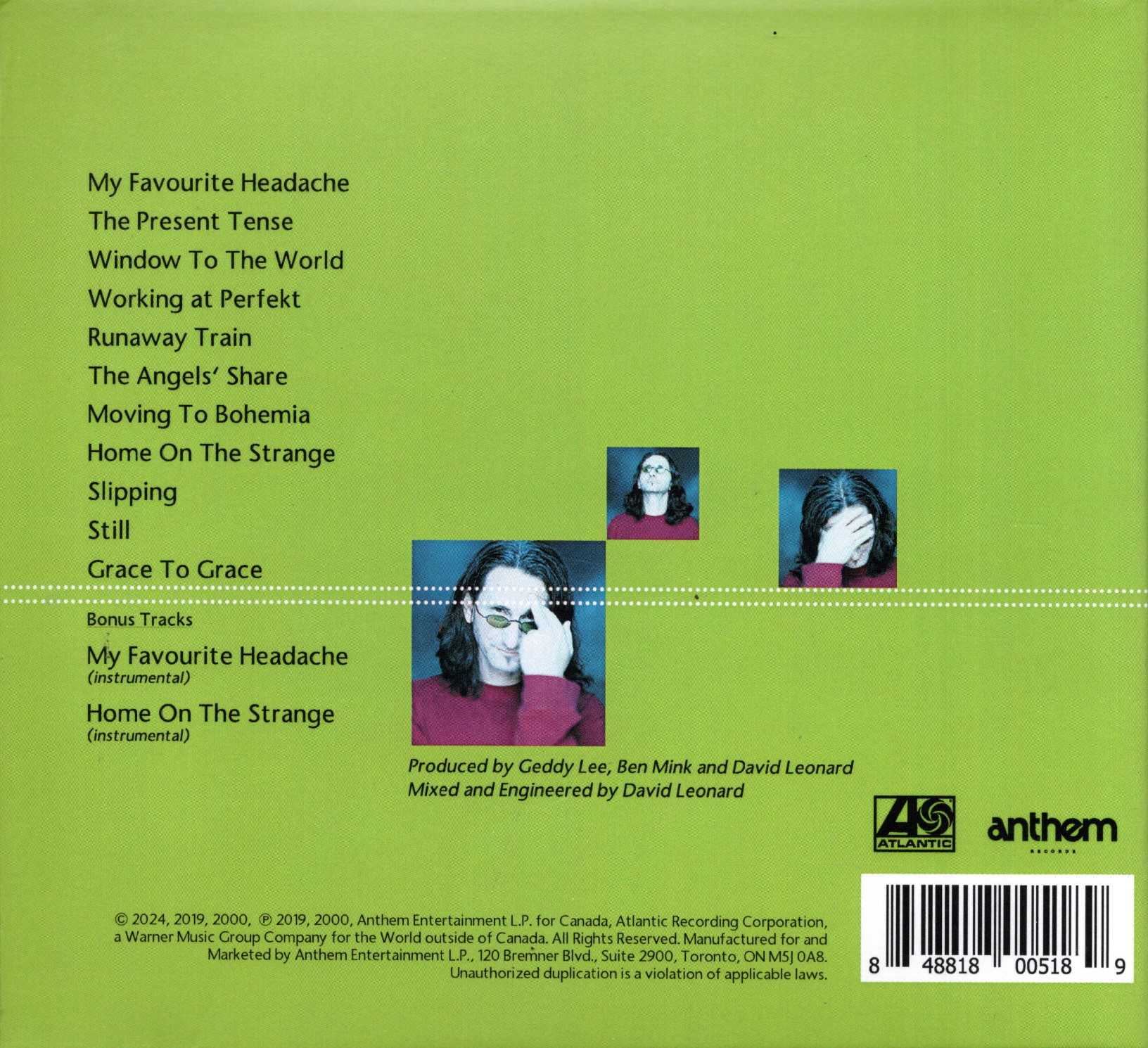
GEDDY LEE – My Favourite Headache (2000 Atlantic, 2024 Anthem reissue)

As a Rush fan, Geddy Lee’s solo album My Favourite Headache never quite clicked.  The lyrics seemed inferior and the music immemorable.  In 2024, Geddy reissued the album with two bonus demo tracks.  This is a perfect time to revisit the album and see if time has been kinder than I was in my original review.  It has been a number of years since last listen; perhaps even a decade.

The phrase “my favourite headache” means making music to Geddy Lee.  The art of crafting songs is a headache, but he would not trade it for the world.  That is what the title means.  For historical context, this album was made when Rush were on a serious hiatus.  Neil Peart was dealing with tragic loss and nobody knew if the band would ever reunite, including Neil.  From that soil grew My Favourite Headache, which Geddy recorded with drummers Matt Cameron of Pearl Jam and Soundgarden, and Jeremy Taggart of Our Lady Peace (on one song).  Geddy plays the lion’s share of instruments with Ben Mink and other guests also contributing.

As it should, “My Favourite Headache” opens with some heavy bass, Geddy’s fingers flying.  Then, it degenerates into a dissonant and hard guitar riff with throws the listener for a loop:  it’s not at all like Rush.  It might be the bass player and singer from Rush, but this does not sound like Rush.  Which is good; which is the point.  It takes a moment to adjust.  “My Favourite Headache” slows to a lush section with piano, violins and violas by Mink.  The lyrics are fascinating.  “I watch TV, what do you want from me?”  There is a lot to unpack here now that Geddy is able to express himself verbally in his music.

More Rush-like is “The Present Tense”, a song about living in the now.  It bounces from heavy choruses to softer acoustic verses, which is perhaps a different approach from a Rush one.  Perhaps by doing something more streamlined, Geddy wrote a catchier song here.  His bass sings full, but not over-dominant.  Cameron is an apt companion on drums; while not attempting to play like Peart, he is more than capable of navigating the tricky changes and fills.

“Window to the World” has a more exotic feel in its light chords, and Geddy uses his bass to deliver some delightful trills and hooks.  It has some of those jarring dissonant guitars from the title track, but not as prominent.  This song is melodic, largely easy to digest, and it delightfully careens from soft to hard, with interesting keyboard textures.

Heavier is “Working on Perfekt”.  This might be the most enticing of all Geddy’s songs.  Tense verses are broken by a sparser chorus.  Electronic sounds aside, this is a very Rush-like song.  You can almost image what Alex and Neil would do with it, but as Geddy’s song, it is rich in tones and deep, tense hooks.

“Runaway Train” is one of the brightest, most upbeat songs.  Mink’s keys and violins add a light, airy feel above Geddy’s hammering bass.  His playing is always eloquent and entertaining, if you choose to focus on the bass.  Between the electronics and Mink’s rich contributions, there is a lot you can listen to.  Or just enjoy the song.  It’s a good one.  Perhaps I misjudged this album before.

The first mistep might be “The Angels’ Share”, which some may love, but fails to launch for me.  It’s a lighter song, but Geddy’s bass ensures it’s like lead.  Ben Mink provides some really interesting soloing and backing, but the song itself never quite takes off.  In hindsight it sounds like Clockwork Angels-era Rush.  While we are in this perceived rut, Geddy throws his worst lyric out in the next song:  “Say goodbye to suburbia, you don’t have to cut the lawn.”  That’s from “Moving to Bohemia”, which is actually a pretty catchy song.  It’s pretty upbeat for this album, and Geddy’s bass playing is at its most thumping.

Geddy turns up the funk on the magnificently weird “Home on the Strange” (with Taggart on drums).  What the hell is this?  It’s crazy, it’s like Geddy pulled out all funkiest records in his collection and combined them.  The lyrics here are also quite fun:  “He’s a Canadian icon, he sleeps with his clothes on.”  Is it autobiographical?  “And he don’t like change, you may think he’s deranged, but he’d rather be home, home on the strange.”  Once you get used to its groove, this song won’t let go.

Back to the light, with “Slipping”, which relies on acoustics and piano for a gliding kind of feeling.  This is followed by “Still”, which is unusually sparse and simple.  An acoustic ballad, with an upbeat tempo, it’s a beautiful song.  It certainly sounds autobiographical.  “Still halfway up that hill, my fingers may bleed but I’ve got to get there still.”  This song strikes me as the best, musically and lyrically, on the album.  Strange that it never jumped out at me before.

Closer “Grace to Grace” remains an exceptional song, and one that really ends the album on familiar territory.  A burning guitar and driving bass are the focus, as if to say “Hey guys, I’m always going to rock.  Thanks for joining me on this trip.  Here’s a song I think you’ll like.”

Of course, on this new reissue, Geddy treats us to two previously unreleased demo versions.  If you haven’t bought the album before, you may as well go for this edition.  True, I usually criticize albums for being a bit on the long side, and My Favourite Headache is a bit long, but demo bonus tracks are added value that you don’t have to include if you just want to listen to the “album” for the experience.  There doesn’t seem to be any recording information about these two demos, “My Favourite Headache” and “Home on the Strange”.  These are full realized arrangements, though without all the vocals.  “My Favourite Headache” might surpass the album track for its live sounding rawness.  Maybe it should have been an instrumental with only a chorus?  The demo is great.  Same with “Home on the Strange”.  These tracks are worth the listen, and the re-buy.

Ultimately, My Favourite Headache requires the listener to set aside any thoughts of Rush, no matter how much Geddy and his bass will always sound like Rush.  It’s a challenge, but once you get there, it is easier to appreciate the songs and the experiment.  It takes time to absorb, as it is actually a very dense production, even for Geddy.  Ben Mink’s contributions are priceless textures that help transport yourself away from a Rush mindset.  Listen to those; focus on Mink and appreciation will come.

3.5/5 stars

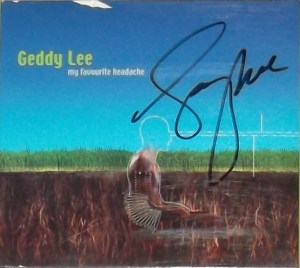
Check out my autographed copy of My Favourite Headache by clicking the thumbnail.
Check out Grant Arthur and Davey Cretin as they get this album all wrong on the Warehaus tonight.  8 PM EST June 23 2025

REVIEW: Iommi – Iommi (2000)

“Like many projects featuring multiple singers, the album called Iommi is a mixed bag but with more gems than turds.”


IOMMI – Iommi (2000 Virgin)

Iommi is the first released solo album by Tony Iommi, but actually the third recorded.  The first was 1986’s Seventh Star, released as “Black Sabbath featuring Tony Iommi”, with Glenn Hughes on vocals.  10 years later, Tony recorded another album with Hughes often referred to as “Eighth Star“, which was released in 2004 (after the drums by Dave Holland were re-recorded by Jimmy Copley) as The 1996 DEP Sessions.  Then finally in 2000, Tony took a page from the successful Santana formula book and did an album with various lead singers called Iommi.

Like many projects featuring multiple singers and assorted musicians, the album called Iommi is a mixed bag, but with more gems than turds.  The guitarist picked an interesting assortment of vocalists, mostly artists big in the 90s.  It’s telling that Tony’s good buddy Glenn Hughes isn’t one of them (though Hughes returned on 2006’s Fused).  Clearly commercial interests were most important when it came to selecting the singers and songs.

The inimitable Henry Rollins gets the enviable opening slot with “Laughing Man (In the Devil Mask)”.  Rollins sounds best with a heavy riff behind him, and this one is pure grunge.  Producer-de-jour Bob Marlette co-wrote almost every song, and there’s little doubt that this is how Iommi acquired its “modern” edge.  Rollins creates a swirl chaotic rock around him, but the riff alone would have sunk without Hank.  Iommi seldom writes such atonal, monotonous guitar parts as “Laughing Man (In the Devil Mask)”.

Skin (Skunk Anansie) is surely one hell of an underrated singer, and her track “Meat” howls.  Iommi’s solos and riffs sound much more like what comes naturally from him.  Then, it’s the unfortunate sound of 90s drum loops and samples.  It’s Dave Grohl’s tune “Goodbye Lament”.  Because as soon as one thinks of Iommi or Grohl, we think of drum loops, am I right?  Fortunately Grohl has ex-Sabbath bassist Lawrence Cottle and Queen maestro Brian May on his track.  He plays the drums when they finally do kick in.  Three of those four guys played on Headless Cross!  The drum loops suck and date the song to a certain period in time, but fortunately Grohl knows how to write good melodies so it’s not a total bust.

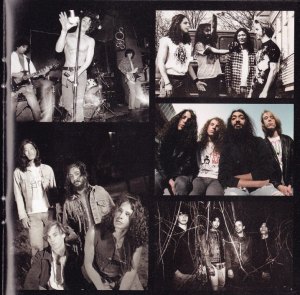
Phil Anselmo (Pantera) takes the very Sabbathy “Time is Mine”.  That riff sounds like it may have been later used on an actual Black Sabbath record.  The track simmers with fury, then Phil lets it rip loose.  The only way to make Sabbath heavier than Sabbath is to include a singer like Anselmo.  Drumming is Seattle legend Matt Cameron.

The expressive Serj Tankian (System of a Down) lets his pipes have their way with “Patterns”, amidst more of those annoying samples.  It absolutely sounds more System than Sabbath, which is fine since both are heavier than fuck.

The one guy that pulls off a truly Black Sabbath-sounding song is the guy you’d least expect:  Billy Corgan.  Yet his “Black Oblivion” comes closest to the spirit of classic Black Sabbath, in terms of length and epic riffage.  Billy plays bass and guitar on the track as well — what a phenomenal bassist!  (The drummer, Kenny Aronoff, knew Corgan from the 1998 Smashing Pumpkins tour on which he played, and then Aronoff went on to play on two more Iommi solo discs.)

The Cult’s Ian Astbury makes Iommi sound like — who else? — The Cult!  Brian May returns for some guitar (with Cottle and Cameron on bass and drums).  The Cult rarely employ such monolithic riffs, but the chorus is pure Cult.

“Flame On!  I used to bleed like a suicide mother,
Flame On!  And now I breath in this dirty black summer,
Flame On!  I bought the truth in the mouth of my brother,
Flame On!  I used to bleed like a suicide motherfucker.”

Shame about the damn loops, like something discarded from Chinese Democracy.  They also infect “Just Say No to Love” featuring the late Peter Steele of Type O Negative.  Like Astbury, he makes Iommi sound like his band, which already sounded a bit like a Black Sabbath parody.

The biggest disappointment on the album is second to last.  “Who’s Fooling Who” is a virtual Black Sabbath reunion, with Ozzy Osbourne and Bill Ward returning to the fold.  On bass is Lawrence Cottle, making it 100% Sabbath alumni, 3/4 original.  And it’s easily the most boring song on the album.  The best thing about it is Bill Ward, the first drummer who didn’t sound like a session guy.  A muffled Ozzy phones in his part, but Bill puts some effort into composing the percussion.  The best part is the instrumental burnout.

And then, a surprising finish:  Billy Idol, with a monstrous “Into the Night”.  Idol should consider doing heavy riffy metal like this more often — he’s good at it.  Though he effectively snarls his way through the slow riff, his punky side comes out when things get fast.  The contrast between riffs and tempos is half the fun.

With Iommi freshly consumed and digested anew, it’s obvious that good portion of what you heard was purposefully geared towards the nu-metal Ozzfest crowd.  The selection of musicians was clearly slanted post-80s, but it’s the loops and samples that really blow.  The blame must be laid on producer Bob Marlette, especially considering some of the loops sounded exactly like another band he produced:  Rob Halford’s Two.  The whole thing sounds like a “product”, though at least with some pretty incredible riffs behind it.

3/5 stars


GUEST REVIEW: Soundgarden – Screaming Life/Fopp (1987/88)

Guest review by Holen MaGroin

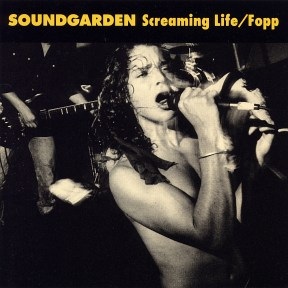
SOUNDGARDEN – Screaming Life/Fopp (1987 & 88 EPs, released combined on Sub Pop CD 1990)

I love Halloween. I love autumn. I love horror films. I love metal. When you combine the four of those things that complement each other so well, it adds up to be one of my favourite times of the year. It may be considered a childish holiday, but to me it’s not about the candy. The entire atmosphere of the world seems to change around and on a holiday. The world almost seems to become more surreal, taking on aspects of life that only seem normal in films. There’s no reason Christmas should feel any lighter or peaceful than a regular day, but it does. Halloween has a certain feel too, an eerie one that goes perfect with metal and horror films, the cooling weather, and the waning sunlight. It’s about the deception, the masquerade, the vaudeville, the showmanship that keeps me intrigued by Halloween. Throughout the month on Wednesday’s I’ll be writing reviews of albums that are important Halloween albums to me, finally culminating on the big day (10/31). I hope you enjoy reading them as much as I do writing them.

1987 was the peak year for mainstream metal*, but it was also the starting point for an underground movement that would upset the entire genre of rock for good. Some call it grunge, but I think that term is as disrespectful as “hair metal”, especially given that the so called ‘big four’ of grunge didn’t sound alike at all. My favourite of those four bands was always Soundgarden. Chris Cornell was easily the best singer out of the bunch, and the group’s songwriting was also superior to the other bands from the same town. None of the other bands came close to writing an album as undeniably badass as Badmotorfinger. They were also the most metal out of the Seattle scene, and Chris Cornell didn’t seem to be a whiny punk like Kurt Cobain or Eddie Vedder. Cornell didn’t shy away from success and intentionally sabotage himself like the other two guys, at least not publically. His passing was one of the few times that a ‘celebrity’ death had actually impacted me, and was a horrible loss to the music world.

In the aftermath of his passing, it makes sense to start back at the beginning to see how he progressed throughout his career. Soundgarden made their debut on Sub Pop with an EP called Screaming Life. They followed it up the next year with the Fopp EP, and they were eventually packaged together on CD in 1990 by Sub Pop under the clever title Screaming Life/Fopp. I bought this CD, and Lynch Mob’s Wicked Sensation at the same time in mid October, so both of these albums have a strong mental link to Halloween for me, but the Soundgarden EPs have more than an emotional attachment to the holiday. This is some evil sounding stuff that fits absolutely perfectly with the time of the year. This is partially because Kim Thayil exhibits a much stronger influence on the band’s music than he would on the last few Soundgarden albums. While on later Soundgarden albums, Chris Cornell wrote a substantial amount of the group’s music as well as its lyrics, here a good share of these early songs were written by guitarist Kim Thayil and original bass player Hiro Yamamoto. All the music on Screaming Life was written by one of the two, with Cornell handling only the lyrics. This is a different sounding band than the group that wrote “Black Hole Sun”. There are some punk roots showing with the obvious Black Sabbath and Led Zeppelin influences.

The aforementioned Black Sabbath influences are blended seamlessly with the brevity and relentlessness of punk in the album opener “Hunted Down”. This is the group’s first of many classics, and was also their first single. It’s an absolutely evil sounding number, with a hypnotic riff that sounds like the band are summoning demons themselves. The lyrics tell the story of a convict escaping prison and being hunted by the authority figures. He copes by changing his face permanently to avoid detection. The band follows the “Paranoid” single mold by making the song less than three minutes, which gives it a lethal efficiency. The melody is somber, and compliments the music accordingly. Chris Cornell was not yet the consummate vocalist that he would become, but his chops here are impressive for a youngster starting out on his first recording. The song was so good that Sub Pop chose it to be their hold music when people would call the label, prompting the group to call them up just to hear their song on the phone.

That Soundgarden classic is followed up by the much more obscure “Entering”, a four minute song that is so doomy that you think it goes on much longer (before checking the CD again, I had originally typed in the review that it was a seven minute epic!). It begins with slow ringing guitar notes that are enchanting in a dark way. It’s unsettling, yet you’re intrigued by it. This is one instance in which the song perfectly mixes with the stark visuals of the black and white cover. The beginning of this song is actually reminiscent of early 20th century horror films. It wouldn’t sound out of place being played on a grand piano in Dracula, Nosferatu, or Frankenstein, that’s how ominous it is. The song then goes through a dynamic shift and is kicked into high gear by the frantic drumming of the great Matt Cameron as Chris Cornell begins to wail with a slap back delay on his vocals that gives the song an energetic live feeling. The production is rough, but the muddiness only helps enhance the songs.

Following a throwaway screeching punk number, the band turns in one of the best songs in the gloomy and slow drop D tuned “Nothing to Say”. This song can only be described as “Electric Funeral” with better vocals updated for the late ‘80s. The group would never again sound this evil excepting their debut album Ultramega OK, which was actually released on Halloween. Perhaps to break up this seriousness, the band included many joke songs on their early albums. “Little Joe” is one of these, a funked up strange number about a Hispanic kid crossing the border. It’s totally disposable, just like all of their joke songs they just take up space and distract from the better music (except “Big Dumb Sex” from Louder Than Love). It’s still slightly demented in a off-putting way, which keeps it from ruining the mood of the EP.

The Fopp section is much lighter, in content and in mood. It contains just three songs and a remix, with only one original Soundgarden tune. The Chris Cornell’s first sole songwriting credit is with “Kingdom of Come”, a fun little tune, that doesn’t amount to much, but sounds good enough when you’re listening to it. The production on this half of the compilation is much clearer than on Screaming Life. The guitars have much more midrange energy, and the most of the muddiness has been cleaned up. If the first EP sounded like a cult ritual, this seems like the light-hearted after party. The set is rounded off by the covers of “Swallow My Pride” and “Fopp”.  These are a couple of tunes just like “Kingdom of Come”, in that they’re enjoyable in a fun way, but there’s not a lot of substance underneath them.

Overall, the Screaming Life section is the superior EP, but together the shades of light and dark are an interesting insight into Soundgarden’s later, more developed sound. This is an absolutely wicked sounding release that most be listened to on headphones at night at least once around the Halloween season. While it’s not perfect and still shows a band in development, it is haunting and helps to scratch that horror metal itch if you’ve already exhausted Welcome to My Nightmare and your Black Sabbath collection.

3.25/5 stars


* LeBrain respectfully disagrees and remembers 1989 as the peak year for mainstream metal.

REVIEW: Soundgarden – Telephantasm (2010)

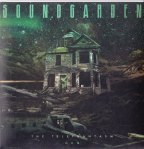
SOUNDGARDEN – Telephantasm (2010)

Soundgarden was one of the first Seattle bands I tweaked onto, mainly because Soundgarden (and Alice in Chains) were the most metallic in their approach. I refused to call them grunge — not with riffs this Sabbathy and a singer who could have been Ronnie James Dio’s protege!

Soundgarden broke up for 13 years, and Chris Cornell started (in my opinion) a lucklustre solo career, while Matt Cameron fared better as the longtime drummer in Pearl Jam. There’s a certain renaissance for these kinds of bands now, what with recent critically acclaimed albums by Alice in Chains and Pearl Jam (and that new studio Soundgarden record) being very well received. Telephantasm acts as a sort of “Anthology” collection. Back in the 90’s this deluxe edition would have been considered a boxed set. Just that today, we’ve done away with the box! It’s not quite a greatest hits set (live versions of “Jesus Christ Pose” and “Pretty Noose” are subbed into for the familiar singles), and not quite a rarities set (9 of the 24 tracks are rare or unreleased).

What Telephantasm is, is a really good overview of one of Seattle’s best. From the Deep Six compilation to their final pre-breakup album Down on the Upside, this set chronologically presents Soundgarden at their very best, live and in the studio. Personally I haven’t listened to old Soundgarden in a while. I have a bunch of albums and singles at home, but after I quit the record store, I reverted back to my metal roots and didn’t listen to Soundgarden much anymore. For me, this was almost like the first time again. Hearing the songs in this new context didn’t take away from what they were on albums either.

TELEPHANTASM_0003Outstanding classics for me include: “Fopp”, “Superunknown”, “My Wave”, “Dusty”, “Burden In My Hand”, “Rusty Cage”, and “Spoonman”. I mean, every fan of musicianship absolutely needs a song in their collection with a killer spoons solo!

Outstanding rarities for me were: the video mix of “Fell On Black Days”, and live versions of “Pretty Noose”, “Flower”, “Blow Up The Outside World”, and a frenetic “Jesus Christ Pose”. Hard to believe that Cameron can play those complex rhythms live. Unbelievable!

Of course there is the much hyped “Black Rain”, an unreleased track from the Down on the Upside sessions. Sounds great. Could have been written for Badmotorfinger. Liner notes are excellent. There are two essays, one by guitarist Kim Thayil (who seems like one of the coolest guys in rock). There are a handful of photos and exhaustive credits. I’m not too keen on the cover art, but there is a big fold out revealing the whole thing, and it’s quite expansive.

Of course there’s the DVD, for some this will be worth the price of purchase alone! This is a pretty comprehensive collection of music videos including uncensored and international versions. For new fans who are upset that they didn’t get the studio versions of “Jesus Christ Pose” or “Pretty Noose” on the CDs, they are here on the DVD.

TELEPHANTASM_0005There is a bonus track on some versions — the unreleased song “The Telephantasm”. However the best way to get that song is to buy the 7″ single, which also includes a killer, killer live version of “Gun”. This is a brand new live version by the reunited band. If you want the truly complete picture of Telephantasm, go out and get that single while you still can. Also required, but much more expensive and still unacquired by me: There is a bonus track on the deluxe vinyl version of the album: “Beyond the Wheel”, live by the reunited band.  This is on a included 7″ single, which I would very much like to get.

Lastly I’ll have to say a few words about the mastering of this album. Unfortunately the “Loudness Wars” can add Soundgarden to its body count. The album was mastered way too loud, and it really takes its toll on the sound. You can really hear it on the cymbals. It’s unfortunate, since so many of these songs are previously unreleased. This is the only way you can hear them, and it’s not as good as it should be, thanks to the record company mastering this damned thing too loudly.

Regardless, the music is incredible.

4/5 stars

REVIEW: Geddy Lee – My Favourite Headache (autographed)

SAM_2310

GEDDY LEE – My Favourite Headache (Atlantic, 2000)

I have owned this album twice now. I bought it when it first came out, then a couple years later Lemon Kurri Klopek hooked me with up with a copy autographed by Ged himself! As a diehard Rush fan, this album is one of my prized possesions.

I just don’t enjoy it as much as Geddy’s Rush discs.

The title refers to Geddy’s love of music — a source of satisfaction and frustration, his “favourite headache”. Personally, I was disappointed by the album. I thought the songwriting was not up to standard, treading familiar waters already crossed on Test For Echo. The playing is competant enough. I mean, you can’t go wrong with Matt Cameron and Jeremy Taggart on drums, can you? Ben Mink is a fine multi-instrumentalist, but there is no shredding like you’re used to on Rush albums.  (Geddy also plays guitar himself.)

SAM_2313

Can a listener separate Geddy as a solo artist from Rush? It is very difficult to do. Whatever Geddy writes, sings, and plays is going to automatically sound something like Rush. But without Alex and Neil, of course it won’t sound exactly like Rush. And that is more the fault of the listener (me) than the artist (Geddy). I personally cannot separate the two.

There’s some monstrous playing here — just listen to that opening bass on “My Favourite Headache”.  There’s also some decent riffs (“The Present Tense”).  There’s some passion (“Working at Perfekt”) but very little that stands out as memorable, as classic, or something you just crave to hear again.  In general the songs here are all pleasant, solid rockers (with a few slower tunes). Geddy’s lyrics are weak at times (“Home on the Strange”) but his singing is good and the production is excellent.

Best tune:  The final one, “Grace to Grace” which is the only one that really cooks.

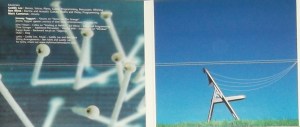
The cover art is pretty disappointing. I’m sure it meant something to someone along the way, but to me it’s just a generic cover that could have been on any album in the faceless morass of the 1990’s.

3/5 stars. Not bad, but no stand-outs.