Mick Jagger

MOVIE REVIEW: Jodorowsky’s Dune (2014)

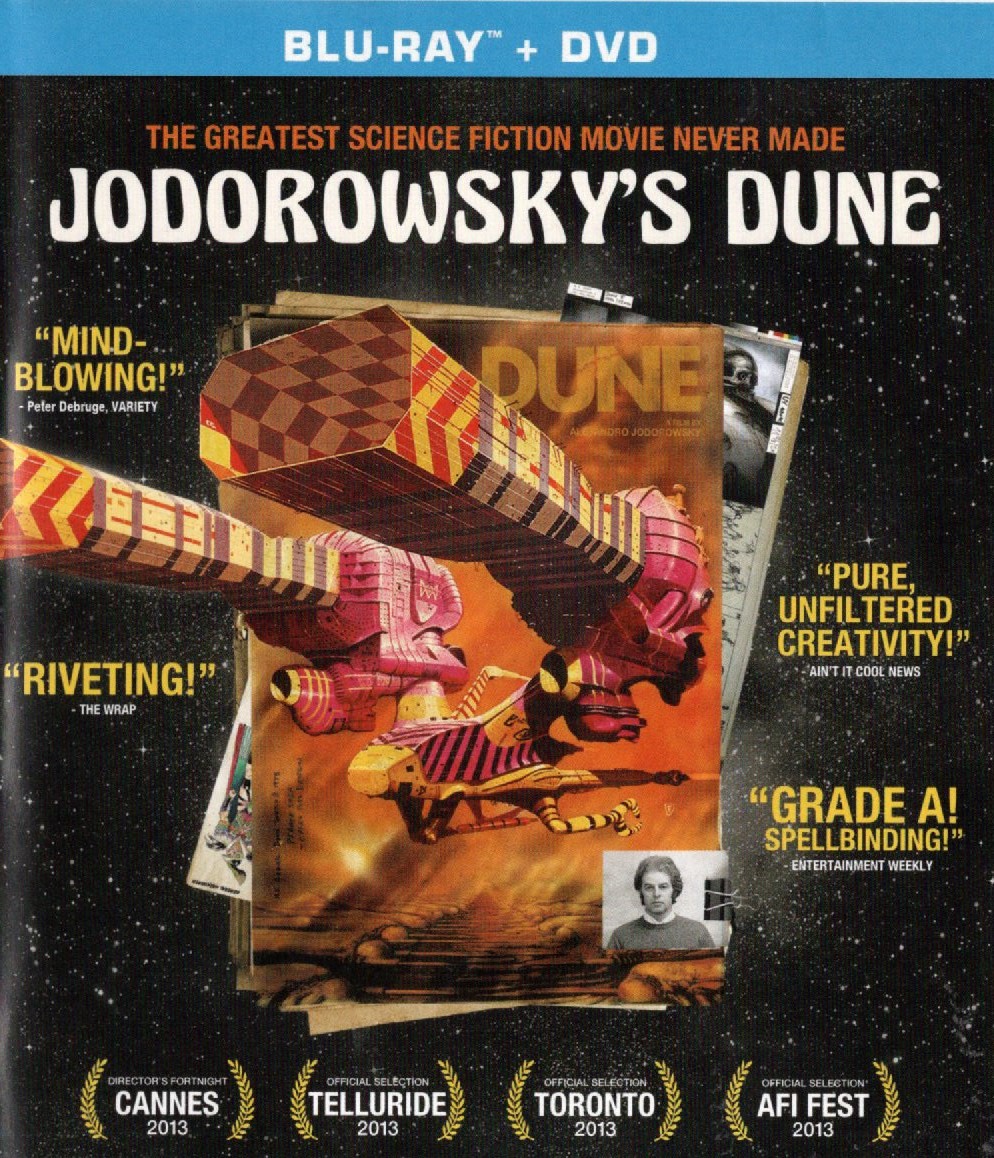
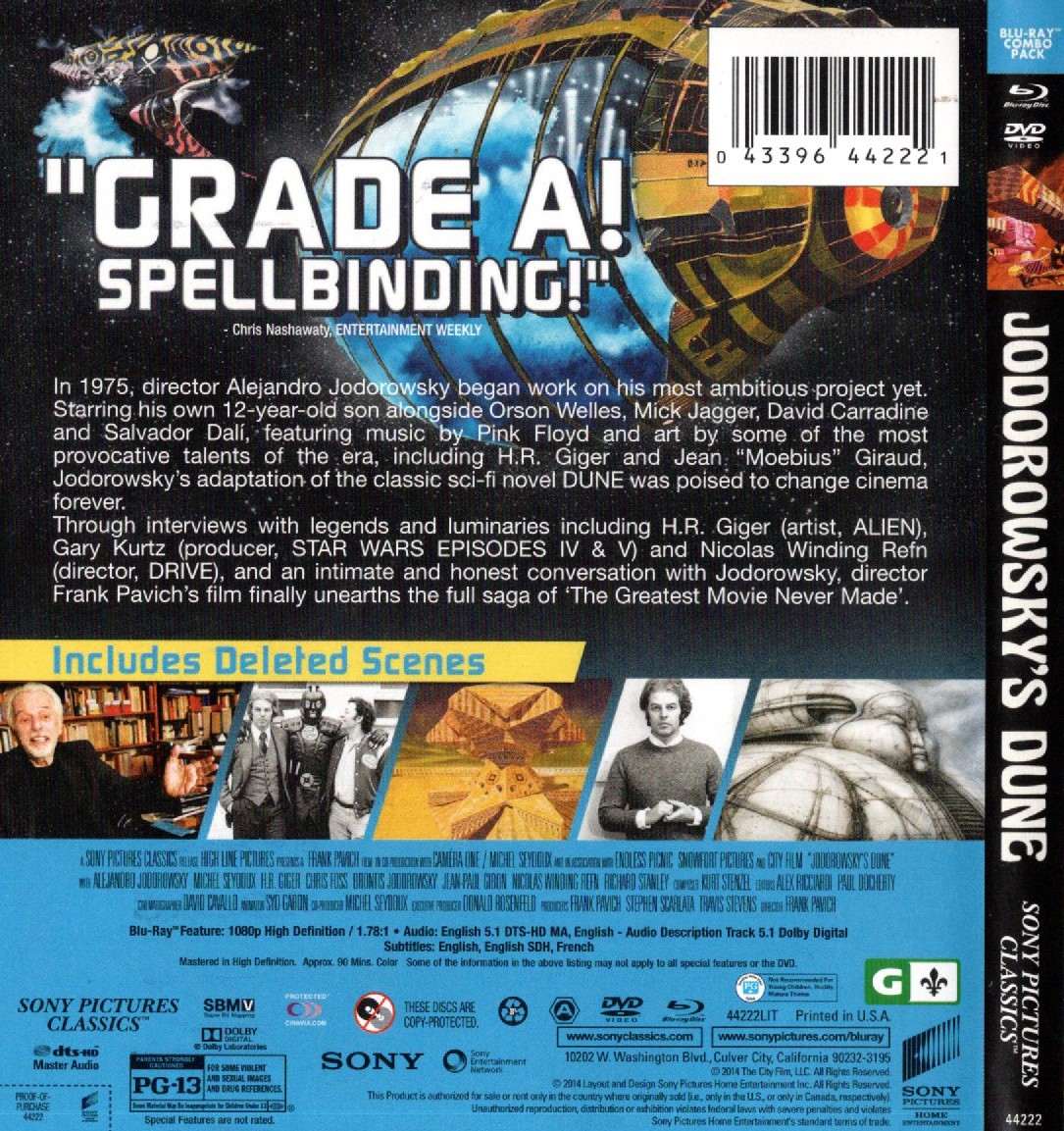
JODOROWSKY’S DUNE (2014 Sony Pictures)

Directed by Frank Pavich

What do Alien, Star Wars, Raiders of the Lost Ark, Flash Gordon, Masters of the Universe, The Terminator, and Blade Runner all have in common? They all bear the imprint of Alejandro Jodorowsky’s attempt to make a film version of Frank Herbert’s Dune in the mid-70s. 2001: A Space Odyssey was the definitive space movie, and Star Wars was just a gleam in Lucas’ eye.  Dune, considered by many to be unfilmable, was perfect for Jodorowsky.  The Chillean-French director was considered a madman, albeit one with a sky-high imagination.  Of Dune, he sought to give the audience a druggy trip without the drugs.  But he also sought to make so much more – “a prophet”, he described it.  Something that would change the consciousness of the audience, and the future of movies.  Free the imagination, the mind, the soul.  He saw it as something much bigger than making a film, and so he assembled a team of “spiritual warriors” to join him in making his vision real.

His warriors included the Swiss genius H.R. Giger, known for his biomechanical style. Comic artists Chris Foss and Jean “Mœbius” Giraud were on board.  (Ian Gillan fans will recognize Foss’ style from the cover of his Clear Air Turbulence album.) Special effects genius Dan O’Bannon sold all his possessions and moved to France to work with the team. Pink Floyd and Magma were assigned to do music for specific planetary settings. Mick Jagger, Orson Welles, Salvador Dali, David Carradine and Udo Kier signed on, with Welles to play the grotesque Baron Harkonnen. Jodorowsky convinced him by offering to hire his favourite French chef for his catering.  As the key character of Paul Atreides, the messiah of Dune, who could he cast but his own son Brontis?  The boy went through gruelling physical and mental training for  the role.

The team assembled what is now known as the Dune book, an incredibly detailed shot-by-shot storyboard, several inches thick, and filled with images that found full motion and sound later on in the aforementioned films.  Giger’s designs are especially recognizable, including one that foreshadows his famous Alien Xenomorph.

Jodorowsky used Herbert’s Dune as the basis for his own, but began to drastically change the storyline.  Some of his original ideas were brilliant, but his ending is completely baffling.  In an “I am Spartacus!” moment, Paul dies, which does not happen in the book.  Suddenly his consciousness transfers to the people of planet Arrakis, who all proclaim to be Paul.  The planet comes back to life, with green jungles and blue oceans appearing.  Arrakis then breaks orbit, and shoots through space to share its new joined consciousness with the universe.  Heady stuff perhaps, but a sharp change in direction to Herbert’s more serious science fiction style.  Jodorowsky believed in his story, with an unbelievable passion.  He is visibly angered at what comes next.

When movie executives told him that the film had to come in at 90 minutes, it was the beginning of the end.  No, he said.  Eight hours, or 20 hours, he would make the movie he needed to make!  Studio executives don’t like hearing such things, and fearing budget overruns, cancelled the Jodorowsky version of Dune.  His team scattered, with many such as Giger, O’Bannon and Foss meeting soon again on Ridley Scott’s Alien.  The Dune project was handed to David Lynch, who Jodorowsky believed was the only other person who could have realized the movie the right way.  It filled him with feelings of dread that soon turned to glee when he saw just how bad Lynch’s Dune turned out.  Yet he knew, it had to be the movie executives who ruined it.

This is the story of Jodorowsky’s Dune, a documentary film by Frank Pavich.  You will be stunned by the images that this team created, and by Alejandro’s deep passion for making his art.  This is your own chance to see what might have been.  Blu-ray recommended.

4.5/5 stars
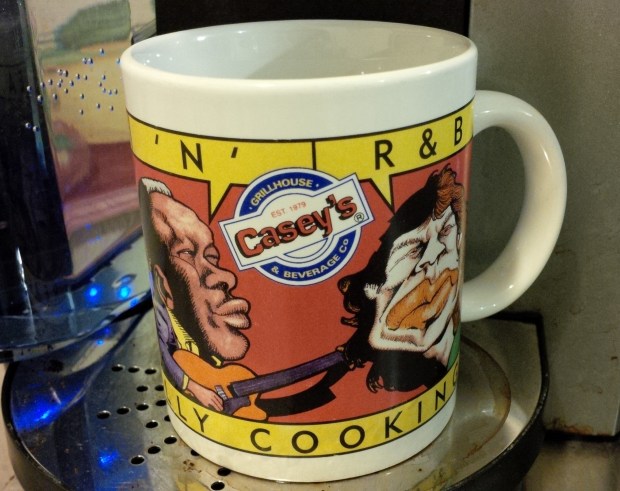
VIDEO: The Birthday Mug from Caught Me Gaming

Sarca from Caught Me Gaming does much more than just video games (not that those don’t rock)!  She talks coffee, she talks books, movies, and occasionally music too.   I was thrilled to get this birthday gift.  Check the video below.

Aaron got the same gift from Sarca for his birthday!  Check his out over at KeepsMeAlive.

Thank you Sarca for this awesome rock and roll mug!

Click here for Sarca’s original post featuring this mug.

IMG_20150801_113755_edit

REVIEW: The Rolling Stones – Their Satanic Majesties Request (1967)

Thanks Aaron for hooking me up with this CD.

STONES 1

THE ROLLING STONES – Their Satanic Majesties Request (1967 London/Decca)

It would be lazy for me to compare this album to contemporaries of the band. It would also be lazy to use the old outdated “psychedelic” adjective to describe this music. I can think of numerous other adjectives: challenging, rewarding, inventive, chaotic, grimy, majestic.

Andrew Loog Oldham had quit his post as the band’s producer and manager, leaving the Stones to their own devices.  It sounds as if they explored every possible indulgence (musically and otherwise).

Their Satanic Majesties Request takes some of the musical expeditions that The Rolling Stones had completed on Between The Buttons (think “Ruby Tuesday”), and turns that on its head. Mix in ample supplies of chemicals and a total fearlessness, and a belief that what they were doing was total brilliance, and what you get is Their Satanic Majesties Request. This album surely must have convinced parents that Satan himself was possessing the hi-fi.

Light on guitar, rhythm and blues, Their Satanic Majesties Request is still among the best Stones albums if you can penetrate its purple smokey haze. Doing so will reveal an album constructed in layers, and peeling back these layers will release melodies and instrumentation that will keep you enthralled for years, as you keep coming back to this album. Is that Mick asking, “Where’s that joint?”

I’m fond of the opening track, “Sing This All Together”, which sounds (at times) like a cross between the Beatles and a James Bond theme.  I’m sure some fans were wondering, “Where’s the guitars?”  They’re on there, used sparingly but effectively.  “Citadel” has guitars; grimy, dirty guitars, chugging out distorted chords under Mick’s dreamy melodies.  This one reminds me of early Alice Cooper, who I am sure was influenced by this album.

Bill Wyman sings lead on “In Another Land”, the watery vocal track sounding like it was recorded in another land.   “2000 Man” is as catchy as anything else the Stones produced, with neat lyrics that must have seemed so forward-thinking in 1967.  I love the guitar melody, and how it sounds like a completely different song on the choruses.  “She’s A Rainbow” is a perfect pop song, as brilliant as “Ruby Tuesday” if not moreso due to Charlie Watts’ relentlessness.  Meanwhile, “The Lantern” happily meanders along, amidst what sounds like out-of-tune guitars and horns.  Likewise “Gomper” wanders about, loads of sitar invading the eardrums, and lots of other stuff I can barely identify.

“2000 Light Years From Home” is a good one, loaded with Brian’s mellotron, again sounding perpetually out of tune.  Fortunately Charlie keeps the song moving forward, his timing always perfect.  Then, “On With the Show” brings us back in time to a simpler age, Mick affecting an accent for this fun retro piece.

While every song has melodies and instrumentation coming out the wazoo, it surely is “Sing This All Together (See What Happens)” (not to be confused with “Sing This All Together”) that is the centrepiece of this bizarre journey into the unknown. 8 1/2 minutes long, and never really going anywhere, some might consider this a waste of vinyl. On the other hand, those that have studied free improvisation will get inspiration out of this bizarre arrangement.

Brian Jones continued to experiment with multiple instruments including sitar (hey, it was the 60’s). Guests include Lennon and McCartney, Steve Marriot and Ronnie Lane, Nicky Hopkins, and future Led Zeppelin bassist / keyboardist / string arranger John Paul Jones.

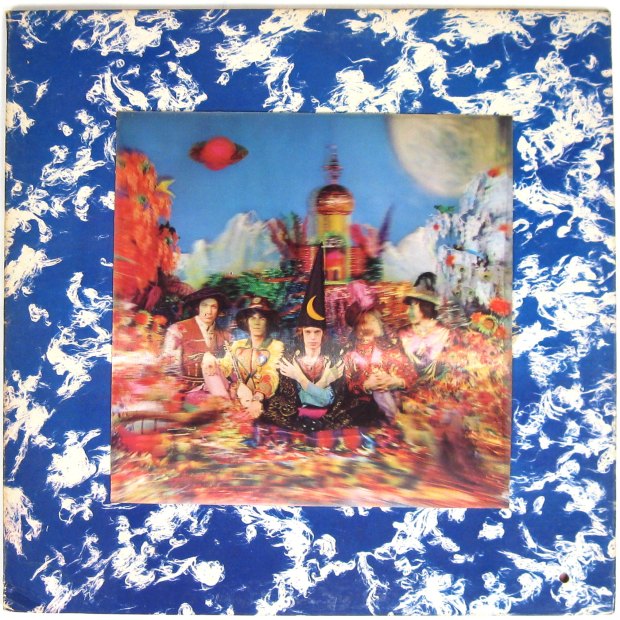
The original LP featured a lenticular cover gimmick, as well as a maze inside that can never be solved.  How quaint!

Next time somebody comes up to you and says, “Yeah, this new band that I like, they sound really Stones-y,” then respond by playing “Sing This All Together (See What Happens)” and ask if this is what they meant. Watch the looks on their faces.

In the end, the Stones decided to return to their blues rock sound on Beggars Banquet, which was probably the best way to continue to have a viable career.

4/5 stars