
Guest review by Holen MaGroin – part 2 in his KIX series
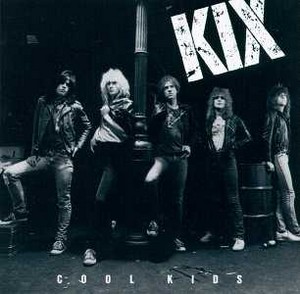 KIX – Cool Kids (1983 Atlantic)
Coming off the heels of their unsuccessful debut album, Kix returned to the studio with new producer Peter Solley to shell out what would be their most polarizing and least rocking album. Cool Kids is the most commercial album that Kix every recorded, pressured by Atlantic to deliver a hit after the failure of the debut to find an audience. This was 1983, just before Pyromania broke through the stratosphere to make melodic hard rock/heavy metal a viable commercial direction. Atlantic still had no idea how to market Kix, and also didn’t know what direction to push them in order to find an audience. For this album, they decided to push them towards the new wave aspects of their sound, forcing them to work with outside writers for the first time.
The production of Cool Kids is much more slick and pop-orientated than the rough and ready production of the debut. It’s obvious that the band was pressured into this direction, as a lot of the time they don’t sound comfortable in their own skin. Signer Steve Whiteman’s voice lacks its usual power and grit on this recording, likely being asked to hold back for the songs by producer Peter Solley. Another notable change to the band’s sound is the presence of new guitar player Brad Divens, temporarily replacing Ronnie “10/10” Younkins. This is the only Kix album to feature Divens, as Younkins rejoined them by their next album Midnight Dynamite. Cool Kids lacks the fiery and spontaneous edge of Younkins’ playing, and contributes even more to the album feeling sterile.
Despite these flaws, this is still a Kix album. There are still enjoyable moments throughout the record, quite a few actually. They are however, overwhelmed by the material that doesn’t work on this album. Opener “Burning Love” doesn’t introduce the set of tunes with a lot of power. Kix always has energy, but it seems to be counteracted with the sterile production and addition of keyboards. That being said, it’s a perfectly serviceable melodic rock tune, but there’s nothing genuinely exceptional about it. With it’s bouncy keyboards and lazy riff, it doesn’t sound much like Kix. This is one of the tunes that wasn’t written by the band. The title track follows it in a similarly sleek fashion, but is ultimately more enjoyable because it is more guitar-driven, and the band’s natural energy pushes through much more. It was also written by outside writers, but it is a very catchy tune. I’d say it’s a great melodic rock song for the early ‘80s. Unfortunately, it doesn’t sound much like Kix either.
After two tracks that fail to encompass the Kix sound, the first band-written track is up with “Love Pollution”. One of the only straight-up rockers on the disc, it’s also one of the best songs on the album. Written by Whiteman and Forsythe, the song burns along with a killer guitar riff and a lot of attitude, and accompanied by piano in the chorus that actually helps the song. A truly killer tune, one that I think represents the direction that this whole album should have gone in. It has a sound similar to that of the genre defying debut, but in a harder rocking vein. You can tell already that Kix wanted to toughen up their sound, though the shiny production doesn’t help that point across.
Next up is the outside penned “Body Talk” which used talk box three years before Bon Jovi, and also has one of the absolute worst music videos of all time. What the hell was the director thinking? Kix playing at what looks like a high school gym with only girls working out doing weird-ass synchronized exercise dances? Yeah, they really dropped the ball with this one. I find it strange that with this promotion Atlantic was confused about why the band weren’t doing well commercially. Luckily for them, Kix were still obscure enough that hardly anyone has ever seen that video. As for the song, it’s an uncharacteristic new wave workout, and a co-lead vocal between Steve Whiteman and drummer Jimmy “Chocolate” Chalfont. It’s a catchy pop tune, but it couldn’t be further from the Kix sound. Atlantic definitely missed the mark by making them record this one.
And if you didn’t think they could fall further into Flock of Seagulls territory, we get “Loco-Emotion”, penned by bass player Donnie Purnell. Steve Whiteman gets to play saxophone on this song, and for the verses it’s easily the weirdest Kix song ever. While the chorus contains a get up and go kick in the pants, the verses are just off-putting. Their first album used Devo primarily for what little new wave influence they had, but now they were courting the sound of several shittier new wave bands. Fortunately, from here on out everything was penned by the band, and there is nothing as jarring as this song.
However, a lot of these songs penned by Purnell are strange, and not up to his usual standards. “Mighty Mouth” is a powerful rock tune that gets bogged down by a very awkward and annoying chorus with Whiteman screaming the title. It seems a bit too cheeky for its own good, but is nothing compared to the campy “Nice on Ice” and the absolutely awful “Get Your Monkeys Out”. These songs lean hard on the bubblegum pop equation that was blended so successfully on albums before and after this with hard rock. Here, thanks to the shiny production, they sound cheesy and downright embarrassing. Thankfully, the album is redeemed with the two closing tunes.
Kix break the general rock standard of having the penultimate song be the worst on the album, by having the penultimate song be the best on the album. “For Shame” is an acoustic ballad years before “When the Children Cry”, or “Patience”, or “More than Words”. Beginning to see a trailblazing pattern? Yes, this is a heartfelt ballad that relies more on a nostalgic feeling than a sappy one. It uses the emotion of regret as the basis of the tune, which is an effective emotional connector. Whereas other love ballads seem derivative, this one seems genuine. The lyrics are very simple, but powerful. They detail summertime love that is lost with the passing of the seasons, with the two lovers unable to find each other afterwards Grease style. Thankfully, this song is stripped of the excess production that plagues most of the rest of the album, which keeps it sounding real, unlike other synthetic love tunes of the era. “For Shame” is a fantastic ballad, one that Kix would only surpass with a #11 hit on the Billboard charts (more on that when we get there).
They round the album out with the spiritual brother of “Love Pollution”. The other hard rocking song on the album, it features a writing credit from everyone in the band. It’s a speedy number the glides by ending the album on a high note. “Restless Blood” is an energetic kick in the pants to conclude the record with grace. Cool Kids is arguably the least essential Kixrecord, as it’s sound is the result of the label pressure. For the most part, it doesn’t represent the Kix sound, and a lot of the songs that do represent that sound, don’t get the equation as balanced as on the debut or any of their later albums. Thankfully, Kix would not let us down again. Atlantic finally realized that they had their hands on a hard rock band after this record tanked as bad as the first one. Our heroes would resurface again stronger than ever in 1985 with possibly the greatest album of their career. If this was the stepping stone that made Midnight Dynamite possible, so be it.
2.5/5 stars






You must be logged in to post a comment.