
progressive rock

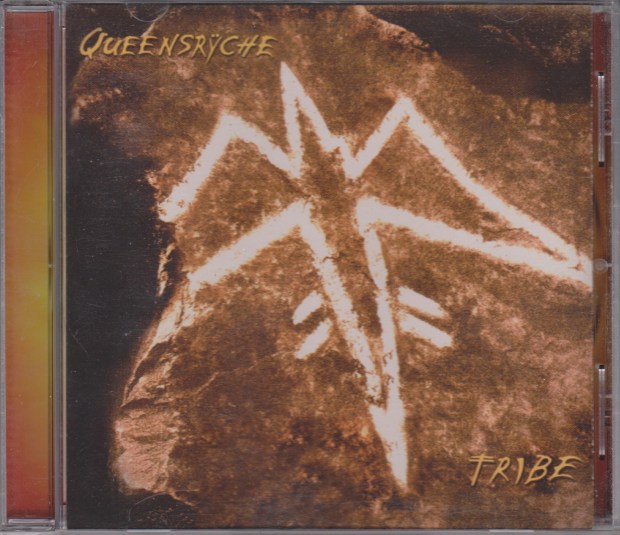
REVIEW: Queensryche – Tribe (2003)

FLAMING TURDS

“Flaming Turds” artwork courtesy of SARCA at CAUGHT ME GAMING.  Thanks Sarca!

We continue with the WEEK OF FLAMING TURDS!  We’re looking at a collection of malodorous music.  Strike a match, you’ll need it for these stinkers!  Today, please welcome to the stage, Mr. Geoff Tate.

Scan_20160228QUEENSRŸCHE – Tribe (2003 Sanctuary)

Queensryche fans have had a lot to deal with over the last 20 years.  Uneven albums, lineup changes, framed by occasional flashes of brilliance were the norm up until recently.  The most significant obstacle was the 1997 departure of Chris DeGarmo, their chief songwriter and beloved guitarist.  Overall burnout caused by band turmoil led DeGarmo to retire from music altogether and follow his dream of becoming a pilot.  Later statements from the band (during their legal battle with former singer Geoff Tate) claimed outright that he left because of “Geoff Tate’s personal demeanor” with the guitarist.  In his absence, Tate took over the role of primary songwriter and began leading the band.  Their first post-DeGarmo album was 1999’s Q2k, a pretty heavy record that was largely dismissed by fans for being a departure from style and quality.  DeGarmo’s replacement guitarist Kelly Gray was let go shortly after the Live Evolution album.  Struggling to come up with material for another album, Queensryche called Chris DeGarmo up on the telephone.  The guitarist softened his stance and readied himself to make a full return to the band.  He wrote, played guitar in the studio and even took part in photo shoots.  Fans hoped for something special that would live up to the Queensryche legacy from this reunion.  It was not to last.  The same old strains returned between DeGarmo and Tate, and it was over before it started.

Fandom felt the wind taken out of its sails, and eyebrows were raised at the sudden second departure.  The released album Tribe featured five co-writes from Chris DeGarmo, and one from new Queensryche guitarist Mike Stone (ex-Peter Criss), who was hired shortly after.  Both Stone and DeGarmo receive credit as special guests.  Upon listening, best hopes for the album were dashed.  Tribe‘s 10 songs come off as half-baked outtakes from a better album that was  never made.  Some of the blame must go to the production, a flat and dry sounding affair.  However that cannot explain the dull songs.  It’s not all bad — “Open Your Eyes” features a damn fine, exotic sounding riff, probably contributed by DeGarmo.  They just couldn’t construct a memorable song around it, and Tate couldn’t seem to get his singing into gear.

The sole Mike Stone co-write, “Losing Myself” is a programmed mess of samples without a song.  The chorus sounds like an outtake from the dreary Hear in the Now Frontier album.  Same with the acoustic “Falling Behind”, which is too bad because it’s one of the songs on which you can hear Chris DeGarmo’s playing.  In fact, Tribe in general might be considered Hear in the Now Part II, so similar are they.

The only real quality musical moment happens on the DeGarmo co-write “Desert Dance”.  Exotic and heavy but with an actual song built out of it, “Desert Dance” gets you moving.  Drummer Scott Rockenfield throws a lot of percussion tricks into it, emphasizing the exotic (this is true of the album in general).  Tate actually sounds alive on this, becoming the cheerleader of the album.  “Desert Dance” was the only song that had me reaching for the volume knob to turn it up.  One other decent track is “Rhythm of Hope”, a co-write with Eddie Jackson and Scott Rockenfield that sounds like it was an effort to be the second “Silent Lucidity”.  Unfortunately that moment has passed.

It’s worth noting that the only member to have a songwriting credit on every song in Geoff Tate.  I place the blame for Tribe‘s lack of life at his feet.  The album is only 41 minutes, but it is a long 41 minutes.  Difficult to finish, hard to like and easy to forget, Tribe remains a chore today.

2/5 stars

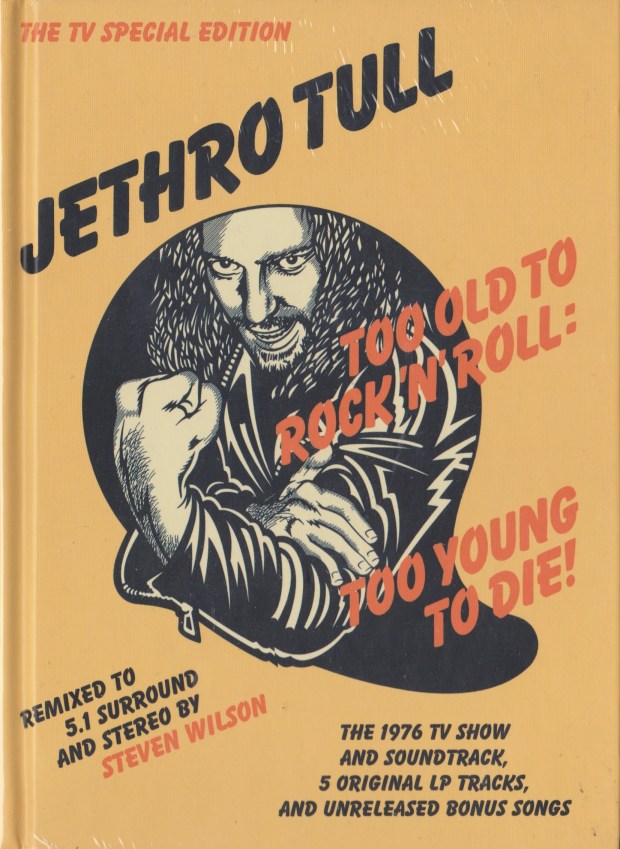
REVIEW: Jethro Tull – Too Old to Rock ‘n’ Roll: Too Young to Die! (TV special edition – 2CD/2DVD set)

JETHRO TULL – Too Old to Rock ‘n’ Roll: Too Young to Die! (1976, 2015 Chrysalis TV Special edition 2CD/2DVD)

I foresee a future time, when every man woman and child will be able to buy deluxe multi-disc box sets of just about every album ever made.  While old geezers with greying beards will sit back in a rocking chair (a hovering one, no doubt) listening to multi-track backing tapes for every single Poison CD, our children will be able to do the same with a comprehensive book-box version of the NSync debut album.  It’s going to happen eventually, so we may as well get good albums like Tull’s Too Old to Rock ‘n’ Roll: Too Young to Die! in box set form while the concept still has validity.

Of course this isn’t the first Jethro Tull album to get this kind of treatment.  A super deluxe Aqualung was a fairly recent release, and I received Benefit myself for Christmas last year.  The bold four-colour album cover for Too Old to Rock ‘n’ Roll makes for a splendid book-form box with plastic CD trays inside.  An absolutely massive (80 page) full colour booklet awaits you inside.  Rare photos are the norm of course, but a features such as “From Carmen to Tullman” about the late John Glascock are valuable reads.  Detailed liner notes will help you make sense of the track listing, and the multiple versions of each song included.  Almost all of this material is rare, previously unreleased, or newly mixed material by studio wizard Steve Wilson.

IMG_20151227_162750

Scan_20151229First of all, I was not aware that all of Too Old to Rock ‘n’ Roll was re-recorded for a UK television special, included here on DVD.  Anderson had a theatrical presentation in mind, so playing live wasn’t of interest to him.  But, apparently due to British law, the LP Too Old to Rock ‘n’ Roll could not be used for backing music on a “live” TV special.  Anderson’s vision seemed to involve the band miming to the album while pulling amusing faces and occasionally acting out the lyrics.  In order to mime and do it legally, brand new recordings of every song had to be made!  In fact the band painstakingly took great care in recreating the album, although there are also obvious differences.  For the DVD and CD, these tracks been newly mixed and are available for the first time.  CD 1 contains the standard stereo mix of the re-recorded album.  DVD 1 has the special in both stereo and 5.1 surround.

The original album was also meant to be remixed top to bottom in 5.1 by Wilson.   This was not possible, because the original multi-track tapes survived for only five songs, almost the whole second side:  “From a Dead Beat to an Old Greaser”, “Bad Eyed and Loveless”, “Big Dipper”, “Too Old to Rock ‘n’ Roll”, and “The Chequered Flag”.  Tull’s semi-acoustic nature lends itself well to a good 5.1 mix.  The audio field is filled out, but not to excess.  It’s a good balance and the tracks included in 5.1 shine with fresh light.  Do not be surprised to hear parts you didn’t hear before.

The bonus associated tracks are a light collection of rare Tull.  The two bonus tracks from the prior 2002 remaster, “One Brown Mouse” and “A Small Cigar” are included here unaltered on CD 2, or on lossless 96/24 stereo PCM on DVD 2.  The unreleased tracks are excellent.  “Salamander’s Rag Time” sounds like the Jethro Tull collaborating with the Beatles via “A Day in the Life”.  Meanwhile, “Commercial Traveller” is a lushly arranged and recorded ode to the road with full strings and Martin Barre guitar blazes.  “Strip Cartoon” also has quaint Beatles-isms though it is really just a bright Tull acoustic jaunt.  An incredible instrumental take of “Salamander” is pure delight, hearing it ring in live perfection.  There is also a bare acoustic version of “A Small Cigar”, and earlier versions of “Quiz Kid” and the title track.  As always, these are available on both the CDs and DVDs.  Four of these (“Salamander’s Rag Time”, “Commercial Traveller”, “Strip Cartoon” and the acoustic “Small Cigar”) can be heard in 5.1, again mixed by Wilson.  Expect the same level of lushness and quality as the album tracks, although with the acoustic arrangements, it’s more about the spaces between.

One of the great advantages of the DVD format is the ability to re-release classic Quadrophonic mixes for modern audio systems.  Like many rock bands (and especially progressive rock bands) of the early 1970’s, Jethro Tull released Too Old to Rock ‘n’ Roll in Quad.  That long unavailable version is right here in 4.0, on DVD 2.  It’s certainly an interesting animal.  Where Steven Wilson’s 5.1 mixes envelope the listener in clouds of Tull music, the Quad mixes things hard into individual channels.  It’s an interesting experience.  The vocals are mostly on the right, the flute behind, and the other instruments tucked into their corners.  If you want to hear it as if the music is coming from four separate corners of the room, then this Quad mix is that exactly.  There is something to be said for this, because you can clearly hear each instrument isolated, and easy to study.  You can easily lose yourself in a particular part of the mix, which is the benefit and weakness of the format.  Regardless, the classic 1976 Quad mix has parts you won’t hear elsewhere, and it’s available again, and that is a good thing.

With all this talk of extras and remixes and surround sound, the original album is almost overlooked!  Fear not.  A bit like an afterthought, the original, stereo, classic Too Old to Rock ‘n’ Roll: Too Young to Die! is here, as the final 11 songs on CD 2.  Even the Benefit super deluxe box set didn’t include the original album on CD.  If you prefer lossless stereo, it’s there on DVD, too.

What of the original album, then?  Well, I reviewed that in 2012, and you can read all about it here.   A brief summary:


SAM_1882Like many Tull albums from the mid-70’s, there’s plenty of acoustics to go around accompanied by lovely flute passages and complex drum patterns.  There’s also some horns and orchestration courtesy of David Palmer (not yet a full member of the band).  Personal highlights:

  • “Salamander”, a folksy number with intricate acoustics.
  • The harmonica riffing of “Taxi Grab”, reminiscent of an earlier bluesier Jethro Tull.  The guitar soloing (both electric and acoustic) is also divine.
  • “Big Dipper”, a playful yet complex number with plenty of flute and a fun chorus.
  • The masterpiece title track (obviously), lush with ochestration.
  • “Pied Piper”, one of the most obviously catchy songs on the whole album, albeit still complex with multiple parts and section.
  • The final track of the album, a slow but dramatic grandiose number called “The Chequered Flag (Dead or Alive)”.


Too old to rock ‘n’ roll?  Never.  Buy this for the grandpa on your lists.

4/5 stars

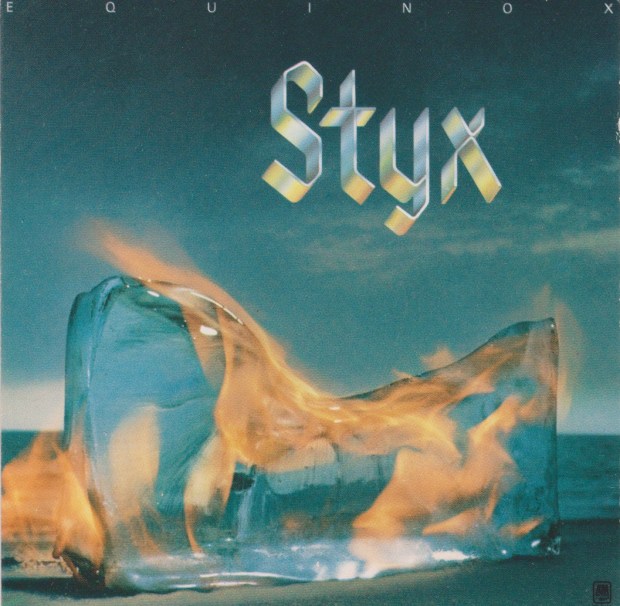
REVIEW: Styx – Equinox (1975)


Scan_20151129STYX – Equinox (1975 A&M)

My first purchase from Mike and Aaron Go to Toronto Again…Again to be reviewed. Bought at BMV on Bloor for $5.99 in excellent shape.

A few years ago I picked up the pretty damn fine Styx 2 CD compilation Come Sail Away. Since that time I pledged to pick up old Styx studio albums on CD, if found used or cheap. Equinox is now the oldest found I’ve acquired. After recording four albums for Wooden Nickel records, Styx finally signed with a major label. A&M released their fifth: Equinox. It was however also their last album with original guitarist John Curulewski, a major songwriting contributor to the early albums. The Styx story continued with them moving from strength to strength and discovering a kid named Tommy Shaw out of Alabama. Shaw picked up the ball and helped Styx finish their touring commitments for Equinox.

When I was younger and not really paying attention to the lyrics, I assumed “Light Up” meant something about stage lights, perhaps lighting up the stage for a show. As an adult, I am convinced that Styx were actually corrupting the youth! Opening the album with a progressive salvo of heavy guitars and spacey keys, it quickly transitions into a celebration. “Light up and be happy, sweet sweet sounds will fill the air,” sings Dennis De Young innocently enough. Dennis seems to imply he’s singing about a sipping a glass of wine, but then: “All I need is just one hit to get me by, ‘Cause baby when you’re near I’m halfway high.” I see what you’re saying, Dennis, you rascal. A great happy-go-lucky tune, “Light Up” is just fun. But then “Lorelei” turns up the rock. This time Dennis is corrupting America by inviting a woman to live with him, pre-marriage I assume! “Lorelei let’s live together!” John Curulewski and James Young bring with them a hint of a southern rock twang in the leads (think the Eagles). Dense, immaculately arranged and lush, “Lorelei” is pure classic rock fun. On the progressive side, Dennis’ synth and organs take center stage on “Mother Dear”, a co-write with Curulewski who punctuates it with heavy chords. Fans of space rock will love this trippy journey into the sonic spectrum. “Lonely Child” starts as an acoustic number, heavying-up as it goes. Twangy space guitars are the highlight. These four songs together are a great side, a good balance between the cerebral and the hard.

I still like to think of classic albums in terms of sides, so this is where I got up to make some fresh coffee. Good thing too, because “Midnight Ride” could not be more different. It’s clearly a James Young song, a pure rock blaze through the night going over the speed limit. Put the caffeine right into my veins, man, this is groovy shit and Styx can rock you harder than you expect. Dennis’ role is limited to backing vocals, albeit stunning ones!

“Born For Adventure” combines the different sides of Styx. You get the rocking guitars and the progressive bent, with the pompous arrangement and smoking musicianship. Then, Curulewski is solely responsible for “Prelude 12”, the acoustic part that introduces the album closing epic, “Suite Madame Blue”. Six and a half minutes of bombastic Styx will drive almost every punk rocker out of the room. In many regards, this is a high water mark. It’s their “Stairway”. Their “Hotel California”. It lacks nothing and continues to impress, 40 years later!

John Curulewski died in 1988, of a brain aneurysm. After Equinox, he decided to step out of the spotlight and ran a recording studio while playing with several local Chicago bands. Shaw took his place and the band has never looked back, but we’ll dedicate this review to John Curulewski who was a crucial part the Styx story.

4.5/5 stars

Scan_20151129 (2)

REVIEW: King’s X – XV (2008)

quiz

Complete studio albums (and more!), part 17 – the Final Chapter!


KING’X – XV (2008 InsideOut)

King’s X faced many setbacks over their long 30+ year career. Their last obstacle has been the hardest and most serious of all, and because of that, 2008’s XV album remains their most recent. That’s a tough pill to swallow, because for many fans XV was largely considered a return to form.

“Pray” immediately starts things right: face-crushing bass, a groove you can’t get out of, and a funky melody. You are transported back in time to the late 80’s and early 90’s, but with modern slants and production…and funk! The song boasts a soulful, powerful chorus just like the classics King’s X built their foundation on. What a satisfying opener. Peel yourself off the floor though, because it’s over before you know it and the next song “Blue” has launched. King’s X have always been successful at balancing their sound with soft songs, while maintaining their integrity.  It’s a great track sonically, though missing a killer chorus.  XV strikes me as the best produced King’s X album since the mighty Dogman.

Better than “Blue” is the gentle “Repeating Myself”, Ty Tabor’s first vocal outing on XV.  Everything is in its right place:  Ty’s delicate picking, the patented King’s X harmonies, and just a touch of Beatles-y psychedelia.  “Repeating Myself” is possibly the most perfect song King’s X had done in many years.  It melds perfectly right into “Rocket Ship”, a mid-tempo heavy rocker with “single” written all over it.  The 60’s psychedelia remains, but wrapped up in a heavy stomping riff. “Society-sanctioned brain-washing tries to wrap its arms around me,” sings Dug Pinnick, still unafraid to tackle issues in his words. Jerry Gaskill takes his first XV lead vocal on the lovely “Julia”. Another perfect song. It’s a ballad that reminds me of everybody from the Beatles to Shaw-Blades and Motley Crue, of all people. Then it’s foot to the gas on the irresistible “Alright”. This is a classic King’s X rocker, but this time with gang vocals on the chorus. It’s gangbusters. One of the catchiest King’s X songs yet.

Scan_20151201 (5)

Greasy blues rock guitar kicks off “Free” with an unusually simple Gaskill beat behind it. This transforms into possibly the most soul-infused King’s X song ever, with it’s inescapable “Na na na na, yeah!” backing vocals. For the first time since Ear Candy in ’96, it seems King’s X just wanted to write and record some catchy songs. Of course this is done with all of their diverse influences and talents, but it does not mean the band stopped progressing in order to write some pop rock. “Free” is catchy indeed, and easily could have been on the radio, but it also has lyrical integrity. “The debt is rising, and you overload, because you’re broke, is this a joke? So go buy something, that you can’t afford, because you’re broke, is this a joke?” Musically, by turning the soul knob right up to 11, King’s X have progressed again.

Ty Tabor takes his turn on a mournful ballad called “I Just Want to Live”. A fine song, “I Just Want to Live” won’t be remembered as well as the previous tracks. Then the aptly titled “Move” has a pulse that you won’t believe. It’s Dug Pinnick’s bass that drives this thing, in a very 80’s kind of sparse arrangement. The awesome chorus seals the deal: it’s killer. Ty once again provides the soft side on “I Don’t Know”, another simply beautiful King’s X ballad, much like his Ear Candy material. His guitar solo here is a work of pure magic, and I swear to you that I did actually feel a chill go up my spine. Honest truth.

Scan_20151201 (4)

Winding it down, Dug makes “Stuck” stick to your brain with some unusual melodies. It’s an unorthodox song and in that way it reminds us of early King’s X, though it sounds little like it. The return of the massive grooves on “Go Tell Somebody” turns this church singalong into a groove metal classic. “If you like what you hear, go tell somebody!” Yeah Dug, you said it! Word of mouth, baby. That’s kept King’s X alive through some difficult decades. They must have known, recording this song, that it was going to be awesome.

I’ve never seen a version of XV without bonus tracks, but my import digipack has ’em too. “Love and Rockets (Hell’s Screaming)” is an interesting song with a good riff. Dug sings the vocal with a calmness, as opposed to the wailing of “Go Tell Somebody”. Then “No Lie” is a jokey blues. “I’ve never sung this song before,” says Dug at the start. This one truly is a bonus track; although it has instrumental integrity, it doesn’t feel like a sincere part of the album. Another version of the album (probably Japanese) has a demo version of “Rocket Ship” as a bonus track. (Add to “Holy Grail” list)

XV is a solidly entertaining album with only a few moments that drag. For all the complaints about albums like Manic Moonlight or Black Like Sunday, XV sounds like redemption.

4.5/5 stars

Scan_20151201 (2)Jerry Gaskill suffered his first heart attack on February 25 2012. He required surgery but was feeling strong. King’s X had a tour booked to start only one month later, which had to be cancelled. Then in October of that year, his home was destroyed by Hurricane Sandy. Fans rallied and donated money to help the Gaskill family rebuild. As if all of this was not enough to deal with, Gaskill had a second heart attack two years later. This required a double bypass. Once again, King’s X cancelled all gigs. They released special live albums to benefit the drummer, and only now in 2015 have they managed to get back on the road and start work on a new album.
We have waited a long time, but we will continue to wait as long as we need. King’s X will return!

This series is dedicated to Dug, Jerry and Ty.  Long may they reign.

Part 1 – Out of the Silent Planet (1988)
Part 2 – Gretchen Goes to Nebraska (1989)
Part 3 – Kings of the Absurd (split bootleg with Faith No More)
Part 4 – Faith Hope Love by King’s X (1990)
Part 5 – “Junior’s Gone Wild” (from 1991’s Bill & Ted’s Bogus Journey soundtrack)
Part 6 – King’s X (1992)
Part 7 – Dogman (1994) + bonus “Pillow” promo single review
Part 8 – Ear Candy (1996)
Part 9 – Best of King’s X (1997)
Part 10 – Tape Head (1998)
Part 11 – POUNDHOUND – Massive Grooves from the Church of Psychofunkadelic Grungelism Rock Music (1998 Doug Pinnick/Jerry Gaskill)
Part 12 – Please Come Home…Mr. Bulbous (2000)
Part 13 – PLATYPUS – Ice Cycles (2000 Ty Tabor)
Part 14 – Manic Moonlight (2001)
Part 15 – Black Like Sunday (2003)
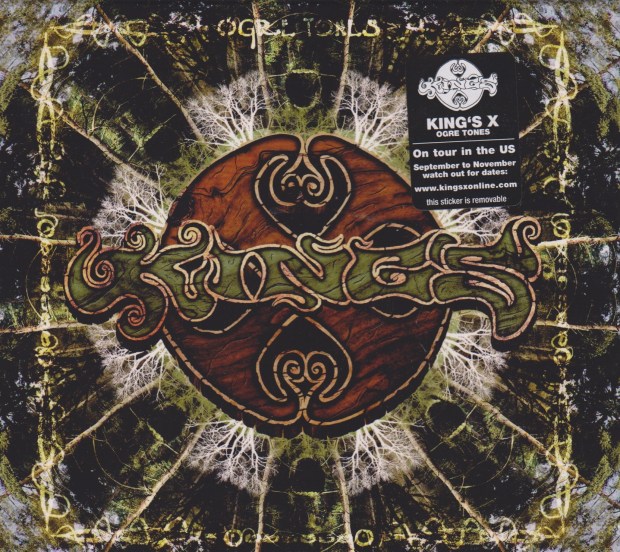
Part 16 – Ogre Tones (2005)
Part 17 – XV (2008)

REVIEW: King’s X – Ogre Tones (2005)

quiz

Complete studio albums (and more!), part 16


Scan_20151123KING’S X – Ogre Tones (2005 Inside Out)

The previous few albums split fandom.  Many found it hard to grab onto the loose structures of Mr. Bulbous, and the drum loops of Manic Moonlight.  For this review, we are trying an experiment.  I have never  heard Ogre Tones before (in fact I’ve never heard any of these 14 tracks), so this will be a first-listen review.  Does King’s X have the same impact on first listen as they do on 21st?  Probably not, but let’s find out.  In a sense this is a “live” review, so please join me as I listen!

“Alone” could have alienated fans again, starting as it does with distorted alt-rock screaming.  This introduces a short pop-rock duet with Doug Pinnick and Ty Tabor, not a bad little song.  Even though it’s only three minutes, it still boasts multiple sections and lush harmonies, as well as the trademark King’s X groove that only they can play.  Ty dumbs-down the guitar solo for the 2000’s, as it mostly consists of one note.  It’s over quick and then it’s into the even shorter “Stay”, a Doug pop ballad with balls.  Some of those balls come from the heavy detuned guitar, some of it is purely in the ragged soul of Doug’s voice.

Pleasant sailing is “Hurricane”, not too challenging.  The trademark Beatles-meet-King’s X backing vocals lend it a psychedelic feel.  Thankfully, the kind of massive grooves you crave return on “Fly”, the first King’s X Klassic on Ogre Tones.  Biting bass licks nicely accent a catchy rock tune, old-school style meets new-school production.  “If” is another good song, kind of similar to the pop rock delicacy Ear Candy.  Onto the jazz-metal of “Bebop”, Doug throws a very different song into the mix but the album is the better for it.  Just before the halfway point of the album, “Bebop” becomes a highlight.

I like Ty’s acoustic numbers, and “Honesty” is a bare, emotion-filled Tabor classic.  Sounding a lot like Faith Hope Love-era King’s X, “Honesty” is hit-worthy.  You need some heavy riffing after that, and “Open My Eyes” has a big, phat Sabbathy riff behind it.  The song is a bit disjointed though, at least on first listen.  Just a riff without a song.  “Freedom” goes in one ear and out the other (albeit with a great guitar outro).  Unfortunately like many albums with so many tracks on them, Ogre Tones starts to sag in the middle.  “Get Away” is another one.  The lyrics don’t hit the spot anymore:  “Hey God, I watched the news tonight, why are your people so fuckin’ mean?”

The only long song on Ogre Tones is “Sooner or Later”, at 7:00.  It’s a decent slow dirge that I suspect will require a few more listens to appreciate, and even if it doesn’t, there’s plenty of Ty Tabor noodling to go around.  Then there is another decent ballad in the oddly-titled “Mudd”.  I was hoping this was a song about the classic Star Trek character, Harcourt Fenton Mudd.  Sadly, it is not.  The strangest song of all might be a remake of “Goldilox” (from Gretchen Goes to Nebraska).  True to the original, but of course not as timeless and perfect, it is nonetheless a welcome inclusion.  After all, can you really fault King’s X for putting one of their best songs out for a second time?  Considering they tried, and tried, and tried to catch a break, why give up?  Of course I don’t need to tell you that “Goldilox (Reprise)” was not a hit in 2005, but maybe they should try again in 2020!  The album then closes with “Bam” which is exactly what it sounds like.  Bam!  A crash of instruments…followed by almost three minutes of feedback, noise, and the bizarre.

There is a video included on the first run of the CD, which you can still buy.  “Alone” has girls shaking their hair for no reason.  This video is now on Youtube, of course.

Ogre Tones strikes me as a good album, one that should deliver more on further listens.  However I wonder if the sluggish middle section will be a difficult obstacle.

3.25/5 stars

Part 1 – Out of the Silent Planet (1988)
Part 2 – Gretchen Goes to Nebraska (1989)
Part 3 – Kings of the Absurd (split bootleg with Faith No More)
Part 4 – Faith Hope Love by King’s X (1990)
Part 5 – “Junior’s Gone Wild” (from 1991’s Bill & Ted’s Bogus Journey soundtrack)
Part 6 – King’s X (1992)
Part 7 – Dogman (1994) + bonus “Pillow” promo single review
Part 8 – Ear Candy (1996)
Part 9 – Best of King’s X (1997)
Part 10 – Tape Head (1998)
Part 11 – POUNDHOUND – Massive Grooves from the Church of Psychofunkadelic Grungelism Rock Music (1998 Doug Pinnick/Jerry Gaskill)
Part 12 – Please Come Home…Mr. Bulbous (2000)
Part 13 – PLATYPUS – Ice Cycles (2000 Ty Tabor)
Part 14 – Manic Moonlight (2001)
Part 15 – Black Like Sunday (2003)

REVIEW: King’s X – Black Like Sunday (2003)

quiz

Complete studio albums (and more!), part 15


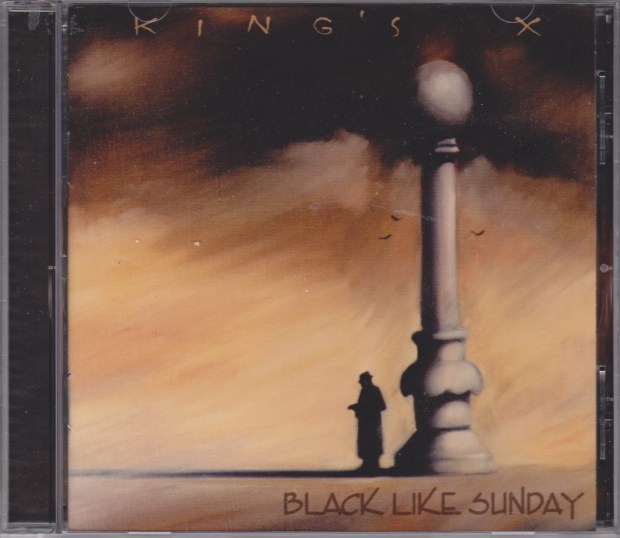
KING’S X – Black Like Sunday (2003 Metal Blade)

After a couple albums that were…well, they were pretty far out, man…King’s X may have needed to get back to basics a little bit.  Mr. Bulbous was undoubtedly a very experimental beast, and then Manic Moonlight introduced the drum loops.  A number of fans had dropped off the train, this one included.  It is only now that I have purchased 2003’s Black Like Sunday.

The concept of the album was pretty simple.  Fans had been begging for Jerry Gaskill, Doug Pinnick, and Ty Tabor to re-release their very first indi album when they were still known as Sneak Preview.  It is estimated that fewer than 500 copies of this album exist, but the band have never been eager to release it again.  Indeed, rumour has it that the band destroyed over half of the original 1000 themselves.  What they chose to do instead was re-write and re-record some of the old Sneak Preview songs, and release them as King’s X.  There is no explanation of this inside the CD, so unless you were paying attention to the press, you might just think this was an ordinary everyday King’s X album.*  Armed with 14 mostly shorter songs, they once again switched gears.

Laying it down right from the start, “Black Like Sunday” kicks rumps and gets ’em shakin’.  Without having a clue what these songs might have originally sounded like, “Black Like Sunday” is admirable for its stock solid rock groove.  Nobody in rock can groove like King’s X, but this is more straight than they normally play it.  Jerry Gaskill is uncharacteristically laying down simple 4/4 drums and Ty has a nice rockin’ riff to hammer out.

“Rock Pile” is…different…takes some getting used to…but once you do?  It’s in your head.  It’s like two songs jammed together.  A weird Van-Halen-esque unmelodic spoken word chunk, welded to a chorus from a corny Beatles song.  On first impression, I thought “This is awful”.  On third listen, it was, “Oh yes, this song!  The heavy one with the catchy chorus…” and I was hooked.  “Danger Zone” is also on the weird side, melding an oddly melodic vocal with a hair metal ballady electric chug.  Much like “Rock Pile”, initial impressions are not good.  Further listenings reveal that these songs stick in the memory, and that Ty’s rich guitar sounds are an absolutely highlight.  His solo on “Danger Zone” is right out of the Neil Young book of awesome.

It has nothing to do with Rush, but “Working Man” rocks at mid-pace with many shades of the 80’s.  “Dreams” has an odd reggae vibe, but grafted onto a heavy detuned King’s X riff.  It’s not the greatest tune and probably the first that really fails to make an impact.  Up next is “Finished” which is a pleasant pop rock tune.  Nothing special once again, but instrumentally King’s X always have something to offer, and this time it’s Doug’s busy bass runs.  Then things do get black like Sunday, on “Screamer”, an exotic vintage-Sabbathy stormer.  Deep Iommi string bends meet tribal drumming meets Doug Pinnick.  It’s a challenging listen but it has plenty to offer.  “Bad Luck” is more down the alley of traditional King’s X, and it kills with its heavy groove.

King’s X have always been capable of tender ballads, so though unremarkable, “Down” will appeal to fans of that side.  In contrast, “Won’t Turn Back” is stuttery chunky heavy metal.  All of these songs have some strangely melodic vocal parts, and “Won’t Turn Back” is like that.  It often feels like a chorus from a pop song has been  transplanted onto a heavy metal song on this album.  It’s one of the factors that makes Black Like Sunday hard to digest on first listen.  At times it’s hard not to ask, “What the hell were they thinking?”

Steering the ship back on course once again, the song “Two” could have been on Tape Head since it has that bass-heavy stripped back kind of sound.  “You’re the Only One” does not sound much like King’s X, but it does sound like quality hard rock.  Maybe even pop punk.  The Beatles harmonies work well here overtop a song that could have been written by Weezer.  I wouldn’t doubt that Rivers wishes he wrote this song!

Scan_20151121 (3)

The only long song on the album is the incendiary, 11-minute-plus “Johnny”.  Very Rush-like, “Johnny” is smouldering King’s X goodness with a big fat bow on top, so get ready to get down.  Most of the 11 minutes is a long jam, a laid-back one in fact, but just listen to the interplay.  Fantastic stuff.  After an exhausting listen like that, what you really need next is the pop-punk-country-funk of “Save Us”.  Ending the album with a short pop rocker really snaps you back to attention, and then it’s all over.

Assigning a rating to a King’s X album is difficult when you haven’t had years to absorb them and grow into them.  Having said that, Black Like Sunday” makes a good impression.  The songs are adventurous if a bit awkward, and there are enough gems here to warrant a purchase.  Added bonus:  the booklet doubles as a 2003 calendar!  An amusing touch.

3.5/5 stars

*There’s no such thing as an ordinary everyday King’s X album.

Part 1 – Out of the Silent Planet (1988)
Part 2 – Gretchen Goes to Nebraska (1989)
Part 3 – Kings of the Absurd (split bootleg with Faith No More)
Part 4 – Faith Hope Love by King’s X (1990)
Part 5 – “Junior’s Gone Wild” (from 1991’s Bill & Ted’s Bogus Journey soundtrack)
Part 6 – King’s X (1992)
Part 7 – Dogman (1994) + bonus “Pillow” promo single review
Part 8 – Ear Candy (1996)
Part 9 – Best of King’s X (1997)
Part 10 – Tape Head (1998)
Part 11 – POUNDHOUND – Massive Grooves from the Church of Psychofunkadelic Grungelism Rock Music (1998 Doug Pinnick/Jerry Gaskill)
Part 12 – Please Come Home…Mr. Bulbous (2000)
Part 13 – PLATYPUS – Ice Cycles (2000 Ty Tabor)
Part 14 – Manic Moonlight (2001)

REVIEW: King’s X – Manic Moonlight (2001)

quiz

Complete studio albums (and more!), part 14


Scan_20151107KING’S X – Manic Moonlight (2001 Metal Blade)

Around this time, I stepped off the King’s X train.

A while after this album came out, a friend of mine from London (Ontario) named Edith-Rose came to help paint the new condo and hang out.  As part of the deal I was to take her record shopping in all our decent stores.  She bought a shit-ton of CDs.  From the HMV up in Waterloo that doesn’t exist anymore, to Encore Records, to our own stores, she spent a lot of money that day.  I came home with a few discs as well.  Among them was Manic Moonlight by King’s X.

I bought it because it was used and it was the first time I’d seen it used.  Truthfully, Mr. Bulbous lost me.  Buying their next album didn’t seem a priority.  We took the CD back to my place and gave it a spin.  Edith-Rose liked it, especially the track “Static”.  As for me, “Static” was the only song that stuck out.  I have not listened to the CD in well over a decade.  All I can really remember is that this is when Jerry Gaskill and the band started experimenting with drum loops.  That is not a bad thing, but that is all I can remember about this album.  Reviewing it with fresh ears, let’s have a listen, shall we?

The drum loops opening “Believe” are unlike anything on prior King’s X albums.  Fortunately, the steam-powered real-life Jerry Gaskill comes in soon enough for this funky slam-dunk.  The funk is emphasized by clavinet, and of course Doug Pinnick’s perpetually soulful voice.  This slow funkster is bass-heavy and melodic, with just enough of those heavenly King’s X harmonies.  There ain’t nothin’ wrong with this song, no!  Computer-ish loops open the title track, “Manic Moonlight”, which aside from the modern production isn’t a far stretch from the classic King’s X sound.  The psychedelic side of King’s X is out to play; lush 1960’s hippie vocals over a heavy 2001 rhythm.

There seems to be a theme playing out.  Songs seems to open with loops, every time, and this is becoming a predictable drag.  Fuzzy electronics open “Yeah” which basically a chorus without a song.  It’s a great chorus, and if only it had some more meat on that bass heavy skeleton, it could have been a King’s X classic of the ages.  It is cool to hear King’s X digging deep into the funk; Doug slappin’ da bass as best he can.  The soft sounds of tabla are the loop of choice on the dreamy “False Alarm”.  The production of the day seemed to be to distort Doug’s deep voice, which is a shame.  Anyway, “False Alarm” is a King’s-Beatles-X strawberry field in the sky with diamonds, and it’s just shy of being great.  Very close to the mark but not quite there.

“Static” is just as intense as I remember.  You can hear why it jumped out to Edith-Rose and I years ago.  For the first time on the album, the loops (tabla again) seem to be an integral part of the song rather than just an intro.  Tense and direct, “Static” is bare-bones and absolutely nothing like King’s X of old, and good on them.  Music is not about standing still.  Music is about emotion, and “Static” is not short of those.  Without a doubt, “Static” is the centerpiece of Manic Moonlight, and coincidentally (?) this is at precisely the point where an album would be split between side A and side B….

Down with the funk again on “Skeptical Winds”, plenty of new ground was being broken with this band.  Strangely this song has a vibe similar to a 1994 Kim Mitchell rap-rock song called “Acrimony”; coincidental I’m certain but if you know the song then you can imagine “Skeptical Winds”.  Doug’s spoken word vocals (distorted again, but that’s OK this time) are reminiscent of Kim’s, but the sparse and uber-funky bassline is 100% Doug.  It’s a very different song, but cool.  Although it isn’t loaded to the gills with time changes and riffs like King’s X of yore, it is still a long bomber jam session at almost seven minutes.

Having a knack for ballads, “The Other Side” has some beautiful moments built into it.  It doesn’t hit the ball out of the park, but it has quality and ambition to spare.  “Vegetable” has more cool funk, and importantly a soulful chorus that kills.  “Jenna” has one of the heaviest riffs on the album, but doesn’t stand out…which is a shame as it is the last song.  The final track, “Water Ceremony” is a joke track, closing the album on a burp!  That’s…odd!

Of note: the always lucky Japanese fans got two bonus tracks.  These were longer versions of “Believe” and “Vegetable”.

Manic Moonlight was a surpise to revisit, and with only a few sluggish moments (“Jenna” among them), it’s certainly a lot better than I remember.

3.5/5 stars

Part 1 – Out of the Silent Planet (1988)
Part 2 – Gretchen Goes to Nebraska (1989)
Part 3 – Kings of the Absurd (split bootleg with Faith No More)
Part 4 – Faith Hope Love by King’s X (1990)
Part 5 – “Junior’s Gone Wild” (from 1991’s Bill & Ted’s Bogus Journey soundtrack)
Part 6 – King’s X (1992)
Part 7 – Dogman (1994) + bonus “Pillow” promo single review
Part 8 – Ear Candy (1996)
Part 9 – Best of King’s X (1997)
Part 10 – Tape Head (1998)
Part 11 – POUNDHOUND – Massive Grooves from the Church of Psychofunkadelic Grungelism Rock Music (1998 Doug Pinnick/Jerry Gaskill)
Part 12 – Please Come Home…Mr. Bulbous (2000)
Part 13 – PLATYPUS – Ice Cycles (2000 Ty Tabor)

REVIEW: King’s X – Please Come Home…Mr. Bulbous (2000)

quiz

Complete studio albums (and more!), part 12


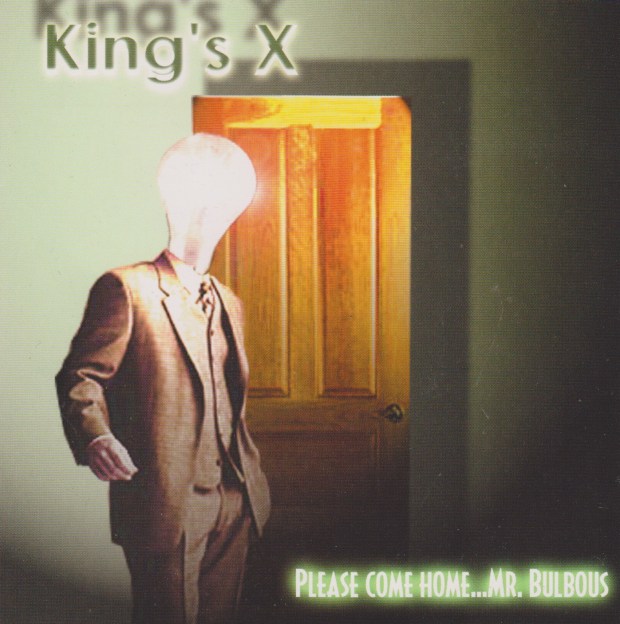
Scan_20151017KING’S X – Please Come Home…Mr. Bulbous (2000 Metal Blade)

Starting with 1998’s Tape Head, King’s X would write and self-record new material in the studio.  The following album Please Come Home…Mr. Bulbous was done the same way, in a quick time frame of under two months.  On Tape Head they captured tremendous energy and groove with that method.  Perhaps the drawback to this approach is that you have less time to live with and tighten up the songwriting.  On the other hand, on Mr. Bulbous it sounds like songwriting was a minor concern next to instrumental experimentation.

Songs like the opener “Fish Bowl Man” sound like several loose ideas floating together.  It is a chorus without a song, unfortunately, because that chorus is a King’s X winner.  The beat poetry section of the song is very interesting indeed, but it’s not among King’s X’s finer moments.  Darkly simmering is the next song “Julia”, but its soft pulse is not enough.  Two important ingredients are missing, and they are Doug’s soul singin’, and the patented King’s X groove machine.  “She’s Gone Away” also fails to lift from the runway (although it sounded better live).  This is more like King’s X for the dreamtimes.

This band is always been interesting instrumentally, and that holds true on Mr. Bulbous.  Exploring laid-back musical landscapes while only blasting occasionally is more than fine.  “Marsh Mellow Field” for example has a rock-heavy chorus featuring Doug in full lungs.  The issue is that the songs are loose and sparsely arranged affairs that don’t sound coherent.  It’s a challenging listen, and there are moments of riff and solo brilliance, but one must be patient.

Album highlights:

  • Jerry Gaskill’s drums on “When You’re Scared”.  This guy is such an underrated drummer.  “He plays with his whole body,” said my friend Uncle Meat.  You can hear that, too.
  • “Charlie Sheen”.  No idea what the words are about, but this is about the only true “song” on the album.  It’s really good, with one of those Ty Tabor choruses that you remember for days.  “Kill the king, strip the queen, are you my friend dear Charlie Sheen”?  Who cares, it sounds good and that’s what works.  The song also has a very twangy Morse-like guitar part that makes this the catchiest track of the bunch.
  • “Move Me” parts 1 and 2.  Although Doug’s vocals are mixed in a nasal John Lennon fashion, this rocker has some movement to it.  It’s one of the most constructed songs on the album, with the light and shade finally making sense within the structure of a song.  An epic triumph almost worthy of the classic period of the band.

It’s a mixed affair but because it’s King’s X there is always going to be quality to it.

3/5 stars

Scan_20151017 (2)

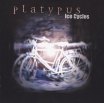
PLATYPUS_0001Next in this series: a previously published review of a Ty Tabor side project named Platypus. Platypus are a band consisting of Ty Tabor – Guitars & vocals. John Myung (Dream Theater) – Bass. Derek Sherinian (Dream Theater, Alice Cooper, Kiss) – Keys. Rod Morgenstein (Dixie Dregs, Winger) – Drums. Their second album, Ice Cycles, was loaded with fun time progressive hard rock. Ty gets a chance to shred jazzily and in other different contexts, and it is just delightful. You can check out that review now by clicking here.


Part 1 – Out of the Silent Planet (1988)
Part 2 – Gretchen Goes to Nebraska (1989)
Part 3 – Kings of the Absurd (split bootleg with Faith No More)
Part 4 – Faith Hope Love by King’s X (1990)
Part 5 – “Junior’s Gone Wild” (from 1991’s Bill & Ted’s Bogus Journey soundtrack)
Part 6 – King’s X (1992)
Part 7 – Dogman (1994) + bonus “Pillow” promo single review
Part 8 – Ear Candy (1996)
Part 9 – Best of King’s X (1997)
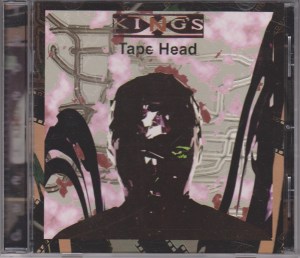
Part 10 – Tape Head (1998)
Part 11 – POUNDHOUND – Massive Grooves from the Electric Church of Psychofunkadelic Grungelism Rock Music (1998 Doug Pinnick/Jerry Gaskill)

REVIEW: King’s X – Tape Head (1998)

quiz

Complete studio albums (and more!), part 10


Scan_20151016KING’S X – Tape Head (1998 Metal Blade)

You never knew what you’d get with a new King’s X album.  Monstrous musicianship, intelligent lyrics, and integrity certainly; but they like to fly in all sorts of directions.  Tape Head, following the sweet pop rock of Ear Candy, was a monolithic slab compared to that earlier album.  In many regards Tape Head is a brother record to Doug Pinnick’s solo project PoundHound (more on them later).  The focus here is the groove.

Witness, the first song “Groove Machine”.  “Welcome to the groove machine,” sings Doug, letting his bass lay it down.  “Music oh music, such a funky thing. The closer you get, the deeper it means.”  He’s right.  Ty Tabor lays on a heavy wah-wah for his guitar solo, but not to be left out drummer Jerry Gaskill gets a bit of a solo too.  It’s simple, straightforward and unpretentious.  “Groove Machine” has but one purpose.

“Fade” continues the heavy groove direction, slower now, and with Ty Tabor taking the vocals in the chorus.  From the ultra-heavy bass to Jerry Gaskill’s beats, everything hits you exactly in the right spot.  A break in the groove occurs on “Over and Over”, a Doug ballad with sincere soul.  When Ty joins him in the chorus, the song becomes timeless.  Heavy again again but with the same kind of powerful chorus is “Ono”.  When you have an album as single-minded as Tape Head, you tend to grasp onto standout melodies like this even more.  King’s X let their 1960’s flag fly a little bit on “Cupid”, which doesn’t let up in the groove department, but does have shades of their hippie melodic bent.  That’s an appropriate way to lead into “Ocean”, a mellow Ty Tabor song that sounds like Ear Candy, but turned up to 11.  Doug’s hella-sonic bass just crushes, even though you could fairly call this song a ballad!  The difference between this and Ear Candy is all in the production.  Tape Head is self-produced and you can tell they just wanted to hear everything heavier and lower!

This slideshow requires JavaScript.

Pure ear candy is “Little Bit of Soul” which sounds like it should.  Heavy rock knows no singer with as much soul as Doug Pinnick.  He even brings soul into “Hate You”, which is pretty straightforward in the lyric department!  Then “Higher Than God” is one of the mightiest choruses on the album, thanks again to Doug, with Ty and Jerry backing him.  Only King’s X can infuse R&B with their rock the way that they do.  Listen to Doug’s low vocal crooning on “Happy”.  Then he turns it up, lets it loose.  There is only one Doug Pinnick and he is a rock and soul treasure.

You might not expect the slight twang that starts off “Mr. Evil” but like most King’s X songs, it mutates into different forms.  (Nice steel guitar solo by Ty.)  If you were craving just one more killer chorus before it’s all over, then “World” delivers that and some heavy-ass grooves too.  The highlight here is a blazing rock n’ roll guitar solo, very different for Ty.  That’s not the last song though; there’s a surprise at the end that defies description except to say it’s pretty funny!

Tape Head is an impressive monument of rock indeed.  It bleeds pure gobs of soul, and it rocks the brain really, really hard.  It’s slimmer in the catchy melodies stockpile, but the relentlessness of direction draws you back in for another listen.  Some may lament that with Tape Head, their progressive metal past seems long behind them.  I think that was road they already turned from, with 1994’s Dogman.  They transformed into a heavier band, with echoes of their past but a sound that blends it all up.  The songs are not as distinct, but the groove is king on Tape Head.

4/5 stars

Part 1 – Out of the Silent Planet (1988)
Part 2 – Gretchen Goes to Nebraska (1989)
Part 3 – Kings of the Absurd (split bootleg with Faith No More)
Part 4 – Faith Hope Love by King’s X (1990)
Part 5 – “Junior’s Gone Wild” (from 1991’s Bill & Ted’s Bogus Journey soundtrack)
Part 6 – King’s X (1992)
Part 7 – Dogman (1994) + bonus “Pillow” promo single review
Part 8 – Ear Candy (1996)
Part 9 – Best of King’s X (1997)

REVIEW: King’s X – Best of King’s X (1997)

quiz

Complete studio albums (and more!), part 9


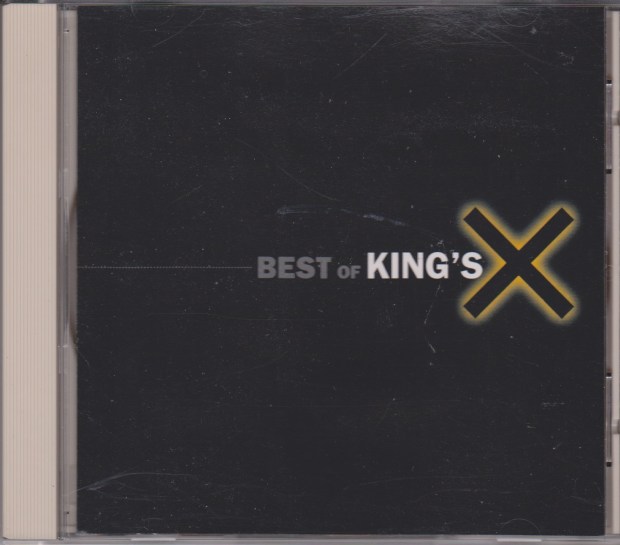
Scan_20151021KING’S X – Best of King’s X (1997 Atlantic)

Alas, it was inevitable.  After six stunningly good albums, but none of them gold, in 1997 Atlantic dropped King’s X.  In the mid-90’s it’s amazing that King’s X hung around as long as they did.  Many labelmates has long since been dumped, or broke up.  King’s X did not break up, but instead continued to work on their own, self-producing a new album.  Atlantic meanwhile prepared the calculable “best of” package for release.  Whenever a band gets dropped from a label, a “best of” is bound to follow.  It’s a law of science.

It’s a pretty straightforward release.  Chronologically, you get most of the major singles and hits from all six albums.  Then you get the three requisite unreleased songs.  Finally, a 10 minute live blowout from Woodstock ’94, previously unreleased.  In an unusual touch of quality for a release like this, Ty Tabor himself remastered all the tracks for the album.

We already took a close look at most of these songs earlier in the series, and there are no real duds.  The CD is weighted too heavily to the later albums, leaving Silent Planet and Gretchen under-represented with only four songs between them.  Hearing “King” opening the album is perfect, and the inclusion of “Pleiades” earns respect.  The other two tunes, “Summerland” and “Goldilox” are awesome but predictable inclusions.  The self-titled album and Dogman are represented by two tracks each.  We could have done with more Dogman.  “Shoes”, for example, or “Pretend”.  Three songs from this set come from the more commercial Ear Candy.  Again, you can’t really criticize the choices too much, because all the songs are great.  How do you squeeze more in?

Well, one way would be not including the unreleased songs, but these are record company bait to entice fans to shell out for it.  The three studio cuts are self-produced demos from 1996.  Appropriate to that era of the band, these are more commercial sounding than typical King’s X.  The production is not lush, but they have a lively quality.  “Sally” is nothing to write home about, but it’s a concise King’s X pop rocker with plenty of cool noodling by Ty.  Both “Sally” and the next song, “April Showers” feature fuzzy wah-wah guitar, always a treat.  Doug Pinnick sings the funky “April Showers”, which sounds a bit more King’s X.  Possibly the best song is the sparse ballad “Lover”, also sung by Doug.  It just depends on whether you prefer the mellow hippie sounds of “Lover” or the funk of “April Showers”!

The closing piece of the album was a surprising but important inclusion, and that is the live version of “Over My Head” from their opening set at Woodstock ’94.  This 10-minute track features a passionate singing rant by Doug Pinnick. He has often spoken about his difficult upbringing, and how he never heard the words “I love you” as a child. “This is a song about my grandma…she raised me from a child…she was a very religious lady…she went to church every night…she read her Bible all the time…” begins the painful rant. It still gives me chills, but it has a positive note.  If you have kids, make sure they know that you love them, more than anything in the whole wide world.

Yes it’s an odd way to take up 10 minutes of a “best of” CD, but it had to be on here. It was a historic moment for this band. Anybody in the crowd that day who wasn’t completely blasted on drugs would remember that moment forever.

Opening up Woodstock ’94 should have propelled King’s X into the stratosphere. They just couldn’t catch a damn break.  They couldn’t even be given a decent album cover for their own damned Best Of!

4/5 stars

Part 1 – Out of the Silent Planet (1988)
Part 2 – Gretchen Goes to Nebraska (1989)
Part 3 – Kings of the Absurd (split bootleg with Faith No More)
Part 4 – Faith Hope Love by King’s X (1990)
Part 5 – “Junior’s Gone Wild” (from 1991’s Bill & Ted’s Bogus Journey soundtrack)
Part 6 – King’s X (1992)
Part 7 – Dogman (1994) + bonus “Pillow” promo single review
Part 8 – Ear Candy (1996)