The fine folks in Def Leppard have been doing an outstanding job of getting their rarities and fan-wishes on the store shelves. We wanted the Def Leppard EP reissued, and they did it. A few times in fact, including a cool 3″ CD included in a recent box set. We wanted all the early B-sides available on CD, and here they are. We begged for decent remastered CD editions of High N’ Dry and On Through the Night, and the band delivered. More than once.
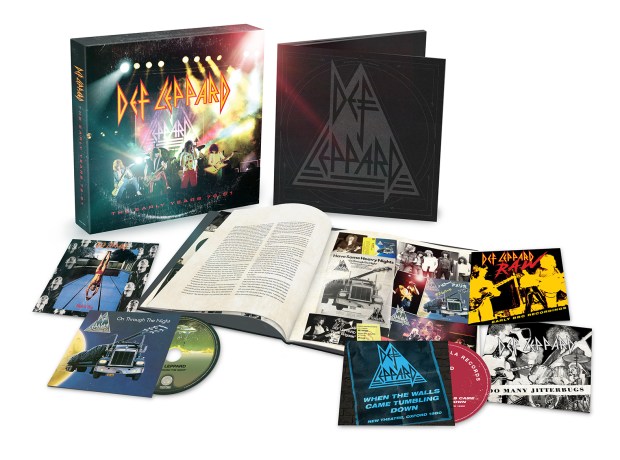
Now there is a wealth of Def Leppard riches out there for you to buy in your format of choice. The Early Years 79-81 is the way to go for a complete set of the music from those years. We’ve gone over it all disc by disc so let’s talk about the box itself.
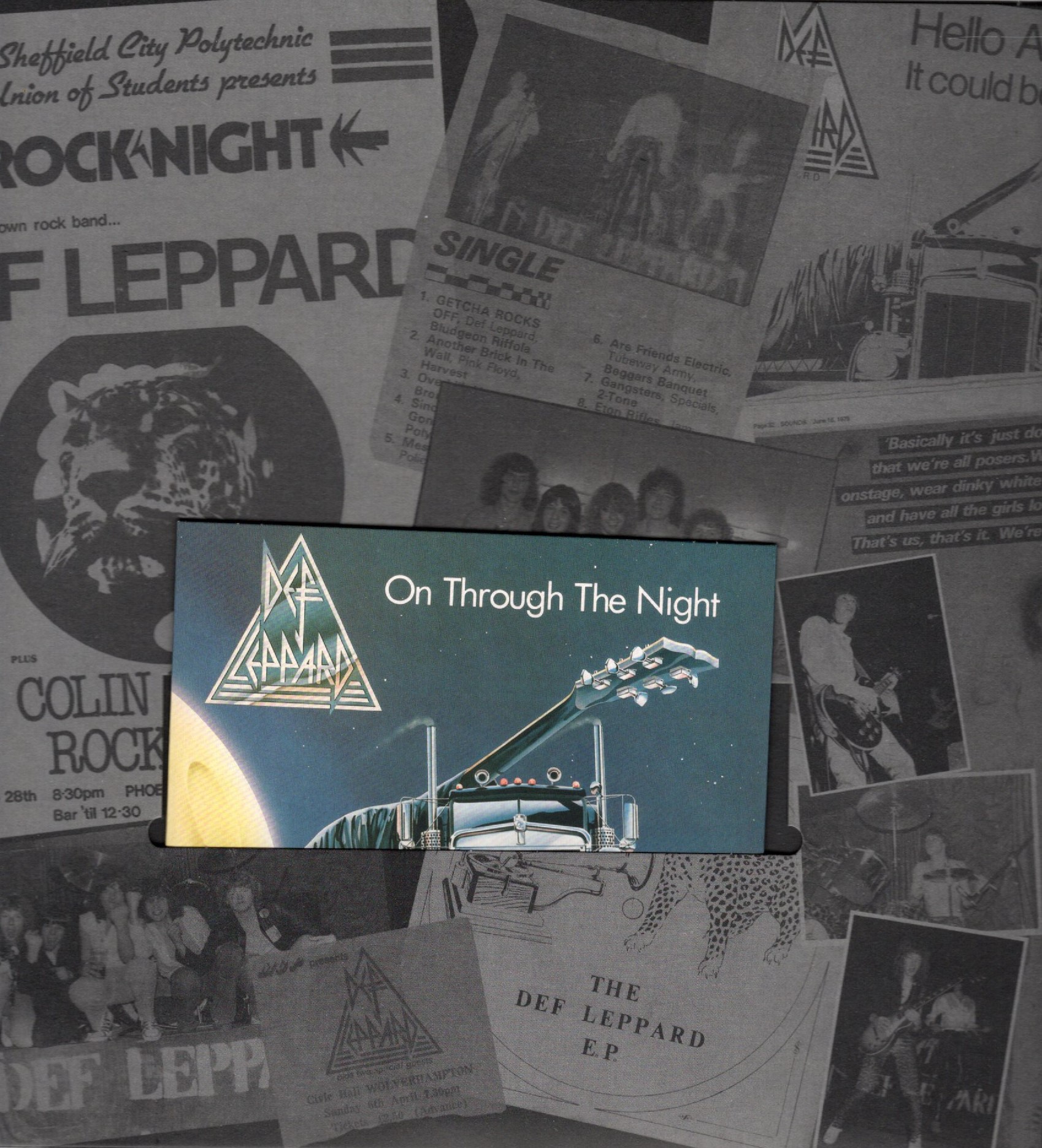
The 10″ x 10″ box format is awkward to store, but Leppard seem committed to the size, with their London to Vegas set having the same dimensions. They’ve at least maximised the space, with a generous hardcover book included inside. This book has the liner notes and essays you expect, broken down disc by disc. A generous set of unreleased photos keep the eyes from being bored while your ears indulge themselves. The CDs are stored separately in a cardboard folder, and they don’t seem to move around in there. Each one has its own cardboard mini-sleeve. The packaging works.
The sequencing is perhaps the only complaint. The set is not a chronological anthology of the early years. In terms of sequencing it’s best looked at as a On Through the Night / High N’ Dry deluxe edition. Two albums, remastered in their original track listing (not the 1984 track listing for High N’ Dry) with a bonus live CD, a bonus disc of B-sides and rarities, and a bonus disc of BBC sessions from the period. Which really doesn’t matter so much, except when trying to review a chronological Def Leppard series and figuring out what order to do it in! The sequencing matters little because the discs are so complete. All those singles, B-sides, edit versions, unreleased versions, and live recordings are what fans have been demanding ever since the idea of “deluxe reissues” were conceived. This is it!
Oh sure, there are a few things left in the vaults. We know of a couple more early tracks called “Heat Street” and “See the Lights”. These are unlikely to ever see official release, but one must leave some scraps for the bootleggers. If the band ever changes their minds, that’ll be cool, but the best stuff is right here.
Consider that these three complaints about The Early Years 79-81 (box dimensions, sequencing, missing bootlegs) are so minor, we can disregard them in our final score. This box accomplished what it set out to do, and when listened to in completion, offers up a real clear picture of the band’s ability and determination. They had a bright future ahead, and a chapter was about to close while a new one opened. With the band scheduled to re-convene with producer Robert John “Mutt” Lange in early 1982, life would never be the same again.
DEF LEPPARD – Raw – Early BBC Recordings (The Early Years Disc 5) (2019)
This final disc of Def Leppard early tracks consists of two separate BBC sessions: 1979, and a few songs from Reading in 1980. Due to this fact, there is some minimal repeat in the song selections, but you won’t mind getting two versions of “Wasted” instead of just one! This disc offers a variety of early Leppard songs and rarities.
BBC Andy Peebles Session – June 7 1979
The EP was out and Leppard were starting to get radio play. They were invited to the BBC and recorded four songs for broadcast.
Opening with “Glad I’m Alive”, Leppard get one of their most underwhelming non-album tracks out of the way early. It sounds better and heavier than the studio cut on Disc 4 produced by Nick Tauber. Solos and backing harmonies are fire. “Sorrow is a Woman” follows, with a quiet, cool laid-back intro of a different flavour. Things kick in on the chorus of course, but this is not the definitive version of the track. The guitar solo section has a nice shimmer to it. Third up is “Wasted”, which opens with a growl. That guitar is vicious, and Joe just goes for it on the vocals. This recording has bite. The final track, “Answer to the Master” is absolutely fine.
Friday Rock Show Session – October 3 1979
“Satellite” enters with a crash of drums, a little hesitant on the pace. The fun “Rock Brigade” is similar to the early version on Disc 3, but heavier. The second version of “Wasted” sounds heavier than the first — the band was growing. Really this song is a highlight of anything it’s on. This BBC sessions ends with “Good Morning Freedom”, probably the fastest and most pumped-up version we’ve heard yet. This might be the best recording of the track available.
Live at the Reading Festival – August 24 1980
The next time the BBC caught up to Def Leppard, they had an album out. With Ozzy Osbourne, Iron Maiden, Whitesnake and UFO on the same bill, Leppard were anxious. Then Ozzy dropped out, and Leppard had to follow Slade in one of their best festival performances — a daunting task. Fortunately the bandt fought hard and had some killer new material up their sleeves.
Opening with “Satellite” (2nd appearance on this CD) and “When the Walls Came Tumblin’ Down” mashed into a medley, you can hear that the band were fired up. After this workout, it’s the unreleased “Medicine Man” which today we know as “Rock! Rock! (Till You Drop)”. Imagine getting to hear that track back in 1980, and then when it was finally released in ’83 on Pyromania, going “I know that song!” The early “Medicine Man” version is cool because that riff is unstoppable.
The apocalyptic epic “Overture” is right in the middle of the set, but it was already well known due to its inclusion on the original Leppard EP. Joe’s unholy yelp of “Go!” at 1:50 is the moment that the band just tear it loose. Then it’s another new song in “Lady Strange”, absolutely off the hook and hammering with delicious chord after chord, each one more addictive than the last. Finally after some audience participation noise, it’s “Getcha Rocks Off”. The audience goes nuts and Leppard leave triumphant.
This excellent disc collects some seriously well-recorded and preserved archival material. It’s all valuable, showing the growth of the band as they get more comfortable with themselves and performance. They were always great, with a serious knack for riffs, and this disc delivers plenty of them in unreleased format. Untampered, unhampered, and unchained.
DEF LEPPARD – Too Many Jitterbugs (The Early Years Disc 4) (2019)
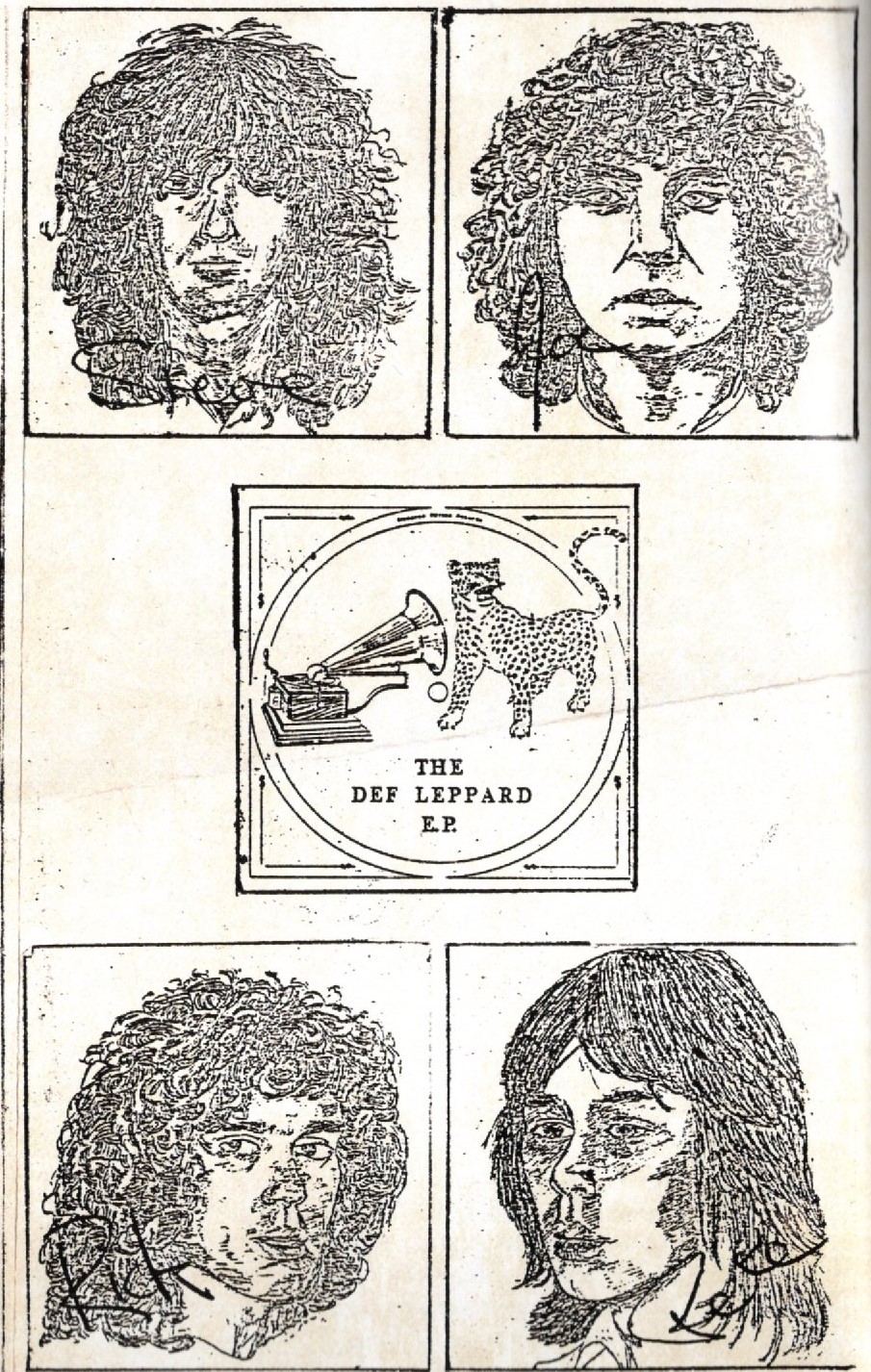
Because of the non-chronological nature of The Early Years box set, we are now back at the beginning: Def Leppard’s first rare EP, and singles releases. Only on Disc 4 do we finally get to go back to the original Def Leppard EP, which has seen a few re-releases over the years, but none as convenient as this.
The story goes that young Def Leppard used money loaned to them by Joe Elliott’s father, and booked a studio for one weekend. Drummer Tony Kenning was fired just before the start of recording, for being sidetracked by a girlfriend. Frank Noon from The Next Band (featuring Rocky Newton on bass) was chosen to fill-in temporarily. It was The Next Band’s own three-song EP release that inspired Leppard to make their own. They only had a handful of rehearsals with the drummer completed before it was time to hit the studio.
“Ride Into the Sun” was properly perfected when it was re-recorded in 1987 as a Hysteria B-side. The original still boasts the same relentless riff, but without the increased velocity. The chorus is a bit different, but here it is: the beginning! Out of the gates with a good song, with room to improve. And improve young Def Leppard would.
Next on the EP is “Getcha Rocks Off”, the only track that has been available on CD for three decades. It saw its first digital release on Lars Ulrich’s excellent 1990’s NWOBHM compilation. The version that eventually made its way to On Through The Night is heavier, but this ground-floor version has an identical arrangement. The solo work shows the band had early talent, and the riff demonstrates their ability to come up with the goods.
Finally: “Overture”, the big Def Leppard epic that later closed On Through the Night. A little progressive, the 7:45 track meanders from mellow acoustic opening to galloping riff to blasting guitar workouts. Much of it is first takes, with Joe having little time to finish the vocal. However the job was complete. The record was made.
All that was left was to ask Frank Noon to join the band full-time, which he declined. 15 year old Rick Allen was selected instead. (Noon later reunited with Rocky Newton in Lionheart.)
All 1000 copies of the EP sold within a week. Radio started to play Def Leppard. Finally they signed the big record deal and the rest is history. Still, there are plenty of rare tracks from the early years that were recorded. Most were released but some are here in this box set for the very first time.
“Wasted” with “Hello America” on the B-side was originally released in 1979. These are early versions that differ from the Tom Allom-produced tracks on the album. Neither are as as heavy, with “Wasted” in particular needing more bite. These versions, by Nick Tauber, were deemed not worthy of album release by the record company. The ferocious “Wasted” riff is there but needs to be turned up – way up! “Hello America” fares better as a more melodic rock tune. It lacks that synth riff on the chorus of the song, which makes it a little more raw. It also has a really long fade-out.
The Tauber sessions yielded two more songs that were never released. “Rock Brigade” and “Glad I’m Alive”, for whatever reason, were held back until The Early Years box set. “Rock Brigade” is probably the best of these tracks. Rick Allen’s marauding drum rolls steal the show, but not as much as on album. In general, the Tauber versions are less aggressive recordings, and Joe’s vocals are not as unleashed as on the final album. “Glad I’m Alive” is the only one that didn’t make the album. It is the song with the lyric “too many jitterbugs”, but is otherwise unremarkable. Not many hooks (if any). It is only available in The Early Years.
Leppard’s next B-side was “Good Morning Freedom” from the eventual “Hello America” single. This is a song that surprisingly and delightfully was resurrected by Leppard live (more on that later in the series). It is early quintessential early Leppard, centered on the riff and designed to get the heads-a-bangin’. It is not without hooks, and might be as good as anything else On Through the Night has to offer, “Wasted” notwithstanding.
The next tracks are the disc are single edits, which are padding to some and valuable curiosities to others. Moving into the High ‘n’ Dry era, they are edits of “Let It Go”, “Switch 625” and “Bringin’ on the Heartbreak”. Nice to have to be complete, but not essential listening. All three are obviously better in their full length versions, but you gotta try what you gotta to get on the radio. “Let It Go” has a shorter intro, and a truncated middle section, weakening its impact. “Heartbreak” fades out early.
“Heartbreak’s” B-side was a fast and heavy fan favourite called “Me An’ My Wine”. It was given a raucous and fun music video when it was remixed by Mutt Lange in 1984. Both “Wine” and “Heartbreak” were remixed for 1984 reissue, and were included in updated editions of High ‘n’ Dry. All versions, original and remixed, are present in this box. For some, the remixed “Heartbreak” with added keyboard accents will be the favourite, because it’s the one they grew up with. It sounds more like a Pyromania single. The keys do help spruce up the song, which honestly has a couple dead spots otherwise. As for “Me An’ My Wine”, it has a longer intro and the drums have been treated to sound a little more 80s. Incidentally, though you can get them on old High ‘n’ Dry CD pressings, this is the first time that these remixes have been available in a remastered form.
And that’s the disc — a damn fine one in fact, because it manages to include every non-album track that Leppard released during those early years. It makes for a fun listen, as you hear the band evolve. Even if some songs repeat, they are different enough to not interrupt the flow. Many of the B-sides have never been released on CD format before, so the value here cannot be understated.
DEF LEPPARD – When the Walls Came Tumbling Down – New Theatre, Oxford 1980 (The Early Years Disc 3) (2019)
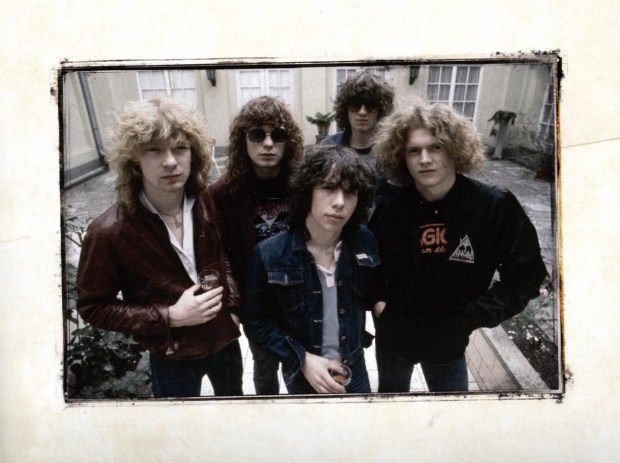
Of Leppard’s many live releases, When the Walls Came Tumbling Down is the most ferocious. The early Leppard including Steve Clark and Pete Willis was a different kind of predator. This particular setlist, captured after the release of the debut album On Through the Night, is extremely valuable to fans. The band performed all 11 albums tracks, a clutch of early singles, and unreleased material.
“When the Walls Came Tumbling Down” is played first, full speed ahead. Joe playfully changes one of the choruses to “When Oxford Came Tumbling Down”, and without pause they barrel right into the adrenalized “It Could Be You”. There are no touch-ups or fixes done to these recordings.
The single “Rock Brigade” has a different flavour, more focused on the melody, with the foot less on the gas pedal. Joe Elliot demonstrates confidence. Rick Allen is a monster on the drums and Rick Savage is audibly holding it down. Keeping to a similar tempo, “Satellite” swaggers all over the stage with determination, and Pete Willis absolutely slaughters on the solo.
There’s only a brief respite. “Medicine Man” is an unreleased song that was later reworked into “Rock Rock (‘Til You Drop)” from Pyromania. The quiet opening only lasts a moment before that now-familiar riff kicks in. There’s no question that “Medicine Man” benefited from its later evolution, but many elements of the song were already, joyfully, in place.
“Answer to the Master” is rolled out with that snakey riff, and Joe is extra-engaging. A trend is now apparent: virtually all these songs are better than they are on album. Another unreleased gem called “When the Rain Falls” might be more familiar under its later name, “Let It Go” from High N’ Dry. Some elements including the riff survived to the final track, but what a serious riff that is! When Leppard had both Willis and Clark in the band, they were a riff factory.
Back to On Through the Night, “Sorrow is a Woman” is more lively than it is on LP. Same with the non-album single “Good Morning Freedom”. From the drums to vocals to sheer energy, it’s better than its studio counterpart, with an intense solo to burn.
“It Don’t Matter” has a cool groove, and more drive than it does on album. This version is evidence that Joe already had ample frontman abilities. This takes us to “Overture”, the Leppard epic with the soft opening and big arrangement. This is where Leppard’s two lead guitarists get to show off in dramatic fashion.
The last unreleased song is “Lady Strange” from High N’ Dry, which is in more complete shape than the other two. As it is on album, it’s one of Leppard’s most impressive songs so far. Riff, verse and chorus are combined in perfect form. Only minor tweaking would be needed before it was album ready.
The final batch of album songs for the night are laid out. “Getcha Rocks Off” is a blast. “Hello America” is looser than album. And “Wasted”? Total blitzkreig. Unstoppable and unbelievable. Finally the very last track, “Ride Into the Sun” is the timeless beloved B-side, originally from the Def Leppard EP making it three for three EP tracks. It’s over before you know it, two and a half minutes are gone and that’s all folks!
Even though it is completely lacking in hit singles, it might not be going out on a stretch to say that When the Walls Came Tumbling Down is a strong contender for Best Live Def Leppard album.
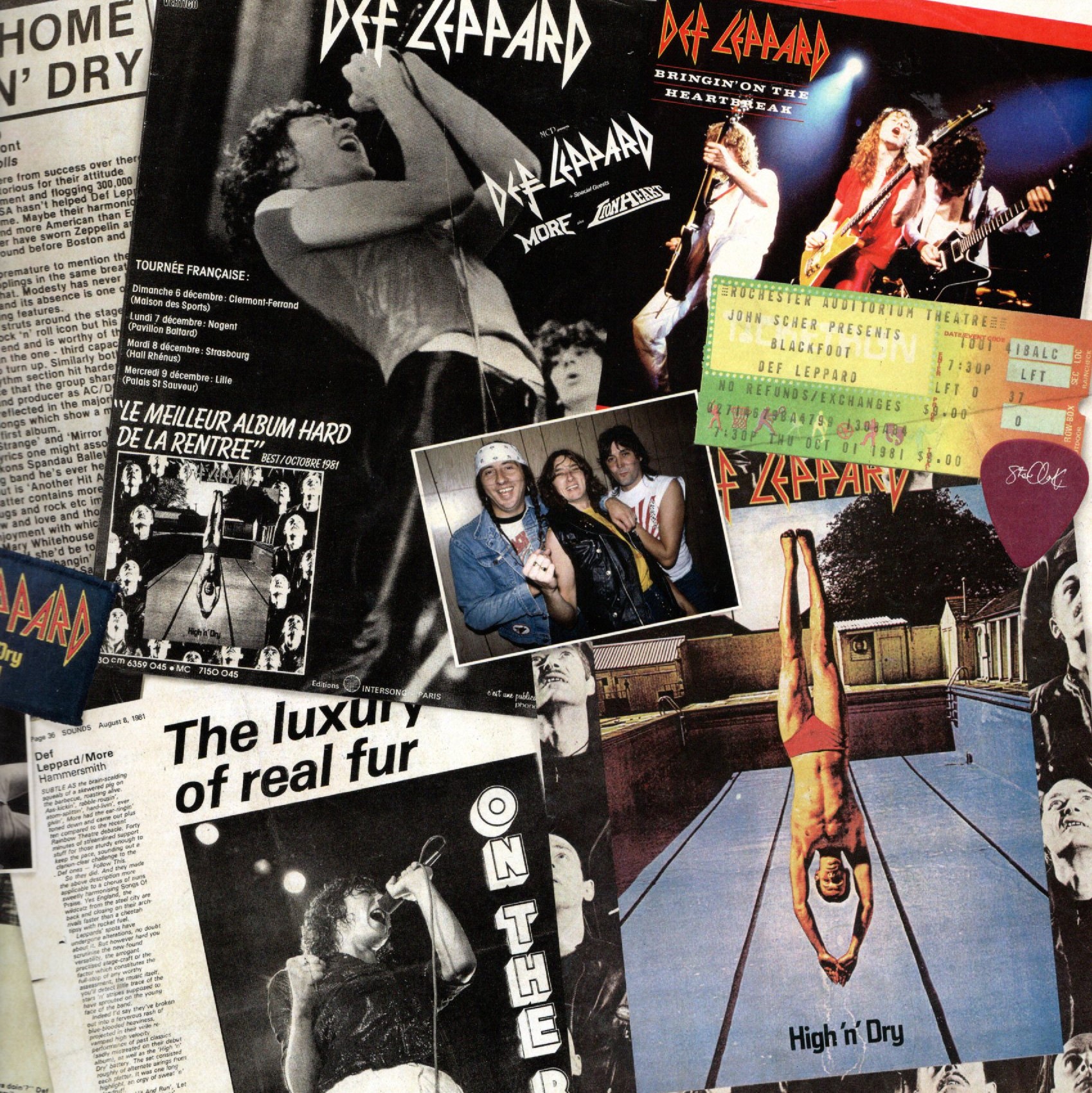
DEF LEPPARD – High ‘n’ Dry (The Early Years Disc 2) (Originally 1981, 2019 remaster)
Leppard’s pride in their debut album only extended so far. They knew that the sound they heard in their heads was not captured on tape. So they waited, and waited, and waited, until AC/DC producer Robert John “Mutt” Lange was available. When he had completed the recording of Foreigner’s 4 (six million copies sold), they got to work on Leppard’s second record. And work they did, with the band members unsure after many takes if they could even play it any better. They could, and they did. With Lange on hand to help refine the songs they had written, Leppard had never sounded better.
Today, High ‘n’ Dry is often cited by diehards as the band’s best record. It bares the teeth of AC/DC, but the attention to melody and harmony was typical of more commercial bands. It was a winning combination; High ‘n’ Dry has no filler songs.
The sharp opener “Let It Go” makes the changes apparent. A better recording, a more confident (and screamy) Joe Elliott, and an incessant bass groove propels it. The guitars cleverly lay back until necessary for the big rock chorus. All dynamics missing from On Through the Night. This time, they could afford a real cow bell — no more tea kettle! With “Let It Go” opening on such a solid, fast note, where do we go from here? No letting up! “Another Hit and Run” is even better, with quiet parts contrasting with the increasingly heady! Joe has found his voice, and uses it to rip and shred. Don’t try to follow the lyrics — it’s all about how the frontman screams them at you.
Finally, Rick Allen is permitted to slow down for the sleek, slower groove of “High ‘N’ Dry (Saturday Night)”. This tenacious track takes its time to blow you away. It was also one of three they recorded in a single session for music video purposes.
Another video from that session was the hit ballad “Bringin’ on the Heartbreak”, although MTV aside, it didn’t really have the intended impact until later. Originally titled “A Certain Heartache”, with Mutt’s help they steered it away from its Zeppelin-y origins and honed it closer to a hit. Sad verses are coupled with a chuggy riff at the chorus, which is beefed up by the backing vocals of Mutt and the band, gradually finding that sound step by step. The lyrics are nothing to write home about with, “You got the best of me,” predictably rhyming with “Oh can’t you see.” But then the track ends not with a total fade, but with the urgent pulse of a new bass track. It’s the brilliant instrumental “Switch 625”, paired with the ballad as if to say “don’t worry folks, we haven’t lightened up.” Leppard were, after all, a part of the New Wave of British Heavy Metal bands. “Switch 625” is something that would have generated melting heat on that scene. Written solely by Steve Clark, this is one instrumental that is not filler in any way. It’s a song.
So ended side one, but side two commenced with the crash of “You Got Me Runnin'”, a single-worthy number that scorches the skin with its burning tower of riffs. Joe bemoans a girl that he don’t trust, while Steve Clark and Pete Willis do their best Angus and Malcolm. Rick Allen, all of 17 years old now, keeps the beat minimal while Rick Savage maintains the pulse on bass. When Pete breaks in with his guitar solo, it’s one of the best of his time with Leppard. But it’s the crucial chorus that keeps you coming back, a singalong brute with gang vocals that could have been lifted from an era past.
Then things get eerie with “Lady Strange”, hurling multiple riffs at the speakers, and boasting a chorus to back it all up. Tough guy Joe claims to have never needed love before meeting his “Lady Strange”. This is the only track with a Rick Allen co-writing credit, and features a scorcher of a Clark guitar solo. Elliott’s screams have never sounded more tormented. Brilliant stuff.
Without a break, we plow “On Through the Night”, and one of the fastest tracks on the album. There’s a surprising, quiet Zeppelin-y middle breakdown that’s welcome, but otherwise this track is built for speed. “Rock n’ roll is no safety net!” screams Joe. If there were any single track to delete from High ‘n’ Dry, you could make an argument for “On Through the Night”. However, fact is you need it to set up “Mirror, Mirror (Look Into My Eyes)”.
Displaying their penchant for parentheses, “Mirror, Mirror (Look Into My Eyes)” takes Def Leppard back to dark territory. A single spare Clark riff carries the song while Allen and Savage lay back. It’s the kind of brilliant construction that Clark was becoming the master of. Tension building riffs, stinging solos, topped with another perfect Joe Elliott vocal melody.
Finally it’s the all-out chaos of “No No No”, a memorable way to close out a hell of an album. Breakneck pacing, top lung screaming, and a blitz of a Willis riff. Melody? Unimportant! If the guitars weren’t so obviously well arranged, this could have been punk rock.
Different versions of “No No No” run different lengths. This one is 3:12 with a slight fade and then abrupt stop. One can never go wrong with an original vinyl LP, featuring an infinite groove at the end, with Joe Elliott shouting “No!” over and over again, until you either stop the record yourself, or wait until the ultimate end of the universe — your choice. Another variation of interest is the the 1984 reissue of High ‘n’ Dry, with two remixed bonus tracks. We will discuss those later as they are included on Disc Four of this set.
Praise today for High ‘n’ Dry is fairly universal. Martin Popoff rated it higher than Pyromania. It truly is a remarkable photograph (pun intended) of a brief period in Def Leppard when they were still solidly riff-focused, but with the moderate temperance of Mutt Lange. A period that has never and can never be repeated.
No matter how I do this, I’m doing something out of order. So here goes. Hi! Welcome to the DEF LEPPARD REVIEW SERIES where we will attempt to cover in some way everything Def Leppard here at LeBrain HQ. Some of these articles will be re-reviews. Some will be beefed up, some will be streamlined.
What about order? Deciding to start with The Early Years box set, we could go in two ways. We could run through Discs One through Five, starting with On Through the Night. Or, we could go chronologically and begin on Disc Four, Too Many Jitterbugs, which has the first EP and early demos pre-dating the album. Obviously, we’ve decided to to go in disc order, and worry about chronology later. So let’s get, let’s get, let’s get, let’s get rocked.
DEF LEPPARD – On Through the Night (The Early Years Disc 1) (Originally 1980, 2019 remaster)
The obscenely young quintet from Sheffield were starstruck. Drummer Rick Allen was just 16 years of age. There Def Leppard were in Tittenhurst Park, Ringo Starr’s home formerly owned by John Lennon, with Judas Priest producer Tom Allom, laying down tracks for their debut LP. Signed to Vertigo, the band was filled with awe to be on the same label as their heroes Thin Lizzy. Recording nine songs from their live set and two newly written tracks, the band took just three weeks to get the job done. Unfortunately, so much time was spent on Steve Clark and Pete Willis’ guitar overdubs, that Joe Elliott only had two days left to record all his vocals. This can be heard on the final product. At least Joe got to sleep in Lennon’s bedroom for the duration of the recording!
On Through the Night is a beefy 11 tracks, written mostly by Clark and Elliott with seven Rick Savage co-writes and seven by Pete Willis. It showcases ambition, promise, and raw talent. In a word: potential. One of its major strengths is the dual guitar team of Clark and Willis. Clark tends to be thoughtful and compositional in his solos, while Willis effectively jumps on the wah-wah.
“Rock Brigade” wastes no time getting cranked, 16 year old drummer Rick Allen going wild on the big tom rolls. An adrenalized band gets to work on a serious riff, while Clark and Willis dart in and out with curt fills. The handclaps sound lifted from a Judas Priest anthem, but this song burns it up. Joe’s vocals are set back in the mix a bit more than we’re used to, but there are hints of the kind of backing vocals that Def Leppard would endevour for in the future. In short, “Rock Brigade” kicks ass.
A strange layered vocal mix fails to hit the mark that Leppard would do with regularity later on, but it does serve to introduce “Hello America” uniquely. This naive rocker even has a little bit of synth to accent the sugary chorus, but otherwise sticks to the driving riff. Clark comes in with a wicked solo, showing off some of the creative technique he’d be famous for. A strange video clip for “Hello America” was filmed, with the drum kit featured at the front of the stage and everybody else behind. Rick Savage got stuck at the very back.
The acoustic guitars are out for “Sorrow is a Woman”, too heavy to be called a power ballad. The choruses rock heavy as anything else, though the verses remain quiet. This is one of the tunes that Joe could have used some more time refining. For fans of the early solo work of Clark and Willis, get ready for some pretty epic guitar constructions. They tell their own stories within the song.
One of the two songs written in the studio was “It Could Be You”: Fast choppy metal, with a Priest-like riff and unusually high Elliott vocals. Cool riff but more refinement time needed. Its energy is remarkable and as with all the tracks on On Through the Night, Rick Allen burns it up on the drums as a supernovic ball of nuclear combustion.
Taking it back to a metallic city groove, “Satellite” is the first use of one of Joe’s favourite astronomical objects in a Def Leppard song. This is a great car tune. Cool and classy staccato guitar picking on the second verse. Takes an unexpected acoustic detour midway, showing the ambition and ability that these five kids had in their blood. Then it breaks into another unique guitar section after the Willis guitar solo. Clearly, not the commercial techniques later employed by the band, but more an effort to emulate some of their heroes like Page and Lynott, as best they could.
Talking of ambition, “When the Walls Came Tumbling Down” closes side one with nothing but. A pretentious Joe Elliott monologue introduces the track cheesily enough.
In the first day of the first month, in some distant year, The whole sky froze gold. Some said it was the aftermath of the Radium bomb, And others told of a final retribution. A terrible revenge, from the gods.
The post-apocalyptic settings is a metal niche unto itself, launched by Black Sabbath and maintained by Aerosmith, Queensryche and Judas Priest. This is not one of Def Leppard’s more successful attempts at getting serious, but you have to marvel at their cohones for trying.
The “Wasted” riff, a Steve Clark creation, is one of Leppard’s most legendary. This simple steamer is pure power set to music. That riff, what a riff! Just a few chugs and then a unified resolution. But what a riff! No wonder the band had to resurrect it in recent years. The fans wouldn’t let it stay buried. “Wasted” is a centerpiece gem, and itself contains a certerpiece of a guitar solo by Clark, skillfully constructed by the young protege.
“Rocks Off” contains the annoying crowd noise overdubs, clearly artificial, but you can’t stop this little one from launching. Once again it’s all about the riff, and the Clark era of Def Leppard do not get enough recognition for their riffs. The song is disrupted by a solo section that harshly pans the guitars from right to left in distracting fashion.
The other song that was written in the studio is the surprisingly strong “It Don’t Matter”. Some very rich guitars, properly spaced in the mix, make for some cool riffs and licks. There’s a laid back chorus and good backing vocals. The cowbell is also effective except it’s not a cowbell. The band didn’t have one so they used the house tea kettle for which they were properly scolded by the housekeeper Ruth. Thing is — it sounds OK!
Moving on to the penultimate track, “Answer To the Master” has a verse that is stronger than its chorus, which is really more about the riff. Rick Allen gets the spotlight for a brief moment before the band break into an AeroZeppelin-like funk. “Whole Lotta Walk”? Then there’s a startling guitar solo section more influenced by the likes of Lizzy.
Finally Leppard decided to go with a big epic as their album closer, “Overture”, which also closed their debut EP (which is on Disc Four of The Early Years). It’s another post-apocalyptic soundtrack, a multi-parted manufacture. Some truly great guitar parts are buried within, but this track is an example of overreach. The kind of truly epic recording they were striving for could not be achieved in the time they had, but you can hear frequent shots of brilliance. Each riff and lick has its own unique hook.
On Through the Night went to #15 in the UK but failed to crack the top 50 in the US, charting at #51. It did not go Platinum until 1989, well after Hysteria made Def Leppard into demigods. If anything it planted the seed and made the band more focused on what they wanted to achieve when they had a second chance. And it wouldn’t be long before fate hooked them up with Robert John “Mutt” Lange, which would alter their course forever. On Through the Night stands today as a Polaroid of an innocent past, when Def Leppard caked on riff after riff in an effort to reach the heights of the bands they adored. It lacks focus, both within the songs and on Leppard’s collective strengths. Focus that they would soon gain in spades, and later in excess!
When I was a kid, I wanted to collect “all” the Def Leppard music videos. Hysteria was pretty much my favourite album for two years. Their videos were ubiquitous. Any time MuchMusic had a new one to debut, you could count on it being a hit. “Pour Some Sugar On Me” was the anthem of the summer of ’88 and the video was on all the time. But some Def Leppard videos were played far less frequently.
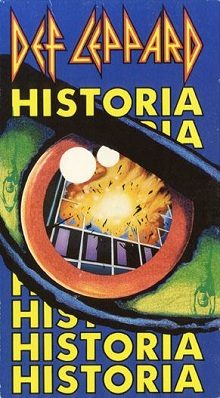
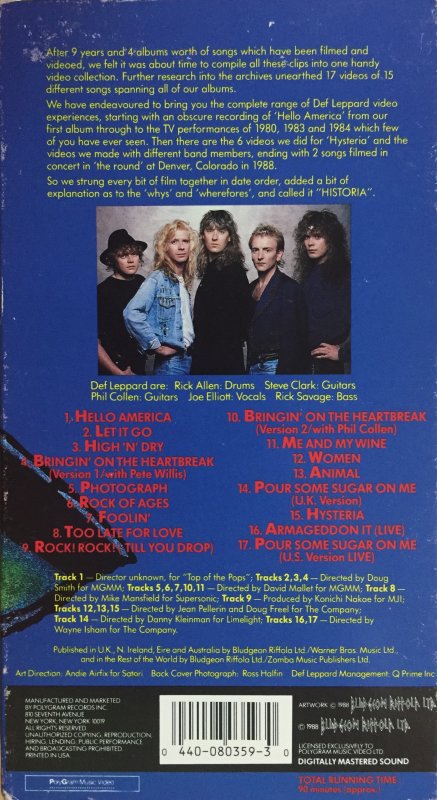
The 1988 VHS Historia collected all Def Leppard’s music videos up to “Love Bites”, along with some rare television performances that never aired over here. They were introduced by quaint title cards, and each video was presented in full — no edits.
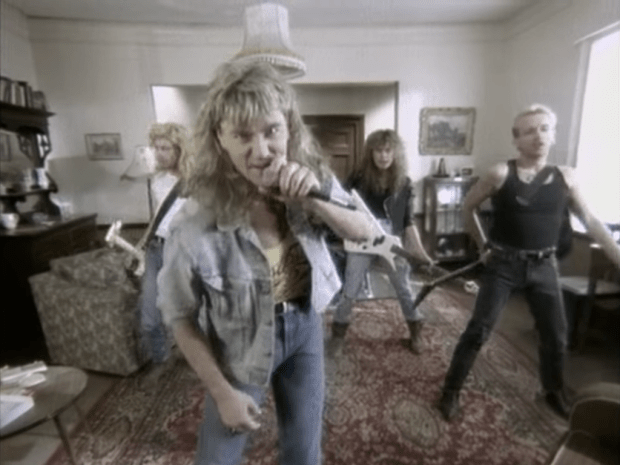
“Hello America” with Pete Willis was the first one we’d never seen before. Why was the drum kit out front? Nobody knew, but this cool song sounded like a lost hit. The “fake live” trio of “Let It Go”, “High ‘N’ Dry”, and “Bringing on the Heartbreak” ended the Willis era of music videos. These three were seen on TV here, but only rarely. “Heartbreak” was the original album mix.
The big three Pyromania videos by David Mallet were up next, “Photograph” in its uncensored version. Then there’s a TV performance (lip syncing of course) of “Too Late For Love”. This includes a neat set up with Steve Clark and Phil Collen coming down these hydraulic staircases. When spending the money to buy a VHS tape of music videos you can see on TV, it’s nice to get real rarities like this.
“Rock! Rock! (Till You Drop)” is another serious rarity from Japanese TV. With Union Jacks draped behind, Leppard rarely looked this cool. It’s no shirt required for Rick Allen, and a mop-topped Joe Elliot screams behind his hair into the microphone cupped in his hands. Unfortunately, during the guitar solo the director chose to focus everywhere but on Phil for most of it.
After Pyromania blew up all over the world, Leppard reissued Hign ‘N’ Dry with two bonus tracks. Music videos were made for each: The remixed versions of “Bringing on the Heartbreak” and “Me and My Wine”. The DVD release is mucked up and includes the wrong audio instead of the remix of “Heartbreak” but the VHS has everything right. These two videos are exact opposites. “Heartbreak” is a high budget extravaganza with the two guitarists playing on massive silos, smoke all around. Then there’s Joe crucified on a barge for some reason. The performance stuff is pretty cool at least. But “Me and My Wine” is a total contrast, just Leppard jamming it up in a cheap flat, wrecking stuff and playing in the showing.
And then finally it’s the Hysteria era, the big big hits with the million dollar videos. “Women” was cool, with that Def Leppard comic book theme. “Animal” and “Hysteria” had a lot of mainstream play. There’s also the original UK version of “Pour Some Sugar On Me”, with Leppard playing in a house in the midst of demolition. The “fake live” US version is also included, with the familiar extended remixed intro that was actually unreleased in audio form at that time. It is paired with “Armageddon It”, made from the same batch of concert footage.
Finally, in the days before hidden CD tracks were all that common, Leppard hit you with an unlisted bonus video. It’s “Love Bites”, the brand new video that shortly took over the world for them once more.
Videos weren’t cheap to buy — they were $25 to $30 for something like Historia. What you wanted was value for your money (stuff you didn’t see on TV) and rewatchability. Historia was constantly in our VCR, often for a full play-through. It more than earned its share of my allowance.
DEF LEPPARD – Los Angeles 1992 (Red Line bootleg CD)
It’s the Seven Day Weekend tour! Def Leppard brought back the “in the round” stage concept from their previous tour and played a set of hits with a few deeper cuts. This audience recorded bootleg captured the Los Angeles date permanently.
Wasting no time, it’s straight into the first single “Let’s Get Rocked”. I have never particularly felt this song was as strong as past efforts, but Def Leppard had overcome such tragedy. I was willing to forgive them for painting by numbers a bit with the new songs. One thing apparent on a bootleg with no post-production sweetening: Def Leppard’s vocals are 100% live.
Right into something better, it’s “Tear It Down”, better because it’s originally a B-side from the inspired Hysteria sessions. Speaking of Hysteria, onto “Women”! You can hear that new guitarist Vivian Campbell fit right in, seamlessly. A couple seriously great tunes follow — “Too Late for Love” from Pyromania and Hysteria‘s title track. Two of Leppard’s most accomplished singles. Slower, ballady, and not at all weak. “Hysteria” live begins just a little differently, but quickly becomes familiar and authentic.
I never cared for “Make Love Like a Man”, but it’s a temporary speedbump before a deeper track. “White Lightning”, the tribute to the late Steve “Steamin'” Clark is very hard to find live. This is the first version I’ve owned. It’s every bit as epic as it deserves to be. The stone cold classic “Foolin'” follows, and the Los Angeles crowd goes nuts when the track explodes. They are just as excited for “Animal”, sounding brilliant in live form, although hampered on audio by a loud talker in the crowd. New guy Vivian Campbell gets a big showcase solo next. I’m sure this show is edited down to fit on CD, since Phil usually gets a big solo too.* Viv’s is impressive and he gets to show off his shred a little bit, though his solo is more of an instrumental composition that sounds delightfully Vai-ish.
Another big epic, “Gods of War” from Hysteria is a serious thrill and chill. Say what you will about Leppard’s more pedestrian material. When they wanted to do something a little more challenging, they nailed it. A big long version of “Rocket” including the “Whole Lotta Love” segue closes the CD prematurely, which is a shame, and one can hope that the second half of the set was issued elsewhere.
4/5 stars
*Here is the full setlist that night according tosetlist.fm:
Let’s Get Rocked
Tear It Down
Women
Too Late for Love
Hysteria
Make Love Like a Man
Guitar Solo (Phil Collen)
White Lightning
Foolin’
Animal
Guitar Solo (Vivian Campbell)
Gods of War
Rocket (
Acoustic Medley Section
Enter Sandman (Metallica cover) (Vivian)
Back in Black (AC/DC cover) (Phil)
Tonight (acoustic)
You Can’t Always Get What You Want (The Rolling Stones cover) (acoustic)
Bringin’ on the Heartbreak (acoustic/electric)
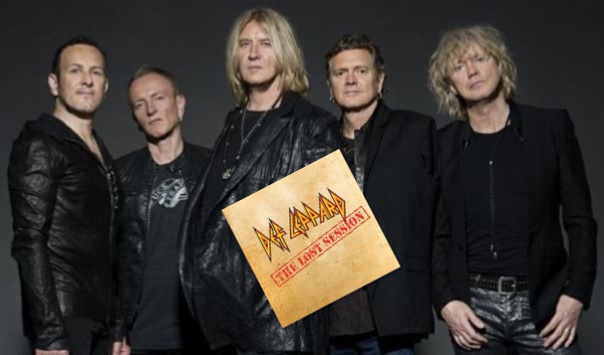
Cast your memories back to 2012. Def Leppard re-recorded some very high quality “forgeries” of some of their classic hits for iTunes. Three of these iTunes singles were released:
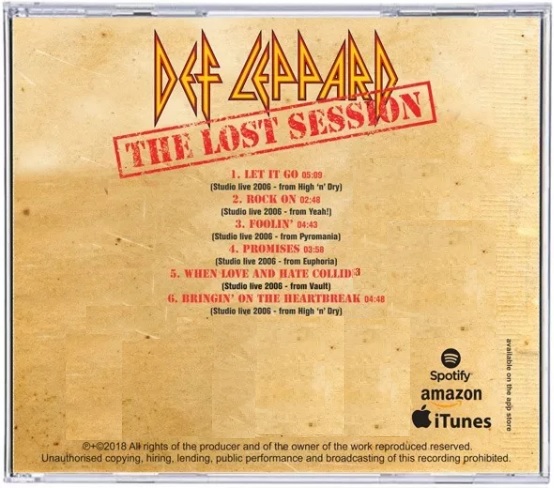
The iTunes exclusive concept dried up for Def Leppard afterwards, but in 2018 we got six more tracks, from a 2006 “lost session”. The rest of the songs don’t sound like “forgeries”, as the first ones did. These are listed on iTunes as “live”. They are not. They are also not meticulously recorded recreations. They lie somewhere between: not fully live, but raw in a way that Leppard rarely are.
There are a number of surprises in the re-recordings. First and foremost: “Let It Go”! Any Leppard fan will tell you that the 1981 High N’ Dry LP is Leppard at their early, heavy best. While nothing can compete with the Mutt Lange produced original, the re-recording is still razor sharp. It gives you a chance to hear Phil Collen and Vivian Campbell on lead guitar. The pair do not attempt to imitate Pete Willis and Steve Clark, instead blazing their own trail.
You don’t have to wait for the second surprise, a baffling one indeed: a re-recording of “Rock On” from 2006’s covers album Yeah! Why do Leppard keep playing this song? (It was even on their recent Best Of.) Considering how they’ve beaten this dead horse, it’s actually not much of a surprise after all. It was a boring song to start with, and Leppard can’t save it just by throwing down more guitars. “When Love and Hate Collide” is another surprising choice to re-record. The guitars are pretty incredible, but it’s just a ballad from a 1995 greatest hits CD.
“Foolin'” from Pyromania is missing the atmosphere of the original, but otherwise hits all the notes. Joe Elliott still has an enviable voice. Then it’s “Promises” from Euphoria, their best song from a dreary era. Sure it’s a formulaic rewrite of their best hits rolled into one, but it works. This re-recording is closest in sound and spirit to the original (from 1999). Finally “Bringing On the Heartbreak” is a smokeshow as the closer. It’s hard to really call it a ballad; there is some heavy rocking here too. The guitars sound fabulous. Def Leppard may no longer be the band they were in the 80s, but Phil and Viv are two of the best players in the game. They don’t show off, so people rarely think of them when listing great guitarists. But they are. The outro solo (sounds like Vivian) nails it!
Def Leppard’s Lost Session is perfect for the fans who have it all. Re-recordings are almost always very dicey cash grabs. Leppard’s are worth the purchase. They’re not cheap knock-offs. New slants are fused with the old classics, so take these songs out for a fresh spin.
25 million copies sold. Seven hit singles. A two year world tour. All done under the most difficult circumstances. Def Leppard’s Hysteria is one of rock’s greatest triumphs.
Although the album was released in 1987, the Hysteria story really begins on December 31, 1984. Drummer Rick Allen lost control of his speeding Corvette, and was thrown from the vehicle due to improper use of seatbelts. His left arm was severed. Doctors attempted to re-attach the arm, but infection set in and it could not be saved. It would be understandable if people thought Rick’s career in music was finished. While many artists from Django Reinhardt to Tony Iommi had dealt with physical disabilities, nobody had ever seen a one-armed rock drummer before.
Undaunted, Allen began working on a way around his disability. The band never considered a future without him, and were disappointed by “ambulance chasers” looking for a gig. Rick Allen wasn’t about to allow himself to go down or dwell in his misery. With an electronic kit triggered by his feet and right hand, Allen eventually regained his ability to not only play drums, but play live. This resulted in an inevitable stylistic change. Allen’s drumming style became more staggered, with emphasis on bigger, spaced out snare hits. His electronic kit was no crutch: singer Joe Elliott said he could play it “and make it really sound terrible”.
The next album was supposed to be a big deal. It was Phil Collen’s first Def Leppard LP as a writer, and Rick’s chance to prove he wasn’t out. Unfortunately, when the band started to record, producer Robert John “Mutt” Lange was not available. Instead the band began to work with Jim Steinman (Meat Loaf), but were underwhelmed by the results they were getting. Leppard’s ambition was not just to make another album, but to make something seriously good, memorable and special. Something to surpass Pyromania. Steinman was let go and the band started working with Nigel Green with no progress being made.
The band were taking so long, and suffered so many setbacks and delays, that eventually Mutt Lange was available again, and together they finally began work on the new Def Leppard LP. Co-writing every song with the band, Mutt provided the focus and intense discipline. The stated goal, following the template of Michael Jackson’s Thriller, was to make an album with 12 potential singles.
The long story of this difficult album (false starts, illnesses, studio problems) is only overshadowed by its success. But it took a while to get there.
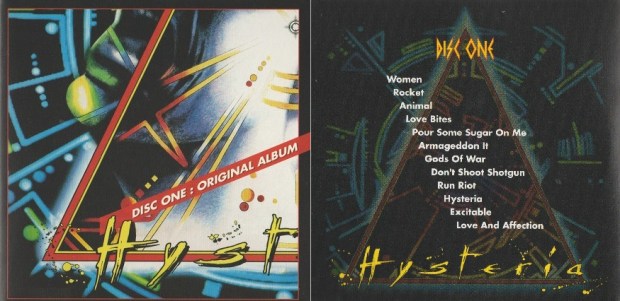
Disc One: The original album (Hysteria)
The first single “Women” did well enough, but failed to kickstart the mega album sales needed to recoup the losses. “Women” was an odd choice for a first single: a slow robotic rock track, with a killer comic book-based music video. It introduced the new Def Leppard groove: A simple one or two note bass line, layers upon layers of vocals and chiming guitars, but none of the full-speed-ahead New Wave of British Heavy Metal that Leppard were founded on. The year was 1987 and Def Leppard were on the cutting edge.
To get those chiming bell-like chords, Mutt had them recorded one note at a time! This is very apparent on “Animal”, the second single. It too was mildly successful, but not enough to push the album into orbit. Listen to the guitar chords and you will hear something that sounds more like chimes than strings. This is down to the incredibly detailed and overdubbed recordings. “Animal” was a stellar pop rock track, and a fine example of what Hysteria sounds like.
Refusing to give up, a third single was dropped: the ballad title track “Hysteria” and possibly the finest song on the album. The fact that these singles were not the hits the band hoped for at the time has not diminished them. Today they are all concert classics, radio staples, and beloved fan favourites. Leppard even re-recorded the song in 2013 for release on iTunes. (While the re-recorded version is impressive, it is impossible to exactly recreate the magic on this album.)
Finally, the success that the band and record label were waiting for happened. The track was “Pour Some Sugar On Me” and the North American version of its music video showcased the band’s stunning live show. Def Leppard were playing “in the round” to rave reviews. “Pour Some Sugar”, a retro glam rock tune with a contemporary sound, was a summer smash hit. It was cool, it was catchy, and Joe’s verses almost sounded like rap, although really they had more in common with Marc Bolan of T-Rex.
On a roll, nothing would stop Def Leppard now. Though the goal was an album with 12 potential singles, Hysteria eventually yielded seven. Most rock bands were lucky to squeeze three out of a hit album. Though the album was now becoming a bonafide hit, some critics and fans lamented the death of the original Def Leppard. Others embraced their pop success. The raw edgy guitars were gone and replaced by bright, precise parts working as a whole, in a gigantic pop rock juggernaut. Joe wasn’t screaming out every line, but actually singing now. It hardly matters. With the success of Hysteria, Def Leppard had embarked on a whole new journey and have rarely looked back to their origins.
The singles carried on, through the rest of 1988 and into 1989. “Love Bites” was fifth up, which originated as a country ballad that Mutt wrote and the band Leppardized into something different. It was a hit for the autumn of ’88, a slightly dark ballad for the fall. The victorious glam rock of “Armageddon It” was next, simple and pleasant enough for radio and video, and another huge hit. These were songs that had pep, but wouldn’t frighten mom and dad.
The seventh and final single was a surprise choice: “Rocket”. On album, “Rocket” was 6:37 long, and featured a long experimental middle section. The ambitious mid-section featured loads of NASA samples and sound effects, all backed by the African inspired drum loops of Rick Allen. The song was based a drum beat by Burundi Black, brought in by Joe Elliott, played by Rick Allen and looped. Eventually lyrics were added, inspired by the glitter groups of the 70’s that Leppard grew up with. Lange also used backwards vocals for some of the hooks. The line that opens the track and repeats through the song is the chorus from “Gods of War”, backwards: “Raw fo sdog eht rof gnithgif er’ew.” It was a sharp track to be used as a single, but that unforgettable beat was beyond question.
Hysteria had two more tracks as good as the singles, although they were not. “Gods of War” became a fan favourite, and easily could have been an eighth single. Dark in tone but more epic in quality, it has since become heavily associated with late guitarist Steven Maynard Clark. He was responsible for much of its guitar thunder. The final track that could have worked as a single was the album closer, the ballady “Love and Affection”. As good as any of the actual singles, “Love and Affection” had its own charm and hit potential. It’s long been one of my album favourites, just under “Hysteria” and “Gods of War”.
Rounding out the LP are “Run Riot” and “Don’t Shoot Shotgun”, two rock tracks that would have been highlights on a lesser album. Neither are clearly as brilliant as the hits, but both solidly get the job done with guitar thrills. Finally there is “Excitable”, the only song I’ve never particularly dug. It strikes me as gimmicky and very 80’s, much like “Social Disease” by Bon Jovi. Too reliant on sound effects and gimmicks. So out of 12 tracks, only one was really a dud. That’s not bad by any measure.
Hysteria rode the charts, recouped its costs, and then some. The tour in the round was legendary and resulted in a live video In the Round: In Your Face. Def Leppard were, for a short while anyway, the biggest rock band in the world.
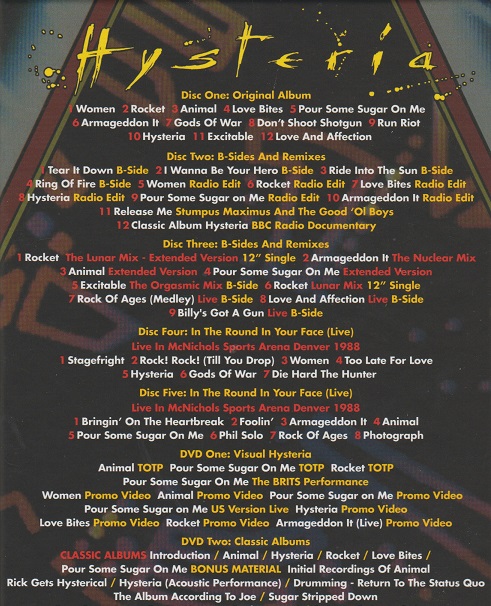
Disc Two & Three: B-Sides and Remixes
As discussed in greater detail in Record Store Tales Part 4: A Word About B-Sides, this album and its singles really clicked with the collector in me. Def Leppard prepared a number of B-sides for Hysteria, and perhaps because these were not produced with Mutt, they all have a harder edge. The four key must-have B-sides were all exclusive studio tracks, and the first four on the second CD of this set.
“Tear It Down” was a speedy but basic rock track considered good enough to include on the next album, and so it was. The B-side version remains its superior, because it is tougher than the one on Adrenalize. The most impressive B-side was probably “I Wanna Be Your Hero”. This B-side from the “Animal” EP has the Hysteria vibe and sound. It easily could have replaced “Excitable” as an LP track, but if it had perhaps Hysteria wouldn’t have sounded as diverse. Dig that false ending! Next, “Ride into the Sun” is a remake of a track from the original 1979 Def Leppard EP. The 1987 update is heavier and far better, a truly impressive upgrade. Finally “Ring of Fire” was even heavier than that, clearly too heavy for what Hysteria became.
The second disc features all the radio edits done for Hysteria‘s singles. Even to collectors, this is padding. Only one radio edit seems to hit the nostalgic notes, which is “Women” with a fade out ending. Incidentally, the only single from Hysteria that didn’t get a single edit was “Animal”, already short at 4:04.
Most important is the cover version of “Release Me”. This track was initially released on the “Armageddon It” picture disc single, but not credited to Def Leppard. Much like their later acoustic B-sides credited to the Acoustic Hippies from Hell, “Release Me” is credited to “Stumpus Maximus and the Good Ol’ Boys”. Engelbert Humperdinck is responsible for the most famous version of “Release Me”, but Stumpus Maximus is definitely responsible for the most twisted. Featuring Def Leppard’s roadie Malvin Mortimer on lead vocals and the rest of the band goofing around on each others’ instruments, “Release Me” is a hoot. Mortimer breaks all known sound barriers with his screaming (and burping) of the lyrics. I was absolutely confused beyond belief upon hearing this for the first time, since I didn’t catch on to this actually being Def Leppard in disguise. They absolutely fooled me; I thought whoever they were, Stumpus Maximus and the Good Ol’ Boys sucked! A hilarious novelty.
Disc two concludes with an 18 minute radio special from the BBC, going through Hysteria‘s songs with Joe Elliott. The third disc consists of remixes and live B-sides from the period. Extended versions of “Animal”, “Pour Some Sugar”, “Armageddon It”, “Rocket” and even “Excitable” all come from 12” singles. A welcome inclusion is the single edit of “Rocket”, the short version of the “lunar mix” . This was excluded from the previous 2 CD deluxe of Hysteria. The video mix of “Pour Some Sugar” is still missing, but that track is on so many albums including the five-million-selling Vault, so we’re not going to worry about it. These extended remixes are, not surprisingly, pretty much for the fans and collectors.
The live B-sides feature the fascinating “Rock of Ages” medley. It seamlessly captures key riffs of classic rock tunes: “Not Fade Away” (Buddy Holly), “My Generation” (The Who), “Radar Love” (Golden Earring), “Come Together” (The Beatles) and “Whole Lotta Love” (Zeppelin). This is all done to the tempo and style of “Rock of Ages”, and quite well, too. Then it’s a lively cut of “Love and Affection”, which was also utilised as the album’s Japanese bonus track. It’s very rare to hear this song done live, and definitely rare to hear a great vintage version done live. Finally there’s a so-so “Billy’s Got a Gun” (same gig). One live B-side is missing, though you can understand why, it is still annoying. “Elected”, the live Alice Cooper cover (same gig again), was on the 2 CD deluxe edition. It was recorded during this period but released in 1993 on the “Heaven Is” single. Because it’s not from a Hysteria single, it was dropped from this box set. Too bad.
Disc Four & Five: In the Round In Your Face (Live)
When I was a young fella, massively into Def Leppard, In the Round In Your Face (taped in Denver over two nights) was the very first live home video I ever bought. To finally, finally have a proper audio edition…there are no words to express the happiness! It always should have been a double live album release and not just a video, but hindsight is always 20/20.
The legendary set consists of hits from Hysteria, Pyromania, and “Bringin’ On the Heartbreak” from High N’ Dry. From the unforgettable Clint Eastwood “Dirty Harry” intro, to the final song “Photograph”, it’s non-stop fun. Though today there is plenty of live Leppard available, nothing tops vintage Joe Elliott screaming like a kid. Aside from a flawless track selection, highlights of the concert include Phil Collen’s new acoustic intro to “Heartbreak”. “Gods of War” is heavy and powerful. “Too Late For Love” gives me chills. Of the newer songs, “Women” is notable for being included as one of the B-sides for “Rocket”. Instead of putting it on the previous disc, it was left intact here, with the concert it came from. Of course, we mustn’t forget what really makes this concert special. Steven Maynard Clark didn’t survive to do another tour with Def Leppard, and this would be the last live recording with him on it.
DVD Disc One: Visual Hysteria
This disc is a new compilation of video clips, the first four of which are previously unreleased. Leppard have three Hysteria-related appearances on Top of the Pops: “Animal”, “Pour Some Sugar On Me”, “and “Rocket”. These lip-synced television appearances are almost comical as people scream for a band miming a hit song. The showmanship of Steve Clark, in his billowy white pants, is sorely missed. What a rock star! On “Animal”, frontman Joe Elliott appears to have pulled a Derek Smalls and stuffed his trousers. Note Phil’s ahead-of-the-times Metallica shirt during “Sugar”. Unfortunately “Rocket” fades out early. Though these videos are old and washed-out, it’s a hoot to have them. Leppard lip-sync again on a familiar video of “Sugar” from the Brit awards.
Music videos were a huge part of the marketing for Hysteria, and a key component to its success. Each one is here, including both the UK and US versions of “Sugar”. These videos bring back such a nostalgic glow. I remember seeing “Women” for the first time, thinking how amazing it was that Def Leppard were back. I also thought about how brave Rick Allen was. He didn’t try to hide his injury. The slow-mo effect of “Hysteria” brings back a lot of memories, as does “Love Bites”. It was a huge hit video in Canada, during a very cool autumn.
DVD Disc Two: Classic Albums
Of all the Classic Albums series DVDs, this was one of my most frequently played. It is now reissued as part of the 30th anniversary box set, a perfect place for it. In case you didn’t know, Classic Albums is a fantastic series of documentaries that go back to the original master tapes. Hysteria is one of many albums they have covered.
Hysteria is such a rich, textured, thick album with a long story so this DVD is an obvious slam dunk. The only thing it lacks is Mutt Lange’s knowledge (a notorious recluse). Otherwise, the band go back to the beginning with the early demos. “Animal” was sparse but remarkably recognizable while still in demo form, down to the false ending. “Rocket” is deconstructed so you can hear the drum orchestra that was laid down, while Joe Elliott talks about how it was inspired. The backing vocals of “Gods of War” are laid out bare, virtually every single word sung and recorded separately! That’s the kind of album this is.
Along with that, Joe, Phil and Sav also perform bits live in the studio. This helps to illustrate the individual parts further. It is revealed to “Love Bites” was brought to the band by Lange as a country song; you can hear the roots on this DVD. Rick Allen is there to discuss his accident, an obviously emotional moment. Steve Clark is discussed too, and current Leppard guitarist Vivian Campbell is on hand to talk about the numerous guitar parts that he inherited and has to play live.
My favourite feature of this DVD is actually in the bonus material. It’s the chapter that covers the first shows that Leppard played after Rick Allen’s accident. Originally, Jeff Rich from Status Quo was tapped to play a second drum kit alongside Allen on stage, just in case Allen got tired, slipped out of time, or couldn’t finish the show. There were so many variables that nobody knew what would happen during what really amounted to Allen’s comeback shows. Well, for one show in the middle of nowhere, Jeff Rich was late. If he had turned up on time, maybe Rick Allen would never have found out that he could play a full Def Leppard show on his own. Allen did the show with no help on the drums, and he nailed it. Rich told Allen that his work was done; Allen did not need any more help. And that was it!
The books and packaging
This iteration of Hysteria comes with four individual books and a poster suitable for framing. The Big Book of Hysteria is the main event. Adorned with pictures and full credits, this tells the story of the album from the band’s point of view. There were details in this book that even I wasn’t previously aware of. Why did Rick Savage play guitar on “Hysteria”? What was the original planned 10 track running order of the album? You’ll find that in this book. There is also a track by track rundown of the album by the band.
Next: Ross Halfin’s Portraits of Hysteria. This photo book has many of the classic pictures you will remember from this period. I had several of these as posters on my wall. Halfin was responsible for all of them!
A lovely miniature reproduction of the 1988 UK tour book is complete with cut-outs and even more Halfin photos. Tour books are large affairs, and this being a small reproduction, the text is hard to read. Especially for us old enough to have an original North American tour program in the house.
Lastly, and perhaps most lovely, is the Discography book. Inside are photos and release details of every obscure version ever released of Hysteria, all its singles and more. It’s exhaustive and assembled with consultation from a fan expert.
All seven discs, books and poster are packed in a nice looking, compact box. Each disc has its own gatefold sleeve with yet more memorable pictures inside. They nest inside a cardboard tray with the Union Jack printed on it. Perfect!
Conclusion
I’ve had Hysteria five times now. The first was a gift for Christmas of ’87. I upgraded to CD when I was working at the Record Store. I bought the 2006 2 CD deluxe edition, the DVD of Classic Albums, and Hysteria on 180 gram vinyl. I hope this 30th anniversary box set is the last time I have to do so. I can’t imagine what could entice me to buy it again. A 5.1 surround sound mix? Please, rock gods, don’t do that.
I love Hysteria. But let’s hope this is the last of it.
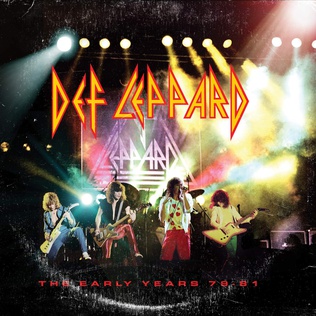 DEF LEPPARD – The Early Years 79-81 (2019 EMI)
 The 10″ x 10″ box format is awkward to store, but Leppard seem committed to the size, with their London to Vegas set having the same dimensions. They’ve at least maximised the space, with a generous hardcover book included inside. This book has the liner notes and essays you expect, broken down disc by disc. A generous set of unreleased photos keep the eyes from being bored while your ears indulge themselves. The CDs are stored separately in a cardboard folder, and they don’t seem to move around in there. Each one has its own cardboard mini-sleeve. The packaging works.




















 DEF LEPPARD – Hysteria (2017 Universal 5 CD/2DVD 30th anniversary edition)
 Disc One: The original album (Hysteria)


 My favourite feature of this DVD is actually in the bonus material. It’s the chapter that covers the first shows that Leppard played after Rick Allen’s accident. Originally, Jeff Rich from Status Quo was tapped to play a second drum kit alongside Allen on stage, just in case Allen got tired, slipped out of time, or couldn’t finish the show. There were so many variables that nobody knew what would happen during what really amounted to Allen’s comeback shows. Well, for one show in the middle of nowhere, Jeff Rich was late. If he had turned up on time, maybe Rick Allen would never have found out that he could play a full Def Leppard show on his own. Allen did the show with no help on the drums, and he nailed it. Rich told Allen that his work was done; Allen did not need any more help. And that was it!



 mikeladano.com