It was 2003, and I was managing the Beat Goes On location on Fairway Road. A newer employee named Lori was on the shift. She was great with customer service, but even she could not help the large man with the heavy Caribbean accent that walked into our store that evening. He was friendly, upbeat…and infinitely frustrating.
“You got any Luta?” he asked Lori. I always listened to the employee interactions with customers so I could step in when necessary. This one perked my ears up because I had never heard of any artist named “Luta”. I had been in the store about eight years at that point and had heard just about every name you can think of, from “DJ Rectangle” to “Who” (not THE Who, not THE GUESS Who, not DOCTOR Who, just Who). So, when an unfamiliar name came up, I was always willing to help a less experienced employee.
Lori searched “Luta” to no avail, so I stepped over to her terminal to help.
“How do you spell it?” I asked the man. He didn’t know. “Loo-tah” is how he pronounced it, with emphasis on the “Loo”.
I said, “Is it L-u-t-a?” to which he responded, “Yeah, man.” Not that I doubted Lori’s search, but I typed it in, as well as “Lootah” and anything else I could think of. Our database was alphabetical, so as long as you had the first few letters right, you could scroll up and down and see what was similar. I found nothing.
“Are you sure it’s Luta?” I asked. “One name, just Luta?”
“Yeah man,” he responded. “You don’t know Luta?” he laughed in his accent.
“No I’m sorry, I have never heard of him before,” I responded in the negative.
“‘Dance With My Father’,” said the guy.
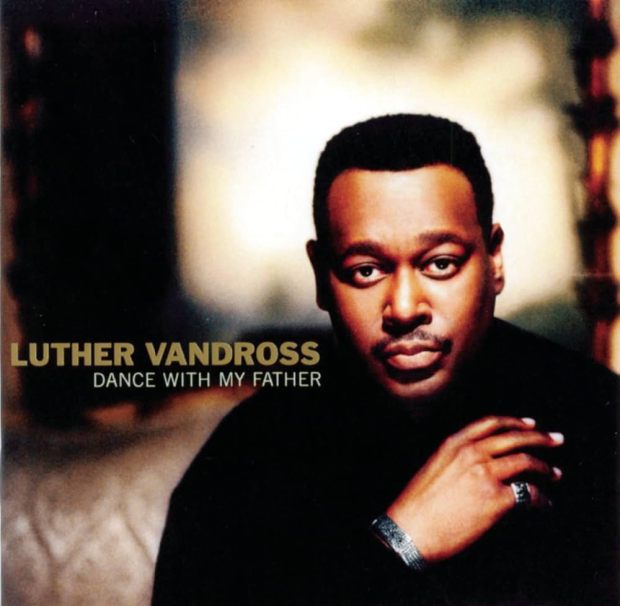
Suddenly, it clicked. “Dance With My Father” was a new hit by Luther Vandross.
Luther. Luta. Luther Vandross.
Mystery solved! The lesson here is, at least know the first and last names of the artist you’re searching for when you walk into a music store!
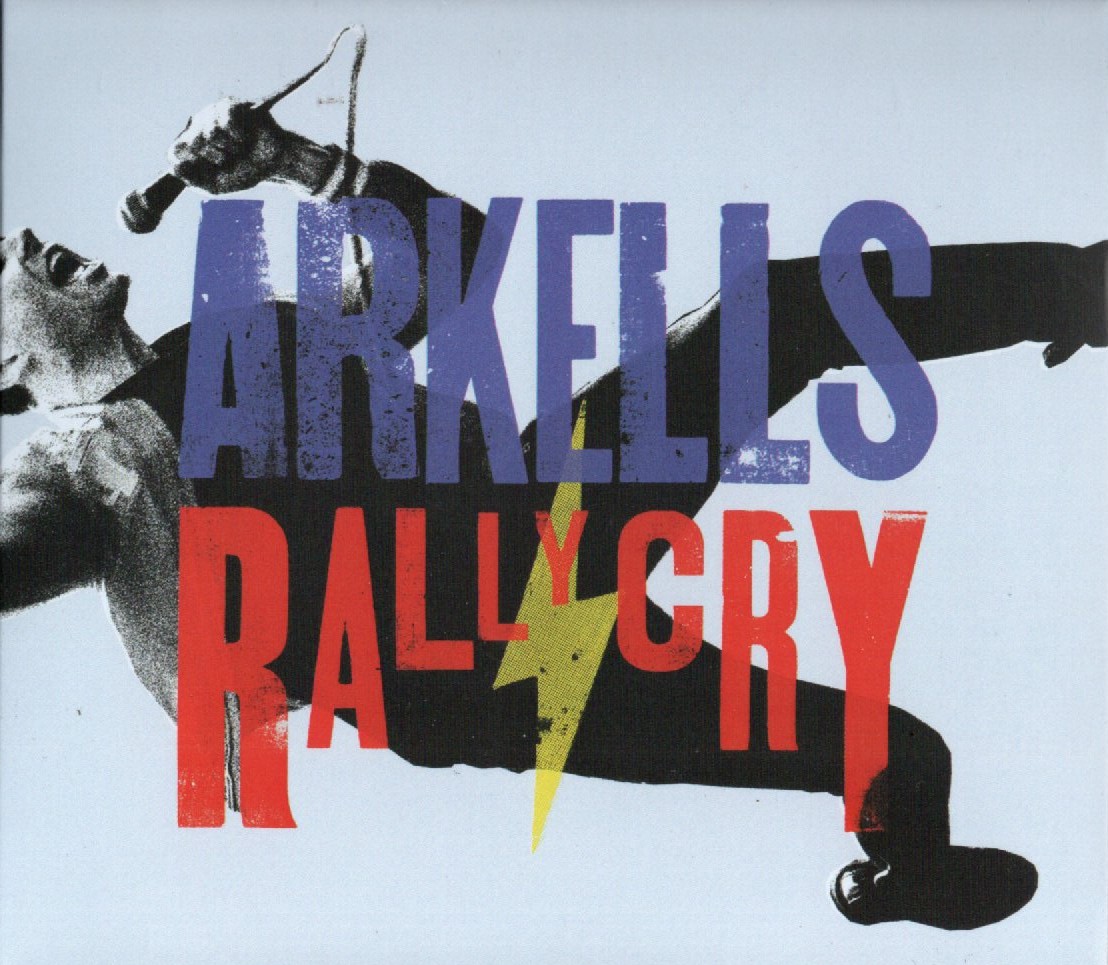
In a sense, Rally Cry is the last Arkells album that was made conventionally. Campfire Chords, Blink Once, and Blink Twice were all recorded during the pandemic. Laundry Pile was unplanned. Rally Cry is the last one recorded during quote-unquote “normal times”. It is 10 songs, 36 minutes, and clearly focused on pop rock with a soul/R&B influence.
This album is loaded with Arkells-style anthems, and leads off with one: “Hand Me Downs”. Their working-class social consciousness creeps into the lyrics, but most people won’t be paying attention when the chorus hits: “Woah-oh-oh!” shouts singer Max Kerman in a fashion he almost could have patented. “Ain’t no shame in some hand-me-downs!” Yet the words are some that any can relate to. “First of the month gets you stressed out, and moving trucks bring you right back.” Musically, this is not that different from the prior album Morning Report, though perhaps more direct.
“American Screams” juxtaposes irresistible dance music with a shot at organized religion. “You got your good book all wrong. You wanna do God’s work, it’s gonna be hard work.” The big thick dance beat though! The thing about Arkells music is that the it is so strong, the lyrics can be ignored if you so choose. It’s way more rewarding to look into what they’re saying. Unfortunately, this single is just three minutes long!
“Relentless” hearkens back to the bands’ youths. Ambitiously, it contains a sample “Sixolele Babe” by South African artist Chicco. The sample is not obvious at all, and somehow fits right in with this pop rock anthem. How do they find these records? Musically illiterate, the Arkells are not.
Moving on momentarily to a more straightforward Arkells sound, “Only For A Moment” is softer, and driven by beats and piano. A good time party tune, but with interesting things going on rhythmically. The lyrics are not too heavy, though the theme is letting your stresses and anxieties go, if only for a moment. Then a U2-like guitar lick chimes forth, while Max sings a melody that Bono could have written (but didn’t). It’s hard not to compare to the Irish quartet; even certain inflections in the voice.
Flip the side of the record, and you are back in the disco with the big single “People’s Champ”. It’s political, but not specifically so. It’s just about a candidate who’s no good: “You’ve got no vision for the long run, you’ve got no sense of history.” And then the chorus, “I’m looking for the people’s champ, and it ain’t you!” And then in the same song: “All my girls say woah-oh! All my dudes go, woah-oh!” So, it’s a rally cry, but it’s also a hell of a good time. And why not? Do you have to be dead serious musically when your lyrics are cutting slices out of the elite? Why not let that bass drum hit! Why not let that bass thump! Tim Oxford and Nick Dika oblige on both counts, while a horn section blasts in your ears.
“Eyes on the Prize” could have been a single too. This is more R&B than rock and roll, with loads of soulful backing vocals. This one sounds autobiographical. “I was repeating conversations with a chip on my shoulder, replaying the scene over and over.” But there’s those upbeat horns and lush backing vocals! Halfway through the song, Max takes us to church. Just like a preacher, he goes off on his tangent. “And the man behind the counter turned up the radio, one of those old AM/FM boomboxes, the kind with the cassettes.” Yes, he really sings that, with the soul backing vocals making it seem like the most important scene you’ve ever heard. Though at its heart, “Eyes on the Prize” is a hit-worth Arkells anthem, it’s chock full of diverse musical ideas, expertly executed. Genius songwriting and performance.
If you’re looking for a perfect summer soundtrack, check out the bass-driven “Saturday Night”. Again, Max’s lyrics are interesting and fun. “You and me talking about conspiracy theories, you said ‘I don’t give a fuck about a man on the moon.'” Again the punchy horns deliver the 80s, like a song right out of the summer of ’85. It sure feels the way I remember. The party comes to a stop on the darker “Company Man”, as the messages return to the forefront. Yet the music goes full 1970s, with rolling drums, bangin’ piano and horns blasting.
Album closer “Don’t Be A Stranger” is catchy, with a big drum beat like an old Beatles song. It ends the album on something of a somber note, but also a hopeful one. There’s a quaint keyboard part that gives it that throwback vibe.
Rally Cry, though musically and lyrically ambitious, does lack the emotional impact of Morning Report and some of the other preceding albums. It is a trade-off. The Arkells are somehow both streamlined, and expanded. The melodic construction of the songs are more emphasized than ever before, but beneath that lie layers of musical experimentation, mostly in the direction of Motown. As such, we don’t get heart-rending slow-burners like “Passenger Seat” from the prior album. The guitar riffs aren’t on the forefront. A good album it is, though perhaps by being so accessible, it loses that challenge that sometimes keeps an album in your deck for decades.
Musical episodes and American Dad go together like blue suits and Stars n’ Stripes lapel pins. Cee-Lo Green wasn’t the first musician to appear on the show, but he was the first to appear both animated, and live action!* Cee-Lo hosted the opening episode for Season 8, “Hot Water”. “My name? Not important,” he begins. What matters is this “cautionary tale” that “may affect your next hot tub purchase.”
Hot tubs? Indeed, Cee-Lo also voices an evil, murderous hot tub. It sings songs of temptation to Stan Smith, who is becoming obsessed with “soaking” in it. The tub lulls Stan in with “Dip A Toe”, a light sexy Cee-Lo song urging him in. A talking hot tub? “Ain’t nobody got to know…just dip a toe!” Echoes of the classic Stephen King stories Christine and The Shining are obvious, as the hot tub wants more and more time with Stan. Even if it means Stan’s family has got to go. Cee-Lo continues to woo Stan on “Hot Tub of Love” and “Do Whatever You Like”. Stan begins skipping work, neglecting his family, and throwing hot tub stripper parties. He sings, “I feel so conflicted, but this is up to me. On one hand there’s the hot tub, the other’s family.” Guess what he chooses?
Scott Grimes, who voices the character of Steve Smith, is quite a talented singer himself. Steve has songs in countless episodes. In “Hot Water” he duets with Roger the alien in a Boyz II Men-esque song called “Daddy’s Gone”. Francine is forced to leave Stan and the family is broken! The man who sold Stan the hot tub, Marguerite, becomes suspicious and begins doing research on the tub, to the tune of a song called (obviously) “Hot Tub Research”. Marguerite discovers the truth: The tub’s original owner put a stripper pole in there that got hit by lightning. The tub came alive! It killed its owners when they stopped using it. It then escaped from a mental institution and was forgotten until Stan bought it. Can Marguerite stop the hot tub before it kills Stan’s entire family? The answer may surprise you.
“Hot Water” was only an average American Dad episode for laughs-per-minute. It is top notch when it comes to music and unorthodox storytelling. As a premier episode for the 8th season, it had star cameo power and was completely different from any other episode. That’s a win/win. Except I don’t feel like hot tubbing any time soon.
3.5/5 stars
*Actress Gabourey Sidibe also appeared live action as herself in the episode “Stanny Tendergrass”. In this episode, she voices one of the hot tub girls. And Patrick Stewart, who voices CIA director Avery Bullock, appeared live action as himself in season 9’s “Blood Crieth Unto Heaven”.
It’s Epic Review Time! The fourth review from Mike and Aaron Go to Toronto…Again! Yet another score from Sonic Boom! I bought this one new, for $24.99. Warning: image heavy!
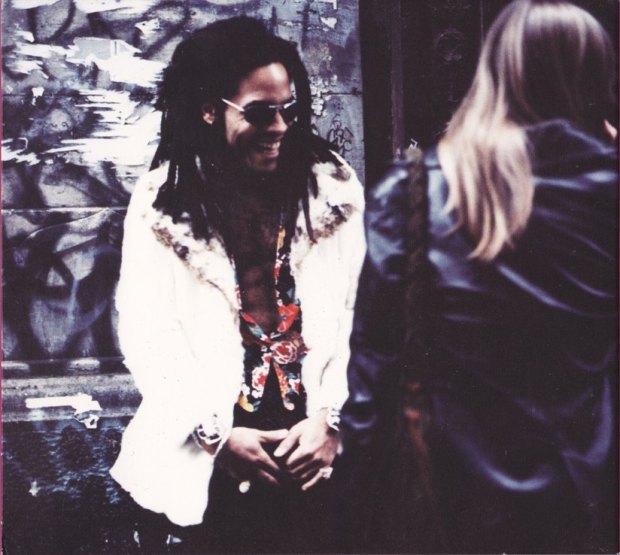
LENNY KRAVITZ – Are You Gonna Go My Way (2013 Virgin deluxe edition, 1993 vinyl edition)
Man, I love this record. This was the last legitimately great Lenny Kravitz album. I’m pleased that with a fresh 2013 remastering job, it still sounds vital and raw. Back in those days, Lenny was recording on vintage equipment all but exclusively. In the included interview track, Kravitz discusses the collection that he and drummer Henry Hirsch had acquired, including gear that dated back to the 1940’s and 50’s. The upkeep of said equipment is a nightmare, he states, as you can imagine. The results that it yielded, especially on Are You Gonna Go My Way, justify the antique gear and maintenance costs.
I first got this sucker on (clear vinyl) LP back in ’94, which came with a stellar 8-song bonus CD. I didn’t even have a good way of playing vinyl back then. My turntable was pretty crap, so I never actually played the LP. I got Are You Gonna Go My Way on CD a bit later, used, when I started working at the Record Store. Now I can discard that old CD, because this deluxe renders it obsolete. (But not the vinyl; more on that in a bit.)
Hopefully everyone knows the energetic title track, a massive smash hit single. The simple repeating guitar riff is nothing but classic. The track itself is basic blues-based classic rock, albeit with the tempo maxed out. This track convinced that Lenny was ready, willing and able to be a rock hero, filling the shoes of his forebears such as Zeppelin and Hendrix. Yet it was actually the second single, the organ-based ballad “Believe”, that shows what Lenny is truly capable of. I consider this his best song, bar none. The 2001 influenced video was so cool, but the delicate song stands on its own. Its ending is epic in quality.
The other singles on the album included the frighteningly good soul-rock song “Is There Any Love In Your Heart.” The guitar riff is pure rock, the falsetto vocal pure soul. The song is deceptively angry. Though Lenny does not sound enraged, the lyric is pretty clear:
“Babe you say I’m the only one, But you’re fucking all my friends, Baby all that you care about, Is Gucci and Mercedes Benz, You’re just the kind that’s up on all the latest trends.”
The last single from Are You Gonna Go My Way was the gentle love song, “Heaven Help”. The amazing acoustic track was softer than I generally liked, but it’s hard not to. It spawned a five-track CD single (or EP?), which we’ll get to shortly.
Singles aside, the album is loaded with incredible deep cuts. One of the best is the emotional “Sister”, which really knocks you out by the end. “Sugar” boats some cool, funky retro horns. “Eleutheria” is reggae; I can’t think of a better way to describe it. It’s also a standout, and probably could have been a single in its own right. “My Love” is psychedelic, while “Just Be A Woman” is simply lovely. There is plenty of variety on Are You Gonna Go My Way, without sounding fragmented. It still sounds completely unified.
There’s only one tune I still don’t like, which is “Black Girl”. It’s one of the softer numbers, but I just don’t find it catchy at all. But it’s the only one.
The deluxe edition is jam packed with value. Disc one boasts seven bonus tracks, all of astounding quality for B-sides. These tracks had been previously issued on the aforementioned “Heaven Help” single and vinyl edition, so I am well familiar with each. The upbeat “Ascension” should have been a hit. “All My Life” is as strong as any of the album cuts. “Brother” is the funkiest thing here, and maybe should have been included for that reason. “Someone Like You” is a cool, 60’s-style droning rock song, a bit more upbeat than “My Love”. “For the First Time” is a quiet slow dance, so for that reason, I can see why it was excluded. On an album, it could kill momentum. On a dance floor, it would result in many babies being conceived later in the evening.
Without a doubt, the most hilarious moment is the song “B-Side Blues”, a dirty spontaneous sounding song with spiteful lyrics. In the words, Lenny complains that he’s been working hard, and only has six days off. Yet the record company wants new songs! This is what Lenny presumably gave them. “Take this song and shove it up your ass,” croons Lenny. Fortunately there’s enough Zeppelin-y blues here to keep the party going. “Top 40, yeah!”
The second CD has some great hotel room acoustic recordings. Sounds like cassette to me! “Believe” is one I had previously, on the vinyl edition. The rest are new to me, but every bit as raw and plaintive as the acoustic “Believe”. Then there are some fantastic unfinished songs and demos. I could not believe the quality of his throw-aways. I don’t know if these tunes surfaced later on or not, but they certainly should. “Work Like the Devil” has elements that sound like “Are You Gonna Go My Way”, but it’s definitely not the same song. It only has about half the lyrics in place, but damn. If it was on the album, it would have been a highlight. Most of these demos are loud rock jams. “Getting Out” though is a pure funk jam, sounding similar to Zeppelin’s “The Crunge”. The best of these songs is the instrumental “Blood/Papa (A Long and Sad Goodbye)” which, once you get past the name is a 10 minute slow jam. In my opinion, this one doesn’t need to be finished. I think it’s perfect as-is.
The last three songs are rough demos of songs written for the album Vanessa Paradis, which Lenny wrote and produced. These are a bit soft for my tastes. They are very unlike the rest of the material on this deluxe edition. I know that “Lonely Rainbows” was on the album, but I don’t know if the other two were used under different names.
Finally, I want to mention two songs that I know of that are missing from this deluxe. From the vinyl’s bonus CD is a live version of “Sister”. This take is absolutely epic and it sends shivers up and down my spine at the end. Just an incredible, raw live performance. I assume somebody made a decision that live stuff wasn’t going to be on the deluxe. That means you’re also missing the live medley of “Freedom Train/Always On the Run” from the “Heaven Help” single. Too bad. I think most fans would rather have those than the BBC interview. The interview is good, don’t get me wrong, but it’s also 15 minutes long.
I wholeheartedly recommend this deluxe edition of Are You Gonna Go My Way to anybody who wants to check out Lenny Kravitz on the harder side of rock. You will not be disappointed with either the album, or the deluxe. In the meantime, I suggest die-hard collectors find the vinyl too, just for that astounding live version of “Sister”.
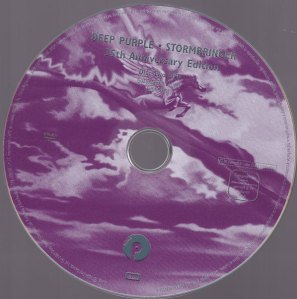
DEEP PURPLE – Stormbringer (35th Anniversary Edition, 2009 EMI, originally 1974)
Stormbringer, now available in the gloriously remastered series of Deep Purple special editions, is one of my favourite Purple platters. Now augmented with bonus material, it has finally been given the treatment it deserved. It’s certainly not everybody’s cup of tea, but Stormbringer has earned some begrudging fans over the years. I for one find it a more enjoyable listen cover to cover than 1974’s Burn.
A lot of fans did not like the funkier, softer direction of the band. You can understand this, of course. A fan who loved In Rock, one of the heaviest records of any decade, could easily be turned off by the radio-ready soul funk of “Hold On”. Blackmore himself decried the funky direction of the band.
Here’s the good news: Whatever Deep Purple set their minds to, they could do. And they could do it well.
Blackmore may not have liked the album, and he did take a step back in the mix, (you can barely hear any guitar on “Hold On”). He could stilll adapt to and play any style. His playing here, while sparse, is sublime. Ian Paice takes to the funky rhythms very comfortably, laying down some excellent grooves. Jon Lord steps up to the forefront, supplying some excellent, funky keys.
There are a few songs that harken back to the past: “Stormbringer”, the title track, sounds as solid as any epic the band had ever composed. It could have been on Burn as easily as this record. In fact, it stands out as being out of place: As the opening track, fans must have been shocked and surprised when the rest of the album was so different.
Another song that has shades of older Purple is “The Gypsy”. It’s a slow mournful piece, perhaps akin to “Mistreated” from the previous album. The lyrics are uncharacteristically bleak.
One track showed an interesting glimpse of the future. “Soldier Of Fortune” is an acoustic track which forshadowed much of the music Blackmore would do with Rainbow, and even now with Blackmore’s Night. David Coverdale has performed it live with Whitesnake. I think it’s one of Richie Blackmore’s finest compositions.
Of the other tunes, “Love Don’t Mean A Thing” is one of the funkiest, and one of the most entertaining. It’s just fun to listen to. David and Glenn co-sing this one. Ritchie’s solo is very understated, but appropriate. Glenn takes his first solo lead vocal with Deep Purple on “Holy Man”, a soulful ballad. “You Can’t Do It Right” features probably the funkiest guitar work of Blackmore’s career. It’s fascinating to listen to, and the band really cooks on this one. It’s one of the most extreme experiments of this funky Purple period.
As with all the Purple reissues, this has been lovingly remastered. Finally you can discard your original CD, mastered for digital ages ago, but never really letting the subtleties of the music shine. Stormbringer, of all the Deep Purple albums, perhaps has more subtleties to hear due to the quieter nature of the music.
Bonus material? Oh yeah, there’s bonus material, in this case four remixes by Glenn Hughes. These remixes don’t replace the original songs, but they do act as a companion piece of sorts. Fresh light is shed on alternate takes incorporated into the mixes, and “Love Don’t Mean A Thing” is extended by over half a minute. “High Ball Shooter” is presented in an early instrumental form as well.
As an added bonus, a second disc has been included. The second disc, exclusive to this edition, is a DVD containing the original 1975 quadrophonic mix of Stormbringer! Nice. Apparently, this disc is to be a limited edition so get yours while you can. I liked quite a bit, myself. As with many quad mixes from the 70’s, the songs often bear noticeable differences from the originals. Quad was a gimmicky fad, by today’s standards, but listening to it with the benefit of hindsight is quite enjoyable.
Lastly, I must acknowledge the great liner notes. The most entertaining story included is in regards to “Love Don’t Mean A Thing.” While in Chicago, Ritchie ran across a street busker, who was snapping his fingers singing a song about money. Blackmore invited him onto Purple’s plane, collected Coverdale and Hughes, and jammed for 20 minutes with this guy who taught them the song and the lyrics. The band finished the song that became “Love Don’t Mean A Thing”, credited to the entire quintet, because nobody ever bothered to get the busker’s name.
Pick up Stormbringer in this 25th Anniversary Edition, and finally you can feel comfortable discarding your original.







 mikeladano.com