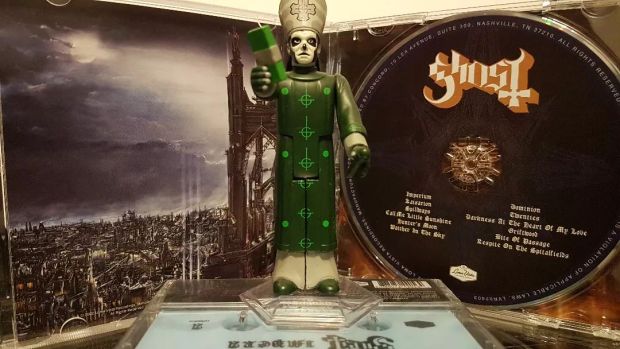
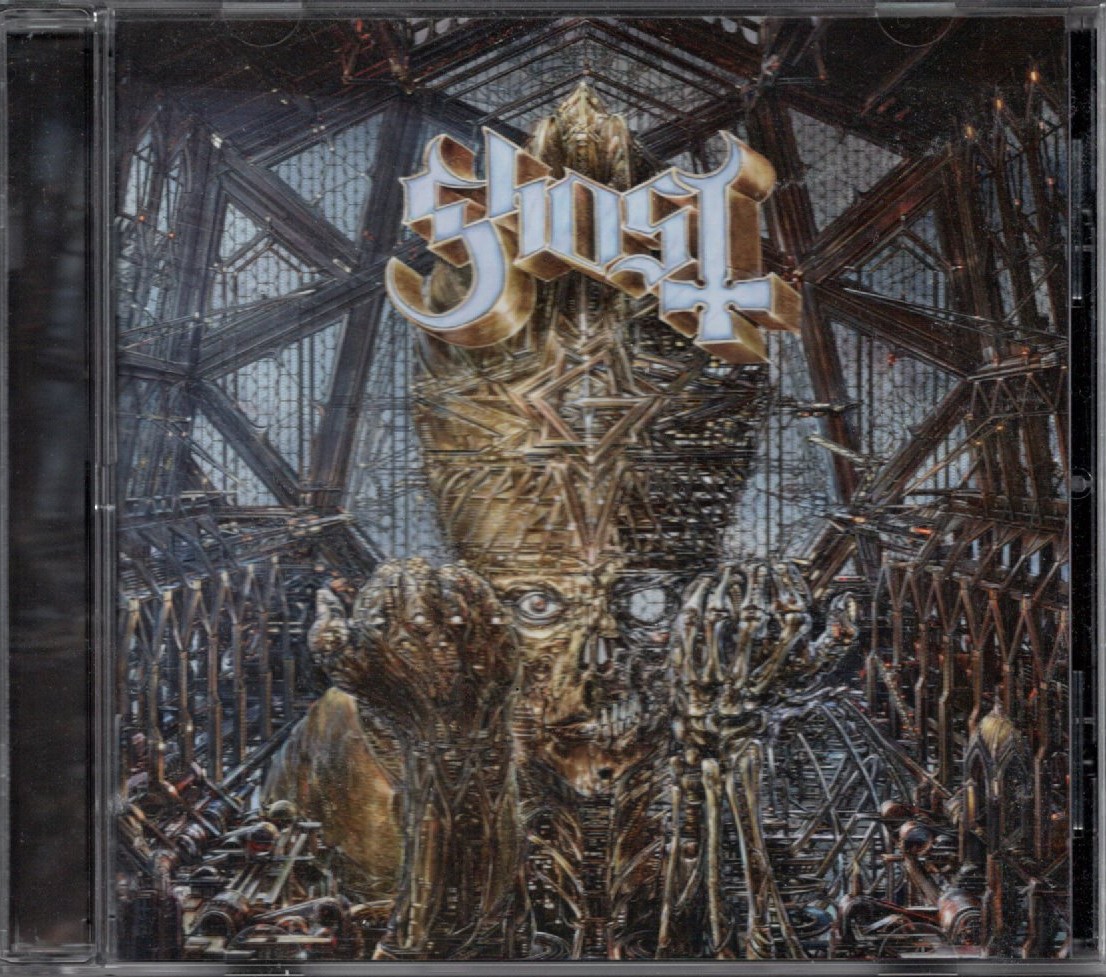
 GHOST – Impera (2022 Loma Vista)
Ghost have been pretty consistent over the years. In all honesty the only album of theirs that I seldom spin is their second Infestissumam. Everything else has been pretty solid to me so hopes were high for the new Impera. Tobias Forge and Ghost have steadily evolved since Opus Eponymous in 2010. From their melodic gothic metal origins, Ghost have gradually shed metal elements and replaced them with pop sensibilities. Impera is most similar to their last album, Prequelle. Let’s take a deep dive and analyse what Forge and his Nameless Ghouls have come up with this time.
Inspired by the real life rise and fall of empires, but through the lens of 2020, Ghost seem less interested in Satan while remaining fascinated by the dark side. The idea had been long-simmering in Forge’s skull: empires, repeating patterns in history, followed by annihilation. The opening instrumental “Imperium” sets the stage with acoustic and electric guitars, layered in a way that recalls classic 80s Leatherwolf but far more lush. Then we are suddenly engulfed not in darkness but in Darkness — the opening guitars sound like the British band, and Forge’s opening scream is a dead ringer for Justin Hawkins! “Kaisarion” could easily have been a Darkness song. High speed and instantly memorable, it’s the only song that will have you singing words like “Far away from the stench of the heavens,” this summer. An immediate triumph, “Kaisarion” has it all from wickedly melodic guitars, deep backing vocals and clever instrumental prowess in all corners. Can’t wait to road test this on a warm day in the car with the windows down.
 “Spillways” might recall Trash-era Alice Cooper, with a tremendous amount of attention paid to the incessant melodies. One after the other, the hooks keep coming. Be it the vocals, the guitars or hell even the goddamn drums, “Spillways” is nothing but hard catchy rock they way you remember it from ages past.
The dark single “Call Me Little Sunshine” takes a different turn. A simple spare guitar lick makes up the backbone of the song, with quiet verses and explosive choruses. “Call me little sunshine, call me Mephistopheles,” sings Forge going full-Faust. I’ll call it a song that takes a couple listens but will eventually bore its way into your permanent memory.
The second single, “Hunter’s Moon” follows, an upbeat prowl through dark woods. (This is the single mix, with a more elaborate version included in the film Halloween Kills.) While an impressive enough song on its own, “Hunter’s Moon” is over quickly, and overshadowed by the awesome “Watcher in the Sky”, a possible contender for album highlight. Relentless bass and drums set up the biggest boldest chorus on the album. The lyrics are hard to pin down, speaking of Machiavelli, bloodlines, and the rot of empires. Possibly about looking to God for salvation but getting no reply. Regardless of the dark theme, it’s one of the most party-ready tracks on the album.
 The horns that blow on “Dominion”, an instrumental interlude, lead to a shocking transition. “Twenties” is the strangest song on the album and contender for one of Ghost’s most bizarre tunes overall. Beginning with a dark Metallica “Through the Never”-ish riff, “Twenties” soon transforms into something completely different. Indescribable and simultaneously existing in the 1920s and 2020s alike. Not sure if I like ir or not.
“Darkness at the Heart of My Love” is a pretty epic ballad, with suitably epic accompaniment from harpsichord type keys to angelic sonic backdrops. Choirs of vocals join by the end, heaped on top of guitar harmonies in decadent fashion. Brightening the mood, the poppy “Griftwood” returns us to a classic hard rock sound circa 1987. The lyrics offer a critique of organized religion, but in the brightest musical frame. Forge has leaned heavily into a specific kind of 80s hook of late, and “Griftwood” is soaked in them like cold gin.
A brief instrumental called “Bite of Passage” precedes the final song, “Respite on the Spatialfields”. The empire has fallen, and Forge asks “I wonder, did no one hear the distant thunder?” (We did, but we chose to ignore it.) This complex track might be called a metal ballad, but it’s more progressive than that. It has elements of Ozzy, Queensryche, Savatage, Whitesnake and Europe’s “The Final Countdown” all rolled into one. An epic way to close the album. “Nothing ever lasts forever.”
Musically invigorating and lyrically thought-provoking, Forge has created another memorable Ghost album for the masses. While we hope the world doesn’t end too soon, and Forge can continue making albums, Ghost have harnessed the musical and apocalyptic themes of the 80s and brought them forth to the present day. Job well done.
4.5/5 stars




 mikeladano.com