Tom Allom

REVIEW: Judas Priest – Rocka Rolla (50th Anniversary Remixed and Remastered)

For my original Rocka Rolla (1974) review, click here.
JUDAS PRIEST – Rocka Rolla (1974 Gull, 2024 Exciter Records Remixed and Remastered)

How did he do it?!  Somehow, by some digital miracle of the master tape gods, producer Tom Allom has remixed Rocka Rolla, and transformed it from one of my least favourite Priest albums of all time, to one of my favourites.

Generally I can’t get into the remixed versions of albums.  Even if the remix is objectively a better release, such as Rush’s Vapor Trails or Marillion’s Radiat10n, I always find myself coming back to the flawed originals.

Not this time.

For context, Tom Allom didn’t originally produce Rocka Rolla, and this is not the first remix of it.  Rodger Bain produced, but his name appears smaller than Allom’s on the new back cover.  The Rocka Rolla (full album) remix that appeared on Hero, Hero (1981) was helmed by Bain, less effectively.  Tom Allom is best known for producing the run of Judas Priest albums from Unleashed in the East (1979) to Ram It Down (1988).  What he has done with Rocka Rolla is somehow give it a makeover to sound more like a real 1970’s Priest album.  Sonically, it now has thickness.  There’s a real beefiness to the mix, but not in the sense that you immediate say “oh yeah, this is different.”  It just sounds like the album always sounded that way, and you just got your stereo system upgraded.

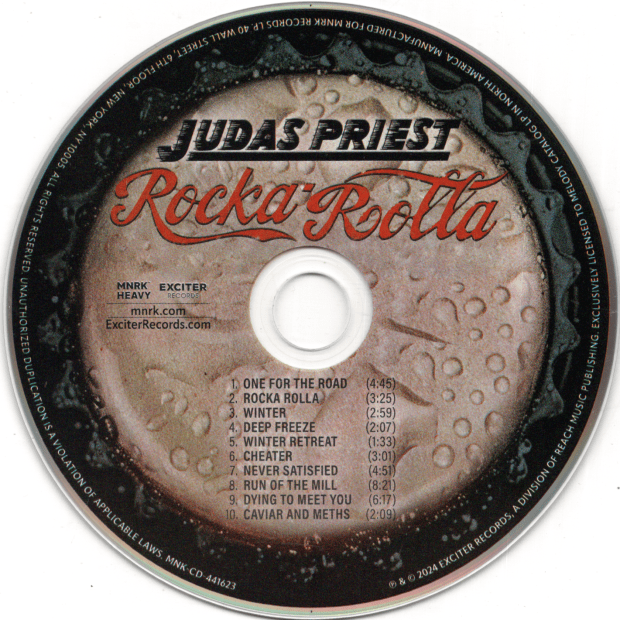
The track listing is unchanged.  “One For the Road” still opens with a groove, but now that groove hits different.  You can better appreciate the guitar fills at the end, and the songs goes well past its old fade-out.  This is a trick that remixed album should do more often.

“Rocka Rolla” remains a metal delight, but there is new shimmer to Rob’s vocals and the song chugs with more edge.  It’s all very objective and subtle, but once again Tom Allom took a Priest classic and made it sound like it was always this weighty.

The “Winter” suite is the most altered of any of the tracks.  Notably, Allom chose to separate the tracks from the suite format, and leave them as individual songs.

John Hinch’s drums sound crushingly Bonham-like on “Winter” itself, and the backing riff far more weighty.  The biggest change is that it no longer fades into KK’s guitar showcase “Deep Freeze”.  You can hear more of KK at the end, with some experimental playing that was inaudible before.  The track fades out past its previous point, and “Winter Retreat” stands on its own as a song.  In the 70s, Priest were experimenting with acoustics and psychedelic sounds from time to time.  “Winter Retreat” can now join those songs as something that sonically fits in better.  Finally, “Cheater” always was its own song really, and now it’s just heavier.  Rob’s harmonica is more prominent, which of course recalls the heaviness of Black Sabbath.

Moving on to side two, “Never Satisfied” finally has the punch it always felt like it had inside:  A little more echo on this this vocal line, a lot more weight behind the drums, more texture on the guitars, and a few things made audible for the first time.   We now have the definitive version of this song.  With the impressive soloing mixed in just right, this becomes a long, jammy Priest thumper as it always should have been.  If Rocka Rolla sounded like this when I was a kid, I would have got it immediately.

“Run of the Mill” takes time to build as it always has.  It has a long instrumental section, with some mindblowing guitar playing, and now it’s all finally hitting right.  The bass isn’t just sitting there.  It’s picking you up and taking you along with the groove.  The keyboards in the background are more ominous.  Everything about this is just so much better than the original.

Perhaps the only song that still bores, for the first half anyway, “Dying to Meet You” is similarly upgraded but benefits less from the treatment.  That is until it picks up midway in the “Hero, Hero” section.  This part of the song still cooks, but has a different, more spare feel.  Finally, the light instrumental “Caviar and Meths” really benefits from the remix treatment.  The drums, once again, really add atmosphere to it.

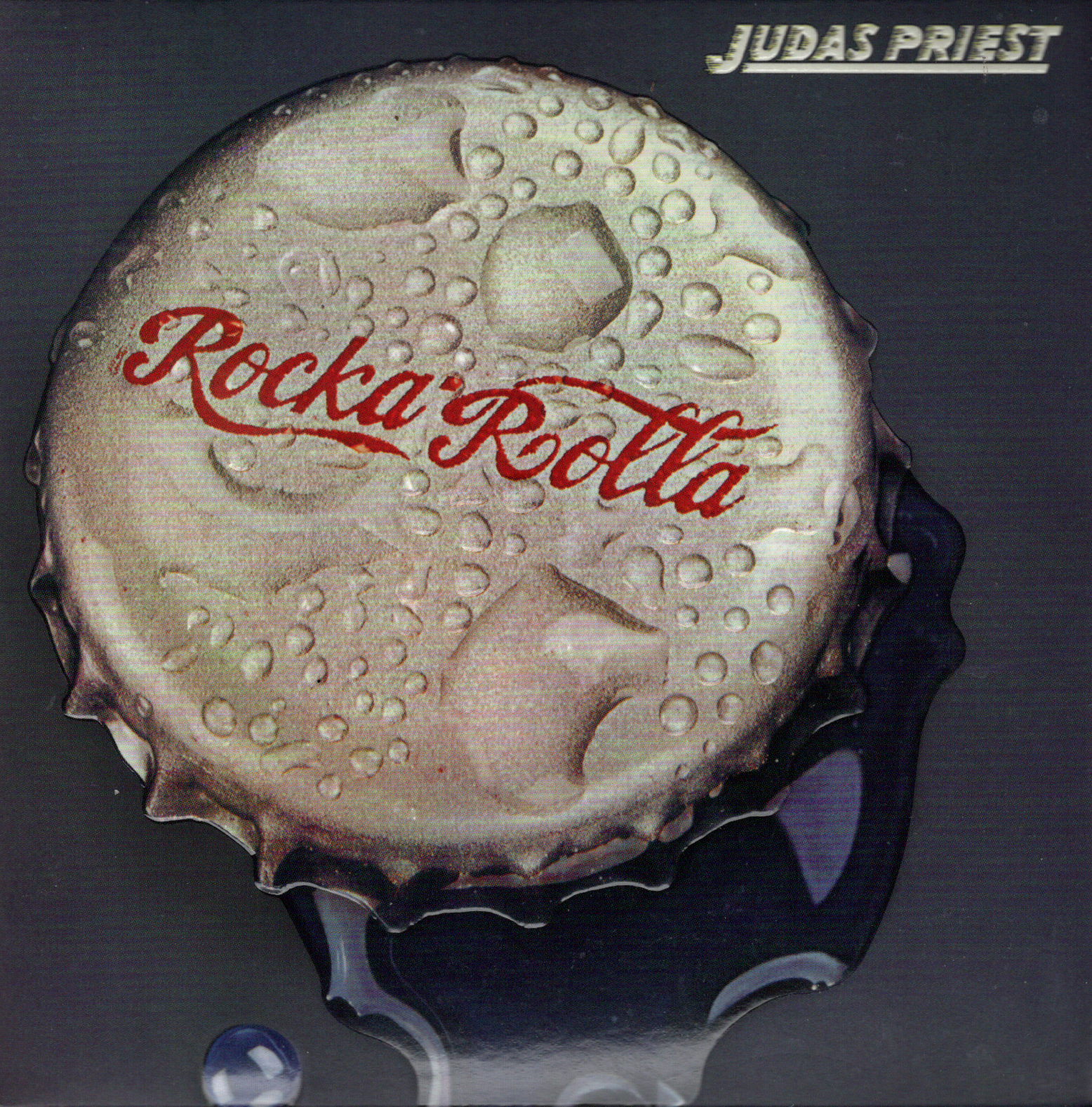
As an added attention to detail, the front cover of Rocka Rolla is now as three dimension as the music.  The water drops are now tactile.  You can feel the bumps with your fingers.  A perfect topper.

What did Tom Allom do with these master tapes?  Did he conjure some kind of heavy metal spell and make a two dimensional album sound big and beefy?  Only Allom knows, but now I do believe in magic.

4.5/5 stars

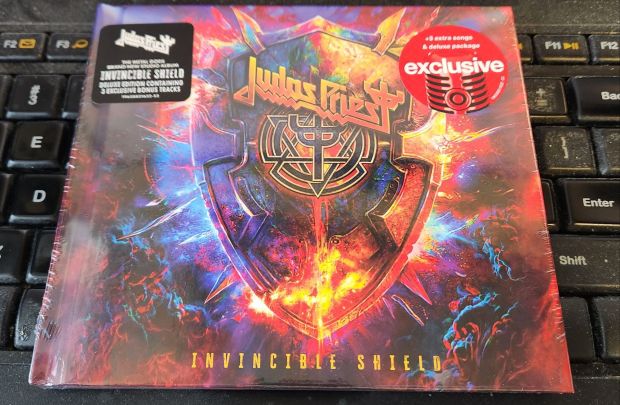
REVIEW: Judas Priest – Invincible Shield (2024 Deluxe with bonus tracks)

JUDAS PRIEST – Invincible Shield (2024 Epic Deluxe with bonus tracks)

I don’t usually write “first impressions” reviews, because I like the albums to have time to sink in, and to consider my opinions.

I’ll break some rules this time.

Invincible Shield tops Firepower and could be the best Priest album since Defenders.  Or maybe even before that…

The highlights are many and the riffs are strong.  Rob’s voice has not changed in 20 years and he is still of the same power and range as Angel as Retribution.  As one goes deeper in, the songs continue to gain strength.  “Invincible Shield” didn’t really jump out at first, but does now with a very Maiden-y outro.  “Devil In Disguise” is another early highlight.  “Crown of Horns”, “Escape From Reality”, “As God is My Witness” are instantly likeable, with hooks aplenty and the odd adventurous lick or detour.  Richie Faulkner has been a godsend to this band, injecting them with new songwriting life, metallic riffs and speedy leads.  Meanwhile, you can hear Glenn Tipton too, illness be damned!  He trades off with Faulkner just as is Priest’s trademark.  The classical guitar solo on “Giants In the Sky” is something completely new for this band and a surprising delight.

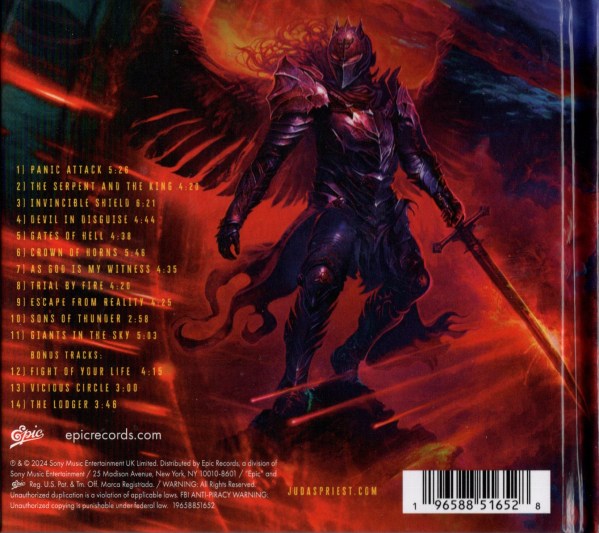
Invincible Shield has most of the longer material stacked to the top of the album, with the short songs going on side two.  Even with 14 songs, the album is only just over an hour with bonus tracks, not overstaying its welcome, and inviting to repeated listens.  There’s no point in getting a version of this album without the bonus tracks.  You’d be missing out.  You can get them at Target, Sunrise, or Amazon in Canada.  They are “Fight Of Your Life”, “Vicious Circle” and “The Lodger”.  “Fight Of Your Life” might be the most necessary song of the album, as it really hearkens back to the early 70s albums like Sin After Sin.  It could be the deep cut of the record.

Lyrics have always been a shaky point in Priest history, and there are some cringey ones on Invincible Shield, but I doubt they will impede anyone’s enjoyment of this album.  It has summer written all over it, as we await the coming of the sun and the highway months.

Production by Andy Sneap sounds great to these ears, with Ian Hill’s bass rich and deep, and Scott Travis’ drums livelier than ever.  There are flashes back to the 70s and 80s, and some of Priest’s highest peaks of the past.

Martin Popoff may be right, but I’m not going as far as he did.  Still…

Album of the year.

5/5 stars

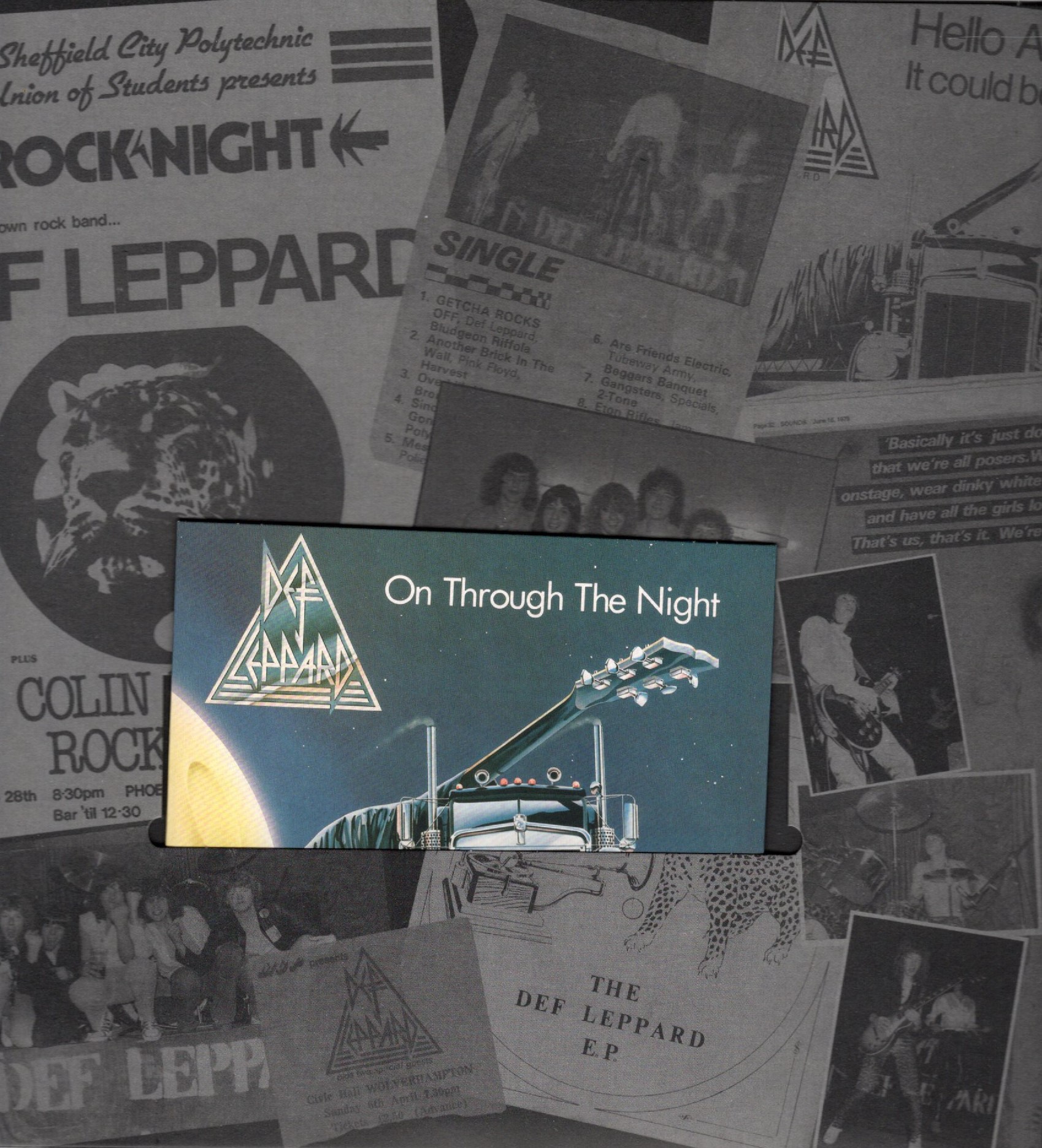
RE-REVIEW: Def Leppard – On Through the Night (The Early Years Disc 1)

Part One of the Def Leppard Review Series

No matter how I do this, I’m doing something out of order.  So here goes.  Hi!  Welcome to the DEF LEPPARD REVIEW SERIES where we will attempt to cover in some way everything Def Leppard here at LeBrain HQ.  Some of these articles will be re-reviews.  Some will be beefed up, some will be streamlined.  

What about order?  Deciding to start with The Early Years box set, we could go in two ways.  We could run through Discs One through Five, starting with On Through the Night.  Or, we could go chronologically and begin on Disc Four, Too Many Jitterbugs, which has the first EP and early demos pre-dating the album.  Obviously, we’ve decided to to go in disc order, and worry about chronology later.  So let’s get, let’s get, let’s get, let’s get rocked.

Original review: On Through the Night (1980)

DEF LEPPARD – On Through the Night (The Early Years Disc 1) (Originally 1980, 2019 remaster)

The obscenely young quintet from Sheffield were starstruck.  Drummer Rick Allen was just 16 years of age. There Def Leppard were in Tittenhurst Park, Ringo Starr’s home formerly owned by John Lennon, with Judas Priest producer Tom Allom, laying down tracks for their debut LP.  Signed to Vertigo, the band was filled with awe to be on the same label as their heroes Thin Lizzy.  Recording nine songs from their live set and two newly written tracks, the band took just three weeks to get the job done.  Unfortunately, so much time was spent on Steve Clark and Pete Willis’ guitar overdubs, that Joe Elliott only had two days left to record all his vocals.  This can be heard on the final product.  At least Joe got to sleep in Lennon’s bedroom for the duration of the recording!

On Through the Night is a beefy 11 tracks, written mostly by Clark and Elliott with seven Rick Savage co-writes and seven by Pete Willis.  It showcases ambition, promise, and raw talent.  In a word:  potential.  One of its major strengths is the dual guitar team of Clark and Willis.  Clark tends to be thoughtful and compositional in his solos, while Willis effectively jumps on the wah-wah.

“Rock Brigade” wastes no time getting cranked, 16 year old drummer Rick Allen going wild on the big tom rolls.  An adrenalized band gets to work on a serious riff, while Clark and Willis dart in and out with curt fills.  The handclaps sound lifted from a Judas Priest anthem, but this song burns it up.  Joe’s vocals are set back in the mix a bit more than we’re used to, but there are hints of the kind of backing vocals that Def Leppard would endevour for in the future.  In short, “Rock Brigade” kicks ass.

A strange layered vocal mix fails to hit the mark that Leppard would do with regularity later on, but it does serve to introduce “Hello America” uniquely.  This naive rocker even has a little bit of synth to accent the sugary chorus, but otherwise sticks to the driving riff.  Clark comes in with a wicked solo, showing off some of the creative technique he’d be famous for. A strange video clip for “Hello America” was filmed, with the drum kit featured at the front of the stage and everybody else behind. Rick Savage got stuck at the very back.

The acoustic guitars are out for “Sorrow is a Woman”, too heavy to be called a power ballad.  The choruses rock heavy as anything else, though the verses remain quiet.  This is one of the tunes that Joe could have used some more time refining.  For fans of the early solo work of Clark and Willis, get ready for some pretty epic guitar constructions.  They tell their own stories within the song.

One of the two songs written in the studio was “It Could Be You”:  Fast choppy metal, with a Priest-like riff and unusually high Elliott vocals.  Cool riff but more refinement time needed.  Its energy is remarkable and as with all the tracks on On Through the Night, Rick Allen burns it up on the drums as a supernovic ball of nuclear combustion.

Taking it back to a metallic city groove, “Satellite” is the first use of one of Joe’s favourite astronomical objects in a Def Leppard song.  This is a great car tune.  Cool and classy staccato guitar picking on the second verse.  Takes an unexpected acoustic detour midway, showing the ambition and ability that these five kids had in their blood.  Then it breaks into another unique guitar section after the Willis guitar solo.  Clearly, not the commercial techniques later employed by the band, but more an effort to emulate some of their heroes like Page and Lynott, as best they could.

Talking of ambition, “When the Walls Came Tumbling Down” closes side one with nothing but.  A pretentious Joe Elliott monologue introduces the track cheesily enough.

In the first day of the first month, in some distant year,
The whole sky froze gold.
Some said it was the aftermath of the Radium bomb,
And others told of a final retribution.
A terrible revenge, from the gods.

The post-apocalyptic settings is a metal niche unto itself, launched by Black Sabbath and maintained by Aerosmith, Queensryche and Judas Priest.  This is not one of Def Leppard’s more successful attempts at getting serious, but you have to marvel at their cohones for trying.

The “Wasted” riff, a Steve Clark creation, is one of Leppard’s most legendary.  This simple steamer is pure power set to music.  That riff, what a riff!  Just a few chugs and then a unified resolution.  But what a riff!   No wonder the band had to resurrect it in recent years.  The fans wouldn’t let it stay buried.  “Wasted” is a centerpiece gem, and itself contains a certerpiece of a guitar solo by Clark, skillfully constructed by the young protege.

“Rocks Off” contains the annoying crowd noise overdubs, clearly artificial, but you can’t stop this little one from launching.  Once again it’s all about the riff, and the Clark era of Def Leppard do not get enough recognition for their riffs.  The song is disrupted by a solo section that harshly pans the guitars from right to left in distracting fashion.

The other song that was written in the studio is the surprisingly strong “It Don’t Matter”.  Some very rich guitars, properly spaced in the mix, make for some cool riffs and licks.  There’s a laid back chorus and good backing vocals.  The cowbell is also effective except it’s not a cowbell.  The band didn’t have one so they used the house tea kettle for which they were properly scolded by the housekeeper Ruth.  Thing is — it sounds OK!

Moving on to the penultimate track, “Answer To the Master” has a verse that is stronger than its chorus, which is really more about the riff.  Rick Allen gets the spotlight for a brief moment before the band break into an AeroZeppelin-like funk.  “Whole Lotta Walk”?  Then there’s a startling guitar solo section more influenced by the likes of Lizzy.

Finally Leppard decided to go with a big epic as their album closer, “Overture”, which also closed their debut EP (which is on Disc Four of The Early Years).  It’s another post-apocalyptic soundtrack, a multi-parted manufacture.  Some truly great guitar parts are buried within, but this track is an example of overreach.  The kind of truly epic recording they were striving for could not be achieved in the time they had, but you can hear frequent shots of brilliance.  Each riff and lick has its own unique hook.

On Through the Night went to #15 in the UK but failed to crack the top 50 in the US, charting at #51.  It did not go Platinum until 1989, well after Hysteria made Def Leppard into demigods.  If anything it planted the seed and made the band more focused on what they wanted to achieve when they had a second chance.  And it wouldn’t be long before fate hooked them up with Robert John “Mutt” Lange, which would alter their course forever.  On Through the Night stands today as a Polaroid of an innocent past, when Def Leppard caked on riff after riff in an effort to reach the heights of the bands they adored.  It lacks focus, both within the songs and on Leppard’s collective strengths.  Focus that they would soon gain in spades, and later in excess!

An innocent but earnest beginning.

3.5/5 stars

Next:  The Early Years Disc Two –  High N’ Dry

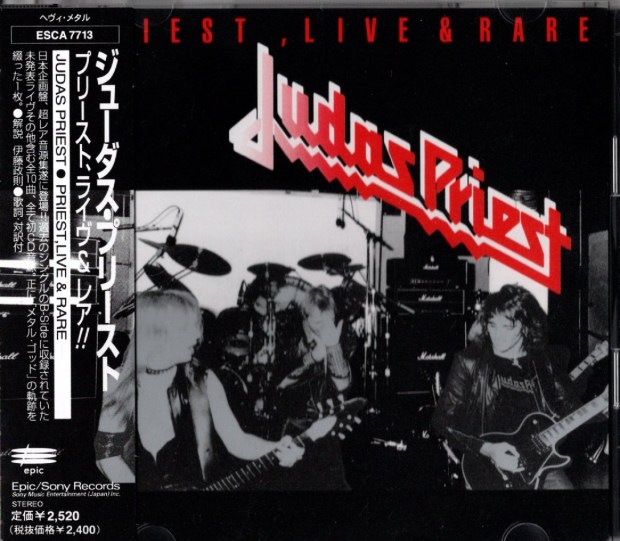
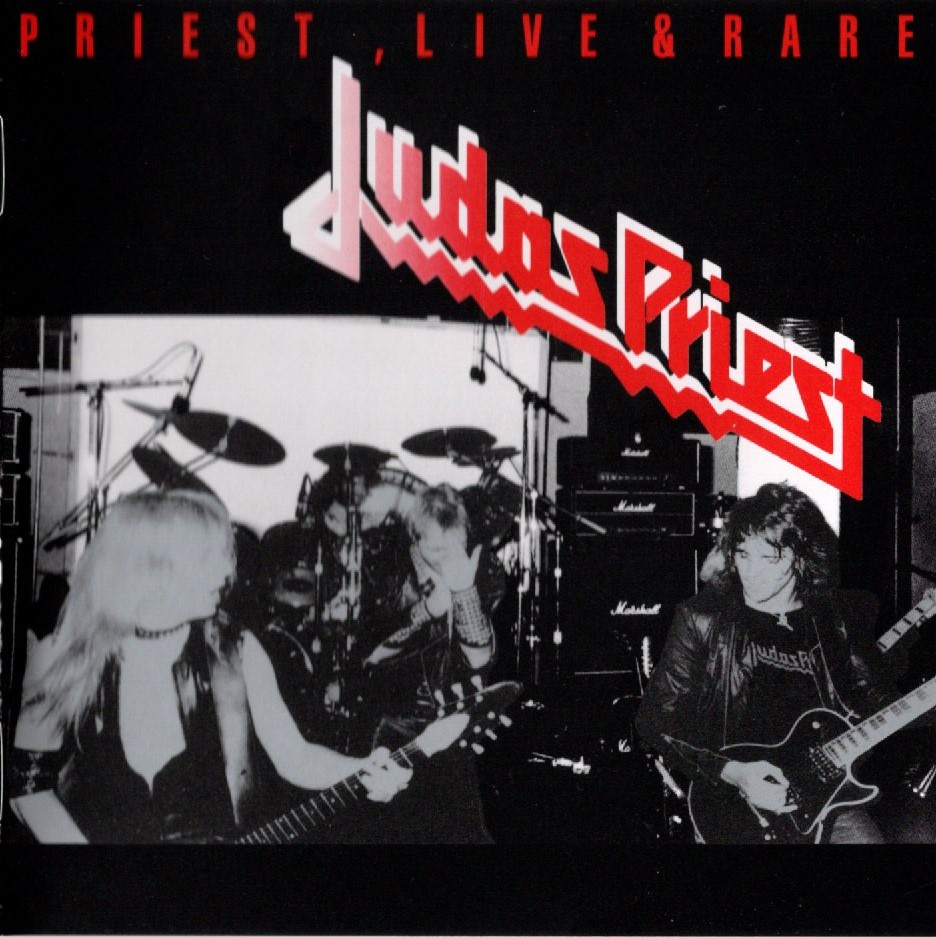
REVIEW: Judas Priest – Priest, Live & Rare (1998 Japanese import)

JUDAS PRIEST – Priest, Live & Rare (1998 Sony Japan)

Fun fact:  in 1998, there were three Judas Priest live albums released.  First was the official ’98 Live Meltdown, featuring then-current singer Tim “Ripper” Owens.  There was also Concert Classics, an unauthorised CD from the British Steel tour that the band swiftly took legal action to remove from store shelves.  Finally, a CD called Priest, Live & Rare released by their old label Sony in Japan, featuring a smorgasbord of live B-sides.

Judas Priest’s B-sides don’t garner a lot of attention, but are worth looking in to.  Fortunately, a large assortment of them are collected on this compilation.  Covering a period from 1978 to 1986, Priest released a number of live B-sides (and one remix) that are included here.  Only two (“Starbreaker”, and a version of “Breaking the Law”) were released on CD in the 2004 Metalogy box set.  Because Priest were conscious of giving value to fans, the live B-sides are not the same familiar versions from live albums.

From the “Evening Star” single in 1978 comes “Beyond the Realms of Death”, Judas Priest’s “Stairway to Heaven”, or so some said.  It’s a rather weak comparison, but “Beyond the Realms of Death” does hold special status.  Glen’s solo, though imperfect, drips with the tension that comes from the live performance.  From the same gig, but lifted from the “Take on the World” single comes “White Heat, Red Hot” and “Starbreaker”.  You can hear the life in the songs, from Les Binks’ organic drum work to Rob’s impassioned performance.  The man is in top voice especially on “White Heat, Red Hot”.  Les Binks has an extended energized drum solo on “Starbreaker”.  These are fantastic live versions that need to be in a diehard’s collection.

The next single visited is 1981’s “Hot Rockin'”, with two live B-sides:  “Breaking the Law” and “Living After Midnight” from that year in Holland.  The drum stool has changed hands from Les Binks to Dave Holland, and it is like the band has had a heart transplant.  The difference is notable given that on this CD, Binks went out on a drum solo.  It’s like a pacemaker has been installed and the pulse of the beast has been tamed.  But that’s 80s Priest for you, and with that said, these are two excellent versions of some serious Priest hits.  Refreshing to hear, after the same familiar ones over and over again.

Priest’s set at the 1983 US Festival has not been released on CD yet, but here are some for you.  (The Festival on DVD is not an issue — the deluxe Screaming for Vengeance contains the whole thing.)  Here you get “Green Manalishi”, “Breaking the Law” and “You’ve Got Another Thing Coming”.  “Green Manalishi” is a fantastic version (at least for one with Dave Holland on drums!) and Rob is peak Halford.  These three tracks are sourced from a live 1983 Japanese “Green Manalishi” EP that costs some fair funds on its own.  (This is the version of “Breaking the Law” that you can also find on the Metalogy box set.)

“Private Propety” (originally from 1986’s Turbo) is a rare live take from St. Louis. It was originally released on the “Parental Guidance” 12″ single.  Therefore it’s not the same one from Priest Live, nor the Turbo 30th anniversary set.  This one predates the release of the others and has a nice untampered quality.  Finally, also from the “Parental Guidance” single, is the only disappointing B-side in this collection.  It’s the “Hi-Octane” extended remix of “Turbo Lover”!  Extended remixes were a popular thing in the 80s.  Every mainstream artist did them; for example Def Leppard, Kiss and Aerosmith.  “Turbo Lover” is one of the poorer such examples.  Were any dance clubs likely to play Judas Priest?  No, but the Priest did try.

Unweildy ham-fisted “Turbo Lover” aside, Priest, Live & Rare is a highly recommended collection to get 10 rare Priest B-sides in one fell swoop.  Definitely cheaper than tracking down all those singles.

4.5/5 stars


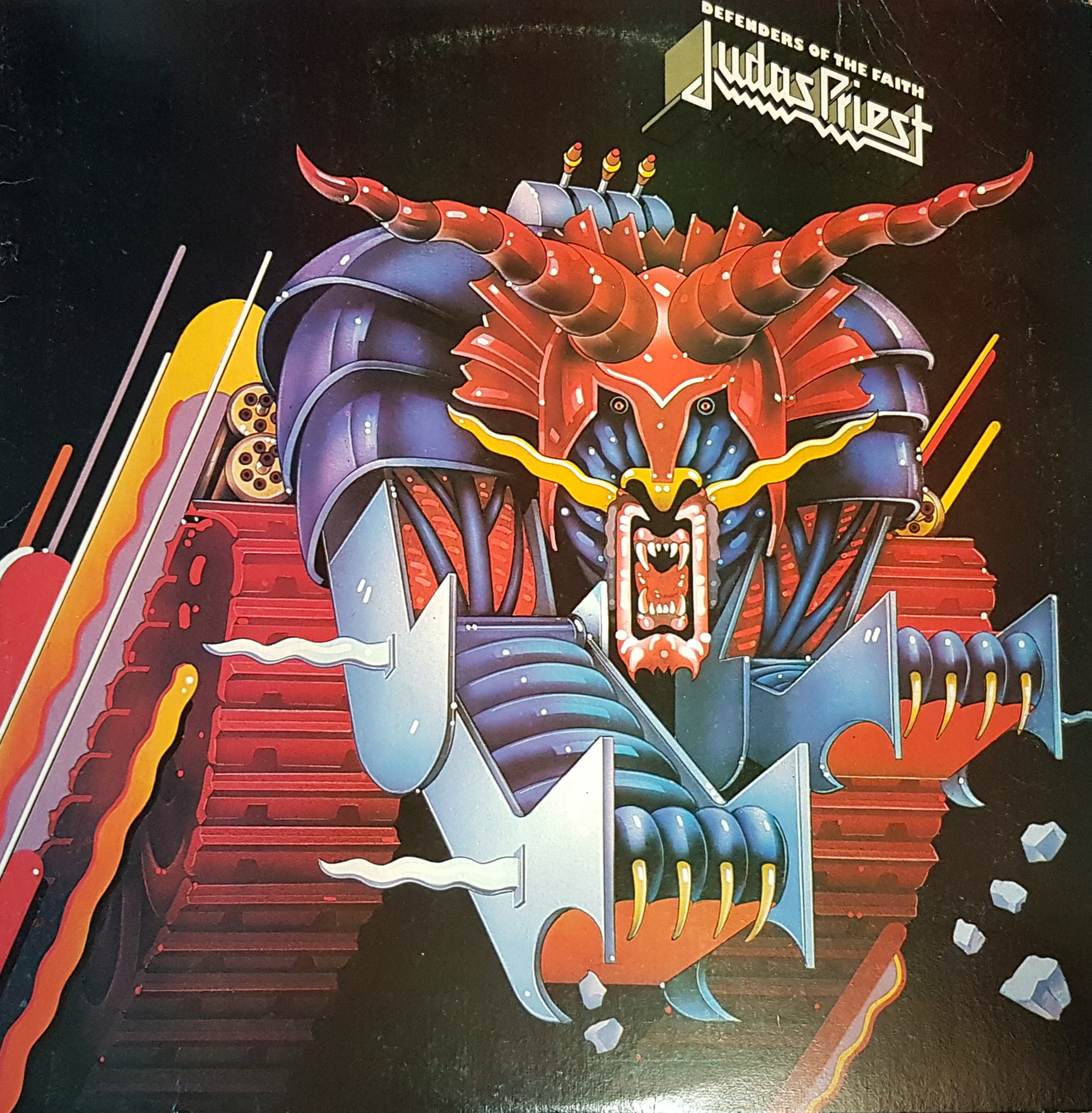
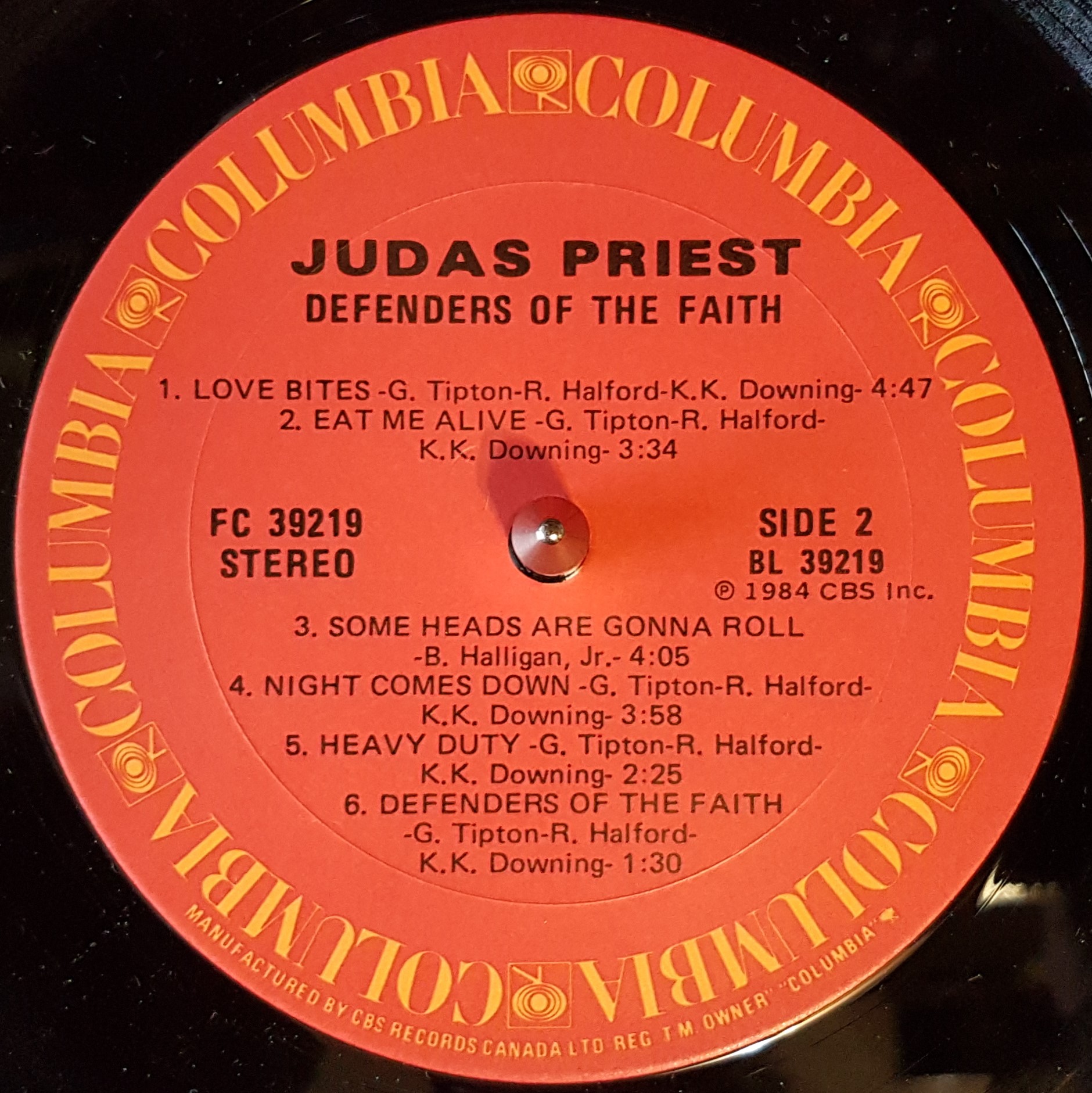
REVIEW: Judas Priest – Defenders of the Faith (1984) Part One – Vinyl

JUDAS PRIEST – Defenders of the Faith (1984 Columbia)

If memory serves, in contemporary times, Defenders of the Faith was considered good but not as good as Screaming for Vengeance.  It was a down-ratchet in terms of tempo and intensity.  With the benefit of hindsight, we can see that both albums are near-equals in quality.

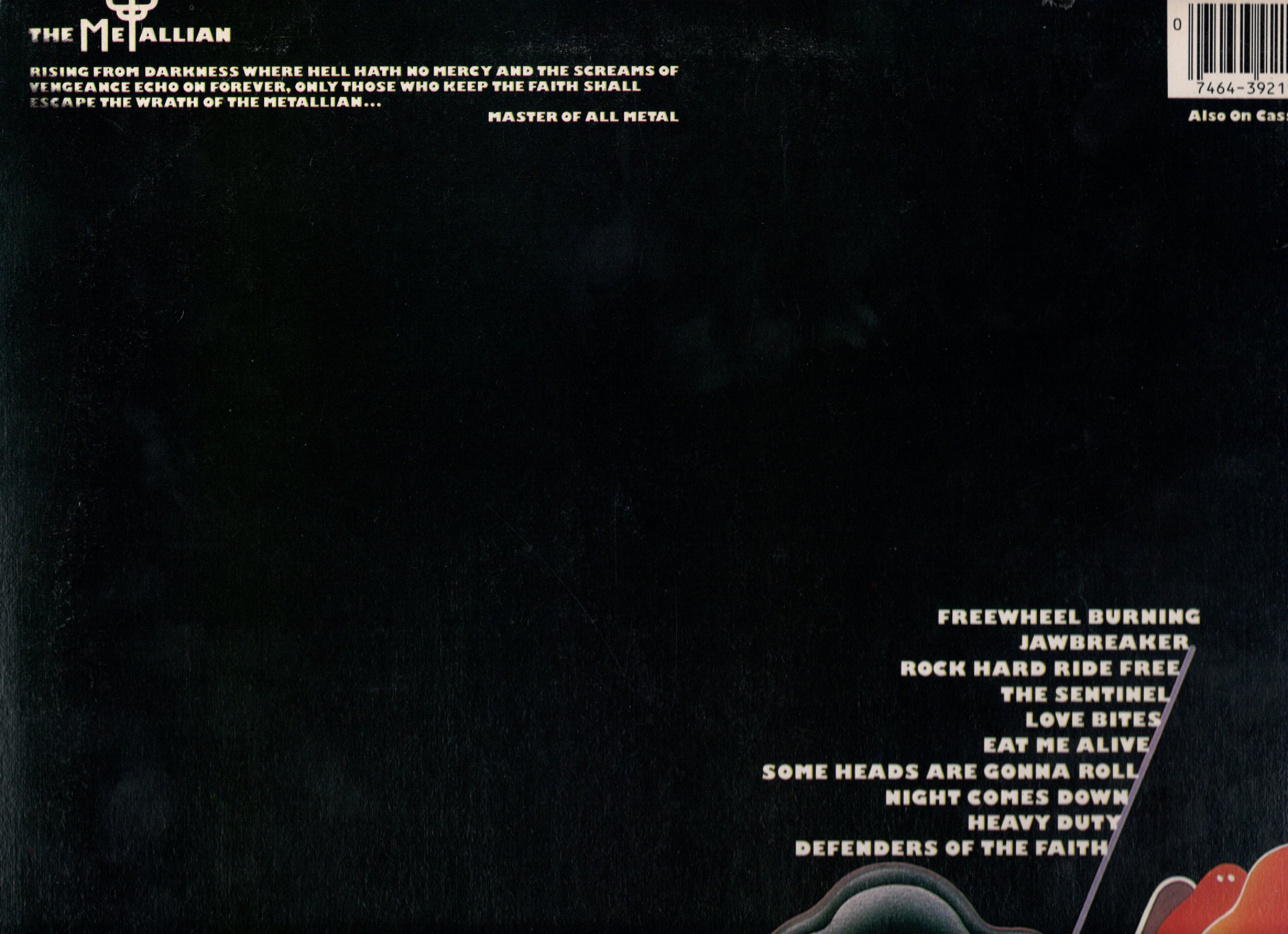
It begins with a bang.  “Freewheel Burning” is borderline thrash, with the kind of high octane tempos they do so well.  Racing metaphors are paired with a lightspeed lead Rob Halford vocal, syllables flowing so fast that only a seasoned rapper could keep up with his flow.

Look before you leap has never been the way we keep, our road is free.
Charging to the top and never give in never stop’s the way to be.
Hold on to the lead with all your will and not concede,
You’ll find there’s life with victory on high.

Without a lyric sheet, there was no way you were able to follow the words.

After an adrenaline rush like that, Priest wisely shifted the throttle back a few gears with “Jawbreaker”.  Though not slow, it’s also not mental like “Freewheel Burning”.  The pace is determined.  It would not be controversial to say that Dave Holland isn’t as complex a drummer as Les Binks was.  Still he and Ian Hill do lay down a pulsing, robotic metal beat.

Third in line and backed by regal guitars, “Rock Hard Ride Free” sounds like an anthem.  “Rock hard with a purpose, got a mind that won’t bend.  Die hard resolution that is true to the end.”  For context, in the 1980s, being a metal fan was like choosing to be a neighbourhood pariah.  Many of us appreciated upbeat, encouraging messages like “Rock Hard Ride Free”.  We believed in something, and it wasn’t what the teachers and preachers thought it was.  That’s what “Rock Hard Ride Free” is about.

The first side closes on “The Sentinel”, a mini epic.  A street battle is taking place in a shattered apocalyptic landscape.  It could very well be the same world inhabited in “Blood Red Skies” or “Painkiller”.

Amidst the upturned burned-out cars,
The challengers await,
And in their fists clutch iron bars,
With which to seal his fate.
Across his chest in scabbards rest,
The rows of throwing knives,
Whose razor points in challenged tests,
Have finished many lives.

A multi-parted dual guitar solo animates what the rumble must look like.  Rob tells the story with the necessary urgency.  In the end it’s a scream-laden metal triumph.

Ominous echoing bass notes ring as soon as the needle drops on Side Two.  “Love Bites” was a single, an unusual song with a very spare riff.  Its simplicity is its weapon as it bores its way into your brain.  Halford sounds absolutely menacing.  Then they go turn on the afterburners for the very naughty “Eat Me Alive”, a song which got them a bit of trouble in the 1980s.  It  was one of 15 songs the Parents Music Resource Center wanted stickered for “explicit content” . “I’m gonna force you at gunpoint to eat me alive” sings dirty Rob, as the parents of America weep in their Cheerios.  Not an album highlight, except in terms of pure aggression.

Much more interesting is the slower, menacing “Some Heads Are Gonna Roll”.  A great deep cut.  Dave Holland could have been a drum machine for what it’s worth, but this song is a champion.  Interestingly they followed it with the even slower “Night Comes Down” which might be the album ballad (albeit a heavy one).  Great pulsing bassline by Ian Hill on this track.  It’s a more sensitive, thoughtful side of Rob.  “Call me and I’ll wait till summer.  You never understood that I would wait forever, for love that’s only good.”

The album closes on a dual track:  “Heavy Duty” / “Defenders of the Faith”.  “Defenders” itself is an epic outro with “Heavy Duty” being the main part of the song.  As it implies, this is a heavy duty stomp.  The highly processed drums are accompanied by a repeating riff until Rob breaks into the outro.  Though “Defenders” itself is only a minute and a half in length, it’s among the best minutes on the album.

Not a perfect album, but even though this is a simpler Judas Priest for the 1980s, it still commands respect.  Defenders of the Faith is undoubtedly an 80s album.  It’s aimed at a wider demographic that wouldn’t necessarily get their earlier more complex material.  Defenders does it well, with some truly timeless riffs, and great song after great song.

4.5/5 stars
 

REVIEW: Judas Priest – Unleashed in the East (1979, Remastered)

JUDAS PRIEST – Unleashed in the East (Originally 1979, 2001 Sony reissue)

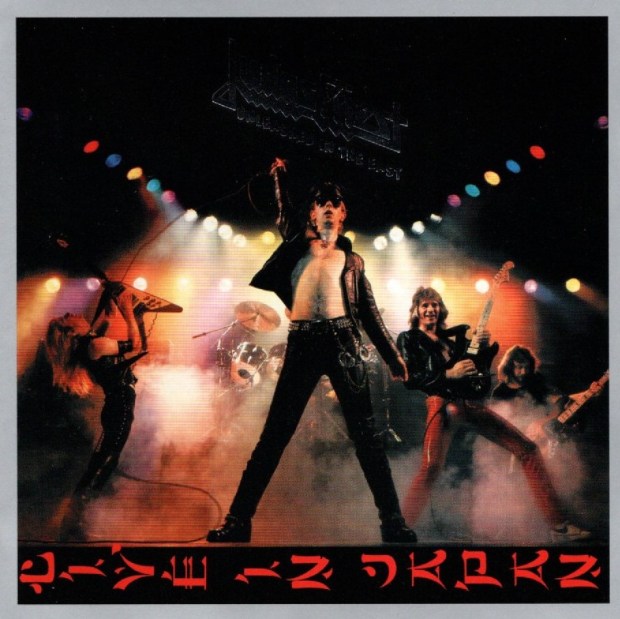
The best Judas Priest live album isn’t the biggest or the newest.  It’s the first:  the humble Unleashed in the East.  The first Priest album to be produced by Tom Allom, the last with Les Binks on drums…this is a special album for a number of reasons but most important are the songs.  It would not be going out on a limb to suggest that some of these tracks are now the definitive versions.

Like many live albums of the 1970s, it has been questioned how much of Unleashed in the East was redone in the studio.  Rob Halford has maintained that only the vocals were touched up, but it does not matter one iota when the needle hits wax or laser strikes plastic.  The band were at a musical peak in 1979, and with accelerated tempos, they attacked the best of their body of work, although neglecting the bluesier debut Rocka Rolla.

With “Exciter” (from 1978’s Stained Class) opening the set, this collection has more energy by comparison to the somewhat stiffer studio counterparts.  Les Binks has his foot on the pedal and the band is fully energized on this proto-thrash classic.  “Stand back for Exciter” indeed, as Halford has the Tokyo crowd in the palm of his hand, heavy on the echo.  “Running Wild” (1978’s Hell Bent for Leather) is extra caffeinated compared to the in-the-pocket original, giving the album the feel of a race.  KK goes bananas at the end, and then it’s his showpiece:  “Sinner” from 1977’s Sin After Sin.  Finally it sounds like Priest have stopped hurryin’ about.  About half of the track features KK taking his guitar to outer space in a trippy solo segment.

In its original form, “The Ripper” (1976’s Sad Wings of Destiny) was thin and stiff by comparison.  Here it is a beast, with Rob Halford fully unleashed and stalking the back-alley streets.  Easiest contender for most definitive version of a song on Unleashed in the East.  “Green Manalishi” also comes close, with this electrifying version containing the full-blown dual solo in fantastic, crisp, live glory in stereo.  Each part of the solo is an essential part of the song, just as “Green Manalishi” is an essential part of the album.  If you own the LP, this is where you flip sides and go straight into an adrenalized “Diamonds and Rust”, keeping the energy moving.  Binks’ double-bass work is fun as hell to listen to, like a kid who can’t stop tapping his feet excitement.

The Priest epic “Victim of Changes” takes its time to unfold, though mightily it does.  The live setting and the unstoppable Les Binks make this another definitive Priest live version.  It is the climax of the album, with the last two tracks “Genocide” and “Tyrant” unable to surpass its mountainous metal spires.  Regardless, both are far more fuelled than their seemingly crippled studio counterparts.  Halford is more expressive and engaging live, while the guitars riff on relentlessly.

This album would be 5/5 stars right here, full stop, no need to elaborate.  The already definitive Priest live album became even more definitive in Japan in 1979, and 2001 in the rest of the world, with additional bonus tracks.  On the 2001 remastered Sony edition, all the tracks blend into one another without fade-outs.

Most of the tracks originated on Hell Bent for Leather, with one from Sin After Sin.  “Rock Forever” and “Delivering the Goods” cook!  Not too dissimilar from the originals, these are nice additions that extend the album without weakening it.  “Hell Bent for Leather” was conspicuous by its absence from the album proper, so its restoration is significant.  Finally the lengthy “Starbreaker” occupies the final slot, including a Binks drum solo.  An odd positioning but a stellar version nonethless.  All said and done, the version of Unleashed with bonus tracks is just over an hour long.  By today’s standards that’s a bit short for a live album, but it certainly does feel more complete.

Though he was indeed a significant source of Judas Priest’s musical power both on stage and in the studio, Les Binks quit the band mid-tour to be replaced by ex-Trapeze drummer Dave Holland for the remainder.  Binks was never made an official member on paper and was dissatisfied.  To be sure, other Priest drummers can sympathise.  The only taint on this otherwise perfect “live” metal album is the absence of the departed drummer on the front cover.

5/5/5 stars


JUDAS PRIEST REVIEWS

REVIEW: Judas Priest – Screaming For Vengeance (30th Anniversary Edition)

JUDAS PRIEST – Screaming For Vengeance (Originally 1982, 2012 Sony 30th Anniversary Edition)

While people recognize British Steel as a platinum Judas Priest landmark, it was Screaming For Vengeance that went double platinum.  It introduced Priest to the MTV generation and opened them up to bigger American audiences.  But before we get to Screaming For Vengeance itself, a cornerstone Judas Priest album in anyone’s books, the “Special 30th Anniversary Edition” must first be addressed.  The extra content is a full concert DVD, and four bonus audio live tracks from the same DVD.

To have Priest live at the US Festival is a wish fulfilled for many.  The daylight show with full classic costumes (Rob decked in silver) is a nostalgia blowout.  The band look lethal although drummer Dave Holland appears overwhelmed by the demanding tunes.  The setlist isn’t half bad, with “Green Manalishi”, “Diamonds and Rust”, and “Victim of Changes” being highlights and filling the need for old classics.  The bulk of the set is made up of more recent material from the three 1980s Priest albums thus far.  Tempos are fast, cowbells are in the air, and Rob is at his confident shrieking best.  The audio is great and the video is well reproduced.  Owning this edition of Screaming really is a must since it’s the only official release of this show on DVD.

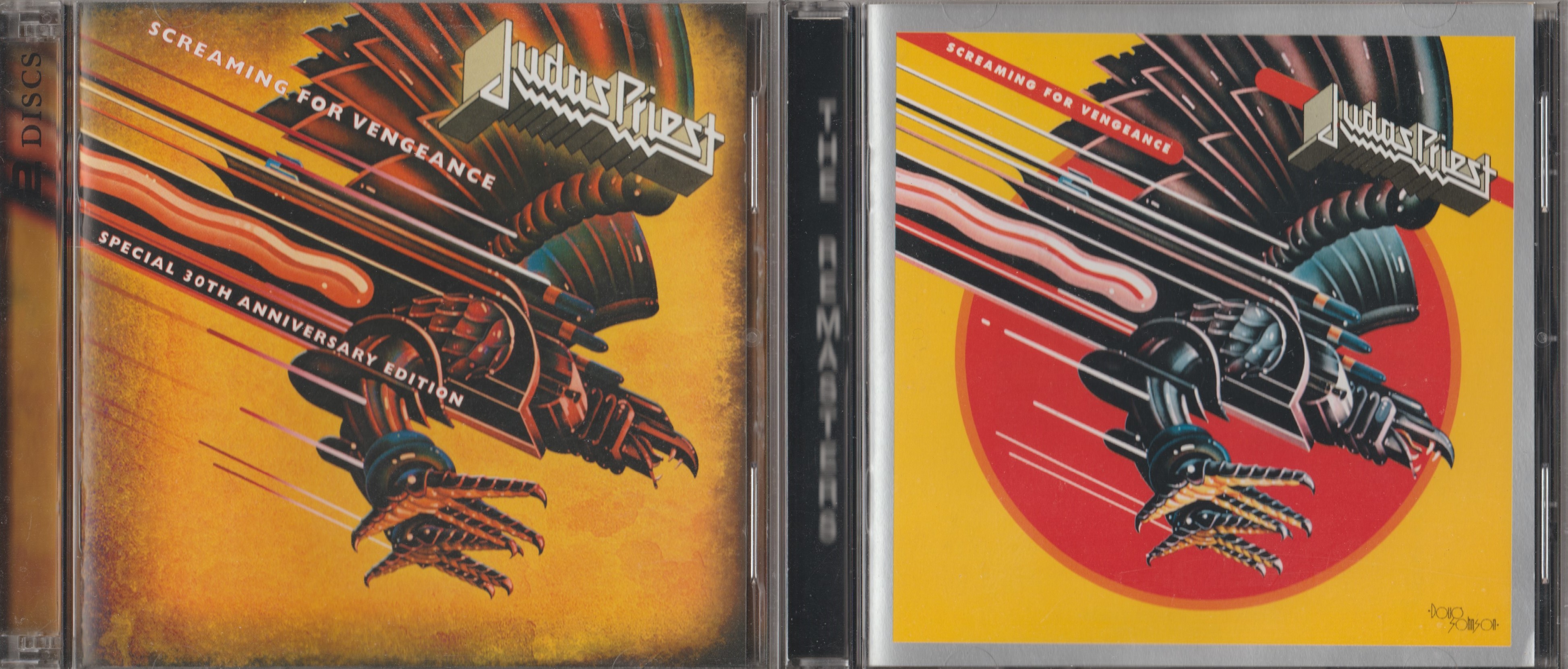
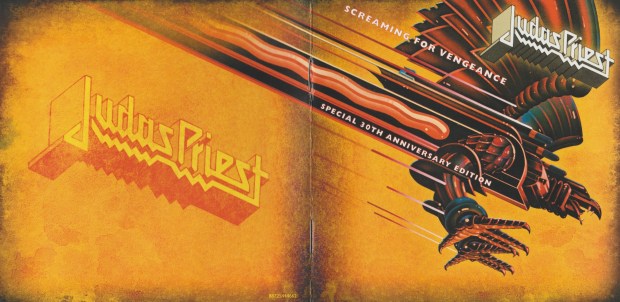
The re-imagined cover art is nice, fitting in with other Priest deluxe reissues (see images at bottom).  In an unfortunate oversight, the clean and sharp original artwork is included nowhere inside this set.  They did include the two bonus tracks from the previous remastered CD release, which we’ll get to after we discuss the album in full.

Screaming For Vengeance was a sudden change of style for the Priest, after two rather soundalike albums.  Similarly the next album Defenders of the Faith would be cast from the same mold as Screaming.  All these albums were produced by Tom Allom.  Tempos were turned up, guitars sharpened, and as per the title, Rob Halford screamed.  A lot.  The refined 80s Priest was evident on the opening duo “The Hellion/Electric Eye”.  The guitars are sleeker, the vocals processed and robotic.  The riffs are just as sharp.  Priest were going for the throat.  This opening one-two punch was more punishing than any music I ever heard at that time.  Though you could not claim it’s heavier than a Priest oldie like “Saints In Hell”, the production is louder and more in your face than ever before.

Drummer Dave Holland sprays a bloodbath of bashes at the start of “Riding on the Wind”, Priest speeding on the highway once again.  With Rob in high register, this catchy tune is perfect for keeping the wind in your face.  The first respite in terms of tempo is “Bloodstone”, though its glorious riffs need no accelerant.  Halford’s scatting at the end is classic and a rare reappearance of his old sassy self from Hell Bent for Leather.

“(Take These) Chains” is one of the most immediately accessible tracks, a mid-tempo delight as Priest do so well.  They end the side with a slow metal grind called “Pain and Pleasure”, drums soaked in echo.  Rob alludes to an interest in BDSM again, but with music this heavy most people just headbanged and ignored.  (In another sad oversight, the lyrics are not contained within this edition, but were reproduced on the previous CD remaster.)  Don’t assume that because it’s a slow one it’s weak.  “Pain and Pleasure” is a resounding an d memorable side-ender.

The second side opens with the sudden shock blitzkrieg of the title track.  Speed metal turned up to 11, “Screaming For Vengeance” is over the top and almost self-parody.  It’s one of Priest’s most overdriven blasts of might, but it also verges on mindlessness if not for a spirited solo section in the middle.  But then in another jarring shift, the sleek mid-tempo groove of “You’ve Got Another Thing Comin'” rears its familiar head.  When I was a kid, there was no question this was Priest’s “big hit”.  It was the song everyone knew, and the music video was on constant rotation.  Classic clip.  The man pursuing Priest is meant to represent the tax man.  When Rob essentially yells at him “no tax man, you will not take my money,” his head blows up.  They used a little too much TNT on the mannequin, and so the tax man’s pants fell down in an added humiliation.  Such is the power of heavy metal, folks.  Got tax problems?  Rock and roll right in that tax man’s face.  Eventually his head will blow up.  If you’re lucky the pants might also fall.  This is what Priest have given the world!

“Another Thing Comin'” is a brilliant song.  Radio super-saturation cannot dull its simply-constructed hooks.  Its placement (second song, side two) is odd but that didn’t stop it to #4 on the US Billboard rock chart, nor did it impede the album rising to #17 on the Billboard 200.

The album begins drawing to a close, with an echoey tremolo effect on “Fever”, one of the album’s best cuts.  Then the echo ends, and a clean guitar accompanies a plaintive Rob.  Mid-tempo, powerfully built and loaded with hooks, “Fever” is a late-album winner.  Then, three quarters in, Halford turns on the high voice and the song transforms into something else equally cool.  Finally the echo-guitar returns to help bring the song to its dramatic end.

“Devil’s Child” is the last hurrah, a fun and heavy indictment of an ex-lover who’s “so damn wicked” and “smashed and grabbed all I had”.  The album ends as suddenly as it begins; jarring transitions being a sonic theme on Screaming For Vengeance.

Tom Allom’s production is often maligned as inferior to the more raw and loose sounds of Priest on their 70s albums, and there’s certainly an argument to be made there.  Screaming For Vengeance is not a warm album.  It is cold, sharp and steely.  It has a precise, digital undertone.  But it’s also heavy, considerably more so than Point of Entry which preceded it.  The cover art indicated that we were entering a new phase for Judas Priest; a simpler streamlined 80s phase but still deadly enough for the old fans.

The live bonus tracks included on the CD were not chosen willy-nilly.  Instead of including the best hits from the US Festival DVD, they use tracks from a different show in San Antonio, and all from Screaming For Vengeance:  “Electric Eye”, “Riding On the Wind”, “You’ve Got Another Thing Comin'” and “Screaming” itself.  Watch out for the squealing feedback!  Finally the original bonus tracks from the 2001 CD are edition are tacked on so you don’t have to own two copies.  These include a raspy, smoking “Devil’s Child” live from another concert, and a demo from the 1985-86 Twin Turbos sessions called “Prisoner of Your Eyes”.  I hate when Priest use bonus tracks from the wrong era, but the Screaming For Vengeance reissues are the only place you can get this song.  In a stylistic shift, this slick ballad sounds more like “A Touch of Evil” from Painkiller, but far tamer.  (The guitar solos were overdubbed and tracks finished in 2001.)

Good special edition, but not great.  As these things go I’m sure we can expect a better 40 anniversary edition.  It won’t be long now.

5/5 stars for the album

3.5/5 stars for the 30th Anniversary edition

REVIEW: Judas Priest – Point of Entry (1981, Remastered)

JUDAS PRIEST – Point of Entry (1981, 2001 Sony remaster)

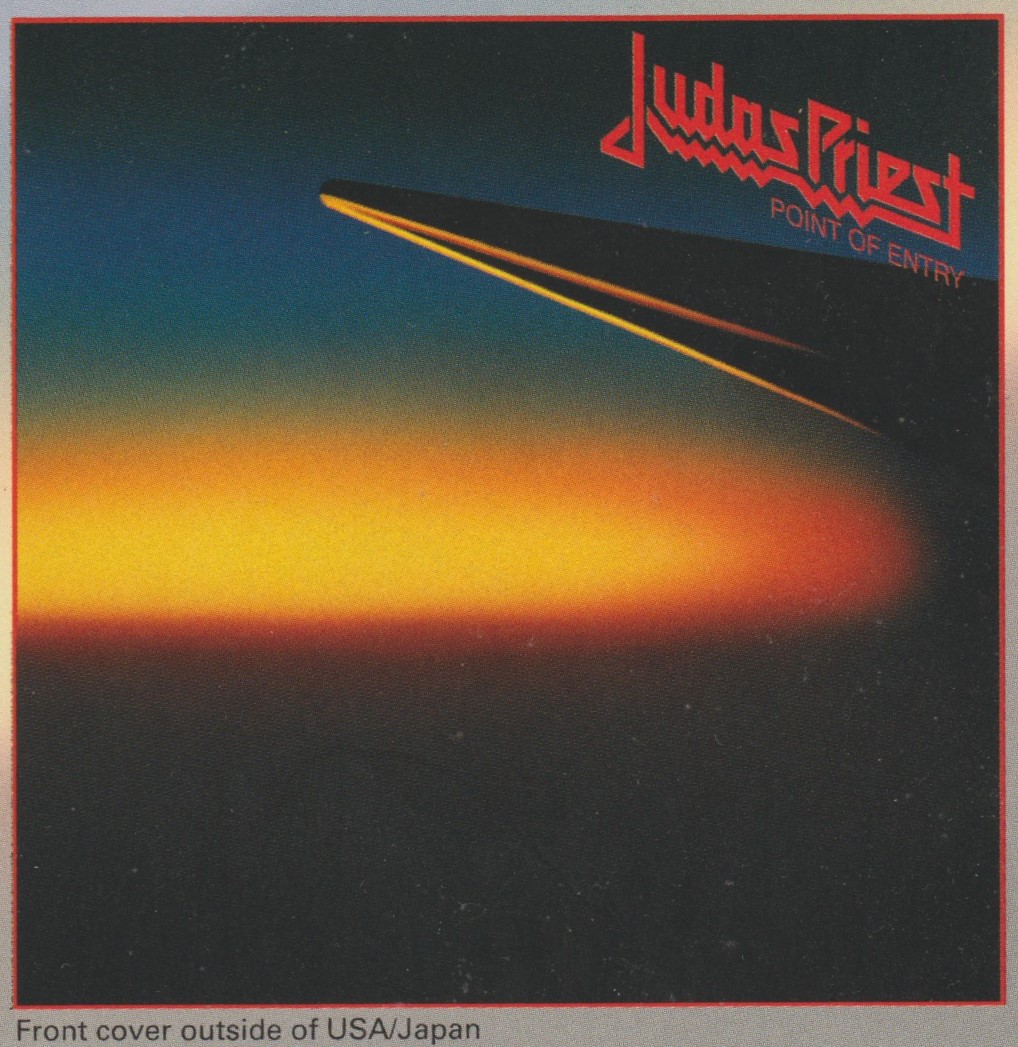
Point of Entry will always be one of those “other” Judas Priest albums. It wasn’t a ground breaker and wasn’t a massive seller. It will always just be “the album that came after British Steel” or “the one that came before Screaming for Vengeance“.  It did fine (500,000 US sales) and spawned a killer single called “Heading Out to the Highway”, but it didn’t make history like the other two records.

Coming after British Steel, Priest continued with producer Tom Allom and drummer Dave Holland, and it doesn’t sound like they were overly interested in taking chances.  Sonically Point of Entry is a carbon copy, though with less impactful songs.  In 2001, it was issued remastered by Sony with two bonus tracks.

For me, Point of Entry occupies an interesting space.  Listening to it on a recent road trip took me back to 1987 or 88, when I was in the midst of seriously trying to collect “all the Priest”.  From the perspective of a kid in 1988, Point of Entry was what I thought 1981 must have sounded like, though it wasn’t that long before.  So Point of Entry takes me back not to the early 80s, but the late 80s.  And in the late 80s, it sounded good.

Sure, I was aware that it sounded a lot like British Steel before, but without the massive landmark tracks like “Metal Gods”.  But what about “Desert Plains”?  Why wasn’t it as important as “Metal Gods”?

To this day, I don’t know.

Point of Entry does boast a few songs that could go toe-to-toe with any on British Steel.  Certainly “Desert Plains” and “Heading Out to the Highway” can stand up to the prior album.  “Highway” has one of those riffs so classic that I sometimes find myself humming it in a grocery line wondering what song was in my head.  As a mid-tempo road song, it does the job.  One could argue it’s just a sequel to “Living After Midnight”, but you just try and resist this one.

“Heading Out to the Highway” was made into an unintentionally funny video, mixing on-set with on-location footage in an obvious way.  Worse though were the two videos that followed:  “Don’t Go” and “Hot Rockin'”.  “Don’t Go” features the band playing trapped inside a small room, with a door that leads various impossible locations including outer space.  Fortunately the song is better:  slow and plaintive, yet with that solid rocking beat and a killer guitar solo.  “Hot Rockin'” is high-speed but tends to be forgotten because Priest have better material at this tempo.  The video is situated in a sauna, and then a concert stage where Rob’s flaming feet light fire to his microphone, and the microphone to a couple guitars.  Funny to look at, but I think it’s one of those cases where we’re laughing at the band, not with them.

“Turning Circles”, and a lot of the rest of the album, fall into various categories.  This one fits alongside “Don’t Go” as a slow but hard track.  “We’ve all got somethin’ wrong to say,” sings Rob in this song that seems to be about ending a relationship.  The “ah ha, ah ha” break in the middle is an album highlight, and to me it sounds exactly like my bedroom in 1987.

It’s “Desert Plains” that really brings it home.  There is a pulse to this song, created by Dave Holland and Ian Hill.  You don’t associate those two guys with awesome rock beats often, but here it is.  “Desert Plains” is an instant classic, and it’s alive with movement.  From the verses, to the choruses, to Holland’s drum “sound effects” (like “wild mountain thunder”), this is a Priest classic and shall forever remain so.  This side one closer should have been a video way before “Hot Rockin'”.

The second side opens with “Solar Angels”, another track with an interesting rhythm (slow drums, fast guitar chug).  The song feels like it could use some more substance, but it’s still enjoyable albeit in a “Metal Gods” knock-off kind of way.  Though heaviness is always celebrated, who doesn’t enjoy when Rob Halford gets sassy?  That’s “You Say Yes”, an outstanding shoulda-been hit.  The verses verge on punk rock as Rob spits out the words as only he can.  Then the airy “what I do, what I do, what I do” middle section goes right to heaven — or my room in ’87, I’m not sure which.

Point of Entry ends on three decent but unremarkable mid-tempo tracks, which perhaps always served to weaken the album’s impressions.  “All the Way” might be an attempt to rewrite “Living After Midnight”, and although it’s a cool track we all know Priest have better stuff in this vein.  “Troubleshooter” might even be more of a rewrite, with that opening drum beat sounding a little familiar.  But Rob’s vocals kill it.  Finally “On the Run” is a screamy album closer where Rob is once again the star.

As with previous CDs in this Priest remasters series, there are two bonus tracks, one of which has nothing to do with Point of Entry.  “Thunder Road” sounds a lot like Ram It Down era Priest, so you can safely assume it’s from those sessions in the late 80s.  Clearly outtake quality, almost like a prototype for “Johnny B Goode”.  Then there is a live version of “Desert Plains” from what sounds like the 1987 tour judging by the big echoey drums and Rob’s added screams.  It’s much faster than the album cut, all but destroying the pulse of the original.  Yet the song still kills!  Somehow it didn’t make it onto the Priest…Live! album, which was already stuffed full.

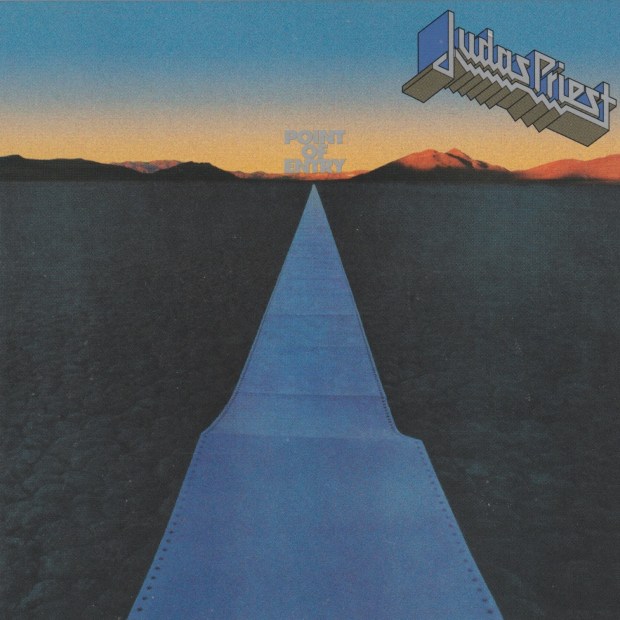
In the late 90s, a guy sold a used copy of this on CD to me, but he left something inside.  Something I wish I’d kept because it was so bizarre and funny.  The back cover features five white boxes in the desert.  The guy left a little white piece of note paper inside, explaining what he thought the back cover was about.   “Maybe they are graves,” said part of it.  I wish I could remember the rest.  (I always thought the five boxes represented the five band members, with the large one in the back being Dave Holland and the drum kit.)  And speaking of the cover, this album does look better on vinyl.  I have vinyl for almost all the Priest up to Ram It Down, and they all look better on vinyl.

Although Point of Entry will always live in the shadows of the towering albums that came before and after, it still leaves a glow behind.

3.75/5 stars

REVIEW: Judas Priest – Firepower (2018)

JUDAS PRIEST – Firepower (2018 Sony)

It’s 2018 and the Priest is back.  The excitement for the mighty metal band’s return has been restrained by the knowledge that Glenn Tipton is too ill to tour.  Parkinson’s disease — what a bastard that is.  Co-producer Andy Sneap has stepped up to take over Glenn’s guitar parts on tour.

Meanwhile on album, Glenn’s contributions to Firepower can be heard.  Sneap and classic Priest producer Tom Allom recorded one of the most biting Priest albums to date.  More impressive than the sound they captured are the performances.  Rob Halford in particular is more expressive than he has been in years.

At 14 tracks and almost an hour, Firepower suffers only from too many tracks.  There are a couple that clearly could have been cut and left for B-sides or bonus tracks.  “Flame Thrower” (similar to “Hot For Love” from Turbo), though a cool title, would have been great on a B-side.  On album, I’d rather race ahead to some of the more exciting tracks.

Firepower throws it back to sounds of the past.  Sometimes it’s Painkiller, and sometimes Angel of Retribution.  Rock writer Heavy Metal Overload noticed sonic similarities to Halford’s Resurrection CD.   At other times it’s brand new, because guitarist Richie Faulkner brings new things to the table, such as slide.

There are many highlights among the 14 tracks.  “Evil Never Dies” and “Never the Heroes” both immediately jump out for their melodic mastery.  Rob is sounding better than he has on the last couple, with a few tasty screams to enjoy.  As time goes on, new favourites will replace old.  Perhaps it’ll be “Spectre”, “No Surrender”,  “Children of the Sun”, “Rising From the Ruins” or even “Flame Thrower”!  Another highlight:  mellow album closer “Sea of Red” which bears lyrical similarities to “Blood Red Skies” from 1988’s Ram It Down.  In general, Firepower is about fighting back.

The cover art by Claudio Bergamin is Priest’s new mascot, “Titanicus”.  Silly name aside, this one Priest’s best album cover in decades.  (Mark Wilkinson continues to contribute to the packaging art as well.)  Notice how Bergamin’s lines match up with the style of past Priest albums like Screaming for Vengeance.

It’s hard to imagine a better album this late in their career.  Priest have done it again.  Firepower lives up to its name.

4.5/5 stars


JUDAS PRIEST REVIEWS


REVIEW: Judas Priest – Ram It Down (Remastered)

JUDAS PRIEST – Ram It Down (Originally 1988, 2001 Sony remaster)

Judas Priest seemed pretty lost in the late 80s.  They were bigger than ever, but they lost focus of their musical direction.  Producer Tom Allom had cursed them with a robotic plod, far removed from the lively firepower of yesteryear.  When they released Turbo in 1986, they had gone as far down those roads as possible.  It was am ambitious departure, but 100% a product of the 1980s.

For Turbo, Priest had written enough songs for a double album.  Twin Turbos, as it was to be called, was supposed to reflect all facets of metal, but the record comany got cold feet and a single disc was issued.  It contained the most techno-commercial tracks, while Priest held onto the rest for another day.  That day came in 1988 when Priest (again with producer Tom Allom) released Ram It Down, largely made up of Turbo outtakes.  The album was hyped as a return to the heavy Priest of yore, and this was at least partly true, but fans were unconvinced by it.  In comparison with Turbo, yes, Ram It Down was heavier.  But Priest had gone as far as they could with Allom.  Ram It Down was too sterile and bogged down with filler.

Certainly the title track opens Ram It Down on a thrash-like note.  As if to silence to critics, it was a proud metal statement with an opening Rob Halford scream that curdles the brain.  The weakness is drummer Dave Holland on his final Priest outing.  Only when Scott Travis joined Priest in 1990 did they acquire a drummer who could play the kind of beats at the speed they needed.  On Ram It Down, Priest were held back by the drummer and clunky production, two mistakes they fixed on 1990’s Painkiller.  The lyrics also seem dumbed-down for the 80s.  “Thousands of cars, and a million guitars, screaming with power in the air,” is cool but cliche.

“Heavy Metal” is more of the same lyrically, an ode to the power and glory of power chords.  Rob Halford’s performance is fantastic, and the man has rarely sounded as fantastic as he does on Ram It Down.  You can’t say the same for the words, the highschool equivalent of poetry.  On the music front, Priest were now following rather than leading.  They were on the same clunky metal trip as bands such as Scorpions at the same time.  There audible Kiss and Whitesnake influences on the album, with Rob sometimes sounding like he was trying to write a Gene Simmons tune.  “Love You to Death” on side two sounds right out of the Demon’s closet.  The embarrassingly terrible  “Love Zone” and “Come and Get It” both sound as if Coverdale co-wrote them on the sly.  Whether Priest were consciously copying other bands or just lost, who knows.  (“Love Zone” is one of the few songs that Halford almost seemed to write gender specific.  “With your razor nails and painted smile” are not specifically referring to a female, but certainly that was the general assumption.)

There are definitely a few cool tracks that deserve mention.  The first is “Hard as Iron” which had to be one of the fastest Priest songs to date.  It’s still held back by the production, but has some serious energy to it.  Like metal espresso injected right into the brain!  The other standout is “Blood Red Skies”, a forgotten highlight of this album and indeed of the Priest catalog in general.  (I actually used “Blood Red Skies” in a poetry project for school.  A girl liked it so much she asked for a copy of the lyrics.)  Using the synth effectively, “Blood Red Skies” paints a Terminator-like future with humans hunted by beings with “pneumatic fingers”, “laser eyes” and “computer sights”.  Halford  pours power and anguish into it, as a human freedom fighter.  “As I die, a legend will be born!”  Cheesey?  Absolutely.  Priest perfection?  Yes indeed!
There are also two mis-steps on Ram It Down that must be addressed.  The first and most obvious is “Johnny B. Goode”, from the 1988 movie Johnny Be Good starring Anthony Michael Hall and some guy named Robert Downey Something.  This track should have been kept off the album.  As a novelty single, sure, you can dig it.  It’s a stereotypical cliche-ridden metal cover, and that’s fun for a goof.  As a Priest album track, it only serves to completely destroy any momentum that Ram It Down managed to build.  Then there is “Monsters of Rock”.  This awful excuse for a song is only 5:31 long, but seems twice that.  It is the prototype for the even more awful “Loch Ness” from Angel of Retribution.  Most buyers probably didn’t finish listening to the album because of this bloated and aimless track.

The Priest Re-masters collection had two bonus tracks per studio album.  Ram It Down provides two completely unrelated but great tracks:  live versions of “Bloodstone” and “Night Comes Down”.  The liner notes don’t state when they were recorded, but live versions of either are always welcome in any Priest collection.  It’s interesting that bonus tracks from these actual sessions, such as “Red, White and Blue”, were used on other CDs but not Ram It Down.

Priest may have known Ram It Down wasn’t the metal album they hoped to make.  They cleared house afterwards.  Dave Holland and Tom Allom were done, and there is no question that Painkiller was superior to Ram It Down because of that.

2/5 stars