Author: mikeladano

Metal, hard rock, rock and roll! Record Store Tales & Reviews! Grab A Stack of Rock and more. Poking the bear since 2010.

REVIEW: Metallica – “Lords of Summer” vinyl & download singles (2014)

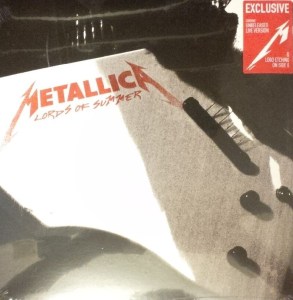
img_20161120_080611METALLICA Β – “Lords of Summer” (2014 Blackened Record Store Day single, additional download versions)

This pastΒ Friday, Metallica ended the eight-year long wait for a new album and put out the sharp-edgedΒ Hardwired…To Self-Destruct. Β If you go for the deluxe edition (a measly $16!) then you’ll get the full 78 minute studio album and a bonus CD (to be reviewed later) with another 14 tracks. Β That’s another 79 minutes of metal for a grand total of $16. Β The value is insane.

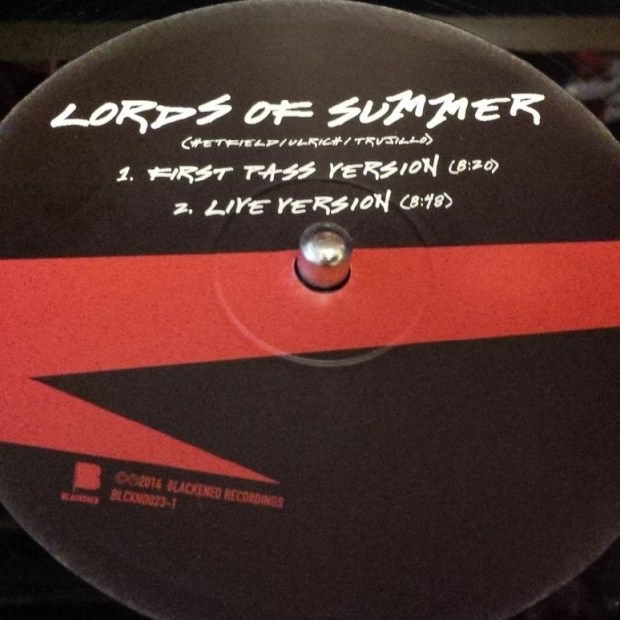
Cast your minds back to 2014. Β Metallica, embarking on a summer tour, released a new single called “Lords of Summer”. Β The concept of “Lords of Summer” was pretty simple. Β It’s a song about touring season, and it was one of the new pieces of music that the band were working on for the next album. Β Ultimately, a slightly shorter and re-recorded “Lords of Summer” was included on the bonus CD forΒ Hardwired. Β The vinyl single (Record Store Day, limited to 4000 copies) has the original “First Pass Version” (8:20). Β This was also made available via download. Β If you’re already familiar with “Lords of Summer” then this is the version you know. Β The “First Pass” is not as polished as Hardwired, but similar in direction with the same focus on metal riffs and melody. Β Like much of the album, “Lords of Summer” careens from riff to riff blasting away at different tempos. Β While not one of Metallica’s most remarkable songs, it has some cool individual riffs cooked up within it.

For the sake of completion, we should also discuss the “Garage Demo Version” of “Lords of Summer”. Β This was included as a bonus track with Metallica’s official live downloads from that tour. Β It was first played in Bogota Columbia, March 16 2014. Β The “Garage Demo” (also 8:20) is different recording from the “First Pass”; very similar but even rougher. Β Fans familiar with Metallica’s usual demos know that they are often so rough that the lyrics are not yet in place. Β This time, the song was already fully formed in its demo stage.

The Record Store Day vinyl single contained a bonus live version, recorded in Rome on July 1 2014. Β By that time the band had been playing it all summer, so it’s tight. Β Kirk’s solo is drowned out in the mix, butΒ of course you can hear the drums loud and clear. Β Compare this to the version in Bogota, which captures the song played live for the first time ever. Β The arrangement is the same, but it’s still coming together in Bogota. Β The Roman version demonstrates that practice makes perfect. Β But why stop there? Β There are a total of 33 different live versions available for download on Metallica’s site!

There is one last bonus, which is the etched B-side on the Record Store Day vinyl. Β Admittedly it looks pretty…but it’s just an “M”. Β It’s minimalist cool, but what happened?…they couldn’t afford to etch the etallica?

img_20161120_065505

For this review, we listened to the following:

  1. “First Pass Version” (8:20, available as single download or on vinyl Record Store Day single)
  2. “Garage Demo Version” (8:20, available with purchase of a concert at LiveMetallica)
  3. July 1, 2014, Rome Italy (8:48, available on vinyl Record Store Day single or for downloadΒ at LiveMetallica)
  4. March 16, 2014, Bogota Columbia (9:18, availableΒ for downloadΒ at LiveMetallica)

With 31 more live versions online, plus the new album version at 7:09, there are in total 36 official versions of “Lords of Summer” out there to consume. Β Happy hunting.

3/5 stars


REVIEW: Metallica – Hardwired…To Self-Destruct (2016)

Note: This is a review of the 2CD albumΒ Hardwired…To Self-Destruct. Β A review of the third bonus CD will follow at a later time.

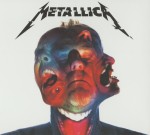
scan_20161119-2METALLICA –Β Hardwired…To Self-DestructΒ (2016 Blackened)

The ever-polarising Metallica are back. Β This time, Metallica may have finally released an album that pleases everyone. Β Amazon averages are remarkably high. Β Fans seem to be willing to forgive past mis-steps. Β Hell, Metallica are even back on Napster in 2016!

WithΒ Hardwired…To Self-Destruct being a long musical journey, it will naturally take time to absorb. Β It’s easy to imagine that you could review this album a year from now and have a whole new set of thoughts to share about it. Β Ultimately,Β Hardwired…To Self-Destruct is mostly strong throughout with few moments that drag. Β It does play a tad on the long side, not even including the third bonus CD. Β At 78 minutes, the album proper is actually only about as long as Load. Β The difference in the listening is that Load was a very diverse album of rock stylings, but Hardwired is full-on classic sounding Metallica through its entire length. Β There are a few back alleys previously unexplored, but all solidly within the realm of heavy metal.

The direction is not that dissimilar from Death Magnetic, just refined. Β There are many traditional metal riffs, Maiden-esque and sweet. Β You will discover several album highlights. Β There is only one track, “Am I Savage?”, that hasn’t hit the mark yet. Β Current contenders for favourite songs include “Hardwired“, “Atlas, Rise!”, “Now That We’re Dead” and closer “Spit Out the Bone”. Β Jessie David, metal specialist at 107.5 DaveRocks, says “Murder One” is her outstandingΒ track. Β “It’s killer,” she warns. Β Each listener will likely add their own to this list. Β It is probableΒ that every single track will have its fans, because none of them suck.

Many will want to know how the album is sonically — is it overdriven? Β The “loudness wars” took their toll on the last album. Β The best way to answer that is visually, so check out the waveform of “Hardwired” in Audacity.

hardwired

It’s pretty loud, but not quite as bad as Death Magnetic.

Hardwired…To Self-DestructΒ will continue to evolve in the ears of listeners as time goes on. Β A provisional rating may change at any given time. Β But there is no question that Metallica are still able to stir the molten iron souls of fans with great new songs and performances. Β They are Metallica, and that seems unlikely to change.

4.5/5 stars

scan_20161119-3

REVIEW: The Honeydrippers – Volume One (1984 EP, 2007 reissue)

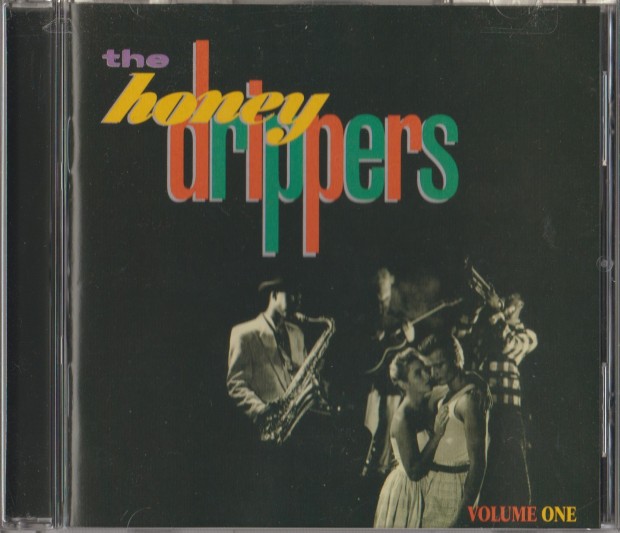
scan_20161017THE HONEYDRIPPERS – Volume One (1984 Atlantic, 2007 Rhino reissue)

In 1981, Robert Plant felt like playing some old fashioned rock and roll again.Β  He assembled a group of friends including Jimmy Page, Jeff Beck, Nile Rodgers, Dave Weckl and Paul Shaffer.Β  With a handful of covers ready to go, The Honeydrippers Volume One EP went top ten in the US and Canada. Β I have now officially bought this EP four times: First time on cassette, then vinyl, then CD, and now finally this remastered CD with one bonus track. Β One bonus track is all they could be bothered to beef this up by.Β  A grand total of 22 minutes, up from 18.

Originally released in 1984, in a lot of ways this was as close to a Page/Plant reunion as we were likely to get in the 80’s, although thisΒ is very different from Led Zeppelin.Β  These are classic golden oldies, rock and roll and R&B hits: the sound like guys like Plant and Page grew up with.Β  So get up, get down and dance!

“I Get A Thrill” is an excellent track with which to open the EP.Β  It’s a great song with wonderful backing vocal harmonies.Β  A nice fast one to dance to.Β  Everybody should know “Sea of Love”, the lush, elegant slow-dancer. Today it is better known than the Phil Phillips original.Β The music video might be most notable for the speedo-wearing Frank Zappa lookalike on the xylophone. Β Ray Charles is last for side one:Β  “I Got A Woman”.Β  It’s breakneck fast, and might be too much for those on the dance floor cutting a rug! Β Don’t go and break a leg….


Does humour belong in music?

Plant croons his way through “Young Boy Blues”, a Phil Spector oldie done justice by Robert’s rich voice.Β  It’s as lush and brilliant as β€œSea of Love” and easily as good as the better-known single.Β  Back to cutting a rug though, you’d better get up for “Rockin’ At Midnight”, another hit single for the Honeydrippers.Β  Jeff Beck nails the perfect guitar solo in the midst of a boppin’ horn section.Β  Rock perfection!

The one measly bonus track is a live version of “Rockin’ At Midnight”. It’s shorter than the studio version of the song by two minutes. Β It’s hard to fathom how RhinoΒ only had one bonus track to include. Β Plant performed live with the Honeydrippers numerous times.Β  To think they only ever recorded one track live is pretty hard toΒ believe.

This remaster (released in 2007 as part of the Plant remasters) sounds great, and despite the short running time, is worth your cash as long as you’ve never bought it on CD before. It’s fun, it’s warm, it’s a great listening experience and every one of these tracks is a bonafide classic. It’s kind of odd hearing Plant’s distinctive squeal on some of these songs, but it actually works.

4/5 stars, but only because they could have included more bonus material.

#528.5: Klassik Kwote of the day – “Side Project”

The Foo Fighters took a break in 2001. Β Their new album, to come later as One By One, was not going well. Β The band were infighting, and the album was put on hold. Β Around that time, Josh Homme hooked up with his old buddy Dave Grohl and invited him to play on the new Queens of the Stone Age album. Β Dave was growing wearing of frontman duties in his own band and was happy to just be a drummer again for a little while.

The resultant QOTSA album, Songs for the Deaf, was a smash hit. Β Dave Grohl’s presence brought them a higher profile than before, but it was also just a flat-out kick ass record.

One of our store managers, Joe “Big Nose” was a Queens of the Stone Age fan going back to Kyuss. Β Though I was not there personally when this happened, Joe likely had an internal meltdown when a customer asked:

“Hey, do you have that new side project of Dave Grohl from Foo Fighters?”

I bet there was steam coming out of Joe’s ears!

REVIEW: MΓΆtley CrΓΌe – Girls, Girls, Girls (2003 remastered edition)

girlsMΓ–TLEY CRÜE – Girls, Girls, Girls (originally 1987, 2003 remaster)

The Tom Werman-produced Girls, Girls, Girls album is a bit underrated. Β Its weaknesses are fairly obvious, but its strengths are less appreciated. Β The Crue were coming off a bit of a stinker (Theater of Pain),Β so some changes were in order. Β The band dropped the makeup and spandex in favour of a tougher street-ready look. Β The intended direction this time was a bit of a combo of the first three Crue album. Β They wanted the rawness of Too Fast For Love, the heaviness of Shout at the Devil, and the sleaze of Theater. Β There was no reinvention of the wheel, nor was anybody in the band capable of that. Β Nikki Sixx was deep into a heroin problem at this time, barely focused on the music at all. Β This has been documented in his graphic book The Heroin Diaries. Β Much of his time was spent hiding in a closet with a gun, afraid of imaginary intruders.

As an audience in 1987, we really did not suspect that things were such a shambles behind the scenes. Β The band looked good, and sounded like they had rediscovered the skills of writing memorable songs. Β Case in point: Β opening track (and second single) “Wild Side”. Β Boasting the kind of rock groove that Motley made their trademark, “Wild Side” rocked. Β They even threw in a time change on the bridge. Β “Wild Side” was augmented with a cool music video, showcasing the Motley stage show in 1987. Β This included a spinning, upside down Tommy Lee drum kit. Β “Girls, Girls, Girls” was a video too, but it never saw airplay up in Canada. Too risquΓ© for the frozen tundra of the north? Β It too was a hit, played live in concert right to Motley’s final show (opening number, in fact).

The album was rounded out by a number of cool, sleazy rock tracks and a couple ballads. Β “Dancing On Glass” kicks; it’s pretty much an autobiographical track about living in the fast lane. Β This is something the Crue were well acquainted with.

“Silver spoon and needle,
Witchy tombstone smile,
I’m no puppet,Β 
I engrave my veins with style.”

Since the cassette didn’t come with a lyric sheet, kids of the 80’s (or at least the parents of the 80’s) probably had no idea what Vince was singing about. Β The song is given some traditional rock cred with soulful female backing vocals and boogie piano.

“Bad Boy Boogie” continued the theme, this time with some tasty Mick Mars slide guitar instead of piano. Β “Better lock up your daughters when the Motleys hit the road.” Β The song is a series of sexual innuendos, cleverness put to the side in favour of blunt sleaze. Β “Got my finger in the pie, my hand in the cookie jar.” Β Aerosmith leaks through the grooves on “Bad Boy Boogie” which wears its influence on its sleeve. Β The good times continue to bounceΒ on “Five Years Dead”, loaded with more of Mick’s greasy slide. Β It’s a similar song to “Sumthin’ for Nuthin'”, which is even more fun. Β This time Vince is a gigolo, getting paid for pleasure (sumthin’ for nuthin’)! Β “Leave the money where it’s easy to see,” he sings with glee. Β It’s brilliant Motley filth just the way you like it.Β  Best of all is the smokin’ “All in the Name Of…”, which pours high octane fuel in the tank and opens ‘er up wide. Β It’s sleazier than sleazy: Β “She’s only 15, she’s the reason, the reason I can’t sleep. Β You say illegal, I say legal’s never been my scene.” Β Probably a true story….

There are only two ballads, one of which is just 1:26 of filler (“Nona”). Β The other is the very entertaining “You’re All I Need”, which sounds inspired by Alice Cooper. Β It is a delicate piano based murder ballad, like the Coop has done so well. Β “You’re All I Need” isn’t Coop quality, but on the Motley scale it’s one of their better ballads. Β It has an anthemic quality, a pompous melancholy. Β The lyrics doomed it to semi-obscurity, which is too bad, since on the whole it’s a stronger song than the better known “Without You”.

Unfortunately for this album, “Nona” was not the only filler. Β An excruciating (and live?!) cover of “Jailhouse Rock” ends the album on a pretty putrid note. Β It’s not good at all, and reeks of weakness. Β Why would you end your new album with a cover, and a live cover at that? Β Only because you didn’t have enough quality tunes to make the cut.

The 2003 remastered edition of Girls, Girls, Girls came with bonus tracks, like all the albums in the Crucial Crue collection. Β Three of them are instrumental versions, bordering on filler material. Β Motley Crue are not RainbowΒ or Marillion — you don’t get much out of an instrumental version. Β “Nona” did once have a rock section in its longer demo form. Β More entertaining than the demos is the band and Tom Werman intro. Funny stuff. Β Then there is a long sought ballad “Rodeo”. Β This song was first mentioned in band interviews in 1989, when it was mentioned for possible inclusion on a never-released album called Motley Crue:Β The Ballads. Β The demo here is not very well fleshed out, but you can hear that it had a cool chorus ready to go. Β Finally there is a live version for “All in the Name Of…” from Moscow in 1989. Β Fans may recall that Motley played at the infamous Moscow Music Peace Festival…shortly before Tommy attacked Jon Bon Jovi and ripped the shirt off his back. Β Peace and love, man!

Although the Crue were only firing on a couple cylinders at the time, they managed to piece together a worthwhile album. Β There are only two mis-steps, which are “Nona” and “Jailhouse Rock”. Β The remastered edition adds a couple more worthwhile bonus tracks to extend your listening experience. Β Go for that one if you find it first.

3.5/5 stars

Side one
1. “Wild Side” 4:40
2. “Girls, Girls, Girls” 4:30
3. “Dancing on Glass” 4:18
4. “Bad Boy Boogie” 3:27
5. “Nona” 1:27

Side two
6. “Five Years Dead” 3:50
7. “All in the Name Of…” 3:39
8. “Sumthin’ for Nuthin'” 4:41
9. “You’re All I Need” 4:43
10. “Jailhouse Rock” (live) 4:39

2003 Remastered Edition bonus tracks
11. “Girls, Girls, Girls” (Tom Werman & band intro, rough mix of instrumental track) 5:38
12. “Wild Side” (rough mix of instrumental track) 4:06
13. “Rodeo” (unreleased track) 4:14
14. “Nona” (instrumental demo idea) 2:42
15. “All in the Name Of…” (live in Moscow) 5:02

REVIEW: Richie Sambora – Stranger In This Town (1991 2 CD deluxe)

scan_20161021-2RICHIE SAMBORA –Β Stranger In This Town (1991 Mercury 2 CD deluxe)

Bon Jovi went on hiatus after the lengthy New Jersey tour. Β Their future appeared uncertain. Β Jon had released his first solo album, a soundtrack called Blaze of Glory. Alec John Such was reportedly opening carwashes in Hungary, although that was probably a joke answer in a magazine interview. Β  Meanwhile, the rest of Bon Jovi (Richie Sambora, David Bryan and Tico Torres) gathered in the studio to record. Β With Tony Levin on bass and Chapman Stick, the group assembled Richie’s first solo album, Stranger In This Town. Β Although fans were worried about a possible split, there was much excitement for Richie to have a chance to sing his own songs. Β Adding to the hype, Eric Clapton appeared as a special guest. Β (Randy Jackson played bass on one song, “One Light Burning”.)

Sambora seemed to determine to fly his own colours. Β Predominantly, that’s blue, as in the blues. Β He also mixed in soul, pop, and rock to create an album that wouldn’t alienate any Bon Jovi fans. Β David Bryan contributed songwriting, and there is even one Bon Jovi song in the mix. Β It’s not a guitar album, although it need not be stated that the guitar playing on this album is brilliant. Β Richie went for feel and atmosphere rather than flash.

This is apparent on opening track “Rest in Peace”. Β It’s not really a full-fledged song, but more an introduction to the album. Β It even has listening instructions: Β “Turn down the lights…light a candle…welcome.” Β That doesn’t sound very rock and roll, does it? Β But it is good advice. Β That’s the kind of album this is. Β “Rest in Peace” is loaded with soul, and this merges with the pop rock on “Church of Desire”. Β A song like this wouldn’t have worked with Bon Jovi. Β It has more soul, and its quiet production lets the music breathe more than Bon Jovi songs do. Β It’s a brilliant track, and Richie’s solo just blasts. Β Different from Bon Jovi, but accessible forΒ Bon Jovi fans: Β it’s an ideal song for a first Sambora album.

The blues single “Stranger In This Town” sounds like something Richie had been aching to do for years. Β Backed by a choir of vocalists, this is Richie fulfilling some musical dreams. Β Both blues fans and rock fans should enjoy the middle ground where they meet on “Stranger In This Town”. Β As a single, it seemed to represent the image Richie was going for. Β This album has three singles in a row, making the first side a little more consistently strong. Β “Ballad of Youth”Β was the debut single, combining Bon Jovi’s anthemic melodies with Richie’s new laid-back vibe. Β It even has a Bon Jovi-like positive message. Β “Don’t waste your life away, thinkin’ ’bout yesterday’s blues.” Β The excellent third single was the synth ballad “One Light Burning” which almost sounds like Richie Sambora joined the Cars. Β For the programmed sounds and percussion, Richie said they had “about 100 computers” networked together. Β Oh, 1991! Β Though a ballad, it’s the centerpiece of the album.

It’s possible they intended “Mr. Bluesman” to be the centerpiece, but the lyrics are difficult to digest. Β When you write a song as a tribute to your hero, such as this tribute to Eric Clapton, lyrics are always the trick. Β Thankfully Mr. Clapton’s guest guitar appearance, though brief, does tell us the story. Β Hearing him rip on this blues ballad is like a searchlightΒ cutting through the murky haze. Β But here’s the weird thing. Β Didn’t Eric find Brian May’s tribute song “Blues Breaker” embarrassing? Β Yet he appeared on this ballad?

IMG_20151004_091117“Rosie” is a Bon Jovi song that was heavily bootlegged, from the fruitfulΒ New Jersey sessions. Β It sounds like Bon Jovi, but Richie’s version has way more guitar. Β Unfortunately the Bon Jovi version has never been released. Β It was mysteriously not included on the Sons of Beaches demos that came out in 2014, even though the other songs were. Β One has to assume Jon didn’t include it on his set because Richie already had his version out. Β The next track “River of Love” is a title that has nothing to do with the Bon Jovi demo of the same name. Β This is the first and last really greasy rocker on the album.

It’s ballads from there out, but terrific songs nonetheless. Β “Father Time” (written with Desmond Child) is a melancholy rock ballad that Jon probably wishes he wrote. Β It’s a powerful song, like an amped up “One Light Burning”. Β Guitars burn up and down your spine while Sambora soothes your ears with his soulful croon. Β Tico and David provide the solid base upon which the song is built. Β Their expert chops are essential parts of the entire album. Β Things draw to a close on “The Answer”, an acoustic lullaby-like song that has a lot of heart. Β A sentimental ballad askingΒ existential questions is an unconventional way to end an album, which is part of what makes it special.

Mercury did something unusual for the era, but very common today. Β They released Stranger In This Town as a single CD, and a 2 CD deluxe edition. Β The deluxe is housed in a long box, and has two bonus tracks. Β At the end of CD is “The Wind Cries Mary”, which saves fans from having to buy the atrocious Ford Fairlane soundtrack on which it originated. Β It’s a smoking Hendrix cover, and the best tune on that soundtrack. Β On the second CD you will find an almost 20 minute interview with Richie discussing the songs on this album. Β No revelations here; it’s really just an extended promo for the album. Β Half of it is music anyway…snippets of the same music from disc one! Β An OK extra, but the real bonus is “The Wind Cries Mary”.

The final extra, usually missing on the second hand market, is the metal guitar pick shaped pendant. Β It has Richie’s solo logo on it, but nobody’s going to be wearing this thing. Β All this is packed in the box, which is a beauty but awkward to store.

As an introduction of the “real” Richie to the fans, Stranger In This Town was a success. Β He differentiated himself from Bon Jovi, and also proved he could sing an entire album easily. Β Critically and commercially, the album was less successful. Β There were mixed reviews, with the rock press hung up on the soft songs. Β With the benefit of 25 years’ hindsight, StrangerΒ has aged well, better than Bon Jovi itself.

4/5 stars


REVIEW: Rock the Cradle Lullabies volume 1 – Dreamin’ with Def Leppard (2011)

CD given to me a couple years ago by Mr. Books.

scan_20161106

ROCK THE CRADLE LULLABIESΒ volume 1 – Dreamin’ with Def Leppard (2011 Happiness Records)

They call these lullabies, but I’m not so sure about that word. Β Bon Jovi did an actual album like this, and titledΒ it This Left Feels Right, I believe.

Slowed down, acoustic bluesy and laid back instrumental versions of Def Leppard songs will be found on this CD, easily digestible by anyone. Β Their effectiveness as lullabies has not been tested under lab conditions but for casual listening in any age group, it should be well received. Β As stated on a sticker on the front, Vivian Campbell and Phil Collen from Def Leppard make guest appearances (three songs each).

The liner notes state that the technique for “lullification” of these hits involved distilling them down to their core melodies. Β That makes the songs both easily identifiable and readily enjoyable. Β A mellow slide guitar often fills in for a lead singer. Β Phil and Vivian’s work should be identifiable for fans to pick out. Β Ballads tend to work better than rock songs like “Photograph” or “Pour Some Sugar”, and there are even a few surprising selections from outside the usual Pyromania and Hysteria suspects. Β “Stand Up (Kick Love Into Motion)” is a particularly good mellow treat.

Buy it for your baby, or yourself.


zzz/5 stars

scan_20161106-2

This is a 200 word review in the tradition of the #200wordchallenge

#528: The Ratings System

GETTING MORE TALEΒ #528: The Ratings System

You like reading music reviews. You read them for information and entertainment. You can’t get enough music reviews!

But what formats do you like? Perhaps you enjoy a meaty, detailed review with all the nitty gritty details. Some get bored with length,Β and just want a quick n’ dirty summary. This is why we tried the #200wordchallenge, and why Aaron at KeepsMeAlive enjoys the old-fashioned 80 word β€œhit and run” style from time to time. And others, such as our friends at 1001AlbumsIn10Years, are skilled atΒ metaphors, and have added innovative graphics and chartsΒ to album reviews.

All of these techniques are valid, and the more unique and individual reviews certainly deserve praise for breathing fresh life into an ages-old format. But what about a numeric ratings system?

Some kind of rating is pretty standard for music reviews. Rolling Stone magazine uses a five-star system. So does Allmusic and NME, but Spin magazine uses a 10 point system. These allow a reader to very quickly see if a writer thought an album was any good, without having to actually read anything!

Here at mikeladano.com, we use a loose 5 star system. This originated at Amazon, where products must always be rated from 1-5 stars. Most of our earliest reviews here began life at Amazon, before they were expanded and modified for your edification. Because of this, we importedΒ and have continued with an Amazon-like 5 star system.

Even this is limiting, so we have allowed fractions – you will see many 3.5/5 star reviews here. This essentially makes it a 10 point system like Spin’s.

But it’s not an exact science and that’s where we get into trouble.

It’s fairly easy to listen to an album a few times and decide on a number rating that feels right. A 5/5 feels like a near-perfect listening experience. A 4.5/5 might have some perceived flaws. But when you get into seriously comparing and stacking albums up against each other, the differences can be felt. Β It’s also worth noting that a 5/5 star jazz album and a 5/5 star Kiss album are going to be wildly different from each other. Β It’s all in the ear of the beholder.

Taken individually, ratings usually hold up. When compared amongst a band’s entire discography, things get dicey. Our series of Iron Maiden reviews was one such example. They have so many great albums – amazing albums, in fact – that it is quite easy to lay down 5/5 stars to much of their discography. But this ignores minor different degrees of rock excellence. Iron Maiden’s Rock In Rio is excellent. It is a rollicking heavy metal journey exploring Maiden’s history up to 2001. But is it as good as Live After Death? No. Very few things are. Both could easily have received a 5/5 rating, but we chose to lower Rock In Rio to 4.5/5 stars to keep everything in perspective.

Down these roads lead madness. We have even done a 4.999/5 star review.

If you review 1000 albums on a scale out of 5, you could quickly build up enough fractional ratings to necessitate three decimal places. But that complicates things needlessly. Wasn’t the numerical rating system supposed to be a quick and easy way to say if it’s good or not? Β WeΒ have done 6/5 star reviews, reviews in negative numbers; we’ve done everything imaginable to try to keep ratings in scale. Β Ultimately it is simply not possible. Β Like finding an electron in a cloud, you justΒ cannot pinpoint album ratings toΒ that degree of precision.

A numerical rating can alsoΒ paint you into a corner. There was some Facebook controversy recently over our assertion that Motley Crue’s self titled 1994 was one of the best albums of the 90’s, killing much of the competition. This led to challenges and comparisons with other albums of the period, all great records. How do you rate something β€œthe best” over a bunch of other 5/5 star albums? And how do you know that you will still feel that something is β€œthe best” when you think about it again next month? Putting a numerical rating on an album is like putting it into stone, and that can be limiting, especially when comparing.

We’ve been utilizing the 5 star system (with fractions) for close to five years now. We could stop, but at this point I don’t think it would help. For better or for worse, our bed is now made. And it’s 5/5 stars.

REVIEW: Deep Purple – This Time Around – Live in Tokyo ’75 (2001)

scan_20160925DEEP PURPLE –Β This Time Around – Live in Tokyo ’75 (2001 EMI)

This shouldn’t have been the “last concert in Japan”!

Many of the old, post-breakup-issued Deep Purple live albums are virtually impossible to find today on CD. One of those is Last Concert In Japan, which was originally released only in that country. It featured the Mk IV lineup of Deep Purple: David Coverdale, Glenn Hughes, Ian Paice, Jon Lord, and the late Tommy Bolin on lead guitar. As a matter of historical releases for my collection, I also own the originalΒ Last Concert in Japan on both LP and CD.

The tragic story goes that while some members of Purple were rejuvinated with the fresh blood that Bolin donated, others were dead tired of it all. Β Reviews were spotty and word was spreading that Deep Purple were over. Β Both Bolin and Hughes were in the throes of serious drug habits. Β On the night of the recording of Last Concert in Japan, Bolin was shooting up and caused his arm to go numb. Β Frantic attempts to get him stageworthy worked and he managed to barely play the show. Β Guitar parts are sloppy and that’s what people remember because it went on LP.Β Β The original one-record set from the show has now been expanded to two lengthy CDs, 17 tracks. It’s been remixed and remastered. Production was supervised by Purple expert Simon Robinson, so you know that the quality level is about as good as it could be. Β Because of the fully expanded tracklist, some of the finer live Deep Purple moments have been restored to this album, such as a 16 minute “Gettin’ Tighter” which was too long to include on a single record.

Some flaws do remain of course. Tommy’s guitar is now barely audible in the “Burn” riff as opposed to non-existent. Β However the overall experience is very listenable. Β It’s a darkly interesting album to own, because within months PurpleΒ disbanded, and a year later Tommy Bolin would be dead.

If you alreadyΒ own Last Concert In Japan, this purchase gives you over an hour more of unreleased music. Even so, all of it has been remixed, so you are still in for a fresh listen with open ears. If you already own dozens of Deep Purple live albums (believe me, it’s possible), this one has five songs that you can’t get elsewhere in live versions. Β It’s even a better listen than In Concert/King Biscuit Flower Hour (aka, On The Wings Of A Russian Foxbat) with stronger vocals. Plus you get Tommy singing on “Wild Dogs”. Β Worth theΒ double-dip.

4/5 stars

REVIEW: Europe – Almost Unplugged (2009)

scan_20161012EUROPE – Almost Unplugged (2009 MVD Audio)

Almost Unplugged“? Β The devil is this?

This was a special show in Sweden, with Europe playing some of their best material (with a few covers) in a largely acoustic setting. Β There are strings, but there are also keyboards and electric guitar. Β The best of both worlds!

The band were riding a high wave then, which has really not dissipatedΒ since. Β They had done a couple well received reunion albums (Start From the Dark and Secret Society) and were working on music thatΒ many fans consider a peak (Last Look at Eden). Β Europe have long been an under appreciated band, but Almost Unplugged should win over even the staunchest critic.

“Got to Have Faith” opened Europe’s reunion album Start From the Dark, so it works triumphantly as a concert opener. Β Here, it is laid back, bluesy withΒ slippery guitars. Β “Forever Travelling”Β from Secret Society follows hot on its heels. Β The string quartet adds drama to this song, which works naturallyΒ in the acoustic setting. Β From the same album is the killer track “Devil Sings the Blues”, highlighted by some splendid John Norum electric guitar noodling.

Every time Europe does a cover, it becomes an album highlight. Β The acoustic “Wish You Were Here” is beautiful and not at all overdone. Β Thin Lizzy’s “Suicide” is full on electric, and pretty spot-on, especially considering that Lizzy were a two-guitar band while Europe has a guitar and a keyboard. Β Covering Led Zeppelin is always risky but “Since I’ve Been Loving You” is surprisingly great. Β Joey doesn’t try to copy Robert Plant, but he certainly can sing the blues just fine. Β (Hey! Β Maybe the devil really does sing the blues! Β Oh, you devil you!) Β Just as importantly, Norum plays some electrifying guitar blues over this monster of a cover. Β The most brilliant cover however is a UFO song: Β “Love to Love”. Β More than any other, this one sounds like Europe owned it. Β It’s very well suited to their dramatic rock stylings, and they absolutely kill it. Β If there was one track worth buying the CD for, you just found it.

The Europe originals that make up the bulk of the album span the entire history of the band. Β From the first LPΒ is “Memories”, which in its original version was a brutally heavy stampede. Β Here, it is an acoustic gallop, just as aggressive, but with subtlety. Β The piano ballad “Dreamer” comes from the second album, an unsung classic that was a few years shy of fame. Β The fame and fortune finally came on 1986’s The Final Countdown, and of course the title track is played. Β In its acoustic version there is no synth hook; it instead played by the string quartet. Β It’s trippy to hear it done like this; a little strangeness for fun. Β “Superstitious” (from 1988’s Out of This World) sounds more natural in this format. Β It’s also refreshing to hear Joey’s voice crack in a couple places. Β That means this is really truly live.

One should always familiarize with the originals first, but even if you don’t have them, Almost UnpluggedΒ should be well enjoyed by any discerning rock fan who doesn’t mind when the acoustics come out.

4.5/5 stars

scan_20161012-2