Author: mikeladano

Metal, hard rock, rock and roll! Record Store Tales & Reviews! Grab A Stack of Rock and more. Poking the bear since 2010.

REVIEW: 2001: A Space Odyssey – Original motion picture soundtrack (1996 remaster)

Hosted by Vinyl Connection, it’s the inaugural…
LP stack white soundtracks – Version 2

November 1 – November 14

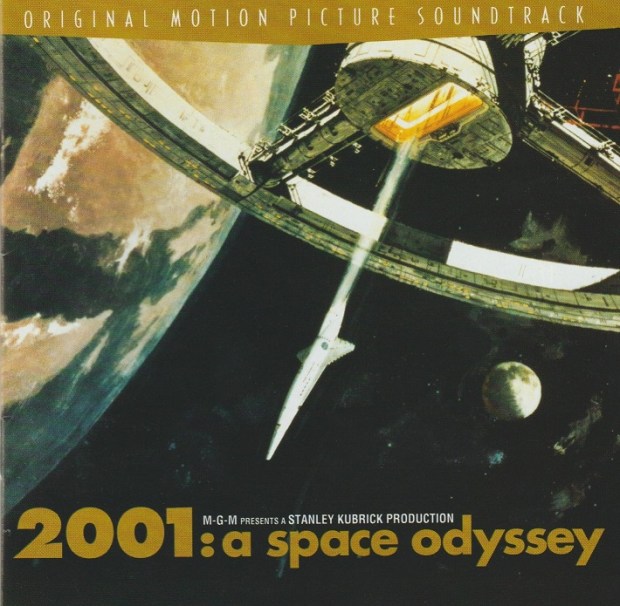
scan_201611052001: A Space Odyssey – Original motion picture soundtrack (originally 1968, 1996 Rhino remaster)

Stanley Kubrick changed the sci-fi playing field with 2001: A Space Odyssey. When he and Arthur C. Clarke sat down to write the “proverbial good science fiction movie”, they strove for a depth and realism that had yet to be attempted. Β No sounds in space. Β No thruster sounds, no pinging space radar. Β Music (or even lack thereof) would be required to tell the audio story. Β Kubrick initially contacted Spartacus composer Alex North. Β The plan changed, however. Β Stanley had been editing the film to a temporary score of classical music. Β Nothing North could come up with satisfied the fussy director as much as the classical pieces, so that is what was used on the final film.

The film was fiercely different, free of cliches and intensely determined not to dumb things down. Β The same could be said of the soundtrack, reissued on CD by Rhino with four supplementary bonus tracks. Β This fine release enables the listener to delve deeper and unlock even more of the secrets of the universe. Β Ligeti’s dissonant “Atmospheres”Β delivers an uneasy feeling; after all we humans know nothing of what is really out there. Β The conflicting (and conspiring) tones of “Atmospheres” is supplanted by the main title, “Also Sprach Zarathustra”. Β The music implies great revelation, standing on the cusp of universal breakthrough.

Unease returns with the bee-like swarms of “Requiem” also by Ligeti. Β Voices sing, each one in their own world, but joining together to join a coherent piece. Β In the film, this unsettling music appears when we encounter the enigmatic Monolith. Β The Monolith is a tool of our growth as a race and a stark warning that there are things beyond that our science is not equipped to explain. Arthur C. Clarke’s “third law” states “Any sufficiently advanced technology is indistinguishable from magic,” and that describes one aspect of the Monolith in 2001. Β (The other two laws: Β 1. “When a distinguished but elderly scientist states that something is possible, he is almost certainly right. When he states that something is impossible, he is very probably wrong.” Β 2. “The only way of discovering the limits of the possible is to venture a little way past them into the impossible.”)

scan_20161105-4After the chaos of “Requiem” and “Atmospheres”, Strauss’ “Blue Danube” offers a warm respite. Β The brilliance of the “Blue Danube” in the film is how Kubrick managed to capture the dance-like coordinated movements of objects in space. Β A shuttle docks with a spinning space station; spinning of course to create artificial gravity that humans need to survive long-term in space. Β This complex docking maneuver requires no dialogue, just Strauss. Β But space is a cold deadly place, hostile to almost all known life. Β Ligeti returns, as he must, with “Lux Aeterna”. Β This music was used to back Dr. Floyd’s trip across the lunar surface to meet the Monolith. Β It is mildlyΒ disconcerting, as is what Floyd’s team finds.

Khachaturian’s “Gayane Ballet Suite” is a somber piece, depicting the boredom and routine of interplanetary space flight. Β AstronautsΒ David Bowman and Frank Poole seem disconnected from their humanity; the music has more feelings than they do. Β The coldness of space is easy to feel from inside their stark white starship, andΒ Khachaturian painting the tone.

Mankind meets its future on “Jupiter and Beyond”, a combination of three Ligeti pieces. Β Once again, we must face the Monolith and what it means. Β Dr. David Bowman experienced great terror as he plunged inside it, and this is the music that accompanied his long trip into the beyond. Β The film at this point became its most experimental: impressionist images and obscure dissonant music put many viewers off balance as they struggled to comprehend just what the hell was going on. Β It is over only when Zarathustra speaks again, and humanity has taken its next giant leap.

These are challenging pieces of music, but not difficult to enjoy. Β They have all become intertwined with the film forever. Β Even The Simpsons used “The Blue Danube” for a space docking scene (Homer and a potato chip) in an homage to 2001. Β Whatever theΒ original composers intentions were, in the 20th and 21st centuries,Β the pieces used in this movie are now associated with it forever. Β You simply cannot hear these Ligeti pieces without seeing Bowman’s journey in your mind. Β You cannot hear “Thus Spake Zarathustra” without feeling the awe of 2001‘s revelations.

The Rhino edition adds some bonus material. Β Ligeti’s “Adventures” was altered for the film to add an impression of laughter. Β Ligeti himself was not amused. Β The original complete “Adventures” is on this CD. Β From the archives is a different recording of “Thus Spake Zarathustra”. Β The version used in the film and on the CD was conducted by Von Karajan, but the original LP had a version by Ernest Bour. Β The latter version has been added to the Rhino CD release. Β “Lux Aeterna” was longer on the original LP than the film, and the long version is also restored to CD. Β Perhaps most valuable of all is a track of Douglas Rain’s dialogue as HAL 9000.

The excellent liner notes state that this CD release is the definitive one. Β It contains all the music from the original soundtrack LP, and all the music from the film. Β It’s a one-stop shop to get your musical mind blown.

5/5 stars

REVIEW: Still Crazy – Soundtrack (1998)

Hosted by Vinyl Connection, it’s the inaugural…
LP stack white soundtracks – Version 2

November 1 – November 14

scan_20161024-4STILL CRAZY – Soundtrack (1998 Warner)

What a band Strange Fruit would be…if only they were real!

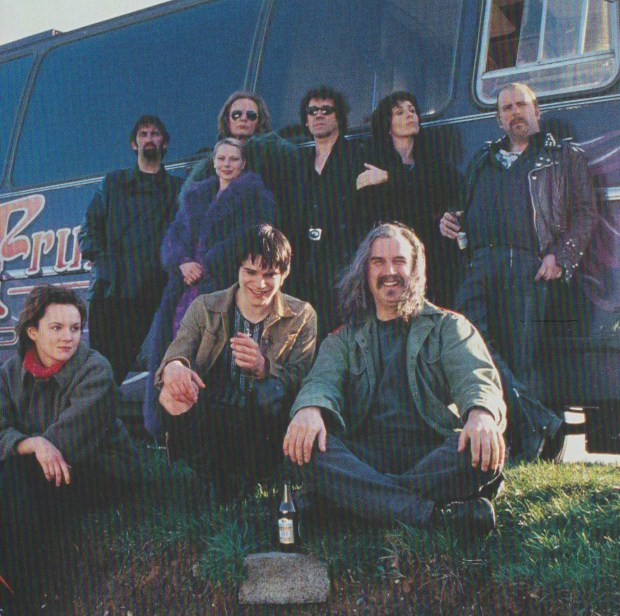
The film Still Crazy chronicled the tale of the fictional band, Strange Fruit. Β The Fruit were led by brothers Brian and Keith Lovell (guitar and lead vocals respectively). Β When Keith died, they carried on with new singer Ray Simms (Bill Nighy). Β The inevitable internal tensions led to the band’s demise. Β However in 1998 there was enough interest to get the band back together — minus Brian, who is assumed to have also died. Β The surprisingly emotional film boasted fine performances from Nighy, Jimmy Nail, Billy Connolly, Timothy Spall and more. Β The key however to any movie about a fictional band is to come up with a soundtrack of original material that sounds like it could be classic. Β Still Crazy accomplished this. Β You wish for Strange Fruit to be a real band, so good are the songs.

The ballad “The Flame Still Burns”, which in the fictional movie was written by bassist Les Wickes for the fallen Keith, is sung by Jimmy Nail in real life. Β (The song was written by the team of Mick Jones, Marti Frederikson, and Chris Difford.) Β This fine song is a perfect example of something that sounds like it must have charted somewhere many years ago. Β In the film, this song is the cause of much tension between Les and Ray, who did not want other band members to sing lead vocals. Β The beautiful thing about Still Crazy is that there is a tremendous amount of history to the band, most of which is not seen on screen, only felt through the actors portraying the memories. Β Jimmy Nail sings another sorrowful ballad, “What Might Have Been”, and does a fine job of it. Β It’s a lovely acoustic song with a little mandolin and another standout performance by Nail. Β He gets a chance to sing an upbeat number with “Bird on a Wire” (not that “Bird on a Wire”). Β This is a darn fine Wilburys-like rock tune.

To be clear, Strange Fruit are not a ballad band even though “The Flame Still Burns” is clearly that. Β Strange Fruit are a rock band, and “All Over the World” is a prototypical set opener. Β Bill Nighy would make a damn fine rock frontman, if he wasn’t too busy being a fine film actor. Β It’s not about the notes he sings but the style in which is he sings them. Β Nighy sounds like a veteran rock singer (and in the film, you believe it 100%). Β The track “Dirty Town” has a nifty little riff reminiscent of “Layla”, but this track sounds more like 80’s Deep Purple, right down to a blazing guitar solo. Β  “Black Moon” verges on heavy metal. Β If you’re wondering why it rocks so hard, it probably because of Michael Lee on drums. Β It’s Purple, Sabbath and Cream all in one. Β Nighy gets to be a heavy metal demigod on “Scream Freedom”, which was one of the funnier scenes in the movie. Β The best Fruit tune might be “Dangerous Things” which plays in the movie like it’s one of their biggest hits. Β This too has Michael Lee on drums, along with bassist Guy Pratt. Β That’s some heavyweight talent, folks.

A movie with Billy Connolly in it is twice as good as a movie without (studies have shown). Β A movie with Connolly singing in it is four times as good. Β The traditional “Stealin'” is a fine fit for the Big Yin and his banjo. Β There is even a great vintage-sounding rock track by Bernie Marsden (ex-Whitesnake) that is plenty of fun (“A Woman Like That”). Β  This is incidental to the main feature, which is the host of Strange Fruit tracks, but a nice inclusion. Β Unfortunately the techno track “Ibiza Theme” doesn’t fit the disc at all and can be safely skipped by most listeners.

Admittedly, the Still Crazy soundtrack is more enjoyable if you have seen the film. Β When I hear “Dangerous Things” I picture things that Nighy as Ray does on stage. Β “The Flame Still Burns” is more powerful when you remember the friction it caused because of petty jealousies. Β  Regardless, these songs were all written and performed by professional musicians, and they do stand up as individual tunes. Β Memorably so.

4/5 stars

scan_20161024-5

#527: Get Glasses

A double feature in cooperation with BoppinsBlog!

GETTING MORE TALE #527: Get Glasses

In 1989, two things happened to me that changed everything.

Upon entering the 12th grade, I realized I was having trouble seeing distance. Β I was taking an OAC level Geography class, but I couldn’t see the text on the overheads. Β A checkup at the eye doctor revealed that I needed glasses. Β At roughly the same time, I got my first real job at a grocery store, and had to cut my long hair. Β Within a matter of months, I had transformed from a long haired rocker to a short haired geek with huge glasses that I dubbed my “welding goggles”.

None of my favourite rock stars looked like me!

There is however a huge precedent for rock and rollers with glasses. Β Most people immediately think of John Lennon, but think back to Rubber Soul. Β Lennon wasn’t wearing his glasses in 1965. Β He could be seen wearing prescription sunglasses, but not until 1967 was he wearing his normal glasses on a regular basis in public. Β The first album cover with a bespectacled Lennon was Sgt. Peppers.

Lennon was inspired to wear his glasses by the original icon, Buddy Holly. Β Buddy’s black rimmed glasses began a trend in America, and that style of frames became known as “Buddy Holly glasses”. Β A young Elton John, who didn’t even need glasses yet, began wearing them just to look like Holly.

Today, there are countless more stars who wear glasses on stage, although many use custom shades. Β Elvis Costello,Β Lisa Loeb,Β Robert Fripp, Ozzy Osbourne, Rivers Cuomo, Peelander Yellow, Weird Al Yankovic, and so on…the list is endless.* Β But who wore them best? Β Certainly not Bono, who could make even the simplest pair of glasses look pompous. Β It’s tempting to say Jerry Garcia, since the glasses just make him look even more like a big teddy bear.

But there can only be one winner, and this is actually an easy choice.

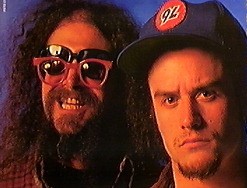
The one artist that wears glasses best is Sir James Martin, ex-of Faith No More. Β For the simple reason that he is the only one who wears two pairs of glasses simultaneously. Β Take that, Bono!

jim

*Keith Richards does not wear glasses. Β Science has shown his eyesight lives forever.Β 


REVIEW: Team America: World Police soundtrack (2004)

Hosted by Vinyl Connection, it’s the inaugural…
LP stack white soundtracks – Version 2

November 1 – November 14

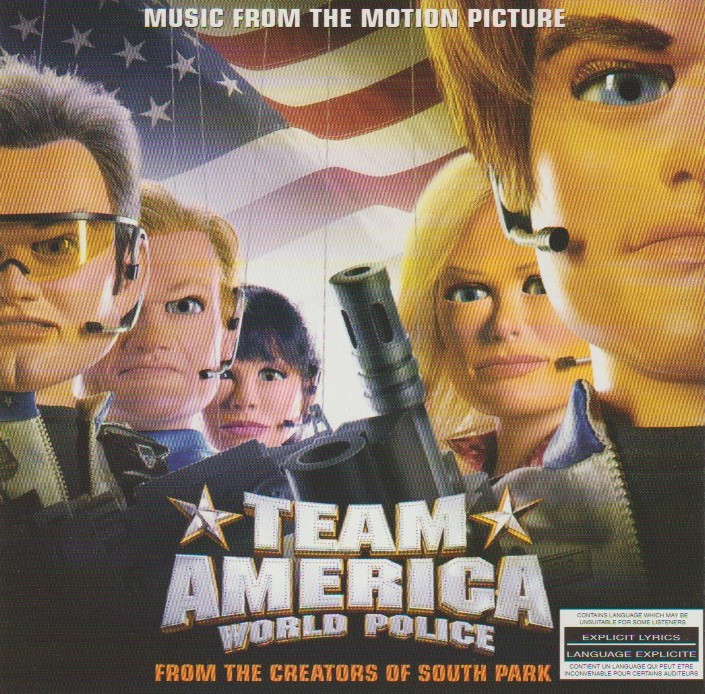
scan_20161013TEAM AMERICA: Β WORLD POLICE – Music from the Motion Picture (2004 Atlantic)

It’s incredible to think that the world is even more screwed up today than it was in 2004. Β Matt Stone and Trey Parker are talentedΒ atΒ both satire and musicals, not to mention the most vulgar of humour. Β Their movie Team America: World Police combined the satire and vulgarity with music, and the kind of vintage puppetry that made Thunderbirds so memorable. Β The sets are intricately detailed miniatures. Β Look at the cobblestones in Paris — they are shaped like little croissants! Β  It’s a triumph, which is all the more amazing considering that there is a scene of puppets shitting on each other.

The soundtrack had to be equally amazing. Β How else could Parker and Stone top the hit song “Now You’re A Man” from the Orgazmo soundtrack?

The answer is simple: Β With a “Fuck Yeah”!

One warning though. Β This soundtrack will make little sense to you unless you’ve at least seen the movie. Β So see the movie – it’s unforgettable, at the very least.

From the fictional musical Lease (a parody of Rent) comes “Everyone Has AIDS”, an uppity singalong number that proves nothing is sacred to Stone and Parker. Β “Everyone has AIDS!” they sing with glee! Β “The Pope has got it, and so do you!” Β The easily offended have already gotten off the bus, but the song isn’t saying anything more than AIDS doesn’t discriminate. Β It doesn’t matter if you’re gay, straight or otherwise. Β Stone and Parker are known for burying messages such as this in their juvenile jokes.

“Freedom Isn’t Free” is the best patriotic country anthem you’ll ever hear. Β “Freedom isn’t free! Β No there’s aΒ hefty fuckin’ fee!” Β The music is a completely serious country ballad, which could have been a Tim McGraw hit. Β The contrast is delightful. Β But that’s just a build up to the main event: Β “America, Fuck Yeah”, the movie’s theme song.

America!
Fuck yeah!
Comin’ again to save the motherfuckin’ day, yeah!
America!
Fuck yeah!
Freedom is the only way, yeah!
Terrorists, your game is through,
‘Cause you now you have to answer to…
America!
Fuck yeah!

You get the idea.

It’s actually a brilliantly cheesy rock theme song, something along the lines ofΒ “Dare” by Stan Bush, from the 1986 Transformers movie soundtrack. Β The only real difference is the use of F-bombs instead of inspirational uplifting cliches.

The terrorist theme music called “Derka Derka” is an interesting accomplishment since it is written to replicate the Star Wars “Cantina Theme”, but fitting a Middle Eastern style. Β It’s unmistakable, and really helped make the scene in the movie. Β The next artist to be lampooned is Aerosmith; rather latter-day BalladSmith. Β “Only A Woman” is clearly intended to be the “I Don’t Want to Miss a Thing” for this album. Β If anything the song highlights how paint-by-numbers those Aerosmith ballads are. Β Granted, Diane Warren wrote “I Don’t Want to Miss a Thing”, but all those Aeroballads are interchangeable.

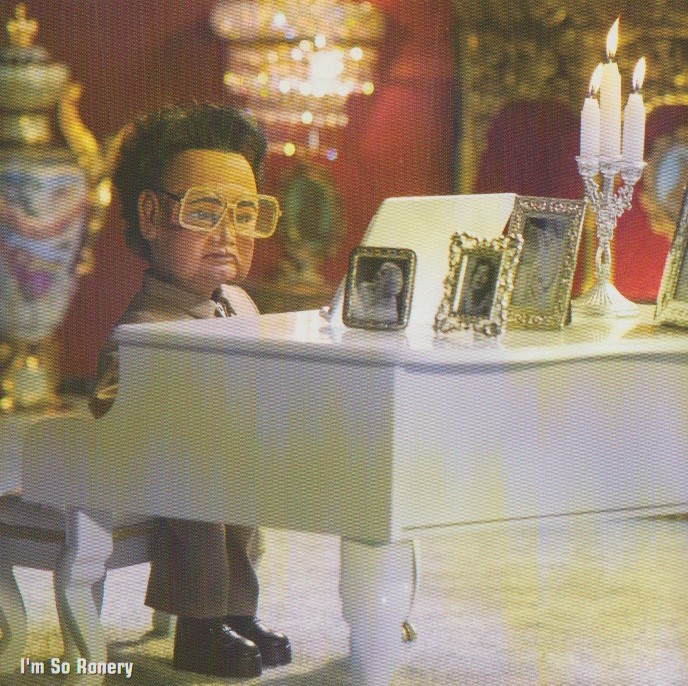
scan_20161013-3Fans of the movie know that the greatest character was Kim Jong Il. Β “I’m So Ronery” reveals the true reasons behind Kim’s evil deeds, provoking the world to the edge of war. Β He’s just lonely. Β “When I change the world maybe they’ll notice me? Β Until then, I’ll just be ronery…” Β (But is this really Kim’s soul motivation? Β See the movie to find out the true answer….)

From there we go to the “Bummer Remix” of “America, Fuck Yeah”. Β It is a somber retelling of the song, indicating that we at at the lowest point in the story. Β The “all hope is gone” moment. Β Can our puppet heroes survive? Β (See the movie!) Β The somber music continues with the ballad “The End of an Act”, which does nothing but trash Michael Bay. Β It is his style of film, after all, that Team America is a parody of. Β “All I’m trying to say is Pearl Harbor sucked…and I miss you.” Β Parker and Stone go as far as to question why Bay is allowed to keep making movies. Β (The answer, guys, is that his movies make a butt load of money. Β Why they make this kind of cashΒ is because “BOOM”, “FOOSH”, “EXPLODE”!)

Any good action movie needs a montage! Β That’s what the song “Montage” is all about! Β Trey Parker sings, “Every shot shows a little improvement; to show it all would take too long!” Β And now you know what a montage is. Β “Even Rocky had a montage!” continues the song, assuring us of the artistic validity of the technique. Β The montage leads us to “North Korean Melody”, a silly nonsense song that pokes fun at certain cliches about Korean accents.

The CD has two distinct sections: Β songs, and the score. Β The songs are all relatively brief and comedic, while the score is a full-fledged action movie soundtrack with full orchestra. Β Whether it be chases, romance or villainy, there is a taste of each in the score. Β The final track “Mount, Rush, More” is a great example of tension-filled soundtrack excellence. Β Chances are that 90% of buyers picked up the CD for the songs, not the score. Β The songs themselves are just shy of 19 minutes of music. Β The score is over 28. Β It is perhaps a little devious that this is not indicated on the back (not even track lengths). Β Music fans of broad tastes won’t mind, but they are probably in a small minority. Β The score will especially be of interest to fans of composerΒ Harry Gregson-Williams, who has done the soundtracks to award winning films such as The Martian and all the Shrek movies. Β They will be pleased to know thatΒ Gregson-Williams wrote some excellent material for Team America.

As a listening experience, you may as well consider this like listening to two albums. Β Or perhaps an EP and an album. Β One minute you’re pissing your pants at “Montage”, the next you’re knee-deep in a serious action movie score. Β It’s a little uneven, so perhaps you’d enjoy it better if you put the tracks in a different order, with the score interspersed. Β Give it a try!

3.5/5 stars

scan_20161013-2

REVIEW: Trailer Park Boys – Out of the Park: Europe (2016)

tpb-ootp-4TRAILER PARK BOYSΒ – Out of the Park: Europe (2016 Netflix)

It’s a whole new series, and it’s not what you expect. Β When Ricky, Julian and Bubbles head off to Europe for what they think is a paid vacation, they are in for many unpleasant surprises. Β Randy and Lahey may be far behind them in Canada, but in London England they are met by a different kind ofΒ adversary. Β Mayhue is their guide, aΒ Swearnet representative, and taskmaster (played by Guns N’ Roses stage manager Tom Mayhue). Β The boys are going to be driving around Europe in a rock-star class tour bus, but given nothing to eat, drink, smoke, or spend. Β The only way to make money is to complete special tasks or missions assigned by Swearnet. Β (If you do the math, in real life Swearnet are writer/actors Robb Wells, J.P. Tremblay, and Mike Smith: the guys who play Ricky, Julian and Bubbles. Β They are essentially being given missions by their real-life alter-egos.)

Previous Trailer Park Boys offerings have come in the form of stand-up comedy shows, and of course the classic TV series that started it all. Β The original series was designed as a “mockumentary” reality show, as a film crew followed around repeat offender Julian and his gang of criminals. Β This new spinoff series takes inspiration from another reality TV program, the Amazing Race.

In each city (of which they visit seven), they are given specific tasks to earn specific amounts of money. Β They soon learn it’s all about the fine print. Β The devil is in the details in London with these deceptively simple pit stops: Β Get comedian Noel Fielding’s autograph ($25), drink six complementary draught at the Swan pub and hold your piss for six hours ($25), reshoot the cover of the Beatles’ Abbey RoadΒ ($25, or $1000 if you can get a living Beatle in the picture), and steal the Queen’s undies from Buckingham Palace ($1000). Β It quickly becomes apparent that Ricky has never even heard of the Beatles.

tpb-ootp-2

Though the show is scripted, setting it on the streets of Europe does give it a “reality TV” feel similar to the Amazing Race. Β Bystanders stop to take pictures of the three weird looking Canadians, often up to no good. Β After London, it’s off to Berlin. Β Communication becomes a problem in Germany. Β Bubbles orders what he thinks is going to be a hamburger, but turns out to be an octopus burger (still delicious, according to Bubbles). Β Next stop: Β Copenhagen, Denmark. Β Bubbles is horrified to find that one of that day’s tasks ($1000) is to step in the ring as his wresting character Green Bastard, with former heavyweight boxing champion Brian Neilson. Β Only two ways to win: Β Give him two shots in the nuts, or last three rounds. Β Good fuckin’ luck.

The boys get arrested in Oslo, Norway. Β All they had to do was give a troll a three second atomic hover wedgie ($25), “acquire” a boat and take it around the fjords ($25), and convince actor Fridtjov SΓ₯heim (from the Netflix series Lilyhammer in a cross promotion) to join them for drinks ($1000). Stockholm has its own offerings, two of which are food based: FinishΒ the “Belly Buster Meatball Meal” at a local eateryΒ without losing their lunch, and follow it up with a can of surstrΓΆmming for dessert. According to wikipedia: “When a can of surstrΓΆmming is opened, the contents release a strong and sometimes overwhelming odour. The dish is ordinarily eaten outdoors. According to a Japanese study, a newly opened can of surstrΓΆmming has one of the most putrid food smells in the world, even more so than similarly fermented fish dishes such as the Korean Hongeohoe or Japanese Kusaya.” I don’t think anything in this scene was staged.

tpb-ootp-1

Being in Europe allowed the boys to meet some NHL heroes from the past. Ricky is tasked toΒ stop one shot by Peter Forsberg (two NHL Stanley Cups) in a five shot shootout ($500). In Helsinki Finland, they are given a relatively simple task: Sing in a karaoke cab, and not talk about hockey ($25). It gets complicated when five-time Cup winner Esa Tikkanen steps into their cab.

The Trailer Park Boys had to end their tour in Amsterdam for obvious reasons. It was a lifelong dream of Ricky’s to go there, and that warrants a two-part episode to finish the season. Humiliation after humiliation, it was a long hard road to get to Amsterdam. It is a delight to see Ricky happy as a kid in a candy store when they finally arrive. Everything seems to be going well; they even run into an old friend from Canada. The final challenge enables Bubbles to play one of his own songs with 2/3rds of Crosby Stills & Nash. Steven Stills wins Best Line of the Series with the simple, “They’re Canadians. They don’t know any better.”

A second Trailer Park Boys series could have been a misstep, especially considering the ill-executed Drunk and On Drugs Happy Funtime Hour. Β Instead, this year fans received both the quality-driven Season 10 of the original series, and now Out of the Park: Europe. Β With double the amount of Trailer Park Boys hilarity, Netflix hit an inside-the-park home run in 2016. Β It is made clear by the end that this is not the last time Ricky, Julian and Bubbles will be Out of the Park. Β Where they go next, only Swearnet knows.

4.5/5 stars

#526: Location, Location, Location

GETTING MORE TALEΒ #526: Location, Location, Location

I worked at many Record Store locations over the years, often temporarily for training and managing. Β Some of them I spent a few days at, others were several weeks or months in total. Β Each one had its own flavour and clientele.Β  While experiences and mileage may vary, here are some memories of some favourite locations (all in Ontario, Canada).


cambridge1. Cambridge

The store in Cambridge was ourΒ first to carry movies, initially in VHS format.Β  It was a lot of fun working there from time to time, buying and selling used movies.Β  There was always something I wanted for my collection, and it broke up the monotony of seeing nothing but CDs every day.

Cambridge was also interesting because we used to get a number of people coming in just to ask where the strip club was. Β “It used to be around here!” Β I don’t know why the dudes looking for the strip club kept stopping in the Record Store (as opposed to the Tim Hortons or a gas station or anywhere else), but they did indeed used to ask.

Some of the customers in CambridgeΒ were…well, let’s just say they wereΒ not all our best andΒ brightest.Β  T-Rev managed that store, and I took over temporarily when he was on road trips elsewhere setting up new stores.Β  The customers there wore me down more than anywhere else.Β  Especially when they came in to sell, which was frequently.Β  Cambridge bought a lot of stock.Β  If the customer wasn’t happy with my offer, they’d ask when the β€œregular guy” would be back.Β  Maddening since I was more generous than a lot of other folks.

There was one customer in Cambridge who hated selling to me, he always asked where “the regular guy” was. Β He asked my name and I told him it was Sanchez. Β When T-Rev came back, we had a laugh over the employeeΒ named “Sanchez” who was apparently low-balling thisΒ customer for his dance CDs.


hamilton2. Hamilton

The store I worked at in Hamilton was pretty quiet most of the time.Β  There was a lunch time rush when kids from the nearby highschool would come in to listen to and occasionally buy CDs.Β  Given Steeltown’s reputation, I was pleasantly surprised to find the kids I dealt with to be polite and friendly, more than I was used to seeing.Β  The adults weren’t always so friendly, but no more or less than any of the other stores I worked in. Β Hamilton was a shitty place to drive (confusingΒ one-way streets), but I didn’t mind working there at all.


kitchener3. Kitchener

I worked in three different stores in the Kitchener area.Β  One of the other guys there used to refer to Kitchener as a β€œham & egger” town, a phrase I never heard before.Β  A lot of blue collar customers.Β  It was still a step up from Cambridge, depending on which Kitchener location I was working in.

I’ve said many times that my favourite store was the original one, in a small mall in Kitchener.Β  It was our only mall store ever.Β  It was a special place to work.Β  It was tiny and compact.Β  It could get really busy on the weekends.Β  There were a lot of regular customers, more than I remember elsewhere, probably due to the fact we were in a mall.Β  There was a familiarity – I knew them, and they knew me.Β  When I was eventually given a larger store elsewhere to manager, I missed the faces I would see on a regular basis at the mall.

I also missed the β€œunique” individuals you’d meet at the mall store.Β  Malls have a whole ecosystem of life forms, unlike others in the outside world.Β  There was Johnny Walker,Β so named because every day he would walk the circuit around the mall, talking to himself, all day.Β  One day, something peculiar happened. Β He came in, stopped talking to himself, and bought a tape. Β He paid for his cassette and then resumed walking and talking to himself again. Β I only saw that happen once. Β There was Butts, the guy who would dig through ashtrays looking for cigarette butts. Β Let’s not forget Trevor the Security Guard, andΒ the drunks at the restaurant next door.Β  It was a blast!Β  I didn’t care for the mallrats, but they were a minor annoyance.


oakville4. Oakville

I did not like working on Oakville, as was discussed in Record Store Tales Part 16: Travelling Man.Β  Many of those customers were snooty; just too good for you.Β  They felt entitled to park in the fire lane, because they were more important than you.Β  Read the Oakville tale for theΒ misery that was working there.


mississauga

5. Mississauga

More than any other location, I may have resented Mississauga the most.Β  It was a shit location.Β  There was nothing of any value around.Β  There was a health products store, but nowhere to buy a snack or a lunch.Β  There was no foot traffic.Β  Across the street was an empty field.Β  It was a dead store from the day it opened.Β  I invested myself deeply in my work. Β There are many things in life that can crush your soul.Β  One of them is working hard at something (training employees, helping set up a store) and seeing it come up to nothing.Β  That was Mississauga. Β In the used CD business, you depend on customers bringing in good stuff for you to re-sell.Β  Mississauga provided very little good stuff.


There were more, all with tales of their own. Β  These however were five of the most memorable, each for its own reasons. Β While a change of scenery is nice once in a while, there is nothing better than working in a location you love.


REVIEW: Dixie Dregs – Night of the Living Dregs (1979)

Dedicated to my dear friend Uncle Meat. Β This CD was purchased off Joe “Big Nose” at the Waterloo branch of the Record Store at which I used to work.


scan_20161009DIXIE DREGS – Night of the Living Dregs (1979 Polydor)

If they could bottle genius, distill it down to its essence, sell it and serve it at a party…then the Dixie Dregs are the music that should be played at that party.

The Dregs are undefinable. Β Just when you think you have them nailed down to a progressive jazz-rock hybrid, they go classical on you, or full-bluegrass mode.Β  Their instrumental chops are incomparable, while still managing to deliver such basic song pleasures such as “melody”, “hooks” and “grooves”. Β  These melodies are usually delivered at the hands of Steve Morse (guitar) or Allen Sloan (violin). Β Listeners familiar with with the guitar stylings of Morse will have an idea of the kind of songs and arrangements he writes: Β challenging, but rewarding.

Night of the Living Dregs is half studio, half live. Β The first side, from the cleverly-titled “Punk Sandwich” to the ballad “Long Slow Distance” are carefully crafted studio recordings, each different from the last. Β While each track is unique and showcases different sides of the band, it is “Long Slow Distance” that really shines. Β This soft work captures so much of what Morse does well. Β There are jazzy licks embedded within melodies, and so many different textures of guitar.

The live side is recorded nice and clean without a lot of crowd noise. Β “Night of the Living Dregs” is an upbeat little number, featuring some absolutely jaw-dropping melodic bass playing from Andy West. Β This is also where drummer extraordinaire Rod Morgenstein comes up to the plate. Β  His playing is so multifaceted and you can hear it on this track. Β The most fun can be found on “The Bash”, a full-on bluegrass ho-down, chicken-pickin’ full steam ahead. Β Any jaws left on the floor are hopefully picked up so they don’t miss “Leprechaun Promenade”. Β There are celtic flavours thanks to the violin, and the song is comparable to Jethro Tull. Β Then suddenly it turns into Frankenstein’s monster with some eerie keyboards (Mark Parrish). Β This is complex stuff, not for the timid!

The whole experience ends on “Patchwork”, which works as a description of the album at large. Β It is a patchwork of style and feels, which create the whole. Β The Dixie Dregs are a challenging listen, but ultimately rewarding. Β There is plenty of joy in the grooves. Β The band does not play anything simple or easy. Β Everything is a little bit of smarty-pants music, but for the listening, this is a delight.

4/5 stars

scan_20161009-2

REVIEW: Journey – Time3 (1992 box set)

scan_20161015-2JOURNEY –Β Time3Β (1992 Sony 3 CD box set)

Very few box sets satisfy the way that Journey’s Time3 satisfies. Β When it was released in 1992, Journey wasn’t even a functioning entity anymore. Β Sony’s box set still represents the kind of care and attention to detail that makes for an extraordinary listen. Β It is arranged (mostly) chronologically with ample rare and unreleased material. Β What is most remarkable is how great this rare and unreleased material is. Β Aerosmith did a similar looking box set in 1992 as well (Pandora’s Box), but their set isn’t as steady a listen as Time3 is. Β Time3‘s ample wealth of worthwhile rarities rank it easily as the superior set.

From start to bitter 80’s breakup, every Journey member from 1975 to 1986 is included. Β George Tickner, Aynsley Dunbar, Robert Fleischman, Randy Jackson, Mike Baird and anybody else you may not have known were in Journey are represented inΒ this box. Β There are ample liner notes and photos explaining the roots and branches. Β (Humorously the notes claim the early Journey instrumental “Nickel & Dime” may have been the prototype that Rush ripped off for “Tom Sawyer”.) Β Valuable early rarities include the unreleased jazz rock number “Cookie Duster” and an excellent vocal track called “For You” recordedΒ Β withΒ Robert Fleischman singing. Β Fleischman might be best known as the original singer for Vinnie Vincent’s Invasion a decade later, but in Journey he turned in a pretty powerful pop rock song. Β This was just before Steve Perry joined the band as its first full-time lead singer. Β Keyboardist Gregg Rolie took care of the vocals before Perry joined, in addition to performing several smoking organ solos included herein.

There is a distinct change between the early progressive jam rock tracks and “For You”. Β When they hired on a lead singer, it was with the intention to get a big break, and Steve Perry wasΒ the final ingredient. Β With Perry they recorded brilliant classics such asΒ “Patiently”, “Anytime” andΒ the unforgettable “Wheel in the Sky”, which unfortunately is only included here as a live version. Β Indeed, the Journey box set’s only weakness is a substitution of (non-rare) live versions for studio originals. Β “Lights” is another such substitution.

Just as the band were making this prog-to-pop transition, drummer Aynsley Dunbar left. Β His style was more progressive and frankly too highbrowΒ for the direction Journey were going. Β He was replaced by another total pro, the feel-oriented Steve Smith, a jazzbo at heart who can play R&B like nobody’s business. Β “Too Late” from 1979’s Evolution is a perfect example of what he did to the Journey sound, as things simplified.

scan_20161015-4

With Smith behind the kit, the hits kept pouring in. Β “Lovin’ Touchin’ Squeezin'” (also included live), “Any Way You Want It”, “Line of Fire” and many more burned up speakers across America. Β The band very quickly went from “point A” to “point B”, but also with several exceptional looks backward. Β Some of these lesser known gems include “Little Girl” from a rare Journey soundtrack album called Dream, After Dream done for the Japanese market. Β There is also the live “Dixie Highway” from Captured that shows off some serious instrumentalΒ chops. Β A rare highlight is the soulful and unreleased cover of “Good Times”, with full-on horn section, from 1978. Β It’s one of the songs that make it worth buying a box set like this.

Rolie left afterΒ Dream, After DreamΒ and did not appear on the one new Journey song on Captured: Β “The Party’s Over (Hopelessly in Love)”. Β This brilliant pop rocker pointed the way towards the next era of Journey. Β From The Babys came new keyboardist (and sometimes guitarist and singer) Jonathan Cain. Β Cain forever brought Journey into the 1980’s, with modern keyboard accompaniment and serious writing abilities. Β He has since become an indisposable member of the band, as important as founding guitarist Neal Schon himself. Β Jon Cain’s firstΒ was the Escape album, which has sold nine million copies to date. Β Not a bad little debut. Β With “Don’t Stop Believin'” , “Stone in Love” and the smash ballad “Open Arms”, Journey ascended to the top of the mountain. Β These tracks are all included as their studio originals.

There are a number of notable and great rarities from this period included inΒ Time3. Β “Natural Thing” was the soul-laden B-side to “Don’t Stop Believin'”, but feast your earsΒ upon “La Raza Del Sol”, which snuck out as the progressive flipside of “Still They Ride”. Β This blazingly recalls the arrangements of the early years with an unusually contemoplativeΒ lyric. Β Check out Schon’s flamenco guitar solo. Β There is the understated and brilliant rocker “Only Solutions”, from the 1982 Tron soundtrack. Β These are valuable songs, that any Journey fan should enjoy completely. Β Moving forward, “All That Really Matters” is a synthy demo with Jon Cain on lead vocals. Β It doesn’t sound like Journey, but Cain fans will find it interesting. Β Two more soundtrack songs are indispensable: Β “Only the Young” from Vision Quest, and “Ask the Lonely” from Two of a Kind (both 1983). Β Each song was significant enough to include on 1988’s Greatest Hits, so fans are well acquainted with both. Β It’s incredible to think that Journey had songs of this quality to give to soundtracks.

scan_20161015-5

Towards the end, as bands often do, Journey began falling apart. Β Steve Perry had a hit solo debut Street Talk (1984) and he returned to Journey more confident, imposing a soul/R&B direction upon the band. Β Steve Smith and founding bassist Ross Valory were out. Β Randy Jackson and Mike Baird were in. Β Raised on Radio took forever to record andΒ underwhelmed fans upon reception. Β A live version of “I’ll Be Alright Without You” with the new members indicates that Journey had sanded off the rough edges.

Even at the end, there were still interesting happenings. Β The liner notes reveal that even as the band was ending, they were winning awards. Β Journey performed at the 1987 Bay Area Music Awards with a different singer — Michael Bolton. Β One has to wonder where that could have gone. Β The last music on this set chronologically comes in the shape ofΒ two unreleased instrumentals called “With a Tear” and “Into Your Arms”. Β They were recorded in 1986 but not used for Raised on Radio, and so they were finished in 1992 by Schon and Cain for this box set. Β Sadly these instrumentals are better than most of the tracks on Raised on Radio. Β One is a ballad, and one is a rocker, but both are exceptional. Β Journey started life with instrumentals, and so it’s fitting that Schon and Cain polished off the box set with a couple as well.

scan_20161015

This box set was reissued a number of times, but for the money you can’t beat the original 1992 printing with the long box and large booklet. Β The liner notes are ample but the rare photos may even top them. Β From the earliest days there are pictures of the band with original guitarist George Tickner and drummer Prairie Prince. Β Prince was invited to join permanently, but chose to join the Tubes instead, a band he found more creative. Β He was replaced by Aynsley Dunbar who recorded the first LP. Β Also pictured within are some truly impressive hair styles, clothes, and moustaches.

With tracks this strong from start to finish, great packaging, and such a wealth of rare material, it seemsΒ Time3 should be an easy 5/5 stars. Β However, that niggling issue of live tracks (particularly “Wheel in the Sky”) replacing studio cuts is really devious. Β It’s unnecessary. Β It all but forces casual buyers to also own Greatest Hits for the studio versions. Β It seems very calculated.

Otherwise, proceed.

4.5/5 stars

scan_20161015-3


REVIEW: Van Halen – LIVE: Right here, right now. (1993, plus “Jump” live single)

scan_20160929VAN HALEN –Β LIVE: Right here, right now. (1993 Warner Bros, plus “Jump” live single)

The summer of ’93 was the “Summer of Live Albums” here at LeBrain HQ. Β There were many live discs out to digest, severalΒ of them from “must-purchase” bands. Β Most notable was Ozzy’s Live & Loud which came in a metal speaker grille cover. Β Iron Maiden also put out A Real Live One, the first of a two-album live set. Β And then there was a big’un: Β Van Halen’s first live album, the double Right here, right now.

What did all three releases have in common? Β They were all boring duds.

Sad but true. Β In Van Halen’s case, the disappointment was acute. Β Sure it was “Van Hagar” and not the “real deal” if you believe in that Β sort of thing, but that wasn’t the issue. Β There are a few problems withΒ Right here, right nowΒ but none of them have to do with the singer. Β The setlist is a real drag, with way too much material from For Unlawful Carnal Knowledge. Β 10 of the 11 songs from F.U.C.K. are on this album! Β (“The Dream is Over” being the only missing song — you hadΒ to buy this on VHS to get it!) Β A F.U.C.K. song opens the set, another closes the set…it’s too much, especially since F.U.C.K. was (one of?) the weakest Halen albums to date.

Issue #2 is perhaps a bit silly, since Van Halen shows are known for their solos: but this album has too many solos. Β Eddie’s aside; he always going to blow your mind. Β Unfortunately, Michael Anthony and Alex Van Halen are, quite frankly, boring soloists. Β Did “Ultra Bass” need to be five minutes long? Β It’s best when Michael’s just playing, but as fans know his bass solo is half notes, and half noise. Β Immediately after that is “Pleasure Dome/Drum Solo”, nine whole minutes. Β The instrumental “Pleasure Dome” section is best since it resembles a song (a driving hard one at that).

The final major issue is one we didn’t even know about until recently. Β Sammy Hagar revealed in his book Red that this album was heavily overdubbed afterwards, and I wouldn’t doubt it. Β (Hagar claims that he re-sang the entire thingΒ over again in the studio.) Β There was always something underneath the surface that didn’t feel right about this album, and that could be it right there. Β Right here, right nowΒ feels dulled, perhaps by too much studio polish after the fact.

It’s not all bad of course, how could it be? Β “Poundcake” and “Judgement Day” start it off strongly. Β Then they went and dropped a ballad (“When It’s Love”) and a shitty song (“Spanked”), and all momentum is stopped. Β The duo of “You Really Got Me” and “Cabo Wabo” are pretty damn great though. Β There are a couple Hagar solo tracks in set which add some spice to the mix. Β The acoustic ballad “Give to Live” is just Sammy alone, but “One Way to Rock” is the whole ass-kickin’ band. Β Of all the Hagar tracks the band has played live, “One Way to Rock” sounds most natural as a Van Halen song. Β The final surprise is “Won’t Get Fooled Again”, which Eddie does not play keyboards on. Β Instead he mimics Pete Townsend’s synthesizer part with his guitar. Β Who purists will hate Sammy’s take on it, but fuck it. Β It’s a pretty damn good version of a hard to cover classic.

There are a couple other decent tracks to be had. Β German and Japanese versions contain two bonus tracks: Β “Mine All Mine” (from the OU812 tour) and another Hagar track, “Eagles Fly”. Β They can also be found on the “Jump” live single. Β Unlike much of the rest of the album “Mine All Mine” has some bite to it. Β It’s a great example of synthesizer working well in a hard rock song. Β (Unfortunately it fades out early.) Β As for “Eagles Fly”, this is a song Sammy played acoustic on the occasions he didn’t play “Give to Live”. Β Although it was played less, “Eagles Fly” edges out the other just slightly by a nose. Β These two bonus tracks are worth tracking down the single for, or an import version of the album.

I traded up my original copy ofΒ LIVE: Right here, right now for a US import that came in a cardboard digipack. Β Although it has no bonus tracks, it does have some bonus photos, which is still pretty cool.

It’s not fun to say any Van Halen album isn’t essential, but Right here, right now is not essential.

2/5 stars


COMPLETE VAN HALEN REVIEW SERIES:

VAN HALEN – Zero (1977 Gene Simmons demo bootleg)
VAN HALEN – Van Halen (1978 Warner)
VAN HALEN – Van Halen II (1979 Warner)
VAN HALEN – Women and Children First (1980 Warner)
VAN HALEN – Fair Warning (1981 Warner)
VAN HALEN – Diver Down (1982 Warner)
VAN HALEN – 1984 (1984 Warner)
VAN HALEN – 5150 (1986 Warner Bros.)
VAN HALEN – OU812 (1988 Warner)
VAN HALEN – For Unlawful Carnal Knowledge (1991)
VAN HALEN – Balance (1995 Warner – Japanese version included)
VAN HALEN – Best Of Volume I (1996 Warner)
VAN HALEN – 3 (Collectors’ tin 1998)
VAN HALEN – The Best of Both Worlds (2005 Warner)
VAN HALEN – A Different Kind of Truth (2012)
VAN HALEN – Tokyo Dome Live in Concert (2015)
VAN HALEN – Tokyo Dome Live in Concert (2015) Review by Tommy Morais

+

VAN HALEN – β€œBest of Both Worlds” (1986 Warner 7β€³ single)
VAN HALEN – β€œCan’t Get This Stuff No More” / β€œMe Wise Magic” (1996 Warner promo singles)
VAN HALEN – β€œCan’t Stop Loving You” (Parts 1 & 2, inc. collector’s tin)
VAN HALEN – β€œRight Now” (1992 cassette single, Warner)
VAN HALEN vs. JOHN LENNON – β€œImagine A Jump” mashup by β€œMighty Mike”
RECORD STORE TALES Part 186: Β The Van Halen Tin


#525: Best Hats in Rock

GETTING MORE TALEΒ #525: Best Hats in Rock

With all the head-banging going on, it’s no surprise that the majority of rockers do not wear hats on stage.Β  The flailing around in musical ecstasy means that hats don’t stay on top for long.Β  Also, with those hot stage lights beating down, nobody needs to preserve their body heat with a hat.

Yet some rockers have managed to make hats a trademark.Β  Let’s have a look at five of the best.*


ament

5.Β Jeff Ament’s whatever hat

During the Ten period, Pearl Jam bassist Jeff Ament used to sport some cool, huge hats.Β  We have no idea what you call these hats, but there is no denying their 90’s cool-ness.Β  If I had long hair again, I’d want one of these hats.

blackmore

4. Ritchie Blackmore’s pilgrim hat

Blackmore is well known for his anachronistic mixture of time periods.Β  Playing medieval music with electric guitars?Β  Sure, why not.Β  We don’t know why Blackmore wants to look like a passenger on the Mayflower, but it does not matter.Β  The hat has become iconic, though not as iconic as…

lemmy

3. Lemmy Kilmister’s assortment of Motorhats

God bless Lemmy, for he had a fine collection of headgear, usually emblazoned with skulls, crossbones, and World War II symbology.Β  Lemmy may not have been a fashion icon, but he did own some pretty cool hats.

johnson

2. Brian Johnson’s newsboy hat

This one is near and dear to my heart.Β  Brian’s hat was to cover a receding hairline, but I had one just like it.Β  It was perfect for keeping a tangled mess of hair under cover.Β  Best of all, I could use it as a β€œhair mold”.Β  I would comb my hair in the morning, tuck it under the hat to β€œset” it, and an hour later it would come out looking perfect!

slash

1. Slash’s top hat

At LeBrain HQ, we think Slash’s hat has become the most iconic rock and roll piece of headgear.Β  One look at that hat, and you automatically know who is underneath it.Β  The fact that Slash hid his face behind curtains of hair meant that fans had to recognize him in other ways.Β  That’s where the hat comes in!Β  Even if you wouldn’t recognize Slash’s face in a crowd, it’s a guarantee that you know his hat.


Honorable mentions:

Kim Mitchell’s OPP hat

Tom Morello’s assorted baseball hats

Mick Mars’ skull hat


What are your favourite hats in rock?


*Not including bandanas or hair pieces