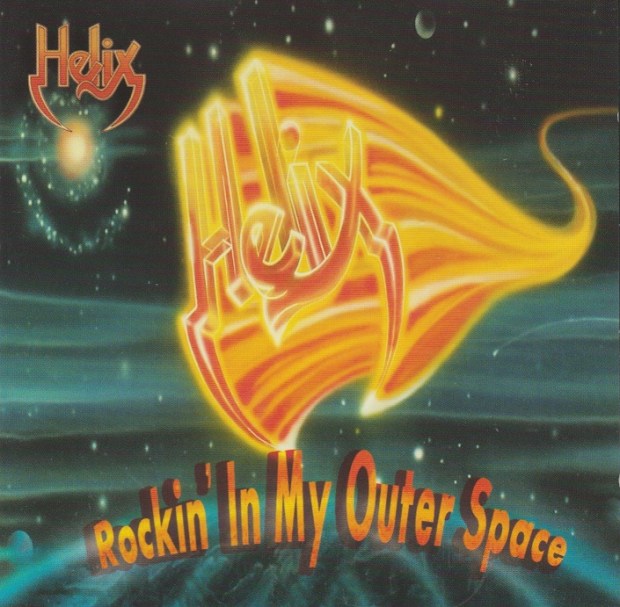
This album was a long time coming. The last “true” Helix studio album (eg: not live, greatest hits or previously unreleased songs) was the excellent It’s A Business Doing Pleasure, twelve years previous to this one. A lot happened in those twelve years, including member changes, management and record company splits, and even a Brian Vollmer solo album (When Pigs Fly). That Helix came out with an album this good with no warning was a pleasant surprise.
Almost every song here is quality stuff, with only the instrumental opener “Space Junk” and the jokey closer “Sunny Summer Daze” not fitting in with the serious rocking going on here. A couple of these recordings had previously appeared on Vollmer’s solo CD (with Brian Doerner on drums), but this sounds more like a proper Helix album. The title track features a killer chorus (reminded me of “Rock You” a bit) with those recognizable Helix backing vocals. It’s also the most “party” of all the new songs, some of them being a little darker. Glen “Archie” Gamble (drums) utilizes some interesting cymbal work, a little different from what you usually hear on a Helix record. His playing gives this version of Helix a different rhythm.
“Six Feet Underground” has some nice acoustic work, and is extremely catchy. “Panic” has some irresistible vocals. “It’s Hard To Feel the Sunshine When Your Heart is Filled With Rain” might have an overly long title, but the song is amazing, as heard live in concert. A wicked harmonica solo fills the spot with a guitar solo might normally fit. “The Ballad Of Sam & Mary” is a jokey lyric as Helix have done before, but with some serious kick behind it. (Listen for a cameo by Brian’s wife Lynda Vollmer.) It’s only when you get to the closer with its Hawiian guitar that you feel like the album just hit a speedbump. The final track’s saving grace is a guest appearance by former member “Doctor” Doerner on guitar.
This album represented a muscular return for Helix, one that kicked off a stream of new Helix records. The band seemed revitalized even as lineups changed, as they continued to follow through with more quality rock and roll. Rockin’ in My Outer Space is a pleasure for fans because it’s different. This is not party music. There are audible dark clouds and angry riffs. The changes in heavy metal over the previous decade are obvious here. The guitars are chunkier and dirtier, and no song has a party-hardy chorus like the days of old, though the title track comes close. Helix are known for a certain brand of rock, and it’s nice when they choose to stretch out.
Fear not Helix fans. Brian Vollmer and his gang of little-known but excellent players did not disappoint when they finally decided to release a new album under the Helix Band banner. Aside from the first and last tracks, this is one you’ll be playing all the way through.
And heck, you get used to the the first and last tracks after a while.
4/5 stars
Bonus: In 2005, Helix returned to Sweden to play Sweden Rock. iTunes have one song from their set available for download: “Rock You” This track features the short-lived but very cool six-piece lineup of Brian Vollmer, Archie Gamble, Jeff Fountain (bass), Jim Lawson (guitar), Rainer Wiechmann (guitar and producer) and Cindy Wiechmann (vocals and other instruments). This is the version of Helix that supported this album, and fortunately it was captured live. Check it out for an idea of what this great lineup sounded like live.
THE GLORIOUS SONS – Shapeless Art(2013 Black Box EP)
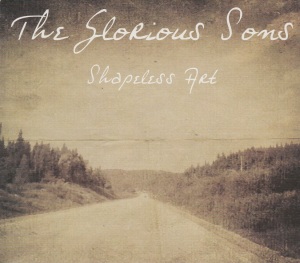
There has been a wave of exciting new bands from Ontario Canada in the last several years. The Arkells (Hamilton), July Talk (Toronto), The Standstills (Oshawa), Monster Truck (Hamilton) and The Glorious Sons (Kingston) have been leading the charge on radio. Each band is unique and unlike the others. It is hard to pick a favourite, but The Glorious Sons truly are something special. Their debut EP showcased secret weapon, lead singer Brett Emmons. Rarely do you come across such a genuinely soulful rock singer from the snowy climbs of Ontario. Instead Emmons sounds like he probably hailed from Mississippi or Louisiana. He has enviable range and power, all substance with plenty of style.
The Glorious Sons’ debut EP, Shapeless Art, was mixed by fellow countryman Gordie Johnson (Big Sugar, Grady)*. Johnson has a blues pedigree and the sheen he adds to the sonics is the cherry on top of some excellent songs. The first two tracks are now rock radio staples: “White Noise” and “Mama”. These are different mixes than the ones released on debut LP The Union.The familiar crashing and bashing of “White Noise” is welcome any time any day. You can’t help but feel recharged after one listen. “Mama” sounds like the deep south in the middle of summer. It is definitely meant for good times.
The other three songs are unique to the EP. Title track “Shapeless Art” sprints along with gently picked clean guitars instead of crunchy chords. It has power, drama and catchy “whoo hoo hoo” backing vocals. “Ruby” on the other hand builds slowly from a somber piano base. By the end it’s an absolute party. You can picture the crowd jumping up and down singing along, until it feedbacks to an ending. The centerpiece though is “Baby”, a re-recording of an old music video they made independently. Where the music video was vocalized by Jay Emmons, Brett sings it with him on the EP version. It finally sounds fully realized, probably recorded, full power extracted and concentrated. With “Baby” now sounding armed and ready to go, the Shapeless Art EP is complete and one of the most exciting releases of its kind in many moons.
“Baby” original music video version
Whether you check out this fabulous EP or The Union LP, or their brand new single “Kill the Lights”, do what you have to do to get this band in your ears. You won’t mind if they move in right to your brain, because listening to the Glorious Sons is an absolute pleasure. We look forward to their next album due some time in 2017. If the pattern holds true, they will be hitting the radio again with another steady stream of quality singles. May as well get ready for stocking up this winter on old Glorious Sons. Shapeless Art would be a recommended first purchase.
4.5/5 stars
*Johnson has lived in Windsor Ontario, as well as Alberta, Winnipeg and Texas.
CHECK OUT THE GLORIOUS SONS’ NEW SINGLE, “KILL THE LIGHTS”!
Musical episodes and American Dad go together like blue suits and Stars n’ Stripes lapel pins. Cee-Lo Green wasn’t the first musician to appear on the show, but he was the first to appear both animated, and live action!* Cee-Lo hosted the opening episode for Season 8, “Hot Water”. “My name? Not important,” he begins. What matters is this “cautionary tale” that “may affect your next hot tub purchase.”
Hot tubs? Indeed, Cee-Lo also voices an evil, murderous hot tub. It sings songs of temptation to Stan Smith, who is becoming obsessed with “soaking” in it. The tub lulls Stan in with “Dip A Toe”, a light sexy Cee-Lo song urging him in. A talking hot tub? “Ain’t nobody got to know…just dip a toe!” Echoes of the classic Stephen King stories Christine and The Shining are obvious, as the hot tub wants more and more time with Stan. Even if it means Stan’s family has got to go. Cee-Lo continues to woo Stan on “Hot Tub of Love” and “Do Whatever You Like”. Stan begins skipping work, neglecting his family, and throwing hot tub stripper parties. He sings, “I feel so conflicted, but this is up to me. On one hand there’s the hot tub, the other’s family.” Guess what he chooses?
Scott Grimes, who voices the character of Steve Smith, is quite a talented singer himself. Steve has songs in countless episodes. In “Hot Water” he duets with Roger the alien in a Boyz II Men-esque song called “Daddy’s Gone”. Francine is forced to leave Stan and the family is broken! The man who sold Stan the hot tub, Marguerite, becomes suspicious and begins doing research on the tub, to the tune of a song called (obviously) “Hot Tub Research”. Marguerite discovers the truth: The tub’s original owner put a stripper pole in there that got hit by lightning. The tub came alive! It killed its owners when they stopped using it. It then escaped from a mental institution and was forgotten until Stan bought it. Can Marguerite stop the hot tub before it kills Stan’s entire family? The answer may surprise you.
“Hot Water” was only an average American Dad episode for laughs-per-minute. It is top notch when it comes to music and unorthodox storytelling. As a premier episode for the 8th season, it had star cameo power and was completely different from any other episode. That’s a win/win. Except I don’t feel like hot tubbing any time soon.
3.5/5 stars
*Actress Gabourey Sidibe also appeared live action as herself in the episode “Stanny Tendergrass”. In this episode, she voices one of the hot tub girls. And Patrick Stewart, who voices CIA director Avery Bullock, appeared live action as himself in season 9’s “Blood Crieth Unto Heaven”.
Back in the Record Store Days, 5:00 pm was when the “day” shift ended and the “night” shift began. It was typical that the boss would call every day just before five to get the “five o’clock read”. He wanted to see what the stores’ sales were each day at 5:00. That tended to indicate if it would be a “good day” by the end of it or a “bad day”.
I discovered there was more to the daily 5:00 call than just sales.
The sly dual purpose was to make sure employees didn’t take off early. The bosses could have asked anybody to do a “five o’clock read” but they usually asked for the managers (except when they were mad at/not speaking to the managers). The cover was blown when the boss called Jonathan the accountant at five one day.
“I’m just calling to see how it is over there,” said the boss.
Jonathan was an accountant. It’s always the same over there.
He came out to tell me. “Man! Can you believe they were checking to make sure I was still here? They asked me ‘how it was going’ in the accounting office. The accounting office! You think it’s a coincidence he called right before five? He was checking on me.” He was pissed!
No early home time if you’re an accountant, or a store manager either! I was busted leaving a few minutes early one Friday. It didn’t matter that I showed up for work an hour and a half early. That five minutes at the end was all they wanted to talk about. I was given “the talk” and never once mentioned how the person giving me the talk was usually out well before five on a Friday.
Of Extreme’s five studio albums, there can be little doubt that Extreme III is the most ambitious. It is a sprawling set over 80 minutes in length; too long for a single CD. So long that only the cassette version has all 15 tracks in one place. In contains three distinct sides, each different from the other, countless styles, and an orchestra. Extreme took what made them popular on the last album, and what was currently going on with grunge rock, and tossed it all out the window. They followed their own direction and were not rewarded with sales, but something more important: a masterpiece.
The first “side” (keep in mind this is a CD) is subtitled “Yours” and consists of rockers both hard and funky. After a comedic intro, “Warheads” annihilates the speakers. A short choppy riff blows in, tempo opened up wide. Gary Cherone tries to keep his messages entertaining, and this anti-war anthem has a pretty obvious message. Nuno Bettencourt joins him for the choruses and breaks for a cool neo-classical solo. The same message carries over into the first single “Rest in Peace”, introduced by a string quartet playing the song’s melody before Nuno kicks it with a funky riff. During the solo, Nuno even quotes Jim Hendrix. “Rest in Peace” was not an immediate single, it takes some growing. This is true of the whole album. There is a lot going on. Even that little Hendrix lick — blink and you’ll miss it, but it’s there making the solo that much cooler. It is worth mentioning that Extreme did a fantastic video for “Rest in Peace” based on a 1952 National Film Board of Canada short called “Neighbours”. This wordless film served as the blueprint, but as a result they got sued and had to change it.
Gary Cherone loves creating his own portmanteaus (“Americocaine”, “Pornograffitti”), so “Politicalamity” is the title of the third track. It’s a wah-wah soaked funky rocker with fully-loaded horns making their first album appearance, in the tradition of “Get the Funk Out”. Lyrically it continues the anti-war theme dominating the first side, and also social injustice, but in a fun catchy style. “Rich and poor, salute your country’s colours. Less is more, When one oppresses the other.” That was 1992; I wonder what Gary would have to say about today? Racial equality dominates “Color Me Blind”, one of the hardest rockers on the side. “I had a dream last night, I was blind, and I couldn’t see colour of any kind.” It is possible that the lyrical tone of the album turned off some old fans, though Gary keeps things from getting preachy.
“Cupid’s Dead” is the only song on the first side without a serious message. This rap-rock hybrid features a guest rapper (John Preziosa Jr.) and a chugging, funky riff. Hard rock bands who incorporated rapping were seldom successful, but Extreme dodged this bullet. “Cupid’s Dead” is good enough that is was recently dusted off for the Pornograffitti Live 25 tour. Drummer Paul Geary and bassist Pat Badger keep the funk rolling in heavy fashion. The side-ending “Peacemaker Die” features Martin Luther King’s “I have a dream” speech, surely some of the most powerful words in American history. It is difficult to not get the chills when Dr. King speaks, framed in this excellent funk rock lament.
Take a moment’s break here and pretend you’re flipping a record. Side two is subtitled “Mine” as a contrast to “Yours” for side one. “Mine” consists of six ballads, but only five are on the CD due to the 80 minute time restriction. Nuno expressed regret that the sixth track didn’t fit and hoped one day a 2 CD edition would be released. Still hoping!
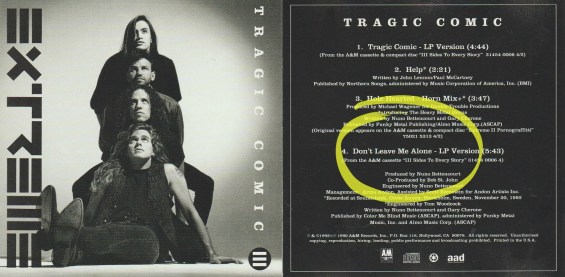
“Seven Sundays” is a romantic song, a piano ballad with Gary in falsetto mode. Nuno adds synth strings for textures. “If I had one wish, it wouldn’t be hard to choose. Seven Sundays in a row, because that’s the day that I spend with you.” Quite a turn from “Cupid’s Dead”, but that’s why it’s on another side. “Tragic Comic” was the natural successor to the hits on Extreme II, a fun acoustic track with a “Hole Hearted” beat. The lyrics are clever comedy and the track was selected as a single. Many will identify with the hapless romantic, the titular stut-tut-tuttering p-poet. “And when we dine, I forget to push in your seat. I wear the wine, spillin’ it all over my sleeves.” Been there done that Gary! The lighthearted song is a delightful contrast to the darker material on side one.
Van Halen-style volume swells make up the intro guitar melody of “Our Father”, an electric power ballad with some stunning six-string mastery. “Stop the World” was chosen as a single, a light melancholy ballad reminding us that if we forget history we are bound to repeat it. These serious songs were not destined to repeat the big singles of albums past. When you play these songs, you feel things and you think things, and not everybody wants music to do that to them. Nuno’s solo on “Stop the World” is warm, immaculate perfection. “Stop the World” merges directly into “God Isn’t Dead?” (except in single form of course). “God Isn’t Dead?” is the darkest spot yet, quiet and painfully plaintive. Piano and orchestra paint a stark picture.
The final song on the side, and a hint of the daybreak ahead, is “Don’t Leave Me Alone”, which is only on the cassette version. Fear not however; it can be found in CD form on CD singles. Just rip everything to your computer and slide “Don’t Leave Me Alone” into the correction position in the running order. It belongs here at the end of the “Mine” side. It deliberately ends it on a brighter note than “God Isn’t Dead?” though it is still far from a good-time ballad. It is dusky lament, but with hints of light in the tunnel. Nuno’s moog solo is a treat.
At 12 songs, the “Yours” and “Mine” sides would make a complete album on their own, and it would still be an ambitious project at that. Regardless, the third side titled “& the Truth” is the most industrious of them all, an eager fulfillment of talents bursting at the seams. III Sides to Every Story…”Yours”, “Mine”, “& the Truth”. This time, the side is made up of one massive 22 minute song called “Everything Under the Sun”. It in turn is subdivided into three parts. This is where the orchestra really comes into play.
Part I, “Rise ‘n Shine” is the sunrise after the blackness of the second side. Gentle acoustics rouse you from your slumber, and Nuno takes the first verse of this duet. Gary follows on the second as the orchestra swells. “Rise ‘n Shine” is the most hopeful sounding music on the album, a bright and steady composition brilliantly structured. Daniel and his dreams may be a Biblical reference but they don’t have to be. A brief interlude foreshadows the melody of Part III, but first is Part II, “Am I Ever Gonna Change”. This section was chopped out and used as an individual song live and on compilations. You can hear why, since it has that echoey Van Halen guitar lick and a powerful nut-kicking chorus. The orchestra returns and it’s Extreme at full power. This eventually fades into the quiet start of Part III, “Who Cares?”. Inaudible voices whisper during a piano passage, and then the orchestra returns at maximum. Biblical overtones: “Tell me Jesus, are you angry? One more sheep has just gone astray.” Nuno’s singing is run through a vocoder giving him a computerized voice. Some might think it sounds like The Elder gone wrong, but that would be selling “Who Cares?” short. Finally Nuno breaks out of the circuit boards and come in at full voice for the final choruses. The melodies from “Rise n’ Shine” and “Am I Ever Gonna Change” are reprised as the epic piece finally comes to a close.
There is little debate that “Everything Under the Sun” is the grandest thing Extreme have attempted in the studio. It was a successful experiment, as it remains interesting and engaging through its entire 22 minute length. You cannot say that for every Rush song of that nature.
Unfortunately for Extreme, the timing was all wrong, and this album soon found its way in bargain bins at cut rate prices. The good news is that means you can get a copy yourself for next to nothing. Try also to track down copies of the “Stop the World” or “Tragic Comic” singles, in order to get the full package. They are plentiful on sites such as Discogs, and it’s important to hear the album at its full complete length. III Sides to Every Story is an unsung hard rock masterwork, and if you want some softer rock songs with lots of brains and a huge heart, give it a shot.
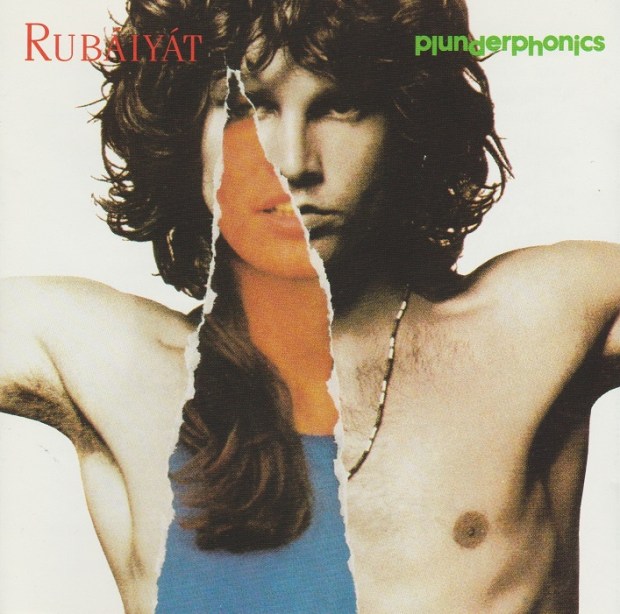
This is one of the weirdest CDs I have ever run across. Remember in 1990, when Elektra did that anniversary CD called Rubáiyát that featured Elektra’s new bands covering Elektra’s old bands? It was the first release of Metallica’s “Stone Cold Crazy” and the first time anyone heard a hint of what Metallica were up to in the studio after Justice. This promotional EP is a companion piece to Rubáiyát.
So what’s this EP? A “plunderphonic” is like a remix. The big difference is, they use only finished recordings, no multi-track master tapes. No going back to strip a vocal out of a song, no fiddling. Only actual snips of complete songs are used. A “new” piece is creating by chopping up and rearranging bits from other previously recorded pieces. Therefore, anybody can make their own plunderphonic using readily available songs. The man who invented the term, John Oswald, did the “plunderphonics” for this very rare promotional EP. His lightning-fast edits keeps things surprising.
The main attraction here, and the reason I own the CD, is a piece called “2 Net” by Metallica. I bet you never heard of that one, let alone heard the piece! It is a 1:21 mash-up of “Stone Cold Crazy” with a bunch of bits and bobs from …And Justice For All, and it’s as weird as that sounds. It’s a blur, almost incomprehensible. Fitting the thrash giants’ riffs into 1:21 will tend to have that effect. Building a composition out of Hetfield barks and Ulrich snares is fun as it sounds, even though it’s over before you can figure out what’s going on. Oswald mixed in some of Queen’s “Stone Cold Crazy” vocal for some melody. Crazy!
The most interesting track is the most unlikely: A cross between Carly Simon’s and Faster Pussycat’s “You’re So Vain”. The end result, “Vane” makes the two into one. If you have ever wanted to hear Taime Downe and Carly Simon perform the song together, this is your chance. It’s incredible how well the two versions contrast, since Faster Pussycat is about as different from Carly Simon as anyone can imagine. It zips from Taime to Carly and back again, as they trade words almost seamlessly! Another successful track is The Doors’ “O’Hell”. This is (obviously) based on “Hello, I Love You”. Bits of other Doors songs provide more instrumentation and effects. Fans of Morrison will absolutely adore it and imagine their own plunderphonics to invent. The MC5 arrive with “Mother”, based off the Kick Out the Jams album. It’s a lot of shouting and screaming and it’s all good. For something soft, check out “Anon” by Tim Buckley. This is taken from Buckley’s “Anonymous Proposition”, made shorter and psychedelic.
It is very hard to describe the complexity of these tracks. There could be hundreds of individual edits per song, because there is so much going on. The Simon/Pussycat song is a great example of how this is more than just a gimmick. It’s art, and anybody can try to do one themselves. In fact, without knowing the name for it, I have heard many plunderphonics before, at our annual Sausagefest countdown. Tom and Uncle Meat are skilled at making them, but I have never heard anything like these five tracks before — ever. These are above and beyond anything I’ve heard in the field.
The liner notes indicate that five more plunderphonics were planned for this CD, but not included. “Recipes” for making your own are inside. It’s almost like five bonus tracks, but you have to make them yourself!
Rating this CD is difficult, and since it was never meant to be sold, almost pointless. However you can find reasonably priced copies on Discogs, so a rating is necessary. This CD is interesting. It’s good, but it’s not meant for listening for pleasure. It almost acts like caffeine to the brain. Every song has so much going on that you are constantly listening and trying to catch it all. It’s also short, so buy wisely.
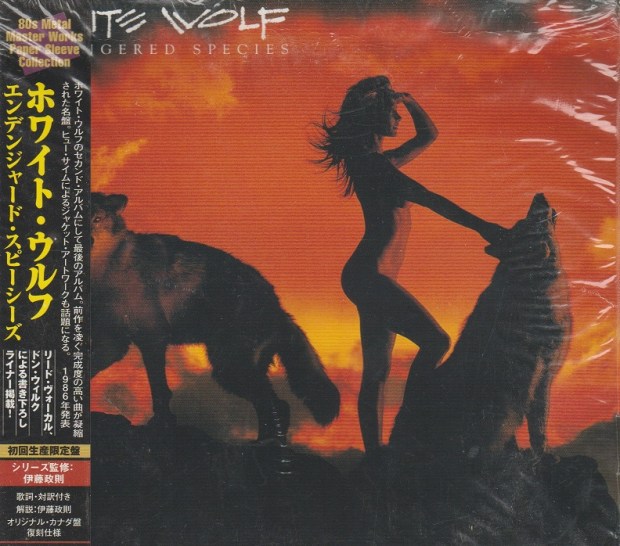
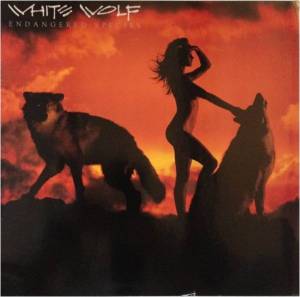
With a name like White Wolf you’d almost expect this band to come from the forests of Northern Ontario or Quebec. No so; they hail from provincial capital of Edmonton Alberta (pop: 800,000). So we’ll forgive that the music video for “Shadows in the Night” (from 1984’s Standing Alone) made them looks like outdoors winter survivalists. Long-haired sidekicks of Les Stroud? No; they look much more indoors-y on Endangered Species, their second album before disbanding. The album cover is notable for being a Hugh Syme work, though obviously a lesser one.
They earned some minor video play with “She”, indicating a more keyboardy direction than album #1. Mushy sounding drums distract from the killer Don Wolf (Don Wilk) chorus. Akin to Dokken’s “Breaking the Chains”, “She” will appeal to hard rockers who like melody with their guitars. It’s all about that chorus though, the kind that makes you hit “repeat” and go right back to the start.
White Wolf has a weird 80s metal thud and that combined with harsh production values make Endangered Species sound terribly dated. Techy keyboard flairs sound lifted from David Bryan’s Slippery When Wet sound library. Anyone craving mid-tempo 80s hard rock will find enjoyable music on Endangered Species, but few songs have the same impact as “She”. Dull verses, bland choruses and generic song titles keep things from sticking. Sub-Jovi with none of Jon’s then-irresistible innocence is a narrow niche.
“Just Like an Arrow” comes close, but the keyboards weigh it down when it should be flying. Too many bands (Quiet Riot, Stryper, etc.) really let the keys have too much space around this time. “Cryin to the Wind” has an excellent acoustic intro but not enough of a song to go with it. The drum samples are obtrusive because they don’t sound natural. It sounds like a lot of time was taken in the studio but the technology wasn’t up to the task, and everything came out tinny and powerless. “Holding Back” doesn’t have enough hooks. “Snake Charmer” steals a title and a hook from Ritchie Blackmore, and appeals as a Rainbow-like understudy. The only other track besides “She” and “Snake Charmer” that hits the spot is “One More Time”.
Not a terrible album, not a flaming turd…but not a winner either.
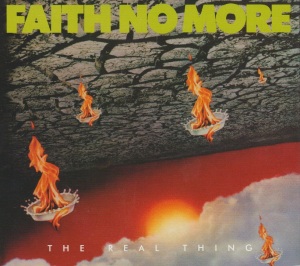
FAITH NO MORE – The Real Thing(originally 1989, 2015 Slash records deluxe edition)
Fans of discerning taste cried tears of joy when Faith No More, one of the most underappreciated bands of recent times, finally received the deluxe edition treatment. Faith No More may have paved the way for more popular acts like as Korn, System of a Down and Incubus, but they seemed forgotten by new young rock fans. These deluxe editions have put their classic albums back on the racks.
Though The Real Thing is the album that launched them onto MTV and contains their best known hit (“Epic”), it’s the only Faith No More album that sounds like this. Mike Patton affected a nasal tone to his singing that he dropped by the next album. (Producer Mike Wallace suggests that Patton sang this way on The Real Thing partially to separate Faith No More from Mr. Bungle, who he still had massive loyalties to.) It’s the most mainstream and most “metal” of their albums, with much of their other material being more abstract, artsy and bizarre. Though they loathed the term, you can hear how Faith No More were considered “funk metal” from 1989-92.
Opener “From Out of Nowhere” is a living embodiment of its own title. A keyboard and guitar riff, simple and catchy, pummel the speakers as Mike Patton makes his debut. Original singer Chuck Mosely was gone and Patton emerged, fresh from the aforementioned Mr. Bungle. Nobody had ever heard anything like Mike Patton before. His range and power were enviable, but he clearly liked taking the piss too. “From Out of Nowhere” was the first single and a brilliant choice for trying to sway the uninitiated.
Of course “Epic” was the big one. Its timely combination of rap and metal was on the cutting edge. The lyrics were nonsense* and Patton’s goofy personality shone through. It was close to the edge of novelty. Jim Martin’s power chords and harmony leads kept things from falling off. On the rhythm, Mike “Puffy” Bordin is one hard-hitting drummer, keeping things anchored solidly. You can really hear the funk on “Falling to Pieces”. It’s there in Billy Gould’s bass and Patton’s soulful (nasal) voice. This too was a single, following the smash hit of “Epic”.
Faith No More also crossed over to the thrash crowd with “Surprise! You’re Dead!”. An aggressive banger like this was custom made for Anthrax fans. Most importantly, Mike Patton got to show off some of what he is capable of. The guttural howls, painful shrieks, and insane laughs burrow into your ears. They are hooks themselves, though certainly not in the traditional sense! This is a contrast to “Zombie Eaters”, with quiet acoustic sections and intricate picking by Martin. “Zombie Eaters” does not stay that way, and soon transitions into a rumbling, earthquake riff. Roddy Bottum’s keyboards add tension, and Mike Patton piles anguish on top of that. An even more powerful song follows: “The Real Thing”, 8:01 of light/shade and dramatic performances.
Pop and funk collide on “Underwater Love”, the most accessible song on the album. It evolved live into something very different, as you will hear on disc two. Patton did it with more of his own style once they got it out on stage. “The Morning After” has a haunting vibe, moving into a heavier chorus. Jim Martin’s guitars are clearly in the metal domain, like the odd man out, but still essential.
The album begins to drift to a close with “Woodpecker From Mars”, the only instrumental. Roddy has his keyboard set to the “violin” tone, and is the lead melodic focus of this punishing track. Everything else is a blur of guitars, drums and bass. Their unique cover of “War Pigs” is next, though pretty straight-laced compared to the live version on disc 2. Finally “Edge of the World” closes the album with a slow piano waltz completely unlike anything else on the album.
The second disc has a wealth of treasure, though not all the B-sides and rarities out there. “Sweet Emotion” was released a few years back on The Very Best Definitive Ultimate Greatest Hits Collection, but its original source is a flexi-disc from Kerrang! magazine. It is not an Aerosmith cover; rather it is an early version of “The Perfect Crime” from the Bill & Ted’s Bogus Journey soundtrack. Two more bonus tracks, “Cowboy Song” and “The Grade” (an instrumental) are also available on the album Live at the Brixton Academy. Both good songs; “The Grade” really shows off some very sweet Jim Martin steel guitar. “Cowboy Song” (nothing to do with Thin Lizzy) is good enough that it could have been a single: catchy, melodic and punchy.
Remixes of “Epic” and “Falling to Pieces” are taken from an old two-song CD single, although this remix of “Falling to Pieces” is longer by 11 seconds compared to the single. They add a bit more echo and other effects as well as some edits. An extended remix of “From Out of Nowhere” lengthens the song by a minute, by adding more instrumental sections. Five live songs round out the B-sides and rarities, including two that were chopped from the CD release of Brixton Academy. (Speaking of which, that’s a deluxe edition we’d like to see.) “As the Worm Turns” is one of these Brixton tracks, an old essential Chuck Mosely song given the Patton treatment. Patton’s gurgling during “War Pigs” is a career highlight! Live BBC recordings of “Epic” and “Woodpecker From Mars” are missing from this deluxe edition, but available on an old 7″ single (“From Out of Nowhere”).
The Real Thing is an essential album. Its deluxe edition was long overdue, and fortunately most of Faith No More’s catalogue has been similarly beefed up. It is not perfect, but few deluxes are. There will always be more to collect. This deluxe however will scratch quite a few tracks off your lists.
4.5/5 stars
*I recall writing “What is it? It’s it.” on my English final exam for no particular reason.
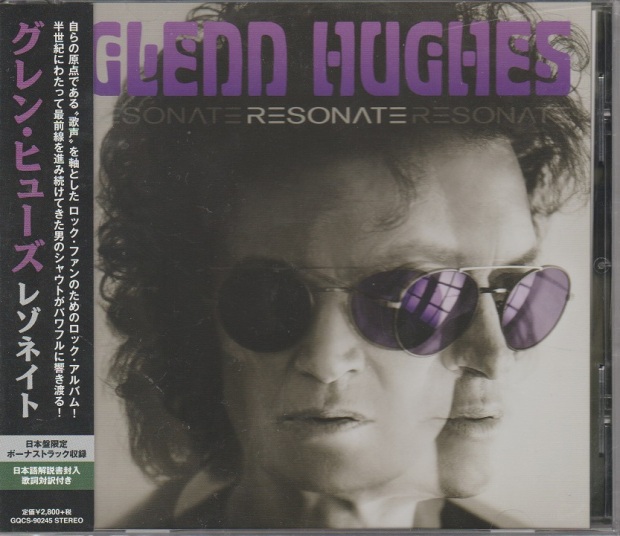
Glenn Hughes has been consistently prolific since a mid-90s comeback. Lean, clean n’ mean, Glenn Hughes has reclaimed his title as The Voice of Rock. His latest solo album Resonate made numerous top albums of 2016 lists. The only reason he didn’t make ours is that we were holding out to get the Japanese version with the exclusive track. In Japan they call him “The God of Voice” and this CD easily demonstrates why.
It is pointless to break this CD down song by song. They are all incredible. They represent the kind of hard rock that Deep Purple made famous: riffs, heavy organ, and incredible lead vocals. In the Deep Purple days, it seemed Glenn’s soulful croon didn’t always fit in with heavy rock, which made them that more unique. Today, Glenn sounds at home. Resonate is consistently heavy, and impressive at every turn. There are no big star names in his band, but Glenn’s old buddy Chad Smith from Red Hot Chili Peppers has two guest shots: “Heavy” and “Long Time Gone”, the opener and closer on the standard tracklist. Smith is always a joy to listen to, and when he works with Glenn, it’s the heaviest Chad Smith gets. Glenn on bass and Chad on drums: it seldom gets better than that.
Everyone will pick their own favourites, but one that we can’t put down is “Landmines”. The funky electric boogie is one of the album highlights; a real hard rock dance number to get down to. On “Landmines”, Glenn’s current self meets his 70s persona. That should create a time travel paradox, but it doesn’t. All it fuels is one hell of a boogie woogie oogie. Runner up: “Steady”. But any of these songs can slide in and out of the top spot on a given day.
The Japanese bonus track is an acoustic version of the ballad “When I Fall”. In some respects it’s better than the album version, but it’s all just a matter of taste. The Zeppelin-like mellotron is delightful. The only bummer is that the Japanese version doesn’t have the song “Nothing’s the Same”. That’s OK; the domestic version of Resonate has that and a bonus DVD. It’s a killer acoustic cover of a lesser known Gary Moore song, and it is worth buying the album again for. It doesn’t matter which version you go for. Resonate kills.
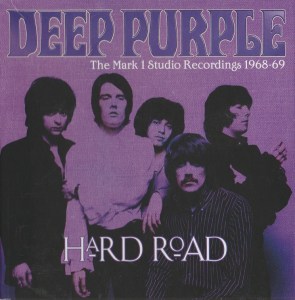
DEEP PURPLE – Hard Road: The Mark I Studio Recordings 1968-69(2014 Parlophone)
It’s fantastic that old mono recordings are getting the CD treatment. The original mono mixes of the old Beatles albums were a revelation to those who had never heard them before. The original mono versions of Deep Purple’s Shades Of and Book of Taliesynare less surprising, but still a welcome addition for completists who want to hear it “as it was” in 1968. Comparisons are difficult, but both albums sound like they were meant to be in stereo. Unlike the Beatles pop rock compositions, Deep Purple’s featured a lot of solo work and even full-blown orchestral movements. The stereo separation makes that easier to appreciate. Only Purple’s third album, 1969’s self-titled Deep Purple, did not receive a mono mix. It is presented here in stereo only.
Now, these three Purple albums all received the deluxe edition treatment (single discs) in the year 2000. Those versions on Spitfire (links in above paragraph) are still excellent ways to get this early Deep Purple music. They are fairly common, have great liner notes and pictures, and feature the stereo versions plus 14 bonus tracks combined between them. There is also a compilation CD called The Early Years featuring more bonus tracks, including 2003 remixes and live takes. Where Hard Road fails is in replacing these previous four CDs completely. One would hope you would get all the associated bonus tracks from this period in one handy-dandy box. Sadly this box is not quite so dandy. Here is a list of tracks missing from Hard Road that were on the remastered single discs:
“Kentucky Woman” (alternate take on The Early Years)
“Hard Road” (BBC session on The Early Years and The Book of Taliesyn remaster)
“Hush” (live from US TV)
“Hey Joe” (live BBC recording from the remastered Shades Of).
“It’s All Over” and “Hey Bop-a-Rebop” (unreleased songs, live BBC sessions from The Book of Taliesyn)
The live BBC songs above can also be found on the double CD BBC Sessions…except for “Hard Road”.
Of course there is plenty of material on Hard Road that is not on those earlier discs, making things that much murkier. In addition to the original mono versions, these include:
“Kentucky Woman” remixed in 2003
“Playground” in a non-remixed version
“River Deep, Mountain High” and “The Bird Has Flown” (single edits)
A fresh 2012 stereo mix of “Emmaretta”
The isolated single B-side version of “April (Part 1)”
An early instrumental version of “Why Didn’t Rosemary”
Irritating, yes. But only to completists. For just about anyone else, Hard Road will satisfy their need for pretty much all the Deep Purple Mark I they can handle. It’s not as complete as the title would let on, what with that live “Hush” and alternate take of “Kentucky Woman” missing in action. Instead you will receive a large booklet with plenty of notes and a new 2013 interview with producer Derek Lawrence. He was on board early, before they were in Deep Purple. He describes an early version of the band called “Roundabout” (with Bobby Woodman on drums and Chris Curtis on bass) as “bland”. When Ian Paice and Nick Simper joined, they sounded better, but to Lawrence clearly Ritchie Blackmore and Ian Paice were the stars.
Each disc comes in its own LP-style sleeve. It’s a gorgeous set. It sounds fantastic, and was assembled with the usual care that goes into a Deep Purple album. A few niggling missing tracks aside, this is highly recommended to those looking add the first three Purple to their collection.
 Welcome back to Ontario Bands Week!
 HELIX – Rockin’ in My Outer Space (2004 Dirty Dog)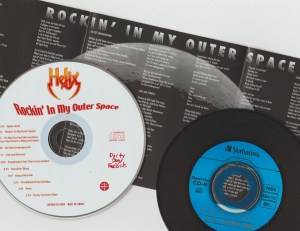




















You must be logged in to post a comment.