Ah-OOOOOOO! Little Richard! Predator! OOOOO! Wop bop a loo bop! Get to the choppa!
Who doesn’t love Little Richard? If you answered that question with “me!” then click your “back” button now and go listen to some X Ambassadors or something equally un-rock and roll. Little Richard? Pure rock and roll, baby! You have your rock bands that are based on guitar, but then you have other artists that are based on piano. And let me tell you, when Little Richard (Ah-OOOOOOOO!) starts bangin’ on those keys, you can’t help but boogie woogie.
Richard has an extensive catalogue of albums and singles, and much like any of the other founding fathers of rock and roll, there is so much more to him than just the greatest hits. This album is called The Essential, and it is. There is much, much more. “Can’t Believe You Wanna Leave” isn’t on here, but so many favourites are! (OOOOO, gonna have some fun tonight!)
Commencing in 1955, every single track on this CD (single A’s and B’s) is in the two minute range. Wham bam, thank you ma’am! (No, that’s Dean Martin…) Loaded with piano, sax and Little Richard’s unmistakable voice, every song is incredible. My favourite song is “Jenny Jenny” (OOOO!), which is so damn raw and perfect, sax honkin’ and Richard letting loose with every “Woo” and “Ooo”. His throat is pushed to the limit, running off the rails from time to time, but always perfect. From Lucille to Teddy to Jenny to Miss Ann and Miss Molly, some may notice that there is a certain sameness to the material. That would be missing the point. Richard is like AC/DC. You get what you want, every time. Since the songs are so short none overstay their welcome.
Everybody should know plenty of these songs, whether from movies or TV. At least half the album should be familiar. Even if you haven’t heard Richard’s version of “By the Light of the Silvery Moon”, you probably know it from Etta James, Happy Days, Bugs Bunny, or I Love Lucy. It’s just one of those songs that everybody has heard. (Richard’s version is the best one, if you asked me! Ah-OOOOOO!)
Even though this is an older release, the audio is just fine. According to the booklet, all tracks were remastered from the original mono tapes. Old time rock and roll just sounds better in mono. In mono, it sounds saturated and harder. (WOOO!) The booklet isn’t skimpy and has plenty of old black and white photos.
So, if you have “Heebie-Jeebies” for some “Long Tall Sally”, then “I Got It” for you. You’ll be “Slippin’ and Slidin'” for the whole length of this 45 minute CD, which will be over before you know it. If you wanna “Keep-A-Knockin'”, then just play it on repeat and “Rip It Up”.
5/5 stars
Final note: I will happily give a lollypop to anyone who can tell me where I can buy Richard’s elusive version of “Itsy Bitsy Spider”.
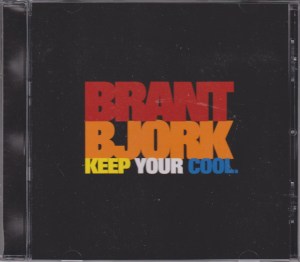
Been a while, cats, since I chilled to Keep Your Cool. That’s what you do to this record. Loaded with laid-back latino-influenced stoner rock jams, Keep Your Cool is designed with purpose. In fact it’s all right there in the opening jam, “Hey, Monkey Boy”, loaded down with congas and one steamy groove.
“Hey, Monkey Boy! Why you unemployed?” asks one character in the song, voiced by Bjork.
“‘Cause I’m jammin’!” answers Bjork, utilizing a different voice.
Mood now set, “Johnny Called” comes right from the garage: simple, laid back, but infectious. Back in the Record Store, one of our store managers Joe “Big Nose” used to phone me up and sing it to me: “Johnny called me up on the telephone, just to tell me I’m not alone!” he melodized. “Huh?” I asked confused. So “Big Nose” gave me the record — on LP. Now we’re grooving. The amusingly-titled “Rock-N-Rol’e” keeps it coming. These are basic, sparsely adorned grooves with a nostalgic bent. “Hey there Mr. DJ, won’t you play, some Rock-N-Rol’e!” sings Brant, in an ode to being a kid with a radio and some cheap wine. In the blazing outro, you can hear Bjork begging for some ZZ Top or some AC/DC, because he wants his “chick” to hear some rock and roll! The groove then changes to a stomp on “I Miss My Chick”, closing LP side one. Brant explains what he misses about his “chick”, but this being a family site I won’t list them here! This is a smoking jam.
Commencing with the instrumental title track “Keep Your Cool”, the second side begins with a laid-back Jalamanta vibe. Then Brant’s “Gonna Make the Scene”, and he does this with another snakey, sparse but funky groove. He takes a rare falsetto vocal on the chorus, recalling early Disco. Dusky, quiet rolling bass dominates “Searchin'”, very different from prior Bjork songs. This makes it a highlight of the album and perhaps even the Brant Bjork canon. The relaxed mood maintains on the final song, “My Soul”, which is also the only long bomber on the record. It descends into another quiet jam, concluding the record on a serene but appropriate note.
Great album — short, and to the point like a punk record. Ultimately, not particular a standout given Bjork’s incredible solo discography. Keep Your Cool is still not a purchase to regret.
When Triumph split in ’87, Rik Emmett went off in a pop direction leaving his two bandmates with no singer/guitar player, and without their most recognizable member. As bassist Mike Levine said in M.E.A.T Magazine, “We couldn’t just be Duo-umph”. Since Triumph always had two lead singers in Rik Emmett and drummer Gil Moore, this time Gil simply stepped up and sang everything. Then they needed a guitar player. Gil and Mike Levine wrote and recorded most of Edge of Excess with Mladen Zarron in Toronto, before hiring ex-Frozen Ghost (current Bon Jovi) shredder Phil X. Five years after the split, the new Triumph emerged with a heavier and darker album, Edge of Excess.
Triumph boldly opened the album with a whole minute of nothing but bluesy guitar noise. If there was a stronger way to say “We don’t need Rik,” I don’t know what that would be. This guitar noise serves as an intro to the first Triumph song without Emmett, “Child of the City”, a harder edged Triumph song with the same kind of hooks. It’s hard to determine who is playing lead guitar, Mladen or Phil X, but rest assured that whoever it is has laid waste to the land. Rik Emmett wasn’t just a shredder, but a talented player who composed his solos with class and ability. Mladen and Phil have done the same, but without emulating Rik. (Phil’s going to have his work cut out for him in Bon Jovi, though.)
The rip-roaring “Troublemaker”, easily the fastest and heaviest Triumph track to date, was featured on the soundtrack to Hellraiser III, and it’s easy to see why. It’s as close to speed metal as Triumph have been, and I shouldn’t need to tell you that again the solos shred. Who’s playing? Fucked if I know, there are three guys credited on the song. The song is actually very close to high-octane Whitesnake and it would be easy to imagine Coverdale’s crew doing it.
Lest you think that ballads were a thing of Triumph’s past, “It’s Over” has a country & western feel. Unfortunately of the two singers, Moore had the less commercial voice. This is where Gil’s voice reveals its limitations. On backing vocals, some big names are on hand such as Fred Coury of Cinderella and Steve DeMarchi of Sheriff, to help beef up the big chorus. It’s not enough to make a memorable song. They cook up some groove on the title track, tapping the vein of Van Hagar. But without Rik Emmett, Triumph lost part of what made their unique sound. On Edge of Excess it’s too easy to compare them to contemporaries. “Turn My Back on Love” is better, occupying a dirty mid-tempo groove, and with Phil X handling all the guitars himself. The big chorus is the closest thing to old Triumph on the album.
That’s the side; the second one opens with “Ridin’ High Again”, a sleezy rocker that sounds like Don Dokken emigrating to Canada. Phil X really can shred though, and anyone who’s curious what he can do should check it out. I don’t think Phil will be able to play to his strengths in his new band, so give this a listen and hear the guy blaze like Vai meets Van Halen. “Black Sheep” starts as a total surprise; a blues right in the middle of the album. No drums, just claps. Sadly instead of sticking with this, it transforms into a stock hard rocker. “Boy’s Nite Out” has a grammatically incorrect title: The lyrics are clear that it is not a boy’s night out, but “the boys”, plural. It should therefore be called “Boys’ Nite Out”. Here I am bitching about the grammar and not the word “Nite”…anyway, back to the song. Standard rocker. Plenty of great shreds, but this album is far too burdened by generic rockers. Rik Emmett used to bring a variety of influences to the table, and their albums with him may have had their weaknesses, but they were more diverse than Edge of Excess. Without enough identity, Triumph forged a batch of largely forgettable bluesy hard rock songs. Lots of crunch, not enough stick-to-your-brain hooks.
Fortunately the classy power ballad “Somewhere Tonight” helps wind things up properly. Identity is still a problem, but at least this is a break in the rut the album had been in. Right back into the rut for “Love in a Minute”, the last in a batch of heavily generic rock songs that sound like about a dozen bands…none of them Triumph.
Like any fan, I was pleased that Triumph kept going despite such a huge setback as losing your main guy. Unfortunately the album they produced in ’92 was not up to par, and I guess that’s why it took me 23 years to finally buy it! A couple good songs early in the album, but not much more.
AMERICAN DAD! – “Why Can’t We Be Friends?” (Episode 5, season 9)
Seth MacFarlane’s American Dad is a very musical show. That’s why this is the second episode I’ve reviewed so far. It’s rare to find a cartoon with so much musical integrity. From an episode based on a song by Wax Fang, to another showcasing the band My Morning Jacket and their lead singer Jim James, they really stuff the show full of tunage. Not to mention they also use plenty of original music! There was one episode featuring Cee-Lo Green as a talking, singing hot tub. For real! Then there’s the original song “He’s Got a Kink”, with a dirty, dirty message!
You’ve got a kink, You’ve got a kink, Don’t be afraid to put a finger in the stink!
While the episode “My Morning Straightjacket” was probably one of the most musical episodes of any comedy show anywhere, it was “Why Can’t We Be Friends?” that earns top marks at LeBrain HQ. Why? Rush. 2112!
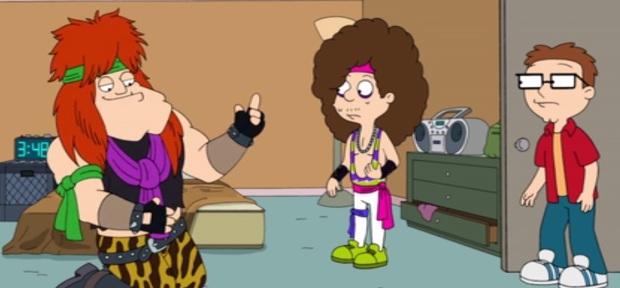
With Steve Smith dressed as a glammed-up Alex Lifeson, and his best friend Snot Lonstein as Geddy, the episode opens with the two best friends rocking out in the garage, playing air guitar to Rush’s immortal epic “2112”. When Steve’s dad Stan comes home, he is none too amused by the tight costumes, wigs and finger-flicking. “I-I don’t know where to start. Look at you two. Best case scenario, you’re telling me you’re gay with each other,” complains Stan.
Steve and Snot defend the air guitar, but a furious Stan smashes Snot’s tape deck and forbids Steve from seeing him again. Of course this does not work, so Stan does the obvious thing to get rid of Snot. He stages a fake mafia hit in front of the young kid, and then takes him away to be in the CIA witness protection program…forever.
Snot goes into hiding (the apartment building is #2112). While delivering Snot his weekly groceries, Stan finds that he actually likes the kid. They begin to hang out. When Steve finally figures out what his dad has done, he tracks Snot down…only to find him playing air guitar to “2112” with a wigged-out Stan!
The episode is dedicated to “BFFs everywhere”, and I admit I get the feels at the end. In an homage to Say Anything, Snot and Steve reunite, with a glorious air-guitared version of “Always With Me, Always With You” by Joe Satriani. Yes, the episode is a tribute to best friends. I think it is also a tribute to the pure joy that is air guitar. The two things go together. I played many many hours of air guitar with my best friend Bob, and nothing can erase the sheer happiness we had doing so. I identify with this episode! Not the dad breaking up the friendship part, but the friendship itself.
Highly recommended for nostalgic air guitarists everywhere.
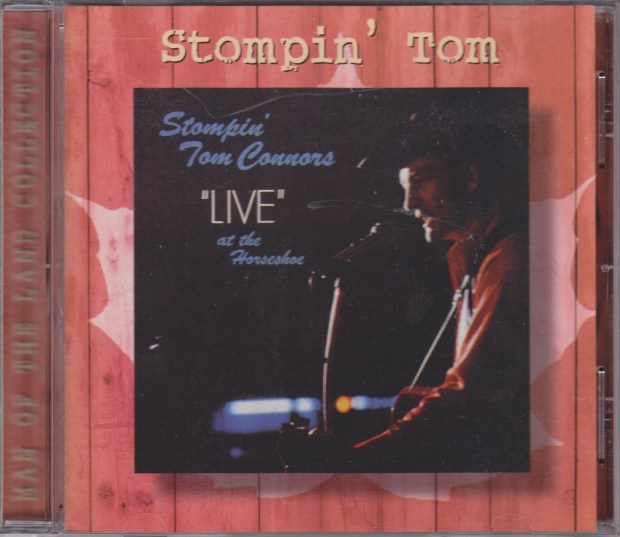
STOMPIN’ TOM CONNORS – “Live” at the Horseshoe (1971 EMI)
Since this is the first Stompin’ Tom review ever here at mikeladano.com, we need to step back and take a quick look at the bio of a Canadian hero that may be completely unknown to most overseas readers.
Charles Tom Connors was born in Saint John, New Brunswick in 1936. A restless young Connors frequently hitch hiked and got into trouble down the east coast, and at one point wound up in Skinner’s Pond, Prince Edward Island. This is a place that has come to be associated with Stompin’ Tom over the years. I visited there myself in 2002, and saw his childhood home. I took a photo of the street sign of what is now officially called Dr. Stompin’ Tom Road.
Tom’s break happened while drifting through Timmins Ontario. Short on change for a beer at the local watering hole, the bartender told him he’d let him have the beer for whatever coins he had in his pocket, as long as he’d get up and sing a song or two. Tom got out his guitar and that turned into a 14 month stand. Before too long he had recorded eight singles.
Stompin’ Tom sang idiosyncratic Canadian songs. He was not interested in commercialism in music whatsoever. He stubbornly wrote and played often comical songs about the things he’d seen and done hitch hiking around the country. He became known as “Stompin’ Tom” by providing his own backbeat. Like a folk country Angus Young, he would pound his booted left foot on the floor, keeping time. He eventually had to provide his own “stomping board” because bar owners were complaining about damage to their stage. He would stomp right through the board periodically and have to replace it.
In 1971, a concert film called Across This Land With Stompin’ Tom Connors spawned the album release “Live” at the Horseshoe and became a part of Canadian history. The Horseshoe Tavern in Toronto was a legendary establishment. Now with four studio albums and one Christmas record under his belt, the legendary Horseshoe set was recorded for posterity and became a television staple for years. This live album is culled from that show, though heavily edited for single-length LP time. The original set was 90 minutes and 30 songs. My dad showed me the special as a kid. I loved it.
When EMI issued the album on CD, they retained the original LP 12 song running time. Even the nicely packaged 1998 Man of the Land series edition is only 12 tracks. The album is a mix of originals and better-known covers.
Newcomers may find Stompin’ Tom’s nasal twang unpalatable, but when that left foot starts stompin’, it’s hard to resist. “Happy Rovin’ Cowboy” introduces Tom’s band to the crowd. He bills himself as from “the potato fields of Prince Edward Island”. Then it’s his hit about the “best man in Ottawa”, Mufferaw Joe. “Big Joe Mufferaw” is a Canadian folk classic and this version from the Horseshoe is definitive. According to the lyrics, Big Joe put out a raging forest fire near Smiths Falls with just five spitballs! Just stomp along!
“Come Where I’m At” is a “Newphie” phrase, and the song beckons you to come home to Newfoundland, “So don’t stay where you’re to, come where we’re at!” It’s not Yoda-speak, it’s just Canadian! Tom then covers “The Green, Green Grass of Home”. “Now it’s almost time I sung an American song,” begins Tom. “This here is a song that made so many singers famous, that I just thought if I turned my golden Prince Edward Island voice to it, I’d prob’ly become famous too!” Probably not — Tom does it with exaggerated twang and irreverent comedic flare. Then, he covers his friend “Gordie” Lightfoot, with “Spin, Spin”, another Horseshoe regular. This time his plays the song “straight” with due respect but still with the stomp. It’s a wonderful upbeat song so feel free to stomp along. “Muleskinner Blues” has one of Tom’s most legendary vocal hooks, and it goes something like “aw wha wha wha wha wha whoo”, though it varies! This is the kind of song that people loved Tom for.
The second LP side began with an ode to all the big drinkers at the Horseshoe, with “Horseshoe Hotel Song”. You can hear them hootin’ and hollerin’ and drinking along. He pokes fun at himself in the tune, claiming he can’t really sing, he’s just another getting slushed at the Horseshoe Hotel. They eat it up, loving every witty line. Another cover, “I’ve Been Everywhere”, is one that Tom could almost claim as his own, considering its hitch hiking subject matter!
The rest of the album is all original. “Sudbury Saturday Night” is a favourite that was later covered by Kim Mitchell. Sudbury is famous for its nickel mines, and Inco was the big one. So the lyrics go:
“Well the girls are out to Bingo, And the boys are gettin stinko, We’ll think no more of Inco, On a Sudbury Saturday Night.”
Once again, this version is definitive. The song is best heard with an audience hollering along. “Big Bus to Nashville” is a pleasant song that name-drops the Horseshoe, and features that boot stomping again. “Luke’s Guitar” is a story about a man who had to choose between his wife and his guitar. Again it has one of those classic Tom vocal hooks, and it goes something along the lines of “Clang-clang a-deedle dang a-deedle”. It’s hard to resist so don’t try and just go with it. Ending the album is “Bud the Spud” from the bright red mud, of Prince Edward Island. According to Tom this came by request about “150,000 times” that night. Because of the filming and recording of the live album, Tom was to stick to a strict set list and couldn’t do requests. However he went ahead and played “Bud the Spud” anyway, and it made the final album! Like several of the other tracks, this recording is definitive.
In the movie Wayne’s World, the character of Wayne Campbell, played by Canadian Mike Myers, claimed that people in the subburbs got copies of Frampton Comes Alive in the mailbox with boxes of Tide. Sadly that is not so, but in Canada, everybody should be issued a copy of this live album with their birth certificate. This album in my ears defines the country that I live in. Others may disagree and they are welcome to do that, but I believe that “Live” at the Horseshoe is a history lesson about the country that we live in as much as it is an amazing live album.
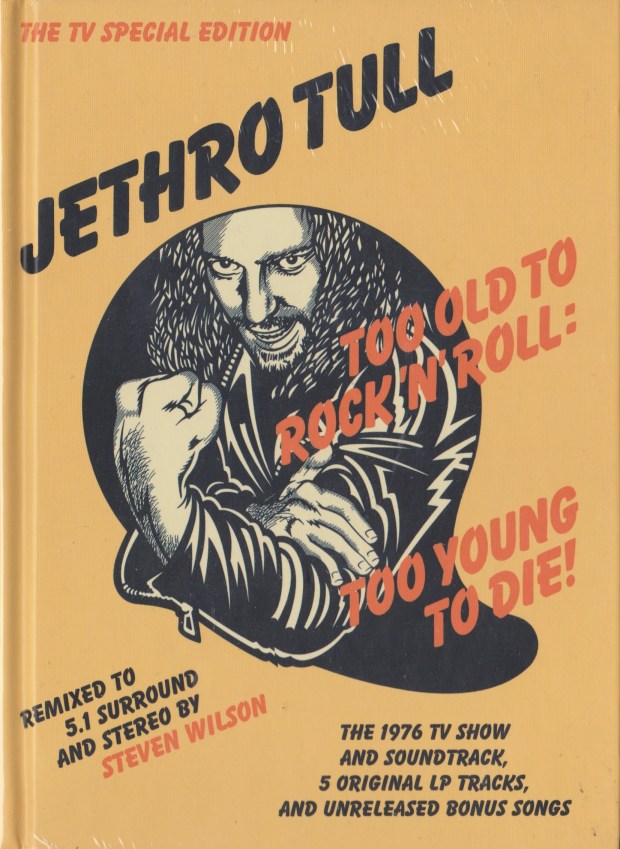
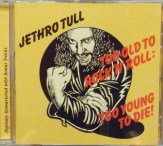
JETHRO TULL – Too Old to Rock ‘n’ Roll: Too Young to Die! (1976, 2015 Chrysalis TV Special edition 2CD/2DVD)
I foresee a future time, when every man woman and child will be able to buy deluxe multi-disc box sets of just about every album ever made. While old geezers with greying beards will sit back in a rocking chair (a hovering one, no doubt) listening to multi-track backing tapes for every single Poison CD, our children will be able to do the same with a comprehensive book-box version of the NSync debut album. It’s going to happen eventually, so we may as well get good albums like Tull’s Too Old to Rock ‘n’ Roll: Too Young to Die! in box set form while the concept still has validity.
Of course this isn’t the first Jethro Tull album to get this kind of treatment. A super deluxe Aqualung was a fairly recent release, and I received Benefit myself for Christmas last year. The bold four-colour album cover for Too Old to Rock ‘n’ Roll makes for a splendid book-form box with plastic CD trays inside. An absolutely massive (80 page) full colour booklet awaits you inside. Rare photos are the norm of course, but a features such as “From Carmen to Tullman” about the late John Glascock are valuable reads. Detailed liner notes will help you make sense of the track listing, and the multiple versions of each song included. Almost all of this material is rare, previously unreleased, or newly mixed material by studio wizard Steve Wilson.
First of all, I was not aware that all of Too Old to Rock ‘n’ Roll was re-recorded for a UK television special, included here on DVD. Anderson had a theatrical presentation in mind, so playing live wasn’t of interest to him. But, apparently due to British law, the LP Too Old to Rock ‘n’ Roll could not be used for backing music on a “live” TV special. Anderson’s vision seemed to involve the band miming to the album while pulling amusing faces and occasionally acting out the lyrics. In order to mime and do it legally, brand new recordings of every song had to be made! In fact the band painstakingly took great care in recreating the album, although there are also obvious differences. For the DVD and CD, these tracks been newly mixed and are available for the first time. CD 1 contains the standard stereo mix of the re-recorded album. DVD 1 has the special in both stereo and 5.1 surround.
The original album was also meant to be remixed top to bottom in 5.1 by Wilson. This was not possible, because the original multi-track tapes survived for only five songs, almost the whole second side: “From a Dead Beat to an Old Greaser”, “Bad Eyed and Loveless”, “Big Dipper”, “Too Old to Rock ‘n’ Roll”, and “The Chequered Flag”. Tull’s semi-acoustic nature lends itself well to a good 5.1 mix. The audio field is filled out, but not to excess. It’s a good balance and the tracks included in 5.1 shine with fresh light. Do not be surprised to hear parts you didn’t hear before.
The bonus associated tracks are a light collection of rare Tull. The two bonus tracks from the prior 2002 remaster, “One Brown Mouse” and “A Small Cigar” are included here unaltered on CD 2, or on lossless 96/24 stereo PCM on DVD 2. The unreleased tracks are excellent. “Salamander’s Rag Time” sounds like the Jethro Tull collaborating with the Beatles via “A Day in the Life”. Meanwhile, “Commercial Traveller” is a lushly arranged and recorded ode to the road with full strings and Martin Barre guitar blazes. “Strip Cartoon” also has quaint Beatles-isms though it is really just a bright Tull acoustic jaunt. An incredible instrumental take of “Salamander” is pure delight, hearing it ring in live perfection. There is also a bare acoustic version of “A Small Cigar”, and earlier versions of “Quiz Kid” and the title track. As always, these are available on both the CDs and DVDs. Four of these (“Salamander’s Rag Time”, “Commercial Traveller”, “Strip Cartoon” and the acoustic “Small Cigar”) can be heard in 5.1, again mixed by Wilson. Expect the same level of lushness and quality as the album tracks, although with the acoustic arrangements, it’s more about the spaces between.
One of the great advantages of the DVD format is the ability to re-release classic Quadrophonic mixes for modern audio systems. Like many rock bands (and especially progressive rock bands) of the early 1970’s, Jethro Tull released Too Old to Rock ‘n’ Roll in Quad. That long unavailable version is right here in 4.0, on DVD 2. It’s certainly an interesting animal. Where Steven Wilson’s 5.1 mixes envelope the listener in clouds of Tull music, the Quad mixes things hard into individual channels. It’s an interesting experience. The vocals are mostly on the right, the flute behind, and the other instruments tucked into their corners. If you want to hear it as if the music is coming from four separate corners of the room, then this Quad mix is that exactly. There is something to be said for this, because you can clearly hear each instrument isolated, and easy to study. You can easily lose yourself in a particular part of the mix, which is the benefit and weakness of the format. Regardless, the classic 1976 Quad mix has parts you won’t hear elsewhere, and it’s available again, and that is a good thing.
With all this talk of extras and remixes and surround sound, the original album is almost overlooked! Fear not. A bit like an afterthought, the original, stereo, classic Too Old to Rock ‘n’ Roll: Too Young to Die! is here, as the final 11 songs on CD 2. Even the Benefit super deluxe box set didn’t include the original album on CD. If you prefer lossless stereo, it’s there on DVD, too.
Like many Tull albums from the mid-70’s, there’s plenty of acoustics to go around accompanied by lovely flute passages and complex drum patterns. There’s also some horns and orchestration courtesy of David Palmer (not yet a full member of the band). Personal highlights:
“Salamander”, a folksy number with intricate acoustics.
The harmonica riffing of “Taxi Grab”, reminiscent of an earlier bluesier Jethro Tull. The guitar soloing (both electric and acoustic) is also divine.
“Big Dipper”, a playful yet complex number with plenty of flute and a fun chorus.
The masterpiece title track (obviously), lush with ochestration.
“Pied Piper”, one of the most obviously catchy songs on the whole album, albeit still complex with multiple parts and section.
The final track of the album, a slow but dramatic grandiose number called “The Chequered Flag (Dead or Alive)”.
Too old to rock ‘n’ roll? Never. Buy this for the grandpa on your lists.
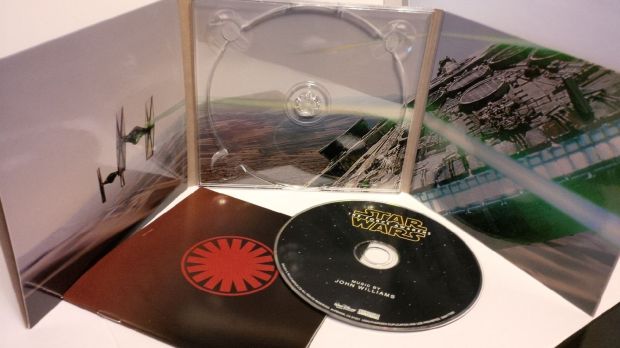
STAR WARS: The Force Awakens original motion picture soundtrack (2015 Lucasfilm/Disney)
After seeing The Force Awakens on December 18, my radio pal Rob Daniels who had not seen it yet asked me, “How was it, seeing a Star Wars movie without the 20th Century Fox logo and fanfare at the start?”
It was strange. Not unexpected of course; we all know the reason there is an Episode VII today is because Lucasfilm sold Star Wars to Disney. The old 20th Century Fox fanfare does not commence the soundtrack, which instead begins with the main Star Wars title theme. This quiets and slows, as the covert start to the movie begins.
“The Scavenger” introduces the character of Rey. Add this to yet another intriguing piece of character music from the mind of John Williams. “The Scavenger” is unlike any of the other Star Wars cues; it’s brand new, just like the character of Rey. I get goosebumps hearing it again, such is the power and identity of the score. It also has the tone to connect this new chapter to the other instalments of the saga. This is only a brief respite. Much like the movie itself, the action resumes shortly. The title “I Can Fly Anything” suggests you should fasten your seatbelts for this cue!* Williams allows you to close your eyes and picture the flurry yourself. He always has; that’s his magic. As kids, we would drop the needle on the soundtrack to The Empire Strikes Back while navigating an asteroid field with our Kenner Millenium Falcons. Or, you would flip the pages of your Marvel Star Wars comic movie adaptations, while listening to those records. The experience still works today. Through the drama and occasional quiet moments of reflection, you will notice callbacks to cues from the classic trilogy — “The Falcon”, or “Han and Leia” for example. These pieces of music are warmly remembered.
When the soundtrack to The Phantom Menace was released in 1999, the track “Duel of the Fates” became a bit of a hit single. There is no “Duel of the Fates” here, but “Rey’s Theme” serves well as the memorable track this time out. With more subtlety (and perhaps even femininity?), “Rey’s Theme” is a new kind of Star Wars music. I have high hopes that the character and story arc will unfold in a way just as emotional and satisfying as her theme music. Star Wars deserves to have characters that you can invest your emotions in. With the prequel trilogy, I could never feel much for Anakin Skywalker. You always knew that no matter what happened in the prequels, he’s just going to end up in the black suit and blowing up Aldaraan. Rey’s future is unwritten. Having a strong theme will help her character going forward.
Vintage Star Wars fun can be had on the tension-packed tracks “The Rathtars!”, and “Kylo Ren Arrives”. Somber beauty is “The Starkiller”, ironic considering the scene in question. For deeper listening, check out the tracks “Maz’s Counsel” and “Snoke”. Perhaps there are musical clues buried in these pieces to help us identify who some of these characters may be?
The soundtrack is a wild ride like the movie from which it came, picking up suspense as it nears the end. The less said about the last few tracks on the CD the better, except to mention that Williams continues to forge new ground for Star Wars right to the finale. With passion and precision, every track is the perfect accompaniment.
My only disappointment, although not unexpected since this is only a single CD release, is that some music is naturally omitted. The one track I wish was available is the neat rasta-space-blues song playing when our heroes arrives at Maz Kanata’s tavern. It’s the “Cantina Band” or “Lapti Nek” of the movie, but it’s not on the CD. There are whispers that a 2 CD deluxe edition is forthcoming this year.
5/5 stars
* The Millenium Falcon has seatbelts, but the USS Enterprise does not. Discuss!
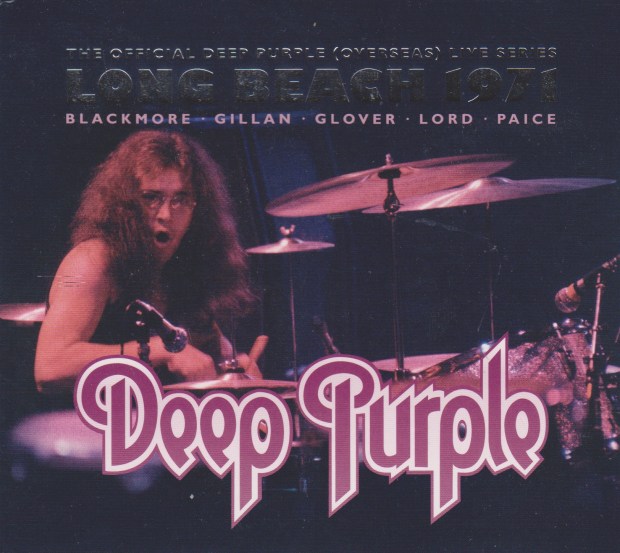
This CD is over 70 minutes long. It has four tracks. The shortest one is 11:05. The longest is 27:18. We just needed to be upfront with you, about what you are about to read, in case you felt like turning back now. This would be the time to do so.
Still with us? Great!
This live album was recorded during a period in Deep Purple where their setlist was in a state of flux. Their first heavy rock album and first serious bonafide smash hit, Deep Purple In Rock, was still dominating the set. The mid-term single, “Strange King of Woman”, had been included on the new album Fireball in the US, but it’s the only new song here. Even though the show was well recorded for radio, this set has never been released before officially.
A energetically ragged “Speed King” opens affairs. “A Speed King is somebody who moves very quickly from one place to another, and always gets there first,” says Ian Gillan during the long middle solo section. When it’s Blackmore’s turn to play, he’s smooth with just enough rough edges. Everybody shines; live in 1971, Deep Purple were a well-oiled machine running on the fuel of pure creativity. Ian and the others liked to have a drink now and then, but they were never a drug band until other members joined and brought their troubles with them. When a band as talented and unfettered and uninhibited by chemicals hit the stage, this is what can happen. “Speed King” is a mind-breakingly enjoyable version, both in spite of and because of its length!
The new single goes down a storm, and Blackmore’s solo is inspired. Then “Child in Time”, the old standby since late ’69, begins delicately with Ian in prime voice. Deep Purple at full power doing “Child in Time” complete with screams? Jazzy shuffle right in the middle? Always nice to have. The last half-hour of the set is dedicated to “Mandrake Root”, an unremarkable song from the first LP that operated in concert as the forum for their “big” jam, the one that descends into madness and chaos by the end. Brilliant stuff, but a bit much for those who just wanna rock.
If four songs loaded with solos are not your cup of java, that’s fine. There are plenty more Deep Purple live albums to be had. In the 80’s, the soloing was de-emphasized in favour of playing more songs. Those albums, featuring the exact same lineup, may be more your speed if this doesn’t sound like your kinda deal.
What happens when you let a bunch of now-grown Star Trek nerds from the 80’s make a movie? Apparently, they make Ted. If you let ’em do it twice, you get Ted 2.
I really don’t know how this works, but Ted 2 provides ample proof of its own Trek-nerdiness. Forget the fact that the climax takes place at New York Comic-Con. Do you realize how many Trek actors appear in Ted 2?
Patrick Stewart (Jean-Luc Picard), as he was in the first Ted, is the narrator. (Don’t forget he is also currently CIA Deputy Director Bulloch on Seth McFarlane’s American Dad! )
Nana Visitor, better known as Major Kira Nerys on Star Trek: Deep Space Nine, is an underrated performer with a good role here. She still looks amazing.
LeVar Burton (Geordie LaForge) appears in a brief clip from Roots as Kunta Kinte, but I’m still counting it.
Pushing it here, but Ron Canada (from Canada!), who plays the judge in Ted 2, did guest shots on three different Star Trek series.
Best of all is Michael Dorn (Lt. Worf) as Rick; gay lover to Patrick Warburton’s Guy. Took me a while to pick up on the fact that it was Michael Dorn. Only when he showed up in uniform at Comic-Con did it sink in!
Dorn and Warburton as…well, you know who.
So: McFarlane likes Star Trek. That’s obvious. He likes a lot of stuff, and Ted 2 is less a story than a running series of references to other movies. From Jurassic Park to the cheesy ending to Contact, these characters walk and talk quoting movies all the friggin’ time. It’s all they do! One thing you will see and hear less of going forward: Star Wars in any McFarlane production. According to the audio commentary, the friendly relationship that Seth used to have with Lucasfilm has vanished since they were sold, and Disney have made it pretty clear that further collaborations will not be happening. So you can kiss the idea of a Family Guy: The Force Awakens goodbye.
Unfortunately, characters that quote stuff is as deep as it gets. Mark Wahlberg’s Johnny has divorced Mila Kunis, because she was trying to change him too much. Well, yeah…that was the whole plot of Ted 1. Wahlberg wanted to grow up and marry Mila. Now he decides that’s actually not what he wanted, after fighting for it so hard in the first movie. In Ted 2, we see Marky Mark hanging around with Ted a lot, and we see him getting into plenty of hijacks, but Mark Wahlberg is little more than a non-character sidekick in this one. Ted is Ted; a foul-mouthed Peter Griffin who gets away with it by being a teddy bear. Newcomer Amanda Seyfried steals the movie with her likeable lawyer character, Sam L. Jackson. And yes, she has not heard of the actor Samuel L. Jackson, nor does she pick up on any of Ted and Johnny’s movie quotes, and that’s the driving force of the trio’s interactions. Seyfried is a wonderfully talented actress with a very expressive face, and she easily outclasses everyone she’s in a scene with (except obviously Morgan Freeman). To her credit she’s a good sport about her famous large blue eyes. They are the butt of a few jokes in the movie — the best ones actually. Seyfried is obviously a good shit and I bet she’s fun to have a beer with. She also gets to sing, and that award-winning voice performs the original theme song “Mean Ol’ Moon”.
The plot, such as it is, was inspired by the Star Trek: The Next Generation episode “The Measure of a Man”; I shit you not. This is even acknowledged by McFarlane in the commentary. Ted and Tami-Lynn (Jessica Barth) have been married a while but it’s not working out. So, they do what every struggling couple in America does to heal their relationship: have a kid. At first, you think the movie will be about Ted and Marky Mark getting into hijinks and capers, trying to steal donor sperm from demigods like Tom Brady. Then it awkwardly shifts to a legal slant, with Ted having to prove he is a person and not property in a court, just like Lt. Data did in Star Trek. Data had Captain Picard to defend him, and McFarlane says that Amanda Seyfriend’s opening comments in the courtroom scene were inspired by Picard’s.
In Star Trek, if Data were declared to be property, then Starfleet could have cut him open to mass produce intelligent androids to serve as a working class. In Ted 2, Giovanni Ribisi’s evil Donny wants to do something similar. He convinces Hasbro that they can take Ted, and cut him open to see what makes him tick, and repeat the magic. Billions of dollars would be made. All this hinges on him being declared property in court. There would be few repercussions for Hasbro to steal a teddy bear, compared to a person, to dissect it!
You have to give McFarlane credit for a great Mel Brooks-inspired opening musical number, and a brawl finale. You have to admire Amanda Seyfried’s abilities, and Pantene Pro V-perfect hair. Otherwise Ted 2 is a lazy retread. I don’t mean “lazy” in the sense that it wasn’t hard work. It clearly was hard work making this movie, doing the perfect CG bear and motion capture. The reason we don’t talk about the bear much is that he seems perfectly real at all times. No, I mean “lazy” in the writing. There are plenty of funny jokes, situations, and lines. There are no characters we care or even know much about. How did Seyfried’s Sam, age 26, become a lawyer who can play guitar and sing better than 95% of the ladies currently in the top 40, all while suffering debilitating migraines that require her to constantly smoke marijuana? How??? It’s hard to get involved in the characters when they’re so obviously not human, and I’m not referring to Ted! How does Marky Mark support himself? Does he still have a job? We never see him at work.
Best gag: A Liam Neeson cameo. Stay tuned for the post credit scene.
Special features: Unrated version of the movie, audio commentary, gag real, deleted scenes (mostly alternate lines from scenes in the movie), and plenty of making-of featurettes. The “Creating Comic-Con” feature was interesting, from a Trek nerd point of view. Check out how they made that giant starship Enterprise that hangs from the ceiling. It’s just based on a model that McFarlane had on his desk!
Blu-ray annoyance: These text info-boxes advertising other movies pop up on every menu, unless you specifically look for the setting that turns them off. That’s…mildly vexatious.
Stupid infobox.
Joke tagline: Ted 2 – more of the same, but now with Seyfried! Whose last name I can now pronounce correctly, thanks to the commentary.

 LITTLE RICHARD – The Essential (1985 Specialty)






















 mikeladano.com