Reviews

REVIEW: Dio – Holy Diver (deluxe edition)

DIO – Holy Diver (2012 Universal deluxe edition, originally 1983)

Ronnie James Dio often said that the best Dio album was the first.  Fans will always have their own favourites, but there is no denying that Ronnie was right about Holy Diver being a special album.  Dio had always had a knack for rallying talented people around him.  Just look at that lineup:  Ronnie and Vinny Appice had recently fled Black Sabbath.  Jimmy Bain had worked with Dio in Blackmore’s Rainbow, an integral part of that band’s lineup in the Rainbow Rising period.  On guitar – Vivian Campbell, from little known New Wave of British Heavy Metal band Sweet Savage.  A shredder he was, able to compete with the hot flashy players of the 80’s.

Very few people do speedy metal songs better than Ronnie James Dio.  “Stand Up and Shout” is the prototype of such Dio songs.  Youthful and rebellious, “Stand Up and Shout” was exactly what fans in 1983 were craving.  The band got to show off their chops a bit, with Vinny Appice leading the way via a hell of a drum performance.  Then it’s Vivian’s turn to shine on one of the speediest solos laid to tape.  “You are the strongest chain and not just some reflection,” sings Ronnie, inspiring the masses with his positive message of self-belief.

For the first four albums, Dio always put the title track second.  If this holds some special meaning, I do not know.  “Holy Diver”, with its ominous opening, still remains upon  the lofty peak of the best songs Ronnie has ever written.  The riff, written solely by Ronnie, is iconic.  Perhaps it is not recognized on the level of immortal riffs such as “Whole Lotta Love”, but among metal fans, it is held in high regard.  “Holy Diver” is the shiniest jewel in the crown, a massive track that just has everything.  Bain and Appice formed a tight rhythm section with the exact right amount of heft.  The song is flawless…shiny diamonds indeed.


Like the eyes of a cat in the black and blue, something is coming for you.

“Gypsy” is a knockout.  Ronnie belting in full voice with a solid mid-tempo song behind him is always a pleasure.  This is Vivian’s first writing credit on a Dio album.  The guitar solo could use some focus, but I think the directive here was “just shred”.  One of Dio’s most pop moments (in terms of melody only) is “Caught in the Middle”, one of his catchiest, most concise and direct songs.  Even Vivian sticks to point on the solo.  But “Caught in the Middle” is soon eclipsed by an even more exciting song:  “Don’t Talk to Strangers”.  The acoustic fake-out intro is a trick Dio pulled again later on “The Last in Line”, but when the song really starts, it’s friggin’ frantic.  It’s like the wind.  These guys had so much energy, it is remarkable.   “Straight Through the Heart” has balls to it, it’s a groovy tune.  I loved Halestorm’s cover of it immensely.  I think they really caught and emphasized what is great about the song.  Lzzy Hale is one of very few people who can do Dio justice vocally.

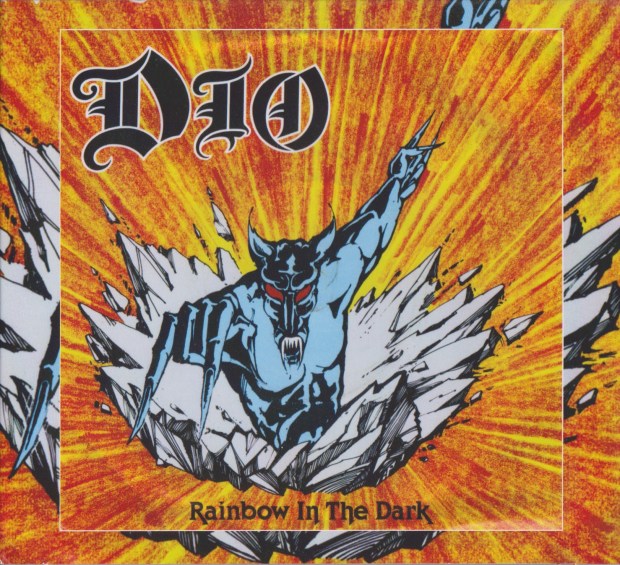
The slow intro to “Invisible” reminds me of a 1987-era Whitesnake ballad.  This is another trick!  It stops and abruptly turns into another Dio stomper of high quality.  There is very little letup on this Dio album.  The momentum is maintained by the stunning single “Rainbow in the Dark”.  That’s Ronnie on keyboards, by the way.  I have a story about this song.

Our local rock station, 107.5 Dave Rocks, has a 3:00 contest called the Tedious Tiresome Trivia in the Tri-Cities, or the TTT in the TC.  What makes it so tedious and tiresome are the callers.  Craig seems to attract the…how should I say this? The most “interesting” callers.  The most notorious of these is “Bore-linda” who has a legion of haters who can’t stand her perky tone.  (She’s actually a very nice lady in real life.)  Craig Fee would receive emails from annoyed listeners saying, “Hang up on Bore-linda!  Play some Dio!”  So that’s exactly what Craig did, and he chose “Rainbow in the Dark” as the song.  And Bore-linda calls in a lot.  And Craig hangs up a lot.  For a while, “Rainbow in the Dark” was played almost daily between 3 and 4 o’clock.  And you know what?  It never got tiring.  Every single time it came on was a fist-pumper.

Holy Diver deserves a dramatic ending, and that would be “Shame on the Night”.  Copying the template of a song like Sabbath’s “Lonely is the Word”, it occupies the same kind of slow-paced dark metal space.  Vivian’s guitar intro is very cool, but the song just pounds.

The bonus CD is chock full of Dio goodness.  Deluxe editions should always present a complete set of B-sides.  This has the three from this era, including the studio cut “Evil Eyes”.  This excellent, cruisin’ tune was re-recorded for The Last in Line, and the B-side version has remained obscure until now.   Vivian has a lot of different solos on this version, and they are all cool.  Then, essential cuts “Stand Up and Shout” and “Straight Through the Heart” are both live B-sides, every bit as electrifying as the originals.  They are simply more raw, probably a little faster, and there is nothing more powerful than Ronnie James Dio’s voice live in the raw.

The balance of the disc is fleshed out by six live songs recorded for radio by the King Biscuit Flower Hour.  They sound excellent, thanks to King Biscuit.  You get “Stand Up and Shout” a second time, but the rest of the live songs are not repeats.  In the mix are some Sabbath (“Children of the Sea”) and some Rainbow (“Man on the Silver Mountain/Starstruck”).  Of the two, “Children of the Sea” fares better from the Dio band’s interpretation.  To be fair, I think Tony Iommi and Ritchie Blackmore both have so much personality, that it is daunting to cover them no matter who you are.  I think Vivian’s style works less well on the Rainbow song than it does with Sabbath’s material.  The rest of the songs (“Holy Diver”, “Rainbow in the Dark”, “Shame on the Night”) are all quality Dio tracks.  Although the market is now inundated with live Dio packages, it is still a delight to have these early recordings on CD.

I needn’t divulge that this deluxe edition is loaded with cool liner notes and pictures.  You have come to expect that from a good deluxe edition.  And Holy Diver is quite good indeed.

4.5/5 stars

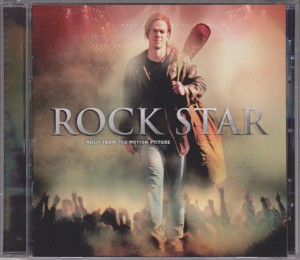
REVIEW: Rock Star – Music from the Motion Picture (2001)

Scan_20150812ROCK STAR – Music from the Motion Picture (2001 Warner)

I remember dragging my long-suffering girlfriend at the time out to see this movie.  She had every right to complain.  The movie was a stinker, absolutely.  Not to mention, it had no idea when it is taking place.  Vaguely, the 80’s, but then after this guy (Marky Mark) leaves the band (Steel Dragon), he goes and becomes the founder of grunge?  The movie sucked!  It was very, very loosely inspired by the story of Ripper Owens being discovered by Judas Priest, by being in a Judas Priest cover band.  In the movie, Marky Mark becomes the singer of Steel Dragon after their original singer (who also happens to be gay, hmmm?) quits.  It was supposed to be a really inspiring story of the everyman with talent who succeeded, but it ended up being just a normal everyday turd.

But listen, we’re not talking about the movie.  We’re looking strictly at the soundtrack CD.  I ask you one simple question: If you were to pick one band to write and play the title anthem for a movie about a heavy metal band in the 80’s, who would it be?  Obviously the answer is Everclear.  (I say “obviously”, because a whole bunch of suits who get paid a whole lot more than I do picked it, so they must be right.)  Actually, their tune “Rock Star” isn’t bad.  It sounds a bit like an old Canadian rock band called Deadline, actually.

Scan_20150812 (3)

It’s astounding, but Zakk shaved his beard to get that 80’s look back!

The main attraction of the CD is actually the original tunage by the fictional band Steel Dragon.  On record, the lineup was:

  • Zakk Wylde – lead guitar
  • Jason Bonham – drums
  • Jeff Pilson – bass
  • Nick Cantonese – guitar
  • Mike Matijevic – lead vocals
  • Jeff Scott Soto – lead vocals

See why I dragged that poor girlfriend out to see this movie?  Zakk, Jason and Jeff were in even the movie, as the band Steel Dragon.

They had two lead singers, while Marky Mark mimed.  Jeff Scott Soto sings the raspy, mid-rangey stuff such as “Livin’ the Life”.  This isn’t a bad rock tune, but it’s Zakk’s guitar that makes it perk up a bit.  Mike Matijevic (Steelheart) sings the smooth and screamy stuff, with his impeccable range.  “We All Die Young” is a bonafide  great songs.  Matijevic’s stunning vocals meeting Zakk Wylde’s leads is probably a wet dream for some folks!  The only problem with it is that it doesn’t sound accurate to the period.  The movie is supposed to take place in the early 80’s (I think) but “We All Die Young” sounds early 90’s.  But wait…we’re supposed to be talking about the CD, not the movie.  Fuck the movie!

“Blood Pollution” (written by Twiggy Ramirez, interestingly) has Matijevic singing, but as with “Livin’ the Life” the song isn’t that special.  It sounds like Motley Crue, except with Zakk Wylde on guitar and a better Vince Neil.  Jeff Scott Soto helms “Stand Up”, which is way heavier than you’d expect considering Sammy Hagar wrote it!  This version actually came out before Sammy’s, on 2002’s Not 4 Sale and has different lyrics.  “Stand Up” kicks ass, and along with “We All Die Young” is one of the soundtrack highlights.  Just listen to Zakk killing it in that fast part! It’s also one of the few tunes with that patented, genetic Bonham Stomp.

Another track right up Motley Crue’s alley is “Wasted Generation”, and with its Desmond Child co-write it’s a lot heavier than expected. Jeff Scott kicks ass on the anthemic punchy chorus, and Zakk’s shredding is tasty. The final Steel Dragon tune on the disc is a Rainbow cover — “Long Live Rock and Roll” with Matijevic singing. I never understood why the band Steel Dragon would be playing a Rainbow cover, since it is implied that Steel Dragon were active in the 70’s too, contemporaries with Rainbow. But we’re here to talk about the CD, not that piece of shit movie. “Long Live Rock and Roll” with Zakk Wylde on guitar…it’s not what you’d hope it would be. Bonham’s awesome though, and remarkably Ian Paice-like.

The rest of the disc contains various hits from various bands from various years.  The Verve Pipe – “Colorful” (2001), check!  INXS – “The Devil Inside” (1987), check! Why? Who the fuck knows. I like some INXS, it’s completely out of place. I suppose that a soundtrack for you. More suiting to the tone of the CD are Kiss’ “Lick It Up” (1983), Bon Jovi’s “Livin’ On A Prayer” (1986), Ted Nugent’s “Stranglehold” (1975), and Motley Crue’s “Wild Side” (1987). I do wonder why “Stranglehold” seems to be the only Nugent that ever shows up on movie soundtracks.  At least Marky Mark doesn’t have any songs.

The final song, Trevor Rabin’s “Gotta Have It” sounds like end credits music, but I’m not going to watch that crummy movie to find out. Rabin’s track is excellent, as should be expected. It sounds like Rabin, which is all I can really say to describe it!

So: Rock Star, a shit movie, gave us a pretty OK soundtrack. Considering I (and probably you) already had the Nugent, Kiss, Bon Jovi and Motley Crue songs, I salvaged seven tracks from the album as keepers: the six Steel Dragon tunes, and Trevor Rabin. There are 14 songs, so this time the math is easy.

2.5/5 stars
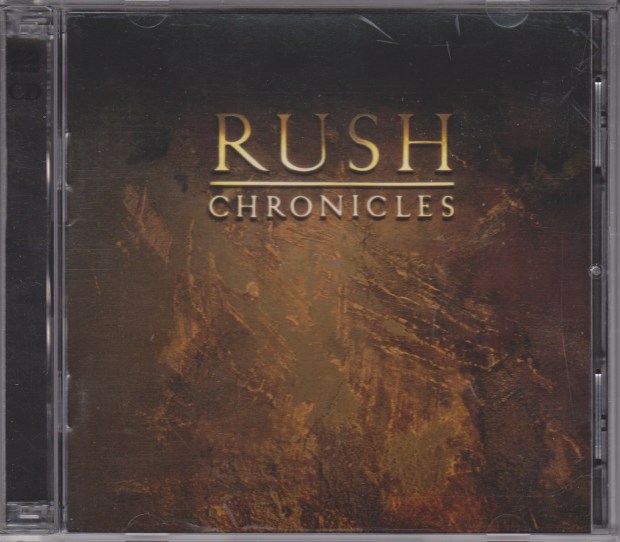
REVIEW: Rush – Chronicles (1990)

It’s the final instalment of GREATEST HITS WEEK! All week we were examining some pretty cool greatest hits albums.  I saved the best for last — one of the very greatest, Greatest Hits albums ever. Once again, thanks to Aaron over at the KMA for the idea (which I stole).  For his original Greatest Hits Week, click here! 

If you missed a prior review, here they all are:

Monday:  EXTREME – The Best of Extreme: An Accidental Collication of Atoms? (1997)
Tuesday: JUDAS PRIEST – The Best of Judas Priest (1978/2000 Insight Series)
Wednesday: JUDAS PRIEST – Greatest Hits (2008 Steel Box)
Thursday: HELIX – Over 60 Minutes With… (1989)


RUSH – Chronicles (1990 Anthem)

Yeah, oh yeah!
Ooh, said I, I’m comin’ out to get you
Ooh, sit down, I’m comin’ out to find you
Ooh, yeah
Ooh yeah
Findin’ my way!

I just can’t stress how important this album is to me.  I had always followed Rush, and been interested in what they were up to.  I had never taken the plunge and bought any albums.  I wouldn’t have had a clue where to begin anyway.  In July 1994, I was hired at the Record Store thus kicking off the exponential growth of my music collection (and tastes).  With birthday money, I finally acquired my first Rush:  Chronicles, the massive 2 CD set that was released for Christmas of 1990.

For my first listen, I didn’t play the whole thing from front to back.  I picked out the songs I liked best, and programmed the CD player.  I revisited favourites like “Tom Sawyer” and especially “Subdivisions”, and then the next day, listened to the whole thing.  One song jumped out at me immediately:  “Red Sector A”.  Holy shitballs!  “The Temples of Syrinx” was the next one that grabbed me on second listen, along with “Freewill”, “Limelight”, “The Trees” and “What You’re Doing”.  I had feared Rush would be a bit over my head if consumed in this quantity, but it turned up to be just my poison.

Even though Chronicles is the first Rush “greatest hits” compilation, and has arguably been replaced by the three volumes of Rush Retrospective, I still think that it is a perfect entry point.  I think back to my early experience of trying to figure out where to start with this band.  They seemed to have a lot of different sounds over the years.  I know today that anybody looking to buy their first Rush album can comfortably start with Moving Pictures.  But what about those who want a little bit more music than that, in the form of a detailed sampling?  Then Chronicles is the one.

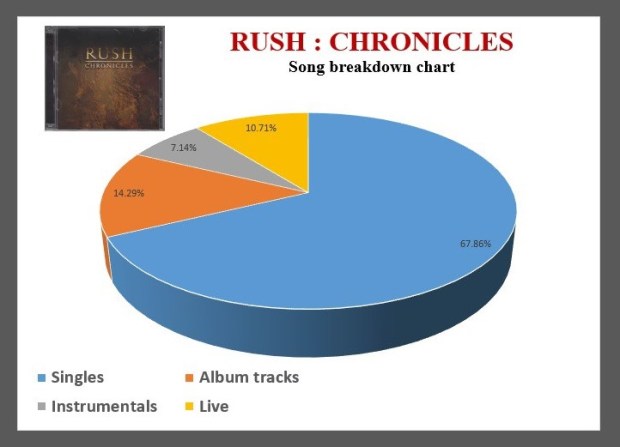
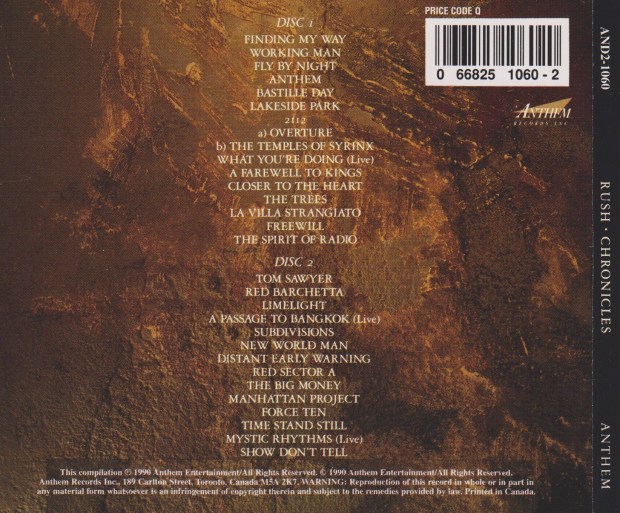
Appropriately, Chronicles goes chronologically which works for a band like Rush.  Their evolution over the years has been very natural and organic, not at all jumpy.  That makes for a smooth listen.  Each studio album gets two tracks, with a few exceptions:  Moving Pictures is represented by three, while the most recent Presto has one.  Additionally, 2112 has one track, albeit actually the first two parts of “2112” itself.  The neat thing, though, is that for its time Chronicles actually had three rare live tracks too.  Back in the early days of CD, they couldn’t get as much music onto the disc as they can today.  “What You’re Doing”, “A Passage to Bankok”, and “Mystic Rhythms” were all cut from their respective CD releases for time reasons.  They were released on Chronicles, on CD, for the first time ever.  All three are brilliant versions, especially the electrifying “What You’re Doing” from All the World’s a Stage.

I was hooked.  Using the tracks and liner notes from Chronicles as a guide, I began adding more Rush to my collection: 2112, Signals, Moving PicturesA Show of Hands, plus the more recent Counterparts and Roll the Bones too.  I see no reason that new fans today can’t use the album as a gateway the same way I did.  It’s still in print, even though the more recent Rush compilations are readily available.

There are minimal exclusions missing from Chronicles.  Some notable songs are absent, such as later singles “Superconductor” and “The Pass” from Presto.  This isn’t hard to understand.  Rush wouldn’t have wanted to compete with the current studio album they were still promoting!  The price is the only issue.  Even after all these years, Chronicles is still found for over $20, unless you go for a used one, much like I did!

5/5 stars

RUSH CHRONICLES

Scan_20150810 (3)

REVIEW: Helix – Over 60 Minutes With… (1989)

Welcome back to GREATEST HITS WEEK! This week we are looking at different, interesting hits albums from various bands. Today…just gimme an R!

Monday:  EXTREME – The Best of Extreme: An Accidental Collication of Atoms? (1997)
Tuesday: JUDAS PRIEST – The Best of Judas Priest (1978/2000 Insight Series)
Wednesday: JUDAS PRIEST – Greatest Hits (2008 Steel Box)


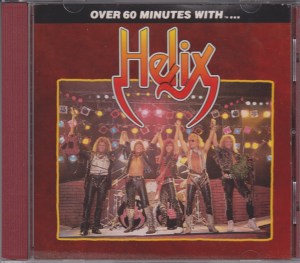
Scan_20150809 (5)HELIX – Over 60 Minutes With… (1989 Capital)

It’s always risky buying a compilation album from a label “series”.  Yesterday, we looked at a Judas Priest compilation from Sony’s Steel Book Series.  Over 60 Minutes With… was a CD-only (no tapes, no records) series by Capital/EMI in the late 80’s and early 90’s.  I remember seeing it over Christmas break in ’89, and trying to decide whether to buy it, or Ace Frehley’s Trouble Walkin’.  (I went with the Ace, and saved the Helix for a month or two later.)  I was confused:  Here was a brand new Helix CD, with Brent “The Doctor” Doerner right there on the front cover.  But hadn’t he left the band?  He had, but that was how I could tell this was a semi-official release, driven by the label.

The difference between Over 60 Minutes With…Helix and all the other label compilations is that this one is really, really good.  In fact to this day, it is still the one of the best Helix compilations assembled (and it was the first!).  Here are some reasons:

1. Rare tracks! Three of them in fact. You get demos for “Give It To You” (a new song re-recorded for the Back For Another Taste CD), “Jaws Of The Tiger” (re-recorded for B-Sides) and “Everybody Pays The Price” (later to be the B-side to “The Storm”).

2. Lots of hits. 21 tracks are contained within, and a good solid six of them were hit singles.

Those two points are enough reason to buy this CD (especially the first).  Let’s keep listening.

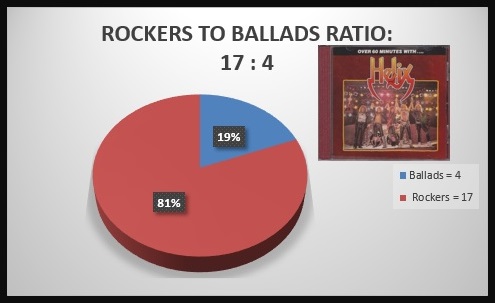
3. Rocker-to-ballad ratio is a generous 17 : 4.  Keep me mind, Helix ballads tend to rock anyway.  “Never Wanna Lose You” gets pretty heavy come chorus time!

PIE CHARTThanks to Geoff over at the 1001 Albums in 10 Years for the “Excel”lent inspiration!

4. Loads of tunes from No Rest for the Wicked.  When this CD came out in ’89, that album was unavailable on CD and scarce on cassette.  This CD has seven songs from No Rest!  That album, loaded with rockers heavy and melodic, is still one of their very best today.  Even though there were only three unreleased songs on Over 60 Minutes With…, there were tons that were brand new to me.

That considered, Over 60 Minutes With… has one serious flaw.   The record company only included songs from the first three Capitol Helix albums. Obviously nothing from the independent albums Breaking Loose or White Lace & Black Leather were up for grabs.  Strangely though, 1987’s Capitol Wild In The Streets CD is strangely missed.  The inclusion of one or two tracks from that album would have been appreciated.

Flaw aside, the liner notes are informative and the track listing is still generous. You certainly don’t want to miss album tracks such as the awesome “You Keep Me Rocking”, the raunchy “Dirty Dog” or the slinky “Check Out The Love”.  They are here along with many others. Pick this up, enjoy it, and then explore some of Helix’s proper albums, such as No Rest for the Wicked.  This is great, but it’s only the beginning!  Gimme an R indeed.

4.5/5 R’s

Scan_20150809 (6)

REVIEW: Judas Priest – Greatest Hits (2008 Sony Steel Box)


Welcome back to GREATEST HITS WEEK! This week we are looking at different, interesting hits albums from various bands. Today we re- visit the Mighty Priest, for the second of a Priest double-shot!

Monday:  EXTREME – The Best of Extreme: An Accidental Collication of Atoms? (1997)
Tuesday: JUDAS PRIEST – The Best of Judas Priest (1978/2000 Insight Series)


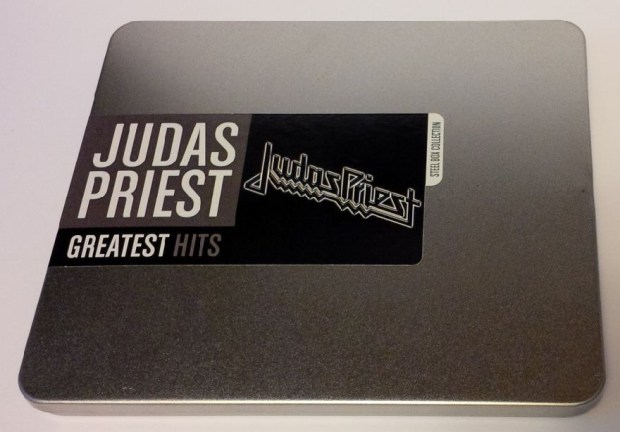
JUDAS PRIEST – Greatest Hits (2008 Sony/BMG Steel Box Collection)

Ever buy a CD for no real good reason?  I have all these songs, because I already own every song Priest has ever released.  I saw this Judas Priest compilation, from the “Sony Steel Box” collection, at my local Best Buy for a few measly dollars.  There are a few artists who have hits albums in this collection, such as Aerosmith.  I just wanted one of the steel boxes, so I chose Priest.  I chose Priest because of the brief, but interesting track listing.  There are some odd choices for a greatest hits disc:  “Rock Hard Ride Free”, and “Rock You All Around the World”, for example, instead of “Heading Out to the Highway”, “A Touch of Evil”, “Painkiller”,  or other better know singles.  Hell, where’s “You’ve Got Another Thing Comin'” or any song from Screaming?  You do get two “new” songs from Angel of Retribution.  Needless to say, for a 10-track hits CD, it was an interesting selection of songs, so I chose this one.  I have only played it once, so it’s time to revisit and assign a rating.

This is where we run into the flaw with these Sony steel boxes — the front cover and back cover art is just a sticker, that wraps around the case.  When you open the case, it damages the sticker where it covers the hinge, digging huge creases all over the spine.  I’ve opened my copy a couple of times and see what it looks like already?  That’s me being careful.

IMG_20150809_081711

“Breaking the Law” has always worked well in the opening position.  Off with a bang (literally; the first sound is a snare drum), we are now off to the races.  This Greatest Hits concentrates almost entirely on material from British Steel and after, collecting a lot of Priest music from their simple, straightforward metal period of the 1980’s.  There is nothing wrong with that of course, but it lacks the balance that earlier more complex tracks like “Victim of Changes” would have brought to the table.  “Breaking the Law” and “Living After Midnight”, both classics culled from British Steel, get the job done on a hit laden note.  The sound is fine, as it appears these were lifted from the Priest remasters.

I’m not sure the logic in choosing “Out of the Cold”, a synth-laden slow crawler from Turbo.  There is nothing wrong with it of course, it was and remains a stormy fan classic.  That’s just it though, it’s a fan classic, not a well known hit that the band play in concert.  On a 10 song CD, it seems an odd choice, but it leads well into the dark “Love Bites”.  I went through a period of about three days in grade 8 of being completely obsessed with this song.  The things I liked about it, such as the choppy rhythms and hypnotic vocals, are still striking today.  It also flows perfectly into “Rock You All Around the World”, which unfortunately is pretty much just filler that should have been donated to the Scorpions.

I still think it terms of albums having “sides”, and I wonder if whoever sequenced this CD had the same thought?  “Rock You All Around the World” is a great side closer, as it filled that slot on Turbo.  Then the next track is the very different “Diamonds and Rust” (live version from Unleashed in the East).  It’s as if you have started a new side.  Another track from Defenders of the Faith (“Rock Hard Ride Free”) brings the listener back to the 80’s.  Although it was not a single, it was good enough to be one.  Back to the Turbo album for the third time, “Turbo Lover” is a song that still gets occasional radio airplay.  It’s funny how this robotic and very dated song is still loved today.  I wouldn’t have predicted that.

“Turbo Lover” is the last of the golden oldies, since the last two tracks are off Angel of Retribution, Priest’s glorious reunion album with Rob Halford after a long solo career.  Strange though that the single “Revolution” is not one of these tracks.  “Deal With the Devil” was an OK tune, a good heavy album tune that was of the same quality as similar songs from Painkiller.  “Worth Fighting For” was excellent – a midtempo quiet rocker that almost borders on ballad territory.  This song was a triumph, a really excellent song worth of the Priest canon.  Unfortunately in this case, a quiet midtempo near-ballad does not work to close a Priest compilation.  It works as a song to build into another song, but here it just leaves you hanging.  Sloppy sequencing.

Rating the steel book CD is not a reflection on the songs or the band, just the CD itself.  There are too many serious omissions (“Metal Gods:, “Freewheel Burning”, hello!) for it to rate highly.  The flawed packaging design is the final nail in the steel box.

2/5 stars

JUDAS PRIEST GREATEST HITS 2008Thanks to Geoff over at the 1001 Albums in 10 Years for the “Excel”lent inspiration!


REVIEW: Judas Priest – The Best of Judas Priest (Insight Series reissue)

Welcome back to GREATEST HITS WEEK! This week we are looking at different, interesting hits albums from various bands. Today we visit the Mighty Priest!

Monday:  Extreme – The Best of Extreme: An Accidental Collication of Atoms? (1997)


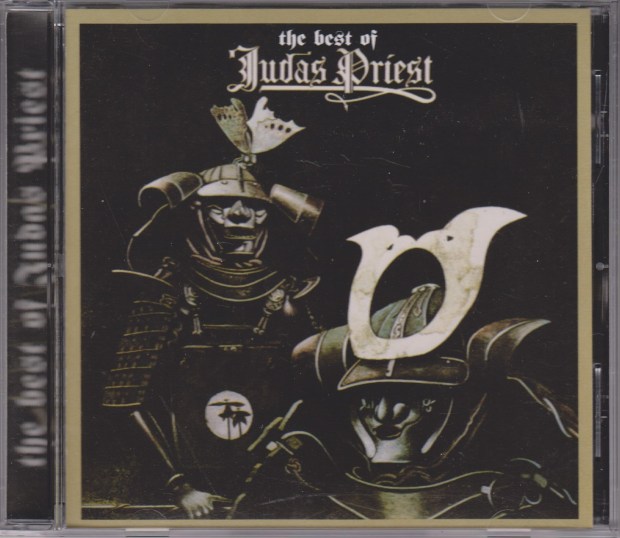
Scan_20150808JUDAS PRIEST – The Best of Judas Priest (1978 Gull, 2000 Koch Insight Series reissue)

The abbreviated story:  Judas Priests’s first two albums, Rocka Rolla and Sad Wings of Destiny, were released on Gull records.  Priest’s first album for Columbia was Sin After Sin in 1977.  When they made the move to the bigger label, they lost all rights for their first albums to Gull.  The label proceeded to issue and reissue unauthorized compilations of those songs.  They even had Rocka Rolla remixed in its entirety by Rodger Bain and reissued in 1981 as part of the double album Hero, Hero.

The Best of Judas Priest was the first exploitive release by Gull, in 1978.  It would have been frustrating for the band to be out there promoting the new album, Stained Class (1978) when the unauthorized Best of hit the shelves.  Whenever asked about it, Priest have discouraged fans from spending their money on these Gull releases.  That was especially true when Best of Judas Priest was reissued again in 2000 by Koch records as part of the “Insight Series”.  They even placed a disclaimer on the official Judas Priest site advising fans to stay away from this CD in particular.  What really seemed to chap their collective ass was that the “Insight Series” contained a lengthy interview with former drummer John Hinch, who was really in the band for only a short time and was fired due to “lack of ability” (their words).

We at LeBrain HQ have acquired a copy for research purposes!

The Best of opens with 10 minutes of slow sludge from Rocka Rolla in the form of “Dying to Meet You” and “Never Satisfied”.  Poor sequencing aside, it is surprising that the up-tempo “One for the Road” is nowhere to be found.  Some heat is finally in the kitchen on Joan Baez’ “Diamonds and Rust”, an early unreleased version.  This too must have peeved the Priest.  This was recorded during the Sad Wings of Destiny sessions, but ultimately left off the album.  Not wanting to let the arrangement go to waste, it was re-recorded for Sin After Sin with Roger Glover producing. This earlier version, out the following year, probably confused a few fans who bought both albums.  The Sad Wings version is of high quality.  It lacks the crispness of the Glover recording, but should be absolutely essential to collectors today.  It can be found on a number of releases including Hero, Hero.

“Victim of Changes” was and is a high water mark.  It’s actually an amalgam of part of a song Rob Halford wrote (“Red Light Lady”) with a song by original Priest singer and founder, Al Atkins (“Whiskey Woman”).  To this day, has Halford ever used his scream more effectively?  “Victim of Changes” is nothing less than a desert island classic.  “Victim”, and the rest of the songs, all come of Priest’s immortal second album Sad Wings of Destiny.

“Island of Domination” is not a place you want to visit:  “We gotta get, we gotta get, we gotta get out of this place.  There’s a man with a needle who’s pleading to get to my face.”  The speedy metal delight keeps you there anyway.  “The Ripper” is a brief but undeniable classic, another highpoint from the Gull years.  Finally, “Deceiver” is separated from its first chapter, “Dreamer Deceiver”.  It does sound odd without its companion, but for a brief and explosive rock song to end a side of vinyl, it is certainly more than up to the task.

Finally there is the infamous 18 minute John Hinch interview that so upset the Priest camp upon its release.  Hinch discusses his history with the band, going back to forming a band with Rob Halford called Hiroshima.  Perhaps the guys in Priest were peeved when Hinch recalls playing on the same bill as Judas Priest, who he says were “horrible”.  His description of KK Downing as a “strutting lead guitarist [with] long blonde hair,” isn’t complimentary.  Ian Hill invited Rob and Hinch to join the band to replace Al Atkins, and their drummer Chris “Congo” Campbell.  According to Hinch, they did so reluctantly and with a desire to change the name.  This critique turns to praise, especially after Glenn Tipton joined the band to fill out the sound.  Perhaps his recollections don’t match those of the band, but it is otherwise impossible to find any other interviews with the drummer from Priest’s first album.  If you want a perspective from the drum stool in 1974, here it is.  What’s missing is any comment on why he was let go.

Ultimately it is up to the fan to decide where to draw the line on what to buy, and what not to buy.  Since the early “Diamonds and Rust” is also on Hero, Hero, one could choose to only buy that release, if they decide they don’t need the Hinch interview.  One could even buy both, or neither.  Personally speaking, I would have bought this anyway if only for the unique cover art.  It is your decision, but The Best of Judas Priest is a decent listen.

3/5 stars

REVIEW: Extreme – The Best of Extreme: An Accidental Collication of Atoms? (1997)

Welcome to GREATEST HITS WEEK! This is an idea I nicked from Aaron over at the KMA.  (For his original Greatest Hits Week, click here!)  

All week, we will be looking at different (and I hope interesting) hits albums from various groups. Let’s get this one out of the way first though: the proverbial contractual obligation album!

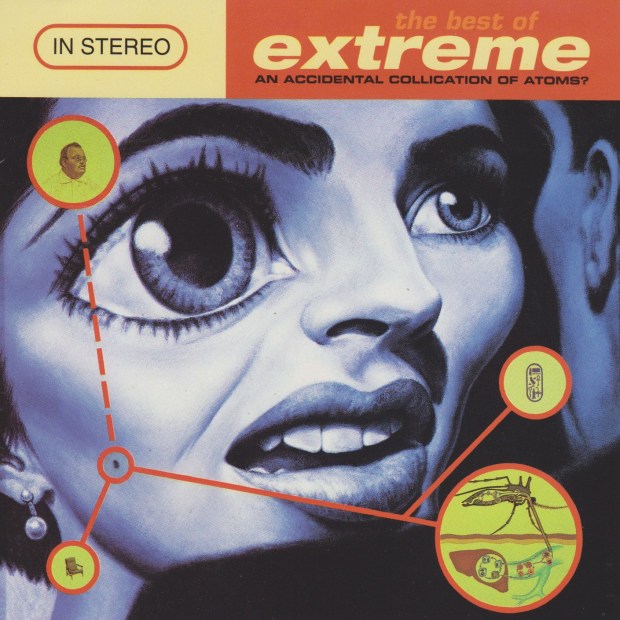
Scan_20150804EXTREME – The Best of Extreme: An Accidental Collication of Atoms? (1997 A&M)

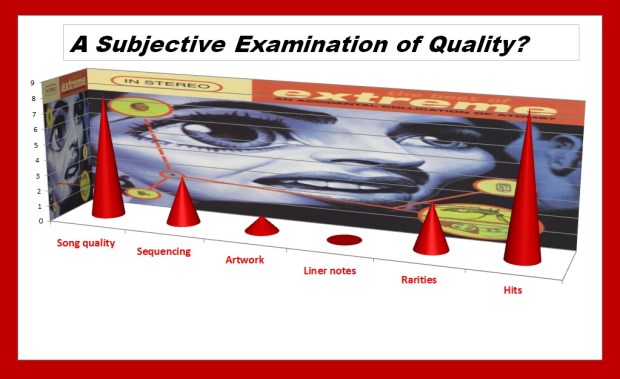
The best of Extreme? Perhaps, by some arguments, but the ball sure was fumbled, with this CD that fails to keep the attention from flagging.

The Best of Extreme (subtitled An Accidental Collication of Atoms?, whatever the hell that’s supposed to mean) plays it straight, in a paint-by-numbers kind of way. Pretty much every song here is a single, though not many were very big singles. The thing is, like more respected bands such as King’s X (with whom they shared management), Extreme were about albums much more so than singles. First record aside, Extreme never failed to impress with a cohesive collection of jaw-dropping rock. So what happens when you take a record company suit (or a room full of them) and assign them the duty of picking a baker’s dozen of tracks for the requisite greatest hits CD? You get an accidental collication of atoms, apparently.

Opening with “Decadence Dance” was a great idea, but why leave on the rain storm and narration that opens the album version of the song? Why not use the dynamite single version? That intro makes little sense in context of a greatest hits disc. Great song, though — in fact every single song here is bonafied great! With the possible exception of “Kid Ego”, every track here was always of the utmost quality, delivering innovation and hooks. “Rest in Peace” – brilliantly produced, written and performed. “Tragic Comic” – just pure class acoustic rock as only Extreme deliver. Same with the massive hit “Hole Hearted”. “Hip Today” – still aggressive to this day. That was Extreme’s first single with Mike Mangini on drums, incidentally.

So you can’t knock the tunes, at all. It’s the crummy execution that’s the problem. The rain at the beginning of Decadence Dance is one such example. Then on “Rest in Peace”, the guitar outro that normally leads into “Politicalamity” is retained, but it ends abruptly and leads into nothing. That is sequenced into “Kid Ego” from the first album, which as an awkward transition. “Leave Me Alone” works better as a side opener.  There’s no reason behind the track listing that I can imagine. It’s not chronological, and it doesn’t flow well, especially when you hit 11 minutes of ballads right in the middle of the whole thing. The booklet is a joke, with no liner notes of any value. It’s just a slathering of images that has nothing to do with Extreme or any of their past albums.  Just lazy.  Nobody would even cop to compiling it by putting their name in the credits. The anonymous compilers are as faceless as the CD they created. The band had been broken up for a while, when Gary Cherone joined Van Halen. This was just a record company trying to squeeze a few more dollars out of a band that had little value in 1997 dollars.

There are two touches I like on The Best of Extreme. One is the “Horn Mix” of “Cupid’s Dead”. I don’t have this on any singles in my collection, so thank you, suits! (I know you included this remix just for idiots like me that would buy an entire CD just for one song. However the joke is on you. I bought it used from my own Bargain Bin.) It’s a killer remix. It should have been this way on the album. Maybe somebody said, “We can’t have too many horns! One has to go.” It’s also nice to see “Am I Ever Gonna Change” closing the CD. That “song” is actually just the middle section of “Everything Under the Sun”, the side-long epic that closed Extreme III Sides to Every Story. It was one of the more single-like moments from an album that offered few such songs. Fans have long said that it should have been a single, so it is interesting to hear it here, amputated from its parent song.

Unless you need that “Cupid’s Dead” remix, you don’t need this CD.

2/5 stars

EXTREME QUALITY CHART

Thanks to Geoff over at the 1001 Albums in 10 Years for the “Excel”lent inspiration!

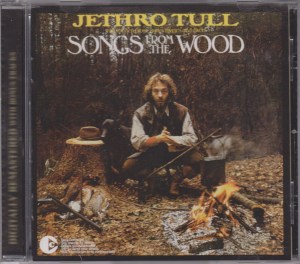
REVIEW: Jethro Tull – Songs From the Wood (Remaster)

For JT!

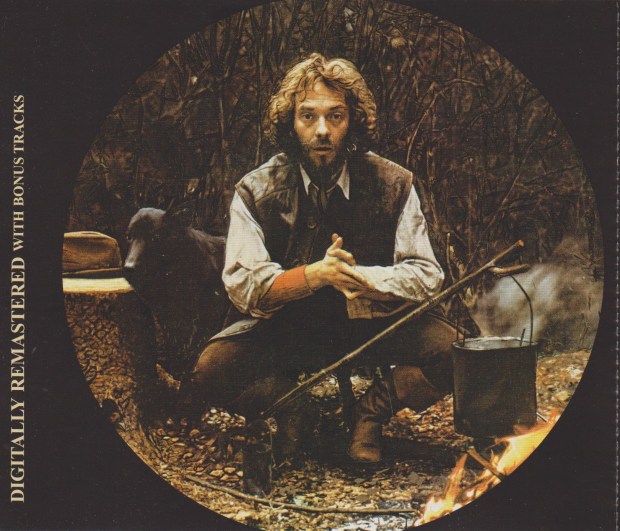
Scan_20150807JETHRO TULL – Songs From the Wood (1977, EMI 2003, remaster)

I love the jaunty, lighter side of Jethro Tull.  One of the reasons I started listening to Tull was that acoustic side.  It’s unique among rock bands.  They could still be pompous, but in a fun kind of way.  The critics called it “folk rock”, but that is misleading. It’s much more complicated than that.  Songs From the Wood might be considered the epitome of this kind of Tull music.  It was also the first for keyboardist David Palmer as an official member of the band, and perhaps that has something to do with the direction of the album.

The title track begins things immediately with this type of soft playful Tull song.  A multi-layered Ian Anderson sings harmonies with himself, and then the band come in backing him with gleeful but complex music.  Palmer’s synthesizer is immediately obvious, as he doubles down with John Evan, also on keys.  Certainly Barriemore Barlow has to be one of the most underrated drummers in rock, and his work here is as excellent as it is difficult.

Ian plays all the instruments himself on personal favourite “Jack-in-the-Green”.  This character from old English folklore is usually associated with the coming of spring, and the music is appropriate for that kind of imagery.  This kind of song was in part inspired by the countryside that Ian had relocated to.  While there he read a book on folklore, and that made its way into the music.  It’s hard not to like “Jack-in-the-Green”, unless you’re just a Grinch.  “Cup of Wonder” is brilliant, a celebration with orchestration and bright melodies.

“Hunting Girl” is the first song that delivers a big heavy riff (thank you Martin Barre). The song has a gallop to it, as if you are riding horseback with the Hunting Girl herself.  Martin’s guitar solo is a delight, a brief moment of rock genius.  Up next is a song that was re-recorded many years later for The Jethro Tull Christmas Album:  “Ring Out Solstice Bells”.  It doesn’t feel at all out of place on Songs From the Wood.  It fits the direction and lyrical concept of other songs, with the solstice theme.  Barrie Barlow’s drums on the outro are something else!

Scan_20150807 (2)

Side two of the album opened with “Velvet Green”, a very percussive song.  Of the tracks thus far, it is the least instantaneous.  It’s one of the longest track at six minutes, and has a very progressive bent.  “The Whistler” on the other hand is pretty instant.  I used to mis-hear the lyrics.  I thought Ian was singing, “I have a pipe, and I’ve come to play.”  I prefer my words to the actual ones, “I have a fife and a drum to play.”  This brilliant little song is about as bright and jaunty as Tull get.  “Pibroch (Cap in Hand)” gives Martin Barre a chance to make a lot of cool noises…weirdly Kiss-like, actually.  “Pibroch” is a long bomber (8:35) and a bit too long at that, but the moments of brilliance shine through, as always.  Especially enjoyable are the quaint “Dr. Who” sounding keyboards near the end.  Just great stuff.  The closer is “Fire at Midnight”, a title that Blackmore seems to have ripped off for his Fires at Midnight album.  It is a brief mostly-acoustic number that returns to the bright spring-like sound that commenced the album.

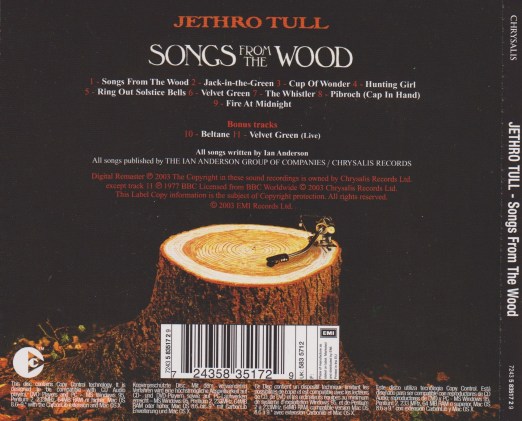
The Jethro Tull remaster series has been excellent.  Songs From the Wood only has two bonus tracks, which is a darn shame.  “Beltane” shares lyrical themes with other songs on the album.  I don’t know if it’s a B-side or what have you, but it’s clearly from these sessions.  It boasts some of Ian’s best flute work on the disc.  It’s of excellent quality, a worthy bonus track for a great album.  The other extra is a live version of “Velvet Green”, every bit as complex as its studio counterpart.  It’s a bit more lively, perhaps.

People who like Tull would probably love this album because it emphasizes a lot of traits that are unique about Jethro Tull.  Those who hate “folk rock” or progressive rock, or whatever else Tull gets pigeonholed as (classic rock?*) should keep their distance from Songs From the Wood.

4/5 stars

Scan_20150807 (4)

* Hey, they won a Grammy as a “heavy metal” band.

REVIEW: Death Angel – Act III (1990)

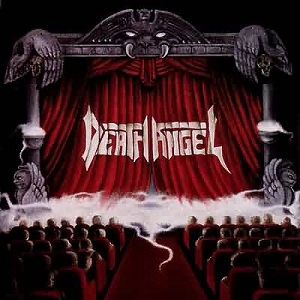
ACT IIIDEATH ANGEL – Act III (1990 Geffen)

I am no stranger to Death Angel.  In the 80’s, I knew them as that thrash band from San Francisco, that grew up listening to Love Gun.  I also thought they were a bit too heavy for my hemispheres.  Whatever “too heavy” means, anyway.  Then I received a review request, from Uncle Meat.  “I want this man to review Act III by Death Angel .   I think it’s a good’er.”

Very vintage Anthrax-like is “Seemingly Endless Time”, and excellently produced by Max Norman too.  The vocals are in the Belladonna range, and the pace is rangingly fast, while paradoxically grooving heavily.  However you want to describe it, it’ll slam you right in the face.  It’s that whole Bay area thrash vibe, honed to a killing edge.  The chorus has an Ozzy-like melodic power.  Then, “Stop” chugs like the heavier side of Testament.  Mark Osegueda has a versatile voice, at times recalling young James Hetfied.  There are plenty of time changes and surprises on this track, enough to challenge the meek.

Speaking of surprises, I didn’t expect the acoustic guitar opening “Veil of Deception”.  Singer Mark Osegueda really gets to show off his pipes on this one, but it’s the guitar duo of Rob Cavestany and Gus Pepa that really impress with their ability and diversity.  Then, “The Organization” (also the name of their next Osegueda-less band) is bone-shaking fast and heavy.  There are still the slithering guitars and melodic vocals to sink your teeth into.  This is top notch metal.  Andy Galeon lays down some complicated beats for “Discontinued” on which he has a writing credit.  It’s Dennis Pepa’s funky bass that reminds me of where guys like Mike Muir were going with thrash.

I remember the ballad “A Room With a View” being played on MuchMusic in ’91, so it is familiar.  Ballads seemed to be working for bands like Metallica and Testament at the time, but it seems more fitting for a diverse album like Act III.  Layers of vocals make it special, as does the acoustic guitar solo.  “Stagnant” opens bright and slow, but shortly an avalanche of menacing guitars is upon us.  This transforms into a funky assault that sounds like 90’s stoner rock.  Then “EX-TC” is old-style screaming thrash, as is “Disturbing the Peace”.  The final track, “Falling Asleep” is anything but sleepy.  It returns to the chugging that works so well for head banging.
I understand now why Death Angel was so critically acclaimed back in the 80’s.  Their ability and musical intelligence was off the charts.  Too bad they were one of the bands that didn’t survive the 90’s.  I’m glad I had the chance to check out this thrash metal cornerstone.  The Devil’s metal indeed!

4/5 stars
All songs written by Rob Cavestany, except where noted.
  1. “Seemingly Endless Time” – 3:49
  2. “Stop” (Cavestany, Mark Osegueda) – 5:10
  3. “Veil of Deception” – 2:35
  4. “The Organization” (Cavestany, Andy Galeon) – 4:16
  5. “Discontinued” (Cavestany, Galeon, Gus Pepa, Dennis Pepa) – 5:50
  6. “A Room with a View” – 4:42
  7. “Stagnant” (Cavestany, Galeon) – 5:33
  8. “EX-TC” (Cavestany, Osegueda) – 3:06
  9. “Disturbing the Peace” – 3:53
  10. “Falling Asleep” – 5:54

Credits and art from Wikipedia.

REVIEW: Queensryche – Take Cover (2007)


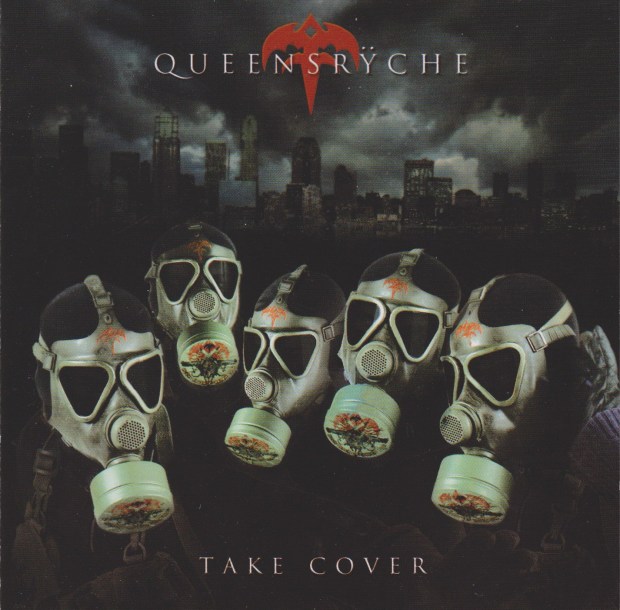
Scan_20150801 (4)QUEENSRYCHE – Take Cover (2007 Rhino)

As bad as things got at the end of the Tate era for Queensryche (cabaret, anyone?), Take Cover was a musical low.  Queensryche were busy in 2007, with a double live performance of both Mindcrime albums (Mindcrime at the Moore),  a double best-of (Sign of the Times featuring a new song called “Justified”), and Take Cover, a covers album.  Considering the number of releases in 2007 (double CDs no less), Take Cover looks all the less necessary.

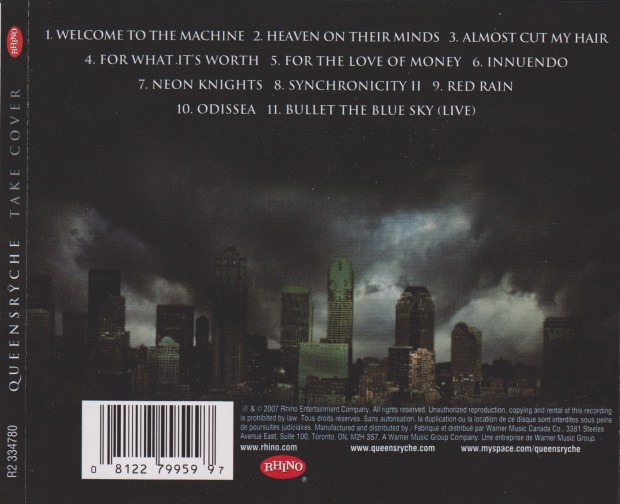
The five members of Queensryche each chose some songs for the album, and you have to admit that most of these choices are pretty cool.  Where things go sideways is in the recording of them, and it usually comes down to Geoff Tate’s voice.  Floyd’s “Welcome to the Machine”, which opens the album, should have been a slam dunk.  The dark musical backbone is there, but Geoff’s shaky multi-layered vocals do not send shivers up the spine the way Gilmour’s did.  It’s nice that Geoff threw some of his trademark sax in here, and the solos (Michael Wilton and Mike Stone) are great.  The problem is the vocal and that’s a big problem.

“Heaven on Their Minds”, from Jesus Chris Superstar, was chosen by Mike Stone, who left the band after this album.  Musically this works, and I never would have guessed its origin just from its metallic riff.  Thumbs up for this one, no complaints about the singing.  CSNY’s “Almost Cut My Hair” is a dud though, and they should have left well enough alone. Following that is a flat “For What It’s Worth” (Buffalo Springfield), a double whammy of stinky renditions of hippy anthems.  Thanks Geoff, for picking those two….

When I spoke to Eddie “edbass” Jackson back in 2001, he told me “I love funk, I really like a really hard driving sound. I tend to focus more on the sonic end of it than the performance end.” That’s a great way to describe his take on the O’Jays “For the Love of Money”. Even Geoff’s sour singing fails to sink it, such is the relentless groove. Queen’s “Innuendo” is another brave choice. Long I have loved this Zeppelin-esque Queen classic. This masterwork of beauty, elegance and strength is rendered limp as a noodle by the vocal chords of Mr. Jeffrey Wayne Tate. This is painfully bad. It reminds me of Bad News’ version of “Bohemian Rhapsody”. Now my head hurts, and I must now do an ear-cleanse by playing the immaculate original as sung by Freddie Mercury. [Note: I’m not kidding, that’s exactly what I did! Here you go.]

From Freddie Mercury to Ronnie James Dio, there are some difficult vocalists here to cover. Right there are two of the greatest of all time, without question. Geoff struggles a little less with the Dio approach on “Neon Nights”. But he’s absolutely screwed on “Syncronicity II” by The Police. Scott Rockenfield, who I have always thought must have been a Stewart Copeland fan, picked this song. One of the things about the original was how effortlessly Sting sang it. He hit each note perfect and cleanly. Geoff is wavering all over the place, and it robs the song of all its biggest hooks.

Geoff Tate recovers on “Red Rain” by Peter Gabriel…oh man, what a song! Edbass shines on this one, as does Scotty Rock. “Red Rain” is one of the album highlights. Tate then indulges his every fantasy on “Odissea”, part of an Italian opera. It’s up to you whether you hit the skip button or not. Just keep in mind what Geoff Tate did to poor defenceless Freddie Mercury. He sings in Italian, so kudos for him for doing this, but the end result is an experiment that doesn’t need repeating. Finally, the live take of U2’s “Bullet the Blue Sky” is by far the best song. This is a recording from the Q2k era featuring Kelly Gray on guitar before he was replaced by Mike Stone. It’s a 10 minute extended workout complete with an epic Tate rant.  “Don’t step outside of that box!  Don’t step outside of that box!  It’s dangerous there…outside that box.”

As much as Take Cover is a slog to get through, “Bullet the Blue Sky” is arguably enough to make it worth it.

2/5 stars

Scan_20150801 (5)