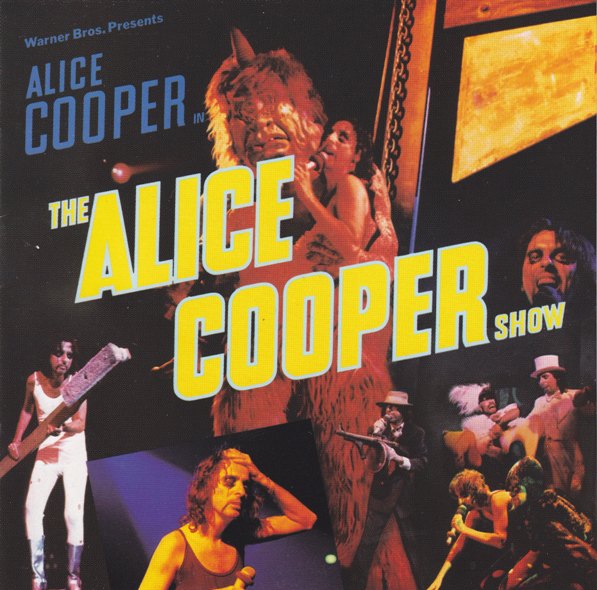
ALICE COOPER – The Alice Cooper Show(1977 Warner Bros.)
The Alice Cooper Show is far from a perfect example of Alice in the mighty 1970’s — for a much better live album experience, pick up Billion Dollar Babies (the deluxe edition) which contained a live album recorded by the original Alice Cooper band. Having said that, the band here are not slouches. Dick Wagner and Steve Hunter were great guitar players who defined the late 70’s period of Alice. However, the albums were starting to slide — Go To Hell and Lace & Whiskey were more notable for ballads like “You And Me” and “I Never Cry” rather than idiosyncratic Cooper rockers or horror tunes.
The recording of this album is fine, but the record is far too brief. Aside from the fact that there are too many ballads (time-wise, over a quarter of this album are ballads!), a lot of the songs are truncated versions. “Sick Things” for example is less than a minute as it segues into “Is It My Body”. Likewise, there is an “I Love the Dead”/”Go to Hell”/”Wish You Were Here” medley where I wish I could have had more. Then again, Alice has always done medleys of tunes, since he has so damn many.
I have nothing negative to say about the singing or performance. The band were outstanding, featuring some of the best players Alice has shared the stage with. They even featured Canadian bassist Prakash John who was previously in the original band Bush with Dominic Troiano (R.I.P). It’s hard to say exactly why The Alice Cooper Show doesn’t completely click. Certainly the medleys and song excerpts make it feel like an overly rushed affair, and even considering that, it’s missing too many great tunes. “Elected”, “No More Mr. Nice Guy”, and “Welcome to My Nightmare” would have been perfect.* Perhaps Warner should have shelled out for a full-on 2 LP set? But Alice was a fading property in 1977, with an infamous stint in rehab to follow.
This record fails to deliver what Alice was really about. The album cover gives it all away. It looks rushed, with truncated images of Alice and his live show. Serious fans will need it to complete the collection. Otherwise, stick to the Billion Dollar Babies deluxe package for a seriously awesome live 1970’s Alice experience.
3/5 stars
* Looks like a lot of those songs were dropped from the set in ’77.
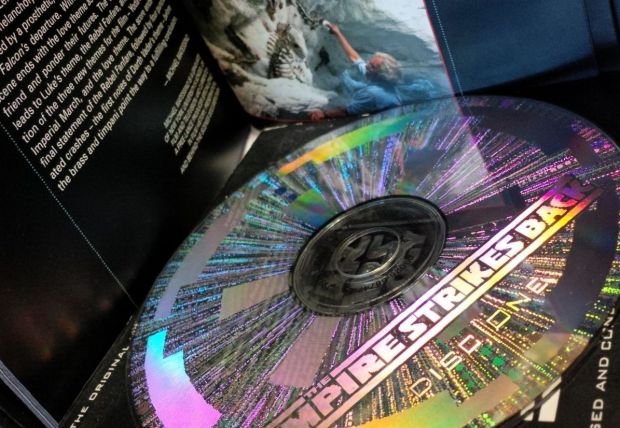
STAR WARS: The Empire Strikes Back – Special Edition original motion picture soundtrack (1997 RCA limited edition with holographic discs, original soundtrack released 1980)
Composed and conducted by John Williams
When I was 8 years old, this was my favourite album. It was my favourite album for a long time. I didn’t have a lot of albums when I was young, but The Empire Strikes Back was a clear favourite. It was only usurped by Styx’s Kilroy Was Here several years later.
Even when I was a child I had a sense that this one was something special. The Empire Strikes Back contains one of the best known Star Wars anthems ever: “The Imperial March”. Hard to imagine today, but that piece of music did not exist when the original Star Wars came out in 1977. The character of Darth Vader grew tremendously in the second film, and I think “The Imperial March” helped drive it home.
As far as I’m concerned, composer John Williams is a rock star. He makes instrumental concept albums. That is exactly the way that my rocker ears hear this music. I cannot express how true to me that is. For me, this album (in its original double LP format) was like The Wall, Tommy, or Quadrophenia. It has always been a rollicking journey to listen to, preferably loud. It has swells and drops, peaks and valleys. It has memorable “songs” that you can go back to over and over and over again.
The original soundtrack from 1980 was a massive two record set, but it was still only long enough to contain 75 minutes of the film’s music. This double CD has a whopping 124 minutes — the complete score. Even all these years later, revisiting the soundtrack, I can immediately tell when a piece of music wasn’t on the original record. “Ice Planet Hoth” was the first such moment. Other pieces such as “The Magic Tree” are very familiar because I played those records so many times! As a kid, I don’t think I even realized that the LPs didn’t have all the music.
Having the whole soundtrack, in order, on CD, is a real treat. It makes me want to take a dig through my parents’ basement and dig up my old Kenner Millenium Falcon. Or even better, get the bigger, badder, awesomer new one. That thing looks incredible…but I digress. My point is, it reignites that feeling I had as a kid. I’d hear this music, and go grab my Falcon toy, and “fly” it around. That feeling hasn’t gone away. In fact, with this baby remastered the way it is, I’d say that feeling is stronger than ever.
Other honorable mentions: “The Battle of Hoth”, “The Asteroid Field”, “Mynock Cave”, and “Yoda’s Theme”. All these are almost as memorable as “The Imperial March”.
Since I’m not musically schooled in any way, I wanted to talk to someone who is. I spoke to world-renowned bass clarinetist Kathryn Ladano about the music:
This album is one of my favourite soundtracks, and I still listen to it often. In fact, when I got my new turntable for Christmas, the original LP soundtrack for Empire was the very first album I played on it. In terms of Star Wars soundtracks, I think this is the best one. I am certainly more critical of John Williams’ soundtracks in general now than I was as a kid because I now know that much of his material was “borrowed” from other composers, but despite that knowledge, this album still has a lot of iconic and evocative themes. My favourite is probably “The Asteroid Field”, but obviously “The Imperial March” is pretty amazing too.
If I had to pinpoint a favourite moment in this soundtrack, it actually appears during the track “Carbon Freeze/Darth Vader’s Trap/Departure of Boba Fett”. From about 5:10 to 5:20 is a series of dissonant chords that I have always loved the sound of (especially the one at 5:17 – 5:18!). Long before I studied music or played an instrument, those dissonant chords resonated with me and I still love hearing them.
I now know what album I’m going to listen to today.
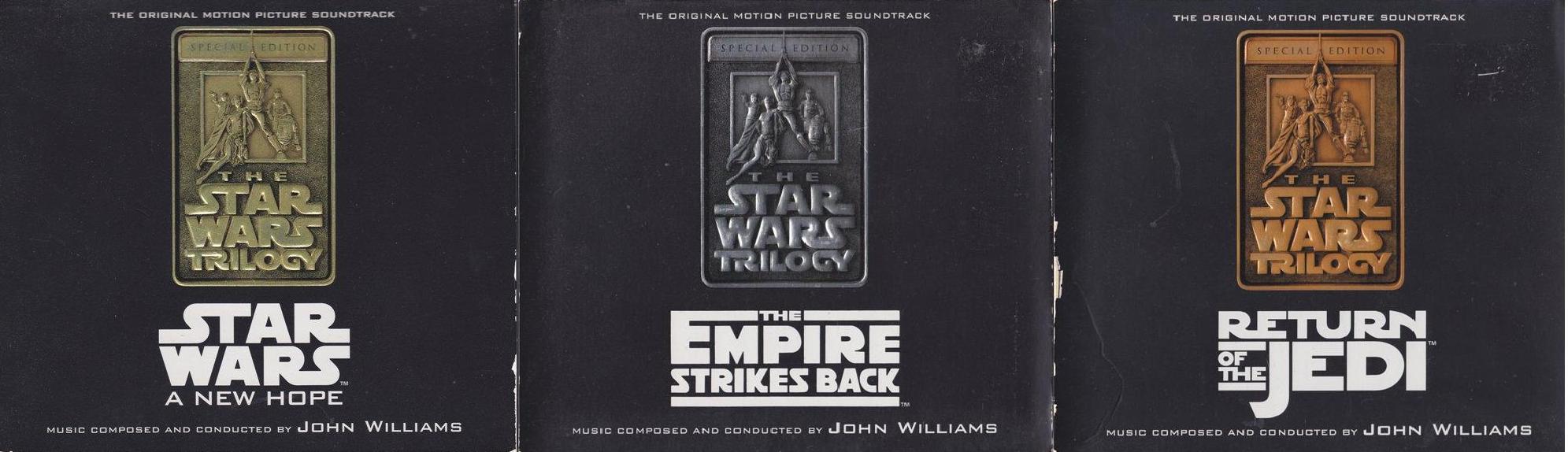
I’m fortunate to have the limited edition CD wallet version of this soundtrack. As with A New Hope, the discs are hologram etched. This time, instead of the striking image of the Death Star, it’s just a fairly flat Imperial logo. Not quite as awesome.
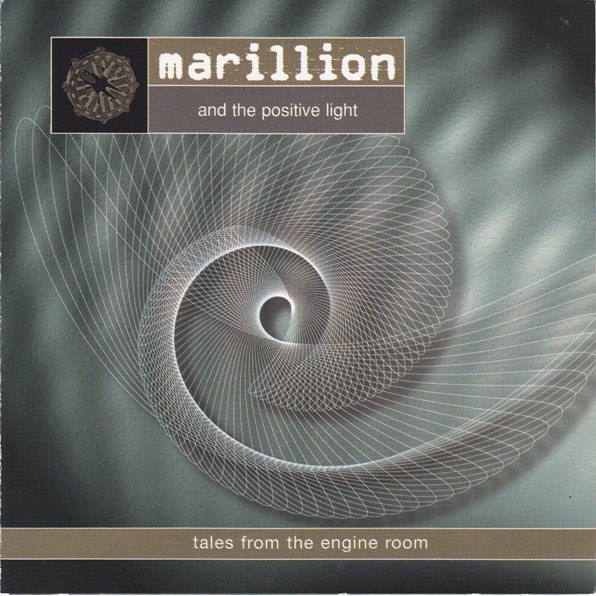
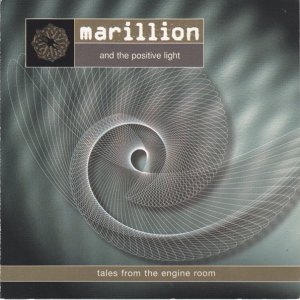
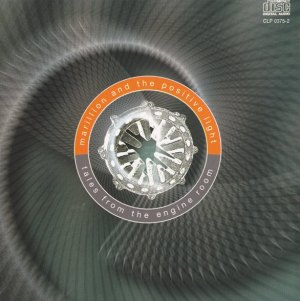
MARILLION and the POSITIVE LIGHT – Tales From the Engine Room (1998 Big Eye)
Remix projects: Often dicey, usually over-indulgent cash-grabs. I always give Marillion the benefit of the doubt where integrity is concerned. In the liner notes, singer Steve “H” Hogarth says that the art of the remix at its best is to produce a cerebral trip, and I think that was the aim here. He refers to this as a “reconstruction” and that sounds about right.
Having just completed the This Strange Engine album, Marillion handed over the master tapes to The Positive Light (Marc Mitchell and Mark Daghorn) for creative reconstruction. The duo had impressed them with some early work on “Estonia” so they decided to go all-in. That track is the first on the CD, Tales From the Engine Room. It’s a swirly, heavenly version but not a drastic departure. Hogarth’s vocal isn’t chopped to bits, the melodies remain the same, and the overall structure is unchanged. It is as if the body of the song were played by Jean Michel Jarre instead of Marillion.
“Estonia” folds neatly into “The Memory of Water”. This experiment turns the song into a light dance number. It’s not nearly as great as the pounding “Big Beat Mix” on the Radiat10n CD. This version just kind of circles around without going anywhere. It’s always risky, extending a three minute song to almost ten! Sorry Positive Light, I have to give you a D on “The Memory of Water”.
If you like long bombers then you’ll love “This Strange Engine”, all 20+ minutes of it! That’s not too much of a stretch, since the original is over 15. Of this one, Hogarth says, “[it] reduced me to tears. I would advise you to listen to it on a Walkman whilst walking through the town on a Saturday afternoon. It makes everyone move in slow motion!” While it is cool, it has never given me that exact effect. It really starts to swell into dramatic waves when it gets into that “tall tales of Montego Bay,” section. A solidly trippy remix.
Onto “One Fine Day”, which was never one of the strongest tracks. With the Positive Light, it acquires a trippy jazzy slant. I don’t know what “Face 1004” is, except perhaps a Positive Light original? It bears no resemblance to the fine Marillion song “Man of 1000 Faces”, but it’s a beat-heavy dance track much in the style of the rest of this CD.
The original CD ended with track 5; reissues also contain “80 Days”. Since there’s no point in buying an incomplete version, you may as well look for the reissue. “80 Days” is far removed from its jaunty, celtic origins. Now replete with electronic beats and tribal singing, it is still a celebration of touring the world.
Tales From the Engine Room turned out to be an apt title for a successful experiment. The Positive Light took the songs down to their cores without losing what made them the songs that they are. They re-presented the tunes in a new way, in a different genre. While this is far from an essential purchase, it will be appreciated by fans of latter-day Marillion.
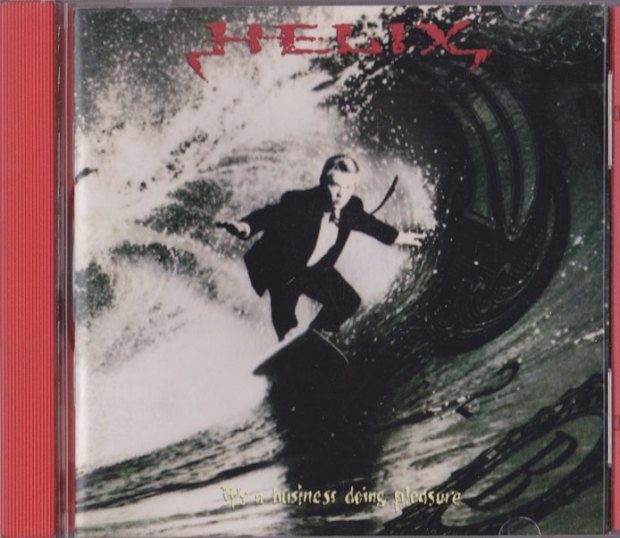
HELIX – It’s a Business Doing Pleasure (1993 Aquarius)
This is a good album — but it’s utterly ridiculous to see Amazon sellers asking $125 for a CD that I used to sell in store for $8.99.
After the death of guitar player Paul Hackman, killed in a tragic bus accident prior to this, Helix decided to carry on, somehow. Before the crash that prematurely ended the talented guitarist’s life, he and Brian Vollmer had been working on two separate projected discs. Brian had written songs with Marc Ribler, as he did on the previous record Back For Another Taste, which were earmarked for a solo album. Meanwhile, Hackman was writing music for the next Helix album. When it came time to pick up the pieces and carry on, there wasn’t much written for Helix. Although he regrets doing it today, Brian Vollmer decided to use the Ribler songs for the Helix record.
Vollmer recorded the album with Ribler, bassist Rob Laidlaw, and former Helix drummer Brian Doerner. Having spoken to Doerner about this album, I know he felt it was strong and underrated. I would have to agree. Vollmer also needed a new Helix band to take the album on tour. Greg “Fritz” Hinz and Daryl Gray remained on board. Though they did not play on the album, they are pictured inside. For the vacant guitar slots, they recruited former Brighton Rock guitar maestro Greg Fraser. Even more exciting to fans was the return of Brent “the Doctor” Doerner. This was easily the most exciting band lineup since the 1980’s.
The record was a definite change of pace, due to its genesis as a Vollmer solo album. Starting off, it’s instantly noticeable a Nashville influence . Almost every song has that terrific old school Fender guitar sound, but with a rock n’ roll edge–a little like Mark Knopfler. The songs are by and large a lot softer and more radio-ready, but also significantly more melodic and memorable. “Classy” is a good word to describe the direction.
The first single “That Day Is Gonna Come” is upbeat, a tribute to the life of Paul Hackman. Next to “Billy Oxygen”, I think it’s possibly the best song they’ve ever done. It received an excellent music video loaded with Brian’s own video-8 footage recorded over the years on the road. Just about every major Helix members appears in the footage. It’s hard not to get nostalgic. Have you been to any of those towns? This is the best video Helix have made yet.
“Tug Of War” would have made a great hit, but sadly the record company weren’t behind the album enough to push it. Vollmer and Fraser did an acoustic rendition of this ballad live on MuchMusic, a recording I’m glad to have on VHS. The album version is more bombastic but just as good. “Wrong Side of the Bed” and “Can’t Even Afford to Die” are both upbeat acoustic rock tunes with lush backing vocals. Think John Cougar meets Helix. Lyrically, Brian was writing about subjects people could relate to, rather than pining over Joan Jett. Being broke, being hurt, but keepin’ on keeping on. Still upbeat but a little harder is “Misery Loves Company”. There are some dirty guitars and driving piano, but we’re still driving in the country. Even without a heavy rock band behind him, Brian’s voice keeps it in the realm of Helix.
“Look Me Straight in the Heart” was supposed to be a video. This power ballad is a duet with Brian and Canada’s Metal Queen, Lee Aaron. The video funding was pulled when Aaron couldn’t appear in the clip with Vollmer. It’s too bad, because it’s a great song and I love hearing Lee Aaron belt it out. Lee Aaron and Brian Vollmer singing a ballad? How could it not have balls! (Just enough.)
“Trust the Feeling” is largely forgettable balladry, but “Love is a Crazy Game” is haunting and quiet. There is a heavier, electric version on the B-Sides CD, and it’s hard to choose which is best. This one is certainly more unique. Of course, you can’t have too many ballads in a row, and they were pushing it with three, but thankfully “Sleepin’ in the Dog House Again” will wake you from your slumber. Kim Mitchell dropped in to play one of his typical gonzo guitar solos, topping off the only real ass-kicking rocker on the album. The closing song “Mad Mad World” (not the Tom Cochrane tune) is one of the best. Who doesn’t love whistles? Humorous lyrics and a great chorus help to end the album in style.
Some lamented that Helix “softened up” on the album; others admired the growth and maturity. Brian Vollmer called the record “a huge mistake on my part, and I take full credit for the blunder. The really sad thing about it all was that I was really proud of all those songs on the album and they were wasted because they did not fit under the Helix name.”
I’d hate to think of those songs wasted, because here I’ve been enjoying them for over 20 years. Perhaps under another name they could have been hits, perhaps not. In the end, this album helped Helix stay a band. It gave them something of quality to release in the wake of their greatest tragedy. It allowed the band to get out and play supporting it. Ultimately, those who were unhappy about the direction would satisfied by the heavy songs on the next album, 1998’s half-ALIVE.
I’d be happy if this album got a little more recognition, so here’s me doing my part.
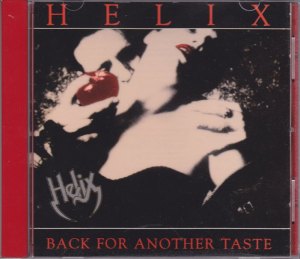
Helix’s Back For Another Taste was easily their best album since No Rest for the Wicked. It was also their last for Capitol. As such it received a neat, very limited vinyl release with a special cover commemorating the last (planned) printing of Capitol vinyl. I wish I had bought it when I had the chance. I recall seeing it at Sam the Record Man (owned by Gil Zurbrigg, brother of original Helix bassist Keith Zurbrigg) in downtown Kitchener. I didn’t have a good way of playing records back then, so it didn’t seem worth it.
Special release aside, Back For Another Taste will always be associated with some hard times in Helix. Brent “the Doctor” Doerner, with the band since LP #1, decided to move on from rock and roll. Although lead howler Brian Vollmer saw the departure coming, it still hit hard. Doerner stuck around long enough to record some rhythm guitars and solos for the new album. His brother Brian Doerner played drums on three tracks, as he often has on past Helix albums. (Helix mainstay Fritz Hinz played on the rest). The songs were written by Vollmer and guitarist Paul Hackman, with the exception of two. Vollmer took a trip down to the US to work with Marc Ribler who helped him hone his songwriting chops.
Helix presented themselves as a four-piece in promo photos and music videos, for the first time. Doerner would prove hard to replace over the years, with American Denny Balicki taking over for the tour. He was Helix’s first American member. He made notable appearances in a one-hour MuchMusic special called “Waltzing With Helix”, a documentary on Helix’s European tour with Sacred Reich, and opening for Ian Gillan. (Also in that documentary: a kid I grew up with in the neighborhood called Brian Knight. He was a Helix roadie at the time. Brian Vollmer misspelled his name in his book as “Brian McKnight“. Whoops!)
Back For Another Taste was produced by Tony Bongiovi, who gave the band a raw, more kicking sound in the studio. It was clear from track one “The Storm” that Helix meant business again. A mean sounding gritty groove-rocker, “The Storm” was unlike anything they’d done before. It was a completely un-wimpy lead single and a surprising one at that, since it’s not a very commercial. The new four-piece Helix sound great here, with Hackman able to really dig in and play, while bassist Daryl Gray gets more room to groove.
The really impressive track on the album was “Running Wild in the 21st Century”. When every other band seemed to be softening it up, Helix seemed to go full-on metal. An edgy music video featuring London’s “Snake the Tattooed Man” won Helix some acclaim and recognition. Snake was a friend of the band, and when the idea came up for a music video, Vollmer said “I know the perfect guy for this.” (I myself encountered Snake at the Record Store, in Part 118 of Record Store Tales.)
“Running Wild” is a killer track, pure Helix adrenaline with their trademark smooth backing vocals. In the lyrics, Brian seems confident of rock and roll’s future survival. Once again Paul Hackman confidently handles the guitars, allowing his personality to really shine.
Right up the alley of old Helix rockers is “That’s Life”, a classic sounding tune that’s great for drinking to. Just you try not having fun while hoisting a frosty to “That’s Life”! But Helix are more than just a party band, always have been. “Breakdown” is the long dramatic slow one. Vollmer had been going through some rough times: divorce, having to work at a convenience store to pay the rent, getting mugged, and then heave-ho and re-locating to London Ontario. “Breakdown” must come from those times, because you can hear the desperation and the determination. This track is the closest Helix ever got to re-capturing the golden sound of their first album,Breaking Loose. But you gotta end side one on a party rocker, doncha? So “Heavy Metal Cowboys” is that track and it sounds exactly how you expect. Hackman throws down some slide guitar for good measure.
The title track is quintessential Helix. “Back For Another Taste” indeed, this track could have been right at home on Wild in the Streets. It’s dirty and rocking, just like you like it. The stretching out a bit, the pop side of Helix emerges on “Rockin’ Rollercoaster”. I immediately noticed a higher rating on the 10-point Catchiness Factor scale (c), than other songs on this album. But then it’s even higher on “Midnight Express”, a real singalong! I really like these two songs, and even the ballad “Good to the Last Drop” really impressed.
Marc Ribler wanted to write a song called “Can’t Eat Just One”, but Vollmer found the title cumbersome, so he suggested “Good to the Last Drop” instead. What came from this was a hit ballad with heaps of class and all the right ingredients – a solid 9 on the Catchiness Factor scale. The music video received a swanky remix with extra keyboard overdubs, and that’s the version I go for. (It’s on many Helix best-of’s, but not this CD.)
“Give It to You” wasn’t exactly a new song. An earlier version (more raw) surfaced on 1989’s Over 20 Minutes With…Helix compilation. I prefer the raw version, but it’s still a great dirty lil’ Helix number. “Pull the trigger of my honey gun.” Oh, Brian. “Special delivery, just for you!”
So Helix stretched out on this album a bit, and went back to their roots while exercising their melodic songwriting muscles. They went heavier, they went softer, they went dramatic, and they revisited some of their pop roots. What’s left? Faster, faster, faster!
“Wheels of Thunder” is probably the fastest, heaviest Helix track of all time and it closes Back For Another Taste on a killer note. Dr. Doerner handles the solo on this one, and Fritz is absolutely thrash metal mad. The only Helix track that might be faster is “Jaws of a Tiger” (also from Over 20 Minutes With…Helix), but we’re splitting hairs. What a ballsy way to end the album.
There were some cool singles available, but most interesting was the cassette single for “Good to the Last Drop”. That had an unreleased B-side, a song called “S.E.X. Rated”. This is a completely different version from the one that later appeared on the album B-Sides. This one has Paul Hackman, and that’s significant.
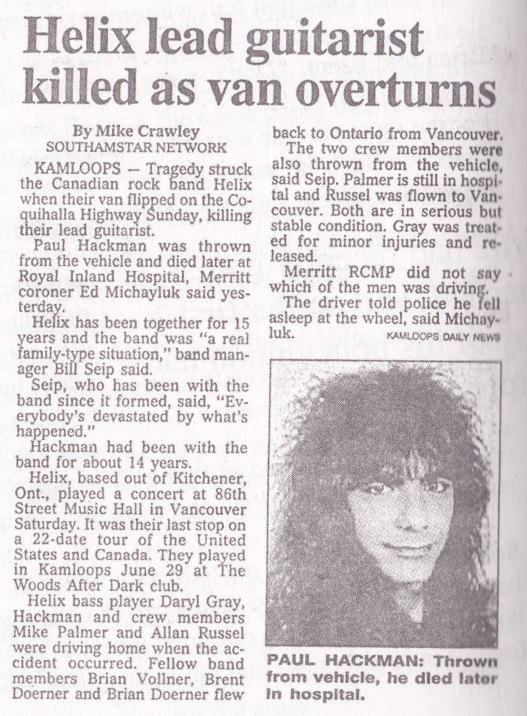
In July of 1992, Fritz Hinz was injured (slipped disc) and unable to tour, so Brian Doerner returned for a few western Canadian dates. As a bonus, so did his brother Brent. After a final date in Vancouver the band headed home. Paul Hackman elected to travel home in the tour van with bassist Daryl Gray, while the rest of the band booked flights. Hackman, not wearing a seat belt, went to sleep. Then, according to reports, the van veered off the road and down an embankment when the driver fell asleep at the wheel. Three men were thrown from the vehicle, and Hackman was killed. Daryl Gray suffered minor injuries and flagged down help. 20 cars passed the frantic, bleeding bassist before someone stopped.
Back For Another Taste was Paul’s final recording.
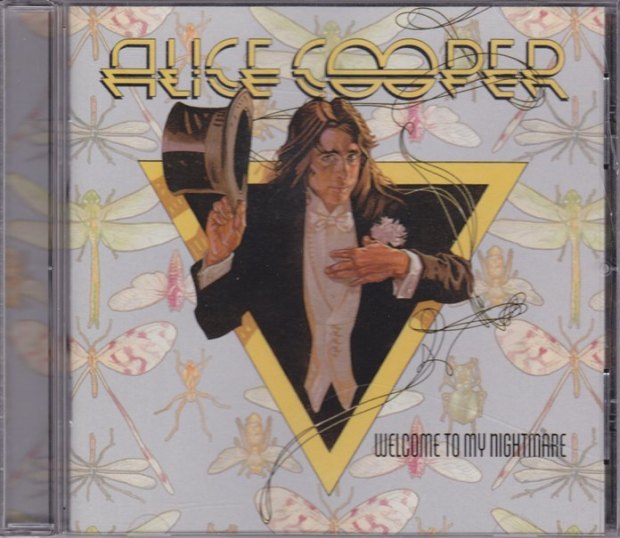
My sister used to have a tradition. Because I’ve always been a collector, she would have an easy time buying gifts for me as a young rock fan. When I was 17 years old, I only had a few albums by certain artists. She’d sneak into my room and go over my collection. She saw that I only owned a few of Alice Cooper’s: Trash, Prince of Darkness, Billion Dollar Babies, and Greatest Hits. For Easter of 1990, she got me Alice’s Welcome to My Nightmare. Not knowing what to except from the Coop, it was pretty much instant love.
I played that cassette a lot and grew to know its track sequence, which was completely different from CD. Later on I purchased the original CD release, but what Welcome To My Nightmare needed (and the rest of the Cooper catalogue needs) is a proper remaster with bonus tracks. Rhino took care of that in 2002.
Now the album itself sounds so much better than the original CD. This sounds more like vinyl, the way it should, rich and deep. The liner notes, unfortunately, are somewhat crappy. They basically just explain to the youth of today why Alice Cooper is cooler than the bands they like. There’s not much about the genesis of the album, which is disappointing. This is, after all, the very first solo album by Vincent Furnier aka Alice Cooper. By 1975, the Alice Cooper band (Furnier, Michael Bruce, Dennis Dunaway, Neil Smith, and the late Glen Buxton) was no more. Never again would they share a stage or a recording studio, at least the original five. The four survivors did finally re-team for a couple songs on 2011’s sequel, Welcome 2 My Nightmare.
Welcome To My Nightmare was a revelation to me when I received it, and it is still mind-blowing today. I think that is due to the production talents of Bob Ezrin. The man who later produced Destroyer and The Wall really came into his own on this album. His production is, for lack of any better words, jaw dropping. You can totally tell it’s him, if you know his style well enough: that creepy horror movie piano, all the orchestrations, sound effects, the kids singing. Those are trademarks. My favourite moment for the kids was in the song “Department of Youth”. Cooper and the kids sing in the fade-out:
Together – “We’re the Department of Youth, ahh ahh, we got the power!”
Alice – “Who got the power?”
Kids – “We do!”
Alice – “And who gave it to you?”
Kids – “Donny Osmond!”
Alice – “WHAT?”
Loosely, this is a concept album about the kind of nightmares Alice would have. The result was a collection of remarkably timeless and classic songs: “Only Women Bleed”, “Black Widow”, and “Escape” for example. “Escape” is the most straightforward rocker on the album, and a joy it is. The rest is often more complex, arrangement-wise and lyrically.
The title track is a fun rollercoaster ride with epic horns. Same with “Devil’s Food” and “The Black Widow” which work together as a creepy classic featuring Vincent Price. I would not want to live my life without these songs. Alice is nothing if not diverse, and then “Some Folks” sounds showtune-y. “Only Women Bleed” is the famous ballad, often misunderstood, but respected enough to be covered by artists such as Lita Ford, Tina Turner, and Etta James.
“Department Of Youth” and “Cold Ethel” are more rock and roll, and why not? What better genre to sing about rebellion and necrophilia? It’s worth pointing out the guitar charms of Steve Hunter and the late Dick Wagner. These two incredible players, under the guidance of Ezrin, lent Welcome To My Nightmare the rock edge that it needed, lest it be swallowed up by the dramatic tendencies.
Of course, Welcome To My Nightmare features the first-ever appearance of the character of Steven. “Years Ago” has Alice singing in this incredibly creepy little-kid voice, as Steven. Then the song “Steven” kicks in, and it’s even creepier, but very epic in scale. Alice is at his most effective here. Steven would pop up many times, such as on the next album Alice Cooper Goes To Hell, 1991’s Hey Stoopid, 1994’s Last Temptation, and the more recent Along Came A Spider. Whether it’s supposed to be the same guy, or just a character who shares the same name, I do not know.
The bonus tracks are alternate versions of “Devil’s Food” (much extended), “Cold Ethyl”, and “The Awakening” with alternate lyrics and more Vincent Price! Not available on the Life and Crimes of Alice Cooper box set! These three tracks alone, to the Cooper collector, necessitate a re-buy. The improved sound probably would have hooked them in anyway.
I could never say, “If you only buy one Alice Cooper album, buy this one.” The reason I can’t is that almost every album by the original Alice Cooper band was monumental, particularly School’s Out and Billion Dollar Babies. However, if you buy two or three Coops, please make one of them Welcome To My Nightmare, remastered!
5/5 stars
* There is also a DVD Audio of this album mixed in 5.1 by Bob Ezrin himself!
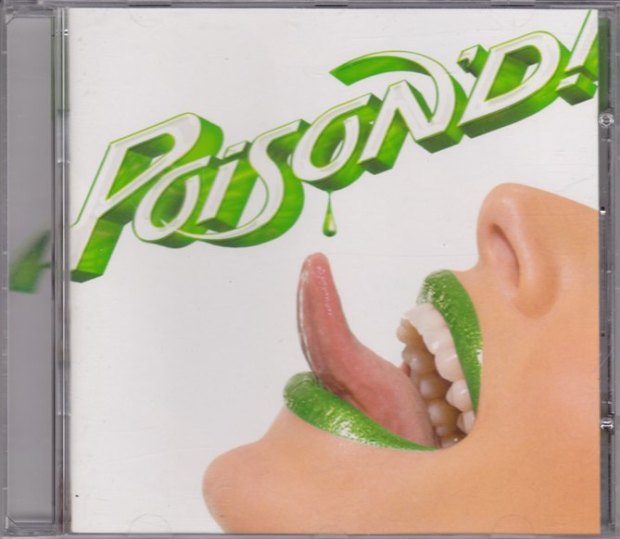
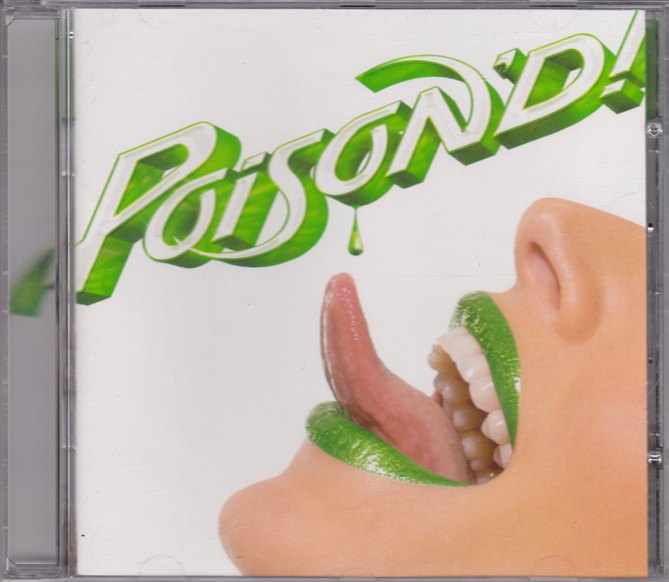
Talk about defying expectations. As a general rule, covers albums suck. By extension of that, you would certainly predict that a cover album by Poison would absolutely suck. After all, the band Poison haven’t made a decent studio album in well over 20 years. 2002’s Hollyweird was junk. Maybe it’s the presence of legendary producer Don Was, but Poison somehow managed to make a good cover album! I’m almost worried about losing credibility by saying this. I did indeed get Poison’d by it.
I think Poison are at their best when playing upbeat but hard pop rock numbers. “Little Willy” by the Sweet is a great example of that kind of song, and it’s right up Bret’s alley. It’s obvious that he doesn’t have the voice he once had (which wasn’t much to start with) but when Bret’s at home with a particular style it always works better. “Little Willy” is hella fun.
Here’s my Bowie confession — this guy here is not a fan. Maybe it’s over-exposure. I do like the hits, and of those “Suffragette City” is one I enjoy. Once again, Poison are at home, putting their slant on Bowie and somehow making it work. I don’t even mind C.C.’s over the top guitar slop — silly but that’s his style. I’m sure Bowie diehards will absolutely hate this.
The classic Alice Cooper ballad “I Never Cry” is a great song, and Poison throw a little twang on it while keeping it pretty true to the original. Dick Wagner had a knack for writing incredible songs, and “I Never Cry” is one of the best he’s ever written. As for Bret, he’ll never be Alice Cooper but he’s not trying to be. Too bad C.C. can’t seem to hit the notes he’s searching for on the solo! If Poison had done this in 1988, they absolutely would have had a hit with it.
You wouldn’t expect a band like Poison to have too many Tom Petty records in their collection, but they do a great job glamming up “I Need to Know”. They nailed it by doing it in their style, and as long as you’re not too attached to Tom Petty’s original then you’ll dig it. On the other hand, I can picture Bret having a whole bunch of albums by the Marshall Tucker Band. “Can’t You Say” has that laid back, southern gospel rock vibe that Bret has been trying to copy for 25 years. Unsurprisingly, “Can’t You See” is better than most of Bret’s originals in the same style. Guitar solo aside it’s actually pretty great!
One song I really don’t care for anymore is “What I Like About You” by the Romantics. Hearing a decent cover though ain’t so bad. Surprisingly, once again, Poison do a great version. C.C.’s soloing doesn’t fit the track, but hey, that’s C.C. for you. Bret’s enthusiasm carries the track, which is in Poison rock mode. Then they slip by covering the Rolling Stones. “Dead Flowers” isn’t a song I would be brave enough to do, and Poison should have erred on the side of caution and not tried it. This is filler, but I love the Cars, so I had my hopes up for the next track “Just What I Needed”. No need to fear — this one is in that hard pop rock mode that Poison do very well. It reminds me of their own song “So Tell Me Why” in tone. Count this one as an album highlight and personal favourite.
Some previously released tracks fill out the set. A Poison covers album should include their first cover, “Rock ‘N Roll All Nite”. This Kiss cover (produced by Rick fucking Rubin, no shit) was first released on the Less Than Zero soundtrack in 1987. You can also hear it in the background at the start of their music video for “Nothin’ But a Good Time”. I do not like it, but it’s nice to include. The Who’s “Squeeze Box” was originally from the aforementioned Hollyweird CD, and it’s sadly (but not surprisingly) a stinker. Jim Croce’s “You Don’t Mess Around With Jim” is a demo from 1987, previously released on the remastered Look What the Cat Dragged On. Not bad when you want a taste of that old-style Poison.
I think it’s kind of odd to put “Your Mama Don’t Dance” on this CD, since pretty much every Poison fan in the world already has that song. But here’s the overrated Loggins and Messina cover for you one more time! “We’re An American Band” was also previously released, on the Poison best of 20 Years of Rock. (“Rock ‘N Roll All Nite” and “Your Mama Don’t Dance” are also on that CD.) It’s a good tune on which to end the CD.
Except it’s not! Walmart’s version of the CD had a bonus track, and it’s a baffling one. I’m very proud to say that I have never heard the song “Sexy Back” by Justin Timberlake. Having said that, I’m sure it’s better than Poison’s industrial-flavoured version. A colonoscopy is better than this. So essentially what Walmart have done is ended the album with a colonoscopy for you. You’re welcome!
Missing: “Cover of the Rolling Stone” from the Crack A Smile album. Too bad, as that would have been better than getting “Your Mama Don’t Dance” yet again. Also missing (but not missed): “God Save the Queen” from the remastered Flesh & Blood.
STAR WARS: A New Hope – Special Edition original motion picture soundtrack (1997 RCA limited edition with holographic discs, original soundtrack released 1977)
Composed and conducted by John Williams
Everyone over a certain age remembers the feeling of seeing Star Wars for the first time. Star Wars — not “A New Hope“, a subtitle used starting with the 1981 theatrical re-release. It was hard not to be blown away by it. Star Wars was groundbreaking in many ways, but let’s not forget about the music! Before Star Wars, space movies didn’t have much in the way of original soundtracks. The best space movie of all time, 2001: A Space Odyssey, used entirely pre-existing music by composers as diverse as Strauss and Ligeti. Lucas himself wanted to do the same thing. He had selected pieces such as The Planets by Holst, before having a change of heart. [Thanks to Rob Daniels from the Visions in Sound show for this info.]
Movie veteran John Williams came recommended by Steven Speilberg, who struck gold with the composer on Jaws. Incredibly, Williams turned in a score for Star Wars even more memorable than that of Jaws. Utilizing the London Symphony, a soundtrack of incredible emotional depth and themes was forged.
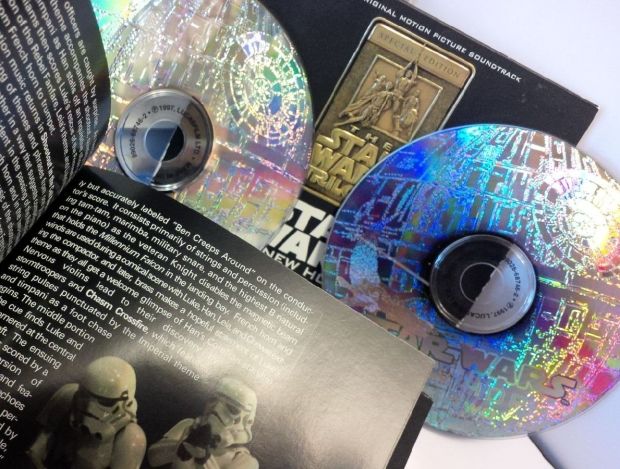
This 1997 issue of the soundtrack was released to coincide with the Special Editions, but don’t let that frighten you away. When the original was released on vinyl, the complete score could not fit onto two LPs. The special editions enabled the engineers to go back and do new digital transfers from the original master tapes. A full chronological soundtrack was then assembled including previously unreleased music, as well as bonus alternate takes.
The discs are housed in a nice CD wallet that is prone to scratching the discs if you are not careful. The discs themselves are etched with a hologram of the dreaded Death Star. The other two soundtracks in this series of reissues had their own holograms, but only for the initial run of discs. When they sold out, they were replaced by un-etched discs in simple jewel cases. The first run are collectibles, at least when the CD wallet is in good shape and still has the embossed outer cardboard shell. Unfortunately over my years at the Record Store, I saw many of these in absolutely mangled condition.
The wonderful thing about listening to a soundtrack like this, in order, is enjoying the images that come with it. You could be cleaning the house or working on your taxes, but subliminally, your mind is re-playing the scene when Obi-Wan gives Luke his father’s lightsaber. You know the score by heart: when old Ben says, “A young Jedi named Darth Vader, who was a pubil of mine before he turned to evil, you hear that mournful theme swoon. When we were kids my sister and I used to play Star Wars to the music of The Empire Strikes Back soundtrack, and it made the scene we re-created with our Kenner toys that much more awesome.
Put on the track “The Battle of Yavin” and try not making laser blast sounds, and a big ol’ explosion when the Death Star blows up. It’s more fun just to go ahead and make the sounds anyway.
Disc one contains the bonus track, an alternate take “Binary Sunset”. You know the scene, when Luke is looking longingly as the twin suns set. Hidden within the track, but unlisted, are alternate takes of the opening scene music, complete with voice cues.
I’m a firm believer that the Star Wars soundtracks are basically the heavy metal of the classical world. Listen to those trumpets and horns blasting those battle themes. Put that on an Iron Maiden album played by the duo of Smith and Murray, and you have primo heavy metal. That’s one reason why I recommend John Williams and the Star Wars soundtracks to fans of heavy metal who want to expand their horizons.
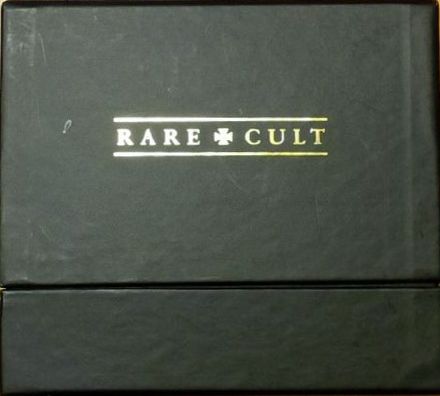
THE CULT – Rare Cult(2000 Beggars Banquet box set with limited 7th remix CD)
Rare Cult is a feast of rare and unreleased Cult music, for the Cult connosoir only. If you’ve been a Cult fan for a while but have struggled to find those early singles, then this is your dream box set, my friend. They have a lot of singles and assorted rarities, and acquiring a complete set of them all takes money. Rare Cult secures a huge chunk of that music in one package.
I’m not going to bother cataloging all the different tunes and where they came from. They’re too numerous but I will say the following:
1. This set has an enormous number of unreleased demos and otherwise finished songs that nobody had heard before — not previously released on B-sides. The songs range from the Dreamtime era (1984) with some cool, unheard BBC performances. Over six discs, it spans over a decade to 1995 when the band broke up (for the first time). All tracks are of very good sound quality.
2. There is a humongous (80 page) booklet inside, with complete credits and details for every single song contained within. Billy Duffy and Ian Astbury provide commentary, and there are lots of photos too.
3. There are a lot of remixes here, as per normal for a band from this era. In fact there is an entire seventh limited edition bonus disc dedicated single remixes, called Rare Cult Mixes. I don’t know how many copies were released with the bonus disc, but be sure of what you buy before you buy it! Personally I don’t see the point of buying this set without the seventh disc. For example, the “Fire Woman” single had two excellent remixes: The “LA mix”, and the “NYC mix”. The NYC mix is included on the Disc 5 of this box set, but to get the LA mix, if you don’t have the “Fire Woman” single, can only be had on the limited edition seventh Rare Cult disc. If you’re a collector (which I think you are, because if you’re not you probably stopped reading this already) then there’s no reason to buy the version without the bonus CD. Wait it out and get the full package.
4.Peace. While astute fans had probably collected most of these tracks already, this box set contains the first ever official release of the Peace album, in sequence on disc 3. The Cult were working on Peace after the Love album, and even finished it, but scrapped the recordings for being too Love-like. They hooked up with Rick Rubin to revamp, re-write, and re-record the album, released as Electric. Many of the Peace songs surfaced as B-sides over the years, on singles and EPs such as The Manor Sessions. While Rare Cult was the first release of the full Peace album, it has since been reissued as part of the Electric Peace two disc set.
5.Warning! There’s more. If you really, really, really want it all, you have to shell out for the single CD Best Of Rare Cult which had five exclusive songs not included here. Oh, marketing. The five exclusives on Best of Rare Cult are: “She Sells Sanctuary (long version)”, “Spanish Gold”, “The River”, “Lay Down Your Gun (version two)”, and “Go West (Crazy Spinning Circles) (original mix)”. Some of these songs, such as “The River”, are B-sides, while some are unreleased.
6. There’s even more! Yes, there are demos here, but that’s not all of them. The masterminds behind this set cleverly left off enough demos to create a whole other box set. You’ll want to pony up for Rare Cult: The Demo Sessions (an even more limited edition 5 CD set of its own) which is interesting in its own right. Look at Rare Cult as scratching the surface.
7. Even with all this stuff available out there, The Cult liked to include live songs on their singles. None are present here. Be forewarned, you may still want to get those original singles anyway, if you care enough! Maybe they should do a box set called Rare Live Cult. (Are you listening Ian?)
As a listening experience, Rare Cult is long but rewarding. One thing about The Cult, they were a diverse band, and this set is very diverse. For example you’ll go from a very dancy 80’s remix of “Sanctuary” straight into “No. 13” which is more punk influenced. Regardless of what it is, or what it isn’t, I think this set is worth listening to. Even their demos are better than most bands’ album tracks. Like many bands who released numerous single B-sides, The Cult put effort into all their songs. Check out “Sea and Sky”, “Bleeding Heart Graffiti” and “Bone Bag” as ample proof.
The packaging is quite nice. It comes in a sturdy black box. The aforementioned booklet allows you to read through the whole history of the band up to 1995. The first six discs are housed in three double digipacks, while the seventh disc sits in its own sleeve tucked into the box.
You might not very often have the luxury of 8-9 hours to listen to the Cult, but if you’re a fan, think hard and consider your buying options.
From the Gene Simmons Song Factory, heeeeere’s Keel!
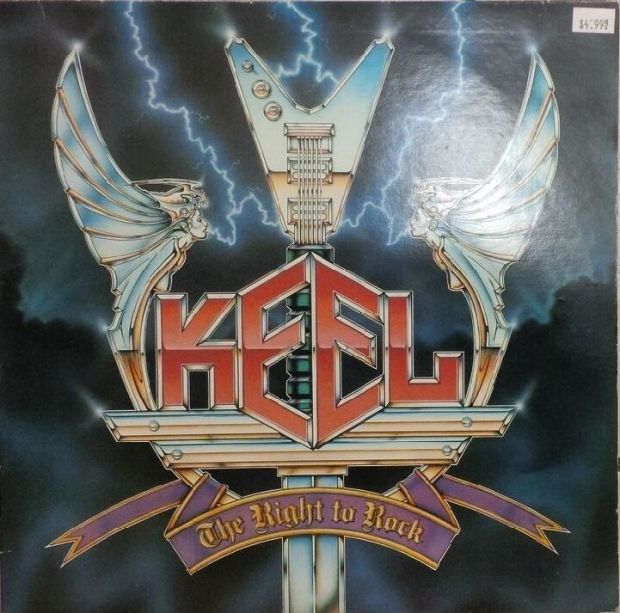
Like many Gene Simmons productions, Keel’s The Right to Rock bears his name on a few writing credits. The rest of the songs are basically reworkings of tracks from Keel’s first album Lay Down the Law. That album, like Ron Keel’s debut with Steeler (featuring one Yngwie J. Malmsteen) were on Shrapnel. For the A&M Records debut, they pulled out the big guns. They got Gene Simmons in all his wig-ness, and put out a very corny but tremendously fun music video.
It is “America 1989”, and rock and roll is outlawed. “Those who are apprehended suffer severe consequences.” Can our young teenage Keel lookalike get away from the rock police? Quiet Riot did something similar with their “The Wild and the Young” video a year later. It’s corny fun.
The song too is corny fun. I guess it’s a classic now. It has that stock heavy metal riff that you need: something Motley Crue or the Scorpions would be comfortable with. It has that rebellious rock theme that was so prominent in the 80’s. It has a shoutalong chorus. “You got it! The Right to Rock!” Hey, I grew up in a Catholic school. I know what this is about. “Don’t let anyone tell you how to live your life!” I had a teacher call me out on the first day of school for wearing a Judas Priest T-shirt. I could relate to this song in a big way when I was 13.
It should be noted that Gene Simmons, as a producer, is not known for his sonics. The Right to Rock sounds pretty good for the period, but the drums ring shallow and weak. There’s not much presence for the bass guitar, and the backing vocals are the typical rock mush. That’s what you get with Gene behind the console.
“Back to the City” has a good Priest-like chug to it. I think Keel were going for something middle of the road with their music, like Priest-meets-Scorps-meets-Crue-meets-Kiss. If so, this hit the mark. Ron’s vocals are overwrought but that’s his style. If you don’t like that kind of vocal, you won’t like Keel.
Kinda stinky is “Let’s Spend the Night Together”. You know, I still gotta give the guys credit. They have made this into a pretty fine pop metal song. If you didn’t know the song, you’d assume it’s an original, in the pop metal genre. So from that perspective, I think it’s kinda cool. Stinky and cool — like good gorgonzola.
“Easier Said Than Done” was written by Simmons/Weissman, the same team responsible for much of the Animalize album. The lyrics even reference “Russian Roulette”, a song title Gene had been toying with for years. (A song called “Russian Roulette” was finally release on Sonic Boom.) So, guess who “Easier Said Than Done” sounds like? That’s right — it is a dead ringer for Simmons-style Kiss. And it’s actually a pretty good song. The problem is Ron’s Gene impression. I can’t help but chuckle at his dead-on Gene vocals. I dare you to refrain from a giggle yourself. Same deal with “So Many Girls, So Little Time”. Kiss fans will recognize that’s a line recycled from the Kiss song “Burn Bitch Burn”.
Onto side two, “Electric Love” is a Keel original, but you immediately notice that the song isn’t as immediate as the two previous Simmons tunes. “Speed Demon”, another original, sounds exactly as the title implies. Quality-wise, it’s only at “Priest outtake” level (Defenders of the Faith era). Then it’s back to Simmons outtakes, with “Get Down”, the weakest of the Simmons songs by a long shot. “You’re the Victim (I’m the Crime)” is a Gene-like title, but this too is a Keel tune. It’s in the same vein as “Speed Demon”, and the same level of quality.
It’s fun to revisit The Right To Rock periodically…but sparingly.
 ALICE COOPER – The Alice Cooper Show (1977 Warner Bros.)






 HELIX – It’s a Business Doing Pleasure (1993 Aquarius)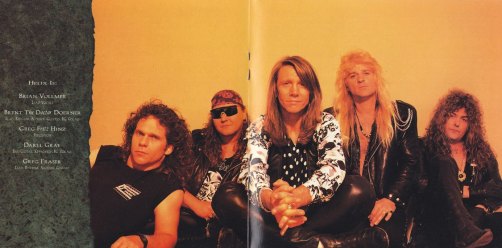







 ALICE COOPER – Welcome To My Nightmare (1975)












 mikeladano.com