Reviews

REVIEW: Ratt – Reach for the Sky (Part Four of The Atlantic Years series)

Part Four of Five

RATT – Reach for the Sky (Originally 1988, 2020 reissue — The Atlantic Years 1984-1990 box set)

One might suspect that Ratt’s decline in sales (peeling off approximately 1,000,000 buyers every album), they decided to change things up a bit.  The first three Ratt platters were very much in the same mould.  Little variation, just repeating that “Ratt N’ Rott” formula.  Initially they ditched producer Beau Hill to work with Mike Stone, but the record label wasn’t happy and brought Hill back to finish.

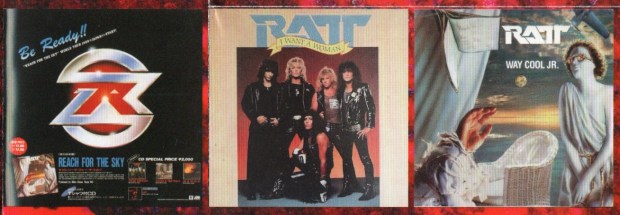
Indeed, the opener “City to City” does sound like a new rodent.  You can’t mistake them for anyone else once Pearcy starts yowling, but the slick song is fresher.  Chugging away in a mid-tempo style, it’s a bangin’ start.  But it’s the second track (and second single) that really kicks.  “I Want a Woman” retained the sleaze but contained more focus on melody with an arena-sized chorus.

The third track, and first single, was the controversial “Way Cool Jr.”.  Ratt with horns; oh my!  It was the biggest leap for the rodents and it did give them a minor charting hit.  Dipping into the blues, and eschewing the heavy histrionics.  Letting the groove of the song work, and not overpowering it.  Truth is Ratt should have tried stretching out a long time before.

Now that the big tracks are out of the way, how does the rest of the album hold up?  Not too badly.  Old-style Ratt returns on “Don’t Bite the Hand”, but at least with more melody than Dancing Undercover offered.  They go ballady on “I Want to Love You Tonight”, kind of a new thing for Ratt, and one they’d explore again in the near future.  That’s side one.

A heavy shuffle called “Chain Reaction” kicks off the second side, a welcome return to velocity.  They return to the mid-tempo zone on “No Surprise”, which sounds like something Gene Simmons might have written for an 80s Kiss album.  Good song, adequate hooks.  “Bottom Line” is in a similar ball park.  If it sounds like Ratt had help writing these songs, it might be because Beau Hill has a credit on most of them.  He only had one on Dancing Undercover.  That could be why this album has so much more melody and attention to songwriting.  The hit-ready “What’s It Gonna Be” is a prime example, almost sounding like Van Hagar.  A little too hard-edged for OU812, but perfect for a Ratt.  A foreshadowing of the kind of songs they would write for their fifth album.

The album closes on a hard rocker that Hill didn’t co-write called “What I’m After”.  A decent closer that doesn’t quite gel fully, but close enough for rock n’ roll.  Or Ratt N’ Roll.

Of all the discs in The Atlantic Years box set, Reach for the Sky has one of the best bonus tracks.  It’s an acoustic version of “Way Cool Jr.” from MTV Unplugged which chronologically happened in 1990 with Michael Schenker on guitar, filling in for Robbin Crosby who was in rehab.  The unforgiving unplugged format can separate the men from the boys, and Ratt make the grade.  Pearcy proves he can do that Ratt voice without layers of overdubs and effects.  Meanwhile, Bobby Blotzer plays some interesting non-drum percussion parts.  With Schenker on board, the mid-song acoustic segment really smokes.  Ratt could have had a whole new side to their career, had they pursued this swampy acoustic direction with Michael instead of breaking up.

But that is still in Ratt’s future; there is one more album to go on this series.  Reach For the Sky sustained Ratt’s sales.  There was no decline this time and they sold a million.  That still wasn’t good enough.  Phone calls were made and Desmond Child, Dianne Warren, Sir Arthur Payson, and one Jon Bon Jovi were about to enter the picture.

Whether Reach sold enough copies or not is irrelevant to the quality of the music, which polished the sound up to a necessary level after the disappointing Dancing Undercover.  It was a step towards the commercial, but they couldn’t do two tuneless albums in a row and survive.

3.5/5 stars


The Atlantic Years 1984-1990:

REVIEW: Journey – Greatest Hits (1988, 2008)

JOURNEY – Greatest Hits (Originally 1988, 2008 expanded reissue)

It’s OK if your first album by anybody was a “greatest hits” of some sort.  Over 15 million people bought Journey’s Greatest Hits in the US alone, and you can be guaranteed that several of those millions were buying Journey for the first time.  Hundreds of thousands more copies still sell annually.  This has to be considered one of the most successful hits compilations by a rock band.

Even if you were a Journey diehard back in 1988, you still wanted Greatest Hits.  It had two huge Journey hits from movie soundtracks:  “Only the Young” (Vision Quest) and “Ask the Lonely” (Two of a Kind).  These songs were not meant to be obscurities; both were slated for the Frontiers album.  These are two awesome songs with insanely catchy choruses, one a rocker and one a soft burner.  Two gigantic peaks of the Jonathan Cain era of Journey, who co-wrote both songs.

“Don’t Stop Believin'” doesn’t need any additional commentary, except this:  listen to the drums.  That’s Steve Smith, the wizard of tempo.  There is a reason that Smith can often be found filed in the Jazz section.  Listen to his creative hits, cymbal work, and timing.  Yet not a lot of snare.  Same with “Separate Ways (Worlds Apart)”.  This is not typical rock drumming, and this is something that his replacements have had to recreate as faithfully as they could.

Greatest Hits ignores the first three Journey albums (pre-Steve Perry), and justifiably so.  Those first three progressive rock albums, as fascinating as they are, bore no hits.  “To Play Some Music” peaked at #138.  The earliest tracks are the radio staples “Lights” and “Wheel in the Sky” from 1978’s Infinity.  Incidentally these are the only tracks without Steve Smith, featuring his predecessor Aynsley Dunbar.

In 2008, Sony a series of budget-priced reissues including Journey’s Greatest Hits.  This version has one additional bonus track from Journey’s reunion album Trial By Fire from 1996.  This is a fantastic album, but the ballad chosen (“When You Love a Woman”) tips the album too far on the scales to ballads.

Through all the hits you know, and maybe a couple you don’t (“Girl Can’t Help It”? “Send Her My Love”?) you will get a clear picture of some of Journey’s facets.  But only some.  Little of their instrumental wizardry, which continued into the Steve Perry era with songs like “Dixie Highway”.  You also will not hear many hard edged moments, like “Stone in Love”.  You will however get a taste of Steve Perry’s soul, and the excellent hooks that he concocted with Neal Schon and Jon Cain.  You will absorb some awesome Schon tone.  On the later tracks, like “I’ll Be Alright Without You” and “Be Good To Yourself”, you will hear the slickness and groove of Raised on Radio.  But there are so many more key Journey tracks, as good if not better than these.

4/5 stars

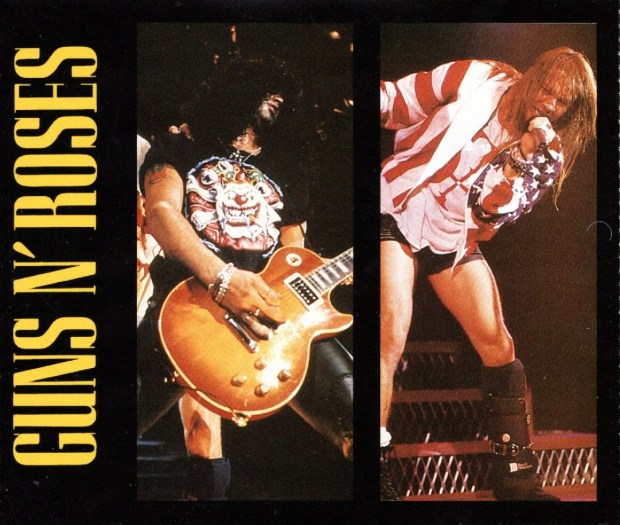
REVIEW: Guns N’ Roses – Dramas & Traumas (5/29/91 bootleg)

“November Rain” was played live for the first time by Guns N’ Roses on this day in 1991.

GUNS N’ ROSES – Dramas & Traumas (Deer Creek Music Center, Noblesville, IN, May 29 1991 – Deep Records bootleg CD)

The market is littered with live Guns N’ Roses bootlegs from the Use Your Illusion tour.  The band’s own official Use Your Illusion World Tour Live in Tokyo VHS tapes are an ideal source of live music from their biggest tour.  But what many fans seek is an earlier show, before Izzy Stradlin went his own way and was replaced by Gilby Clarke.  Nothing against Gilby, but Izzy only lasted about six months and has been missed ever since.  This bootleg is from the seventh show on the tour, when the material was new, unheard, and rough.  Some of the songs were dropped or rarely played later on.

Audio is average as far as bootlegs go; it’s an audience tape job with some occasional issues.  The set is complete.  “Double Talkin’ Jive” is unlisted, hidden within the larger “Patience” track.  It is also the historic live debut of “November Rain”.  Opening with “Right Next Door to Hell”, which was dropped by the start of ’92, the energy is high.  Axl takes no mercy on the demanding song, giving 100%, especially on the obligatory “fuck you”!

Guns wisely played familiar songs mixed in with the new stuff.  The albums would not be out for over three months.  Axl asks if the audience wants to go dancin’, which means “Mr. Brownstone” is up next, a low energy version comparatively.  It might be too easy to blame the new guy Matt Sorum, but you do notice the lack of Steven Adler when you think about it.  Back to new tracks, it’s the bluesy “Bad Obsession” which Axl explains was written long before “Brownstone”.   Slash rips out the slide guitar and Axl gets distracted by a hottie.  It’s the first audible appearance of another new member — keyboardist Dizzy Reed on piano.  Later on, Axl makes a big point of announcing that Dizzy is, contrary to some media reports, “a goddamn a-fuckin’ official member of the band!”

Regarding live debut of “November Rain”, Guns didn’t have a setlist.  Axl just called out the songs, feeling out the crowd.  According to Matt Sorum and Duff McKagan in a later interview by Dan Gallagher of MuchMusic:

Matt “Axl said ‘November Rain’, and we hadn’t played it since we recorded it…in July!  In front of 20,000 people, we’re going, ‘Uh, do you remember how that goes?’  Damn near a year ago we cut this track.”

Duff“And he has this grand piano, that raises up out of the stage.  And all of a sudden the piano raises up and we’re going, ‘What the hell is that…’

You can almost hear the fear.  Sorum tentatively taps the cymbals, but doesn’t miss his cue when it’s time to come crashing in.  Axl mentions he can barely remember the words, but only flubs a couple.  Slash’s first solo nails most of the big hooks, while the second is more improvisational.  They all struggle a bit on the outro, but damn — they did it!

After “November Rain”, a microphone catches Slash saying, “A fucking curve ball, man!”

The two most significant tracks are the two sung by Izzy that were necessarily dropped when he left:  “Dust N’ Bones”, and “14 Years”.  Both feature raspy, Keef-like lead vocals from the guitarist.  These two tracks are very good reasons to want an early set like this.

There are long solos, intros and outros, and all the stuff you expect from a Guns N’ Roses show.  The solos had yet to evolve into the forms they would take by the time they hit Tokyo, though the “Godfather” theme has its place.  They play a bit of Rod Stewart’s “I Was Only Joking” as part of the “Patience” intro, and of course “Only Women Bleed” before “Heaven’s Door”.  The “Voodoo Chile” lick always works well going into “Civil War”.  It’s also interesting to hear how the songs started out early on tour.  “Civil War” seems a bit shaky in the start, but goes nuclear by the end.

The main set ends on “Perfect Crime” and the encores consist of “Estranged”, “Sweet Child”, “Jungle” and “Paradise”.  A pretty slam-dunk way to send ’em home.  Unlike “November Rain”, “Estranged” was already humming like a well-tuned car by this time.

The two bonus tracks are interesting curiosities from the 1989 MTV music video awards.  Tom Petty & the Heartbreakers performed “Free Falling” and “Heartbreak Hotel” with Axl Rose.  They are here as a little bit of added value, but make no mistake — it’s just Axl from the band, nobody else.

As mentioned earlier, there are some sonic anomalies of the type that usually come with bootlegs.  The disc goes silent for very brief moments during “Right Next Door to Hell”.  Not a deal breaker considering the rest is very listenable.

4/5 stars

REVIEW: Kevin Kiner – Star Wars “Rebels Theme” (Limited edition picture single)

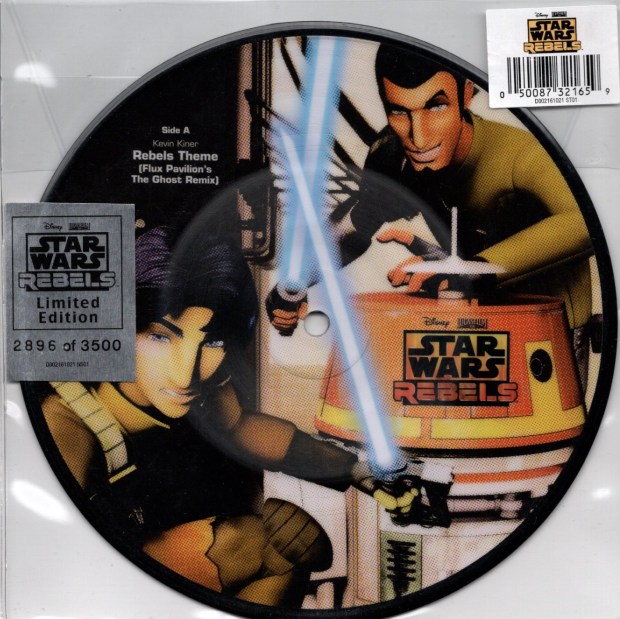
STAR WARS “Rebels Theme” (Limited edition Disney 2015 picture disc single)
Music by KEVIN KINER

You know where I stand on remixes, right?  Most of them are shite, especially when you try to dance-ify music that was not intended for dancing.  If that kind of remix is your thing, that’s cool.  You appreciate something that I do not.  I just recommend that you hit the “back” button on your browser right about now, that’s all.

I liked Star Wars Rebels.  Although it did come across more “kiddie” than Clone Wars, the era and characters it covered were more to my liking.  The Imperial era, not the Republic.  Of course, it later grew and merged with Clone Wars into a greater lore, but that is not for this review.  Just saying, check it out if you haven’t.  It’s on your Disney Plus.

Rebels’ composer, Kevin Kiner, was tasked with coming up with a new theme cue.  He did this by incorporating and adapting John Williams’ original cues.  It’s almost like a mega-mix of hero themes, in 55 seconds.  It’s just a cartoon after all, not a feature film.  Kiner’s rendition of these landmark themes is perfectly suitable to the show and honours the era in which it is set, and the spark of rebellion.

Though Star Wars Rebels has two volumes of music available on soundtracks, they were never issued on physical formats.  This single is the only place you can get a physical copy of Kiner’s “Rebels Theme”.

Unfortunately, the exclusive B-side of this single is the horrid “Flux Pavilion’s The Ghost Remix”.  It adds digital beats, noise and manipulations to the “Rebels Theme” and extends the thing by five times!  For the hell of it, there’s some laser blasts, some Wookiee howls, and some yelling.  This is utter garbage that young kids might enjoy, but makes me wanna hurl.  It deviates so far from the blueprint that it’s clear the ol’ hyperdrive needs some recalibrating.  The remix is at least memorable, for whatever that’s worth.

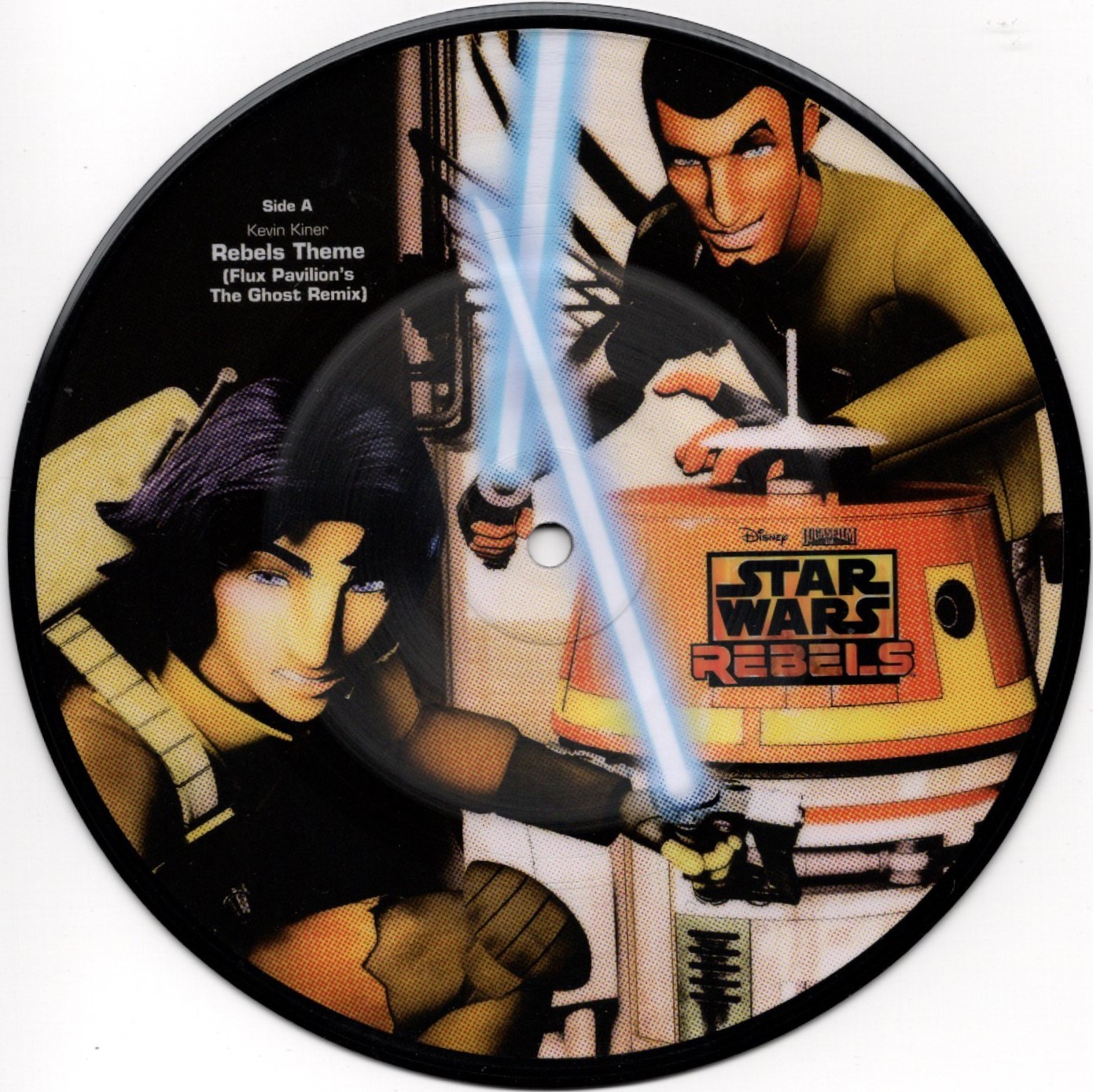
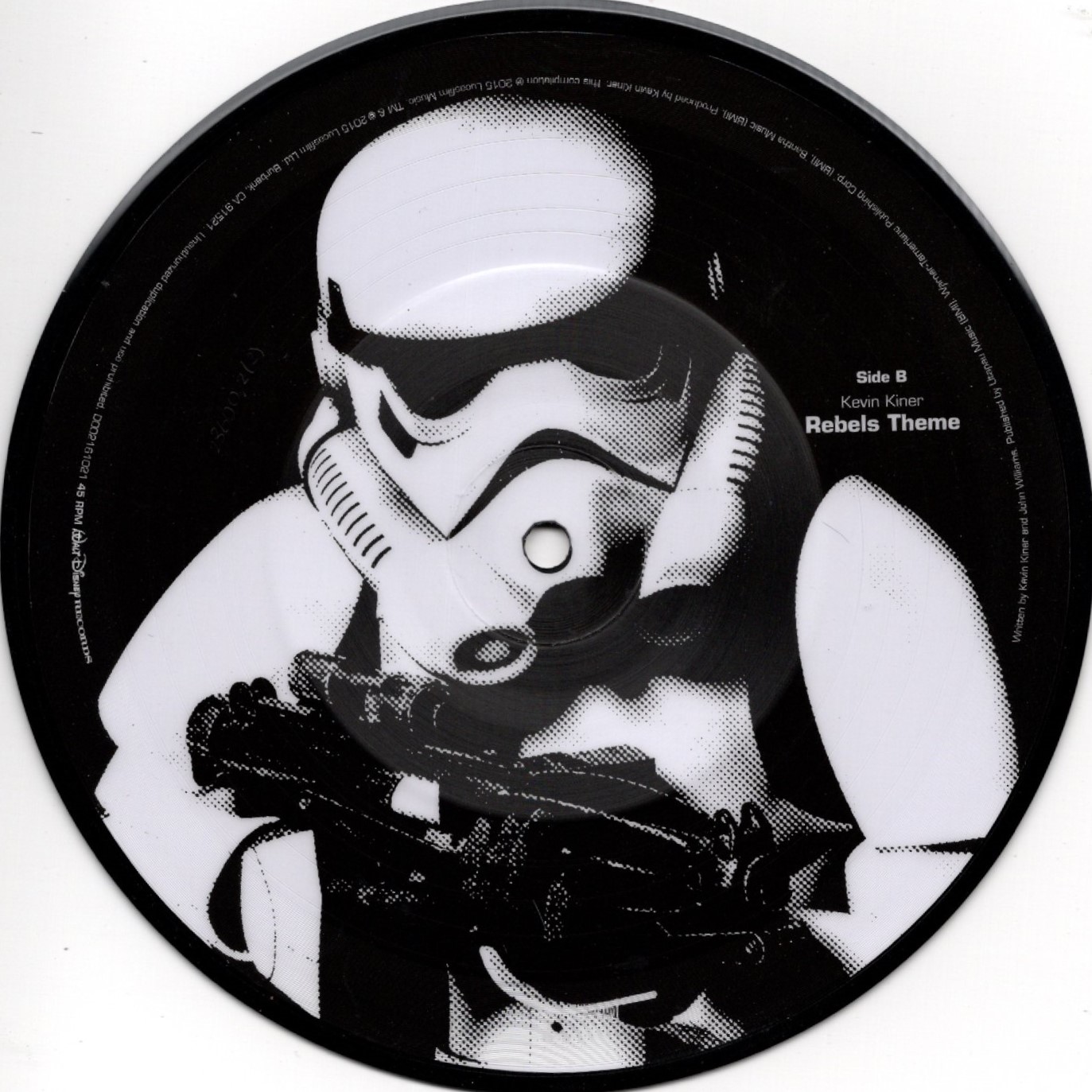
The picture disc is nice though.  On the A-side (which is unfortunately the remix side!) it’s hero Ezra Bridger with Jedi Kanan Jarrus and droid C1-10P, aka “Chopper”.  On the B-side, the original “Rebels Theme”, you get an Imperial Stormtrooper taking aim to fire (and miss)!  One of the coolest things about the Rebels show was that it used old Ralph McQuarrie designs from Star Wars pre-history.  Chopper is based on preliminary drawings of R2-D2.  Likewise the loveable character of Garazeb Orrelios is based on early designs for Chewbacca.

Being that the decent B-side is 55 seconds long while the remix is five times that length, the rating for this single cannot be high.

2/5 stars

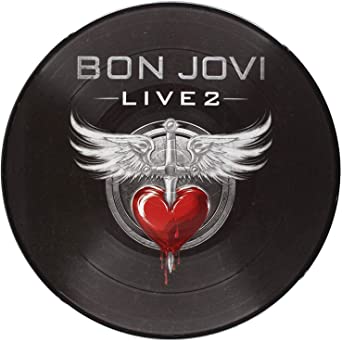
REVIEW: Bon Jovi – Live 2 (2014 10″ picture disc)

BON JOVI – Live 2 (2014 Mercury limited edition 10″ picture disc)

Live 2?  Surely there must be a Live 1.  It appears this 10″ picture disc is a sequel to a 1984 Bon Jovi EP called Live.  This picture disc, a limited edition of unknown quantity, collects four previously released classic live performances from the New Jersey tour.  They are remastered by Ryan Smith at Sterling Sound.

Though all the live tracks were available long ago on other rarities, the nice thing about this disc is that it actually tells you when and where they were recorded — information missing from some other releases.  This record is split into two sides — the U.S. side and the International side.

“I’ll Be There For You” (Lakeland, FL, 1989) and the next track were released on the 1993 double reissue of Keep the Faith, featuring a bonus CD also called Bon Jovi Live.  “I’ll Be There For You” was track four on that disc; here it is the lead.  A little slow, but Jon and Richie’s harmonies are the magic.  Sambora’s expressive playing is also outstanding.

Second, it is an electrifying live version of “Lay Your Hands On Me” (Giants Stadium, NJ, 1989).  Tico Torres really grabbed this song by the nuts with his opening drum salvo.  Songs like this really opened up Bon Jovi’s sound to include more roots.  The crowd noise is mixed low because you can tell it’s an endless mush of high-pitched screams!

Flipping to the International side, we are taken to Wembley in 1988.  Jon needs a doctor!  It’s “Bad Medicine”, of course.  “Doctor Bryan! I think I got it bad this time! What do you mean a shot can’t cure it? It’s like the luggage? Oh well!”  Never one of Jon’s finest songs, “Bad Medicine” is the upbeat party track of New Jersey, sometimes a necessary evil.  Over the years, you’ve just heard it enough times, and there are lots of live versions of “Bad Medicine” on uncountable releases.  This one was originally on the 1988 “Living In Sin” EP.  Comparatively speaking, it’s superior to the other live versions out there.

Finally, “Runaway” from Paris in 1988 was first made available as the B-side to “Lay Your Hands On Me”.  This energetic version is one of the best takes you will hear.  There’s a bare rawness to it, but the vocals are crisp and tight.  Everything clicks.

Although Live 2 only captures a tiny slice of the live Bon Jovi experience, it collects four key tracks.  Three of the four are really excellent examples of classic Bon Jovi live.  Not a bad buy if you don’t have them already.

3.5/5 stars

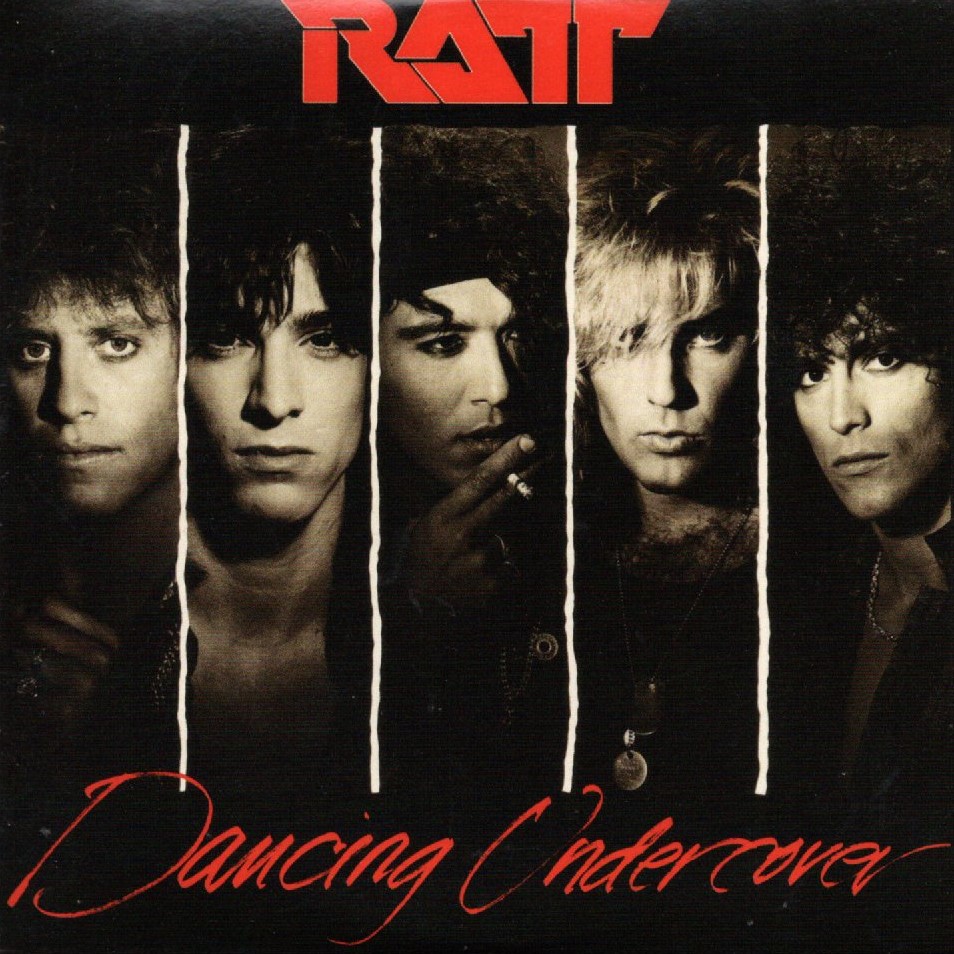
REVIEW: Ratt – Dancing Undercover (Part Three of The Atlantic Years series)

Part Three of Five

RATT – Dancing Undercover (Originally 1986, 2020 reissue — The Atlantic Years 1984-1990 box set)

Ratt’s fortunes continued to fall on their third album Dancing Undercover.  Their debut went triple platinum and the second album went double.  You didnt need an expert prognosticator to predict that the third album would go platinum and no further.  Which is still very respectable, but the trend was not good.

Opening single “Dance” was solid, with a poppy melody and stuttery 80s guitar lick.  Sleazy pop, rodent style.  A stock Ratt prowler comes second, called “One Good Lover”.  It packs punch, wicked guitars, and a few decent hooks.  Without missing a beat, they accelerate into “Drive Me Crazy” which has a speedy Hollywood-built engine.  Drummer Bobby Blotzer impresses with the machine gun fills.  Unsurprisingly, the drummer has a writing credit on it.  Decent tune, with a clunky arrangement.

The band slides into “Slip of the Lip”, which made for a pretty cool live-style video.  It is a clear album highlight, and most successfully nails the sleaze rock vibe that Ratt peddle in.    They end the first side on the incendiary “Body Talk”; straight-up Ratt thrash.  Probably the heaviest Ratt track ever, even “Body Talk” made for a wicked video.  It was hard to picture Ratt pushing it this fast and hard, but they did, and successfully so.

“Looking For Love” had to be a sleaze rocker. The second side doesn’t open on a great song, but it certainly is a Ratt song.  You couldn’t mistake it for any of their peers.  It does boast a pretty good chorus, even if the rest of the song doesn’t quite nail it.  On the other hand, “7th Avenue” has a menacing vibe and not much else.  “It Doesn’t Matter” has some life.  Unfortunately the second side just doesn’t have enough bite, nor enough good songs.  “Take a Chance” borrows a few chords from “Slip of the Lip” but isn’t nearly as good.  At least the closer “Enough is Enough” has a nice clean guitar part for variety’s sake, but side two is virtually without hooks.

This edition comes with a single edit of “Dance” as the bonus track, which at least allows the album to end on a good song, albeit a repeated one.

2.75/5 stars

The Atlantic Years 1984-1990:


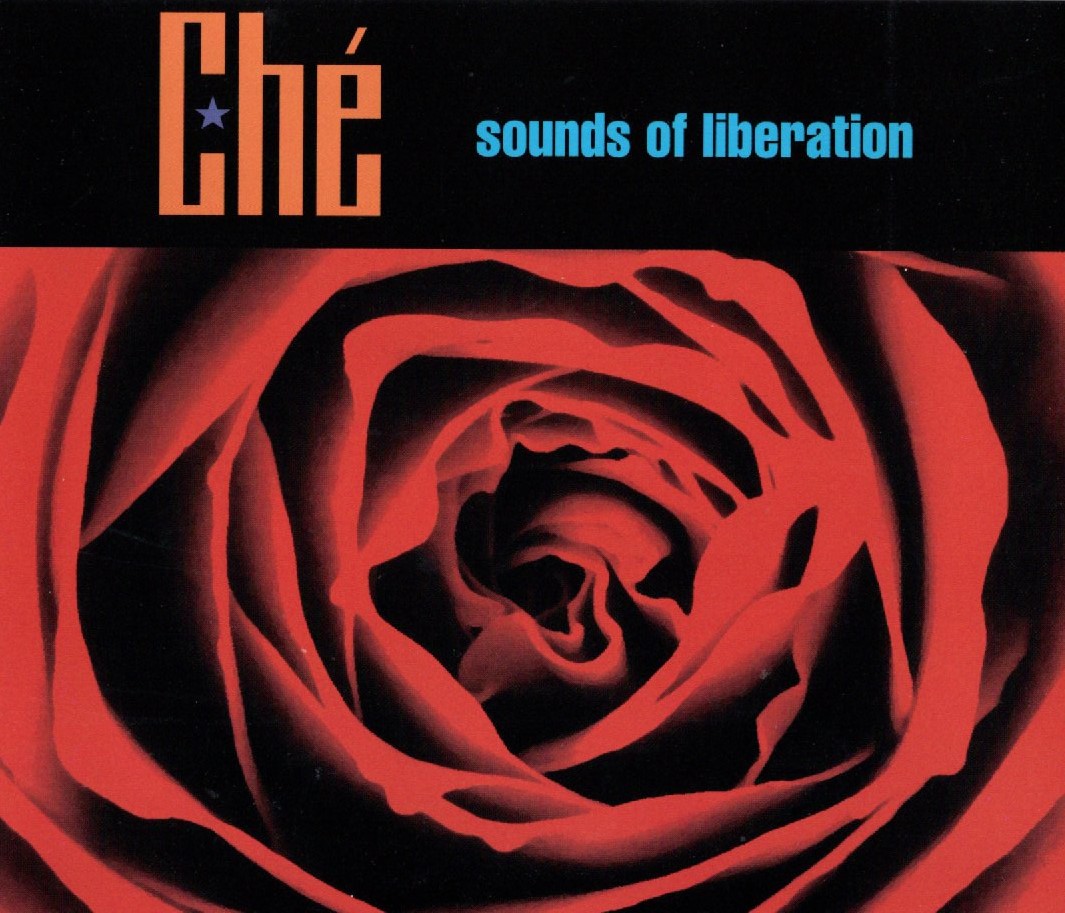
REVIEW: Ché – Sounds of Liberation (2000)
CHÉ – Sounds of Liberation (2000 Man’s Ruin)
Almost immediately after his debut solo album Jalamanta, Brant Bjork was back with another new project and album.  Ché, featuring former Queens of the Stone Age drummer Alfredo Hernández, and Unida bassist Dave Dinsmore, only made one album.  But it is indeed the Sound of Liberation.

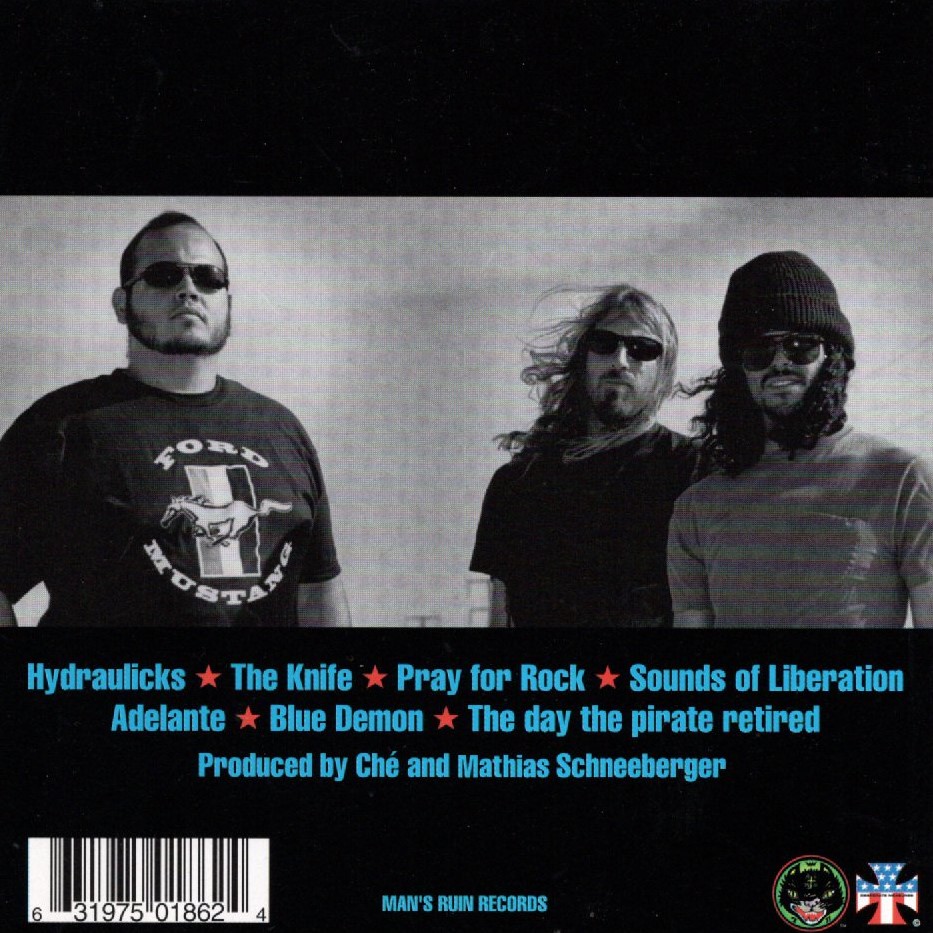
“It’s the Ayatollah of Rocka Rolla baby!”  Seven songs, 35 minutes.  Brant Bjork on guitar leads off “Hydraulicks” with a sharp, stabbing riff.  The laid back vibe of Jalamanta is gone, though its emphasis on repeating simple riffs is put to good use here.  A few vocal and guitar overdubs add some brilliant depth to a pretty raw, live-sounding recording.

“Stabbing” is another good adjective to describe the second track, “The Knife”.  Or perhaps hammering, as this song doesn’t let up.  The chorus is but a brief reprieve from the relentless rhythm.  “We can break the knife, so it won’t cut you, never cut you…”  But the instrumental “Pray For Rock” has a completely different vibe, a slow Sabbathy one with a Ward-like drum patter.  Then it suddenly goes full U2, if U2 were a stoner rock band from the desert.

The title track “Sounds of Liberation” enters.  The main three-note riff has some heft!  Solid track followed by another solid track, “Adelante”.  Hard hitting, choppy, aggressive.  Gets the point across.  Awesome drums by Alfredo Hernández.  But it’s the second-last track “Blue Demon” that really impresses, as a late-album highlight.  “Pick a room, man, ’cause they’re all the same,” sings Brant.  The riff has a certain electric aura, and the song just grooves.  It’s an ode to living free.

The final track is another instrumental, “The Day the Pirate Retired”.  The focus is on the riff, bristling with electric energy.  The band really jams here, with the fluid bass providing unexpected smoothness.

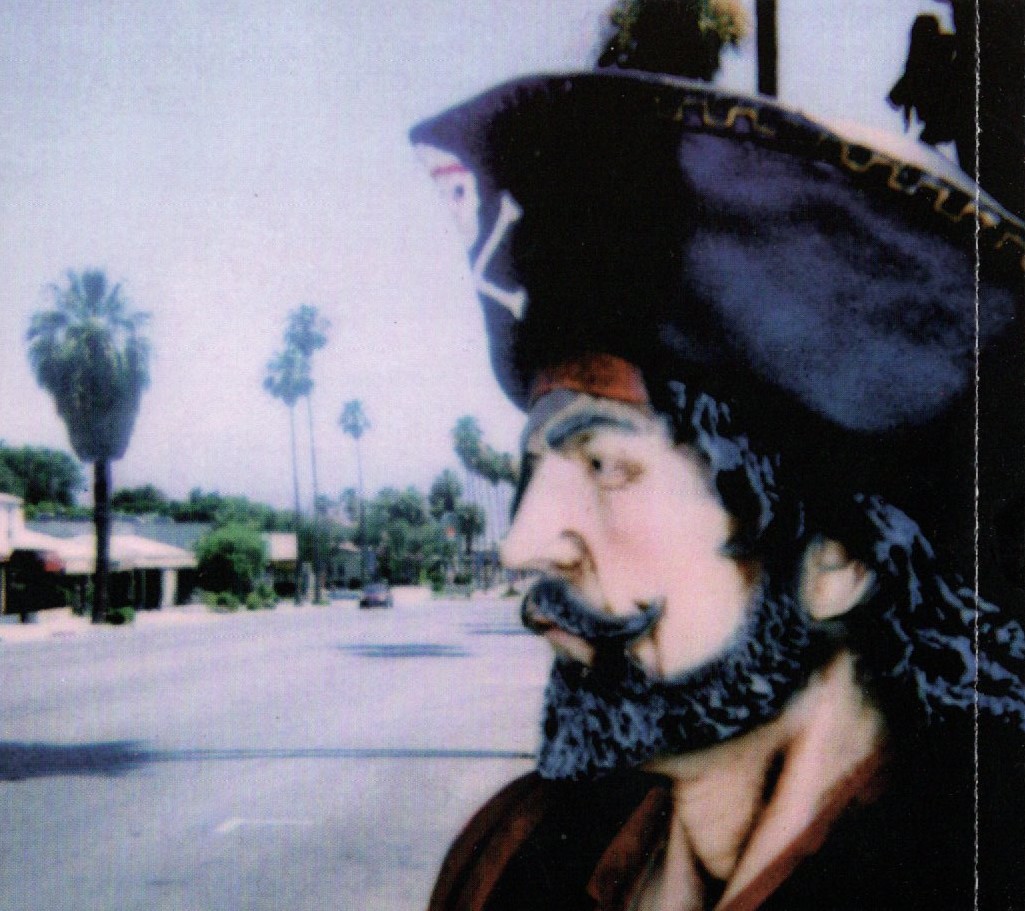
The CD packaging is interesting, with the front cover artwork on the back tray, and the back covert artwork on the front.  Kind of confusing when you see one on the CD shelves for the first time.

4/5 stars


REVIEW: Ratt – Invasion of Your Privacy (Part Two of The Atlantic Years series)

Part Two of Five

RATT – Invasion of Your Privacy (Originally 1985, 2020 reissue — The Atlantic Years 1984-1990 box set)

Going triple platinum on their debut album, Ratt had a lot of expectations going into a followup.  They resumed working with producer Beau Hill and didn’t change up much in their formula.  The result was a double platinum second record, another sales success.  But what about the tunes?

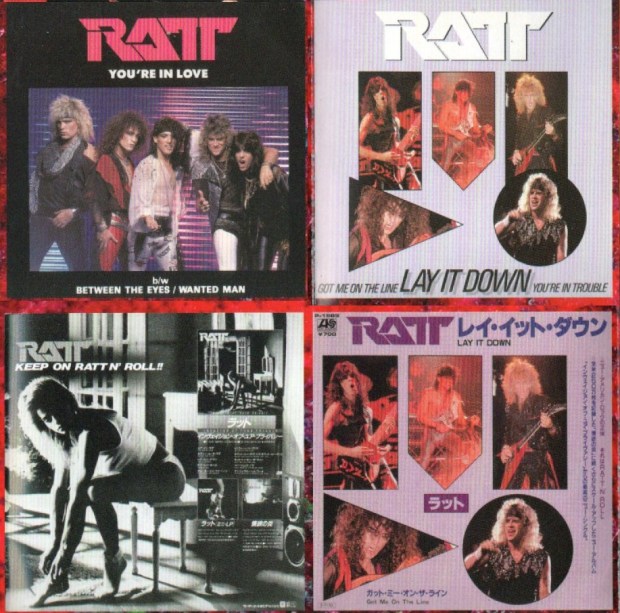
Lead track “You’re In Love” was chosen as a speedy, sleek, metallic and melodic single.  A step up in songwriting, “You’re In Love” packs power and horny Stephen Pearcy passion.  Wicked solo by Warren DeMartini.  The simple riff/melody combo was all the rodents needed to score a hit and a career highlight.  As an album opener, it revs the engine but it is also the fastest track you’ll get on Invasion of Your Privacy.

A tasty heavy riff opens up “Never Use Love”, a nice chugging album track.  Nothing here in terms of a memorable chorus, so strictly album filler.  Not road tape worthy without a decent chorus.  Great Robbin Crosby solo though.  Fortunately the slick first single, “Lay It Down” comes in for the save.  Take “You’re In Love” and slow it down to a sexy locked groove, and you get “Lay It Down”.  Pearcy was not one for subtlety.  “I know you really want to lay it down,” he beckons, and no points for guessing what “it” is.

Track four, “Give It All”, is a decent album cut, with the hooks and chugging Ratt N’ Roll style riffs that people expected.  A track with single potential, had they released another.  Another pretty good album track, “Closer To My Heart”, slows it down but not quite into ballad territory.  More like a slow dirge to close side one.

The second side opens on “Between the Eyes”, a disjointed tune that needs some tightening up.  Some cool hooks but nothing to tie them together into a song.  “What You Give Is What You Get” boasts a cool, tough little chorus and some quality guitar.  Great tune other than a misfitting pre-chorus.  It has a dark, foreboding vibe that Ratt rarely nail this well.   “Got Me on the Line” is a pretty solid deep cut, typical uptempo Ratt N’ Roll.  The solo in particular smokes.  “You Should Know by Now” is a bit clunky, but you can hear what they were going for.  They were trying for a big pop rock chorus, but they welded it to the wrong song.

Closing on “Dangerous But Worth the Risk”, the album comes to a strong ending.  It chugs along with that Ratt N’ Roll groove that embodies the sound of Motley Crue assimilating all of Hollywood California in a single night.  Though Ratt’s sound is not something as unique as they used to sell it as, it does have a niche.  It rarely squirms out of that niche.  Invasion of Your Privacy does not stray far from the debut, and doesn’t add any new wrinkles.  It’s the next batch of songs and all but equal in strength to the first batch.

Each CD in this box set comes with bonus material from singles, and this time it’s a single edit for “What You Give Is What You Get”.  The guitar solo is sadly trimmed by 20 seconds for the radio, but no problem hearing this cool song twice.

3.5/5 stars


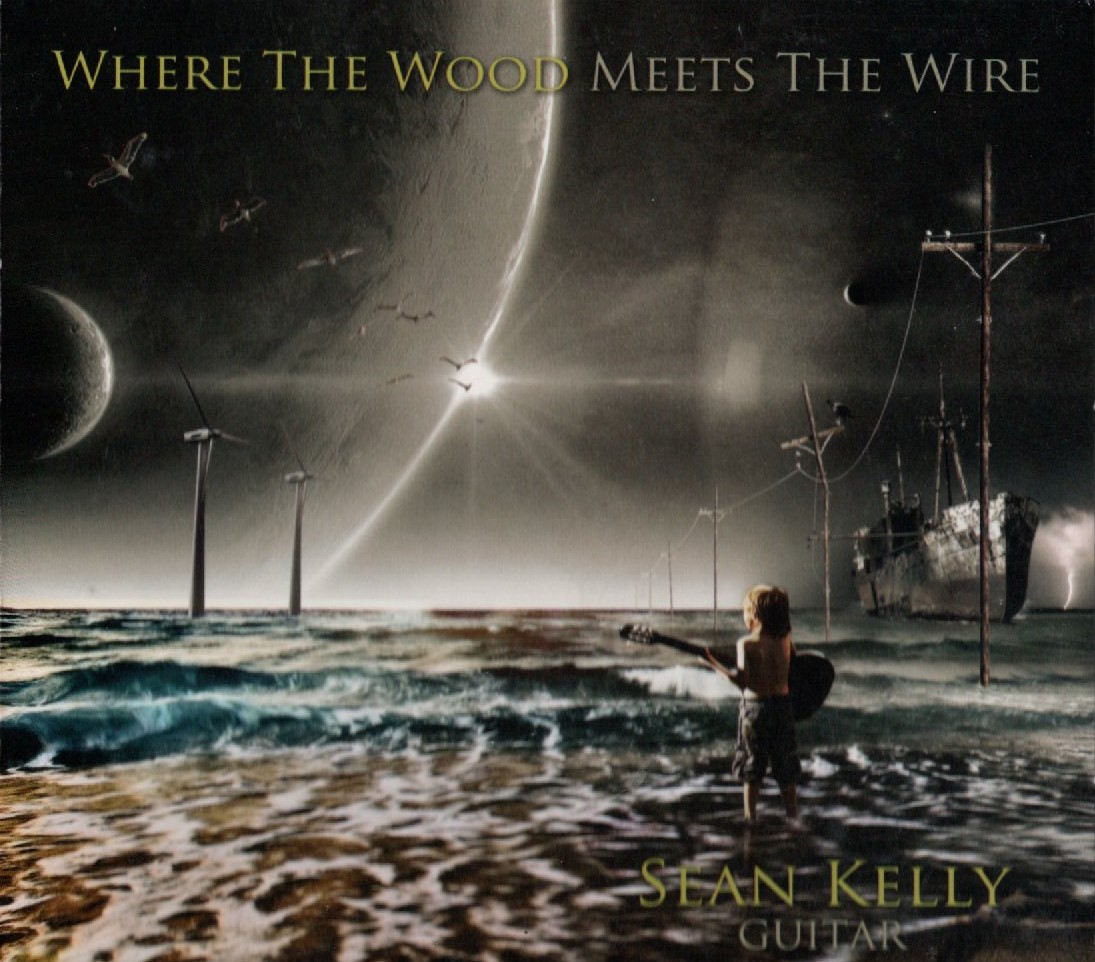
REVIEW: Sean Kelly – Where the Wood Meets the Wire (2011)

SEAN KELLY – Where the Wood Meets the Wire (2011 Opening Day Entertainment)

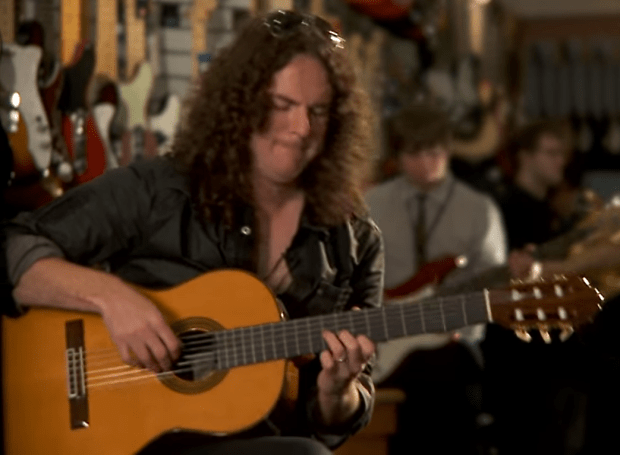
By now, we all know Sean Kelly.  Coney Hatch, Lee Aaron, Helix, Crash Kelly, the list goes on and on.  As much as Kelly enjoys rocking out, he’s just as capable of chilling.  His 2011 solo release, Where the Wood Meets the Wire, could be the perfect gateway for those curious about classical music but afraid to dive in.  As stated on the back cover, this album “retools classical guitar works” and that might be just what you needed to get your Schubert on.

By pairing the classical guitar with a little bit of electric, Kelly combines two worlds.  Opener “Adelita” is certainly accessible enough for rock fans, having qualities not unlike a mellow Satriani ballad.  The percussion here is outstanding.

Kelly takes on classical guitar masterworks by composers such as Agustín Barrios and Joseph Kaspar Mertz, displaying some pretty impressive dexterity.  The odd shot of electric guitar is like a punch in the arm.  Some pieces such as “Rujero” (Gaspar Sanz) will appeal to fans of Blackmore’s Night.

Another highlight is an acoustic instrumental rendering of Gowan’s classic “A Criminal Mind”.  Appropriately listed as “Une Mente Criminale”, this brilliant arrangement is a worthy re-imagining of the original.  The unmistakable melody translates into the classical style quite well.  It becomes a bit of a tango halfway through when the tempo is cranked up!

Finally, a familiar voice joins in on the final track “Ave Maria”, and it is Brian Vollmer of Helix.  Vollmer, trained in Bel Canto, is a frequent Kelly collaborator in the rock world, so his crossover here is a real treat.  You get to hear what Vollmer can do that doesn’t apply to Helix.  What Kelly and Vollmer both share is a fearless inclination to explore styles and techniques usually untapped by rockers.

If the classical world still holds a nose to modern music like it seemed to when we were younger, Where the Wood Meets the Wire might be met with indifference by purists.  For those who don’t think boundaries between genres are a big deal, Where the Wood Meets the Wire could end up being a favourite.  Only way to find out is to listen.

4/5 stars

Don’t miss Sean Kelly on the LeBrain Train Friday May 21 at 7:00 PM

REVIEW: Styx – Cornerstone (1979, coloured vinyl reissue)

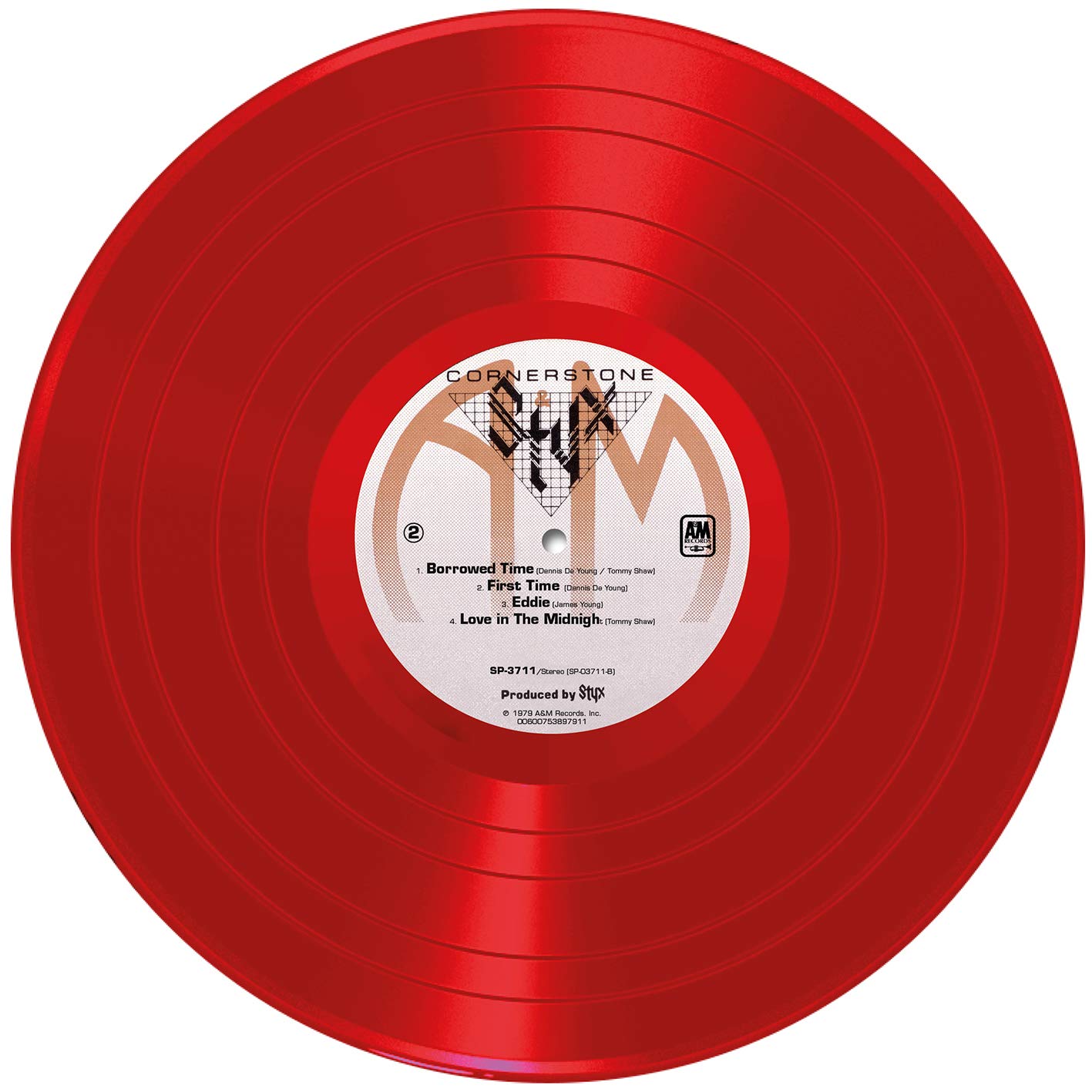
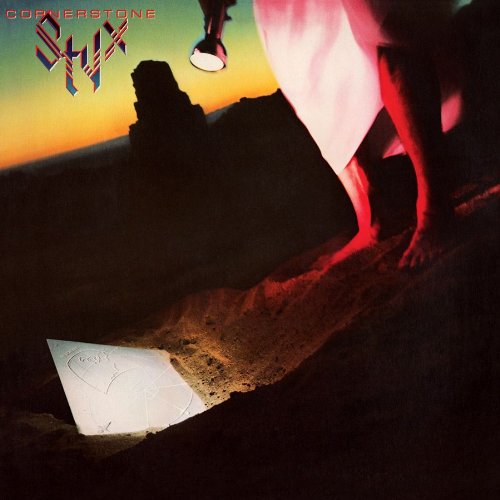
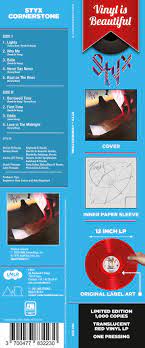
STYX – Cornerstone (Originally 1979 A&M, 2020 Universal red vinyl reissue – limited to 1000 copies)

With Cornerstone, Styx were on their fourth album in their most successful incarnation:  Dennis DeYoung, James Young, Tommy Shaw, and Chuck & John Panozzo.  Shaw was the newest member and a fierce creative force in songwriting, on guitar, and with his own lead vocals.  Styx had a string of hits with this lineup including Crystal Ball, The Grand Illusion, and Pieces of EightCornerstone would be their biggest yet.  Though imperfect, it’s loaded with memorable songs and dynamite performances from the poppy-pretentious-prog-rock quintet.

What a terrific song “Lights” still is, with that big fat keyboard lick and Tommy Shaw’s delicate lead vocal.  You can hear why the punk rockers sought to eradicate the likes of Styx and their contemporaries.  But Cornerstone went to #2 in the album charts, and “Lights” was one of the singles released in Europe.  It’s a song about performing on stage, something that most of us will never be able to relate to.  But there’s something in its sincerity that is just charming.  “Give me the lights, precious lights, give me lights.  Give me my hope, give me my energy.”

Another single follows called “Why Me” (which wasn’t intended to be a single, but we’ll get into that).  A head-bopping light rock delight.  One of those tracks where you say, “Yeah, decent song.”  You might forget about it later; you might forget which album it’s on.  But it’s cool, especially when a blistering saxophone solo hits the speakers.

The big hit is in the third slot:  legendary power ballad “Babe”, Styx’s only #1.  Its strength is its pure corniness.  Surely, it must have been corny in 1979 too.  Yet a word comes back to me – “sincerity”.  Dennis DeYoung sounds completely sincere singing, “Babe, I love you,” like he means it.  Indeed as I research the album, “Babe” was written for Dennis’ wife.  You can hear it.  And if I was writing a song for my wife, you’d find it corny too.

A natural follow up to this Dennis-fest is a solid Tommy Shaw rocker called “Never Say Never”.  One of those album tracks that couldn’t stand on its own as a single, but has a perfect slot on side one after the big ballad.  That is an important slot for any rock band’s side one.  You have to get the blood pumping and the circulation back into the extremities with something that has some pep.  Because before you know it, the side will be done.

And side one closes on an epic:  Tommy’s mandolin-inflected “Boat on a River”.  Shaw on mandolin, guitar and autoharp.  Dennis on accordion, Chuck Panozzo on double bass with a bow.  Although fully acoustic with no electric, “epic” is the best word to describe it.  Perhaps it is a precursor to the the current popular “sea shanty” trend.  Well, Styx did one in 1979.

Side two kicks off with a blast:  “Borrowed Time”.  It’s amusing to hear Dennis start the song by saying, “Don’t look now, here comes the 80s!”  But this fun romp will be almost completely forgotten when you are suffocated by “First Time”, one of the most syrupy ballads ever foisted upon us.  Too syrupy, though the string section is a nice touch.  And it would have been the second single, had Tommy Shaw not objected.  “Babe” was a smash, and so “First Time” was selected to follow it.  Tommy expressed concern at two ballads in a row for the first two singles, and threatened to quit the band over it.  Things got so nasty that Dennis DeYoung was briefly fired and then re-hired over the issue.  And thus “Why Me” was chosen as second single instead.  Probably for the best…though you never know.

What do we need now?  A James Young rocker!  “Eddie” is his sole writing and singing credit on Cornerstone.  And it rocks hard, James pushing the upper register of his voice.  You wanna talk deep cuts, well “Eddie” is one of the best.  Interestingly it’s also one of those songs where the verses are slightly better than the choruses.

The closing slot on Cornerstone is left to Tommy Shaw’s “Love in the Midnight”, an interesting choice, echoing the side one closer when it opens acoustically.  It is the most progressive of the songs, featuring an absolutely bonkers Dennis keyboard solo and suitably gothic “ahh-ahh-ahh” backing vocals within a section with odd timing.  Things get heavy and punchy.  Definitely going out with a bang and not a whimper on this one.

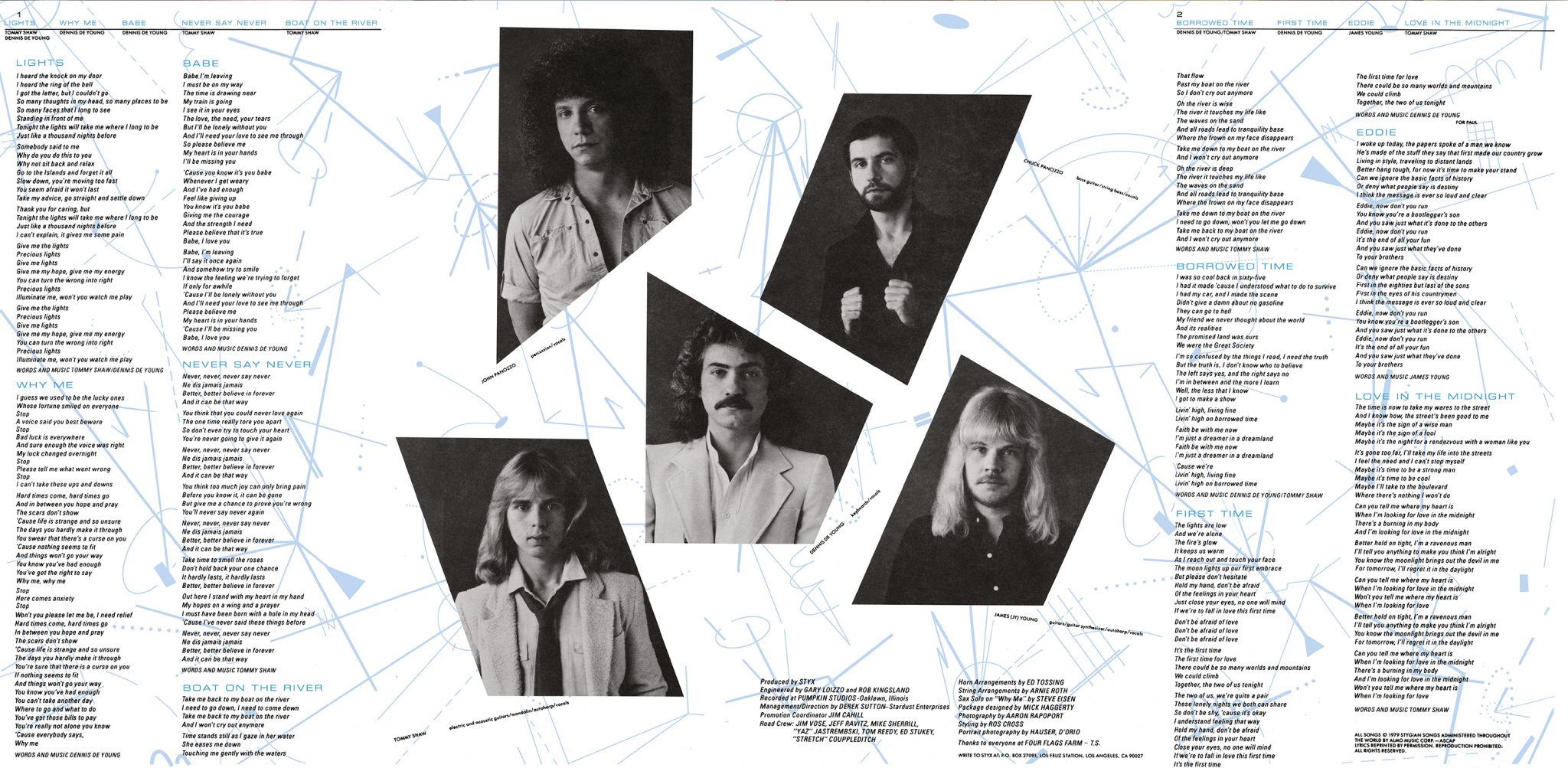
This transparent vinyl reissue looks and sounds nice. It’s a gatefold sleeve with lyrics, pictures, and moustaches.  Not as cheap as buying a vintage vinyl or CD…just a lot nicer to look at.

4/5 stars