Reviews

REVIEW: KISS – Off the Soundboard – Tokyo 2001 (2021)

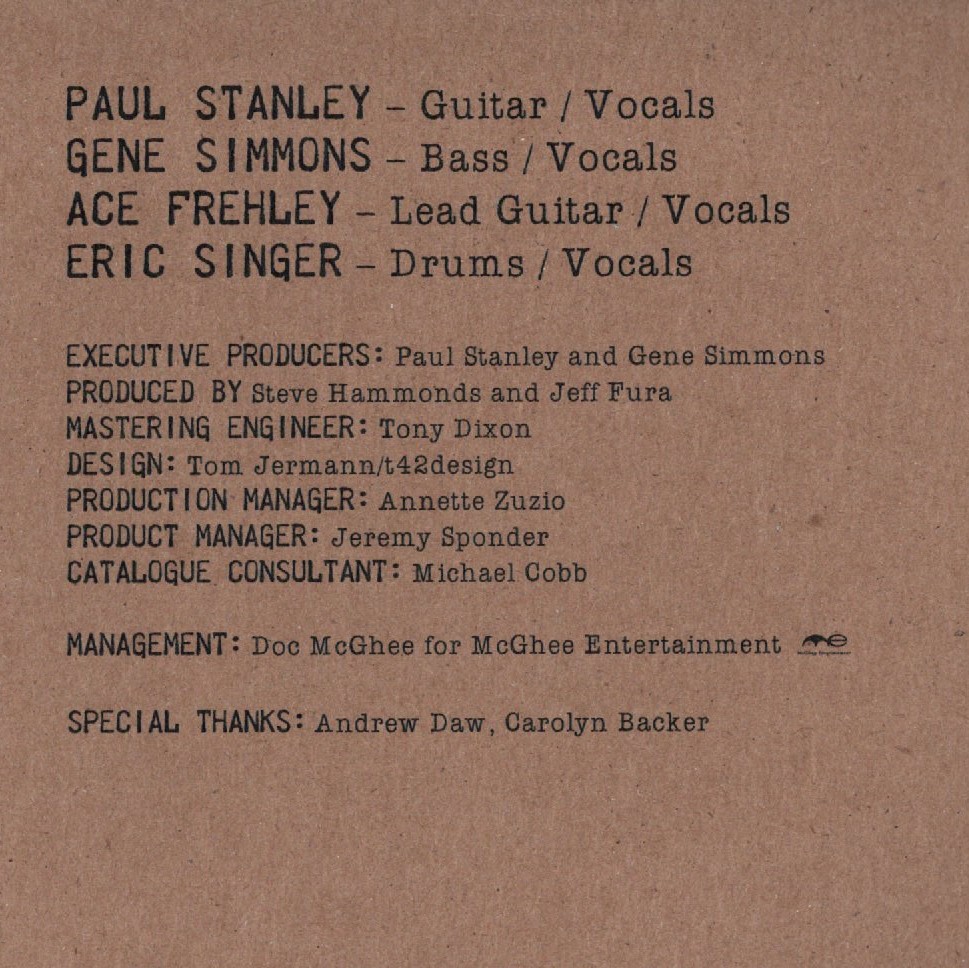
 – Off the Soundboard – Tokyo 2001 (Tokyo Dome, Tokyo, Japan, March 13, 2001 – 2021 Universal)

Hell yeah, Kiss have started releasing official bootlegs.  Proving that they “get” the concept, the first in what we hope will be a long series, is a lineup never before heard on any official Kiss release.  After the lengthy reunion and Psycho Circus tours, Kiss embarked on a “Farewell Tour” that really wasn’t.  It was just the farewell to the original lineup, and specifically Peter Criss.  Ace Frehley stayed on board for the time being and Eric Singer was brought in as the new Catman.  This lineup lasted until Frehley left and Criss came back for the Kiss Symphony, but was never documented in any official capacity.

Confusing?  Just know three things:

  1. This is really valuable to fans.
  2. ACE FREHLEY, LEAD GUITAR!
  3. Paul Stanley was still in great voice back in 2001.

Alright, Tokyo.  You wanted the best, you got the best.  Let’s have a listen.

An electrifying “Detroit Rock City” opens, and immediately you can hear the pitter-patter of the new Catman making itself evident.  Stanley is in fine form, high energy.  And the sound is damn decent.  Sure, you could wish the vocals were mixed louder and the bass a little lower, but the “official bootleg” is a more honest experience than a polished-up Alive album.  And Paul really nails it.

“Deuce” has plenty of those Frehley solos and fills that we miss so much today.  Gene is fully engaged and frankly, you don’t miss Peter.  Paul says a quick hello in Japanese, and teases the crowd in expert frontman fashion.  Then it’s “Shout It Out Loud”, a pretty standard version.  Frehley’s “Talk To Me” from Unmasked is the real treat.  It is not the first live version released (there was an earlier live take on The Box Set with Eric Carr) but it is rarely heard.

Paul always asks the crowd “How we doin’ so far,” and the pace is slowed down for “I Love It Loud”.  This version has particularly good backing vocals in comparison with others.  Then Paul needs to know if the crowd is having a good time, just before he pulls off some impressive soulful bellowing.  It’s time to call the “Firehouse”, another solid version.  Eric Singer’s drumming is noticeably more regimented but the fills are big and bold.  It’s just great to have Ace on lead guitar.

Kiss setlists are often safe, and a steady stream of Kiss standbys roll out:  “Do You Love Me”, “Dr. Love”, “Heaven’s On Fire” and “Let Me Go, Rock ‘n’ Roll”.  It’s a Kiss concert; none of these songs vary much from night to night.  None of them suck; Kiss were sounding good and Eric Singer helps beef up the vocals.  The extended intro to “Heaven’s On Fire” really highlights what a truly exceptional singer Paul Stanley was.  Gene on the other hand is pretty ragged on “Let Me Go, Rock ‘n’ Roll”, not being able to decide what voice he’s singing in.  Great to hear Ace take a long solo on it though, all the while Eric Singer filling the backdrop with snares n’ toms.

Frehley takes the spotlight once more on “Shock Me” with his feature solo.  Gimme a Frehley version of “Shock Me” any day over a Tommy version.  Ace does a weird “Shock Me-ee-ee” thing on the chorus.  After telling the crowd that “Tokyo rocks,” he blasts through the fanfare of “Also sprach Zarathustra” on his Gibson.  It was indeed the year 2001!  Frehley’s solo (almost 10 minutes of it) is a CD highlight for those who miss the Spaceman.
Ending the first disc, “Psycho Circus” was the only track from the most recent Kiss album left in the set.  It is always reliable, sounding like classic Kiss, even more so when Ace plays the lead solo (which he didn’t on the album).  Continuing on disc two, “Lick It Up” makes its appearance.  This is a track that that rules completely with Ace Frehley.  “Lick It Up” has always been, let’s face it, a bland song.  When you add Ace soloing on it, it’s got some flavour.  Could be that the Tokyo Dome version of “Lick It Up” is the best available take out there.

Gene’s bass break is boring without the visuals, but “God of Thunder” is pretty hot, Ace throwing in some squeals that remind you why the real thing was special.  This track also includes Eric’s drum solo.  Momentum is built on “Cold Gin”, and the monolithic “100,000 Years”.  Raw and heavy Kiss with vintage Frehley?  Again, outside of Kiss Alive itself, these are probably the best versions you will hear.  Paul’s usual sing-a-long in “100,000 Years” is part of the party.  “Do you feel alriii-iii-iight!”  Nothing is edited out, even when Paul is busy handing out T-shirts and all you have is Eric keeping the beat.  Fans appreciate that authenticity.

There’s still plenty of heavy tonnage rock left to go.  “Love Gun” can’t be left out, fireworks blasting as Paul flies out over the crowd (which is why the song has an extended intro without vocals).  Once Paul’s on his platform in the middle of the arena it’s off to the races.  No place for hiding indeed!

The surprise is “I Still Love You” from Creatures of the Night.  The only ballad, and a track that was rarely played after the reunion.  It has always been a big Paul moment, and this is performed solo without Simmons, Frehley or Singer as part of the intro to “Black Diamond”.  Speaking of which, “Black Diamond” is also an album highlight; a version with Eric Singer on lead vocals and Ace Frehley on lead guitar!
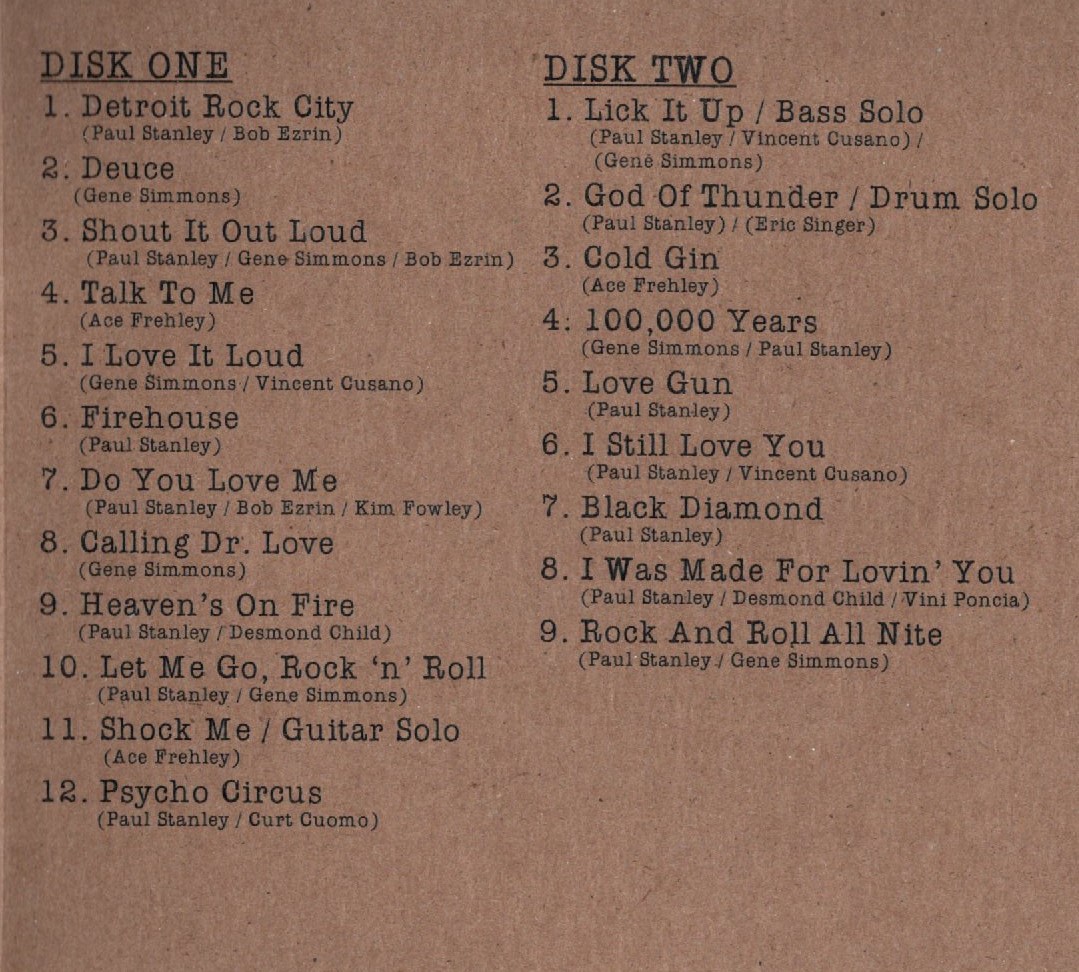
The pairing of “I Was Made For Lovin’ You” and “Rock and Roll all Nite” are an odd one, but that’s the closing duo that got the Tokyo crowd screaming.

Besides the couple rarely played songs, the cool thing about this Tokyo setlist is the pacing.  It starts with a bang, and it never really lets go.  Even the solo breaks are really just big intros or outros that amplify the moments around them.  Then the whole show manages to even pick up the excitement at the end with stellar performances of “Love Gun” and “Black Diamond”.  It is also encouraging that Kiss are realizing the value of past lineups, and official bootlegs.  As long as they remain willing to highlight songs and band members from nooks and crannies in the band’s history, then the Kiss Off the Soundboard series is a promising one.

4.5/5 stars

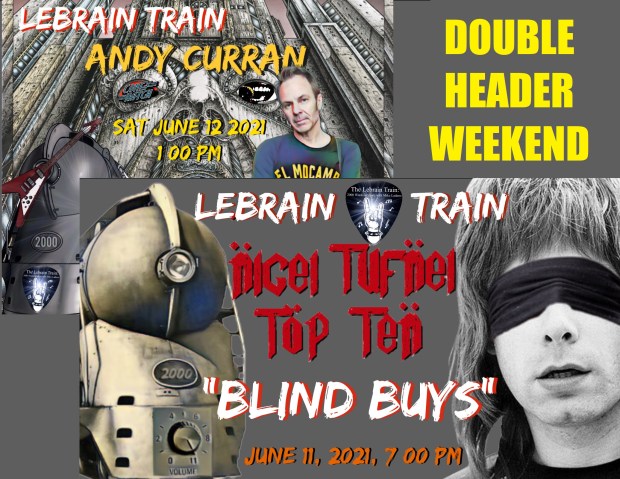
Double Header Weekend! Andy Curran and Blind Buys on the LeBrain Train

It’s another two-show weekend!  Get ready to rock this Friday and Saturday.

The LeBrain Train: 2000 Words or More with Mike and Friends

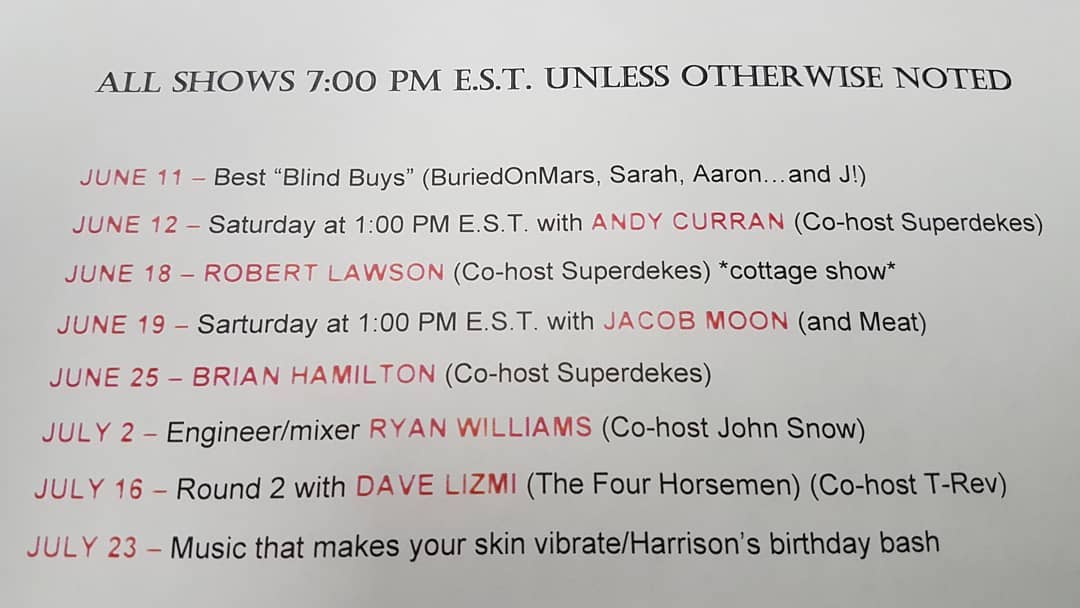
Friday – Episode 69 – Blind Buys

What is the best album that you bought “on spec” — without knowing much of anything about it?  This is a great question for fun discussions.  The subject was suggested by Kevin aka BuriedOnMars, who is one of our favourite guests here on the show.  With him will be Sarca Sim and her own killer list.  Aaron from the KMA will be on board with his best discoveries.

And…for the first time ever…all the way from Scotland…

…Joining this LeBrain Train in his debut appearance is J, the Vinyl Daft Dad, aka Jim Dead.  This talented singer/guitar player/songwriter has been wanting to hang out for over a year, and now we finally get to do it.  Well overdue!  Not only is he a truly great musician, but also a wonderful human.  This show, and these lists, are going to be prodigous!

Friday June 11, 7:00 PM E.S.T. on Facebook:  MikeLeBrain and YouTube:  Mike LeBrain.


The LeBrain Train: 2000 Words or More with Mike and Deke

Saturday – Episode 70 – Andy Curran, round 3!

I’m sitting here in awe that Andy Curran is coming back to talk to us for a third time.  The Earl of the Eighth Note, the masterful bassist and vocalist from Coney Hatch, is back to take care of some loose ends!  I can’t think of a better way for you to spend a Saturday afternoon than checking out the rock and roll tales of Andy Curran.  Now that we have the Coney Hatch Live at the El Mocambo album in hand, we have so much more to ask.  We also have some special guest questions locked and loaded.  Make no mistake — this will not be a repeat of the first two Curran shows!

I’d like to thank Deke, Andy and Chip for making this possible.  As Deke says, we’re just fans.  But we eat, breath and sleep this stuff.  Andy has some of the best stories.  I can’t wait to hear some more.

As usual, this is a show that you want to make sure that you catch live.  We try to ask as many viewer questions as we can so don’t miss it!

Saturday June 12, 1:00 PM E.S.T. on Facebook:  MikeLeBrain and YouTube:  Mike LeBrain.


NEW SHOW ADDED!

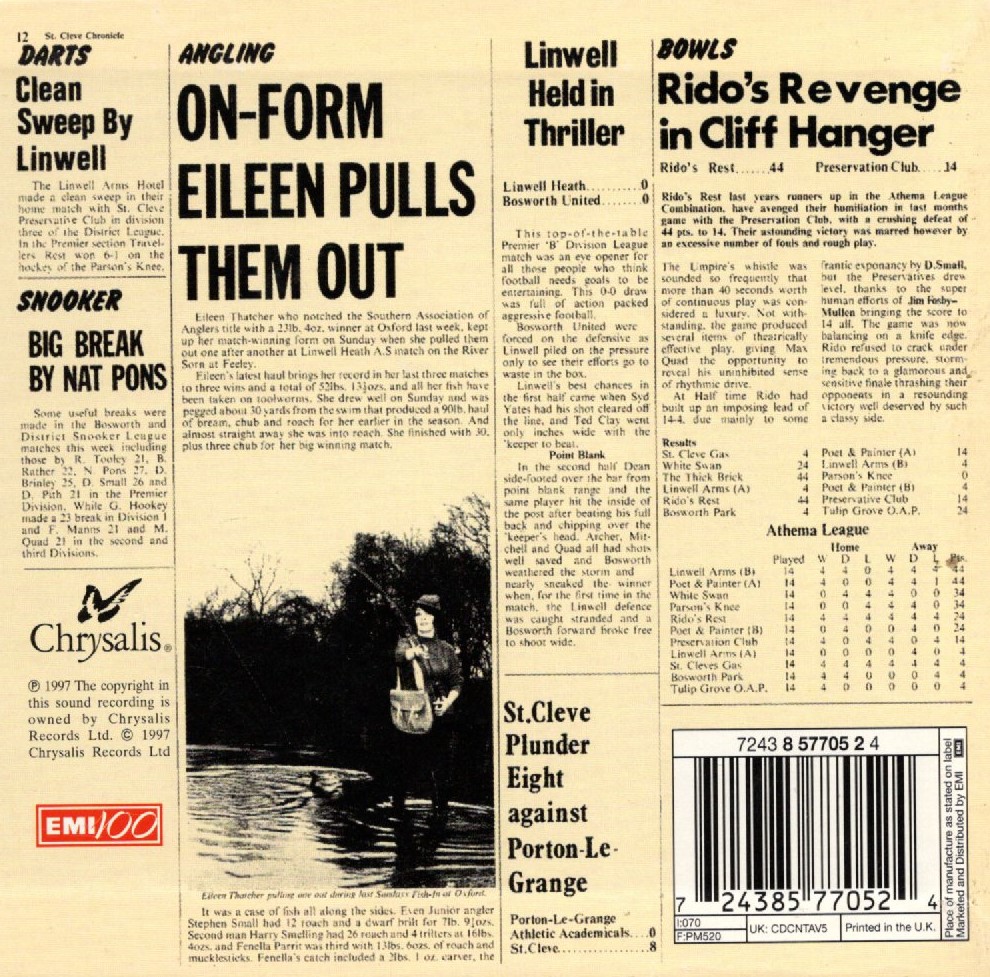
REVIEW: Jethro Tull – Thick As A Brick (1972, 25th Anniversary “newspaper” CD edition)

“Quite hard to play, and a lot to remember.” — Martin Barre

JETHRO TULL – Thick As A Brick (Originally 1972, 1997 EMI 25th Anniversary CD)

Some albums are more famous for factors other than the music.  Chinese Democracy, for example.  Anyone reading this can say “that’s the one that took Guns N’ Roses 17 years to make.”  Meanwhile, the same can be said for Jethro Tull’s Thick As A Brick.  Even if you have never heard the album, you probably know “that’s the one that came with the newspaper inside”.  You might even know that it’s only one, long 44 minute song.

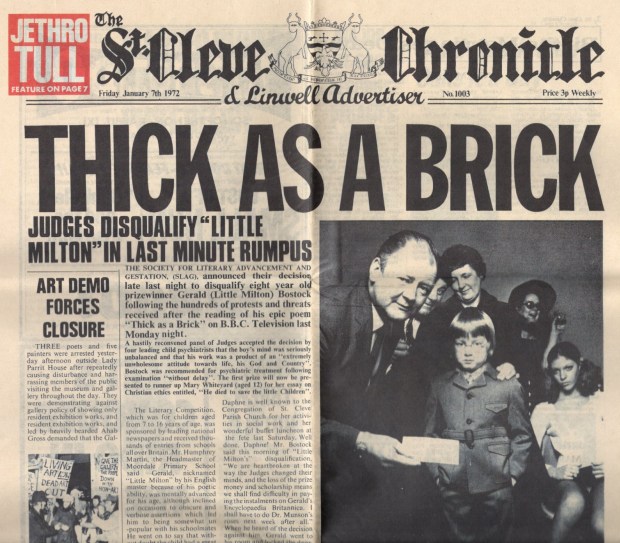
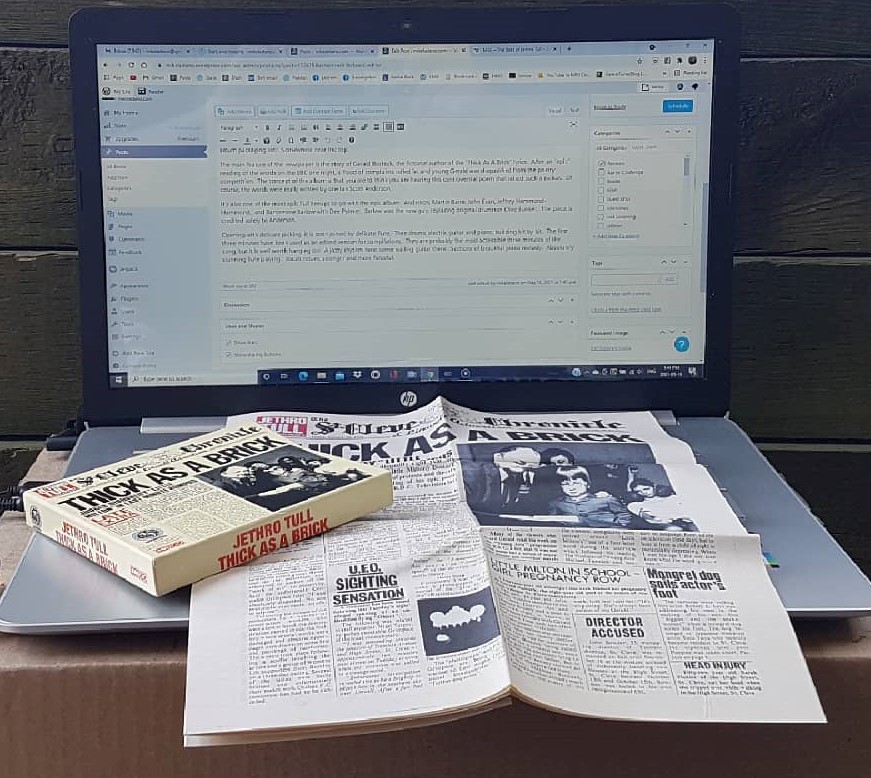
All true.  You had to flip the song midway on the original LP, and that side break still exists on CD as the song is split into two tracks.  The 1997 Anniversary edition replicates most of the newspaper too, and though you will be wary of completely unfolding it and getting it back inside the case again, it is still a marvel.  With campy articles, crosswords, horoscopes, ads and news stories, you could read this paper for as long as it takes to listen to the album.  It is certainly among the most fabulous extras ever included with any release, LP or CD.  Top ten album packaging list?  Somewhere near the top.

The main feature of the newspaper is the “fake news” story of Gerald Bostock, the fictional author of the “Thick As A Brick” lyrics.  After an “epic” reading of the words on the BBC one night, a flood of complaints rolled in, and young Gerald was disqualified from the poetry competition.  The concept of the album is that you are to think you are hearing this controversial poem that raised such a ruckus.  Of course, the words were really written by one Ian Scott Anderson.

It’s also one of the most storied Tull lineups to go with the epic album:  Anderson, Martin Barre, John Evan, Jeffrey Hammond-Hammond, and Barriemore Barlow with Dee Palmer.  Barlow was the new guy, replacing original drummer Clive Bunker.  The piece is credited solely to Anderson.

Opening with delicate picking, it is soon joined by light flute.  Then drums, electric guitar and piano, building bit by bit.  The first three minutes have been used as an edited version for compilations.  They are probably the most accessible three minutes of the song, but it is well worth hanging on!  A jazzy rhythm here, some wailing guitar there.  Sections of beautiful piano melody.  Absolutely stunning flute playing.  Vocals return, stronger and more forceful.   This holds together for a long time as a pretty singular work, with lengthy instrumental sections between the vocals.  Then 12 minutes in comes the organ solo.

The song bounces back and Ian returns to the front, ranting about class.  It’s a surprise when the familiar opening guitar figure returns, but it is all one song after all.  This ushers in a folksy section, which eventually comes back to the power of progressive Tull.  A loud, rhythmic guitar outro takes us to the end of the first side with a hefty serving of organ.

The second side could not possibly open with as much panache as the first, nor should it, being the middle of a song.  After a brief respite, we are back into the heavy progressive Tull, and then a drum solo.  Exotic melodies dominate the first few minutes, when the drums do not.  The acoustic guitars return as they eventually must, and the song resumes a path like the one that it began with.

From moment to moment, Tull are not at all shy of showing you how smart-guy they are.  Those who adore challenging rock music will be right at home, drinking in every sudden time change and rippling solo.  The second side is thick with daunting rock.  Those who find this too pretentious to take seriously are already out of the room.  They’ll miss the thundering timpanis and cascading organ/flute duos.  Their loss.


What makes Thick As A Brick special is not the packaging.  From section to section, the song remains compelling.  Every part has some kind of hook or performance that draws you back.  By playing the 3:03 version, you are missing too much action.  You can’t pretend that such an album isn’t ostentatious.  You either like it (usually admiring and aspiring all the while) or you are repulsed by it.

The 25th anniversary CD comes complete with a 12 minute live rendition from much later, in 1978, from New York.  That means it’s John Glascock on bass, as Hammond had left in late 1975.  This abridged version has some of the majesty of the album, coupled with the excitement of the live stage.  Finally there is a 16 minute interview with Anderson, Hammond and Barre.  They explain the organic construction of the music, and the painstaking process of the packaging.   Though you can also get the 40th anniversary boxed set remixed by Steven Wilson, if you are just looking for the original album on CD, this edition is the obvious one.

5/5 stars


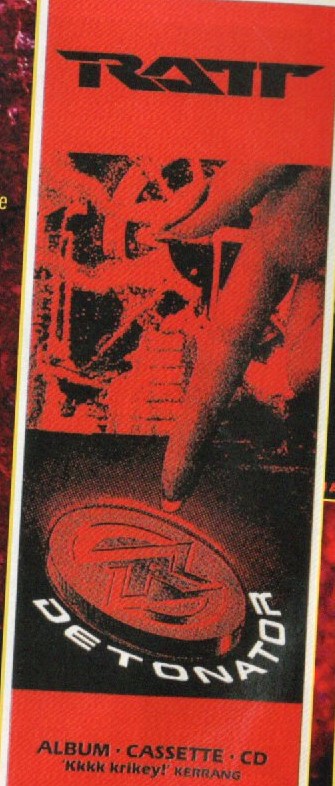
REVIEW: Ratt – Detonator (Part Five of The Atlantic Years series)

Part Five of Five

RATT – Detonator (Originally 1990, 2020 reissue — The Atlantic Years 1984-1990 box set)

Hit the emergency breaks!  If Ratt were spinning their tires commercially, then Atlantic sought to change course.  Producer Beau Hill was given the deep six, and new stewardship was sought.  Desmond Child was one of the most successful writers of the 80s, and so Child was hired to co-wrote every song on Detonator.  From his stable of talent came co-producer Sir Arthur Payson.  Even Jon Bon Jovi showed up for a backing vocal.  (Returning the favour, Ratt’s Robbin Crosby played on Jon’s own Blaze of Glory.)

Needless to say, the fifth and final Ratt album on Atlantic was a change in direction.  The album split fans, with some balking at the new commercial sound of the band.  Others appreciated the slicker, tighter songwriting.

Opener “Shame Shame Shame” (and its “Intro to Shame”) is a gleaming example of the new collaboration, bearing sweet fruit.  The bite of the old rodent remains, and the song is trimmed of any fat the old Ratt was carrying around.  Warren’s guitar tone is buttery beauty.  While DeMartini shines, Robbin Crosby was noticeably less involved with this album.  He was suffering from addiction and only has two credits on Detonator.  He had six on Reach for the Sky.

“Lovin’ You’s A Dirty Job” was the lead single, and indicates even the squeaky clean Desmond Child couldn’t scrub Ratt free of sleaze.  He helped make them more effective at it, and the result is a song reminiscent of “Lay It Down”, but without the menace.  The next track “Scratch That Itch” has a hint of the heavy Ratt from Dancing Undercover.  The guitar smokes even if the melody does not.  But then, “One Step Away” is virtually all melody!  It is nothing like the Ratt N’ Roll of the past, but is an undeniably catchy summer rock tune.  It sounds more like a Poison single, but with more bite.  It could even be the album highlight.

The album has some surprisingly tough deep cuts.  “Hard Time” is simple and effective.  Pearcy shows his fangs and Desmond keeps it melodic.  “Heads I Win, Tails You Lose” is…less effective.  You can definitely hear Jon on it, and at least Warren’s lead guitar tone is brilliant.  Otherwise it is filler.  “All Or Nothing” and “Can’t Wait On Love” are the two Robbin co-writes.  These are some of the most Ratt-like tracks.  Quite a lot stronger than the usual Ratt album cuts.

“Givin’ Yourself Away” is quite un-Ratt.  This is not a band known for their ballads.  Pearcy isn’t that kind of singer.  “Givin’ Yourself Away” only works in its context:  a song written for radio in the last dying days of the hard rock era, right down to the contrived key change at the end.  It is thick with backing keyboards.  Diane Warren and Desmond Child co-wrote it with Pearcy, so you can use your imagination.  The people it was written for (Bon Jovi fans) will love it.

Closer “Top Secret” is closest in sound to old-school Ratt.  It could have been on Out of the Cellar for the vibe it exudes.

This CD, more than the others in the series, is packed with bonus tracks.  Two tepid remixes of “Lovin’ You’s A Dirty Job” are here for the collector.  But what some people forget is that before they split, Ratt released one more amazing tune:  “Nobody Rides For Free”.  This stripped-back gem was from the Point Break soundtrack in 1991 — the opening track on it, in fact.  It was the first music video to feature Ratt as a four-piece without Robbin Crosby.  Yet it remains a tough, mean Ratt track with great lyrics and chorus.  Maybe better than anything on Detonator itself.

Detonator, like most Ratt albums, is a bumpy ride.  This time the valleys are deeper, but there is also less pure filler.  The result is a Ratt album that is a more consistently entertaining listen.  The slicker production isn’t an impediment to enjoyment.  But it didn’t save Ratt’s fortunes.  Crosby was out, and the band was put on ice shortly after.  But like most rodents, Ratt was hard to get rid of!

3.5/5 stars

The Atlantic Years 1984-1990:

The Priest is Back! Nigel Tufnel Top Ten…Remastered

The LeBrain Train: 2000 Words or More with Mike and Friends

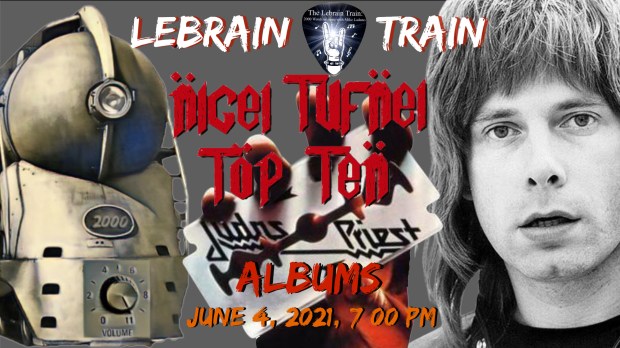
Friday – Episode 68 – Nigel Tufnel Top Ten Judas Priest…Remastered

“Judas Priest,” you ask?  “Didn’t you do Judas Priest last year already?”

Yes we did, hence the “Remastered” Nigel Tufnel Top Ten.  The old show was on Facebook Live with just Harrison the Mad Metal Man and myself, and most of you missed it.  Everything we did a year ago, we can do better now.  This will be a quality list show.  Why?  Because this time you will get some bonus tracks:

The audience participation part is why you want to catch the show live!  All Judas Priest studio albums qualify for our lists.  Then Geoff will graph ’em all!

To see the original Priest list show with just Mike and Harrison, you can view it below.  This is roughly a one-year anniversary show for Harrison.  His first appearance was May 30 2020.

Our “Remastered” version will be a celebration of Harrison, of Judas Priest, friendship and rock and roll. And you can watch it at the links below.

Friday June 4, 7:00 PM E.S.T. on Facebook:  MikeLeBrain and YouTube:  Mike LeBrain.

REVIEW: Ratt – Reach for the Sky (Part Four of The Atlantic Years series)

Part Four of Five

RATT – Reach for the Sky (Originally 1988, 2020 reissue — The Atlantic Years 1984-1990 box set)

One might suspect that Ratt’s decline in sales (peeling off approximately 1,000,000 buyers every album), they decided to change things up a bit.  The first three Ratt platters were very much in the same mould.  Little variation, just repeating that “Ratt N’ Rott” formula.  Initially they ditched producer Beau Hill to work with Mike Stone, but the record label wasn’t happy and brought Hill back to finish.

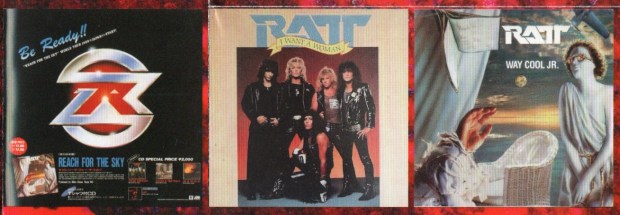
Indeed, the opener “City to City” does sound like a new rodent.  You can’t mistake them for anyone else once Pearcy starts yowling, but the slick song is fresher.  Chugging away in a mid-tempo style, it’s a bangin’ start.  But it’s the second track (and second single) that really kicks.  “I Want a Woman” retained the sleaze but contained more focus on melody with an arena-sized chorus.

The third track, and first single, was the controversial “Way Cool Jr.”.  Ratt with horns; oh my!  It was the biggest leap for the rodents and it did give them a minor charting hit.  Dipping into the blues, and eschewing the heavy histrionics.  Letting the groove of the song work, and not overpowering it.  Truth is Ratt should have tried stretching out a long time before.

Now that the big tracks are out of the way, how does the rest of the album hold up?  Not too badly.  Old-style Ratt returns on “Don’t Bite the Hand”, but at least with more melody than Dancing Undercover offered.  They go ballady on “I Want to Love You Tonight”, kind of a new thing for Ratt, and one they’d explore again in the near future.  That’s side one.

A heavy shuffle called “Chain Reaction” kicks off the second side, a welcome return to velocity.  They return to the mid-tempo zone on “No Surprise”, which sounds like something Gene Simmons might have written for an 80s Kiss album.  Good song, adequate hooks.  “Bottom Line” is in a similar ball park.  If it sounds like Ratt had help writing these songs, it might be because Beau Hill has a credit on most of them.  He only had one on Dancing Undercover.  That could be why this album has so much more melody and attention to songwriting.  The hit-ready “What’s It Gonna Be” is a prime example, almost sounding like Van Hagar.  A little too hard-edged for OU812, but perfect for a Ratt.  A foreshadowing of the kind of songs they would write for their fifth album.

The album closes on a hard rocker that Hill didn’t co-write called “What I’m After”.  A decent closer that doesn’t quite gel fully, but close enough for rock n’ roll.  Or Ratt N’ Roll.

Of all the discs in The Atlantic Years box set, Reach for the Sky has one of the best bonus tracks.  It’s an acoustic version of “Way Cool Jr.” from MTV Unplugged which chronologically happened in 1990 with Michael Schenker on guitar, filling in for Robbin Crosby who was in rehab.  The unforgiving unplugged format can separate the men from the boys, and Ratt make the grade.  Pearcy proves he can do that Ratt voice without layers of overdubs and effects.  Meanwhile, Bobby Blotzer plays some interesting non-drum percussion parts.  With Schenker on board, the mid-song acoustic segment really smokes.  Ratt could have had a whole new side to their career, had they pursued this swampy acoustic direction with Michael instead of breaking up.

But that is still in Ratt’s future; there is one more album to go on this series.  Reach For the Sky sustained Ratt’s sales.  There was no decline this time and they sold a million.  That still wasn’t good enough.  Phone calls were made and Desmond Child, Dianne Warren, Sir Arthur Payson, and one Jon Bon Jovi were about to enter the picture.

Whether Reach sold enough copies or not is irrelevant to the quality of the music, which polished the sound up to a necessary level after the disappointing Dancing Undercover.  It was a step towards the commercial, but they couldn’t do two tuneless albums in a row and survive.

3.5/5 stars


The Atlantic Years 1984-1990:

REVIEW: Journey – Greatest Hits (1988, 2008)

JOURNEY – Greatest Hits (Originally 1988, 2008 expanded reissue)

It’s OK if your first album by anybody was a “greatest hits” of some sort.  Over 15 million people bought Journey’s Greatest Hits in the US alone, and you can be guaranteed that several of those millions were buying Journey for the first time.  Hundreds of thousands more copies still sell annually.  This has to be considered one of the most successful hits compilations by a rock band.

Even if you were a Journey diehard back in 1988, you still wanted Greatest Hits.  It had two huge Journey hits from movie soundtracks:  “Only the Young” (Vision Quest) and “Ask the Lonely” (Two of a Kind).  These songs were not meant to be obscurities; both were slated for the Frontiers album.  These are two awesome songs with insanely catchy choruses, one a rocker and one a soft burner.  Two gigantic peaks of the Jonathan Cain era of Journey, who co-wrote both songs.

“Don’t Stop Believin'” doesn’t need any additional commentary, except this:  listen to the drums.  That’s Steve Smith, the wizard of tempo.  There is a reason that Smith can often be found filed in the Jazz section.  Listen to his creative hits, cymbal work, and timing.  Yet not a lot of snare.  Same with “Separate Ways (Worlds Apart)”.  This is not typical rock drumming, and this is something that his replacements have had to recreate as faithfully as they could.

Greatest Hits ignores the first three Journey albums (pre-Steve Perry), and justifiably so.  Those first three progressive rock albums, as fascinating as they are, bore no hits.  “To Play Some Music” peaked at #138.  The earliest tracks are the radio staples “Lights” and “Wheel in the Sky” from 1978’s Infinity.  Incidentally these are the only tracks without Steve Smith, featuring his predecessor Aynsley Dunbar.

In 2008, Sony a series of budget-priced reissues including Journey’s Greatest Hits.  This version has one additional bonus track from Journey’s reunion album Trial By Fire from 1996.  This is a fantastic album, but the ballad chosen (“When You Love a Woman”) tips the album too far on the scales to ballads.

Through all the hits you know, and maybe a couple you don’t (“Girl Can’t Help It”? “Send Her My Love”?) you will get a clear picture of some of Journey’s facets.  But only some.  Little of their instrumental wizardry, which continued into the Steve Perry era with songs like “Dixie Highway”.  You also will not hear many hard edged moments, like “Stone in Love”.  You will however get a taste of Steve Perry’s soul, and the excellent hooks that he concocted with Neal Schon and Jon Cain.  You will absorb some awesome Schon tone.  On the later tracks, like “I’ll Be Alright Without You” and “Be Good To Yourself”, you will hear the slickness and groove of Raised on Radio.  But there are so many more key Journey tracks, as good if not better than these.

4/5 stars

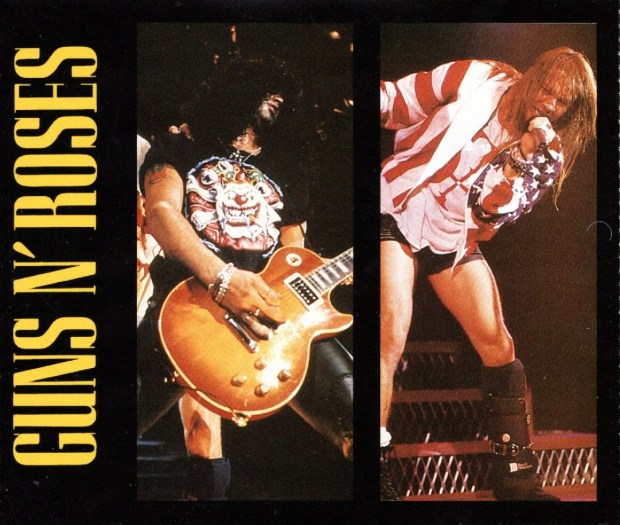
REVIEW: Guns N’ Roses – Dramas & Traumas (5/29/91 bootleg)

“November Rain” was played live for the first time by Guns N’ Roses on this day in 1991.

GUNS N’ ROSES – Dramas & Traumas (Deer Creek Music Center, Noblesville, IN, May 29 1991 – Deep Records bootleg CD)

The market is littered with live Guns N’ Roses bootlegs from the Use Your Illusion tour.  The band’s own official Use Your Illusion World Tour Live in Tokyo VHS tapes are an ideal source of live music from their biggest tour.  But what many fans seek is an earlier show, before Izzy Stradlin went his own way and was replaced by Gilby Clarke.  Nothing against Gilby, but Izzy only lasted about six months and has been missed ever since.  This bootleg is from the seventh show on the tour, when the material was new, unheard, and rough.  Some of the songs were dropped or rarely played later on.

Audio is average as far as bootlegs go; it’s an audience tape job with some occasional issues.  The set is complete.  “Double Talkin’ Jive” is unlisted, hidden within the larger “Patience” track.  It is also the historic live debut of “November Rain”.  Opening with “Right Next Door to Hell”, which was dropped by the start of ’92, the energy is high.  Axl takes no mercy on the demanding song, giving 100%, especially on the obligatory “fuck you”!

Guns wisely played familiar songs mixed in with the new stuff.  The albums would not be out for over three months.  Axl asks if the audience wants to go dancin’, which means “Mr. Brownstone” is up next, a low energy version comparatively.  It might be too easy to blame the new guy Matt Sorum, but you do notice the lack of Steven Adler when you think about it.  Back to new tracks, it’s the bluesy “Bad Obsession” which Axl explains was written long before “Brownstone”.   Slash rips out the slide guitar and Axl gets distracted by a hottie.  It’s the first audible appearance of another new member — keyboardist Dizzy Reed on piano.  Later on, Axl makes a big point of announcing that Dizzy is, contrary to some media reports, “a goddamn a-fuckin’ official member of the band!”

Regarding live debut of “November Rain”, Guns didn’t have a setlist.  Axl just called out the songs, feeling out the crowd.  According to Matt Sorum and Duff McKagan in a later interview by Dan Gallagher of MuchMusic:

Matt – “Axl said ‘November Rain’, and we hadn’t played it since we recorded it…in July!  In front of 20,000 people, we’re going, ‘Uh, do you remember how that goes?’  Damn near a year ago we cut this track.”

Duff – “And he has this grand piano, that raises up out of the stage.  And all of a sudden the piano raises up and we’re going, ‘What the hell is that…’“

You can almost hear the fear.  Sorum tentatively taps the cymbals, but doesn’t miss his cue when it’s time to come crashing in.  Axl mentions he can barely remember the words, but only flubs a couple.  Slash’s first solo nails most of the big hooks, while the second is more improvisational.  They all struggle a bit on the outro, but damn — they did it!

After “November Rain”, a microphone catches Slash saying, “A fucking curve ball, man!”

The two most significant tracks are the two sung by Izzy that were necessarily dropped when he left:  “Dust N’ Bones”, and “14 Years”.  Both feature raspy, Keef-like lead vocals from the guitarist.  These two tracks are very good reasons to want an early set like this.

There are long solos, intros and outros, and all the stuff you expect from a Guns N’ Roses show.  The solos had yet to evolve into the forms they would take by the time they hit Tokyo, though the “Godfather” theme has its place.  They play a bit of Rod Stewart’s “I Was Only Joking” as part of the “Patience” intro, and of course “Only Women Bleed” before “Heaven’s Door”.  The “Voodoo Chile” lick always works well going into “Civil War”.  It’s also interesting to hear how the songs started out early on tour.  “Civil War” seems a bit shaky in the start, but goes nuclear by the end.

The main set ends on “Perfect Crime” and the encores consist of “Estranged”, “Sweet Child”, “Jungle” and “Paradise”.  A pretty slam-dunk way to send ’em home.  Unlike “November Rain”, “Estranged” was already humming like a well-tuned car by this time.

The two bonus tracks are interesting curiosities from the 1989 MTV music video awards.  Tom Petty & the Heartbreakers performed “Free Falling” and “Heartbreak Hotel” with Axl Rose.  They are here as a little bit of added value, but make no mistake — it’s just Axl from the band, nobody else.

As mentioned earlier, there are some sonic anomalies of the type that usually come with bootlegs.  The disc goes silent for very brief moments during “Right Next Door to Hell”.  Not a deal breaker considering the rest is very listenable.

4/5 stars

REVIEW: Kevin Kiner – Star Wars “Rebels Theme” (Limited edition picture single)

STAR WARS “Rebels Theme” (Limited edition Disney 2015 picture disc single)
Music by KEVIN KINER

You know where I stand on remixes, right?  Most of them are shite, especially when you try to dance-ify music that was not intended for dancing.  If that kind of remix is your thing, that’s cool.  You appreciate something that I do not.  I just recommend that you hit the “back” button on your browser right about now, that’s all.

I liked Star Wars Rebels.  Although it did come across more “kiddie” than Clone Wars, the era and characters it covered were more to my liking.  The Imperial era, not the Republic.  Of course, it later grew and merged with Clone Wars into a greater lore, but that is not for this review.  Just saying, check it out if you haven’t.  It’s on your Disney Plus.

Rebels’ composer, Kevin Kiner, was tasked with coming up with a new theme cue.  He did this by incorporating and adapting John Williams’ original cues.  It’s almost like a mega-mix of hero themes, in 55 seconds.  It’s just a cartoon after all, not a feature film.  Kiner’s rendition of these landmark themes is perfectly suitable to the show and honours the era in which it is set, and the spark of rebellion.

Though Star Wars Rebels has two volumes of music available on soundtracks, they were never issued on physical formats.  This single is the only place you can get a physical copy of Kiner’s “Rebels Theme”.

Unfortunately, the exclusive B-side of this single is the horrid “Flux Pavilion’s The Ghost Remix”.  It adds digital beats, noise and manipulations to the “Rebels Theme” and extends the thing by five times!  For the hell of it, there’s some laser blasts, some Wookiee howls, and some yelling.  This is utter garbage that young kids might enjoy, but makes me wanna hurl.  It deviates so far from the blueprint that it’s clear the ol’ hyperdrive needs some recalibrating.  The remix is at least memorable, for whatever that’s worth.

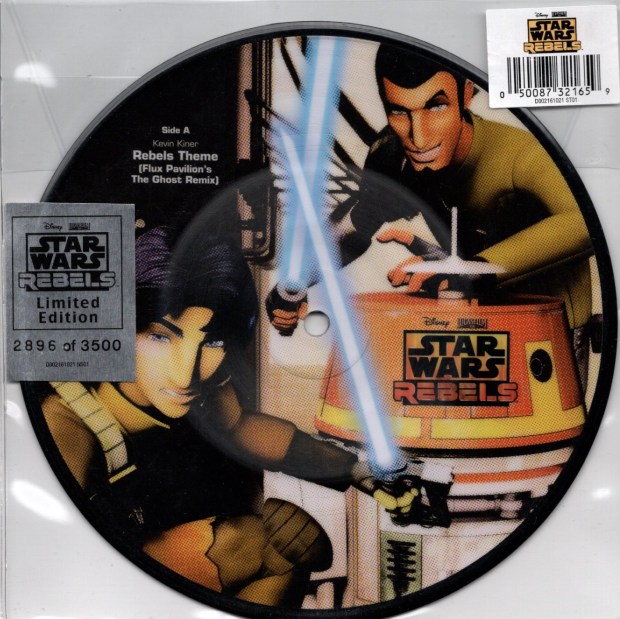
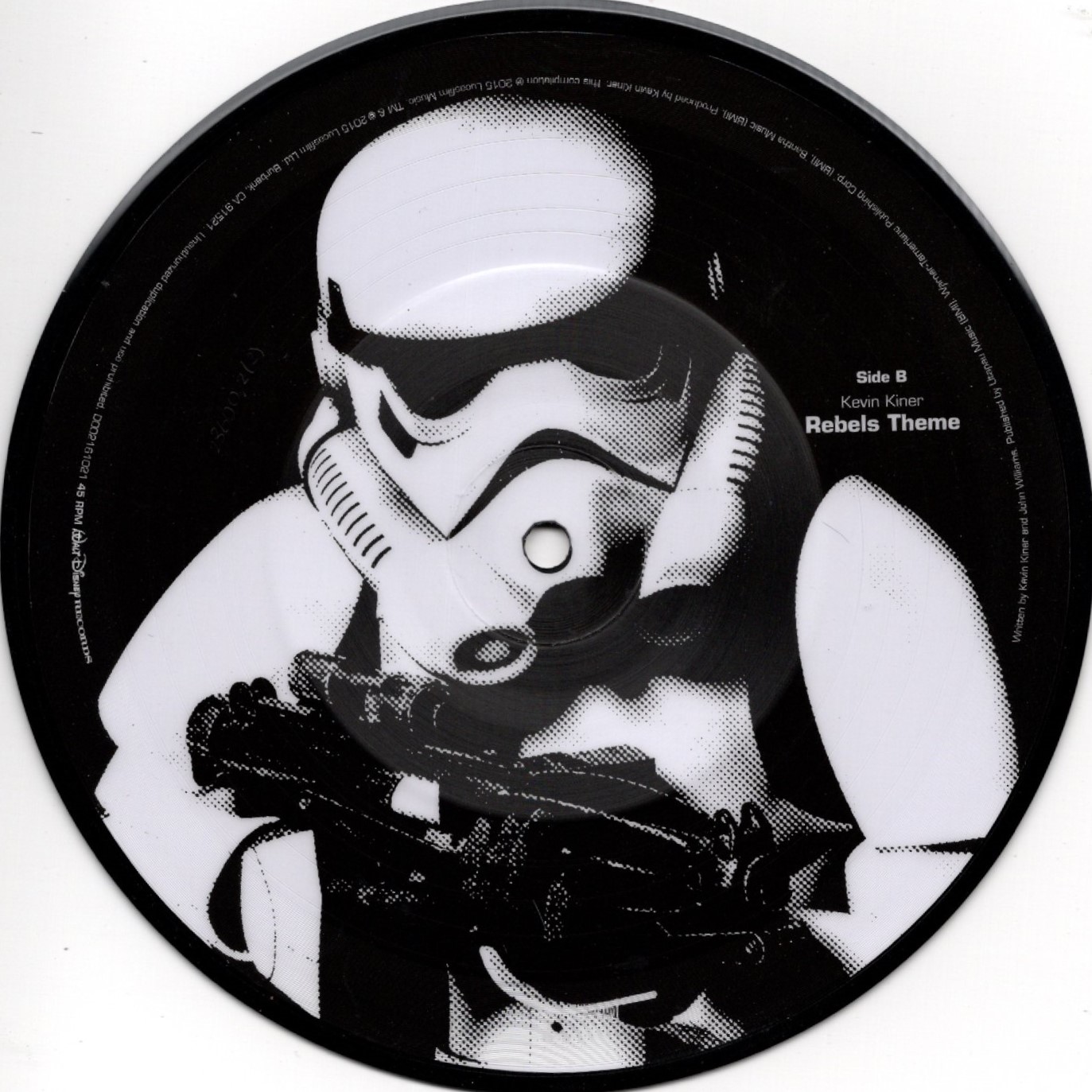
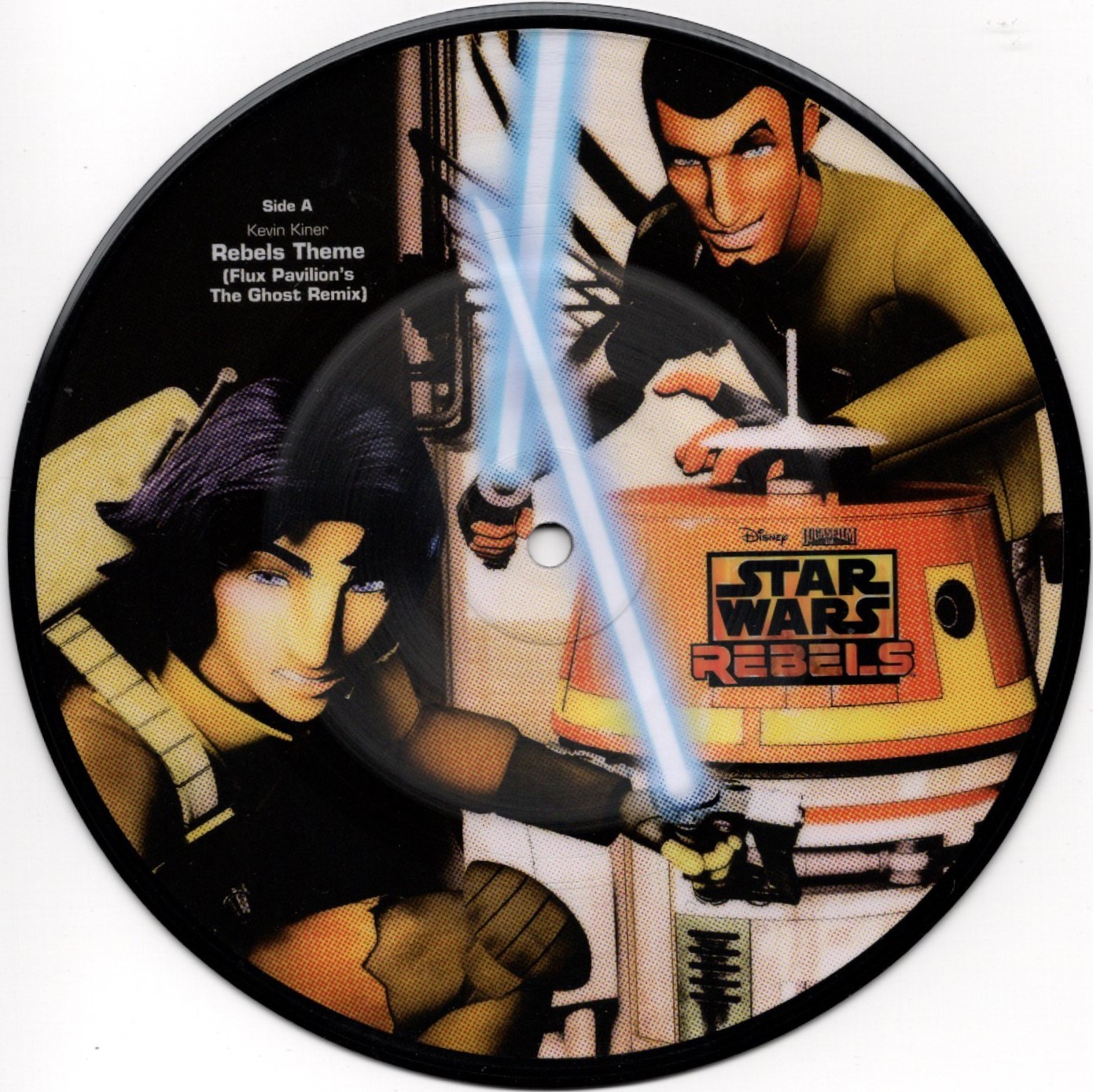
The picture disc is nice though.  On the A-side (which is unfortunately the remix side!) it’s hero Ezra Bridger with Jedi Kanan Jarrus and droid C1-10P, aka “Chopper”.  On the B-side, the original “Rebels Theme”, you get an Imperial Stormtrooper taking aim to fire (and miss)!  One of the coolest things about the Rebels show was that it used old Ralph McQuarrie designs from Star Wars pre-history.  Chopper is based on preliminary drawings of R2-D2.  Likewise the loveable character of Garazeb Orrelios is based on early designs for Chewbacca.

Being that the decent B-side is 55 seconds long while the remix is five times that length, the rating for this single cannot be high.

2/5 stars
REVIEW: Bon Jovi – Live 2 (2014 10″ picture disc)

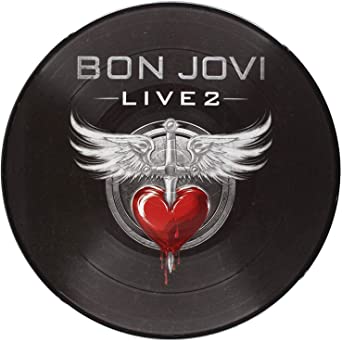
BON JOVI – Live 2 (2014 Mercury limited edition 10″ picture disc)

Live 2?  Surely there must be a Live 1.  It appears this 10″ picture disc is a sequel to a 1984 Bon Jovi EP called Live.  This picture disc, a limited edition of unknown quantity, collects four previously released classic live performances from the New Jersey tour.  They are remastered by Ryan Smith at Sterling Sound.
Though all the live tracks were available long ago on other rarities, the nice thing about this disc is that it actually tells you when and where they were recorded — information missing from some other releases.  This record is split into two sides — the U.S. side and the International side.

“I’ll Be There For You” (Lakeland, FL, 1989) and the next track were released on the 1993 double reissue of Keep the Faith, featuring a bonus CD also called Bon Jovi Live.  “I’ll Be There For You” was track four on that disc; here it is the lead.  A little slow, but Jon and Richie’s harmonies are the magic.  Sambora’s expressive playing is also outstanding.

Second, it is an electrifying live version of “Lay Your Hands On Me” (Giants Stadium, NJ, 1989).  Tico Torres really grabbed this song by the nuts with his opening drum salvo.  Songs like this really opened up Bon Jovi’s sound to include more roots.  The crowd noise is mixed low because you can tell it’s an endless mush of high-pitched screams!

Flipping to the International side, we are taken to Wembley in 1988.  Jon needs a doctor!  It’s “Bad Medicine”, of course.  “Doctor Bryan! I think I got it bad this time! What do you mean a shot can’t cure it? It’s like the luggage? Oh well!”  Never one of Jon’s finest songs, “Bad Medicine” is the upbeat party track of New Jersey, sometimes a necessary evil.  Over the years, you’ve just heard it enough times, and there are lots of live versions of “Bad Medicine” on uncountable releases.  This one was originally on the 1988 “Living In Sin” EP.  Comparatively speaking, it’s superior to the other live versions out there.

Finally, “Runaway” from Paris in 1988 was first made available as the B-side to “Lay Your Hands On Me”.  This energetic version is one of the best takes you will hear.  There’s a bare rawness to it, but the vocals are crisp and tight.  Everything clicks.

Although Live 2 only captures a tiny slice of the live Bon Jovi experience, it collects four key tracks.  Three of the four are really excellent examples of classic Bon Jovi live.  Not a bad buy if you don’t have them already.

3.5/5 stars