AKIRA TAKASAKI – Tusk of Jaguar (Take Another Bite) (1982, 2009 Columbia CD reissue)
In 1982, Loudness guitarist Akira Takasaki and a Japanese keyboardist named Masanori Sasaji teamed up to record an album of music that was different from the usual Loudness rock. Though the cover art and title Tusk of Jaguar screams “pure metal”, this is actually a combination of rock, pop and jazz fusion among other influences. The cool thing about the album is that Loudness play on almost all of it, including singer Minoru Niihara on a couple of vocal tracks. Some songs are all but considered part of the Loudness discography.
Certainly the opening title track sounds like Loudness. That speed metal pace can only have been set by Munetaka Higuchi on drums and Masayoshi Yamashita on bass. “Tusk of Jaguar” is a strange amalgam of shredding metal and jazz-rock interludes. It sounds a bit like the Ian Gillan Band but with Eddie Van Malmsteen on lead guitar instead of Berne Torme. Tremendously enjoyable, but way over the heads of most of the masses.
Minoru makes his first appearance on “Steal Away”, a song difficult to describe. It’s Styx-like and has a big organ sounds like Dennis DeYoung. Cinematic, progressive pop dance rock? Then it goes pure Burn-era Deep Purple! I don’t know what it is, and even with Minoru it sounds little like Loudness. It’s also one of only a few songs without Higuchi and Yamashita.
“Macula (Far from Mother Land)” is based on synthesizer until it transforms into a more traditional guitar instrumental, with clear Brian May influences. The way Akira Takasaki stacks his guitar harmonies can only be described as Queen-like. For that reason, this song is the most accessible to rock fanatics, who will eat up every note that Akira celeverly lays down. For those curious to know more about the critically acclaimed guitarist, check out “Ebony Eyes”, a serious hard rocker on which he takes lead vocals himself! His voice is higher in timbre than Minoru’s, and while he is not an amazing vocalist, he does have some pretty incredible guitar solos on this track.
“Wild Boogie Run” is an interesting tune, sounding almost exactly like Dixie Dregs. The violins, the acoustic & electric guitars, and slight western leanings make this a track that will make your friends wonder what Dregs album it was from. This could be the track worth buying the album for. Rock returns on “Gunshots” but even when Akira is just riffing, the rhythms beneath are complex and jazzy. Hard to describe, but heavy! A jazzy funk opens “Mid-Day Hunter”. Takasaki is nothing if not diverse on Tusk of Jaguar, but even if the rhythms throw you for a loop, you can surely dig into his always memorable lead work. In their early pre-Steve Perry days, Journey wrote songs like this.
Minoru Niihara returns on a song that is basically a Loudness track: “Show Me Something Good”. Though it also has Masanori Sasaji on keyboards, it is the entire Loudness lineup otherwise. A pop rock track like this could have sat on an album like Lightning Strikes if it was produced with heavier intent. The album closer is called “Say What?” which you might in fact be saying by the end of it. Blazing tempos and synth solos adorn a track that is beyond the comprehension of mere mortals.
This is a challenging album, no word of a lie. It’s certainly not immediate, and though parts of it sound familiar, it takes a bit of listening to really start to penetrate. Loudness fans, and anybody into challenging progressive rock should give it a go.
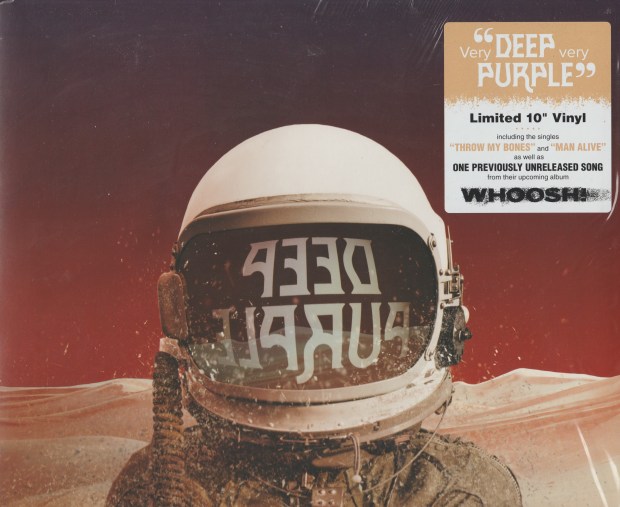
DEEP PURPLE – “Throw My Bones”/”Man Alive” (2020 10″ Edel single)
As a general rule, I won’t listen to new Deep Purple until I have a physical product in my hands. These days that usually happens in the form of a new single. Deep Purple will be back with a new album Whoosh! produced by Bob Ezrin in August 2020. Until then, they’ve issued a three track single with one exclusive new song. How nice of them!
A huge thanks to John of 2 Loud 2 Old Music for gifting this vinyl. Certain new releases are difficult to find today (for obvious reasons), at least without spending money on huge markups by secondary sellers. Music friends are the best kind of friends — make one today!
A word about the cover art: love it! Though not identical, the new Deep Purple logo is strongly reminiscent of the original Shades Of Deep Purple logo from 1968. The astronaut is similarly retro. He even recalls the similarly-garbed “archaeologists” in the music video for “Knocking At Your Back Door”. And now, for the first time, the needle drops on the vinyl and we find out what the new Deep Purple sounds like.
“Throw My Bones” has one of those quirky Steve Morse guitar riffs but then it’s backed up by those lush Don Airey keyboards. This is one of the catchier songs that Deep Purple have written in the last few years. Morse’s solo is as breathtaking as usual, but the sparkling keyboards are what makes this song shine.
The second track is the non-album “Power of the Moon” which prompts the question: if this didn’t make the album, just how good is the album? Because this track is excellent. It’s different. Its quiet passages are mesmerising. Once again it’s Morse and Airey who really take it to another level.
Finally we have “Man Alive”, a song adorned with an orchestra. Under the deft guidance of Bob Ezrin, something powerful and dramatic hits the ears even though Deep Purple don’t really do “heavy” anymore. “Man Alive” is the song that detractors call the “environmental agenda song”. Hey, if Deep Purple can say something relevant to today and get you to think, that’s great. We don’t always have to hear about strange kinds of women from Tokyo. The lyrics are assembled intelligently and thoughtfully.
A lot of people bitch and moan about Ian Gillan. For the most part, it’s not the singer delivering the hooks in these new songs. Just as Steve Morse has had to adapt to his damaged right wrist to keep playing, Deep Purple have adapted to Ian Gillan’s age. The songs don’t blast like they used to; they breathe. Ian’s voice is multitracked to give it some thickness. Incidentally the vocals were recorded in Toronto, a city that Gillan has history with.
Longtime Purple fans who enjoyed Now What?! and InFinitewill enjoy these new songs just as much. The cool thing about Purple is that they have distinct eras. We might be in the tail-end of a Bob Ezrin era (and the whole saga in general) and with time, the Purple/Ezrin collaborations will be looked back on fondly. The Ezrin albums don’t sound like the Bradford discs, the Glover productions, or any of the others. They’re more subtle and show a band growing even in their later years. Whoosh! could be a nice capstone to a career. We shall see.
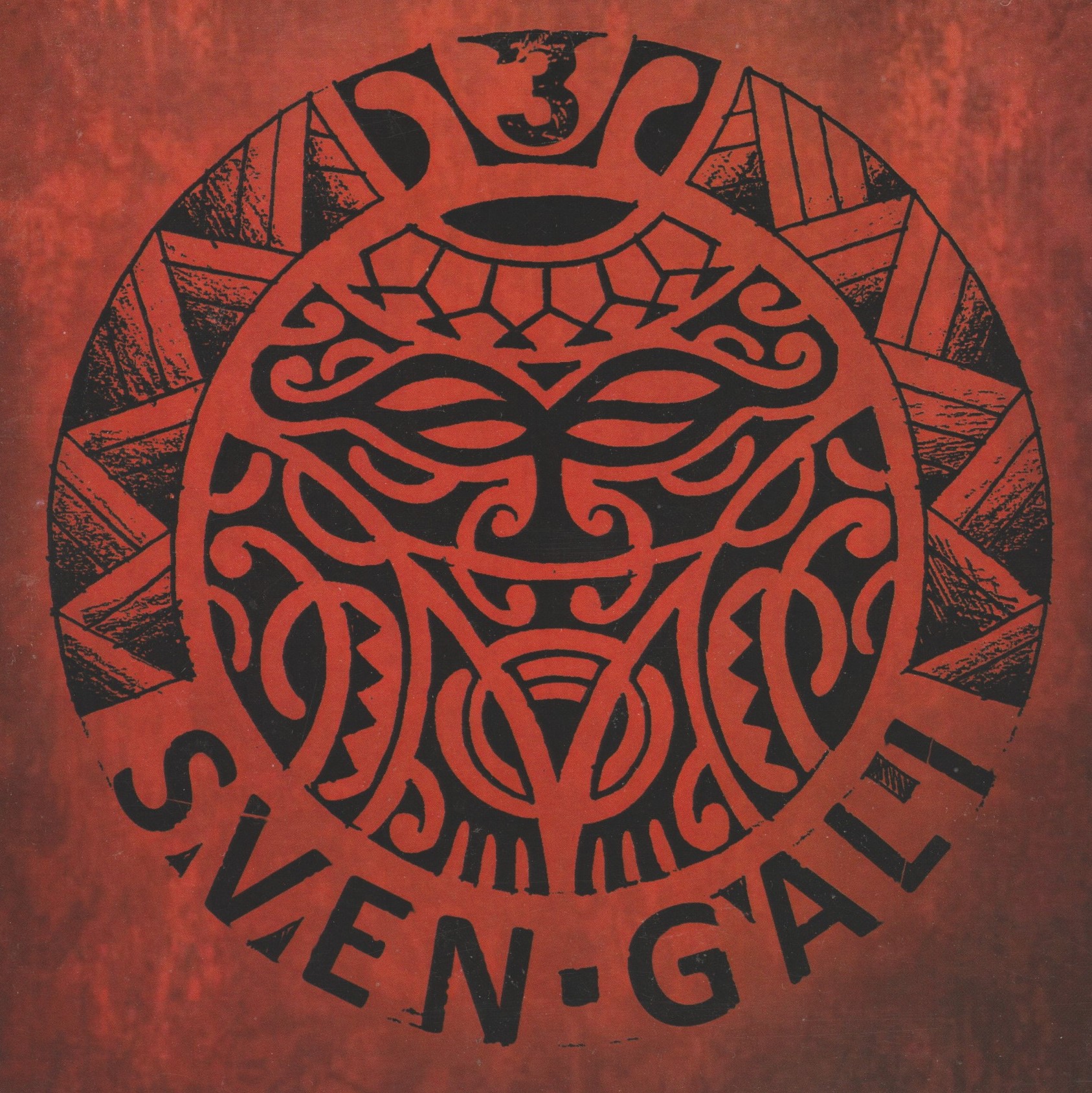
Sven Gali have not had an easy ride. Their debut Sven Gali was just a year too late to make them into the rock heroes they seemed destined to be. Had it come out in 1991, they would have had a massive hit on their hands. The second album Inwire (1995) was a reaction to the 90s alterna-metal scene. The band reunited in 2007, but tragedy struck when cancer killed founding guitarist Dee Cernile in 2012.
Against the odds, Sven Gali persevered and in 2018 added some heavy firepower to the lineup: Dan Fila and Sean Williamson of Varga. One by one, they began releasing new tracks. Now in 2020 we have the first new Sven Gali release in 25 years: an EP called 3.
Somewhat surprisingly, Sven Gali did not revert back to the hard rock anthemic sound that was the cornerstone of their debut album. Instead they picked up where they left off on Inwire, with four new songs produced by David Bendeth who also produced their debut. Incredibly it sounds like they haven’t missed a step. Even more incredibly, it’s some of their best stuff! Singer Dave Wanless has lost nothing. The band is still rounded out by original members: guitarist Andy Frank and bassist Shawn Minden.
The four songs all share melodic vocal hooks, heavy guitars and aggressive grooves. With the addition of Fila and Williamson, the band have rebuilt themselves into a beast heavier than before. Picking a favourite isn’t possible because this EP is not immediate. Like many favourites that stand the test of time, 3 will take some listens to fully absorb and love. Fortunately we have a whole summer ahead of us to do that. The EP has the depth and potential to become a bit of a classic. Even if Inwire wasn’t your thing, this EP is better. The songs are more focused, heavier, with more hooks. The vocal melodies sometimes veer into an old anthemic metal style, like on “Hurt”. By taking their time, Sven Gali were able to make sure they had four excellent tracks for this release.
Good on Sven Gali for sticking it out, and not resting on their laurels. Any band can get replacement members and reunite. Fewer still put out new music, much less on a physical media. Sven Gali have put together a slammin’ new lineup and a triumphant EP. You just can’t write this band off.
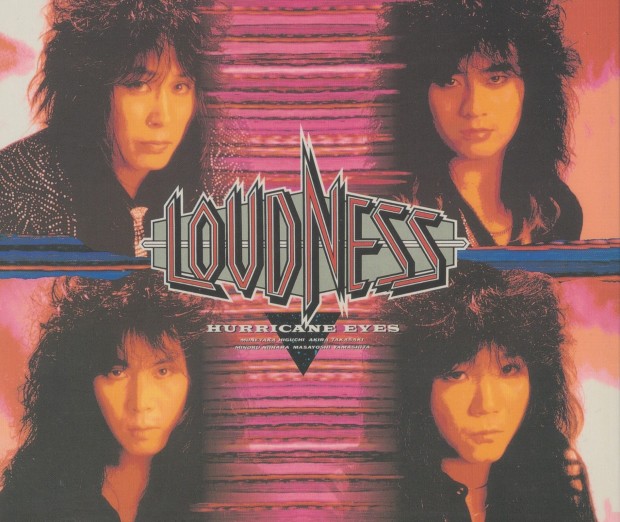
In most timelines and biographies, they’ll have you believe that the original lineup of Loudness had already peaked by 1987 and were creatively and commercially going downhill. While the commercial side of things was out of their control, creatively Loudness were still writing great songs. Though they did have one more EP in them, Hurricane Eyes is the final album of the original Minoru Niihara era of Loudness. It was recorded by Kiss and Jimi Hendrix producer Eddie Kramer with one track by Andy Johns. Though not as heavy or complex as Disillusion or noteworthy as Thunder in the East, it is thoroughly enjoyable from side A to side B. The commercial bent is obvious on some songs, but it doesn’t really blunt the impact.
Like most Loudness albums from the classic era, the band recorded lyrics in both English and Japanese and both versions of the album are included in this luxurious 5 CD box set. In Japan, the Loudness catalogue has been treated reverently but this is the beefiest of all their deluxe sets. Along with both versions of Hurricane Eyes (including minor musical differences), the set includes a disc of album demos, and another disc of alternate mixes and rhythm tracks. The fifth CD is a live set from the Hammersmith Odeon from 1986. Like any set of this nature, you’ll be listening to the same songs in four or five versions, but fortunately they stand up to such immersion.
Though Hurricane Eyes represents a peak effort to break into the American market, and some songs verge on Dokken homages, it’s a strong album loaded with hooks and enviable guitar theatrics & riffs. And regardless of some of the more radio-friendly material, it also boasts the thrash-like “S.D.I.”, a speed metal riff-fest that remained in the Loudness set list long after after Minoru was let go. The technical playing on “S.D.I.” is outstanding, and that’s laid bare for you to hear in the instrumental mix on Disc 4. The guitar solo is pure Eddie meets Yngwie. “S.D.I.” opens the English version of the album, but closes the Japanese. It works excellently in either configuration.
The English album continues with “This Lonely Heart”, a hook-laden hard rocker anchored by a solid riff and soaring chorus. Lynch and Dokken must have been jealous they didn’t write it because it’s right up their alley. The album title Hurricane Eyes comes from a lyric in “This Lonely Heart” but what you’ll remember mostly is that indelible chorus. Keyboards are poured into “Rock ‘N Roll Gypsy”, an obvious choice for a radio single. Though it didn’t hit the charts you can certainly hear the effort in it. On the Japanese version of the track, the keyboards are present but not mixed in as prominently. It’s the better of the two mixes, with more of that Akira Takasaki guitar up front.
“In My Dreams” is the first power ballad, with focus on the power part. Akari has some sweet anthemic guitar melodies in his pocket for this very Scorpions-sounding track. This gives way to another blitz of a song, though not as over the top as “S.D.I.” was. “Take Me Home” has similar urgency but more deliberate pace. “Strike of the Sword” is in similar metal territory with a fab Akari riff. The vocal melodies sound a little disconnected from the song though.
Don Dokken’s turf is revisited on “Rock This Way”, a mid-tempo ditty within hit territory. You could imagine this being written for the concert stage, so you can have a singalong chorus — “Rock this way!” Picking up the pace, “In This World Beyond” is a bit more complex though retaining an insanely cool chorus. The Loudness guys really developed an absurdly good chorus-writing ability by this point! But stick around to be strafed out of the sky by Akira’s machine-gun solo. “Hungry Hunter” returns us to mid-tempo rock ground, though it’s not their most remarkable song.
The American album ends with “So Lonely”, a re-recording of “Ares’ Lament” from 1984’s Disillusion, also in the closing position. Disillusion didn’t get a lot of attention outside Japan, and “Ares’ Lament” was a clear highlight. Though the structure is essentially the same, “So Lonely” is a tamed version” of the more traditional metal original. Keyboards are added, replacing the Akira-shred of the original. The chorus is beefed up and placed front-and-center. It suits Hurricane Eyes and though it’s merely a blunted version, it’s still quite excellent. It’s a demonstration of how you can take a song and tweak it into a different direction.
“So Lonely” isn’t present on the demo CD, presumably because they didn’t need to demo their own classic tune. Instead there are two tracks that didn’t make the album, but would be finished in the future: “Jealousy” and “Love Toys”. The 1988 Jealousy EP would see the first track released (but only in Japan). This is the most Dokken of all the songs, with one of those concrete riffs that George Lynch was prone to writing with ease. Maybe when Dokken broke up, Don should have given Akira Takasaki a phone call. The more frantic and metal “Love Toys” was revisited in 1991 with new lead singer Mike Vescera, for the On The Prowl album of re-recordings. Both tracks had potential in the unfinished demo stage. In fact all the Loudness demos on this disc are nearly album-ready. They’re rougher but also appealing for that same reason.
Disc 4, Behind the Hurricane Eyes is a hodgepodge of alternate mixes and rhythm tracks. The eight rhythm tracks (essentially mixes without vocals and solos) include another version of “Love Toys”. The mercilessly tight rhythm section of Munetaka Huguchi and Masayoshi Yamashita come to the fore on these tracks, as does Akira Takasaki as the riffmaster. “S.D.I.” is present on this CD twice, in rhythm track form and as a straight instrumental. You will be getting plenty of “S.D.I.” in this box set! You’ll also enjoy the brighter “Top 40 Mix” of “Rock This Way”, a really good remix that sounds perfect for the hits of the era. A mix of “So Lonely” with an earlier fade-out isn’t that interesting, but still desired by the collector. “Hungry Hunter” and “This Lonely Heart” are present in “old mix” and “rough mix” respectively. Differences are minor.
You could find yourself with a bit of ear fatigue after hearing so many versions of the same songs. Fortunately Disc 5 is a live set from the previous tour with none of the same songs. Buckle up. Opening for Saxon at the Hammersmith Odeon, Loudness went straight into “Crazy Doctor” from Disillusion after a glowing intro from Biff Byford. It’s right to the throat from the start and this CD has their full set. “1000 Eyes” from Lightning Strikes follows, the album for which they were touring. Loudness could have used some backing vocals live to beef up the chorus, but Minoru does a remarkable job on his own, givin’ ‘er all over the place. It’s also cool to hear Akira go from rhythm to lead so effortlessly live.
There is honestly something charming about someone who isn’t a native English speaker really giving their all to talk to an audience in English. Minoru is clearly happy to be in “London rock and roll city!” and the audience lets him know he’s welcome. The awesome “Dark Desire”, also from Lightning Strikes, follows and Akira lays down a mesmerising solo. Then a long dramatic intro opens “Ashes in the Sky / Shadows of War”, a highpoint of an already great set.
The big Loudness single in 1986 was “Let It Go“, a truly special pop metal song. This version opening for Saxon at the Hammersmith might be the best live recording if not the most energetic. Afterwards the late Munetaka Higuchi takes a drum solo (presumably to give Minoru’s voice a rest after this workout!). There’s a brief segue into Beethoven’s 5th Symphony, and Minoru introduces the band. That pumps up the crowd for Loudness’ biggest hit “Crazy Nights” complete with crowd singalong. “MZA!” After smoking through this one, Akira takes a blistering solo break. The set closes with “Speed” from their third album The Law of Devil’s Land. They saved the most aggressive song for last. Couldn’t let Saxon have it too easy, right?
Though hard to get, these Loudness deluxe editions from Japan are really beautiful to hold in hand. The thick booklet is printed on glossy paper, and though the liner notes are in Japanese, lyrics are provided in both languages. The rest of the booklet is stuffed full of tour photographs whose only language is rock and roll. Loudness certainly looked the part. The set also includes a little reproduction backstage pass, but the main feature is the music. Diehards are going to love it.
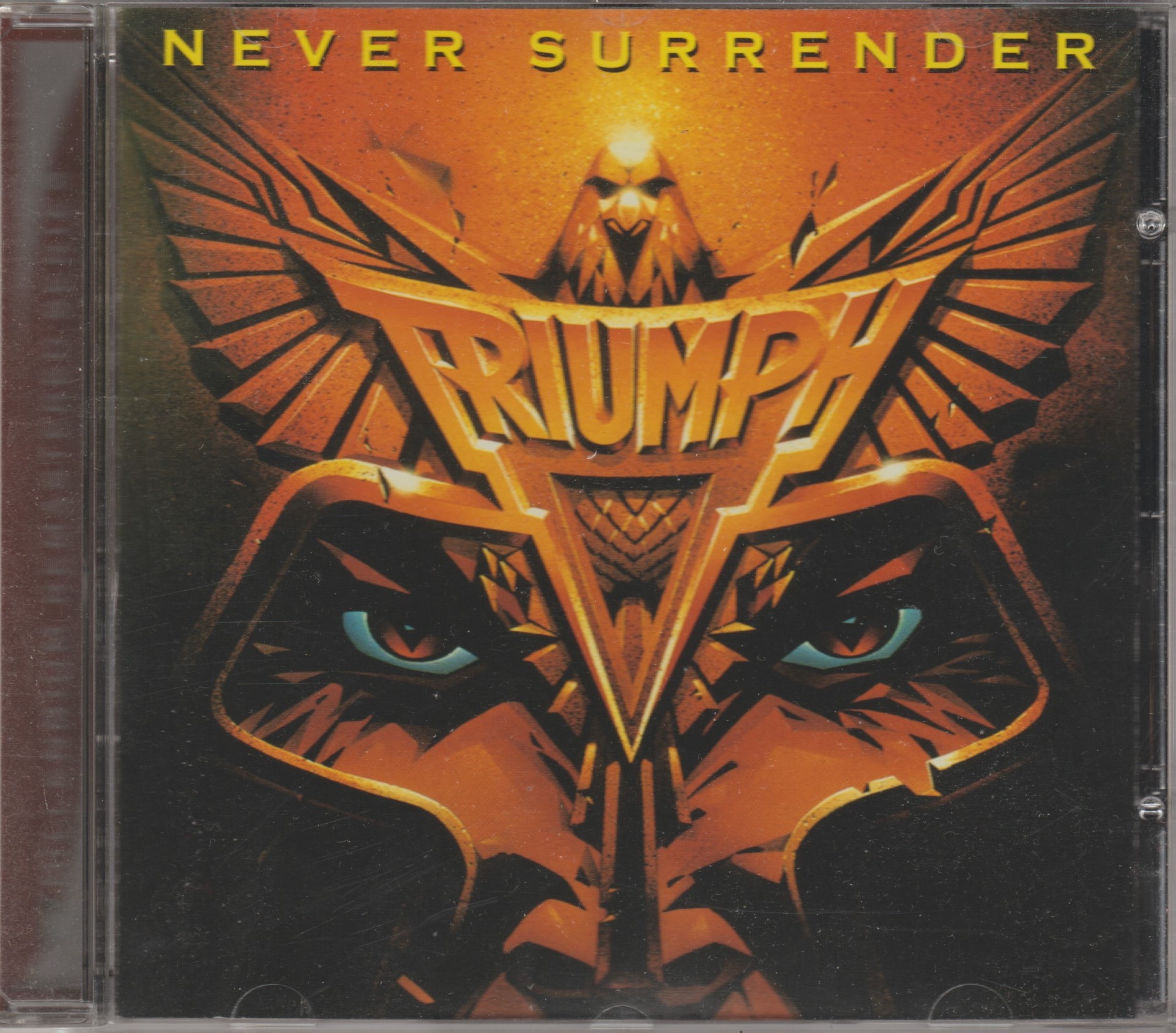
TRIUMPH – Never Surrender (1983 RCA, 2004 Universal remaster)
Triumph, the other Canadian power trio, scored multiple hits with their sixth album Never Surrender. “When the Lights Go Down” was a popular music video. “A World of Fantasy” was a concert staple. The title track is an absolute (pardon the pun) Triumph of epic songwriting and performance. It’s easy to hear why Never Surrender is so beloved.
Drummer Gil Moore opens the album with “Too Much Thinking”; steamhammer drums pumping hard. Rik Emmett comes in with a slaying riff while bassist Mike Levine, the glue, rolls out some determined bass grooves. Emmett’s talkbox solo is well constructed and extra cool. This riff rocker has the silhouette of topicality, with Reagan samples and lyrics like “Prophets of doom fearful of the violence, preaching to no one at all.”
Triumph ballads were often too brilliant for their own good. Not really “ballads” but more like melody-based compositions. “A World of Fantasy” is one such song, a real accomplishment and unmistakably Triumph. Triumph always had panache and they backed it with Rik’s strength as a guitar player. Rik’s voice, sometimes compared to Geddy Lee’s, was well suited to heartfelt rock like this.
Rik Emmett also takes the lead vocal on a battle cry called “All the Way”, preceded by a classical piece entitled “A Minor Prelude”. Get it? The guy is a tremendous and monstrously intelligent guitar player. Rik could have shredded circles with all the other lead guitarists, but that was not his focus. He realized that you can play really fast as much as you want, but less is actually more.
“All the Way”, which sounded like a battle cry, is actually followed by “Battle Cry”, vocalised by Gil Moore. It’s a slower, more determined metal track; the heavier side of Triumph. Rik’s crystal clear chords keep it from being too generic.
Back when albums had sides, the second half opened with “Overture (Procession)”, a short guitar intro backed by Levine’s synth. It sets the scene for the album centerpiece, “Never Surrender”, which itself is nearly seven minutes of pure undiluted awesome sauce. Constructed with distinctly different sections, “Never Surrender” was just a tad progressive and more than enough song for the average mortal.
Out in the streets inspiration comes hard, The joker in the deck keeps handin’ me his card. Smilin’ friendly he takes me in, Then breaks my back in a game I can’t win. Jivin’, hustiln’, what’s it all about? Everybody always wants the easy way out. Thirty golden pieces for the Judas kiss, What’s a nice boy doin’ in a place like this?
Gil Moore’s drums are sometimes considered simple, or basic. That may be the case, but are they not the perfect backbone on “Never Surrender”? Who can resist when Gil throws down a big, long drum roll from high to low? Hey, he might not be Neil Peart, but he works those songs! His fills here are just as essential as Peart’s in “Tom Sawyer”. Meanwhile, Rik’s guitar chords can only be described as shiny. One of the classiest players in rock can really do no wrong here, as he goes from funky chunky strumming to full shred, all within the confines of some damn catchy riffs.
As if that wasn’t enough, Triumph goes for round two on “When the Lights Go Down”. This time, the acoustic intro is swampy, but soon that riff will hit you square in the face. Gil Moore’s back on the microphone, so let’s not forget how hard it is to sing and play drums at the same time. They had to play this stuff live, and they did! This is just pure rock, four on the floor. “Let the party roll!” sings Moore in this paean to the concert stage.
Rik goes for the brightest of melodies on “Writing’s On the Wall”, a really “triumphant” sound, and great way to draw the album to a close. All that’s left is a soft guitar outro called “Epilogue (Resolution)”. This beautiful piece illustrates where Rik would go in his future solo career, decades down the road. Hints of jazz and classical pointed the way.
There are several songs that you don’t want to leave out of your life. Own Never Surrender.
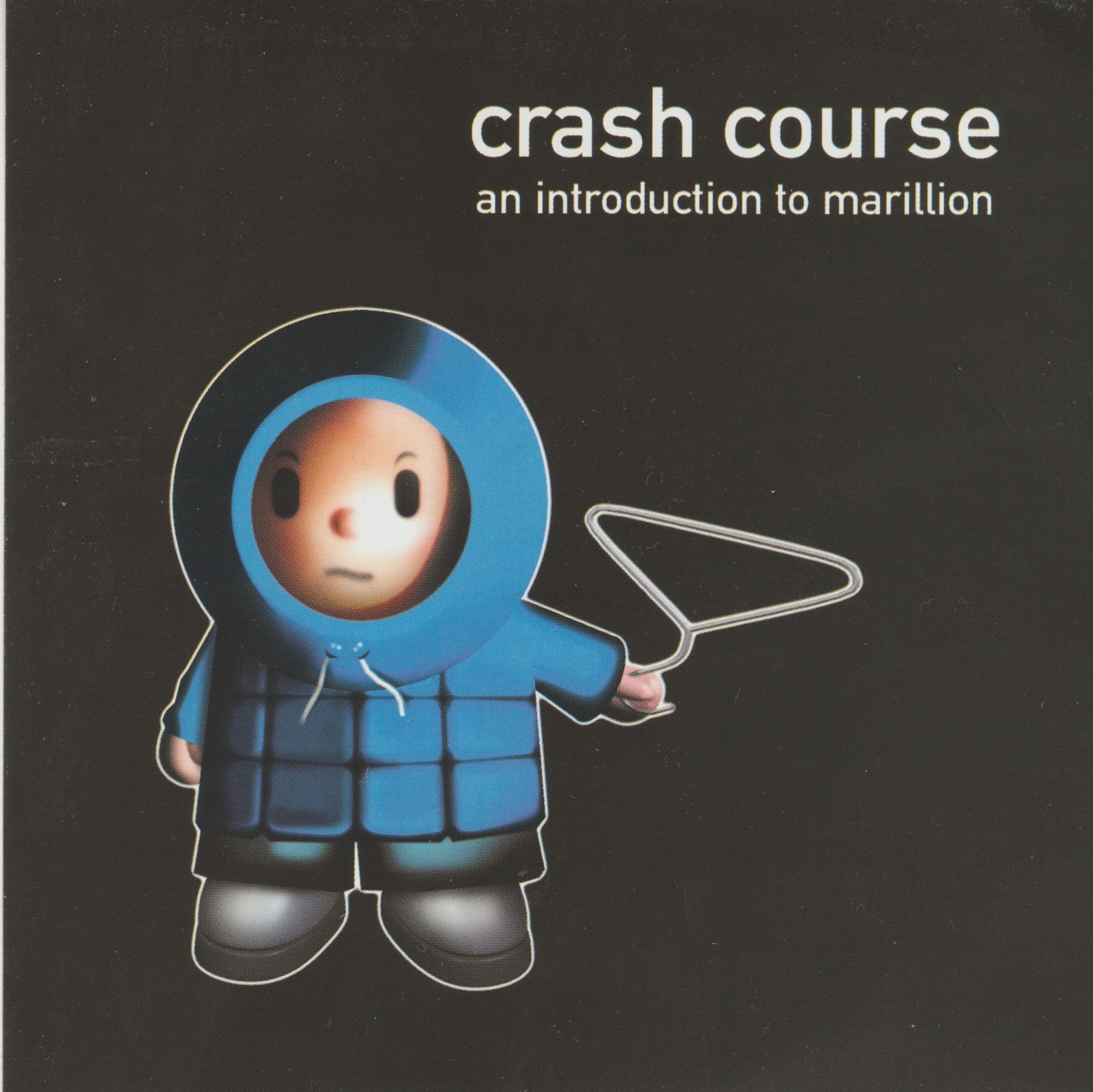
MARILLION – Crash Course – An Introduction to Marillion (2001 Racket Records, first edition)
Here is an interesting gimmick. Starting in 2001, Marillion began compiling “Crash Course” CDs, offering them for minimal cost on their website. The idea was that you could buy this CD for next to nothing, and send it off with to someone else with the intention of getting them into Marillion. After the original discs were gone, they revamped the tracklisting in 2002, and again in 2006, 2008 and 2017 with new songs. Let’s have a listen and see what Marillion thought their most immediately appealing material was 20 years ago!
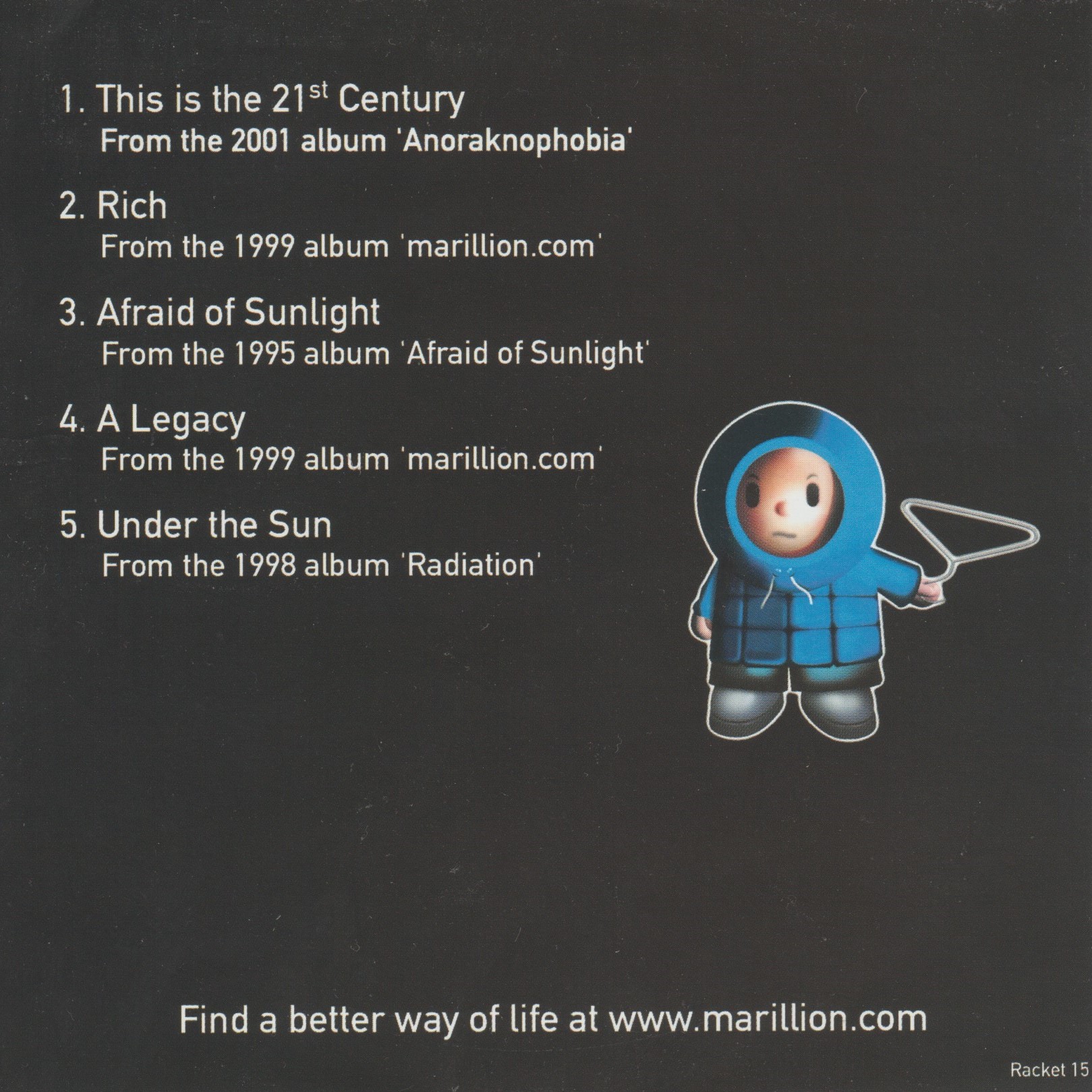
Since their new album was the crowd-funded Anoraknophobia (a new idea at the time), one of those songs leads the pack. They chose “This is the 21st Century” which I recall them really pushing at the time. I still am not sure why that was one of the songs chosen to push. It’s 11 minutes long and not very commercial. It’s also quite slow and mellow and takes some time to absorb. You’d think they would have gone with one of the singles — “Map of the World” is the track I personally put on my mix tapes when trying to get someone into this band. That’s not to say “This is the 21st Century” is an inferior track. It’s complex and demonstrates Marillion’s recent fascination with loops. Instead of making them cheesy, Marillion made them trippy. This one song is a lot to digest and new fans might be baffled by lyrics like “A wise man once said a flower is only a sexual organ, beauty is cruelty and evolution.” And some macho dude in camo pants is absolutely going to be triggered by the line “He had denied his feminine side,” but I don’t think that guy was ever going to be into Marillion anyway.
The far more obvious song “Rich” from marillion.com is an underrated gem. “Dot Com” as they call it is an overlooked album. Marillion really dove into a commercial deep end with some songs, while going full acid trip on others. “Rich” is pure pop, with a bangin’ chorus. “No tears, no lies, no pain, no doubt, no darkness, no confusion!” That’s how modern Marillion makes me feel. “Rich” is an uplifting song. “So talk about failing, to fall is not to fail.” Get rich right now, says Marillion. Mark Kelly has a hefty keyboard hook that anchors the song, while the verses slowly sway with a 2000s groove.
The oldest track is “Afraid of Sunlight” from 1995. They were trying to stay away from things that sounded too dated. No worries of that with “Afraid of Sunlight”, a timeless song if Marillion ever had one. It is so basic, with one little melody that runs through, but then it absolutely explodes on the dramatic chorus. If this track doesn’t win ’em over, nothing will.
Back to Dot Com and “A Legacy”, the song that opened the album. Once you get past the slow opening, this song punches hard. The distorted vocals are so 90s, but that’s nothing…wait until you hear “Under the Sun” from 1998’s Radiation. That album was all about noise; everything banging and cranked up loud. It’s also my favourite song on this disc. From the haunting keys to the crashing chords, “Under the Sun” kicks all the asses.
Would this disc have appealed to newbies in 2001? Some, certainly. But like anyone, I think I could have done better! There is no point rating a CD like this so we’ll just call it:
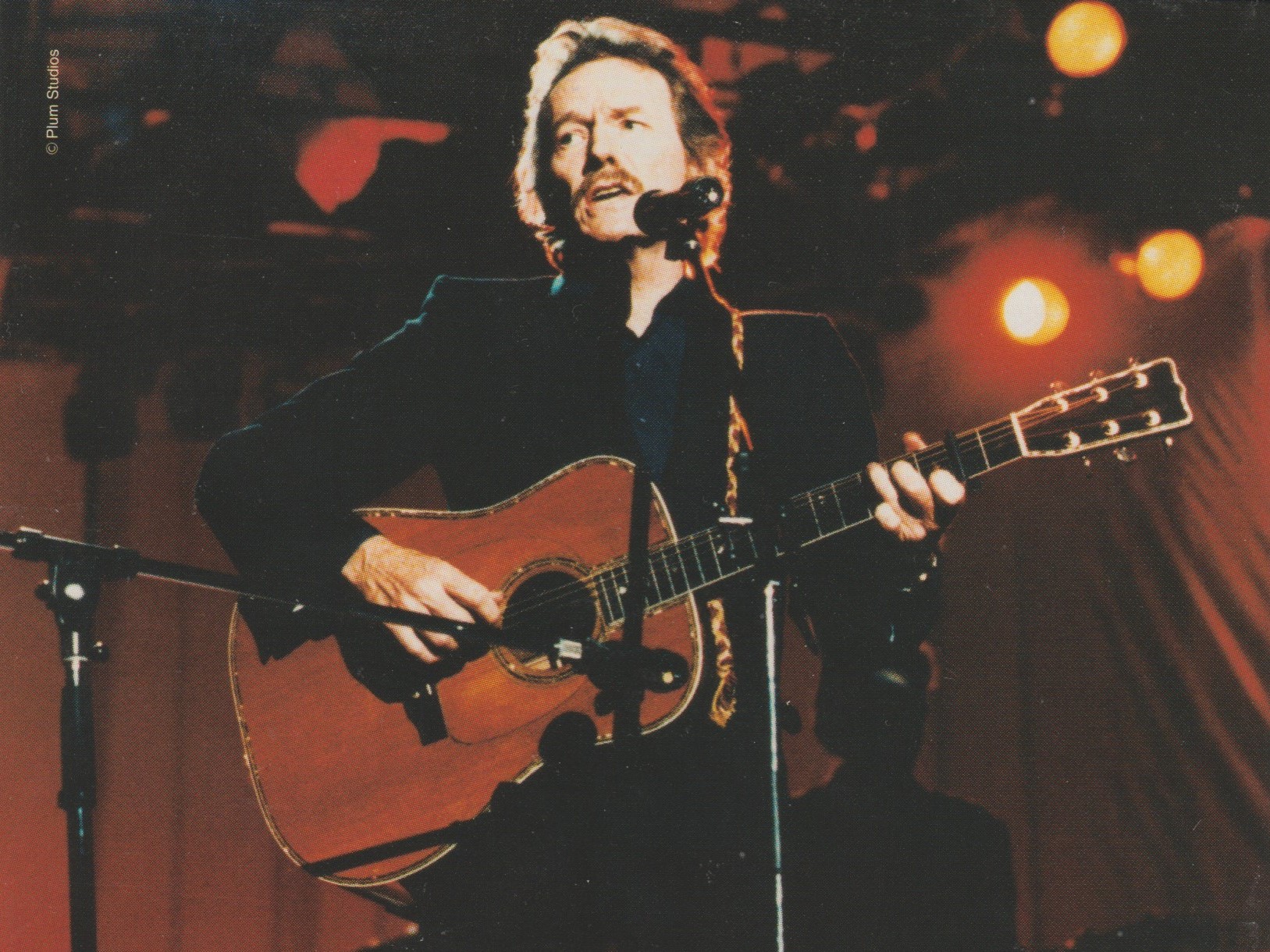
GORDON LIGHTFOOT – Complete Greatest Hits (2002 Rhino)
You just have to laugh when you see something called “Complete” Greatest Hits. Complete? Says who?
I don’t see “Ribbon of Darkness” on Complete Greatest Hits, and where is “Bobby McGee”? I do see 20 terrific songs that you shouldn’t live your life without. Gord’s Gold is the benchmark, but because it’s missing Gordon Lightfoot’s best known song — “The Wreck of the Edmund Fitzgerald” — it isn’t enough. (Gord’s Gold also featured two sides of re-recordings because Lightfoot supposedly couldn’t listen to his early work.) The best way to get “Edmund Fitzgerald” and Lightfoot’s other best known songs in one purchase is to go for Rhino’s Complete CD.
The experience starts with “Early Morning Rain” from Gord’s first LP Lightfoot! (1966). Gord’s calling cards are two: his baritone voice, and his songwriting. “Early Morning Rain” shows of the perfection of both. You’ll get chills. “In the early morning raaaaaaain…” Undoubtedly, Gordon Lightfoot is one of Canada’s greatest songwriters of all time, and “Early Morning Rain” is all the evidence you need. If that’s not enough, there are fortunately 19 more incredible tracks.
“For Loving Me” from the same LP boasts some intricate acoustic picking and more of that voice. The vibrato, the control, the expression…nobody could touch Gordon Lightfoot. In recent years his voice has been reduced to a powerful whisper, but nothing on this CD dates past 1986. His voice is double-tracked on “Go Go Girl”, another unforgettable song from 1967’s The Way I Feel. His storytelling lyrics always make you wonder who and what inspired the songs. “Only a go-go girl, in love with someone who didn’t care. Only 21, she was a young girl, just in from somewhere.” There’s so much there between the lines, while the acoustics pluck away in dense patterns.
After three succinct beauties, here comes Gordon’s epic: “Canadian Railroad Trilogy”. The Canadian Pacific Railway was built on hardship and dreams, and Gord captures that and more in a multi-textured composition. “An iron road runnin’ from the sea to the sea.” Not only is this song his greatest lyric, but the diverse vocal parts could be his strongest work. Hard to imagine that that he was only on his second album.
1968 brought the brooding ballad “Pussywillows, Cat-tails”. Backed by strings, the dream-like song paints a picture rather than spelling out a story. “Naked limbs and wheat bins, hazy afternoons.” Then “Bitter Green” is brighter, though with similar countryside imagery and a story about lost love with a twist ending. Moving on to 1970, “If You Could Read My Mind” is one of Lightfoot’s most renowned songs. It went to #1 in Canada, and in 1997 it hit the dance charts in a cover version by Stars On 54. Gord’s version is one of the most passionate laid to tape. Written about a divorce, the feelings were raw.
1971 brought the bright “Cotton Jenny” and the uplifting “Summer Side of Life” from the album of the same name. The latter features subtle organ and rich backing vocals, broadening the palette. “Beautiful”, a soft and romantic ballad, came from 1972’s Don Quixote, and hit the Billboard Hot 100. This CD then skips past the #1 album Old Dan’s Records (Complete Greatest Hits, huh?) and goes straight to “Sundown” from the album of the same name. I always loved the front cover of Sundown, with Gord in sandals smoking a cigarette in a barn. For the first time, there’s an electric guitar solo, but the song is most notable for the strong chorus. “Carefree Highway”, also from Sundown, has lush strings and another chorus that is impossible to forget. I highly recommend playing this one while driving down country roads on a Sunday afternoon. “Rainy Day People” from 1975 (the same year he did the Gord’s Gold re-recordings) features more backing instrumentation than earlier material. The lush, countrified music didn’t do him any harm when the track went Top 10 in Canada (and #1 on the adult contemporary charts).
All this leads to “The Wreck of the Edmund Fitzgerald”, probably the greatest songs about a sea tragedy ever written. With a big electric guitar as the main hook, the song is completely unlike all the Lightfoot hits that came before. There is even a soft synthesizer part. It went to #1 on every applicable chart in Canada, and #2 in the US. Though simpler in structure, “Edmund Fitzgerald” is the only song to rival “Canadian Railroad Trilogy” as his greatest epic. It’s also one of Gordon’s most chill-inducing lyrics, with a vocal part to match.
Everything after this can only seem anticlimactic. “Race Among the Ruins” is the strongest track post-“Edmund”, as Gordon included country slide guitars and other accoutrements. The final five (“Daylight Katy”, “The Circle is Small”, “Baby Step Back”, “Stay Loose” and “Restless”) are not slouches, but simply not as striking as the earlier songs. Though the recordings are more sophisticated, it’s hard to top your earliest hits.
The liner notes to this CD point out that your first exposure to Gordon Lightfoot was probably via a cover. Perhaps Bob Dylan, Janis Joplin, Elvis Presley, Johnny Cash, or the Tragically Hip. I suggest making “Edmund Fitzgerald” your first Gordon Lightfoot if you haven’t heard one of his classics already. This CD is the best way to get it.
5/5 stars
* Deke, have you ever listened to the Wreck of the Edmund Fitzgerald while sitting on the shore of lake gichi-gami? That’s on my bucket list.
The Scorpions, in the midst of writing their next album, are the latest band to release a lockdown single in 2020. It will come as no surprise that it’s a ballad. “Sign of Hope” is a reassuring song from the guys who know how to write ballads (and reaaaally know how to paaartaaaaaaay!). Of course a ballad is appropriate for these sombre times. “Sign of Hope” sounds like Scorpions circa 1996, the Pure Instinct album. It’s gentle and peaceful. For accompaniment, it’s primarily acoustic guitars, with slight electric guitar accents that pop in and out. It’s actually quite a good ballad, short and to the point. The sparse arrangement really lets us hear the nuances of guitar, and Klaus Meine’s voice. It’s well written and memorable enough.
One could ask, “Why do we need another Scorpions ballad?” Perhaps the simplest answer is because the Scorpions are still around making music. So why not? Will they ever top “Still Loving You” or “In Trance”? It doesn’t matter, because they are in their 55th year and are still creating.
“I see empty places, empty roads,” sings Klaus, and though the streets are fuller now it’s hard to forget the sight of a deserted world. It also strangely seems like such a long time ago that this all began. But the Scorpions reassure us that “it’s gonna be alright,” and eventually it will be. We are getting there. We are indeed seeing signs of hope, but everybody needs to treat themselves well. So treat yourself to some music and grab the new Scorpions on iTunes.
3/5 stars
I also really like the single artwork, I think it’s striking and has several layers of meaning. It’s also nice to see the word CANADA so prominently!
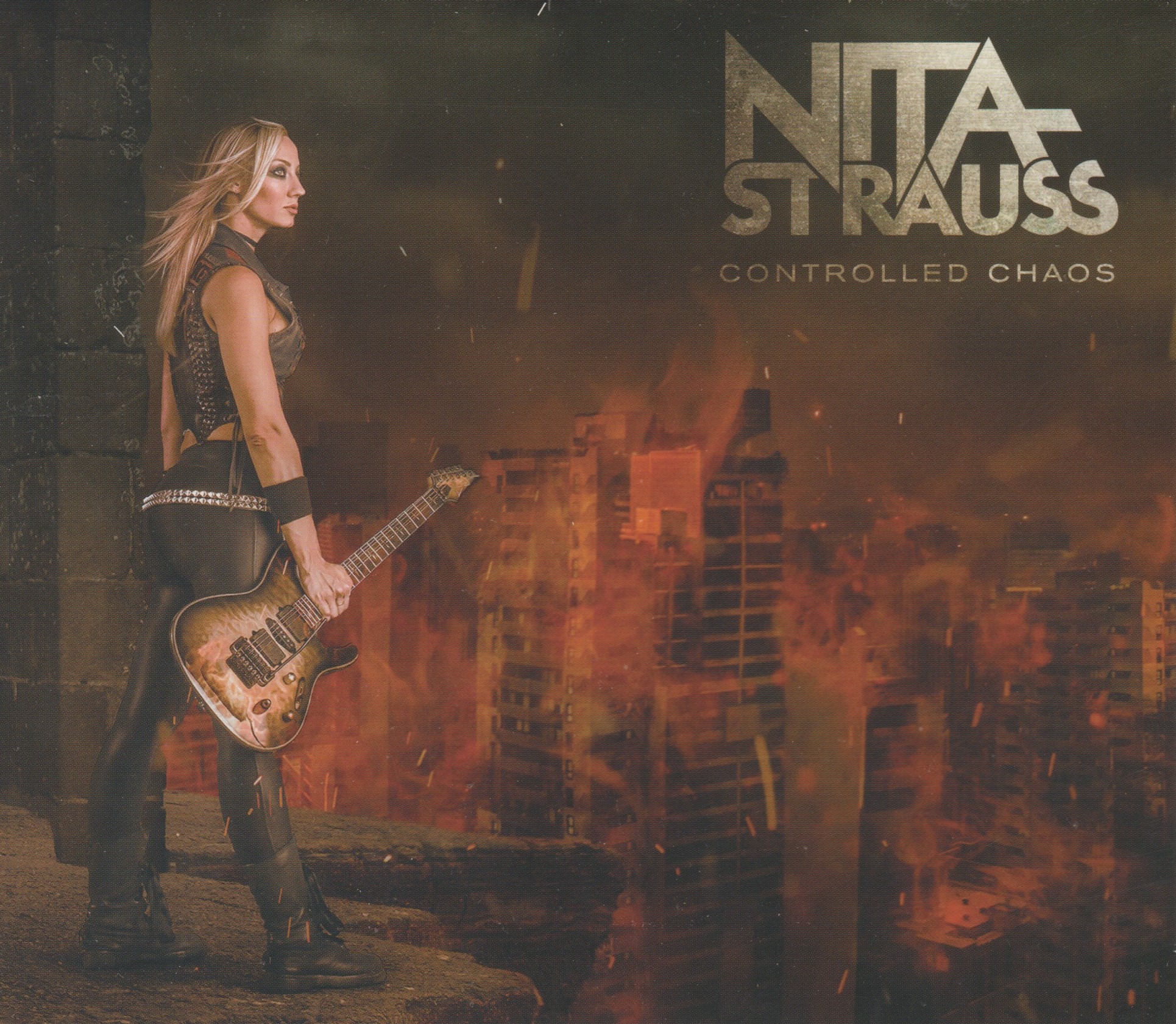
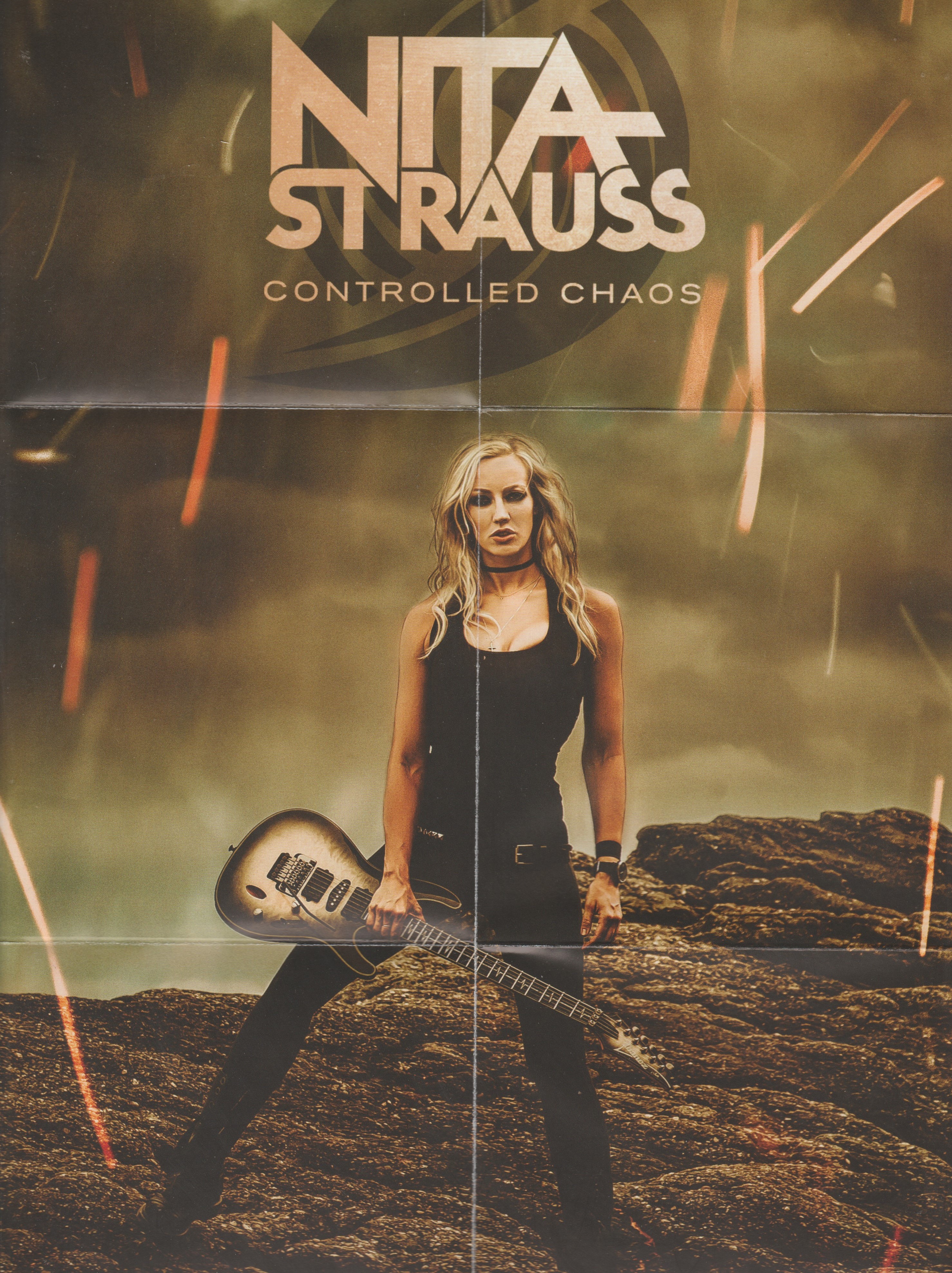
Nita Strauss became a household name touring the world and playing lead guitar with Alice Cooper. Her natural ability and charisma ensured that the next question would be “when is she putting out a solo album?” In 2018 Strauss released her entirely instrumental debut Controlled Chaos, playing everything except drums and keyboards.
Her choppy rhythm on “Alegria” soon gives way to extremely melodic (and fast) lead work. Strauss’ talent seems to be taking a melody and making it as exciting as possible with only six strings. There are shades of Yngwie, Joe and other assorted big-namer instrumentalists without sounding like any specific one. The weakness is unfortunately the drums (by Josh Villalta) which are robotic and flat. “Our Most Desperate Hour” sports blurry fast drum blitzes that should be exciting but instead sound artificial. Worst track: “Mariana Trench” due to long stretches of bland double bass. Fortunately this album is more about the guitar. Lots and lots of guitar.
Track after track, Nita blazes a tapestry of technique. Her guitar creates moods — tension is in the air. But she also does excellent ballads. “Here With You” is the first. Guitar instrumental ballads are a thing unto themselves. She creates a powerful presence on “Here With You” with layers of guitars working together.
“The Stillness at the End” is a an examination of one of Nita’s techniques: densely layered guitars in harmony. Here she mostly forgoes speed in favour of building up the melodies. Keyboards are used sparingly, such as the intro to “The Quest” which goes full Yngwie in dragon-hunting mode. But ballads like “Hope Grows” might give us a better look at Nita’s inner workings. The sparse arrangement lets you really hear the feeling in her playing. She has an excellent sense of composition, knowing exactly when to throw on some emphasis. Indeed, I’ll go out on a limb and say that the ballads are the best tracks.
“Lion Among Wolves”, “Pandemonium 2.0” and “The Show Must Go On” all have their own guitar thrills to enjoy. “Pandemonium” stands out due to an excellent outro guitar melody. And if you’re wondering, “Hey, is ‘The Show Must Go On'” the old Queen song? Indeed it is, featuring Nita sharing the stage with a cello (Tina Guo). Great choice on which to end the album. The cello solo is freaky.
Controlled Chaos is a good debut. The drums are a sonic stumbling block. As far as playing, composition and entertainment, Nita delivers the goods. The songs could use a little more variety to give them album some texture, but there is plenty of room for Strauss to grow as her career is just going to get bigger.
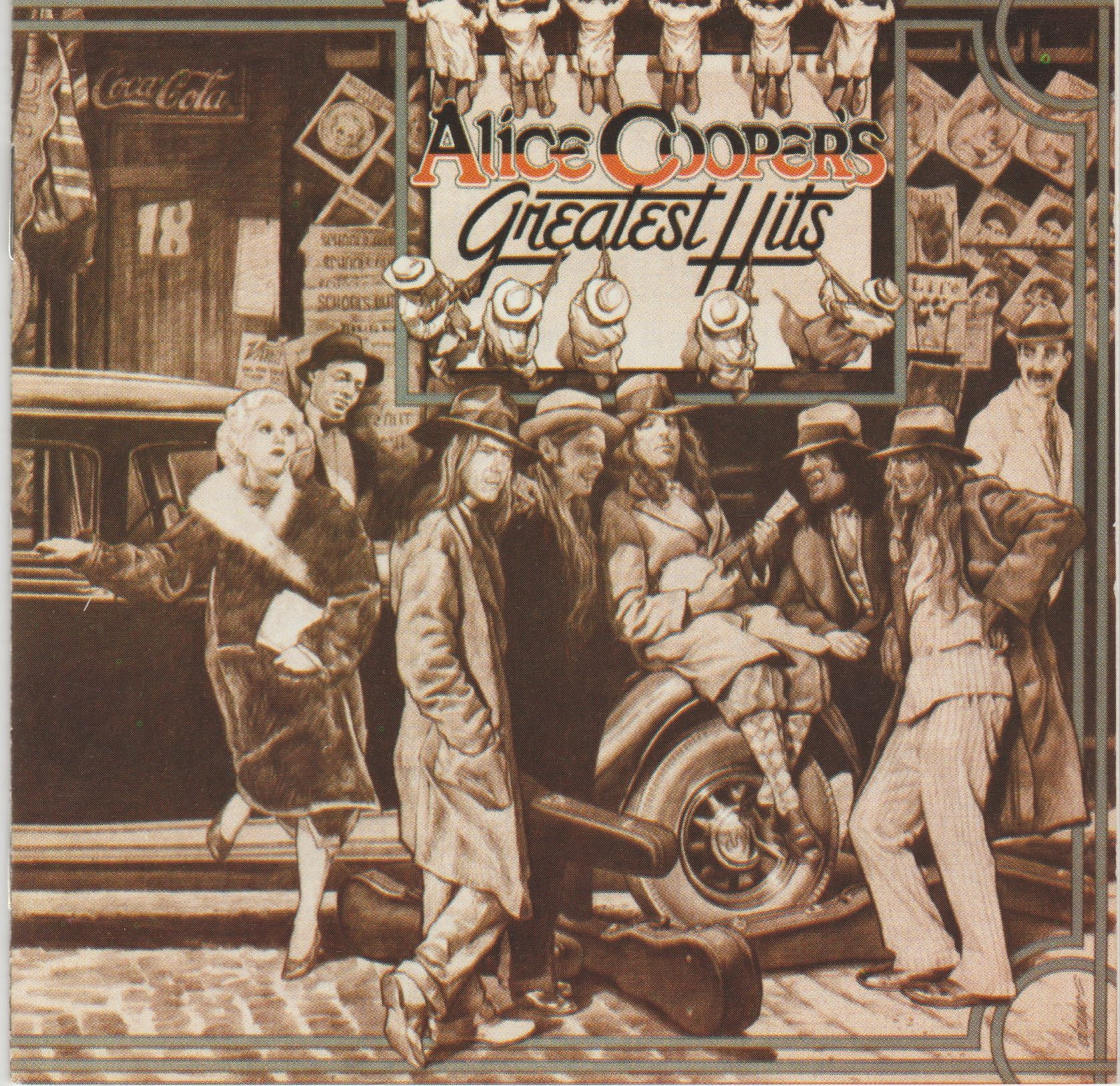
ALICE COOPER – Alice Cooper’s Greatest Hits(1974 Warner)
Picture this: a kid, just turned 17. An older uncle named Don Don. Recording tapes off each other in the summertime. I didn’t know much of Alice Cooper. “Teenage Frankenstein”, “The Man Behind the Mask”, and “I Got A Line On You” were the songs I knew best. I heard a bit of a live version of “I’m Eighteen”, and a Krokus cover of “School’s Out”. That’s all I knew. But my uncle had Alice Cooper’s Greatest Hits in his tape collection, and I had a blank tape.
I recorded Greatest Hits on one side of a 90 minute cassette. (Eventually I taped Trash on the other side.) My impressions at that young age were mixed. The music sounded old fashioned. Not at all like his 80s stuff. While some songs (“Desperado”) flat out lost me, after a couple listens, other tunes started to jump out.
Some of the elements that appealed to me were the lyrics. “She asked me why the singer’s name was Alice, I said ‘listen baby, you really wouldn’t understand.'” (“Be My Lover”.) “The Reverend Smith he recognized me and punched me in the nose.” (“No More Mr. Nice Guy”.) Of course, “Elected” too — that goes without saying. Simple, comedic and effective lyrics.
The huge orchestration behind “Hello Hooray” hit me where it counts too. I grew up on soundtracks and orchestras, so anytime a band used a big bombastic arrangement like that in rock song, it immediately appealed to me. Even then I was aware of Bob Ezrin from his work with Kiss.
My favourite song on the whole thing was “Teenage Lament ’74”. What is it about that song? The old-fashioned jangly rock and roll? The unforgettable “What are you gonna do?” chorus? Although it’s fallen by the wayside since, “Teenage Lament” is still an Alice Cooper triumph of triumphs. On the cassette version, it had a place of honour — second song, side one, right after “I’m Eighteen”. I couldn’t figure out all the words but I got the jist. I still love what I perceive to be its old-fashioned sound. Alice Cooper didn’t need to be heavy to be awesome. I was learning this. None of Alice Cooper’s Greatest Hits would be considered “heavy” by the standards of the time when I first heard it (1989).
“Is It My Body”, “Under My Wheels”, and “Billion Dollar Babies” were the next songs to slowly reveal themselves to me. “Muscle of Love” and “Desperado” were the last ones to enter into this new Alice love affair. Before long, they were all memorized. Then it was time to start collecting the albums! Billion Dollar Babies seemed like a wise choice, since I liked so many of its songs on Greatest Hits. And that’s how a greatest hits album is supposed to work. It is meant to whet the appetite and make you want more.
Today Alice Cooper’s Greatest Hits has been supplanted by more recent, more complete greatest hits discs, remastered for the modern age. That’s fine and well, but Greatest Hits works better as a first Alice. The track order, the more concise running time (41 minutes), and of course the classic cover art made this something special. It’s historic as it was the very last product released by the original Alice Cooper group before Vincent Furnier went solo. Also worth noting: all tracks were remixed by Jack Richardson, but you probably won’t even notice. Completionists, pay attention.
Want an awesome first experience with Alice Cooper? Follow my lead and check out Greatest Hits.

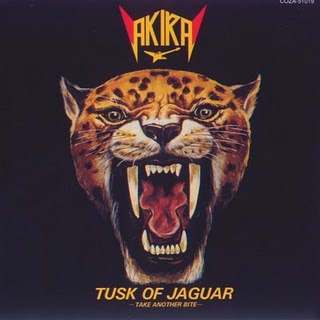 AKIRA TAKASAKI – Tusk of Jaguar (Take Another Bite) (1982, 2009 Columbia CD reissue)
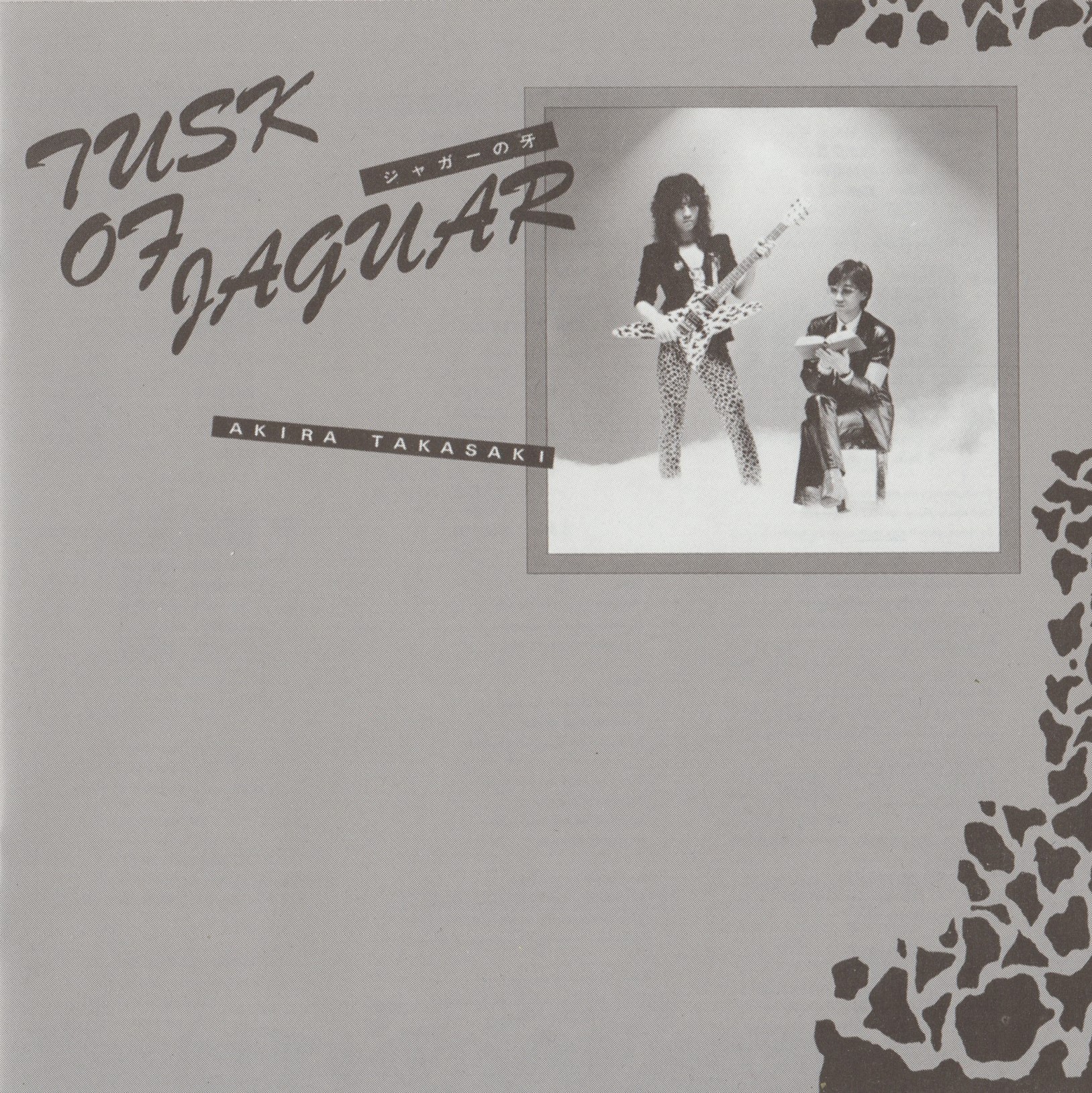 “Macula (Far from Mother Land)” is based on synthesizer until it transforms into a more traditional guitar instrumental, with clear Brian May influences. The way Akira Takasaki stacks his guitar harmonies can only be described as Queen-like. For that reason, this song is the most accessible to rock fanatics, who will eat up every note that Akira celeverly lays down. For those curious to know more about the critically acclaimed guitarist, check out “Ebony Eyes”, a serious hard rocker on which he takes lead vocals himself! His voice is higher in timbre than Minoru’s, and while he is not an amazing vocalist, he does have some pretty incredible guitar solos on this track.






















 mikeladano.com