Strange Animal was only Lawrence Gowan’s second solo album, and one of his best sellers. It’s also one of his most dated sounding, with programming and production honed in on the 1980s. Regardless, you can’t knock the musicians: Tony Levin (bass/Chapman Stick), Jerry Marotta (drums), and Chris Jarrett & David Rhodes (guitars). Gowan basically lifted his studio band from Peter Gabriel.
Opener “Cosmetics” was a single, though just shy of cracking the Top 40. It’s terribly dated sounding, with that wretched brittle synthetic sound that even Queen resorted to at one point. So you might love it! The piano is delectable and Gowan is as smooth as pie. “Desperate” is darker, but I sure do hate synth hand-claps! Fortunately this is a great song, akin to 80s Phil Collins. Another really smooth one is “City of the Angels”, like a waltz at midnight. Progressive rock invades “Walking on Air”, which lightly tip-toes from gentle rock to more aggressive guitars.
A delicate but powerful “Burning Torches of Hope” sits right at the middle of the album, and it is so very 80s. Levin makes some animalist noise on “Keep the Tension On”, which sounds much like its title. Taut, powerful, and even heavy in a certain way. It’s melds right into a march on “Guerilla Soldier”, a killer song with terrific verse hooks. Massive song! It feels like this album builds to a close. Especially when you consider the last two songs.
Finally, at the end of the album comes the familiar hits. First: a huge Chapman Stick groove, on the poppy upbeat title track. “Strange Animal” is an awesome song: strictly fun, and incredibly so! The melody stays in your head for days, and you’re hooked. Ominous spiritus, ahh! And then it’s his most famous song, “A Criminal Mind”, otherwise known as “the one that Styx play live”. Solo, in the studio, “A Criminal Mind” is just as haunting, just as powerful, and just as unforgettable. It also had one of the most disturbing music videos we had seen as young kids, and our reaction was revulsion. On album, it is a capstone of a pretty terrific record. It really feels like it should have opened.
Though ultimately it is up to the listener, unless you grew up with Strange Animal in the Walkman nestled in your back pocket, the programming and 80s-isms are a bit distracting. It’s also strange how Gowan left all the big firepower stacked at the end of the album. In the CD age, it just makes the whole thing more rewarding at the end!
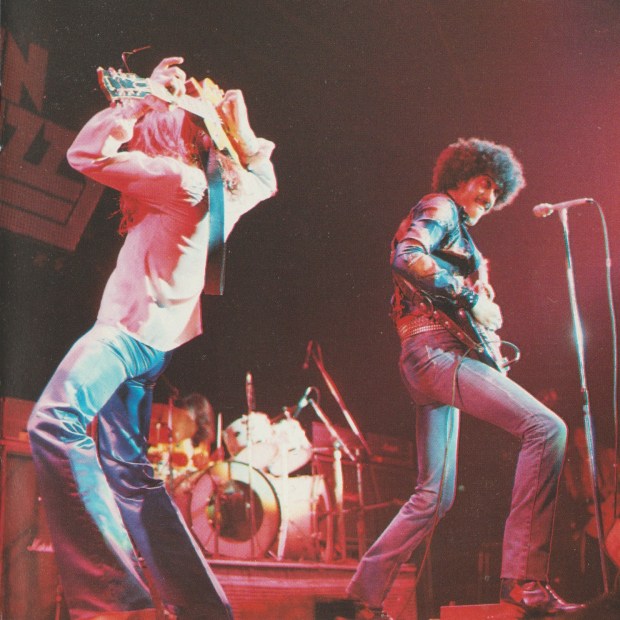
REVIEW: Thin Lizzy – Dedication – The Very Best of Thin Lizzy (1991 Polygram North American version)
It might not be the best introduction to the most underrated classic rock band of all time, but it was my introduction. Dedication was a 1991 Thin Lizzy compilation that was buoyed by the unreleased song “Dedication” which was released as the radio single. There’s nothing wrong with the “new” track, except it wasn’t supposed to be a Thin Lizzy song. Phil Lynott recorded the song in 1985 for his new band Grand Slam. Scott Gorham and Brian Downey replaced the original instrumentation leaving Phil intact. And that’s fine. “Dedication” sounds slightly unfinished but it also sounds like what Thin Lizzy might have been doing had they carried on.
These kind of extra songs usually get spotlighted at the front of the album, or left at the end to whet the appetite. On Dedication, it goes last, leaving the compilation to ascend in chronological order. Is that the best way to approach listening to Thin Lizzy? While many sets go that route, it leads to a very uneven playing experience. Early Thin Lizzy was much more folksy, and dare I say it, just not as good. It certainly had some excellent tunes, and some of the better ones are showcased here. “Whiskey in the Jar” is an actual folk traditional, rocked up and made unforgettable by that Eric Bell guitar hook. That’s followed by the firecracker “The Rocker”, just shy of three minutes but every one of them shockingly great.
Original guitarist Eric Bell left the band after three albums due to exhaustion, and the band was beefed up to a four-piece with Brian Robertson and Scott Gorham taking his place. It took a while for the albums to really catch up with the talent. On CD it’s a lot of slow material before we get to the more rocking stylings of the Thin Lizzy that you know and love. From 1974’s Nightlife we have “She Knows”, “Still in Love With You”, and “Showdown”. A lot of ballads and blues and not a lot of fire. The guitar work is sparkling but the songs are not yet as astounding as they would yet become. Another ballad, “Wild One” from Fighting (1975) is one of the best of the batch. It is bookended by two rockers, “Fighting My Way Back” and the Bob Seger cover of “Rosalie”. Both are tracks you don’t want to live without.
Part of (but only part of) Phil Lynott’s genius was bringing Gorham and Robbo (and later others) together as a unified guitarmony duo. The next batch of classics really hammer this home. “Jailbreak”, “The Boys are Back in Town”, “Cowboy Song” and “Don’t Believe a Word” are the embodiment of what people think of when they picture Thin Lizzy. The driving beats, the hooks, the dual solos, the poetic lyrics — it’s all there in what might be considered Lizzy’s peak era.
Brian Robertson left the band shortly after, and doesn’t appear on “Bad Reputation” or “Dancing in the Moonlight”, but Gorham picked up the slack in the studio and rendered these as two more stone-cold classics. “Bad Reputation” covers the driving side of the band while “Dancing in the Moonlight” is funky, light romantic storytelling. Truly excellent songs even without Robbo.
The Gary Moore era follows with “Do Anything You Want To” and “Waiting For An Alibi”, two more excellent Lizzy classics from the underappreciated album Black Rose. Moore lasted only for one album, and his successor Snowy White for two more. Snowy is only heard on one track here (“Chinatown”) and the man that replaced him (John Sykes) is heard on none! So another failing of the Dedication album is a sudden drop-off at the end, leaving out important songs. “Chinatown” is excellent at least, but so is “Hollywood” and “Renegade”, yet they are not here.
Yes, too many songs were left off Dedication because you couldn’t get ’em all on a single CD. Johnny The Fox (possibly their best record) is an album that isn’t given enough time here, along with Black Rose. And to have no Sykes? Unjustifiable.
Fortunately the last song “Dedication” is better than expected, sounding like Thin Lizzy 1991, beefy and tough. It doesn’t sound like Lizzy ’75 or Lizzy ’83. But it does sound like Lizzy because Phil Lynott’s voice tends to do that. Scott Gorham does a decent job of replicating all the guitar excitement himself (he’s had to do it before). The track, written by Lynott and Grand Slam guitarist Laurence Archer, had one of those guitar hooks well suited to the Lizzy canon. Gorham and Downey did it justice enough.
Dedication is not enough Thin Lizzy but it’s enough to get your feet wet. Although it’s a slow starter it will eventually get you interested enough to try more. It worked for me and it’ll work for you.
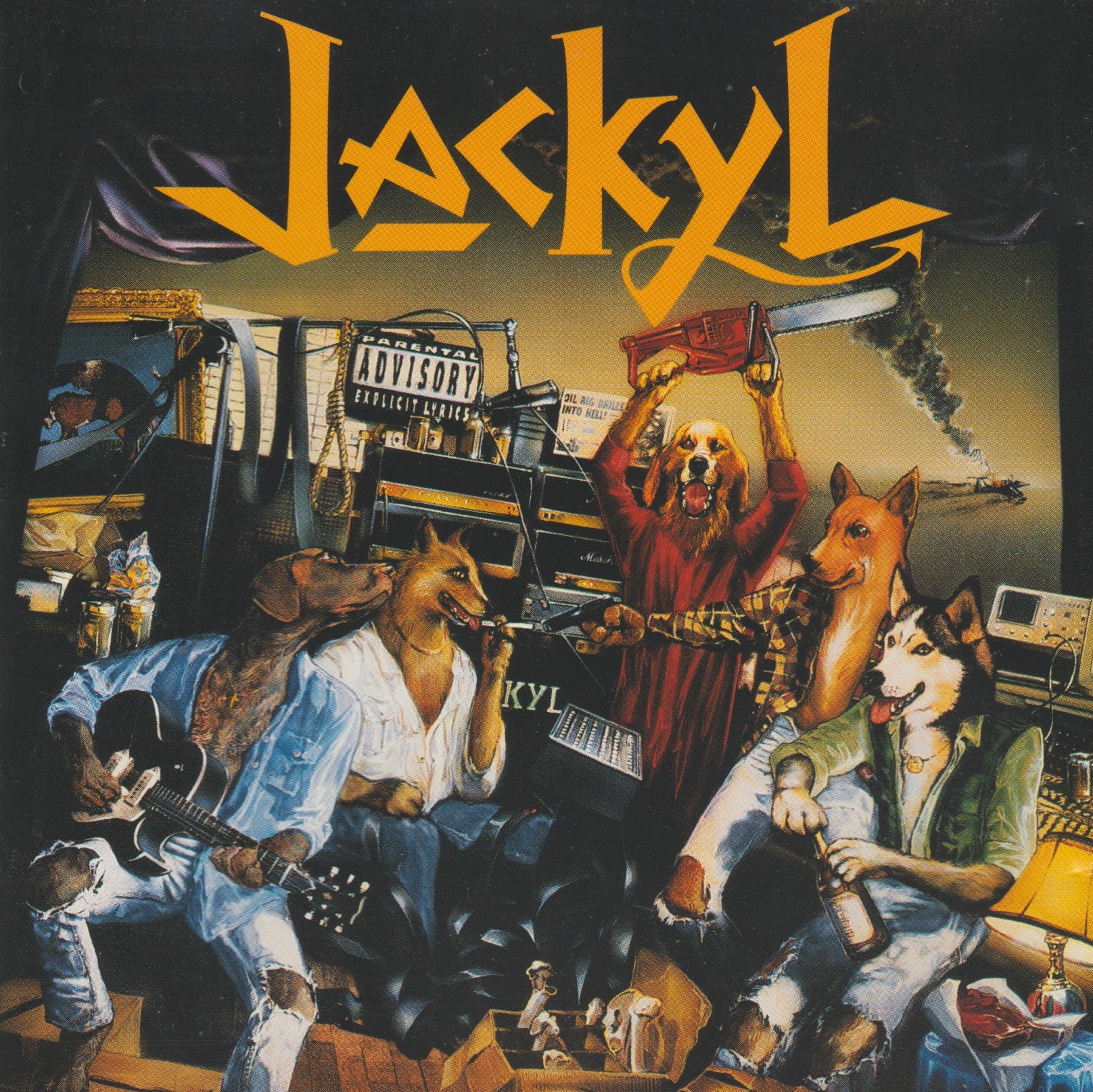
This is one of the CDs I inherited from my late Uncle Don Don. I always wanted the first Jackyl for two songs: “She Loves My Cock” and of course “The Lumberjack”. Now that I finally have it, I thought it would be fun to review it “live” on first listen. The first thing to notice is that all of the songs are under five minutes.
Jackyl, starring Jesse James Dupree on lead vocals and chainsaw, signed to Geffen at the tail end of the hard rock era in 1991. It wasn’t too late though as Jackyl scored a platinum with their 1992 self titled debut. Even though they never reached those heights again, Jackyl have continued on to the present day with relatively few lineup changes.
With a song called “She Loves My Cock”, you can probably understand why why K-Mart refused to stock this album. In protest, Jackyl filmed their video for opener “I Stand Alone” in a K-Mart parking lot. An AC/DC vibe is imminent, but Americanized with shout-along chorus. Dupree certainly has the Brian Johnson pitch and grit, as well as certain vocal inflections. Good track, solid groove, great catchy solos. The shouted bits are dated, but the song is otherwise pretty slick.
Then Jesse James starts squealing about a “Dirty Little Mind”, a sleazy rocker with more of the shouting, and then it gets really dirty. Not a classic in any universe, but it sounds like it would be fun singing along in a bar. A stuttery riff, like those popularized in the late 80s and early 90s, starts off “Down On Me”, catchy midtempo heaven with a soulful southern slant. Apparently “Down On Me” was their biggest charting hit, even surpassing “The Lumberjack” and “When Will It Rain”. I remember “When Will It Rain” from the music video, a darker and stormier concoction. It seems an unlikely single, but thus far it’s the most serious track. Certainly more serious than “Redneck Punk” which sounds like its name. Sped-up punk beats infused with a Dixieland vibes. And then as if to make the “redneck” point even further, it’s “The Lumberjack”. I love found objects in music as a general concept, and it’s awesome to hear a sleazy rock band like Jackyl executing such highbrow concepts, going as far as to play an actual chainsaw solo and still keeping it musical. The contrast of the highbrow with the brutally juvenile lyrics strides that ever-so-fine line between clever and stupid.
It sounds as if this would be a natural place for a side break, as “Reach For Me” has a completely different vibe. A choppy riff and dynamic verses really set up a cool song. Without missing a beat we’re on to “Back Off Brother”, a tough little number with a minimalist riff. “Brain Drain” has a slightly funky feel emphasized by the cowbell. Not an album highlight, but a strange cross between AC/DC and Def Leppard. Dupree expresses a clear preference for alcohol. “It’s not the ‘caine, not the Mary Jane, but the golden grain.” It’s good to know what you like. A slick one called “Just Like the Devil” starts to wind things up with a tough riff and speedy beat.
Finally and wisely the album ends on “She Loves My Cock”, the track that got them banned from K-Mart. There are clean versions of this CD available without the song, but what’s the point? This album without that song like like a sentence without the exclamation mark! The lyrics are not repeatable here but you can use your imagination. Fortunately there is a solid foundation to this heavy track to support the ridiculous words.
And that’s the album, thoroughly enjoyable with minimal filler. I could probably live without “Brain Drain” and “Dirty Little Mind”, but stuff like “Reach For Me” and “Down On Me” are like newly discovered treasure. A good album that stretches out just enough, but never exceeds its ambitions. Jackyl wants to be a party album with humour and balls, so that’s what it is. It couldn’t exist without AC/DC or gasoline-powered wood-cutting implements, and there are few albums you can say that about.
Cross Purposes catches a lot of crap from fans, and maybe it is the softest Sabbath, but it ain’t bad. The Tony Martin era was unfairly derided when he was the singer in Black Sabbath. “Only Ozzy or Ronnie — no Tony!” complained some fans. Well, we had Ronnie for Dehumanizer and that didn’t last. Tony Martin was probably always the backup plan in case things went south with Dio. It is said that Tony Martin recorded his own set of vocals for the Dehumanizer album in case Dio left abruptly. It wasn’t a surprise to anyone that Tony Iommi called up Martin when Dio did inevitably walk.
Ronnie brought drummer Vinny Appice with him, which meant Sabbath were replacing two members. In a genius move, Iommi snapped up ex-Rainbow heavy-hitter Bobby Rondinelli. Bassist Geezer Butler stayed put, but not without regrets. He would later say that he thought they were recording an album for a new band, but that Iommi decided to use the name Black Sabbath. This seems hard to believe given that Iommi always returned to the Sabbath name in the past.
Tony Martin & Bobby Rondinelli
Whatever the case may be, Cross Purposes was met with mixed reactions when it was released in 1994. While some welcomed the return of a classic sounding band, others called them irrelevant in the face of grunge. Indeed, Sabbath were accused of copying the style of Alice in Chains on “Virtual Death”, featuring a double tracked vocal similar to the Seattle band’s trademark sound.
True as that may be, there is no question that opener “I Witness” sounds like no band other than Black Sabbath. From Iommi’s squealing guitar shrieks to Geezer’s slinky bass, only one band sounds like this. Yes, on the surface Tony Martin sounds like Dio, but that sells him short. Dio has more grit, while Martin takes it smooth. “I Witness” is one of those blazingly fast Sabbath openers, and Rondinelli’s massive snare sound just kills it. I’ve always enjoyed how Black Sabbath worked their name into certain lyrics, like “Sabbath Bloody Sabbath”. Here, Tony Martin (an underrated lyricist) refers to the “pilgrims of Sabbocracy”, a word that doesn’t seem to exist outside the Black Sabbath pantheon.
Perhaps one of the biggest reasons this album was poorly received is that two of its best songs are ballads. People forget that Sabbath have many classic ballads — “Solitude”, “Changes” and “Born Again” come to mind. “Cross of Thorns” is a vocal workout for Martin that darkens the sky and shakes the seas. An acoustic riff begins the journey, but it transforms into something bigger and more dramatic. It also includes one of Iommi’s most memorable guitar solos from his entire career. Special mention goes to late keyboardist Geoff Nicholls who provides much atmosphere for this dark burner.
“Psychophobia” is an interesting song; not the most memorable but with a tricky riff that’ll get the heads banging. The middle section exactly halfway into the song is outstanding. It’s also a gas to hear Martin singing “It’s time to kiss the rainbow goodbye”. A sly jab at Dio? Fans will probably always see it that way. But then comes “Virtual Death”. Its possible grunge inspirations stick out like the sorest of thumbs on side one. This slow song drags too long. The whole “virtual reality” trend was well worn out by 1994, so that did not help matters much. Fortunately the first side redeems itself with a resounding closer called “Immaculate Deception”. The beguilement here is that the song seems like trudge at first, until Rondinelli puts it in turbo on the choruses.
Side two opens with the second ballad (more of a blues really) called “Dying For Love”. This is reminiscent of “Feels Good to Me” from the Tyr album. Interestingly, Geezer’s bassline sounds like the one Bob Daisley played on “The Shining” in 1987. (Geezer was around when “The Shining” was written, possibly under the name “No Way Out”.) It must be said that, as great as Tony Martin is on this song, it would have sounded out of this world had Dio sung it.
“Back to Eden” is a skipper. Nothing particular wrong with it, just not as good as other tracks. We resume on the single, “The Hand that Rocks the Cradle”. A keyboard opening gives way to a killer Iommi riff, one that sticks in your brain for days. Top it off with an excellent chorus and this track is a winner. Shame it never had a chance as a single. “Cardinal Sin”, like “Back to Eden”, isn’t much to talk about, though it does have a cool keyboard line.
The standard album ends on “Evil Eye”, a song that incredibly came about through an unlikely 1993 jam with Eddie Van Halen. Van Halen laid down a solo, but the band weren’t recording properly. According to Tony Martin, the Van Halen recording is simply too poor in quality to release. I don’t think fans would mind, but that is wishful thinking considering they couldn’t even give Eddie a writing credit due to contractual wranglings. This song just grinds, like a mountain over the aeons. Tony Martin wails on the chorus, and Tony Iommi lays down several minutes of guitar licks that may or not have been inspired by Van Halen’s original solos.
A big thanks must go out to Harrison the Mad Metal Man for locating this Japanese printing of Cross Purposes that you are looking at. A Sabbath collection that began in earnest back in 1992 was finally completed in 2020. The bonus track here is “What’s the Use”, a song that doesn’t quite sound like the rest of the album. The short choppy Iommi riff sounds more like Judas Priest than Sabbath, but it’s a welcome addition because it’s unlike the usual.
Had Cross Purposes come out under a different band name (something anonymously 90’s…like, I dunno, Carpet or something) with “Virtual Death” as the single, who knows what might have happened? Probably nothing, because just as there were too many glam rock acts in the late 80s, the 90s were choked to the gills with alterna-bands. A Japanese copy is expensive to come by, so don’t hesitate too much if you find a gently used domestic CD in the wild. The album is, of course, out of print.
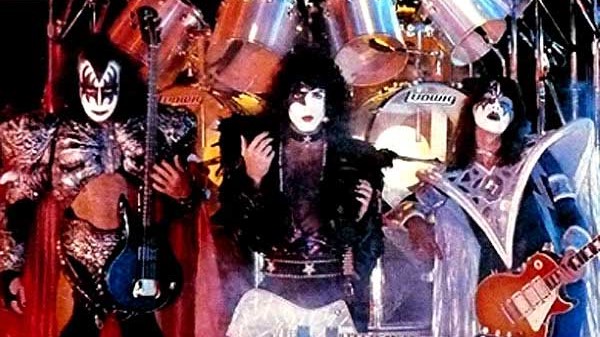
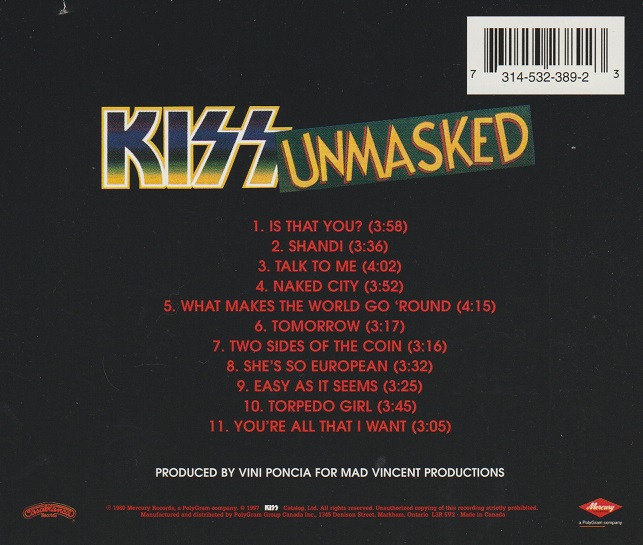
This has been a weird year. Comforting, nostalgic sounds in the age of Covid have dominated at LeBrain HQ. There are two Kiss albums that have been absolute joys this summer for blowing the blues away. They have been Dressed to Kill, and Unmasked. Originally rated 2.5/5 stars, I was definitely wrong on Unmasked. The band may have disowned it, and it might not be hard rock, but reviewing it is not as “Easy As It Seems”. This album definitely has “Two Side of the Coin”. It might not be “What Makes the World Go ‘Round” but this summer, I just want to say one thing to Kiss Unmasked: “You’re All That I Want”.
One reason I may have judged Unmasked harshly before is that first impressions are strongest. In a case of Classical Conditioning, my first impression was not good. In fact, for the first two years of hearing Unmasked, my copy was all but unlistenable. In the beginning, I taped my first Kiss albums from next door neighbour George. He fancied himself a bass player. While he was recording Unmasked for me, I sat in his bedroom while he played bass along to it. Every song. Unbeknownst to him, his bass bled onto my tape. Every time I played the album, it was like a remix with George overdubbed on bass, and I had the only copy. Sometimes he continued playing well after the fade, other times he came in prematurely. Either way, my first two formative years with this album were awful. Even after buying a proper copy on cassette, I couldn’t hear the album without the auditory illusion of George’s bass ringing in my skull. Though not the only factor, that had to be one of several reasons for my dislike of the album. A dislike which in no longer: in 2020, it’s love. Just a fun anecdote to colour in some history, nothing more.
“Is That You?” asks Paul Stanley on the opener, a Gerard McMahon song that boasts grinding verses and a killer chorus. Piano tinkles quietly in the background, but the guitars are nice and rich, especially Paul’s solo. His lead vocals absolutely rip, while a sultry Gene sings the backgrounds.
A second Paul vocal follows, and it’s the big hit “Shandi”. Listening with 20/20 hindsight in the year 2020, it’s amusing to ponder how anybody thought this was Peter Criss on drums. It was a secret that Anton Fig played on Unmasked and Dynasty, but it’s really obviously not Peter Criss. That disco groove is too impeccably perfect to be the Catman. Paul is, in fact, the only Kiss member to play on “Shandi”. And while this song is a softie, it ain’t a baddie. It’s clear that Kiss were not the rag-tag rock and roll beast they once were. They had evolved. Temporarily, at least.
If the first two tracks were light on Ace Frehley, that’s not indicative of the album. Three lead vocals for the Spaceman this time, including the single “Talk To Me”. Shiny and chromed-up, Frehley’s songs are among the best on Unmasked and “Talk To Me” could be the top track.
I always had problems with “Naked City”, but part of that might be that I can still hear George come in early on the bass. Gene Simmons makes his album vocal debut here, and while the chorus and riff are still not top-notch, the verses are excellent. Songs like this also demonstrate that Gene is an underrated singer. He’s more versatile than people realize.
Paul strikes a cool riff on “What Makes the World Go ‘Round”. He often talks about how the album had good songs, but they should have sounded different. This one sounds like it could have turned out more like the first three albums. You can imagine how the riff would have been more prominent. As it is though, it’s one of the most unabashedly catchy songs Paul’s ever written, and his guitar solo is simply delicious. You can slag Paul for doing something so pop, but can you slag him for doing it so well?
Side B’s opener is “Tomorrow”, with Paul’s vocals cleanly produced as per the pop trends of the day, with slapback delay and airy EQ. But like “What Makes the World Go ‘Round”, this is pop rock done really well. The keyboards are too prominent, but at least Ace gets a tasty solo here. As Kiss songs got catchier, so did the Spaceman’s solos. Frehley’s next lead vocal follows on “Two Sides of the Coin”, the song title which inspired a podcast (“Three Sides of the Coin“). Y’see, Ace just can’t pick a girl! But he has to. “Two sides of the coin to choose from, I’m getting weary. Which one should I choose? I need time.” He insists that the girls don’t mind, but I question that assertion. But he has to pick a mate because he’s “tired of all those dates”! Silly words aside, Ace has knocked out two top-notch songs on Unmasked so far.
Gene’s back on “She’s So European”, a song about a girl with a French accent who drinks pink champagne. I’ve softed my stance on this one too. You can certainly hear the rock n’ roll riffiness that it could have been. That’s been replaced by keyboards and slick beats, and it’s fine. “Easy As It Seems”, a Paul song, really sneaks up on you. It disappears into the fabric of the album until one day you just can’t get it out of your heard. Paul lays down another fine solo, and weaves a plaintive tapestry with his incredible voice. What range he had.
An album highlight is the third and final Frehley concoction — a weird little number called “Torpedo Girl”. Surf rock meets the Space Ace. The guitar lick is a tricky little off-beat riff, but with Anton Fig behind on drums, Kiss could do complex stuff like this. Especially since that’s Ace playing the bouncy bass part too. It’s also one of Frehley’s most entertaining lyrics. A submarine with a pretty girl on the bridge has surfaced in the bay! Better go check it out.
The final track, “You’re All That I Want” is a Gene number. Like “Easy As It Seems”, one day it just catches you. Especially Paul’s “answer” vocals in the outro. One thing (among many) that made Kiss truly special is the multiple lead singers. And unless you’re a Catman diehard, you don’t really miss Peter in that mix. Frehley more than made up for the lack of Criss. While four singers is better than three, remember that Kiss only had three lead singers for their first five studio albums.
I don’t want to have to three-view the entire Kiss catalogue but it is amazing how Unmasked just opened up to me this summer. I’m enjoying more than ever, with that nostalgic glow for days gone by. The “good old days” were not always good, but at least the music was.
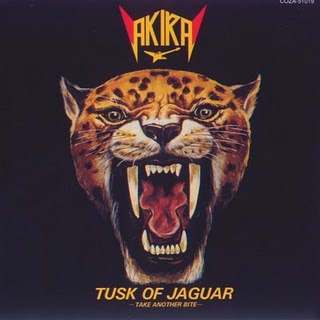
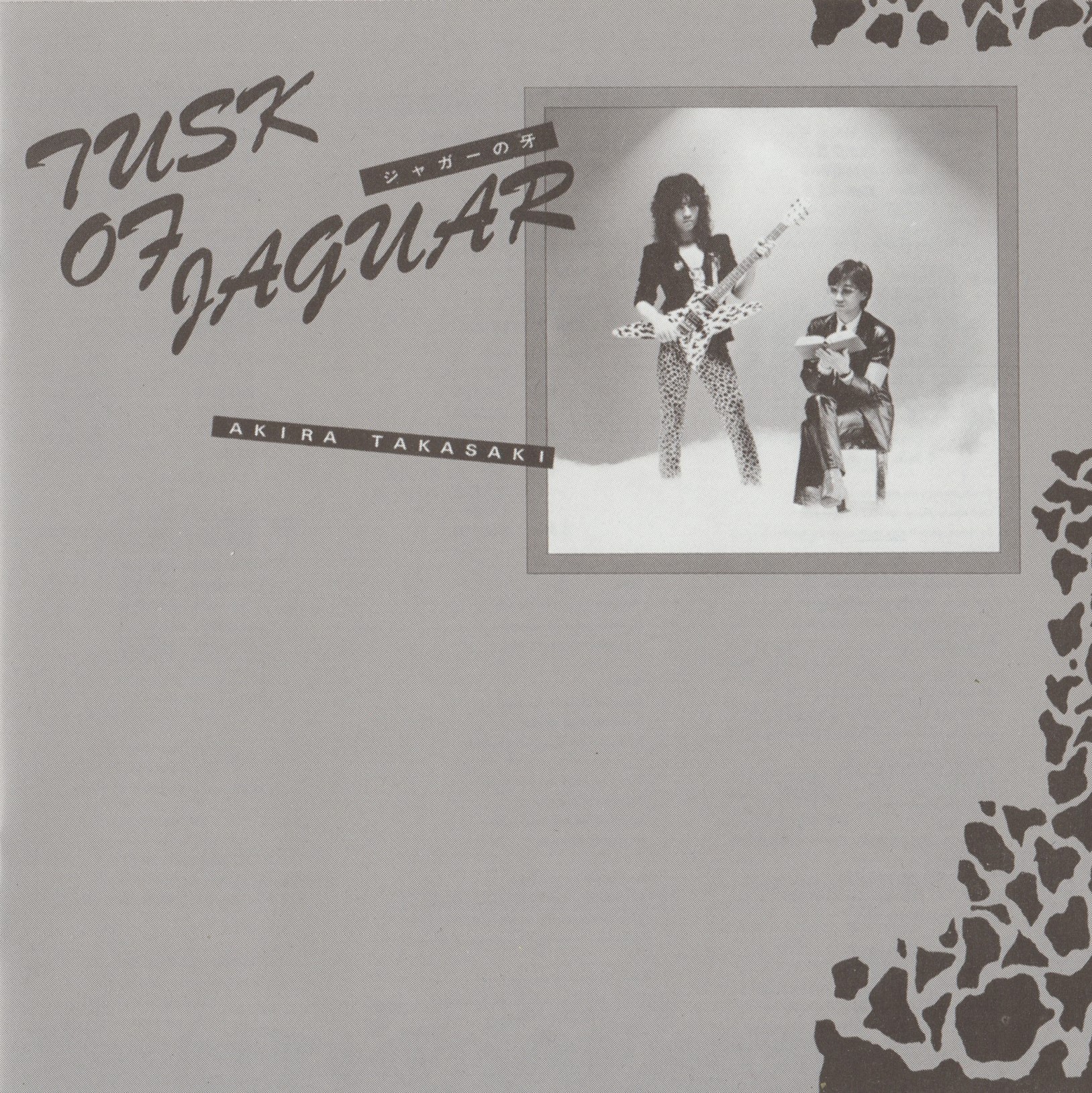
AKIRA TAKASAKI – Tusk of Jaguar (Take Another Bite) (1982, 2009 Columbia CD reissue)
In 1982, Loudness guitarist Akira Takasaki and a Japanese keyboardist named Masanori Sasaji teamed up to record an album of music that was different from the usual Loudness rock. Though the cover art and title Tusk of Jaguar screams “pure metal”, this is actually a combination of rock, pop and jazz fusion among other influences. The cool thing about the album is that Loudness play on almost all of it, including singer Minoru Niihara on a couple of vocal tracks. Some songs are all but considered part of the Loudness discography.
Certainly the opening title track sounds like Loudness. That speed metal pace can only have been set by Munetaka Higuchi on drums and Masayoshi Yamashita on bass. “Tusk of Jaguar” is a strange amalgam of shredding metal and jazz-rock interludes. It sounds a bit like the Ian Gillan Band but with Eddie Van Malmsteen on lead guitar instead of Berne Torme. Tremendously enjoyable, but way over the heads of most of the masses.
Minoru makes his first appearance on “Steal Away”, a song difficult to describe. It’s Styx-like and has a big organ sounds like Dennis DeYoung. Cinematic, progressive pop dance rock? Then it goes pure Burn-era Deep Purple! I don’t know what it is, and even with Minoru it sounds little like Loudness. It’s also one of only a few songs without Higuchi and Yamashita.
“Macula (Far from Mother Land)” is based on synthesizer until it transforms into a more traditional guitar instrumental, with clear Brian May influences. The way Akira Takasaki stacks his guitar harmonies can only be described as Queen-like. For that reason, this song is the most accessible to rock fanatics, who will eat up every note that Akira celeverly lays down. For those curious to know more about the critically acclaimed guitarist, check out “Ebony Eyes”, a serious hard rocker on which he takes lead vocals himself! His voice is higher in timbre than Minoru’s, and while he is not an amazing vocalist, he does have some pretty incredible guitar solos on this track.
“Wild Boogie Run” is an interesting tune, sounding almost exactly like Dixie Dregs. The violins, the acoustic & electric guitars, and slight western leanings make this a track that will make your friends wonder what Dregs album it was from. This could be the track worth buying the album for. Rock returns on “Gunshots” but even when Akira is just riffing, the rhythms beneath are complex and jazzy. Hard to describe, but heavy! A jazzy funk opens “Mid-Day Hunter”. Takasaki is nothing if not diverse on Tusk of Jaguar, but even if the rhythms throw you for a loop, you can surely dig into his always memorable lead work. In their early pre-Steve Perry days, Journey wrote songs like this.
Minoru Niihara returns on a song that is basically a Loudness track: “Show Me Something Good”. Though it also has Masanori Sasaji on keyboards, it is the entire Loudness lineup otherwise. A pop rock track like this could have sat on an album like Lightning Strikes if it was produced with heavier intent. The album closer is called “Say What?” which you might in fact be saying by the end of it. Blazing tempos and synth solos adorn a track that is beyond the comprehension of mere mortals.
This is a challenging album, no word of a lie. It’s certainly not immediate, and though parts of it sound familiar, it takes a bit of listening to really start to penetrate. Loudness fans, and anybody into challenging progressive rock should give it a go.
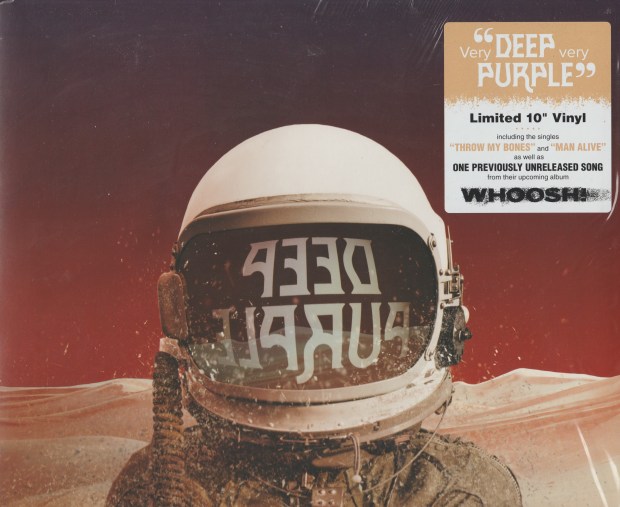
DEEP PURPLE – “Throw My Bones”/”Man Alive” (2020 10″ Edel single)
As a general rule, I won’t listen to new Deep Purple until I have a physical product in my hands. These days that usually happens in the form of a new single. Deep Purple will be back with a new album Whoosh! produced by Bob Ezrin in August 2020. Until then, they’ve issued a three track single with one exclusive new song. How nice of them!
A huge thanks to John of 2 Loud 2 Old Music for gifting this vinyl. Certain new releases are difficult to find today (for obvious reasons), at least without spending money on huge markups by secondary sellers. Music friends are the best kind of friends — make one today!
A word about the cover art: love it! Though not identical, the new Deep Purple logo is strongly reminiscent of the original Shades Of Deep Purple logo from 1968. The astronaut is similarly retro. He even recalls the similarly-garbed “archaeologists” in the music video for “Knocking At Your Back Door”. And now, for the first time, the needle drops on the vinyl and we find out what the new Deep Purple sounds like.
“Throw My Bones” has one of those quirky Steve Morse guitar riffs but then it’s backed up by those lush Don Airey keyboards. This is one of the catchier songs that Deep Purple have written in the last few years. Morse’s solo is as breathtaking as usual, but the sparkling keyboards are what makes this song shine.
The second track is the non-album “Power of the Moon” which prompts the question: if this didn’t make the album, just how good is the album? Because this track is excellent. It’s different. Its quiet passages are mesmerising. Once again it’s Morse and Airey who really take it to another level.
Finally we have “Man Alive”, a song adorned with an orchestra. Under the deft guidance of Bob Ezrin, something powerful and dramatic hits the ears even though Deep Purple don’t really do “heavy” anymore. “Man Alive” is the song that detractors call the “environmental agenda song”. Hey, if Deep Purple can say something relevant to today and get you to think, that’s great. We don’t always have to hear about strange kinds of women from Tokyo. The lyrics are assembled intelligently and thoughtfully.
A lot of people bitch and moan about Ian Gillan. For the most part, it’s not the singer delivering the hooks in these new songs. Just as Steve Morse has had to adapt to his damaged right wrist to keep playing, Deep Purple have adapted to Ian Gillan’s age. The songs don’t blast like they used to; they breathe. Ian’s voice is multitracked to give it some thickness. Incidentally the vocals were recorded in Toronto, a city that Gillan has history with.
Longtime Purple fans who enjoyed Now What?! and InFinitewill enjoy these new songs just as much. The cool thing about Purple is that they have distinct eras. We might be in the tail-end of a Bob Ezrin era (and the whole saga in general) and with time, the Purple/Ezrin collaborations will be looked back on fondly. The Ezrin albums don’t sound like the Bradford discs, the Glover productions, or any of the others. They’re more subtle and show a band growing even in their later years. Whoosh! could be a nice capstone to a career. We shall see.
Sven Gali have not had an easy ride. Their debut Sven Gali was just a year too late to make them into the rock heroes they seemed destined to be. Had it come out in 1991, they would have had a massive hit on their hands. The second album Inwire (1995) was a reaction to the 90s alterna-metal scene. The band reunited in 2007, but tragedy struck when cancer killed founding guitarist Dee Cernile in 2012.
Against the odds, Sven Gali persevered and in 2018 added some heavy firepower to the lineup: Dan Fila and Sean Williamson of Varga. One by one, they began releasing new tracks. Now in 2020 we have the first new Sven Gali release in 25 years: an EP called 3.
Somewhat surprisingly, Sven Gali did not revert back to the hard rock anthemic sound that was the cornerstone of their debut album. Instead they picked up where they left off on Inwire, with four new songs produced by David Bendeth who also produced their debut. Incredibly it sounds like they haven’t missed a step. Even more incredibly, it’s some of their best stuff! Singer Dave Wanless has lost nothing. The band is still rounded out by original members: guitarist Andy Frank and bassist Shawn Minden.
The four songs all share melodic vocal hooks, heavy guitars and aggressive grooves. With the addition of Fila and Williamson, the band have rebuilt themselves into a beast heavier than before. Picking a favourite isn’t possible because this EP is not immediate. Like many favourites that stand the test of time, 3 will take some listens to fully absorb and love. Fortunately we have a whole summer ahead of us to do that. The EP has the depth and potential to become a bit of a classic. Even if Inwire wasn’t your thing, this EP is better. The songs are more focused, heavier, with more hooks. The vocal melodies sometimes veer into an old anthemic metal style, like on “Hurt”. By taking their time, Sven Gali were able to make sure they had four excellent tracks for this release.
Good on Sven Gali for sticking it out, and not resting on their laurels. Any band can get replacement members and reunite. Fewer still put out new music, much less on a physical media. Sven Gali have put together a slammin’ new lineup and a triumphant EP. You just can’t write this band off.
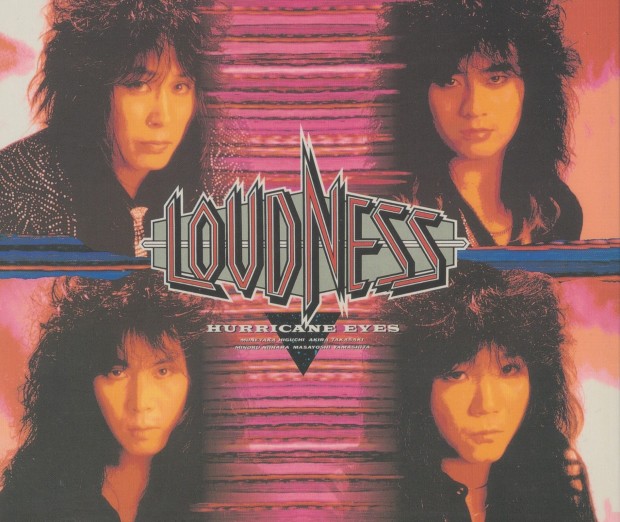
In most timelines and biographies, they’ll have you believe that the original lineup of Loudness had already peaked by 1987 and were creatively and commercially going downhill. While the commercial side of things was out of their control, creatively Loudness were still writing great songs. Though they did have one more EP in them, Hurricane Eyes is the final album of the original Minoru Niihara era of Loudness. It was recorded by Kiss and Jimi Hendrix producer Eddie Kramer with one track by Andy Johns. Though not as heavy or complex as Disillusion or noteworthy as Thunder in the East, it is thoroughly enjoyable from side A to side B. The commercial bent is obvious on some songs, but it doesn’t really blunt the impact.
Like most Loudness albums from the classic era, the band recorded lyrics in both English and Japanese and both versions of the album are included in this luxurious 5 CD box set. In Japan, the Loudness catalogue has been treated reverently but this is the beefiest of all their deluxe sets. Along with both versions of Hurricane Eyes (including minor musical differences), the set includes a disc of album demos, and another disc of alternate mixes and rhythm tracks. The fifth CD is a live set from the Hammersmith Odeon from 1986. Like any set of this nature, you’ll be listening to the same songs in four or five versions, but fortunately they stand up to such immersion.
Though Hurricane Eyes represents a peak effort to break into the American market, and some songs verge on Dokken homages, it’s a strong album loaded with hooks and enviable guitar theatrics & riffs. And regardless of some of the more radio-friendly material, it also boasts the thrash-like “S.D.I.”, a speed metal riff-fest that remained in the Loudness set list long after after Minoru was let go. The technical playing on “S.D.I.” is outstanding, and that’s laid bare for you to hear in the instrumental mix on Disc 4. The guitar solo is pure Eddie meets Yngwie. “S.D.I.” opens the English version of the album, but closes the Japanese. It works excellently in either configuration.
The English album continues with “This Lonely Heart”, a hook-laden hard rocker anchored by a solid riff and soaring chorus. Lynch and Dokken must have been jealous they didn’t write it because it’s right up their alley. The album title Hurricane Eyes comes from a lyric in “This Lonely Heart” but what you’ll remember mostly is that indelible chorus. Keyboards are poured into “Rock ‘N Roll Gypsy”, an obvious choice for a radio single. Though it didn’t hit the charts you can certainly hear the effort in it. On the Japanese version of the track, the keyboards are present but not mixed in as prominently. It’s the better of the two mixes, with more of that Akira Takasaki guitar up front.
“In My Dreams” is the first power ballad, with focus on the power part. Akari has some sweet anthemic guitar melodies in his pocket for this very Scorpions-sounding track. This gives way to another blitz of a song, though not as over the top as “S.D.I.” was. “Take Me Home” has similar urgency but more deliberate pace. “Strike of the Sword” is in similar metal territory with a fab Akari riff. The vocal melodies sound a little disconnected from the song though.
Don Dokken’s turf is revisited on “Rock This Way”, a mid-tempo ditty within hit territory. You could imagine this being written for the concert stage, so you can have a singalong chorus — “Rock this way!” Picking up the pace, “In This World Beyond” is a bit more complex though retaining an insanely cool chorus. The Loudness guys really developed an absurdly good chorus-writing ability by this point! But stick around to be strafed out of the sky by Akira’s machine-gun solo. “Hungry Hunter” returns us to mid-tempo rock ground, though it’s not their most remarkable song.
The American album ends with “So Lonely”, a re-recording of “Ares’ Lament” from 1984’s Disillusion, also in the closing position. Disillusion didn’t get a lot of attention outside Japan, and “Ares’ Lament” was a clear highlight. Though the structure is essentially the same, “So Lonely” is a tamed version” of the more traditional metal original. Keyboards are added, replacing the Akira-shred of the original. The chorus is beefed up and placed front-and-center. It suits Hurricane Eyes and though it’s merely a blunted version, it’s still quite excellent. It’s a demonstration of how you can take a song and tweak it into a different direction.
“So Lonely” isn’t present on the demo CD, presumably because they didn’t need to demo their own classic tune. Instead there are two tracks that didn’t make the album, but would be finished in the future: “Jealousy” and “Love Toys”. The 1988 Jealousy EP would see the first track released (but only in Japan). This is the most Dokken of all the songs, with one of those concrete riffs that George Lynch was prone to writing with ease. Maybe when Dokken broke up, Don should have given Akira Takasaki a phone call. The more frantic and metal “Love Toys” was revisited in 1991 with new lead singer Mike Vescera, for the On The Prowl album of re-recordings. Both tracks had potential in the unfinished demo stage. In fact all the Loudness demos on this disc are nearly album-ready. They’re rougher but also appealing for that same reason.
Disc 4, Behind the Hurricane Eyes is a hodgepodge of alternate mixes and rhythm tracks. The eight rhythm tracks (essentially mixes without vocals and solos) include another version of “Love Toys”. The mercilessly tight rhythm section of Munetaka Huguchi and Masayoshi Yamashita come to the fore on these tracks, as does Akira Takasaki as the riffmaster. “S.D.I.” is present on this CD twice, in rhythm track form and as a straight instrumental. You will be getting plenty of “S.D.I.” in this box set! You’ll also enjoy the brighter “Top 40 Mix” of “Rock This Way”, a really good remix that sounds perfect for the hits of the era. A mix of “So Lonely” with an earlier fade-out isn’t that interesting, but still desired by the collector. “Hungry Hunter” and “This Lonely Heart” are present in “old mix” and “rough mix” respectively. Differences are minor.
You could find yourself with a bit of ear fatigue after hearing so many versions of the same songs. Fortunately Disc 5 is a live set from the previous tour with none of the same songs. Buckle up. Opening for Saxon at the Hammersmith Odeon, Loudness went straight into “Crazy Doctor” from Disillusion after a glowing intro from Biff Byford. It’s right to the throat from the start and this CD has their full set. “1000 Eyes” from Lightning Strikes follows, the album for which they were touring. Loudness could have used some backing vocals live to beef up the chorus, but Minoru does a remarkable job on his own, givin’ ‘er all over the place. It’s also cool to hear Akira go from rhythm to lead so effortlessly live.
There is honestly something charming about someone who isn’t a native English speaker really giving their all to talk to an audience in English. Minoru is clearly happy to be in “London rock and roll city!” and the audience lets him know he’s welcome. The awesome “Dark Desire”, also from Lightning Strikes, follows and Akira lays down a mesmerising solo. Then a long dramatic intro opens “Ashes in the Sky / Shadows of War”, a highpoint of an already great set.
The big Loudness single in 1986 was “Let It Go“, a truly special pop metal song. This version opening for Saxon at the Hammersmith might be the best live recording if not the most energetic. Afterwards the late Munetaka Higuchi takes a drum solo (presumably to give Minoru’s voice a rest after this workout!). There’s a brief segue into Beethoven’s 5th Symphony, and Minoru introduces the band. That pumps up the crowd for Loudness’ biggest hit “Crazy Nights” complete with crowd singalong. “MZA!” After smoking through this one, Akira takes a blistering solo break. The set closes with “Speed” from their third album The Law of Devil’s Land. They saved the most aggressive song for last. Couldn’t let Saxon have it too easy, right?
Though hard to get, these Loudness deluxe editions from Japan are really beautiful to hold in hand. The thick booklet is printed on glossy paper, and though the liner notes are in Japanese, lyrics are provided in both languages. The rest of the booklet is stuffed full of tour photographs whose only language is rock and roll. Loudness certainly looked the part. The set also includes a little reproduction backstage pass, but the main feature is the music. Diehards are going to love it.
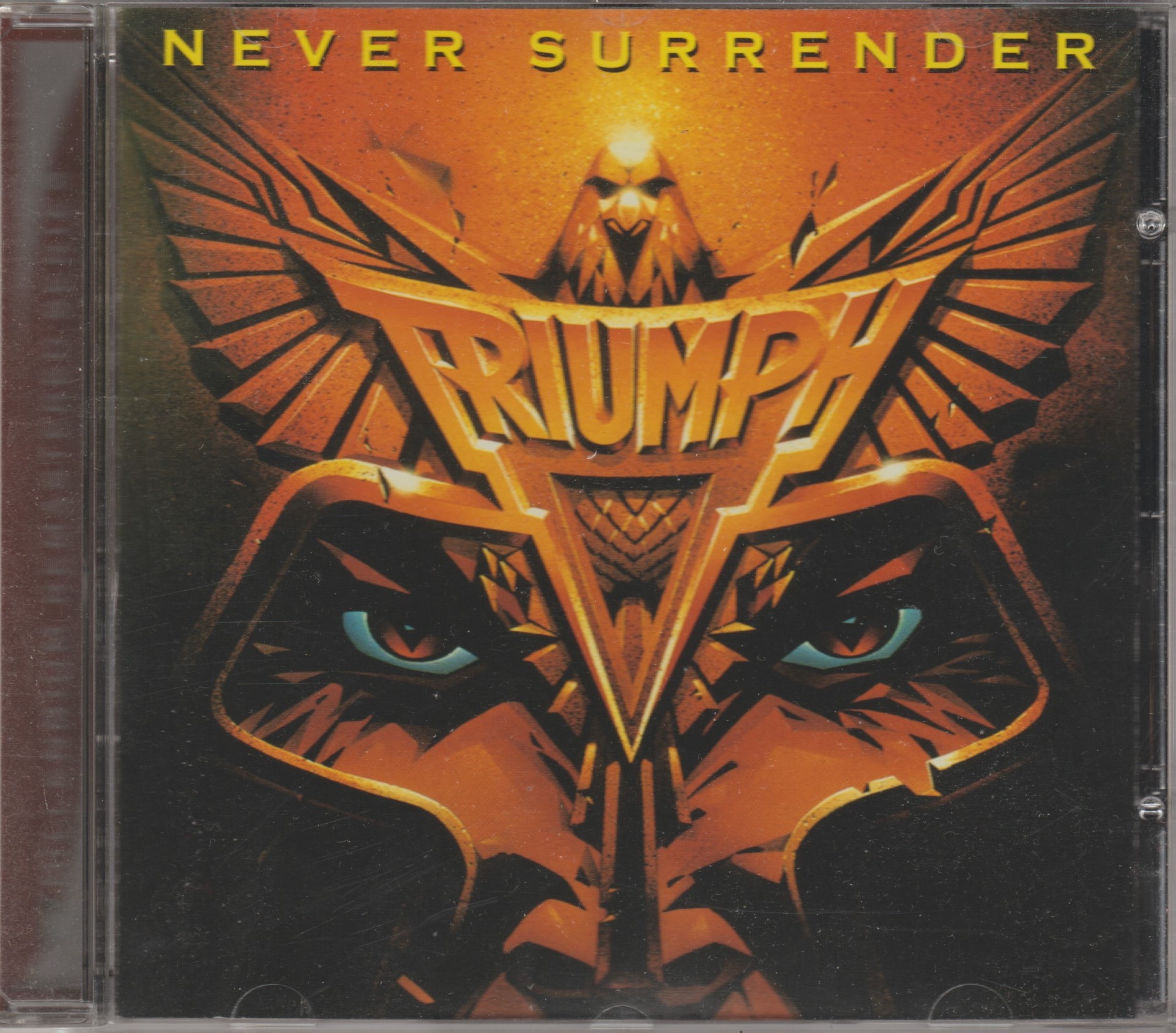
TRIUMPH – Never Surrender (1983 RCA, 2004 Universal remaster)
Triumph, the other Canadian power trio, scored multiple hits with their sixth album Never Surrender. “When the Lights Go Down” was a popular music video. “A World of Fantasy” was a concert staple. The title track is an absolute (pardon the pun) Triumph of epic songwriting and performance. It’s easy to hear why Never Surrender is so beloved.
Drummer Gil Moore opens the album with “Too Much Thinking”; steamhammer drums pumping hard. Rik Emmett comes in with a slaying riff while bassist Mike Levine, the glue, rolls out some determined bass grooves. Emmett’s talkbox solo is well constructed and extra cool. This riff rocker has the silhouette of topicality, with Reagan samples and lyrics like “Prophets of doom fearful of the violence, preaching to no one at all.”
Triumph ballads were often too brilliant for their own good. Not really “ballads” but more like melody-based compositions. “A World of Fantasy” is one such song, a real accomplishment and unmistakably Triumph. Triumph always had panache and they backed it with Rik’s strength as a guitar player. Rik’s voice, sometimes compared to Geddy Lee’s, was well suited to heartfelt rock like this.
Rik Emmett also takes the lead vocal on a battle cry called “All the Way”, preceded by a classical piece entitled “A Minor Prelude”. Get it? The guy is a tremendous and monstrously intelligent guitar player. Rik could have shredded circles with all the other lead guitarists, but that was not his focus. He realized that you can play really fast as much as you want, but less is actually more.
“All the Way”, which sounded like a battle cry, is actually followed by “Battle Cry”, vocalised by Gil Moore. It’s a slower, more determined metal track; the heavier side of Triumph. Rik’s crystal clear chords keep it from being too generic.
Back when albums had sides, the second half opened with “Overture (Procession)”, a short guitar intro backed by Levine’s synth. It sets the scene for the album centerpiece, “Never Surrender”, which itself is nearly seven minutes of pure undiluted awesome sauce. Constructed with distinctly different sections, “Never Surrender” was just a tad progressive and more than enough song for the average mortal.
Out in the streets inspiration comes hard, The joker in the deck keeps handin’ me his card. Smilin’ friendly he takes me in, Then breaks my back in a game I can’t win. Jivin’, hustiln’, what’s it all about? Everybody always wants the easy way out. Thirty golden pieces for the Judas kiss, What’s a nice boy doin’ in a place like this?
Gil Moore’s drums are sometimes considered simple, or basic. That may be the case, but are they not the perfect backbone on “Never Surrender”? Who can resist when Gil throws down a big, long drum roll from high to low? Hey, he might not be Neil Peart, but he works those songs! His fills here are just as essential as Peart’s in “Tom Sawyer”. Meanwhile, Rik’s guitar chords can only be described as shiny. One of the classiest players in rock can really do no wrong here, as he goes from funky chunky strumming to full shred, all within the confines of some damn catchy riffs.
As if that wasn’t enough, Triumph goes for round two on “When the Lights Go Down”. This time, the acoustic intro is swampy, but soon that riff will hit you square in the face. Gil Moore’s back on the microphone, so let’s not forget how hard it is to sing and play drums at the same time. They had to play this stuff live, and they did! This is just pure rock, four on the floor. “Let the party roll!” sings Moore in this paean to the concert stage.
Rik goes for the brightest of melodies on “Writing’s On the Wall”, a really “triumphant” sound, and great way to draw the album to a close. All that’s left is a soft guitar outro called “Epilogue (Resolution)”. This beautiful piece illustrates where Rik would go in his future solo career, decades down the road. Hints of jazz and classical pointed the way.
There are several songs that you don’t want to leave out of your life. Own Never Surrender.

 GOWAN – Strange Animal (1984 CBS)




















You must be logged in to post a comment.