Reviews

REVIEW: Marillion – “Made Again (2020)”

MARILLION – “Made Again (2020)” (2020 iTunes)

It wasn’t that long ago, in this sad year, that Marillion gifted us a new version of “Easter” from their lockdown spaces.  Now, from the landmark Brave album, they’ve re-recorded the hopeful “Made Again”.

“I have been here many times before, in the life I used to live…”

Poignant.  We’re all grieving for the lives we used to live, some more than others.  I’m tiring very quickly of virus-themed songs, like that damn “I know there’ll be better days” ad I keep hearing on the TV.  It’s having the opposite effect on me and making me very bitter.

Since “Made Again” was written in 1994, it doesn’t have the stench of 2020 all over it.  We know the lyrics are being repurposed but it’s not so bad knowing their old origins.

“Like I woke up from a bad dream, to a brand new world.”

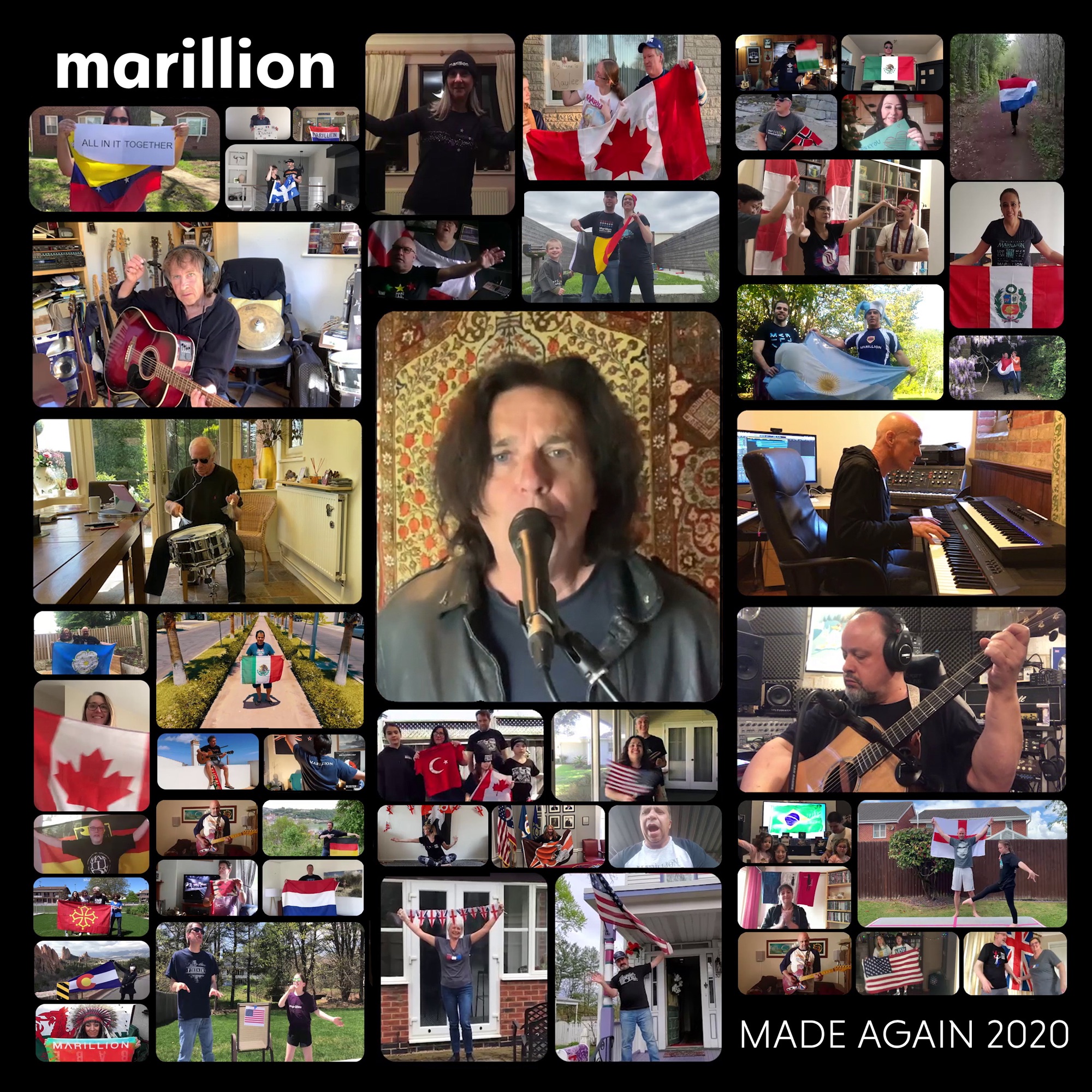
Unlike “Easter” this is a bit more of a complete arrangement, not abbreviated and without shortcuts.  You can buy the track for 99 cents on iTunes or watch the video on YouTube.  The video was painstakingly assembled from the at-home performance videos and fan footage sent in from all over the world.

We all need some optimism.

“I woke up from a deep sleep,
I woke up from a bad dream,
To a brand new morning,
To a brand new day,
Like the whole world has been made again.”

I hope so, guys.  I hope so.

5/5 stars

TV REVIEW: American Dad – “Brave N00b World”

AMERICAN DAD – “Brave N00b World” (Episode 4, season 17)

Chinese ice cream can save the world.  That’s the message of this episode of American Dad.

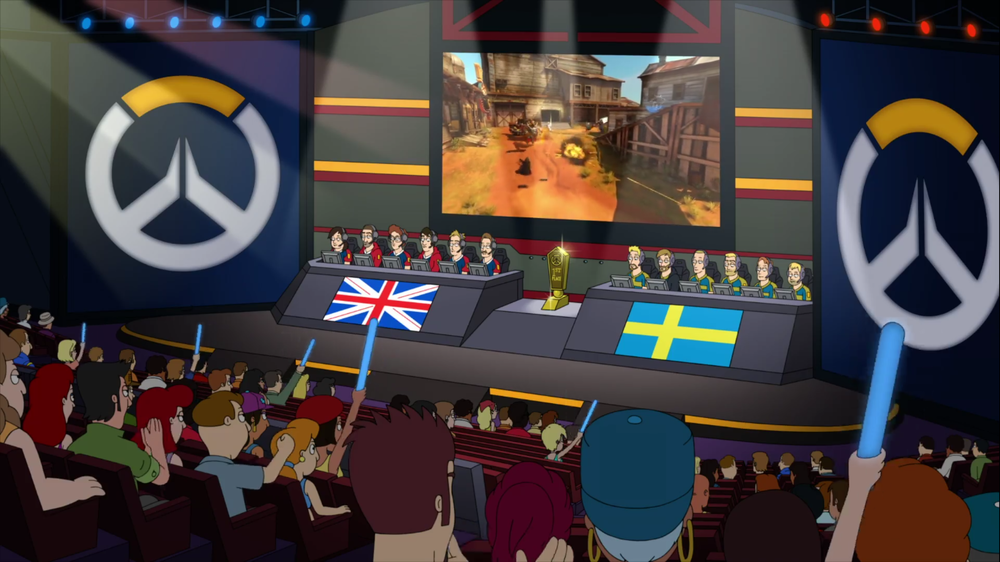
CIA agent Stan Smith has a new assignment.  A North Korean general is expected to be in China for an Overwatch video game competition.  Stan and his team must enter the contest and progress through the rounds to assassinate the general, but first he will need his son Steve’s help playing the game and looking like a millennial.  Jackson better learn to vape if he wants to fool anyone into thinking he’s young and into Overwatch!  If the team can get some Chinese ice cream while there, so much the better.

Unfortunately for Stan and his team (and the world), his attention is split between his son and his assignment.  He wasn’t totally honest with Steve, who thinks this is more a father-son trip than a kill-a-North-Korean-general trip.  As Stan is learning, focus is key.  So how can he split his focus between assignment and son?

Since it’s Stan Smith we’re talking about, you can safely assume he screws it up and the mission goes wrong as usual.  But this time, he didn’t just screw it up Stan style.  He didn’t even stop at full Sledge Hammer.  This time, Stan goes all the to way maximum Rick and Morty, and destroys the entire world.


Smith misses his shot, botching the assassination.  China launches their nukes.  America retaliates.  Mutually assured destruction.

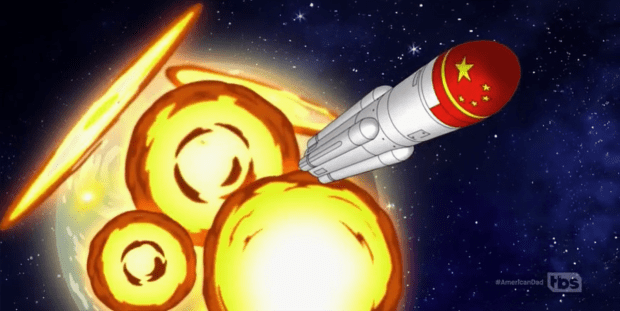
Fortunately, China saved mementos of their heritage in a culture pod, including a cone of delicious Chinese ice cream.  So America launches an eagle-headed missile adorned with truck-nuts and blaring “Kickstart My Heart”, and the culture pod is destroyed.  Before you can say “Kee-stah-ma-hah”, there is nothing left of the Earth.  Nothing but rubble, dust, and ash…and a single scoop of Chinese ice cream, floating in space, past Mars, past the asteroid belt, and into the void.

For one million years, the ice cream floats through the cosmos undisturbed until finally an alien ship happens upon it.  What an incredible taste!  They must have more.  Scans show that Earth suffered an “extinction event”.  The only way to get more ice cream is to re-create the Earth and let time do the rest.

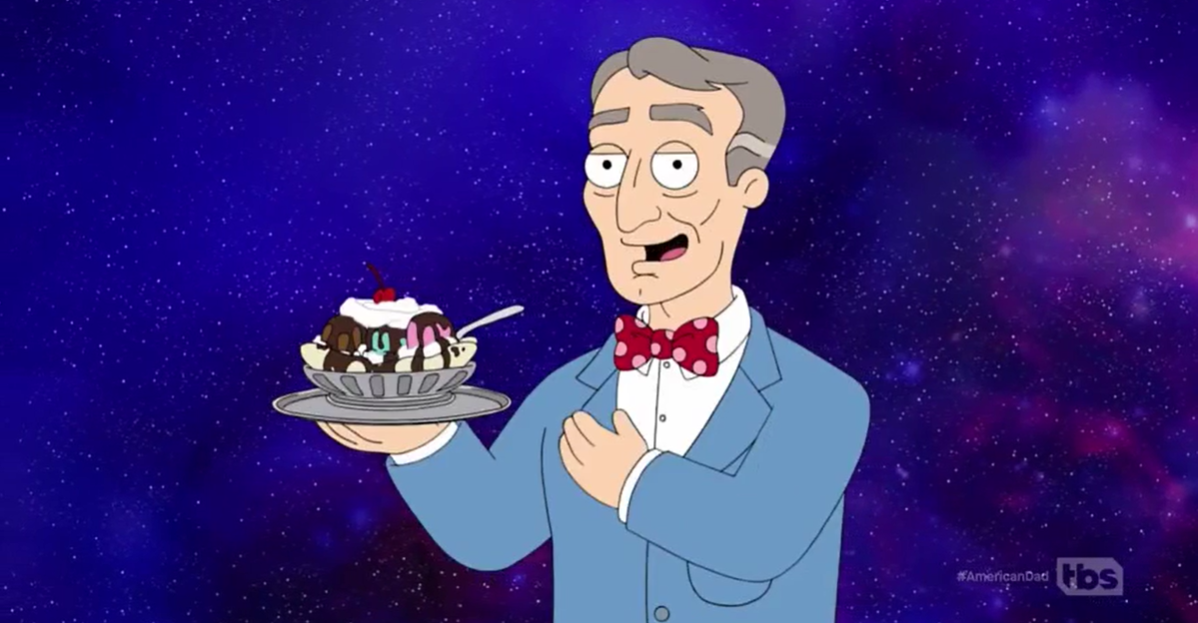
The world has a second chance.  Will Stan do it differently this time?  Will anyone discover the truth of this new reconstructed existence?  Will Bill Nye show up at the end to throw cold water all over “Ice Cream-ulation Theory”?  You’ll have to watch to find out.

In the B-story, the entire rest of the family gets their heads stuck in the banister, which basically puts Roger, Francine, Hayley and Jeff out of action.  The best instalments are usually Roger-centric, but not this time.  Perhaps American Dad needed to catch up with Rick and Morty, or perhaps it should try harder to live up to the promise of old episodes like “Lost in Space” or the saga of the Golden Turd.  At first it appeared this episode was going to a gamer-based comedy.  Then it evolved into something more existential.  It can be stated firmly that “Brave N00b World” returns the show to a high point like the good old Mike Barker days.

5/5 stars

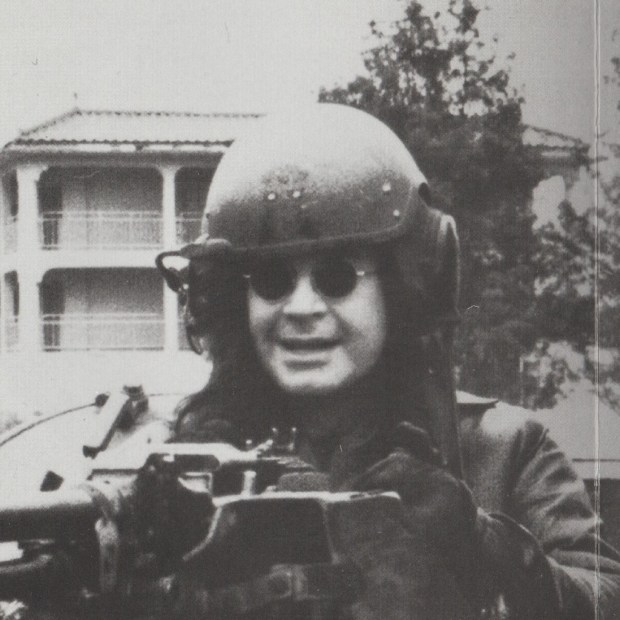
REVIEW: Ozzy Osbourne – Live at Budokan (2002)

OZZY OSBOURNE – Live at Budokan (2002 Sony)

Ozzy’s last paint-by-numbers live album was almost two decades ago.  In actuality, you really only need a live one with Randy Rhoads and you’re golden.  But if you’re in the mood for downtuned Ozzy songs, Live at Budokan might be the way to go.

While the new rhythm section of Mike Bordin (Faith No More) and Rob Trujillo (Metallica) do have a positive impact on the sound, Zakk Wylde is tiring.  His constant divebombing all over Randy’s composition “I Don’t Know” just rubs the wrong way.  Then it’s an unremarkable song called “That I Never Had” from Down to Earth.  The most enjoyable thing about it is actually Zakk’s backing vocal.

Ozzy spaces out old songs with new ones so sleep doesn’t take you too soon.  “Believer” is a nice inclusion, since we’ve never had a version of it with Zakk on guitar.  There’s a novelty to it for that reason, so it’s notable.  A crap new song called “Junkie” acts as filler before “Mr. Crowley”.  They used to have an acronym in Star Trek that they would paint on pipes and conduits on the Enterprise:  “GNDN”.  Goes nowhere, does nothing.  That’s “Junkie”.  And “Crowley” just drags.

The last of the new songs here is “Gets Me Through”; the single, you know the one.  The one with the hilariously unimaginative lyric “I’m not the kind of person you think I am, I’m not the Antichrist or the Iron Man”.  We sure do miss Bob Daisley’s lyrical touch.  “Gets Me Through” might be the most paint-by-numbers of any Ozzy track since Zakk joined the band.

Get ready for a whole shit-ton of No More Tears stuff, as Ozzy rolls out four of ’em.  The title track is still great and doesn’t strain Ozzy as much as the earlier songs.  “Mama I’m Coming Home”, well sure, it has its fans.  “I Don’t Want to Change the World” is still a yawn and “Road to Nowhere” fares well.  The crowd sure loves ’em, those familiar hits.  They go nuts for “Crazy Train” which just doesn’t sound right tuned down like this.  Same with “Bark at the Moon”.  Ozzy closes with the only Sabbath track on the disc, “Paranoid”.  The double tracked vocals are obvious and annoyingly artificial sounding.  It’s cool hearing the Faith No More style of drumming all over it though.  Mike Bordin is a tremendous talent but was he the right guy for Ozzy Osbourne?

As the most unessential of all Ozzy releases, Live at Budokan should really be the last one to add to your collection.  If you care, it was available with two covers:  red printing, and black printing.  For extra pain, you could also go for DVD.  Best track:  “Believer”.

1/5 stars


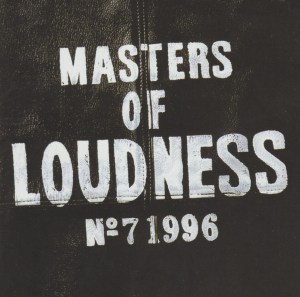
REVIEW: Loudness – Masters of Loudness (1996)

LOUDNESS – Masters of Loudness (1996 Warner Japan, 2010 Wounded Bird reissue)

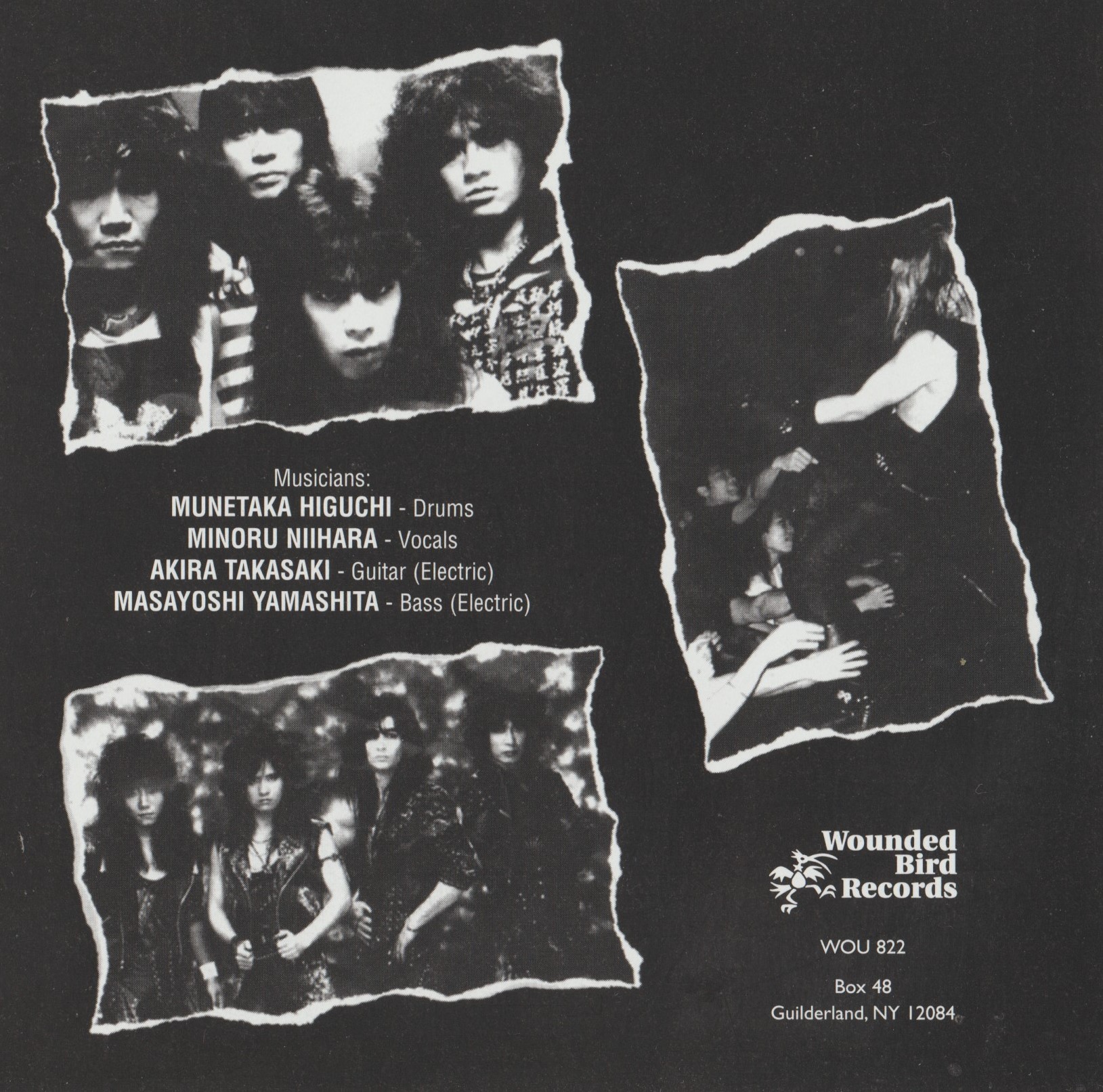
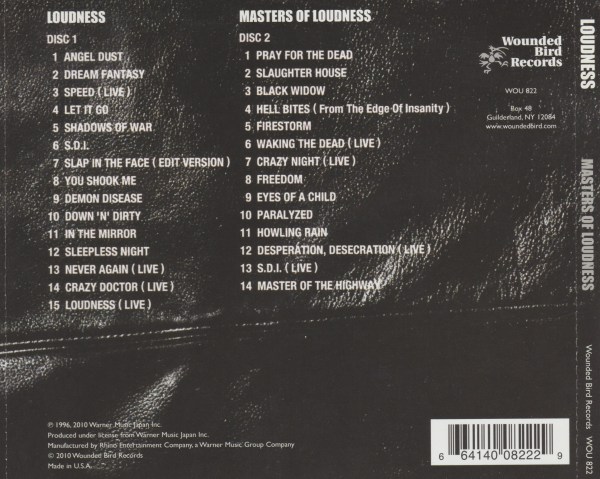
By 1996, Loudness already had three singers, 11 studio albums, and numerous EPs, compilations and live records.  15 years on from their debut album The Birthday Eve, it was time for an anthology.  Masters of Loudness is made up of 29 tracks (eight live ones) including all singers and all eras.  It uses Japanese mixes of some songs, different from their US counterparts, and what appears to be one exclusive new tune.

How the mixture is balanced can only be determined by a solid listen.

The original Loudness commences the anthology, which is mostly in chronological order but not entirely.  Minoru Niihara has always been a hell of a singer, and his melodic singing helps make “Angel Dust” accessible as a speed metal rocker can be.  Like a cross between vintage Scorpions and Priest, pedal fully to the floor.  It doesn’t matter that most of the words are in Japanese.  From the excellent Disillusion album, “Dream Fantasy” is included in all its Maiden-esque glory.  Not “Crazy Doctor” though — Masters of Loudness chooses to include some of the biggest and best songs in live form instead.  This is an unfortunate though popular strategy used on numerous anthologies and it is a win/lose proposition.  In the “win” column, it breaks up monotony, represents more releases, and allows you to hear lesser-known versions of popular songs.  On the other side of the coin, it means you don’t get the best known versions of the best songs.  You get, frankly, inferior versions of possibly the only songs you know.  And that’s why it’s unfortunate.
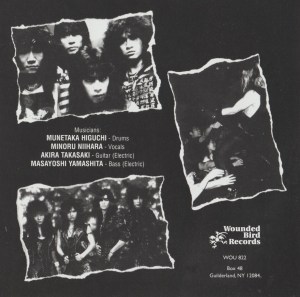
The third track “Speed” is one such live inclusion, from 1983’s Live-Loud-Alive.  It does allow you to hear how hot Loudness were on stage so early in their career.  The entire Thunder in the East album is bafflingly skipped over.  It is possible, from the Japanese perspective, that Thunder in the East is not as significant as it is here.  Instead we jump ahead to 1986’s Shadows of War (released here as Lightning Strikes) and 1987’s Hurricane Eyes.  The Japanese mix of “Let It Go”, their most commercial track, is notably different.  The vocals are more distant and there are additional shouts and bits of guitar included.  The US mix was more streamlined and polished for radio.  “Shadows of War” and “S.D.I.” are also Japanese mixes each awesome in its own right.  “Shadows of War” just has the vibe, right in the middle of darkness and light.  Meanwhile “S.D.I.” is an iconic thrash that goes down easy thanks to Minoru Niihara’s vocal prowess.

This anthology skips past the final release with Niihara (1988’s Jealousy EP) and picks up with new vocalist Mike Vescera, their first and only American member.  Strangely the first Vescera track is “Slap in the Face” which is actually from his last release with the band, a 1991 EP.  It’s biting and heavy, but the loss of Minoru Niihara changed not only the voice of Loudness, but also their identity.  Where they used to sound uniquely Japanese, Vescera made them sound like a band from anywhere.  He was and is a great singer with grit and remarkable range and power.  He could certainly take on Minoru in terms of vocal ability.  But they sounded less like Loudness.  That said, “Slap in the Face” is a heavy stomper that was perfectly in line with the direction bands like Metallica and Megadeth were going in the early 90s.

“You Shook Me” (their biggest track with Vescera) and “Demon Disease” represent 1989’s Soldier of Fortune album which still has a cult following.  Loudness only made two albums with Mike, and that era is unfortunately weighted too heavily on this set.  Nothing against the songs themselves, but this brief period gets far more disc time than all of the Niihara era.

Mike’s final Loudness album was 1991’s On the Prowl which mixed new material and new English re-recordings of selections from some of the older Japanese albums.  One of the new ones, “Down N’ Dirty” is predictably a stumble.  It sounds like some sassy band from Hollywood, not a band with the regal history of Loudness.  Trying to sound like Poison?  Perhaps.  At least “In the Mirror” and “Sleepless Nights” sound like Loudness, and they should, being re-recordings of the same songs from The Law of Devil’s Island.  Truthfully, Vescera sounds heroic here, like a true metal warrior come to rid the town of its evil.

A trio of live tracks with Vescera singing close off the first disc.  At the time of release these would have been considered rarities, but in 2009 a full live album with Vescera was issued called Live Loudest at the Budokan ’91.  These are cool live tracks and help fill in some songs that were missing from earlier.  The power ballad “Never Enough” is a remake of an old B-side called “Silent Sword”.  The cheese factor is cranked up, but let’s face it, this is the kind of song people were having hits with until grunge changed that forever.  Akira Takasaki’s guitar solo is delectable.  Then finally it’s “Crazy Doctor”, possibly the best riff that Akira ever wrote.  Vescera has no issues with the notes or the power necessary to deliver them effectively.  Finally the CD ends with a live cut of the very first song from the very first album:  “Loudness”.  It’s quite good and an excellent showcase of Mike’s abilities, not to mention the extended Takasaki solo, a composition until itself, where he shows Eddie Van Halen how guitar tapping is done.
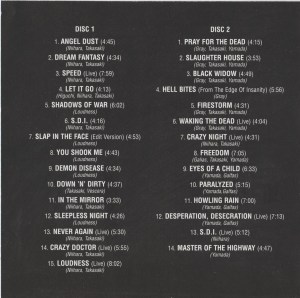
Loudness changed once again, when Mike Vescera bailed to join Yngwie J. Malmsteen.  They also lost original bassist Masayoshi Yamashita at this time.  The second CD (mostly) represents the Masaki Yamada (E-Z-O) era of Loudness, their current singer at the time of release.  With that in context, you can understand why so much time is dedicated to Masaki, who only had two Loudness studio albums under his belt so far.

The first Masaki, 1992’s Loudness, has five of its ten tracks represented here.  They selected five of the best:  “Pray for the Dead”, “Slaughter House”, “Black Widow”, “Hell Bites”, and “Firestorm”.  By and large, the new Loudness was focused on heavy grooves.  Banging heads was a priority once again.  “Firestorm” thrashes as fast and heavy and any vintage Loudness classic.  The big difference was Masaki’s clearly noncommercial voice.  Unlike Vescera or even Minoru, you can’t really imagine Masaki’s songs on the radio.  It was, however, the 1990s, and Masaki was able to harness the altera-heavy going on at that time.

From the 1994 live album Once and For All, “Waking the Dead” is included, another song from the first Masaki album.  Then finally it’s “Crazy Night”, Loudness’ biggest and most beloved hit from Thunder in the East.  Strangely though, instead of the Masaki live version from Once and For All, we are back to Mike Vescera again.  It’s a fine version indeed, but this confusion could have been avoided by just putting the studio version on CD 1.  It’s probably confusing for the listener to be bouncing around from one singer to another.

There are four songs from the second Masaki album, 1994’s Heavy Metal Hippies.  This is when Loudness started their real 1990s evolution, focusing less on metal and loosely expanding into other styles.  They also lost two more members at this point.  Bassist Taiji Sawada, who replaced Masayoshi Yamashita in 1992, was out and Akira played bass on Heavy Metal Hippies.  Original drummer Munetaka Higuchi also left and was replaced by E-Z-O drummer Hirotsugu Homma.  By the numbers, at this point Loudness was actually more E-Z-O.  The change is audible in the music, still heavy, but less melodic and more modern (“Howling Rain” being an exception).  Though Heavy Metal Hippies was released only in Japan, they still managed to get a metal big namer to produce:  Chris Tsangarides.

The Loudness lineup solidified once more with bassist Naoto Shibata, who appears on the live tracks “Desperation, Desecration” and “S.D.I” from 1995’s Loud ‘n’ Raw.  Yes, “S.D.I.” is the only song to appear twice on this anthology.  Why “S.D.I.”?  Why not.  It’s important to have live versions of old classics, but with the new singer at the microphone.  Unfortunately in a comparison between Masaki and Minoru, Minoru wins.  He wrote the song for his own voice, and Masaki’s growly style is barely compatible.

Masters of Loudness saved the best for last:  “Master of the Highway”, an excellent song that seems to be an exclusive.  It puts the focus right onto the riff, a sharp Takasaki blitz of six-string chunk.  Masaki has never sounded so menacing as when growling this tune.

Black stars!
Coming down.
Power!
Pedal to the metal.
Night rider,
Machines of steel.
I am the master! Master of the highway!
Yeah yeah! Oh yeah!

As Masaki tears off through the “demon night”, he only turns up the menace further.  “You’re with the master!  Master of the highway!”  Akira then lays down a face melter of a solo, and before you can get back up, it’s all over.

Rare is the single track that is worth buying a 2 CD anthology just to get, but there it is.

It would be fascinating to be a fly on the wall and to know exactly what the thinking process is in making a release like this.  How was each track decided upon?  Why was there a Mike Vescera version of “Crazy Night” right in the middle of a disc that is otherwise entirely Masaki Yamada material?  Did somebody higher up say “Nope, we need a melodic version of the song, put on an earlier one”?  And why live versions of such big hits anyway?

Masters of Loudness can be broken down this way:

  • Suffers from too many live substitutions.
  • Minimizes the Minoru Niihara era in favour of later singers.
  • Breaks chronological order twice.

But it can also be said that Masters of Loudness has:

  • 29 awesome Loudness tracks.
  • One really smoking “new” track in “Master of the Highway”.
  • A representative slice of every Loudness lineup from 1981-1996.

As always, cost will be a factor and Japanese imports are rarely cheap.  If you can afford it, it’s worth picking up Masters of Loudness and of course, playing it loud.

3.5/5 stars


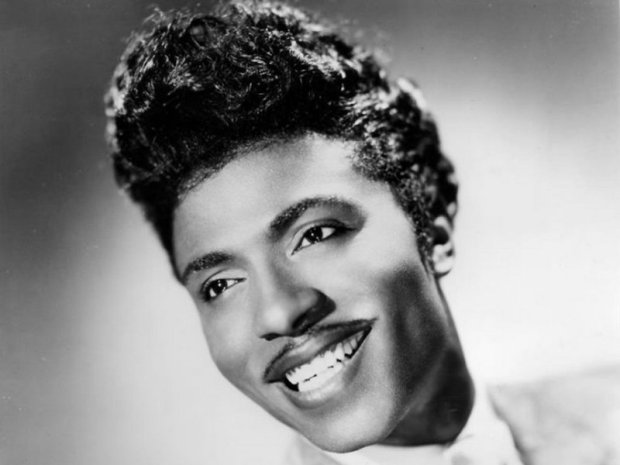
R.I.P. Little Richard (1932-2020)
I don’t know when I first heard Little Richard, but I do know when I first loved Little Richard:  1987.  Predator.

Richard Wayne Penniman was 87.  He’ll always be remembered for “Tutti Frutti”, “Long Tall Sally”, and “Good Golly Miss Molly”.  His piano work was astounding and his voice unmistakable.  I’m gonna miss Little Richard.  Rest in peace.


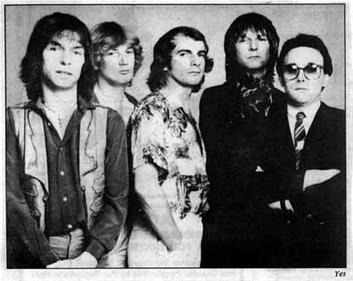
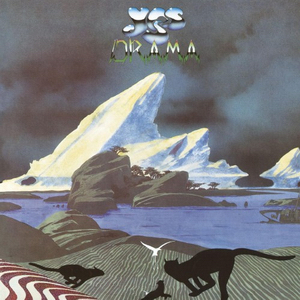
REVIEW: Yes – Drama (1980) – The Meat Challenge

The Meat Challenge:  Listen to an album we’ve never heard before, and write about it while listening for the first time on headphones.  I was given Drama by Yes.

YES – Drama (1980 Atlantic)

Because context is always important, a quick glance at Wikipedia tells us that Drama the first Yes album “to feature Trevor Horn as lead vocalist, as well as keyboardist Geoff Downes. This followed the departures of Jon Anderson and Rick Wakeman after numerous attempts to record a new album…Drama was recorded hurriedly, because a tour had already been booked before the change in personnel.”

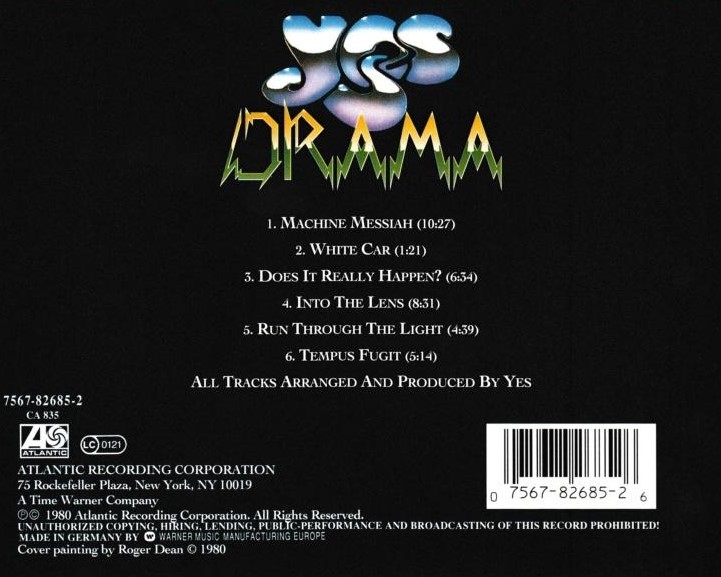
Heavy-footed “Machine Messiah” begins like a metal epic, with a dense, galvanizing guitar riff, and then goes through multiple lighter sections of acoustics and keyboards.  Regal and bouncy, “Machine Messiah” is uplifting despite (and because of) its complexity.  Clouds form about halfway through the song, darkening the landscape, but that guitar returns for second round.  Tricky bits are three-dimensional, snakelike and winding, but satisfying.  An enticing start!

After a 10 minute opener, you’re fairly warmed up for anything, but “White Car” is surprising nonetheless for its lushness and brevity.  It sounds like there should be more, but then Chris Squire brings the bass of “Does it Really Happen”, reminding me that he’s truly one of the all time greatest four-stringers in history.  His fingers gallop.  What a crisp, tight bass sound.  Hard to describe this track — it moves, and it’s full, but not immediate.  Builds nicely up with organ, vocal layers and guitar chords though.  I dig the bass licks right after the false ending.  Chris Squire was the man!

Drama‘s second side starts with “Into the Lens”, and another bass pulse by Chris Squire.  Bouncing from section to section, it’s hard to pin this song down to one style.  It’s easy to say it’s great though.  It’s a big song, always interesting and going someplace.  From the camera lens, we “Run Through the Light”, opening with gentle acoustic picking and elegant singing.  Then the electric guitar and keyboards lay down the hooks.  This is my favourite song so far.  Trevor Horn’s vocals are enticingly catchy with a Police-like chorus, but then there’s a squirrely and cool Steve Howe guitar solo.

We end the set on “Tempus Fugit”, the only track I was previously familiar with.  Like a space race with time, this song goes into hyperspace with engines powered by Chris Squire.   In a flurry, the album is over.  Drama.

That wasn’t a bad first listen.

4.5/5 stars

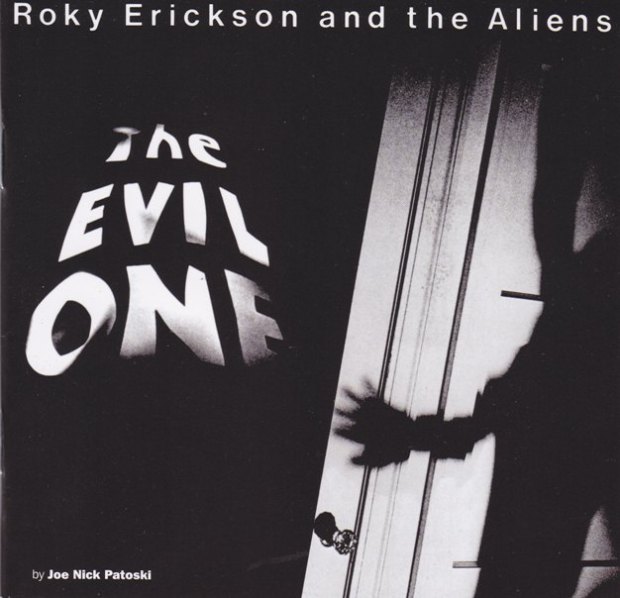
GUEST REVIEW – Roky Erickson and the Aliens – The Evil One – The Meat Challenge

The Meat Challenge:  Listen to an album we’ve never heard before, and write about it while listening for the first time on headphones.  Meat was given Roky Erikson by LeBrain.

ROKY ERICKSON & THE ALIENS – The Evil One (1981)

How did we get to where we are now?  Let’s have a very quick nutshell synopsis of a pretty incredible story (a story which is captured in much more detail in a very good 2005 documentary titled You’re Gonna Miss Me.  Have you seen it? It’s a beauty.)

Roky Erickson was born in 1947 in Dallas, Texas.  He co-founded an influential psychedelic rock band called The 13th Floor Elevators, who had some chart success in the late 60s. In 1969, Roky Erickson got arrested for smoking a joint and to avoid jail, pled guilty and was sent to the nuthouse until his release in 1974.  Roky Erickson & the Aliens were born and released their debut album in 1980.

Now that we have that out of the way, I have not heard the debut album.  Nor have I heard any other Roky Erickson album going into this.  I was not sure what to expect and what I got was different and frankly more than I expected.  The Evil One was produced by ex-CCR bassist Stu Cook, and together he and Roky definitely came out with a great sounding record…that talks about Lucifer a lot…and the devil …and ghosts….  Basically, you could look at this album a collection of crazy stories.  More specifically, I now look at The Evil One as a collection of 15 short B-movies expressed through exceptional Pop-Rock songwriting.  Imagine if Hall and Oates got a bit of Rock balls and started worshipping Satan.  Here are some thoughts I had while listening to each song/movie on The Evil One.

  1. “Two Headed Dog (Red Temple Prayer)” –  The first track is the only song I had actually heard before on this album.  LeBrain picked this for a tribute back in the days when Sausagefest was doing them.  Hearing this again, I enjoy it like I did when I first heard it.  Great rock song with guitar licks that kinda surprised me.  Roky Erickson possesses a great voice with a naturally high register, which allows him to belt out the hearty Rock.
  1. “I Think of Demons” –  Another solid rock song bringing to mind everything from the Ramones to Thin Lizzy to “insert 70s melodic rock band here”.  A lot of poppy goodness here.  Perhaps the happiest song ever with “Demons” in the title?  You’d be right if you guessed there is more of this kinda thing to come.
  1. “Creature With The Atom Brain” –  Nicholas Cage would have been the star of this movie.  I really like the twin guitar parts in this track.  Bit of a hillbilly rock song.  Some conspiracy-minded strange banter in the middle which leads to even stranger banter at the end.
  1. “The Wind and More” –  This is probably my favorite track on the album.  I really got a Max Webster meets Wishbone Ash vibe from this song.  Erickson seems to have a great way of finding his way melodically through rock and roll riffs.  Of course Lucifer is mentioned again.   Speaking of…could this be what Pye Dubois would have sounded like if he made music? Hmmmm.
  1. “Don’t Shake Me Lucifer” –  Yes, this time the one of the Prince of Darkness’ given names makes the title.  Roky really channels his inner Mick Jagger in this track.  Very Rolling Stones-esque all around really.  A bit more of an aggressive punk thing going on here.  Perhaps Teenage Head would be a better comparison.   Not one of my favorite tracks on the album to be honest.
  1. “Bloody Hammer” –  This is another stand out track on the album.  Bit of a cock-out rock song that probably just cooks live.  Some epic ranting in this too.  For some reason I was thinking about Budgie during this song.  As for lyrically?  I am really not sure if I really wanna know what the actual bloody hammer was that inspired this song.
  1. “Stand For the Fire Demon” –  I don’t know what to make of this one.  While I admire the passion poured out in this track, there is a bit of a drag to it.  Another Nicholas Cager here.  You know…the crazed, bug-eyed Cage where he makes no sense but is really adamant about it?  I think this might be a prayer to Satan.
  1. “Click Your Fingers Applauding the Play” –  Fun Thin Lizzy twin-guitar licks in this.  Other than that nothing especially stands out about this track.
  1. “If You Have Ghosts” –  …You have everything.  This is a hell of a song.  The middle musical part in this song starting with the solo is a fun piece of music.  Very good slightly-off-road rock song.
  1. “I Walked With a Zombie” –  Imagine if you were watching an episode of Happy Days, and instead of a jukebox they had a really fucking high Tom Petty playing music for the acid-tripping kids at Arnold’s.  I think Ralph Malph lost his virginity to this song.   Just another sock-hop with the devil.
  1. “Night of the Vampire” –  This song is very Alice Cooper.  This would be the Rob Zombie directed movie set in the 70s.  By the way, I’ve given up trying to analyse these lyrics.
  1. “It’s a Cold Night for Alligators” –  An average silly mid tempo rock song.  Actually it’s better than that.  I’m getting a Max Webster vibe again, and some fun twin leads once more.
  1. “Mine Mine Mind” –  Starting off with a tribal Alex Harvey rock feel, this is pretty much everything I like about 70s pop-rock.  This is basically what Trooper and Streetheart were doing around this time, but in this case, instead of singing about cars and girls, Roky Erickson chooses to sing about the Devil.  To each his/her own I guess.
  1. “Sputnik” –  The second this song started, I was thinking about Ace Frehley.  Even the lyrics seem cosmos and NASA inspired.  This is the KISS song of the album.  I really like this track, and it could right now be one of those songs everyone is sick of hearing on FM radio.  Why isn’t it?  Well… the science fiction lyrics.  Oh…and Satan.
  1. “White Faces” –  The album ends with more driving rock and roll.  The first verse of this song is:

Friends with a beast,
Because of sharp teeth,
The devil so red,
The fiery evil blieb.
 

WHAT!?!?!?!?!??!

 Once again we have melodic and poppy mid tempo rock referring to Satan.  This man is just too happy about demons.

Overall I would call this a better than average rock record.  Perhaps with multiple listens some of the melodic hooks would sink into me deeper, but as of now better than average is pretty much what I feel about this record.  Anyone who loves 70s rock would really love this album.  The devil is in the details.  No…I’m serious…The devil is truly within the details of this album.  I think the title speaks for itself.  This is an album about The Evil One.

3.75/5 demons

 BY MEAT

Sunday Chuckle: The Guy in the Silver Mercedes

There has been this shady guy driving a silver Mercedes up and down our street.  He’s definitely up to something.  He always parks in the cul-de-sac at the end where he is out of sight.  We used to assume he was dealing drugs but we found some evidence last week that suggests he’s up to something else.

REVIEW: Mötley Crüe – “Dr. Feelgood” (1989 cassette single)

MOTLEY CRUE – “Dr. Feelgood” (1989 Elektra cassette single)

I have a long history with collecting singles.  Record Store Tales Part 4: A Word About B-Sides was all about the discovery of exclusive songs, at the Zellers store in Stanley Park Mall.  The whole point in buying singles, to me, has always been acquiring rare tracks or rare versions of tracks.  Still, if you bought a single and the B-side ended up being on the album anyway, as long as it’s a good song, I don’t complain too much.

Back in 1989 we were all eagerly awaiting the release of Motley Crue’s forthcoming opus, Dr. Feelgood, their first “sober” album and first under the guidance of Bob Rock.  The first single was the title track, and on the little speakers of my radio, it crushed.  In Getting More Tale #656: The One They Call Dr. Feelgood, I had this to say:

“I tried to catch ‘Feelgood’ on the radio and record it, but failed. Instead I bought the cassette single at the local Zellers store. Considering how many tracks the band worked up for Dr. Feelgood, I hoped they would be releasing non-album B-sides. They did not. Instead, ‘Feelgood’ was backed by “Sticky Sweet”, probably the weakest album track.”

This single, bought at the very same Zellers store in the very same mall, is still fun to hit ‘play’ on.  The old familiar cassette test tone precedes the song, a fun nostalgic reminder of the old days.  Then the riff caves in your skull, with no “Terror ‘n Tinseltown” intro.  I suppose if you were a stickler, you could say this version of “Feelgood” without “T.n.T.” was exclusive to the single.  It was pretty easy to separate the two on CD though.

Although certainly overplayed today, I can remember what we all liked about “Feelgood”.  The heavy groove was refreshing and quite unlike other bands getting airplay that summer:  Bon Jovi, Def Leppard, and Aerosmith.  Then there’s Mick Mars’ solo and talkbox bit, still enjoyable.  I’ve probably heard it 1000 times, but “Dr. Feelgood” still plays good on air guitar.

Flipping the tape, the B-side “Sticky Sweet” perpetually sucks.  Motley Crue had a couple unreleased tracks to choose from that would have been better than “Sticky Sweet”, such as “Rodeo”.  But as revealed in an old issue of Hit Parader, some of those tracks were initially earmarked for a followup album called Motley Crue: The Ballads.  Regardless of the rationale, “Sticky Sweet” stinks like a poo stuck to the bottom of your shoe after you’ve already tracked it into the house.  In its favour, it does have a neat funky instrumental section in the middle, but that can’t save a shitty song.  And the thing is, even if an unreleased B-side was never in consideration, why couldn’t they have just picked a better album track, like “Slice of Your Pie” or “She Goes Down”?  Maybe they knew they were sitting on an album with five singles so they started by rolling out the shittiest B-sides?

Whatever!  The A-side may be timeless but the score must account for the atrocious B-side.

3/5 stars


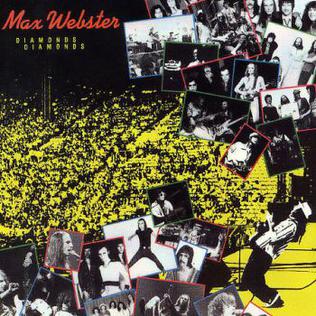
REVIEW: Max Webster – Diamonds Diamonds (1981)

MAX WEBSTER – Diamonds Diamonds (1981 Anthem)

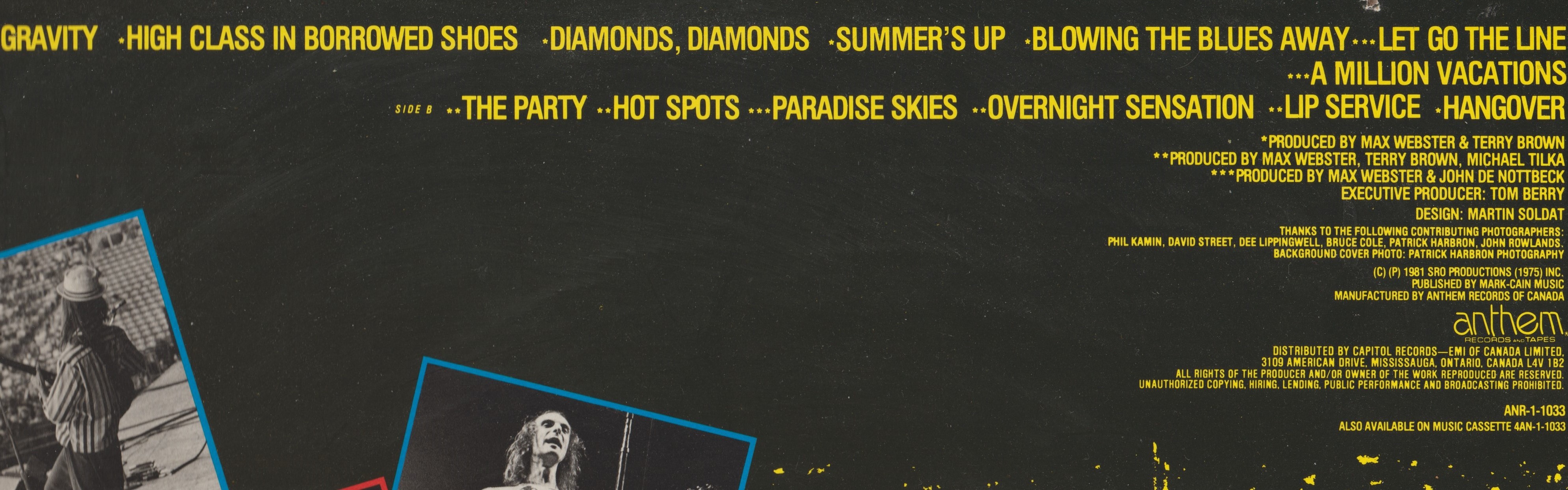
What a title for your first “greatest hits” compilation, eh?  Diamonds Diamonds emerged the year after Max Webster broke up, with no songs from the final album Universal Juveniles, the only one without Terry Watkinson.  Even though these kinds of posthumous records are usually not very good, Diamonds Diamonds is an exception.  It’s also one of the hardest Max Webster albums to find on CD, but a generous slice of vinyl at 13 tracks and 47 minutes.

“What do I know?” asks Kim Mitchell in the opening line of “Gravity”, the debut number.  Kim knew quite a bit actually, including how to write catchy music without it being overtly commercial.  He knew how to challenge listeners while delivering the hooks they craved.  “Gravity” is one such slice of brilliance.   It’s complex pop.

“High Class in Borrowed Shoes” is a classic rocker from their second album in ’77.  As much as it kicks, the lyrics and keyboard arrangement are not typical.  The title track “Diamonds Diamonds” followed “High Class” on the original album and it does again here.  Like a lullaby, “Diamonds Diamonds” floats on the wings of the backing vocal arrangement.  Next is “Summer’s Up” from the incredible debut Max platter.  Jangling guitars and dreamy keyboards make for a summer scene by the pool side, with drinks.  “Blowing the Blues Away” has a more traditional feel, country and blues and pop rolled into one, with a side order of quirky tones.  But it’ll make you feel good.  Continuing the feel-good celebration, it’s “A Million Vacations”, one of the greatest Canadian party songs of all time.  Kim Mitchell’s guitar work is sublime and baffling at once.

Side A ends with one of Max Webster’s most significant songs, “Let Go the Line” with lead vocals by Terry Watkinson who wrote the song, music and lyrics.  In Max Webster, lyrics were usually handled by the poet Pye Dubois.  In fact he wrote all but two of the lyrics on Diamonds Diamonds.  The two he didn’t (“Blowing the Blues Away” being the other) were written by Watkinson.  “Let Go the Line” could not be improved upon if you tried.  Kim’s regal guitar line, Dave Myles bass pulse, and the thrift of Gary McCracken’s drums are all flawlessly and perfectly fit to Terry’s ballad.  If Max Webster only had one “perfect” song, it’s “Let Go the Line”.

Fearlessly opening side two with furvor, it’s “The Party”!  It’s the off-kilter musicianship on tracks like this that had fans often comparing Max Webster to Frank Zappa.  Frank liked to have fun, too.  Well Max really liked to have fun!  “We’re all here for a celebration, the madcap scene and the Max Machine!”  That says it all.

Every decent “greatest hits” album needs unreleased songs.  Diamonds Diamonds has two decent ones, good songs that might be a bit too mainstream for a Max studio album.  “Hot Spots” is the first, a rip-roaring boogie of a good time.  By comparison, Kim could have recorded it on one of his early solo albums if Max didn’t release it on this.  It is chased by the outstanding “Paradise Skies”, another summery Max hit that keeps Canadian radio stations in business.  Melody and musicianship — that should be Max’s calling card.  The second of the new unreleased tunes is “Overnight Sensation”, the most ordinary (or forgettable) of the tracks.  The bassline really hops, and there’s even some cowbell, but the song isn’t comparable to something like “The Party” or “High Class”.

Although it’s better as an album opener, “Lip Service” (from Mutiny Up My Sleeve) is a bouncer.  “Socialutions, written down in our teens.  I mailed them to Kennedy, I typed them for Tito.”  Brilliance in a pen by Pye Dubois, barely contained by the bopping bass and upbeat keys.  Then before it’s all over it goes into a brief jazzy jam!  Finally it’s “Hangover”, also traditionally an opening song.  It’s the hardest rocker of the bunch, quirky as all hell and actually a good closer too!

Diamonds Diamonds still an important record today because “Overnight Sensation” and the outstanding “Hot Spots” haven’t been reissued on anything else.  You can’t say that about any of the songs on The Best of Max Webster (1989).  This is the one to get.  If you find one on CD, you’ve got yourself a good one.

4.5/5 stars