#779: Loch Ness

GETTING MORE TALE #779: “Loch Ness” – A Lyrical Analysis

Judas Priest are known not just for their incendiary riffing, but also vivid lyricism.  It’s often a winning combination.  Witness such metal concoctions as “Blood Red Skies” or “Metal Gods”.  When it works, it works.  When it fails, it fails gloriously.  Let’s have a look at Judas Priest’s most epic failure.  That would be the 13:28 long “Loch Ness”, from 2005’s reunion album Angel of Retribution.

Musically, “Loch Ness” is utter garbage; lethargic rock for the sleepy.  The lyrics are a little better, though not enough to save the song.

Judas Priest usually create their own mythology.  Characters such as the Painkiller, the Sentinel and the Jugulator are three such examples.  This time, Priest dipped into cryptozoology and Scottish legends for their subject matter.  Today, the general consensus is that there is no monster in the depths of Loch Ness.  It’s still fun to speculate and imagine what might have been.

The first verse of “Loch Ness” sets the scene.  The loch is the largest (by volume) in the UK, with an incredible depth of 755 feet.  Because of the loch’s depth and murkiness, long has there been uncertainty about what may be down below.  Using sonar and other modern technologies, nothing of any great size has ever been found.  Though legends remain strong today, it is highly unlikely that a large monster lives in Loch Ness.  What say Judas Priest?

Grey mist drifts upon the water,
The mirrored surface moves,
Awakened of this presence,
Dispelling legends proof.

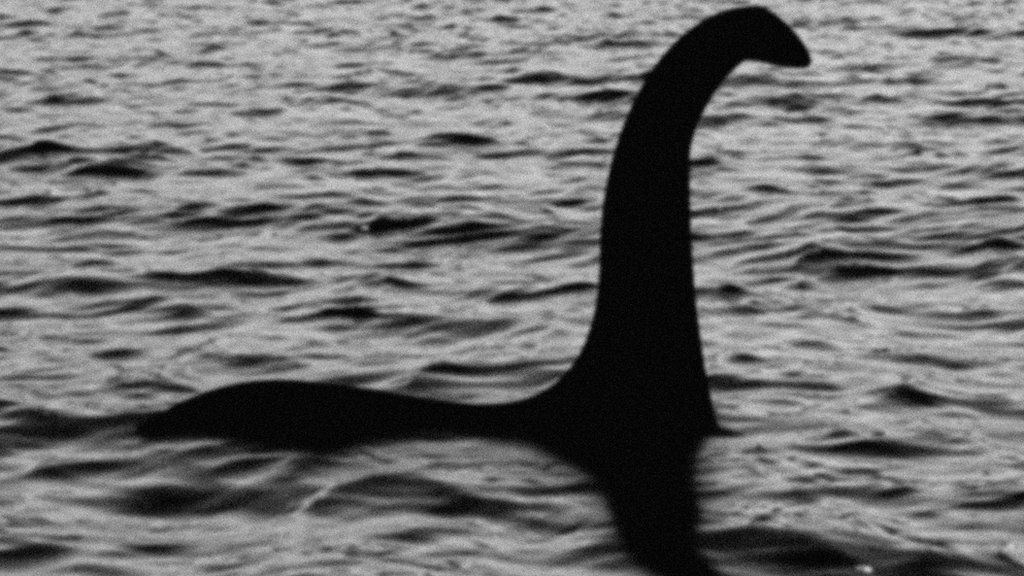
Stories of a beast in the loch date back almost 1500 years.  A definitive modern day sighting would indeed be the proof needed to move the monster from legend to reality.  Rob Halford references the grey mists, and how the movements of the “mirrored surface” can look like a creature is swimming beneath.  This is how most sightings begin.  Then “Nessie” rises from the water:

A beastly head of onyx,
With eyes set coals of fire,
It’s leathered hide glides glistening,
Ascends the heathered briar.

Physical descriptions of “Nessie” the monster vary wildly.  A head attached to a long neck is a defining characteristic.  It is usually described as dark, which Halford here exaggerates as “onyx” (black) in colour.  It’s eyes being “coals of fire” seems to be a Halford invention.  Likewise the hide, which is usually not described in much detail.  Out of necessity, Rob had to elaborate on the myth in order to describe the beast.  An interesting line is “ascends the heathered briar”.  Indeed, in some of the older sightings, the beast is seen climbing onto land – once even crossing a road.  When seen in full, the creature is often described as similar to a plesiosaur.

This legend lives through centuries,
Evoking history’s memories,
Prevailing in eternities,
On and on and on.

More interesting than the physical descriptions of the beast are the old legends. Water beast legends were not uncommon.  Why was Loch Ness always such a hotspot for such tales?  There is no simple answer.  Recently, large eels were filmed in the loch.  A mistaken sighting of an eel could account for many of the stories.  With the advent of modern media in the 1900s, tales of the monster spread worldwide and stories were reported with more frequency.  Proponents of the monster theory point to the oldest legends as proof that there was always something mysterious about the loch, though there is no proof that there is any connection to the “Nessie” of today.

Loch Ness confess,
Your terror of the deep,
Loch Ness distress,
Malingers what you keep,
Loch Ness protects monstrosity,
Loch Ness confess to me.
This chorus is a contender for the worst on any Judas Priest album.  There is nothing here to sing along to.  The words are awkward and juvenile with overly simple rhymes.

The speaker is addressing the loch itself; asking the loch to give up its secrets.  But “Terror of the deep”?  Few today find the idea of the Loch Ness monster to be terrifying .  True, early sightings would have been quite scary. Even if the creature spotted was only an otter or an eel, in the dusk or fog it could have been startling.  As you’ll see, however, it is implied this song takes place in the modern age.

The most interesting word choice here is “malingers”, meaning to pretend to be sick in order to avoid something.  It’s possible the word is being intentionally misused because it simply sounded good.  Insofar as meaning goes, “distress”, “malinger” and “protect” all imply the creature isn’t actually threatening.  Perhaps it or its young need protection.  Halford begs the beast for the truth, but the truth is not to be found.

Somehow it heeds the piper,
From battlements that call,
From side to side it ponders,
In passion in the skirl.

Scottish imagery here, implying that the monster will appear if a piper plays its song.  “Skirl” refers to the shrill sound of bagpipes.  “From side to side it ponders, in passion in the skirl” is a variation of the old saying that music soothes the savage beast.  Otherwise, the connection between the pipes and the monster seem to be a Halford construction.  There is also an old joke:  “Bagpipes and the Loch Ness Monster have two things in common – they both attract tourists and terrify little children.”

This highland lair of mystery,
Retains a lost world empathy,
Resilient to discovery,
On and on and on.

“Resilient to discovery” isn’t the most accurate phrasing.  “Resilient” means to recover quickly.  The Loch Ness monster is more “resistant” to discovery than “resilient”, though the legend certainly is resilient.  It goes on and on regardless of a narrowing scope of possibilities.  “Retains a lost world empathy” probably refers to the age of the beast.  It is so old that it comes from a simple time when people had more empathy than today.

This legend lives through centuries,
Evoking history’s memories,
Prevailing in eternity,
Your secret lies safe with me.

These lines simply refer to the age of the old legends, which will live forever.  Rob assures the beast that if it reveals its secrets, he will not tell.

This creature’s peril from decease,
Implores to mankind for release,
A legacy to rest in peace,
On and on and on.

Finally the last verse goes back to the idea that the creature is in some sort of distress.  It’s unclear what the peril is, but mankind is a part of it.  Is it the call of the pipers?  The monster simply wants to be at peace. Perhaps this is a hint of an environmental message, for conservation.

The lyrics to “Loch Ness” are not overly complex. Their simplicity, combined with slow monotonous music, make the 13 minute song seriously drag.  A few unusual word choices tend to obscure meaning, but “Loch Ness” is otherwise a fairly straightforward Judas Priest lyric.  When sung aloud, it begins to sound a little foolish.  “Loch Ness, confess, your terror of the deep” is not poetry.  It’s something you would have written in highschool English class.  While the words mostly stand up to analysis, they are not resilient to singing aloud.  In this manner (perhaps the only manner in which rock lyrics really matter), “Loch Ness” flounders.

“Loch Ness” has never and will never be played live.  It’s a shame that one of the greatest cryptids in all of legend has been given such a weak heavy metal song!

 

REVIEW: Alice Cooper – The Breadcrumbs EP (2019)

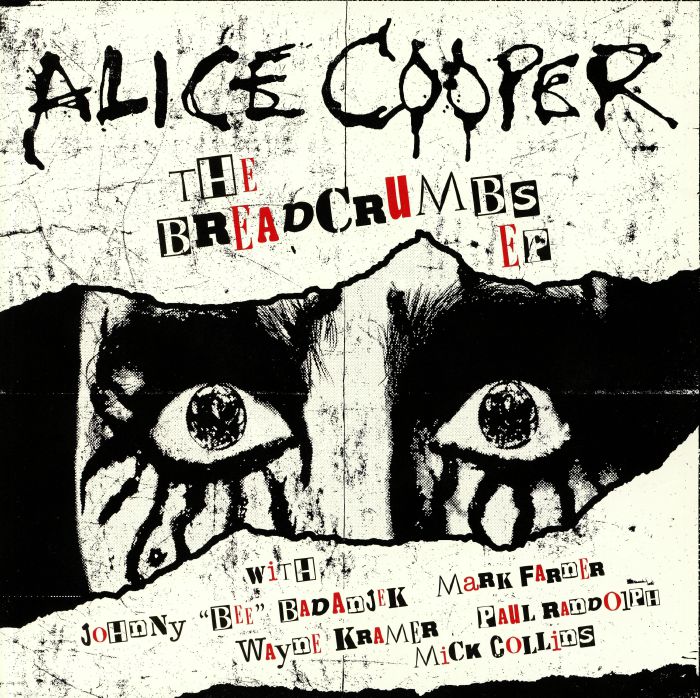
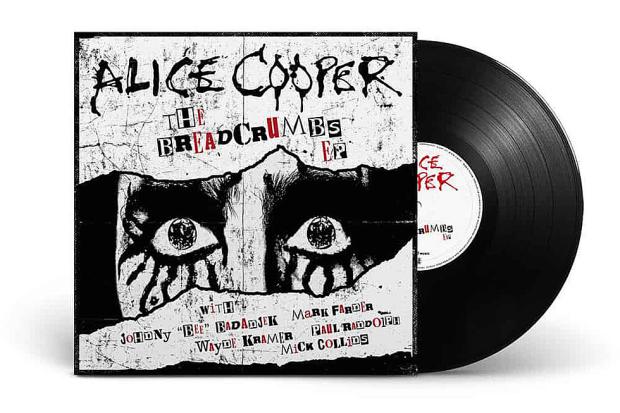
ALICE COOPER – The Breadcrumbs EP (2019 Edel)

Alice Cooper wanted to do a Detroit garage rock record and pay homage to his roots.  And so we have The Breadcrumbs EP, six tracks of stripped down goodness, ironically produced by Bob Ezrin.  The 10″ vinyl is limited to 20,000 copies.  Somehow, by the grace of the black widow, we scored #48!

For these special songs, Alice is backed by the MC5’s Wayne Kramer, bassist Paul Randolph, Grand Funk’s Railroad Mark Farner, and Detroit Wheel Johnny “Bee” Badanjek. A remake of Alice Cooper’s “Detroit City” (from The Eyes of Alice Cooper) is an appropriate starting point:

Me and Iggy were giggin’ with Ziggy and kickin’ with the MC5,
Ted and Seger were burnin’ with fever,
and let the Silver Bullets fly,
The Kid was in his crib, Shady wore a bib,
and the posse wasn’t even alive.

That’s some rock and roll poetry right there.  Not one of Alice’s finest songs but worthy of a second chance.  Then “Go Man Go” is a new original composition co-written by Wayne Kramer.  It’s punk rock Alice, as authentic as the bands he’s paying tribute to.  Bob Seger’s “East Side Story” closes the side on a steady groove, right out of Hendrix’s version of “Gloria”.

A really funky “Your Mama Won’t Like Me” (Suzi Quatro) is the centrepiece of the EP.  Horns blastin’, Alice hasn’t been this funky since his dance-oriented Alice Cooper Goes to Hell in 1976.  “Devil With a Blue Dress On” (Mitch Ryder and the Detroit Wheels) is the soulful side that Alice occasionally shows.  It’s merged with “Chains of Love” (J.J. Barnes) which pulls everything back to rock.  Finally “Sister Anne” by the MC5 puts the snot on the nose and the grime in the rock.  Kramer’s simply awesome riff is perfectly complemented by Cooper.

If copies are still available, get one.  Cooper fans will love the change of pace, while rock and rollers will adore the authenticity.

3.5/5 stars

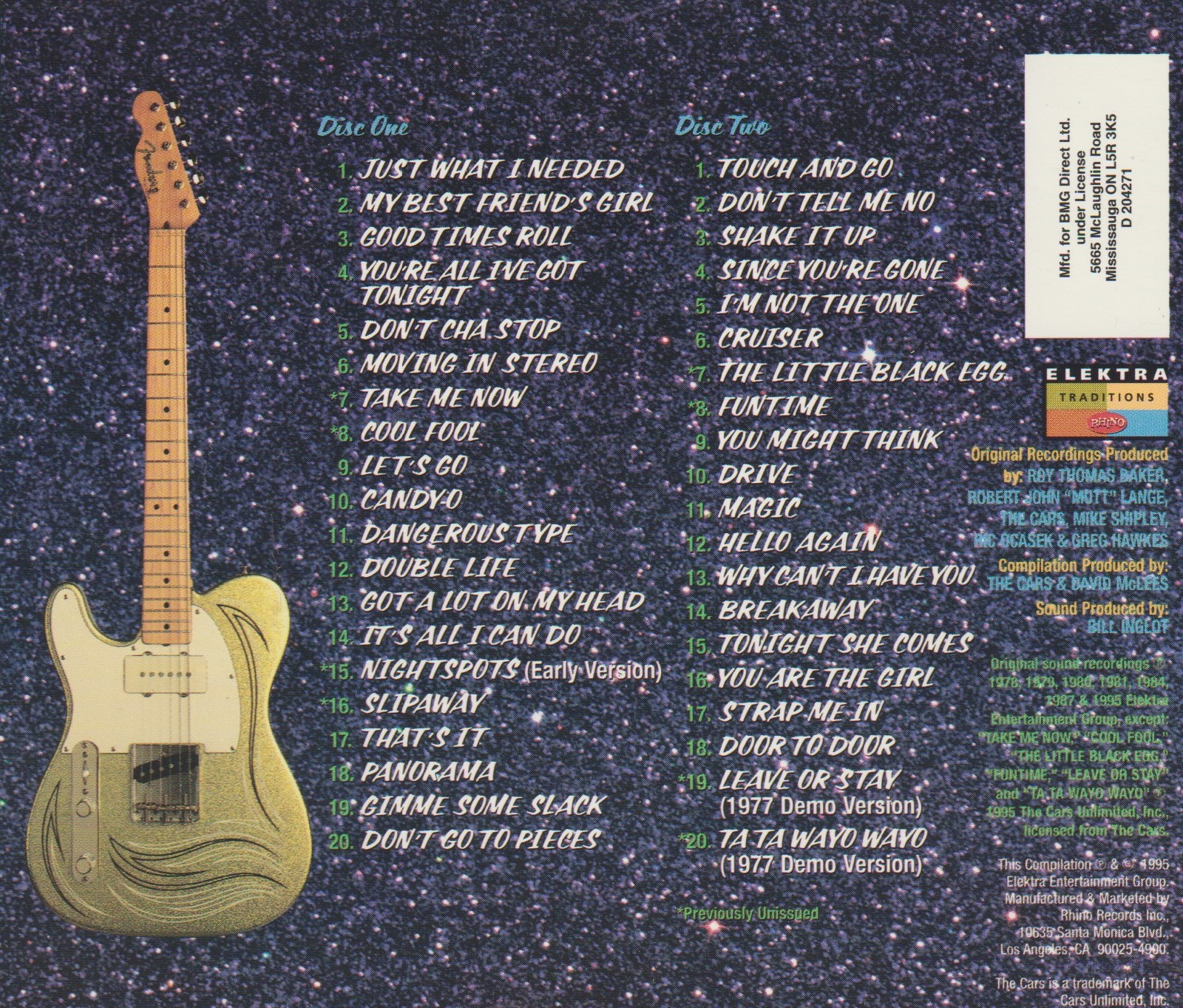
REVIEW: The Cars – Anthology: Just What I Needed (1995)

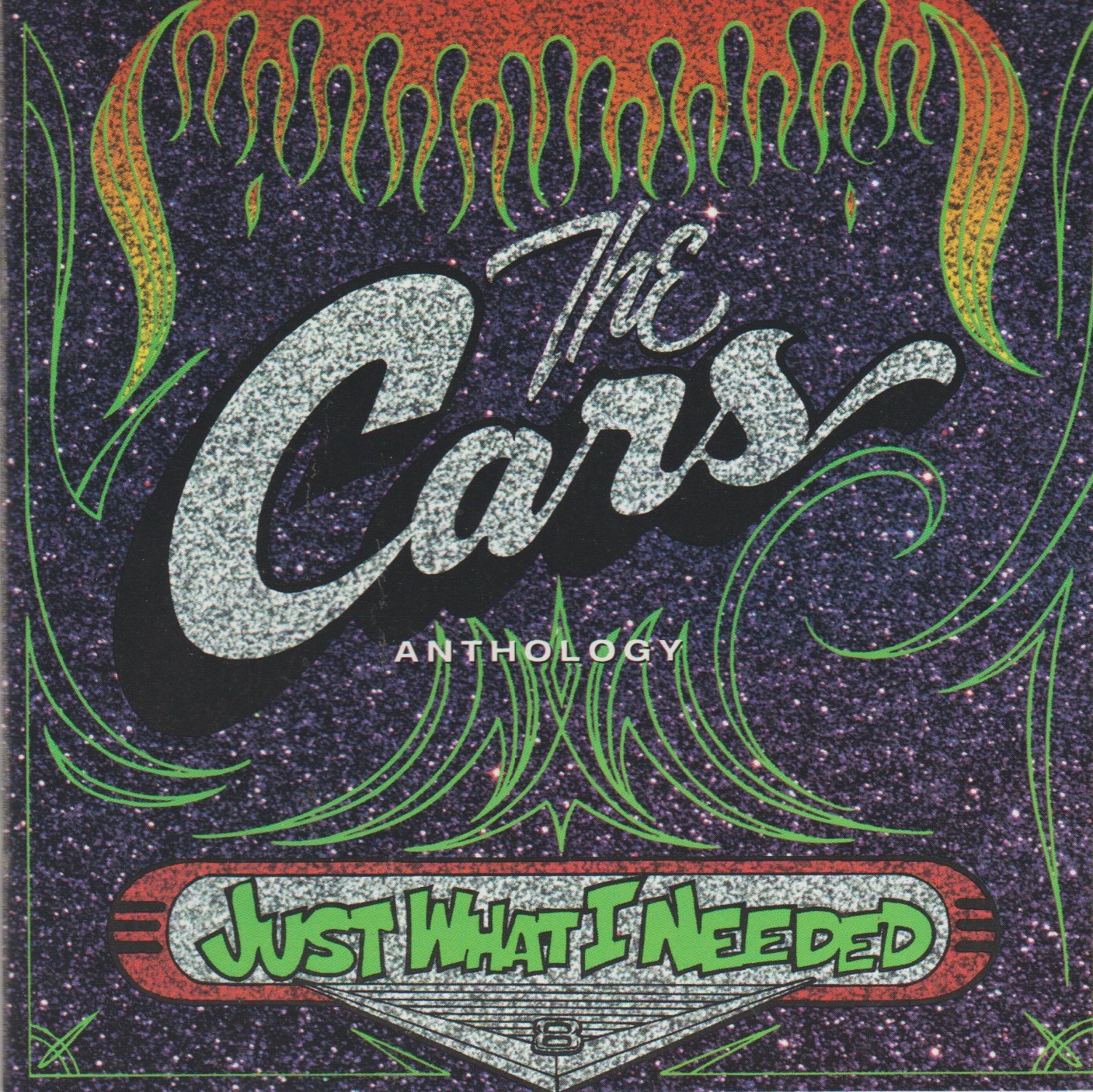
THE CARS – Anthology: Just What I Needed (1995 Rhino)

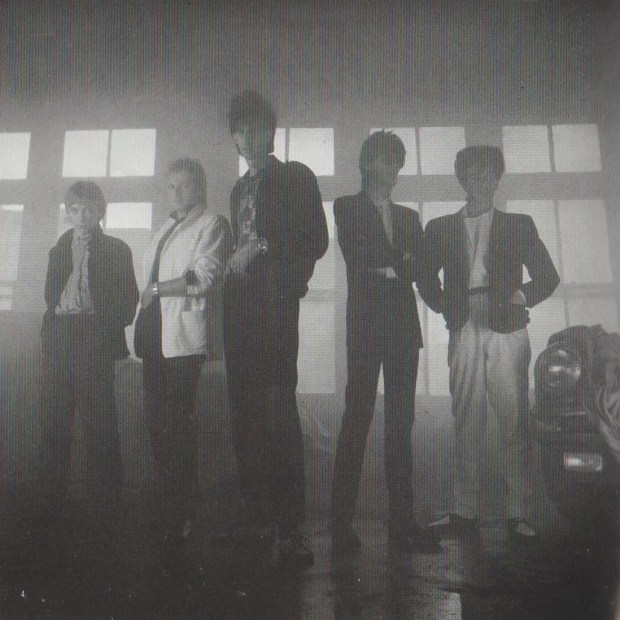
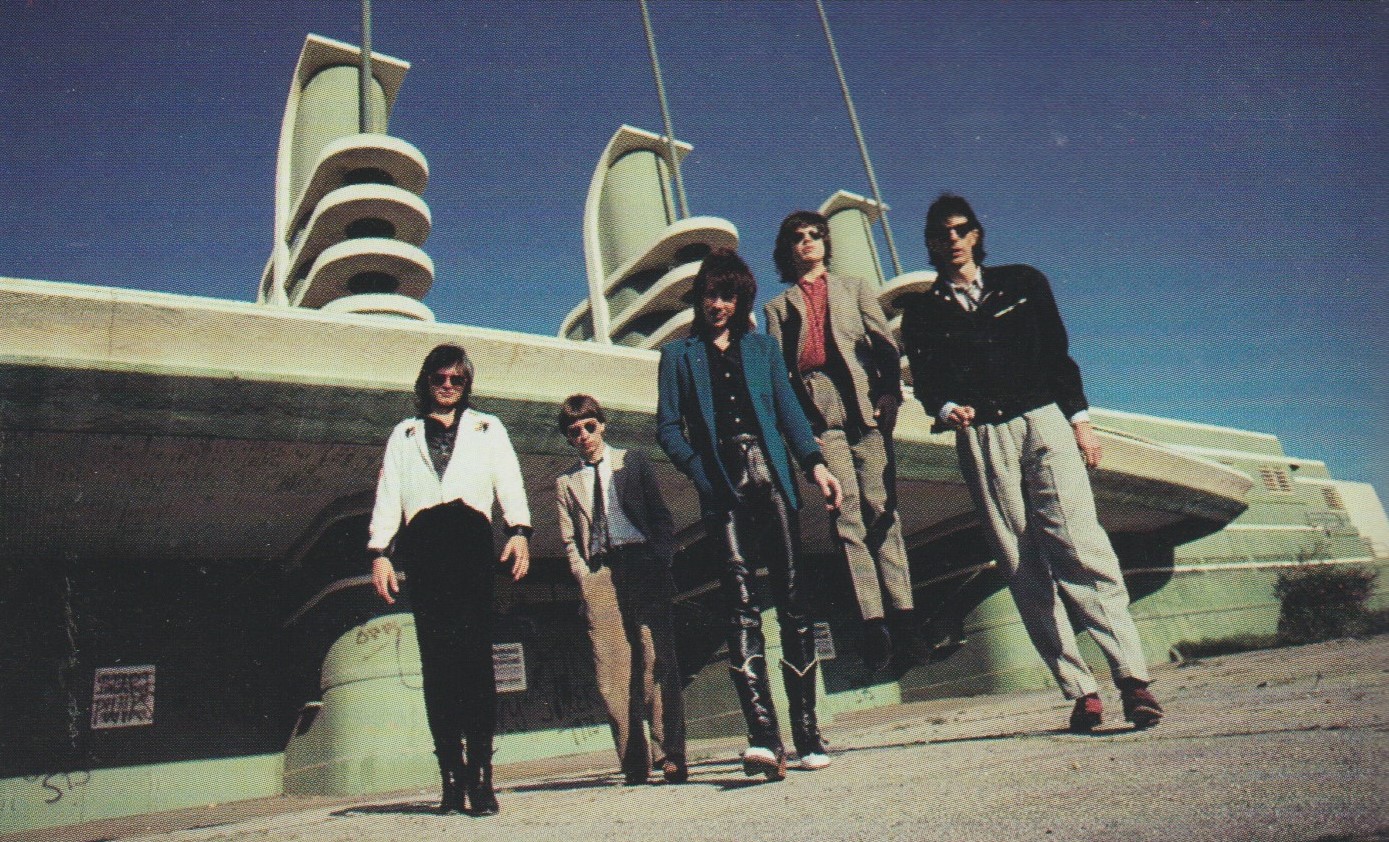
Ric Ocasek was cool.  Whether it was the sunglasses, or the black hair and leather jacket combo, he was just cool.  The Cars were birth attendants to MTV.  “You Might Think” was arguably the greatest music video on this side of Michael Jackson.  And The Cars were far, far more than just a one hit band.  This Cars Anthology proves just how much gas they had in the tank.  With 40 songs including a number of rarities, this anthology is just what YOU needed.

The first four songs in a row, all from the Cars’ self-title debut, are radio staples.  “Just What I Needed”, “My Best Friend’s Girl”, “Let the Good Times Roll” and “You’re All I’ve Got Tonight” still rock the airwaves, proving their timelessness.  The Cars could write a song, and whether it was Ric Ocasek or Benjamin Orr on vocals, the hits kept rolling in.  It’s a combination of choppy guitar hooks, keyboard candy, and plain ol’ songwriting ability.

The Cars were also consistent.  There is no dry spell for hits, not until we get to 1987’s Door to Door.  When you listen to a cross section of material in chronological order like this, it’s quite noticeable when Robert John “Mutt” Lange takes over production duties.  Heartbeat City and its synthetic drums are the prototype for Def Leppard’s Hysteria album.  The backing vocals, the bass tones, and impeccable production all foreshadow the sound of things to come in Mutt-ville.  Roy Thomas Baker didn’t put so much of his own fingerprints on the Cars (although you can definitely hear a Cars influence via Baker on Alice Cooper’s Flush the Fashion).  Mutt sounds like Mutt, for better or for worse.  The album sold four million copies.  Whatever Ric learned from Mutt and Baker, he put to good use as a producer himself.

There are some songs that are just special.  Even though their fellow tunes are unique, important and classic, some rise even higher.  One is the legendary ballad “Drive”, written by Ric and sung by Benjamin.  Soft and gentle, “Drive” has been our companion for decades now, through lonely nights and happy days alike.  Another immortal song is the aforementioned “Just What I Needed”, for all it’s pop-punk perfection, before that was even a term.  I believe they just used to call it “New Wave”.  Finally “You Might Think” must be remembered as not only an important video, but also an ageless pop song that still grabs you today.

Rarities in this set include single B-sides, demos and previously unreleased songs.  Some have since found homes on the Cars’ deluxe reissue CDs, but some seem to still be exclusive to Just What I Needed.  One interesting outtake is a bang-on cover of Iggy Pop’s “Funtime”.  The liner notes are also exemplary, as Rhino usually do.  You could consider this to be a miniature box set for all the care put into it.  While buying The Cars by the album will not lead you astray, there is much to be said for a really good anthology.  You’re looking at one right now.

5/5 stars

Rest in peace Ric, rest in peace Benjamin.


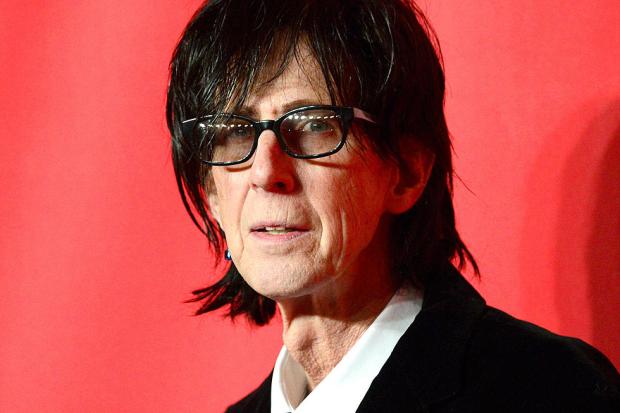
R.I.P. Ric Ocasek (1944-2019)

Sad news this morning, as we wake to find Ric Ocasek of the Cars has passed away at age 75.  Hard to believe the tall, jet-haired singer was in his 70s at all.  He always looked like a punk misfit.

The Cars formed in 1976 and had a steady stream of hits through the late 70s and early 80s.  When the cars folded he moved on as a producer and solo artist.  Ocasek produced such diverse albums as Bad Brains Rock for Light, and two of the most popular Weezer albums, Blue and Green.  Through these productions, his impact on modern rock cannot be overstated.

I always liked the Cars best, and so we’ll remember Ric today with one of his catchiest songs ever:  the summer anthem “Magic”.

Rest in peace Ric Ocasek.

REVIEW: Smoke on the Water – A Tribute – Various Artists (1994 cassette)

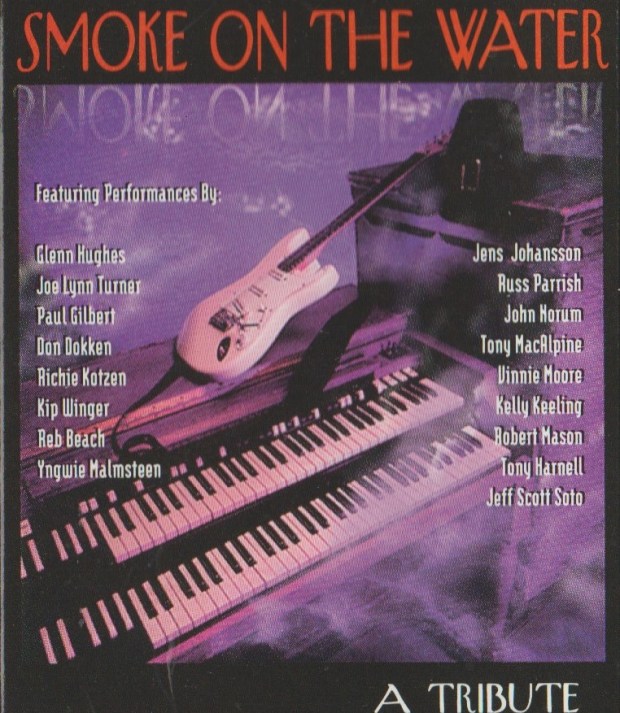
SMOKE ON THE WATER – A Tribute (1994 Shrapnel cassette – tribute to Deep Purple)

This baby can be expensive to acquire on CD, so let’s give ye olde cassette tape a spin.  It’s not been played in over 20 years.  This review is with fresh ears.

The backing band on this tribute to Deep Purple consists of:  Deen Castronovo (Hardline/Journey – drums), Jens Johansson (Yngwie Malmsteen – keys), Todd Jenson (Hardline/David Lee Roth – bass) and Russ Parish (Fight/Steel Panther – rhythm guitar).  Each track has a featured singer and lead soloist.  Let’s dig in.

First up:  “Speed King” by Yngwie J. Malmsteen with Kelly Keeling on vocals.  Keeling is on the sandpapery side of Joe Lynn Turner here, while Yngwie gets to jizz fanboy style all over the fretboard.  The star might actually be Jens Johansson’s keyboards but this is an unfortunately very cheesy version of “Speed King”.  Woah, Keeling just nailed an Ian Gillan scream!  Nice.

Kip Winger and Tony MacAlpine team up for “Space Truckin'”.  Tony goes his own way with the solos, innovating as he goes.  This is…pleasant?  There’s some kind of spark that’s missing, and when you’re playing “Space Truckin'” you need to put accelerant in the tank or you’ll fall flat.  Studio sterility has replaced spontaneity.

You gotta hope Glenn Hughes and John Norum can shock some life into “Stormbringer”.  They can!  Of the guitarists so far, John Norum (Europe) is the one who has the right feel for Deep Purple.  Glenn’s great, but doesn’t get to play bass, and here’s part of the problem.  You can hear that the backing band recorded the songs and then the featured players recorded their parts over them.  In a perfect world you’d have Glenn plotting the way on bass too, gelling with the backing band in a united groove.  That can’t happen when you record this way.

One guy who manages to inject his song with personality is Richie Kotzen.  He’s got the funky “Rat Bat Blue” and is granted both the lead vocals and guitars.  Yngwie returns on “Lazy” and he’s teamed with former Deep Purple singer and his own former bandmate, Joe Lynn Turner!  Yngwie plays appropriately on this strong but fairly bland track.  And that’s the cue to flip the tape over.

Paul Gilbert (Mr. Big) gets the vocal and guitar honours on “Maybe I’m a Leo”, which frankly is too slow and lacks groove.  Paul’s vocals, however, absolutely nail Gillan’s on the original.  Things turn stale quickly when it’s time for “Smoke on the Water”.  Russ Parish takes the guitar slot while Robert Mason (Lynch Mob/Warrant) sings.  Far more interesting is “Fireball” with Don Dokken and his future Dokken bandmate Reb Beach.  Don sounds a bit overwhelmed by the demanding song, but hits all the requisite notes.  The brilliant Jeff Scott Soto takes the driver’s seat on Mk I’s “Hush”.  This veteran vocalist (Yngwie/Journey/man more) makes mincemeat of your ears, absolutely killing it.  Soto is absolutely the vocal star on this album (one that includes Glenn Hughes)!  The final song goes to Tony Harnell (TNT) and Vinnie Moore (UFO).  They busy-up “Woman From Tokyo” a bit too much with unnecessary fills, but Moore does some really cool picking during the quiet section.

Though interesting, Smoke on the Water is far from an essential addition to your Purple collection.  There are already so many tributes out there.  The most interesting was T.M. Stevens’ Black Night which re-interpreted Deep Purple according to his New York sensibilities.  He had Joe Lynn Turner, Vinnie Moore and Richie Kotzen on his album too!  Then there is the more recent Re-Machined, featuring Iron Maiden, Metallica, and more Glenn Hughes.  Considering the CD prices these days, place Smoke on the Water fairly low on your priority lists.

2.5/5 stars

Sunday Chuckle: “Hitler’s House”

A Sunday Chuckle about Hitler? What the…?

Sure, why not?  This is an old game that goes back to the 40s.

In a previous video, I mentioned that my dad and his friends used to play a game during World War II, called “Hitler’s House”. You’d get a box, call it “Hitler’s House”, and set it on fire!  I decided to pay tribute to my dad and his stories by building the ultimate “Hitler’s House”.  It’s three storeys with two big bay windows and patios, a front garage, a rooftop swimming pool, and a crow’s nest complete with armed guard!  It burned pretty awesomely.  Join in our fun by watching the video below!


#778: Bi-curious

GETTING MORE TALE #778:  Bi-curious

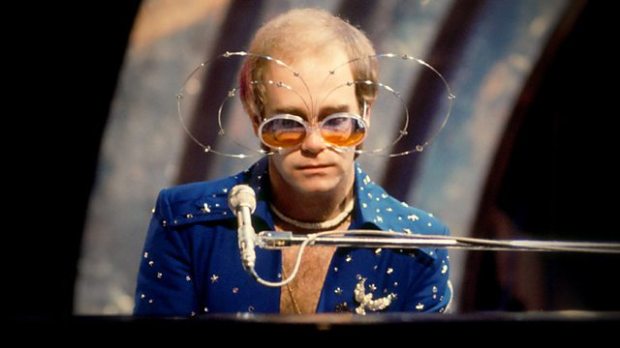
You could tell Mrs. Powers didn’t like Elton John, and why.

I was just beginning my exploration of rock and roll, at a very young age.  I knew who Elton John was.  He had at least two songs that I knew and liked: “Sad Songs Say So Much” and “I’m Still Standing”.  Although in the 80s he had toned down his image, my mom explained that he used to be known for his crazy hats and glasses.

I don’t know how Elton John came up, that day in Catholic school.  It was grade 7 or 8, so 1985 or 1986.  Powers was strict and believed in public shaming.  Like the time she said “Shame on you!” to me for choosing a non-Catholic highschool, in front of everyone.  My sister had Powers a few years later, and got in shit in front of the class because she wasn’t as good at math as (presumably) her dad, who was a bank manager.  She was just a nasty teacher.

However Elton’s name came up that day, it doesn’t particularly matter.  What I remember was what Mrs. Powers said about him:  “And I don’t care that he’s BI-SEXUAL.”  Emphasis on that “BI-SEXUAL” part.  The immediate undertone was that she did care, very much, or she wouldn’t have brought it up.  And her feelings on the matter were in the negative.

Questions swirled in my head.  Elton John, the guy with the glasses and hats — was bisexual?  Most importantly, what the fuck did that even mean?

If you think Catholic school sex-ed curriculum covered things such as bisexuality, or even homosexuality, you’d be sorely mistaken.  She dropped that word, “bisexual” in a sentence and didn’t elaborate.  My immediate assumption (and you can see how I got there in my thinking) was that Elton John probably had both genitalia.  It’s not like I was going to raise my hand and ask.

I don’t know how many years I went about my life, thinking that Elton John had both a wiener and a vagina.  But I did, and it was because of a Catholic school teacher.  Nice, eh?  In many regards, although I went to class every day like anyone else, I think I was largely homeschooled until I got to highschool.  I learned more about history, science, and the arts at home thanks to my mom and dad.  At a young age, I was watching Carl Sagan’s Cosmos with my dad, and listening to early Canadian rock and folk music with my mom.

The second takeaway from this story is the negative tone when Mrs. Powers said “BI-SEXUAL” like that.  I don’t need to explain how that just reinforces negative stereotypes.

The irony of course is that, bisexual or not, Elton John has been with his husband David Furnish for over 25 years, and they have proven to be model parents to their two kids.  I wonder if Mrs. Powers has since changed her tune on Elton John.

R.I.P. Eddie Money (1949 – 2019)

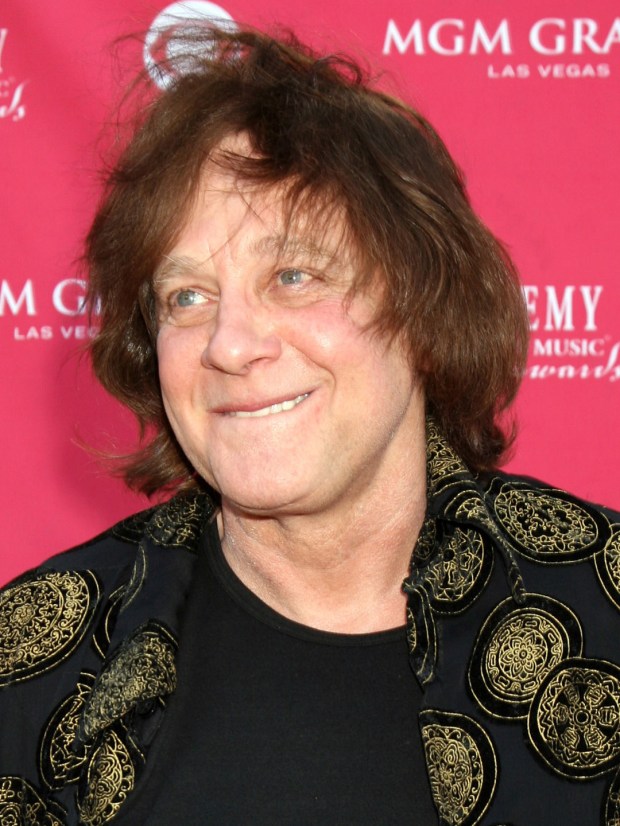
Edward Mahoney was a cop.  As Eddie Money, he was a star.  “Take Me Home Tonight” and “Two Tickets to Paradise” will be played on radio stations forever.  Thank you for the music Eddie Money.

At age 70, Eddie succumbed to cancer of the esophagus.  A long hard struggle.  We hope his family finds peace in this difficult time.


Rest in peace Eddie Money.


REVIEW: Jim Crean – Gotcha Covered (2019)

JIM CREAN – Gotcha Covered (2019 Visionary Noise)

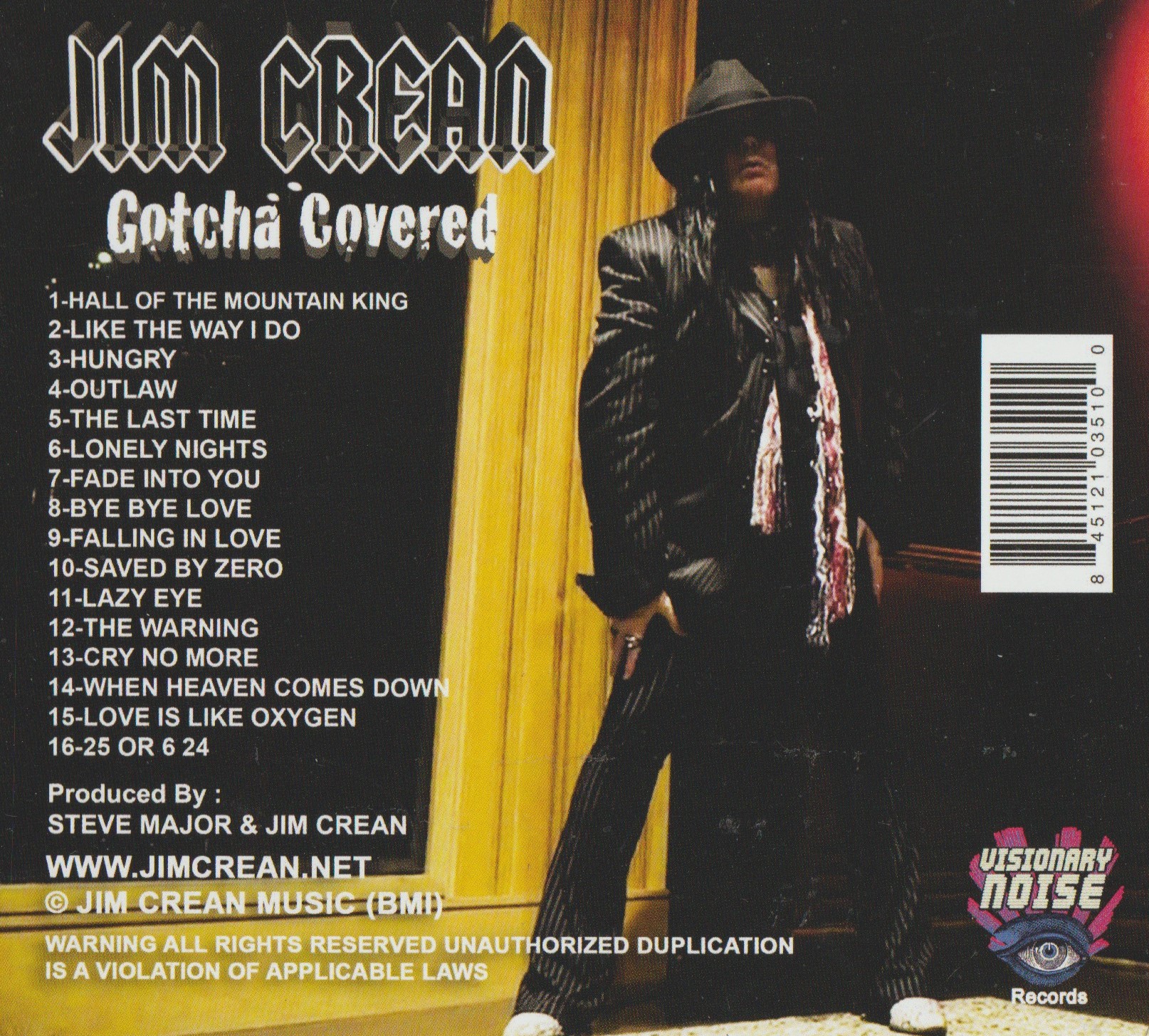
Jim Crean is steeped in hard rock tradition.  He’s worked with some of the legends, and he’s covered the rest of ’em.  Atypical covers.  Not the usual “hits” but interesting tracks you might know and remember, or will be exposed to for the first time.  In 2019, Crean’s come out with an original album The London Fog, and a covers CD called Gotcha Covered.  Lets see what surprises there are in store.

Right out of the gates, it’s a shocker:  “Hall of the Mountain King”.  You don’t hear Savatage covers every day, and fortunately Crean has the necessary scream abilities.  He sounds like a man possessed by lust for the Mountain King’s gold!

Unpredictability is the theme for this album.  Up next:  Melissa Etheridge.  It’s an oldie from her landmark first debut, “Like the Way I Do”, and you’ve never heard it so heavy.  It sounds as if it was written to be played this way because it’s completely natural.  White Lion are a little more centerfield, and “Hungry” is a killer choice.  Jim Crean can easily handle mid-80s Mike Tramp songs, as they are right in his pocket.  John Corabi is another singer who Crean is naturally suited to cover.  The Scream’s “Outlaw” is definitely an obscure but inspired choice.   Tasty riff.  Badlands get the next nod, with “The Last Time”, the first single from the second album Voodoo Highway.  The high notes are no problem, and the chorus goes on for lightyears.

Then it’s back to left field, with Bryan Adams’ old (pre-Reckless) classic “Lonely Nights”.  You don’t hear Adams covers very often, and usually they suck.  Not this one.  Crean transforms it into a hard rock anthem, something Sammy Hagar could have recorded.  Another shocker is Mazzy Star’s “Fade Into You”, converted into a classy rock ballad, utterly different from the original.  The Cars’ “Bye Bye Love” is another brilliant choice (not that you can go wrong with any Cars).  It works well as hard rock.  “Falling In Love”, a Scorpions oldie written by Herman Rarebell, adds a heavy kick at the right time.

“Saved By Zero” is the only track that doesn’t sound overly metalized.  The Fixx cover reveals some more new wave roots, and a good song choice it is.  The complex backing vocals sound fantastic.  Crean does justice to his hometown boys The Goo Goo Dolls next with “Lazy Eye”.  This non-album Goos song was on the soundtrack for the ill-fated Batman & Robin.  As you’d expect, it boasts a strong chorus, but the chunky riff may surprise you.  Another obscurity is “The Warning” by Victory, a strong 80s chug.  Onto the 90s next:  Ratt’s Stephen Pearcy and Cinderella’s Fred Coury had a band called Arcade.  “Cry No More” is a ballad from their debut.

The last few songs include Dokken’s slow burning “When Heaven Comes Down”.  Nothing wrong with some Back for the Attack era Dokken.  The Sweet’s classic “Love Is Like Oxygen” brings that pop edge back.  But it’s the closer, Chicago’s “25 or 6 to 4” that really slams it home.  No horns, just guitars and heavy beats.  The original arrangement is untouchable, but a heavy rock version?  Sure, why not.

A good covers album is hard to come by.  It all comes down to song selection.  In this regard, Jim Crean knocked one out of the park.

4/5 stars

REVIEW: Queensrÿche – Operation: Mindcrime (1988/2003 remaster)

QUEENSRŸCHE – Operation: Mindcrime (1988, 2003 EMI remaster)

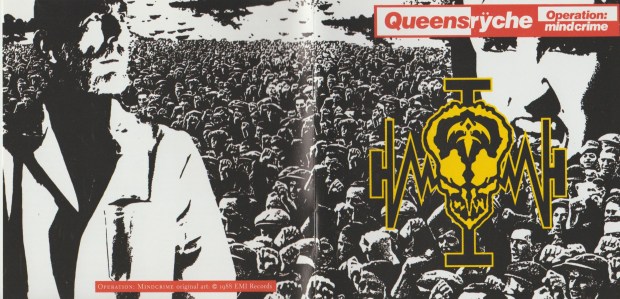
After Pink Floyd made history by releasing The Wall in 1979, concept albums fell out of fashion.   Almost a decade later, two heavy metal albums brought the artform of the full-length story back:  Iron Maiden’s Seventh Son of a Seventh Son, and Operation: Mindcrime by Queensryche.  Of the two, Mindcrime had the more coherent linear story, but both remain high water marks for each band.

The Queensryche album sold slowly at first, as the band refused to make music videos to let the album speak for itself.  They changed course in 1989 when “Eyes of a Stranger” made it to MTV and MuchMusic.  Fortunes changed dramatically for Operation: Mindcrime.  The album eventually went platinum.

The reason Mindcrime was better suited as an album than music videos was the connected storyline running through each song.  Employing a classic frame technique, we begin at the end with “I Remember Now”.

“I remember now.  I remember how it started.  I can’t remember yesterday.  I just remember doing what they told me…”

The anti-hero Nikki is an angry, aimless addict who fell in with a radical political group called Operation: Mindcrime.  He is a disheartened young American. “The rich control the government, the media, the law.”  Mindcrime’s modus operandi?  Using drugs and brainwashing, would-be assassins are sent out to kill strategic political targets, building to revolution.  Inequality, corruption and the media have made the country an ugly place.  Dr. X, the mastermind behind Mindcrime, has total control over Nikki.  He also uses the nun Mary, a former prostitute, to feed Nikki’s needs.  Nikki and Mary grow closer until he receives the order:  “Kill her.”  She knows too much.

The first two tracks are just setup before you get to the meat.  “I Remember Now” and “Anarchy-X” create a powerful set of images, with anthemic guitars and the sound of massive crowds rallying to a cause.  “Revolution Calling”, the first real song, begins the narrative.  “Then I heard of Dr. X, the man with the cure, just watch the television, yeah you’ll see there’s something going on.”

Nikki is indoctrinated on the title track, an ominous riffy behemoth of a song.  Dr. X uses Nikki’s drug addiction to control him.  With nothing to lose, Nikki falls for the doctor’s words.  “There’s a job for you in the system boy, with nothing to sign.”  Nikki has no use for the government or politicians.  It all sounds good to him.  On “Speak” he receives his first assignment.  “I’m the new messiah, death angel with a gun.”  On a blazing fast track with a thick chorus, Nikki falls into his new life.  “Eradicate the fascists, revolution will grow.”  On “Spreading the Disease”, another kickass track with a chorus that goes on for miles, Nikki tells the story of Mary and his distaste for the church.  “Religion and sex are power plays, manipulate the people for the money they pay.  Selling skin, selling God, the numbers look the same on the credit cards.”

Queensryche take it slower (though not soft) on “The Mission”, as Nikki starts to feel disillusionment.  “I look around, my room is filled with candles, each one a story but they end the same.”  He keeps telling himself that he’s doing what’s right.  “My mission saved the world, and I stood proud.”  But then he is given the order he dreads:  Kill Mary.  This instruction opens album epic “Suite Sister Mary”, 10 full minutes of riffs, choir and orchestra (by Michael Kamen).  The riff alone stands like a monolith.  Vocalist Pamela Moore sings a duet with Geoff Tate as the character of Sister Mary.  As for that riff?  Chris DeGarmo was the master riff composer in this band, a hole they have never quite filled.

The second half of the story commences with “The Needle Lies”.  Nikki wants out, but finds that it doesn’t work that way.  There is no “out”.  Meanwhile Queensryche strafe the speakers with a thrashy blitzkrieg.  Drummer Scott Rockenfield cannot be contained.  Then on the quiet filler track “Electric Requiem”, Nikki discovers that Mary had made his choice to disobey orders irrelevant.  Dead by her own hand, Nikki is broken and tailspins into a mad depression.  This is portrayed on “Breaking the Silence”, another stone cold winner of a song with a mighty chorus.  The chunky guitar riff is to die for.

With his memory failing him, Nikki doesn’t even know if he killed Mary himself or not.  He questions everything on the ever-cool single “I Don’t Believe in Love”, one of the most remarkable of all Queensryche songs.  Once again the writing partnership of Tate and DeGarmo struck heavy musical gold.  Two shorter tracks (“Waiting for 22” and “My Empty Room”) fill in some story points, and Nikki is eventually caught.

Operation: Mindcrime’s biggest song is its final track and first single, “Eyes of a Stranger”.  Memories are but fragments.  “I raise my head and stare into the eyes of a stranger.”  It’s one of Queensryche’s most incredible recordings, a perfect storm of guitars, vocals and melody.  It’s neck deep in drama, with Geoff Tate at his most emotive.  The story ends with some questions left unanswered.  At least until 2006’s unnecessary Mindcrime II….

Operation: Mindcrime took Queensryche to an artistic level that fans and critics always knew they could achieve.  Their debut EP showed promise.  They didn’t live up to that potential until Mindcrime.  Though good, The Warning album wasn’t a stunner like MindcrimeRage For Order was brilliant but alienating.  Even when it was first released, Mindcrime did not blow all the critics away.  Only after it had been digested slowly over time did the masses realize they were sitting on something very special.  Queensryche had done conceptual work before, but more abstract.  Nothing as well-hewn as Mindcrime.  Musically it was like they distilled everything they had accomplished thus far, and concentrated it into pure rock majesty.

The 2003 CD reissue had two live B-sides as bonus tracks.  “The Mission” was originally released in 1991 on the B-side to “Silent Lucidity”.  It is a different recording from that on the live album Operation: LIVEcrime.  “My Empty Room” is a later acoustic recording, released in 1995 as a B-side to “Bridge”.  It’s interesting for its acoustic setting and percussion, but is best heard in the context of the “Bridge” single with its other acoustic counterparts.

Is Operation: Mindcrime a masterpiece?  The story is a bit Hollywood and a tad juvenile, but the broad strokes are remarkably still valid today.  Mindcrime is rivalled by only a few.  It’s a worthy, nay, important addition to any metal collection.

5/5 stars