#651: Death From…Right Above?

GETTING MORE TALE #651: Death From…Right Above?

Canada’s Death From Above (formerly:  Death From Above 1979) have some pretty awesome tunage.  This bass/drum duo of Jesse F. Keeler and Sebastien Grainger have been creating edgy rock and roll (off and on) since 2001.  Their music is great.  “Trainwreck 1979” is an incredible steamroller rock song.  But Death From Above have a history that might contain some unsavoury characters, such as Vice media co-founder Gavin McInnes.

Have you ever heard of the Proud Boys?  It’s OK if you haven’t.

The Proud Boys are a “western chauvinist” group founded by McInnes.  As westerners, they “refuse to apologize for creating the modern world” (a fallacy in itself as any historian can tell you). Only men are permitted.  Women can become a “Proud Boy’s Girl”.  They even have a uniform (black polo shirts with yellow trim) and coded words that identify them with each other, but not with the general public.  They claim it’s just a fraternity, and that anyone who identifies as “alt-right” will be banned permanently from the group.  McInnes also claimed that Jesse F. Keeler of Death From Above was a member, which Keeler denies.

After my first encounter with a Proud Boy, a quick glance at his Facebook photos revealed a swastika and other Nazi paraphernalia, misogyny and a boatload of bigotry.  That was my very first encounter.  I don’t accept their claim that all “alt-right” folks are unwelcome.  I believe that they prefer their alt-right members to keep any Nazi and white supremacist symbolism in the closet.  I strongly doubt that the Proud Boys have zero white supremacists in their numbers.  That’s how it looks to me, and I’m not interested in debating with Proud Boys.

Proud Boys really hate being “mischaracterized” as a white nationalist movement, but they have become a safe space for such folks.  There certainly have been plenty of violent Proud Boy bad apples in the news, whom the organization distances itself from.  But for whatever reason, the Proud Boys attract these assholes like flies are attracted to shit.

Part of the Proud Boy initiation is getting in a fight with an “Antifa” member.  Antifa, a controversial leftist group, stands for “anti-fascist”.  So in order to be a Proud Boy, you have to commit the crime of assault.  That’s not to say Antifa have never initiated violence themselves; they have.  But to be a Proud Boy, you actually have to beat somebody up?  They call it all “freedom of expression” and “family values”.  I’m sure you’ve heard those phrases before from the far-right, just as you will also hear the word “patriot”.  They refer to their group as “fun, respectful and fair”.  Until you mention such words as “Islam”, “transgender”, “immigrant” or “liberal”.  These dirty words are sure to earn the opposite of a fun, respectful or fair response.  If you want to “trigger” a sensitive Proud Boy, try one of those words.  (Assault must be one of their “fun” activities.)

There’s nothing wrong with being proud of your heritage or your country.  I love Canada, even though our history has its dark corners.  We have not treated our native population well, and that is an understatement times 1000.  On his solo album The Secret Path, Gord Downie (RIP) of the Tragically Hip tried to educate Canadians on our shameful history with residential schools.  Yes, there are many things in our history to take pride in, such our military role as peace keepers (thank you Lester B. Pearson).  Take pride in being Canadian, but don’t distort history to do so.  Distorting history will only lead to repeated mistakes.  Pride is one thing; hate is something else altogether.  In my view, the Proud Boys are a safe haven for some very angry individuals.

Some of Death From Above’s lyrics have been characterised as misogynistic:

“So tired of sluts coming up to us in the clubs with their cocaine,
We’re looking for wives.”  (“Dead Womb”)

One of the Proud Boys’ values is “venerate the housewife”.  Death From Above’s Sebastian Grainger says “It wasn’t meant to be a hateful song…I just liked saying outrageous things.”

Death From Above’s Jesse Keeler has appeared The Gavin McInnes Podcast, viewed by some as a Proud Boy recruitment tool.  Keeler has acknowledged a past friendship with McInnes but says he’s never been a Proud Boy.  As the Canadian son of an Indian immigrant, he doesn’t identify with white nationalism.  He says that as he got to know McInnes better, he realised that he had some extreme views that he didn’t agree with.

McInnes’ views are pretty simple.  Here’s one:  “We need to close the borders now and let everyone assimilate to a Western, English-speaking way of life.”

Canada has two official languages by the way:  English and French.  They are equal under law.  But the original Canadians spoke neither; they had myriad tongues including the Algonquian and Iroquoian languages.

This western chauvinist attitude of McInnes and his group goes against everything I studied earning my History BA.  It also clashes with the values that rock and roll music have taught me.

The Beatles proved that music can transcend all barriers.  They went to India and came back with the White Album.  Led Zeppelin went to North Africa and wrote “Kashmir”.  Could there be anything more boring than a plain western, English-speaking way of life?  The music in such a place would certainly be a lot duller.  Like trying to create art in a vacuum, out of nothing.  Another exception to the Proud Boy way of thinking is the long list of incredible women of rock and roll.  They didn’t just settle for being “housewives”.  Where would music be today without Janis Joplin, Aretha Frankin, Chrissy Hynde and Debbie Harry?  A hell of a lot less interesting.  I can’t even imagine a world without them.

The best art benefits from a diverse palette.  The more colours you have to choose from, the more vibrant and alive your art can be.  White western people didn’t invent rock and roll.  They stole it.  Rock and roll has a long history, and if you go back far enough you can trace it all the way to Africa.  It came to America on slave ships, mixed and matched with music from Europe, and became R&B.  R&B used to be called “race music”.  Rock and roll evolved from this stew of cultures and influences.  Elvis Presley did not invent rock and roll.  Elvis Presley didn’t even write songs.

The Proud Boy value system is one of insular uniformity.  Rock and roll is about everything but conforming to a clean and neat Western life.  It is about rebelling, and exploring all the way to the edge.  From the very beginning of rock to today, music has only benefited from cultural diversity.  Everything on the radio today is a product of cross-pollination.  If rock and roll did not embrace music from different cultures worldwide, it would be a stifled, sad thing.  There would be no Beatles, no Stones, no Queen, or any of the bands influenced by them.  From Prince to the Prophets of Rage, most of rock and roll would simply not exist.

Want to be proud of your heritage?  That’s great, but don’t pretend.  The west is responsible for great innovation, built on the shoulders of previous old-world giants.  (Ptolemy, anyone?)  The west is also responsible for the worst atrocities in history.  No amount of revisionism can change the past.  Ignorance cannot erase it.  And here’s the key point that everybody seems to miss.  You can condemn the bad stuff, like residential schools, as it deserves to be condemned.  But then you can be proud of the good, such as the bravery of our troops from World War II to the present.  You can do both, it’s allowed!

I like to think of Frank Zappa.

“Hey, you know something people?
I’m not black, but there’s a whole lotsa times
I wish I could say I’m not white.”  — “Trouble Every Day”, 1966

Death From Above have distanced themselves and disavowed McInnes and the Proud Boys.  I’d like to give them the benefit of the doubt.  “I began noticing that Gavin was promoting violence and a form of radical politics that I absolutely do not agree with,” said Keeler.  I’ll continue to listen to Death From Above.  Everyone learns from their experiences.

No matter where you fall politically, if you don’t see that our “western culture” (including our music) has roots all over the entire world, then you have a lot of history to learn.  In genetics, the larger and more diverse the population, the better the chances of survival.  A small or homogeneous population without diversity will go extinct.  I think the same is true of culture.  Embrace the good and reject the bad.  That’s why the Proud Boys need to be rejected, and I’m glad Death From Above have done that.


Please keep comments civil.  Any personal attacks will be deleted and burned with a tiki torch.

REVIEW: Mr. Big – Hey Man (1996)

MR. BIG – Hey Man (1996 Atlantic)

With the recent passing of Pat Torpey, it’s definitely time for some fresh listens to classic Mr. Big.  Their most underrated album might be their fourth, Hey Man, on which Torpey had three writing credits.  1991’s Lean Into It is generally considered the highwater mark, but Hey Man boasted songs just as strong and many just as memorable.   If only MTV wasn’t avoiding Mr. Big and bands of their era like the bubonic plague.

Mr. Big were always ferocious musicians, and formed as a “supergroup” of such.  The point of Mr. Big was for these mega-instrumentalists to write some commercial rock, and that has been their modus operandi on every album.  When Mr. Big formed, Torpey already boasted two albums:  Ted Nugent’s If You Can’t Lick ‘Em…Lick ‘Em, and the supergroup Impelliteri.  Billy Sheehan was already worshipped for his work with David Lee Roth and before that, Talas.  Guitarist Paul Gilbert had established himself as a wunderkind with the Shrapnel band, Racer X.  The key ingredient to Mr. Big is the blue-eyed soul of singer Eric Martin.  He had a two album solo career before he made the unlikely jump to supergroup.

It’s the rocking side of Mr. Big that hits the ground running on first track “Trapped in Toyland”.  Heavier and grooving more than usual, Mr. Big poured the gas on the fire right off the bat.  It’s a huge impression.  Gilbert wrote this smoker with his old Racer X singer Jeff Martin, and Russ Parish of Fight (and now Steel Panther).  That would explain the heavy!  What really nails the heavy sound is the combination of Billy Sheehan’s bass rumble in conjunction with Torpey’s smashing beat.

The most stunning of all the songs is the second, a bonafide Mr. Big classic called “Take Cover”.  It simmers under an infrared pulse of drum beats and understated chords, and then bursts wide open on the choruses. It’s triumphant songwriting and a fine example of how musicianship and songcraft can work together.  It is one of their career best.

“Jane Doe” goes funky a-la “The Crunge”.  Eric Martin pushes it into soul on the choruses.  A couple ballads follow, one acoustic and one darker.  “Goin’ Where the Wind Blows” fills the slot of past Mr. Big acoustic ballads, something that had become compulsory after the success of “To Be With You”.  The more interesting song is “The Chain” which has a sombre edge.

There is an undeniable twang to “Where Do I Fit In?”, so much that it could easily be mistaken for Tesla.  It’s a solid side closer, though “sides” were becoming meaningless in 1996.  Hey Man has never seen a vinyl release, and the dying cassette version was the only one with “sides”.

Eric Martin makes it soulful on “If That’s What it Takes”, which doesn’t deserve to be called a ballad so we won’t.  It serves as a reminder of how these musicians can adapt to any situation.  The Paul Gilbert who plucks these earthy chords is the same guy who shred all over Lean Into It.  Pat Torpey turns into a human steamroller on “Out of the Underground”.  It’s as heavy metal as Mr. Big have been.  Then they go “Dancin’ Right Into the Flame” on a pretty cool ballad.  It has a bit more finesse than the usual.

You can tell immediately that “Mama D.” was written by Paul Gilbert, because it has one of those squirrly Gilbert guitar licks that only he writes.  To close the album, they return to a heavy soul-funk on “Fool Us Today”.  Pat Torpey is rock solid and a key ingredient to a fun closer.

Track for track, Hey Man can go up against most other Mr. Big albums.  They had a temporary breakup after this CD, a result of it being criminally ignored.

4/5 stars


TV REVIEW: Star Trek: Discovery – Season 1, Chapter Two (2018)

For Season 1, Chapter One, click here.

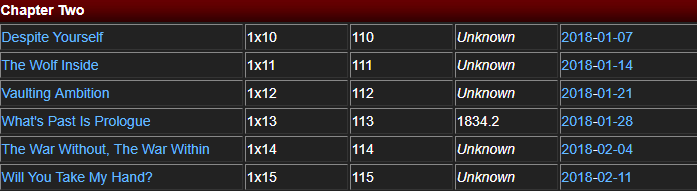
STAR TREK: Discovery Season 1, Chapter Two  (episodes 10-15 CBS All Access 2018)

The brave and sometimes lost crew of the USS Discovery have completed their first season, a surprising journey that took them into the most exciting corners of Trek lore such as the Mirror Universe and the Klingon homeworld.  Some fans who were dissatisfied with the first half of season 1 for “not being Trek enough” have been silenced and satisfied by the second part, which concluded on February 11 2018.  Others, of course, will never be happy as mixed reviews continue to indicate.

The writers of Discovery revealed that they wrote the season backwards, starting with where they knew they wanted it to end. They wanted to show the crew of Discovery coming together like a Starfleet crew should. What we didn’t know at the beginning, but do now, is that everything that seemed strange or un-Trek-like happened for a reason. Now we are in a place that feels much more familiar.

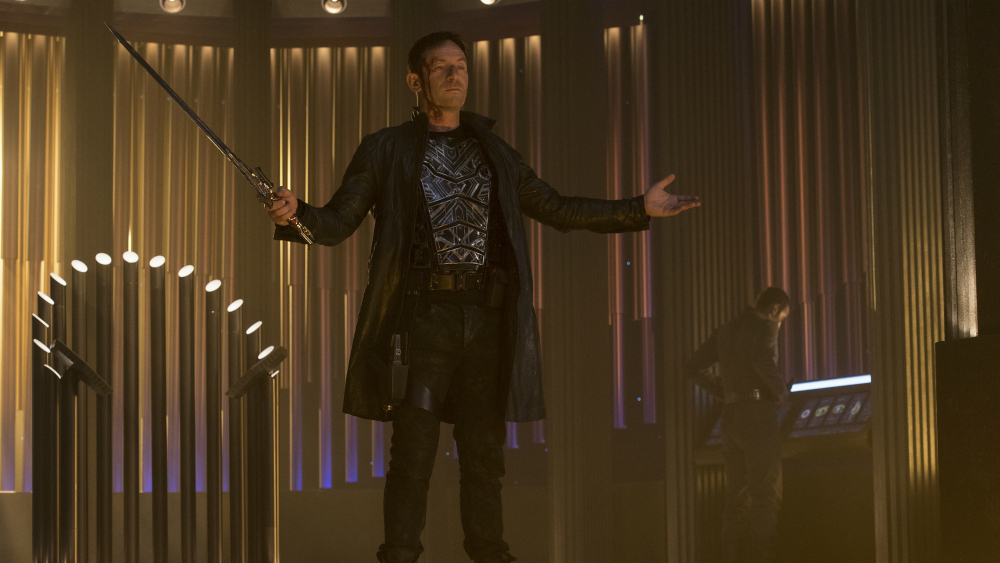
The key to the whole bait-and-switch of Discovery’s dark mood was Jason Isaacs, as Captain Gabriel Lorca. Now we know! Every action Lorca took from his very first appearance was not what it seemed. Lorca was not the Lorca we thought we knew, and it all came together so very satisfyingly. Isaacs is a genius, simply put. He was one of the few actors who knew the truth about Lorca, and with 20/20 hindsight, he infused his performance with clue after clue. Fans picked up on these clues and some figured it out early on. Gabriel Lorca, captain of the USS Discovery, [SPOILER] was actually from the evil Mirror Universe all along! Every move he made was a step to getting back “home”. His manipulation of Michael Burnham (Sonequa Martin-Green) was always strange. Now we know it’s because she and Lorca had an unexpected connection in the Mirror Universe. Fate was a major theme of this season, though we didn’t know for sure it until about 10 episodes in!

Jason Isaacs as Gabriel Lorca

The Mirror Universe is a treasured Star Trek location, used sparingly across the shows. It first appeared once in the original series, famous for its evil bearded Spock. We never saw it again until Deep Space Nine in the 90s. It returned for a two-part Enterprise in the 2000s, but this is by far the deepest exploration of the Mirror Universe yet. And that means that some characters that were killed off might still have living Mirror Universe counterparts, [SPOILER] like Michelle Yoeh’s Phillipa Georgiou….

The second half of the season even featured an episode directed by Jonathan Frakes (William Riker). He directed some of the best Trek episodes and movies past, such as First Contact. It was no surprise that Frakes did the best Discovery episode, too (episode 10, “Despite Yourself”).

The writers fixed one major complaint with the show, and that was the dreadfully slow Klingon dialogue. Starting with the second half of the season, all the awkward momentum-killing Klingon language scenes ended. Only a few relevant scenes were presented in Klingon during the second half, usually between the awesome Mary Chieffo (L’Rell) and Ash Tyler (Shazad Latif).

Speaking of Shazad Latif, the big fan theory from the first half of the season turned out to be true.* Latif was indeed secretly playing two characters: Tyler, and the Klingon Voq. Or not? Though the process isn’t clear, Tyler and Voq were merged into a single individual.  As a Klingon sleeper agent, Tyler’s role was being set up from the first episode. It all came to a head when L’Rell attempted to activate his inner Voq, which failed and led to a tragic Discovery death.

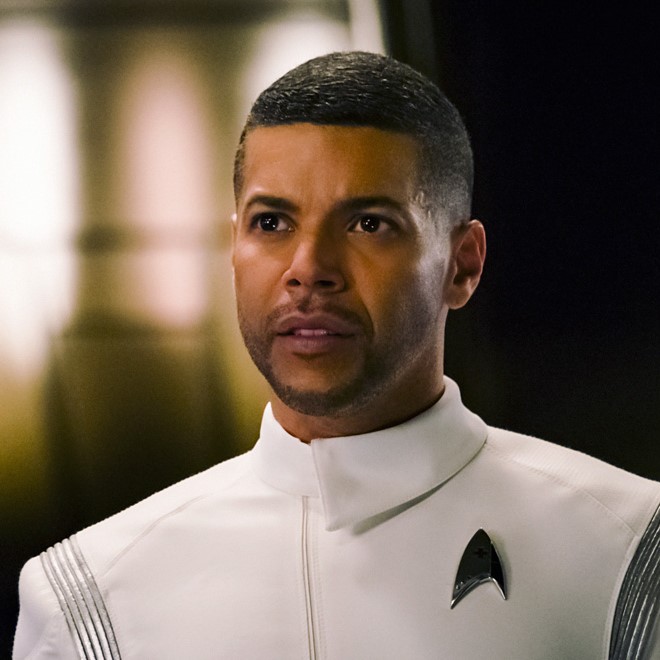
Wilson Cruz as Dr. Culber

The death of [SPOILER] Dr. Culber (Wilson Cruz) was, without question, the most heart wrenching death scene in Star Trek since Mr. Spock himself. Culber was set up as one of the few characters in a long term relationship. The love between Culber and his husband Lt. Stamets (Anthony Rapp) made the pair early fan favourites. Cruz’s Hugh Culber was the character that everybody liked. He was smart, too – Dr. Culber was suspicious of Captain Lorca’s true goals before anyone else was. His killing was shocking and unexpected, especially in its brutality. A followup scene, of Stamets cradling the dead Culber in his arms, stung the senses even more. Discovery raised the stakes by making you care about this pair, only to permanently separate Stamets from his one true love. It was brilliantly written and portrayed.

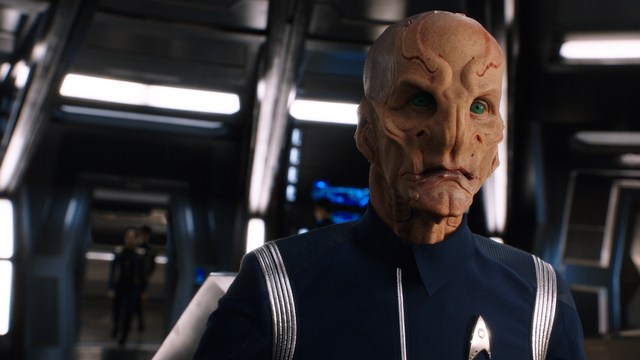
As the season gradually moved towards its conclusion, the crew bonded in a way that we wanted to see from the start: working as a team, caring about each other, under a charismatic commander. Doug Jones’ Saru has grown into a remarkable leader. Like Spock before him, his alien heritage shades his personality, all under the expert hands of Doug Jones. Mary Wiseman’s adorable Cadet Tilly also demonstrated growth and even earned a promotion to ensign. She proved herself a serious asset this season, with a bright future. All the characters that we were indifferent to in the beginning are beginning to move into our hearts…or are dead!  The darkness of the crew’s mirror selves was the crucible through which they trekked to become who they are now.  Most importantly, Michael Burnham went through hell and back to find the redemption that once seemed impossible.

Doug Jones as the Kelpian first official Saru

The show still has issues. It is, perhaps, a bit too eager to be “modern” with graphic deaths, edgy language, fight scenes and nudity. That feels very un-Trek, but then again, over 50 years have passed since the Enterprise first went to warp.  A lot of culture and history went down over those 50 years.

And speaking of the Enterprise, fans always had questions. Since Discovery takes place 10 years before Captain Kirk, is the Enterprise out there with Pike as its captain? Why does the technology of Discovery seem so different from the classic ship? These questions are beginning to be answered. A huge [SPOILER] teaser for next season revealed the original USS Enterprise herself, NCC-1701, commanded by Captain Pike, and accompanied by the original Alexander Courage 1966 theme music. Holy shit people – this just got real!

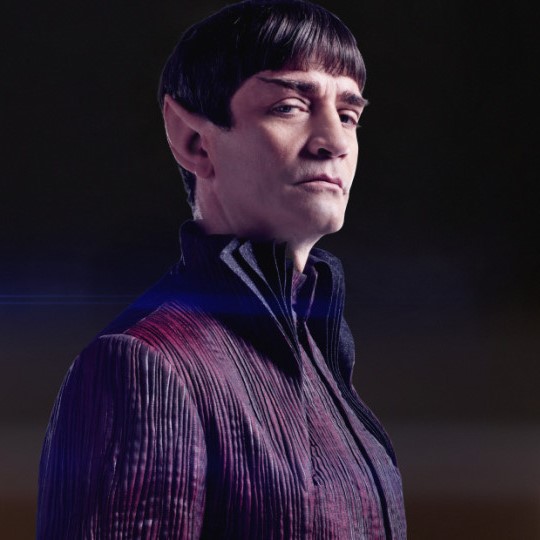
James Frain as Sarek

What will happen next? Jason Isaacs’ Lorca is dead and it seems highly unlikely we’ll ever see him again, meaning one of the big stars of the show is gone. Will they add another star to the cast? Will the writers continue to bring back the awesome Michelle Yeoh, who truly shined as her own evil counterpart? And who will we meet on the Enterprise? It’s too soon to meet Kirk, and the writers have said we will not see Spock on screen. But Christopher Pike? That seems possible. It would be cool to see Bruce Greenwood reprise the role from the films, but so far they have avoided any crossover with the movies. Sarek was re-cast as James Frain, for example.

Let’s not, however, get too caught up in our expectations and desires. The writers of Discovery answered early fan complaints by saying “wait and see”. By the end of the season, they proved they had a better handle on Trek than naysayers assumed. We know that they want the show to get closer and closer to the classic era as they progress. This is encouraging. What we have seen so far is enough to keep us watching again next season.

Engage.

4/5 stars


*  It was a clever ruse.  Shazad Latif was credited as Tyler, while Javid Iqbal was credited as Voq.  Sleuthing fans pieced together that Javid Iqbal had no other acting credits to his name, while Latif once went by the name of Iqbal.  Fans correctly predicted that Tyler and Voq were the same character.  “Javid Iqbal” was actually the name of Latif’s late father.  He chose the alias as a tribute.


NEWS: Glenn Tipton has Parkinson’s Disease

Bad news after bad news after bad news.  Such is 2018.  Last week, Pat Torpey of Mr. Big died due to complications from Parkinson’s disease.  This week, Glenn Tipton from Judas Priest announced he is suffering from the same illness.

In fact he was diagnosed 10 years ago, but it has now gotten to the point where it will affect his guitar playing.  Glenn Tipton will be unable to tour as usual behind their forthcoming new album, Firepower.  His onstage guitar role will be filled by co-producer Andy Sneap.

Tipton’s statement reads in part:

“I want everyone to know that it’s vital that the Judas Priest tour go ahead and that I am not leaving the band – it’s simply that my role has changed. I don’t rule out the chance to go on stage as and when I feel able to blast out some Priest!”

We wish Glenn Tipton all the best in his fight against Parkinson’s.  Priest’s new album Firepower will be out March 9 2018.

Sunday Chuckle: Dr. WHO?

Long time readers know that LeBrain’s dad is a unique and hilarious individual.  That’s why I have an entire category dedicated to “Shit LeBrain’s Dad Says“.   One of his quirks is refusing to call things or people by their proper names.  Therefore, “Lady Gaga” is “Lady Googoo” and he never called any pet we owned by their proper names.  Crystal = “Gozer”.  Ani = “Johnny”.

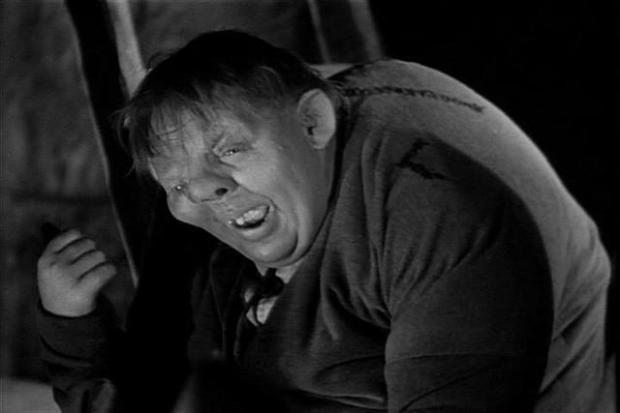
His latest name invention belongs to Jen’s surgeon, Dr. Sugimoto.  It came to me as no surprise when he asked, “So what does Dr. Quasimodo think of Jen’s recovery?”

Sorry, Dr. Sugimoto, that’s just the way my dad is!  It’s easier for him to remember names if he just makes them up.


#650: Frequent Buyer

GETTING MORE TALE #650: Frequent Buyer

I heard through the grapevine* recently that my old store (“the Record Store”) are discontinuing their frequent buyer cards.  These cards have a long, long history going back more than 25 years.  First we offered free tapes and CDs – buy 10, get one free.  Those were eventually phased out when we stopped carrying new tapes and CDs, but due to popular demand we added a free used CD card – buy 12, get one free.

Minimum wage just went up on the province of Ontario, to $14 an hour.  In 2019, it will go up again, to $15 an hour.  There is an election in six months, and the present provincial government is pulling out all the stops trying to appeal to young voters.  Some restaurants are battling the wage increase by cutting hours, raising prices or cutting staff breaks.  At the store any time wages went up, hours were cut and we reviewed what we were paying for incoming used CDs.  It appears that this time out, the Record Store is cutting the frequent buyer card.

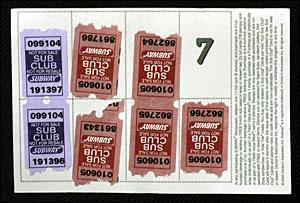
Frequent buyer cards are on the way out anyway.  Remember when Subway used to have them?  Seems like a long time ago now, because it has been:  Sub Club cards were phased out back in 2005!

Our frequent buyer card was very popular.  We would redeem several of them on any typical day.  You could cash it in for any used CD, $11.99 or less, and we gave away a lot of free CDs.  Customers would collect the cards, save them up, and treat themselves to something they really wanted.  It was a great incentive to get customers to buy more than one CD at a time.  People would buy an extra CD or two to collect the stamps, especially if they were close to completing their card.  Very few were the people who turned down the card.  “I have too much crap in my wallet,” was the most common reason for declining, but most people like the feeling of getting something for free.

It’s sad to see this era pass.  My wallet is empty; I redeemed my card last visit.  I know some customers would be furious.  People love to complain.  They used to whine that we wouldn’t stamp their cards if they bought a cheapie out of the “bargain bin”.  (If they were nice about it, I’d give them a stamp for every two cheapies they bought, though it was against the rules.)  Now they’re going to be pissed that they can’t get stamps at all.  I don’t envy the staff members who have to explain this to the complainy types.  (“Do you know how long I’ve shopped here?” will be one complaint they can look forward to.)

Prepare for more minimum wage fallout in Ontario over the next year.  This is only beginning.


*  I won’t say who told me…even if you do the unskinny “Bop”.

** That was a clue.


REVIEW: Ritchie Blackmore’s Rainbow – Black Masquerade (2013)

RITCHIE BLACKMORE’S RAINBOW – Black Masquerade (2013 Eagle Rock from a 1995 TV broadcast)

It’s a damn shame it took so long for this recording to get a release. Recorded in 1995, this CD release was a German TV broadcast, and is the only live Rainbow album to feature singer Doogie White. The only difference from the recent Stranger In Us All album lineup is the drum seat. John O’Reilly was jettisoned in favour of Chuck Burgi who was with Rainbow from 1983 to 1984.

There are some clear mixing problems on some tracks, notably the opener “Spotlight Kid”.  The backing vocals sound as if they are from another song, or audio leakage from another broadcast.   There’s little else wrong, aside from those things that happen in a real live setting.

In some respects this lineup of Rainbow was rather faceless, but Doogie White was an entertaining and versatile frontman.  He’s comfortable in all eras of Rainbow, and he does them all, plus two eras of Deep Purple.  That means Doogie White not only sings his own material (seven tracks from Stranger In Us All) but also must sing the songs of Ian Gillan (“Black Night “, “Smoke on the Water” and “Perfect Strangers”), David Coverdale (“Burn”), Ronnie James Dio (“Man on the Silver Mountain”, “Long Live Rock ‘N’ Roll”, “Temple of the King”), Graham Bonnet (“Since You’ve Been Gone”) and Joe Lynn Turner (“Spotlight Kid”).  White even does a classic Ian Gillian singalong in “Black Night”, imitating Ian’s “Doo doo doo doo doop!”, before breaking into a traditional drinking song with improvised lyrics.

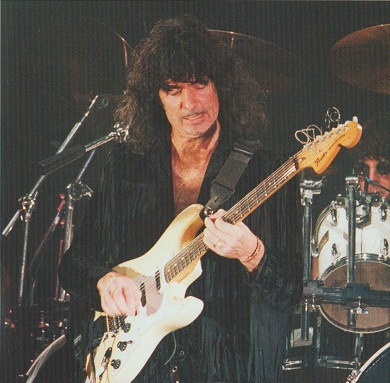
What about Ritchie?  Brilliant as ever, and even though he is notorious for…not enjoying…being filmed, it doesn’t seem to inhibit his performance here.  Extended solo sections sound like joy.  Perhaps having his true love on stage with him, Candice Night on backing vocals, soothed the savage Man in Black.  Regardless he sounds as flawlessly and quintessentially “Ritchie Blackmore” as ever.  There’s only one.

Live albums from obscure, buried periods like this often yield solid hardened gems.  “Hunting Humans” and “Ariel” are better live than they were on album.  Things are looser and livelier.  “Wolf to the Moon” has guitar and keyboard interplay that takes it further than it went on album.

The most intriguing track is the Dio-era classic “Temple of the King”.  As Doogie tells it, when the band were recording in America, they’d often pop out for a drink.  Sometimes they’d play music in bars and “Temple of the King” came from those times.

Given that there is so much bloody live Rainbow out there (with another brand new live album just announced!), Black Masquerade can understandably go fairly low on your want lists.  If you see it though, don’t hesitate.

4/5 stars

RIP Pat Torpey (1959-2018)

If any single person in the rock world seemed destined to keep on truckin’ despite a terrible diagnosis, it was Pat Torpey.  Even though he had Parkinson’s disease, he was still participating in Mr. Big in every way except physically playing the drums.  He wrote the parts and oversaw their performance by Matt Starr.  He was in the videos. He was so positive and inspiring in interview footage.

This debilitating disease finally took Torpey’s life at age 64.

This one hurts.  Mr. Big is one of those underrated bands made up of fantastic players, but largely ignored.  They had the dreaded “one hit” (“To Be With You”), but that’s not the song we’ll use here to remember Pat Torpey.

Listen to the power, precision and sheer rock and roll that is Pat Torpey on “Addicted to that Rush”.

Rest in peace.

#649: Denizens of “The Mall”

GETTING MORE TALE #649: Denizens of “The Mall”

Every mall has its questionable denizens.  I’m not talking about mall rats or bargain hunters.  I mean the people that are there every single day, not doing much of anything, just…being.

Stanley Park Mall in Kitchener, where I spent most of my childhood and early work life, had plenty of characters.

One of the first I was aware of was named “Butts”.  Nobody knew his real name, but he earned the nickname Butts by fishing cigarette butts out of ashtrays.  He was there frequently, and if not he was mining the ashtrays at Fairview Mall instead.  We left him alone, but one kid from school named Kevin Kirby decided to make fun of Butts one day.  Butts responded with a flurry of F-bombs.  It all seemed rather sad to me and not at all funny.  A kid making fun of this guy, and him telling a little kid to fuck off?  Why not just leave him alone?  I’m sure Butts was made fun of regularly, but Kirby was generally a dick.  (Any time he teamed up with me on a school project I did all the work and he coasted off my grade.)

Sue came along a little later.  She was in a bad car accident and was in a walker.  She really liked the Record Store I worked in, and had a bit of a crush on the owner.  We didn’t actually know about the crush until she gave him a Valentine’s Day card.  She used to park her walker at the front counter and talk to him for hours.  We didn’t assume that meant she had a crush, because there were lots of lonely people in the mall who just liked to talk.  It was one of the drawbacks of working there.  One day before leaving she gave him a card, and the owner didn’t realise it was a valentine.  He opened it in front of us, and we all saw it.  He was super embarrassed and really tried to avoid Sue after that.  I witnessed him taking a huge dive behind the counter to avoid her when she strolled by!  And that wasn’t an isolated incident.  I learned from it – I took a few dives behind the counter myself over the years.

The last regular denizen to discuss was the saddest and I don’t know what happened to him.  He was known as Johnny Walker.  Like Butts, nobody knew his real name although his first name may actually have been John.  They called him Johnny Walker because he would walk around the mall all day, every day.  The mall was like a big rectangle, and he would complete numerous circuits through the day.  He talked to himself as he did, mumbling away as he walked.  If you overheard him, it would sound like a normal conversation but with just one person talking.

I’ve been trying to find out what happened to Johnny Walker but nobody seems to know.  People at the mall said he was rich and didn’t work or need to work.  Maybe it was an inheritance.  Maybe an insurance claim.  Nobody knew.  His clothes weren’t ratty and he was clean shaven, but there was clearly something wrong with him.  It was no act.

The general rule of thumb was “just ignore him”.  Sometimes kids would make fun of him and he’d get loud and violent.  He’d been kicked out of the mall a few times after a violent or loud spell.  Then he’d go to a different mall to walk around, before finally returning to Stanley Park again.  He was never gone too long.

As told in Record Store Tales Part 6, I only dealt with Johnny Walker once at the Record Store.  He strolled in, talking to himself.  I took a deep breath and hoped nothing would set him off.  He walked, talked, and picked out a tape.  He came up to the counter and immediately stopped talking to himself.  I sold him the tape, gave him his change, and he walked out again, sharply resuming his conversation with himself.

All I really know about Johnny Walker is that at one point, he listened to tapes.

I hated seeing highschool mallrat kids following him around and shouting at him to “shut up”.  If Johnny got loud and violent, I have a feeling the kids were the root cause most of the time.  I’m sure they thought it was hilarious to harass this obviously damaged person.  But he was still a person, a human being.  Although it was sometimes startling to see someone walking around talking to themselves, it would have been nice if parents taught their kids a little respect.  We don’t know anybody’s secret battles.  Walker minded his own business any time I was present.

If anyone knows what happened to Butts, Sue, or Johnny Walker please drop us a line or leave a comment.  I hope they are all doing better.


REVIEW: Star Wars: The Last Jedi soundtrack (2017) [spoilers]

STAR WARS: The Last Jedi original motion picture soundtrack (2017 Lucasfilm/Disney)

Rejoice, dear soundtrack fans, for John Williams is slated to compose the music for the final Star Wars saga film, Episode IX.  It will be a fitting close for the saga, because Williams will have done all nine films.  Star Wars is about the saga.  The anthology films are extraneous to the core Skywalker story.  Episode VIII, The Last Jedi, is mostly about two Skywalkers:  Luke, and his nephew Ben Solo, inheritor of the mighty Skywalker blood.  The film score revisits many classic cues related to the main characters.  Even Darth Vader’s shadow still looms, musically and spiritually.

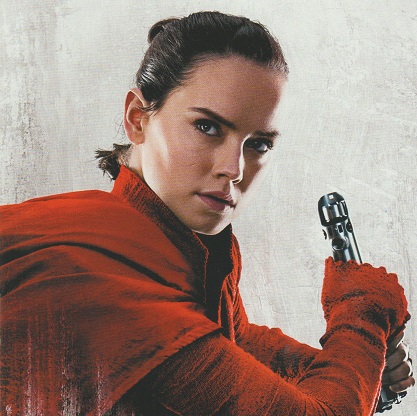
The Last Jedi spends much time revisiting classic musical cues, such as “The Asteroid Field” from The Empire Strikes Back.  One of the best revisits is of more recent vintage.  It’s also very different.  “Rey’s Theme”, from The Force Awakens, stands atop the mountain in company with the best of the best Star Wars music.  Hearing it again in The Last Jedi is a ready reminder that Williams has the magic.  Rey is the hero of this particular trilogy, and in The Last Jedi she proved herself.  It’s all up to her, now.

One of the biggest and most delightful surprises was the return of Yoda.  Yoda’s theme recurs within “The Sacred Jedi Texts”.  The beloved Jedi Master brought hope to the film, and his music lifts the soul.  The Last Jedi, however, is a dark film and much of the music matches.  It could be argued that The Last Jedi is the darkest film of the whole saga, even more so than Revenge of the Sith.  “Revisiting Snoke” reflects the dark, while tension-filled pieces like “A New Alliance” keep you riveted to your seat.  There are some fantastic percussion beats in the latter.

The military-style marching of “The Battle of Crait” recalls classic Star Wars action, and the music for the Luke scene is stunningly emotional.  In fact, the music for any of Luke’s screen appearances gives goosebumps.  John Williams’ score is, in many ways, more successful than the movie at hitting home.  I think this soundtrack release will receive more home play with the average buyer than the overlong movie.

There are two minor critiques to be addressed.  One is when Leia’s theme is dropped into the end credits for the touching Carrie Fisher tribute.  Yes, it’s heartbreakingly appropriate, but the music doesn’t fit well.  It comes across as a cut and paste job without enough transition.  A second is in regards to the Canto Bight casino music.  On many Star Wars soundtracks, Williams has a chance to go outside the box.  “Cantina Band”, “Lapti Nek”, “Yub Nub” and the music by Maz Kanata’s castle band are prime examples.  The steel drumming in “Canto Bight” sounds a bit too much like a retread of the original “Cantina Band”, but with more…samba.

John Williams did it again, but will we ever see a proper 2 CD edition with all the music?  That would be nice.

4.5/5 stars