Beat It

#1093: What Are the Earliest Pieces of Music You Remember Loving?

RECORD STORE TALES #1093: What Are the Earliest Pieces of Music You Remember Loving?

We are all shaped by our earliest experiences, whether we admit it or not.  What were the first songs and pieces of music that you remember loving?  Let’s have a look at 10 of mine, from my pre-heavy metal years!


10. The Doctor Who theme.

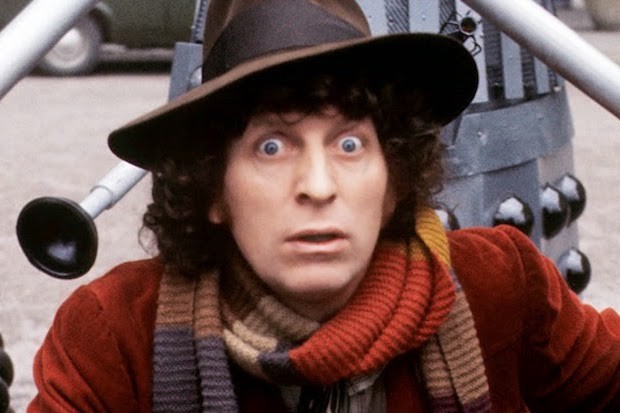
I grew up with the third and fourth doctors:  Jon Pertwee, and Tom Baker.  In particular I remember the Baker years as the most important to my childhood.  I asked my mom to knit me a long brown scarf like Baker’s Doctor wore.  I also remember sitting in front of the TV and recording the intro music to Doctor Who, so I could rewind and play that tape whenever I wanted to.  The music was all synth, and entirely spooky, cool and catchy.

9. John Williams’ scores.

Star Wars was first.  Empire was second.  Raiders was third.  Those three soundtracks made up the majority of my musical listening for years.  I didn’t own any other records.  Just John Williams.  When you consider the impact that Holst’s The Planets had on Williams, and heavy metal too, it is no wonder that heavy metal music would later speak so clearly to me.

8. Joey Scarbury – “Theme from The Greatest American Hero (Believe It or Not)”

My earliest musical loves all came from TV or cinema.  This was the first non-Williams record I owned, on a 7″ single.  Mike Post co-wrote the song, and he would figure into the career of Van Halen much much later.  “Believe It Or Not” was a pleasant pop song with an irresistible chorus.  The B-side was a ballad called “Little Bit of Us”.  I hated it.  I remember playing the single at 78 RPM to see if it would make the song any better.  It didn’t.

7. Magnum P.I. and The A-Team theme songs.

Here’s Mike Post again, with the theme music to Magnum P.I. starring Tom Selleck.  Funky electric guitar hovered behind a bouncing string section playing the theme.  It was like my John Williams soundtracks had collided with rock instrumentation.  I would sit in bed and hum these themes, singing myself to sleep.  And guess who was behind the A-Team’s music?  Also Mike Post!  Military drums and more symphonic theme greatness.  I was well on my way, wasn’t I?  These two themes were critically important to the whole action TV show genre.

6. Michael Jackson – “Beat It” and “Thriller”

Like every kid in the mid-80s, I loved Michael Jackson.  It would not be an exaggeration to claim that every kid in my grade liked Michael Jackson to a certain degree.  He had a number of hits on the radio, including “Say Say Say” with Paul McCartney, which I was frustrated to find was not on my Thriller cassette.  Of course, I had no idea who Eddie Van Halen was yet, but he was in my head, playing the “Beat It” guitar solo without my knowledge.  Michael’s songs were perfectly written and produced.  His videos were groundbreaking, but I hadn’t seem them yet.  I wasn’t even sure what he looked like at first.  Tabloid photos always showed a gaunt Jackson hiding from the cameras.  Once we saw his videos, I was shocked at how effeminate his speaking voice was, for a guy who sang so powerfully.  Yet, I only played two or three songs on the tape.

5. Culture Club – “Karma Chameleon”

Hot on the heels of Jackson was Boy George.  “Karma Chameleon” was impossible to forget, and I could care less about any of his other hits.  I had the Colour By Numbers cassette and never played it except for one song.  The album cover shocked me!  I thought Culture Club was synonymous with Boy George – a one-man band.  I had no idea there were other members, or what they looked like.  I liked the tune, but this band was not for me.  Eventually I would erase both Jackson and Boy George, and record other things on their tapes.

4. Styx – Kilroy Was Here

“Mr. Roboto” was the song that hooked me, but the album itself was pretty good:  “Cold War”, “High Time”, “Don’t Let It End (Reprise)”, “Heavy Metal Poisoning” and “Double Life” were awesome rock songs!  As before, I had no interest in the ballads.  I played them once or twice, and just skipped them from then on.  Styx were the first band with multiple singers that I liked:  Dennis DeYoung, Tommy Shaw, and James Young.  I wonder what influence this would later have on my love of KISS.  Styx were bombastic and huge.  The gatefold album came with lyrics, which I studied as if they were containing deep hidden meaning.

3. AC/DC – “Dirty Deeds Done Dirt Cheap”

I recorded this song from my best friend Bob, along with “The Mighty Quinn” by Manfred Mann, and if memory serves, “Ooby Dooby” by Roy Orbison.  I might be wrong on that last one, but AC/DC was the one I kept playing over and over, sometimes to irritate people.  I remember distinctly telling people I liked the chorus because the singer sounded like “he had a frog in his throat”.  My classmate Alan Runstedtler said “I like songs with the guy with the frog in his throat!” and so did I.  It was pure comedy and novelty to me, but the guitars lay the groundwork for what would come later.

2. John Fogerty – “The Old Man Down the Road”

MuchMusic had arrived!  I had no idea who Fogerty was, or that he was in a legendary rock band called Creedence Clearwater Revival.  All I knew was that he had a really, really cool music video on TV, and I couldn’t stop watching it.  The upbeat bluesy song with rattling slide guitar seemed cool to me.  I decided that I liked John Forgerty based on that one song.  I was slowly discovering rock music, and the last song on this list was the last one I loved before going full-metal in 1984.

1. Quiet Riot – “Cum On Feel the Noize”

I didn’t know what they looked like.  I didn’t know anything about their prior history, the two Japanese albums, or Randy Rhoads.  All I knew was I had finally found “my thing”.  My sound.  Bombastic, big, loud, catchy, well-written, and perfect.

Without Quiet Riot, I may never have taken my next tenative steps:  Helix, Iron Maiden, Judas Priest, and W.A.S.P.  All much heavier than Quiet Riot.  Without Styx, I might never got gotten into Quiet Riot.  Without John Williams, I might never had dug into Styx.  Who knows?

I loved Quiet Riot well past their best-before date.  I remember other kids at school making fun of me for calling Quiet Riot my favourite band.  “They’re out!” laughed Ian Johnson.  “Duran Duran are current!”

Fuck Duran Duran.

My journey into metal was natural and organic.  I don’t know if those kids from school even listen to music anymore.  Their loss.

REVIEW: Van Halen – 1984 (1984)

VAN HALEN (Not Van Hagar!) Part 7: House of Pain

VH_0003My latest series of reviews at mikeladano.com is an in-depth look at all the classic VAN HALEN albums, with David Lee Roth.  Jump in!
Part 1: The Early Years (Zero – 1977)
Part 2:
On Fire (Van Halen – 1978)
Part 3: Somebody Get Me A Doctor (Van Halen II – 1979)
Part 4: Everybody Wants Some!! (Women and Children First – 1980)
Part 5: Push Comes to Shove (Fair Warning – 1981)
Part 6: Intruder (Diver Down – 1982)

INTERMISSION – “Beat It”

Edward Van Halen picked up the phone.  On the other end was a man claiming to be “Quincy Jones”, asking Eddie if he was available to play on an album.  Not knowing the name “Quincy Jones” and assuming it was a crank call, Eddie slammed down the phone yelling, “Fuck off, asshole!”  Only a followup phone call from Michael Jackson clarified the situation.  Quincy Jones, the legendary record producer, was working on the new Michael Jackson album.  Could Eddie come by and play a guitar solo on an upbeat, driving song?

What Eddie laid down (in reportedly two takes) was selected by Guitar magazine as the greatest guitar solo of the 1980’s.

In one tension-filled solo, Eddie threw every trick from his bag: whammy dives, complex neo-classical trills, hammer-ons, pull-offs, tapping, harmonics, squeals, and finally a big fat pick slide.

If one wants to hear what Eddie Van Halen sounds like, all they need to do is play “Beat It”.

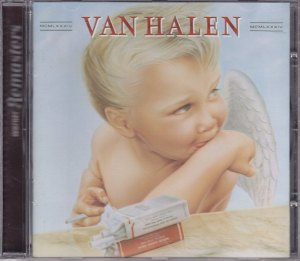
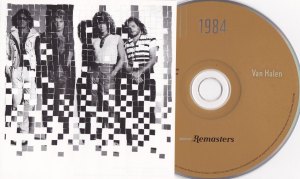
VH 194_0001VAN HALEN – 1984 (MCMLXXXIV) (1984 Warner)

Having compromised his artistic instincts on 1982’s Diver Down, Edward Van Halen refused to do the same again.  He and longtime engineer Donn Landee proceeded to build 5150, Eddie’s home recording studio.  There he was free to experiment with the synthesizers that had begun to creep into Van Halen albums.  When the studio was complete, Eddie felt that he had more control.

But there were other issues beginning to surface.  The Michael Jackson cameo, for example.  Roth had reportedly vetoed previous offers for Van Halen to do guest appearances on records.  (Van Halen had also appeared on the semi-obscure Brian May and Friends EP Star Fleet Project.)  When Quincy Jones and Michael Jackson extended the offer to appear on “Beat It”, Edward did it without telling the others in the band.  Roth claims he never would have objected to Edward working with an artist of Quincy Jones’ stature, but the feelings of betrayal had set in.

Edward and Roth both recall that Van Halen had the main keyboard hook from “Jump” for years, and had submitted it for consideration twice.  Roth and producer Ted Templeman rejected it both times, wishing Eddie to keep the focus on his guitar playing.  The third time was the charm, and Roth finally agreed to write lyrics for the song, now titled “Jump”.  Another synth piece of Eddie’s, now called “1984” was used on the album to precede “Jump”.

It’s impossible to underestimate the impact of “Jump”.  Those big fat Oberheim keys were unlike any that Van Halen had used before.  The song’s success made other bands pay attention, who were quick to begin adding keyboards themselves.  The trends this song ushered included the successes of Bon Jovi, Europe and the like.  Veteran bands like Kiss started adding keyboards to their live shows.  “Jump” was a perfect storm.  It captured Van Halen’s already likable and cool party-hearty spirit, with the cool new wave bands that had replaced punk.  Eddie’s tasteful guitar solo ensured that his fans would still listen to every note in order to figure out just how the hell he did that.  Meanwhile, who couldn’t love his sheepish grin in the music video?

If you listen carefully during the fade, you’ll hear a familiar guitar riff.  Can you name it?  That very riff was recycled in 1991 on Van Hagar’s song “Top of the World”!

“Panama” was also a single, no keyboards this time!  David made the ladies faint every time during the middle break.  The high-flying video showed their sense of humour and electric stage show.  If any fan was left doubting after “Jump”, then “Panama” assured them that all was alright.  Guitar pyrotechnics and cool lyrics are where’s it at.

What’s not to like about “Top Jimmy”?  Perfectly fusing his experimental and hard rocking sides, Eddie created a hook using guitar harmonics for “Top Jimmy”.  There’s the patented Van Halen backing vocals, a smokin’ song, and David Lee Roth running the show.  This is one of those album cuts that’s every bit as good as the better known tracks.  Same with “Drop Dead Legs”.  Alex’s steady beat, Eddie’s smoldering riff, and Roth’s leathery moan are a trifecta of perfection.  If you listen to the riff, you’ll notice Eddie’s innovative way of using a whammy bar in a musical fashion, as an actual part of the music.  Towards the end, Eddie goes into a different riff, and solos his way to the side’s fade-out.

“Sit down, Waldo!”

Dave’s knack for video scored a home run with “Hot For Teacher”.  You wouldn’t necessarily think a song like this, a hard shuffle with a lot of talking in it, would make for hit.  Hell it opens with 30 seconds of nothing but drums!  “Hot For Teacher” remains a pinnacle of hard rock music videos.  There’s the humour, the girls, the cool car, and of course “Waldo” who got the last laugh, didn’t he?

“I’ll Wait” is the third and last synth track on the album (including “1984”).  It too was chosen as a single, and like all the others, it has stood the test of time.  “I’ll Wait” is a very transitional song.  Roth keeps it cool, but musically, Van Hagar was already in sight.  The echo of later songs like “Feels So Good” can be heard in that throbbing keyboard.  “I’ll Wait” (credited to the band and Michael McDonald) went through a period in the 1990’s of sounding dated, but today it sounds timeless.  Rather than commercial, today the keyboards sound classy.  The guitar solo is simple and full of feel.

Ominous guitar tapping and shredding opens “Girl Gone Bad”, a devastating assault of Eddie’s most aggressive guitar.  A song like this absolutely needed to be on 1984 in order to maintain the band’s metal credentials.  Many teenagers injured their wrists trying to pick as fast as Edward.  Meanwhile, Roth does his very best Robert Plant impression during the middle section.  “Yeah, ahh, ahh, owww!  Oooooooowhoah!  Ma…ma…ma…oh!”

Finally, exhumed from the band’s distant past is “House of Pain”.   This song was always one of Van Halen’s heaviest, featuring a chugging metallic riff.  Eddie’s increasingly interesting solos have evolved, and they make the last couple minutes of “House of Pain” absolutely indispensable for anyone wanting to know anything about the electric guitar.

As “House of Pain” fades out and 1984 comes to close, a sadness overtakes me.  The end sounds abrupt; unfinished.  The album was so good, so great, that I want to hear more.  But there is no more.

VH 194_0002

Another successful tour followed the 1984 album, and the band were burned out.  David Lee Roth got the covers EP Crazy From the Heat out of his system.  There was also some kind of companion movie to the EP in the works, something that bothered the Van Halen brothers greatly.  After a while, the band settled in to begin writing the next album, their seventh.  It was not to be.  According to Alex Van Halen in a fall 1991 M.E.A.T Magazine interview, David Lee Roth fired the entire band.

Van Halen had to replace a frontman, a difficult thing to do in any circumstances, much less when that frontman was David Lee Roth.  In the meantime, David Lee Roth had to replace an entire band.  A difficult thing, especially when the lead guitar player of that band is oft-recognized as the best in the world.

Both bounced back.  Van Halen pondered a number of singers including Patty Smyth of Scandal, before meeting Sammy Hagar.  Hagar’s energy and musical chops helped fill Roth’s sizable shoes.  Meanwhile, Roth chose to replace Van Halen with not one but two acclaimed virtuosos.  On bass was ex-Talas maestro Billy Sheehan.  On guitar, from Frank Zappa’s band, little Stevie Vai.  Throw in the talented Gregg Bissonette on drums, and you had one hell of a band.

Both artists would find 1984 hard to top in the eyes of the most stubborn old fans.  It’s hard to blame them.  1984 is a very special record, and quite arguably Van Halen’s very best.

VH 194_00045/5 stars

And that is all.

Or not…

They did try again, in 1996.  We’ll be taking a look at that next time.