A sequel to Getting More Tale #795: A Case for Security
GETTING MORE TALE #874: Impossible to Display
Shoplifting accounts for over a third of inventory shrinkage in retail.* At the Record Store we had numerous strategies to combat this, as discussed in prior chapters. An alert staff can stop a staggering amount of theft, but the last line of defence for us was a magnetic security tag system. Trying to lift a de-tagged item would set off alarms at the store.
 Cassettes, one of of our lower-cost items compared with CDs and box sets, were protected with a single magnetic strip hidden on the seam on the shrink wrap. These had to be de-tagged magnetically with a device — they were single use only and the tag left the store with the product after being disarmed. Each tag cost five cents, and that added up. Higher-cost box sets were protected with multiple tags hidden on the edges of the packaging. CDs, which also carried significant cost but were the majority of our store, were protected by a double-edged sword. They were housed in an unbreakable and re-usable plastic longbox, with the magnetic tag stuck to an inner edge. These tags never had to be disarmed. You just removed the security case with a special key and set it aside for re-use on fresh inventory.
Cassettes were checked weekly to re-secure loose tags. We kept a close eye on everything and everyone. Combined with good practices, the security gate at the front of the store prevented a lot of theft. Still, there were certain items that were unfortunately hard to both a) protect properly and b) display properly at the same time. Unusual packaging made some albums difficult to stock on the shelves with the rest of the catalogue.
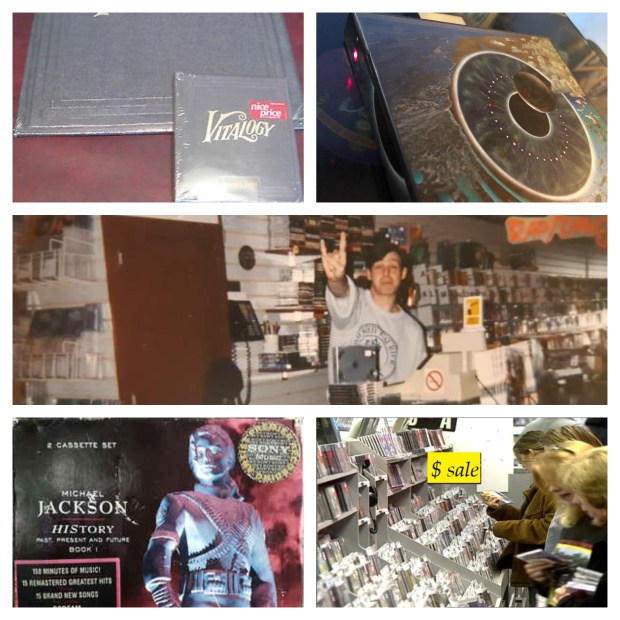
 December 6, 1994: Pearl Jam – Vitalogy compact disc
Although we weren’t equipped to display records, we had no problems when Vitalogy was released on vinyl November 22, 1994. We sold the five copies we stocked on the first day. It was the CD release two weeks later that caused us grief because we ordered those en masse.
The CD release of Vitalogy came ensconced in a miniature cardboard book-shaped package. It had the same dimensions as a normal CD case, just flipped upright on its short side. You could put them in a CD security box no problem, but T-Rev discovered a weakness in its design. Because it was thinner and more flexible than a standcard CD case, you could with a little effort force it out of the security box without unlocking it. This meant we couldn’t safely stock it out on the shelves.
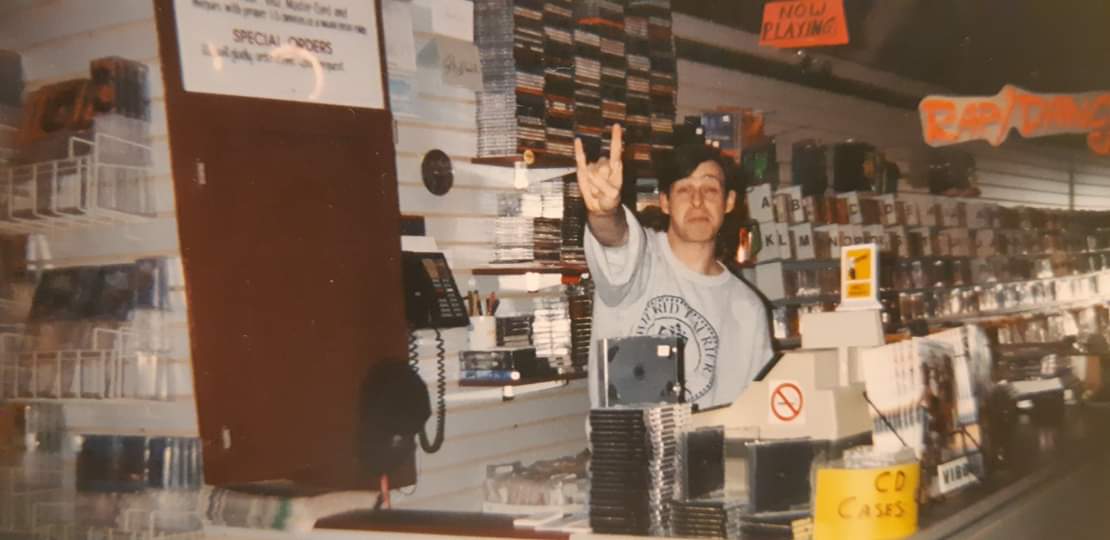
Instead, the boss man set up a small box under close watchful eye at the front counter. He placed the Vitalogy CDs in it, with every fifth copy turned 45 degrees so he could easily count how many were in there at any given time. If he knew that he had 20 copies in the box, but suddenly only counted 19, then he would see if anyone in the store was carrying one around to purchase it. Eventually we just put it back in the security cases, assuming nobody would be as inventive as T-Rev in trying to get one out.
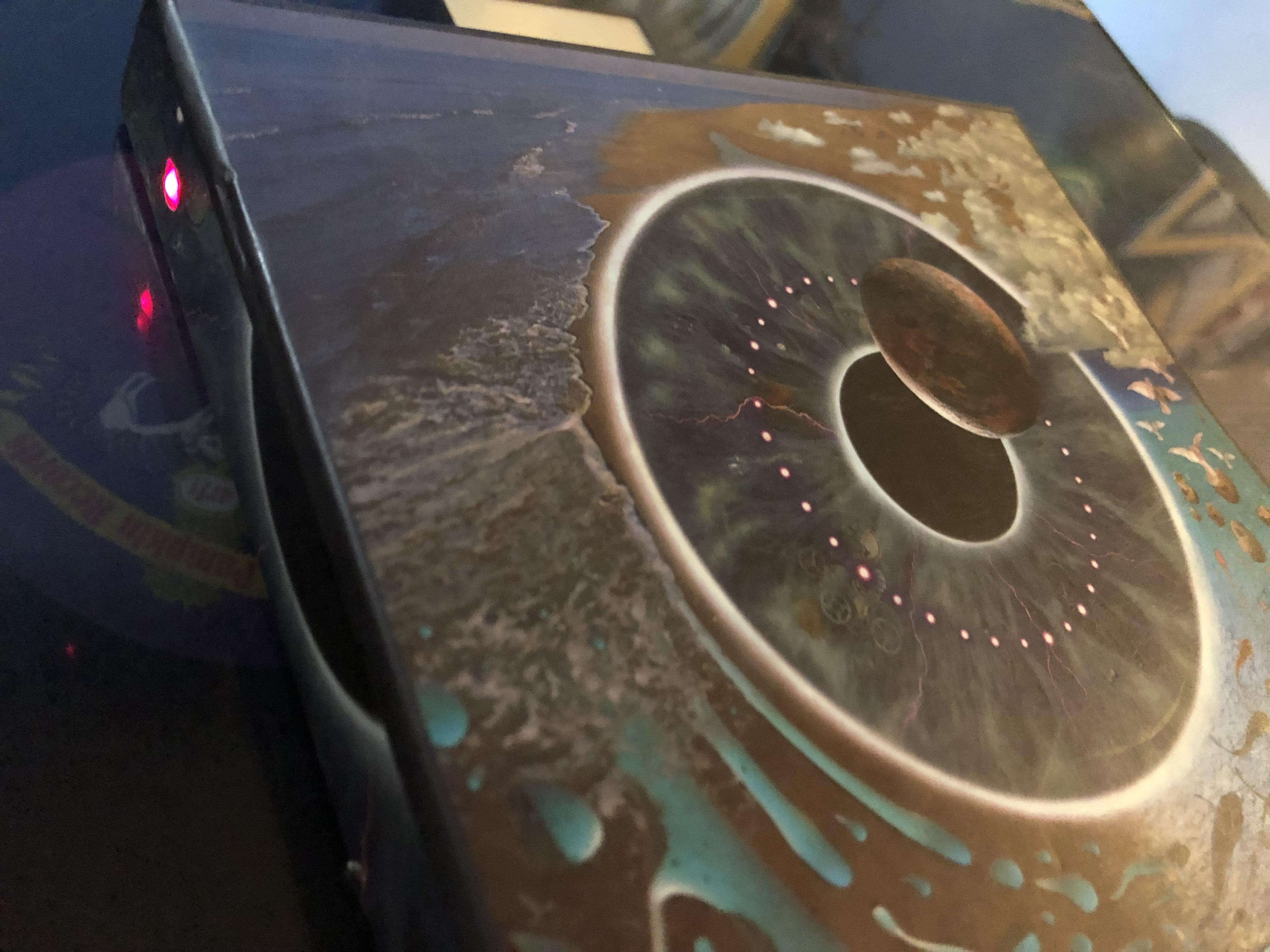 May 29, 1995: Pink Floyd – p·u·l·s·e compact disc with flashing light diode.
The original CD release of Pink Floyd’s p·u·l·s·e had a unique gimmick. The oversized cardboard shell contained the 2 CD album in a book-style case, plus a flashing light gimmick powered by two AA batteries in a hidden compartment. When the CD was reissued without the light and space-consuming batteries, it could fit in a standard size CD security box. However the full-on, limited edition original was too large to be stored in our shelving. Once again we had to put them at the front counter, this time stacked in a pile.
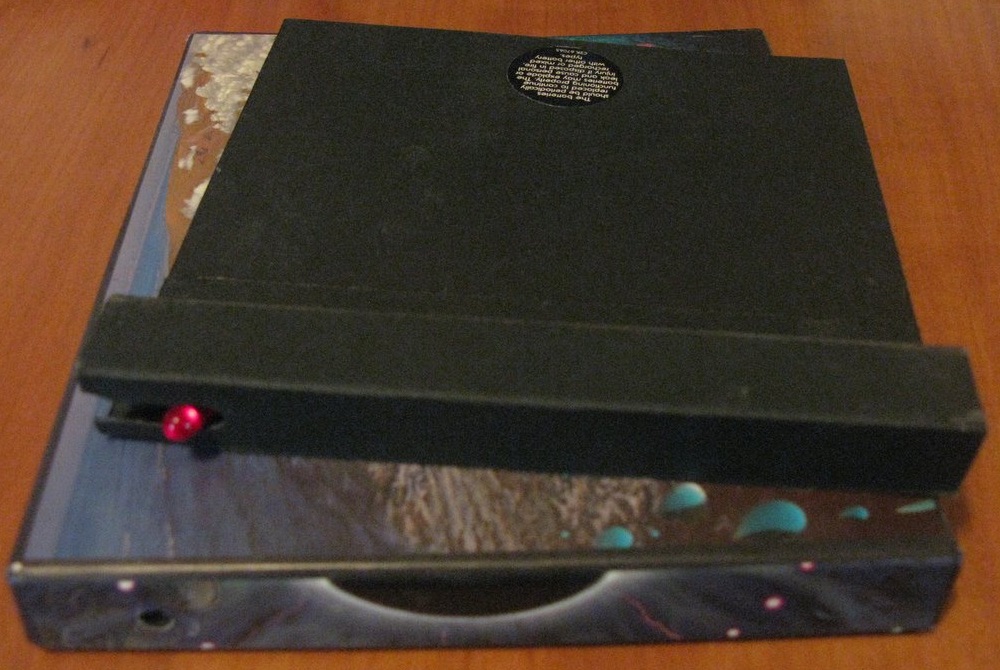 What I remember most about the “pile of p·u·l·s·e” is that flashing light. However many copies were in that heap at the front counter, the lights flashed incessantly. You could not turn them off. Once you purchased the CD, you could remove the batteries from the inside. Safe in their shrinkwrap on our countertop, they just flashed and flashed away. Never in synch. No two copies were ever in synch. I guess it might have depended on how much juice was still in those batteries. Copies of p·u·l·s·e flashed for years without a battery change.
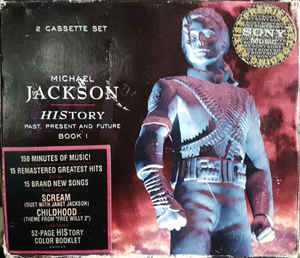 June 20, 1995: Michael Jackson – HIStory double cassette in cardboard sleeve
Although cassettes were being slowly phased out, we still had to carry certain big releases on the format. In 1995, Michael Jackson still sold impressive numbers. Enough that we carried one cassette copy, which once again, was packaged in such a way that we couldn’t display it on our cassette shelves. Unlike other doubles, which sometimes came in a “fat” double cassette case (like Phantom of the Opera) or two normal cases packed together (like The Song Remains the Same), Michael Jackson’s HIStory came with the two tapes face up, side by side, in a cardboard box. It was dimensioned like no tape shelving system known to man.
Too cumbersome to take up valuable front counter space, HIStory was deigned be displayed without fanfare on a shelf behind the desk. To buy a copy of HIStory on cassette from us, there were only two paths to a sale:
- The customer would have to notice it behind the counter when purchasing other items, and ask for it.
- The customer would have to ask if we carried it, and not everyone asks.
My solution was clever. I had just acquired a computer program that enabled me to create perfectly formatted cassette J-cards for my tape collection. I used it to print a sleeve that said “MICHAEL JACKSON – HISTORY – 2 CASSETTE SET – ASK AT COUNTER”. I put that in an empty tape case, and filed it with the rest of the Michael Jackson cassettes. It took forever but it must have sold eventually! I don’t know if I was responsible because it didn’t happen on my shift.
We had a cramped little space and we made the best of it. Given that we were constantly battling for every square inch, any time an artist came out with something that was impossible to display, it created a unique little headache for us!
* The other 2/3rds are largely staff theft and errors.


 Peter the Rocker was a regular. The legend goes that he painted the Metallica “stencil guy” on the hood of his car. His Austrian accent made him sound more “metal”. He once announced loudly, “



 mikeladano.com