To go along with the occasional Sunday Screenings and Sunday Chuckles, it’s the Sunday Song Spotlight! With all due respect to John at 2Loud2OldMusic, who has been doing a feature called My Sunday Song for years now. I’m going to try and spotlight songs that I have loved for a long time, but have not written about in recent years. Hoping to shine a light on some great music that you missed.
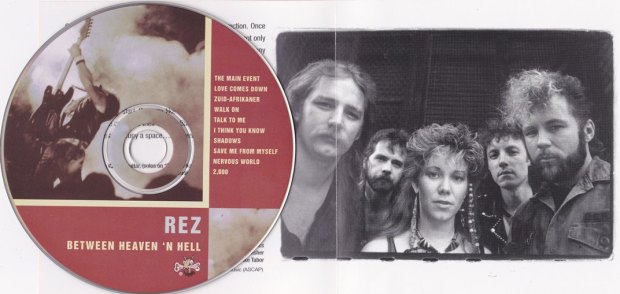
For the debut Sunday Song Spotlight, I want to talk about a tune that I first heard in 1986. All I had was a taped copy of a taped copy of an original cassette, but the power of the song remained among the hiss: “Shadows” by Rez.
Rez were a Christian rock band (Resurrection Band) and that was all I knew. I had no other information. I’d never seen a picture of them. But I loved “Shadows”! And you don’t have to be Christian to love it. There’s only a hint of religion in the words. A warning tale of drugs and suicide, “Shadows” is a power ballad with emphasis on power. It resonated with us as kids. Singer Glenn Kaiser has the rasp of Rod with lungs to spare. What a singer! The way his voice powers through the song takes it to another level. Add in a cool guitar solo and relentless rock beat. “Shadows” kicks ass. The most powerful power ballad you’ll hear today. Truly an awesome song, and the words still give me chills.
In the words of his mama, “He was my only son.” In the words of his sister, “He was on the run.” In the words of his girl, “How could it end this way?” In the words of his daddy, “Well he never had much to say.”
Goodbye Kathy and goodbye Mom, there’s voices in my head Angel dust and tortured dreams say I’d be better dead
You, you chased the shadows because your hopes And dreams have been lost to the night
Hey, Billy, did you hear the news? Johnny’s gone for good They say his mama’s all broke up They found him in the woods Kathy just couldn’t understand Sheriff, he just looked tired Some will play and some will pay And Johnny played with fire
Goodbye Kathy and goodbye Mom, there’s voices in my head Angel dust and tortured dreams say I’d be better dead
You, you chased the shadows because your hopes And dreams have been lost to the night
Johnny’s dead and buried now out on the edge of town Drove by his grave the other day, that’s when the fear came down I hate the night that took his life, but now it’s haunting me I may be young, may be confused but I gotta be free
God, are You there, can You hear me now? Show me how to hope Lost in the dark on a dead end road, please save me from myself
Lord, You, You took the shadows All my fears and doubt and brought me out of the night Lord, You , You take the shadows Give me hope and love and turn my darkness to light
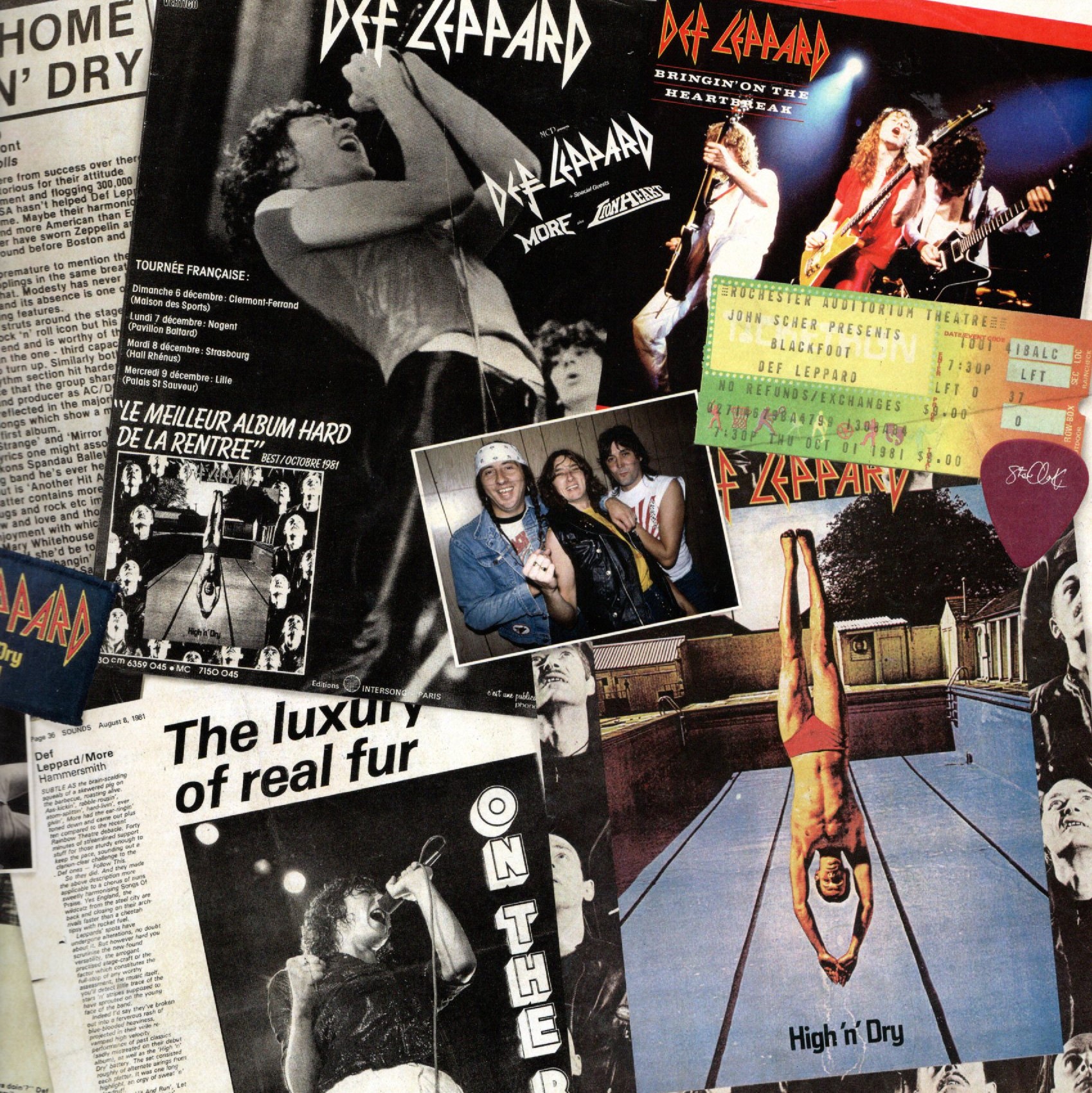
The fine folks in Def Leppard have been doing an outstanding job of getting their rarities and fan-wishes on the store shelves. We wanted the Def Leppard EP reissued, and they did it. A few times in fact, including a cool 3″ CD included in a recent box set. We wanted all the early B-sides available on CD, and here they are. We begged for decent remastered CD editions of High N’ Dry and On Through the Night, and the band delivered. More than once.
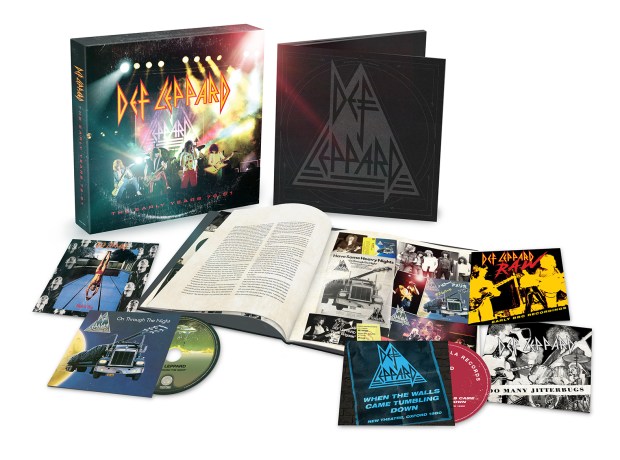
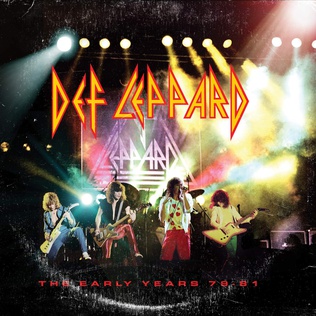
Now there is a wealth of Def Leppard riches out there for you to buy in your format of choice. The Early Years 79-81 is the way to go for a complete set of the music from those years. We’ve gone over it all disc by disc so let’s talk about the box itself.
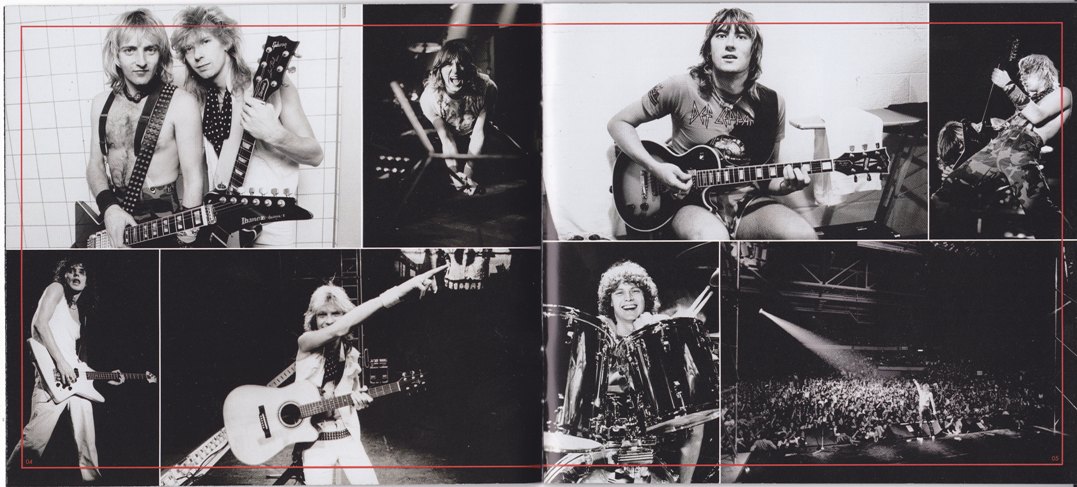
The 10″ x 10″ box format is awkward to store, but Leppard seem committed to the size, with their London to Vegas set having the same dimensions. They’ve at least maximised the space, with a generous hardcover book included inside. This book has the liner notes and essays you expect, broken down disc by disc. A generous set of unreleased photos keep the eyes from being bored while your ears indulge themselves. The CDs are stored separately in a cardboard folder, and they don’t seem to move around in there. Each one has its own cardboard mini-sleeve. The packaging works.
The sequencing is perhaps the only complaint. The set is not a chronological anthology of the early years. In terms of sequencing it’s best looked at as a On Through the Night / High N’ Dry deluxe edition. Two albums, remastered in their original track listing (not the 1984 track listing for High N’ Dry) with a bonus live CD, a bonus disc of B-sides and rarities, and a bonus disc of BBC sessions from the period. Which really doesn’t matter so much, except when trying to review a chronological Def Leppard series and figuring out what order to do it in! The sequencing matters little because the discs are so complete. All those singles, B-sides, edit versions, unreleased versions, and live recordings are what fans have been demanding ever since the idea of “deluxe reissues” were conceived. This is it!
Oh sure, there are a few things left in the vaults. We know of a couple more early tracks called “Heat Street” and “See the Lights”. These are unlikely to ever see official release, but one must leave some scraps for the bootleggers. If the band ever changes their minds, that’ll be cool, but the best stuff is right here.
Consider that these three complaints about The Early Years 79-81 (box dimensions, sequencing, missing bootlegs) are so minor, we can disregard them in our final score. This box accomplished what it set out to do, and when listened to in completion, offers up a real clear picture of the band’s ability and determination. They had a bright future ahead, and a chapter was about to close while a new one opened. With the band scheduled to re-convene with producer Robert John “Mutt” Lange in early 1982, life would never be the same again.
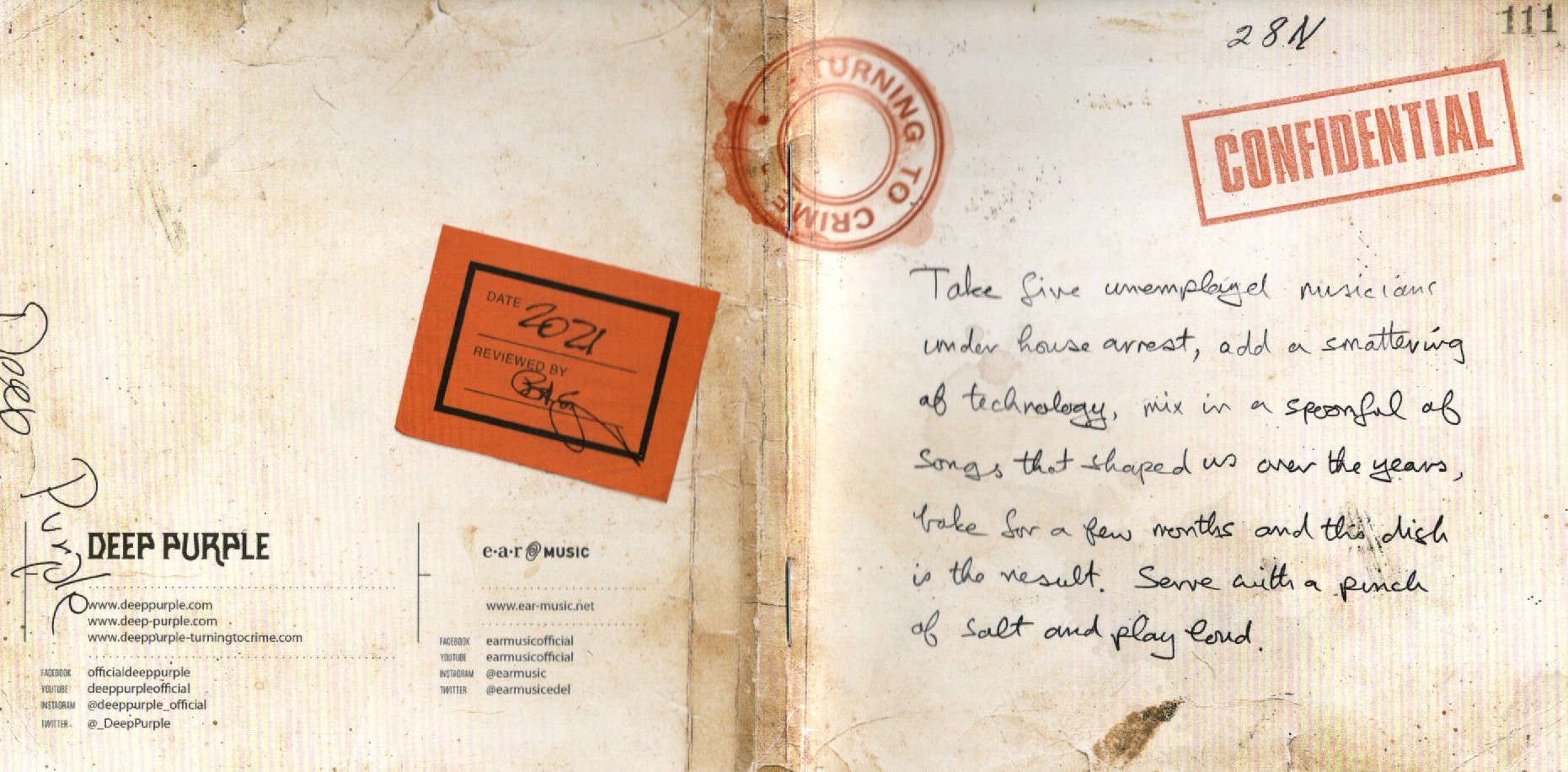
DEEP PURPLE – Turning to Crime (2021 Edel / mailing list bonus track)
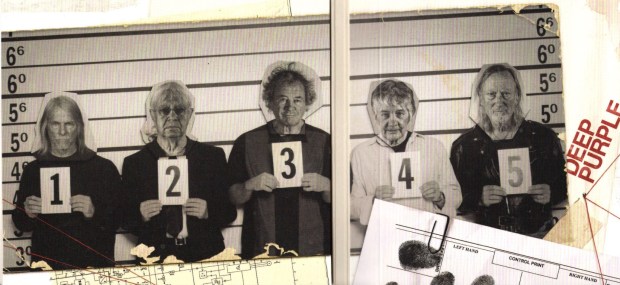
Deep Purple are more known as the kind of band that people cover, rather than a band known for doing covers. Sure, “Hush” (Billy Joe Royal) was a hit. “Kentucky Woman” (Neil Diamond) was almost a hit. Their first three records are cover-heavy, but that was the 1960s. Live covers, like “Lucille” (Little Richard) or “Green Onions” (Booker T. & the M.G.’s) were more of an in-concert thing. Until the surprising inclusion of “Roadhouse Blues” (The Doors) on 2017’s InFinite.
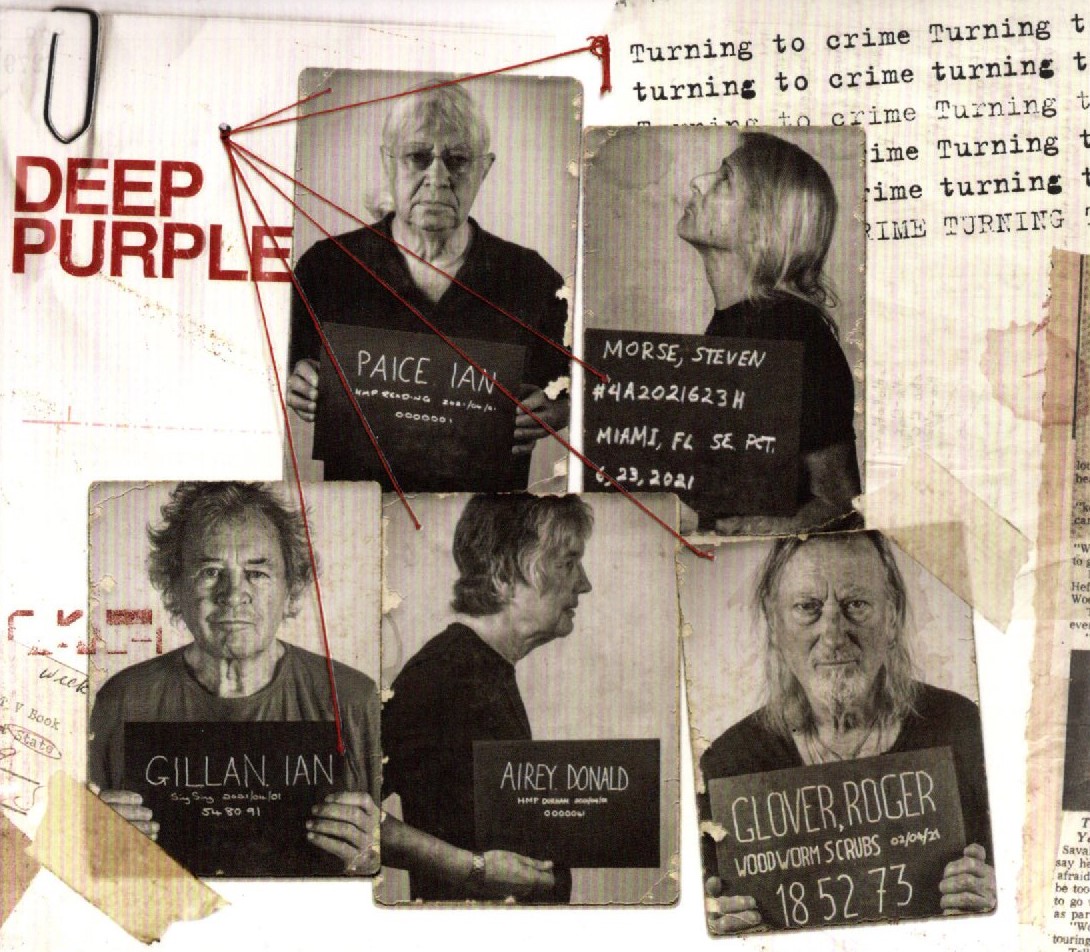
Stir in another surprise: a worldwide pandemic! You get one of the world’s greatest bands doing a covers album to keep from going stir-crazy! Re-teaming with producer Bob Ezrin, the boys in Deep Purple decided to turn to crime and steal songs from other artists. With twelve tracks plus one bonus, it’s 53 minutes of Deep Purple doing their thang all over the oldies. How salacious!
The excellent packaging even tells you who did the original tunes if you didn’t already know. Love’s “7 & 7 Is” has been covered numerous times by our beloved rock artists, including Alice Cooper (twice) and Rush. Without comparing, the charm of Purple’s version is threefold: 1) Ian Gillan’s mannerisms on lead vocals, 2) Ian Paice’s pace, and 3) Don Airey’s quaint 80s backing keyboards. Not to be outdone, Steve Morse turns in a solo that can only be described as brief but epic.
Sax and horns join the for “Rockin’ Pneumonia and the Boogie Woogie Flu”, once covered by Aerosmith. You so rarely get to hear Deep Purple gettin’ down with a horn section (although they once did a whole tour based on that concept). It’s brilliant, and listen for a nod to “Smoke on the Water” in a musical Easter egg. “Rockin’ Pneumonia” is reminiscent of “Purple People Eater” from Gillan/Glover.
Like a polar opposite, Fleetwood Mac’s “Oh Well” is built tough and heavy. Morse plays the main blues riff on an acoustic, while Don Airey’s big Hammond roars behind. This smoker will sound great if Purple play it live. Meanwhile, 73 year old Ian Paice plays those drums like a berzerker.
Mitch Ryder & the Detroit Wheels were an influence on early Purple. Ritchie Blackmore confessed to appropriating their kind of beat for “Kentucky Woman”. You can absolutely hear that here on “Jenny Take A Ride!”. The two songs are connected via Purple’s playing. There’s also a mid-track segue into one of Gillan’s big influences, Little Richard’s “Jenny Jenny”.
Bob Dylan isn’t an artist you think of in conjunction with Deep Purple. “Watching the River Flow” has a beat you can get behind. Ian Gillan’s actually the perfect singer to do Dylan, isn’t he?
The horns return on Ray Charles’ “Let the Good Times Roll”. It sounds like “Deep Purple go Big Band”! Which is not a bad thing. Especially if you want a varied covers album. Airey and Paicey really go for that jazz band vibe. You can picture this one in a big smokey club somewhere in Chicago.
It’s Little Feat next with “Dixie Chicken”, a track we can assume came in via Steve Morse. Airey and Morse are the stars here, but as a cover it’s a little nondescript. The Yardbirds’ “Shapes of Things” is similarly like sonic colourlessness, though Roger Glover gets to shine a little. They can’t all be highlights on this album.
Speaking of album highlights, this one will doubtless be divisive. Some will think it’s too corny for Deep Purple, others will love the fact that it’s so different and Purple’s take is so original. Lonnie Donegan’s version of “The Battle of New Orleans” is the main inspiration rather than Johnny Horton’s. You can hear that in the beat. But what might really surprise people about “The Battle of New Orleans” may be the singers. For the first time, that’s Roger Glover up front. Ian Gillan, Steve Morse and Bob Ezrin are also credited singers. As for Purple’s arrangement, it’s jaunty and slightly progressive where the guitar is concerned. It’s certainly not pure country though it does have plenty of twang and fiddle. Crossover hit material?
The album has not necessarily peaked as there are still great tracks ahead. “Lucifer” by the Bob Seger System is right up Purple’s alley. Purple could easily put it in a concert setlist. It’s jam-heavy and sounds right at home. Another track in the same category is Cream’s “White Room”. Keen-eared Purple aficionados will recall Purple opened for Cream on their first US tour. Of course, only Ian Paice is still around from that tour, but he got to witness the original band play it every night. It’s certainly odd hearing a band that is clearly Deep Purple playing such a recognizable Cream song, but damn they do it so well! What’s amazing is these jams were recorded separately in home studios by family members.
The final track on CD and LP is “Caught in the Act”, a medley of famous songs that they Purple-ized. Many of these, Purple have played live such as “Going Down” and “Green Onions”. We’ll save some of the others as surprises. They finish the medley with “Gimme Some Lovin'” by the Spencer Davis Group, and it’s a totally smashing way to finish an album that was some massively fun listening.
But it’s not really the last track if you signed up for Deep Purple’s Turning to Crime mailing list. A specially numbered 13th track was emailed to those who subscribed. “(I’m A) Roadrunner” by Junior Walker & the Allstars is another horn-laden Deep Purple soul jam. Just drop it in the folder and it’s already pre-numbered as the last track on Turning to Crime. Great sax solo!
What you won’t hear on Turning to Crime are any of Purple’s earlier classical influences, for those members are gone. Nor will you get any Beatles whom Purple covered twice in the early days.
How many times will you end up reaching for a Deep Purple covers album to fill your speakers? Hard to say, but know this — you will enjoy it every time you do.
DEF LEPPARD – Raw – Early BBC Recordings (The Early Years Disc 5) (2019)
This final disc of Def Leppard early tracks consists of two separate BBC sessions: 1979, and a few songs from Reading in 1980. Due to this fact, there is some minimal repeat in the song selections, but you won’t mind getting two versions of “Wasted” instead of just one! This disc offers a variety of early Leppard songs and rarities.
BBC Andy Peebles Session – June 7 1979
The EP was out and Leppard were starting to get radio play. They were invited to the BBC and recorded four songs for broadcast.
Opening with “Glad I’m Alive”, Leppard get one of their most underwhelming non-album tracks out of the way early. It sounds better and heavier than the studio cut on Disc 4 produced by Nick Tauber. Solos and backing harmonies are fire. “Sorrow is a Woman” follows, with a quiet, cool laid-back intro of a different flavour. Things kick in on the chorus of course, but this is not the definitive version of the track. The guitar solo section has a nice shimmer to it. Third up is “Wasted”, which opens with a growl. That guitar is vicious, and Joe just goes for it on the vocals. This recording has bite. The final track, “Answer to the Master” is absolutely fine.
Friday Rock Show Session – October 3 1979
“Satellite” enters with a crash of drums, a little hesitant on the pace. The fun “Rock Brigade” is similar to the early version on Disc 3, but heavier. The second version of “Wasted” sounds heavier than the first — the band was growing. Really this song is a highlight of anything it’s on. This BBC sessions ends with “Good Morning Freedom”, probably the fastest and most pumped-up version we’ve heard yet. This might be the best recording of the track available.
Live at the Reading Festival – August 24 1980
The next time the BBC caught up to Def Leppard, they had an album out. With Ozzy Osbourne, Iron Maiden, Whitesnake and UFO on the same bill, Leppard were anxious. Then Ozzy dropped out, and Leppard had to follow Slade in one of their best festival performances — a daunting task. Fortunately the bandt fought hard and had some killer new material up their sleeves.
Opening with “Satellite” (2nd appearance on this CD) and “When the Walls Came Tumblin’ Down” mashed into a medley, you can hear that the band were fired up. After this workout, it’s the unreleased “Medicine Man” which today we know as “Rock! Rock! (Till You Drop)”. Imagine getting to hear that track back in 1980, and then when it was finally released in ’83 on Pyromania, going “I know that song!” The early “Medicine Man” version is cool because that riff is unstoppable.
The apocalyptic epic “Overture” is right in the middle of the set, but it was already well known due to its inclusion on the original Leppard EP. Joe’s unholy yelp of “Go!” at 1:50 is the moment that the band just tear it loose. Then it’s another new song in “Lady Strange”, absolutely off the hook and hammering with delicious chord after chord, each one more addictive than the last. Finally after some audience participation noise, it’s “Getcha Rocks Off”. The audience goes nuts and Leppard leave triumphant.
This excellent disc collects some seriously well-recorded and preserved archival material. It’s all valuable, showing the growth of the band as they get more comfortable with themselves and performance. They were always great, with a serious knack for riffs, and this disc delivers plenty of them in unreleased format. Untampered, unhampered, and unchained.
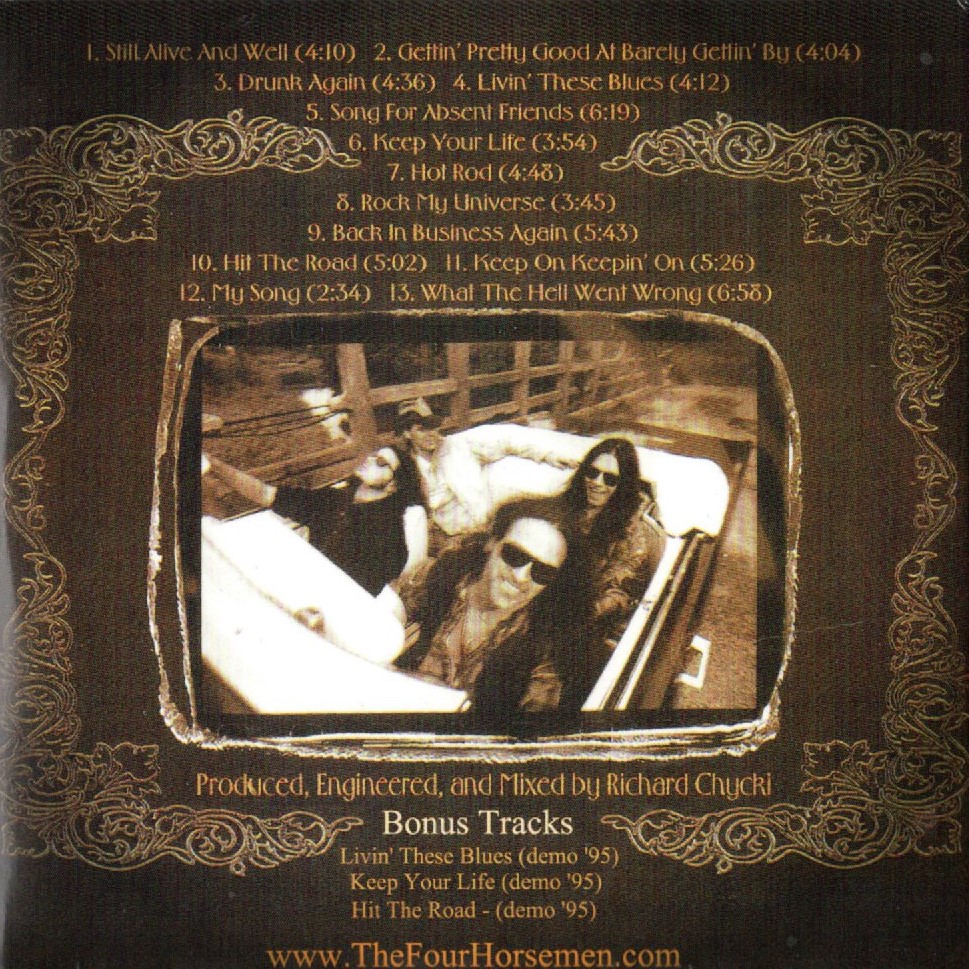
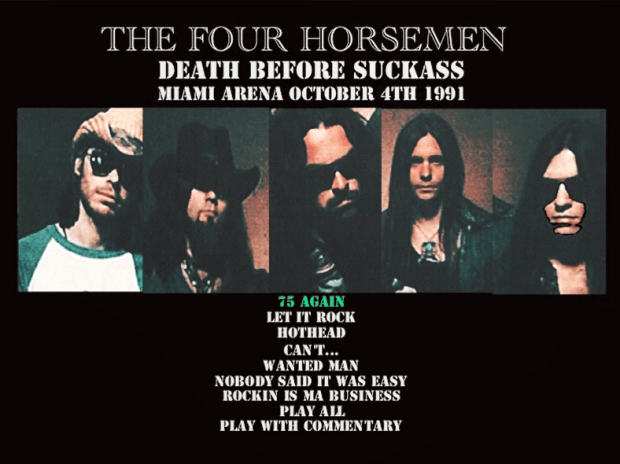
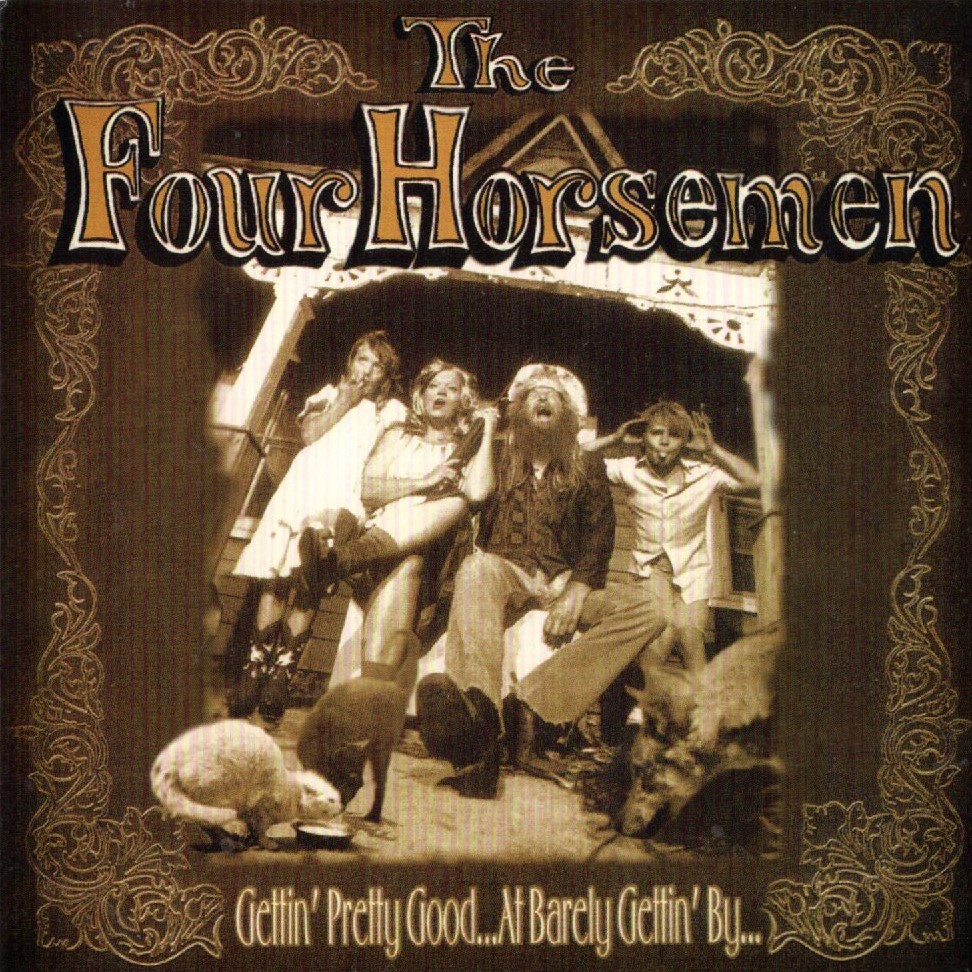
THE FOUR HORSEMEN – Death Before Suckass – Live at Miami Arena (DVD – Version 2.0 sourced from original 8mm tape)
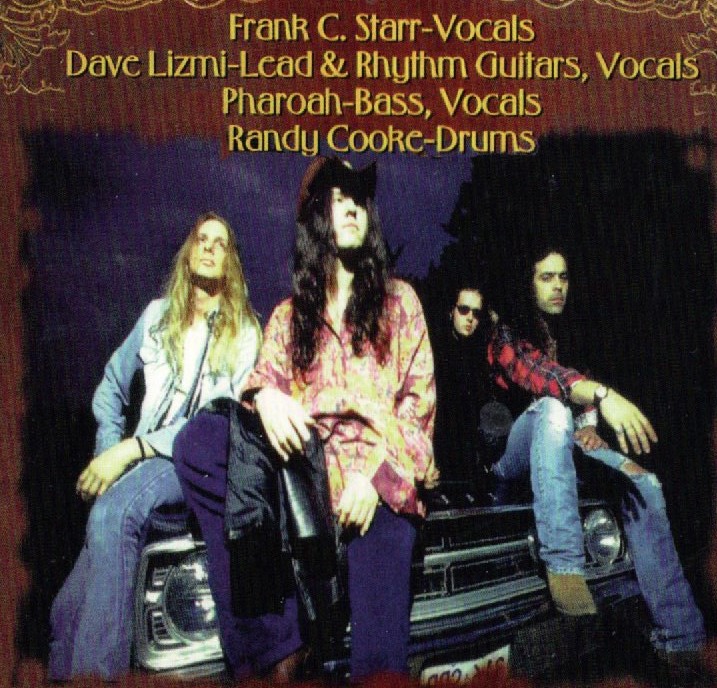
The Four Horsemen were so fucking good, and this DVD really is the proof. Man, how cool did they look? Frank C. Starr, rocking the stage all confident in his pirate shirt, black gloves, and white sneakers. A look I admittedly tried to emulate in the 1990s. Haggis wonders how this “guido car mechanic from Long Island” managed to end up opening for Lynyrd Skynyrd? Because he was born to be there!
The video quality is surprisingly good for an audience bootleg. The camera is high in a balcony, but close enough to the stage to get some great shots. The camera moves around and zooms in from its vantage point, getting clear images of pretty much the whole band except the “big fucking Yeti” behind the drum kit. The video isn’t all that grainy, and there’s a consistently entertaining commentary by guitarist Haggis! He’s very grateful to whoever smuggled a suitcase-sized video camera into the arena to film the band with such care.
Opening for Skynyrd, Dimwit Montgomery (the aforementioned Yeti) swiftly kicks things into motion with “’75 Again”. According to Haggis, the band were practising their “big stage rock star posing”, something he learned from the Cult. Onto “Let It Rock”, the groove is honed and the band is synced up like conjuring “the ghost of Bon Scott”. Frank Starr and Dave Lizmi are the most mobile of the band, moving from one side of the stage to the other, back and forth, while the others tend to stay put. Haggis wonders how Lizmi could hear himself solo when his amps were on the opposite side of the stage! Though the tune starts as a groove, it quickly turns into a blitz.
Onto “Hothead”, a track partly stolen from Humble Pie, says Haggis. Apparently nobody noticed. Frank’s in total rock star mode, just killing it vocally. Then a cover of Savoy Brown’s “Can’t Get Next to You”, the band settle into a low groove. An excuse for Lizmi to show off his stuff, but any excuse is a good excuse. When he solos, he owns the stage. You can see him break a string mid-solo; he just sweeps it out of his way and keeps going.
Moving on to “Wanted Man” (the first song recorded for Nobody Said It Was Easy). Frankie is just fun to watch. He truly was a great frontman. Lizmi’s solo is out of this world, completely different from the album version. A shirtless and tattooed Haggis is so skinny he looks like he should be hooked up to an IV instead of a guitar. But enough with the deep cuts. It’s time for the hits: “Nobody Said It Was Easy” and “Rockin Is Ma Business”. Why was this band not huge? They were so fucking good and their songs were fucking brilliant!
Ironic fact I learned: the man named after a pudding made of a sheep’s innards was a vegetarian.
This DVD can be acquired directly from the Four Horsemen store. It is certainly worth it, even if you already own the Death Before Suckass CD. It’s a different show with a similar setlist, but the audio seems superior. The commentary seals the deal. Essential Four Horsemen buy.
DEF LEPPARD – Too Many Jitterbugs (The Early Years Disc 4) (2019)
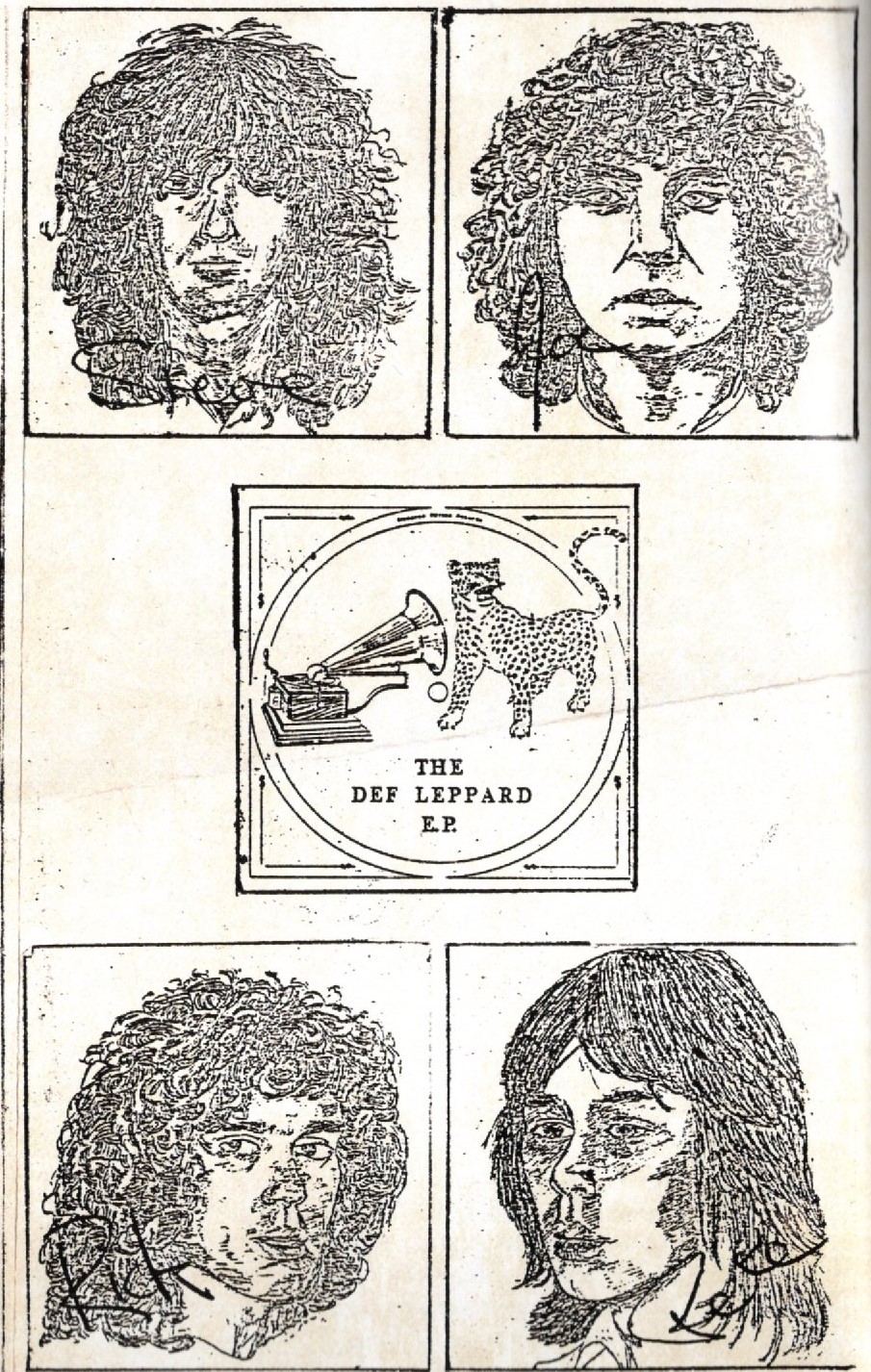
Because of the non-chronological nature of The Early Years box set, we are now back at the beginning: Def Leppard’s first rare EP, and singles releases. Only on Disc 4 do we finally get to go back to the original Def Leppard EP, which has seen a few re-releases over the years, but none as convenient as this.
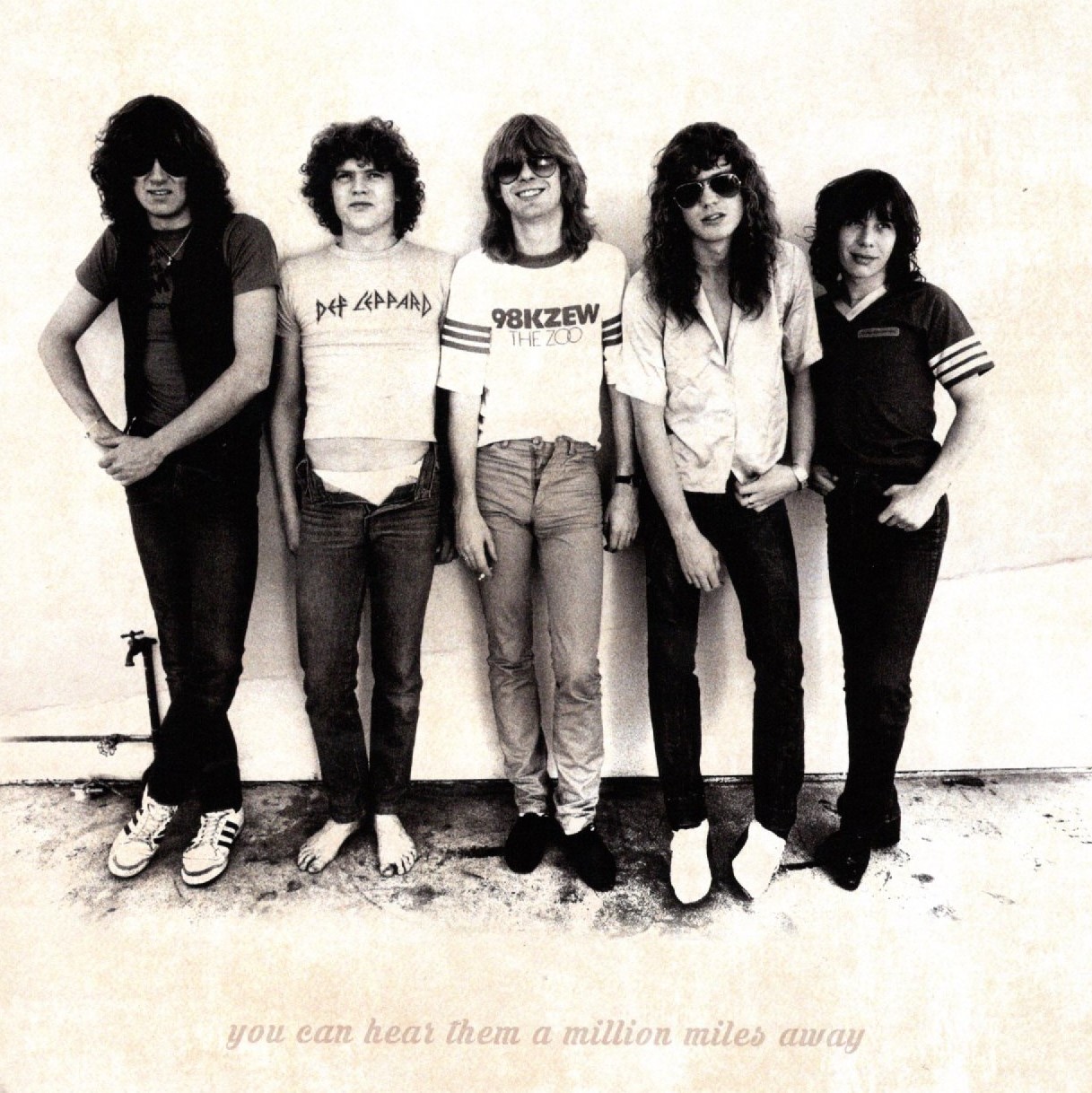
The story goes that young Def Leppard used money loaned to them by Joe Elliott’s father, and booked a studio for one weekend. Drummer Tony Kenning was fired just before the start of recording, for being sidetracked by a girlfriend. Frank Noon from The Next Band (featuring Rocky Newton on bass) was chosen to fill-in temporarily. It was The Next Band’s own three-song EP release that inspired Leppard to make their own. They only had a handful of rehearsals with the drummer completed before it was time to hit the studio.
“Ride Into the Sun” was properly perfected when it was re-recorded in 1987 as a Hysteria B-side. The original still boasts the same relentless riff, but without the increased velocity. The chorus is a bit different, but here it is: the beginning! Out of the gates with a good song, with room to improve. And improve young Def Leppard would.
Next on the EP is “Getcha Rocks Off”, the only track that has been available on CD for three decades. It saw its first digital release on Lars Ulrich’s excellent 1990’s NWOBHM compilation. The version that eventually made its way to On Through The Night is heavier, but this ground-floor version has an identical arrangement. The solo work shows the band had early talent, and the riff demonstrates their ability to come up with the goods.
Finally: “Overture”, the big Def Leppard epic that later closed On Through the Night. A little progressive, the 7:45 track meanders from mellow acoustic opening to galloping riff to blasting guitar workouts. Much of it is first takes, with Joe having little time to finish the vocal. However the job was complete. The record was made.
All that was left was to ask Frank Noon to join the band full-time, which he declined. 15 year old Rick Allen was selected instead. (Noon later reunited with Rocky Newton in Lionheart.)
All 1000 copies of the EP sold within a week. Radio started to play Def Leppard. Finally they signed the big record deal and the rest is history. Still, there are plenty of rare tracks from the early years that were recorded. Most were released but some are here in this box set for the very first time.
“Wasted” with “Hello America” on the B-side was originally released in 1979. These are early versions that differ from the Tom Allom-produced tracks on the album. Neither are as as heavy, with “Wasted” in particular needing more bite. These versions, by Nick Tauber, were deemed not worthy of album release by the record company. The ferocious “Wasted” riff is there but needs to be turned up – way up! “Hello America” fares better as a more melodic rock tune. It lacks that synth riff on the chorus of the song, which makes it a little more raw. It also has a really long fade-out.
The Tauber sessions yielded two more songs that were never released. “Rock Brigade” and “Glad I’m Alive”, for whatever reason, were held back until The Early Years box set. “Rock Brigade” is probably the best of these tracks. Rick Allen’s marauding drum rolls steal the show, but not as much as on album. In general, the Tauber versions are less aggressive recordings, and Joe’s vocals are not as unleashed as on the final album. “Glad I’m Alive” is the only one that didn’t make the album. It is the song with the lyric “too many jitterbugs”, but is otherwise unremarkable. Not many hooks (if any). It is only available in The Early Years.
Leppard’s next B-side was “Good Morning Freedom” from the eventual “Hello America” single. This is a song that surprisingly and delightfully was resurrected by Leppard live (more on that later in the series). It is early quintessential early Leppard, centered on the riff and designed to get the heads-a-bangin’. It is not without hooks, and might be as good as anything else On Through the Night has to offer, “Wasted” notwithstanding.
The next tracks are the disc are single edits, which are padding to some and valuable curiosities to others. Moving into the High ‘n’ Dry era, they are edits of “Let It Go”, “Switch 625” and “Bringin’ on the Heartbreak”. Nice to have to be complete, but not essential listening. All three are obviously better in their full length versions, but you gotta try what you gotta to get on the radio. “Let It Go” has a shorter intro, and a truncated middle section, weakening its impact. “Heartbreak” fades out early.
“Heartbreak’s” B-side was a fast and heavy fan favourite called “Me An’ My Wine”. It was given a raucous and fun music video when it was remixed by Mutt Lange in 1984. Both “Wine” and “Heartbreak” were remixed for 1984 reissue, and were included in updated editions of High ‘n’ Dry. All versions, original and remixed, are present in this box. For some, the remixed “Heartbreak” with added keyboard accents will be the favourite, because it’s the one they grew up with. It sounds more like a Pyromania single. The keys do help spruce up the song, which honestly has a couple dead spots otherwise. As for “Me An’ My Wine”, it has a longer intro and the drums have been treated to sound a little more 80s. Incidentally, though you can get them on old High ‘n’ Dry CD pressings, this is the first time that these remixes have been available in a remastered form.
And that’s the disc — a damn fine one in fact, because it manages to include every non-album track that Leppard released during those early years. It makes for a fun listen, as you hear the band evolve. Even if some songs repeat, they are different enough to not interrupt the flow. Many of the B-sides have never been released on CD format before, so the value here cannot be understated.
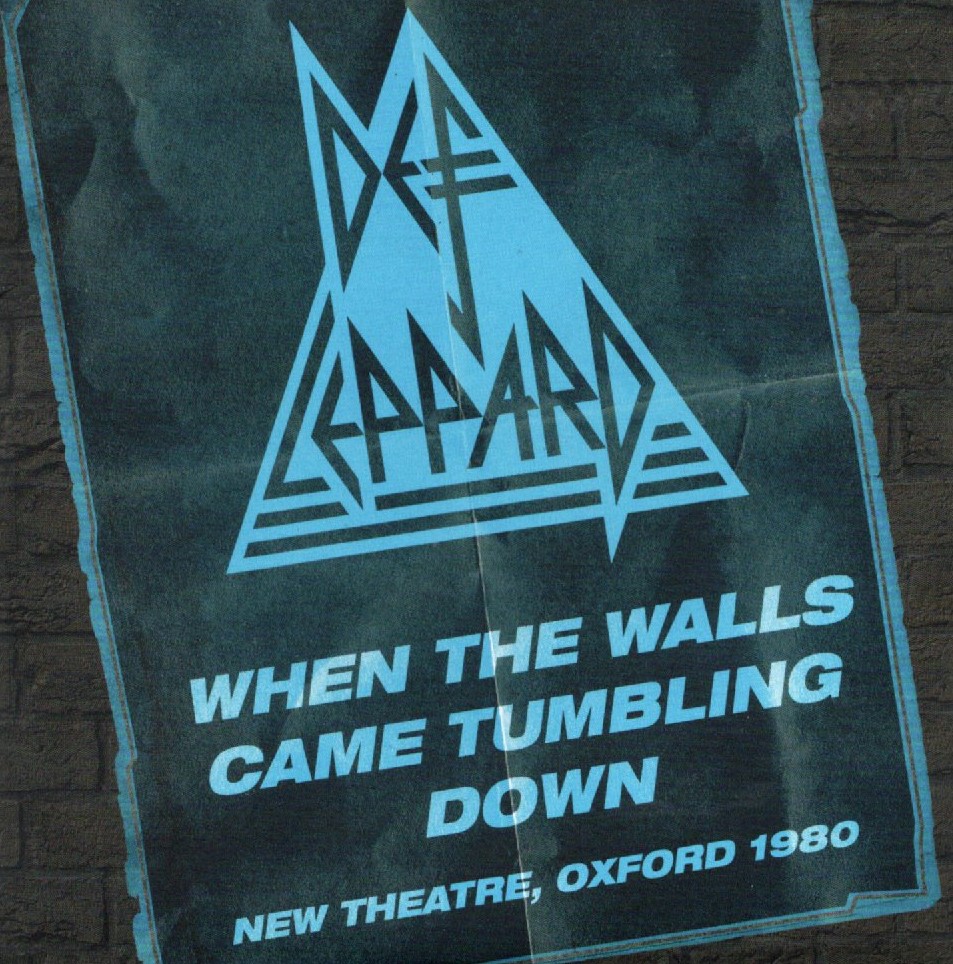
DEF LEPPARD – When the Walls Came Tumbling Down – New Theatre, Oxford 1980 (The Early Years Disc 3) (2019)
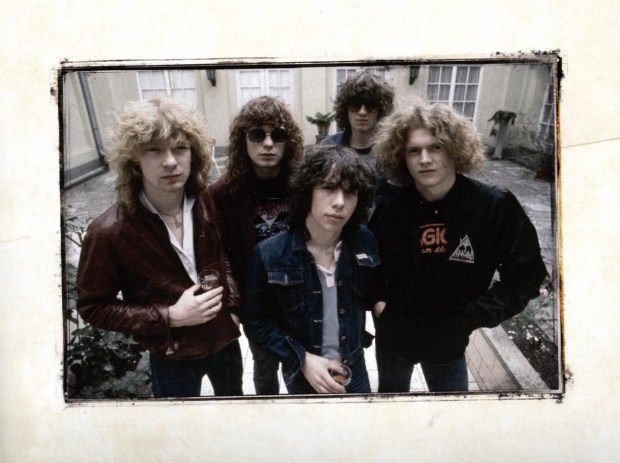
Of Leppard’s many live releases, When the Walls Came Tumbling Down is the most ferocious. The early Leppard including Steve Clark and Pete Willis was a different kind of predator. This particular setlist, captured after the release of the debut album On Through the Night, is extremely valuable to fans. The band performed all 11 albums tracks, a clutch of early singles, and unreleased material.
“When the Walls Came Tumbling Down” is played first, full speed ahead. Joe playfully changes one of the choruses to “When Oxford Came Tumbling Down”, and without pause they barrel right into the adrenalized “It Could Be You”. There are no touch-ups or fixes done to these recordings.
The single “Rock Brigade” has a different flavour, more focused on the melody, with the foot less on the gas pedal. Joe Elliot demonstrates confidence. Rick Allen is a monster on the drums and Rick Savage is audibly holding it down. Keeping to a similar tempo, “Satellite” swaggers all over the stage with determination, and Pete Willis absolutely slaughters on the solo.
There’s only a brief respite. “Medicine Man” is an unreleased song that was later reworked into “Rock Rock (‘Til You Drop)” from Pyromania. The quiet opening only lasts a moment before that now-familiar riff kicks in. There’s no question that “Medicine Man” benefited from its later evolution, but many elements of the song were already, joyfully, in place.
“Answer to the Master” is rolled out with that snakey riff, and Joe is extra-engaging. A trend is now apparent: virtually all these songs are better than they are on album. Another unreleased gem called “When the Rain Falls” might be more familiar under its later name, “Let It Go” from High N’ Dry. Some elements including the riff survived to the final track, but what a serious riff that is! When Leppard had both Willis and Clark in the band, they were a riff factory.
Back to On Through the Night, “Sorrow is a Woman” is more lively than it is on LP. Same with the non-album single “Good Morning Freedom”. From the drums to vocals to sheer energy, it’s better than its studio counterpart, with an intense solo to burn.
“It Don’t Matter” has a cool groove, and more drive than it does on album. This version is evidence that Joe already had ample frontman abilities. This takes us to “Overture”, the Leppard epic with the soft opening and big arrangement. This is where Leppard’s two lead guitarists get to show off in dramatic fashion.
The last unreleased song is “Lady Strange” from High N’ Dry, which is in more complete shape than the other two. As it is on album, it’s one of Leppard’s most impressive songs so far. Riff, verse and chorus are combined in perfect form. Only minor tweaking would be needed before it was album ready.
The final batch of album songs for the night are laid out. “Getcha Rocks Off” is a blast. “Hello America” is looser than album. And “Wasted”? Total blitzkreig. Unstoppable and unbelievable. Finally the very last track, “Ride Into the Sun” is the timeless beloved B-side, originally from the Def Leppard EP making it three for three EP tracks. It’s over before you know it, two and a half minutes are gone and that’s all folks!
Even though it is completely lacking in hit singles, it might not be going out on a stretch to say that When the Walls Came Tumbling Down is a strong contender for Best Live Def Leppard album.
DEF LEPPARD – High ‘n’ Dry (The Early Years Disc 2) (Originally 1981, 2019 remaster)
Leppard’s pride in their debut album only extended so far. They knew that the sound they heard in their heads was not captured on tape. So they waited, and waited, and waited, until AC/DC producer Robert John “Mutt” Lange was available. When he had completed the recording of Foreigner’s 4 (six million copies sold), they got to work on Leppard’s second record. And work they did, with the band members unsure after many takes if they could even play it any better. They could, and they did. With Lange on hand to help refine the songs they had written, Leppard had never sounded better.
Today, High ‘n’ Dry is often cited by diehards as the band’s best record. It bares the teeth of AC/DC, but the attention to melody and harmony was typical of more commercial bands. It was a winning combination; High ‘n’ Dry has no filler songs.
The sharp opener “Let It Go” makes the changes apparent. A better recording, a more confident (and screamy) Joe Elliott, and an incessant bass groove propels it. The guitars cleverly lay back until necessary for the big rock chorus. All dynamics missing from On Through the Night. This time, they could afford a real cow bell — no more tea kettle! With “Let It Go” opening on such a solid, fast note, where do we go from here? No letting up! “Another Hit and Run” is even better, with quiet parts contrasting with the increasingly heady! Joe has found his voice, and uses it to rip and shred. Don’t try to follow the lyrics — it’s all about how the frontman screams them at you.
Finally, Rick Allen is permitted to slow down for the sleek, slower groove of “High ‘N’ Dry (Saturday Night)”. This tenacious track takes its time to blow you away. It was also one of three they recorded in a single session for music video purposes.
Another video from that session was the hit ballad “Bringin’ on the Heartbreak”, although MTV aside, it didn’t really have the intended impact until later. Originally titled “A Certain Heartache”, with Mutt’s help they steered it away from its Zeppelin-y origins and honed it closer to a hit. Sad verses are coupled with a chuggy riff at the chorus, which is beefed up by the backing vocals of Mutt and the band, gradually finding that sound step by step. The lyrics are nothing to write home about with, “You got the best of me,” predictably rhyming with “Oh can’t you see.” But then the track ends not with a total fade, but with the urgent pulse of a new bass track. It’s the brilliant instrumental “Switch 625”, paired with the ballad as if to say “don’t worry folks, we haven’t lightened up.” Leppard were, after all, a part of the New Wave of British Heavy Metal bands. “Switch 625” is something that would have generated melting heat on that scene. Written solely by Steve Clark, this is one instrumental that is not filler in any way. It’s a song.
So ended side one, but side two commenced with the crash of “You Got Me Runnin'”, a single-worthy number that scorches the skin with its burning tower of riffs. Joe bemoans a girl that he don’t trust, while Steve Clark and Pete Willis do their best Angus and Malcolm. Rick Allen, all of 17 years old now, keeps the beat minimal while Rick Savage maintains the pulse on bass. When Pete breaks in with his guitar solo, it’s one of the best of his time with Leppard. But it’s the crucial chorus that keeps you coming back, a singalong brute with gang vocals that could have been lifted from an era past.
Then things get eerie with “Lady Strange”, hurling multiple riffs at the speakers, and boasting a chorus to back it all up. Tough guy Joe claims to have never needed love before meeting his “Lady Strange”. This is the only track with a Rick Allen co-writing credit, and features a scorcher of a Clark guitar solo. Elliott’s screams have never sounded more tormented. Brilliant stuff.
Without a break, we plow “On Through the Night”, and one of the fastest tracks on the album. There’s a surprising, quiet Zeppelin-y middle breakdown that’s welcome, but otherwise this track is built for speed. “Rock n’ roll is no safety net!” screams Joe. If there were any single track to delete from High ‘n’ Dry, you could make an argument for “On Through the Night”. However, fact is you need it to set up “Mirror, Mirror (Look Into My Eyes)”.
Displaying their penchant for parentheses, “Mirror, Mirror (Look Into My Eyes)” takes Def Leppard back to dark territory. A single spare Clark riff carries the song while Allen and Savage lay back. It’s the kind of brilliant construction that Clark was becoming the master of. Tension building riffs, stinging solos, topped with another perfect Joe Elliott vocal melody.
Finally it’s the all-out chaos of “No No No”, a memorable way to close out a hell of an album. Breakneck pacing, top lung screaming, and a blitz of a Willis riff. Melody? Unimportant! If the guitars weren’t so obviously well arranged, this could have been punk rock.
Different versions of “No No No” run different lengths. This one is 3:12 with a slight fade and then abrupt stop. One can never go wrong with an original vinyl LP, featuring an infinite groove at the end, with Joe Elliott shouting “No!” over and over again, until you either stop the record yourself, or wait until the ultimate end of the universe — your choice. Another variation of interest is the the 1984 reissue of High ‘n’ Dry, with two remixed bonus tracks. We will discuss those later as they are included on Disc Four of this set.
Praise today for High ‘n’ Dry is fairly universal. Martin Popoff rated it higher than Pyromania. It truly is a remarkable photograph (pun intended) of a brief period in Def Leppard when they were still solidly riff-focused, but with the moderate temperance of Mutt Lange. A period that has never and can never be repeated.
Rush weren’t really known as a “cash grab” kind of band. That’s why the Christmas 2009 release of Working Men was so surprising to fans.
12 tracks, all but one previously released on live Rush albums of recent vintage. It is not difficult to figure out that this disc was created to keep Rush product on the shelves while the band was on break during the Christmas season. While the music is excellent (obviously), it is hard to imagine a Rush fan that would play this single-disc album before listening to the actual live albums that the tracks were sourced from. This is Rush’s version of You Wanted The Best by Kiss, but with only one unreleased recording instead of four.
Here’s a tracklist, and a breakdown of where these tracks were lifted from:
1. “Limelight” (From Snakes & Arrows Live)
2. “The Spirit of Radio” (From R30)
3. “2112 Overture/The Temples of Syrinx (From Rush in Rio)
4. “Freewill” (From Snakes & Arrows Live)
5. “Dreamline” (From R30)
6. “Far Cry” (From Snakes & Arrows Live)
7. “Subdivisions” (From R30)
8. “One Little Victory” (From the R30 tour) (Previously Unreleased)
9. “Closer to the Heart” (From Rush in Rio)
10. “Tom Sawyer” (From Snakes & Arrows Live)
11. “Working Man” (From R30)
12. “YYZ” (From Rush in Rio)
“One Little Victory”, a stormy firecracker of a version, is the lone previously unreleased song. Is that one song worth your $15? You decide. Unfortunately “One Little Victory” is basically all you’re going to get for your money. There is no booklet and there are no liner notes to speak of. The cover art, once again by Hugh Syme, is quite nice, hinting at past works.
The songs fade-in and fade-out, rather than flow as a seamless listen. The selections lean heavily on oldies as opposed to newer tracks, which does not really reflect what a Rush concert was about at that time. Clearly, this was to entice consumers who wanted songs they have heard frequently on the radio. At least the running order is well sequenced for maximum firepower.
This release is not particularly for anybody except completists and Rush diehards. Everyone else would be well advised to spend their money on Rush In Rio, R30, or Snakes & Arrows Live.
2/5 stars, not for the music, but just because it’s a bit of a Christmas cashgrab.
SUICIDE STAR–“The Day that Christmas Comes” (2021)
Suicide Star recorded a Christmas song? Then you know it’s going to rock heavy! To make it even more interesting, this is not some overplayed Christmas pop hit from years past. It’s a brand new original song, and the first new single since their excellent debut album Isolation. Let’s celebrate!
As soon as singer Rob Barton opens his mouth, you know it’s Suicide Star. He makes the band easy to identify even on shuffle. Anchored by a melodic guitar line from Les Serran, “The Day that Christmas Comes” relays the bright hopeful feeling of the Christmas season.
There will be presents underneath the tree… But the only thing I need, is you and me.
Lyrically the song captures the spirit and magic of Christmas. Most importantly, the melodic tune (complete with jingle bells) makes it a delight to rock out to. Production is stellar – up there with the album or even exceeding it. There is even a fun and hilarious music video that really nails the Christmas vibe. Well done, Suicide Star, and may your trees be overloaded with joy this Christmas!