
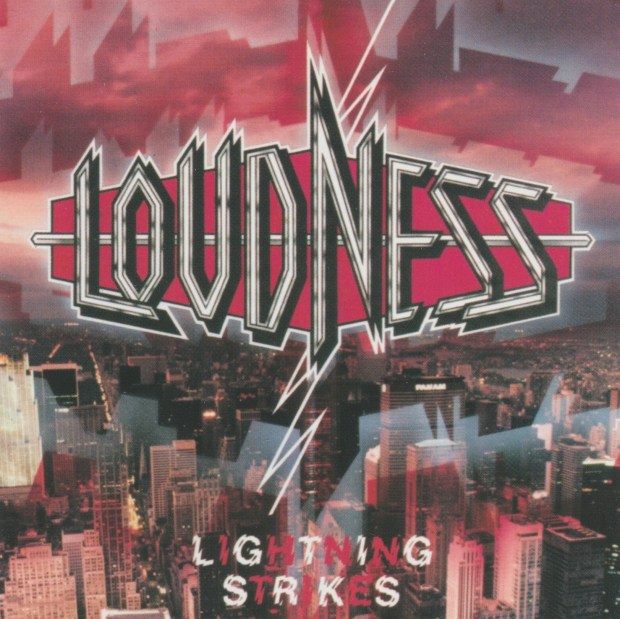
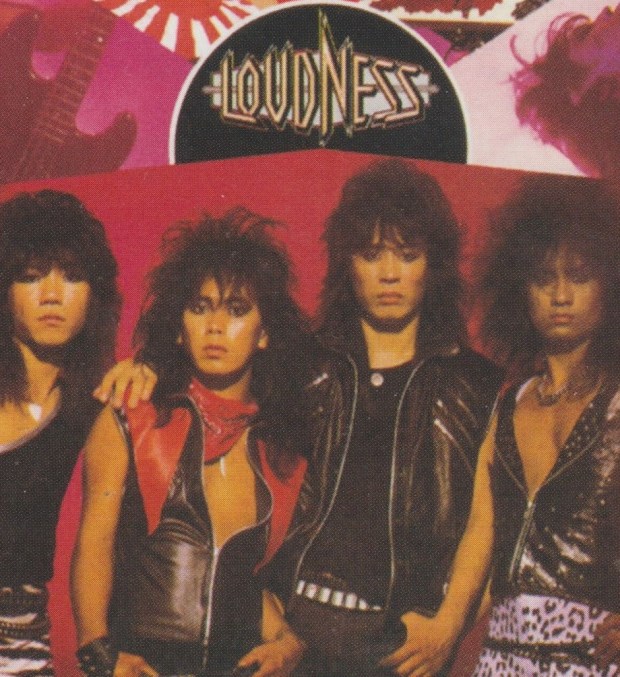
 LOUDNESS – Loudness (1992 Warner Music Japan)
It’s safe to say that, while the Mike Vescera era of Loudness has its merits, the band was not the same after Minoru Niihara was let go. Loudness were not the first Japanese metal band to utilize an American singer in an attempt at greater success. When that didn’t pan out, Vescera left to join Yngwie Malmsteen. Unfortunately, this lineup shift happened at the worst possible time in music history: the 1990s. The beginning of the grunge movement.
Also gone was bassist Masayoshi Yamashita, leaving only founders Munetaka Higuchi (drums), and Akira Takasaki (guitar). Returning their focus back to Japan, Loudness sought new members already well known at home. Taiji Sawada from X (called “X Japan” over here) joined on bass. In a surprising move, they chose E-Z-O singer Masaki Yamada to front Loudness through the 90s. Masaki’s style was a vocal shift, drastically different from Niihara and Vescera. He was also known as a theatrical frontman, using exaggerated makeup and hair. The name recognition wouldn’t hurt though. E-Z-O put out two critically acclaimed albums in the US, one of which was produced by Gene Simmons of Kiss.

Having felt pressure to commercialize his music, Takasaki decided to go heavy. What better way to proclaim that they’ve returned to center than by calling the new album simply Loudness?
“Pray for the Dead” opens with heavy, heavy 90s riffing like a cross between Pantera and Megadeth. Takasaki was not fooling around. His trademark divebombs soon give way to a slow grind. Masaki’s growling presence is swiftly felt. He might not sound like Minoru but he’s completely right for the new Loudness. This is not the heavy, technical speed metal of the early albums. “Pray for the Dead” is the new heavy; slowed down and emphasis on groove. The difference between Loudness and all the rest of the slow, heavy alternametal bands of the 90s is Akira. He continued to shred solos that would make most players scratch their heads trying to keep up.
Higuchi pounds his way into “Slaughter House” which wastes no time getting up to speed. The first fast tempo track of the album gets into thrash territory, leaving Metallica in the dust. Once again Akira blows minds on the solos, this one going neoclassical before duelling with Taiji on bass. Not letting up, “Waking the Dead” is a vicious song due to Masaki’s vocal bite.
Loudness is relentless. The best tune is the groover “Black Widow”, track #4. It is here that Loudness and Masaki gel most perfectly. It’s better than a lot of the heavy music coming out of Seattle at the same time. The production is crisp but weighty. The performances really jam, even though they’re quite technical. “Black Widow” is a killer!
A “Kickstart My Heart”-like drum pattern opens a song appropriately called “Racing the Wind”. This is in the neighborhood of Painkiller-era Judas Priest, but with a bass player who can really shred. On “Love Kills”, the wah-wah pedal is broken out for some play, but the song otherwise chugs along slowly. At the time, this was the kind of song that was in the right ballpark to be a hit. “Hell Bites” then annihilates the senses: a blistering track with incredible musicianship from all around. There’s that wah-wah again! It’s the closest thing to an album epic when it goes through different tempos and riffs. Outstanding track.
 An interesting song is “Everyone Lies”, since the music was written by former bassist Yamashita. At first, it’s not an outstanding track. After a few listens, the heavy groove becomes unshakeable. “Everyone Lies” is a serious banger, and it gives Masaki room to really bellow. “So sick of bullshit, better get wise, everyone lies!” Masaki was assisted in lyrics by Jody Gray, but this sure does sound like Takasaki’s statement towards old managers and record labels.
There’s a funky groove on “Twisted”, a song that could only have been written in the 90s. The crazy thing is Taiji’s funk bass skills are phenomenal! When Takasaki starts Vai-shredding all over it, I forget what band I’m listening to. Especially when Gray raps. But that is mercifully brief. It just goes to show how all-encompassing that altera-rock phase was in the 90s. It touched virtually every band in some way. Loudness more than expected.
An absolutely insane thrash metal surgical strike ends the album on “Firestorm”, with lyrics split 50/50 between Japanese and English. Metal doesn’t come much faster than this. Hopefully the old fans were shitting themselves in happiness with new music of this velocity.
Although Loudness had returned to their roots in terms of playing fast, heavy music once more, there is no question that they also moved into another direction simultaneously. Loudness is not The Law of Devil’s Land. Solos aside, there is nothing as traditionally “metal” as early Loudness. Masaki isn’t a melodic singer like Minoru. Instead Masaki goes full blast. Masaki is an acquired taste with a different style. You’ll either like it or you won’t.
I like it.
4.5/5 stars
Rest in peace Munetaka Higuchi and Taiji Sawada.


















 mikeladano.com