hard rock

REVIEW: Talas – If We Only Knew Then What We Know Now… (1998)

scan_20161211TALAS – If We Only Knew Then What We Know Now… (1998 Metal Blade)

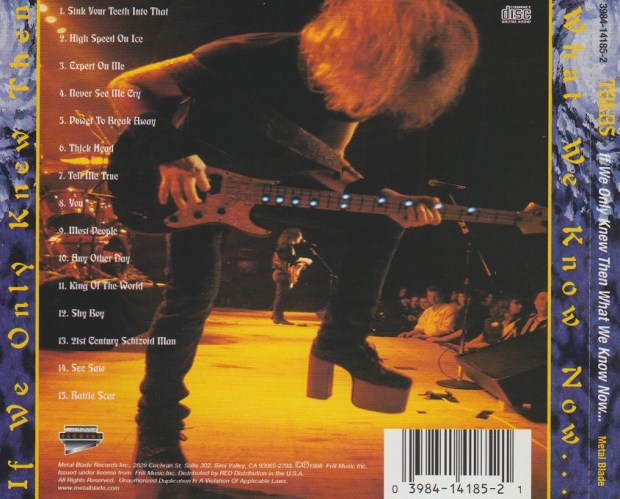
The Talas story did not end with the breakup of the band. Β Of course not; bands both famous and obscure like to reunite for nostalgia shows. Β Talas did that in 1997 with the original power trio lineup: Β Billy Sheehan on bass, Paul Varga on drums, and Dave Constantino on electric guitar. Β With classicΒ material (from the first two Talas albums) and a few unreleased songs, they memorialized their reunion with a brand new live CD. Β Billy even pulled his old platform boots out of the closet for this one.

As usual the set opens with “Sink Your Teeth Into That” and an enthusiastic home town crowd. Β Talas only sounded better with age. Β The original voices are there and just as strong as they were in 1982. Β It actually sounds like everyone has improved over the years. Β A speedy “High Speed on Ice” is in the second spot ensuring no loss of momentum. Β Material from the first self-titled Talas album is included too (unlike the last live album Live Speed on Ice). Β “Expert on Me” is very pop in construction, but clearly not as great as the songs from album #2, Sink Your Teeth Into That. Β Speaking of which, the slow rumbler “Never See Me Cry” is brilliantly adapted to the stage.

“Power to Break Away” is one of the previously unrecorded songs, and it kicks it just as hot as anything from Sink Your Teeth Into That. Β It’s taut with hooks and the prerequisite bassΒ workouts. Β “Tell Me True” is the second unreleased song, a slow non-descript dirge ballad that takes a while to get going.

Imagine Billy Sheehan plowing his bass right through a funky Led Zeppelin riff. Β That’s “Thick Head”, an awesome track from Talas (1979). Β “You” has a cool vibe, almost like an unheard Aerosmith demo from the Done With Mirrors era. Β A few other tunes from the first Talas (“Most People”, “Any Other Day” and “See Saw”) are adequately entertaining. Β Back to Sink Your Teeth Into That, “King of the World” is still one of the best Talas tunes, overshadowed by only a few like “Shy Boy”. Β Here, “Shy Boy” is preceded by a Paul Varga drum solo. Β The sheer velocity of “Shy Boy” itself makes me wonder how Varga did it. Β It’s just pedal to the metal, blurring the lines and smoking the minds.

Nothing like a good cover to help draw a live album to a close. Β Talas did two: Β “21st Century Schizoid Man” and “Battle Scar”. Β The King Crimson cover is a daring one to attempt. Β They somehow manage to strip it down and pull it off with integrity. Β As for “Battle Scar”? Β Total surprise there! Β Max Webster were just across the border from Buffalo, and Billy Sheehan nearly joined Max at one point late in their career. Β Introduced by a Billy Sheehan bass solo, this Max/Rush cover is the set closer. Β As a final addition, “Battle Scar” surely makes this one hell of an album for the history books. Β (The Japanese version has a bonus track called “Doin’ It Right” — this shall be reviewed at a later date. Β Our copy is on order but willΒ not arrive for several weeks.)

Since this is a more recent release on a well known label (Metal Blade), it turns out that If We Knew Then What We Know Now is an easy CD to find in the shops. Β Fortunately this is a good first Talas album to add to any collection.

4/5 stars
scan_20161211-2

REVIEW: Talas – Live Speed on Ice (1983)

Second in a two-part review of the 1989 compilation CD, Billy Sheehan – The Talas Years. Β Part one is here: Β Sink Your Teeth Into That. Β More Talas tomorrow!

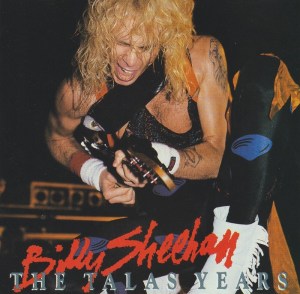
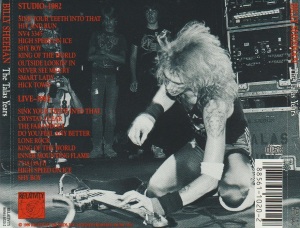
scan_20161210BILLY SHEEHAN – The Talas Years (Part TwoΒ of Two) Β (1989 Relativity)
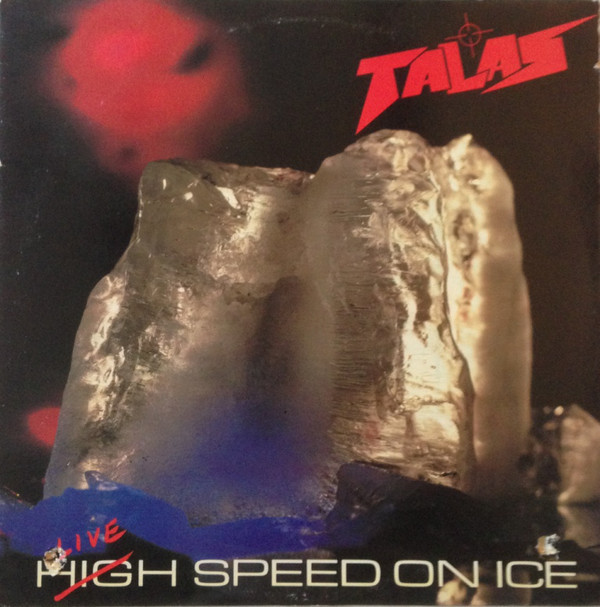
TALAS – Live Speed on IceΒ (1983 Relativity)

When we last met Talas, they were a power trio. Β On their 1984 live album, they were a quartet. Β Billy Sheehan was the only remaining member of the original lineup, with some hot talent behind him: Β Mark Miller on drums, Mitch Perry (MSG) on guitar, and the hugely talented Phil Naro singing. Β Naro has been around, including a stint with Peter Criss. Β (You can hear a number of his performances on Mitch Lafon’s Kiss tribute CD AΒ World With Heroes.)

There is little question that Naro’s voice brings the songs to another level. Β “Sink Your Teeth Into That” benefits from his young rasp. Β Mitch Perry throws in a more articulated guitar solo for an extended section leaving Billy to hold down the riff. Β Second in line is a new song, “Crystal Clear” which has a biting Police guitar riff. Β The busy bass holds down the melodic center as Naro soars on top. Β Live Speed on Ice has great value, since much of its material was actually brand new and never released on anything else. Β “The Farandole” is another new one, an instrumental of jaw-dropping ability. Β Dueling bass and guitars dance and parry while the drums hit the heavy blows.

scan_20161210-2

More new tunes: Β “Do You Feel Any Better”, “Lone Rock”, and “Inner Mounting Flame” continue the ass-kicking streak. Β Each has their own groove, but “Inner Mounting Flame” truly is live speed on ice. Β A few older tracks from the album are solid winners: Β “King of the World”, “High Speed on Ice” and of course “Shy Boy”, the one Talas song that people know today thanks to David Lee Roth. Β Billy’s signature bass solo is also performed live (and extended), but cleverly retitled. Β While “NVH 3345” meant “SHEEHAN” upside down, “7718 (3A17)” means “BILL (LIVE)”. Β With the freedom of the live setting, Bill took his time to showcase someΒ unheard of chops and effects.

Any album that has Billy Sheehan on bass is bound to include a thousand notes of pure thrills, and any record with Phil Naro is going to sound awesome vocally. Β Therefore, Live Speed on Ice should be a welcome addition to the discerning rock fan’s personal library. Β The easiest way to get it is on CD combined with Sink Your Teeth Into That as the 1989 compilation Billy Sheehan – The Talas Years. Β Either way, you win.

4/5 stars

scan_20161210-5

REVIEW: Talas – Sink Your Teeth Into That (1982)

A two-part review of the 1989 compilation CD, Billy Sheehan – The Talas Years.

scan_20161210BILLY SHEEHAN – The Talas Years (Part One of Two) Β (1989 Relativity)
TALAS – Sink Your Teeth Into That (1982 Relativity)

Fans of David Lee Roth are probably already aware of Talas via their incredible bassist Billy Sheehan, an innovative genius of the four-string rumble. Β His first recordings were with Talas (1979-1983), a Buffalo power trio. Β With Roth, he re-recorded the Talas track “Shy Boy” on Eat ‘Em And Smile. Β The Talas original can be found on their second LP Sink Your Teeth Into That, or the compilation The Talas Years.

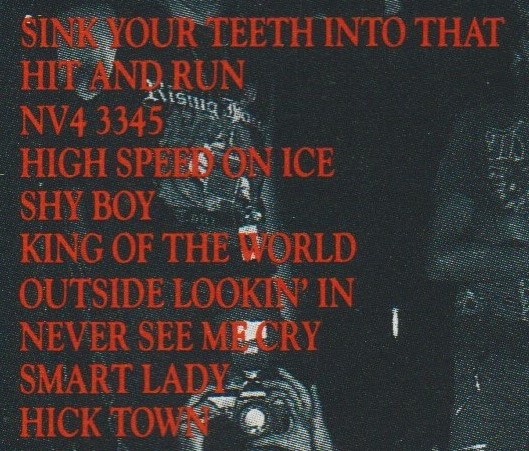
The focus is immediately and obvious on the bass. Β Billy plays it simultaneously as a lead instrument, and the rhythmic foundation. Β “Sink Your Teeth Into That”, the title track boasts not only insane playing, but sounds that had never been heard before from a bass guitar. Β And the song’s pretty good too. Β It’s raw 80s hard rock, no more no less, except for that bass. Β “Hit and Run” is just as strong. Β Talas were not just a bass showcase, but a band that could actually write good songs. Β These are unpolished and rough songs, with the band (Dave Constantino on guitar and Paul Varga on drums) alternating lead vocals.

The centerpiece of the album is the bass solo “NVH 3345”. Β Write that down and turn it upside down: Β it spells “SHEEHAN”. Β It has been said before that as Eddie Van Halen’s “Eruption” was a game changer on guitar,Β  “NVH 3345” is the “Eruption” of the bass guitar. Β It is hard to imagine more sheer technique stuffed into 2:21. Β For anyone who is a serious collector of hard rock heroes,Β “NVH 3345” must find a way into your collection.

scan_20161210-3

“High Speed On Ice” returns to a hard rocking momentum, like “Highway Star” via Buffalo New York. Β Then “Shy Boy” which needed David Lee Roth and Steve Vai to finally perfect it. Β Think of this version as a prototype. Β It is hard to believe that David Lee Roth did not write the line “Gotta keep things movin’ ’til my personality starts it groovin'”, but Roth made it sound like he meant it.

“King of the World” and “Outside Lookin’ In” occupy the mid-tempo range, and that would be Billy singing those high screams. Β Both good songs with the memorable hooks to go with the bass hijinks. Β Shadows fall on “Never See Me Cry”, a darker side of Talas but still with the hooks intact. Β Second to last song “Smart Lady” is the only loser. Β There isn’t room for songs that just don’t cut it. Β “Hick Town” ends the album on a better note, with bass pyrotechnics and thrills to go.

Sink your teeth into Talas, and come back tomorrow for a look at Live Speed on Ice.

4/5 stars

scan_20161210-4


REVIEW: Al Atkins – Victim of Changes (1998)

scan_20161117AL ATKINS – Victim of Changes (1998 Pulse)

Al Atkins was the original lead singer in Judas Priest, before “Bob” Halford was invited to join. You’ll find a number of Atkins credits on the first two Priest albums, even though he was out of the band by that time. In fact, Atkins formed a band called Judas Priest in 1969. The band were named by bassist Bruno Stapenhill. They split in 1970, and Atkins went looking for a new band. He found them in Ken “KK” Downing and Ian “Skull” Hill, who were looking for a singer. With Atkins and drummer John Ellis, they eventually settled on the name Judas Priest, same as Atkins’ prior band. And yes, that means that Ian Hill is actually the only remaining original member of Judas Priest.

Atkins wrote and co-wrote much of Priest’s earliest material. Before he left, he wrote a song called “Whiskey Woman”. Rob Halford used that song and merged it with one of his called “Red Light Lady”. The result was “Victim of Changes”, the first and perhaps greatest of Judas Priest’s epics. Two other songs he wrote in Priest were “Mind Conception” and “Holy is the Man” which were demoed but never released.

Atkins worked a 9-5 job after Priest, but got back into music again in short order. His fourth solo album, Victim of Changes, was essentially a tribute to his Judas Priest years. It is a collection of new recordings of (mostly) a lot of numbers that Priest played live during the Atkins era. Β As a gimmick, he had Priest’s drummer from the 1980s, Dave Holland, on this album.

Atkins and Halford couldn’t sound less alike. Β Rob is known for his high-pitched operatics. Β Atkins has a gutsier, grittier sound, somewhat like a Paul Di’anno meeting Blaze Bayley. Β There is no question that Rob is the right singer for Judas Priest, so it is really only a matter of curiosity to hear these tunes with Atkins singing. Β The tunes are at least good.

The unreleased “Mind Conception” commences the disc, re-recorded and very modern sounding especially in the guitars. Β It is difficult to know exactly what the original “Mind Conception” sounded like, but it’s very safe to say it would not have sounded like this. Β In the liner notes, Atkins states the original demos were recorded stoned and with a sore throat. Β “Holy is the Man” has a slower groove to it, and would work very nicely as a modern Priest track. Β As the only representation of these unreleased tracks available, die-hard Priest collectors will want to hear them. Β Another track of interest is the cover of Quatermass’ “Black Sheep of the Family” which Priest played live at their earliest gigs (along with Hendrix’s “Spanish Castle Magic”). Β Rainbow’s recording is still the one to beat.

scan_20161117-2

The familiar Priest tracks are actually anything but. Β They are probably arranged more like the way Priest used to play them in the early days. Β “Never Satisfied” is extended with a tough bluesy acoustic intro. Β The heavy parts have a Zeppelin-yΒ beat, due to Holland’s straightforward style. Β Same with “Winter”. Β Then there is “Caviar and Meths” which is a whopping 7:12 long. Β According to Atkins, this song was their big finale live, but never recorded in full in the studio. Β This version is the full-length arrangementΒ thatΒ they used to close with live. Β And it’s brilliant. Β Finally there is “Victim of Changes” itself, and Atkins has some help from a backup singer for the high parts that Rob does.

There are a couple tracks that could be considered filler, since they have nothing to do with Judas Priest. Β These are the instrumentals “The Melt Down” and “Metanoia”, written by guitarist Paul May. Β They are excellent tracks, however, and should not be ignored. Β (“Metanoia” serves as a postscript to “Winter” on the CD.) They are European sounding heavy metal tracks, loaded with guitar drama and ferocity.

Check out Victim of Changes for a glance at what Priest might have sounded like with Al Atkins singing lead. Β One can hope for those unreleased demos to surface, but one can also wish for the moon.

3/5 stars

REVIEW: Ted Nugent – Double Live Gonzo! (1978)

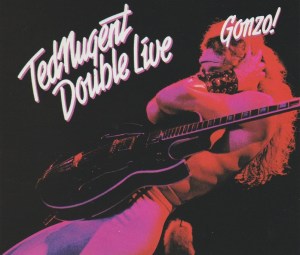
scan_20161129-2TED NUGENT – Double Live Gonzo! (1978 CBS)

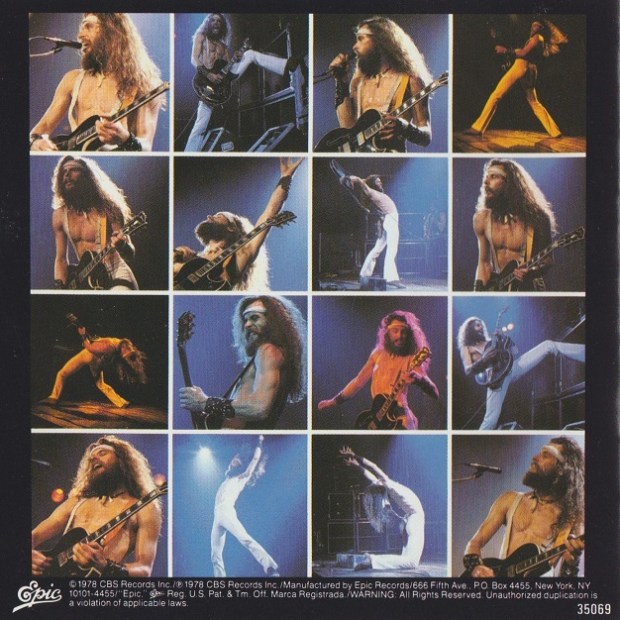
Ted Nugent has expressed his displeasure with Double Live Gonzo! I wish I still had the 1990 magazine interview where he trashed the record, because I have to strongly disagree. To these ears, Double Live Gonzo! is another one of those incredible 1970s cornerstone live albums that every self respecting rocker should listen to at least once. It’s the album that spawned the name β€œNashville Pussy”, and houses the definitive live take of β€œGreat White Buffalo”.

Double Live Gonzo! was recorded at multiple shows. The shout-outs to Nashville and San Antonio (“suck my bone-i-o!”) make that obvious, but it’s not a detriment to the LP. With Derek St. Holmes on guitar and vocals, Ted and the gang bring the rock and roll noise to the best party in town. All you have to do is hit play and hold on tight. Β It’s an intimidating track list at first: three songs run over 10 minutes, with the majority over 5:00. There is Terrible Ted on the front cover, covering his ears as if in pain from the powerful feedback contained inside.

Ted’s hits are present (β€œCatch Scratch Fever”, β€œStranglehold”, β€œYank Me Crank Me”) but are overshadowed by more epic rock orgasms. β€œGreat White Buffalo” and its incredibly dexterous riff is the main attraction. Β Though this song was originally recorded by Nugent’s Amboy Dukes, the live version is the most important. Β Love TedΒ or hate him, no serious rockers should have to live without β€œGreat White Buffalo” in their collections. Β Β It’s all about that riff, which is hard to duplicate but impossible to forget.

The Indian and the buffalo,
They existed hand in hand,
The Indian needed food,
He needed skins for a roof,
But he only took what they needed, baby,
Millions of buffalo were the proof.

But then came the white man,
With his thick and empty head,
He couldn’t see past the billfold,
He wanted all the buffalo dead,
Everything was so sad.

The Amboy Dukes’ β€œHibernation” grandstands withΒ some equally impressive musical chops (as do all the songs). Β Almost as good as “Hibernation” itself is its live intro. Β Ted introduces his guitar to the crowd: Β “This guitar right here is guaranteed to blow the balls off a charging rhino at sixty paces,” he claims. Β “You see this guitar definitely refuses to play sweet shit, you know, it just refuses.” Β However “Hibernation” is pretty sweet, as far as rock n’Β roll goes.

If you are looking for some β€œWang Dang Sweet Poontang”, then Terrible Ted has your prescription: Β it’s “Just What the Doctor Ordered”. Β The Nuge has done a few live albums over the years, but none as beloved as Double Live Gonzo!Β  For its minor faults (it could sound beefier with less crowd noise), Double Live Gonzo! serves the needs of the masses looking for some full bluntal Nugentity. His gut-busting guitar playing can’t be touched and with Derek St. Holmes in the house, you also don’t have to listen to Ted singing lead on every track.

Double Live Gonzo! isn’t just for guitar players, but guitarists will absolutely dig Ted’s incredible licks and control of feedback. Few guitarists can command the instrument like Ted does. Players will find much to examine, while the average listener can just look forward to a double serving of 1970s live rock. No lyrical messages, just brutal sonic massages.

4.5/5 stars

scan_20161129-3

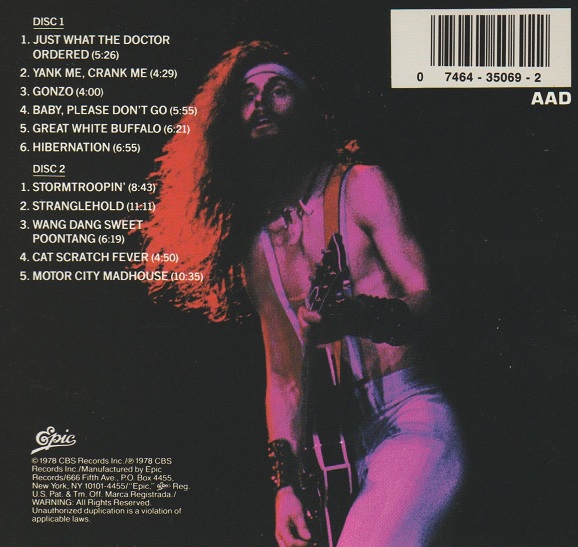
The back cover has a mis-print. Β “Hibernation” is 16:55 long, not 6:55.

REVIEW: The Sword – Age of Winters (2006)

Purchased at BMV in Toronto 2016 for $6.99.

scan_20161126THE SWORD – Age of Winters (2006 Kemado Records)

The scene: Β Earth, post-Rapture. Β A seedy bar somewhere in America, haunted by the few remaining survivors. Β In walks a cloaked figure, here to recruit the only man who can help him defeat the Antichrist: Β former CIA agent Stan Smith. Β On the jukebox in the futuristic post-apocalyptic watering hole: Β “Barael’s Blade” by The Sword. Β (American Dad season 5 episode 9 – “Rapture’s Delight”)

Sounds bizarre, right? Β Seth MacFarlane’s American Dad has always used modern rock music in interesting ways, and this wasn’t the only use of music by The Sword on that show. Β “Iron Swan” appeared in an episode called “Minstrel Krampus” (also featuring soul crooner Charles Bradley). Β Interestingly, not only are both these appearances inΒ rather twisted Christmas episodes, but both songs were drawn from The Sword’s debut long-player, Age of Winters.

The doomy riffs of opening track “Celestial Crown” immediately recall early Black Sabbath circa 1970-72, but drawn out, slowed down, grinding heavy like a glacier carving its path through a mountain. Β J.D. Cronise’s howling vocals break the ice on “Barael’s Blade”, but the assault continues right on to “Freya”. Β This track, the ogre stomping “Freya”, wields multiple guitar riffs as heavy as the thunder of an avalanche. Β The Norse goddess of fertility is also the goddess of war and death. Β “Freya” brings the sonic conflictΒ to your speakers.

When the “Winter’s Wolves” arrive, your senses are already overloaded by the riff-heavy metal. Β “Wolves” centers on a heavy drum section, like Bill Ward on ephedrine. Β Almost as if part of the same song, “The Horned Goddess” reverberatesΒ like a coda to “Winter’s Wolves”, different yet solidly in the same icy field. Β “The Horned Goddess” soon transforms into a stampede of mammoths making their last stand. Β Hypnotizing lead vocals welcome you into this hazy landscape of sound.

Acoustic instrumentation brings “Iron Swan” a different aura, like the Beatles via The Sword. Β Then it immediately launches in a thrash metal “War Pigs”, as if all the speedy chops the band had in storage were being used up right now at this very moment. Β Epic only touches on what “Iron Swan” is, as there is so much riffery that it becomes overwhelming. Β Scientific studies* have shown that the human memory can only retain so many riffs at one time, and so “Iron Swan” becomes like a wave of them hitting your senses one after the other.

Painting of an Aurochs from Wikipedia

Painting of an Aurochs (Wikipedia)

The Aurochs, a part of European megafauna until their extinction in the early 1600s, were the direct ancestor of the modern domestic bovineΒ whose products millions of people consume every day. Β It is the Aurochs you see in cave paintings today. Β The Sword have given us a seven-minute-plus “Lament forΒ the Aurochs”, and we do not forget the impact that mankind has had on the ancient land we inhabit. Β Although back-breeding has produced Auroch-like “Heck cattle”, we shall never feelΒ the ground shake withΒ a herd of Aurochs again.

“And none may see again the shimmering of Avalon,
Or know the fates of all the races man has cursed,
Long gone are the ages of the alchemists,
Now there are none who know the secrets of the earth.

“Lament the passing of the Aurochs,
And the slaying of the ancient wyrm,
Would you dare meet the gaze of the basilisk,
Or face the flames as the phoenix burns?”

The Aurochs give way to an epic instrumental “March of the Lor”, another exercise in maximizing potential riffage. Β When “Ebethron” arrives to end the album with a hammering blow, it is a mercy killing. Β Age of Winters is almost non-stop, all-in, nothing but riffs and pounding through its entire length. Β That in mind, it only takes a short while to recover, and hit play one more time….

I look forward to exploring more of The Sword’s discography.

4.5/5 stars

Look for a review of album #2, Gods of the Earth, soon.

*Not really.


REVIEW: Don Dokken – Up From the Ashes (1990)

scan_20161027DON DOKKEN – Up From the Ashes (1990 Geffen)

“The best revenge is to live well.” — Don Dokken’s liner notes. Β Passive aggressive much?

Dokken imploded in 1989 not with a bang but a whimper. Β Rather than remembering the live album they finished with (Beast From the East), people recall the animosity and bitter attacks in the rock press. Β George Lynch and Mick Brown beganΒ Lynch Mob, while Jeff Pilson formed War & Peace. Don Dokken meanwhile was cooking up a hot new band. Β The only issue was the name. Β The ex-members, who owned a stake in the Dokken name, refused to let Don use it. Β They also shot down the names “Dokken II” and “DKN”. Β (Reportedly Dokken was told if he wanted to just use the vowels “OE” for his new band, that would be fine with the others!) Β Don was understandably upset that he couldn’t use his own last name for his name, so he opted to bill himself as Don Dokken the solo artist.

His solo band was a killer. Β Fresh out of Europe with a smash hit album under his belt, John Norum joined on guitar. Β Billy White from the thrash metal band Watchtower was the second guitar player, giving Dokken a double guitar lineup (or three if you count Don himself). Β King Diamond’s Mikkey Dee was aboard on drums, several years away from joining Motorhead (and now Scorpions). Β Rounding out the band was veteran Accept bassist Peter Baltes, who played with Dokken in their earliest days.

With all this burning anger coupled with tremendous instrumental firepower, one might expect Don to come back rockin’ harder than ever. Β His solo album Up From the Ashes was a down-ratchet from Dokken, slightly, with an emphasis on melodic rock. Β It did however continue the core Dokken sound, with some biting and very Lynch-like guitar riffs.

Entering with the kind of jagged riffs that made Dokken famous, “Crash ‘N Burn” sounds almost exactly like Don’s old band. Β Hard rock, smooth vocals, and six-string acrobatics. Β There is no familiar Jeff Pilson backing vocal, but Peter Baltes and John Norum get the job done. Β TheΒ incredibly impressive guitar histrionics are clearly not George Lynch, but fans will love what John and Billy White cooked up. Β A strong follow-up called “1000 Miles Away” sits in a comfortable mid-tempo rock zone. Β It’s not a ballad, it’s not a rocker, but it’s somewhere in between. Β Hit material. Β The album’s single was a track called “Mirror Mirror”, with a stuttery Van Halen riff. Β The lyrics are very telling:

“Mirror mirror, on the wall,
Seven years, I survived them all,
Mirror mirror, tell me more,
If that was love, then love is war.”

Dokken had a roughly seven-year long life as a recording band, so think what you will.

A lot of Up From the Ashes fits into a nice little hard rock box, a little smoother around than edges than classic Dokken, but strong as ever. Β “When Some Nights” has a similar vibe to “1000 Miles Away”, and there are many others. Β No real weak songs abide within. Β There are only a few that are head and shoulders standouts. Β Among these isΒ “Living a Lie”, a sharp Norum co-write with a Europe-like sound. Β Also up there, “Give It Up” is a briefΒ blast of rock. Β “Stay” leans in a slightly more pop direction, successfully so.

Drony ballads are less impressive. Β “When Love Finds a Fool” is fortunately the only one, which does at least boast some impressive musical contributions from all the players. Β The momentum is killed by starting side two with this slow Scorpions-wannabe. Β Another issue is a slightly damp production, which makes the drums sound woefully underpowered. Β This is a shame since Mikkey Dee is such a drum demon.

With Up From the Ashes, Don re-established himself. Β Nobody could accuse him of leaning on George Lynch. Β With the benefit of 20/20 hindsight, this band really should have been called Dokken.

3.5/5 stars

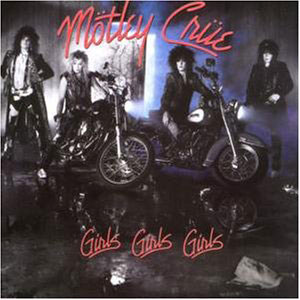
REVIEW: MΓΆtley CrΓΌe – Girls, Girls, Girls (2003 remastered edition)

girlsMΓ–TLEY CRÜE – Girls, Girls, Girls (originally 1987, 2003 remaster)
The Tom Werman-produced Girls, Girls, Girls album is a bit underrated. Β Its weaknesses are fairly obvious, but its strengths are less appreciated. Β The Crue were coming off a bit of a stinker (Theater of Pain),Β so some changes were in order. Β The band dropped the makeup and spandex in favour of a tougher street-ready look. Β The intended direction this time was a bit of a combo of the first three Crue album. Β They wanted the rawness of Too Fast For Love, the heaviness of Shout at the Devil, and the sleaze of Theater. Β There was no reinvention of the wheel, nor was anybody in the band capable of that. Β Nikki Sixx was deep into a heroin problem at this time, barely focused on the music at all. Β This has been documented in his graphic book The Heroin Diaries. Β Much of his time was spent hiding in a closet with a gun, afraid of imaginary intruders.

As an audience in 1987, we really did not suspect that things were such a shambles behind the scenes. Β The band looked good, and sounded like they had rediscovered the skills of writing memorable songs. Β Case in point: Β opening track (and second single) “Wild Side”. Β Boasting the kind of rock groove that Motley made their trademark, “Wild Side” rocked. Β They even threw in a time change on the bridge. Β “Wild Side” was augmented with a cool music video, showcasing the Motley stage show in 1987. Β This included a spinning, upside down Tommy Lee drum kit. Β “Girls, Girls, Girls” was a video too, but it never saw airplay up in Canada. Too risquΓ© for the frozen tundra of the north? Β It too was a hit, played live in concert right to Motley’s final show (opening number, in fact).

The album was rounded out by a number of cool, sleazy rock tracks and a couple ballads. Β “Dancing On Glass” kicks; it’s pretty much an autobiographical track about living in the fast lane. Β This is something the Crue were well acquainted with.

“Silver spoon and needle,
Witchy tombstone smile,
I’m no puppet,Β 
I engrave my veins with style.”

Since the cassette didn’t come with a lyric sheet, kids of the 80’s (or at least the parents of the 80’s) probably had no idea what Vince was singing about. Β The song is given some traditional rock cred with soulful female backing vocals and boogie piano.

“Bad Boy Boogie” continued the theme, this time with some tasty Mick Mars slide guitar instead of piano. Β “Better lock up your daughters when the Motleys hit the road.” Β The song is a series of sexual innuendos, cleverness put to the side in favour of blunt sleaze. Β “Got my finger in the pie, my hand in the cookie jar.” Β Aerosmith leaks through the grooves on “Bad Boy Boogie” which wears its influence on its sleeve. Β The good times continue to bounceΒ on “Five Years Dead”, loaded with more of Mick’s greasy slide. Β It’s a similar song to “Sumthin’ for Nuthin'”, which is even more fun. Β This time Vince is a gigolo, getting paid for pleasure (sumthin’ for nuthin’)! Β “Leave the money where it’s easy to see,” he sings with glee. Β It’s brilliant Motley filth just the way you like it.Β  Best of all is the smokin’ “All in the Name Of…”, which pours high octane fuel in the tank and opens ‘er up wide. Β It’s sleazier than sleazy: Β “She’s only 15, she’s the reason, the reason I can’t sleep. Β You say illegal, I say legal’s never been my scene.” Β Probably a true story….

There are only two ballads, one of which is just 1:26 of filler (“Nona”). Β The other is the very entertaining “You’re All I Need”, which sounds inspired by Alice Cooper. Β It is a delicate piano based murder ballad, like the Coop has done so well. Β “You’re All I Need” isn’t Coop quality, but on the Motley scale it’s one of their better ballads. Β It has an anthemic quality, a pompous melancholy. Β The lyrics doomed it to semi-obscurity, which is too bad, since on the whole it’s a stronger song than the better known “Without You”.

Unfortunately for this album, “Nona” was not the only filler. Β An excruciating (and live?!) cover of “Jailhouse Rock” ends the album on a pretty putrid note. Β It’s not good at all, and reeks of weakness. Β Why would you end your new album with a cover, and a live cover at that? Β Only because you didn’t have enough quality tunes to make the cut.

The 2003 remastered edition of Girls, Girls, Girls came with bonus tracks, like all the albums in the Crucial Crue collection. Β Three of them are instrumental versions, bordering on filler material. Β Motley Crue are not RainbowΒ or Marillion — you don’t get much out of an instrumental version. Β “Nona” did once have a rock section in its longer demo form. Β More entertaining than the demos is the band and Tom Werman intro. Funny stuff. Β Then there is a long sought ballad “Rodeo”. Β This song was first mentioned in band interviews in 1989, when it was mentioned for possible inclusion on a never-released album called Motley Crue:Β The Ballads. Β The demo here is not very well fleshed out, but you can hear that it had a cool chorus ready to go. Β Finally there is a live version for “All in the Name Of…” from Moscow in 1989. Β Fans may recall that Motley played at the infamous Moscow Music Peace Festival…shortly before Tommy attacked Jon Bon Jovi and ripped the shirt off his back. Β Peace and love, man!

Although the Crue were only firing on a couple cylinders at the time, they managed to piece together a worthwhile album. Β There are only two mis-steps, which are “Nona” and “Jailhouse Rock”. Β The remastered edition adds a couple more worthwhile bonus tracks to extend your listening experience. Β Go for that one if you find it first.

3.5/5 stars

Side one
1. “Wild Side” 4:40
2. “Girls, Girls, Girls” 4:30
3. “Dancing on Glass” 4:18
4. “Bad Boy Boogie” 3:27
5. “Nona” 1:27

Side two
6. “Five Years Dead” 3:50
7. “All in the Name Of…” 3:39
8. “Sumthin’ for Nuthin'” 4:41
9. “You’re All I Need” 4:43
10. “Jailhouse Rock” (live) 4:39

2003 Remastered Edition bonus tracks
11. “Girls, Girls, Girls” (Tom Werman & band intro, rough mix of instrumental track) 5:38
12. “Wild Side” (rough mix of instrumental track) 4:06
13. “Rodeo” (unreleased track) 4:14
14. “Nona” (instrumental demo idea) 2:42
15. “All in the Name Of…” (live in Moscow) 5:02

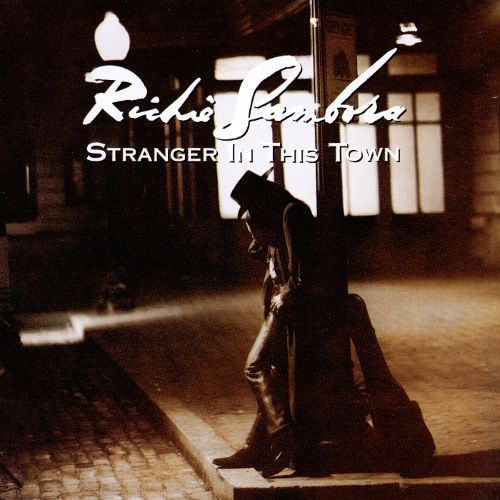
REVIEW: Richie Sambora – Stranger In This Town (1991 2 CD deluxe)

scan_20161021-2RICHIE SAMBORA –Β Stranger In This Town (1991 Mercury 2 CD deluxe)

Bon Jovi went on hiatus after the lengthy New Jersey tour. Β Their future appeared uncertain. Β Jon had released his first solo album, a soundtrack called Blaze of Glory. Alec John Such was reportedly opening carwashes in Hungary, although that was probably a joke answer in a magazine interview. Β  Meanwhile, the rest of Bon Jovi (Richie Sambora, David Bryan and Tico Torres) gathered in the studio to record. Β With Tony Levin on bass and Chapman Stick, the group assembled Richie’s first solo album, Stranger In This Town. Β Although fans were worried about a possible split, there was much excitement for Richie to have a chance to sing his own songs. Β Adding to the hype, Eric Clapton appeared as a special guest. Β (Randy Jackson played bass on one song, “One Light Burning”.)

Sambora seemed to determine to fly his own colours. Β Predominantly, that’s blue, as in the blues. Β He also mixed in soul, pop, and rock to create an album that wouldn’t alienate any Bon Jovi fans. Β David Bryan contributed songwriting, and there is even one Bon Jovi song in the mix. Β It’s not a guitar album, although it need not be stated that the guitar playing on this album is brilliant. Β Richie went for feel and atmosphere rather than flash.

This is apparent on opening track “Rest in Peace”. Β It’s not really a full-fledged song, but more an introduction to the album. Β It even has listening instructions: Β “Turn down the lights…light a candle…welcome.” Β That doesn’t sound very rock and roll, does it? Β But it is good advice. Β That’s the kind of album this is. Β “Rest in Peace” is loaded with soul, and this merges with the pop rock on “Church of Desire”. Β A song like this wouldn’t have worked with Bon Jovi. Β It has more soul, and its quiet production lets the music breathe more than Bon Jovi songs do. Β It’s a brilliant track, and Richie’s solo just blasts. Β Different from Bon Jovi, but accessible forΒ Bon Jovi fans: Β it’s an ideal song for a first Sambora album.

The blues single “Stranger In This Town” sounds like something Richie had been aching to do for years. Β Backed by a choir of vocalists, this is Richie fulfilling some musical dreams. Β Both blues fans and rock fans should enjoy the middle ground where they meet on “Stranger In This Town”. Β As a single, it seemed to represent the image Richie was going for. Β This album has three singles in a row, making the first side a little more consistently strong. Β “Ballad of Youth”Β was the debut single, combining Bon Jovi’s anthemic melodies with Richie’s new laid-back vibe. Β It even has a Bon Jovi-like positive message. Β “Don’t waste your life away, thinkin’ ’bout yesterday’s blues.” Β The excellent third single was the synth ballad “One Light Burning” which almost sounds like Richie Sambora joined the Cars. Β For the programmed sounds and percussion, Richie said they had “about 100 computers” networked together. Β Oh, 1991! Β Though a ballad, it’s the centerpiece of the album.

It’s possible they intended “Mr. Bluesman” to be the centerpiece, but the lyrics are difficult to digest. Β When you write a song as a tribute to your hero, such as this tribute to Eric Clapton, lyrics are always the trick. Β Thankfully Mr. Clapton’s guest guitar appearance, though brief, does tell us the story. Β Hearing him rip on this blues ballad is like a searchlightΒ cutting through the murky haze. Β But here’s the weird thing. Β Didn’t Eric find Brian May’s tribute song “Blues Breaker” embarrassing? Β Yet he appeared on this ballad?

IMG_20151004_091117“Rosie” is a Bon Jovi song that was heavily bootlegged, from the fruitfulΒ New Jersey sessions. Β It sounds like Bon Jovi, but Richie’s version has way more guitar. Β Unfortunately the Bon Jovi version has never been released. Β It was mysteriously not included on the Sons of Beaches demos that came out in 2014, even though the other songs were. Β One has to assume Jon didn’t include it on his set because Richie already had his version out. Β The next track “River of Love” is a title that has nothing to do with the Bon Jovi demo of the same name. Β This is the first and last really greasy rocker on the album.

It’s ballads from there out, but terrific songs nonetheless. Β “Father Time” (written with Desmond Child) is a melancholy rock ballad that Jon probably wishes he wrote. Β It’s a powerful song, like an amped up “One Light Burning”. Β Guitars burn up and down your spine while Sambora soothes your ears with his soulful croon. Β Tico and David provide the solid base upon which the song is built. Β Their expert chops are essential parts of the entire album. Β Things draw to a close on “The Answer”, an acoustic lullaby-like song that has a lot of heart. Β A sentimental ballad askingΒ existential questions is an unconventional way to end an album, which is part of what makes it special.

Mercury did something unusual for the era, but very common today. Β They released Stranger In This Town as a single CD, and a 2 CD deluxe edition. Β The deluxe is housed in a long box, and has two bonus tracks. Β At the end of CD is “The Wind Cries Mary”, which saves fans from having to buy the atrocious Ford Fairlane soundtrack on which it originated. Β It’s a smoking Hendrix cover, and the best tune on that soundtrack. Β On the second CD you will find an almost 20 minute interview with Richie discussing the songs on this album. Β No revelations here; it’s really just an extended promo for the album. Β Half of it is music anyway…snippets of the same music from disc one! Β An OK extra, but the real bonus is “The Wind Cries Mary”.

The final extra, usually missing on the second hand market, is the metal guitar pick shaped pendant. Β It has Richie’s solo logo on it, but nobody’s going to be wearing this thing. Β All this is packed in the box, which is a beauty but awkward to store.

As an introduction of the “real” Richie to the fans, Stranger In This Town was a success. Β He differentiated himself from Bon Jovi, and also proved he could sing an entire album easily. Β Critically and commercially, the album was less successful. Β There were mixed reviews, with the rock press hung up on the soft songs. Β With the benefit of 25 years’ hindsight, StrangerΒ has aged well, better than Bon Jovi itself.

4/5 stars


REVIEW: Deep Purple – This Time Around – Live in Tokyo ’75 (2001)

scan_20160925DEEP PURPLE –Β This Time Around – Live in Tokyo ’75 (2001 EMI)

This shouldn’t have been the “last concert in Japan”!

Many of the old, post-breakup-issued Deep Purple live albums are virtually impossible to find today on CD. One of those is Last Concert In Japan, which was originally released only in that country. It featured the Mk IV lineup of Deep Purple: David Coverdale, Glenn Hughes, Ian Paice, Jon Lord, and the late Tommy Bolin on lead guitar. As a matter of historical releases for my collection, I also own the originalΒ Last Concert in Japan on both LP and CD.

The tragic story goes that while some members of Purple were rejuvinated with the fresh blood that Bolin donated, others were dead tired of it all. Β Reviews were spotty and word was spreading that Deep Purple were over. Β Both Bolin and Hughes were in the throes of serious drug habits. Β On the night of the recording of Last Concert in Japan, Bolin was shooting up and caused his arm to go numb. Β Frantic attempts to get him stageworthy worked and he managed to barely play the show. Β Guitar parts are sloppy and that’s what people remember because it went on LP.Β Β The original one-record set from the show has now been expanded to two lengthy CDs, 17 tracks. It’s been remixed and remastered. Production was supervised by Purple expert Simon Robinson, so you know that the quality level is about as good as it could be. Β Because of the fully expanded tracklist, some of the finer live Deep Purple moments have been restored to this album, such as a 16 minute “Gettin’ Tighter” which was too long to include on a single record.

Some flaws do remain of course. Tommy’s guitar is now barely audible in the “Burn” riff as opposed to non-existent. Β However the overall experience is very listenable. Β It’s a darkly interesting album to own, because within months PurpleΒ disbanded, and a year later Tommy Bolin would be dead.

If you alreadyΒ own Last Concert In Japan, this purchase gives you over an hour more of unreleased music. Even so, all of it has been remixed, so you are still in for a fresh listen with open ears. If you already own dozens of Deep Purple live albums (believe me, it’s possible), this one has five songs that you can’t get elsewhere in live versions. Β It’s even a better listen than In Concert/King Biscuit Flower Hour (aka, On The Wings Of A Russian Foxbat) with stronger vocals. Plus you get Tommy singing on “Wild Dogs”. Β Worth theΒ double-dip.

4/5 stars