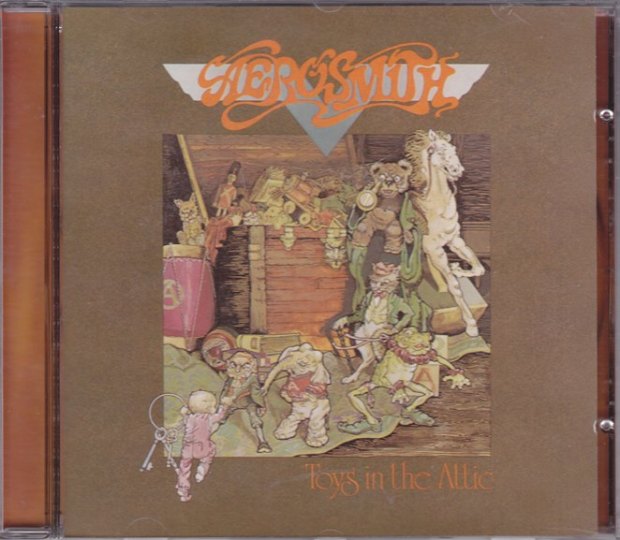
 AEROSMITH – Toys in the Attic (1975 Columbia, 1993 Sony)
What’s your lucky number? For Aerosmith, maybe it’s 3. Third album in as many years, Toys in the Attic is considered by some to be the album: “If you’re only going to get one,” the desert island record. Considering that Rocks was yet to come, let’s withhold judgement until we get there. For now just be aware there is a lot of Aero-love in the world for Toys in the Attic, and you can hear why.
As if to prove that Aerosmith could keep up with some of their heavier competitors out there, “Toys in the Attic” is a blazing guitarfest careening through the speaker into your skull. What a way to open an album: it’s a statement. The band were honed to a razor-sharp edge by producer Jack Douglas. Joe Perry in particular had grown to be a ferociously good blues-rock player, and “Toys in the Attic” is the evidence.
One of the great joys of listening to Aerosmith is finding the little known album gems that weren’t repeatedly re-released on hits packages. “Uncle Salty”, a slow crawl through the blues via the neck of a bottle, is one such track. Also underexposed is “Adam’s Apple”, which shows off Joe Perry’s greasy slide guitar sleaze. The horn section makes an appearance here too, adding extra sauce. Then they bring the funk on “Walk the Way”. Run DMC recognized that funk and knew how to update it in 1986. In 1975, Tom Hamilton’s rolling bass was the stuff that groove is made of. This is the kind of song that proves the musical ability of these five gents from beantown beyond the shadow of a doubt. Then the sassy horns return on “Big Ten Inch Record”, an old R&B classic from 1952. Remarkably the band pull it off with class and sassafras.
“Sweet Emotion” is one of the band’s best known today, something that Tom Hamilton must be happy about, since it’s one of only a few Tyler/Hamilton co-writes. It’s no surprise that Hamilton had a hand in its composition since it’s based on another one of his rolling bass lines. But listen to the way Joey Kramer and Brad Whitford lock into him. That groove is the foundation on which Aerosmith was built. On top of that, Steven Tyler has always had a way with melody. “No More No More” is one of his most irresistible singalongs.
The Sabbathy thunder of “Round and Round” was an unexpected twist. Tracks like this and the later “Nobody’s Fault” show the metallic side of Aerosmith that usually remains shrouded. “Round and Round”, though menacing and heavy as a brick, is the least memorable song on Toys in the Attic (only because the competition was so good). Brad Whitford takes care of the solos on this one, a song he co-wrote (just like “Nobody’s Fault”).
“You See Me Crying” ends the album on a melancholy note but lovely note. A piano based tune with strings and McCartney-ish melodies, it is truly the kind of classic that Aerosmith will be remembered for. If it were not for songs like “Dream On”, “Seasons of Wither”, and “You See Me Crying”, then Aerosmith would be just another American rock and roll band playing their version of the blues that the Stones and Zeppelins of the world had already plundered. “You See Me Crying” was proof that Aerosmith were more than that, and had their own thing going on. (That’s Whitford playing the solos again, by the way.)
So what’s better? Toys in the Attic, or Rocks? Let’s find out next time.
5/5 stars


AEROSMITH BOX OF FIRE review series:
 Disc 1: Aerosmith (1973)
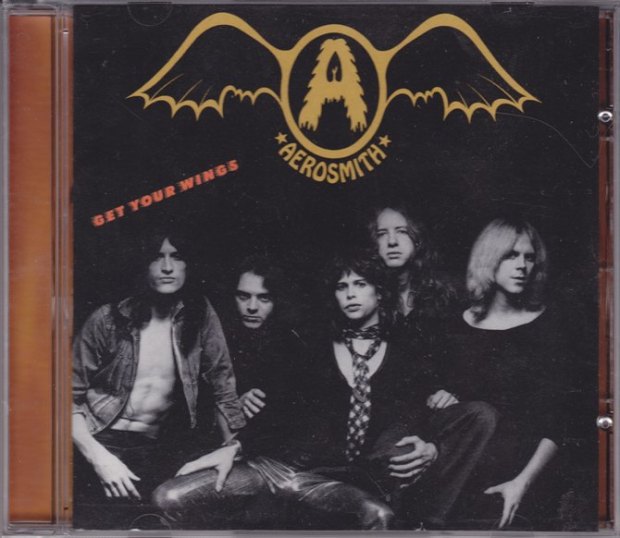
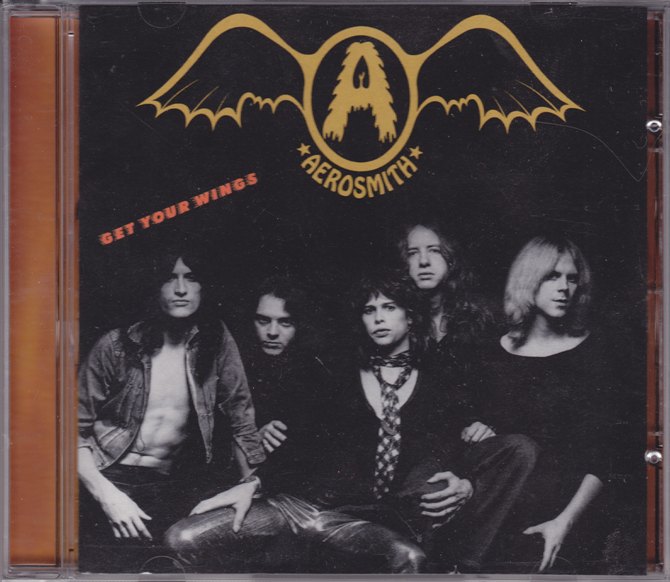
Disc 2: Get Your Wings (1974)
Disc 3: Toys in the Attic (1975)


















 mikeladano.com