heavy metal

REVIEW: Union – Live in the Galaxy (1999)

UNION – Live in the Galaxy (1999 Standback)

  • John Corabi – vocals/guitar
  • Bruce Kulick – guitar/vocals
  • Brent Fitz – drums/vocals
  • Jamie Hunting – bass/vocals

This great, forgotten Union live album should be added to the collections of any fans of John Corabi or Bruce Kulick.  Packed with great songs from Union, Motley Crue, Kiss, the Scream, and even Cheap Trick and the Beatles, this live album delivers on every level.  11 tracks live, plus two bonus studio songs.  Power to the music indeed!

There are no specifics about recording dates, but regardless the album has been well sequenced, opening with Union’s own album opener, “Old Man Wise”.   Very much a continuation of the Motley and Kiss albums of 1994 and 1997 respectively.  Mix them up with riff and groove sauce, you’d get something like “Old Man Wise”.  Bruce’s playing is always fascinating and “Crabby” was in top voice.  Grit and power are the words of the day.  This song pounds, and Bruce absolutely rules.  We go straight into the equally grooving but more upbeat “Around Again”.  Union had an excellent self-titled album out at the time, and it makes up the bulk of the album.  Fortunately the band’s original songs set a high bar.  Bruce Kulick doesn’t put out crap.  A third song from the debut, “Heavy D…” might be called a ballad, but really it’s a quiet song with heavy parts.  Or is it a heavy song with quiet parts?  It is performed with gusto in either guise.

“We’re gonna do something from Carnival of Souls!  This is called the ‘Jungle’, baby!”  Then Jamie Hunting comes in with that rolling bassline, originally played on album by Bruce himself.  Kulick’s past with Kiss makes an appearance on “Jungle”, a song Kiss never performed live, so quite a treat.  John Corabi’s spin on a Paul Stanley vocal is full of raspy power yet still appropriate.  Hearing this makes one wish that Kiss did have the balls to play it live.

That’s a lot of heavy rock in a row, and to lighten the mood, it’s the Union original “Love (I Don’t Need It Anymore)”, which is dedicated to a certain someone who was involved with a current event in the news at the time.  It’s a little more upbeat, a little more “Motley” and absolutely one of the best Union songs from the debut.  The chorus kills like a classic from Dr. Feelgood.  Corabi then takes us back to his earliest catalogue, The Scream’s “Man In the Moon”.  The Scream were a sort of musician’s super group, featuring Bruce Bouillet and John Alderete from Racer X.  The Scream was more mainstream than that.  This is a melodic rocker with a bluesy twist, and the band do a slamming job of it.

Bruce Kulick takes center stage on another Kiss song that was never played live, and his vocal debut:  “I Walk Alone”, which he wrote with Gene Simmons.  It begins with a short, Zeppelin-esque guitar exercise from Bruce.  As for the vocals, you gotta give Bruce credit for not going back and fixing things.  This is Kulick’s voice raw and exposed and imperfect and yet…perfect for the album.  In many ways, this is better than the Kiss version, as Bruce adds a really sweet guitar outro.

A fun unexpected cover next:  Cheap Trick’s “Surrender”!  The backing vocal abilities of the entire band enable them to easily pull this off.  You’d look at it on paper and scratch your head a bit, but it’s short work for these pros.  It’s all about the vocals.

A dramatic “Pain Behind Your Eyes” brings to the stage another soft/hard hybrid with wicked drumming and vocals.  However this is just a prelude to one of the heaviest Motley Crue songs ever:  “Power to the Music”.  Corabi takes center stage doing some screamin’ and preachin’ to the crowd.  The demanding song is handled ably by Corabi, seemingly relishing playing this awesome song live on the stage again.  They probably would have blown Motley off the stage doing the same song.

After some band intros, we get some Kulick solo wailing right into the final song “Tangerine”.  Nothing like the Zeppelin song, this is a riff-rocking groover with excellent melodic delivery by John Corabi.  Union were a melodic band, but John’s approach added the grit and grime that is like rock candy going down.  This song slays with a resilient groovy riff.

Bonus studio tracks are two:  an acoustic rendering of “October Morning Wind” from the debut, and a Beatles cover that blows away the more well know Oasis version.  First up though, the rich acoustics of “October Morning Wind” really bring warmth to a cold subject.  “My pain is measured by a sky that is old and grey,” sings John in a song that may well be about seasonal affective disorder.  Then, the Beatles cover is handled with ease.  “You’ve Got to Hide Your Love Away” benefits from similar acoustic warmth.  It sounds live in the studio, and again the lead and backing vocals make it work seemingly without effort!

Union really made a strong impression with their first two releases, the debut and the live album.  Was it too soon for a live album?  When you look at the setlist, absolutely not.  They had enough material with which to build a very strong set of songs, needing only one true cover (the Cheap Trick song).  The bonus acoustic tracks are icing.

4.5/5 stars


GUEST REVIEW: Twisted Sister – Love Is For Suckers (1987) by Tommy Morais (and remembering A.J. Pero)

My old friend and collaborator Tommy Morais passed away in 2024, but miraculously, I found this 2015 email from him.  It contained a complete review of Twisted Sister’s Love Is For Suckers album that we never published, and a memorial for Twisted Sister drummer A.J. Pero, who had recently died.  I am please to finally publish this final review that Tommy sent me to post.  Rest in peace Tommy.

TWISTED SISTER – Love Is For Suckers (1987 Atlantic)
by Tommy Morais – written March 28, 2015
“The ‘Soft & Filler’ album…”  Bought in 2012 in France for something like 17 euros!

Twisted Sister’s fifth and final studio album Love Is For Suckers (unless you count the band’s 2004 Still Hungry, a collection of re-recordings of Stay Hungry) is one that tends to divide people. Some hardcore fans dismiss it as too pop and lacking much substance, while others have a soft spot for it and thought it was an enjoyable release at the time. There’s some claims to be made about both opinions. The main problem with with Love Is For Suckers is that it really isn’t a Twisted Sister album. “Wake Up The Sleeping Giant” is deceiving in that it almost sounds like classic TS. Yet only Dee Snider as an original member remains, and then there’s Joey “Seven” Franco who was in the current lineup on drums. It really should have been a Dee Snider solo album which is what it was intended as and truly was, but instead the record company pressured this to be released as a Twisted Sister album.

Then it is plagued by a few big issues, besides the absence of the classic lineup. Did you ever see Reb Beach and Kip Winger receiving credits on a Twisted Sister album? Well, they played on this. Probably not a happy thought for most Twisted Sister fans, as it ended up taking an ultimately softer and a more pop direction. Then you have to consider that it may have been competitive and cutting edge in 1987, but Love ls For Suckers has not held up well with time. Also for an album title that claims love “sucks”, it’s ironic that most of these songs are well… love songs.

What’s with the drum sound?! The songs are wimpy but with a thunderous, big drum sound which leads to question that maybe Joey was a good drummer who ended up playing on the wrong album. The production by Beau Hill is about what you’d expect, very “1987” and time has not been too kind to its sound.

Opener “Wake Up The Sleeping Giant” is misleading. 1) It sounds like Twisted Sister and 2) It’s the best song on the album, and it leads you to think (and hope) the rest may be up to this standard. “Hot Love” was and is a great candy rock piece tailored for 1987; cheesy but fun and a good overall choice of single. It’s one of the most memorable songs (remember the video that went along?). The title track is actually not a bad rocker at all, it’s consistent as Snider does a good vocal performance and it’s somewhat catchy. This is where the album takes a slide in the quality department with “l’m So Hot For You” and “Me And The Boys” (this one especially is embarrassing) being generic filler tracks that halt any momentum the album had going for it. Sandwiched in between those songs is the slightly better rocker “Tonight” which showcases some aggression; not a bad tune at all. “One Bad Habit” is more filler material. “I Want This Night To Last Forever” has a Van Hagar feel to it, especially during the chorus but is nothing to write home about either. “You’re All That l Need” tried to be a big power ballad but it failed during the chorus, even though it had a nice build up. The keyboards prevent it from being a strong ballad like “The Price”, and as a result it sounds a little too soft and thin. The closing “Yeah Right” ends thing on a more positive note. It’s a solid upbeat rocker and one of the heaviest songs on an album that could’ve used more songs of this calibre.
I own the remastered version with four extra songs. “Statuary Date” is the worst of the bunch. “Feel Appeal” is better than some of the songs that made it onto the actual album, it’s more straight up rock and a little catchier. “I Will Win” is rocking but the chorus doesn’t get it right; close but no cigar. “If That’s What You Want” became “Me And The Boys” although it’s earlier incarnation was stronger and had better lyrics. If you ask me this version should’ve made the album instead!

There you have it. Any way you slice it, Love Is For Suckers is definitely, without a doubt, the worst Twisted Sister album. It suffers from the production, is full of fillers and it doesn’t feature Jay Jay French, Eddie Ojeda, Mark Mendoza, A.J Pero (who left before this was released), even though the liner notes say they were a part of it (minus Pero, replaced by Joey Franco). The first two songs, and the album cover, are the only things that are truly memorable about LIFS. The rest is really unfocused and sub-par. Twisted Sister’s decline had already begun with their previous effort, 1985’s Come Out And Play which would show cracks of the band’s implosion, but this one was a commercial disappointment failing to reach gold status or chart successfully. Simply put, Twisted Sister was no longer a band at this point and the album did nothing to stop them from breaking up and was quite frankly just not very good.

2/5 stars

Mike liked this album slightly more.  Click here for his review.

REMEMBERING A.J. PERO by Tommy Morais

It was grade six.  I was 11 years old, and it was the Friday before a holiday, which meant the whole class got to do nothing but chill and watch a movie. For the rest of the day our teachers let us hang out and do nothing. We each brought pop, chips or both to share. One of my friends Maxime brought one of his dad’s CDs. That CD? Twisted Sister’s greatest hits. He asked the teacher if he could play it for us, and the rest is history. I was introduced to my first taste of Hard Rock and Metal. I distinctively remember telling one of my friends “this is not bad huh?”, to which he agreed. I glanced at the album cover. It said “Twisted Sister Big Hits & Nasty Cuts“. Then l proceeded to tell Maxime that this (ugly) “girl band” was pretty good. I wasn’t familiar with Glam/Hair/80’s metal at that point and even less so with the look. Truth is l had been exposed to some AC/DC, Loverboy and Metallica prior to that but this was the first time it really clicked.  Maybe it was just just the right age, the right time. There you have it, Twisted Sister was the first band I recall really taking a liking to. From then on l discovered my dad and his brother’s LPs and played them on the turntable (I remember digging the first Van Halen a lot).  I definitely have a soft spot for Twisted Sister.
It is with sadness that I learned of longtime drummer and classic lineup member A.J. Pero’s unfortunate passing. Pero was a crucial part of the band and its sound, and a great drummer too. I approached Mike about maybe doing something Twisted Sister related on his blog to which he was very enthusiastic. I wanted to review something AJ played on, like Come Out And Play as l plan to review all of TS’s material in the upcoming days, but with time restraints l had to settle for my (still brand new) Love ls For Suckers. The band has said that were to make some big announcement next week. One can only assume that it is regarding Twisted Sister’s future as a band. Jay Jay said on social media that they were already thinking about hanging it up prior to Pero’s passing. Then Dee Snider said it would be profitable to the Pero family if the band kept playing and that they were thinking about winding down in 2016 for the band’s 40th anniversary. I’m not against them continuing performing live and going out on a final tour to honour AJ and the anniversary of the band just as l am not opposed to the band calling it quits. I have a feeling they’ll at least play a few more shows and maybe do one last concert CD/DVD (that would be cool). Rest in peace A.J., the rock world lost a great drummer.


RE-REVIEW: Geddy Lee – My Favourite Headache (2000, 2024 reissue with bonus tracks)

GEDDY LEE – My Favourite Headache (2000 Atlantic, 2024 Anthem reissue)

As a Rush fan, Geddy Lee’s solo album My Favourite Headache never quite clicked.  The lyrics seemed inferior and the music immemorable.  In 2024, Geddy reissued the album with two bonus demo tracks.  This is a perfect time to revisit the album and see if time has been kinder than I was in my original review.  It has been a number of years since last listen; perhaps even a decade.

The phrase “my favourite headache” means making music to Geddy Lee.  The art of crafting songs is a headache, but he would not trade it for the world.  That is what the title means.  For historical context, this album was made when Rush were on a serious hiatus.  Neil Peart was dealing with tragic loss and nobody knew if the band would ever reunite, including Neil.  From that soil grew My Favourite Headache, which Geddy recorded with drummers Matt Cameron of Pearl Jam and Soundgarden, and Jeremy Taggart of Our Lady Peace (on one song).  Geddy plays the lion’s share of instruments with Ben Mink and other guests also contributing.

As it should, “My Favourite Headache” opens with some heavy bass, Geddy’s fingers flying.  Then, it degenerates into a dissonant and hard guitar riff with throws the listener for a loop:  it’s not at all like Rush.  It might be the bass player and singer from Rush, but this does not sound like Rush.  Which is good; which is the point.  It takes a moment to adjust.  “My Favourite Headache” slows to a lush section with piano, violins and violas by Mink.  The lyrics are fascinating.  “I watch TV, what do you want from me?”  There is a lot to unpack here now that Geddy is able to express himself verbally in his music.

More Rush-like is “The Present Tense”, a song about living in the now.  It bounces from heavy choruses to softer acoustic verses, which is perhaps a different approach from a Rush one.  Perhaps by doing something more streamlined, Geddy wrote a catchier song here.  His bass sings full, but not over-dominant.  Cameron is an apt companion on drums; while not attempting to play like Peart, he is more than capable of navigating the tricky changes and fills.

“Window to the World” has a more exotic feel in its light chords, and Geddy uses his bass to deliver some delightful trills and hooks.  It has some of those jarring dissonant guitars from the title track, but not as prominent.  This song is melodic, largely easy to digest, and it delightfully careens from soft to hard, with interesting keyboard textures.

Heavier is “Working on Perfekt”.  This might be the most enticing of all Geddy’s songs.  Tense verses are broken by a sparser chorus.  Electronic sounds aside, this is a very Rush-like song.  You can almost image what Alex and Neil would do with it, but as Geddy’s song, it is rich in tones and deep, tense hooks.

“Runaway Train” is one of the brightest, most upbeat songs.  Mink’s keys and violins add a light, airy feel above Geddy’s hammering bass.  His playing is always eloquent and entertaining, if you choose to focus on the bass.  Between the electronics and Mink’s rich contributions, there is a lot you can listen to.  Or just enjoy the song.  It’s a good one.  Perhaps I misjudged this album before.

The first mistep might be “The Angels’ Share”, which some may love, but fails to launch for me.  It’s a lighter song, but Geddy’s bass ensures it’s like lead.  Ben Mink provides some really interesting soloing and backing, but the song itself never quite takes off.  In hindsight it sounds like Clockwork Angels-era Rush.  While we are in this perceived rut, Geddy throws his worst lyric out in the next song:  “Say goodbye to suburbia, you don’t have to cut the lawn.”  That’s from “Moving to Bohemia”, which is actually a pretty catchy song.  It’s pretty upbeat for this album, and Geddy’s bass playing is at its most thumping.

Geddy turns up the funk on the magnificently weird “Home on the Strange” (with Taggart on drums).  What the hell is this?  It’s crazy, it’s like Geddy pulled out all funkiest records in his collection and combined them.  The lyrics here are also quite fun:  “He’s a Canadian icon, he sleeps with his clothes on.”  Is it autobiographical?  “And he don’t like change, you may think he’s deranged, but he’d rather be home, home on the strange.”  Once you get used to its groove, this song won’t let go.

Back to the light, with “Slipping”, which relies on acoustics and piano for a gliding kind of feeling.  This is followed by “Still”, which is unusually sparse and simple.  An acoustic ballad, with an upbeat tempo, it’s a beautiful song.  It certainly sounds autobiographical.  “Still halfway up that hill, my fingers may bleed but I’ve got to get there still.”  This song strikes me as the best, musically and lyrically, on the album.  Strange that it never jumped out at me before.

Closer “Grace to Grace” remains an exceptional song, and one that really ends the album on familiar territory.  A burning guitar and driving bass are the focus, as if to say “Hey guys, I’m always going to rock.  Thanks for joining me on this trip.  Here’s a song I think you’ll like.”

Of course, on this new reissue, Geddy treats us to two previously unreleased demo versions.  If you haven’t bought the album before, you may as well go for this edition.  True, I usually criticize albums for being a bit on the long side, and My Favourite Headache is a bit long, but demo bonus tracks are added value that you don’t have to include if you just want to listen to the “album” for the experience.  There doesn’t seem to be any recording information about these two demos, “My Favourite Headache” and “Home on the Strange”.  These are full realized arrangements, though without all the vocals.  “My Favourite Headache” might surpass the album track for its live sounding rawness.  Maybe it should have been an instrumental with only a chorus?  The demo is great.  Same with “Home on the Strange”.  These tracks are worth the listen, and the re-buy.

Ultimately, My Favourite Headache requires the listener to set aside any thoughts of Rush, no matter how much Geddy and his bass will always sound like Rush.  It’s a challenge, but once you get there, it is easier to appreciate the songs and the experiment.  It takes time to absorb, as it is actually a very dense production, even for Geddy.  Ben Mink’s contributions are priceless textures that help transport yourself away from a Rush mindset.  Listen to those; focus on Mink and appreciation will come.

3.5/5 stars

Check out my autographed copy of My Favourite Headache by clicking the thumbnail.

Check out Grant Arthur and Davey Cretin as they get this album all wrong on the Warehaus tonight.  8 PM EST June 23 2025

PHOTOS: KISS – Off The Soundboard – CD version Japan exclusive – Asylum Tour San Antonio TX 12-3-1985

Fresh in today’s mail, it is the latest KISS Off the Soundboard CD, Asylum Tour 1985, in Texas!

“But Mike,” you query.  “I thought that was a vinyl exclusive, and I thought it sold out too.”

True, it was a stupid coloured 3 LP set, exclusive to the KISS store, and now sold out except in bundles with a shirt.

The Japanese record company said いいえ and issued it on CD anyway.  They did a smashing job of it!  Some fans received a free sticker; I did not.  Inside the cardboard gatefold sleeve was a mini KISS poster, and 2 CDs, each one within its own plastic sleeve within its own printed paper sleeve.  The design for this album was a little different from the previous five in that this time there is a picture on the outer cover.

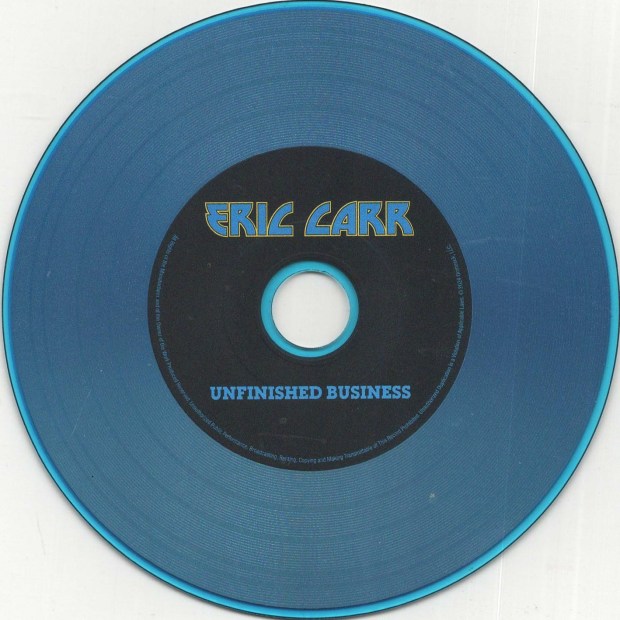
The CD sounds great, and it’s classic fastfastfast 80s Kiss with the unforgettable Eric Carr on drums.  That’s why you only see CD 2 in this photo.  CD 1 is in the deck!  This could have been released officially in 1985.


VIDEO: @darcyska Album Review: AFI – Sing the Sorrow (2003)

On the weekend I had the pleasure of doing a show with D’Arcy Briggs from the YouTube channel @darcyska.  The topic was the recently reviewed Sing the Sorrow by A.F.I., which D’Arcy recently picked up thrifting as well.  With this happy coincidence, we sat down and reviewed the album.  It turns out we mostly agreed when we split it down track by track.

Check out this fun review, and a lot of praise for an album you should get!

REVIEW: A.F.I. – Sing the Sorrow (2003)

A.F.I. – Sing the Sorrow (2003 BMG)

I don’t pretend to know about bands with whom I have only scratched the surface, so here are some basics on A.F.I.  I always considered them to be a punk emo band.  A.F.I. (A Fire Inside) are fronted by Davey Havok and have been around for almost 35 years now.  In 2003, they were new to me.  Working at the record store, some of the younger cooler employees put on A.F.I.’s new album Sing the Sorrow, and I immediately liked it.  It had a lot of metal riffing, and I dug Davey’s vocals.  I was an instant fan of the disc, and I played it regularly while it was charting in 2003.  I still spin it today, and though I’m not a pierced up record store guy with eyeliner anymore, I still dig A.F.I.

Sing the Sorrow was the band’s first big mainstream album after several punk/horror oriented releases.  One look at the back cover, and you know it’s going to sound amazing:  Produced by Butch Vig and Jerry Finn.  The front cover is striking, minimalist and classy.  All told, Sing the Sorrow is dark, but with spotlights of bright illumination.  Let’s give it a listen.

One thing immediately obvious is that A.F.I. like their grandiose song titles, and so the opening piece is called “Miseria Cantare- The Beginning”.  Very Ghost today, no?  This keyboard and industrial inflected piece begins with percussion and shouting:  “Love your hate, your faith lost, you are now one of us.”  And then comes Davey Havok, with soothing melodic and smooth vocals, delivering the melancholy hooks.  It’s hard to call this a full song as it’s more an intro, but it’s Davey that reels you comfortably in.

“The Leaving Song, Part II” (again with the pompous song titles that I love so much) is the first real song.  Based on a cool bunch of guitar notes and a couple catchy riffs, A.F.I. open not with a blitzkrieg but with a slow and determined dirge.  The choruses are gang vocal heaven.  This song acted a second single for the album, hitting #16 in the US.  Only Davey Havok could make these words sound positive:  “Break down, and cease all feeling, burn now, what once was breathing.”  Somehow his voice gives hope.

Paces accelerate with one of the best tunes on the album: “Bleed Black”.  This one should have been a single.  In my ears, this album has nothing but singles, and “Bleed Black” is chief among them.  “If you listen, listen, listen…listen close, beat by beat, you can hear when the heart stops, I saved the pieces when it broke, and ground them all to dust.”  Yet it sounds like a celebration of defiance, not a dirge of defeat!   The chorus is layered with alternative band/Davey vocals, and it’s like crowdsurfing on a cloud.  Then, A.F.I. take out the acoustics and go full dirge, but back to the chorus again before it’s too late.

“Silver and Cold” was the third single, a dark and slow tune with industrial effects and subtle, quieter sections and bigger bombastic choruses.  Mournful, but powerful too.  Tempos bounce back on “Dancing Through Sunday”, fast through and through, with incredible hooks from Davey and the band singing backing vocals.  Some cool and prominent bass work, some hammer-ons with the guitar, and we’re not far from familiar territory, but hold on – is that a guitar solo?  Yes it is, a full metal guitar solo by Jade Puget, with tapping and fancy fretwork, in the middle of this punky album!  And it’s the only solo too, one and done.  Talk about using that space effectively!

“Girl’s Not Grey” was the big first single, and it’s all tension and hooks.  “What follows has led me to this place, where I belong will all be erased.”  Is doesn’t sound like a hook, but that’s the magic of Davey Havok.  The guy turns a sentence like that into an anthem, because this song has anthemic qualities.  It’s all good, and the drumming is exceptional during the quiet section in the middle.  These guys just learned to cross genres in the best way, taking the things that work and using them sparingly and effectively.  And man, can Davey deliver hooks.

Dark lonely bass opens “Death of Seasons”.  Then, enter Davey, screaming as if in pain.  The song then shoots off into a punk rock sprint, but still with a chorus that delivers melody and more hooks.  The track ends with Davey declaring that “all of this hatred is fucking real,” before falling screaming into the background while mournful violins sing the last notes.  Really haunting stuff.

Guitars fade into “The Great Disappointment”, layered and ringing a haunted chord.  The bass indicates that there are still hooks ahead, so stick with it.  This could be considered the first ballad on the album.  A power ballad – power combined with pain.  It’s bleak.

“Paper Airplanes (Makeshift Wings)” is another notably dramatic title, with a punky blast of a song behind it.  This track allows you to climb back into the light.  With Davey combining his shouting voice with the clean singing in the same lines, it’s a great fun track to headbang to for a while and forget the misery.  Pay attention to the drums and percussion, as it’s not all simple bashing.  This band, with Hunter Burgan on bass and Adam Carson on drums, can play!

One of the biggest songs in terms of memorable melody is “This Celluloid Dream”, which is a great deep cut and easily could have been a single.  The tempo’s not too fast and Davey continues to deliver the goods vocally and melodically.  Same with all the backing vocalists:  they deliver.  Everything sums together like mathematics.  1+2+3=hooks.  Among the best songs on the album, and one that deserves some serious listens.

Remember way back when the album began, and we heard Part II of “The Leaving Song”?  Now we finally get to Part I, as second last “track” on the CD.  This quiet dirge begins with just some bare guitars and Davey singing mournfully.  “Leaving” seems to be a recurring things on the album, as “This Celluloid Dream” also uses the word.  Though sad, it’s a beautiful song.  I suppose you could consider the outro guitars here to be a “solo”, but that would be pushing it.

The album really goes out in a dramatic fashion.  The final track on the CD is a 15 minute bulk consisting of three actual pieces of music, two of them “hidden”.  “…But Home is Nowhere” is something of a return to form, with the tense guitars hammering out a stuttering riff while Davey delivers the mournful hooks.  “This is my life, this is eternal!” goes part of the anthemic chorus.

“The Spoken Word” is untitled in the CD booklet, but its lyrics are included.  After a silent pause we are greeted by piano and a creepy child’s voice.  This goes on a while, like an Alice Cooper interlude.  Then we get to the final real song, “The Time Imperfect” which is bare guitar and vocals, much like “The Leaving Song” at first.  Then the drums and bass come in to complete what we’ll call a ballad.  There’s one final blast of heavy as we drift along towards the end, followed by creepy, atmospheric reversed guitars, into the dusk.

Sing the Sorrow could not have been more accurately titled.  This album is an expression of pain, solitude, loss and also victory.  The victory is in the survival of it, and turning it into art.  Each chorus allows you to release pain.  Beyond that, it is clear that A.F.I. created a sonic painting here.  It is an album that takes one on a journey, and features no boundaries to its creative expression.  Special credit must go to guitarist Jade Puget who refuses to play it simple, safe, or uninteresting, but never puts the hooks second.

A masterpiece.

5/5 stars

REVIEW: Rush – Rush 50 (2025)

RUSH – Rush 50 (2025 Mercury)

Don’t try to do any math and figure why Rush 50 is out in 2025 instead of 2024.  What matters is:  Rush 50 is out.  It is stunning, both sonically and visually.  The box art by Hugh Syme fits right in that Rush mold, akin to Chronicles.  That’s to say nothing of the hardcover book inside, which we will discuss later on.  The design is excellent.  In the back, the CDs peek out of thee sleeve like golden coins.  It’s just a really cool looking, and sounding, box set.  The remastering here is terrific.  Geddy’s bass is wonderfully separate from the guitars, and you can really hear the details as you remember them.  Brilliant job here.

Rush 50‘s four discs follow roughly chronologically.  They include a generous number of live tracks, which is not at all to the detriment of this set.  Some of the live tracks come from other box sets, from live albums, and some are rare or unreleased versions.  “Garden Road” is one long desired by Rush fans, though “Fancy Dancer” is conspicuous by its absence.  (Don’t assume this is the last collection that Rush will release.)

In the days of downloading via Bittorrent, I found crappy vinyl rips of Rush’s first single “Not Fade Away” / “I Can’t Fight It”.  I burned them to a CD, and lamented that this would likely be the only “physical” copy of the single that I would ever own.  15 or 20 years later, this new anthology-style box set Rush 50 includes the single as the first two tracks on disc one.  To finally have these songs, officially, physically, and sounding so full and rich compared that that old CDr, it scratches that itch that I have as a collector.  If I could afford that first single, I’d have it already.  This will do even better, because it’s clean and digitally perfect.  It’s also quaint.  The almost psychedelic echo on “Not Fade Away” is a detail I didn’t remember.

Similarly, about 15 years ago Rush released the “Vault Edition” of the track “Working Man” for a limited time on iTunes.  I burned that to a CD too.  Now it is here physically, along with another “Vault Edition” of “The Trees” that I was unaware of.  Now we have both on CD.  Itch scratched once again.

Wisely, Rush made sure some of the biggest hits that people want are studio versions:  “Closer to the Heart”, “Tom Sawyer”, and “Subdivisions” for example.  Joe Average, who just wants a cool box set instead of all the albums, often ends up complaining when bands out live versions instead of studio versions of the songs they really wanted.  (Trust me, I worked at the Beat Goes On for 12 years.)  The other thing is, the live versions they did select are superb.  Let me tell you, the Bonham-esque drums on the jammy “Before and After (live)” sound absolutely massive.  It’s certainly appropriate for a band of this reputation to include so many live versions.  Most of disc two is live.

With equal wisdom, Rush ended this box set with the last songs plays at the their last ever concert.  Going back to the very beginning, Rush end the anthology with those final live takes of “What You’re Doing/Working Man”, with just a smidgen of “Garden Road”.  It’s an emotional way to end the journey, and this box set is indeed a journey.  That’s the wonderful thing about anthology style sets.


The remarkable Hugh Syme worked overtime to produce the art for the hardcover book.  Yes, not only do you get words and photos, but also brand new double-page artwork for most of the songs on Rush 50.  It is the kind of box set that will give you enjoyment every time you listen to it, because you can crack open that book and just study.  My study has barely begun; I have not really been able to look at each and every piece of art yet.  Rest assured though, Hugh Syme provides all the justification for the price of this set, with the book alone.  If this were a hardcover sold in a store on its own, it would probably be at least $60 bucks as a book.

A massive career like Rush’s deserves a massive box set.  You won’t believe it until you hold it in hand.  This thing is monolithic; a purchase that will not be regretted.

5/5 stars

REVIEW: Rose Tattoo – Rose Tattoo

ROSE TATTOO – Rose Tattoo (1978 Albert Productions/1990 Repetoire Records “Limited Edition” CD reissue)

It is amazing how in North America, you can spend half a lifetime listening to music without ever running into an album by Rose Tattoo, Australia’s “Angry” exports.  Legendary back home, but over here most of us just know them from “Nice Boys” by Guns N’ Roses.  Some may also remember “Rock ‘n’ Roll Outlaw” by Keel.  Both covers of Rose Tattoo tracks from their eponymous 1978 debut.

Led by the diminutive Angry Anderson, Rose Tattoo were produced by Harry Vanda and George Young, the same duo that helmed those early AC/DC classics among others.  AC/DC comparisons are easy, but Rose Tattoo had two things going for them that other bands did not:  1) dominant slide guitar on every track, and 2) Angry Anderson himself.  Don’t underestimate what you see.  This guy has gritty power that elevates each song, and blows away the most famous cover version you’ve heard.  Furthermore, the lyrics should be mentioned as different from what many bands were doing at the time: Gritty social observational lyrics, featuring  real life stories of the streets (too wild to be true), with colourful characters such a drug dealers and tough guys.

Opening with the slide guitars of “Rock ‘n’ Roll Outlaw”, we can accuse another band who clearly ripped off Rose Tattoo in their early days, that being the Four Horsemen.  If their “Tired Wings” didn’t take inspiration from this song, then I’ll be damned.  The steady beat of Rose Tattoo is the perfect backing for drive this tough boastful rocker.  Besides that beat and slide guitar, Angry Anderson’s voice is the magical ingredient.  It sounds perpetually pushed to the edge, with a delightful squeak highlighting the emphatic parts.  The powerhouse voice of Anderson automatically blows away Keel’s cover.  Sorry Ron.

Guns N’ Roses came close to capturing the frenetic energy of “Nice Boys”, but not even Axl can bottle the energy of Angry Anderson.  Now playing at a punk-like tempo, but with frantic slide guitar punctuation, “Nice Boys” easily kills the famed GN’R cover version.  Hearing it, one gets the sense of “ah, this is what they were trying to do.”

One of the most menacing songs is “The Butcher and Fast Eddy”, slowing things down to that nocturnal crawl that AC/DC mastered with Bon Scott.  Much as Scott filled his lyrics with true stories and colourful characters, Anderson tells a tale here like a novelist.  “Across the river lived Fast Eddy, he was known to be treacherous, very mean. Even Eddy’s sweet young sister out on the streets, just a girl, barely fifteen.”  Is Anderson the Bob Dylan of the dirty streets?  He keeps the story going for six and a half spellbinding minutes, with the band mostly just playing the backing music, with a few picks scraped for noisy blasts.  Angry Anderson’s voice and delivery carries it.

A stomping beat slams through one of the catchiest songs, “One of the Boys”.  It’s an unsubtle ode to being a tough guy with a bunch of tough guys to back you up.  Yet Angry’s words offer more than just boasting.  OK sure, there’s boasting.  “What you need is mates, staunch and true, hold out your back they’re gonna see you through.  I don’t look for trouble but I won’t hide, I’ll jump on you if you don’t step aside.”  There are also hints of deeper themes, such a loyalty.

Now at top speed, “Remedy” brings the punk rock tempos with a single heavy riff and killer hooks.  The message here is simple:  gimme rock and roll.  It’s good for you.  It’s healthy.  Turn it up and blast it, and at this tempo you’ll probably be headbanging too.  Top notch party rock on the edge of punk.

“Bad Boy for Love” uses the slide to bring a sleezy vibe to a slower groove.  In this song, the main character got drunk, ripped up the town, and is now just being released from prison.  Then, he went to go see his girl, whom he finds with another man.  He kills them both and ends up back in the slammer.  This is followed by a jailbreak and “a thousand guns” pursuing him.  Not original, but delivered with bona fide sounding cred.

Keepings things to a breakneck pace, “T.V.” might get you pulled over for a speeding ticket.  Angry’s voice is pushed to the limit again, and the slide guitar is as relentless as the tempo.

The one surprising song is the acoustic “Stuck On You”, featuring the line “like a rose tattoo”.  The slide is now applied to various acoustic stringed instruments, and though it’s clearly the same band, the approach is very different.  A more traditional blues direction does not temper Angry’s voice, still pushing it on the choruses and verses alike.  Sometimes the lyrics verge on the absurd.  “I had a fish named Sam, he lived in bowl.  I heated up the water, so he wouldn’t get cold.”  The lead character seems like a possible stage five loser, but it’s all open to interpretation.  Either way, a great song with memorable words and a delivery impossible to duplicate.

Back to the punk-like rock, “Tramp” tells a more familiar story.  It’s over and done real fast, and then we’re onto the epic closer “Astra Wally”.  Rose Tattoo do best when they tell these kinds of stories.  Astra Wally was a real cool cat, but he sounds like trouble to me.  A drug dealer who samples his own wares, perhaps.  “He don’t get shot, he go by O.D.”  The slide guitar is once again in the spotlight, always fast and always tasty.  That’s founding member Peter Wells on slide.  Then we have Mick Cocks on lead and rhythm, Geordie Leach on bass and Dallas Royale on drums.  When they get down and just lay down grooves like this, you can listen to them all day.  “Astra Wally” is indeed a “super fun thing” as the lyrics state.

That’s a 5/5 star album right there.  But we’re not through yet, because in 1990 this album was reissued with eight bonus tracks.

Up first are a batch of studio tracks.  A B-side called “Never Too Loud” backed the “No Secrets” single in 1984.  Regardless of the time difference, it does sound like it roughly fits in.  It’s less frantic and tighter, with a slightly cleaner sound.  Slightly.  It’s still not anywhere near the polished rock starting to come out of North America at the time, and it maintains the slide and steady beat.

“I Had You First” is from 1981’s “Rock ‘n’ Roll King”.  The punk vibe is first and foremost here, but the chorus is still a blast.

From 1982, “Fightin’ Sons” comes from the “It’s Gonna Work Itself Out” single, and it’s another vibe altogether.  It has a bit of an early 70s vibe with a blues base.  This is about going to war to fight for your country, but it’s more than that.  It offers its own perspective; its own angle on the experience, gleaned from friends.  The lyrics are more interesting than the music, perhaps.

The final studio track is “Snow Queen”.  This one lies somewhere in the middle, a reliable rocker with an undeniable AC/DC beat.  It’s the voice and slide that differentiate it.  It’s low on hooks, but it bangs pretty hard.

The final four tracks are all live ones from an unspecified source.  “Rock ‘n’ Roll Outlaw” and “Bad Boy for Love” feature Angry pushing it even further than on album.  What a singer and what a pair of lungs.  “Bad Boy for Love” is considerably longer than the album version, with loads more solos.  “Rock ‘n’ Roll is King” and “Suicide City” are later tracks.  An obvious single, “Rock ‘n’ Roll is King” is catchy through and through, with Angry still singing at top volume.  Yet it’s all hooks.  Finally, “Suicide City” is probably the most over the top song of them all, total punk rock frenzy.

In short:  If you like rock and roll, get the album, and in particular this reissue.

5/5 stars


REVIEW: Joe Satriani – Dreaming #11 (1988 EP)

JOE SATRIANI – Dreaming #11 (1988 Relativity EP)

Don’t we all just miss the days when a major artist would just casually toss out a new EP between albums like this?  Following the Surfing With the Alien tour, Joe released a brand new song called “The Crush of Love” with three recent live tracks.  It went gold and hit the top 50 on Billboard.  You didn’t have to worry about pre-ordering it, and there was no “late tax” if you missed buying it right away.  That’s the way an EP by a major artist should be.

“The Crush of Love” is a magnificent track, with a overarching wah-wah hook that makes up the body of the song.  The rhythm section is Stu Hamm and Jonathan Mover on all tracks.  Hamm’s chunky bass is like that moment when you hit a big chunk of fudge in the middle of your ice cream.  Mover is the punctuation, while Joe indulges his melodic side with some wonderful lead.  In a Satriani composition, the lead guitar often takes the place of where the singer would normally deliver the hooks.  That’s “The Crush of Love” in a nutshell.  It’s more like Surfing material, rather than the Flying In A Blue Dream sound that Joe would explore 18 months later.

Onto the live tracks, all recorded by the King Biscuit Flower Hour in San Diego, June 11 1988.

“Ice Nine” from Surfing begins with Joe introducing his band, a symbol of their importance.  Then humbly he adds, “Thank you all for coming.  My name’s Joe.”  Onto the thumping “Ice Nine”, which Stu Hamm turns into a bass showcase for impressive fingerwork without overplaying.  Mover perfectly complements him, nailing the moments the drums need to add some explosions, without being too showy.  Meanwhile, Satriani’s causing explosions of his own, but it always comes back to song’s main melody.  Yes, Joe plays the crap out of this song, but it is indeed a song.

Joe takes us back to his debut album Not Of This Earth (which was reissued in 1988 with similar cover art to Dreaming #11) for the last two tracks.  The lengthy “Memories” opens with a guitar exploration, but quickly turns into a catchy little running guitar melody.  It’s an aggressive number and one of Joe’s more challenging to the uninitiated.  As always, Hamm’s playing his mindblowing and catchy.

Finally, “Hordes of Locusts” has a slower grinding groove that ends the EP on an ominous musical note.  Mover and Hamm largely stick to the groove while Joe shreds and strafes.

At over 23 minutes of exclusive music, this EP was well worth the value.  No wonder it went gold.

4/5 stars

REVIEW: Wolfsbane – “After Midnight” (1991 CD Single)

WOLFSBANE – “After Midnight” (1991 Def American CD single)

It was 1991, and though Wolfsbane were on Def American records, their second single from their second album Down Fall the Good Guys failed to chart.  Though the critics were consistently positive about the UK quartet featuring one Blaze Bayley on vocals, it was not translating into sales.  “After Midnight” is the name of the track, but its lack of chart performance is not a reflection upon the song.  Brendan O’Brien was the producer, which boggles the mind that Wolfsbane didn’t have more success in 1991.

“After Midnight” has a slight country & western feel, which comes unexpected.  This was a style that was becoming popular for American rock bands to throw into their tunes for some radio play.  “After Midnight” would fit in with any of those better known tracks:  acoustic-based with electric guitars for soloing and accent.  The easiest comparison is another Def American act, the Four Horsemen, but with a baritone.

This CD single is valuable for the inclusion of three non-album tracks.  “Idol” has a tricky little guitar part, but with a punk-like energy and thumping bass.  The chorus has potential.  “Win Or Lose” is a high-speed rock and roll blast, but without any significant hooks.  Good for headbanging or air guitar, but not for singing along.  The best track of the B-sides is an acoustic (self-produced) rendition of “Hey Babe” from their prior EP.  It was always a pretty good ballad, and this version is stripped back to the basics.  Hand-played percussion replaces the big drums, and it has the feeling of a campfire singalong.

Nothing particularly outstanding on this single, but a good collectible nonetheless.

3/5 stars