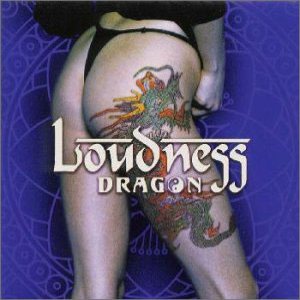
LOUDNESS – Dragon (1998 Rooms, from the box set Buddha Rock 1997-1999)
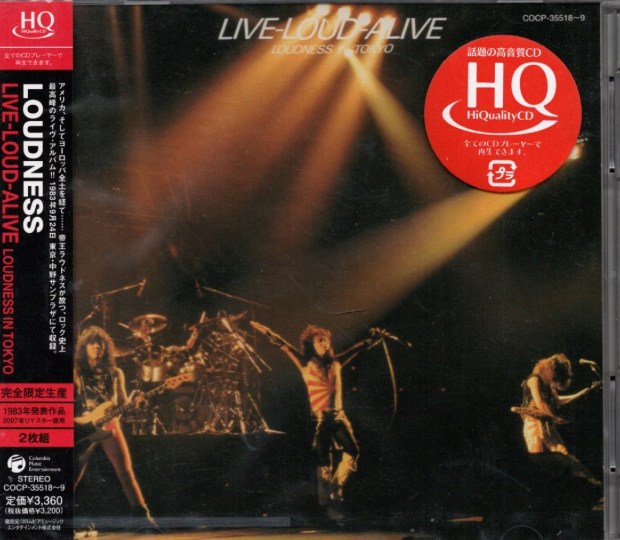
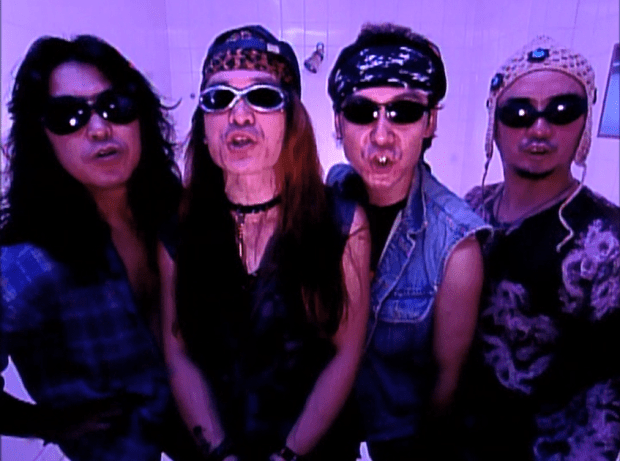
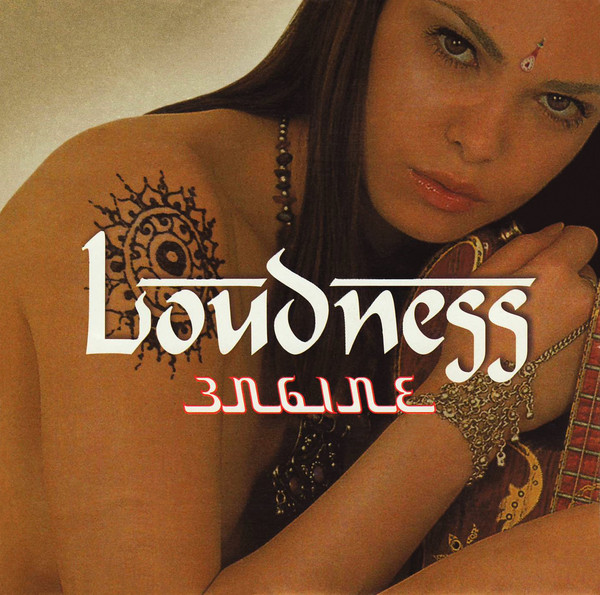
Lucky 13th album for Loudness? Maybe not, but it is an uptick from the prior release Ghetto Machine. The band just kept on going, with only Akira Takasaki remaining from the original lineup. Their third singer Masaki Yamada was on his fourth album with Loudness, and by now they had established a heavy alterna-metal 90s sound. It is the strongest of the three albums of the Buddha Rock era.
Loudness had become fearless, blending thrash and funk together on “9 Mile High”. Those who don’t enjoy Masaki’s growling style won’t be turned around here. Those who like it fast enough to make the Kessel Run in less than 12 parsecs will not have a problem. It skips between thrash and funk without warning.
The appetizingly titled “Dogshit” could only have come from the 1990s. Harmonic drones are substituted for a main riff, and Masaki’s vocal is closer to rap metal. Yet there’s something irresistible about it. “Dog shit on my bike boots!” sings Masaki with a heavy guitar backing him. And that’s why Loudness could get away with doing this kind of music. It’s the guitar. Akira Takasaki is one of the best in the world, but he’s more fearless than Yngwie and can play just about anything. With a virtuoso like that, it’s unlikely you’re going to sound like dog shit.
“Wicked Witches” is heavy, detuned, and it grooves to the max while drilling into your brain. There’s even a little bit of early Van Halen in the riff. That leads into “Crazy Go-Go”, a single and album highlight. Foregoing the nu-metal, this one is wah-wah heavy and just plain rocks! Flat out, kick ass, rock and roll. “Backstage go-go babe, like a circus after school, playin’ my guitar like a country horse.” (Country horse?) You get the picture! It’s about groupies! (Akira makes his guitar whinny like a horse!)
Drummer Hirotsugo Homma gets to have some rhythmic fun on “Voodoo Voices” which is one of the most bizarre tracks Loudness have ever done. Voodoo voices indeed, as the vocals are buried, ethereal in the mix. It’s trippy and trip-hoppy. The instrumental “回想” (“Kaisō”) is made up of backwards guitars playing quietly and hypnotic. Then suddenly it’s a metal riff on “Babylon”. Masaki eschews the growl and goes for psychedelic singing. “Crawl” features a chugging Akira riff, and then some pulsing synth? This album goes everywhere.
“Forbidden Love” is pretty cool, coming closer to the spirit of 80s Loudness. Then go for some more 90s funk metal on “Mirror Ball”, which is as hot as Anthony Kiedis’ arm pit. Another stunning instrumental emerges in “Taj Mahal”, which is not about the shredding but entirely about atmosphere. A variety of unique sounding guitars are accompanied by exotic percussion and bass. Unfortunately that leads into a little bit of a dud for an album closer. “Nightcreepers” doesn’t make an impression.
While this Dragon is an experimental one, not afraid to mess with expectations or traditions, it is still rooted in that 90s nu-metal dungeon. That is something that dates the disc to certain period in time. When it rises above that, as it does on “回想”, “Crazy Go Go” and “Voodoo Voices”, it transcends genre and goes somewhere unique. There are just enough of those moments to make this album a keeper.
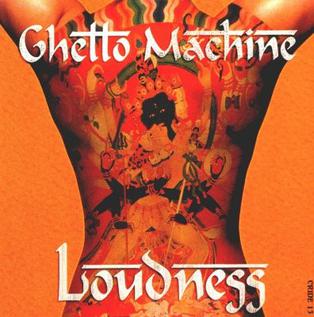
LOUDNESS – Ghetto Machine (1997 Rooms, from the box set Buddha Rock 1997-1999)
1997: Masaki Yamada, the third Loudness singer, was now on his third Loudness album. Besides founding guitarist Akira Takasaki, the rest of the band was new. Ghetto Machine is the first with bassist Naoto Shibata, and second with drummer Hirotsugu Homma. The 90s were chaotic even for Loudness, just like it was for bands in North America. In Loudness’ case, they now had more original E-Z-O members (in Masaki and Homma) than original Loudness members. Like most Loudness albums from the 90s onwards, Ghetto Machine was released only in Japan.
The album was self-produced by Takasaki, recently converted to Buddhism, and he fearlessly dove into the 1990s. Opening with the title “Ghetto Machine”, the riff is low and grinding. Masaki takes on a growly lower tone, and in place of hooks there is only groove and the drone of guitar. This is far removed from the regal metal of the earliest days, but seems sincere given the freedom for Loudness to do whatever they wanted.
Track two, “Slave” features an unusual droning riff, with the thrash metal tempos of early Loudness. At least 90s Loudness didn’t forego guitar solos like some bands. Akira’s here is as interesting as any he’s done. “Evil Ecstasy” opts for a nice groove right in the pocket. Although the riffs are simpler, Akira always does something interesting, either with tone or technique. Though 90s Loudness seems to be less focused on songwriting hooks, sonics are treated with care.
“San Fransisco” isn’t outstanding, though the guitars always are. Nice wah-wah on the solo. Zeppelin seems to be one of many influences on “Love and Hate”, but at this point of the album it is clear that Masaki Yamada will not be delivering much in terms of melody. “Creatures” has a stinging little whiplash of a riff and biting vocals but little that you can sing along to. A cool funky groove called “Hypnotized” is preceded by “Katmandu Fly”, a short atmospheric instrumental. I almost get the feeling that the chorus riff to “Hypnotized” is a twisted variation of “Smoke on the Water”, though it could be my imagination striving to find any kind of hook.
Some crooning during a slow psychedelic jammy break in “Dead Man Walking” is the only melody in that song. The albums takes a turn back towards melodic at the end. Second-to-last track “Jasmine Sky” starts the change up. It’s slow and sparse, and sounds like lead vocals by Akira. It’s one of the only tracks with an actual vocal melody from start to finish, and sets up “Wonder Man” as a final blowout. This monolithic riff is accompanied by exotic guitar soloing and a Masaki vocal you can sing along to. It crawls to a vaguely Zeppelin-y ending.
Ghetto Machine brings me back to that unhappy time in the 90s, when classic bands did what they had to do to adapt, and while the new albums had merit, they were clearly missing…something. The ’92 Loudness album with Masaki was awesome and represented everything good that the 90s could do to a rock band. Ghetto Machine is the slide afterwards.
Iron Tom returns with his 2020 list of awesome, a little bit of commentary, and plenty of Youtube videos for you to check out!
ElderOmens
King Buffalo Dead Star
Drive-By TruckersThe New OK
The Atomic BitchwaxScorpio
King Gorm King Gorm
Five Alarm Funk Big Smoke
Let the ‘Wheels on the Bus’ take you on a tight funky ride…
Jerry JosephThe Beautiful Madness
Drive-By TruckersThe Unraveling
Great album for the shit-storm that was the last four years. However, I’m not sure I’ll be partying to some of it four years from now….
Brant Bjork Brant Bjork
The coolest dude on the planet being a one-cool-man-band….
Steve Earle Ghosts of West Virginia
Emphasizing the humanity over politics plays well….
Deep Purple Whoosh!
After the quality of the last few albums, I don’t know why I was surprised by how much I liked this one… Keep going boys….
Testament Titans of Creation
This band has been pretty consistent over the decade and have produced another great thrash album that is as catchy as it is heavy….
Neil Young Homegrown
1974-recorded and 2020-released and enjoyed…I read that Young thinks that the album is ‘the unheard bridge between Harvest and Comes A Time’ and he’s right….
Armored Saint Punch the Sky
A pleasant surprise…no gimmicks just solid consistent heavy metal.
Blue Öyster Cult The Symbol Remains
A little uneven but the highs more than outweigh the lows… The videos may be unintentionally hilarious but the rock fire remains….
Wishbone Ash Coat of Arms
Fans of well crafted rock with tasty twin guitar will enjoy….
AnnihilatorBallistic, Sadistic
A heavy riffy old-school thrashfest that does not let up….
Jason Isbell, Reunions
It doesn’t quite match the strength of his last two, but that’s only because Isbell has set the bar so damn high for himself… This is an excellent album in its own right….
Mr. BungleThe Raging Wrath of the Easter Bunny Demo
Ian’s and Lombardo’s presence help Mr. Bungle deliver little on the experimentation, but some great straight-up thrash….
Brimstone Coven The Woes Of A Mortal Earth
Riffy modern occult rock with excellent vocal harmonies….
Lowrider Refractions
Who knew there were deserts in Sweden? These Kyuss-wannabies make a good case that there are….
Wytch Hazel III: Pentecost
Wishbone Ash fans will have lots here to enjoy….
King Weed – Riffs Of The Dead
King Weed The Seven Sins Of Doomsday
Instrumental Stoner from France… Groovy cool shit… And there are two more 2020 releases I haven’t checked out yet….
Diamond Head Lightning to the Nations 2020
A fresh coat of paint on some metal masterpieces and some pretty cool covers….
WobblerDwellers of the Deep
Yes, Crimson and Gentle Giant fans will find much to like here….
Freeways True Bearings
Vintage 70’s guitar rock for 2020 and they are from Brampton….
Here’s my list, for what it’s worth. Turns out I didn’t go watch many movies in theatre, but did stream a lot of content. It also seems I like watching cartoons and anime, but that’s not really a surprise. – Frank
Film and Streaming
Blood of Zeus, Netflix Castlevania Season 3, Netflix Dragon’s Dogma, Netflix The Mandalorian, Disney+ 1917 The Boys season 2, Prime Bill and Ted Face the Music Altered Carbon Season 2 Netflix October Faction, Netflix Bosch, Prime
Music
Testament, Titans of Creation, track “Night of the Witch”
Static-X, Project Regeneration Vol 1., track “Hollow”
Sepultura, Quadra, track “Raging Void”
Trivium, What the Dead Men Say
Five Finger Death Punch, F8, track “Scar Tissue”
MICHAEL, MAX THE AXE’S STUNT DOUBLE
Gorillaz – Song Machine
Warbringer – Weapons of Tomorrow
Lamb of God – Lamb of God
Run the Jewels – RTJ4
Poppy – I Disagree
The Chats – High Risk Behaviour
Oliver Tree – Ugly is Beautiful
King Gizzard – K.G.
Testament – Titans of Creation
Atomic Bitchwax – Scorpio
Runners Up
Flaming Lips – American Lips
Midnight – Rebirth by Blasphemy
Deep Purple – Whoosh!
Jeff Rosenstock – No Dream
Blue Oyster Cult – The Symbol Remains
IRON MAIDEN – Nights of the Dead – Legacy of the Beast – Live in Mexico City (2020 Parlophone)
I feel a bit like a jackass reviewing this, because so many people I know caught this tour, or at least one of the recent tours, and I’ve never seen Maiden live. I only have these live albums to go by. But what I like about Iron Maiden is that they take the time to document almost every single tour since the Bruce reunion era began. (Only three tours did not receive a live album.) The Legacy of the Beast tour was in support of a video game, and featured a sort of “legacy” setlist, heavy on the old classics with a small smattering of more recent material. This prevents too much crossover with the prior live album, The Book of Souls – Live Chapter.
Without going track by track, I can tell you that Nights of the Dead was pieced together from three shows in Mexico City, much like Live After Death in Long Beach and Hammersmith. Even so, Bruce’s voice only tends to get stronger as they go further down the setlist. By “Hallowed” and “Run to the Hills”, it sounds like the man is just warming up!
The setlist is a delightful mix of hits, deeper cuts and the odd recent classic. “Where Eagles Dare” from Piece of Mind whips the throng into immediate hysteria. “Revelations” from the same LP has a certain contemplative gravity that it brings to any live album, and hearing it here is sheer nostalgic delight. Two Blaze-era songs return to the set in “Sign of the Cross” and “Clansman”, both lengthy epics. Enhanced by the three-guitar lineup and the Air Raid Siren, can we say these versions challenge the originals for supremacy? Though it wasn’t written for Bruce, “Sign of the Cross” has more dynamics with him at the microphone — he adds a few high notes for embellishment. Not to mention the depth that the third guitar adds to a song that was always a bit thin sounding.
Reunion era Maiden is cut back, leaving only “Wicker Man” and the always welcome “For the Greater Good of God”. Both deserving songs. Stuff like “Wicker Man” (and the earlier “Flight of Icarus”) really pump up the adrenaline levels by keeping it short, sharp and unshackled.
Then you have the stuff that you have to call “the hits”: songs like “Aces High”, “2 Minutes to Midnight”, “Trooper”, “Beast”, “The Evil that Men Do”, “Iron Maiden”, “Fear of the Dark” and “Run to the Hills”. These are the Maiden standards; a serving of essentials that everybody has connected with at some point in their life. Some of them float in and out of setlists, and some always remain.
A word should always be said about the packaging and artwork of any Iron Maiden album. The Mexican-themed Eddie can be found in a couple pieces of art inside and out. Manager Rod Smallwood wrote the included liner notes, explaining that the live album came to be when the world came to a halt due to Covid-19. Yay Covid? Joking aside, Smallwood’s notes are always informative to read while rocking along to the CD. There is even a mini 2021 tour poster (let’s hope!) included, with the Trooper version of Eddie surrounded by iconic imagery from prior Maiden artwork. Icarus, the mushroom cloud from “2 Minutes to Midnight”, a crashed Spitfire…have a look. Finally, a sticker sheet is an added bonus though most of us will be keeping the stickers intact, I reckon.
Perhaps it’s just giddy glee that there’s a new Maiden live album to cap off this year, but Nights of the Dead is so good that I wouldn’t change a thing.
LEATHERWOLF – Endangered Species (1984 Tropical Records / 1985 Heavy Metal America)
Leatherwolf carry on today but their origins are found on a humble indi debut from Heavy Metal America records back in 1984. The Florida band’s original lineup boasted lead vocalist/guitarist Michael Olivieri, who was finding his feet here on the first album. His voice was enviable; the fact that he could play guitar led to a gimmick called the “triple axe attack” long before Iron Maiden were able to execute the concept themselves.
Opening track “Spiter” takes influence from the aforementioned Iron Maiden as well as the thrash scene on the west coast. Its blast of metal power serves to open the album with gusto. The title track “Endangered Species” has a cool layered riff that is almost buried beneath the heavy production. This is a busy band, with drummer Dean “Drum Machine” Roberts keeping all limbs in a flurry. A great vintage heavy metal track here, just begging for a recording less flat and brittle. Plenty of hooks and ideas packed into five minutes.
“Tonight’s the Night” isn’t as memorable, though Olivieri sure gives the vocal his all. I can’t but laugh at “The Hook”. “Hey honey, looking for a date?” Songs about the world’s oldest occupation oh so often veer into cringe territory. This is no “Charlotte the Harlot” though that seems to be the intent. “Keep your eye out for the hook!” sings Michael. The quiet section in the middle is pretty cool and there are multiple nifty riffs, but the song is a clanker.
Side two begins with acoustic guitars, a needed change of tone, and soon it’s back to hammering riffs. “Season of the Witch” isn’t half bad. As usual one riff just isn’t enough. An amped-up Beast-era Iron Maiden seems to be the primary influence. “Off the Track” has a shouted chorus that passes for a hook. Not bad, but somehow incomplete like its parts weren’t fully assembled. A slower tempo and sonic effects make “Kill and Kill Again” an effectively heavy change of pace. A lot of Maiden in the faster outro, though. Then accelerate into “Vagrant” which is further into the thrash side, but the production renders the guitars too tinny and without depth. Fortunately the album closes on title track “Leatherwolf”, a mighty strong Priest-like street fight.
Though they still remained a heavy metal band with three lead guitarists, Leatherwolf added considerably more commercial elements such as ballads and keyboards by the time of their major label debut. Michael Olivieri would tone down the screamy side of his style, which is used excessively here. The band had a lot of room to grow, but their youthful exuberance helps make up for it. There are a few worthwhile tracks that may have a place in your collection, and any fan of the heavier side of vintage metal will enjoy a spin.
For only two bucks, you could be the owner of the first new Sword single in 32 years. The Quebec band made up of Rick and Dan Hughes, Mike LaRock, and Mike Plant have not released a new song since 1988’s Sweet Dreams. Yes, that’s all four original members, intact and back for Round Two. Don’t say nothing good came from 2020! New Sword — betcha didn’t see that coming.
Sword reverted straight to their trash roots on “In Kommand”, a blitzkrieg of a tune with all the necessary goods: riffs, chugs, and heavy drum blasts. It would have been among Sword’s heaviest songs if it was on one of their older albums. How have they not aged? Over the course of 32 years, it is usually the singer who has changed the most. Rick Hughes can still get the job done, even throwing in some screams for old times’ sake. Incidentally, Mike Plant has never gotten his due as a lead guitarist either, and it’s like he hasn’t skipped a beat since 1988. If there is only one highlight to “In Kommand”, it is the guitar playing of Mike Plant.
According to Rick Hughes, there is an album coming. They have Dave Ellefson and Combat Records behind them. “In Kommand” will have to tide us over until then, but things are sounding good so far. While Sword albums have always been diverse with an assortment of different kinds of heavy, this track is a good sign. It means they can still do what the fans expect. If “In Kommand” is anything to judge by, we have an excellently heavy Sword album in our futures.
3.75/5 stars
Support the artist! Buy the track, don’t just Spotify!
MÖTLEY CRÜE – Too Fast For Love (Originally 1981 Leathür Records, 2003 CD reissues)
I was so lucky to grow up not with the Elektra remix of Too Fast For Love, but the original Leathür Records version. Though I didn’t know anything about it at the time, Motley Crue’s debut existed in two different versions and I had the rarer of the two on an old cassette. The original mix released in 1981 on the band’s own label was a raw beauty. When Elektra signed the band, Roy Thomas Baker remixed the album for worldwide reissue. But in Canada, we received the original mix on cassette first before the remix was even released. This was so Motley had some music to promote on their first Canadian tour. We were very lucky. The Elektra mix came out and eventually replaced the original on shelves.
The differences are significant, including the deletion of an entire song (“Stick To Your Guns”) from the original on the Elektra release. For nostalgia reasons, I always preferred the Leathür mix of this album. “Come On And Dance” for example is a completely different and much longer recording. It must be stated the Roy Thomas Baker mix is technically the better of the two. It’s well balanced and has the required punch. Vocal lines are thickened up. It will undoubtedly sound better on your high end stereo. There is more nuance. The changes are especially audible on songs like “Starry Eyes” and “Live Wire”, but I simply have a preference for the raw, rough version I grew up with. There’s something to be said for independent production values. Additionally, the track listing was jumbled and the original running order flows better, so that’s the order we’ll be discussing the songs in.
Fortunately for you, you don’t have to track down an original vinyl or even an obscure Canadian cassette release to get the original Too Fast For Love. It was officially reissued one time only on CD, in the 2003 Motley Crue box set called Music To Crash Your Car To Volume I. In fact that box set includes both mixes of the album, plus the related CD bonus tracks. (Actually, the box set is only missing one song, which we’ll discuss further on.) For the money, Music To Crash Your Car To Volume I is the best way to get “all” the tracks.
The audio for the original Leathür mix is sourced directly from original vinyl, with the tapes presumably lost. Audiophiles take note as you will hear the telltale sound of old vinyl.
It took a while for young me to get into Too Fast For Love. The album was generally much different from the metal assault of Shout at the Devil. That was the Motley I was familiar with. The basic garage glam metal of Too Fast For Love was alien to me. When I first received the cassette, I gave it a fair shake but didn’t start clicking with it until Easter of 1986. It was a deliberate effort on my part. “I want to hear and appreciate this album like my friends do.” Bob Schipper had the songs he liked: “Live Wire” (there was a music video, but he did not like the part with Mick Mars spitting up blood), “Merry-Go-Round”, and especially “On With the Show”.
No matter which version of the album you own, we begin on “Live Wire”, a blitzkrieg of an opener with punk-like pacing. It’s dirty and messy cocaine-fueled mayhem, and the Leathür version sounds sharper and more chaotic. Vince Neil is so young, less seasoned and a little shrill. But the band is on fire with Mick Mars puking out one of his trademark riffs.
The Elektra reissue goes into “Come On and Dance” here, but Leathür puts “Public Enemy # 1” second. It’s perfectly at home in this slot. With the careless glee of youth, the song is one of Motley’s early pop rock deep cuts. There is a lot of pop on Too Far For Love, especially in the vocal melodies. “Public Enemy # 1” must go back to Nikki Sixx’s days in the band London, since it’s a co-write with London’s Lizzie Grey. It then gives way to another blitzkrieg of a riff on “Take Me To the Top”. This turns into a choppy groove, and yet another melodic Vince Neil vocal to keep you hanging on. There’s that pop side again. You could isolate Vince’s vocal and turn it into a pop song. It’s like you have this three-man wall of pounding rock with Tommy Lee, Mick Mars and Nikki Sixx slamming in unison. But on top of that you have Vince Neil singing a candy-sweet melody.
A ballad “Merry-Go-Round” gives your ears a slight rest. Though Nikki wrote it, Mick has a way with these kinds of chords that makes them just sound “Mars”. This song is given an urgency by Vince who, as it turns out, was quite a great singer in his early days. The first side closes on “Piece of Your Action”, a song that has been remixed a number of times over the years. It’s also Vince Neil’s first co-writing credit (lyrics). With a sharp steely riff and aggressive vocals, this song will knock down walls.
The old mix of “Starry Eyes” sounds overblown and slurred compared to the Baker version, yet that’s its charm. “Starry Eyes” has a disco-like groove and another sugar sweet Vince Neil vocal. Nikki Sixx doesn’t get a lot of attention as a bassist, but he’s not content just to hang around banging out a rhythm. He likes to play melodically too, and “Starry Eyes” is a fun song to listen to him play.
Only the Leathür version has “Stick to Your Guns” at this point in the running order. It’s a busy song with different tempos and flavours, from fast verses, to a slow and choppy chorus riff, and a funky instrumental jam out. Perhaps it was left off the Elektra reissue because it’s a little more complex than the rest of the album. It also might have been because the song had been issued a couple times already: “Stick to Your Guns” was also the flipside of Motley Crue’s very first single, “Toast of the Town” (to be discussed further on).
“Come On and Dance” has a heavy riff that flows well out of “Stick to Your Guns”, but it’s the most different between the two versions of the album, so you can choose your preference. The original is longer and the vocal is better.
Regardless of which version you own, “Too Fast For Love” is always the second-last song on the album…but in two very different mixes. 4:16 on Leathür with a unique intro, and 3:21 on Elektra, going straight into the riff. On Leathür the slow, ballady opening acts as a feint. Mick then cranks up an unforgettable riff, and we are off into one of Motley’s true early classics. The primitive gang backing vocals are quaint by modern standards, but again, that’s the charm.
Finally “On With the Show” is the emotional closer. “Frankie died just the other night, some say it was suicide, but we know how the story goes.” In real life nobody died (yet) but “Frankie” is Frank Feranna, the birth name of Nikki Sixx. That name was his past, and Nikki Sixx was his future. The ride was just beginning, and this song has both a sadness and a certain amount of glee. “But you see Frankie was fast, he was too fast to know. He wouldn’t go slow until his lethal dose.” That part turned out to be somewhat prophetic. Regardless, “On With the Show” is the fist-pounding pop metal album closer needed for a record like Too Fast For Love. If you’re headbanging along with it, the you should feel well pooped out by the end!
In 1999, Motley Crue began reissuing all their albums on CD in a series called Crucial Crue on Motley Records, but the end result was disappointing. The bonus tracks varied in quality, but the real problem was that each CD was given an additional bonus track in Japan, and they were pretty good ones too. Fortunately this was rectified in 2003 with yet another series of reissues, adding the Japanese bonus tracks. The box set Music To Crash Your Car To Volume I has all this bonus material as well. For Too Fast For Love, the Japanese bonus track that was restored in 2003 was a live version of “Merry-Go-Round” recorded in San Antonio with an obviously very young Vince Neil on vocals. Though the singing is shaky live, it’s a genuine live recording capturing the band at this early stage of their careers.
“Toast of the Town” was one of those song titles I kept hearing about as a kid, but nobody I knew had ever heard the first ever Motley Crue single. According to the liner notes in the box set, this single was only given away at shows in L.A. for a limited time. Both it and its B-side “Stick to Your Guns” are restored on the CD reissues as bonus track. “Toast of the Town”, like Too Fast For Love itself, is a pop rocker with punch.
An unreleased song called “Tonight” is actually a Raspberries cover (there’s that pop side again). And it’s bloody awesome. They were already halfway there by covering it, but they made it work with their sound, basically just by adding distortion and turning it all up. It sounds like this version was fully recorded and produced for release, so why it wasn’t, we don’t know. Too pop? Perhaps.
The last bonus track to discuss is “Too Fast For Love” with the alternate intro. This is the same intro as on the Leathür version of the album, but it sounds like it was mixed to the higher standards of the Elektra version. Regardless, there are three distinct versions of the song for you to enjoy.
One track is missing from these releases. The one from this same era that they neglected to include is called “Nobody Knows What It’s Like to Be Lonely”. Its only official release to date is as a bonus track on a 20 year old Motley Crue live DVD. At seven minutes long, it plods along with a deliberate and heavy groove. Nikki Sixx has praised the guitar work of Mick Mars, and it has a bizarrely funky drum breakdown at the end. In order to get the complete picture of this era of Motley Crue, track down “Nobody Knows What It’s Like to Be Lonely”. You can understand how a seven minute song didn’t make an album release, though it is certainly well overdue for a re-release on any format other than DVD.
Any way you go, Leathür or Elektra, CD or vinyl, or bloody Canadian cassette tape, Too Fast For Love is a hell of a debut album. Few bands have as many haters as Motley Crue, but this album is an innocent reckless joy. Shout at the Devil sounds contrived by comparison, with Motley Crue adopting a doomier metal sound and dropping the pop-punk pretences. As good as Shout at the Devil undoubtedly is, this one sounds far more natural. It’s the real deal. This is the Crue laying it down hard, fast, getting it done quick and not messing around. Love it or hate it. I know how I feel.
I’ve never particularly cared for Slipknot and I don’t own any Stone Sour. However I’ve been aware of Corey Taylor since 2014’s Dio tribute, and “Rainbow in the Dark”. That side of Taylor landed right in my ballpark. So did his solo single “Black Eyes Blue”.
“Why not spend some dollars and get his album, see what he’s up to?” I said to myself.
“Oh wait,” and a pause. “I need to know if there are any bonus tracks so I can buy the most complete version,” replied my Obsessive Compulsive Disorder. Some typing. C-D-J-A-P-A-N into the search engine, a short wait and — confirmed. “Black Eyes Blue”, acoustic bonus track. In stock.
“It’s only money,” said the idiot in the middle of a pandemic.
A few weeks later, a Japanese CD of Corey Taylor’s solo debut CMFT , bejewelled wresting belt on the cover, had hit Canadian shores and was on its way to my post box.
The scene is set when the laser blasts aluminium. A southern rockabilly vibe on “HWY 666” takes us on a heavy car trip in the forbidden zone. This is what Nickelback was wishing they did with “The Devil Went Down to Georgia”.
The big single is in the welcoming second slot. It’s hard to describe “Black Eyes Blue”, except that the beat swings in a danceable way while the chorus delivers big hooks. Just like a classic Bon Jovi rocker, a guitar solo blasts out Sambora-like with a complimentary hook. It’s all over but the crashing chords in just over three minutes. Picture yourself on the highway going on at a good clip with the windows down, but the music blasting louder than the wind. Classic in the making.
Taylor goes for a punky hard rock vibe on the next one, “Samantha’s Gone”, just a blast in a pickup truck on a dusty highway. “We all got nothin’ to lose because the cash is gone,” goes the the thick chorus. Some bright blasts of mean guitar melodicism keeps the hooks-a-flowin’ like booze. It goes full-on punk rock with “Meine Lux”, but still in southern territory. Filler perhaps; fortunately “Halfway Down” has a broader appeal. It’s from the same Sonic Temple that the Cult built in 1989. Straight-ahead hard rock with fat trimmed and bone-in.
Corey opens and lets sentiment out on the sixth number, a dark exploration called “Silverfish”. It’s a big ballad that sounds akin to some of the radio staples of the early 90s, but the surprising next twist is a splash of nice acoustic on “Kansas”. This bright pop rocker recalls the big sounds of the Goo Doo Dolls on some of their biggest albums. Clearly, Corey Taylor is dialled into the pop side of his music collection on this album.
Suddenly, like the car has hit the brakes to save a scared animal’s life, the tone changes and you’ve got whiplash. “Culture Head” gets topical and aggressive. It’s detuned and pissed off. The speed picks up on a tangent with “Everybody Dies on My Birthday” which recalls the drum stylings of Matt Sorum. The metal is strong with this one, as are the “We are!” singalong vocals.
The car you’re driving pulls into a diner on the roadside, and that’s “The Maria Fire”. There’s a local band with a southern twang playing electric guitars. Though the band is hot and the guitarist is smoking the fretboard, this is rough place and the tension feels like a fight could break at any moment. Time to go “Home”.
“Home” is a beautiful piano piece, just Corey and keys. The heartfelt tone and vocals could have been a perfect ending to the album here. It’s one of those moments that maybe should be left as-is, and just walk away. Instead we’re treated to the rap-rock closer “CMFT Must Be Stopped”. Not my kind of thing, but I’m not Corey’s core audience and admittedly it’s fun to bop along to. Listen for some cool percussion stuff in the background. I’m oblivious to his guest rappers Tech N9ne and Kid Bookie; one of them has a very cool speed rap flow. This is the point at which I roll up the windows of the car because I don’t wanna look like Michael Bolton in the movie Office Space. This goes into a hardcore Anthrax-like thrash punk rocker “European Tour Bus Bathroom Song” which ends the album on an unnecessary jokey note.
It turns out that, though financially stupid, my choice of buying the Japanese version of the album was the correct one. They end with the acoustic live version of “Black Eyes Blues”, a sparse version that leaves you feeling refreshed when the album’s over.
You know what lane I’m in musically, and where Corey Taylor comes from. You can divine from this review whether you will like the album or not. I think there’s a good chance that many of you would like most of it, but few would love it all. Certainly not a bad investment since songs like “Black Eyes Blues”, “Samantha’s Gone”, “Everybody Dies on My Birthday” and “Home” have potential to stick around in your head for years.
STRYPER – Even the Devil Believes (2020 Avalon Japan)
The resurrected Stryper have been riding a solid yellow and black wave of quality for several albums now. Singer/guitarist Michael Sweet has honed in on an early-80s metal sound as Stryper’s foundation, with emphasis on riffs, vocal melodies and cool guitar solos. 2020’s Even the Devil Believes dwells within this rich landscape, drawing inspiration from classics galore.
Speedy metal abides. “Blood From Above” sounds like Accept and Stryper in an atomic collision. No quarter given here; this song is full-on, and you can easily imagine it coming from a lost album of the 80s. However, a title like “Make Love Great Again” could only have come in 2020. Stryper usually stay out of political commentary, but it’s obvious what “There’s a culture building walls, just like vultures consuming all,” is an oblique reference to. While no artist should have to “stay in their lane”, this isn’t the kind of thing I want to be reminded of when I listen to Stryper. Otherwise, the track is a slow metallic Dokken-esque groove, with an uplifting chorus. Perhaps George Lynch has been rubbing off on Michael Sweet, but if Dokken had recorded “Make Love Great Again” in 1987 it would been a single.
Third song “Let Him In” is back to straight preachin’, only it’s preaching from a the open window of a yellow and black ’81 Corvette, rippin’ the tires. The Dokken vibes resume on “Do Unto Others”, with a guitar solo that sounds as if inspired by the School of Rhoads. But then the title track “Even the Devil Believes” sounds like “Breaking the Chains”. There’s nothing wrong with that, it just means these songs have a classic vibe that brings back memories and emotions. The chorus has the melodic sensibilities of Harem Scarem while there’s a dual solo a-la the mighty Priest. Stryper then ease up on the pedal with “How to Fly”. Still heavy, but nobody’s racing this time. If anything this recalls some of the better kinds of 90s rock, with still uplifting melodies playing over slower grinds. But then it’s back to biting, vicious and righteous metal on “Divider”.
Something cool happens on “This I Pray”. Out come the acoustics, and we have a ballad that doesn’t sound all that different from Stryper’s celebrated underdog album from 1990, Against the Law. Though Michael Sweet has spoken poorly of it (mainly because they dropped the Christian lyrics), fans have praised the musical direction of that album. “This I Pray” feels the same, but without the lyrical change, and should please many diehards. “Invitation Only” on the other hand brings back the keyboards, and not in a wimpy way at all. More like Marillion. This track sounds like a harder, tougher lost song from In God We Trust.
Moving on to the end, the penultimate “For God & Rock ‘N’ Roll” sounds like a Stryper anthem. Some fun solos and a fist-pumping chorus to go? This sets off “Middle Finger Messiah” (now there’s an image for ya) to thrash its way to the finish line. Kudos to drummer Steven Sweet for laying down the pace for this one. It’s a fully loaded McLaren flying the flag of Jesus, but at least you know what you’re getting with Stryper. Plenty of folks who can’t relate to the lyrics just get off on the music. And “Middle Finger Messiah” sets the phasers on “stun”, especially during the solo/breakdown 2/3rds of the way into the song. The album doesn’t state who is playing which solos, Michael Sweet or Oz Fox, so we’ll just salute the both of ’em.
The Japanese bonus track is an acoustic mix of “This I Pray” which, in this version, is more in the ballpark of later period Cinderella. Once again, not a bad thing. The electric guitars are turned down, letting us hear the nice acoustics, with keyboards providing a little bit of colour.
Here’s the problem with Stryper of late, and it’s a nice problem to have. They’ve put out some pretty awesome albums in recent years. Murder By Pride (2009), No More Hell to Pay (2013), Fallen (2016), and God Damn Evil (2018) all raised the bar, collectively by several measures. Stryper have been so great for a good stretch that it’s almost futile to rate them all numerically. May as just say: yep, they did it again, so go and get it.