
GETTING MORE TALE #779: “Loch Ness” – A Lyrical Analysis
Judas Priest are known not just for their incendiary riffing, but also vivid lyricism. It’s often a winning combination. Witness such metal concoctions as “Blood Red Skies” or “Metal Gods”. When it works, it works. When it fails, it fails gloriously. Let’s have a look at Judas Priest’s most epic failure. That would be the 13:28 long “Loch Ness”, from 2005’s reunion album Angel of Retribution.
Musically, “Loch Ness” is utter garbage; lethargic rock for the sleepy. The lyrics are a little better, though not enough to save the song.
Judas Priest usually create their own mythology. Characters such as the Painkiller, the Sentinel and the Jugulator are three such examples. This time, Priest dipped into cryptozoology and Scottish legends for their subject matter. Today, the general consensus is that there is no monster in the depths of Loch Ness. It’s still fun to speculate and imagine what might have been.
The first verse of “Loch Ness” sets the scene. The loch is the largest (by volume) in the UK, with an incredible depth of 755 feet. Because of the loch’s depth and murkiness, long has there been uncertainty about what may be down below. Using sonar and other modern technologies, nothing of any great size has ever been found. Though legends remain strong today, it is highly unlikely that a large monster lives in Loch Ness. What say Judas Priest?
Grey mist drifts upon the water,
The mirrored surface moves,
Awakened of this presence,
Dispelling legends proof.
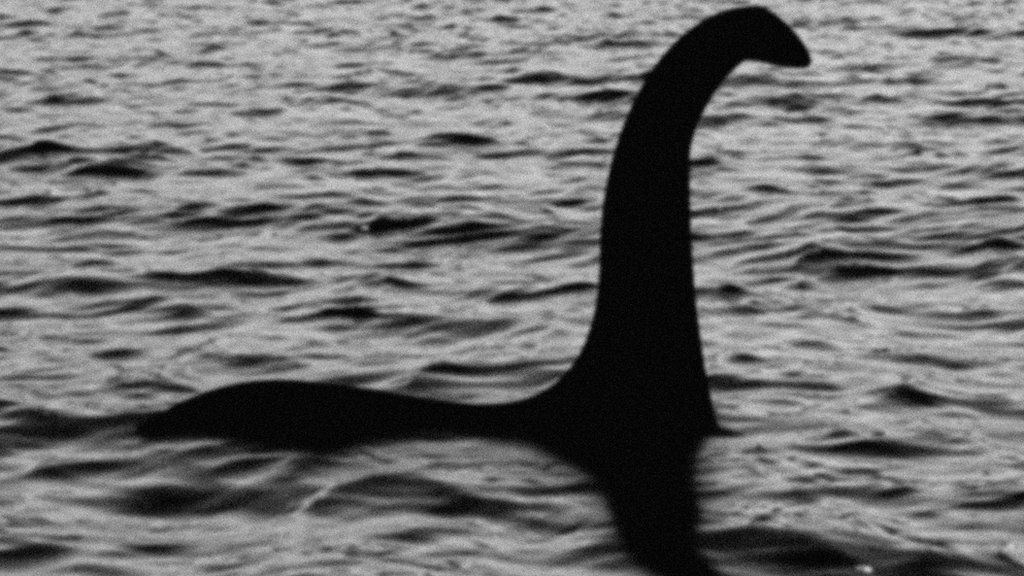
Stories of a beast in the loch date back almost 1500 years. A definitive modern day sighting would indeed be the proof needed to move the monster from legend to reality. Rob Halford references the grey mists, and how the movements of the “mirrored surface” can look like a creature is swimming beneath. This is how most sightings begin. Then “Nessie” rises from the water:
A beastly head of onyx,
With eyes set coals of fire,
It’s leathered hide glides glistening,
Ascends the heathered briar.
Physical descriptions of “Nessie” the monster vary wildly. A head attached to a long neck is a defining characteristic. It is usually described as dark, which Halford here exaggerates as “onyx” (black) in colour. It’s eyes being “coals of fire” seems to be a Halford invention. Likewise the hide, which is usually not described in much detail. Out of necessity, Rob had to elaborate on the myth in order to describe the beast. An interesting line is “ascends the heathered briar”. Indeed, in some of the older sightings, the beast is seen climbing onto land – once even crossing a road. When seen in full, the creature is often described as similar to a plesiosaur.
This legend lives through centuries,
Evoking history’s memories,
Prevailing in eternities,
On and on and on.
More interesting than the physical descriptions of the beast are the old legends. Water beast legends were not uncommon. Why was Loch Ness always such a hotspot for such tales? There is no simple answer. Recently, large eels were filmed in the loch. A mistaken sighting of an eel could account for many of the stories. With the advent of modern media in the 1900s, tales of the monster spread worldwide and stories were reported with more frequency. Proponents of the monster theory point to the oldest legends as proof that there was always something mysterious about the loch, though there is no proof that there is any connection to the “Nessie” of today.
Loch Ness confess,
Your terror of the deep,
Loch Ness distress,
Malingers what you keep,
Loch Ness protects monstrosity,
Loch Ness confess to me.
 This chorus is a contender for the worst on any Judas Priest album. There is nothing here to sing along to. The words are awkward and juvenile with overly simple rhymes.
The speaker is addressing the loch itself; asking the loch to give up its secrets. But “Terror of the deep”? Few today find the idea of the Loch Ness monster to be terrifying . True, early sightings would have been quite scary. Even if the creature spotted was only an otter or an eel, in the dusk or fog it could have been startling. As you’ll see, however, it is implied this song takes place in the modern age.
The most interesting word choice here is “malingers”, meaning to pretend to be sick in order to avoid something. It’s possible the word is being intentionally misused because it simply sounded good. Insofar as meaning goes, “distress”, “malinger” and “protect” all imply the creature isn’t actually threatening. Perhaps it or its young need protection. Halford begs the beast for the truth, but the truth is not to be found.
Somehow it heeds the piper,
From battlements that call,
From side to side it ponders,
In passion in the skirl.
Scottish imagery here, implying that the monster will appear if a piper plays its song. “Skirl” refers to the shrill sound of bagpipes. “From side to side it ponders, in passion in the skirl” is a variation of the old saying that music soothes the savage beast. Otherwise, the connection between the pipes and the monster seem to be a Halford construction. There is also an old joke: “Bagpipes and the Loch Ness Monster have two things in common – they both attract tourists and terrify little children.”
This highland lair of mystery,
Retains a lost world empathy,
Resilient to discovery,
On and on and on.
“Resilient to discovery” isn’t the most accurate phrasing. “Resilient” means to recover quickly. The Loch Ness monster is more “resistant” to discovery than “resilient”, though the legend certainly is resilient. It goes on and on regardless of a narrowing scope of possibilities. “Retains a lost world empathy” probably refers to the age of the beast. It is so old that it comes from a simple time when people had more empathy than today.
This legend lives through centuries,
Evoking history’s memories,
Prevailing in eternity,
Your secret lies safe with me.
These lines simply refer to the age of the old legends, which will live forever. Rob assures the beast that if it reveals its secrets, he will not tell.
This creature’s peril from decease,
Implores to mankind for release,
A legacy to rest in peace,
On and on and on.
Finally the last verse goes back to the idea that the creature is in some sort of distress. It’s unclear what the peril is, but mankind is a part of it. Is it the call of the pipers? The monster simply wants to be at peace. Perhaps this is a hint of an environmental message, for conservation.
The lyrics to “Loch Ness” are not overly complex. Their simplicity, combined with slow monotonous music, make the 13 minute song seriously drag. A few unusual word choices tend to obscure meaning, but “Loch Ness” is otherwise a fairly straightforward Judas Priest lyric. When sung aloud, it begins to sound a little foolish. “Loch Ness, confess, your terror of the deep” is not poetry. It’s something you would have written in highschool English class. While the words mostly stand up to analysis, they are not resilient to singing aloud. In this manner (perhaps the only manner in which rock lyrics really matter), “Loch Ness” flounders.
“Loch Ness” has never and will never be played live. It’s a shame that one of the greatest cryptids in all of legend has been given such a weak heavy metal song!


 mikeladano.com